Kirjojen hintavertailu – 12 903 727 kirjaa ja 27 kauppaa

Kirjailija

Charles River

Kirjat ja teokset yhdessä paikassa: 4 673 kirjaa, julkaisuja vuosilta 2013–2022, suosituimpiin kuuluu William Powell and Myrna Loy: The Lives and Careers of One of Classical Hollywood's Most Iconic Duos. Vertaile teosten hintoja ja tarkista saatavuus suomalaisista kirjakaupoista.

4 673 kirjaa

Kirjojen julkaisuvuodet: 2013–2022.

Legendary Philosophers: The Life and Philosophy of Plato

Legendary Philosophers: The Life and Philosophy of Plato

Charles River

Createspace Independent Publishing Platform
2017
nidottu
*Discusses Plato's philosophy and ideas about knowledge, reason, Forms, political science, rhetoric and more. *Includes busts and other art depicting Plato and important people and events. *Includes a Bibliography for further reading. "Until philosophers are kings, or the kings and princes of this world have the spirit and power of philosophy, and political greatness and wisdom meet in one, and those commoner natures who pursue either to the exclusion of the other are compelled to stand aside, cities will never have rest from their evils - no, nor the human race, as I believe - and then only will this our State have a possibility of life and behold the light of day." - Plato, The Republic A lot of ink has been spilled covering the lives of history's most influential figures, but how much of the forest is lost for the trees? Among all the knowledge and pursuits handed down by our ancestors, few were as important as philosophy, which literally taught people how to think and became directly responsible for ideas like reason and empiricism. Men like Socrates, Plato and Aristotle formed the backbone of Western philosophy, and subsequent philosophers like Marcus Aurelius and Thomas Aquinas expounded on previous philosophy. In Charles River Editors' Legendary Philosophers series, readers can get caught up to speed on the lives of the most important philosophers in history in the time it takes to finish a commute, while learning interesting facts long forgotten or never known. In 427 B. C., the Ancient Greek city-state of Athens was flourishing. Approximately 80 years earlier, the Athenians had formed the first self-representative democracy in history, the Peloponnesian War against Sparta had only just started, and Socrates was only beginning to lay the foundation of what would become Western philosophy. That year Plato was born to a wealthy family, and with an uncle who was close friends with Socrates, Plato was seemingly destined to become a philosopher. By the end of his life, Plato had indeed become the foremost philosopher of his time, and perhaps the most famous philosopher in Western history. None of Socrates' works survived antiquity, so most of what is known about him came from the writings of his followers, most notably Plato. What is known about Socrates is that he seemed to make a career out of philosophy, and Plato was intent on following in his footsteps. Yet for all of the influence of Socrates' life on Plato, it was Socrates' death around 399 B. C. that truly shaped him. Plato was so embittered by Socrates' trial in Athens that he completely soured on Athenian democracy, and he began to travel around the Mediterranean, studying topics like mathematics, honing his approach to philosophical thinking, and continuing to refine his philosophical beliefs. About a decade later, Plato returned to Athens and founded his famous Platonic Academy around 387 B. C., which he oversaw for 40 years until his death. One of Plato's philosophical beliefs was that writing down teachings was less valuable than passing them down orally, and several of Plato's writings are responses to previous writings of his, so Plato's personally held beliefs are hard to discern. However, Plato educated several subsequent philosophers, chief among them Aristotle, and his writings eventually formed the backbone of Western philosophy. Legendary Philosophers: The Life and Philosophy of Plato chronicles Plato's life, but it also discusses his canon of work, examines his philosophy in depth, and analyzes his enduring legacy. Along with pictures of important people in his life, you will learn about Plato like you never have before, in no time at all.
Legendary Philosophers: The Life and Philosophy of Socrates

Legendary Philosophers: The Life and Philosophy of Socrates

Charles River

Createspace Independent Publishing Platform
2017
nidottu
*Discusses the mysteries and controversies surrounding Socrates' life and death. *Examines Socrates' philosophy as portrayed by Plato and Xenophon. *Analyzes the debate over whether Plato portrayed Socrates accurately. *Includes busts and other art depicting Socrates and other important people in his life. *Includes a Bibliography for further reading. "As for me, all I know is that I know nothing, for when I don't know what justice is, I'll hardly know whether it is a kind of virtue or not, or whether a person who has it is happy or unhappy." - attributed to Socrates in Plato's The Republic In 427 B. C., the Ancient Greek city-state of Athens was flourishing. Approximately 80 years earlier, the Athenians had formed the first self-representative democracy in history, the Peloponnesian War against Sparta had only just started, and Socrates was only beginning to lay the foundation of what would become Western philosophy. None of Socrates' works survived antiquity, so most of what is known about him came from the writings of his followers, most notably Plato. What is known about Socrates is that he seemed to make a career out of philosophy, and Plato was intent on following in his footsteps. Yet for all of the influence of Socrates' life on his followers, it was Socrates' death around 399 B. C. that truly shaped them. Plato was so embittered by Socrates' trial in Athens that he completely soured on Athenian democracy, and Aristotle would later criticize politicians who relied on rhetoric; when Aristotle's own life was threatened, he fled Greece and allegedly remarked, "I will not allow the Athenians to sin twice against philosophy." Since Socrates wrote nothing down, or at least nothing that survived antiquity, there has been a wealth of scholarship ever since attempting to determine the person to whom the philosophical positions of the various (and genuine) Socratic dialogues of Plato's should be attributed. Even though Aristotle insisted that Socrates only cared about ethics and held no metaphysical theory of the kind that Plato propounded, the attempt to read the ugly but wise Socrates via the Platonic dialogues continued up to the 20th century. The change of tone, style and philosophical topics seemed to be a big argument that Socratic views are to be found in the early Platonic works, whereas later works bear the stamp of Plato's personal views. The Platonic scholar Gregory Vlastos introduced a developmentalist position which has almost become an orthodoxy in Platonic studies, by moving the discussion from the historical Socrates to Plato as a philosopher. According to developmentalism, if the views in the dialogue are not spelled out only to be refuted afterward, then the person they should be attributed to is Plato and not Socrates. These philosophical views developed over a period of time, which also justifies the various inconsistencies and outright rejection of Plato's own metaphysical statements in subsequent dialogues. Legendary Philosophers: The Life and Philosophy of Socrates chronicles the life, death, and mysteries surrounding Ancient Greece's first great philosopher. Along with pictures of historic art depicting important people, you will learn about Socrates like you never have before, in no time at all.
Legendary Philosophers: The Life and Philosophy of Aristotle

Legendary Philosophers: The Life and Philosophy of Aristotle

Charles River

Createspace Independent Publishing Platform
2017
nidottu
*Discusses Aristotle's philosophy and ideas about knowledge, reason, logic, politics, rhetoric, science, metaphysics, and more. *Includes busts and other art depicting Aristotle and other important people in his life. *Includes a Bibliography for further reading. "All men by nature desire to know. An indication of this is the delight we take in our senses; for even apart from their usefulness they are loved for themselves; and above all others the sense of sight. For not only with a view to action, but even when we are not going to do anything, we prefer sight to almost everything else. The reason is that this, most of all the senses, makes us know and brings to light many differences between things." - Aristotle, Metaphysics Among all the knowledge and pursuits handed down by our ancestors, few were as important as philosophy, which literally taught people how to think and became directly responsible for ideas like reason and empiricism. Men like Socrates, Plato and Aristotle formed the backbone of Western philosophy, and subsequent philosophers like Marcus Aurelius and Thomas Aquinas expounded on previous philosophy. In Charles River Editors' Legendary Philosophers series, readers can get caught up to speed on the lives of the most important philosophers in history in the time it takes to finish a commute, while learning interesting facts long forgotten or never known. Alongside Plato, Aristotle is, without question, one of the most influential ancient Greek philosophers and arguably the greatest icon of ancient thought. His life and work expanded rapidly and extensively across the ancient world, helped in part by the fact he tutored Alexander the Great, he was a recognized and celebrated intellectual force during all of antiquity and the Middle Ages. Furthermore, after Aristotle, Greek thought and political influence began a rapid decline, and the cultivation of knowledge, so important during the classic period, slowly but surely began to fade, making Aristotle the last of ancient Greece's great philosophers. Aristotle's influence on Western philosophical thought is marked by an extensive list of crucial issues that both signaled the way forward but at the same time boggled philosophers' minds throughout the centuries. Aristotle's reflections on Being, as well as his rigorous Logic, were his most important philosophical legacy, but he was also an intellectual in the broadest sense of the word. His interests went beyond metaphysical questions and into practical life and practical knowledge, from ethics to politics, rhetoric and the sciences, all of which left a profound impact on Western political thought and ethics. Naturally, this has also made him one of the foundations of knowledge and philosophical thought that subsequent philosophers relied on when forming and refining their own philosophies. Legendary Philosophers: The Life and Philosophy of Aristotle chronicles Aristotle's life, but it also discusses his canon of work, examines his philosophy in depth, and analyzes his enduring legacy. Along with pictures of historic art depicting important people, you will learn about Aristotle like you never have before, in no time at all.
Legendary Explorers: The Life and Legacy of Hernan Cortes

Legendary Explorers: The Life and Legacy of Hernan Cortes

Charles River

Createspace Independent Publishing Platform
2017
nidottu
*Includes Cort s's Second Letter to Charles V, one of the most descriptive firsthand accounts of the Aztecs and Tenochtitlan. *Discusses the Aztec Empire, the city of Tenochtitlan, and the human sacrifice rituals. *Includes pictures of Cort s and important people, places, and events. *Includes a Bibliograpy for further reading. "Among these temples there is one which far surpasses all the rest, whose grandeur of architectural details no human tongue is able to describe; for within its precincts, surrounded by a lofty wall, there is room enough for a town of five hundred families." - Hern n Cort s A lot of ink has been spilled covering the lives of history's most influential figures, but how much of the forest is lost for the trees? The Age of Exploration and the explorers who set out on their history-making expeditions left many legacies and profoundly influenced history around the world. The voyages of men like Columbus and the conquests of men like Cort s had dramatic consequences for the natives, escalated tensions between the European nations, initiated imperialistic empires on a global scale, helped birth the United States, and ensured that the wars in the 20th century were truly world wars. In Charles River Editors' Legendary Explorers series, readers can get caught up to speed on the lives of the most important explorers of history in the time it takes to finish a commute, while learning interesting facts long forgotten or never known. During the Age of Exploration, some of the most famous and infamous individuals were Spain's best known conquistadors. Naturally, as the best known conquistador, Hern n Cort s (1485-1547) is also the most controversial. Like Christopher Columbus before him, Cort s was lionized for his successes for centuries without questioning his tactics or motives, while indigenous views of the man have been overwhelmingly negative for the consequences his conquests had on the Aztecs and other natives in the region. Just about the only thing everyone agrees upon is that Cort s had a profound impact on the history of North America. Of course, the lionization and demonization of Cort s often take place without fully analyzing the man himself, especially because there are almost no contemporaneous sources that explain what his thinking and motivation was. If anything, Cort s seemed to have been less concerned with posterity or the effects of the Spanish conquest on the natives than he was on relations with the Mother Country itself. Of the few things that are known about Cort s, it appears that he was both extremely ambitious and fully cognizant of politics and political intrigue, even in a New World thousands of miles west of Spain itself. While those ambitions and politics understandably colored his writings about his activities and conquests, scholars nevertheless use what he wrote to gain a better understanding of the indigenous natives he came into contact with. As Adolph Francis Bandelier noted in the Catholic Encyclopedia in 1908, "Cort s was a good writer. His letters to the emperor, on the conquest, deserve to be classed among the best Spanish documents of the period. They are, of course, coloured so as to place his own achievements in relief, but, withal, he keeps within bounds and does not exaggerate, except in matters of Indian civilization and the numbers of population as implied by the size of the settlements. Even there he uses comparatives only, judging from outward appearances and from impressions." Legendary Explorers: The Life and Legacy of Hern n Cort s chronicles Cort s's life, but it also examines the aftermath of his conquest and analyzes the controversy surrounding his legacy. Along with pictures of important people, places, and events, you will learn about Cort s like you never have before, in no time at all.

The Enemies of the Ancient Israelites: The History of the Canaanites, Philistines, Babylonians, and Assyrians
*Includes pictures *Includes ancient accounts of each group *Includes a bibliography for further reading Individuals who decide to take up learning about the Old Testament of the Bible are immediately faced with the difficult proposition of identifying the various peoples that the Hebrews met and sometimes came into conflict with when they entered the territory that eventually became Israel. The Moabites and Edomites were just two of the many Canaanite groups that the Hebrews dealt with, often violently, but there were dozens of other Canaanite groups, which were all for the most part identified through the names of their respective cities. In fact, before the Hebrews established a kingdom and before the Phoenicians colonized much of the Mediterranean, the Canaanites were the most important group in the Levant for much of the Bronze Age and into the early Iron Age. Although the Canaanites never created a unified nation-state or kingdom, their importance in the ancient Near East cannot be understated. It was at least partially because of that fact that the Canaanites were unable to resist their larger and more powerful neighbors that the average person today knows so little about their history, but modern studies have revealed that they developed a unique religion that influenced non-Canaanite peoples and continued to be practiced in some form centuries after the Canaanites ceased to be an identifiable people. Furthermore, during the height of the Bronze Age the Canaanites provided important resources to the Egyptian and Hittite Empires and played a key role in the geopolitical game of chess between those two kingdoms. It also goes without saying that the Canaanites were also a factor in the establishment of the Kingdom of Israel, as the battles they lost to the Hebrews later became the foundation of the Jewish kingdom. Although the Old Testament provides a credible source for some aspects of Philistine culture, it naturally paints a picture of them as a group of bloodthirsty warriors whose one purpose was to oppress the Hebrews/Israelites. When corroborated with ancient Egyptian and Mesopotamian sources, along with modern archaeological studies, an examination reveals that the reputation that the Philistines earned from the Old Testament was partially warranted, but that there was also much more to Philistine culture. Today, Babylon has become a byword for greed, excess, and licentiousness, mostly due to its mention in the Bible, but a closer examination reveals that Babylon was so much more, and even perhaps the most important city in the ancient world. Ancient Babylon was home to great dynasties that produced some of the world's most influential leaders, most notably Hammurabi and Nebuchadnezzar, and these rulers invoked their wills on the entire ancient Near East and have been remembered as both progressive and cruel all at the same time. Babylon was also the seat of culture in ancient Mesopotamia and the place where scholars made amazing scientific advances that would not be eclipsed for several centuries. An examination of ancient Babylon demonstrates that it was truly the first great city in the ancient world. Although the Biblical accounts of the Assyrians are among the most interesting and are often corroborated with other historical sources, the Assyrians were much more than just the enemies of the Israelites and brutal thugs. A historical survey of ancient Assyrian culture reveals that although they were the supreme warriors of their time, they were also excellent merchants, diplomats, and highly literate people who recorded their history and religious rituals and ideology in great detail. The Enemies of the Ancient Israelites: The History of the Canaanites, Philistines, Babylonians, and Assyrians looks at the various groups and their impact on the region and subsequent cultures.
Wahabbism: The History of the Conservative Islamic Religious Movement in Saudi Arabia

Wahabbism: The History of the Conservative Islamic Religious Movement in Saudi Arabia

Charles River

Createspace Independent Publishing Platform
2017
nidottu
*Includes pictures *Includes online resources and a bibliography for further reading In May 2017, President Donald Trump made his first foreign visit, and the first stop was to the Kingdom of Saudi Arabia. According to the then-White House Press Secretary Sean Spicer, "The President's trip will begin in Saudi Arabia, home to the two holiest sites in Islam. He will encourage our Arab and Muslim partners to take bold, new steps to promote peace and to confront those, from ISIS to al Qaeda to Iran to the Assad regime, who perpetuate chaos and violence that has inflicted so much suffering throughout the Muslim world and beyond." For President Trump, this visit signified a step towards not only reaffirming and strengthening alliances in the Muslim world, but also taking the opportunity to explicitly lay out the new administration's approach to dealing with terrorism. During his speech at the Arab Islamic American Summit in Riyadh, Trump stated his pleasure with the opening of the Global Center for Combating Extremist Ideology in Saudi Arabia. What is ironic is that the very same extremist ideology that radical Muslim extremists practice is inspired by the Wahhabi ideology propagated by Saudi Arabia and the surrounding countries in the Arabian Gulf. Nonetheless, the West has maintained a close relationship with the Al-Saud family for nearly two centuries, not only most notably due to Saudi Arabia's oil supply, but also because they have provided a counterbalance against adversaries in the region. Despite this long history, there is speculation that President Trump's approach to extremist ideology will be markedly different from past presidents, and the world was waiting for his speech in Riyadh to confirm this change. In Trump's strong speech, he stated, "As we deny terrorist organizations control of territory and populations, we must also strip them of their access to funds. We must cut off the financial channels that let ISIS sell oil, let extremists pay their fighters, and help terrorists smuggle their reinforcements." Wahhabism is the most common form of politicized fundamentalist Islam, now most associated with the Islamic State and Al Qaeda and the official religion of Saudi Arabia and Qatar. It is widespread throughout the Islamic world, especially in Pakistan and Afghanistan (where it was the official religion of the Taliban). Together, the Saudi and al-Wahhab families formed a potent alliance, with the Saudis gaining an ideological backing for their small state and the Wahhabis gaining a powerful and increasingly wealthy patron. In many ways, their alliance (which still holds strong today) can be seen as the founding moment of the First Saudi state, but regardless, the Wahhabian Saudis expanded their power through much of the 19th century and were well-positioned to take advantage of the collapse of Ottoman power in the wake of World War I. After an indecisive war in 1919, a second conflict in 1925 led to the fall of the Hashemites and Saudi domination of the region. Saudi Arabia's tempestuous relationship with radical Islamic ideology has been a contentious point for the kingdom's relationship with the U. S. and the rest of the Arab world. While their own status as the Custodian of the Two Holy Mosques bestows special status on them and their particular mixture of governance and religion, their inability (or unwillingness) to control the very ideology they laid the foundations for has often been a nuisance over time. Wahabbism: The History of the Conservative Islamic Religious Movement in Saudi Arabia traces the formation of the religious ideology and its influence over the modern Saudi state. Along with pictures of important people, places, and events, you will learn about Wahabbism like never before.
Wahabbism: The History of the Conservative Islamic Religious Movement in Saudi Arabia

Wahabbism: The History of the Conservative Islamic Religious Movement in Saudi Arabia

Charles River

Createspace Independent Publishing Platform
2017
nidottu
*Includes pictures *Includes online resources and a bibliography for further reading In May 2017, President Donald Trump made his first foreign visit, and the first stop was to the Kingdom of Saudi Arabia. According to the then-White House Press Secretary Sean Spicer, "The President's trip will begin in Saudi Arabia, home to the two holiest sites in Islam. He will encourage our Arab and Muslim partners to take bold, new steps to promote peace and to confront those, from ISIS to al Qaeda to Iran to the Assad regime, who perpetuate chaos and violence that has inflicted so much suffering throughout the Muslim world and beyond." For President Trump, this visit signified a step towards not only reaffirming and strengthening alliances in the Muslim world, but also taking the opportunity to explicitly lay out the new administration's approach to dealing with terrorism. During his speech at the Arab Islamic American Summit in Riyadh, Trump stated his pleasure with the opening of the Global Center for Combating Extremist Ideology in Saudi Arabia. What is ironic is that the very same extremist ideology that radical Muslim extremists practice is inspired by the Wahhabi ideology propagated by Saudi Arabia and the surrounding countries in the Arabian Gulf. Nonetheless, the West has maintained a close relationship with the Al-Saud family for nearly two centuries, not only most notably due to Saudi Arabia's oil supply, but also because they have provided a counterbalance against adversaries in the region. Despite this long history, there is speculation that President Trump's approach to extremist ideology will be markedly different from past presidents, and the world was waiting for his speech in Riyadh to confirm this change. In Trump's strong speech, he stated, "As we deny terrorist organizations control of territory and populations, we must also strip them of their access to funds. We must cut off the financial channels that let ISIS sell oil, let extremists pay their fighters, and help terrorists smuggle their reinforcements." Wahhabism is the most common form of politicized fundamentalist Islam, now most associated with the Islamic State and Al Qaeda and the official religion of Saudi Arabia and Qatar. It is widespread throughout the Islamic world, especially in Pakistan and Afghanistan (where it was the official religion of the Taliban). Together, the Saudi and al-Wahhab families formed a potent alliance, with the Saudis gaining an ideological backing for their small state and the Wahhabis gaining a powerful and increasingly wealthy patron. In many ways, their alliance (which still holds strong today) can be seen as the founding moment of the First Saudi state, but regardless, the Wahhabian Saudis expanded their power through much of the 19th century and were well-positioned to take advantage of the collapse of Ottoman power in the wake of World War I. After an indecisive war in 1919, a second conflict in 1925 led to the fall of the Hashemites and Saudi domination of the region. Saudi Arabia's tempestuous relationship with radical Islamic ideology has been a contentious point for the kingdom's relationship with the U. S. and the rest of the Arab world. While their own status as the Custodian of the Two Holy Mosques bestows special status on them and their particular mixture of governance and religion, their inability (or unwillingness) to control the very ideology they laid the foundations for has often been a nuisance over time. Wahabbism: The History of the Conservative Islamic Religious Movement in Saudi Arabia traces the formation of the religious ideology and its influence over the modern Saudi state. Along with pictures of important people, places, and events, you will learn about Wahabbism like never before.
Legendary Enemies of Rome: The History of the Carthaginians, Parthians, Goths, and Vandals
*Includes pictures *Includes ancient accounts describing the various civilizations *Includes online resources and a bibliography for further reading Carthage was one of the great ancient civilizations, and at its peak, the wealthy Carthaginian empire dominated the Mediterranean against the likes of Greece and Rome, with commercial enterprises and influence stretching from Spain to Turkey. In fact, at several points in history it had a very real chance of replacing the fledgling Roman empire or the failing Greek poleis (city-states) altogether as master of the Mediterranean. Although Carthage by far preferred to exert economic pressure and influence before resorting to direct military power (and even went so far as to rely primarily on mercenary armies paid with its vast wealth for much of its history, it nonetheless produced a number of outstanding generals, from the likes of Hanno Magnus to, of course, the great bogeyman of Roman nightmares himself: Hannibal. The Parthian people created an empire that lasted almost 500 years, from the mid-3rd century BCE until 224 CE, and it stretched from the Euphrates River in the west to Central Asia and the borders of Bactria in the east (Brosius 2010, 83). In fact, the expansive empire challenged the Romans on numerous occasions for supremacy in the Near East, created the first sustainable link between the peoples of Europe and East Asia, and followed a religion that many consider to be the oldest form of monotheism in the world; but despite these accomplishments the Parthians are often overlooked in favor of the Achaemenid and Sassanid Persians who came before and after them respectively, not to mention the Romans themselves. Although the Parthians may not get top billing in most popular histories of the period, they left an indelible mark on the world that cannot be overstated. It goes without saying that the Goths played an integral part in the history of Europe during this time, and they remain among the most notorious and controversial groups in history. By the 4th century CE, The Goths were among the prominent barbarian groups who became a threat to the Roman Empire, but they also had contacts with the Romans well before then, and they even traded for awhile. The two branches of the Goths that are best known, the Visigoths and Ostrogoths, stared down the Roman Empire as it neared its collapse and supplanted it with a kingdom in Italy in the 5th and 6th centuries respectively. The Visigoth leader Alaric and the Ostrogoth leader Theodoric are still well-known names due to their deeds and reigns in Europe. It is true that the Vandals sacked Rome in 455 AD, but even that act was a unique historical accomplishment in itself as they were only the third people to inflict such destruction on one of the world's greatest cities. Despite living on the lawless marchlands of the Roman Empire, the Vandals were able to establish two different kingdoms, and introduce a fairly complicated code of royal succession, that gave stability to their people for some time. The Vandals also proved to be an extremely clever people in their use of violence and war, as they rarely engaged in violence for its own sake. They also often employed clever tactics on the battlefield to defeat the larger and more sophisticated armies of the Romans, and later, the Byzantines. The examination will also reveal that the Vandals were as adept at the arts of diplomacy and statecraft as they were with warfare. If they could obtain an advantage through negotiation, then they would choose that route over a war that threatened to decimate their forces. Despite having the image of the cruel barbarian warrior, the Vandals were not without God in their lives. Although the Vandals were Christians, they followed a different sect of Christianity, which often put them at odds with Rome and Constantinople, but throughout most of their history they stood fast to their theological beliefs.
Leaders of the Sioux: The Lives and Legacies of Sitting Bull, Crazy Horse and Red Cloud
*Includes pictures of Sitting Bull and Red Cloud, depictions of Crazy Horse, and important people and places in their lives. *Explains several Lakota oral legends, including the origins of the names Sitting Bull and Crazy Horse. *Explains the Battle of the Little Bighorn and their roles in it. "When I was a boy the Sioux owned the world. The sun rose and set on their land; they sent ten thousand men to battle. Where are the warriors today? Who slew them? Where are our lands? Who owns them? Is it wrong for me to love my own? Is it wicked for me because my skin is red? Because I am Sioux? Because I was born where my father lived? Because I would die for my people and my country?" - Sitting Bull "Upon suffering beyond suffering: the Red Nation shall rise again and it shall be a blessing for a sick world. A world filled with broken promises, selfishness and separations. A world longing for light again. I see a time of Seven Generations when all the colors of mankind will gather under the Sacred Tree of Life and the whole Earth will become one circle again." - Crazy Horse Like Geronimo in the Southwest during the same era, Sitting Bull and Crazy Horse were warriors and leaders of different groups of Lakota (Sioux) who fought in several skirmishes against settlers and U. S. forces across the Plains during the 1860s and 1870s. Admired by their own people for their kindness and strong leadership, reviled by their enemies for their defiance, when The Great Sioux War of 1876 began, Sitting Bull and Crazy Horse were two of the most important leaders among all Native American tribes on the Plains, and they were the ones to turn to for those who intended to keep fighting whites. Sitting Bull and Crazy Horse were hardly the only Native Americans fighting the U. S. Army at the time, but they became legends at the Battle of the Little Bighorn, during which an estimated 2,000 Lakota and Cheyenne warriors led by Crazy Horse and inspired by one of Sitting Bull's visions routed and then annihilated the 7th U. S. Cavalry led by George Custer. That disaster led the American government to double down on its efforts to "pacify" the Sioux, and by the end of the decade many of them had surrendered and been moved onto a reservation. Crazy Horse kept fighting for a year before surrendering, and Sitting Bull defiantly refused to surrender, instead heading with a smaller band into Canada and remaining exiled. When they finally did surrender, and the threat they posed eliminated, Americans viewed the two Native Americans as celebrities. Sitting Bull even went on to appear in Buffalo Bill Cody's Wild West Show during the 1880s. However, the two Lakota leaders would be connected in one more way: death. The deaths of both Sitting Bull and Crazy Horse took place on reservations and remain controversial to this day. Though he has not been remembered as vividly as another member of the Oglala Lakota, Crazy Horse, Red Cloud led the group for 40 years, in war, in peace, and on a reservation, becoming so esteemed and influential that Americans began to mistakenly take him for the leader of the entire Sioux tribe. In the 1860s, Red Cloud was at the forefront of skirmishing among whites and Native Americans along the frontier in Wyoming and Montana, which came to be known as Red Cloud's War. After that, however, Red Cloud continued to lead his people to reservations first near the Black Hills and later westward after the Battle of the Little Bighorn. Leaders of the Sioux looks at the most famous leaders of the Lakota and the victors at Little Bighorn, but it also humanizes the men who became some of the most famous symbols of defiance in American history. Along with pictures of important people, places, and events, you will learn about Sitting Bull, Crazy Horse and Red Cloud like you never have before.
Leaders of the Oglala Sioux: The Lives and Legacies of Crazy Horse and Red Cloud

Leaders of the Oglala Sioux: The Lives and Legacies of Crazy Horse and Red Cloud

Charles River

Createspace Independent Publishing Platform
2017
nidottu
*Includes pictures of Red Cloud, depictions of Crazy Horse, and important people and places in their lives. *Explains several Oglala oral legends, including the origins of the names Red Cloud and Crazy Horse. *Explains Red Cloud's War, the Battle of the Little Bighorn, and their roles in both. "Upon suffering beyond suffering: the Red Nation shall rise again and it shall be a blessing for a sick world. A world filled with broken promises, selfishness and separations. A world longing for light again. I see a time of Seven Generations when all the colors of mankind will gather under the Sacred Tree of Life and the whole Earth will become one circle again." - Crazy Horse "Look at me - I am poor and naked, but I am the chief of the nation. We do not want riches, but we want to train our children right. Riches will do us no good. We could not take them with us to the other world. We do not want riches. We want peace and love." - Red Cloud Among the Oglala Lakota, one of the most famous bands of the Native American Tribe known as the Sioux, the longest and most effective leader was Makhpiyaluta, better known as Red Cloud. Though he has not been remembered as vividly as another member of the Oglala Lakota, Crazy Horse, Red Cloud led the group for 40 years, in war, in peace, and on a reservation, becoming so esteemed and influential that Americans began to mistakenly take him for the leader of the entire Sioux tribe. In the 1860s, Red Cloud was at the forefront of skirmishing among whites and Native Americans along the frontier in Wyoming and Montana, which came to be known as Red Cloud's War. After that, however, Red Cloud continued to lead his people to reservations first near the Black Hills and later westward after the Battle of the Little Bighorn. Though he was respected as a war chief, it was his political functions as a spokesman of the Oglala that truly allowed Red Cloud to leave his mark over the last several decades of his life. Whereas Sitting Bull and Crazy Horse suffered premature deaths, Red Cloud outlived the other important leaders of the Sioux until dying in 1909 at 87 years old. Near the end of his life, he reportedly said, "They made us many promises, more than I can remember. But they kept but one -- they promised to take our land...and they took it." Red Cloud is often referred to as a symbol of Lakota concession. Sitting Bull is considered symbolic of Lakota spirituality. Crazy Horse, because he delayed surrender and never entered into treaty agreements with the U. S. military, became a symbol of Lakota resistance. Crazy Horse may have fervently wished to avoid white settlers, but he's a Native American icon today because of the inability to do so. Like Geronimo in the Southwest and Sitting Bull on the Plains, Crazy Horse was a chief who fought in several skirmishes against settlers and U. S. forces during the 1860s, and he became one of the most famous Native Americans in American history because of one fateful confrontation with whites: the legendary Battle of the Little Bighorn, during which an estimated 2,000 Lakota and Cheyenne warriors routed and then annihilated the 7th U. S. Cavalry led by George Custer. That disaster led the American government to double down on its efforts to "pacify" the Plains, and by the end of the decade many of them had surrendered and been moved onto a reservation. Like Sitting Bull, Crazy Horse tried to avoid surrendering for as long as he could, and both suffered a controversial death. Leaders of the Oglala Sioux looks at the two most famous leaders of the Oglala, including their roles in Red Cloud's War and at Little Bighorn, but it also humanizes the men who became symbols of defiance and conciliation respectively. Along with pictures of important people, places, and events, you will learn about Red Cloud and Crazy Horse like you never have before.
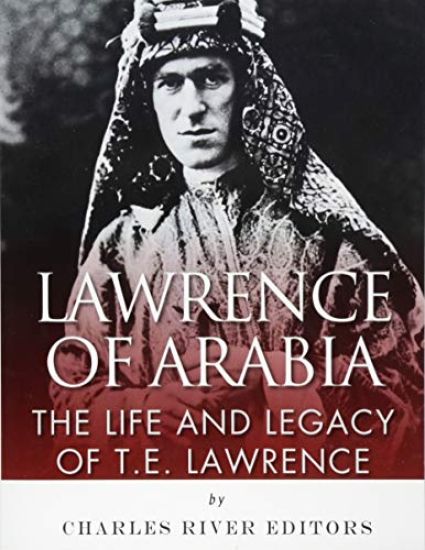
Lawrence of Arabia: The Life and Legacy of T.E. Lawrence

Lawrence of Arabia: The Life and Legacy of T.E. Lawrence

Charles River

Createspace Independent Publishing Platform
2017
nidottu
*Includes pictures *Includes Lawrence's own quotes about his life *Includes footnotes and a bibliography for further reading "I've been & am absurdly over-estimated. There are no supermen & I'm quite ordinary, & will say so whatever the artistic results. In that point I'm one of the few people who tell the truth about myself." - Lawrence of Arabia He was recognized by many as a curious scholar and archaeologist, brilliant linguist, British soldier, extraordinary adventurer, and avid writer, though he called himself an "ordinary man." He was a gifted translator, a shrewd diplomat, a brilliant tactician, and an instinctive leader. T. E. Lawrence, more popularly known as Lawrence of Arabia, was a seminal figure in the shaping and reshaping of the politics of Arabia in the early 20th century, serving as an expert in Arab affairs in the British military and playing a key role in the Great Arab Revolt of 1916-1918. World War I, also known as the Great War of 1914-1918, was one of the deadliest conflicts in human history, leading to the deaths of millions of soldiers and civilians, and it was a war that produced too many casualties and too few heroes. However, after the war was over, the world was told of the blonde-haired, blue-eyed British officer named Thomas Edward Lawrence, and his experiences in Arabia during the fighting. Pictures of Lawrence in a flowing white robe of Arabia's Bedouin tribes were distributed, and Lawrence's autobiography, Seven Pillars of Wisdom, further catapulted his fame and sensationalized his public image. Lawrence's story served to boost the spirits of many who were struggling to recover after the tragedy of the war. It is telling of just how remarkable the tale is that the world's fascination with Lawrence of Arabia has endured today. Articles, books, films, and documentaries about Lawrence and his exploits are continuously released on an annual basis. Historian Phillip Knightley once commented, "Along with Winston Churchill, T. E. Lawrence] remains perhaps the best-known Englishman in the world." Decades since the end of the war, and with a completely changed Middle Eastern geopolitical landscape, Lawrence of Arabia and his legacy are still remembered and referenced as politically, militarily, and socially pertinent. As one of his biographers, Michael Korda, wrote in Hero; The Life and Legend of Lawrence of Arabia, "Today, when the Middle East is the main focus of our attention, and when insurgency, his Lawrence's] specialty, is the main weapon of our adversaries, the story of Lawrence's life is more important than ever." However, Lawrence was by no means everything he claimed to be. Like many great men touched by fame and celebrity, he exaggerated some details, underplayed others, and strove to maintain an image of himself that he had created in his own mind. Thus, Lawrence was and still is a very controversial figure. He was the first in the 900 year history of the British monarchy to refuse a knighthood, and the film Lawrence of Arabia, starting Peter O'Toole as Lawrence and widely lauded as a masterpiece, was banned in many Arab and Middle Eastern countries, including Jordan and Turkey. Turkey especially has long vilified Lawrence, questioning the veracity of many of his accounts. Just recently, in October 2014, Turkish President Recep Tayyip Erdogan went so far as to declare T. E. Lawrence a greater enemy than the radical terrorist organization that is operating in Iraq and Syria, the Islamic State (IS) . In a furious anti-Western diatribe, Erdogan described Lawrence as an "English spy disguised as an Arab," and he warned of the threat posed by modern-day Lawrences in Turkey "disguised as journalists, religious men, writers, and terrorists" who are allegedly aiming to destabilize the country and region. Lawrence of Arabia chronicles the life and legacy of one of the most famous heroes of World War I.
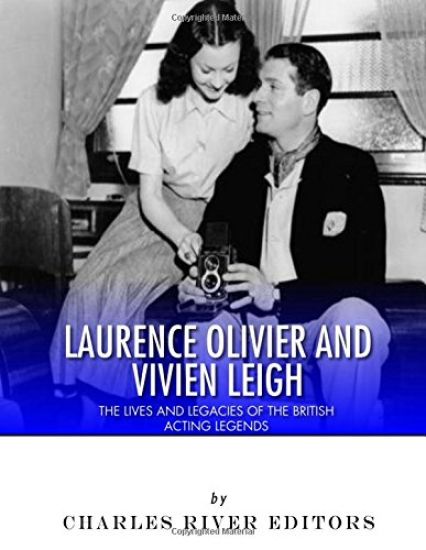
Laurence Olivier and Vivien Leigh: The Lives and Legacies of the British Acting Legends
*Includes pictures. *Includes their quotes about their lives and careers. *Includes a bibliography for further reading. Of all the great actors of the 20th century, none personifies acting royalty more than Laurence Olivier, and some of this is simply due to the fact that he was actually knighted in 1947, along with a lengthy list of other honors that include being named a life peer in 1970 and admission to the Order of Merit in 1984. To speak of The Right Honourable Lord Laurence Olivier is not a figure of speech but rather a fact. Of course, in addition to the literal sense of the term, there is undeniably a manner in which Laurence Olivier qualifies as acting royalty, as it is not for nothing that Spencer Tracy once referred to Olivier as "the greatest actor in the English-speaking world" (Bacall). It is also important to note that Tracy refers to Olivier not as a film or theater actor specifically, because much of Olivier's lofty standing derives from his ability to successfully navigate different mediums like stage, film, and television. The breadth of mediums in which he worked, the various roles he inhabited within them (actor, producer, director), and the formidable time span of his career lend Olivier's career a scope of perhaps unmatched magnitude. Indeed, Laurence Olivier worked for so long and was so successful that few actors receive the level of visibility that he still enjoys, even more than two decades after his death. While his theatrical performances exist only as memories, his cinematic adaptations of several of Shakespeare's most famous plays remain the most canonical even to this day. Hamlet, for example, has been produced for the screen by several famous directors, but his version, released in 1948, is the most well-known and best-received. It is through his films that viewers also gain a full appreciation of his creative style, as Olivier assumed full authorial control (from actor to director to producer) over many of his films, particularly the Shakespearean ones. In this sense, it is appropriate to claim that Laurence Olivier was not only a storied actor but also an artist who worked best when enjoying full authority over his productions. The 1930s were the height of the classical Hollywood era, and it is no accident that 1939 has historically been designated as the pinnacle of Hollywood film history. The era was known for its lavish studio productions, with MGM, RKO, Warner Brothers, Paramount, and 20th Century Fox all operating at the height of their powers. Every major studio possessed a long roster of contract players, with films released at such a rapid pace that it made for an especially competitive environment within the industry. Even while America remained in the throes of the Great Depression, the film industry continued to flourish, and movies easily supplanted the theater as the main attraction for American entertainment. Of course, what made 1939 the watershed year was the release of several critically acclaimed movies, including The Wizard of Oz and Mr. Smith Goes to Washington. But the most famous of the bunch, and perhaps the most famous movie of all, is Gone With the Wind, and one of the most remarkable aspects of the film is that the quintessential Southern belle was played by Vivien Leigh, a British actress still relatively unknown in Hollywood. Vivien was an accomplished stage actress and had already appeared in foreign films during the 1930s, but she was a complete dark horse to get the iconic role she's still associated with, and it only came about because of her persistence in getting cast for the role. 30 years after Gone With the Wind was released, one film critic credited Selznick's "inspired casting" of Vivien Leigh as Scarlett with the film's success. Another 30 years later, the same critic wrote that Leigh "still lives in our minds and memories as a dynamic force rather than as a static presence."
Last at West Point, Legends at War: The Lives and Legacies of George Pickett and George Custer
*Weaves Pickett and Custer's lives into one entertaining and educational narrative. *Includes accounts of Pickett's Charge by some of the soldiers who made it. *Includes excerpts of letters Pickett wrote about Gettysburg to his wife Sallie. *Discusses controversies surrounding Pickett's Charge and the Battle of Little Bighorn *Includes pictures of important people, places, and events. *Includes maps of important battles. *Includes a Bibliography of each man for further reading. Before July 3, 1863, George Pickett was best known among his comrades for finishing last in his class at West Point, being a jocular but courageous soldier, and his carefully perfumed locks. As part of West Point's most famous Class of 1846, Pickett was classmates with men like Stonewall Jackson and George McClellan, and despite his poor class standing he distinguished himself fresh out of school during the Mexican-American War. After proving himself a capable brigadier during the Peninsula Campaign, during which he was wounded and forced to recuperate, Pickett was given command of a division in Longstreet's corps of the Confederate Army of Northern Virginia, putting him in position for a rendez-vous with destiny. Today Pickett is best remembered for the charge that has taken his name and is now remembered as the most famous assault of the Civil War. Having failed to dislodge the Union Army of the Potomac on either flank during the first two days at Gettysburg, Lee ordered a charge of nearly 15,000 at the center of the lines. The attack is now considered the high water mark of the Confederacy, spelling the South's doom with the failed charge and the loss at Gettysburg. Pickett's division was so decimated by the charge that when Lee asked him to reform his division in case of a Union counterattack, Pickett is alleged to have responded, "I have no division " Since the Battle of Little Bighorn, George Armstrong Custer (1839-1876) has possessed one of the most unique places in American history. Although he was a capable cavalry officer who served honorably during the Civil War, he remains one of the most instantly identifiable and famous military men in American history due to the fact he was killed during one of the country's most well known and ignominious defeats, the Battle of Little Bighorn. And yet, this one relatively insignificant battle during America's Indian Wars has become one of the country's most mythologized events and continues to fascinate Americans nearly 140 years later. Despite being in his early 20s when the Civil War started, Custer rose through the ranks so quickly that he famously commanded a brigade of Michigan cavalrymen at Gettysburg, fighting the vaunted JEB Stuart and his horsemen to a standstill on the climactic 3rd day of that battle. Custer's success continued through until the end of the war, with his men playing an integral role during the Appomattox Campaign that forced the surrender of Robert E. Lee's Army of Northern Virginia. Had Custer's career ended there, he would have been both successful and largely forgotten. Instead, the last 10 years of his life were full of political and military intrigue, as he attempted to position himself both in politics and the Army while making himself one of the best known fighters of the Indian Wars. Those actions, along with the Battle of Little Bighorn, made him controversial even in his day, but with his death coming to be widely viewed as a sacrifice for his country, his legend and legacy grew throughout the nation. No matter what critics or supporters thought of him, George Armstrong Custer was unquestionably relevant. Last at West Point, Legends at War chronicles the historic lives and careers of the two men who finished last in their class at West Point before becoming legends in war, and it discusses the controversial legacies of each man. Along with pictures, you will learn about Custer and Pickett like you never have
King Arthur and Robin Hood: The History and Folklore of England's Most Famous Folk Legends

King Arthur and Robin Hood: The History and Folklore of England's Most Famous Folk Legends

Jesse Harasta; Charles River

Createspace Independent Publishing Platform
2017
nidottu
*Includes pictures *Includes a table of contents King Arthur is one of the most famous names in history, and his name still evokes visions of fantasy, chivalry, bravery, and more even today. Arthur remains a pop culture fixture around the globe, made famous in various Arthurian tales written by writers like Chretien de Troyes. Arthur came to embody the ideals of the Middle Ages: strength, chivalry, bravery, and more. Along the way, his Excalibur sword, the Holy Grail, his queen, and more have all become household words. Arthur has long been identified as a folk hero, and there are countless tales that comprise the Arthurian legend, but was there an actual person that the original stories were based on? People still search for the seeds of truth in the Knights of the Round Table, and the historical figure that inspired the Arthurian tales. Of course, as with all great myths, and even those with a kernel of truth behind them, there is no "real" Arthur. Arthur is now comprised of the works written by diverse storytellers, most of which have built upon the ancient stories and possibly history. It is from there that a primordial seed of myth remains at the heart of all the retellings. At the same time, Arthur's story is one of transformation, as he is brought from the Middle Ages into the Renaissance and more modern times. And that story also includes the famous contemporaries in his stories and other important historical figures, like Geoffrey of Monmouth, the imprisoned Sir Thomas Mallory and Walt Disney. When looking for the historical and mythical Arthur, scholars try to understand how the Arthur of these tales and of others like Disney's Sword in the Stone and Monty Python and the Holy Grail came to be. What are the origins of the Arthur legend and what can they tell people about the past? What is the historical basis for King Arthur, if any? There are few characters in the English language more iconic than Robin Hood. Emerging out of the ballads of the High Middle Ages and surviving through numerous permutations to the present day, the green-clad archer has become an icon. Today he represents a playful, irreverent and cunning resistance to corruption and injustice, associated primarily with stealing from the rich and giving to the poor. Robin Hood's selfless acts of helping the masses at the expense of himself (by not keeping his treasure) have led to contemporary figures like Bill Gates being called "Modern Day Robin Hoods", and when a British man robbed a bank in 2013 and handed out the money to homeless people before he was arrested and imprisoned, the name Robin Hood was naturally in the news once more. Robin Hood is a celebrated folk hero and a kind of good thief, but the earliest stories about Robin Hood depict a far different character. The first Robin Hood was often a brutal and selfish yet also honorable figure, an anti-hero loved (perhaps paradoxically) by many social classes and loathed by authorities. When the notorious Gunpowder Plot was discovered at the beginning of the 17th century, the Earl of Salisbury condemned Guy Fawkes and the conspirators for being "Robin Hoods". The transformation of Robin Hood over the centuries has left many scholars attempting to find the origins behind the original story. Like King Arthur, some have even sought a historical figure that might serve as the basis for Robin Hood, while others have sought out mythological origins to see if Robin Hood's character evolved out of a mythological figure. When looking for the historical and mythical figure, scholars try to understand how the Robin Hood of these tales and came to be. What are the origins of Robin Hood and what can they tell people about the past? What is the historical basis for Robin Hood, if any?
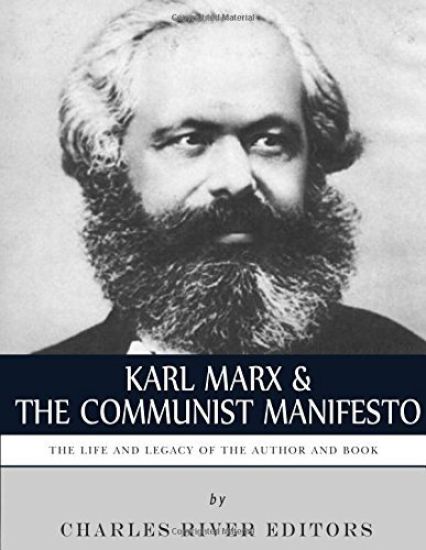
Karl Marx & The Communist Manifesto: The Life and Legacy of the Author and Book

Karl Marx & The Communist Manifesto: The Life and Legacy of the Author and Book

Charles River

Createspace Independent Publishing Platform
2017
nidottu
*Includes pictures of Marx and important people in his life. *Explains Marx's social and economic theories and ideology. *Discusses each section of The Communist Manifesto and its major themes. *Analyzes the history and experiences that inspired The Communist Manifesto and its impact on the 20th century's revolutions. *Includes some of the most famous quotes from The Communist Manifesto. *Includes a Bibliography for further reading. "The philosophers have only interpreted the world, in various ways. The point, however, is to change it." - Karl Marx It would be almost impossible to exaggerate the influence Karl Marx has had upon the world in the last 150 years. Marx was an influential historian, journalist and economist who is widely considered one of the first social scientists, but he is best remembered for advocating socialism, particularly the brand that would take his name. As the father of Marxism, Marx predicted that capitalistic societies, ruled by a "dictatorship of the bourgeoise", would eventually give way via class struggles to a "dictatorship of the proletariat", and eventually to a more stateless form of communism. The Communist Manifesto is in several respects a paradoxical document. A product of the Western European political struggles that culminated in the pan-European Revolutions of 1848, its greatest historical impact was nevertheless not felt until the following century, in countries far from Western Europe (Russia and China) that Marx and Engels would never have viewed as ripe for revolutionary activity. The Manifesto was written as a diagnosis of the ills of what is often called high industrial capitalism, yet in many ways the world it describes, in which "all that is solid melts into air," sounds more like a prediction of a globalized capitalist world of political flux, virtual life, and accelerated time than a description of Marx's era, in which monarchies and established churches still wielded immense power across Europe. Moreover, although the best-known attempts to put Marx's and Engels's program into practice failed and are now in almost universal disrepute, the fundamental contradictions and deadlocks of capitalist society they present so vividly are still awaiting adequate remedies. While Marx laid out the ideological groundwork, many put it into action, leading to the formation of socialist powers in the Soviet Union and China during the first half of the 20th century. Marx's writings and philosophy had an impact on the social sciences and economic theories, but one of his biographers could comfortably and accurately assert that the political history of the 20th century was "Marx's legacy". Whether fairly or not, in the West Marx has become inextricably linked with some of the totalitarian excesses of the regimes that claimed to espouse his ideology, and for that reason Marx is often associated with some of the negative connotations that come with the Soviets. Nevertheless, few would deny the very decisive impact Marxism had on the global landscape, and the ramifications continue to have a political influence today. Karl Marx and The Communist Manifesto chronicles the life of the revolutionary socialist and his seminal work, analyzing its ideological themes and its influential and enduring legacy. Along with pictures of important people, places and events, you will learn about Marx and the Manifesto like you never have before, in no time at all.

Jumbo the Elephant: The Life and Legacy of History's Most Famous Circus Animal

Jumbo the Elephant: The Life and Legacy of History's Most Famous Circus Animal

Charles River

Createspace Independent Publishing Platform
2017
nidottu
*Includes pictures *Includes accounts of Jumbo's life written by his trainer, P. T. Barnum, and contemporary newspapers *Includes online resources and a bibliography for further reading *Includes a table of contents "I had often looked wistfully on Jumbo, but with no hope of ever getting possession of him, as I knew him to be a great favorite of Queen Victoria, whose children and grandchildren are among the tens of thousands of British juveniles whom Jumbo had carried on his back. I did not suppose he would ever be sold." - P. T. Barnum Modern views of animals range from hunters who pay big money to go on safaris in Africa to vegans who refuse to use even the wool or milk from a fellow creature, and as is the case with most controversies, most people fall in the middle, not wanting to kick a dog but still enjoying a good steak. However, in the early 20th century, the standards were much different, with animals seen as strictly property to be gathered and used with little to no consideration about their health or feelings. It was into this world that a little elephant later called Jumbo was born. He quickly learned the harsh realities of life when his mother was killed by hunters before his first birthday. Then he himself was taken from his sunny home and transported thousands of miles to soggy London, where he was expected to spend his days on display or earning his very limited keep by carrying small children for rides on his back. While he was fed hay, dry grass that was at least some substitute for the fresh greenery of the African plains, he was also fed both beer and hard liquor, oysters, cakes and candy, a diet that would have severely shortened his life had not a terrible accident ended it first. During this time his one faithful friend, a man named Matthew Scott, tried to do the best he could to care for the animal and even meet his emotional needs. However, even Scott was hampered by the times in which he lived, especially when the command came to walk an 11 foot tall Jumbo into a crate barely big enough to hold him and to travel with him in these cramped quarters for a two week trip across another ocean to yet another unfamiliar land. Ironically, it was that same trip that made Jumbo an international celebrity. Americans had loved traveling circuses for generations, and none represent the country's love for entertainment quite like the most famous of them all: the Ringling Bros. and Barnum & Bailey Circus. Circus promoters have long been viewed as somewhat shady hucksters, but none could top P. T. Barnum, who used a blend of traditional circus entertainment, freak show exhibits, and outright hoaxes to create "The Greatest Show on Earth". In fact, Barnum had specialized in circus entertainment decades before traveling circuses were truly a national sensation, particularly thanks to the popularity of the Barnum American Museum in New York City. Barnum's museum offered something for everyone across its different halls, from poetic readings to animal exhibits, and all the while, Barnum was defiant when confronted by criticism, reminding people, "I am a showman by profession...and all the gilding shall make nothing else of me." Jumbo was not a pet to P. T. Barnum but an investment, an attraction that soon paid off in a big way. But Jumbo was also beginning to suffer the effects of his poor lifestyle even as fate led him toward his death on a crowded railroad track. It's a story that saddens many today, but in the 1880s, it was more or less the way things were. Nonetheless, the influence Jumbo had was fitting given his size, leading not only to similar acts across various traveling circuses but also to adaptations of his story, perhaps most notably Disney's Dumbo in the 1940s. Jumbo the Elephant: The Life and Legacy of History's Most Famous Circus Animal looks at Jumbo's history, and the giant impact the elephant had on entertainment.
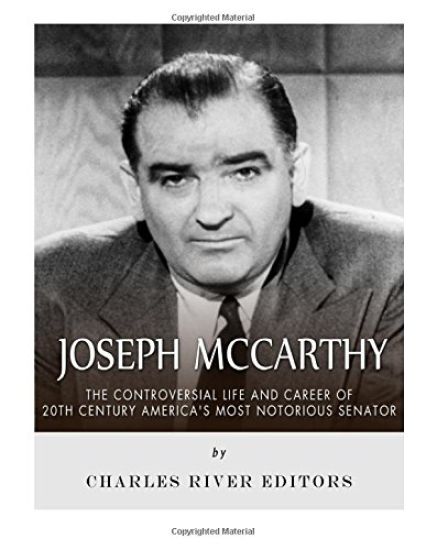
Joseph McCarthy: The Controversial Life and Career of 20th Century America's Most Notorious Senator
*Includes pictures *Includes McCarthy's quotes about his own life and career *Includes excerpts of the McCarthy-Army hearings *Includes online resources and a bibliography for further reading *Includes a table of contents "Today we are engaged in a final, all-out battle between communistic atheism and Christianity. The modern champions of communism have selected this as the time, and ladies and gentlemen, the chips are down - they are truly down." - Joseph McCarthy "I will not get in the gutter with that guy." - President Dwight D. Eisenhower Shortly after World War II, Congress' House Committee on Un-American Activities began investigating Americans across the country for suspected ties to Communism. The most famous victims of these witch hunts were Hollywood actors, such as Charlie Chaplin, whose "Un-American activity" was being neutral at the beginning of World War II. By the late 1950s, the hysteria had waned, recognized in large measure as an overreaction. Another factor was the disrepute the Red Scare fell into because of the antics of Wisconsin Senator Joseph McCarthy. McCarthy had made waves in 1950 by telling the Republican Women's Club in Wheeling, West Virginia that he had a list of dozens of known Communists working in the State Department. The political theater helped Senator McCarthy become the most prominent anti-Communist crusader in the government, and the Rosenberg case only further emboldened him. McCarthy continued to claim he held evidence suggesting Communist infiltration throughout the government, but anytime he was pressed to produce his evidence, McCarthy would not name names. Instead, he'd accuse those who questioned his evidence of being Communists themselves. McCarthy's rise made it possible for him to continue lobbing accusations against people, but the Senator finally met his match when he went after the Army. As chairman of the Senate Committee on Government Operations, McCarthy summoned decorated World War II veterans and challenged their loyalty, and when he openly suggested World War II hero Brigadier General Ralph W. Zwicker was a Communist during one hearing, the military had enough. In April 1954, the committee hearings were widely televised, and Americans watched Army members demand that McCarthy name names and provide evidence. On June 9, 1954, McCarthy was humiliated by the Army's legal representative, Joseph Nye Welch, who repeatedly demanded that McCarthy produce the list of alleged Communists in the U. S. Army. As McCarthy tried to wiggle out of the challenge, he finally named Fred Fisher, who had been affiliated with the National Lawyers Guild during law school, an organization that FBI Director J. Edgar Hoover attempted to have the Attorney General designate as a Communist front. Enraged, Welch responded, "Until this moment, Senator, I think I have never really gauged your cruelty or your recklessness. Fred Fisher is a young man who went to the Harvard Law School and came into my firm and is starting what looks to be a brilliant career with us... We know he belonged to the Lawyers Guild. Let us not assassinate this lad further, Senator. You've done enough. Have you no sense of decency, sir? At long last, have you left no sense of decency?" Welch received an ovation from the gallery, and McCarthy had been publicly and permanently repudiated. He would be censured by Congress, and he would die just a few years later. Though anti-Communist sentiment in the 1950s is often derisively dismissed as McCarthyism, there was some basis for the era's fears. The Communist Party in the United States was funded by the Soviet Union; its leaders were paid by the Soviets, and several were agents of the Soviet intelligence apparatus. Still, as a small elite group that was able to place individuals in positions of power, they did present a potential threat to the security of the country, and there were several spy rings operating in America at the time.
Joseph Kony & The Lord's Resistance Army: The History of Africa's Most Notorious

Joseph Kony & The Lord's Resistance Army: The History of Africa's Most Notorious

Charles River

Createspace Independent Publishing Platform
2017
nidottu
*Includes pictures *Includes online resources and a bibliography for further reading *Includes a table of contents The Lord's Resistance Army appeared on the conflict landscape of Central Africa at the dawn of perhaps one of the bleakest period of post independence African history: the 1980s and 1990s. This was the era of Afro-pessimism, during which the proliferation of war and crisis in Africa appeared simply overwhelming. It was during this period that the continent began to feel the full weight of the AIDS crisis, which was exacerbated by economic stagnation, continent wide corruption, poor governance, the highest levels of unemployment since decolonization and apparently unsolvable conflicts in regions as diverse as Ethiopia, Mozambique, Angola, Western Sahara, Liberia, Sierra Leone, Somalia, and of course that region of perennial instability, the Great Lakes region of central Africa. Here a complex mix of colonial legacy, ethnic incompatibility, isolation and lawlessness has combined in the years since independence to create a theatre of ongoing political unrest. Indeed, it was this region that saw perhaps one of the most iconic episodes of the 1990s, the Rwandan Genocide, the ramifications of which have included two major wars fought within the Congo, deadly ethnic equalization throughout the region, knock-on wars in Uganda and Central African Republic and an ongoing see-saw balance of power in an extremely volatile region. Another similar region of ongoing instability that factors into this subject has been the broad axis that includes South Sudan, northern Uganda, northern Democratic Republic of Congo (DRC), southern Chad and the Central African Republic (CAR). The engine of conflict in this broad region, in particular in western and southern Sudan, has been the fundamental incompatibility of the largely Islamic north and the black Christian/animist south. This apparently unbridgeable gulf has proved to be the catalyst of nearly 60-years of perpetual conflict. The Lord's Resistance Army insurgency straddles both of these axes, and although it is limited in scope by narrow ethnic appeal and limited political pretensions, it has nonetheless proved in the nearly three decades of its existence to be very persistent, and extremely difficult so far to eradicate. This book looks at the insurgency of America's most notorious guerrilla army, and the manner in which Joseph Kony came to the attention of the world. Along with pictures of important people, places, and events, you will learn about the Lord's Resistance Army like never before, in no time at all.
John & Abigail Adams: America's First Political Couple

John & Abigail Adams: America's First Political Couple

Charles River

Createspace Independent Publishing Platform
2017
nidottu
*Includes letters written by John, Abigail, and Thomas Jefferson. *Includes pictures of the Adamses and important people, places, and events in their lives. *Includes a Bibliography for further reading. "A Constitution of Government once changed from Freedom, can never be restored. Liberty, once lost, is lost forever." - John Adams "Remember the Ladies, and be more generous and favourable to them than your ancestors. Do not put such unlimited power into the hands of the Husbands." - Abigail Adams John Adams has become one of the more popular presidents in history relatively recently, but it was not always so. For most of his life he was seen as a bit of an outsider, different from his fellow first presidents in his temperament, birth, life and politics. Adams and his son were the only presidents out of the first seven who were born north of the Mason Dixon line, and he was not an easy man to understand or work with. Not only did he have few friends, but he also often fell into long term quarrels with those he had. Adams remained a celebrated figure in Boston for all the work he did in Massachusetts before and after the Revolution, but his national reputation has experienced quite a renaissance over the past decade, beginning with David Mccullough's best selling biography in 2001, followed in 2008 by the popular HBO series based on it. Then, in 2010, Dearest Friend, a record of the correspondence between Adams and his wife Abigail solidified his position as one of the most darling Founding Fathers of the 21st Century. Several factors explain the recent boost to his legacy. First, unlike Washington or Jefferson, Adams was not a cultural icon. Therefore, Americans have had more to learn about his life and work, whereas recent historical findings about men like Jefferson are either anti-climatic or disappointing. Moreover, Adams and his son are the only two of the first 10 presidents not to have owned slaves, making it easier and more politically correct to like them. Finally, the extensive letters that passed between him and Abigail have cast him as a romantic figure in a way that few other presidents enjoy. While her time as First Lady was important, Abigail Adams remains one of the most recognized and respected First Ladies in American history due to her voluminous correspondence with John when they were separated throughout the American Revolution, as she remained in Massachusetts while John found himself in the thick of politics during his time in the Continental Congress and over in France. In addition to providing a comprehensive account of the inner workings of both politics and the home front during that important chapter in history, the letters also demonstrated the strong intellectual and emotional bond the two of them shared, allowing historians a glimpse of just how influential Abigail was on her husband's ideology and decision making. As the acclaimed historian Joseph Ellis noted, the nearly 1200 letters between the couple "constituted a treasure trove of unexpected intimacy and candor, more revealing than any other correspondence between a prominent American husband and wife in American history." John & Abigail Adams chronicles the amazing lives and legacies of America's first political couple, humanizing the man who could be both mercurial and tender, and the woman who proved his intellectual match and helped keep him grounded. Along with pictures of important people, places, and events in their lives, you will learn about John and Abigail Adams like you never have before, in no time at all.
Jim Crow On Trial: The History and Legacy of the Notorious Case of the Scottsboro Boys
*Includes pictures *Includes accounts of the case *Includes online resources and a bibliography for further reading *Includes a table of contents "I'm interested solely in seeing that that poor...colored boy over there and his co-defendants in the other cases get a square shake of the dice, because I believe, before God, they are the victims of a dastardly frame up." - Samuel Leibowitz, defense attorney When famous political philosopher Alexis de Tocqueville toured the new United States of America, he was impressed by the representative government set up by the Founders. At the same time, he ominously predicted, "If there ever are great revolutions there, they will be caused by the presence of the blacks upon American soil. That is to say, it will not be the equality of social conditions but rather their inequality which may give rise thereto." De Tocqueville was prescient, because the longest battle fought in the history of the United States has been the Civil Rights Movement. The framers of the Constitution kicked the problem down the road, over half a million died during the Civil War to end slavery, and then many more fought and died to dismantle segregation and legalized racism in the 100 years after. It goes without saying that Jim Crow was pervasive in the wake of the Civil War, but few events in history put the effects of institutionalized segregation and racism on display like the case of the Scottsboro Boys, a group of black teenagers accused of raping two young white girls on a train. When the girls made the accusation, the teens were nearly lynched by an angry mob, only to be dragged almost immediately into court and given a sham trial that inevitably ended in a conviction by an all-white jury and death sentences for 8 of the 9 boys. In the wake of the quick trial, the case was appealed by outsiders on behalf of the boys, and though Alabama's Supreme Court affirmed almost all the convictions, the attention raised nearly every potential issue implicating criminal procedure among the states. While the Bill of Rights had ensured a number of rights for criminal defendants, the states had previously been allowed to interpret those rights, leading to instances where defendants weren't provided adequate legal representation. The case of the Scottsboro Boys compelled the U. S. Supreme Court to order new trials in Powell v. Arizona (1932), which went a long way to determining and codifying some of the rights of criminal defendants in state courts. However, even after one of the girls recanted her testimony during retrials, the Scottsboro Boys were still found guilty, leading to more appeals and yet another Supreme Court ruling ordering retrials. Eventually, some of the boys were cleared of charges, but several still ended up serving time in prison, and it would not be until 80 years after the controversial case that Alabama posthumously pardoned the defendants who hadn't been cleared of all charges. To this day, the case remains synonymous with the injustice of Jim Crow and the manner in which African Americans were deprived of basic civil rights, and historian Wayne Flynt may have put it best when he summed up the case and its aftermath: "I think that's perhaps an ultimate tragedy. People pulled into history who never wanted to be pulled into history suddenly put on a national platform, and tragically paraded out for everybody's benefit but their own. And the question of who really cared about them, who really defended them? Almost everyone had an agenda that involved the Scottsboro Boys. And I think the courage of the Scottsboro Boys is just surviving, just enduring." Jim Crow On Trial: The History and Legacy of the Notorious Case of the Scottsboro Boys chronicles the infamous crime and the notorious trial that followed. Along with pictures of important people, places, and events, you will learn about one of the most controversial cases in American history like never before.