Kirjojen hintavertailu – 12 903 727 kirjaa ja 27 kauppaa
Kirjailija
Charles River
Kirjat ja teokset yhdessä paikassa: 4 673 kirjaa, julkaisuja vuosilta 2013–2022, suosituimpiin kuuluu William Powell and Myrna Loy: The Lives and Careers of One of Classical Hollywood's Most Iconic Duos. Vertaile teosten hintoja ja tarkista saatavuus suomalaisista kirjakaupoista.
*Includes pictures *Includes online resources and a bibliography for further reading Hinduism is one of the world's great religions, dominating the Indian subcontinent for most of the last millennium, and its largest temple is an unbelievably magnificent structure located in Angkor, Cambodia. Known in English as Angkor Wat ("City Temple"), the gigantic complex was built by King Suryavarman II in the early 12th century to serve as the king's state temple and capital city. Since it has remained so finely preserved, it has maintained religious significance for nearly 900 years, first dedicated to the Hindu god Vishnu, and then Buddhist. Understandably, it has become one of Cambodia's most potent symbols and tourist attractions, and it even appears on the Cambodian national flag. Angkor Wat continues to fascinate the world, both due to its sheer grandeur and size, as well as its ornamental decorations both inside and out. With political strife in Cambodia having cooled, Angkor Wat is now a major tourist attraction, bringing upwards of over half a million foreigners per year, which accounts for over half of the nation's tourists. Angkor Wat: The History and Legacy of the World's Largest Hindu Temple chronicles the remarkable history of the site and the religious influence it has had over the centuries. Along with pictures depicting important people, places, and events, you will learn about Angkor Wat like never before.
*Includes pictures of Astaire, Rogers, and other important people and scenes. *Includes their quotes about each other. *Includes a bibliography for further reading. Virtually all famous actors are regaled by the public, but even still, Fred Astaire occupies a privileged position in American pop culture. The specific films in which Astaire acted may not be especially famous in their own right - most people likely cannot recall the title of Top Hat (1935), his most decorated film - but Astaire's dancing prowess invariably creates a lasting impact on viewers. Instead of tying his fame to a single film, Astaire's genius lay in constructing his star persona around a specific set of iconographic imagery that has become embedded within American culture. Across his films, the recurring iconic images of the top hat, cane, and coat tails, as well as the image of Astaire dancing with Ginger Rogers, all constitute a timeless symbol for elegance that continues to captivate viewers who are unfamiliar with the plots of his films. There have been other film musical actors who were proficient dancers, Gene Kelly chief among them, but none were able to perform with the seamless elegance of Astaire, and none have been remembered nearly as well. Astaire's dancing numbers epitomized grace and gaiety, making it seem as though he was carefree, but this was hardly the case. While it is easy to imagine Astaire being raised in an aristocratic family, his working-class background was so blue collar that his family eventually relied on him and his sister as the primary breadwinners in the family. Rather than being born and raised with wealth in a large city, Astaire came from a working-class neighborhood in Omaha, Nebraska, a setting so antithetical to the world of dance that it quickly became clear that the family would need to relocate. If anything, Astaire's unglamorous origins further demonstrate that the magisterial dancing and the effortlessly elegant image accompanying it were products of Astaire's tireless work ethic and insistence on perfection. Considering the immense success of their films together, it is entirely understandable that Astaire and Rogers are joined at the hip in the eyes of the public. However, an appreciation for the Fred and Ginger musicals is only enhanced by knowledge of the personal backgrounds of the two stars. After all, the fact remains that Astaire and Rogers came from vastly different cultural backgrounds, and at the time that they met, their careers had unfolded in dissimilar ways. Astaire was a national celebrity for his skills as a stage performer (mainly with his sister Adele), while Rogers was raised in a more archetypal Midwestern setting and her professional success was reached entirely through cinema. While Astaire made a name for himself through his dancing, Rogers was more recognized for her singing talents. Clearly, it is still possible to discern fundamental differences between their professional talents, contrasts that would become more distinguishable once they ceased making films together. Fred Astaire and Ginger Rogers: The Story of Hollywood's Most Famous Dancers profiles the lives and careers of both stars, as well as a comprehensive analysis of their movies together. Along with a bibliography and pictures of important people, places, and events, you will learn about Fred and Ginger like you never have before.
*Includes pictures *Includes accounts of the fighting by soldiers on both sides *Includes online resources and a bibliography for further reading All Americans are familiar with the "day that will live in infamy." At 9:30 a.m. on Sunday, December 7, 1941, Pearl Harbor, the advanced base of the United States Navy's Pacific Fleet, was ablaze. It had been smashed by aircraft launched by the carriers of the Imperial Japanese Navy. All eight battleships had been sunk or badly damaged, 350 aircraft had been knocked out, and over 2,000 Americans lay dead. Indelible images of the USS Arizona exploding and the USS Oklahoma capsizing and floating upside down have been ingrained in the American conscience ever since. In less than an hour and a half the Japanese had almost wiped out America's entire naval presence in the Pacific. Pearl Harbor was unquestionably one of the seminal events in American history, and given the nature of the surprise attack, the entry of the U. S. into the war, and the lingering controversies and conspiracy theories, the attack on Pearl Harbor continues to be a highly charged and heavily debated event. Those who had decoded and seen the Japanese communications in early December 1941 would not be surprised when they heard about an attack on December 7, 1941. They would, however, be astonished when they heard where that attack took place. Posted on the other side of the world, it was early on the morning of December 8 in the Philippines when American general Douglas MacArthur received news of the Japanese attack on Pearl Harbor hours earlier. With that, it could only be a matter of time before the Japanese attacked the Philippines. Although MacArthur and Allied forces tried to hold out, they could only fight a delaying action, and the Japanese managed to subdue all resistance by the spring of 1942. However, in the aftermath of Japan's successful invasion, as the nation's military strategists began preparations for the next phase of military actions in the theater, their forces had to deal with a critical logistical problem they had not foreseen. The Japanese had to deal with large numbers of Filipino and American soldiers who had surrendered after a lengthy defense in the Bataan peninsula, but they were not prepared for so many prisoners of war because their own military philosophy emphasized rigid discipline and fighting until the end. They could not imagine a situation in which Japanese soldiers would willingly surrender, so they assumed that no other combatants would do so either. At Adelaide on March 18, 1942, MacArthur met the assembled press and told them, "I came through and I shall return." The words would go down in history, and MacArthur would eventually fulfill the vow. The Americans would turn the war in the Pacific around in the middle of 1942, but in the wake of Pearl Harbor and the Japanese invasion of the Philippines, the country was in desperate need of a morale boost, and it would come in the form of the Doolittle Raid. In part to show that the Japanese were not invincible, and in part to reassure the American public that the nation would not lose the war, the Doolittle Raid included both Army and Navy units that launched 16 land-based medium bombers from an aircraft carrier, a feat that was the first of its kind but also one involving a great deal of risk. Getting the bombers and carriers in place to execute the mission involved much strategic planning and cooperation within the American military, and had it failed, it could have dealt a serious blow to the Americans' Pacific presence due to the nation's limited resources in that theater. As if getting in position wasn't challenging enough, the raid was never designed to include a round trip back to the carrier. Given the size of the bombers, the planes were unable to land back on the USS Hornet, so the plan was to have them fly over Japan and ditch in China after bombing Tokyo.
*Includes pictures *Includes quotes from participants and Congress *Includes footnotes, online resources and a bibliography for further reading "I have no trouble with my enemies. I can take care of my enemies in a fight. But my friends, my goddamned friends, they're the ones who keep me walking the floor at nights " - President Warren Harding Americans in the 21st century cite the relatively recent Watergate Scandal, and to a lesser degree the Enron Oil Scandal, as prime examples of modern governmental corruption. It is a widely held perception that these incidents, particularly the one bringing about the first resignation of an American president, caused the public to lose trust in federal institutions and political figures. However, the prototype for the breakdown of governmental fidelity lies in the early 20th century, a time in which the recent territories of the United States struggled to evolve from a lawless, Wild West culture. The federal government viewed its western resources as both unlimited and outside the grasp of the government. The leading oil barons, born and raised in the 19th century, were accustomed to federally-blessed land-grabs and easily obtained mining and lumber interests, often doled out to the social and financial elite under the guise of exploration. Federal interference was minimal in contrast to later decades, and the government itself was eager to conquer the West through large-tract farming, river management, mineral and timber development, not to mention the procurement of oil for a growing society as coal gave way to new types of fuel. The early 20th century was a time of sudden growth for the young American automobile industry, and of a military beginning to extend its reach around the world. In what would become largely a jurisdictional dispute over Western natural resources, the unbridled oil industry of the new century collided with the United States military and the Department of the Interior, set against the dominance of a corruption-riddled presidential administration. For the first time in American history, in a test between entrepreneurism and government management, a high-ranking cabinet official was convicted of corruption and sent to prison in the aftermath, along with his co-conspirators. In the ensuing Congressional investigation that sought to root out the widespread graft, bribery, and usurpation of government property over the following decade, the two-year affair became commonly known as the Teapot Dome Scandal. Although three major oil fields were actually involved, including Elk Hills and Buena Vista in the San Joaquin Valley of California, the symbol of the incident became a rock formation north of Casper, Wyoming, shaped in what most observers would describe as a teapot. Beneath this formation lay an enormous reservoir of crude oil, and all of it the property of the United States Navy. On June 4, 1920, Congress at last declared that the Secretary of the Navy was to hold the power to "conserve, develop, use and operate," at its discretion, a tract of approximately 70,000 acres in California. The Wyoming fields fell under the same dictate, and although Teapot was the smaller reserve in terms of acreage, it contained a great deal more oil than its Californian counterparts. Although never directly implicated in the row over Teapot Dome and its sister fields, the administration of Republican Warren G. Harding, elected in November of 1921, set the scandal in motion by transferring control of the Navy's oil fields to the Department of Interior, at the Secretary of the Interior's incessant urging. Albert Fall, the Secretary of the Interior at the time and a Harding appointee, was one of several poker-playing cronies in the president's cabinet. Once his department gained control over the Navy's oil fields, Fall subsequently took it upon himself to offer secret leases and contracts to independent oil companies.
*Weaves the lives of Nelson and Wellington together in one entertaining and educational narrative. *Includes pictures of Nelson, Wellington, and important people, places, and events in their lives. *Includes Bibliographies on each man for further reading. Over the course of its history, England has engaged in an uncountable number of battles, but none of her military heroes left a greater military legacy than Admiral Lord Horatio Nelson or Arthur Wellesley, the Duke of Wellington. While Napoleon spent nearly 15 years running roughshod over Europe, stunningly conquering nearly every field army put in his path, Nelson and Wellington were there to spoil his plans and put a permanent end to them. Napoleon enjoyed a stunning series of successes on the European continent, but Nelson frustrated his Egyptian campaign at the Battle of the Nile and ended his dream of invading Britain at Trafalgar in 1815. And while Napoleon dealt with the Prussians and Russians in the east, it was Wellington who held his ground and eventually ejected the French from the Iberian Peninsula before sending Napoleon on his way to St. Helena with Waterloo. Nelson is well known across the world for his decisive victory at Trafalgar, made all the more legendary by the fact that he was mortally wounded at the height of his greatest feat. And it is understandable that any man who could thwart Napoleon's ambitions as well as Nelson did would earn a place in the history books. But Nelson embodied every virtue of his homeland; a dashing, courageous military officer who was impeccably cultured, and, of course, the best at what he did. Indeed, as the personification of the supremacy of the Royal Navy, the man and his life had a powerful resonance well before his death. In September 1852, a steam train carried the body of Arthur Wellesley, First Duke of Wellington, from Kent to London, where he was to be interred at St. Paul's Cathedral after a huge state funeral. A million would flock to pay their final respects, and young Queen Victoria wept openly, lamenting that "his loss will be quite irreparable". By the time of his death, Wellington had been prime minister twice, a shrewd personal advisor to four British monarchs and one of the nation's most prominent politicians for three decades. But despite his nearly four decades of peacetime service in and out of politics, Wellington has remained one of the titans of the 19th century because of one June day in 1815. Then, as now, the Duke of Wellington is best remembered for defeating Napoleon in the most famous battle of modern history at Waterloo. Even then, the fact Wellington is remembered for Waterloo belies his extraordinary military career, which saw him come up through fighting in the Netherlands and India before opposing Napoleon's forces on the Iberian Peninsula for several years. By the time Wellington took command of allied forces during the Hundred Days Campaign and decisively finished the Napoleonic Era at Waterloo, he had participated in about 60 battles and was one of Britain's greatest war heroes. Defeating Napoleon looks at the lives, careers and legacies of Britain's foremost military heroes, but it humanizes the charismatic, self-promoting Nelson and the stern, iron-willed Wellington. Along with pictures of important people, places, and events in his life, you will learn about Nelson and Wellington like you never have before, in no time at all.
*Includes pictures *Includes accounts *Includes online resources and a bibliography for further reading The modern history of Africa was, until very recently, written on behalf of the indigenous races by the white man, who had forcefully entered the continent during a particularly hubristic and dynamic phase of European history. In 1884, Prince Otto von Bismark, the German chancellor, brought the plenipotentiaries of all major powers of Europe together, to deal with Africa's colonization in such a manner as to avoid provocation of war. This event-known as the Berlin Conference of 1884-1885-galvanized a phenomenon that came to be known as the Scramble for Africa. The conference established two fundamental rules for European seizure of Africa. The first of these was that no recognition of annexation would granted without evidence of a practical occupation, and the second, that a practical occupation would be deemed unlawful without a formal appeal for protection made on behalf of a territory by its leader, a plea that must be committed to paper in the form of a legal treaty. This began a rush, spearheaded mainly by European commercial interests in the form of Chartered Companies, to penetrate the African interior and woo its leadership with guns, trinkets and alcohol, and having thus obtained their marks or seals upon spurious treaties, begin establishing boundaries of future European African colonies. The ease with which this was achieved was due to the fact that, at that point, traditional African leadership was disunited, and the people had just staggered back from centuries of concussion inflicted by the slave trade. Thus, to usurp authority, to intimidate an already broken society, and to play one leader against the other was a diplomatic task so childishly simple, the matter was wrapped up, for the most part, in less than a decade. During World War II, when Roosevelt and Churchill met at what came to be known as the Atlantic Conference, Churchill's pleas for U. S. manpower and aid were accepted, but only under clear conditions. If the United States was to come to the aid of Britain, it would be for the purpose of defeating the Germans and the Japanese and not to support the insupportable institutions of empire. Britain and, by extension, France and Portugal, the only remaining major European shareholders in foreign empire, would have to commit to decolonization as a basic prerequisite of substantial U. S. assistance. The French too were a major imperial power with a great deal to lose from such a monumental change, but their view of the global chessboard was somewhat different. France lay under German occupation, and an armistice had been signed on behalf of the French nation by Marshall Philippe P tain, commencing the era of Vichy France. In London, meanwhile, the firebrand French General Charles de Gaulle urged a continuation of the resistance, believing the French mainland to be only a small part of the picture. France was much more than just France. De Gaulle established the Free French movement in Britain, based on the loyalty and the ongoing Free French control of a majority of her overseas territories. The Free French movement and the Free French army based themselves in Francophone Africa. The saga of the Free French movement would impact the war in both North Africa and Europe, but most specifically, it would serve to radically redefine the French view of itself and her relationship with her overseas territories. Most importantly, it would set the tone for a style of decolonization very different from the British. Colonizing and Decolonizing Africa: The History and Legacy of European Imperialism across the African Continent examines the turbulent history of imperialism across Africa and the consequences it has had. Along with pictures of important people, places, and events, you will learn about the colonization and decolonization of Africa like never before.
*Includes pictures of FDR, Eleanor and important people, places, and events in their lives. Franklin Delano Roosevelt might be America's greatest 20th century president, but there's no question that he was the most unique. A well-connected relative of Theodore Roosevelt, FDR was groomed for greatness until he was struck down by what was widely believed to be polio at the time. Nevertheless, he persevered, rising through New York politics to reach the White House just as the country faced its greatest challenge since the Civil War, beginning his presidency with one of the most iconic lines ever spoken during an inaugural address. For over a decade, President Roosevelt threw everything he had at the Great Depression, and then threw everything the country had at the Axis powers during World War II. Ultimately, he succumbed to illness in the middle of his fourth term, just before the Allies won the war. If Dolley Madison was instrumental in molding the role of First Lady in the 19th century, credit can be given to Eleanor Roosevelt for revolutionizing the political nature of the role in the 20th and 21st centuries and making it possible for presidents like Bill Clinton to enlist their wives to handle political duties. At the same time, history might remember Eleanor more for what she did outside of the White House, as she became a critically acclaimed and world famous international author and advocate of civil rights, women's rights. By the time she had finished working for the United Nations, working on the Universal Declaration of Human Rights, President Truman rightly called her "The First Lady of the World." Eleanor is one of her country's most famous and admired First Ladies, an ironic fact considering she was worried being the wife of a successful politician would force her to take on what she considered to be irrelevant ceremonial roles. But Franklin's offices and illnesses made it possible for her to run in the social and political circles that interested her, and she began wielding substantial influence both for herself and on behalf of her husband. Much like Hillary and Bill Clinton, the Roosevelts' marriage evolved into one of friendship and political convenience as Eleanor became a political power player herself. By the end of the 1940s, Eleanor's name was being bandied about for positions like governorships, the U. S. Senate, and even the Vice Presidency, which was still completely unprecedented for a woman in those times. FDR & Eleanor chronicles the amazing lives and careers of one of America's greatest presidents and one of America's greatest First Ladies, while humanizing the couple and looking at the evolving nature of their marriage. Along with pictures of important people, places, and events in their lives, you will learn about Franklin Delano Roosevelt and Eleanor Roosevelt like you never have before, in no time at all.
*Includes Priscus' contemporary account of Attila and his Court. *Includes contemporary and medieval accounts of Attila's meeting with Pope Leo the Great and the Battle of Ch lons. *Includes pictures of historic art depicting Attila and important people and events in his life. *Includes a Bibliography for further reading. "A luxurious meal, served on silver plate, had been made ready for us and the barbarian guests, but Attila ate nothing but meat on a wooden trencher. In everything else, too, he showed himself temperate; his cup was of wood, while to the guests were given goblets of gold and silver. His dress, too, was quite simple, affecting only to be clean. The sword he carried at his side, the latchets of his Scythian shoes, the bridle of his horse were not adorned, like those of the other Scythians, with gold or gems or anything costly." - Priscus, History of Bizantium A lot of ink has been spilled covering the lives of history's most influential figures, but how much of the forest is lost for the trees? In Charles River Editors' Legends of the Ancient World series, readers can get caught up to speed on the lives of antiquity's most important men and women in the time it takes to finish a commute, while learning interesting facts long forgotten or never known. Attila, Emperor of the Hunnic Empire and thus most commonly known as Attila the Hun, is an idiosyncratic figure who has become more myth than man, not least because much of his life is shrouded in mystery. Perhaps the most famous "barbarian" in history, Attila was the lord of a vast empire spanning two continents, but he is best remembered for what he did not conquer. Though he seemingly had Rome at his mercy in 452, he ultimately decided not to sack the Eternal City, and a year later he had suffered a mysterious death. What is known about Attila came mostly from Priscus, a guest of his court who wrote several books about Attila's life in Greek. Unfortunately, much of that work was lost to history, but not before the ancient writer Jordanes relied on it to write his own overexaggerated account of Attila's life. And like their leader, the Huns themselves are an instantly recognizable name with mysterious origins; most of what is known about the Huns came from Chinese sources thousands of miles and an entire continent away from Italy. Naturally, the dearth of information and the passage of time have allowed myths and legends to fill in the most important details of Attila's life. Why did a man at war with the Roman Empire for so long decide not to sack Rome in 452? Did a meeting with Pope Leo the Great convince him to spare the capital of the Western half of the empire? Did a vision from St. Peter induce Attila to convert to Christianity? Was Attila murdered by his new bride? Many authors and chroniclers have provided many answers to the many questions, but the lack of answers has allowed Atilla to become the face of ancient barbarity and the embodiment of the furious nomadic conqueror. Legends of the Ancient World: The Life and Legacy of Attila the Hun discusses the facts, myths, and legends surrounding the life of Attila, examining the historical record and the way in which his legacy has been shaped, all in an attempt to separate fact from fiction. Along with pictures and a bibliography, you will learn about Attila the Hun like you never have before, in no time at all.
*Includes pictures of historic art depicting Paul and important events in his life. *Includes a bibliography for further reading. "Paul's letters reveal a remarkable human being: dedicated, compassionate, emotional, sometimes harsh and angry, clever and quick-witted, supple in argumentation, and above all possessing a soaring, passionate commitment to God, Jesus Christ, and his own mission. Fortunately, after his death one of his followers collected some of the letters, edited them very slightly, and published them. They constitute one of history's most remarkable personal contributions to religious thought and practice." - E. P. Sanders Aside from Jesus himself, one of the most important and best known individuals of the New Testament is Paul the Apostle, formerly Saul of Tarsus. A "Hebrew born of Hebrews", Paul's conversion to Christianity was unquestionably one of the seminal events in the history of the religion, because it would be Paul who spread Christianity across much of the Mediterranean. In the process, over half of the history recorded in the Acts of the Apostles covers the life of Paul, and over half of the letters of the New Testament were written by him. Many churches and cathedrals in the western world have been named after him, and on any given Sunday in any number of churches around the world, his writings and the events of his life form the basis of sermons, devotional literature, books, Bible studies, music, movies and prayers. At the same time, even as Paul's life and works are better documented than just about any other figure in the New Testament, a lot about him remains mysterious. In addition to what was written in Scripture, other sources have helped to fill in the gaps, particularly a tradition that holds Paul was martyred in Rome during the reign of Nero. Despite the primary source material that comes from the books of the New Testament, primarily Acts and Paul's own writings, no autobiography of Paul exists, and the Bible did not record the details of his life. Legends of the Bible: St. Paul the Apostle chronicles the history, mysteries, and Scripture passages about Christianity's most famous messenger, examining the Bible and historical record to piece together an understanding of the known and unknown about him. Along with pictures and a bibliography, you will learn about Paul like you never have before, in no time at all.
*Includes pictures *Includes online resources and a bibliography for further reading In terms of geopolitics, perhaps the most seminal event of the Middle Ages was the successful Ottoman siege of Constantinople in 1453. The city had been an imperial capital as far back as the 4th century, when Constantine the Great shifted the power center of the Roman Empire there, effectively establishing two almost equally powerful halves of antiquity's greatest empire. Constantinople would continue to serve as the capital of the Byzantine Empire even after the Western half of the Roman Empire collapsed in the late 5th century. Naturally, the Ottoman Empire would also use Constantinople as the capital of its empire after their conquest effectively ended the Byzantine Empire, and thanks to its strategic location, it has been a trading center for years and remains one today under the Turkish name of Istanbul. The end of the Byzantine Empire had a profound effect not only on the Middle East but Europe as well. Constantinople had played a crucial part in the Crusades, and the fall of the Byzantines meant that the Ottomans now shared a border with Europe. The Islamic empire was viewed as a threat by the predominantly Christian continent to their west, and it took little time for different European nations to start clashing with the powerful Turks. In fact, the Ottomans would clash with Russians, Austrians, Venetians, Polish, and more before collapsing as a result of World War I, when they were part of the Central powers. The Ottoman conquest of Constantinople also played a decisive role in fostering the Renaissance in Western Europe. The Byzantine Empire's influence had helped ensure that it was the custodian of various ancient texts, most notably from the ancient Greeks, and when Constantinople fell, Byzantine refugees flocked west to seek refuge in Europe. Those refugees brought books that helped spark an interest in antiquity that fueled the Italian Renaissance and essentially put an end to the Middle Ages altogether. The Rise of the Ottoman Empire: The History of the Turkish Empire's Establishment across the Middle East and Eastern Europe chronicles the rise of one of history's most influential empires. Along with pictures of important people, places, and events, you will learn about the rise of the Ottoman Empire like never before.
*Includes pictures *Includes ancient accounts *Includes online resources and a bibliography for further reading Africa may have given rise to the first human beings, and Egypt probably gave rise to the first great civilizations, which continue to fascinate modern societies across the globe nearly 5,000 years later. From the Library and Lighthouse of Alexandria to the Great Pyramid at Giza, the Ancient Egyptians produced several wonders of the world, revolutionized architecture and construction, created some of the world's first systems of mathematics and medicine, and established language and art that spread across the known world. With world-famous leaders like King Tut and Cleopatra, it's no wonder that today's world has so many Egyptologists. Perhaps the most intriguing aspect of ancient Egyptian civilization was its inception from the ground up, as the ancient Egyptians had no prior civilization which they could use as a template. In fact, ancient Egypt itself became a template for the civilizations that followed. The Greeks and the Romans were so impressed with Egyptian culture that they often attributed many attributes of their own culture - usually erroneously - to the Egyptians. With that said, some minor elements of ancient Egyptian culture were, indeed, passed on to later civilizations. Egyptian statuary appears to have had an initial influence on the Greek version, and the ancient Egyptian language continued long after the pharaonic period in the form of the Coptic language. To the ancient Egyptians, the gods and goddesses were all around them and could be seen daily in nature. Nearly every animal found in ancient Egypt, both domestic and wild, were associated with a god or goddess, which can be seen in Egyptian art where deities are often depicted with human bodies and animal heads. Or sometimes the deities are portrayed as complete animals. Since deities were associated with certain animals, all animals of a specific species were given divine and protected status. The reverence that ancient Egyptians had for certain animals evolved during the long duration of Pharaonic history until by the Late Period animals of specific species were mummified by the thousands as offerings for their associated deities. For instance, ibises were mummified for the god Thoth, while cats were mummified for the goddess Bastet. Modern archaeologists have uncovered most of the Late Period animal mummies in the region near the modern village of Saqqara, which has become known as the "Sacred Animal Necropolis." Although most of the animal mummies discovered in the Sacred Animal Necropolis of Saqqara are the thousands of nameless ibises, falcons, crocodiles, and cats, the region was also home to another, more important animal cult. By the time the Greeks took control of Egypt in the late 4th century BCE, the Apis cult was certainly one of the most influential, if not the most influential, of all the many different religious institutions that existed in the country at that time. Through a combination of modern archaeological excavations as well as Egyptian texts and classical historical accounts, the meaning, scope, and importance of the Apis cult can be better understood.
*Includes pictures *Includes accounts of the battles written by soldiers on both sides *Includes online resources and a bibliography for further reading "There is Jackson standing like a stone wall. Let us determine to die here, and we will conquer. Rally behind the Virginians." - General Barnard Bee April 18, 1861 marked the date Southern forces started pouring into Harper's Ferry, Virginia. Six days earlier, shots had been fired at Fort Sumter in Charleston Harbor, South Carolina, marking the beginning of the Civil War, and Virginia officially seceded from the Union April 17. The following day, men arrived in the town where John Brown's attempted uprising was quelled less than two years earlier. The men came from all portions of the Confederate States of America (C. S. A.) and the border states of Kentucky and Maryland, but the preponderance of volunteers came from Virginia. Once the Confederate troops occupied Harper's Ferry, martial law was declared and so-called "feather bed" Confederate military officers, often referred to as "swells," were replaced by professional soldiers with military training. One such man who arrived from the Virginia Military Institute (VMI) was Thomas Jonathan Jackson, who on April 27 was ordered by Virginia Governor John Letcher to take control of the troops converging on Harpers Ferry. He did as ordered and began to form what became the renowned Stonewall Brigade. Jackson and his brigade earned the nickname "Stonewall" at First Manassas by turning the tide of that battle, and they would become known as the legendary foot cavalry by bottling up 3 different Union armies in the Shenandoah Valley in 1862. Although Stonewall Jackson and the Stonewall Brigade may share the most famous nickname to come out of the Civil War, it's still unclear whether Barnard Bee, the general who provided the legendary name at First Manassas, meant it as a complaint that they were not moving or as a compliment for standing resolute in the heat of battle. Regardless, the Stonewall Brigade went on to fight in every major battle in the Eastern theater of the American Civil War, to the extent that of the 6,000 men who fought with the brigade over the course of four years, less than 200 remained by the time General Robert E. Lee surrendered at Appomattox Courthouse on April 9, 1865. They were organized, trained, and mentored by one of the most revered military leaders in American history, and they made a decisive impact on battles like First Manassas, the 1862 Valley Campaign, and Chancellorsville. The brigade was virtually a spent force by the end of the Battle of Spotsylvania Courthouse in May 1864, which took place nearly a year after Stonewall Jackson himself had been mortally wounded at Chancellorsville. Not only was the Stonewall Brigade present at most of the major engagements in the Eastern theater, more often than not, they were positioned at the edge of the front line of battle. It can be fairly stated that while these men may not have been more heroic or courageous than any other soldiers who fought in the Civil War, they appeared in the first wave of volunteers immediately after Virginia announced secession, were better trained, were more skillfully directed, and showed greater dedication to the cause and their leader than most regiments on either side of the conflict. Stonewall Jackson trusted and relied upon his soldiers of the 1st Brigade, Virginia Volunteers, to a far greater degree than other generals relied on their subordinates, with one possible exception; General Robert E. Lee's reliance on Stonewall Jackson himself. Of course, the brigade itself played a crucial role in making Jackson Lee's "right arm." The Stonewall Brigade: The History of the Most Famous Confederate Combat Unit of the Civil War looks at one of the Civil War's most legendary brigades. Along with pictures of important people, places, and events, you will learn about the Stonewall Brigade like never before.
*Includes over two dozen pictures of famous artwork depicting Marie Antoinette and important people, places, and events in her life. *Explains the origins of the famous phrase Marie Antoinette is best remembered for, "Let them eat cake". "I was a queen, and you took away my crown; a wife, and you killed my husband; a mother, and you deprived me of my children. My blood alone remains: take it, but do not make me suffer long." - Marie Antoinette Throughout history, a countless number of historical figures have had their lives overshadowed by the myths and legends that surround them to the extent that their legacy comes to define them. In French history, this is truer of Marie Antoinette than just about everyone else. Nearly 220 years after she was put to the guillotine, Marie Antoinette is more famous than ever, fairly or unfairly coming to epitomize royalty and everything that was wrong with it. As the youngest daughter of the Holy Roman Emperor, 14 year old Marie's marriage to the eventual Louis XVI made her Dauphine, and it initially seemed like a good fit. The charming and beautiful young girl pleased the French, but she had the misfortune of being queen at a time when the French were beginning to sour on their royalty and aristocratic classes. On top of that, France's participation in the American Revolution had left the nation broke, which only angered those who watched the King and Queen spend millions of livres for their own comfort at the expense of the state. Though Marie Antoinette was hardly the only French royal who liked to live lavishly, the French were particularly scornful of her, possibly due to her Austrian ancestry. As France slid toward its own Revolution, rumors and innuendo against the queen took hold, and she was accused of being promiscuous and even defrauding a jeweler in what became known as the "Diamond Necklace Affair". Though the rumors had no basis in truth, they were widely accepted and eventually used as partial justification for her execution. By 1792, with the Revolution in full swing, the Royal Family's attempt to escape Paris was thwarted, and in January 1793, Louis XVI lost his head at the hands of the Jacobins. With her own health failing, the Queen herself was tried the following October, accused of sexually abusing the sickly Dauphin. Given that she had spent the last few years of her life carefully doting on her children at the expense of almost everything else, it was a particularly heinous accusation. On October 16, 1793, Antoinette herself was executed at the guillotine. Since her death, Marie Antoinette has been the subject of sharp historical debate over whether she was actually a catalyst in the French Revolution or simply an insignificant scapegoat who was unfairly made a target. At the same time, the one thing everybody associates with Antoinette is the phrase "Let them eat cake", a spoiled and ignorant comment supposedly made in response to being informed that the peasants had no bread. While that phrase has been used far and wide to depict someone as being out of touch, there's no indication Antoinette ever said anything like it. Nevertheless, she remains a pop culture fixture across the West, perceived just as negatively in death as she was in life. French Legends: The Life and Legacy of Marie Antoinette looks at the life of the famous French Queen, attempting to separate fact from fiction and analyzing her legacy. Along with pictures of important people, places, and events, you will learn about Marie Antoinette like you never have before, in no time at all.
*Includes pictures of Napoleon, Nelson, Wellington and important people, places, and events in their lives. *Includes maps of famous battles, including Trafalgar and Waterloo. *Answers common myths about Napoleon, including whether he was short, whether his men shot off the Sphinx's nose, whether he played chess, and whether he was poisoned. *Includes a Bibliography on each man for further reading. "Courage cannot be counterfeited. It is the one virtue that escapes hypocrisy." - Napoleon "England expects that every man will do his duty" - Horatio Nelson before the Battle of Trafalgar "Believe me, nothing except a battle lost can be half so melancholy as a battle won." - Duke of Wellington at Waterloo Trafalgar is one of Great Britain's most cherished victories, and Waterloo is the most famous battle in modern history if not all of history. On several occasions, Horatio Nelson foiled Napoleon's plans to lay the groundwork for an invasion of Britain, and he permanently established the Royal Navy's supremacy at Trafalgar. It would be the Duke of Wellington who would deliver the coup de grace to Napoleon 10 years later at Waterloo. The battle would end with the French suffering nearly 60% casualties, the end of Napoleon's reign, and the restructuring of the European map. Simply put, the next 200 years of European history can be traced back to the result of those two battles. When historians are asked to list the most influential people of the last 200 years, a handful of names might vary, but there is no question that the list will include Napoleon Bonaparte (1769-1821), the most successful French leader since Charlemagne and widely acknowledged one of the greatest generals ever. Indeed, Napoleon was likely the most influential man of the 19th century, leaving an indelible mark on everything from the strategy and tactics of warfare to the Napoleonic Code that drafted laws across the continent. To defeat Napoleon, the Europeans had to form large coalitions multiple times, which helped bring about the entangling alliances that sparked World War I after Europe was rebuilt following Waterloo and the Congress of Vienna. Nelson is well known across the world for his decisive victory at Trafalgar, made all the more legendary by the fact that he was mortally wounded at the height of his greatest feat. And it is understandable that any man who could thwart Napoleon's ambitions as well as Nelson did would earn a place in the history books. But Nelson embodied every virtue of his homeland; a dashing, courageous military officer who was impeccably cultured, and, of course, the best at what he did. By the time of his death, Wellington had been prime minister twice, a shrewd personal advisor to four British monarchs and one of the nation's most prominent politicians for three decades. But despite his nearly four decades of peacetime service in and out of politics, Wellington has remained one of the titans of the 19th century because of one June day in 1815. Then, as now, the Duke of Wellington is best remembered for defeating Napoleon in the most famous battle of modern history at Waterloo. Even then, the fact Wellington is remembered for Waterloo belies his extraordinary military career, which saw him come up through fighting in the Netherlands and India before opposing Napoleon's forces on the Iberian Peninsula for several years. By the time Wellington took command of allied forces during the Hundred Days Campaign and decisively finished the Napoleonic Era at Waterloo, he had participated in about 60 battles and was one of Britain's greatest war heroes. Heroes of the Napoleonic Wars looks at the lives and legacies of the era's three most famous military leaders, but it also humanizes the men off the battlefield. Along with pictures of important people, places, and events, you will learn about Napoleon, Nelson and Wellington like you never have before.
Cuando la gente piensa en la Segunda Guerra Mundial, rara vez piensa en t rminos de silencio y peque os actos. Fue una guerra en la que la industria de naciones enteras se reorganiz para alimentar la lucha, y se libr a una escala en la que las batallas pod an incluir a cientos de miles de combatientes. Ciudades y poblaciones enteras fueron destruidas, con millones de v ctimas en lugares como Leningrado. Pero la Segunda Guerra Mundial fue tambi n un conflicto en el que las operaciones encubiertas modernas dieron sus primeros pasos. Desde las junglas de Birmania hasta las calles de Par s, esp as, saboteadores y comandos llevaron a cabo misiones construidas en secreto y astucia. Las operaciones precisas e independientes podr an ser tan importantes para el resultado de la guerra como los actos de destrucci n masiva, ya se trate de asesinatos selectivos, sabotear la log stica clave o de contrainteligencia para romper los propios c rculos del enemigo. En ese momento, la mayor a de estas operaciones estaban ocultas al p blico, ya que era la nica forma de llevarlas a cabo con xito, pero en los a os siguientes han surgido historias sobre varias misiones. Pintan un cuadro de incre ble coraje e ingenio, ya sea en zonas de guerra, territorio enemigo o lejos de las l neas del frente. Operaciones encubiertas en la Segunda Guerra Mundial: La historia y el legado de las misiones secretas m s atrevidas de la guerra relata algunas de las operaciones m s audaces llevadas a cabo durante la guerra. Adem s de las fotos que muestran personas, lugares y eventos importantes, aprender sobre las operaciones encubiertas en la Segunda Guerra Mundial como nunca antes.
Aunque los ej rcitos de las antiguas ciudades-estado griegas o "hel nicas" (poleis, singular polis) inclu an tanto la caballer a (hippeis) como la infanter a ligera (psiloi, peltastes, gymnetes), su base era sin duda la infanter a pesada conocida hoy en d a como hoplitas. Armados hasta los dientes con su distintivo escudo redondo (aspis o hoplon), casco de cresta alta (corys) y lanza larga (dory), los hoplitas fueron unos de los soldados m s eficientes de su tiempo. Lucharon en formaci n apretada de falange, y m s all de los confines de sus peque os poleis, los hoplitas griegos eran tambi n apreciados como mercenarios en todo el mundo antiguo. La mayor a de los historiadores creen que el hoplita se convirti en el soldado de infanter a dominante en casi todas las ciudades-estados griegos alrededor del siglo VIII a. C. Los hoplitas eran responsables de adquirir su propio equipo, as que no todos los hoplitas podr an haber estado igualmente armados, pero considerando el estilo de la guerra, necesitaban tanta uniformidad como fuera posible. Como la mayor a de la infanter a fuera de Grecia, los hoplitas tambi n portaban lanzas, pero mientras que las armas persas eran cortas y ligeras, por ejemplo, las lanzas griegas eran gruesas entre 2 y 3 metros de largo. Estas lanzas estaban rematadas por una punta de 22 cent metros, con una punta de culata de "aspecto de lagarto" en la parte inferior que podr a ser usada como una punta de lanza secundaria si el arma principal se romp a, o para plantar la lanza erguida cuando estaba en reposo. Cada hoplita tambi n llevaba un espada corta, dise ado espec ficamente para empujar en los estrechos confines en una pelea cuerpo a cuerpo (el arma espartana, los xifos, era tan corta que era virtualmente una daga, su espada apenas de 30 cent metros de largo). A diferencia de la infanter a persa, los hoplitas no llevaban arcos. Aunque los griegos empleaban infanter a ligera, en forma de honderos, jabalinas y arqueros, su papel era extremadamente secundario al de la infanter a pesada. Esto se debi en gran parte a la armadura que cada hoplita llevaba puesta en la batalla, que consist a en rodilleras de bronce que cubr an al portador desde el tobillo hasta la rodilla, una falda de cuero o lino acolchado para proteger el rea de la ingle, y una pechera pesada hecha de bronce o lino acolchado bajo escamas de bronce superpuestas. Para protegerse la cabeza, los hoplitas llevaban el famoso casco que es quiz s su caracter stica m s emblem tica, un casco de bronce en toda la cara con p mulos altos y un grueso nasal que oscurec a y proteg a sus rostros por completo, rematado por una cresta de crin que a ad a otro pie a su altura. Los cascos se usaban de frente para la infanter a de l nea y de lado para los oficiales, para hacerlos m s reconocibles a sus propias tropas en el fragor de la batalla. Los espartanos, debido a la ferocidad de su entrenamiento y a la intensidad de sus ejercicios, eran incomparables en la guerra de falange. Eran los nicos soldados griegos a tiempo completo, con la mayor a de las otras ciudades enviando a las milicias ciudadanas en su lugar, as que evitaron el tradicional problema hoplita de filtrarse a la derecha, a la "sombra" del escudo de su compa ero de rango. Este bordeado significaba que las formaciones indisciplinadas a menudo se encontraban desbancadas, y todos los ej rcitos, incluyendo los espartanos, enviaban su unidad de lite (en el caso de los espartanos los hippeis) a la extrema derecha para mantener la l nea estable. La izquierda estaba tradicionalmente reservada para los skiritai, los exploradores espartanos, que la consideraban un puesto de honor. Hoplitas: La Historia y Legado de los Antiguos Soldados Griegos que Revolucionaron la Guerra de Infanter a examina c mo los hoplitas cambiaron el mundo. Adem s de fotograf as que muestran personas, lugares y eventos importantes, aprender acerca d
*Includes pictures *Includes contemporary accounts of the companies *Includes a bibliography for further reading From classic grilled meat to exotic and savory 5-star dishes, pepper has long been the ultimate staple spice. While bulk pepper may be readily stocked in supermarkets and convenience stores today, there was once a time when the common spice was considered one of the most valuable commodities in the world. Merchants tripped over one another to get their hands on the tiny black beads, which live in colorful clusters of berry-like shells reminiscent of Christmas lights. They were so precious that an uncountable number of men crossed the turbulent and uncharted seas for them. In fact, the tropical spice was so highly sought after that blood was shed over the edible gold. To many, the mention of maritime merchants evokes an imagery of growling pirates donned in their stereotypical hats and a colorful parrot perched upon their shoulders. These nautical rascals wander the high seas in search of treasure and adventure. Though that imagery may be inaccurate, the real life companies that once dominated international waters operated on a similar thirst for conquest and riches. Perhaps the most famous - or as many would put it, infamous - of these naval corporations was the Dutch East India Company, also known as VOC. Established around the beginning of the 17th century, this nautical behemoth of a corporation was determined to squeeze everyone else out of the market. Vested with the power to wage war and exterminate any who dared stand in their way, the rest of the world stood by as the unstoppable force took over the whole of international maritime trade. The company would crush its opponents on the way to the top, establishing a monopoly on the global spice trade that would not only rock the world but forever change the course of modern business history. The British East India Company served as one of the key players in the formation of the British Empire. From its origins as a trading company struggling to keep up with its superior Dutch, Portuguese, and Spanish competitors to its tenure as the ruling authority of the Indian subcontinent to its eventual hubristic downfall, the East India Company serves as a lens through which to explore the much larger economic and social forces that shaped the formation of a global British Empire. As a private company that became a non-state global power in its own right, the East India Company also serves as a cautionary tale all too relevant to the modern world's current political and economic situation. Beyond its obvious influence in areas like trade and commerce, the East India Company also served as a point of cultural contact between Western Europeans, South Asians, and East Asians. Quintessentially British practices such as tea drinking were made possible by East India Company trade. The products and cultural practices traveling back and forth on East India Company ships from one continent to another also reconfigured the way societies around the globe viewed sexuality, gender, class, and labor. On a much darker level, the East India Company fueled white supremacy and European concepts of Orientalism (See Said, Orientalism). One of the major reasons that the East India Company remains the subject of intense interest is that the consequences of its influence remain visible in India, Britain, and other parts of the world to this day. While the British Crown eventually replaced the East India Company as the governing authority of India, the systems of production they had established remained intact. More than half a century after India declared independence from the British Empire, the economic and cultural effects of this colonial system of production remained apparent. The disparities in wealth and power between the Global North and the Global South may not stem from the East India Company alone, but the company played an indisputable role in imperial processes.
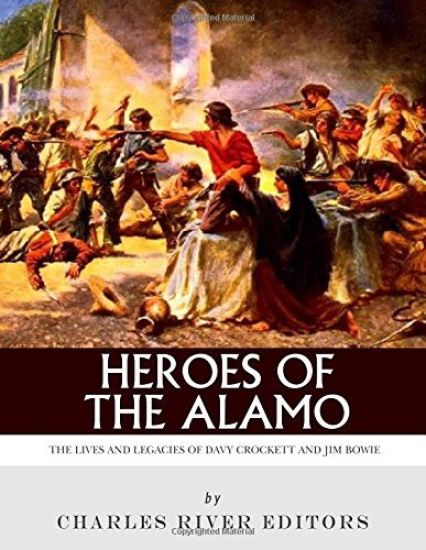
*Discusses some of the legends and controversies surrounding Crockett and Bowie, including their deaths at the Alamo. *Includes passages from Crockett's autobiography about some of his frontier exploits and legendary adventures. *Includes the story about Crockett's famous Not Yours To Give speech, and the debate over whether he actually gave it. *Includes pictures of Crockett, Bowie and other important people and places in their lives. *Includes a Bibliography of each man for further reading. "I know not whether, in the eyes of the world, a brilliant death is not preferred to an obscure life of rectitude. Most men are remembered as they died, and not as they lived. We gaze with admiration upon the glories of the setting sun, yet scarcely bestow a passing glance upon its noonday splendor." - Davy Crockett "I'll wage they found no bullets in his back." - Jim Bowie's mother after hearing of his death at the Alamo The Wild West and the frontier have long held a special place in the narrative of American history, and of all the legends and folk heroes who lived in the 19th century, none became as famous as Davy Crockett, "The King of the Wild Frontier". Crockett had the distinction of being a living legend in his own life. Known as a hardscrabble frontiersman who could spin a good yarn but who also took a no-nonsense approach that brought him from the backwoods of Tennessee to the halls of Congress. Though he served during the presidency of another Westerner, Andrew Jackson, Crockett was very much his own man, and he was distrustful of other politicians, a sentiment that has only endured him further to subsequent generations of Americans. Like Crockett, Jim Bowie was famous in his lifetime, but it was his death in Texas that made him an American legend. Like Daniel Boone and Davy Crockett, Bowie has come to represent the pioneering spirit of the frontier, along with the masculinity, machismo and swagger that earned him a reputation for fighting. And like any good legend, he is perhaps best remembered for his death at the Alamo than for any aspect of his life. Much of Bowie's participation in the Alamo is still controversial, and fittingly he was known across America before that for another controversy. In what became known as the notorious Sandbar Fight of 1827, a duel between two men turned into a large fight that included Bowie, who was shot and stabbed during the melee but still managed to stab to death the sheriff of Rapides Parish in Louisiana with a large knife that has since become universally known as the Bowie knife. Between that fight and his death, Bowie became one of the Western frontier's most celebrated folk heroes. Heroes of the Alamo chronicles the lives, myths and legends of the Alamo's two most famous defenders, examining the known and unknown about their lives and deaths in an attempt to separate fact from fiction. Along with pictures of important people and places, you will learn about Davy Crockett and Jim Bowie like you never have before, in no time at all.