Kirjojen hintavertailu – 12 903 727 kirjaa ja 27 kauppaa

Kirjailija

Charles River

Kirjat ja teokset yhdessä paikassa: 4 673 kirjaa, julkaisuja vuosilta 2013–2022, suosituimpiin kuuluu William Powell and Myrna Loy: The Lives and Careers of One of Classical Hollywood's Most Iconic Duos. Vertaile teosten hintoja ja tarkista saatavuus suomalaisista kirjakaupoista.

4 673 kirjaa

Kirjojen julkaisuvuodet: 2013–2022.

Legends of the Ancient World: The Life and Legacy of Constantine the Great

Legends of the Ancient World: The Life and Legacy of Constantine the Great

Charles River

Createspace Independent Publishing Platform
2017
nidottu
*Discusses the legends surrounding Constantine's conversion to Christianity *Includes excerpts from Eusebius's biography of Constantine. *Includes pictures depicting important people, places, and events. *Includes a Bibliography for further reading. "By keeping the Divine faith, I am made a partaker of the light of truth: guided by the light of truth, I advance in the knowledge of the Divine faith. Hence it is that, as my actions themselves evince, I profess the most holy religion; and this worship I declare to be that which teaches me deeper acquaintance with the most holy God; aided by whose Divine power, beginning from the very borders of the ocean, I have aroused each nation of the world in succession to a well-grounded hope of security; so that those which, groaning in servitude to the most cruel tyrants and yielding to the pressure of their daily sufferings, had well nigh been utterly destroyed, have been restored through my agency to a far happier state." - Constantine the Great. It would be hard if not outright impossible to overstate the impact Roman Emperor Constantine I had on the history of Christianity, Ancient Rome, and Europe as a whole. Best known as Constantine the Great, the kind of moniker only earned by rulers who have distinguished themselves in battle and conquest, Constantine remains an influential and controversial figure to this day. He achieved enduring fame by being the first Roman emperor to personally convert to Christianity, and for his notorious Edict of Milan, the imperial decree which legalized the worship of Christ and promoted religious freedom throughout the Empire. More than 1500 years after Constantine's death, Abdu'l-Bah , the head of the Bah ' Faith, wrote, "His blessed name shines out across the dawn of history like the morning star, and his rank and fame among the world's noblest and most highly civilized is still on the tongues of Christians of all denominations". Moreover, even though he is best remembered for his religious reforms and what his (mostly Christian) admirers described as his spiritual enlightenment, Constantine was also an able and effective ruler in his own right. Rising to power in a period of decline and confusion for the Roman Empire, he gave it a new and unexpected lease on life by repelling the repeated invasions of the Germanic tribes on the Northern and Eastern borders of the Roman domains, even going so far as to re-expand the frontier into parts of Trajan's old conquest of Dacia (modern Romania), which had been abandoned as strategically untenable. However, it can be argued that despite his military successes - the most notable of which occurred fighting for supremacy against other Romans - Constantine may well have set the stage for the ultimate collapse of the Roman Empire as it had existed up until that point. It was Constantine who first decided that Rome, exposed and vulnerable near the gathering masses of barbarians moving into Germania and Gaul, was a strategically unsafe base for the Empire, and thus expanded the city of New Rome on the Dardanelles straits, creating what eventually became Constantinople. By moving the political, administrative and military capital of the Empire from Rome to the East, as well as the Imperial court with all its attendant followers, Constantine laid the groundwork for the eventual schism which saw the two parts of the Roman Empire become two entirely separate entities, go their own way, and eventually collapse piecemeal under repeated waves of invasion. Legends of the Ancient World: The Life and Legacy of Constantine the Great chronicles the life, legends, and legacy of the famous Roman emperor. Along with pictures depicting important people and places, as well as a bibliography and Table of Contents, you will learn about Constantine the Great like you never have before, in no time at all.
Corea del Norte. La historia del conspicuo reino ermitaño

Corea del Norte. La historia del conspicuo reino ermitaño

Charles River

Createspace Independent Publishing Platform
2017
nidottu
"No hay fuerza en el mundo capaz de detener la poderosa marcha de nuestro ej rcito y nuestro pueblo, que sostienen en alto la bandera de los soles del gran camarada Kim Il-sung y el gran camarada Kim Jong-il, y contin an avanzando bajo el liderazgo del partido con una fe inquebrantable en la victoria." -Kim Jong-un En 2014, la Estaci n Espacial Internacional divulg una serie de fotograf as que hicieron que cibernautas de todo el mundo se pellizcaran el brazo de incredulidad por m s de un motivo. Para empezar, el mundo qued asombrado por la definici n n tida y la resoluci n estelar de las im genes captadas por los lentes NightPod de la agencia espacial, que mostraban sorprendentes tomas satelitales del mundo iluminado por deslumbrantes luces de ciudad. Pero fueron unos primeros planos de la frontera entre China y Corea del Norte lo que provoc reacciones mucho mayores que el resto de las fotos, ya que las im genes, pese a su ptima calidad, no dejaban de ser preocupantes. Respaldadas por un video secuencial del rea, mostraban un enorme parche negro -de aproximadamente 75.000 kil metros cuadrados, para ser precisos- flanqueado por dos largos tramos dorados de c mulos de luz que representaban a las ciudades m s grandes de la regi n. De un lado, estaban los titilantes territorios chinos, y del otro, las relucientes extensiones de Corea del Sur. El parche negro en cuesti n era tan oscuro, que habr a podido confundirse con una prolongaci n del Mar Amarillo o del Mar de Jap n. A primera vista, no se ve a ning n indicio de vida, aparte de un destello m nimo en el centro del abismo. Ese destello no era otra cosa que la ciudad de Pyongyang, y la pieza faltante del rompecabezas no era otra que la Rep blica Democr tica Popular de Corea. Corea del Norte ha sido desde hace mucho tiempo el objeto de chistes, as como un blanco perenne de censura internacional, pero la sorprendente foto satelital era todo menos divertida, pues demostraba las condiciones verdaderamente catastr ficas en las que se hallan los propios norcoreanos. Las estad sticas muestran que un surcoreano promedio consume hasta 10.162 kilowatios-hora de energ a al a o, mientras que sus vecinos del norte consumen s lo 739. Esta es s lo una de una serie de dificultades que afectan al estado, impidi ndole un progreso adecuado. El conjunto desigual de ciudades desparramadas pero l nguidas, y de provincias miserables y empobrecidas, contrasta en su silencio pavoroso con las bulliciosas metr polis a ambos lados de ellas. Corea del Norte se halla atrapada en un burbuja impenetrable e insonorizada, y el Estado mismo est congelado en el tiempo. Exceptuando una porci n de la capital, donde residen el Comandante Supremo y las lites de Corea del Norte, el horizonte descolorido de Pyongyang con sus edificios mon tonos y compactos, aunque supone una gran mejora con respecto al resto del estado, parece sacado directamente, en el mejor de los casos, de los a os 70. Entonces, por qu Corea del Norte difiere tanto de sus vecinos, si s lo unas meras fronteras la separan de ellos? Debido a una sucesi n de tiran as reforzadas por el nepotismo. He aqu una naci n entera adoctrinada por una propaganda escalofriante y pasmosa, moldeada por el miedo y una ignorancia forzada; purgas masivas aparentemente aplicadas por capricho, sin juicios justos; una paranoia sin igual y asesinatos a sangre fr a a diestra y siniestra, casi a la vuelta de cada esquina; una periferia empobrecida de p ramos des rticos habitados por masas desnutridas, alrededor de un mundo que fulgura con la grosera opulencia y las riquezas superfluas de la lite. Todo esto suena como los elementos de un periodo particularmente peligroso de una autocracia impuesta por alg n monarca desquiciado de una poca pret rita, o tal vez como un gui n estereotipado para un thriller ambientado en un futuro dist pico. Pero, por desgracia, la descripci n coincide c
St. Peter: The Life and Legacy of Jesus Christ's Most Important Disciple

St. Peter: The Life and Legacy of Jesus Christ's Most Important Disciple

Andrew Scott; Charles River

Createspace Independent Publishing Platform
2017
nidottu
*Includes pictures *Includes ancient accounts and Scripture passages *Includes online resources and a bibliography for further reading "And Jesus suffered no man to follow Him, save Peter and James and John." - Mark 5:37 Apart from Jesus, there is no character more vividly presented in the gospels than Peter. To talk of Saint Peter is to talk about a man of action. There is a good reason why he is the apostle with the most mentions in the Gospels, and the most referred to in the New Testament (a total of 195 times). In comparison, John, the next most popular disciple, barely reaches 29 references. It is at decisive moments which require a categorical reaction where the leader of the Twelve shines; it is then that Peter -born as Simon Bar-Jonah- has no rival in the inner circle of disciples that followed Jesus of Nazareth. At the same time, during periods of uncertainty and inaction he hesitates, collapses, and shows his all-too human side. With all his virtues and shortcomings, he became Jesus's man of confidence, and over time, the leader of the nascent Church. Reconstructing the biography of Simon the Galilean requires throwing the nets over the waters of the many traditions of the leader of the Twelve, the man who is always present at the turning points of the story of Jesus. It has rightly been said that the Gospel of Mark (and thus the gospels of Matthew and Luke) is written from his point of view. It is he whom Jesus calls first when he is working on the seashore; it is Peter who proclaims with blind enthusiasm that his teacher is the Messiah, who confronts him about the consequences and meaning of that title, who cries bitterly for his cowardice, who enters the house of the high priest where the rabbi is held prisoner, and who, after the crucifixion, throws himself into the dark waters, before the sunrise, when he sees him again standing on the shore of the lake. Peter was already a married man with a permanent job in Capernaum when Jesus passed by and said, "Follow me and I will make you a fisher of men." Although the four canonical gospels tend to have disagreements, they all agree on one crucial aspect: Peter's preeminence. Peter was the spokesman and the chief apostle, the trustworthy disciple of the Lord and, ironically, the one who failed him again and again through his incomprehension, his hesitation, and impulsiveness. For example, he drew the sword to kill at a time of danger, when his teacher was clearly against violence. However, according to several independent sources, the risen Jesus went to appear to Peter first, as if to comfort him and confirm him on his commission to "feed the sheep." Considering all this, it is strange that few details about his later life are known. That Simon Bar-Jonah "Cephas," the man from Galilee, was a historical figure is a fact that no one - not even those who doubt the existence of Jesus - would put in doubt. The textual evidence is traced back to the years he lived in Jerusalem, and at least one contemporary person mentions an encounter with him. But the details are scarce. Ironically, most of the reliable information is in the writings of another Christian leader with whom he had disputes: Paul. Traditions and legends about the life of Saint Peter are many, not to mention several writings attributed to him. Some may contain historical memories, and others are parables, but it is not a legend that while he was alive, and even 2,000 years later, Peter has been the center of heated controversies. If indeed he was the leader of the apostles, then do his successors (the bishops of Rome) have preeminence over all of Christendom? To say that this question defined the history and the map of the Christian world for many centuries is an understatement. Saint Peter is, therefore, one of the most important people in history.
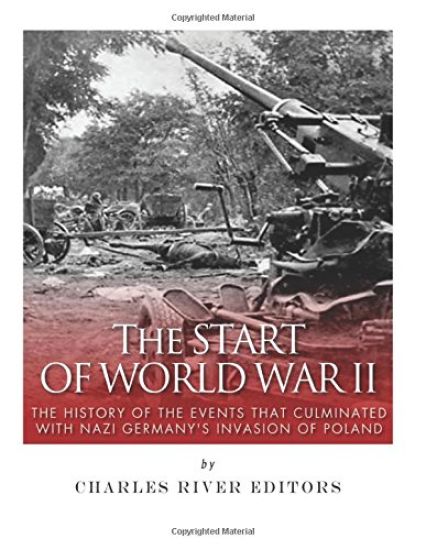
The Start of World War II: The History of the Events that Culminated with Nazi Germany's Invasion of Poland
*Includes pictures *Explains the appeasement of the Nazis in Czechoslovakia and Austria, and reactions to it *Includes accounts of the fighting in Poland *Includes online resources and a bibliography for further reading *Includes a table of contents "We have suffered a total and unmitigated defeat ... you will find that in a period of time which may be measured by years, but may be measured by months, Czechoslovakia will be engulfed in the Nazi r gime. We are in the presence of a disaster of the first magnitude ... we have sustained a defeat without a war, the consequences of which will travel far with us along our road ... we have passed an awful milestone in our history, when the whole equilibrium of Europe has been deranged." - Winston Churchill "My good friends," the mustached, bony man with thick eyebrows and large, strong teeth somewhat reminiscent of those of a horse, shouted to the crowds from the second-floor window of his house at 10 Downing Street, "this is the second time in our history, that there has come back to Downing Street from Germany peace with honor. I believe it is peace for our time." (McDonough, 1998, 70). The man addressing the crowd, British Prime Minister Neville Chamberlain, had just returned from the heart of Nazi Germany following negotiations with Adolf Hitler, and the crowd gathered outside the English leader's house on September 30, 1938 greeted these ringing words with grateful cheers. The piece of paper Chamberlain flourished exultantly seemed to offer permanent amity and goodwill between democratic Britain and totalitarian Germany. In it, Britain agreed to allow Hitler's Third Reich to absorb the Sudeten regions of Czechoslovakia without interference from either England or France, and since high percentages of ethnic Germans - often more than 50% locally - inhabited these regions, Hitler's demand for this territory seemed somewhat reasonable to Chamberlain and his supporters. With Germany resurgent and rearmed after the disasters inflicted on it by the Treaty of Versailles following World War I, the pact - known as the Munich Agreement - held out hope of a quick end to German ambitions and the return of stable, normal international relations across Europe. Of course, the Munich agreement is now notorious because its promise proved barren within a very short period of time. Chamberlain's actions either failed to avert or actually hastened the very cataclysm he wished to avoid at all costs. The "Munich Agreement" of 1938 effectively signed away Czechoslovakia's independence to Hitler's hungry new Third Reich, and within two years, most of the world found itself plunged into a conflict which made a charnelhouse of Europe and left somewhere between 60-80 million people dead globally. Of course, as most people now know, the invasion of Poland was merely the preface to the Nazi blitzkrieg of most of Western Europe, which would include Denmark, Belgium, and France by the summer of 1940. The resistance put up by these countries is often portrayed as weak, and the narrative is that the British stood alone in 1940 against the Nazi onslaught, defending the British Isles during the Battle of Britain and preventing a potential German invasion. In particular, the campaign in Poland is remembered as one in which an antiquated Polish army was quickly pummeled by the world's most modern army. Polish lancers charging in a valiant yet idiotic attack against German tanks is the only image from the 1939 Nazi-Soviet invasion of Poland remaining in the popular imagination today. Originating as a piece of Nazi propaganda, paradoxically adopted by the Poles as a patriotic myth, the fictional charge obscures the actual events of September 1939. Outnumbered, outgunned, and under-equipped, the Polish army nevertheless inflicted heavy losses on the invading Wehrmacht. In fact, only the unexpected advance of Soviet forces from the east put a quick end to the struggle.
The Tehran Conference of 1943: The History of the First Meeting Between the Allies' Big Three Leaders during World War II
*Includes pictures *Includes quotes from the leaders and accounts of the conference by participants *Includes online resources and a bibliography for further reading "We are sitting around this table for the first time as a family, with the one object of winning the war. ...] In such a large family circle we hope that we will be very successful and achieve a constructive accord in order that we may maintain close touch throughout the war and after the war." - Prime Minister William Churchill to President Franklin Roosevelt, Soviet premier Josef Stalin, and others at the Tehran Conference, November 28th, 1943 Separated by vast gulfs of political, cultural, and philosophical divergence, the three chief Allied nations of World War II - the United States, the Soviet Union, and Great Britain - attempted to formulate a joint policy through a series of three conferences during and immediately after the conflict. The first meeting took place in Tehran in late 1943, while the fate of World War II still hung in the balance. The fate of World War II hung in the balance in 1943. On the Eastern Front, the opposed juggernauts of the Wehrmacht, army of Adolf Hitler's Third Reich, and the Red Army, the military force of Josef Stalin's Soviet Union, grappled in a nearly apocalyptic battle. Black smoke rose into the steppe air from burning vehicles strewing the landscape, while millions of men maneuvered, fought, and died in a series of brutal encounters. Meanwhile, the Western Allies succeeded in ousting the Germans from North Africa, then took Sicily with Operation Husky and landed in Italy. There, the tough, hardened warriors of the German military turned the Italian peninsula into a vast fortress; these seasoned fighters made the determined Anglo-American forces pay a bitter price for each mountain ridge, river crossing, and stony valley swept by cunningly-placed gun emplacements. Nearing the end of the year, with the Axis halted but still terrifyingly powerful, and the fortunes of war appearing likely to swing either way, the Allies deemed it necessary for their leaders to meet, coordinating their war planning. Feelers for a conference went out from President Roosevelt as early as 1942, but profound differences between the purposes of the various Allies already appeared at that time. Stalin, in particular, wanted territorial gains for the Soviet Union, already looking hungrily at Poland, a notable ally of the Western powers. Accordingly, FDR reached out to Stalin for both cooperation and a summit: "Such a meeting of minds in personal conversation would be greatly useful in the conduct of the war against Hitlerism. Perhaps if things go as well as we hope, you and I could spend a few days together next summer near our common border off Alaska. But in the meantime, I regard it as of the utmost military importance that we have the nearest possible approach to an exchange of views." (Eubank, 1985, 46). Over 70 years later, the Tehran Conference is not as well known as the two major conferences that came after it - Yalta and Potsdam - but it had a profound influence in shaping the course of the rest of the war. While the conference took care of peripheral matters related to the region, particularly Turkey and Iran, and it touched upon the topics of fighting Japan and shaping the post-war world, the conference was most notable for its agreement to open up a second front against Nazi Germany in Western Europe, which even the Nazis figured would almost certainly take place somewhere in Vichy France. As a result, Tehran was instrumental in the coming operations that culminated with the D-Day invasion on June 6, 1944 and the rest of Operation Overlord. The Tehran Conference of 1943: The History of the First Meeting Between the Allies' Big Three Leaders during World War II looks at the crucial conference and its results, most notably the preparations for D-Day the following year.
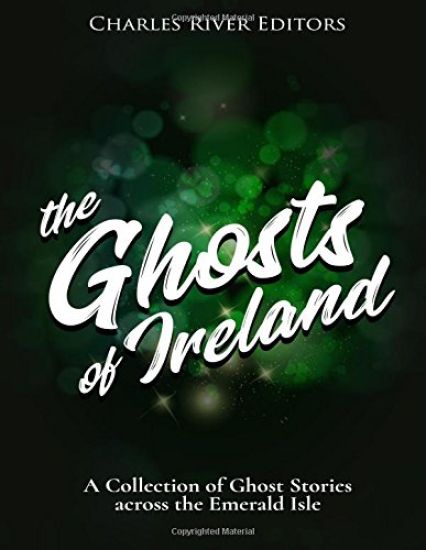
The Ghosts of Ireland: A Collection of Ghost Stories across the Emerald Isle

The Ghosts of Ireland: A Collection of Ghost Stories across the Emerald Isle

Charles River

Createspace Independent Publishing Platform
2017
nidottu
*Includes pictures *Includes online resources and a bibliography for further reading Ireland is an ancient land, filled with prehistoric ruins, age-old traditions, and a rich and abiding folklore. Many of the old Irish traditions and tales dwell upon the world beyond our own, the shadow world of spirits. Every village and landmark has a tale attached to it, a good many of them rooted in pagan beliefs from prehistoric times. Others are more modern, and deal with historic tragedies such as the English invasion, the Potato Famine, or the Troubles. According to some locals, ghosts seem to haunt every historic building and place, acting as symbols of the past that still haunts this troubled land. For example, at Aughagreagh in County Longford there's a wall running alongside a road. It's just a typical drystone wall like so many in Ireland used to show the boundary of a farmer's field. The road is just a typical road. But sometimes at night passersby will see a woman and two small children sitting on this wall. They wear tattered clothing in the style of the 19th century. Their faces are drawn and emaciated, their eyes sunken. They have a look of hopeless resignation about them. This is because they are famine victims. The wall stands on the road to the old workhouse, where Ireland's poor and starving were packed into cold rooms and forced to work long hours of hard labor in exchange for a crust of bread and constant abuse. They were literally punished for being poor, and their spirits have remained in this sad place. Ireland has a rich folklore. Everyone knows about the fairy folk and leprechauns and many have heard of the fearsome banshee. The stranger side of the Emerald Isle goes much deeper than that, however, with tales of phantom armies marching through the sky, sea monsters swimming in the waters around the island, and stories of strange powers and dark magic. Indeed, these tales are not consigned to the past; many unexplained occurrences continue to happen, even today. Here is a sampling of some of the Emerald Isle's better-known ghosts, plus a few obscure ones. They represent just a small portion of the hundreds of restless spirits that haunt this troubled land. For the purposes of this book we are covering the entire island, including Northern Ireland. The Ghosts of Ireland: A Collection of Ghost Stories across the Irish Nation offers a sampling of the many strange stories and unexplained phenomena that make Ireland such an intriguing place. Along with pictures of important people, places, and events, you will learn about the weird legends and mysteries of the British Isles like never before.
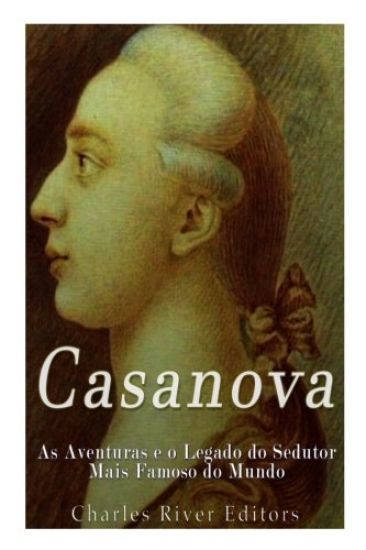
Casanova: As Aventuras e o Legado do Sedutor Mais Famoso do Mundo

Casanova: As Aventuras e o Legado do Sedutor Mais Famoso do Mundo

Charles River

Createspace Independent Publishing Platform
2017
nidottu
Ao contr rio do modo como a lenda da sedu o frequentemente retratada atrav s das lentes rosadas de Hollywood, o verdadeiro Giacomo Casanova n o possu a o maxilar forte e esculpido de Heath Ledger, ou o olhar azul e penetrante de Richard Chamberlain. Na realidade, retratos do verdadeiro Casanova mostram um rosto simples e nada memor vel, com um maxilar rechonchudo, um nariz proeminente e entortado, olhos esbugalhados e de p lpebras pesadas. Em suma, ainda que ele certamente n o fosse feio, ele estava longe de ser tido como uma beldade. N o obstante, Casanova se envolveu em centenas de encontros, e o que quer que lhe faltasse em encantos est ticos, ele sem d vida compensava com charme, mist rio, e um magnetismo animalesco. Ele tamb m era bem despojado quanto a isso tudo: "O amor verdadeiro o amor que as vezes surge ap s prazer sexual: se ele surge, imortal; o outro tipo inevitavelmente deteriora, pois embasado somente na mera fantasia." E de fato, as fabulosas fa anhas er ticas do cativante e carism tico Casanova eram t o espetaculares que seu sobrenome foi imortalizado at mesmo em defini es de dicion rios de alta reputa o, tais como o Merriam-Webster - "um amante, e em especial, um homem que um amante prom scuo e inescrupuloso". Ainda que Casanova seja conhecido na cultura popular, acima de tudo, como um amante bom de papo e descarado, o homem de verdade era coberto com camadas cintilantes de perversidades astutas, c lculos vigilantes, e um anseio inextingu vel por aventura. Ele vestiu muitas m scaras, mas cada uma parecia ter sido feita exclusivamente para ele, pois ele n o era somente um aventureiro com apetite sexual insaci vel, mas tamb m um eloquente escritor, um curador m stico, um espi o experiente, e um g nio da improvisa o que carregava in meros truques dentro de suas mangas decoradas. Ironicamente, parece que o pr prio Casanova, ainda que orgulhoso de suas escapadelas indiscretas, tinha medo de entrar para a hist ria somente como o primeiro Hugh Hefner. Ao mesmo tempo, ele n o queria nenhum detalhe alterado ou omitido de sua rica e fascinante vida, e portanto, escolheu compor uma autobiografia em 12 volumes, algumas se es da qual ainda hoje s o consideradas por muitos homens como um manual da sedu o e do desfloramento de mulheres "virtuosas". Historiadores modernos, entretanto, elogiam suas mem rias como um dos retratos mais vividamente descritivos e precisos das normas e costumes europeus no s culo 18. Uma comiss o governamental francesa at chegou ao ponto de honr -la com o t tulo de "tesouro nacional". Um de seus contempor neos, o Pr ncipe Charles de Ligne, talvez o tenha resumido da melhor maneira quando comentou respeito de Casanova: "As nicas coisas sobre as quais ele n o tem nenhum conhecimento, s o aquelas nas quais ele se considera o expert: as regras da dan a, a l ngua Francesa, bom gosto, o jeito do mundo, savoir vivre. Apenas as suas com dias n o possuem humor, apenas suas obras filos ficas s o destitu das de filosofia - todo o resto, est repleto deles; sempre h algo de subst ncia, inovador, picante, profundo. Ele um po o de conhecimento, mas cita Homero e Hor cio ad nauseam. Sua sagacidade e seus gracejos s o como alfinetadas. Ele sens vel e generoso, mas incomode-o ao m nimo e ele se torna desagrad vel, vingativo e detest vel. Ele n o acredita em nada exceto o que for mais incr vel, sendo supersticioso a respeito de tudo. Ele ama e deseja a tudo... Ele se orgulha de n o ser nada... Nunca diga que j ouviu a hist ria que ele vai lhe contar... Nunca deixe de cumpriment -lo ao cruzar caminhos, pois o menor insulto o tornar seu inimigo."
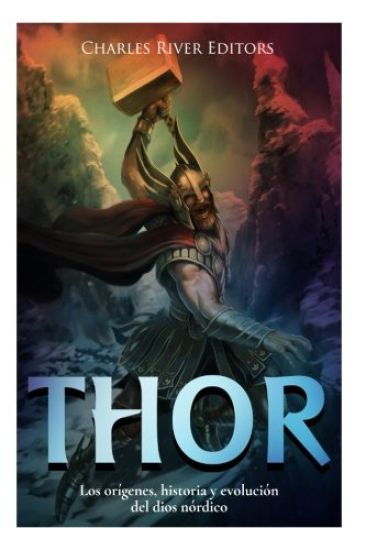
Thor: Los orígenes, historia y evolución del dios nórdico

Thor: Los orígenes, historia y evolución del dios nórdico

Jesse Harasta; Charles River

Createspace Independent Publishing Platform
2017
nidottu
"Al otro lado del puente de arcoiris de Asgard, Donde retumba el rugido de los cielos, En maravillado asombro contemplar n, Al dios del trueno, poderoso Thor " - Tema musical del programa de televisi n Mighty Thor (1966) "S lo Thor luch all con furor terrible, Nunca reposa cuando ve estas cosas; Se han roto juramentos, palabras y promesas, Los firmes acuerdos que entre ellos hab a..." - V lusp L nea #26 de la Edda Po tica (o Edda Mayor) Un martillo que ning n mortal puede levantar. Un flamante dios de la tormenta, con cabello cual llamas. Un h roe-dios-alien gena que defiende a la humanidad. La esv stica. Incluso el nombre Thursday jueves en ingl s] es "Thor's Day" el d a de Thor]. A pesar de la virtual desaparici n de la religi n aut ctona y mitolog a n rdica siglos atr s, a n se encuentra con regularidad en la sociedad moderna al dios de la tormenta, Thor, quien contin a siendo tra do de vuelta a la vida en forma de literatura y m s recientemente, como protagonista de pel culas taquilleras de Hollywood. Qu tiene en particular este dios, entre los cientos (si no miles) de deidades que fueron arrojadas al basurero de la historia por las grandes religiones del mundo, que captura de tal manera la imaginaci n de las personas hasta el d a de hoy? Una mejor comprensi n del atractivo de Thor puede hallarse pr cticamente en cualquiera de los aspectos de la historia y evoluci n de esta figura a lo largo de los siglos, incluyendo los or genes del dios, las im genes evocativas con las que es descrito, e incluso los paralelismos entre Thor y otros dioses y h roes similares. Todo esto ha sido alimentado por la literatura, como las historias sobre Thor encontradas en la Edda Mayor o po tica y la Edda Menor o prosaica, as como la conexi n que las sociedades han tenido con Thor por cientos de a os, incluso hoy en d a. El presente trabajo tambi n examina el declive y desplazamiento de la mitolog a escandinava/n rdica por parte del Cristianismo, las razones por las que Thor fue a menudo el ltimo dios que adoraron los n rdicos y los vestigios actuales del "Thorismo", incluyendo los paralelos con otras fes, su rol en el renacimiento de un Neo-paganismo y su aparici n en otros medios como un h roe de historietas y pel culas. En conjunto con fotograf as y bibliograf a, aprender s sobre Thor como nunca antes, y en nada de tiempo.
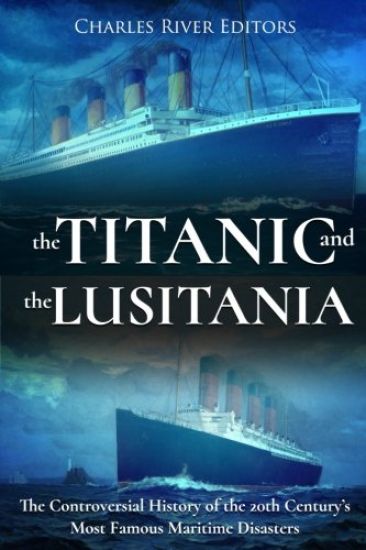
The Titanic and the Lusitania: The Controversial History of the 20th Century's Most Famous Maritime Disasters
*Includes pictures *Includes accounts of the disasters *Includes a bibliography for further reading "The appearance of safety was mistaken for safety itself." - Walter Lord, author of A Night to Remember Just before midnight on April 14, 1912, the RMS Titanic, the largest ship in the world, hit an iceberg, starting a chain of events that would ultimately make it history's most famous, and notorious, ship. In the over 100 years since it sank on its maiden voyage, the Titanic has been the subject of endless fascination, as evidenced by the efforts to find its final resting spot, the museums full of its objects, and the countless books, documentaries, and movies made about the doomed ocean liner. Thanks to the dramatization of the Titanic's sinking and the undying interest in the story, millions of people are familiar with various aspects of the ship's demise, and the nearly 1,500 people who died in the North Atlantic in the early morning hours of April 15, 1912. The sinking of the ship is still nearly as controversial now as it was over 100 years ago, and the drama is just as compelling. The Titanic was neither the first nor last big ship to sink, so it's clear that much of its appeal stems from the nature of ship itself. Indeed, the Titanic stands out not just for its end but for its beginning, specifically the fact that it was the most luxurious passenger ship ever built at the time. In addition to the time it took to come up with the design, the giant ship took a full three years to build, and no effort or cost was spared to outfit the Titanic in the most lavish ways. Given that the Titanic was over 100 feet tall, nearly 900 feet long, and over 90 feet wide, it's obvious that those who built her and provided all of its famous amenities had plenty of work to do. The massive ship was carrying thousands of passengers and crew members, each with their own experiences on board, and the various amenities offered among the different classes of passengers ensured that life on some decks of the ship was quite different than life on others. The Lusitania and the Titanic would become the two most famous ships of the early 20th century for tragic reasons, but the circumstances could not have been more different. While the Titanic is still notorious for being the world's best ocean liner at the time of its collision with an iceberg in 1912, the Lusitania's role as a popular ocean liner has been almost completely obscured by the nature of its sinking by a German U-boat in 1915. The Germans aimed to disrupt trade by the Allied forces, but they did not have the naval forces capable of seizing merchant ships and detaining them. Furthermore, the Germans rightly suspected that the British and Americans were using passenger liners and merchant ships to smuggle weaponry across the Atlantic, but since their sole edge in the Atlantic was their fleet of submarines, the Germans had no way of confirming their suspicions, short of sinking a ship and seeing if a detonation onboard suggested the presence of munitions and gunpowder. The sinking of the Lusitania in 1915 was the first major event that shifted public opinion in the United States, and support for joining the war began to rise across the country. Many Americans joined the "Preparedness Movement," which advocated at least preparing for war if not entering the war outright, and though the country would not declare war against Germany for two more years, the sinking of the Lusitania is still cited as a key event that set America on the path toward joining the war. The Titanic and the Lusitania: The Controversial History of the 20th Century's Most Famous Maritime Disasters chronicles the construction and destruction of two of the most famous ships in history. Along with pictures of important people, places, and events, you will learn about the sinking of both like never before.
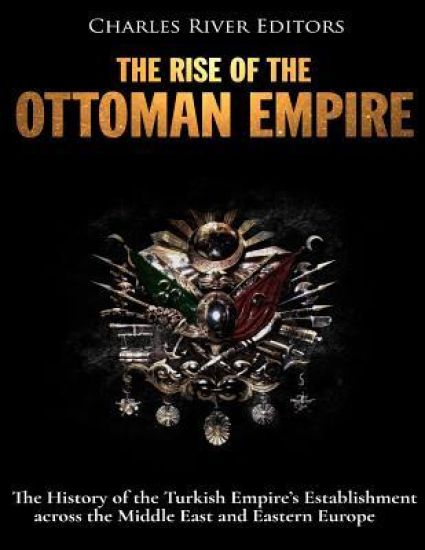
The Rise of the Ottoman Empire: The History of the Turkish Empire's Establishment across the Middle East and Eastern Europe
*Includes pictures *Includes online resources and a bibliography for further reading In terms of geopolitics, perhaps the most seminal event of the Middle Ages was the successful Ottoman siege of Constantinople in 1453. The city had been an imperial capital as far back as the 4th century, when Constantine the Great shifted the power center of the Roman Empire there, effectively establishing two almost equally powerful halves of antiquity's greatest empire. Constantinople would continue to serve as the capital of the Byzantine Empire even after the Western half of the Roman Empire collapsed in the late 5th century. Naturally, the Ottoman Empire would also use Constantinople as the capital of its empire after their conquest effectively ended the Byzantine Empire, and thanks to its strategic location, it has been a trading center for years and remains one today under the Turkish name of Istanbul. The end of the Byzantine Empire had a profound effect not only on the Middle East but Europe as well. Constantinople had played a crucial part in the Crusades, and the fall of the Byzantines meant that the Ottomans now shared a border with Europe. The Islamic empire was viewed as a threat by the predominantly Christian continent to their west, and it took little time for different European nations to start clashing with the powerful Turks. In fact, the Ottomans would clash with Russians, Austrians, Venetians, Polish, and more before collapsing as a result of World War I, when they were part of the Central powers. The Ottoman conquest of Constantinople also played a decisive role in fostering the Renaissance in Western Europe. The Byzantine Empire's influence had helped ensure that it was the custodian of various ancient texts, most notably from the ancient Greeks, and when Constantinople fell, Byzantine refugees flocked west to seek refuge in Europe. Those refugees brought books that helped spark an interest in antiquity that fueled the Italian Renaissance and essentially put an end to the Middle Ages altogether. The Rise of the Ottoman Empire: The History of the Turkish Empire's Establishment across the Middle East and Eastern Europe chronicles the rise of one of history's most influential empires. Along with pictures of important people, places, and events, you will learn about the rise of the Ottoman Empire like never before.
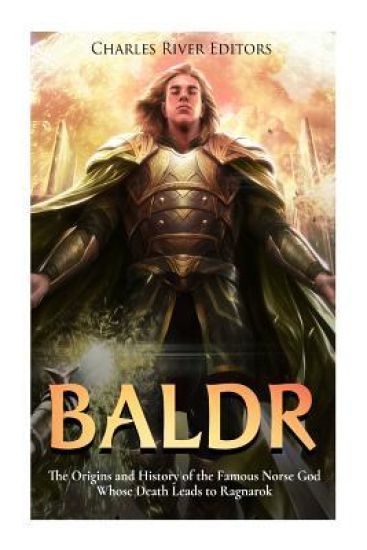
Baldr: The Origins and History of the Famous Norse God Whose Death Leads to Ragnarok

Baldr: The Origins and History of the Famous Norse God Whose Death Leads to Ragnarok

Andrew Scott; Charles River

Createspace Independent Publishing Platform
2017
nidottu
*Includes pictures *Includes medieval accounts *Includes online resources and a bibliography for further reading Much of what is known of the Norse myths comes from the 10th century onwards. Until this time and, indeed, for centuries afterwards, Norse culture (particularly that of Iceland, where the myths were eventually transcribed) was an oral culture. In fact, in all Scandinavian countries well into the thirteenth century laws were memorized by officials known as "Lawspeakers" who recited them at the "Thing." The Thing was the legislative assembly in Scandinavia "held for judicial purposes." One of the most famous of these Lawspeakers was the Icelander Snorri Sturluson, a masterful writer who wrote the Prose Edda in the thirteenth century. There are other sources for the Norse myths, namely the later "Poetic Edda," a collection of poems and prose work, and other sagas but the Snorri's Prose Edda is the most complete work whose attribution is known to modern scholars. It is believed that Snorri, a Christian, recorded these pagan beliefs so as to preserve and explain the stylistic poetry of Iceland, particularly the popular descriptive devices known as kennings. A kenning is made up of a base word and a modifying word that is used to describe a separate object. For example, "Gold" had a great many kennings, one of which was "Sif's Hair." If, however, the memory of Loki cutting off Sif's hair and replacing it with gold were lost, then this kenning would make no sense to later readers. There are many of these allusions to the myths and it is thanks to them that the myths have survived. The Norse Myths also appear to follow a chronological narrative, which the historian John Lindow describes as having a "Mythical Past, Present and Future." Loki features in each of these literary "epochs" and it helps to understand the complexity of his character, as well as the belief system, to view the myths in this way. Baldr: The Origins and History of the Famous Norse God Whose Death Leads to Ragnarok looks at the story and the legendary Norse deity. Along with pictures depicting important people, places, and events, you will learn about Baldr like never before.
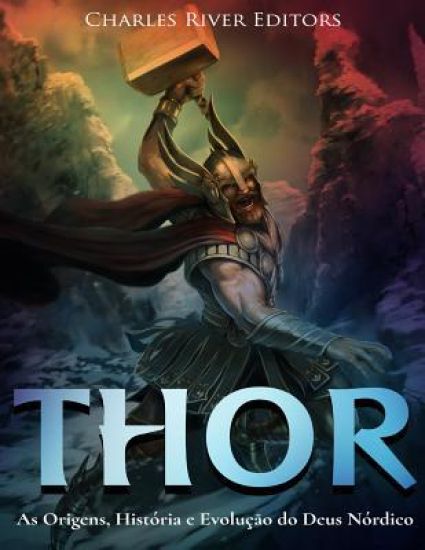
Thor: As Origens, História e Evolução do Deus Nórdico

Thor: As Origens, História e Evolução do Deus Nórdico

Jesse Harasta; Charles River

Createspace Independent Publishing Platform
2017
nidottu
"Atrav s da ponte de arco- ris de Asgard, Onde os C us Trovejantes brandem, Voc contemplar ao perder o f lego, O Deus do Trov o, Poderoso Thor " - M sica tema do programa de televis o Poderoso Thor (1966) "Em f ria crescente ent o levantou-se Thor, -- Raramente permanece sentado quando escuta tais coisas, -- E os juramentos foram quebrados as palavras e v nculos, As poderosas promessas entre eles feitas." - V lusp Linha #26 da Edda Po tica Um martelo que mortal algum pode levantar. Um deus da tempestade com cabelos de fogo. Um alien gena-her i-deus de hist rias em quadrinho que defende a humanidade. A su stica. At mesmo o dia da semana, "Thursday" - quinta feira em ingl s - tem seu nome ("Thor's Day", o dia de Thor). Apesar do virtual desaparecimento da religi o e mitologia n rdica v rios s culos atr s, a sociedade moderna ainda frequentemente depara-se com o deus da tempestade Thor, que continua a ser trazido de volta vida na forma da literatura, e foi recentemente o protagonista de filmes de grande or amento de Hollywood. Por que que este deus, dentre as centenas (sen o milhares) de divindades entregues lixeira da hist ria ao dar lugar para as religi es hoje mais comuns do mundo, captura tanto a imagina o das pessoas nos dias atuais? Uma melhor compreens o da atra o de Thor pode ser encontrada em quase todo aspecto da hist ria e da evolu o da figura ao decorrer dos s culos, incluindo as origens do deus, as imagens evocativas usadas para descrev -lo, e at mesmo paralelos entre Thor e outros deuses e her is similares. Tudo isso foi extensivamente explorado pela literatura, em hist rias sobre Thor encontradas na Edda prosaica e po tica, e a conex o que sociedades tiveram com Thor por centenas de anos, chegando at mesmo contemporaneidade. Essa obra tamb m examina o decl nio e substitui o da mitologia n rdica pelo cristianismo, as raz es pelas quais Thor foi frequentemente o ltimo deus adorado pelos n rdicos, e o que restou hoje do Thorismo, incluindo seus paralelos em outras f s, seu papel no reavivado Neopaganismo e sua apari o em outras m dias como her i de gibis e filmes. Junto de gravuras e uma bibliografia, voc aprender sobre Thor como nunca antes, e sem perda de tempo.
San Pedro: La vida y el legado del apóstol más importante de Jesús

San Pedro: La vida y el legado del apóstol más importante de Jesús

Gustavo Vazquez Lozano; Charles River

Createspace Independent Publishing Platform
2017
nidottu
Adem s de Jes s, no hay otro personaje trazado m s v vidamente en los evangelios que Pedro. Hablar de San Pedro es hablar de un hombre de acci n. No en balde es el ap stol m s mencionado en el Nuevo Testamento: un total de 195 veces. En comparaci n, Juan, el siguiente m s popular, alcanza apenas 29 menciones. Es en los momentos decisivos, donde se requiere una acci n r pida y categ rica, donde el l der de los ap stoles brilla; ah Pedro no tiene rival en el c rculo interno de personas que segu an a Jes s de Nazareth. Es la inacci n y en la incertidumbre donde vacila, se derrumba, muestra su lado humano. Con todo eso, y a pesar de ello, se convirti en el hombre de confianza de Jes s, y con el tiempo, en el l der de la naciente Iglesia. Reconstruir la biograf a de Sim n Pedro, el pescador galileo, implica lanzar las redes sobre aguas de las m ltiples tradiciones sobre el l der de los Doce, el hombre siempre presente en los puntos de inflexi n de la historia. Con buenas razones se ha dicho que la narraci n evang lica est escrita desde su punto de vista. Es l a quien Jes s llama primero cuando se halla trabajando en la orilla del mar; es Pedro quien proclama con ciego entusiasmo que su maestro es el Mes as; quien discute con l sobre las consecuencias y el significado de ese t tulo; quien llora amargamente ante su fracaso; quien se introduce en a la casa del sumo sacerdote donde tienen preso al rab , y quien despu s de la crucifixi n se arroja a las oscuras aguas, antes de la salida del sol, cuando cree verlo parado en la orilla del mar. Pedro ya era un hombre casado con oficio permanente en Caperna m cuando Jes s de Nazaret pas a su lado y le dijo: "S gueme y te har pescador de hombres". A pesar de que los cuatro evangelios can nicos suelen tener desacuerdos entre s , todos coinciden en un aspecto crucial: la preeminencia de Pedro. Sim n Bar-jon s (el hijo de Jon s) fue portavoz y l der de los ap stoles, el disc pulo de confianza del Se or e, ir nicamente, el que una y otra vez le fall por medio de su incomprensi n, sus titubeos, sus negaciones e impulsividad, como cuando desenfund la espada para herir, cuando su maestro claramente estaba en contra de la violencia. Sin embargo, de acuerdo a varios reportes independientes, Jes s resucitado fue a aparecerse antes que nadie a l, como para confirmarlo en su encargo de "apacentar a sus ovejas". Nunca en la Iglesia primitiva se puso jam s en duda la primac a del tosco pescador. Despu s de aquella funesta celebraci n de Pascua donde pareci terminar el sue o, el l der de los Doce fue el primero en salir del encierro, identificarse como seguidor del rebelde que acaba de ser crucificado, y ponerse a predicar con un valor que compens con creces su anterior cobard a. Con l comenz la Iglesia m s numerosa del mundo. Considerando todo esto, resulta extra o que se conozcan tan pocos detalles sobre su vida tras la muerte de Jes s. Que Sim n "Cefas", el pescador de Galilea es una figura hist rica, es un hecho que nadie -ni siquiera los que dudan de la existencia de Jes s- pondr a en duda. La evidencia textual va directamente hasta los a os en que vivi en Jerusal n, y al menos un contempor neo menciona un encuentro con l en sus escritos. Pero los detalles son escasos. Ir nicamente la mayor parte de la informaci n confiable proviene de otro l der cristiano con quien tuvo enfrentamientos: Pablo. Tradiciones y leyendas sobre la vida de San Pedro hay muchas -sin mencionar multitud de escritos atribuidos a l-; algunas pueden contener memorias hist ricas, otras son par bola; pero lo que no es leyenda es que en vida, y durante dos mil a os, Pedro fue y ha sido objeto de acaloradas controversias.
Christ the Redeemer: The History and Legacy of the Western Hemisphere's Most Famous Christian Monument
*Includes pictures *Includes online resources and a bibliography for further reading "In Him we have redemption through His blood, the forgiveness of our trespasses, according to the riches of His grace." - Ephesians 1:7 Particularly to those who harbor an inexplicable and irrational fear of heights, a trip to the pinnacle of Mount Corcovado is bound to rouse the kaleidoscope of butterflies in one's stomach, and at the very least, cover one's palms with a glistening film of sweat. A maximum of 345 passengers board the boxy, ribbon-red Trem do Corcovado. These modern, Swiss-made train carriages are perfectly safe, but the mechanical whirring and the rhythmic click-click-clicks as the train chugs up a set of sturdy tracks about 2.4-miles in length, to a summit that is 2,329-feet above ground, only adds to the suspense. But they say that what lies on the top of Corcovado makes the jarring trip up the mountain well worth its while, for this is none other than the home of the Cristo Redentor, one of the most famous statues in the world. Others say this fabled monument is best appreciated after dark and from a distance, ideally from the crest of Sugar Loaf Mountain, the aptly-named loaf-shaped peak sitting opposite the Corcovado. Under the twinkling night sky, with Corcovado cloaked by layers of lingering fog, the glowing figure seems to float above the constellation of city lights, like the city's very own North Star, guiding and guarding over the maze of modern buildings and classic "shanty towns" of Rio de Janeiro. But the Cristo Redentor is far more than just a princely statue or a tourist trap for urban explorers and adrenaline addicts. As one of the masterminds behind the statue once described the masterpiece, it is a "monument to science, art, and religion." Padre Omar, the rector of its chapel, called it "a religious symbol, a cultural symbol, and a symbol of Brazil." So significant and irreplaceable is the statue to the locals that modern artists continue to pay homage to the iconic landmark through graffiti art, elaborate murals, and intricately detailed sand sculptures on the Copacabana beach. Many of the Catholic Brazilian youth have also chosen to ink their skin with exquisite tattoos featuring the statue, from minimalist and standalone shoulder or arm pieces to massive chest and full back tattoos. Christ the Redeemer: The History and Legacy of the Western Hemisphere's Most Famous Christian Monument chronicles the events leading up to the monument's conception, its construction, and the great architects and engineers behind the majestic monument. It also examines the legacy of this iconic Brazilian landmark. Along with pictures depicting important people, places, and events, you will learn about Christ the Redeemer like never before.
The Ghosts of England: A Collection of Ghost Stories across the English Nation

The Ghosts of England: A Collection of Ghost Stories across the English Nation

Charles River

Createspace Independent Publishing Platform
2017
nidottu
*Includes pictures *Includes online resources and a bibliography for further reading England is an ancient land steeped in history and tradition, filled with prehistoric ruins, majestic castles, and a countryside sculpted from millennia of human habitation.. Its rolling countryside is dotted with prehistoric burial mounds and stone circles. Brooding castles hold tales of bloodshed and honor. Medieval churches have elaborate stained glass windows and gruesome carvings, reflecting a mixture of hope and darkness. Every hamlet and village has tales that go back centuries, and folk festivals with roots in pagan times. Thus, it is not surprising that many believe England is a land filled with ghosts. For centuries, people have told tales of ghosts stalking its historic buildings, strange creatures lurking in its primeval forests, and unexplained paths linking its ancient sites. The Ghosts of England: A Collection of Ghost Stories across the English Nation offers a sampling of the many strange ghost stories and unexplained phenomena that make England such an intriguing place. Along with pictures of important people, places, and events, you will learn about the ghosts of England like never before.
Lourdes: The History and Legacy of France's Most Famous Christian Pilgrimage Site

Lourdes: The History and Legacy of France's Most Famous Christian Pilgrimage Site

Charles River

Createspace Independent Publishing Platform
2017
nidottu
*Includes pictures *Includes online resources and a bibliography for further reading They say that judgment does not exist in Lourdes. Once one sets foot on this hallowed soil, all barriers of race, social status, background, and religious differences cease to exist. One is no more than a humble soul in search of a renewal of one's connection to God. In a statement released to the French press in mid-August of 2008, Father Jacques Nieuviarts guaranteed the following: "Those who touch the rock at the grotto in Lourdes... Perhaps they are praying to be imbued with the strength of this rock. Those who drink the water from the fountain feel that their inner thirst is being quenched, that they have been changed, and that the water has purified them... In lighting the candle, they open themselves up to the clarity that comes from God, and when they depart leaving a burning candle, their prayer continues in union with the prayers of all the other people who have placed their lighted candles at the grotto..." Given these promises of inner peace and spiritual awakenings, not to mention the countless cases - both claimed and "verified" - of miraculous healing this supernatural town is teeming with, it comes as no surprise that this once unassuming town has now become the second most popular tourist destination in France, following Paris. Over the years, this formerly quaint, but rinky-dink, gray-roofed cottage town has more than succeeded in putting itself on the map through its mystical sanctuaries built on miracles, but how exactly did they achieve such a designation? And how much truth, if any at all, is there in these so-called miracles? Lourdes: The History and Legacy of France's Most Famous Christian Pilgrimage Site chronicles the remarkable history of the site and the religious influence it has had over the centuries. Along with pictures depicting important people, places, and events, you will learn about Lourdes like never before.
Kim Jong-il: The Controversial Life and Legacy of North Korea's Second Supreme Leader

Kim Jong-il: The Controversial Life and Legacy of North Korea's Second Supreme Leader

Charles River

Createspace Independent Publishing Platform
2017
nidottu
*Includes pictures *Includes online resources and a bibliography for further reading "When General Kim Jong-il was born, the clouds opened up, and he came down from heaven, and then there was a huge snowstorm When General Kim Jong-il shouts out loud, storms always happen, huge storms always happen " - "Dear Leader," a state-issued anthem dedicated to Kim Jong-il North Korea has long been the butt of jokes, and it has been a longstanding target of international criticism, but the startling satellite image was anything but amusing, for it demonstrated the truly catastrophic conditions North Koreans find themselves in. Statistics show that the average South Korean uses up to 10,162 kilowatt hours of power per year, whereas their neighbors in the north consume only 739. This is only one amongst a slew of stumbling blocks affecting the state, impeding it from proper progress. The mismatching network of sprawling, yet lifeless cities and squalid, poverty-stricken provinces stands eerily silent next to the bustling metropolises on either side of it. North Korea is trapped in an impenetrable, soundproof bubble, the entire state frozen in time. Notwithstanding a fractional sliver of the capital, where the Supreme Commander and the North Korean elites resided, the faded Pyongyang skyline and its blocky, monotone buildings - while a vast improvement from the rest of the state - seemed to be lifted straight out of the '70s at best. So why is North Korea so starkly different from its neighbors when nothing more but mere borders separate them? A tyrannical lineage secured by nepotism. An entire nation indoctrinated by chilling, mindboggling propaganda, molded by fear and forced ignorance. Mass purges doled out seemingly on whims, without fair trials. Unparalleled paranoia and cold-blooded assassinations left and right, seemingly around every curve and corner. An impoverished sphere of barren wastelands inhabited by malnourished masses, orbiting a world glittering with the gross opulence and superfluous riches of the elite. These sound like the elements of a particularly perilous period of autocracy enforced by some mad monarch of a bygone era, or perhaps a generic blurb for a far-fetched thriller set in a dystopian future. Alas, the description matches the modern state of North Korea almost flawlessly. To say that the so-called "Supreme Commanders" of North Korea have been sticklers for submission would trivialize the more-than-troubling state of affairs that has plagued this precarious place for decades. The fearsome Kim regime, though relatively fresh in comparison to powerful dynasties that lasted for centuries, has become one of history's most controversial bloodlines, and not without cause. After his father, Kim Il-sung, Kim Jong-il was the second of the despotic Kims that have terrorized North Korea for decades. While lampooned widely across the West, Kim Jong-il, a fan of cinema, all but mastered the art of propaganda in North Korea to heighten his image. A clip from a quirky North Korean children's show that has recently emerged went so far as to depict his supernatural birth in question. A bespectacled man sporting a Mister Rogers-esque mustard sweater and a wispy, peppered beard can be seen surrounded by a group of kindergarteners who appear to be captivated by the eccentric narrator's every word. He tells them about the "Great General from Heaven," who was born on what the locals call the "sacred Mount Paektu," the tallest cluster of mountain ranges on the entire Korean peninsula with its staggering height of 9,000 ft. Kim Jong-il: The Controversial Life and Legacy of North Korea's Second Supreme Leader analyzes the known and unknown about the despised despot. Along with pictures depicting important people, places, and events, you will learn about Kim Jong-il like never before.
The Ghosts of Ireland: A Collection of Ghost Stories across the Emerald Isle

The Ghosts of Ireland: A Collection of Ghost Stories across the Emerald Isle

Charles River

Createspace Independent Publishing Platform
2017
nidottu
*Includes pictures *Includes online resources and a bibliography for further reading Ireland is an ancient land, filled with prehistoric ruins, age-old traditions, and a rich and abiding folklore. Many of the old Irish traditions and tales dwell upon the world beyond our own, the shadow world of spirits. Every village and landmark has a tale attached to it, a good many of them rooted in pagan beliefs from prehistoric times. Others are more modern, and deal with historic tragedies such as the English invasion, the Potato Famine, or the Troubles. According to some locals, ghosts seem to haunt every historic building and place, acting as symbols of the past that still haunts this troubled land. For example, at Aughagreagh in County Longford there's a wall running alongside a road. It's just a typical drystone wall like so many in Ireland used to show the boundary of a farmer's field. The road is just a typical road. But sometimes at night passersby will see a woman and two small children sitting on this wall. They wear tattered clothing in the style of the 19th century. Their faces are drawn and emaciated, their eyes sunken. They have a look of hopeless resignation about them. This is because they are famine victims. The wall stands on the road to the old workhouse, where Ireland's poor and starving were packed into cold rooms and forced to work long hours of hard labor in exchange for a crust of bread and constant abuse. They were literally punished for being poor, and their spirits have remained in this sad place. Ireland has a rich folklore. Everyone knows about the fairy folk and leprechauns and many have heard of the fearsome banshee. The stranger side of the Emerald Isle goes much deeper than that, however, with tales of phantom armies marching through the sky, sea monsters swimming in the waters around the island, and stories of strange powers and dark magic. Indeed, these tales are not consigned to the past; many unexplained occurrences continue to happen, even today. Here is a sampling of some of the Emerald Isle's better-known ghosts, plus a few obscure ones. They represent just a small portion of the hundreds of restless spirits that haunt this troubled land. For the purposes of this book we are covering the entire island, including Northern Ireland. The Ghosts of Ireland: A Collection of Ghost Stories across the Irish Nation offers a sampling of the many strange stories and unexplained phenomena that make Ireland such an intriguing place. Along with pictures of important people, places, and events, you will learn about the weird legends and mysteries of the British Isles like never before.
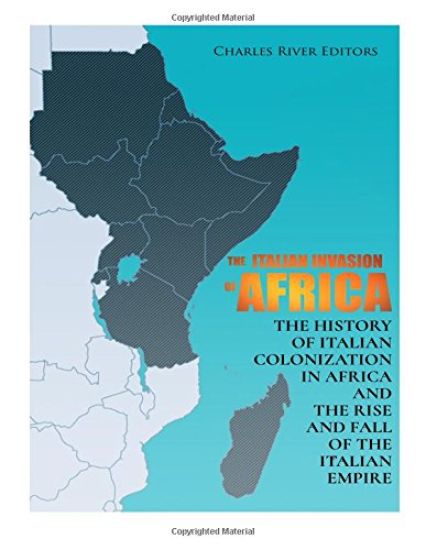
The Italian Invasion of Africa: The History of Italian Colonization in Africa and the Rise and Fall of the Italian Empire
*Includes pictures *Includes online resources and a bibliography for further reading The modern history of Africa was, until very recently, written on behalf of the indigenous races by the white man, who had forcefully entered the continent during a particularly hubristic and dynamic phase of European history. In 1884, Prince Otto von Bismarck, the German chancellor, brought the plenipotentiaries of all major powers of Europe together, to deal with Africa's colonization in such a manner as to avoid provocation of war. This event-known as the Berlin Conference of 1884-1885-galvanized a phenomenon that came to be known as the Scramble for Africa. The conference established two fundamental rules for European seizure of Africa. The first of these was that no recognition of annexation would granted without evidence of a practical occupation, and the second, that a practical occupation would be deemed unlawful without a formal appeal for protection made on behalf of a territory by its leader, a plea that must be committed to paper in the form of a legal treaty. This began a rush, spearheaded mainly by European commercial interests in the form of Chartered Companies, to penetrate the African interior and woo its leadership with guns, trinkets and alcohol, and having thus obtained their marks or seals upon spurious treaties, begin establishing boundaries of future European African colonies. The ease with which this was achieved was due to the fact that, at that point, traditional African leadership was disunited, and the people had just staggered back from centuries of concussion inflicted by the slave trade. Thus, to usurp authority, to intimidate an already broken society, and to play one leader against the other was a diplomatic task so childishly simple, the matter was wrapped up, for the most part, in less than a decade. It is debatable whether Italian engagement in Africa pertained to this era of colonization or to a later era better associated with the rise of fascism, for the only African territory that the Italians acquired during the era of European imperialism was Eritrea, and it was only nominally held. It was only later, under Benito Mussolini, that Italian possession expanded in the Horn of Africa to include Ethiopia and Somalia. The Italian conquest of coastal Libya took place in 1911, and it was also established as a unified colony under Mussolini in 1934. Only two territories in Africa were not colonized in the formal sense of the word, and these were Ethiopia (which was occupied briefly by the Italians during World War II) and Liberia. The former, Ethiopia, existed during this period, as it had for centuries, as an imperial monarchy, and although various European powers held strong diplomatic interests in the country, it never became subject to formal annexation. Liberia, on the other hand, was a curiosity. It comprises a stretch of the West African coast that was known historically as the Pepper Coast, or the Grain Coast, as others were known as the Slave and Gold Coasts. It experienced periods of visitation by both the Portuguese and the British, but its permanent settlement by outsiders came about under very unusual circumstances. However, it cannot be underestimated how important Italian participation in the "Great Game" was, given what would transpire in the early 1940s. When World War II broke out, Italy's alignment with Nazi Germany meant that Italian possessions in Africa would turn the region into a crucial theater at the start of the war, and ultimately, the Italians' inability to stave off the Allies in Africa would lead to further German involvement there, at a time when Hitler could least afford to draw resources away from the fight against the Soviets. All of it would culminate in one of the most famous battles of the war at El Alamein, pitting the legendary Desert Fox, Erwin Rommel, against the British.
Odin y Thor: Los orígenes, historia y evolución religiosa de los dios nórdico

Odin y Thor: Los orígenes, historia y evolución religiosa de los dios nórdico

Jesse Harasta; Charles River

Createspace Independent Publishing Platform
2017
nidottu
Un anciano con un solo ojo, con un manto gris y sombrero de ala ancha, apoy ndose de un bast n. Un vagabundo que aparece cuando menos se le espera, trayendo triunfo o perdici n. El dios de la profec a, la poes a y el destino. Un cambiaformas. Un hechicero. El dios Od n es una figura dram tica en la mitolog a n rdica y es a n parte del imaginario popular. Ha sido la inspiraci n para figuras como Gandalf el Gris, de J. R. R. Tolkien, y todav a figura en literatura moderna tan variada como los c mics de Marvel o la novela de Neil Gaiman American Gods (2001). Junto a su hijo Thor, Od n es uno de los dioses n rdicos mejor conocidos y a menudo es f cil olvidar que alguna vez estuvo en el coraz n de un pante n adorado con devoci n por millones de europeos en la Edad Media. Od n tiene muchos nombres y t tulos (m s de doscientos, seg n una fuente), pero su t tulo m s conocido es el de "Padre de todos" o "Padre Universal", el co-creador de la Tierra (el "Midgard"), la humanidad y todas las criaturas que habitan este mundo. Es tambi n, de forma importante, el dios de la profec a, el xtasis y la poes a, todos roles conectados muy estrechamente en el mundo n rdico, donde la l nea entre poeta y profeta era borrosa y eran vistos como poseedores de inspiraci n a trav s de una especie de furia ext tica. Estos roles estaban conectados al patronazgo de Od n sobre el conocimiento, en especial aquel de tipo m stico, ya que l era el descubridor de las runas m gicas y canciones que luego transmiti a la humanidad. Esto no lleg sin sacrificio, puesto que hubo de arrancarse su propio ojo y yacer muerto por nueve d as para adquirirlo. Un martillo que ning n mortal puede levantar. Un flamante dios de la tormenta, con cabello cual llamas. Un h roe-dios-alien gena que defiende a la humanidad. La esv stica. Incluso el nombre Thursday jueves en ingl s] es "Thor's Day" el d a de Thor]. A pesar de la virtual desaparici n de la religi n aut ctona y mitolog a n rdica siglos atr s, a n se encuentra con regularidad en la sociedad moderna al dios de la tormenta, Thor, quien contin a siendo tra do de vuelta a la vida en forma de literatura y m s recientemente, como protagonista de pel culas taquilleras de Hollywood. Qu tiene en particular este dios, entre los cientos (si no miles) de deidades que fueron arrojadas al basurero de la historia por las grandes religiones del mundo, que captura de tal manera la imaginaci n de las personas hasta el d a de hoy? Una mejor comprensi n del atractivo de Thor puede hallarse pr cticamente en cualquiera de los aspectos de la historia y evoluci n de esta figura a lo largo de los siglos, incluyendo los or genes del dios, las im genes evocativas con las que es descrito, e incluso los paralelismos entre Thor y otros dioses y h roes similares. Todo esto ha sido alimentado por la literatura, como las historias sobre Thor encontradas en la Edda Mayor o po tica y la Edda Menor o prosaica, as como la conexi n que las sociedades han tenido con Thor por cientos de a os, incluso hoy en d a. El presente trabajo tambi n examina el declive y desplazamiento de la mitolog a escandinava/n rdica por parte del Cristianismo, las razones por las que Thor fue a menudo el ltimo dios que adoraron los n rdicos y los vestigios actuales del "Thorismo", incluyendo los paralelos con otras fes, su rol en el renacimiento de un Neo-paganismo y su aparici n en otros medios como un h roe de historietas y pel culas. En conjunto con fotograf as y bibliograf a, aprender s sobre Thor como nunca antes, y en nada de tiempo.