Kirjojen hintavertailu – 12 903 727 kirjaa ja 27 kauppaa

Kirjailija

Charles River

Kirjat ja teokset yhdessä paikassa: 4 673 kirjaa, julkaisuja vuosilta 2013–2022, suosituimpiin kuuluu William Powell and Myrna Loy: The Lives and Careers of One of Classical Hollywood's Most Iconic Duos. Vertaile teosten hintoja ja tarkista saatavuus suomalaisista kirjakaupoista.

4 673 kirjaa

Kirjojen julkaisuvuodet: 2013–2022.

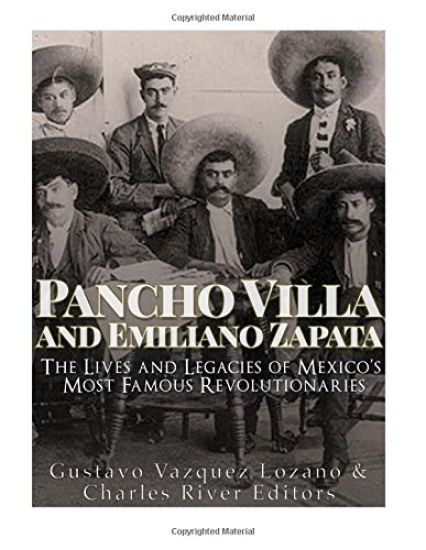
Pancho Villa and Emiliano Zapata: The Lives and Legacies of Mexico's Most Famous Revolutionaries
*Includes pictures *Includes online resources and a bibliography for further reading "Pancho Villa," people whispered at the beginning of the 20th century, "can march 100 miles without stopping, live 100 days without food, go 100 nights without sleep, and kill 100 men without remorse." The legend of Francisco Villa is full of heroism, tragedy and romance. It is the story of a poor farmer boy who became a bandit out of necessity, after avenging an injustice on his family; a military genius who flew from an oppressive government to lead the largest revolutionary army in his country's history, and defeated dictatorship to become Mexico s liberator, only to fall again in disgrace when his troops abandoned him or were massacred by the enemy. Pancho Villa and his cavalry, Mexicans point out with a certain amount of pride, invaded the United States, and although they came and tried to capture him, they never found him. This is, at least, the version that most of them know, but it's certainly not the same as in their textbooks. The story of Francisco Villa bypassed official censorship from generation to generation, like leaves sailing at full speed on the surface of a stream. But the historical reconstruction is full of nuances. Was he a freedom fighter, or a bandit? Was he a Mexican Robin Hood, or a thief and a murderer? Was he present when his troops invaded U. S. territory? Was the advance of his famous "Dorados" (the "golden ones," the name of his troops) the cause for joy, or terror among the people as they passed the countryside towards Mexico City? Pancho Villa s personality has been controversial since the very beginning of his career as a General of the revolutionary army. A little more than 100 years ago a Mexican peasant named Emiliano Zapata gathered a rural army from the plantations and villages of southern Mexico, seized the lands of the haciendas, and began to distribute them among the peasants of Anenecuilco, his hometown, in the state of Morelos. Outraged and impatient with the ceaseless destitution of the indigenous peoples at the hands of the landowners, he had decided to take justice in his hands. His flag was Liberty and Justice, the exact opposites of the two burdens that had tyrannized the rural population: work in semi-slavery conditions and immense inequality. Zapata, who in a few years assembled a popular army of 25,000, was a unique case in the history of Mexico. His country's past had consisted of opportunist generals revolting against the government seeking not to make justice, but to seize power. Conversely, Zapata was not interested in politics or power plays, except in their most practical and immediate form: to distribute land among the peasants; to allow them to work in peace; and to defend their gains by force of arms. Thus, it was only inevitable that in his time, he was seen as a menace, someone to get rid of in order to return to peace and order. Nearly a century after his death, Zapata remains an opaque figure. To call oneself a Zapatista in Mexico can get a person in trouble, yet he led one of the peasant rebellions most studied by scholars. Historians have produced biographies that portray him as a hero, such as John Womack in the 1960s, and that of his successor and closest aide, Gildardo Maga a, who wrote one shortly after Zapata's death. More meticulous books have appeared in recent past, like the one by Samuel Brunk, who concedes that the press may have exaggerated Zapata's exploits, but not completely. Pancho Villa and Emiliano Zapata: The Lives and Legacies of Mexico's Most Famous Revolutionaries chronicles the lives of two of Mexico's most legendary figures. Along with pictures of important people, places, and events, you will learn about Pancho Villa and Emiliano Zapata like never before.
Folk Heroes of the Frontier: The Lives and Legacies of Daniel Boone and Davy Crockett

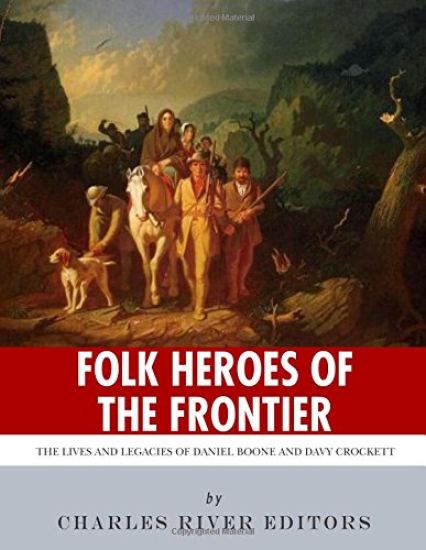
Folk Heroes of the Frontier: The Lives and Legacies of Daniel Boone and Davy Crockett

Charles River

Createspace Independent Publishing Platform
2017
nidottu
*Discusses some of the legends and controversies surrounding Boone's life and Crockett's life, including Crockett's death at the Alamo. *Includes the story about Crockett's famous Not Yours To Give speech, and the debate over whether he actually gave it. *Includes pictures of Boone, Crockett and other important people and places in their lives. *Includes a Bibliography for further reading. "Many heroic actions and chivalrous adventures are related of me which exist only in the regions of fancy. With me the world has taken great liberties, and yet I have been but a common man." - Daniel Boone "I know not whether, in the eyes of the world, a brilliant death is not preferred to an obscure life of rectitude. Most men are remembered as they died, and not as they lived. We gaze with admiration upon the glories of the setting sun, yet scarcely bestow a passing glance upon its noonday splendor." - Davy Crockett The Wild West and the frontier have long held a special place in the narrative of American history, and all of the legends and folk heroes who lived in the 19th century owe their reputation to the original American frontier folk hero, Daniel Boone. Boone was literally a trailblazer: the legendary pioneer established his Wilderness Road by striking west into present-day Kentucky and establishing Boonesborough, one of the earliest white settlements west of the Appalachians. Hundreds of thousands of settlers would follow his path by the end of the 18th century. While that was an important and proud legacy for the former Revolutionary War militiaman and Virginia State Assemblyman, Boone became known for the outsized tales and adventures associated with his foray into the frontier. Far and wide, people spoke of Boone's expert marksmanship, his encounters with wild bears, and his hardscrabble frontier life, making him a living legend and the prototypical Western frontier folk hero in America. All of it bewildered and bemused the actual man himself, whose own words about his affinity for the backwoods made him sound more like Henry David Thoreau than anything else. Boone once noted, "Situated, many hundred miles from our families in the howling wilderness, I believe few would have equally enjoyed the happiness we experienced. I often observed to my brother, You see now how little nature requires to be satisfied. Felicity, the companion of content, is rather found in our own breasts than in the enjoyment of external things..." Now known today as "The King of the Wild Frontier", Davy Crockett was also a living legend in his own life. Crockett was a hardscrabble frontiersman who could spin a good yarn but who also took a no-nonsense approach that brought him from the backwoods of Tennessee to the halls of Congress. Though he served during the presidency of another Westerner, Andrew Jackson, Crockett was very much his own man, and he was distrustful of other politicians, a sentiment that has only endeared him further to subsequent generations of Americans. Crockett was famous in his lifetime, but it was his death in Texas that made him an American legend. Though there is still some mystery and controversy surrounding exactly what transpired at the Battle of the Alamo, the deaths of Crockett, Travis, Bowie and the rest of the defenders at the hands of Santa Anna's Mexican soldiers became a symbol of sacrifice and defiance, and the battle itself became a rallying cry throughout the rest of Texas' War for Independence. Naturally, it also cemented Crockett's legacy as well. Folk Heroes of the Frontier chronicles the lives of the two frontier heroes, and the legends and tall tales that have helped shape their legacies. Along with pictures of important people, places, and events, you will learn about Daniel Boone and Davy Crockett like you never have before.
Establishing the Elizabethan Age: The Lives and Legacies of Henry VIII, Anne Boleyn and Elizabeth I
*Includes pictures of Henry, Anne, Elizabeth and important people, places, and events in their lives. *Analyzes their legacies and discusses popular legends about them. *Includes a Bibliography for further reading. Over 450 years after his reign, Henry VIII is still the most famous and recognizable King of England, but it's for all the wrong reasons. Though well regarded by contemporaries as a learned king and "one of the most charismatic rulers to sit on the English throne", he is best remembered today for his gluttony and multiple marriages, particularly the gruesome way in which he was widowed on more than one occasion. Naturally, that was the focus of the popular Showtime drama series centered around his life, The Tudors. Henry VIII will probably continue to be best known for beheading some of his wives, most notably Anne Boleyn, so it is somewhat fitting that his most decisive act came as a result of a marital mishap. Sharply at odds with the Catholic Church over his attempt to dissolve his marriage with Catherine of Aragon, Henry VIII ultimately broke with the Church and established the Church of England, which forever both the religious history of England and the social hierarchy of the nation and its empire. Of Henry's wives, none is more famous than his second, Anne Boleyn, who even today remains both famous and infamous for her personal and political life nearly 400 years after her death. Anne was a vixen and ultimately a victim, but she was also an astute politician, foolish lover and wise woman who could never decide whether to listen to her heart or her head. She was also both an adulteress and religious reformer, and these two qualities would come together to change the face of English Christianity forever. Anne came into the court with a better idea of what she was getting herself into than any other of Henry's queens, but even she could not see foresee how fickle fate would cost her both her love and her life. Like Catherine of Aragon before her, she would be unable to hold on to her wandering husband. However, she would, ironically, be the last of his queens that he'd ever cheat on. Early female mortality and his own failing health would keep him faithful to the women who would follow her as queen, in a way that the teachings of the Church and common decency never would. When Queen Elizabeth II came to the throne in 1652, many commentators heralded the beginning of her reign as the second Elizabethan age. The first one, of course, concerned the reign of Henry VIII's second surviving daughter and middle surviving child, Queen Elizabeth I, one of England's most famous and influential rulers. It was an age when the arts, commerce and trade flourished. It was the epoch of gallantry and great, enduring literature. It was also an age of wars and military conflicts in which men were the primary drivers and women often were pawns. Elizabeth was the last Tudor sovereign, the daughter of the cruel and magnificent King Henry VIII and a granddaughter of the Tudor House's founder, the shrewd Henry VII. Elizabeth, hailed as "Good Queen Bess," "Gloriana" and "The Virgin Queen" to this day in the public firmament, would improve upon Henry VIII's successes and mitigate his failures, and despite her own failings would turn out to "have the heart and stomach of a king, and a king of England too". Indeed, that was the phrase she would utter in describing herself while exhorting her troops to fight for England against the Spanish Armada. Establishing the Elizabethan Age chronicles the lives and legacies of Henry VIII, Anne Boleyn and Elizabeth I, but it also humanizes them and discusses common legends about them. Along with pictures of important people, places, and events in her life, you will learn about Henry, Anne and Elizabeth like you never have before.
The Most Infamous Terrorist Groups in the World: The History and Legacy of al-Qaeda, the Islamic State, the Nusra Front, and Boko Haram
*Includes pictures *Includes online resources and a bibliography for further reading Since the attacks on September 11, 2001, the world has struggled to define al-Qaeda, an amorphous, growing, and seemingly inexhaustible organization. Once a relatively organized group based in one country with a defined hierarchy and clear leadership, al-Qaeda has transformed into a transnational phenomenon over the last few decades, with branches and affiliates operating in dozens of countries across the world. Many call al-Qaeda an enemy, while some define it as an ideology, and others analyze it as a network. Of course, a small minority takes it up as their cause and an extension of their religion. Also known as ISIS, Da'esh, al-Qaeda in Iraq (AQI), and a host of other names, the Islamic State in Iraq and the Levant (ISIL) has increasingly gained attention over the years for its brutal tactics and seemingly blatant disregard for human rights, but it has recently dominated the global media spotlight and made headlines when it attacked and seized control of Mosul, the second largest city in Iraq, and drove out an Iraqi army force that was more than five times its size in June 2014. It has since laid claim to various territories throughout Iraq and the Levant, and it has established operational control and maintained administrative structures on both sides of the Iraqi-Syrian border. Most recently, it declared the restoration of a caliphate and renamed itself the Islamic State. One of the reasons ISIS has gone by so many different names is because it has rebranded itself numerous times in the past. After starting as an al-Qaeda-inspired Sunni Islamist brigade that emerged from the ashes of the jihadist struggle against foreign forces in Iraq, the group grew into a full-fledged al-Qaeda branch, then evolved into a religiously motivated army, then finally separated from al-Qaeda to become the organization it is today. Since the Arab Spring uprising of 2011, reports of terrorist attacks around the world have flooded international media. Syria, a country about one and half times the size of Texas, has become the central battleground for many terrorist groups; those the world often focuses on and has heard much of--such as the Islamic State of Iraq and the Levant (also known as ISIS and Da'ash, but from here on referred to as ISIL)--and those the world rarely hears about and is unable to make distinctions between others--such as Jabhat Al-Nusra. Despite the lack of focused attention on its activities, Jabhat Al-Nusra (or, the Nusra Front as it is sometimes referred to) has built quite a reputation in Syria and the greater Middle East for its seemingly endless supply of weapons, ability to ally with strategic partners, and its peculiar mix of international, albeit notorious, supporters inside the country. The complexity of the Syrian Civil War is most definitely reflected in the complexity of the groups fighting for power within and around its borders; Jabhat Al-Nusra is no exception. The group's relationship with ISIL, Al-Qaeda, and the other militant factions within Syria is complicated and appears often conflictual: as of the time of this writing, Jabhat Al-Nusra had announced its split from Al-Qaeda in Iraq (AQI) but analysts believe this is nothing more than a re-branding technique to attract all fighting elements in Syria to be under its own umbrella of control. On the morning of April 15, 2004, the world woke up to the extraordinary news of the kidnap in a little known hamlet of Nigeria of some 276, primarily Christian schoolgirls, by the radical militant Nigerian insurgent group Boko Haram. Almost overnight, the group, which had resided somewhat on the fringes of global consciousness up until that point, found itself at the forefront as international public outrage, culminating in a social media campaign headed by First Lady Michelle Obama, demanded the immediate return of the kidnapped girls.
Florence Nightingale: The Life and Legacy of the Most Famous Nurse in History

Florence Nightingale: The Life and Legacy of the Most Famous Nurse in History

Charles River

Createspace Independent Publishing Platform
2017
nidottu
*Includes pictures *Includes accounts of Nightingale's life and work written by contemporaries, as well as Florence herself *Includes online resources and a bibliography for further reading *Includes a table of contents "I think one's feelings waste themselves in words; they ought all to be distilled into actions which bring results." - Florence Nightingale Today, nursing is one of the most ubiquitous professions in the world, and images of war immediately call to mind nursing the wounded, but it was not long ago that such ideas were relatively primitive. Indeed, schoolchildren are still taught about the revolutionary exploits of Florence Nightingale, the war nurse who is often credited as the founder of modern nursing. As The Times wrote of Nightingale, "She is a 'ministering angel' without any exaggeration in these hospitals, and as her slender form glides quietly along each corridor, every poor fellow's face softens with gratitude at the sight of her. When all the medical officers have retired for the night and silence and darkness have settled down upon those miles of prostrate sick, she may be observed alone, with a little lamp in her hand, making her solitary rounds." Florence Nightingale first came to prominence during the Crimean War in the middle of the 19th century when she helped organize efforts to treat wounded soldiers, and the image of her doing rounds among those she treated at night became extremely popular in Europe, but her efforts extended far beyond the scope of battle. In time, she came to found the first secular nursing school, at St Thomas' Hospital in London, and with that she began to transform nursing into an actual profession. Perhaps not surprisingly, in conjunction with nursing, Nightingale was a social reformer who advocated for the advancement of women in all areas of life, from healthcare to poverty, and she bolstered her work with voluminous writings on behalf of her causes. Florence Nightingale: The Life and Legacy of the Most Famous Nurse in History chronicles one of the most famous women of the 19th century. Along with pictures of important people, places, and events, you will learn about Florence Nightingale like never before.
Harriet Tubman and the Underground Railroad: The History of the Abolitionist and Secret Network that Helped Slaves Escape the South
*Includes pictures *Includes accounts of the Underground Railroad and Tubman's life *Includes online resources and a bibliography for further reading *Includes a table of contents "I was the conductor of the Underground Railroad for eight years, and I can say what most conductors can't say - I never ran my train off the track and I never lost a passenger." - Harriet Tubman The Underground Railroad is one of the most taught topics to young schoolchildren, and every American is familiar with the idea of fugitive slaves escaping to Canada and the North with the help of determined abolitionists and even former escaped slaves like Harriet Tubman. The secrecy involved in the Underground Railroad made it one of the most mysterious aspects of the mid-19th century in America, to the extent that claims spread that 100,000 slaves had escaped via the Underground Railroad. Of course, from a practical standpoint, the Underground Railroad had to remain covert not only for the sake of thousands of slaves, but for a small army of men and women of every race, religion and economic class who put themselves in peril on an ongoing basis throughout the first half of the 19th century, and in the years leading up to the war. Over 150 years later, that same secrecy has helped the Underground Railroad become so romanticized and mythologized that people often visualize it in ways that were far different from reality. Before the American Civil War eliminated slavery, it was a fixture in North America for over 200 years, and by 1850 a trained slave was worth approximately $2,500, around 10 times the sum of a typical annual salary in that day. As a result, the economic dependence on slavery in the South was an extreme one, and in the wake of the Fugitive Slave Act, black people in the North were under constant pressure to defend their "credentials" to bounty hunters and owners. Between the value of slaves in America, rising abolitionist sentiment at home and overseas, and political debates promoting or hindering the movement toward equality, the era in which the Underground Railroad operated cannot be easily fit into a concise body of principles, actions or geography. Harriet Tubman is one of the most famous women in American history, and from an early age every American learns of her contributions to abolition and the Underground Railroad. The woman who became known as the Moses of her people personally led more than 13 expeditions to free slaves in the South, and she was so integral in helping escaped slaves achieve freedom that her name is practically synonymous with the Underground Railroad today. If anything, the central role she played in the Underground Railroad has become so ingrained among subsequent generations that Tubman's life has been shrouded in legend, and other important aspects have been overlooked. In order to fully appreciate and understand both Harriet Tubman's life and the important role she played in the abolitionist movement, it is necessary to examine the circumstances in which she was raised and what events drove her to the path she chose. Anthropologist Douglas Armstrong notes " s]o little information about Tubman has been based on fact and so much based on myth and created history" that it has only been recently that historians have "come to the point where we can recognize her true contributions." In fact, Tubman's entire life consisted of struggles and persistence, whether she was fighting on behalf of slaves, the Union army during the Civil War, or women's rights. After managing to escape the severe beatings and humiliation of slavery herself, she put her life on the line over and over again to help others, and she could proudly boast, "I was the conductor of the Underground Railroad for eight years, and I can say what most conductors can't say - I never ran my train off the track and I never lost a passenger."
Everything You Need to Know About The Iliad

Everything You Need to Know About The Iliad

Charles River

Createspace Independent Publishing Platform
2017
nidottu
*Explains the Iliad's major themes, characters, and plot. *Includes historic artwork depicting important characters and events in the Iliad. *Discusses the historical basis of Homer, the Trojan War, and Ancient Greek culture. "Like leaves on trees the race of man is found, - Now green in youth, now withering on the ground; Another race the following spring supplies: They fall successive, and successive rise." - The Iliad Perhaps the most famous epic poem ever written, The Iliad has been read for nearly 3,000 years, making it also one of the oldest written works in the Western world. Although the story covers only a few weeks in the final year of the Trojan War, the poem has made characters like Paris, Helen, Achilles, Hector, and Ajax instantly recognizable. The Iliad and the Odyssey influenced Virgil, whose Aeneid is clearly modeled after them, and every other great poet since. The epic poems also literally put Troy on the map, motivating Heinrich Schliemann to search for and ultimately find the city of Troy in the 19th century. Believed to be penned around the 7 or 8th century B. C, the Iliad and the Odyssey served as both entertainment and a moral guidebook of sorts for ancient Greeks, as well as the foundation for Western literature. Although there is some scholarly debate regarding the epic's authorship, It is generally attributed to a poet named Homer. Given that he lived nearly 2800 years ago, not much is actually known about Homer. His birthplace is debated, but due to the dialect of Greek in which the works attributed to him were written, it is generally believed that he lived in Iona. The only other aspect of Homer's life that is generally agreed upon is that he was a blind poet, possibly also a bard. That naturally raises the question of how he wrote his epic poetry, but scholars assume he probably dictated them to a scribe, as the format suggests they were comprised from various shorter forms of oral poetry. In addition to the Iliad and Odyssey, Homer also wrote the popular "Homeric Hymns", which depict the various myths regarding the origins of the Gods. Everything You Need to Know About The Iliad is the perfect resource for understanding Homer's famous epic, including an introduction that looks at the historical basis of the Trojan War, and a comprehensive explanation of the epic's characters, plot, themes, and its influential and enduring legacy. With The Iliad as relevant as ever today, get caught up quickly with this resourceful guide.
Erwin Rommel and the Afrika Korps: The History of Nazi Germany's Most Famous Commander and Army during World War II
*Includes pictures *Includes accounts of the fighting *Includes online resources and a bibliography for further reading One of his biographers called him "a complex man: a born leader, a brilliant soldier, a devoted husband, a proud father; intelligent, instinctive, brave, compassionate, vain, egotistical, and arrogant." As that description suggests, every account of Erwin Rommel's life must address what appears to be its inherent contradictions. Fittingly, and in the same vein, he remains one of the best remembered generals of World War II and history at large, despite the fact he was on the losing side, and he was defeated at the most famous battle of his career, the decisive Battle of El Alamein. With the Axis forces trying to push through Egypt towards the Suez Canal and the British Mandate of Palestine, American forces landed to their west in North Africa, which ultimately compelled Rommel to try to break through before the Allies could build up and overwhelm them with superior numbers. Given that the combined Allied forces under Bernard Montgomery already had an advantage in manpower, Montgomery also wanted to be aggressive, and the fighting would start in late October 1942 with an Allied attack. At Alamein, 195,000 troops in 11 divisions faced off against 50,000 Germans (four divisions) and 54,000 Italians (eight divisions), where they were able to use their superior numbers and weapons to defeat the Axis troops. Over the next few weeks, the Allies made steady progress and forced Rommel to conduct a fighting retreat to safety until his army linked up with another Axis army in Tunisia, but the fighting at the end of 1942 inevitably compelled all Axis forces to quit the theater, the first time since the beginning of the war that Africa was safe for the Allies. After leaving North Africa, Rommel spent much of the later part of the war strengthening German defenses across the Atlantic in anticipation of an amphibious Allied landing, which would come in June 1944. But the murky role he played in the notorious July 20 plot on Adolf Hitler's life in 1944, the closest an assassination attempt got to killing the Nazi Fuhrer, would bring about the Desert Fox's untimely demise in October 1944, even as the Soviets and Western Allies were tightening the vise on Germany. Compelled to take cyanide by authorities, the Desert Fox insisted he was innocent until his dying day, and his popularity forced the Nazi government to claim his death was brought about by a heart attack or a cerebral embolism. In fact, Rommel was given an official state funeral, and Winston Churchill would go on to praise him, "He also deserves our respect because, although a loyal German soldier, he came to hate Hitler and all his works, and took part in the conspiracy to rescue Germany by displacing the maniac and tyrant. For this, he paid the forfeit of his life. In the sombre wars of modern democracy, chivalry finds no place ... Still, I do not regret or retract the tribute I paid to Rommel, unfashionable though it was judged." While there is a great division when it comes to historical opinion with respect to Rommel's merits as a general as well as the moral choices he made, both historians and the public continue to be intrigued by this man who has been dead for over 70 years. People at large continue to consider Rommel one of the greatest generals of the 20th century, an opinion shared by many of his contemporaries on both sides of World War II. For example, British General Harold Alexander hinted at both his strengths and weaknesses, commenting, "He was a tactician of the greatest ability, with a firm grasp of every detail of the employment of armour in action, and very quick to seize the fleeting opportunity and the critical turning point of a mobile battle. I felt certain doubts, however, about his strategic ability, in particular as to whether he fully understood the importance of a sound administrative plan."
Island Hopping across the Pacific Theater in World War II: The History of America's Victorious Leapfrogging Strategy against Imperial Japan
*Includes pictures *Includes accounts of the fighting *Includes online resources and a bibliography for further reading The waters of the Pacific Ocean - stretching deep blue under the tropical sun, or scourged by typhoons - provided World War II's most far-flung battlefield. Two of the world's premier mid 20th century maritime powers, the United States of American and the Empire of Japan, grappled for supremacy across that vast expanse. By the time the Battle of Midway was over in June 1942, the defeat was so devastating for Japan that it was actually kept secret from all but the highest echelons of the Japanese government. Along with the loss of hundreds of aircraft and over 3,000 men killed, the four Japanese aircraft carriers lost, when compared to America's one lost carrier, was critical considering America's huge shipbuilding superiority. The protagonists at Midway were putting into practice a newly emerging naval doctrine, one which ultimately meted out a terrible punishment to the side that miscalculated. Carrier versus carrier combat had come of age. From that point forward, it would be the Americans who operated aggressively across the Pacific. The Guadalcanal Campaign, which ran from August 1942 to February 1943, was a bitter and protracted struggle that also happened to be a strange and transitional confrontation quite unlike any other in the long Pacific War. In conjunction with the American victory at the Battle of Midway, Guadalcanal represented the crucial moment when the balance of power in the Pacific tipped in favor of the Allies, but the idea that Guadalcanal would be such a significant battle would have come as a surprise to military strategists and planners on both sides. By the spring of 1943, American military planners had begun to create a plan to dislodge Japan from east and southeast Asia. To do so, parts of the Philippines were considered main strategic points in the potential Allied attack in the Pacific. The end goal of the Allied plan was an invasion of the Japanese home islands, in which heavy aerial bombardment would precede a ground assault. In order for this to occur, Allied forces would have to occupy areas surrounding Japan, with China adding to Luzon (the largest island in the Philippines) and Formosa (a large island off the coast of China) to create a triangle from which they could launch their bombers. The Allied advance across the Pacific was based on this 1943 plan, with General MacArthur and his forces moving to the north through New Guinea, then Morotai Island, and then to Mindanao, which was the southernmost major island in the Philippines chain. At the same time, Admiral Chester Nimitz sent his fleet through the central Pacific, where they engaged Japanese forces at the Gilbert, Marshall, Marianas and Palau Islands en route to Mindanao. Meanwhile, when Admiral Nimitz was directed to capture an island in the Bonin group, Iwo Jima stood out for its importance in making progress against the mainland, with three airfields that would allow American air forces to attack the Japanese mainland. Near the end of 1944, as Allied forces were pushing across the Pacific and edging ever closer to Japan, plans were drawn up to invade the Ryuku islands, the most prominent of them being Okinawa. Military planners anticipated that an amphibious campaign would last a week, but instead of facing 60,000 Japanese defenders as estimated, there were closer to 120,000 on the island at the beginning of the campaign in April 1945. The Battle of Okinawa was the largest amphibious operation in the Pacific theater, and it would last nearly 3 months and wind up being the fiercest in the Pacific theater during the war, with nearly 60,000 American casualties and over 100,000 Japanese soldiers killed. In addition, the battle resulted in an estimated 40,000-150,000 Japanese civilian casualties.
The Defeat of the Ottoman Empire in World War I: The History of the Allied Victories that Led to the Collapse of the Turkish Empire
*Includes pictures *Includes accounts of the fighting *Includes online resources and a bibliography for further reading Most books and documentaries about the First World War focus on the carnage of the Western Front, where Germany faced off against France, the British Empire, and their allies in a grueling slugfest that wasted millions of lives. The shattered landscape of the trenches has become symbolic of the war as a whole, and it is this experience that everyone associates with World War I, but that front was not the only experience. There was the more mobile Eastern Front, as well as mountain warfare in the Alps and scattered fighting in Africa and the Far East. Then there was the Middle Eastern Front, fought across the Levant and Mesopotamia, which captured the imagination of the European public. There, the British and their allies fought the Ottoman Turkish Empire under harsh desert conditions hundreds of miles from home, struggling for possession of places most people only knew from the Bible and the Koran. The Arab revolt has been engraved in modern memories by movies such as Lawrence of Arabia as a widespread nationalistic movement against the cruel Ottoman occupier. The reality is far more complex. In 1914, as the Ottomans entered the war, the Arabs' loyalty to the Sultan and Caliph was not in question. Arab nationalism did indeed emerge in the wake of the revolution of 1908, but it mostly attracted Arab intellectuals as the local population remained loyal subjects of the Empire. European encroachment on several former Ottoman provinces such as Algeria, Libya, Tunisia and Egypt made the danger of a possible Arab revolt relatively clear. The fall of the Ottoman Empire set the geopolitical scene of the new Middle East. In 1920, two years after the end of the war, the region was already experiencing growing instability. The issues and trends that would plague the region until today were growing. On April 4, Arab riots broke out in Jerusalem, fueled by the growing hostility against the Zionist movement. The British passivity would convince one of the Jewish leaders, Vladimir Jabotinsky (the future founder of the Israeli right-wing), of the strategic necessity of a strong Jewish military as the core of the future state. In the end, the partitioning of the Ottoman Empire drew up borders that ignored local populations, although with the patchwork of groups in the region, it would have been difficult to create even small countries with any sort of ethnic, tribal, or religious homogeneity. Instead, the resulting nation-states were conglomerates of minorities, paving the way for generations of conflict the region is still experiencing today. When Edward House, U. S. President Woodrow Wilson's foreign policy advisor, heard of the agreement from his British counterpart, Foreign Secretary Arthur Balfour, he remarked, "It is all bad and I told Balfour so. They are making it a breeding place for future war." Indeed, almost 100 years after the fall of the Ottoman Empire, it is clear that the emergence of secular Arab nationalism triggered an opposite reaction from supporters of a political Islam and vice versa. The Muslim Brotherhood, for instance, was created as a reaction to the abolition of the Caliphate by Turkey in 1928 and would strengthen its ranks by being a viable opponent to the rising secular Arab nationalism. These mechanics are still at work today, as an initial wave of secular revolutions, the Arab Spring, triggered a second wave of "Green Revolutions." In parallel, whether in its most radical form with ISIS and al-Qaeda's idea of a Caliphate, or in the moderate ideology with the emergence of political Islam, Islam is still seen as an effective weapon against Western influence. In Turkey itself, the opposition between partisans of a strong Islamic identity and those such as Mustafa Kemal, who rejected it, still divides the political and social landscape.
The Six Day War: The History and Legacy of the 1967 Arab-Israeli War and Its Impact on the Middle East

The Six Day War: The History and Legacy of the 1967 Arab-Israeli War and Its Impact on the Middle East

Charles River

Createspace Independent Publishing Platform
2017
nidottu

Halvin toimitettuna 17,60 €

*Includes pictures *Includes a bibliography and online resources for further reading In early June 1967, the Israelis captured Jordanian intelligence that indicated an invasion was imminent, and at 08h10 on June 5, 1967, the Israel Broadcasting Authority aired an Israeli Defense Force communique. "Since the early hours of this morning," it read, "heavy fighting has been taking place on the southern front between Egyptian armored and aerial forces, which moved against Israel, and our forces, which went into action to check them." This was followed up a little over two hours later by a publicly aired message to the armed forces of Israel, released by Israeli Minister of Defense Moshi Dayan in his first day in office. "We have no aims of conquest," was Dayan' simple message. "Our only aim is to frustrate the attempt of the Arab armies to conquer our country, and to sever and crush the ring of blockade and aggression which has been created around us." By then, the Israeli Air Force had been in action over the skies of Egypt since 07h45 that morning, and as a consequence, almost the entire Egyptian Air Force lay smoldering on the tarmacs of various forward Egyptian airbases. Having neutralized Egypt's air strike potential in a matter of hours, the IAF then began to turn its attention to Jordan, Iraq and Syria, as IDF ground forces, back in the Sinai, moved in to take care of the more punishing business of destroying Egyptian ground forces. Over the next six days, the Israelis overwhelmed the Egyptians in the west, destroying thousands of tanks and capturing the Gaza Strip and the entire Sinai Peninsula. At the same time, Israel drove the Jordanians out of Jerusalem and the West Bank, and it captured the Golan Heights from Syria near the border of Lebanon. In the span of a week, Israel had tripled the size of the lands it controlled. Israel had gone from less than 10 miles wide in some spots to over 200 miles wide from the Sinai Peninsula to the West Bank. Israel also unified Jerusalem. The results of the Six Day War created several issues that have still not been resolved in the Middle East. Israel now found itself in possession of territories that were the home of over a million Arabs. Of these territories, Israel officially annexed only East Jerusalem and the Golan Heights, leaving the inhabitants of the West Bank, Sinai Peninsula, and Gaza Strip in limbo regarding citizenship status. Despite attempts to create peace, the Arab nations refused to recognize Israel, and Israel refused to withdraw from any of the land it captured in 1967. After conquering the territories, Israel began encouraging Jewish settlement in the new territories. In the 1970s, more than 10,000 Jews moved into the West Bank, Gaza Strip, Golan Heights, East Jerusalem, and the Sinai Peninsula, a figure that grew to over 100,000 by the early '80s and is now over 500,000 today. Some in Israel note that Jewish settlements in 1967 had simply reestablished Jewish communities in places they had lived prior to 1948, including Jerusalem, Hebron, and Gush Etzion, as well as Gaza City in the Gaza Strip. They also argue that the legal status of the territories was never officially determined due to the Palestinian rejection of the U. N. Partition Plan. Still others assert that Israel's settlements do not breach international law or the Geneva Convention because it fought the Six Day War in self-defense and did not forcibly transfer civilian populations onto occupied territories. However, despite those arguments, the vast majority of the world considers Jewish settlements on land captured by Israel in 1967 to be illegal, including the United Nations, the International Court of Justice, and the international community. The Six Day War: The History and Legacy of the 1967 Arab-Israeli War and Its Impact on the Middle East looks at one of the most important turning points in the region.
Everything You Need to Know About Romeo & Juliet

Everything You Need to Know About Romeo & Juliet

Charles River

Createspace Independent Publishing Platform
2017
nidottu
*Includes a short biography of Shakespeare. *Explains the historical sources that inspired the story of Romeo & Juliet. *Summarizes every scene of Romeo & Juliet and analyzes them. *Discusses the characters, plot, and major themes of Romeo & Juliet. "If I profane with my unworthiest hand This holy shrine, the gentle sin is this: My lips, two blushing pilgrims, ready stand To smooth that rough touch with a tender kiss." - Romeo William Shakespeare is widely considered the greatest writer in the history of the English language, so renowned and respected that the time period in which he lived is often known as the Age of Shakespeare. Indeed, his genius is questioned only by those who doubt the authenticity of his authorship of timeless classics like Romeo and Juliet. As Ben Jonson once put it, "He was not of an age, but for all time." No other writer, in English or in any other language, can rival the appeal that Shakespeare has enjoyed around the world, and nobody's had a bigger influence. The "Bard of Avon" has a catalogue full of the best known plays and poetry in history. His surviving works, including some collaborations, consist of about 38 plays, 154 sonnets, two long narrative poems, and several other poems. His plays have been translated into every major living language and are performed more often than those of any other playwright. His early plays were mainly comedies and histories, genres he raised to the peak of sophistication and artistry by the end of the 16th century. He then wrote mainly tragedies until about 1608, and in his last phase, he wrote tragicomedies. Even those who have never read works like Othello, Macbeth, King Lear, or Hamlet are instantly familiar with the names. Although his works are so well known, major details of his life are still sketchy. Between 1585 and 1592, he began a successful career in London as an actor, writer, and part owner of a playing company called the Lord Chamberlain's Men, later known as the King's Men. He appears to have retired to Stratford around 1613, where he died three years later. Few records of Shakespeare's private life survive, and there has been considerable speculation about such matters as his physical appearance, sexuality, religious beliefs, and even whether the works attributed to him were written by others. His most famous play, and probably the most famous play in history, is Romeo and Juliet, the classic tragic love story between two members of rival families, and the result of the feud. Everything You Need to Know About Romeo & Juliet is the perfect resource for understanding Shakespeare's most famous tragedy, including an introduction to the famous playwright and a comprehensive explanation of the play's characters, plot, themes, and its influential and enduring legacy. With Romeo & Juliet as relevant as ever today, get caught up quickly with this resourceful guide.
The Louvre and the Hermitage: The History and Contents of Europe's Biggest Art Museums
*Includes pictures *Includes contemporary accounts *Profiles the various art in each museum *Includes online resources and a bibliography for further reading The Louvre: The very name conjures up scenes of art and elegance, and of long halls filled with beauty and people strolling through them whispering quietly among themselves about the glories they are witnessing. Even those who have never been to the Louvre know some of its most prized possessions, from ancient statues to Leonardo Da Vinci's "Mona Lisa". As the world's largest museum, the Louvre is unquestionably the cultural highpoint of Paris, a city that has long been considered the cultural center of Europe. However, life is rarely as simple as one imagines, and the life of the Louvre is no different. While just about everyone is familiar with its history as an art museum, the Louvre's history goes back over 800 years, and it used to have far different purposes, both as a medieval fortress and a palatial residence for French kings. The Louvre bore witness to mass murder during the French Revolution, and there have been countless accusations of theft and other questionable actions since its opening. Furthermore, the museum is also a classic example of beating one's swords into ploughshares, for it has been largely stocked through the conquests of war. Its first collection was put on display by a king who wanted to share his personal art collection with his subjects. Following the French Revolution, the Louvre became a place of ascetic refuge, where those burdened by daily life could go, often at no cost, and visit some of the most beautiful pieces of art in the world. While the power hungry Napoleon made war across the continent, he was also always on the lookout for beautiful and interesting items to send home to his people. Later, when rioters attempted to burn the building down, the museum portion of the palace survived, almost by miracle, and when the Nazis occupied Paris, they found that most of the items of value had been safely sent away. Ironically, when World War II was over, the museum became a safehouse for items stolen by the Germans from around the world, and a conduit to get the pieces back to their rightful owners. Even now, in the 21st century, the museum is serving as a bridge to peace and understanding; its latest gallery was designed to showcase Islamic art in the hope of bringing together people from different cultures. This is, to say the least, quite a change of pace for a fortress originally intended to fight off invaders. Catherine the Great came to power in the midst of the Enlightenment, which was flourishing in France and Britain, and she would rule as an Enlightened ruler. A known correspondent of Voltaire's, Catherine sought to modernize Russia and turn it into a force in its own right, creating a rich and cultured court at the same time. Over the course of nearly 35 years in power, Catherine ushered in the Russian Enlightenment and presided over a period of time known as the Golden Age of the Russian Empire. Moreover, Catherine had an unmatched passion for the arts, and she began a private art collection that would eventually evolve into galleries upon galleries of historical treasures shipped in from all over the world. This fabled museum was none other than the Hermitage, located in the heart of Saint Petersburg, a city founded by the imperial empire's very own Peter the Great. The Louvre and the Hermitage: The History and Contents of Europe's Biggest Art Museums chronicles the remarkable history of the museums and profiles some of their most important pieces. Along with pictures depicting important people, places, and events, you will learn about the Louvre and the Hermitage like never before.
Zanzibar: The History of the International Trade Center off the Coast of Africa

Zanzibar: The History of the International Trade Center off the Coast of Africa

Charles River

Createspace Independent Publishing Platform
2017
nidottu
*Includes pictures *Includes various explorers' accounts of Zanzibar at different times *Includes online resources and a bibliography for further reading *Includes a table of contents "It was then capital of an Afro-Arab dynasty, a centre of commerce and international diplomacy, a seat of learning...and a gateway to Africa."- Abdul Sheriff, 1995 Situated about 25 miles off the Tanzanian coast, Zanzibar, with its sultans and spices, merchants and mosques, dhows and doorways of richly carved timber, has captured the imagination of travelers and writers for hundreds of years. It has long evoked a romantic mystique, calling up images of an island paradise in the warm waters of the Indian Ocean. Its gleaming Muslim Swahili town, built of white coralline limestone, can trace approximately a thousand years of maritime trading, and it also sustained a plantation economy based principally on slaves and cloves. Stone Town is one of the few historic trading cities from the Swahili civilization that remains a viable urban center to this day. For much of the last millennium, Zanzibar served as the center of maritime interaction and trade between Africa, the Arabian Peninsula, and India, and the architectural and urban heritage of the island reflects the complex fusion of these cultural spheres. By tracing the changes seen in the archaeological record, it is possible to identify the transformations that occurred in the landscape, people, and architecture of Zanzibar. The earliest known people to call Zanzibar home, the Swahili, built their iconic coral rag houses on the strategically important Shangani Peninsula. It was therefore a populated-though sparsely so-island that European traders discovered during the Age of Exploration. The main settlement in Zanzibar was Mji Mkongwe ("old town" in Swahili), better known as Stone Town. It is today but one part of the modern Zanzibar City, but it is a site that has gone through many fascinating stages of development in history. Starting as a small and nondescript fishing village, the settlement became a royal residence and commercial bazaar through a complicated network of ethnic and cultural relations. The Portuguese were especially prominent in their activities in Stone Town, though their influence declined at the close of the 17th century, when the sultans of Oman emerged as the dominant political and economic force in the Indian Ocean region and eventually established Zanzibar as their base of operations. Tremendous amounts of wealth and influence were earned by Indian and Arab traders engaging in the clove and slave trade, and it was these two groups that had the longest lasting influence on the island's tangible formation to the present day. From the latter 19th century, the British exerted pressure and influence on Zanzibar in an attempt to end the centuries-long trade of slaves through the island. Today, the urban landscape contains a number of iconic structures and a wide variety of vernacular architectural styles, yet because of political and economic vicissitudes over the centuries, Stone Town has undergone both development and retrogression. The main buildings of the town that can to be viewed today were built during the 18th and 19th centuries. The old Arab Fort, the palaces of the sultans, numerous mosques, and elegant mansions with their massive, carved wooden doorways, dominated the town. Over the last hundred years, however, political changes have affected the architectural landscape in critical ways. The partition of Africa in the late 19th century diminished Zanzibar's commercial dominance, causing a decline in wealth and influence, and as a British protectorate, it became subject to colonial ideas of modernization. After a devastating revolution in the 1960s, during which some twelve thousand Arabs and Indians were killed before fleeing the islands, Zanzibar adopted a communist government.
The Nag Hammadi Library: The History and Legacy of the Ancient Gnostic Texts Rediscovered in the 20th Century

The Nag Hammadi Library: The History and Legacy of the Ancient Gnostic Texts Rediscovered in the 20th Century

Charles River

Createspace Independent Publishing Platform
2017
nidottu

Halvin toimitettuna 17,60 €

*Includes excerpts from the texts *Includes online resources and a bibliography for further reading Many people interested in biblical themes know about the Dead Sea Scrolls and their guardians, the mysterious Essenes, the sect of Judaism that hid its priceless library in caves before marching against the Romans in an end-time war, certain that God would intervene at the decisive moment. The ancient texts found in their rock cabinets have produced tons of literature. Fewer people know about an equally fascinating finding in the same region of the planet, made only a few months apart: a collection of hitherto unknown Christian codices, buried in the 4th century AD, and found accidentally by peasants near the city of Nag Hammadi, Upper Egypt. Among the old codices was The Gospel of Thomas, lost for sixteen centuries, and other unfamiliar titles such as The Gospel of Philip and the Acts of Peter and the Twelve Apostles. In this case it was not Essenes who had entrusted them to the protection of the caves and the centuries, but monks who followed a now forgotten variant of Christianity called Gnosticism. The Gnostics were mystics who had no real use or hope for the world. Their writings became forbidden when the Church defined the canon of the books authorized to be read in the congregation. For some reason, instead of burning them, the monks of Nag Hammadi decided to entrust them to posterity, perhaps waiting for better times. The library of Nag Hammadi, Egypt is as significant in the study of early Christianity as the writings of the Essenes to the understanding of Judaism during the time of the Roman occupation. Considering the history of religions, they were composed at the opposite sides of that watershed that was the 1st century CE, which witnessed the birth of Christianity and the destruction of the temple of Jerusalem. The Dead Sea Scrolls belonged to a community that lived before the traumatic destruction of Holy City and its temple at the hands of the Romans. The library of Nag Hammadi was produced and buried by a group of Christians whose ancestors had left their place of origin many years before. Although all the titles of the Nag Hammadi library are not known, many people have heard about its most famous components: The Gospel of Thomas -at one time it was discussed whether it should be included in the New Testament- and The Gospel of Philip, which tried to revive the debate around the identity of Mary Magdalene: "Why do you love her more than all of us?" asks a disconcerted Peter to Jesus. Finally, the Nag Hammadi texts have led many scholars to reconsider the rigid canons imposed by the early Church, and the readers to find a more intimate religion that turned upside down many postulates of Christian orthodoxy. Along with the history of their discovery in 1945, the analysis of the main texts that form this collection, the exposition of their most important beliefs, and the reasons for their suppression in the 4th century CE, you will learn about the unknown gospels and the Gnostic texts of Nag Hammadi like never before.
The Ptolemaic Kingdom of Ancient Egypt: The History and Legacy of the Ptolemy Dynasty and the End of the Egyptian Empire
*Includes pictures *Includes ancient accounts *Includes online resources and a bibliography for further reading Among all the periods in ancient Egyptian history, the Ptolemaic Kingdom and its most famous ruler, Cleopatra, may be the most well-known today. By the 4th century BCE, it appeared as though ancient Egypt was in its final death throes. It had long ceased to be an influential kingdom in the Near East and Mediterranean regions, and it had been ruled over by a succession of foreign peoples including Libyans, Nubians, Assyrians, and Persians. But just when Egypt seemed was doomed to pass forever into obscurity, it was reinvigorated by outsiders, most notably Alexander the Great. While in the process of campaigning to destroy the Achaemenid Persian Empire and conquer the world in 331 BCE, he made a pit stop in Egypt that forever changed the course of Egyptian history. Although his understanding of ancient Egyptian chronology and religion was minimal, Alexander was intrigued by ancient pharaonic culture, knowing, as the 5th century BCE Greek historian Herodotus once wrote, "Egypt is the gift of the Nile." As a result, Alexander endeavored to incorporate the land of the pharaohs into Hellenic Civilization. Although Alexander never lived to rule over Egypt, one of his generals, Ptolemy I, did, and it was he who established the last great pharaonic dynasty in Egypt, known as the Ptolemaic Dynasty. The Ptolemies gave ancient Egypt an injection of vitality that had not been seen in the Nile Valley for centuries, preserving many aspects of native Egyptian culture while adding their own layer of Hellenic culture. The first few Ptolemaic rulers proved as able as any of their Egyptian predecessors as they worked to make Egypt a first-rate power in the world once again. Unfortunately, these able rulers were followed by a succession of corrupt and greedy kings, more concerned with personal wealth and power than the stability and greatness of their kingdom. Eventually, Ptolemaic Egypt collapsed due to weak rulers, internal social problems, and the rising power of Rome, but before the Ptolemaic Dynasty was extinguished, it proved to be one of the most impressive royal houses in ancient Egyptian history. The end of the Ptolemies also happened to coincide with the most famous period of Roman history. In the latter 1st century BCE, men like Julius Caesar, Mark Antony, and Octavian participated in two civil wars that would spell the end of the Roman Republic and determine who would become the Roman emperor. In the middle of it all was history's most famous woman, Cleopatra, who famously seduced both Caesar and Antony and thereby positioned herself as one of the most influential people in a world of powerful men. Cleopatra was a legendary figure even to contemporary Romans and the ancient world, and she was a controversial figure who was equally reviled and praised through the years, depicted both as a benevolent ruler and an evil seductress (occasionally at the same time). Over 2,000 years after her death, everything about Cleopatra continues to fascinate people around the world, from her lineage as a Ptolemaic pharaoh, her physical features, the manner in which she seduced Caesar, her departure during the Battle of Actium, and her famous suicide. And despite being one of the most famous figures in history, there is still much mystery surrounding her and the end of the Ptolemies, leading historians and archaeologists scouring Alexandria, Egypt for clues about her life and Egypt's transition to Roman rule. The Ptolemaic Kingdom of Ancient Egypt: The History and Legacy of the Ptolemy Dynasty and the End of the Egyptian Empire chronicles the tumultuous history of Egypt late in the second millennium BCE. Along with pictures depicting important people, places, and events, you will learn about the New Kingdom like never before.
Erwin Rommel and the Afrika Korps: The History of Nazi Germany's Most Famous Commander and Army during World War II
*Includes pictures *Includes accounts of the fighting *Includes online resources and a bibliography for further reading One of his biographers called him "a complex man: a born leader, a brilliant soldier, a devoted husband, a proud father; intelligent, instinctive, brave, compassionate, vain, egotistical, and arrogant." As that description suggests, every account of Erwin Rommel's life must address what appears to be its inherent contradictions. Fittingly, and in the same vein, he remains one of the best remembered generals of World War II and history at large, despite the fact he was on the losing side, and he was defeated at the most famous battle of his career, the decisive Battle of El Alamein. With the Axis forces trying to push through Egypt towards the Suez Canal and the British Mandate of Palestine, American forces landed to their west in North Africa, which ultimately compelled Rommel to try to break through before the Allies could build up and overwhelm them with superior numbers. Given that the combined Allied forces under Bernard Montgomery already had an advantage in manpower, Montgomery also wanted to be aggressive, and the fighting would start in late October 1942 with an Allied attack. At Alamein, 195,000 troops in 11 divisions faced off against 50,000 Germans (four divisions) and 54,000 Italians (eight divisions), where they were able to use their superior numbers and weapons to defeat the Axis troops. Over the next few weeks, the Allies made steady progress and forced Rommel to conduct a fighting retreat to safety until his army linked up with another Axis army in Tunisia, but the fighting at the end of 1942 inevitably compelled all Axis forces to quit the theater, the first time since the beginning of the war that Africa was safe for the Allies. After leaving North Africa, Rommel spent much of the later part of the war strengthening German defenses across the Atlantic in anticipation of an amphibious Allied landing, which would come in June 1944. But the murky role he played in the notorious July 20 plot on Adolf Hitler's life in 1944, the closest an assassination attempt got to killing the Nazi Fuhrer, would bring about the Desert Fox's untimely demise in October 1944, even as the Soviets and Western Allies were tightening the vise on Germany. Compelled to take cyanide by authorities, the Desert Fox insisted he was innocent until his dying day, and his popularity forced the Nazi government to claim his death was brought about by a heart attack or a cerebral embolism. In fact, Rommel was given an official state funeral, and Winston Churchill would go on to praise him, "He also deserves our respect because, although a loyal German soldier, he came to hate Hitler and all his works, and took part in the conspiracy to rescue Germany by displacing the maniac and tyrant. For this, he paid the forfeit of his life. In the sombre wars of modern democracy, chivalry finds no place ... Still, I do not regret or retract the tribute I paid to Rommel, unfashionable though it was judged." While there is a great division when it comes to historical opinion with respect to Rommel's merits as a general as well as the moral choices he made, both historians and the public continue to be intrigued by this man who has been dead for over 70 years. People at large continue to consider Rommel one of the greatest generals of the 20th century, an opinion shared by many of his contemporaries on both sides of World War II. For example, British General Harold Alexander hinted at both his strengths and weaknesses, commenting, "He was a tactician of the greatest ability, with a firm grasp of every detail of the employment of armour in action, and very quick to seize the fleeting opportunity and the critical turning point of a mobile battle. I felt certain doubts, however, about his strategic ability, in particular as to whether he fully understood the importance of a sound administrative plan."
Harpers Ferry: The History of the Federal Armory that Became One of America's Most Famous National Parks
*Includes pictures *Includes historic accounts of Harpers Ferry's history, including John Brown's raid and Stonewall Jackson's 1862 occupation *Includes online resources and a bibliography for further reading *Includes a table of contents Harpers Ferry, still perhaps best known as Harper's Ferry, is one of the most unique places in American history. Situated near the confluence of the Shenandoah River and Potomac River, it is one of the few places in the country that practically borders three states, and the location ultimately compelled George Washington himself to place a federal armory and arsenal there. Although Harpers Ferry was always a small, sleepy town, its industrial capacity to manufacture weaponry for the U. S. Army made it important, and ultimately ensured its legacy thanks to John Brown's raid. After his activities in Bleeding Kansas, Brown spent the next few years raising money in New England, and in 1859 he began to set a new plan in motion that he hoped would create a full scale slave uprising in the South. Brown's plan relied on raiding the main federal arms depot at Harpers Ferry thanks to its proximity to the South, after which he would take the seized weapons, gather slaves, and swell his numbers as he went. The slaves would then be armed and ready to help free more slaves, inevitably fighting Southern militias along the way. Brown traveled to Harpers Ferry that summer under an assumed name and waited for his recruits, but he struggled to get even 20 people to join him. Rather than call off the plan, however, Brown went ahead with it, and that Fall, he and his men used hundreds of rifles to seize the armory at Harper's Ferry. Nonetheless, the plan went haywire from the start, and word of his attack quickly spread. Local pro-slavery men formed a militia and pinned Brown and his men down while they were still at the armory, and a few of Brown's men were killed, but Brown was taken alive. The fallout from John Brown's raid on Harpers Ferry was intense. Southerners had long suspected that abolitionists hoped to arm the slaves and use violence to abolish slavery, and Brown's raid seemed to confirm that. Meanwhile, much of the Northern press praised Brown for his actions. In the South, conspiracy theories ran wild about who had supported the raid, and many believed prominent abolitionist Republicans had been behind the raid as well. Brown's raid has often been considered one of the main precursors to the Civil War. During the Civil War itself, the industrial capacity of Harpers Ferry was almost immediately destroyed to ensure that it could not help the enemy, but it still played a crucial role during the Maryland Campaign that culminated with the Battle of Antietam. As Robert E. Lee's Army of Northern Virginia invaded Maryland, Stonewall Jackson's command was sent to capture Harpers Ferry and seize supplies there. Jackson was ultimately successful, and his Confederates were just fast enough to finish their business in Harpers Ferry that they marched to Sharpsburg on the day of the Battle of Antietam to save the rest of Lee's army from potential destruction. In the wake of the Civil War, Harpers Ferry became more of a tourist destination, and it has since become a historic district under the auspices of the National Park Service. The restoration has also ensured that it became a living history museum of sorts, renovated to appear as it did historically while educating people about the important events in American history that happened there. Harpers Ferry: The History of the Federal Armory that Became One of America's Most Famous National Parks looks at the turbulent history of the site. Along with pictures of important people, places, and events, you will learn about Harpers Ferry like never before, in no time at all.
A Partição da Índia Britânica: A História e o Legado da Divisão do Raj Britânico entre Índia e Paquistão
A Companhia Brit nica das ndias Orientais serviu como um dos principais atores na forma o do Imp rio Brit nico. Desde sua origem, como uma companhia comercial esfor ando-se para acompanhar seus superiores concorrentes holandeses, portugueses e espanh is, at o seu mandato como autoridade governante do subcontinente indiano e sua eventual queda, a Companhia Brit nica das ndias Orientais serve como uma lente para explorar as for as econ micas e sociais que moldaram a forma o de um imp rio brit nico global. Como uma empresa privada que se tornou um poder global n o-estatal por direito pr prio, a Companhia Brit nica das ndias Orientais tamb m serve como um relato de advert ncia, muito relevante para a situa o pol tica e econ mica atual do mundo moderno. Em seu n vel mais b sico, a Companhia das ndias Orientais desempenhou um papel essencial no desenvolvimento do com rcio de longa dist ncia entre a Gr -Bretanha e a sia. O com rcio de t xteis, cer mica, ch e outros bens trouxe um enorme influxo de capital para a economia brit nica. Isso n o s alimentou a Revolu o Industrial como tamb m criou uma demanda de itens de luxo entre as classes m dias. O crescimento econ mico propiciado pela Companhia foi um dos fatores na ascend ncia da Gr -Bretanha, de um poder regional intermedi rio para a na o mais poderosa do planeta. Os lucros gerados tamb m criaram incentivo para que outras pot ncias europeias seguissem o mesmo caminho, o que levou a tr s s culos de competi es por col nias em todo o mundo. Este processo foi muito al m da sia e afetou a maioria do planeta, incluindo a frica e o Oriente M dio. Al m de sua bvia influ ncia em reas de com rcio e trocas, a Companhia das ndias Orientais tamb m serviu de ponto de contato cultural entre os europeus ocidentais, os sul-asi ticos e os asi ticos do leste. Pr ticas genuinamente brit nicas, como beber ch , tornaram-se comuns pelo com rcio da Companhia. Os produtos e as pr ticas culturais que viajavam de um lado a outro, de um continente a outro, tamb m reconfiguraram a forma como as sociedades de todo o mundo viam a sexualidade, g nero, classe e trabalho. Em um n vel bem mais obscuro, a Companhia Brit nica das ndias Orientais fomentou a supremacia branca e os conceitos europeus de orientalismo. Ap s a Revolta dos Cipaios, a ndia passou a ser governada diretamente de Whitehall atrav s de um departamento dedicado: o Escrit rio da ndia, liderado pelo Secret rio de Estado para a ndia. O territ rio foi dividido em " ndia Brit nica", que estava sob o controle brit nico direto, e "Estados Principescos". Os ltimos eram territ rios e soberanias de diversos poderosos l deres tradicionais, remanescentes do antigo sistema de governo, que foram autorizados, sob v rios pesos da superintend ncia brit nica, a manter suas posi es e continuar seu governo. A ndia Brit nica, em ltima an lise, cobria cerca de 54% do territ rio e 77% da popula o. Quando os brit nicos come aram a contemplar sua retirada da ndia, 565 Estados Principescos foram oficialmente reconhecidos, al m de milhares de zamindaris e jagirs, que eram, de fato, propriedades feudais. A estatura de cada Estado Principesco era definida pelo n mero de armas disparadas como sauda o em uma ocasi o cerimonial que homenageava um ou outro pr ncipe. As sauda es variavam de nove a vinte e uma armas disparadas - em muitos casos, n o havia disparo algum. Os Estados Principescos foram sensata e uniformemente espalhados entre as antigas dinastias mu ulmanas e hindus, mas, considerando o status de minoria mu ulmana, os mesmos foram desproporcionalmente representados. Isso concedeu aos mu ulmanos uma quantidade de poder desproporcional transferida a lideran as locais, e culminou em poderosos l deres mu ulmanos exercendo influ ncia desigual sobre a pol tica brit nica.
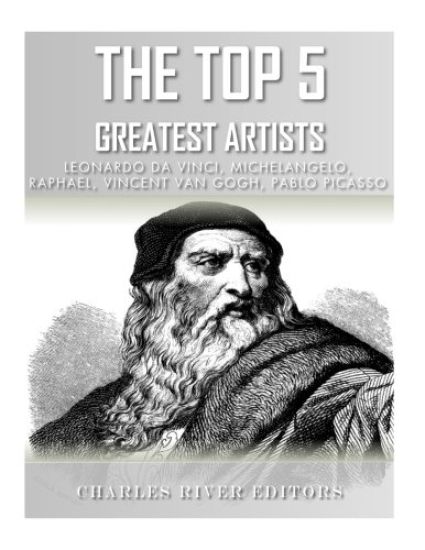
The Top 5 Greatest Artists: Leonardo, Michelangelo, Raphael, Vincent Van Gogh, and Pablo Picasso
*Includes pictures of important people and places, as well as the artists' most famous works. *Discusses the relationships between the artists. *Includes a Bibliography on each artist for further reading. It would be hard to determine which field Leonardo had the greatest influence in. His "Mona Lisa" and "The Last Supper" are among the most famous paintings of all time, standing up against even Michelangelo's work. But even if he was not the age's greatest artist, Leonardo may have conducted his most influential work was done in other fields. His emphasis on the importance of Nature would influence Enlightened philosophers centuries later, and he sketched speculative designs for gadgets like helicopters that would take another 4 centuries to create. It's possible that Michelangelo is the most famous artist in history, but it's also possible that he's an underrated artist. The vast influence of his career is reflected by the fact that he is not only known for his own art but has also come to embody an entire epoch of Western art. Along with Leonardo da Vinci, there are no other artists who so fully capture the spirit of scientific and artistic discovery that characterized art during the late 15th and early 16th centuries. Moreover, Michelangelo's career is distinguished from that of his peers through his seamless ability to work within different art forms, receiving acclaim regardless of the medium. After first rising to fame as a sculptor, he also painted and served as an architect, and since his death, Michelangelo has also become decorated for his prolific output as a poet. The diversity and high standard of his work, no matter the medium, make it difficult to even arrive at a most famous work. Raffaello Sanzio da Urbino, known across the world simply by the name Raphael, stands as one of the main pillars of the High Renaissance, an iconic example of the balance between spirituality and Humanistic inquiry that characterized the time period. Although he lived just 37 years, his career produced an amazingly rich output, and he completed more works than many artists do over careers spanning twice the length. At the same time, Raphael's art combined central tropes associated with the Renaissance while remaining remarkably original. Vincent van Gogh is undoubtedly one of the most famous artists of all time, and though the critical establishment may not consider him the greatest artist who ever lived, there may be no artist with whom the public has a greater familiarity. Unfortunately, a great deal of that familiarity comes from the circumstances leading up to his death, and the manner in which they have been linked to his painting career. In 1882, Vincent would hauntingly and somewhat prophetically write to his brother Theo, "What am I in the eyes of most people - a nonentity, an eccentric, or an unpleasant person - somebody who has no position in society and will never have; in short, the lowest of the low. All right, then - even if that were absolutely true, then I should one day like to show by my work what such an eccentric, such a nobody, has in his heart." In their biography of Pablo Picasso, Hans Ludwig and Chris Jaffe note that "for him, art was always adventure: 'To find is the thing.'" Indeed, there is perhaps no artist who produced more art than Picasso, whose enormous oeuvre (which spanned most of his 91-year life) contained a countless number of paintings and drawings. Picasso also worked in other mediums as well, notably sculpture and lithography, and his constant experimentation with form makes him a useful case study through which to chart the growth of Modernism as an artistic movement and many of the artistic trends that would dominate the 20th century.