Kirjojen hintavertailu – 12 903 727 kirjaa ja 27 kauppaa

Kirjailija

Charles River

Kirjat ja teokset yhdessä paikassa: 4 673 kirjaa, julkaisuja vuosilta 2013–2022, suosituimpiin kuuluu William Powell and Myrna Loy: The Lives and Careers of One of Classical Hollywood's Most Iconic Duos. Vertaile teosten hintoja ja tarkista saatavuus suomalaisista kirjakaupoista.

4 673 kirjaa

Kirjojen julkaisuvuodet: 2013–2022.

Olaudah Equiano: The Life and Legacy of the Freed Slave Whose Autobiography Fueled Britain's Abolitionist Movement
*Includes pictures *Includes Equiano's quotes about his life and work *Includes online resources and a bibliography for further reading "I believe there are few events in my life which have not happened to many; it is true the incidents of it are numerous, and, did I consider myself an European, I might say my sufferings were great; but when I compare my lot with that of most of my countrymen, I regard myself as a particular favorite of heaven, and acknowledge the mercies of Providence in every occurrence of my life." - Olaudah Equiano The slave trade that brought African captives to Europe and the Americas was established in the 15th century by merchants controlling Portugal's booming trade routes, but the perception of the non-white as an unconscious, undeveloped being had been prevalent in more ancient times. By the time Britain's European neighbors and the American colonies had fully invested in the African as a beast of burden fit only for servitude, little had changed over the parade of empires that had come and gone. Accounts of rhetorical exchanges and messages from the pulpits of the 17th century are said to have contested the idea of whether Africans were in possession of souls. In the minds of some, colonial slaves shared this distinction with women of any color. The movement to abolish slavery in Britain, the continent, and subsequently, the New World, began to gain traction with the British community by the early 18th century. This took place some years before similar uprisings in the Americas but was hampered by the fact that neither the typical Briton nor the average American ever saw the inner-workings of the slave trade world. The stealing of humans from the African coast, the domestic marketplace, and the infamously cruel shipment of human cargo to the West was not witnessed by most people, living apart as they did from the stealing, buying, and selling. Abolitionists, such as Thomas Clarkson and numerous others, took it upon themselves to break down the walls of the African myth and reveal to the white citizenry the slave trade's central process in graphic images and descriptions. Such an effort won its share of supporters over time, however, when an African man and freed slave wrote his own autobiographical narrative, speaking to learned audiences as their equal, the paradigm was rocked to its foundations. Olaudah Equiano challenged the image of the unconscious African beast with such intellect, philosophical refinement, public presence, and elegant writing, that standard British perceptions began to unravel. It is rational to assume that with his emergence as a respected world traveler, abolition of the slave trade was pushed forward by an incalculable number of years. Within his life, Equiano was to become the first black British politician, with a constituency of slaves and freemen enjoying representation for the first time in their cultural history. Equiano's written account of his birth and early childhood has been met with some controversy, and in the absence of written records, the precise details may never be known. That he lived much of his life as a slave is irrefutable, and many historians discount the importance of his early childhood. Equiano claims to have been born in the Eboe province of modern-day Nigeria, more specifically in Epsaka of the Igbo culture. Doubts over this claim stem from two written documents in what is now South Carolina in the U. S., one a birth record, the other a naval muster roll for an American ship. Various reasons are offered for their veracity or lack thereof, and several instances are cited under which Equiano might have found it necessary to alter his origins. Apart from these disagreements, everything else in the detailed autobiography is verifiable.
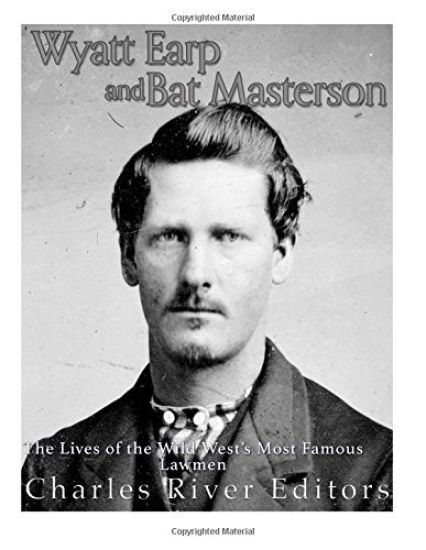
Wyatt Earp and Bat Masterson: The Lives of the Wild West's Most Famous Lawmen

Wyatt Earp and Bat Masterson: The Lives of the Wild West's Most Famous Lawmen

Charles River

Createspace Independent Publishing Platform
2017
nidottu
*Includes pictures *Includes both men's quotes about their lives and careers *Includes a bibliography for further reading Space may be the final frontier, but no frontier has ever captured the American imagination like the "Wild West", which still evokes images of dusty cowboys, outlaws, gunfights, gamblers, and barroom brawls over 100 years after the West was settled. A constant fixture in American pop culture, the 19th century American West continues to be vividly and colorful portrayed not just as a place but as a state of mind. Of all the colorful characters that inhabited the West during the 19th century, the most famous of them all is Wyatt Earp (1848-1929), who has long been regarded as the embodiment of the Wild West. Considered the "toughest and deadliest gunman of his day", Earp symbolized the swagger, the heroism, and even the lawlessness of the West, notorious for being a law enforcer, gambler, saloon keeper, and vigilante. The Western icon is best known for being a sheriff in Tombstone, but before that he had been arrested and jailed several times himself, in one case escaping from prison, and he was not above gambling and spending time in "houses of ill-fame". The seminal moment in Earp's life also happened to be the West's most famous gunfight, the Gunfight at the O. K. Corral, which famously pitted Earp, his brothers Morgan and Virgil, and Doc Holliday against Billy Clanton, Tom McLaury and Frank McLaury. Though the gunfight lasted less than a minute, it is still widely remembered as the climactic event of the period, representing lawlessness and justice, vendettas, and a uniquely Western moral code. For Earp, the aftermath led to assassination attempts on his brothers, one of which was successful, touching off the "Earp Vendetta Ride". By the end of the 19th century, Earp was already a poignant symbol of that time and day, having permanently etched his name in the folklore of the West, but he stayed out west, engaging in everything from gold mining to vigilante justice on the Mexican border. A living legend, he even served as an advisor to early Hollywood, which was already pumping out Western movies. When he died in 1929 at the age of 80, one of the West's toughest fighters and one of its longest survivors had finally passed Though he is no longer as well remembered as he once was, one of the most famous and notorious lawmen of the Wild West was Bat Masterson, who drifted around Dodge City and other parts of the West and was associated with legends like Wyatt Earp. Carrying a six-shooter that he called "the gun that tamed the West", Masterson was involved in several duels and shootouts, much of which was embellished during the early 20th century when he became a newspaper columnist and was given a chance to frame anecdotes about the frontier days and talk about colorful characters like Doc Holliday. Like Wyatt Earp, who once served as a lawman under him, Masterson was primarily known as being on the right side of the law, but he wasn't afraid to firmly straddle both sides of it. While tall tales about shootouts were commonplace and believed wholesale throughout the West in the 19th century, few men had as strong a reputation as Bat Masterson, who was known for public shootouts, one of which took place in Dodge City in 1878 that ended with the death of his brother and town marshal, Ed Masterson. Bat also took part in the famous Earp Vendetta Ride near Tombstone, which occurred in the wake of the Shootout at the O. K. Corral. Given the number of times he fought, and the fact that he was shot and injured himself, perhaps Bat Masterson's most remarkable feat was that he managed to survive into the 20th century, something few Western legends of his era (with the exception of Wyatt Earp) accomplished. Thanks to his survival, Masterson was able to parlay his notoriety into opportunities back East, including even being appointed marshal in New York.
The Defeat of the Ottoman Empire in World War I: The History of the Allied Victories that Led to the Collapse of the Turkish Empire
*Includes pictures *Includes accounts of the fighting *Includes online resources and a bibliography for further reading Most books and documentaries about the First World War focus on the carnage of the Western Front, where Germany faced off against France, the British Empire, and their allies in a grueling slugfest that wasted millions of lives. The shattered landscape of the trenches has become symbolic of the war as a whole, and it is this experience that everyone associates with World War I, but that front was not the only experience. There was the more mobile Eastern Front, as well as mountain warfare in the Alps and scattered fighting in Africa and the Far East. Then there was the Middle Eastern Front, fought across the Levant and Mesopotamia, which captured the imagination of the European public. There, the British and their allies fought the Ottoman Turkish Empire under harsh desert conditions hundreds of miles from home, struggling for possession of places most people only knew from the Bible and the Koran. The Arab revolt has been engraved in modern memories by movies such as Lawrence of Arabia as a widespread nationalistic movement against the cruel Ottoman occupier. The reality is far more complex. In 1914, as the Ottomans entered the war, the Arabs' loyalty to the Sultan and Caliph was not in question. Arab nationalism did indeed emerge in the wake of the revolution of 1908, but it mostly attracted Arab intellectuals as the local population remained loyal subjects of the Empire. European encroachment on several former Ottoman provinces such as Algeria, Libya, Tunisia and Egypt made the danger of a possible Arab revolt relatively clear. The fall of the Ottoman Empire set the geopolitical scene of the new Middle East. In 1920, two years after the end of the war, the region was already experiencing growing instability. The issues and trends that would plague the region until today were growing. On April 4, Arab riots broke out in Jerusalem, fueled by the growing hostility against the Zionist movement. The British passivity would convince one of the Jewish leaders, Vladimir Jabotinsky (the future founder of the Israeli right-wing), of the strategic necessity of a strong Jewish military as the core of the future state. In the end, the partitioning of the Ottoman Empire drew up borders that ignored local populations, although with the patchwork of groups in the region, it would have been difficult to create even small countries with any sort of ethnic, tribal, or religious homogeneity. Instead, the resulting nation-states were conglomerates of minorities, paving the way for generations of conflict the region is still experiencing today. When Edward House, U. S. President Woodrow Wilson's foreign policy advisor, heard of the agreement from his British counterpart, Foreign Secretary Arthur Balfour, he remarked, "It is all bad and I told Balfour so. They are making it a breeding place for future war." Indeed, almost 100 years after the fall of the Ottoman Empire, it is clear that the emergence of secular Arab nationalism triggered an opposite reaction from supporters of a political Islam and vice versa. The Muslim Brotherhood, for instance, was created as a reaction to the abolition of the Caliphate by Turkey in 1928 and would strengthen its ranks by being a viable opponent to the rising secular Arab nationalism. These mechanics are still at work today, as an initial wave of secular revolutions, the Arab Spring, triggered a second wave of "Green Revolutions." In parallel, whether in its most radical form with ISIS and al-Qaeda's idea of a Caliphate, or in the moderate ideology with the emergence of political Islam, Islam is still seen as an effective weapon against Western influence. In Turkey itself, the opposition between partisans of a strong Islamic identity and those such as Mustafa Kemal, who rejected it, still divides the political and social landscape.
Fire in the Sky: The History of the Hindenburg Disaster

Fire in the Sky: The History of the Hindenburg Disaster

Charles River

Createspace Independent Publishing Platform
2017
nidottu
*Includes pictures *Includes accounts of the Hindenburg and the disaster written by passengers and other eyewitnesses *Discusses the different theories that attempt to explain the disaster *Includes a bibliography for further reading "It's burst into flames Get this, Charlie; get this, Charlie It's fire... and it's crashing It's crashing terrible Oh, my Get out of the way, please It's burning and bursting into flames and the... and it's falling on the mooring mast. And all the folks agree that this is terrible; this is the worst of the worst catastrophes in the world...its flames... Crashing, oh Four- or five-hundred feet into the sky and it...it's a terrific crash, ladies and gentlemen. It's smoke, and it's in flames now; and the frame is crashing to the ground, not quite to the mooring mast. Oh, the humanity " - Herb Morrison's broadcast of the Hindenburg disaster Societies across the globe are incredibly thankful for all the modern devices and opportunities that have been developed over time, including the cars and planes that have allowed people to travel long distances in short times, but it is often easy to forget that all these advances came with a price. Car accidents and plane crashes leave the headlines almost as quickly as they enter them, in part because they're recognized as the kind of things that occur with technological advances. That was not the case, however, with the Hindenburg disaster. On May 6, 1937, the famous passenger zeppelin burst into flames while attempting to dock in New Jersey, and the horrific scenes were captured on film and broadcast over the radio. The Hindenburg was carrying nearly 100 people and was still hundreds of feet in the air when it caught fire, so the fact that only 35 people died between the fire and the airship plummeting to the ground was much lower than it could have been. Nonetheless, the fact that the world could see the incredible sight and hear Morrison's notorious broadcast shortly after the disaster immediately heightened its importance, and the Hindenburg's name is still instantly recognizable over 75 years later. In retrospect, it seems unbelievable that anyone would fly in a zeppelin full of hydrogen, or that an airship so flammable actually had a room for smoking, and though the actual cause of the disaster is still debated, it all but put an end to the widespread use of similar airships for passenger travel. As a result, the disaster helped modernize flying and made it more reliant on airplanes. Fire in the Sky: The History of the Hindenburg Disaster chronicles the events that led up to one of history's most famous air disasters. Along with pictures of important people, places, and events, you will learn about the Hindenburg like never before, in no time at all.
America's Greatest Engineering Projects: The Construction History of the Transcontinental Railroad, the Panama Canal, and the Hoover Dam
*Includes pictures *Includes accounts of the projects' construction *Includes online resources and a bibliography for further reading The Transcontinental Railroad, laid across the United States during the 1860s, remains the very epitome of contradiction. On the one hand, it was a triumph of engineering skills over thousands of miles of rough terrain, but on the other hand, it drained the natural resources in those places nearly dry. It "civilized" the American West by making it easier for women and children to travel there, but it dispossessed Native American civilizations that had lived there for generations. It made the careers of many men and destroyed the lives from many others. It was bold and careless, ingenious and cruel, gentle and violent, and it enriched some and bankrupted others. In short, it was the best and worst of 19th century America in action. Of course, even once a route was chosen, the backbreaking work itself had to be done to connect railroad lines across the span of nearly 2,000 miles. This required an incredible amount of manpower, often consisting of unskilled laborers engaging in dangerous work, and the financial resources poured into it were also extreme. In a world where few natural rivers carved out over eons of time have reached a length of more than 50 miles, the idea that a group of men could carve a canal of that length seemed impossible. In fact, many thought it could not be done. On the other hand, there was a tremendous motivation to try, because if a canal could be successfully cut across Central America to connect the Atlantic and Pacific Oceans, it would cut weeks off the time necessary to carry goods by sea from the well-established East Coast of the United States to the burgeoning West Coast. Moreover, traveling around the tip of South America was fraught with danger, and European explorers and settlers had proposed building a canal in Panama or Nicaragua several centuries before the Panama Canal was actually built. Building the Panama Canal was a herculean task in every sense. Taking about 10 years to build, workers had to excavate millions of cubic yards of earth and fight off hordes of insects to make Roosevelt's vision a reality. Roosevelt also had to tie up the U. S. Navy in a revolt in Colombia to ensure Panama could become independent and thus ensure America had control of the canal. During the 1930s, at the height of the Great Depression, thousands of workers began work on the Hoover Dam, built in the Black Canyon, which had been cut by the powerful Colorado River. The Colorado River was responsible for the Grand Canyon, and by the 20th century, the idea of damming the river and creating an artificial lake was being explored for all of its potential, including hydroelectric power and irrigation. By the time the project was proposed in the 1920s, the contractors vowing to build it were facing the challenge of building the largest dam the world had ever known. As if that wasn't enough, the landscape was completely unforgiving. The engineering that went into the Hoover Dam was not just dangerous but unprecedented, to the extent that the Hoover Dam relied on building methods that had never been proven effective on such a giant scale. The project also had to employ tens of thousands of people in often dangerous working conditions, which resulted in scores of deaths. At the same time, however, the large number of men that traveled to work on the project helped turn Las Vegas, a nearby small desert town in Nevada, into Sin City. America's Greatest Engineering Projects: The Construction History of the Transcontinental Railroad, the Panama Canal, and the Hoover Dam chronicles the construction of each major project, and their subsequent history. Along with pictures of important people, places, and events, you will learn about the Transcontinental Railroad, Panama Canal, and Hoover Dam like never before.
North Korea's Nuclear Program: The History of the Hermit Kingdom's Development of Nuclear Weapons
*Includes pictures *Includes quotes by the Kims about the nuclear program *Includes online resources and a bibliography for further reading "There is no force in the world that can block the powerful march of our army and people, who are holding high the banner of the suns of great Comrade Kim Il-sung and great Comrade Kim Jong-il and continuing to advance under the leadership of the party and with strong faith in sure victory." - Kim Jong-un North Korea would be horrific enough if it was a fictional place, but its nuclear weapons program is all too real. On September 17, 2017, President Donald Trump, whose use of Twitter may be what he's best known for, tweeted another nickname of the type he has infamously coined for his opponents: "I spoke with President Moon of South Korea last night. Asked him how Rocket Man is doing. Long gas lines forming in North Korea. Too bad " The "Rocket Man" in question, of course, was none other than the notoriously brutal and wildly erratic North Korean dictator, Kim Jong-Un. In less than 24 hours, the viral tweet had not only racked up tens of thousands of retweets and triple the "likes," it had spawned countless Elton John-themed memes and inspired headlines from just about every news source around the world. Capitalizing on the viral nature of the controversial tweet, Trump repeated the nickname just a few days later in his speech before the UN General Assembly. He warned the congregation of fidgety ambassadors about the grave threats posed by North Korea's "depraved regime." "The United States had great strength and patience, but if forced to defend itself or its allies, we will have no choice but to totally destroy North Korea... Rocket Man is on a suicide mission for himself and for his regime." Less than a week later came Kim Jong-Un's scathing response. "Action is the best option in treating the dotard who, hard of hearing, is uttering only what he wants to say... I will surely and definitely tame the mentally deranged U. S. dotard with fire." The usage of the archaic insult had even those well-versed in the English language whipping out their phones in unison to look up the term ("an old person, especially one who has become weak or senile," courtesy of the Oxford English dictionary). Apart from the avalanche of memes and comedic jabs from the usual arry of late-night hosts that ensued, a quick search of the word "dotard" now brings up unflattering pictures of the president. North Korea's bizarre feuds with the rest of the world have been turned into comedy gold time and time again, perhaps because their endless threats seem so far removed from reality. But just how serious is the threat of nuclear war against North Korea? North Korea's Nuclear Program: The History of the Hermit Kingdom's Development of Nuclear Weapons looks at how North Korea has developed and tested destructive nuclear weapons over the past several decades. Along with pictures depicting important people, places, and events, you will learn about North Korea's nuclear program like never before.
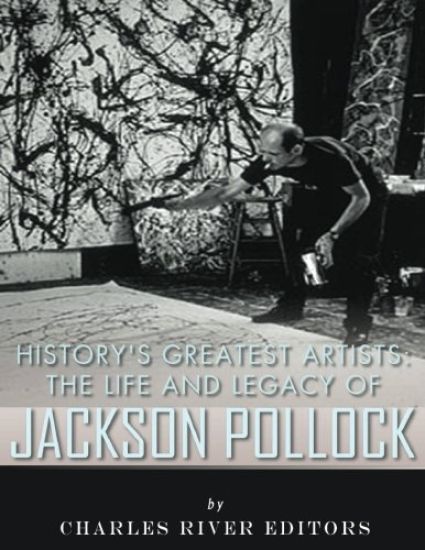
History's Greatest Artists: The Life and Legacy of Jackson Pollock

History's Greatest Artists: The Life and Legacy of Jackson Pollock

Charles River

Createspace Independent Publishing Platform
2017
nidottu
*Includes pictures *Includes Pollock's own quotes about his life and art *Includes online resources and a bibliography for further reading *Includes a table of contents "When I am in my painting, I'm not aware of what I'm doing. It is only after a sort of 'get acquainted' period that I see what I have been about." - Jackson Pollock In August of 1949, Life magazine famously began a lengthy article on Jackson Pollock with the headline "Is he the greatest living painter in the United States?" By that time, Pollock was already well-established in the American art world, the beneficiary of laudatory critical assessments, commercial success, and the support of the influential Peggy Guggenheim (who had helped launch his career with a major show six years earlier). However, to the relatively uninitiated readership of a middlebrow publication like Life, the article sent shockwaves, as many wondered how Jackson Pollock, whose paintings seemed abstract and sloppy to the point of resonating like the work of a young child, could possibly command any major standing within the horizon of avant-garde and modernist art. These same people no doubt wondered how his artwork could reasonably lay claim to being masterpieces with no apparent subject matter. On a psychological level, it's even possible if readers wondered how a man who looked as macho and indeed, boorish, as Jackson Pollock could really be the greatest painter America had to offer. More than 50 years later, these questions may seem a bit quaint, but they continue to reverberate for anyone accustomed to the standard that fine art be anchored in representation rather than abstraction. Hans Namuth, who was photographing Pollock working on One: No. 31, 1950, wrote of his surprise when Pollock recommenced work on a painting Namuth thought was done: " D]ripping wet canvas covered the entire floor... There was complete silence... Pollock looked at the painting. Then, unexpectedly, he picked up can and paint brush and started to move around the canvas. It was as if he suddenly realized the painting was not finished. His movements, slow at first, gradually became faster and more dance like as he flung black, white, and rust colored paint onto the canvas. He completely forgot that Lee and I were there; he did not seem to hear the click of the camera shutter... My photography session lasted as long as he kept painting, perhaps half an hour. In all that time, Pollock did not stop. How could one keep up this level of activity? Finally, he said 'This is it.'" Naturally, Jackson Pollock's work needs to be analyzed within its social and historical context, a context that involves debates over the merits of abstract art and also critical paradigms over which kinds of art qualify as modernist. At the same time, the art was influenced by Pollock's upbringing and family situation, which were particularly significant in not only shaping his desire to become an artist but also the hypermasculine persona he cultivated. Pollock was in many respects a mysterious figure, both personally and professionally, and focusing on his private life is also essential since it could not be extricated from his professional life; his artistic career and personal life spiraled in tandem until ultimately resulting in his premature death in 1956 at the age of 44. Of course, Jackson Pollock's name has continued to surface in the art world over the past 60 years, both for the eye-catching prices his work fetches and the many forgeries that have been executed. History's Greatest Artists: The Life and Legacy of Jackson Pollock looks at the personal background that led to him becoming an artist and the cultural climate in which he rose to fame. Pollock's formal technique and artistic legacy are also analyzed, including his working methods and education. Along with pictures of important people, places, and events, you will learn about Pollock like never before, in no time at all.
Henry Fonda and Jane Fonda: Like Father Like Daughter

Henry Fonda and Jane Fonda: Like Father Like Daughter

Charles River

Createspace Independent Publishing Platform
2017
nidottu
*Includes pictures. *Includes their own quotes about their lives and careers. *Includes a bibliography for further reading. Among all of Hollywood's iconic leading men, arguably none proved as versatile at acting as Henry Fonda, whose career spanned six decades and earned him Academy Awards for roles in various genres. After breaking into Hollywood in 1935, Fonda quickly rose the ranks, earning an Academy Award nomination in the classic Twelve Angry Men (1940), but Fonda had the kind of staying power that most actors could only dream of. In fact, Fonda had already received an honorary lifetime achievement award from the Academy (in 1980) before winning the Oscar for Best Actor for his role in On Golden Pond (1981), an award he earned when he was already well into his 70s and only about a year away from his death. Fonda would also earn Emmy nominations for his work on two different shows and even a Grammy for a spoken word album in 1977. And as if all that wasn't enough, he was also a critically acclaimed stage performer, winning a Tony for Mister Roberts in 1948. One of the remarkable aspects of Henry Fonda's career is that he was able to play vastly different roles despite not changing his style of acting. As Henry's distant personality would suggest, he hailed from an old-school breed of actors who didn't express emotions outwardly, and even as his progeny would become associated with Method Acting, Henry remained in the same mold as actors like Cary Grant and Jimmy Stewart. Of course, the seemingly effortless nature of Henry's acting only made him more endearing to contemporary audiences, even as his acting style would eventually go out of style. Growing up in the shadow of one of America's most famous actors would be intimidating for anyone, but few have emerged out of that shadow like Jane Fonda, the oldest daughter of screen legend Henry Fonda. In fact, when Jane co-starred with her father in the last film he made, On Golden Pond, he won the Academy Award for Best Actor for it. However, she has accomplished more than enough in her own career to make her father proud, winning 2 Academy Awards, an Emmy and 7 Golden Globe Awards herself. Jane burst onto the scene in the early 1960s, when she was still in her 20s, and when she performed in Sunday in New York, one critic labeled her "the loveliest and most gifted of all our new young actresses". She has been acting at least off and on from that point forward, earning critical acclaim both for her acting skills and for many of the movies she appeared in. However, today many people associate Jane Fonda with political causes, most notoriously her stance against the Vietnam War. Indeed, she might still be the face of the anti-Vietnam movement because of an episode that earned her the notorious nickname "Hanoi Jane". In addition to speaking out against the war, Fonda actually traveled to Hanoi in July 1972 and was photographed sitting in a North Vietnamese anti-aircraft battery, immediately earning widespread condemnation that sought to brand her as anti-American. Fonda has spent the rest of her life trying to explain her regret over it, telling Barbara Walters in a 1988 interview, "I would like to say something, not just to Vietnam veterans in New England, but to men who were in Vietnam, who I hurt, or whose pain I caused to deepen because of things that I said or did. I was trying to help end the killing and the war, but there were times when I was thoughtless and careless about it and I'm very sorry that I hurt them... I will go to my grave regretting the photograph of me in an anti-aircraft gun, which looks like I was trying to shoot at American planes." Nevertheless, it has not tempered her liberal political activism.
Walt Disney and Jim Henson: The Lives and Legacies of the Men Behind America's Favorite Cartoons
*Includes pictures *Includes their own quotes about their lives and careers *Includes online resources and a bibliography for further reading When it comes to the entertainment world and movie business, few names are as recognizable as Walt Disney, a versatile writer, producer, director, artist and voice actor who literally turned his name into a billion dollar business. Whether it was through the creation of iconic cartoons like Mickey Mouse or America's favorite theme parks, Disney and his assorted businesses have entertained countless numbers of people across the globe, particularly young kids. At a time when cinema was still a new and growing business, Disney staked out unique turf by bringing comics to life on screen, with his first big hit being Mickey Mouse. Of course, the popularity of Mickey Mouse helped spawn future creations like Donald Duck and Pluto, all household names that have long since become part of Americana and the English lexicon. Disney had already earned an Academy Award by 1932, but he was far from done, introducing viewers to new characters like Snow White and continuing to make popular cartoon series that played well on the big screen. By the late 1940s, Disney was turning his attention to a new form of entertainment: amusement parks. While other children's theme parks existed, none would rival the creation of Disneyland in the 1950s, part of Disney's grand vision: "I just want it to look like nothing else in the world. And it should be surrounded by a train." Disney also branched out into other businesses, ensuring that by the 1960s, his name was on one of the biggest production companies in the world. When people discuss the great television characters of all time, names such as Lucille Ball, Andy Griffith, and Jerry Seinfeld are frequently mentioned, but so are fictional characters like Kermit the Frog. What makes Kermit an interesting choice is the fact that he's a Muppet, and just one of Jim Henson's many iconic Muppets at that. Millions of people are instantly familiar with Muppets like Kermit, Oscar the Grouch, Yorick, and Miss Piggy, and while the Muppets may lack the physical dimensions of the human television characters listed above, there is no denying the influence they have exerted on America's youth and popular culture more broadly. Their popularity remains undiminished even several decades following their inception. If the Muppets are among the most famous of all television characters, their significance also stems from the way in which their purpose was always about more than simply entertainment. Put simply, the Muppets have played an instrumental role in the education of America's youth, and there existed an educational imperative behind much of what Jim Henson created. For many children, learning to count, learning to read, and, on a broader level, learning to make sense of the world have all involved the Muppets, either on Sesame Street (1969-) or the many other movies and shows that have featured Jim Henson's characters. Of course, Henson's genius was also on display in the way he was able to captivate not just young children but also adults as well. As his career evolved, Henson began exploring more adults themes, and it is not for nothing that children and adults alike mourned his premature death in 1990. Henson's early passing leaves many questions unanswered regarding the direction that his future work would have taken, but even so, he left behind a broad and diverse body of work, even if existing loosely within the domain of puppetry. He began his career at an early age and for someone who died so young, his career was quite robust and balanced innovation with the repetition of salient themes. Indeed, Henson's works emphasized morality and the value of dreams, desires, education, and cooperation.
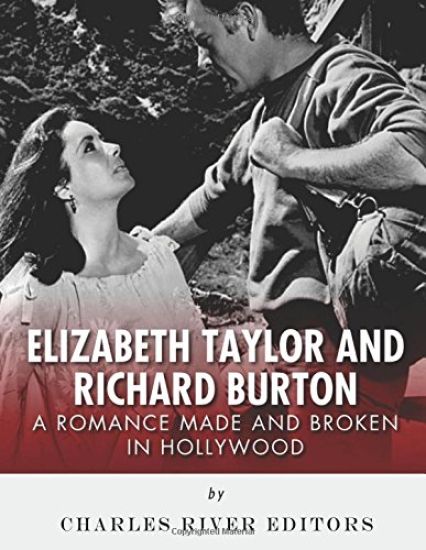
Elizabeth Taylor and Richard Burton: A Romance Made and Broken in Hollywood

Elizabeth Taylor and Richard Burton: A Romance Made and Broken in Hollywood

Charles River

Createspace Independent Publishing Platform
2017
nidottu
*Includes pictures. *Includes their own quotes about their lives and careers. *Includes a bibliography for further reading. Hollywood is full of cautionary tales for child actors like Judy Garland, Jackie Coogan, and Macaulay Culkin, who all soared to fame in their youth only to suffer family feuds, drug addiction, or other ill effects of becoming famous so early in life. Even those child actors for whom stardom was not traumatic, such as Shirley Temple, had great difficulty succeeding in Hollywood as an adult, with their careers effectively over by the time they reached adulthood. On the other hand, the life of Elizabeth Taylor bears little in common with the paradigm of the troubled child star. After arriving in the United States at the age of 9, Taylor was indoctrinated into the life of the Hollywood studio system shortly after child stars Judy Garland and Mickey Rooney, but while Garland suffered great trauma at the hands of the studio system, Taylor's early experience in Hollywood represented the flip side of the coin. Groomed for a life in Hollywood by her zealous mother, Taylor enjoyed her life in the motion picture industry and reveled in the privileged lifestyle and opportunities she enjoyed by virtue of her profession. Acting supplied her with a lavish lifestyle and, more importantly for her, constant attention. From an early age, Taylor displayed a vociferous love for living in the public eye. In many ways, Taylor enjoyed being in the public spotlight and living the lifestyle of the rich and famous, and her personal life very much resembled a performance suitable for Hollywood. Taylor faced great adversity throughout her life, including being married on eight different occasions to seven different spouses and fighting battles with weight and drug addiction. Still, while many actors grow resentful of public attention, even during her moments of personal struggle Taylor thrived on public attention and enjoyed a mutually adoring relationship with the American public. In the 1960s, the most popular actor in the world was Richard Burton, a hard-drinking Welshman who was nevertheless so professional that he was one of the preeminent stage performers of his day. In fact, he performed Shakespeare so magnificently that he was compared to British legend Laurence Olivier, and that success ultimately led to a film career that earned him 7 Academy Award nominations, as well as BAFTA and Golden Globe awards for Best Actor. Given his accomplishments on the stage and in Hollywood, Burton became one of the world's most recognizable leading men, so it seemed fitting that he engaged in one of Hollywood's most legendary romances with Elizabeth Taylor while on the set of Cleopatra, one of the era's most notorious movies. In fact, his tumultuous relationship with Taylor, which included two marriages, dominated tabloids and remains the one thing most people associate with Burton today, despite the rest of his accomplishments. Burton's high-profile marriage to Taylor helped bring attention, but it also led to more self-destructive behavior, and in a sense it represented the peak of Burton's career. Over the last decade of his life, Burton began appearing in mediocre films, and due to his declining health and constant drunkenness, his performances were mediocre as well, often involving incoherent slurring. The fast life ultimately caught up with him in 1984, when a cerebral hemorrhage killed him at the age of 58. Fittingly, it was the same cause of death that befell his alcoholic father in 1957, just as Burton was at the precipice of Hollywood stardom. This book examines the lives and careers of the famous lovers. Along with pictures and a bibliography, you will learn about Taylor and Burton like never before.
Finding the Wreck of the Titanic: The Search Efforts and the Discovery of the World's Most Famous Ship
*Includes pictures *Includes accounts written by some of the people who discovered the wreck *Includes a bibliography for further reading "Only a vestige remains of the men and women that but a moment before quickened her spacious apartments with human hopes and passions, sorrows, and joys.' Upon that broken hull new vows were taken, new fealty expressed, old love renewed, and those who had been devoted in friendship and companions in life went proudly and defiantly on the last life pilgrimage together. In such a heritage we must feel ourselves more intimately related to the sea than ever before, and henceforth it will send back to us on its rising tide the cheering salutations from those we have lost." - Senator William A. Smith, Chairman of the Subcommittee appointed for the United States Senate Inquiry into the sinking of the Titanic Just before midnight on April 14, 1912, the RMS Titanic, the largest ship in the world, hit an iceberg, setting in motion a chain of events that would ultimately make it history's most famous, and notorious, ship. In the over 100 years since it sank on its maiden voyage, the Titanic has been the subject of endless fascination, as evidenced by the efforts to find its final resting spot, the museums full of its objects, and the countless books, documentaries, and movies made about the doomed ocean liner. Thanks to the dramatization of the Titanic's sinking and the undying interest in the story, millions of people are familiar with various aspects of the ship's demise, and the nearly 1,500 people who died in the North Atlantic in the early morning hours of April 15, 1912. The sinking of the ship is still nearly as controversial now as it was over 100 years ago, and the drama is just as compelling. The Titanic was neither the first nor last big ship to sink, so it's clear that much of its appeal stems from the nature of ship itself. Indeed, the Titanic stands out not just for its end but for its beginning, specifically the fact that it was the most luxurious passenger ship ever built at the time. In addition to the time it took to come up with the design, the giant ship took a full three years to build, and no effort or cost was spared to outfit the Titanic in the most lavish ways. Given that the Titanic was over 100 feet tall, nearly 900 feet long, and over 90 feet wide, it's obvious that those who built her and provided all of its famous amenities had plenty of work to do. The massive ship was carrying thousands of passengers and crew members, each with their own experiences on board, and the various amenities offered among the different classes of passengers ensured that life on some decks of the ship was quite different than life on others. Naturally, the intense interest in the Titanic also meant that there would be great efforts made to locate the wreck. In fact, the first searches for the wreck began in the days after the giant ship went down, but given how far down it sank to the floor of the Atlantic and the fact that the ship had inaccurately transmitted its location shortly before it sank, initial efforts were doomed. As it turned out, the most famous wreck in the world would not be located until 1985, over 70 years after the ship sank that fateful April night. Finding the Wreck of the Titanic: The Search Efforts and Discovery of the World's Most Famous Ship chronicles the numerous searches attempting to locate the wreck of the Titanic, the successful discovery operation led by Robert Ballard, and the initial results of Ballard's find. Along with pictures of important people, places, and events, you will learn about the discovery of the Titanic like never before.
Fort Dearborn: The History of the Controversial Battle of Fort Dearborn during the War of 1812 and the Settlement that Became Chicago
*Includes pictures *Includes an account of the Dearborn Massacre by an American soldier *Includes online resources, footnotes, and a bibliography for further reading *Includes a table of contents "We had marched half a mile, when we were attacked by 600 Kickapoo and Wynbago Indians. In the moment of trial our Confute savages joined the savage enemy, Our contest lasted ten minutes, when every man, woman and child was killed except 15. Thanks be to God I was one of those who escaped." - Walter K. Jordan, one of the men present at the Battle of Dearborn Tucked safely away in storage is an unnamed sculpture commissioned by George Pullman and sculpted by Carl Rohl-Smith depicting the "Fort Dearborn Massacre." It was originally installed near the mansion of the creator of the Pullman Palace Car Company, which manufactured railroad sleeping cars in the mid-19th century. Although placing such a sculpture at that location may initially sound weird, the Pullman mansion had been built on the site of a controversial battle that took place at an old, historic European fort along the Chicago River in Illinois in 1812. The ongoing fighting between white settlers, militias, Army units, and Native Americans not only bled into the War of 1812 but was one of the main causes of it. Many Americans chaffed at the fact that along the Northwestern frontier, the British in Canada were supporting Indian resistance to American settlement. So-called "War Hawks" from that region in Congress pushed for a declaration of war, and many hoped that a war would not only stop Indian depredations but evict the British from Canada and lead to completion of some unfinished business from the American Revolution, namely Canada joining the U. S. Although there had been treaties and seemingly cordial trading between the Native Americans and the new settlers in that area, recent fighting in nearby areas like the Battle of Tippecanoe less than a year earlier kept all sides on edge, and the British aim to maintain a barrier between America and Canada by propping up Native American tribes led to a controversial battle in the Illinois Territory at Fort Dearborn, a fort built along the Chicago River, shortly after the War of 1812 broke out. When the war came, the close proximity of British forces compelled American military officers in the area to attempt to evacuate the garrison at Fort Dearborn, but misunderstandings and a lack of time resulted in Potawatomi warriors ambushing the soldiers and several civilians before they could retreat back to Fort Wayne, Indiana. In the wake of cutting down dozens of whites, the Potawatomi laid waste to Fort Dearborn itself, and though the fighting was technically a battle, in America the Battle of Fort Dearborn was known colloquially as the Fort Dearborn Massacre. Thus, even as the conflict was relatively minor in scale, it had far-reaching implications. Although Americans wouldn't be able to rebuild the fort until after the war ended, the memory of what occurred there increased the hostility towards Native Americans and helped ensure policies of removing the area's natives were popular among settlers. The most noteworthy result was the way in which events there culminated in the Treaty of Chicago, which led to the creation of one of America's biggest cities and the westward movement of the region's native inhabitants. Fort Dearborn: The History of the Controversial Battle of Fort Dearborn during the War of 1812 and the Settlement that Became Chicago chronicles the history of the fort and examine the notorious fighting in August 1812. Along with pictures of important people, places, and events, you will learn about Fort Dearborn like never before, in no time at all.
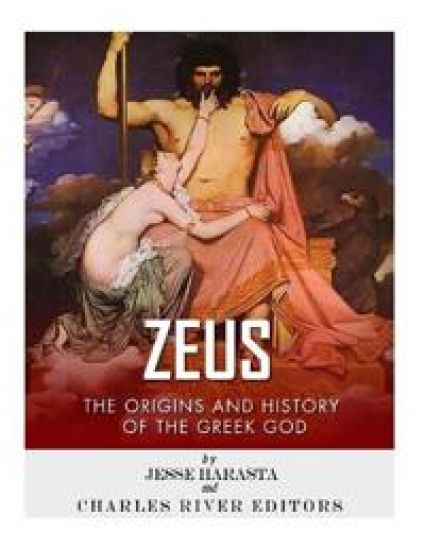
Zeus: The Origins and History of the Greek God

Zeus: The Origins and History of the Greek God

Charles River

Createspace Independent Publishing Platform
2017
nidottu
*Includes pictures of important places and historic art depicting Zeus and other Greek gods. *Explains the historical origins of the god and the mythological tales about him. *Includes a Bibliography for further reading. "I will sing of Zeus, chiefest among the gods and greatest, all-seeing, the lord of all, the fulfiller who whispers words of wisdom to Themis as she sits leaning towards him. Be gracious, all-seeing Son of Cronos, most excellent and great " - "The Hymn To Zeus", attributed to Homer Zeus is a god of apparent paradox: sublimely regal yet ridiculously fickle, a giver of laws but a slave to his own passions, a being of incredible power who is desperate to possess that which he cannot have. As the leader of the Greek pantheon on Mount Olympus, Zeus was the god of kingship (and the associated elements of law, oaths, the state and the protection of property) and the god of storms, controlling lightning, wind and thunder. In many ways, one of Ancient Greece's most complex gods is also the most understandable, since he seems so human, and because there is plenty of information about him that survived, including the original legends about his birth, his early deeds and his many relationships with other gods, lovers, and humans. Furthermore, scholars have been able to analyze the historical roots of "Zeus" as a concept, identifying what gods he is related to among other cultures, where the legends of Zeus originated, and what this information says about the Ancient Greeks. One of the reasons Zeus remains one of the most recognizable gods in history is because of the spread of his influence. Due to the conquests of Alexander the Great, Zeus was brought along with other elements of Hellenization to Egypt and the Near East, and a few centuries later, Rome all but adopted him as their own chief god, Jupiter. From there, he was exported around the Roman Empire and fused with numerous other local gods in the process. Ultimately, Zeus was a prominent god from the period of pre-recorded history until the Christianization of Greece, which was complete by the early 7th century A. D. It is difficult for modern observers to understand how a hot-headed, sex-obsessed god could command the love and admiration of so many Greeks, not to mention their cultural heirs throughout the Roman Empire. What did the worship of this god provide for his worshipers? How did belief in his existence fulfill their spiritual needs? How was he different from other members of his pantheon? This book explores the figure of Zeus, including his origins, the stories told about him, the way he was worshiped and how he is remembered today. Along with pictures and a bibliography, you will learn about the Greek god like you never have before, in no time at all.
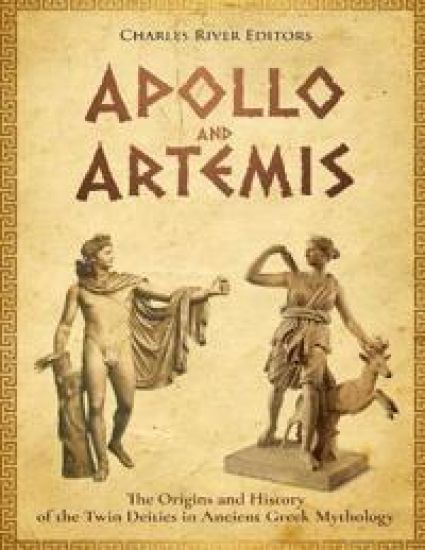
Apollo and Artemis: The Origins and History of the Twin Deities in Ancient Greek Mythology

Apollo and Artemis: The Origins and History of the Twin Deities in Ancient Greek Mythology

Andrew Scott; Charles River

Createspace Independent Publishing Platform
2017
nidottu
*Includes pictures *Includes ancient accounts *Includes online resources and a bibliography for further reading "Apollo's history is a confusing one," said the renowned poet and mythologist Robert Graves. This notion is also illustrated in the above quote from the 6th century BCE Homeric Hymn to Apollo, which gives the reader a brief glimpse into the confusion surrounding Apollo's multi-faceted nature. The quote comes from the end of an episode in which Apollo is traversing the known world, looking for a place to build a temple to himself. Once he lands upon a place of his liking, however, he realizes that he needs to populate it with priests who would 'guard' and care for its ceremonies. Rather than depend upon those 'glorious tribes' to supply his temple with sycophants, Apollo has no patience for chance, and flies down to a Cretan merchant ship, landing on it in the form of a timber-shaking dolphin. After terrifying the merchants, he tells them that their lives in the sea trade are over, and they are to be priests at his temple from then on. Cautioning the merchants to eschew piracy and 'keep righteousness' in their hearts, while simultaneously confronting and sequestering them captures the youthful god's capricious character quite well. Of course, the rest of the ancient Greek gods were certainly not above hypocrisy - the adultery of Zeus alone demonstrates that - but Apollo was a brash contrarian in the face of all divine order. Unlike many of the other Olympian gods, Apollo's nature changed dramatically at the closing of his adolescence. His twin sister Artemis, in direct comparison with Apollo, immediately leapt to her mother's aide as midwife to her brother after she was born. Artemis would continue to be a goddess of midwives, while Apollo's "role" would continue to evolve over centuries. Ultimately, any 21st century study of a mythological being must gather together as many strands of learning as possible in order to formulate a useful hypothesis. In the case of Apollo, these strands are expansive, permeative, and international, and at first blush, they can seem very confusing indeed. An important thing to bear in mind when approaching Apollo is that his role in the ancient Greek pantheon was eclectic, even by contemporary standards, and the expansion of Greek culture to other parts of the Mediterranean only served to compound his identity even further. The story of Apollo is an excellent example of how stories and characters can change when they're beloved across centuries, and it is for this reason that reading about the god is so enjoyable. Artemis had one of the most widespread cults in the Greek world, perhaps due to her connection to nature, which can be a ubiquitous antagonist or boon-giver. Her association with nature may also explain why she was one of the oldest deities in the Greek pantheon, although her appearance in the Mycenaean Linear B script (the earliest form of Greek that has been deciphered, dating to as early as 1450 BCE) is still contested. Etymology often gives modern readers a better idea of the earliest form of a deity, but Artemis's is confusing. Of course, that didn't stop many writers, both ancient and modern, from making attempts at it, either associating her with mythic qualities (such as "maidenhood" and "purity") and/or giving her non-Greek origins. The latter is as unsurprising as the former, since Artemis had a large following throughout Greece and across Asia Minor, where her most famous temple-one of the Seven Wonders of the World-resided. It was in the Near East that Artemis embraced some of the wilder and more formidable characteristics many of the later Greek mythographers only hinted at. To many modern readers, what is most surprising about Artemis is not her "foreignness," but that she was not the carefree maiden prancing through woods and glades to give succor to animals in need.
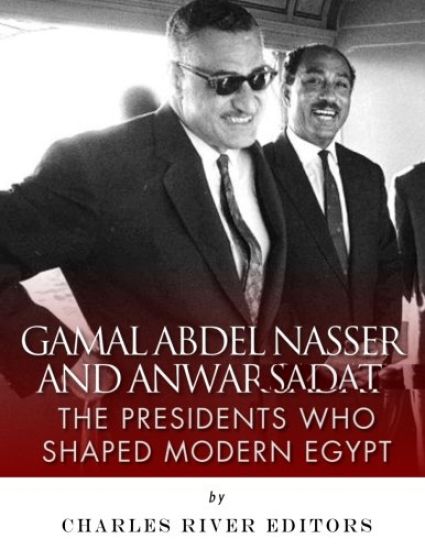
Gamal Abdel Nasser and Anwar Sadat: The Presidents Who Shaped Modern Egypt

Gamal Abdel Nasser and Anwar Sadat: The Presidents Who Shaped Modern Egypt

Charles River

Createspace Independent Publishing Platform
2017
nidottu
*Includes pictures *Includes quotes from the leaders about each other and their lives *Includes footnotes and a bibliography for further reading Gamal Abdel Nasser has been called many things. The father of modern-day Egypt. The founder of Arab nationalism. The leader of the Egyptian Revolution. The second president of the Egyptian Republic. The creator of his own brand of political and social governance - Nasserism. Anthony Eden, the former British Prime Minister, called him the "Mussolini of the Nile." Nasser was all of these things and much more. Indeed, he led the revolution that overthrew the monarchy of Egypt and subsequently shaped and led the new Egyptian government. He became a prominent regional and world leader, playing a significant role in the Non-Alignment Movement that he co-founded, formed during the midst of the Cold War. He led his country toward modernization and industrialization, implementing social and economic reforms focused on strengthening the nation and improving the lives of the people. Yet, Nasser's legacy goes beyond state governance and policies; his name, to this day, evokes great emotion among Egyptians and much of the Arab world. His funeral in 1970 drew millions of mourners and an outpouring of genuine grief across the Arab world. In addition to working to carve a path for a new Egypt, Nasser aimed to help the rest of the Arab nations of the Middle East by uniting the historically uncooperative Arab countries and encouraging them to act as a united front. Nasser was not the first to see that Arab countries more often than not had much in common, including resources, political policies, and social structures, but he was the first to take action and work to get the Arab countries to work together. The concept of pan-Arabism that Nasser furthered during his presidency had lasting impact on the region that continued decades after his death. Nasser continues to remain an iconic figure in the region, symbolizing Arab dignity, pride, and unity. A significant figure in his own right, Sadat was determined to set himself apart, but he was often compared to his good friend and predecessor Gamal Abdel Nasser. However, this was a man who was passionate about more than just peace; he fought diligently for the stabilization and growth of his country, for the implementation of a wide-reaching open-door economic policy, and for the strengthening of the Egyptian culture, spirit, and nation. Though he was often seen as the prot g of Nasser, and he certainly was, he proved to be much more than that as he made a significant effort to emerge from his predecessor's shadow. As with many historic moments that inspired significant change, not everyone was supportive of Sadat's peace efforts. Only two years after the signing of the Egyptian-Israeli Peace Treaty, President Sadat was assassinated by members of an Islamic fundamentalist group, the Egyptian Islamic Jihad, in October 1981. As a president who succeeded the revolutionary Gamal Abdel Nasser and was succeeded by the long-reigning Hosni Mubarak, Sadat and his legacy are often overshadowed by the forceful prowess and authoritative legacies of Nasser and Mubarak, his presidency reduced to the peace treaty and the subsequent Nobel Prize he received. In fact, Sadat appeared to have suffered from a misrepresented image for much of his military and political career. Over three decades since the death of Sadat, the Middle East and the world still wonder, discuss, and debate his legacy. Gamal Abdel Nasser and Anwar Sadat chronicles the life and legacy of one of Egypt's two famous presidents. Along with pictures of important people, places, and events, you will learn about Nasser and Sadat like never before.
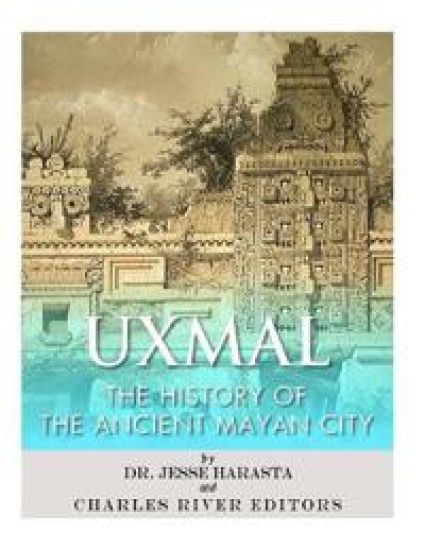
Uxmal: The History of the Ancient Mayan City

Uxmal: The History of the Ancient Mayan City

Jesse Harasta; Charles River

Createspace Independent Publishing Platform
2017
nidottu
*Includes pictures *Includes a description of the ruins and analysis of them *Explains the history of the rise and fall of the city *Includes footnotes and a bibliography for further reading Many ancient civilizations have influenced and inspired people in the 21st century. The Greeks and Romans continue to fascinate the West today. But of all the world's civilizations, none have intrigued people more than the Mayans, whose culture, astronomy, language, and mysterious disappearance all continue to captivate people. In 2012 especially, there was a renewed focus on the Mayans, whose advanced calendar has led many to speculate the world would end on the same date the Mayan calendar ends, but if anything, the focus on the "doomsday" scenario overshadowed the Mayans' true contribution to astronomy, language, sports, and art. The Maya maintained power in the Yucatan for over a thousand years, and in the late stages of the "Classical" era (3rd-9th centuries AD), the city of Uxmal was one of its most noteworthy places. While it was not as powerful as cities like Tikal, Uxmal was apparently at the forefront of Mayan culture, particularly when it came to architecture. However, while Uxmal used high ground to display its prominence, and the ruins are still among the most popular places for tourists in the region, the site is still shrouded in mystery. Even as scholars continue to work on the site to further interpret it, it's still unclear when exactly Uxmal was founded, how many people called it home, and when it was abandoned, despite the existence of Mayan chronicles and oral legends. What is apparent, however, is the skills of Uxmal's artisans, whether through constructing structures like the 5 level Pyramid of Magicians and the expansive Governor's Palace or adorning the structures with precisely detailed art and sculptures. In fact, the craftsmanship can be credited with helping to preserve Uxmal itself. Uxmal: The History of the Ancient Mayan City covers the history of the city, as well as the speculation and debate surrounding it. Along with pictures and a bibliography, you will learn about Uxmal like you never have before, in no time at all.
The Partition of the British Mandate of Palestine: The History and Legacy of the United Nations Partition Plan and the Creation of the State of Israel
*Includes pictures *Includes online resources and a bibliography for further reading The conflict between the Israelis and Palestinians is technically 69 years old and counting but has its roots in over 2,000 years of history. With so much time and history, the Middle East peace process has become laden with unique, politically sensitive concepts like the right of return, contiguous borders, secure borders, demilitarized zones, and security requirements, with players like the Quartet, Palestinian Authority, Fatah, Hamas, the Arab League and Israel. Over time, it has become exceedingly difficult for even sophisticated political pundits and followers to keep track of it all. Nearly a century before the state of Israel was founded in 1948, Palestine was under the control of the Ottoman Turkish Empire, consisting mostly of Arabs. During the 1850s, Jews began settling in small villages across the lands that once comprised Judea and Samaria, which the Jews considered their ancient Biblical homeland. These efforts to buy property were driven by the motivation of some Jews to help reestablish the land as the Jewish homeland. These Jews became known as Zionists, in reference to Zion, which is often thought of as a reference to all of Israel but was in fact a reference to part of Jerusalem. The Zionists attempted to establish a Jewish National Fund that would assist Jews in buying land in Palestine for Jewish settlement. In the middle of World War I, the British pledged their support to the Zionist cause and the establishment of a Jewish state in Palestine through the Balfour Declaration of November 1917. At the time, the British realized the strategic importance of Palestine because it was near the Suez Canal, and they saw the Zionists as potentially helpful allies in the region following the war. British foreign secretary Arthur James Balfour sent a letter to Lord Rothschild on November 2, 1917, declaring the government's "sympathy with Jewish Zionist aspirations," and favoring "the establishment in Palestine of a National Home for the Jewish People," with an intent to assist the Jews in achieving it. In 1947, the British delegated the issue of partitioning the British Mandate to the United Nations, and the U. N. General Assembly set up the Special Committee on Palestine (UNSCOP). UNSCOP eventually came up with what is now known as the U. N. Partition Plan of 1947. The Partition Plan carved up two strange looking states, but their motive was to create an Israel in which the Jewish population was a 55% majority, while Palestine had an over 90% Palestinian Arab majority. Meanwhile, the city of Jerusalem would be administered internationally, due to the sensitive religious concerns of Muslims, Christians, and Jews. In addition to several Christian holy spots, Jerusalem's Al-Aqsa Mosque is the third holiest site in Islam, and it is situated right next to the Western Wall, the Jews' holiest remaining site. On May 14, 1948, the British Mandate officially expired. That same day, the Jewish National Council issued the Declaration of the Establishment of the State of Israel. About 10 minutes later, President Truman officially recognized the State of Israel, and the Soviet Union also quickly recognized Israel. However, the Palestinians and the Arab League did not recognize the new state, and the very next day, armies from Egypt, Syria, Lebanon and Iraq invaded the former British Mandate to squelch Israel, while Saudi Arabia assisted the Arab armies. Jordan would also get involved in the war. In early 1949, Israel began signing armistices with Egypt, Jordan, and Syria, which left Israel in control of nearly 75% of the lands that were to be partitioned into the two states under the 1947 plan. The new armistice lines became known as the "Green Line," and the conflict has continued to involve those lines and the issues that were contested in a war now nearly 70 years old.
Ernest Hemingway & F. Scott Fitzgerald: America's Greatest 20th Century Novelists

Ernest Hemingway & F. Scott Fitzgerald: America's Greatest 20th Century Novelists

Charles River

Createspace Independent Publishing Platform
2017
nidottu
*Includes pictures of important people and places. *Includes some of the authors' most famous quotes. *Analyzes the real life inspirations behind their work and relationships. *Explains the relationship and rivalry between Hemingway and Fitzgerald. *Includes a Bibliography of each for further reading. The 1920s in the United States were known as the "Roaring Twenties" and the Jazz Age, a time in the nation that glorified hard and fast living. Nobody personified the age or wrote so descriptively about it better than F. Scott Fitzgerald (1896-1940), whose name became synonymous with the times after penning the epic Great Gatsby. Along with his dazzling wife Zelda, Fitzgerald was all too keen to play the role. When his writing made them celebrities, they were celebrated by the national press for being "young, seemingly wealthy, beautiful, and energetic." While Scott used their relationship as material in his novels, Zelda wrote herself, and she also strove to become a ballerina. However, the Fitzgerald's barely outlasted the '20s. Their hard living left Fitzgerald, a notorious alcoholic, in poor health by the '30s. Financially broke, he would die of a massive heart attack in 1940, by which time Zelda had already suffered various mental illnesses. Zelda died in a freak fire in 1948, both Fitzgerald's having burned out almost as quickly as they had shined. Fitzgerald traveled constantly, and one of his expatriate friends in Europe was none other than Ernest Hemingway, widely considered one of the most influential American authors of the 20th century. Students are unlikely to leave high school without reading one of Hemingway's classics, especially The Sun Also Rises (1926), and they are usually introduced to rudimentary details about Hemingway's eclectic life and controversial death. Hemingway's literary career included several unquestioned classics, but a great deal of his fame and notoriety today comes from the fact that it has become impossible to separate his work from his life. In fact, Hemingway's service in World War I and his time as a war correspondent at places like Normandy during D-Day in World War II have also established him as the kind of masculine, adventurous man that Americans have long held out as cultural heroes. This is made even more ironic by the fact that Hemingway spent so much time overseas, both in Europe and Africa, to the extent that he became one of the most identifiable members of the "Lost Generation" of American expatriates, which included literary stars like Fitzgerald and Gertrude Stein. It is possible today for people to be familiar with the basic outline of his life despite rarely coming into contact with his writing. Fitzgerald and Hemingway had tumultuous lives, so it was only fitting that they had a tumultuous friendship that also bordered on rivalry. In fact, Fitzgerald hoped that the last novel he was working on before his untimely end, The Last Tycoon, would propel him to the top of the literary world again, a spot occupied by Hemingway after the publication of For Whom The Bell Tolls. While that novel wouldn't do it, The Great Gatsby ultimately ensured that Fitzgerald would remain renowned, and the two have been permanently associated with each other ever since. America's Greatest 20th Century Novelists profiles the lives and careers of two of America's most famous writers and cultural icons. Along with pictures of important people, places, and events, you will learn about Hemingway and Fitzgerald like you never have before.
The Most Infamous Terrorist Groups in the World: The History and Legacy of al-Qaeda, the Islamic State, the Nusra Front, and Boko Haram
*Includes pictures *Includes online resources and a bibliography for further reading Since the attacks on September 11, 2001, the world has struggled to define al-Qaeda, an amorphous, growing, and seemingly inexhaustible organization. Once a relatively organized group based in one country with a defined hierarchy and clear leadership, al-Qaeda has transformed into a transnational phenomenon over the last few decades, with branches and affiliates operating in dozens of countries across the world. Many call al-Qaeda an enemy, while some define it as an ideology, and others analyze it as a network. Of course, a small minority takes it up as their cause and an extension of their religion. Also known as ISIS, Da'esh, al-Qaeda in Iraq (AQI), and a host of other names, the Islamic State in Iraq and the Levant (ISIL) has increasingly gained attention over the years for its brutal tactics and seemingly blatant disregard for human rights, but it has recently dominated the global media spotlight and made headlines when it attacked and seized control of Mosul, the second largest city in Iraq, and drove out an Iraqi army force that was more than five times its size in June 2014. It has since laid claim to various territories throughout Iraq and the Levant, and it has established operational control and maintained administrative structures on both sides of the Iraqi-Syrian border. Most recently, it declared the restoration of a caliphate and renamed itself the Islamic State. One of the reasons ISIS has gone by so many different names is because it has rebranded itself numerous times in the past. After starting as an al-Qaeda-inspired Sunni Islamist brigade that emerged from the ashes of the jihadist struggle against foreign forces in Iraq, the group grew into a full-fledged al-Qaeda branch, then evolved into a religiously motivated army, then finally separated from al-Qaeda to become the organization it is today. Since the Arab Spring uprising of 2011, reports of terrorist attacks around the world have flooded international media. Syria, a country about one and half times the size of Texas, has become the central battleground for many terrorist groups; those the world often focuses on and has heard much of--such as the Islamic State of Iraq and the Levant (also known as ISIS and Da'ash, but from here on referred to as ISIL)--and those the world rarely hears about and is unable to make distinctions between others--such as Jabhat Al-Nusra. Despite the lack of focused attention on its activities, Jabhat Al-Nusra (or, the Nusra Front as it is sometimes referred to) has built quite a reputation in Syria and the greater Middle East for its seemingly endless supply of weapons, ability to ally with strategic partners, and its peculiar mix of international, albeit notorious, supporters inside the country. The complexity of the Syrian Civil War is most definitely reflected in the complexity of the groups fighting for power within and around its borders; Jabhat Al-Nusra is no exception. The group's relationship with ISIL, Al-Qaeda, and the other militant factions within Syria is complicated and appears often conflictual: as of the time of this writing, Jabhat Al-Nusra had announced its split from Al-Qaeda in Iraq (AQI) but analysts believe this is nothing more than a re-branding technique to attract all fighting elements in Syria to be under its own umbrella of control. On the morning of April 15, 2004, the world woke up to the extraordinary news of the kidnap in a little known hamlet of Nigeria of some 276, primarily Christian schoolgirls, by the radical militant Nigerian insurgent group Boko Haram. Almost overnight, the group, which had resided somewhat on the fringes of global consciousness up until that point, found itself at the forefront as international public outrage, culminating in a social media campaign headed by First Lady Michelle Obama, demanded the immediate return of the kidnapped girls.
England's Greatest Queens: The Lives and Legacies of Queen Elizabeth I and Queen Victoria
*Includes pictures of the queens and important people, places, and events in their lives. *Discusses the Elizabethan era and Victorian era in depth and looks at their legacies and depictions in pop culture. "Video et taceo." ("I see, and say nothing") - Queen Elizabeth I "Since it has pleased Providence to place me in this station, I shall do my utmost to fulfil my duty towards my country; I am very young and perhaps in many, though not in all things, inexperienced, but I am sure that very few have more real good will and more real desire to do what is fit and right than I have." - Queen Victoria, 1837 England has had no shortage of influential monarchs, but only Queen Elizabeth I and Queen Victoria had their nation's age literally named after them. Both the Elizabethan era and Victorian era have come to symbolize a golden age of peace and progress in every aspect of British life, with the long reigns of both queens also providing stability. When Queen Elizabeth II came to the throne in 1952, many commentators heralded the beginning of her reign as the second Elizabethan age. The first one, of course, concerned the reign of Henry VIII's second surviving daughter and middle surviving child, Queen Elizabeth I, one of England's most famous and influential rulers. It was an age when the arts, commerce and trade flourished. It was the epoch of gallantry and great, enduring literature. It was also an age of wars and military conflicts in which men were the primary drivers and women often were pawns. Elizabeth I changed the rules of the game and indeed she herself was changed by the game. She was a female monarch of England, a kingdom that had unceremoniously broken with the Catholic Church, and the Vatican and the rest of Christendom was baying for her blood. She had had commercial and militaristic enemies galore. In the end, she helped change the entire structure of female leadership. Elizabeth I still wielded great power in the 16th century, whereas Victoria was a constitutional monarch with limited power over the workings of the British government. But in a way, that made Victoria even more unique, as she still proved able to mold the cultural identity of a nearly 65 year long epoch. Furthermore, Victoria established some of the ceremonial customs of the British monarch and became both the forerunner and role model of subsequent queens, a legacy that continues to endure with her great-great granddaughter, Queen Elizabeth II. Though Britain's longest reigning monarch is now mostly associated with conservative values (particularly strict morality and traditional social and gender roles), Victoria and her era oversaw the cultural and technological progress of Britain and the West in general, architectural revivals, and the expansion of imperialism. While some of these developments have been perceived negatively over a century later, Britons of the 19th century and early 20th century often viewed the Victorian Era as the height of their nation's power and influence. England's Greatest Queens chronicles the lives and reigns of Elizabeth I and Victoria, as well as the eras they lived in. Along with pictures of important people, places, and events in her life, you will learn about Queen Elizabeth I and Queen Victoria like you never have before, in no time at all.