Kirjojen hintavertailu – 12 903 727 kirjaa ja 27 kauppaa
Kirjailija
Charles River
Kirjat ja teokset yhdessä paikassa: 4 673 kirjaa, julkaisuja vuosilta 2013–2022, suosituimpiin kuuluu William Powell and Myrna Loy: The Lives and Careers of One of Classical Hollywood's Most Iconic Duos. Vertaile teosten hintoja ja tarkista saatavuus suomalaisista kirjakaupoista.
*Explains the major themes, characters, and plot. *Includes an introductory note on Alexandre Dumas and his book. *Includes a summary and analysis of all 117 chapters. "I have once again found a man ready to hack at another's self-respect with a hatchet, but who cries out when his own is pricked with a pin." - Alexandre Dumas, The Count of Monte Cristo Playwright, novelist, travel writer, journalist, entrepreneur - it is hard to place Alexandre Dumas in one category alone, as his genres almost always influence one another. But most scholars and critics agree that he is clearly one of the greatest adventure novelists of all time. Responsible for such well-known titles The Count of Monte Cristo, The Corsican Brothers, The Man in the Iron Mask, and perhaps one of the most iconic and recognizable novels ever written, The Three Musketeers, the name Dumas has become synonymous with stories of drama, adventure, travel and intrigue featuring exceptional characters, exotic locales and fascinating journeys, both literal and figurative. His works have engaged readers all over the world, and been printed in over 100 languages. The Count of Monte Cristo is now a staple of Western classrooms and has been made into many movies. The epic tale takes place in France, Italy, the Mediterranean Islands and the Levant from 1815-1838, spanning a generation of characters and growth. The book's protagonist, Edmund Dant s, is one of the most famous characters in literature, and the story follows him as he runs the gamut of emotions. Even today, the story's themes of hope, justice, vengeance and mercy fascinate readers of all ages. The Count of Monte Cristo is entertaining for adults but also accessible for children, which is why so many schools assign it as reading. Of course, the novel is as lengthy as it is great, so it's hard to remember all the important stuff. Everything You Need to Know About the Count of Monte Cristo is a comprehensive guide that provides a synopsis, a description of the characters, and a summary and analysis of every chapter. You can use this as a guide while you read or as a way to brush up on everything you once knew and since forgot.
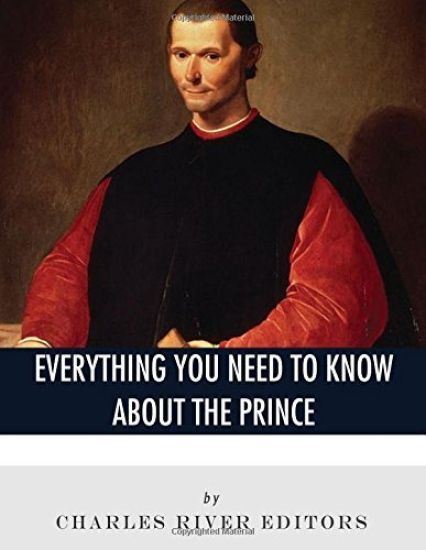
*Includes pictures of Machiavelli and some of the rulers he discusses throughout the book. *Explains the historical background of Machiavelli's life and the political context within which he wrote The Prince. *Summarizes each chapter of The Prince and explains the overarching themes presented within the famous treatise. *Discusses lingering controversies surrounding Machiavelli and The Prince, including whether the book was intended as a satire or an effort to spark a rebellion. "He who becomes master of a city accustomed to freedom and does not destroy it, may expect to be destroyed by it." - Machiavelli, The Prince Niccol Machiavelli was born in Florence on May 3, 1469, as Florence was undergoing its transition into the Renaissance, guided by the Medicis. Machiavelli was a public servant during the Republic, losing his office when the Medicis returned to power. Despite that, Machiavelli dedicated The Prince to the ruling Medici of the time, leading some today to still speculate whether the book was a satire. Regardless, The Prince remains one of the most influential political philosophies of history, and Machiavelli himself will forever be associated for the "ends justify the means" philosophy that he wrote about and which even today is called Machiavellian. The Prince was eventually published in 1532, though evidence exists that the manuscript was circulated before this point, which was deemed more polite than physical publication. 27 years later, in 1559, the text was, unsurprisingly, registered to the Index Librorum Prohibitorum (the Catholic Church's list of banned books) on the grounds of immorality. The text can generally be divided into four parts. Chapters 1-11 outline the different types of principalities, and the benefits and drawbacks of each, to "discuss how such principalities are to be ruled and preserved" (II.1). Chapters 12-14 discussed military force, including how to amass and maintain an army. But it is Chapters 15-23 that make the book infamous. In these chapters Machiavelli discusses the importance (or unimportance) of morality, claiming, "it is necessary for a prince wishing to hold his own to know how to do wrong, and to make use of it or not according to necessity" (XV.2). Thus, the "ends" justify the "means." The Prince is just as notorious today as it was nearly 500 years ago, and Machiavelli's political philosophy has never been more relevant. Everything You Need to Know About The Prince is the perfect resource for understanding Machiavelli's seminal treatise, explaining the historical context within which Machiavelli wrote it, its philosophy and historical examples, its major themes, and its influential and enduring legacy. With The Prince and its underlying themes as relevant as ever today, get caught up quickly with this resourceful guide.
*Includes pictures *Includes online resources and a bibliography for further reading "Pancho Villa," people whispered at the beginning of the 20th century, "can march 100 miles without stopping, live 100 days without food, go 100 nights without sleep, and kill 100 men without remorse." The legend of Francisco Villa is full of heroism, tragedy and romance. It is the story of a poor farmer boy who became a bandit out of necessity, after avenging an injustice on his family; a military genius who flew from an oppressive government to lead the largest revolutionary army in his country's history, and defeated dictatorship to become Mexico s liberator, only to fall again in disgrace when his troops abandoned him or were massacred by the enemy. Pancho Villa and his cavalry, Mexicans point out with a certain amount of pride, invaded the United States, and although they came and tried to capture him, they never found him. This is, at least, the version that most of them know, but it's certainly not the same as in their textbooks. The story of Francisco Villa bypassed official censorship from generation to generation, like leaves sailing at full speed on the surface of a stream. But the historical reconstruction is full of nuances. Was he a freedom fighter, or a bandit? Was he a Mexican Robin Hood, or a thief and a murderer? Was he present when his troops invaded U. S. territory? Was the advance of his famous "Dorados" (the "golden ones," the name of his troops) the cause for joy, or terror among the people as they passed the countryside towards Mexico City? Pancho Villa s personality has been controversial since the very beginning of his career as a General of the revolutionary army. A little more than 100 years ago a Mexican peasant named Emiliano Zapata gathered a rural army from the plantations and villages of southern Mexico, seized the lands of the haciendas, and began to distribute them among the peasants of Anenecuilco, his hometown, in the state of Morelos. Outraged and impatient with the ceaseless destitution of the indigenous peoples at the hands of the landowners, he had decided to take justice in his hands. His flag was Liberty and Justice, the exact opposites of the two burdens that had tyrannized the rural population: work in semi-slavery conditions and immense inequality. Zapata, who in a few years assembled a popular army of 25,000, was a unique case in the history of Mexico. His country's past had consisted of opportunist generals revolting against the government seeking not to make justice, but to seize power. Conversely, Zapata was not interested in politics or power plays, except in their most practical and immediate form: to distribute land among the peasants; to allow them to work in peace; and to defend their gains by force of arms. Thus, it was only inevitable that in his time, he was seen as a menace, someone to get rid of in order to return to peace and order. Nearly a century after his death, Zapata remains an opaque figure. To call oneself a Zapatista in Mexico can get a person in trouble, yet he led one of the peasant rebellions most studied by scholars. Historians have produced biographies that portray him as a hero, such as John Womack in the 1960s, and that of his successor and closest aide, Gildardo Maga a, who wrote one shortly after Zapata's death. More meticulous books have appeared in recent past, like the one by Samuel Brunk, who concedes that the press may have exaggerated Zapata's exploits, but not completely. Pancho Villa and Emiliano Zapata: The Lives and Legacies of Mexico's Most Famous Revolutionaries chronicles the lives of two of Mexico's most legendary figures. Along with pictures of important people, places, and events, you will learn about Pancho Villa and Emiliano Zapata like never before.
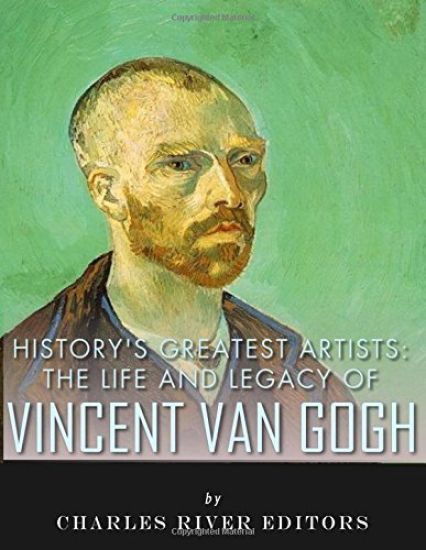
*Includes pictures of 20 of van Gogh's most famous works, including an explanation of his techniques and influences. *Includes pictures of van Gogh and excerpts of his letters to brother Theo. *Explains the artistic influences and legacy of van Gogh's life and art. *Discusses the mysteries and controversies surrounding van Gogh's mental illnesses and death. *Includes a Bibliography for further reading. "A weaver who has to direct and to interweave a great many little threads has no time to philosophize about it, but rather he is so absorbed in his work that he doesn't think but acts, and he feels how things must go more than he can explain it." - Vincent van Gogh, 1883 Vincent van Gogh is undoubtedly one of the most famous artists of all time, and though the critical establishment may not consider him the greatest artist who ever lived, there may be no artist with whom the public has a greater familiarity. Unfortunately, a great deal of that familiarity comes from the circumstances leading up to his death, and the manner in which they have been linked to his painting career. Of all the things that occurred in van Gogh's tumultuous life and career, the best known thing about it might be that he cut off the lower left lobe of his ear, and much of the general public is familiar with his painting "Self Portrait with Bandaged Ear". In 1882, Vincent would hauntingly and somewhat prophetically write to his brother Theo, "What am I in the eyes of most people - a nonentity, an eccentric, or an unpleasant person - somebody who has no position in society and will never have; in short, the lowest of the low. All right, then - even if that were absolutely true, then I should one day like to show by my work what such an eccentric, such a nobody, has in his heart." Across much of the world, van Gogh's body of work is so commonplace that virtually everyone is familiar with at least some element of his life. Reproductions of his paintings populate offices, calendars, t-shirts, and the like, and his paintings continue to have the potential to affect people. On the surface, it might appear as though van Gogh is a very familiar figure, and yet people have spent nearly 125 years wondering just what compelled him to harm himself, just how tortured he was mentally, and what kind of effects it had on his art. In addition to dying a premature (and still controversial) death, van Gogh was 27 before beginning his 10-year painting career, meaning he painted for a comparably short period of his life. Nevertheless, he produced an extraordinary amount of art, and much of the myth of van Gogh surrounds the fact that he painted over 800 paintings (and many more drawings and watercolors) in such a short time. Understandably, the sheer volume of work meant that many had an unfinished, primal quality that seems to be commensurate with the type of person who would paint 800 paintings (in addition to numerous drawing and studies) over 10 years, building to a feverish crescendo at the end of his life. On top of that, van Gogh also managed to find time to write nearly 900 letters during that same period. Given the way his art and life blend together, it's no surprise that van Gogh and his work continue to deeply affect viewers to this day. While van Gogh's painting career is the period of greatest interest, it was in many ways a response to his upbringing and the events of his youth. History's Greatest Artists: The Life and Legacy of Vincent Van Gogh examines van Gogh's life before his career, a close analysis of his painting style and artistic themes, and his controversial death. Along with pictures of some of his most famous work, excerpts from his letters, a bibliography, and a Table of Contents, you will learn about one of history's greatest painters like you never have before, in no time at all.
*Includes pictures *Includes ancient accounts *Includes online resources and a bibliography for further reading During the several centuries that ancient Egypt stood as one of the greatest, if not the greatest, civilizations of the ancient world, conflicts with its neighbors often played a central role in hieroglyphic texts and art from temples and tombs. The three primary enemies of the Egyptians were the Libyans who occupied the Western Desert and its oases, the so-called Asiatics who lived in the Levant, and finally the Nubians to Egypt's south. Among the three peoples, the Nubians were the most "Egyptianized" and at times were integral to the development of Egyptian history. Truly, the Nubians were the greatest of all sub-Saharan peoples in pre-modern times and deserve to be studied in their own right, apart from ancient Egyptian history. Unfortunately, it is often difficult for scholars to separate aspects of ancient Nubian culture that were truly unique and "Nubian" from those elements that were Egyptian, as the Nubians borrowed heavily in terms of culture from their northern neighbor. One historian noted, "As expected, strong Nubian features and dark coloring are seen in their sculpture and relief work. This dynasty ranks as among the greatest, whose fame far outlived its actual tenure on the throne. Especially interesting, it was a member of this dynasty that decreed that no Nehsy (riverine Nubian of the principality of Kush), except such as came for trade or diplomatic reasons, should pass by the Egyptian fortress and cops at the southern end of the Second Nile Cataract. Why would this royal family of Nubian ancestry ban other Nubians from coming into Egyptian territory? Because the Egyptian rulers of Nubian ancestry had become Egyptians culturally; as pharaohs, they exhibited typical Egyptian attitudes and adopted typical Egyptian policies." Robert S. Bianchi went even further: "It is an extremely difficult task to attempt to describe the Nubians during the course of Egypt's New Kingdom, because their presence appears to have virtually evaporated from the archaeological record. The result has been described as a wholesale Nubian assimilation into Egyptian society. This assimilation was so complete that it masked all Nubian ethnic identities insofar as archaeological remains are concerned beneath the impenetrable veneer of Egypt's material culture." The Canaanites and Nubians received the most attention as Egypt's enemies and occasional trading partners, but it was the Libyans-the final third of Egypt's traditional enemies-who influenced later Egyptian culture most. Unlike the Nubians and Canaanites, the Libyans were nearly always at war with the Egyptians. The reasons for the near constant warfare between the Libyans and Egyptians are difficult to discern, but more than likely stem from the fact that Libya was poor in resources, so the Egyptians had little reason to trade with the Libyans. On the other hand, the Libyans coveted Egypt's material wealth. The result was numerous putative campaigns by the Egyptians into Libya and raids by the Libyans into Egypt. The wars between the Libyans and Egyptians reached a fevered pitch during the New Kingdom when the Libyans organized anti-Egyptian coalitions, and even formed an alliance with the mysterious Sea Peoples. By the Late New Kingdom, Egypt was an armed camp, yet it was ultimately unable to stem the tide of Libyan migration. The Libyans used their numbers to their advantage, eventually conquering Egypt and establishing two dynasties. Their ancestors created another two. The relationship between the Libyans and Egyptians was truly complicated, and an in-depth survey of Libyan history from the Neolithic Period until the middle of the 6th century BCE demonstrates just how important the Libyans were in the ancient world.
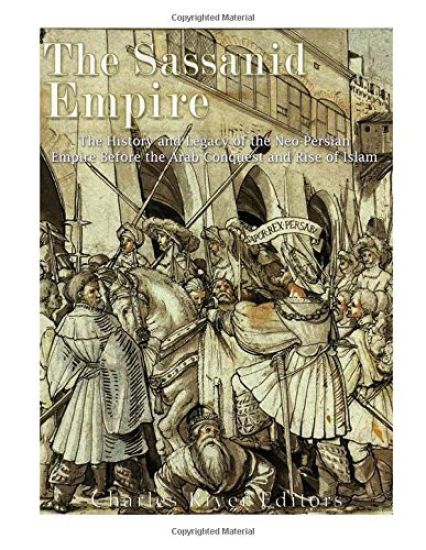
*Includes pictures *Includes ancient accounts *Includes online resources and a bibliography for further reading During the first half of the 1st millennium CE, an empire arose in Persia that extended its power and influence to Mesopotamia in the east, Arabia in the south, the Caucasus Mountains in the north, and as far east as India. This empire, known alternatively as the Sasanian Empire or Sassanid Empire, was the last of three great dynasties in Persia-the Achaemenid and the Parthian being the first two dynasties-before the rise of Islam. In fact, many scholars consider the Sasanian Empire to be the last great empire of the ancient Near East because once it had been obliterated, Islam became the standard religion of the region, ushering in the Middle Ages. The Sasanian Empire was important for a number of reasons. Besides being the last of three great Persian dynasties, they carried on many Persian cultural traditions relating to religion and kingship. The Sasanians fostered and promoted the native religion of Zoroastrianism to the point of persecuting other religions from time to time. It was during the Sasanian period that the numerous Zoroastrian hymns, prayers, and rituals were collected under one book, known as the Avesta. Thanks to the Sasanians' efforts with regard to religion, modern scholars know much more about Zoroastrianism than they would have if the religion continued to disseminate orally. Their efforts also protected Zoroastrian knowledge in later years after the dynasty was long gone and Islam became ascendant in Persia. The Sasanians, like the Achaemenids and Parthians, also carried forth the Persian conflicts with the Hellenic world. Although the Achaemenids fought the Macedonian Greeks and the Parthians challenged the imperial Romans for control of Mesopotamia, the Sasanians faced Rome in its later stages of collapse and subsequently fought the revitalized Byzantine Empire. An examination of Sasanian chronology and culture reveals that it was a much more important dynasty and empire than most may think. The Sassanid Empire: The History and Legacy of the Neo-Persian Empire Before the Arab Conquest and Rise of Islam examines the history of one of the most important empires of the ancient world. Along with pictures depicting important people, places, and events, you will learn about the Sassanid Empire like never before.
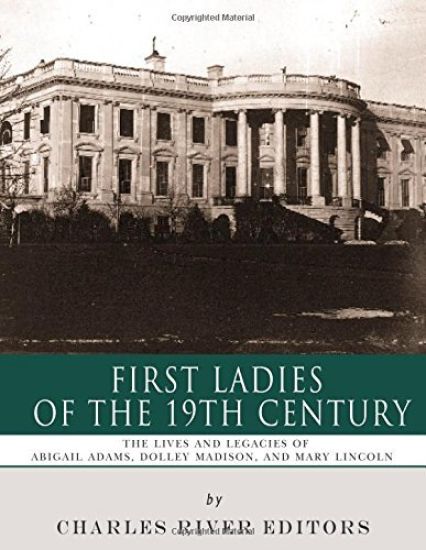
*Includes pictures of the First Ladies and important people, places, and events in their lives. *Includes bibliographies for further reading. Eleanor Roosevelt and Hillary Clinton may have been the most politically active First Ladies in American history, but Abigail Adams was the first to act as political advisor for her husband and the first to be dubbed "Mrs. President". Indeed, Abigail was politically inclined to degree highly unusual among women of the 18th and 19th century, and she had originally impressed her future husband John because she was so well versed in poetry, philosophy and politics. Abigail was also very progressive, championing women's rights and abolition long before they became widely held views even in traditionally liberal Massachusetts. After the Constitution was ratified, George Washington went about setting all the precedents for the role of the presidency, establishing traditions like the Cabinet. But the role of being the First Lady of the United States was defined by the wife of the 4th president. James Madison may have been the Father of the Constitution, but his wife Dolley all but defined the responsibilities and customs of being the president's wife. Dolley had served as an informal First Lady for the widowed Thomas Jefferson, but when her husband entered the White House in 1809, Dolley went about furnishing the White House to such an extent that much of the style and items she chose were still in place when Mary Todd Lincoln became the First Lady in 1861. Dolley also became a folk hero of sorts and the center of a colorful legend that had her saving Gilbert Stuart's priceless painting of George Washington just ahead of the British while her husband was denigrated for fleeing as Washington D. C. was burned. It's possible that the world would have remembered Mary Todd Lincoln (1818-1882) if only because she was the wife of one of America's greatest presidents and present for his shocking assassination, but Mary was one of the most unique women to ever be First Lady, and she was in the White House during the country's most trying time. But history hasn't exactly been kind. Mary was dealt a tough hand that might have made it impossible for her to ever be popular. The Civil War erupted a month after President Lincoln took office, and Mary was a native Southerner who had relatives fighting for the Confederacy. Making matters worse, Mary seemed out of touch with the times, organizing lavish balls at a time when the country was literally coming apart at the seams. As if the external pressure wasn't trying enough, young Willie Lincoln died in the White House in 1862, sending Mary into such fits of grief that she might have never fully recovered from even before her husband's assassination and the death of Tad in 1881. First Ladies of the 19th Century looks at the lives, legends, and legacies left by the three influential First Ladies. Along with pictures of important people, places, and events in their lives, you will learn about Abigail, Dolley and Mary like you never have before, in no time at all.
*Includes pictures of important people and scenes of the massacre. *Includes accounts of Wounded Knee *Includes a bibliography for further reading. "General Nelson A. Miles who visited the scene of carnage, following a three day blizzard, estimated that around 300 snow shrouded forms were strewn over the countryside. He also discovered to his horror that helpless children and women with babes in their arms had been chased as far as two miles from the original scene of encounter and cut down without mercy by the troopers. ... Judging by the slaughter on the battlefield it was suggested that the soldiers simply went berserk. For who could explain such a merciless disregard for life?" - Hugh McGinnis, 7th Cavalry Among all the events in the strained relations between the U. S. government and Native Americans during the 19th century, the most notorious and defining one was what is today called the Wounded Knee Massacre. Technically, it was the last armed engagement between Sioux warriors and the U. S. military, and it marked the end of effective resistance by any Sioux bands, but what actually occurred is far more controversial. In late December 1890, a group of roughly 350 Lakota Sioux led by Big Foot and Spotted Elk were escorted to the Wounded Knee Creek area and ordered to establish a camp there, but fearing another possible uprising despite the fact the band was comprised mostly of women, about 500 U. S. Army troops from the 7th Cavalry Regiment, led by Major Samuel M. Whitside, approached the Lakota encampment on the morning of December 29 with orders to disarm and escort the Native Americans to a railhead for transport to Omaha, Nebraska. Some of the men in the 7th Cavalry had also been part of the 7th Cavalry at Little Bighorn, so there could not have been a worse command to send on a mission that required interacting with the Lakota. As the troopers entered the encampment, a shot rang out. It is unclear who fired, but regardless, the single shot triggered a fusillade from the Army troops. One of the Army soldiers, Captain Edward Godfrey, explained, "I know the men did not aim deliberately and they were greatly excited. I don't believe they saw their sights. They fired rapidly but it seemed to me only a few seconds till there was not a living thing before us; warriors, squaws, children, ponies, and dogs ... went down before that unaimed fire." The resulting assault would eventually kill most of the Native Americans, including both Big Foot and Spotted Elk. Approximately 30 U. S. Army soldiers were killed and about 40 were wounded, nearly all struck by friendly fire in the chaotic, close-quarters shooting. Of the Native American dead, most were killed outright, but the wounded were left on the frozen ground to perish during the frigid night. The following day, the frozen bodies - which had been stripped by the soldiers for souvenirs - were buried in mass grave. The Wounded Knee Massacre had several outcomes. The soldiers who participated in the massacre were commended and awarded for their actions, with 20 of them receiving the nation's highest military award, the Congressional Medal of Honor, for action during the "battle." At the same time, Wounded Knee would grow to become a source of inspiration for a generation of Sioux people who came of age in the 1960s, and they sought to reestablish negotiations with the United States as a sovereign and independent nation. The American Indian Movement would engage in confrontational and at times violent resistance to perceived U. S. government oppression at Alcatraz, the Bureau of Indian Affairs building in Washington D. C., and later the town of Wounded Knee, South Dakota, and the Wounded Knee Massacre site. Wounded Knee: The Massacre that Ended the Indian Wars comprehensively covers the background leading up to that infamous day, as well as accounts of what happened and the aftermath.
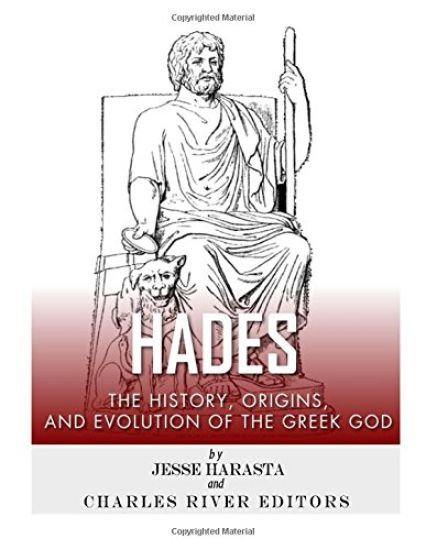
*Includes pictures of historic art depicting Hades and other Greek gods. *Explains the historical origins of the god and the mythological tales about him. "The gloomy Hades enriches himself with our sighs and our tears " - Sophocles The Greek god Hades is something of an enigma. On the one hand, people can view him through the lens that was a byproduct of the Christian tradition, as a terrifying lord of death seated upon his ebony throne, an unseen force of power moving through the world. Certainly, many of the Ancient Greeks themselves saw the god in this light, whispering his name and making sacrifices of black sheep on dark nights and allowing the blood to trickle down into the earth to reach the underworld. On the other hand, there is a parallel Greek tradition that depicts Hades as a regal god and more of a dark parallel to his brother Zeus, who bears the same icons of sovereignty and may have some deep link to him in a primordial sense. The name "Hades" literally means "Unseen", but the Greeks had a superstitious fear of calling Hades by his proper name and thus created numerous ways of referring to the god. For instance, "Euboleus" means "Giver of Good Counsel," and "Polydectes" meant "he who receives many," "Stygeros" means "hateful one," and "Polydegmon" meant either "grey man" or "hospitable one." The most popular name was "Plouton" which means "wealth-giver" and referred to Hades' role in guarding the treasures of the earth. That name was eventually adopted and altered by the Romans to become their god "Pluto." Other names used for the god included Aidoneus, Ais, Clymenus and Pylartes. Given his importance as the lord of the underworld, Hades was a constant presence in Greek life, and descriptions of him, the river Styx, and his three-headed dog Cerberus are all instantly familiar to anyone who has read Greek mythology. At the same time, how did the Greeks attempt to appease Hades? Of particular importance was the division between Olympian gods, gods of the sky and of life, and Chthonic gods, gods of the earth and of death. While Hades was perhaps the best known of the Chthonic gods, the tradition of chthonic deities was much older and broader than him, so it's also useful to compare him to similar deities in other cultures' pantheons. This book explores the figure of Hades, including his origins, the stories told about him, the way he was worshiped and how he is remembered today. Along with pictures and a bibliography, you will learn about the Greek god like you never have before, in no time at all.
*Includes pictures *Includes accounts of the fighting *Includes online resources and a bibliography for further reading In the summer of 1866, Colonel Henry B. Carrington set out from Fort Laramie to establish a series of forts along the Bozeman Trail with the goal of protecting migrants moving along the trail. The Bozeman Trail ran through the Powder River country, which included the traditional hunting grounds of Lakota, Cheyenne, and Arapaho peoples. Carrington had about 1,000 people in his column, of which about 700 were soldiers and 300 were civilians, likely soldiers' families and migrants. The colonel established Fort Phil Kearny as his headquarters and based 400 troops and most of the civilians there. During the construction of Fort Kearny, which lasted months, Native Americans killed several dozen soldiers and civilians in some 50 separate attacks. The attacks were largely focused on the "wood trains", comprised of soldiers and civilians harvesting lumber from the surrounding forest for the construction of the fort. Though younger warriors like Crazy Horse conducted the actual attack, Red Cloud and other, older leaders would help plan and direct the harassment and interdiction campaign against the construction of Fort Kearny. On December 21, Native Americans again attacked a wood train, and Carrington dispatched a mixed force of about 50 infantrymen and nearly 30 cavalry troopers and Colonel Carrington again chose Captain Powell to lead the relieving force, but Fetterman asserted his seniority to Powell and was thus given command of the soldiers. Again, Carrington ordered the troops not to pursue the warriors over the nearby ridge and out of sight of the fort. When Fetterman left the fort, he immediately disobeyed orders and took the trail that followed the ridgeline. Meanwhile, the Native American warriors had deployed a group of decoying riders, including Crazy Horse, who lured Fetterman's troops over the ridge and into the waiting ambush. At the time, the Fetterman Massacre, as U. S. newspapers labeled the event, was the greatest defeat (in terms of the number of U. S. soldiers killed) experienced by the Army at the hands of Native American warriors. On the morning of June 25, 1876, George Custer's scouts discovered a Native American village about 15 miles away in the valley of the Little Bighorn River. Choosing to disregard his superiors' orders to wait for a concerted effort, the grandstanding Custer intended to deliver his own decisive victory by dividing his command into three units, an extremely bold tactic when done in the face of a much larger force. Due to their belief in the inferiority of the Plains Indians, and mindful of previous Indian tactics that sought to avoid pitched battle, Custer and his men were most concerned with forcing the action and failed to understand the true nature of the situation they had entered. The Native American gathering, centered around the famous Sioux chief Sitting Bull, numbered roughly 8,000 individuals, and about 2,000 of them were warriors. Custer's forces amounted to a mere 31 officers, 566 troopers, and 50 scouts and civilians, and they had been split into three columns in order to stop a possible retreat. Before the battle, it is believed Custer thought he was facing a group of about 800, which was Sitting Bull's strength in the weeks before the battle. However, the Army's Native American scouts and civilian scouts had not adequately informed the Army of the reinforcements that arrived, and at Little Bighorn, Custer's three-pronged attack was completely overwhelmed. How Custer met his fate, and whether there even was a Last Stand, remain subjects of debate, but what is known is that the Battle of the Little Bighorn was one of the U. S. military's biggest debacles. All told, the 7th Cavalry suffered over 50% casualties, with over 250 men killed and over 50 wounded.
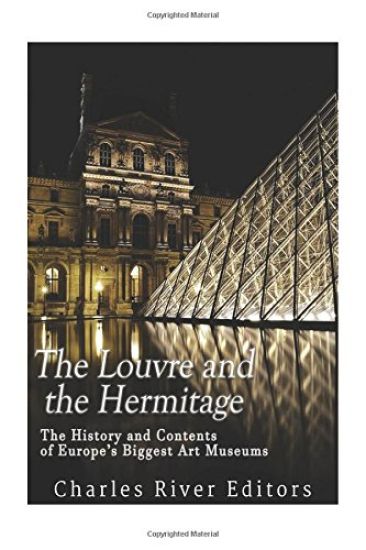
*Includes pictures *Includes contemporary accounts *Profiles the various art in each museum *Includes online resources and a bibliography for further reading The Louvre: The very name conjures up scenes of art and elegance, and of long halls filled with beauty and people strolling through them whispering quietly among themselves about the glories they are witnessing. Even those who have never been to the Louvre know some of its most prized possessions, from ancient statues to Leonardo Da Vinci's "Mona Lisa". As the world's largest museum, the Louvre is unquestionably the cultural highpoint of Paris, a city that has long been considered the cultural center of Europe. However, life is rarely as simple as one imagines, and the life of the Louvre is no different. While just about everyone is familiar with its history as an art museum, the Louvre's history goes back over 800 years, and it used to have far different purposes, both as a medieval fortress and a palatial residence for French kings. The Louvre bore witness to mass murder during the French Revolution, and there have been countless accusations of theft and other questionable actions since its opening. Furthermore, the museum is also a classic example of beating one's swords into ploughshares, for it has been largely stocked through the conquests of war. Its first collection was put on display by a king who wanted to share his personal art collection with his subjects. Following the French Revolution, the Louvre became a place of ascetic refuge, where those burdened by daily life could go, often at no cost, and visit some of the most beautiful pieces of art in the world. While the power hungry Napoleon made war across the continent, he was also always on the lookout for beautiful and interesting items to send home to his people. Later, when rioters attempted to burn the building down, the museum portion of the palace survived, almost by miracle, and when the Nazis occupied Paris, they found that most of the items of value had been safely sent away. Ironically, when World War II was over, the museum became a safehouse for items stolen by the Germans from around the world, and a conduit to get the pieces back to their rightful owners. Even now, in the 21st century, the museum is serving as a bridge to peace and understanding; its latest gallery was designed to showcase Islamic art in the hope of bringing together people from different cultures. This is, to say the least, quite a change of pace for a fortress originally intended to fight off invaders. Catherine the Great came to power in the midst of the Enlightenment, which was flourishing in France and Britain, and she would rule as an Enlightened ruler. A known correspondent of Voltaire's, Catherine sought to modernize Russia and turn it into a force in its own right, creating a rich and cultured court at the same time. Over the course of nearly 35 years in power, Catherine ushered in the Russian Enlightenment and presided over a period of time known as the Golden Age of the Russian Empire. Moreover, Catherine had an unmatched passion for the arts, and she began a private art collection that would eventually evolve into galleries upon galleries of historical treasures shipped in from all over the world. This fabled museum was none other than the Hermitage, located in the heart of Saint Petersburg, a city founded by the imperial empire's very own Peter the Great. The Louvre and the Hermitage: The History and Contents of Europe's Biggest Art Museums chronicles the remarkable history of the museums and profiles some of their most important pieces. Along with pictures depicting important people, places, and events, you will learn about the Louvre and the Hermitage like never before.
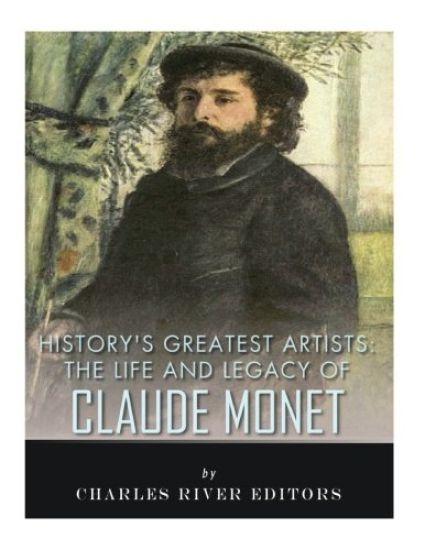
*Includes pictures of Monet and his most famous art *Includes Monet's quotes *Includes online resources and a bibliography for further reading *Includes a table of contents "Everyone discusses my art and pretends to understand, as if it were necessary to understand, when it is simply necessary to love." - Claude Monet To get a sense of the kind of prestige that Claude Monet's reputation has within the art world, one need only learn that his Le Bassin Aux Nymphe s (1919) - from his series of paintings featuring water lilies - sold for the equivalent of more than $70 million. This is an incredibly staggering price, especially considering that early in his life, Monet had been so poor and debt-ridden that some of his paintings were taken from him by creditors. How, exactly, did Monet progress from being an impoverished young Impressionist artist working at the vanguard of European art to the legendary Master whose works command prices near the very pinnacle of the art world? Naturally, Monet's commercial success soared exponentially in the decades following his death in 1926, at a time in which the prices commanded by the great Masters of Western art began rising in price at exponential rates. Yet even during his own lifetime, Monet enjoyed a sharp rise to fame and was canonized as one of the greatest painters in France. Following sharply in the footsteps of Edouard Manet, Claude Monet was one of the first painters identified within the Impressionist circle (indeed, it was Monet himself who coined the label of Impressionist after using it in the title of one of his paintings). Where some artists reach the peak of their acclaim early in life, Monet's star continued to rise even throughout his old age; although some would argue that the last decade or so of his life were anticlimactic, at least from an artistic standpoint, his landmark water lilies were made during his elderly years. And even though Monet would continue to paint well after the canonical period of Impressionism had ended, his name was and remains synonymous with Impressionism, along with cherished acquaintances of his, including such luminaries as Pierre-August Renoir, Camille Pissarro, and Edouard Manet. Simply put, Monet is a monumental figure when it comes to examining Western art during the second half of the 19th century. Like many other great artists, Monet's artistic style developed in tandem with the unfolding changes in his personal life and the professional relationships he maintained. His upbringing was in certain respects unremarkable (at least before the premature death of his mother), but it was during his childhood that Monet cultivated his passion for painting, and even during that time that he met certain artists who would prove instrumental in the nurturing of his prodigious talents. Whether or not Monet was the most brilliant or gifted of the Impressionists is a matter of opinion, but either way, his abilities were molded by his upbringing, his temperament and personality, his formal style, and his standing within the Parisian art world. History's Greatest Artists: The Life and Legacy of Claude Monet looks at the personal background that led to him becoming an artist and the cultural climate in which he rose to fame. Monet's formal technique and artistic legacy are also analyzed, including his working methods and artistic education. Along with pictures of important people, places, and events, you will learn about Monet like never before, in no time at all.
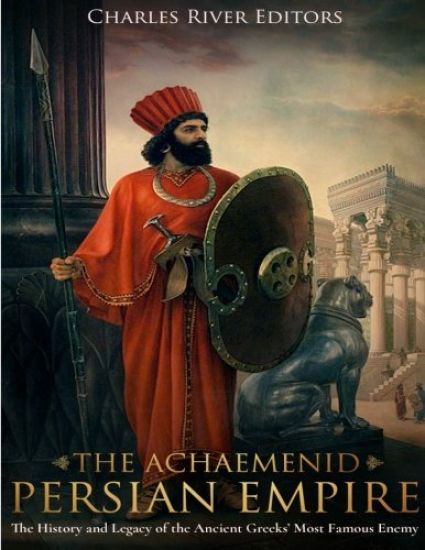
*Includes pictures *Includes ancient accounts *Includes online resources and a bibliography for further reading "By the favor of Ahuramazda these are the countries which I got into my possession along with this Persian people, which felt fear of me and bore me tribute: Elam, Media, Babylonia, Arabia, Assyria, Egypt, Armenia, Cappadocia, Lydia, the Greeks who are of the mainland and those who are by the sea, and countries which are across the sea, Sagartia, Parthia, Drangiana, Aria, Bactria, Sogdia, Chorasmia, Sattagydia, Arachosia, Hindus, Gandara, Sacae, Maka." - An inscription on a terrace wall in Persepolis, circa 521 CE Lying in the middle of a plain in modern day Iran is a forgotten ancient city: Persepolis. Built two and a half thousand years ago, it was known in its day as the richest city under the sun. Persepolis was the capital of Achaemenid Persian Empire, the largest empire the world had ever seen, but after its destruction, it was largely forgotten for nearly 2,000 years, and the lives and achievements of those who built it were almost entirely erased from history. Alexander the Great's troops razed the city to the ground in a drunken riot to celebrate the conquest of the capital, after which time and sand buried it for centuries. It was not until the excavations of the 1930s that many of the relics, reliefs, and clay tablets that offer so much information about ancient Persian life could be studied for the first time. Through archaeological remains, ancient texts, and work by a new generation of historians, a picture can today be built of the Achaemenid Persian empire and their capital city of Persepolis. Although the city had been destroyed, the legacy of the Persians survived, even as they mostly remain an enigma to the West and are not nearly as well understood as the Greeks, Romans, or Egyptians. In a sense, the Achaemenid Persian Empire holds some of the most enduring mysteries of ancient civilization. Of course, one of the reasons the Persians aren't remembered like the Greeks is because of the way the Greco-Persian Wars ended. The Ancient Greeks have long been considered the forefathers of modern Western civilization, but the Golden Age of Athens and the spread of Greek influence across much of the known world only occurred due to the Greeks' victory in two of history's most important wars. In 491 BCE, following a successful invasion of Thrace over the Hellespont, the Persian emperor Darius sent envoys to the main Greek city-states, including Sparta and Athens, demanding tokens of earth and water as symbols of submission, but Darius didn't exactly get the reply he sought. According to Herodotus in his famous Histories, "Xerxes however had not sent to Athens or to Sparta heralds to demand the gift of earth, and for this reason, namely because at the former time when Dareios had sent for this very purpose, the one people threw the men who made the demand into the pit and the others into a well, and bade them take from thence earth and water and bear them to the king." The Achaemenid Persian Empire: The History and Legacy of the Ancient Greeks' Most Famous Enemy looks at one of history's largest empires. Along with pictures depicting important people, places, and events, you will learn about the first Persian empire like never before.
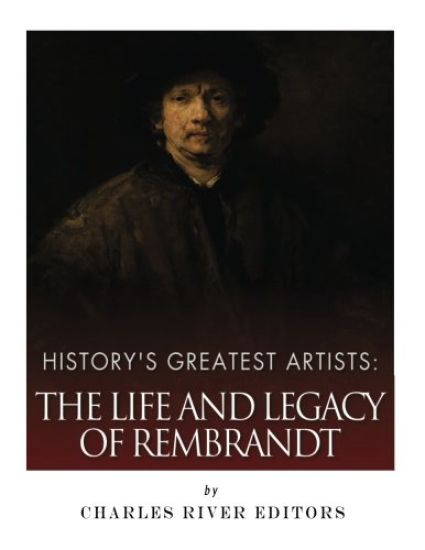
*Includes pictures of dozens of Rembrandt's most famous works *Includes online resources and a bibliography for further reading *Includes a table of contents "A painting is finished when the artist says it is finished." - Rembrandt "Rembrandt painted 700 pictures. Of these, 3,000 are still in existence." - Wilhelm von Bode Of all the famous Dutch masters during the Late Renaissance and Early Baroque periods, none surpass Rembrandt van Rijn in either historical importance or artistic merit. His aesthetic has been much-imitated, a testament to the inspirational grip they exert on their viewer. Key aspects of his style are instantly recognizable to even the casual fine art enthusiast: his penchant for chiaroscuro lighting amidst dark backgrounds; the feverish intensity of his subjects, who are often shown seemingly in action rather than composed; and the recurring use of Biblical and historical subject matter, not to mention an even more prolific output of portraits commissioned (including works commissioned by the Court of the Hague). The more educated viewer might also be aware of Rembrandt's remarkably thick handling of paint, which often seems to protrude from the canvas rather than invite a recession into space (in the Renaissance tradition.) However one recognizes a Rembrandt, however, the strength of his talents is such that encounters with his work leave an indelible imprint. That said, Rembrandt's fame derives not only from the hundreds of paintings he completed (his output is believed to total as many as several hundred works); Rembrandt is also remembered for his profligate spending habits, which famously resulted in him filing for bankruptcy in 1656. If "baroque" connotes excess, it is most appropriate that Rembrandt stands as the most famous painter of the Baroque age, as he lived well beyond his means. His life and career stand in almost complete disharmony, with a vast discrepancy existing between the care and deliberateness with which he conducted his painting, juxtaposed against the careless financial decisions he made -decisions that left him altogether impoverished at the time of his death in 1669. Financial ruin was not the only pitfall to hinder Rembrandt, as he also suffered from childhood deaths to three of his children, as well as the premature death of his wife, Saskia, in 1642. In this respect, Rembrandt lays claim to being one of the great success stories of Dutch art, yet also a man who was often beset with tragedy, of his own making and otherwise. History's Greatest Artists: The Life and Legacy of Rembrandt looks at the personal background that led to him becoming an artist and the cultural climate in which he rose to fame. Rembrandt's formal technique and artistic legacy are also analyzed, including his working methods and artistic education. Along with pictures of important people, places, and events, you will learn about Rembrandt like never before, in no time at all.
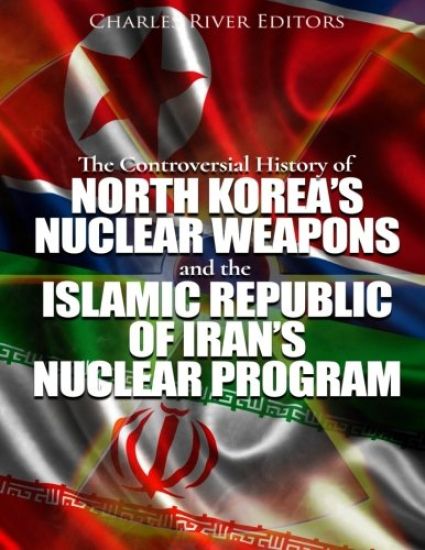
*Includes pictures *Includes online resources and a bibliography for further reading North Korea has long been the butt of jokes, and it has been a longstanding target of international criticism, but the startling satellite image was anything but amusing, for it demonstrated the truly catastrophic conditions North Koreans find themselves in. Statistics show that the average South Korean uses up to 10,162 kilowatt hours of power per year, whereas their neighbors in the north consume only 739. This is only one amongst a slew of stumbling blocks affecting the state, impeding it from proper progress. North Korea would be horrific enough if it was a fictional place, but its nuclear weapons program is all too real. On September 17, 2017, President Donald Trump, whose use of Twitter may be what he's best known for, tweeted another nickname of the type he has infamously coined for his opponents: "I spoke with President Moon of South Korea last night. Asked him how Rocket Man is doing. Long gas lines forming in North Korea. Too bad " The "Rocket Man" in question, of course, was none other than the notoriously brutal and wildly erratic North Korean dictator, Kim Jong-Un. In less than 24 hours, the viral tweet had not only racked up tens of thousands of retweets and triple the "likes," it had spawned countless Elton John-themed memes and inspired headlines from just about every news source around the world. Capitalizing on the viral nature of the controversial tweet, Trump repeated the nickname just a few days later in his speech before the UN General Assembly. He warned the congregation of fidgety ambassadors about the grave threats posed by North Korea's "depraved regime." "The United States had great strength and patience, but if forced to defend itself or its allies, we will have no choice but to totally destroy North Korea... Rocket Man is on a suicide mission for himself and for his regime." Needless to say, the rumors regarding Iran's nuclear capabilities and the murky nature of the regime have understandably left many a nation and their leaders on the edge of their seats. The volatile nation's deep-seated loathing of the West, particularly the United States and Israel, have only added to the jitters worldwide. Experts insist that the Iranian propaganda program, which many say outrival even North Korea's, is chiefly responsible for entrenching into its masses this resentment of the West and their liberal ideals. For starters, Iranians are taught that the Armed Forces of the Islamic Republic of Iran, untouchable in the government's eyes, deserve their utmost respect and gratitude, as these are the intrepid warriors defending their country from the ceaseless threats of the Western infidels. Unlike North Korea, which proudly walls itself off from the rest of civilization, the Iranian propaganda mills are constantly refurbishing themselves so as to appeal to a younger and more impressionable demographic. Since the Iranian Revolution, Western nations and their intelligence agencies have struggled to fully grasp what goes on in Iran, and it has resulted in a situation that reads like a spy thriller. The last decade has featured the assassinations of Iranian nuclear scientists, the use of sophisticated cyberattacks like Stuxnet, the construction of a hidden enrichment facility underneath a mountain, ongoing arguments over the nature of Iran's nuclear program, efforts to determine whether there was potential procurement and testing of materials that would be used in nuclear weapons, debates over ballistic missiles, and a 2015 agreement between Iran and several world powers that remains a controversial issue to this day. There is even substantial concern that Iran and North Korea are jointly working on their nuclear programs, with Iranian scientists witnessing North Korean nuclear weapons tests and North Korean scientists in Iran overseeing research and development.
*Includes pictures *Includes Dali's quotes about his life and art *Includes online resources and a bibliography for further reading *Includes a table of contents "Each morning when I awake, I experience again a supreme pleasure - that of being Salvador Dali." - Salvador Dali In his review of Salvador Dali's first autobiography, George Orwell declared that "One ought to be able to hold in one's head simultaneously the two facts that Dali is a good draughtsman and a disgusting human being." Whether or not one agrees with the famous author's assessment, Orwell captures the polarizing nature of Salvador Dali, and the extent to which his undeniable technical virtuosity often brushed against his penchant for provoking his audiences (not to mention provoking long-entrenched standards of "proper" taste). Dali, after all, was unafraid to eschew Renaissance perspective, thereby incorporating often graphic subject matter. In other words, if Dali stands as one of the canonical figures of modern art, this involved holding both a seminal role in the canon of cutting-edge art but also a tendency to challenge audiences, challenging the contours of "Art with a Capital A." While Orwell may have separated Dali the master technician from Dali the person, it would be more accurate to acknowledge that the virtues of Dali's art cannot be dissociated from its provocative nature. Always a showman, Dali's very public persona was predicated on pushing the boundaries of artistic form, content, and professional identity. He was also not alone in this regard, and Dali's career cannot be separated entirely from important modern art movements, particularly surrealism. Indeed, Dali's genius lay not only in his undeniable gifts as an artist but in his savvy ability to market himself and befriend major figures in the art movements of his historical moment. His friendships with Luis Bunuel and Federico Garcia Lorca deserve particular mention within the contexts of his career and European modernism more broadly. Perhaps it's no surprise that Dali's life and art took many turns and was quite diverse. The foundations for both his love for art and his public persona came from his background growing up, but at the same time, the showmanship with which Dali carried himself was in many respects a fa ade; his upbringing brings to light the insecurities and anxieties that were not just contained within his childhood but informed his personal and professional lives as an adult. History's Greatest Artists: The Life and Legacy of Salvador Dali looks at the personal background that led to Dali becoming an artist and the cultural climate in which he rose to fame. Dali's technique and artistic legacy are also analyzed, including his working methods and artistic education. Along with pictures of important people, places, and events, you will learn about Dali like never before, in no time at all.
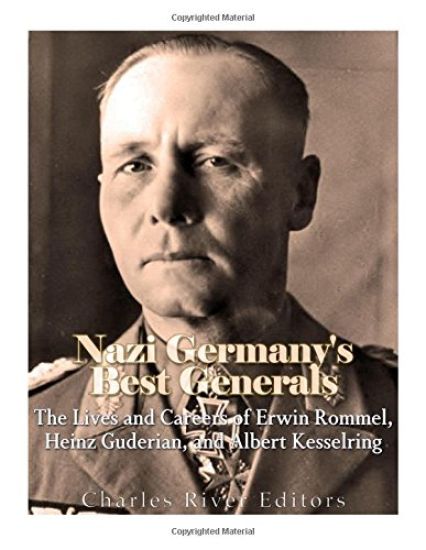
*Includes pictures *Includes accounts of the fighting in the war *Includes online resources and a bibliography for further reading One of his biographers called him "a complex man: a born leader, a brilliant soldier, a devoted husband, a proud father; intelligent, instinctive, brave, compassionate, vain, egotistical, and arrogant." As that description suggests, every account of Erwin Rommel's life must address what appears to be its inherent contradictions. Fittingly, and in the same vein, he remains one of the best remembered generals of World War II and history at large, despite the fact he was on the losing side, and he was defeated at the most famous battle of his career, the decisive Battle of El Alamein. While there is a great division when it comes to historical opinion with respect to Rommel's merits as a general as well as the moral choices he made, both historians and the public continue to be intrigued by this man who has been dead for over 70 years. People at large continue to consider Rommel one of the greatest generals of the 20th century, an opinion shared by many of his contemporaries on both sides of World War II. For example, British General Harold Alexander hinted at both his strengths and weaknesses, commenting, "He was a tactician of the greatest ability, with a firm grasp of every detail of the employment of armour in action, and very quick to seize the fleeting opportunity and the critical turning point of a mobile battle. I felt certain doubts, however, about his strategic ability, in particular as to whether he fully understood the importance of a sound administrative plan. Happiest while controlling a mobile force directly under his own eyes he was liable to overexploit immediate success without sufficient thought for the future." Heinz Wilhelm Guderian was one of the most respected commanders and theoreticians of World War II. An innovative tank commander, he was a pioneer of German Blitzkrieg tactics and therefore, a hugely influential figure in the way the war was fought. Guderian's profile was not always what might have been expected for a man of his abilities and influence warrant due to the shape of his career. The reasons for Guderian's time out of command are tied to the reason for his lower profile; he was a traditional German career officer rather than an ideologically driven Nazi, willing to challenge Adolf Hitler's opinions on military matters. This, together with his outspoken attitude, led to his loss of favor and dismissal from command. At the same time, being a career military man rather than a Nazi officer also meant Guderian was not as directly involved in the atrocities of the war, and he did not gained the infamy of his SS contemporaries, which ensured the ongoing fame of men far less deserving of recognition. Albert Kesselring holds a strange place in the history of World War II. A commander in the Luftwaffe, he is remembered as much for the skill with which he oversaw the German armies as for his mastery of the air fleets. Called "Uncle Albert" by many of his men and "Smiling Albert" by the Allies, he was widely respected by men on both sides of the war and loved by many of his troops, yet he was responsible for massacres in occupied Italy for which he was condemned to death during the post-war trials. Ultimately, his sentence was commuted to one of life imprisonment, making him one of the few top Nazi leaders to pen memoirs after the war, but it goes without saying that Kesselring's time was marked by controversy. Kesselring had the skills of a politician and a diplomat, as well as those of a soldier, which carried his career through both World War I and World War II, and during the Second World War, he served in almost every theater of the fighting in Europe. He was undoubtedly a gifted commander, but one who served at a time when the German military was tainted with the evils of Nazism.
*Includes pictures *Includes accounts of the campaigns *Includes online resources and a bibliography for further reading World War I, also known in its time as the "Great War" or the "War to End all Wars", was an unprecedented holocaust in terms of its sheer scale. Fought by men who hailed from all corners of the globe, it saw millions of soldiers do battle in brutal assaults of attrition which dragged on for months with little to no respite. Tens of millions of artillery shells and untold hundreds of millions of rifle and machine gun bullets were fired in a conflict that demonstrated man's capacity to kill each other on a heretofore unprecedented scale, and as always, such a war brought about technological innovation at a rate that made the boom of the Industrial Revolution seem stagnant. Early in the war, the Ottomans knew the Dardanelles strait would most certainly be attacked and had prepared significant defenses. The plan drafted by the then First Lord of the Admiralty, Winston Churchill, was meant to destroy Ottoman defenses along the Dardanelles. However, Allied forces comprised of British, Irish, Australian and New Zealand troops were unable to penetrate the Ottoman defenses, advancing only about 100 meters from the shores. The Ottomans, led by German General Liman von Sanders, further reinforced their positions. The later attempt of the British to establish a new beachhead was more successful, yet the British government refused to send significant reinforcements. The successful defense of Gallipoli, however, convinced both Enver and Djemal that a second operation should be launched. Reinforcements arrived from Gallipoli and the Ottomans launched the second attempt in August 1916. British forces had, however, moved eastward toward Palestine, and they defeated the Ottoman forces at the Battle of Romani. The battle was the first clear British victory over the Ottomans and their German allies, resulting in a successful counter-offensive that led British General Edmund Allenby in Jerusalem. A final push with the Megiddo offensive and renewed campaign in Mesopotamia brought Entente forces even further into the Ottoman Empire. The war to push the Ottoman Empire out of the Middle East ended up being a total success, and it has had far-reaching ramifications in the past 100 years. The Turks lost control of the Levant, the Saudi peninsula, and Mesopotamia, but now it was up to the victors to determine what should happen with the diverse populations of Arabs, Kurds, Jews, Sunnis, Shia, Christians, Druze, and various other groups that lived in this vast region. Even before final victory, the British and the French had come to an agreement about how to divide up the spoils. On May 16, 1916, British diplomat Mark Sykes and his French counterpart Francois Georges-Picot signed what has become popularly known as the Sykes-Picot Agreement. It divided the conquered lands into spheres of influence. The French got direct control of what is now Lebanon, coastal Syria, and portions of southern Turkey. The British got control of much of what is now Iraq, Kuwait, and the east coast of Saudi Arabia. Between these two areas were a French sphere of influence and a British sphere of influence. The Holy Land was made an Allied Condominium, ruled jointly by Britain and France under the advisement of the other Allies and the Sharif of Mecca. The Middle East in World War I: The History and Legacy of the Biggest Campaigns in the Great War's Forgotten Theater examines the history of this crucial but often overlooked theater. Along with pictures of important people, places, and events, you will learn about the Middle East in World War I like never before.
*Includes pictures *Includes ancient accounts *Includes online resources and a bibliography for further reading During the first half of the 1st millennium CE, an empire arose in Persia that extended its power and influence to Mesopotamia in the east, Arabia in the south, the Caucasus Mountains in the north, and as far east as India. This empire, known alternatively as the Sasanian Empire or Sassanid Empire, was the last of three great dynasties in Persia-the Achaemenid and the Parthian being the first two dynasties-before the rise of Islam. In fact, many scholars consider the Sasanian Empire to be the last great empire of the ancient Near East because once it had been obliterated, Islam became the standard religion of the region, ushering in the Middle Ages. The Sasanian Empire was important for a number of reasons. Besides being the last of three great Persian dynasties, they carried on many Persian cultural traditions relating to religion and kingship. The Sasanians fostered and promoted the native religion of Zoroastrianism to the point of persecuting other religions from time to time. It was during the Sasanian period that the numerous Zoroastrian hymns, prayers, and rituals were collected under one book, known as the Avesta. Thanks to the Sasanians' efforts with regard to religion, modern scholars know much more about Zoroastrianism than they would have if the religion continued to disseminate orally. Their efforts also protected Zoroastrian knowledge in later years after the dynasty was long gone and Islam became ascendant in Persia. The Sasanians, like the Achaemenids and Parthians, also carried forth the Persian conflicts with the Hellenic world. Although the Achaemenids fought the Macedonian Greeks and the Parthians challenged the imperial Romans for control of Mesopotamia, the Sasanians faced Rome in its later stages of collapse and subsequently fought the revitalized Byzantine Empire. An examination of Sasanian chronology and culture reveals that it was a much more important dynasty and empire than most may think. The Sassanid Empire: The History and Legacy of the Neo-Persian Empire Before the Arab Conquest and Rise of Islam examines the history of one of the most important empires of the ancient world. Along with pictures depicting important people, places, and events, you will learn about the Sassanid Empire like never before.