Kirjojen hintavertailu – 12 903 727 kirjaa ja 27 kauppaa
Kirjailija
Charles River
Kirjat ja teokset yhdessä paikassa: 4 673 kirjaa, julkaisuja vuosilta 2013–2022, suosituimpiin kuuluu William Powell and Myrna Loy: The Lives and Careers of One of Classical Hollywood's Most Iconic Duos. Vertaile teosten hintoja ja tarkista saatavuus suomalaisista kirjakaupoista.
*Includes pictures *Includes accounts of Tyre written by ancient historians *Includes online resources and a bibliography for further reading "Son of man, because Tyre said concerning Jerusalem 'Aha, the gate of the peoples is broken; it has swung open to me. I shall be replenished, now that she is laid waste, ' therefore thus says the Lord God: Behold, I am against you, O Tyre, and will bring up many nations against you, as the sea brings up its waves. They shall destroy the walls of Tyre and break down her towers... And she shall become plunder for the nations, and her daughters on the mainland shall be killed by the sword. Then they will know that I am the Lord." - Book of Ezekiel 26: 1 - 14 Across the eastern Mediterranean there has been discovered a great number of objects whose appearance or materials are extraneous to local cultures, whether it was an Egyptian amulet in Greece, a Greek vase in Africa, or thousands of strange amulets in Gibraltar. The remains are evidence that a huge amount of goods was once moved from one land to another, systematically transported and traded across the Mediterranean by the ancient commercial network of the Phoenicians. Beginning in the 13th century BCE, and lasting for more than a millennium, this civilization dominated the most important body of water known to the ancients. With their formidable ships and skills in trading, they made a name for themselves by trading between Egypt, Greece, Rome, Carthage, Sardinia, Spain, and eventually all the way to the Atlantic Ocean, establishing themselves as the undisputed lords of the sea. A network of this size, with hundreds of colonies and thousands of ships, had to be well-coordinated, and it was thanks to important cities along the Mediterranean coast. One of the most crucial cities in the system was hidden beneath the Greek, Roman, and Crusader ruins of Lebanon: the ancient city of Tyre. "Seated at entrance to the sea," according to the prophet Ezekiel, Tyre was constructed on a purportedly impenetrable island. When Herodotus of Halicarnassus visited it in the 5th century BCE, Tyre was considered to be one of the oldest and wealthiest metropolises of the world, and indeed, the city can be directly associated with some of the most important stages in the history of mankind: the discovery of the alphabet; that of the purple pigment known as Tyrian Purple; the construction in Jerusalem of the Temple of Solomon; and the exploration of the seas by hardy navigators who sailed as far as the Western Mediterranean and founded trading centers at Utica, Cadiz and Carthage - a city that would ultimately assure a monopoly of Phoenician control over the maritime commerce in the region but eventually surpass the power of its founder. Today, Tyre is best known because of the famous siege conducted by Alexander the Great of Macedonia, who blockaded the straits between the island and mainland before his final assault. Then a Greek city, it was followed in 64 BCE by Roman rule, and later a Crusader stronghold was constructed on this historically charged site. Attached to their traditions, yet open to so many cultures, the city of Tyre has an incomparable narrative. Much of what was originally known of this island city came from the damning words of their rivals, and for this reason it was almost lost to history thanks to developments made to the modern-day Lebanese coastal town. However, thanks to the efforts of historians and archaeologists, the entire story of Tyre can now be told. Tyre: The History of the Ancient Trade Center under Phoenician, Greek, and Roman Rule chronicles the tumultuous history of one of the most important cities of antiquity. Along with pictures depicting important people, places, and events, you will learn about Tyre like never before.
*Includes pictures *Includes ancient Greek accounts of the tyrants and democracy in Athens *Includes a bibliography for further reading "States are as the men are; they grow out of human characters. Like State, like man." - Plato, The Republic Tyranny in ancient Greece was not a phenomenon limited to any particular period. Tyrants could be found in power throughout Greece, ruling poleis from the 7th century B. C. right through to the 2nd century B. C., when Roman domination effectively put an end to this form of government throughout the Hellenistic world. That said, the heyday of tyranny was undoubtedly the 7th and 6th centuries B. C., and it is in this period, known as the "Age of Tyrants," that large numbers of tyrannies arose, particularly in the Peloponnese. The "Age of Tyrants" ended on the Greek mainland with the expulsion of the Peisistratidai in 510 B. C., but it continued in other parts of the Greek world, particularly in the Greek cities of Sicily, where tyranny did not finally end until the removal of Dionysius II of Syracuse in 344 B. C. In Asia Minor, tyranny survived the Persian conquest until the days of the Roman conquest. The governments of the majority of the Greek states in the Archaic and Classical periods were in the hands of local aristocrats, and it is a modern preoccupation with the Athenian democracy or Sparta's unique system that has tended to obscure this fact. Oligarchy was the norm, and political power derived from wealth and birth. As the wealth of city states grew, so, too, did the number of citizens who, despite personal wealth, found themselves outside the very limited aristocratic elite that conspired to maintain the political power of the few. In today's modern world every political regime, even the most authoritarian or repressive, describes itself as democracy or a Democratic People's Republic. The concept of rule by the people, on behalf of the people, has come to be accepted as the norm, and very few would overtly espouse the cause of dictatorship, absolute monarchy or oligarchy as the most desirable political system upon which to base the government of any country. It is also generally accepted that democracy, as a political ideology, began in Greece, specifically in Athens, in the 7th century B. C. and reached its zenith in the 5th century under the leadership of Pericles. Dating an exact starting point is impossible, but at the beginning of the 7th century B. C. Solon inaugurated a series of reforms that began the movement away from rule by individuals, or tyrants, and by the end of that century the reforms of Cleisthenes provided the basis of the Athenian democratic system that culminated in the radical institutions introduced by Ephialtes and Pericles in the 5th century. The result was the first, and possibly only, truly participative democratic state. Ironically, between 322 B. C. and the 19th century, Athenian democracy was almost totally forgotten. If there was any mention of democracy in Athens at all, it was in reference to so-called but largely mythical notions of Solonian democracy as recorded in Plutarch's Life of Solon or Aristotle's Politics. At the beginning of the 19th century, scholars such as August Boeckh began the evaluation and study of democratic Athenian institutions, and inscriptions and the writings of Thucydides and Demosthenes, among others, were used to re-construct those democratic bodies and to gain an understanding of their workings. Later in the century, academics, particularly George Grote, provided new insights into the Athenian democratic processes, and today there is a much fuller understanding of what contributed to Athenian political life. That said, the questions of how and why Athens came to develop the political system it did remain a major area of academic contention.
*Includes pictures of the wreck *Includes accounts of the wreck written by survivors *Includes a bibliography for further reading *Includes a table of contents "In memory of Lieut.-Colonel Alexander Seton, Ensign Alex. C. Russell, and forty-eight N. C. O.s and men of the 74th Highlanders who were drowned at the wreck of H. M. S. 'Birkenhead' on the 26th February 1852, off Point Danger, Cape of Good Hope, after all the women and children on board had been safely landed in the ship's boats." - The inscription on a memorial in St Giles' Cathedral in Edinburgh, Scotland "To take your chance in the thick of a rush, with firing all about, Is nothing so bad when you've cover to 'and, an' leave an' likin' to shout; But to stand an' be still to the Birken'ead drill is a damn tough bullet to chew, An' they done it, the Jollies -- 'Er Majesty's Jollies -- soldier an' sailor too Their work was done when it 'adn't begun; they was younger nor me an' you; Their choice it was plain between drownin' in 'eaps an' bein' mopped by the screw, So they stood an' was still to the Birken'ead drill, soldier an' sailor too" - Rudyard Kipling, "Soldier an' Sailor Too" In an emergency, it is a common practice to attempt to evacuate women and children first, not simply because they're the most vulnerable but because it's an established code of honor that has been passed down from generations. This is especially the case in situations where there aren't enough resources to rescue everyone, and this concept has been made famous by disasters such as the sinking of the Titanic, which didn't have enough lifeboats on board for everyone. Although the "women and children first" rule might seem like common nature and a practice that has been observed for centuries, it was actually popularized by the 1852 shipwreck of the Royal Navy troopship HMS Birkenhead, one of Britain's worst maritime disasters. Originally designed as a frigate, the Birkenhead had only been in service for a handful of years and was being used to transport soldiers in South Africa when it struck an uncharted rock in the early morning hours of February 26 and wrecked a few miles from shore. At the time, it was not a standard practice to carry enough lifeboats for everyone on board (a regulation that would not come until after the sinking of the Titanic), and the Birkenhead would go down within just 20 minutes of hitting the rock. While the men on board took orders and attempted to pump out the water, it was clear that passengers would have to get in lifeboats quickly. As they did so, one person on board the doomed ship remembered, "Almost everybody kept silent, indeed nothing was heard, but the kicking of the horses and the orders of Salmond, all given in a clear firm voice." Worried that subsequent attempts to get into lifeboats would inadvertently capsize them and cause an even greater calamity, the men who stayed on board while the women and children were evacuated instead went down with the ship and then tried to swim to shore, a daunting prospect that only a few were able to survive. Of the nearly 650 people on the ship, less than 200 survived, with the rest drowning, dying of exposure to the elements, or being devoured by sharks. Despite the disaster, it was commemorated by the British due to the chivalry of the men on board, which not only set a precedent but was cited as a martial ideal for other Royal Navy sailors to emulate. The Wreck of the HMS Birkenhead chronicles the notorious shipwreck and its legacy. Along with pictures of important people, places, and events, you will learn about the shipwreck of the Birkenhead like never before, in no time at all.
*Includes pictures *Includes accounts of the massacres by survivors and soldiers *Includes bibliographies for further reading *Includes a table of contents On the morning of November 29, 1864, Colonel John Chivington led 700 militiamen in a surprise attack against Cheyenne leader Black Kettle's camp at Sand Creek. Chivington was a fire and brimstone Methodist minister who had publicly advocated indiscriminately killing Native American children because "nits makes lice." Warning his men ahead of battle, Chivington stated, "Damn any man who sympathizes with Indians I have come to kill Indians and believe it is right and honorable to use any means under God's heaven to kill Indians " According to Cheyenne oral tradition and several surviving soldiers' accounts, as soon as Black Kettle saw Chivington's men coming, he raised an American flag on a pole and waved it back and forth calling out that his Wutapai band was not resisting. Ignoring his cries for mercy, the soldiers commenced firing, cutting down an estimated 70-200 Cheyenne, about two-thirds of whom were women and children. The Cheyenne claimed that soldiers shot babies in the head at point-blank range, raped Cheyenne women, and scalped dead warriors. The following morning, Army Lieutenant James Connor, who had refused to follow Chivington's orders, visited the scene of the massacre and reported, "In going over the battleground the next day I did not see a body of man, woman, or child but was scalped, and in many instances their bodies were mutilated in the most horrible manner - men, women, and children's privates cut out . . . I heard one man say he cut out a woman's private parts and had them for exhibition on a stick . . . I also heard of numerous instances in which men had cut out the private parts of females and stretched them over saddle-bows and wore them over their hats while riding in the ranks." Among all the events in the strained relations between the U. S. government and Native Americans during the 19th century, the most notorious and defining one was what is today called the Wounded Knee Massacre. Technically, it was the last armed engagement between Sioux warriors and the U. S. military, and it marked the end of effective resistance by any Sioux bands, but what actually occurred is far more controversial. In late December 1890, a group of roughly 350 Lakota Sioux led by Big Foot and Spotted Elk were escorted to the Wounded Knee Creek area and ordered to establish a camp there, but fearing another possible uprising despite the fact the band was comprised mostly of women, about 500 U. S. Army troops from the 7th Cavalry Regiment, led by Major Samuel M. Whitside, approached the Lakota encampment on the morning of December 29 with orders to disarm and escort the Native Americans to a railhead for transport to Omaha, Nebraska. Some of the men in the 7th Cavalry had also been part of the 7th Cavalry at Little Bighorn, so there could not have been a worse command to send on a mission that required interacting with the Lakota. As the troopers entered the encampment, a shot rang out. It is unclear who fired, but regardless, the single shot triggered a fusillade from the Army troops. One of the Army soldiers, Captain Edward Godfrey, explained, "I know the men did not aim deliberately and they were greatly excited. I don't believe they saw their sights. They fired rapidly but it seemed to me only a few seconds till there was not a living thing before us; warriors, squaws, children, ponies, and dogs ... went down before that unaimed fire." The resulting assault would eventually kill most of the Native Americans, including both Big Foot and Spotted Elk. Approximately 30 U. S. Army soldiers were killed and about 40 were wounded, nearly all struck by friendly fire in the chaotic, close-quarters shooting. Of the Native American dead, most were killed outright, but the wounded were left on the frozen ground to perish during the frigid night.
*Analyzes the themes and progression of Mozart's most famous works, comparing and contrasting them to each other and other composers' great works. *Includes pictures of important people and places in Mozart's life. *Includes a bibliography for further reading. *Includes a list of Mozart's works. "It is a mistake to think that the practice of my art has become easy to me. I assure you, dear friend, no one has given so much care to the study of composition as I. There is scarcely a famous master in music whose works I have not frequently and diligently studied." - Mozart Wolfgang Amadeus Mozart (1756-1791), baptized Johannes Chrysostom Wolfgangus Theophilus Mozart, is widely considered to be the culminating figure of the Classical Period in music, which spanned much of the 18th to early 19th centuries. As such, he is remembered as one of Western Civilization's most prodigious and spontaneous natural talents, on par with Leonarado da Vinci and Johann Sebastian Bach. Mozart once called music "my life", and indeed few were as naturally gifted at it. Mozart's memory and genius for music allowed him to compose lengthy works, even full-length operas, without transferring them to paper until he had fully visualized and retained them. He regarded copying as a tedious task, and this caused no small amount of consternation among performers, in particular the orchestra, some of whom received their parts minutes before curtain. This was said to be the case for the premiere of Don Giovanni, where Mozart was furiously scrawling and handing out parts to the overture with the audience in attendance. Surprisingly, these entire works, sometimes hundreds of pages, not penned until they were complete in his mind, usually arrived to the manuscript without a single blemish or change of heart. Mozart's eccentricities are remembered centuries after his death, to the point that much of his life, illnesses and death have been mythologized, and today a lot of his legacy has been shaped by the manner in which his personality has been depicted in biographical works like Amadeus. In addition to a large and consistently high-level body of work, Mozart represents for some the real beginning of the German lineage to the 20th century, although Ludwig Beethoven, greatly under Mozart's influence, created much of that transition's reality. Three of Mozart's operas are continually in the top 10 works performed around the world, his piano concerti and symphonies are all in the standard repertoire (save for some of the earliest), and his choral works are treasures of the West. The bulk of his reputation was not garnered by breaking with tradition and destroying it but rather by fulfilling it with a greater beauty and naturalness than was possible for any other artist of the time. Mozart was perhaps the world's greatest master of the modern melody, coming onto the scene after centuries of rule-laden, pedantic and convoluted procedures dominated by the Catholic Church, and he certainly possessed one of the most astonishing levels of intelligence in European history. Wolfgang Amadeus Mozart: The Life and Music of the Great Composer comprehensively analyzes the themes and revolutionary advancements of Mozart's music, looking at his most famous works and comparing and contrasting them. Along with pictures of important people, places, and events, you will learn about Mozart and his music like never before, in no time at all.
*Includes pictures. *Includes accounts of Quantrill's raids by one of his Raiders. *Includes footnotes and a bibliography for further reading. "In all wars there have always been, and always will be a class of men designated as guerillas, but it can be said that the Missouri guerillas are more noted than those of any war in any country for ages. Their deeds of daring, their miraculous escapes, and the physical sufferings that they endured are almost beyond belief." - John McCorkle, one of Quantrill's Raiders The Civil War is best remembered for the big battles and the legendary generals who fought on both sides, like Robert E. Lee facing off against Ulysses S. Grant in 1864. In kind, the Eastern theater has always drawn more interest and attention than the West. However, while massive armies marched around the country fighting each other, there were other small guerrilla groups that engaged in irregular warfare on the margins, and among these partisan bushwhackers, none are as infamous as William Quantrill and Quantrill's Raiders. Quantrill's Raiders operated along the border between Missouri and Kansas, which had been the scene of partisan fighting over a decade earlier during the debate over whether Kansas and Nebraska would enter the Union as free states or slave states. In "Bloody Kansas", zealous pro-slavery and anti-slavery forces fought each other, most notably John Brown, and the region became a breeding ground for individuals like Quantrill who shifted right back into similar fighting once the Civil War started. Rather than target military infrastructure or enemy soldiers, the bushwhackers rode in smaller numbers and targeted civilians on the other side of the conflict, making legends out of men like Bloody Bill Anderson and John Mosby. However, none are remembered like Quantrill and his men, not only because of their deeds during the Civil War but because of the actions of some of the former Raiders after it. Quantrill is best known for raiding Lawrence, Kansas in August 1863 and slaughtering nearly 200 boys and men between the ages of 14-90, under the pretext that they were capable of holding a gun and thus helping the Union cause. After that massacre, Union forces in the area retaliated in similar fashion, forcing Southern sympathizers out of several counties in the area and burning the property. Union forces also detained those accused of assisting Quantrill's Raiders, including their relatives. After raiding Lawrence, Quantrill's Raiders headed south, and they eventually split off into several groups. Quantrill himself was killed while fighting in June 1865, nearly two months after Lee surrendered to Grant at Appomattox, but his name was kept alive by the notorious deeds of his Raiders during the war and the criminal exploits of former Raiders like Jesse James and his brother, as well as the Younger brothers. These men, who had fought with Quantrill, became some of America's most famous outlaws, and they used guerrilla tactics to rob banks and trains while eluding capture. William Quantrill and Quantrill's Raiders: The Confederacy's Most Notorious Bushwhackers chronicles the life of Quantrill, the Raiders' Civil War record, and their legacy. Along with pictures of important people, places, and events, you will learn about Quantrill and his Raiders like never before, in no time at all.
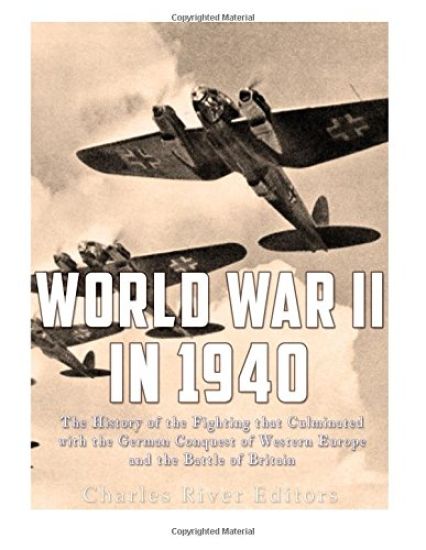
*Includes pictures *Includes accounts of the fighting by soldiers on both sides *Includes online resources and a bibliography for further reading One of the most famous people in the world came to tour the city of Paris for the first time on June 28, 1940. Over the next three hours, he rode through the city's streets, stopping to tour L'Op ra Paris. He rode down the Champs- lys es toward the Trocadero and the Eiffel Tower, where he had his picture taken. After passing through the Arc de Triomphe, he toured the Pantheon and old medieval churches, though he did not manage to see the Louvre or the Palace of Justice. Heading back to the airport, he told his staff, "It was the dream of my life to be permitted to see Paris. I cannot say how happy I am to have that dream fulfilled today." Four years after his tour, Adolf Hitler would order the city's garrison commander, General Dietrich von Choltitz, to destroy Paris, warning his subordinate that the city "must not fall into the enemy's hand except lying in complete debris." Of course, Paris was not destroyed before the Allies liberated it, but it would take more than 4 years for them to wrest control of France from Nazi Germany after they took the country by storm in about a month in 1940. The surrender of more than 1,200,000 isolated troops followed quickly in June 1940, yet in the midst of this disaster, the Allies contrived one coup that took even the victorious Wehrmacht aback: the evacuation of over 300,000 soldiers from the port of Dunkirk. This escape, hailed as "miraculous" at the time, provided England with a solid defensive force, the French with the kernel of a "Free French" army for the future, and the Western Allies with an invaluable boost to their morale during one of the war's darkest moments. Hitler's Order of the Day on June 5th, 1940 placed no special emphasis on the end of the Dunkirk evacuation save as the milestone marking full German triumph in the north. While a leader never celebrates the successes of his enemies, the Fuhrer's terse commentary - and subsequent, very real expectations that the British would sue for peace and possibly even overthrow Churchill - suggest that he attached little significance to the BEF slipping through his fingers: "Soldiers of the West Front Dunkirk has fallen... with it has ended the greatest battle of world history. Soldiers My confidence in you knew no bounds. You have not disappointed me." With the clarity of historical hindsight, events proved Churchill correct. Operation Dynamo, as the British named the Dunkirk evacuation mission, bolstered British morale and defenses sufficiently to keep the "Sceptered Isle" in the war. The sacrifice made by "The Few," the British and Allied fighter pilots who won the Battle of Britain in 1940, remains close to the hearts of the British public, and the piece by the BBC is typical of the national sentiment manifested in air shows, museums, TV programs and books. Even as the last of "The Few" pass on, it seems unlikely that the legend they helped to create will be forgotten anytime soon. Thankfully, the RAF stood toe to toe with the Luftwaffe and ensured Hitler's planned invasion was permanently put on hold. The Allied victory in the Battle of Britain inflicted a psychological and physical defeat on the Luftwaffe and Nazi regime at large, and as the last standing bastion of democracy in Europe, Britain would provide the toehold for the June 1944 invasion of Europe that liberated the continent. For those reasons alone, the Battle of Britain was one of the decisive turning points of history's deadliest conflict. World War II in 1940: The History of the Fighting that Culminated with the German Conquest of Western Europe and the Battle of Britain chronicles one of the war's pivotal years, when the fate of the free world hung in the balance.
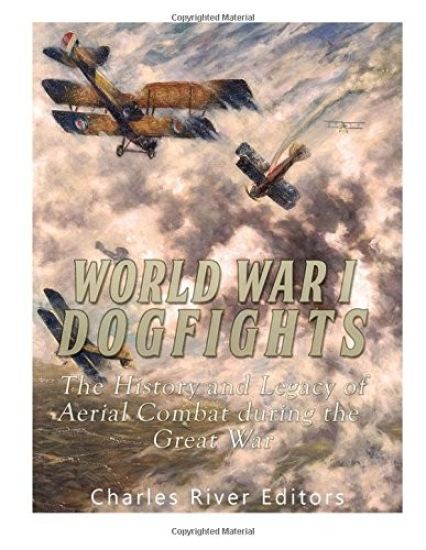
*Includes pictures *Describes the various planes and tactics used *Includes accounts of the fighting by pilots *Includes online resources and a bibliography for further reading "Now I am within thirty yards of him. He must fall. The gun pours out its stream of lead. Then it jams. Then it reopens fire. That jam almost saved his life." - Manfred von Richthofen, the Red Baron The first aircraft to appear in the skies over the battlefields of World War I showed few signs of the dominant future of airplanes in warfare. Small, fragile, and slow, they provided no hint of the sleek jet fighters that would one day slash across the skies of Earth faster than sound to unleash the lethal blast and fire of sophisticated missiles, or the bombers able to level an entire city with one nuclear bomb. That said, they did not represent a complete novelty in warfare either, at least not during the early months of World War I. While airplanes had never before appeared above the field of war, other aerial vehicles had already been in use for decades, and balloons had carried soldiers above the landscape for centuries to provide a high observation point superior to most geological features. The French used a balloon for this purpose at the Battle of Fleurus in 1794, and by the American Civil War, military hydrogen balloons saw frequent use, filled from wagons generating hydrogen from iron filings and sulfuric acid. The balloonist Thaddeus Lowe persuaded President Abraham Lincoln to use the airships for observation, communicating troop movements to the ground with a telegraph wire. Lowe himself reported, "A hawk hovering above a chicken yard could not have caused more commotion than did my balloons when they appeared before Yorktown." (Holmes, 2013, 251). The Confederates agreed with this assessment: "At Yorktown, when almost daily ascensions were made, our camp, batteries, field works and all defenses were plain to the vision of the occupants of the balloons. ...] The balloon ascensions excited us more than all the outpost attacks." (Holmes, 2013, 251). Indeed, with advances in dirigible technology, many military thinkers and even aeronautical enthusiasts believed that blimps would remain the chief military aerial asset more or less forever. These men thought airplanes would play a secondary role at best, and might even prove a uselessly expensive gimmick soon to fade back into obscurity, leaving the majestic bulk of the dirigible as sole master of the skies. At first, airplane improvements occurred in an ad hoc, almost accidental manner during the war. However, when pilots' mounting of armaments on airplanes proved a successful means of defeating other aircraft and even attacking men on the ground, a much more active and systematic development of warplanes began across the continent. Each advance prompted a countermeasure, as the two sides strove for primacy in a deadly, unforgiving environment which rewarded real advances in equipment and tactics with survival and punished poor ideas with death. Before long, relatively powerful, heavily armed aircraft buzzed through the skies over battle-stained Europe, tearing each other apart with furious gusts of machine gun fire and sending many of the vaunted dirigibles plunging, burning, to the ground. The new era of fighting aircraft arrived in dramatic fashion, raising successful pilots to celebrity or heroic status, and laying the groundwork for the tremendous potential of airpower to achieve its next logical expansion in World War II and beyond. World War I Dogfights: The History and Legacy of Aerial Combat during the Great War looks at how technology and tactics evolved during the war. Along with pictures of important people, places, and events, you will learn about World War I dogfights like never before.
*Includes pictures *Includes accounts of medieval battles *Includes online resources and a bibliography for further reading In the time period between the fall of Rome and the spread of the Renaissance across the European continent, many of today's European nations were formed, the Catholic Church rose to great prominence, some of history's most famous wars occurred, and a social class system was instituted that lasted over 1,000 years. A lot of activity took place during a period frequently labeled derogatively as the "Dark Ages," and while that period of time is mostly referred to as the "Middle Ages" instead of the Dark Ages today, it has still retained the stigma of being a sort of lost period of time in which Western civilization made no worthwhile progress after the advances of the ancient civilizations of Greece and Rome. In reality, this oversimplification of the Middle Ages overlooks the progress made in the studies of sciences and philosophy, especially during the High Middle Ages. It also ignores the fact that one of the most important inventions of the last millennium was created in Germany during the Late Middle Ages, the printing press, which allowed the Renaissance to move across the continent and help position Western Europe as the wealthiest region in the world. If anything, the one aspect of the Middle Ages that has been romanticized is medieval warfare. Indeed, the Middle Ages have long sparked people's imaginations thanks to imagery of armored knights battling on horseback and armies of men trying to breach the walls of formidable castles. What is generally forgotten is that medieval warfare was constantly adapting to the times as leaders adopted new techniques and technology, and common infantry became increasingly important throughout the period. Starting around 1000 CE, there was a gradual consolidation of power in the region after the fragmentation of the Early Middle Ages, and it brought about the rise of more centralized states that could field large armies. The Normans, one of the first groups to do this, were notable for their discipline and organization, and it's little surprise that they were the last foreigners to successfully invade Britain under William the Conqueror in the mid-11th century. Meanwhile, political and technological progress led to continuous change of tactics and equipment. Cavalry became ascendant, only to be later replaced by infantry as their weapons improved. By the end of the period, warfare was radically changing thanks to the rise of gunpowder weapons such as the handgonne and the bombard. Warfare in the Middle Ages: The History of Medieval Military and Siege Tactics looks at how the armies of that era fought each other. Along with pictures and a bibliography, you will learn about medieval tactics like never before, in no time at all.
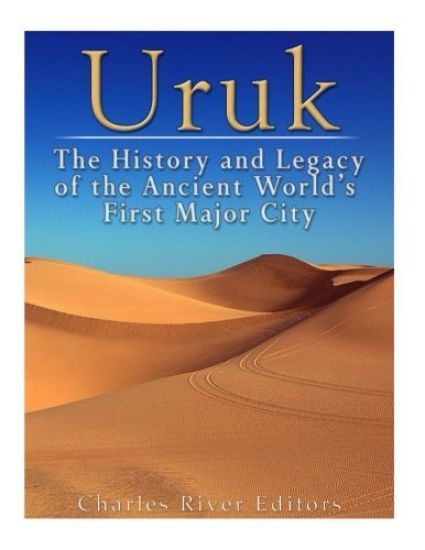
*Includes pictures *Describes the history, architecture, and layout of Uruk *Includes online resources and a bibliography for further reading In southern Iraq, a crushing silence hangs over the dunes. For nearly 5,000 years, the sands of the Iraqi desert have held the remains of the oldest known civilization: the Sumerians. When American archaeologists discovered a collection of cuneiform tablets in Iraq in the late 19th century, they were confronted with a language and a people who were at the time only scarcely known to even the most knowledgeable scholars of ancient Mesopotamia. The exploits and achievements of other Mesopotamian peoples, such as the Assyrians and Babylonians, were already known to a large segment of the population through the Old Testament and the nascent field of Near Eastern studies had unraveled the enigma of the Akkadian language that was widely used throughout the region in ancient times, but the discovery of the Sumerian tablets brought to light the existence of the Sumerian culture, which was the oldest of all the Mesopotamian cultures. Although the Sumerians continue to get second or even third billing compared to the Babylonians and Assyrians, perhaps because they never built an empire as great as the Assyrians or established a city as enduring and great as Babylon, they were the people who provided the template of civilization that all later Mesopotamians built upon. The Sumerians are credited with being the first people to invent writing, libraries, cities, and schools in Mesopotamia (Ziskind 1972, 34), and many would argue that they were the first people to create and do those things anywhere in world. For a people so great it is unfortunate that their accomplishments and contributions, not only to Mesopotamian civilization but to civilization in general, largely go unnoticed by the majority of the public. Perhaps the Sumerians were victims of their own success; they gradually entered the historical record, established a fine civilization, and then slowly submerged into the cultural patchwork of their surroundings. They also never suffered a great and sudden collapse like other peoples of the ancient Near East, such as the Hittites, Assyrians and Neo-Babylonians did. A close examination of Sumerian culture and chronology reveals that the Sumerians set the cultural tone in Mesopotamia for several centuries in the realms of politics/governments, arts, literature, and religion. The Sumerians were truly a great people whose legacy continued long after they were gone. No site better represents the importance of the Sumerians than the city of Uruk. Between the fourth and the third millennium BCE, Uruk was one of several city-states in the land of Sumer, located in the southern end of the Fertile Crescent, between the two great rivers of the Tigris and the Euphrates. Discovered in the late 19th century by the British archaeologist William Loftus, it is this site that has revealed much of what is now known of the Sumerian, Akkadian, and Neo-Sumerian people. Although Uruk was not the only city that the Sumerians built during the Uruk period, it was by far the greatest and also the source of most of the archeological and written evidence concerning early Sumerian culture (Kuhrt 2010, 1:23). Uruk went from being the world's first city to the most important political and cultural center in the ancient Near East in relatively quick fashion. Around 3200 BCE, the Sumerian Uruk culture began to expand beyond the borders of Sumer, which coincided with the emergence of writing (Kuhrt 2010, 1:23). The form of writing that the Sumerians developed became known by its Greek name, "cuneiform," for the wedge style characters that it employed (van de Mieroop 2007, 28). Writing, like many other inventions throughout world history, appears to have been created because of necessity as the Uruk culture grew.
Includes a full length biography of Ayn Rand that examines her life, works, philosophy, Objectivism, and legacy. Includes a primer on Atlas Shrugged and The Fountainhead that will quickly bring readers up to speed on the plots, characters, themes, symbols, and philosophy of Rand's classic novels. Includes pictures of Rand and important people in her life. Includes many of Rand's most famous quotes. Includes a Bibliography for further reading. "Government 'help' to business is just as disastrous as government persecution... the only way a government can be of service to national prosperity is by keeping its hands off." - Ayn Rand The seminal events in Ayn Rand's life occurred when she witnessed firsthand the Bolshevik Revolution and the ultimate Communist victory as a teenager. Rand's experience with the maelstrom of this revolutionary zeal and cultural breakdown greatly contributed toward the formation of Rand's philosophy of objectivism, individualism and anti-religious ideas. During her last year of high school, she was introduced to the history of the United States and immediately decided to make America her model of what an ideal society should look like. Rand came to the United States as a young woman for a visit in 1925, and, as fate would have it, she never returned to Russia. When Rand first embarked on writing The Fountainhead, her first major literary success, she intended to deliver a book that incorporated her philosophies on 20th century society while telling a story that was less politically inclined than her initial novel, We the Living, which was set in post-revolutionary Russia and promoted her tough, unwavering stand against communism. In The Fountainhead, Rand took many of the seeds of individualism that she sowed in We the Living, enhancing and heightening them into her new book's dominant theme. The Fountainhead clearly represents Rand's disdain for and rejection of the notion of collectivism, and holds not merely individualism but also objectivism, a philosophy attributed to the writer herself, as components critical to man's ideal state. Her objectivist posture, given its basic foundation in self-service and the belief that the pursuit of one's own happiness alone reigns supreme over any other human activity, was certainly polarizing. Supporters claimed that it was a natural progression from existentialism, while opponents asserted that it was systematically self-interested and therefore bordered on amorality. Rand began her most famous novel, Atlas Shrugged, in 1946. The novel consumed her, and in 1951, she moved back to New York City to devote herself to its completion. Atlas Shrugged was published in 1957 and is still considered her greatest work, as it touches upon a variety of social and philosophical topics such as metaphysics and epistemology while addressing the more "pop culture" areas of sex and politics. The book also sealed her association with the philosophical concept of Objectivism, which she called a methodology for "living on earth." The Objectivism movement caught fire, inspiring Rand to establish Objectivist periodicals from 1962 to 1976. Though Atlas Shrugged had been a popular title when Ayn Rand published it in 1957, it's quite possible that the only reference to it that many Americans heard before 2009 came from the hit series Mad Men. However, this staple of conservative and libertarian reader took on new life as the new Obama Administration sought to use government resources to fix financial problems. In 2009, with the global economy hemorrhaging jobs, and Western governments pouring hundreds of billions of dollars in taxpayer money to "bail out" troubled financial firms and large companies, frustrated people and political analysts turned to a book written over 50 years earlier as a guide out of the abyss. Learn about Ayn Rand and her classics like never before.
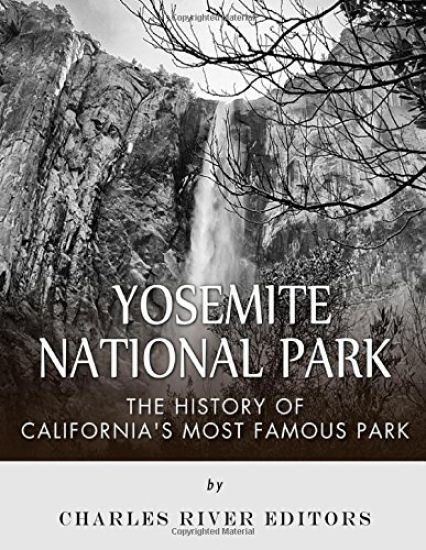
*Includes pictures *Includes historic accounts describing Yosemite *Includes a bibliography for further reading *Includes a table of contents "Yosemite Valley, to me, is always a sunrise, a glitter of green and golden wonder in a vast edifice of stone and space." - Ansel Adams "Some of the natural world is appealing, some of it is terrifying, and some of it grosses us out. Modern people don't want to be dropped naked into a swamp. We want to tour Yosemite with our water bottles and G. P. S. devices. The natural world is a source of happiness and fulfillment, but only when prescribed in the right doses." - Paul Bloom "If for a moment you are inclined to regard these taluses as mere draggled, chaotic dumps, climb to the top of one of them, and run down without any haggling, puttering hesitation, boldly jumping from boulder to boulder with even speed. You will then find your feet playing a tune, and quickly discover the music and poetry of these magnificent rock piles -- a fine lesson; and all Nature's wildness tells the same story -- the shocks and outbursts of earthquakes, volcanoes, geysers, roaring, thundering waves and floods, the silent uprush of sap in plants, storms of every sort -- each and all are the orderly beauty-making love-beats of Nature's heart." - John Muir The United States is full of natural wonders, but few remain unspoiled by man as much as Yosemite National Park, a 750,000 square acre park near the Sierra Nevada mountain range. Despite being inhabited by people for nearly 3,000 years, the relatively remote spot helped ensure that even as America expanded west, the Yosemite area avoided being settled or exploited like so many other areas on the frontier. Although it is a World Heritage Site and has been visited by millions of people, nearly the entire park remains wilderness, replete with features like waterfalls, giant sequoia groves, mountains, and some of America's most impressive granite cliffs. Given its natural wonders, it should come as no surprise that the area attracted some of the 19th century's most famous conservationists, including John Muir and Theodore Roosevelt. Muir in particular was instrumental in having Yosemite declared a national park, and he would wax eloquently about the area and the fight to preserve it: "The making of gardens and parks goes on with civilization all over the world, and they increase both in size and number as their value is recognized. Everybody needs beauty as well as bread, places to play in and pray in, where Nature may heal and cheer and give strength to body and soul alike. This natural beauty-hunger is made manifest in the little windowsill gardens of the poor, though perhaps only a geranium slip in a broken cup, as well as in the carefully tended rose and lily gardens of the rich, the thousands of spacious city parks and botanical gardens, and in our magnificent National Parks-the Yellowstone, Yosemite, Sequoia, etc. Of course, conservationists weren't the only ones attracted to the region. Yosemite's wide array of diversity ensures that different species of plant and animal life call the area home, and its various climates make it one of America's most unique ecosystems. In fact, dozens of endangered species still reside within the park, and while they are protected to an extent, many are still adversely affected by everything from motor vehicle accidents to forest fires. Yosemite National Park: The History of California's Most Famous Park traces the history of the region and its establishment as a park. Along with pictures of important people, places, and events, you will learn about Yosemite like never before, in no time at all.
*Includes pictures *Includes online resources and a bibliography for further reading The conflict between the Israelis and Palestinians is technically 69 years old and counting but has its roots in over 2,000 years of history. With so much time and history, the Middle East peace process has become laden with unique, politically sensitive concepts like the right of return, contiguous borders, secure borders, demilitarized zones, and security requirements, with players like the Quartet, Palestinian Authority, Fatah, Hamas, the Arab League and Israel. Over time, it has become exceedingly difficult for even sophisticated political pundits and followers to keep track of it all. Nearly a century before the state of Israel was founded in 1948, Palestine was under the control of the Ottoman Turkish Empire, consisting mostly of Arabs. During the 1850s, Jews began settling in small villages across the lands that once comprised Judea and Samaria, which the Jews considered their ancient Biblical homeland. These efforts to buy property were driven by the motivation of some Jews to help reestablish the land as the Jewish homeland. These Jews became known as Zionists, in reference to Zion, which is often thought of as a reference to all of Israel but was in fact a reference to part of Jerusalem. The Zionists attempted to establish a Jewish National Fund that would assist Jews in buying land in Palestine for Jewish settlement. In the middle of World War I, the British pledged their support to the Zionist cause and the establishment of a Jewish state in Palestine through the Balfour Declaration of November 1917. At the time, the British realized the strategic importance of Palestine because it was near the Suez Canal, and they saw the Zionists as potentially helpful allies in the region following the war. British foreign secretary Arthur James Balfour sent a letter to Lord Rothschild on November 2, 1917, declaring the government's "sympathy with Jewish Zionist aspirations," and favoring "the establishment in Palestine of a National Home for the Jewish People," with an intent to assist the Jews in achieving it. In 1947, the British delegated the issue of partitioning the British Mandate to the United Nations, and the U. N. General Assembly set up the Special Committee on Palestine (UNSCOP). UNSCOP eventually came up with what is now known as the U. N. Partition Plan of 1947. The Partition Plan carved up two strange looking states, but their motive was to create an Israel in which the Jewish population was a 55% majority, while Palestine had an over 90% Palestinian Arab majority. Meanwhile, the city of Jerusalem would be administered internationally, due to the sensitive religious concerns of Muslims, Christians, and Jews. In addition to several Christian holy spots, Jerusalem's Al-Aqsa Mosque is the third holiest site in Islam, and it is situated right next to the Western Wall, the Jews' holiest remaining site. On May 14, 1948, the British Mandate officially expired. That same day, the Jewish National Council issued the Declaration of the Establishment of the State of Israel. About 10 minutes later, President Truman officially recognized the State of Israel, and the Soviet Union also quickly recognized Israel. However, the Palestinians and the Arab League did not recognize the new state, and the very next day, armies from Egypt, Syria, Lebanon and Iraq invaded the former British Mandate to squelch Israel, while Saudi Arabia assisted the Arab armies. Jordan would also get involved in the war. In early 1949, Israel began signing armistices with Egypt, Jordan, and Syria, which left Israel in control of nearly 75% of the lands that were to be partitioned into the two states under the 1947 plan. The new armistice lines became known as the "Green Line," and the conflict has continued to involve those lines and the issues that were contested in a war now nearly 70 years old.
*Includes pictures *Includes contemporary accounts of the society *Includes online resources and a bibliography for further reading "This country without slave labor would be completely worthless. We can only live and exist by that species of labor; and hence I am willing to fight for the last." - William Nugent, letter addressed to Eleanor Nugent, September 7, 1863 In 1934, a pair of teenagers from Baltimore by the names of Theodore Jones and Henry Grob embarked on what they thought would be another lazy summer afternoon. They popped in at the soda shop and idly browsed through the aisles of few local mom-and-pop stores, but when they could not kill their boredom, they decided to return to Grob's place for an impromptu treasure hunt. Clunky metal detectors in hand, they roamed around the backyard, discovering and delighting in odd metal knickknacks along the way. What started out as just another slow-moving summer's day turned out to be anything but when one of the detectors began to go off. Intrigued, the pair grabbed a spade each and shoveled like their lives depended on it. What they found was none other than a rusted pot of 5,000 glittering gold coins, with the mysterious words "Great Seal of the K'S of the G. C." stamped onto the edges of each token. What ensued was a bitter dispute over the ownership of said coins, one that is still raging on via the parties' descendants to this day. But who were these "K's," and why was this treasure so coveted? As it turned out, the boys had stumbled upon artifacts left over by an ambitious secret society that operated in the midst of the American Civil War, with no less an aim than to establish a brand new sovereignty composed of territories in Mexico, Central America, the Confederacy, and the Caribbean. In the end, the plans would all go awry, and Emperor Maximilian's life would end before a firing squad in Mexico in 1867, but the group's aim to strengthen slavery in the Americas made plenty of contemporaries consider the Knights of the Golden Circle a threat, particularly in the Union, where suspected membership could land one in jail. Accusations implicated figures as high up as former President Franklin Pierce, and when the society went underground after the Civil War, conspiracy theories naturally began to emerge, often centered on the belief the group would attempt to spark a second rebellion. Indeed, when Jones and Grob found the cache of coins, some immediately theorized they had discovered the money the Knights of the Golden Circle intended to use to finance the next war. The Knights of the Golden Circle: The History and Legacy of One of 19th Century America's Most Notorious Secret Societies examines the history and development of the order, the master con artist who founded it, and how the group's ambitions led to their inevitable undoing. Along with pictures depicting important people, places, and events, you will learn about the Knights of the Golden Circle like never before.
*Includes pictures *Includes contemporary accounts of the society *Includes online resources and a bibliography for further reading "This country without slave labor would be completely worthless. We can only live and exist by that species of labor; and hence I am willing to fight for the last." - William Nugent, letter addressed to Eleanor Nugent, September 7, 1863 In 1934, a pair of teenagers from Baltimore by the names of Theodore Jones and Henry Grob embarked on what they thought would be another lazy summer afternoon. They popped in at the soda shop and idly browsed through the aisles of few local mom-and-pop stores, but when they could not kill their boredom, they decided to return to Grob's place for an impromptu treasure hunt. Clunky metal detectors in hand, they roamed around the backyard, discovering and delighting in odd metal knickknacks along the way. What started out as just another slow-moving summer's day turned out to be anything but when one of the detectors began to go off. Intrigued, the pair grabbed a spade each and shoveled like their lives depended on it. What they found was none other than a rusted pot of 5,000 glittering gold coins, with the mysterious words "Great Seal of the K'S of the G. C." stamped onto the edges of each token. What ensued was a bitter dispute over the ownership of said coins, one that is still raging on via the parties' descendants to this day. But who were these "K's," and why was this treasure so coveted? As it turned out, the boys had stumbled upon artifacts left over by an ambitious secret society that operated in the midst of the American Civil War, with no less an aim than to establish a brand new sovereignty composed of territories in Mexico, Central America, the Confederacy, and the Caribbean. In the end, the plans would all go awry, and Emperor Maximilian's life would end before a firing squad in Mexico in 1867, but the group's aim to strengthen slavery in the Americas made plenty of contemporaries consider the Knights of the Golden Circle a threat, particularly in the Union, where suspected membership could land one in jail. Accusations implicated figures as high up as former President Franklin Pierce, and when the society went underground after the Civil War, conspiracy theories naturally began to emerge, often centered on the belief the group would attempt to spark a second rebellion. Indeed, when Jones and Grob found the cache of coins, some immediately theorized they had discovered the money the Knights of the Golden Circle intended to use to finance the next war. The Knights of the Golden Circle: The History and Legacy of One of 19th Century America's Most Notorious Secret Societies examines the history and development of the order, the master con artist who founded it, and how the group's ambitions led to their inevitable undoing. Along with pictures depicting important people, places, and events, you will learn about the Knights of the Golden Circle like never before.