Kirjojen hintavertailu – 12 903 727 kirjaa ja 27 kauppaa
Kirjailija
Charles River
Kirjat ja teokset yhdessä paikassa: 4 673 kirjaa, julkaisuja vuosilta 2013–2022, suosituimpiin kuuluu William Powell and Myrna Loy: The Lives and Careers of One of Classical Hollywood's Most Iconic Duos. Vertaile teosten hintoja ja tarkista saatavuus suomalaisista kirjakaupoista.
*Includes excerpts from the texts *Includes online resources and a bibliography for further reading Many people interested in biblical themes know about the Dead Sea Scrolls and their guardians, the mysterious Essenes, the sect of Judaism that hid its priceless library in caves before marching against the Romans in an end-time war, certain that God would intervene at the decisive moment. The ancient texts found in their rock cabinets have produced tons of literature. Fewer people know about an equally fascinating finding in the same region of the planet, made only a few months apart: a collection of hitherto unknown Christian codices, buried in the 4th century AD, and found accidentally by peasants near the city of Nag Hammadi, Upper Egypt. Among the old codices was The Gospel of Thomas, lost for sixteen centuries, and other unfamiliar titles such as The Gospel of Philip and the Acts of Peter and the Twelve Apostles. In this case it was not Essenes who had entrusted them to the protection of the caves and the centuries, but monks who followed a now forgotten variant of Christianity called Gnosticism. The Gnostics were mystics who had no real use or hope for the world. Their writings became forbidden when the Church defined the canon of the books authorized to be read in the congregation. For some reason, instead of burning them, the monks of Nag Hammadi decided to entrust them to posterity, perhaps waiting for better times. The library of Nag Hammadi, Egypt is as significant in the study of early Christianity as the writings of the Essenes to the understanding of Judaism during the time of the Roman occupation. Considering the history of religions, they were composed at the opposite sides of that watershed that was the 1st century CE, which witnessed the birth of Christianity and the destruction of the temple of Jerusalem. The Dead Sea Scrolls belonged to a community that lived before the traumatic destruction of Holy City and its temple at the hands of the Romans. The library of Nag Hammadi was produced and buried by a group of Christians whose ancestors had left their place of origin many years before. Although all the titles of the Nag Hammadi library are not known, many people have heard about its most famous components: The Gospel of Thomas -at one time it was discussed whether it should be included in the New Testament- and The Gospel of Philip, which tried to revive the debate around the identity of Mary Magdalene: "Why do you love her more than all of us?" asks a disconcerted Peter to Jesus. Finally, the Nag Hammadi texts have led many scholars to reconsider the rigid canons imposed by the early Church, and the readers to find a more intimate religion that turned upside down many postulates of Christian orthodoxy. Along with the history of their discovery in 1945, the analysis of the main texts that form this collection, the exposition of their most important beliefs, and the reasons for their suppression in the 4th century CE, you will learn about the unknown gospels and the Gnostic texts of Nag Hammadi like never before.
*Includes pictures *Includes online resources and a bibliography for further reading Canada has the reputation of being a boring place. More tranquil than its southern neighbor, it goes along in its quiet way sustaining one of the most stable and prosperous democracies in the world, and does so with little fuss or drama. It doesn't get in the news much, which considering the content of most news stories is a good thing. People get along, the economy is expanding, and there are no regular disasters. While all this makes Canada a pleasant place to live, it does not make it particularly interesting. But dig a little below the surface, and you'll find a different Canada, a stranger Canada, one of murder, mystery, and paranormal experiences. The stories that follow will show that Canada, far from being a dull, staid nation where nothing much happens, is an epicenter of the mysterious. At a time in antiquity when most of Europe was covered with forests and wandering tribes, Mexico had already developed complex civilizations, beginning with the Olmecs and followed by the Maya, a civilization with advanced knowledge of medicine, engineering and astronomy. The Maya calculated the precession of the equinoxes and cycles of the Pleiades, on which they based their year, since they believed they had come from that constellation. The last, and perhaps most famous, great civilization before the arrival of the Europeans was the Aztecs. With so many ancient peoples whose influence, beliefs, and modifications to the landscape extend to the present day, Mexico is fertile land for legends, ghosts, surprising places, and mysteries. A belief in communing with things that lie beyond (stars, constellations, and life after death), mysticism, and apparitions are intimately woven into the colorful fabric of the Mexican nation, to the point that a metaphysical event (the apparition of the Virgin of Guadalupe) is considered by many as one of the founding elements of the nation. Our Lady of Guadalupe has an eerie counterpart, another woman who appeared around the same time: La Llorona, the weeping woman. If the content of the former vision is loving and conciliatory, the latter is full of regret and agony. As for the United States, the Northeast has always had a special place in the national memory. The states of Connecticut, Maine, Massachusetts, New Hampshire, Rhode Island, Vermont, and New York have a long history as some of the earliest colonies in the New World. Their rich folklore and colorful history is woven into the national identity, and destinations such as Plymouth Rock, the lighthouses of Maine, and Vermont's autumn leaves are quintessential symbols of the United States. But the Northeast has always had a dark side, a strange side. Monsters and ghosts lurk in its woods and old houses, and strange monuments that may be from a forgotten civilization puzzle local investigators. All the while, the early inhabitants themselves were always superstitious, as evidenced by history's most famous witch trials. Today the Salem Witch Trials are often remembered as being a relic of a superstitious past, and Salem has transformed itself into a tourist haven and Halloween destination by capitalizing off the Salem Witch trials, but it was deadly serious in 1692, when 19 men and women found themselves taken to "Gallows Hill" and hanged for being witches. Another man who was over 80 years old was pressed to death for refusing to be tried for witchcraft, and from February 1692-May 1693, hundreds of others were accused of witchcraft. Dozens of them were imprisoned for months until the mass hysteria finally died down. Mysterious North America: Mysteries, Legends, and Unexplained Phenomena across the United States, Mexico, and Canada offers a vast compendium of strange, unexplained, and just plain odd stories across North America's various regions.
*Includes pictures *Includes accounts of the fighting *Includes online resources and a bibliography for further reading What was the bloodiest war in American history? Most people with at least a little knowledge of history would quickly say that it was the Civil War (1861-65), and they would certainly be correct overall. In recently-updated numbers, it is thought that over 750,000 Americans died in the Civil War from battle wounds, diseases and other causes. In a single day at the battle of Antietam on September 17, 1862, almost 27,000 soldiers were killed, wounded and missing. However, when historians go farther back in time and include colonial wars and look at casualties per capita, the correct answer would be the much-lesser known conflict known as "King Philip's War" (1675-76). While a significant 2.5% of the U. S. population perished in the Civil War, 5% of New England's white settler population died during King Philip's War, during which 13 towns were destroyed and 600 dwellings were burned by the natives. A larger, indeterminate number of the native population also died in the war. A hundred thousand pounds, an enormous sum of money in those days, was expended by the colonies in defeating the Indians. Throughout history, there have been men of war and men of peace, but few have actually had a war named after them. One of them was Pontiac, also known as Obwandiyag, an Odawa chief who left his mark on history by continuing the battle against the British after their official triumph during the French and Indian War. While modern historians question how important Pontiac's role was in shaping America's destiny, his leadership during Pontiac's War was seen at that time as important enough to warrant significant articles and even a few 18th century books. Since these books were written by the British, or at least men who supported their cause, the descriptions of Pontiac were often not complimentary. Likewise, 19th century authors tended to portray him as something of an evil genius who plotted against the British and then drove his people into battle. Not surprisingly, 20th century scholarship depicted him differently, portraying Pontiac as an important leader who had more influence over his own local band of Native Americans than over some vast army. When it comes to Pontiac, a few facts are certain. For one thing, he certainly led the first major attack of Pontiac's War in May 1763, when he and 300 of his men attacked Fort Detroit in what is now the city by the same name. Unfortunately for his cause, Pontiac failed to gauge just how strong the British presence there was, and his attack was quickly repelled. On the other hand, he was not a man who gave up easily, so instead of retreating, he and his warriors would lay siege to the British stronghold. In the days that followed, word spread of his efforts, and in short order nearly 1,000 men from various tribes in the area had joined him. They remained camped around the fort throughout the summer before finally giving up the siege. While Pontiac and his ever-growing band of men were laying siege to Fort Detroit, other tribes heard of his efforts to keep the fight going and began to attack other settlements and enclaves. Thus, even after he did give up on the fort, Pontiac continued to fight, next attacking area in the Illinois Country, an area that included much of what is now the Midwestern United States. As time went, on his popularity and power increased to the point that the British ultimately sought him out to make peace. That is how, in July 1766, Pontiac came to meet with Sir William Johnson, the British Superintendent of Indian Affairs for the colonies. Together, the two men carved out a peace treaty that held for the remainder of the British presence in the region.
*Includes pictures *Includes online resources and a bibliography for further reading Great Britain is an ancient land steeped in history and tradition, filled with prehistoric ruins, majestic castles, and a countryside sculpted from millennia of human habitation.. Its rolling countryside is dotted with prehistoric burial mounds and stone circles. Brooding castles hold tales of bloodshed and honor. Medieval churches have elaborate stained glass windows and gruesome carvings, reflecting a mixture of hope and darkness. Every hamlet and village has tales that go back centuries, and folk festivals with roots in pagan times. Not everything in Great Britain is as it appears, however. Some say this is a land haunted by spirits, a place of strange disappearances and unexplained phenomena. For centuries, people have told tales of ghosts stalking its historic buildings, strange creatures lurking in its primeval forests, and unexplained paths linking its ancient sites. There is no shortage when it comes to the strange stories the region has to offer, and the legends and lore have compelled many to dig a little deeper and even explore this wonderful land for themselves. Ireland also has a rich folklore. Everyone knows about the fairy folk and leprechauns and many have heard of the fearsome banshee, and there are also the usual ghost stories found in every old land. The stranger side of the Emerald Isle goes much deeper than that, however, with tales of phantom armies marching through the sky, sea monsters swimming in the waters around the island, and stories of strange powers and dark magic. Indeed, these tales are not consigned to the past; many unexplained occurrences continue to happen, even today. Here is a sampling of some of Ireland's odder aspects Ireland. Hopefully, it will inspire readers to learn more about Ireland's mysterious past and unusual present, and perhaps get readers to visit Ireland themselves. The Mysterious British Isles: A Collection of Mysteries, Legends, and Unexplained Phenomena across Britain and Ireland offers a sampling of the many strange stories and unexplained phenomena that make Britain and Ireland such intriguing places. Along with pictures of important people, places, and events, you will learn about the weird legends and mysteries of the British Isles like never before.
*Includes pictures *Includes online resources and a bibliography for further reading Great Britain is an ancient land steeped in history and tradition, filled with prehistoric ruins, majestic castles, and a countryside sculpted from millennia of human habitation.. Its rolling countryside is dotted with prehistoric burial mounds and stone circles. Brooding castles hold tales of bloodshed and honor. Medieval churches have elaborate stained glass windows and gruesome carvings, reflecting a mixture of hope and darkness. Every hamlet and village has tales that go back centuries, and folk festivals with roots in pagan times. Not everything in Great Britain is as it appears, however. Some say this is a land haunted by spirits, a place of strange disappearances and unexplained phenomena. For centuries, people have told tales of ghosts stalking its historic buildings, strange creatures lurking in its primeval forests, and unexplained paths linking its ancient sites. There is no shortage when it comes to the strange stories the region has to offer, and the legends and lore have compelled many to dig a little deeper and even explore this wonderful land for themselves. Ireland also has a rich folklore. Everyone knows about the fairy folk and leprechauns and many have heard of the fearsome banshee, and there are also the usual ghost stories found in every old land. The stranger side of the Emerald Isle goes much deeper than that, however, with tales of phantom armies marching through the sky, sea monsters swimming in the waters around the island, and stories of strange powers and dark magic. Indeed, these tales are not consigned to the past; many unexplained occurrences continue to happen, even today. Here is a sampling of some of Ireland's odder aspects Ireland. Hopefully, it will inspire readers to learn more about Ireland's mysterious past and unusual present, and perhaps get readers to visit Ireland themselves. The Mysterious British Isles: A Collection of Mysteries, Legends, and Unexplained Phenomena across Britain and Ireland offers a sampling of the many strange stories and unexplained phenomena that make Britain and Ireland such intriguing places. Along with pictures of important people, places, and events, you will learn about the weird legends and mysteries of the British Isles like never before.
*Includes pictures *Includes ancient accounts *Includes online resources and a bibliography for further reading "Apollo's history is a confusing one," said the renowned poet and mythologist Robert Graves. This notion is also illustrated in the above quote from the 6th century BCE Homeric Hymn to Apollo, which gives the reader a brief glimpse into the confusion surrounding Apollo's multi-faceted nature. The quote comes from the end of an episode in which Apollo is traversing the known world, looking for a place to build a temple to himself. Once he lands upon a place of his liking, however, he realizes that he needs to populate it with priests who would 'guard' and care for its ceremonies. Rather than depend upon those 'glorious tribes' to supply his temple with sycophants, Apollo has no patience for chance, and flies down to a Cretan merchant ship, landing on it in the form of a timber-shaking dolphin. After terrifying the merchants, he tells them that their lives in the sea trade are over, and they are to be priests at his temple from then on. Cautioning the merchants to eschew piracy and 'keep righteousness' in their hearts, while simultaneously confronting and sequestering them captures the youthful god's capricious character quite well. Of course, the rest of the ancient Greek gods were certainly not above hypocrisy - the adultery of Zeus alone demonstrates that - but Apollo was a brash contrarian in the face of all divine order. Unlike many of the other Olympian gods, Apollo's nature changed dramatically at the closing of his adolescence. His twin sister Artemis, in direct comparison with Apollo, immediately leapt to her mother's aide as midwife to her brother after she was born. Artemis would continue to be a goddess of midwives, while Apollo's "role" would continue to evolve over centuries. Ultimately, any 21st century study of a mythological being must gather together as many strands of learning as possible in order to formulate a useful hypothesis. In the case of Apollo, these strands are expansive, permeative, and international, and at first blush, they can seem very confusing indeed. An important thing to bear in mind when approaching Apollo is that his role in the ancient Greek pantheon was eclectic, even by contemporary standards, and the expansion of Greek culture to other parts of the Mediterranean only served to compound his identity even further. The story of Apollo is an excellent example of how stories and characters can change when they're beloved across centuries, and it is for this reason that reading about the god is so enjoyable. Artemis had one of the most widespread cults in the Greek world, perhaps due to her connection to nature, which can be a ubiquitous antagonist or boon-giver. Her association with nature may also explain why she was one of the oldest deities in the Greek pantheon, although her appearance in the Mycenaean Linear B script (the earliest form of Greek that has been deciphered, dating to as early as 1450 BCE) is still contested. Etymology often gives modern readers a better idea of the earliest form of a deity, but Artemis's is confusing. Of course, that didn't stop many writers, both ancient and modern, from making attempts at it, either associating her with mythic qualities (such as "maidenhood" and "purity") and/or giving her non-Greek origins. The latter is as unsurprising as the former, since Artemis had a large following throughout Greece and across Asia Minor, where her most famous temple-one of the Seven Wonders of the World-resided. It was in the Near East that Artemis embraced some of the wilder and more formidable characteristics many of the later Greek mythographers only hinted at. To many modern readers, what is most surprising about Artemis is not her "foreignness," but that she was not the carefree maiden prancing through woods and glades to give succor to animals in need.
*Includes pictures *Includes ancient accounts *Includes online resources and a bibliography for further reading Lying in the middle of a plain in modern day Iran is a forgotten ancient city: Persepolis. Built two and a half thousand years ago, it was known in its day as the richest city under the sun. Persepolis was the capital of Achaemenid Persian Empire, the largest empire the world had ever seen, but after its destruction, it was largely forgotten for nearly 2,000 years, and the lives and achievements of those who built it were almost entirely erased from history. Alexander the Great's troops razed the city to the ground in a drunken riot to celebrate the conquest of the capital, after which time and sand buried it for centuries. It was not until the excavations of the 1930s that many of the relics, reliefs, and clay tablets that offer so much information about Persian life could be studied for the first time. Through archaeological remains, ancient texts, and work by a new generation of historians, a picture can today be built of this remarkable civilization and their capital city. Although the city had been destroyed, the legacy of the Persians survived, even as they mostly remain an enigma to the West and are not nearly as well understood as the Greeks, Romans, or Egyptians. In a sense, the Achaemenid Persian Empire holds some of the most enduring mysteries of ancient civilization. The Parthian people created an empire that lasted almost 500 years, from the mid-3rd century BCE until 224 CE, and it stretched from the Euphrates River in the west to Central Asia and the borders of Bactria in the east (Brosius 2010, 83). In fact, the expansive empire challenged the Romans on numerous occasions for supremacy in the Near East, created the first sustainable link between the peoples of Europe and East Asia, and followed a religion that many consider to be the oldest form of monotheism in the world; but despite these accomplishments the Parthians are often overlooked in favor of the Achaemenid and Sassanid Persians who came before and after them respectively, not to mention the Romans themselves. Although the Parthians may not get top billing in most popular histories of the period, they left an indelible mark on the world that cannot be overstated. During the first half of the 1st millennium CE, an empire arose in Persia that extended its power and influence to Mesopotamia in the east, Arabia in the south, the Caucasus Mountains in the north, and as far east as India. This empire, known alternatively as the Sasanian Empire or Sassanid Empire, was the last of three great dynasties in Persia-the Achaemenid and the Parthian being the first two dynasties-before the rise of Islam. In fact, many scholars consider the Sasanian Empire to be the last great empire of the ancient Near East because once it had been obliterated, Islam became the standard religion of the region, ushering in the Middle Ages. The Sasanian Empire was important for a number of reasons. Besides being the last of three great Persian dynasties, they carried on many Persian cultural traditions relating to religion and kingship. The Sasanians fostered and promoted the native religion of Zoroastrianism to the point of persecuting other religions from time to time. It was during the Sasanian period that the numerous Zoroastrian hymns, prayers, and rituals were collected under one book, known as the Avesta. Thanks to the Sasanians' efforts with regard to religion, modern scholars know much more about Zoroastrianism than they would have if the religion continued to disseminate orally. Their efforts also protected Zoroastrian knowledge in later years after the dynasty was long gone and Islam became ascendant in Persia. The Sasanians, like the Achaemenids and Parthians, also carried forth the Persian conflicts with the Hellenic world.
*Includes pictures *Includes online resources and a bibliography for further reading Walking around Chicago today, it's easy to forget about its past as a rural frontier, and that's due in no small part to the way Chicago responded to the Great Fire of 1871. Immediately after the fire, Chicago encouraged inhabitants and architects to build over the ruins, spurring creative architecture with elaborate designs, and architects descended upon the city for the opportunity to rebuild the area. Over the next few decades, Chicago had been rebuilt with the country's most modern architecture and monuments, and the Windy City's skyscrapers reached over 20 stories by the early 20th century, but it wouldn't take long for the city to turn its early skyscrapers into things of the past. Burnham's 22 story high Masonic Temple Building, once the tallest building in the world, was demolished in favor of buildings that were twice as tall. Though it's technically named the Willis Tower today, Chicago's landmark is still best known as the Sears Tower, and Sears got a lot of bang for its buck. The Sears Tower only took two years to build at a cost of about $150 million, and it is still the second tallest building in America, a fact Chicagoans sharply debate after the Sears Tower was judged to be shorter than New York City's new Freedom Tower. In 1969, Sears wanted to create a large office space for its employees in the city, and they commissioned the firm Skidmore, Owings & Merrill to design and build the structure. The firm conceived of the now famous design, in which the first 50 stories of the structure were connected by what are essentially nine separate tube shaped buildings. After the 50th story, seven of the nine tubes rise up to the 90th floor. From there, only two tubes rise to the building's 108th floor. This design gives the Sears Tower the appearance of a large building at ground level that gradually tapers off into a thinner rectangle at the top. It should come as no surprise that in the dark days following the terrorist attacks of September 11, 2001, New York City began searching for some way to demonstrate its recovery and resolve. The obvious way to do just that was to rebuild what had been destroyed. Since there was no way to bring back the lives of those lost, the most straightforward path was to rebuild the Twin Towers that had fallen, but there was more to be done than to just rebuild the lost Twin Towers; the new building was to be bigger, taller, and better than before, as everyone hoped the country would somehow be. In the decade that followed, the first of a new millennium, the Freedom Tower experienced many of the same ups and downs that the nation did. Plans to rebuild it were met with the same level of controversy as those to fight the war on terror. Likewise, its popularity ebbed and flowed with the fickle hearts of a people grown weary with fighting an enemy overseas and a poor economy at home. Political parties rose into and fell out of power, changing again and again the environment in which the builders were trying to work. At some points, it seemed that the project would never end. Fortunately, the building itself finally knew victory and opened to the public, much as it seems the United States has made some inroads in the war against terror. At the same time, there is much left to do on both fronts, as the owners of One World Trade Center continue to try to rent out the space they have created, and those fighting terrorism at home and abroad continue to try to weed out the last vestiges of those who wish the nation ill. The Freedom Tower and the Sears Tower: The History of America's Tallest Buildings looks at the construction history of the two biggest buildings in the United States. Along with pictures of important people, places, and events, you will learn about the Sears Tower and Freedom Tower like never before.
*Includes pictures *Includes online resources and a bibliography for further reading Walking around Chicago today, it's easy to forget about its past as a rural frontier, and that's due in no small part to the way Chicago responded to the Great Fire of 1871. Immediately after the fire, Chicago encouraged inhabitants and architects to build over the ruins, spurring creative architecture with elaborate designs, and architects descended upon the city for the opportunity to rebuild the area. Over the next few decades, Chicago had been rebuilt with the country's most modern architecture and monuments, and the Windy City's skyscrapers reached over 20 stories by the early 20th century, but it wouldn't take long for the city to turn its early skyscrapers into things of the past. Burnham's 22 story high Masonic Temple Building, once the tallest building in the world, was demolished in favor of buildings that were twice as tall. Though it's technically named the Willis Tower today, Chicago's landmark is still best known as the Sears Tower, and Sears got a lot of bang for its buck. The Sears Tower only took two years to build at a cost of about $150 million, and it is still the second tallest building in America, a fact Chicagoans sharply debate after the Sears Tower was judged to be shorter than New York City's new Freedom Tower. In 1969, Sears wanted to create a large office space for its employees in the city, and they commissioned the firm Skidmore, Owings & Merrill to design and build the structure. The firm conceived of the now famous design, in which the first 50 stories of the structure were connected by what are essentially nine separate tube shaped buildings. After the 50th story, seven of the nine tubes rise up to the 90th floor. From there, only two tubes rise to the building's 108th floor. This design gives the Sears Tower the appearance of a large building at ground level that gradually tapers off into a thinner rectangle at the top. It should come as no surprise that in the dark days following the terrorist attacks of September 11, 2001, New York City began searching for some way to demonstrate its recovery and resolve. The obvious way to do just that was to rebuild what had been destroyed. Since there was no way to bring back the lives of those lost, the most straightforward path was to rebuild the Twin Towers that had fallen, but there was more to be done than to just rebuild the lost Twin Towers; the new building was to be bigger, taller, and better than before, as everyone hoped the country would somehow be. In the decade that followed, the first of a new millennium, the Freedom Tower experienced many of the same ups and downs that the nation did. Plans to rebuild it were met with the same level of controversy as those to fight the war on terror. Likewise, its popularity ebbed and flowed with the fickle hearts of a people grown weary with fighting an enemy overseas and a poor economy at home. Political parties rose into and fell out of power, changing again and again the environment in which the builders were trying to work. At some points, it seemed that the project would never end. Fortunately, the building itself finally knew victory and opened to the public, much as it seems the United States has made some inroads in the war against terror. At the same time, there is much left to do on both fronts, as the owners of One World Trade Center continue to try to rent out the space they have created, and those fighting terrorism at home and abroad continue to try to weed out the last vestiges of those who wish the nation ill. The Freedom Tower and the Sears Tower: The History of America's Tallest Buildings looks at the construction history of the two biggest buildings in the United States. Along with pictures of important people, places, and events, you will learn about the Sears Tower and Freedom Tower like never before.
*Includes pictures *Includes ancient accounts *Includes online resources and a bibliography for further reading Africa may have given rise to the first human beings, and Egypt probably gave rise to the first great civilizations, which continue to fascinate modern societies across the globe nearly 5,000 years later. From the Library and Lighthouse of Alexandria to the Great Pyramid at Giza, the Ancient Egyptians produced several wonders of the world, revolutionized architecture and construction, created some of the world's first systems of mathematics and medicine, and established language and art that spread across the known world. With world-famous leaders like King Tut and Cleopatra, it's no wonder that today's world has so many Egyptologists. What makes the accomplishments of the Ancient Egyptians all the more remarkable is that Egypt was historically a place of great political turbulence. Its position made it both valuable and vulnerable to tribes across the Mediterranean and the Middle East, and Ancient Egypt had no shortage of its own internecine warfare. Its most famous conquerors would come from Europe, with Alexander the Great laying the groundwork for the Hellenic Ptolemy line and the Romans extinguishing that line after defeating Cleopatra and driving her to suicide. Perhaps the most intriguing aspect of ancient Egyptian civilization was its inception from the ground up, as the ancient Egyptians had no prior civilization which they could use as a template. In fact, ancient Egypt itself became a template for the civilizations that followed. The Greeks and the Romans were so impressed with Egyptian culture that they often attributed many attributes of their own culture (usually erroneously) to the Egyptians. With that said, some minor elements of ancient Egyptian culture were, indeed, passed on to later civilizations. Egyptian statuary appears to have had an initial influence on the Greek version, and the ancient Egyptian language continued long after the pharaonic period in the form of the Coptic language. Although the Egyptians may not have passed their civilization directly on to later peoples, the key elements that comprised Egyptian civilization - their religion, early ideas of state, and art and architecture - can be seen in other pre-modern civilizations. For instance, civilizations far separated in time and space, such as China and Mesoamerica, possessed key elements that were similar to those found in ancient Egypt. Indeed, since Egyptian civilization represented some fundamental human concepts, a study of pharaonic culture can be useful when trying to understand many other pre-modern cultures. Thus, anyone who reads about ancient Egyptian civilization in this regard is best served by looking at its earliest phases: the Early Dynastic Period and the Old Kingdom. By examining the Old Kingdom and the period immediately preceding it, attributes considered quintessentially "Egyptian" in later periods will become clearer. The end of the Ptolemies also happened to coincide with the most famous period of Roman history. In the latter 1st century BCE, men like Julius Caesar, Mark Antony, and Octavian participated in two civil wars that would spell the end of the Roman Republic and determine who would become the Roman emperor. In the middle of it all was history's most famous woman, Cleopatra, who famously seduced both Caesar and Antony and thereby positioned herself as one of the most influential people in a world of powerful men. Cleopatra was a legendary figure even to contemporary Romans and the ancient world, and she was a controversial figure who was equally reviled and praised through the years, depicted both as a benevolent ruler and an evil seductress (occasionally at the same time). The Dynasties of Ancient Egypt: The History and Legacy of the Pharaohs from the Beginning of Egyptian Civilization to the Rise of Rome chronicles the tumultuous history of Ancient Egy
*Includes pictures *Includes accounts of the fighting in the war *Includes online resources and a bibliography for further reading One of his biographers called him "a complex man: a born leader, a brilliant soldier, a devoted husband, a proud father; intelligent, instinctive, brave, compassionate, vain, egotistical, and arrogant." As that description suggests, every account of Erwin Rommel's life must address what appears to be its inherent contradictions. Fittingly, and in the same vein, he remains one of the best remembered generals of World War II and history at large, despite the fact he was on the losing side, and he was defeated at the most famous battle of his career, the decisive Battle of El Alamein. While there is a great division when it comes to historical opinion with respect to Rommel's merits as a general as well as the moral choices he made, both historians and the public continue to be intrigued by this man who has been dead for over 70 years. People at large continue to consider Rommel one of the greatest generals of the 20th century, an opinion shared by many of his contemporaries on both sides of World War II. For example, British General Harold Alexander hinted at both his strengths and weaknesses, commenting, "He was a tactician of the greatest ability, with a firm grasp of every detail of the employment of armour in action, and very quick to seize the fleeting opportunity and the critical turning point of a mobile battle. I felt certain doubts, however, about his strategic ability, in particular as to whether he fully understood the importance of a sound administrative plan. Happiest while controlling a mobile force directly under his own eyes he was liable to overexploit immediate success without sufficient thought for the future." Heinz Wilhelm Guderian was one of the most respected commanders and theoreticians of World War II. An innovative tank commander, he was a pioneer of German Blitzkrieg tactics and therefore, a hugely influential figure in the way the war was fought. Guderian's profile was not always what might have been expected for a man of his abilities and influence warrant due to the shape of his career. The reasons for Guderian's time out of command are tied to the reason for his lower profile; he was a traditional German career officer rather than an ideologically driven Nazi, willing to challenge Adolf Hitler's opinions on military matters. This, together with his outspoken attitude, led to his loss of favor and dismissal from command. At the same time, being a career military man rather than a Nazi officer also meant Guderian was not as directly involved in the atrocities of the war, and he did not gained the infamy of his SS contemporaries, which ensured the ongoing fame of men far less deserving of recognition. Albert Kesselring holds a strange place in the history of World War II. A commander in the Luftwaffe, he is remembered as much for the skill with which he oversaw the German armies as for his mastery of the air fleets. Called "Uncle Albert" by many of his men and "Smiling Albert" by the Allies, he was widely respected by men on both sides of the war and loved by many of his troops, yet he was responsible for massacres in occupied Italy for which he was condemned to death during the post-war trials. Ultimately, his sentence was commuted to one of life imprisonment, making him one of the few top Nazi leaders to pen memoirs after the war, but it goes without saying that Kesselring's time was marked by controversy. Kesselring had the skills of a politician and a diplomat, as well as those of a soldier, which carried his career through both World War I and World War II, and during the Second World War, he served in almost every theater of the fighting in Europe. He was undoubtedly a gifted commander, but one who served at a time when the German military was tainted with the evils of Nazism.
*Includes pictures *Includes ancient accounts *Includes online resources and a bibliography for further reading Individuals who decide to take up learning about the Old Testament of the Bible are immediately faced with the difficult proposition of identifying the various peoples that the Hebrews met and sometimes came into conflict with when they entered the territory that eventually became Israel. The Moabites and Edomites were just two of the many Canaanite groups that the Hebrews dealt with, often violently, but there were dozens of other Canaanite groups, which were all for the most part identified through the names of their respective cities. In fact, before the Hebrews established a kingdom and before the Phoenicians colonized much of the Mediterranean, the Canaanites were the most important group in the Levant for much of the Bronze Age and into the early Iron Age. Although the Canaanites never created a unified nation-state or kingdom, their importance in the ancient Near East cannot be understated. It was at least partially because of that fact that the Canaanites were unable to resist their larger and more powerful neighbors that the average person today knows so little about their history, but modern studies have revealed that they developed a unique religion that influenced non-Canaanite peoples and continued to be practiced in some form centuries after the Canaanites ceased to be an identifiable people. Furthermore, during the height of the Bronze Age the Canaanites provided important resources to the Egyptian and Hittite Empires and played a key role in the geopolitical game of chess between those two kingdoms. It also goes without saying that the Canaanites were also a factor in the establishment of the Kingdom of Israel, as the battles they lost to the Hebrews later became the foundation of the Jewish kingdom. Today, the term "Philistine" is often used as a euphemism for a person who is particularly uncouth, uncultured, ignorant, and possibly violent. Most people probably do not know the etymology of the word when they use it, and those that do probably only know the Philistines as villains from the Old Testament who were the eternal enemies of the Hebrews prior to and immediately after the latter formed the kingdom of Israel. Others may know the Philistines from the Biblical story of David and Goliath, as the "giant" was not only much larger than David but also a Philistine leader who commanded a large host of men. Although the Old Testament provides a credible source for some aspects of Philistine culture, it naturally paints a picture of them as a group of bloodthirsty warriors whose one purpose was to oppress the Hebrews/Israelites. When corroborated with ancient Egyptian and Mesopotamian sources, along with modern archaeological studies, an examination reveals that the reputation that the Philistines earned from the Old Testament was partially warranted, but that there was also much more to Philistine culture. In fact, evidence indicates that while the Philistines were a warrior society who fought with the Israelites for a number of years, they also developed advanced aspects of their culture, including sophisticated government, a unique religion, and art (especially pottery). The Philistines may not have developed an extensive empire as the Egyptians, Babylonians, and Assyrians did, but their contributions to the history of the Ancient Near East was not minimal either. The Philistines' presence and influence on the history of the ancient Near East was brief, and their departure from the historical record was especially quick, but while they were around they were a force to be reckoned with in the region. The Canaanites and Philistines: The History and Legacy of the Ancient Israelites' Enemies in the Land that Became Israel looks at the various groups and their impact on the region and subsequent cultures.
*Includes pictures *Includes accounts of the battles *Includes online resources and a bibliography for further reading For those questioning why generals continued using tactics from the Napoleonic Era even as technology changed the battlefield, the Battle of Austerlitz may provide the best answer. Napoleon is regarded as one of history's greatest generals, and Austerlitz was his greatest victory. In 1805, Britain, Austria, and Russia allied together to form the Third Coalition against the French, and the Third Coalition's forces consisted of armies from Austria and Russia, with Britain providing naval support as well as its financial powers. The Battle of Austerlitz was a tactical masterpiece that saw Napoleon actually invite an attack on his army by the bigger Coalition army, and over the course of about 9 hours, the French successfully defended their right flank while counterattacking in the center and splitting the Russo-Austrian army in two, allowing the French to hit the flank of the advancing left wing of the enemy. The result was a decisive victory that virtually annihilated the Third Coalition's army and made Napoleon the master of the European continent. By 1812, he had succeeded in subduing most of his enemies - though in Spain, the British continued to be a perpetual thorn in his flank that drained the Empire of money and troops - but his relationship with Russia, never more than one of mutual suspicion at best, had now grown downright hostile. On July 23rd, 1812, he launched his army across the border, despite the protestations of many of his Marshals. The Russian Campaign had begun, and it would turn out to be Napoleon's biggest blunder. Russia's great strategic depth already had a habit of swallowing armies, a fact many would-be conquerors learned the hard way. Napoleon, exceptional though he was in so many regards, proved that even military genius can do little in the face of the Russian winter and the resilience of its people. By the time the Grande Armee had reached the Berezina, it had been decimated: of the over 450,000 fighting men that had invaded Russia that autumn, less than 40,000 remained. These factors set the stage for the second setback, which essentially sealed the fate of Napoleon's empire. The four-day Battle of Leipzig in October 1813, romantically but accurately dubbed the "Battle of the Nations," proved the decisive encounter of the War of the Sixth Coalition and essentially determined the course the Napoleonic Wars took from that moment forward. The resultant collision was the single largest field action of the Napoleonic Wars, dwarfing Waterloo in size, complexity, and overall importance. The Battle of Leipzig was probably the combat which involved the highest concentration of men on a single extended battlefield on the planet up to that point in history, and would not be exceeded until the vast struggles of the First World War almost precisely a century later. Waterloo is the most famous battle in modern history if not all of history, and appropriately so. Gathering an army of 100,000 men, Napoleon marched into what is now Belgium, intent on driving his force between the advancing British army under the Duke of Wellington and the Prussian forces under Marshal Blucher. It was the kind of daring strategy that only Napoleon could pull off, as he had at places like Jena and Austerlitz. At Waterloo, however, it would end disastrously, as Napoleon's armies were unable to dislodge Wellington and unable to keep the Prussians from linking up with the British. The battle would end with the French suffering nearly 60% casualties, the end of Napoleon's reign, and the restructuring of the European map. Simply put, the next 200 years of European history can be traced back to the result of the battle that day in 1815.
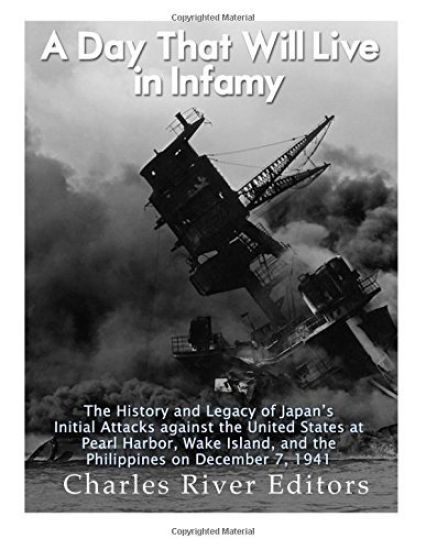
*Includes pictures *Includes contemporary accounts *Includes online resources and a bibliography for further reading All Americans are familiar with the "day that will live in infamy." At 9:30 a.m. on Sunday, December 7, 1941, Pearl Harbor, the advanced base of the United States Navy's Pacific Fleet, was ablaze. It had been smashed by aircraft launched by the carriers of the Imperial Japanese Navy. All eight battleships had been sunk or badly damaged, 350 aircraft had been knocked out, and over 2,000 Americans lay dead. Indelible images of the USS Arizona exploding and the USS Oklahoma capsizing and floating upside down have been ingrained in the American conscience ever since. In less than an hour and a half the Japanese had almost wiped out America's entire naval presence in the Pacific. Less than 24 hours earlier, Japanese and American negotiators had been continuing their diplomatic efforts to stave off conflict in the region, but as they did, President Roosevelt and his inner circle had seen intelligence reports strongly suggesting an imminent attack - though they did not know where. The U. S. rightly believed that Japan would take action to prevent the Americans from interfering with their military activities in Southeast Asia, and American military forces in the Philippines were already bracing for a potential attack. However, as the negotiations were ongoing, the powerful Japanese carrier fleet had been surging southwards through the Pacific while maintaining radio silence, preparing to strike the blow that would ignite war in an area spanning half the globe. Navy Commander-in-Chief Isoroku Yamamoto, whose code of honor demanded that the Japanese only engage enemies after a formal declaration of war, had been given assurances that his nation would be formally at war with the United States prior to the arrival of his planes over Pearl Harbor. As it turned out, those assurances were worth nothing, and Yamamoto had been misled by extremists in his government just as the Americans were misled. In fact, the Japanese would infamously deliver documents formally cutting off negotiations with the American government after the attack on Pearl Harbor had already been conducted. Far from a formal declaration of war, America was attacked without warning, plunging the world's largest democracy into history's deadliest conflict. Posted on the other side of the world, it was early on the morning of December 8 in the Philippines when American general Douglas MacArthur received news of the Japanese attack on Pearl Harbor hours earlier. With that, it could only be a matter of time before the Japanese attacked the Philippines. Although MacArthur and Allied forces tried to hold out, they could only fight a delaying action, and the Japanese managed to subdue all resistance by the spring of 1942. One of the aspects of the war most forgotten is that the Japanese launched concerted attacks against the strategically located Wake Island in conjunction with the attack on Pearl Harbor. Isolated in the dark blue vastness of the west-central Pacific Ocean, the tiny chevron-shaped island of Wake, surrounded by barrier reefs, possessed outsized strategic significance during World War II. Given the possibility of war with Japan in the near future, the United States Navy began researching and developing the island for use as a forward airbase in 1940. Located between Hawaii and Japan, with the nearest inhabited land over 600 miles away, Wake appeared as a key strategic asset for America. Its status as U. S. territory made it possible for the Navy to construct a base there without antagonizing the Japanese. Since their war plan involved a surprise attack, with the declaration of war following the start of hostilities, they anticipated seizing Wake Island with minimal resistance from the contractors and U. S. Marines there. As it turned out, the Japanese would require multiple invasion attempts and a few weeks.
*Includes pictures *Includes accounts of the projects' construction *Includes online resources and a bibliography for further reading The Transcontinental Railroad, laid across the United States during the 1860s, remains the very epitome of contradiction. On the one hand, it was a triumph of engineering skills over thousands of miles of rough terrain, but on the other hand, it drained the natural resources in those places nearly dry. It "civilized" the American West by making it easier for women and children to travel there, but it dispossessed Native American civilizations that had lived there for generations. It made the careers of many men and destroyed the lives from many others. It was bold and careless, ingenious and cruel, gentle and violent, and it enriched some and bankrupted others. In short, it was the best and worst of 19th century America in action. Of course, even once a route was chosen, the backbreaking work itself had to be done to connect railroad lines across the span of nearly 2,000 miles. This required an incredible amount of manpower, often consisting of unskilled laborers engaging in dangerous work, and the financial resources poured into it were also extreme. In a world where few natural rivers carved out over eons of time have reached a length of more than 50 miles, the idea that a group of men could carve a canal of that length seemed impossible. In fact, many thought it could not be done. On the other hand, there was a tremendous motivation to try, because if a canal could be successfully cut across Central America to connect the Atlantic and Pacific Oceans, it would cut weeks off the time necessary to carry goods by sea from the well-established East Coast of the United States to the burgeoning West Coast. Moreover, traveling around the tip of South America was fraught with danger, and European explorers and settlers had proposed building a canal in Panama or Nicaragua several centuries before the Panama Canal was actually built. Building the Panama Canal was a herculean task in every sense. Taking about 10 years to build, workers had to excavate millions of cubic yards of earth and fight off hordes of insects to make Roosevelt's vision a reality. Roosevelt also had to tie up the U. S. Navy in a revolt in Colombia to ensure Panama could become independent and thus ensure America had control of the canal. During the 1930s, at the height of the Great Depression, thousands of workers began work on the Hoover Dam, built in the Black Canyon, which had been cut by the powerful Colorado River. The Colorado River was responsible for the Grand Canyon, and by the 20th century, the idea of damming the river and creating an artificial lake was being explored for all of its potential, including hydroelectric power and irrigation. By the time the project was proposed in the 1920s, the contractors vowing to build it were facing the challenge of building the largest dam the world had ever known. As if that wasn't enough, the landscape was completely unforgiving. The engineering that went into the Hoover Dam was not just dangerous but unprecedented, to the extent that the Hoover Dam relied on building methods that had never been proven effective on such a giant scale. The project also had to employ tens of thousands of people in often dangerous working conditions, which resulted in scores of deaths. At the same time, however, the large number of men that traveled to work on the project helped turn Las Vegas, a nearby small desert town in Nevada, into Sin City. America's Greatest Engineering Projects: The Construction History of the Transcontinental Railroad, the Panama Canal, and the Hoover Dam chronicles the construction of each major project, and their subsequent history. Along with pictures of important people, places, and events, you will learn about the Transcontinental Railroad, Panama Canal, and Hoover Dam like never before.
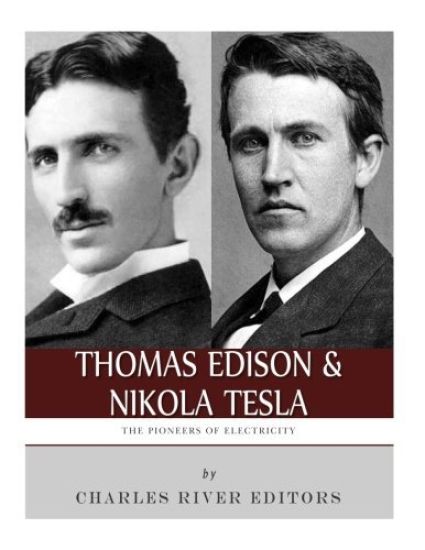
*Includes pictures of Tesla, Edison and important people and places in their lives. *Includes some of the inventors' most inspiring quotes and explanations of their inventive techniques. *Discusses the relationship and rivalry between Edison and Tesla *Includes a Bibliography for further reading. Thomas Edison holds a unique legacy in the United States, but there's no denying that his inventions have benefited the world as a whole. Known as "The Wizard of Menlo Park", every American knows that their nation's most prolific inventor harnessed the power of electricity to create the first light bulb. But that was just one of over 1,000 patents Edison would establish during his life, as he not only dreamed up new devices but also revolutionized the way materials were mass produced. His life's work heavily influenced everything from electric power, batteries and lighting to cement, telegraphy and mining. While Edison's inventions are important, what he represented was also critical to the nation as a whole. Edison represented the American Dream, specifically the notion that hard work can accomplish anything, and he always understood that himself, once exhorting the nation, "Be courageous Whatever setbacks America has encountered, it has always emerged as a stronger and more prosperous nation." As one Edison biographer put it, "Thomas Edison was more responsible than any one else for creating the modern world... No one did more to shape the physical/cultural makeup of present day civilization..." If anyone could challenge that claim, it might be Nikola Tesla. Born a Serb in the Austrian Empire, Tesla came to the United States and worked in a laboratory for none other than the Wizard of Menlo Park, Thomas Edison. It was through his work on behalf of Edison that Tesla flourished and became a well-known figure in his own right. His work there helped him establish financial backing for his own projects, particularly the design of AC (alternating current) as a system for supplying electricity. This later put him at odds with Edison, who championed DC (direct current), but Tesla's model would come out on top as the 19th century came to a close. Having established AC as an electrical supply system, Tesla became a global celebrity, and his devices and inventions fascinated people. Tesla tinkered with everything from X-rays to wireless communications and even attempted a primitive form of the radio. While Tesla was not able to successfully execute the devices and concepts he foresaw, his forward thinking in fields like wireless communication certainly proved prescient, and his futuristic devices and his later reputation for eccentricity helped create the "mad scientist" image that still remains a pop culture fixture. Tesla seemed to have come to grips with this aspect of his legacy late in life, noting, "The scientific man does not aim at an immediate result. He does not expect that his advanced ideas will be readily taken up. His work is like that of the planter - for the future. His duty is to lay the foundation for those who are to come, and point the way." This book profiles the lives and legacies of the two famous scientists, while also examining their inventions and work. Along with pictures of important people, places, and events, you will learn about Edison and Tesla like never before.
*Includes pictures of important places and historic illustrations and art depicting Thor and other important Norse figures. *Explains the historical origins of the god, the mythological tales about him, and the literary evolution of Thor. *Includes a Bibliography for further reading. "Across the rainbow bridge of Asgard, Where the Booming Heavens Roar, You'll behold in breathless wonder, the God of Thunder, Mighty Thor " - Theme Song from the television show Mighty Thor (1966) "In swelling rage then rose up Thor, -- Seldom he sits when he such things hears, -- And the oaths were broken, the words and bonds, The mighty pledges between them made." - Voluspa Line #26 from the Poetic Edda A hammer no mortal can lift. A flame-haired fiery storm god. A comic book alien-hero-god who defends humanity. The swastika. Even the name "Thursday" ("Thor's Day"). Despite the virtual disappearance of the indigenous Norse religion and mythology several centuries ago, modern society still regularly encounters the storm god Thor, who continues to be brought back to life in the form of literature and was recently the protagonist in a big-budget Hollywood movie. What is it about this god, out of the hundreds (if not thousands) of deities that were consigned to the dustbin of history by the world's major religions, that so captures people's imaginations today? A better understanding of Thor's appeal can be found in just about every aspect of the history and evolution of the figure over the centuries, including the origins of the god, the evocative imagery used to describe him, and even the parallels between Thor and similar gods and heroes. All of this has been buffeted by literature, such as the stories about Thor found in the Prose Edda and the Poetic Edda, and the connection societies have had with Thor for hundreds of years, even up until today. This work also examines the decline and displacement of Norse mythology by Christianity, the reasons why Thor was often the last god worshiped by the Norse, and today's remnants of Thorism, including his parallels in other faiths, his role in revived Neo-Heathenism and his appearance in other media as a hero in comics and films. Along with pictures and a bibliography, you will learn about Thor like you never have before, in no time at all.
*Includes pictures of important people, places, and events. *Includes Bibliographies on each for further reading. The lives of Wilbur and Orville Wright are quintessential American stories. Growing up in America's heartland, the boys lived very ordinary lives with 5 other siblings and worked in printing jobs and repair jobs that involved tinkering with tools and bicycles. But at the end of the 20th century, one of the brothers' passions became an obsession, especially for Wilbur, who would later write, "My brother and I became seriously interested in the problem of human flight in 1899." In December 1903, the brothers had done enough scientific work with concepts like lift to help their aeronautical designs, and they had the technical know-how to work with engines. On December 17, the brothers took turns making history's first successful powered flights. The fourth and final flight lasted nearly a minute and covered nearly 900 feet. Wilbur would work in aviation until dying of typhoid at the age of 45 in 1912, and by the time Orville died in 1948, planes had nearly reached supersonic speeds, a far cry from the days of bicycles and carriages he knew as a kid. In 1927, Charles Lindbergh became the first to make a nonstop Transatlantic solo flight, forever earning him fame and the moniker "Lucky Lindy". Two years later, Earhart was the first woman to cross the Atlantic in a plane, and her uncanny resemblance to Lindbergh earned her the nickname "Lady Lindy". Together they became America's most famous aviators, and their stories were inextricably interwoven by their lives, careers, and ill-fated destinies. In many ways, Charles Lindbergh represented the best and worst of America during the first half of the 20th century. Lindbergh became famous for being an aviation pioneer whose solo flight across the Atlantic captured the imagination of an entire world, yet he was an isolationist who wanted to keep American freedoms safe for Americans and no one else. Lindbergh was the quintessential family man, yet he fathered illegitimate children and suffered an unspeakable tragedy that became known as "The Crime of the Century." Lindbergh embodied some of his era's greatest virtues and harbored some of its worst prejudices, but it was those prejudices and his son's murder that have come to color much of his legacy.. By the mid-1930s, Earhart had set a multitude of altitude and distance records, but she wanted to attempt a circumnavigation of the world. After an ill-fated first attempt, Earhart and Fred Noonan set off on another attempt, creating one of the 20th century's most enduring mysteries. Earhart and Noonan were to land on Howland Island, 1700 miles southwest of Hawaii, but radio transmissions ceased between the plane and authorities on the ground the morning of July 2, 1937. Earhart and Noonan had disappeared, never to be seen again, despite one of the nation's largest and costliest manhunts to date. Unfortunately, the speculation over exactly what happened to Earhart and the mystery of her disappearance have come to overshadow and obscure her many accomplishments. American Legends of the Sky profiles the lives, careers, and legacies of America's most famous aviation pioneers. Along with pictures of important people, places, and events, you will learn about the Wright Brothers, Lindbergh, and Earhart like never before.
*Includes pictures *Includes contemporary accounts of the eruption and the environmental effects *Includes online resources and a bibliography for further reading "On my trip towards the western part of the island, I passed through nearly the whole of Dompo and a considerable part of Bima. The extreme misery to which the inhabitants have been reduced is shocking to behold. There were still on the road side the remains of several corpses, and the marks of where many others had been interred: the villages almost entirely deserted and the houses fallen down, the surviving inhabitants having dispersed in search of food." - Lt. Philips at Sumbawa In many ways history is the story of human beings trying to control their destinies by overcoming the effects of their physical surroundings. As too many have learned, the best they could often do was cope with nature, and the various natural disasters produced around the globe. Consider, for example, the year 1816, known as the "Year Without a Summer," which found the working poor in both Europe and America facing starvation caused by factors that few, if any, of them understood. They only knew that the time for planting, the longed for and planned for last days of winter, never came. Farmers who had been growing the same crops for decades began to be curious when, in April of that year, the snow still fell. By the first of May, they were outright concerned. In the weeks that followed, each faced a critical decision: go forward and plant as usual, trusting that the sun would again warm the earth, or continue to wait. In the end, their decisions made little difference, except perhaps that those who waited could survive a little longer by eating the seeds they had been saving. For in 1816, the seeds planted in the ground to sprout and grow usually did neither, because temperatures were never warm enough to nurture their progress. Instead, most lay dormant, while those hardier varieties did finally push their ways to the earth's surface, only to have the life frozen out of them by cold winds unabated by the sun's warmth. As the prolonged crisis went on, people around the planet tried to come to grips with what was happening. Preachers spoke of God's judgment, while farmers stood and prayed for relief, but neither group knew the truth: the cause of their misfortune lay not at their own doorsteps but thousands of miles away on an island they had never heard of. In this case, their destiny had been decided on the island of Sumbawa in Indonesia, thanks to a big volcano known as Mount Tambora. In one of the strongest volcanic explosions in recorded history, Mount Tambora in April 1815 and sent enough ash and dust into the air to block out some of the sun's warmth around the globe for nearly the next two years. In the aftermath of the April 1815 explosion, the summer of 1816 witnessed crops freeze in the fields and be buried under snow. Indian corn, a hardy staple of the early American diet, barely produced, and hay and wheat failed to grow. Traditional summer vegetables, such as cucumbers and tomatoes, failed to grow at all, leaving people severely deficient in the vitamins they produced. Animals and humans alike would go hungry, as there was less food for each. Ultimately, those who survived would tell stories of the desperate time, and speak with wonder about the fact that they had survived at all to tell their tales. The Year Without a Summer: The History and Legacy of the 1815 Eruption of Mount Tambora chronicles the immediate and long term effects of one of history's most important volcanic eruptions. Along with pictures of important people, places, and events, you will learn about the Year Without a Summer like never before.