Kirjojen hintavertailu – 12 903 727 kirjaa ja 27 kauppaa

Kirjailija

Charles River

Kirjat ja teokset yhdessä paikassa: 4 673 kirjaa, julkaisuja vuosilta 2013–2022, suosituimpiin kuuluu William Powell and Myrna Loy: The Lives and Careers of One of Classical Hollywood's Most Iconic Duos. Vertaile teosten hintoja ja tarkista saatavuus suomalaisista kirjakaupoista.

4 673 kirjaa

Kirjojen julkaisuvuodet: 2013–2022.

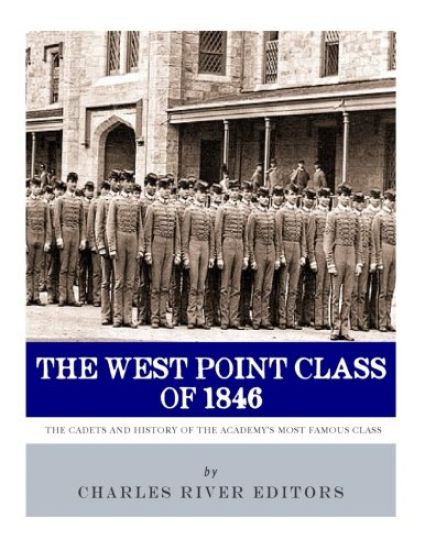
The West Point Class of 1846: The Cadets and History of the Academy's Most Famous Class
*Profiles the Class of 1846's most famous cadets, including George McClellan, Stonewall Jackson, George Pickett, A. P. Hill and others. *Discusses the relationships between the cadets and their lives during and after West Point. *Includes pictures of some of the cadets. *Includes a Bibliography for further reading. "Toiling up hill is not what it is cracked up to be " - Cadet George B. McClellan West Point has long been America's most famous military academy, but in the early 19th century, it was a highly unimpressive school consisting of a few ugly buildings facing a desolate, barren parade ground. Established with just five officers and ten cadets of the Corps of Engineers on March 16, 1802, the Academy was built on a spot just 50 miles north of New York City which had been a key Hudson River military fortress during the Revolutionary War. Cadets attending during the "Point's" first several decades were obliged to maintain their daily regimen knowing the school might shut down at any moment, as the U. S. government frequently questioned why it should provide free education. As it turned out, West Point would become the foremost military academy in the nation, and it would churn out the cadets who became the most important generals in the Civil War. With that, the future generals' years at West Point became a source of both camaraderie and colorful stories A clerical error by West Point administrators ensured that Hiram Ulysses Grant forever became known as Ulysses S. Grant, and years after Robert E. Lee met Albert Sidney Johnston and Jefferson Davis at West Point, George H. Thomas and William Tecumseh Sherman met each other and Richard S. Ewell. During the 1850s, classes included men like John Bell Hood, Union general Phil Sheridan and James Birdseye McPherson, who would become the only commanding general of a Union army to die in a Civil War battle when he fell in 1864 during Sherman's Atlanta Campaign. But none of the West Point classes became as famous as the Class of 1846, which boasted more than a dozen future Civil War generals. The Class of 1846 included a shy kid named Thomas Jonathan Jackson who made few friends and struggled with his studies, finishing 17th in his class 15 years before becoming Stonewall. Also in that class was A. P. Hill, who was already in love with the future wife of George McClellan, a young prodigy who finished second in the class of 1846. A popular and mischievous George Pickett would play hooky at the local bar and struggle just to finish last in the class, and the Class of 1846 also churned out critical Union generals like Jesse Reno, Darius Couch, and George Stoneman. Before these men opposed each other on Civil War battlefields, they forged their own friendships and charted their future paths together at West Point. The West Point Class of 1846 profiles the most famous cadets of the class, chronicles their time on campus together, and discusses their careers after the Academy. Along with pictures of important people and places, you will learn about the Class of 1846 like you never have before, in no time at all.
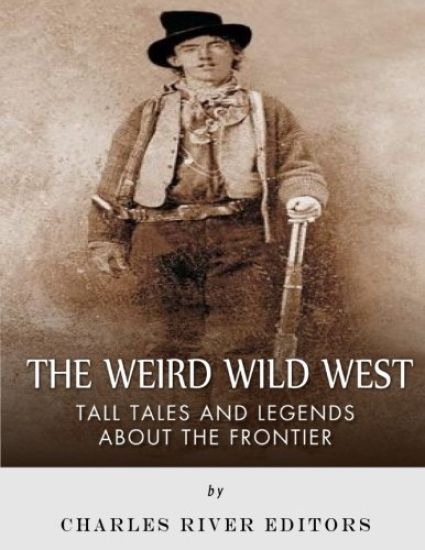
The Weird Wild West: Tall Tales and Legends about the Frontier

The Weird Wild West: Tall Tales and Legends about the Frontier

Sean McLachlan; Charles River

Createspace Independent Publishing Platform
2017
nidottu
*Includes pictures *Includes contemporary accounts of the legends *Includes a bibliography for further reading *Includes a table of contents Space may be the final frontier, but no frontier has ever captured the American imagination like the "Wild West", which still evokes images of dusty cowboys, outlaws, gunfights, gamblers, and barroom brawls over 100 years after the West was settled. A constant fixture in American pop culture, the 19th century American West continues to be vividly and colorful portrayed not just as a place but as a state of mind. Even for those who travel through the West today, there are plenty of traces of the old times. Ghost towns still stand in remote parts of the desert and prairie, Native American rock art still tell their mute legends, and old prospectors' mines still dot the hillsides. Even some of the places' names, such as Bloody Basin, Arizona and Soldier's Hill, New Mexico, have their stories to tell. In November 2014, one lucky archaeologist at Nevada's Great Basin National Park spotted an old rifle leaning against a pine tree; the sun and wind had weathered the wooden stock until it was as gray as the tree trunk, making it almost invisible to passersby. When the gun was examined, it turned out to be a Winchester rifle. The serial number was still legible and records showed that it had been manufactured and shipped in 1882. Some prospector or hunter had set the rifle against a tree more than a century ago and never came back for it. It had been leaning there ever since. As popular as works about the West remain today, the Wild West captured the imagination of people all the way back to the days when it really was wild. Even in the 19th century, its fame spread thanks to dime novels, travelogues, Wild West shows, and theater plays, and people were thrilled by tales of exploration and gunfights. Naturally, in the process of settling the frontier, the adventures contained countless numbers of strange stories, ranging from tales of monsters and lost mines to those about hidden cities and men coming back from the dead. It was a vast, unexplored country, and many mysteries could hide in the unmapped mountain ranges and seemingly endless plains. The Weird Wild West: Tall Tales and Legends about the Frontier is a collection of tales about America's frontier that range from the possible to the downright ridiculous. Some are adaptations of old folk tales immigrants brought with them or creations of overly eager newspaper reporters, but many have their basis in fact. Along with pictures and a bibliography, you will learn about the Weird Wild West like never before, in no time at all.
Winning the West: The Lives and Legacies of Ulysses S. Grant, William Tecumseh Sherman, and George H. Thomas
*Weaves together each general's life and career into one chronological and entertaining narrative. *Includes pictures of the generals and important people, places, and events in their lives. *Includes an original introduction for each general. *Includes maps of some of the generals' most important battles. *Includes an analysis of each general's legacy. *Includes bibliographies on each general for further reading. Despite the fact that the Civil War began over 150 years ago, Americans continue to be fascinated by the Civil War icons who made the difference between victory and defeat in the war's great battles. Although much attention has been fixed on the East, the Civil War was essentially won in the West, where the Union was primarily led by Ulysses S. Grant, William Tecumseh Sherman and George H. Thomas. While all eyes were fixed on the Eastern theater at places like Manassas, Richmond, the Shenandoah Valley and Antietam, Grant went about a steady rise up the ranks through a series of successes in the West. His victory at Fort Donelson, in which his terms to the doomed Confederate garrison earned him the nickname "Unconditional Surrender" Grant, could be considered the first major Union victory of the war, and Grant's fame and rank only grew after that at battlefields like Shiloh and Vicksburg. Along the way, Grant nearly fell prey to military politics and the belief that he was at fault for the near defeat at Shiloh, but President Lincoln famously defended him, remarking, "I can't spare this man. He fights." Lincoln's steadfastness ensured that Grant's victories out West continued to pile up, and after Vicksburg and Chattanooga, Grant had effectively ensured Union control of the states of Kentucky and Tennessee, as well as the entire Mississippi River. William Tecumseh Sherman (February 8, 1820 - February 14, 1891) holds a unique position in American history. Synonymous with barbarity in the South, Sherman is lauded as a war hero in the North, and modern historians consider him the harbinger of total war. As a General in the Union Army during the American Civil War (1861-65), Sherman was recognized for his outstanding command of military strategy but criticized for the harshness of the "scorched earth" policies that he implemented in conducting total war against the Confederate States, especially in 1864 and 1865. Military historian B. H. Liddell Hart famously declared that Sherman was "the first modern general." One of the most unique and effective generals of the Civil War also happens to be one of the most overlooked. While there is a never ending stream of acclaim going to generals like Grant, Lee, and Sherman, General George H. Thomas has managed to fly under the radar, despite having an unusual background as a Southerner fighting for the Union and scoring almost inconceivable successes at Missionary Ridge, Franklin, and Nashville. Thomas also skillfully fought at Perryville, Stones River, and in Sherman's Atlanta Campaign, but he's best remembered as "The Rock of Chickamauga". On September 19, 1863, after a Confederate attack drove a third of the Union army from the field, including commanding general William Rosecrans, Thomas rallied the remaining parts of the army and formed an impromptu defensive stand on Horseshoe Ridge, holding off a series of well-executed (albeit costly) assaults until nightfall. Thomas's heroics prevented the destruction of the Union army and allowed it to successfully retreat to Chattanooga. Winning the West chronicles the lives of the three men primarily responsible for the Union's success in that theater during the Civil War. With pictures, maps, and more, you will learn about Grant, Sherman, and Thomas like you never have before.
William Henry Harrison: The Life and Legacy of the First American President to Die in Office
*Includes pictures *Includes accounts of Harrison's battles and Harrison's quotes about his career *Includes online resources and a bibliography "Old Tip he wore a homespun coat, he had no ruffled shirt: wirt-wirt, But Matt he has the golden plate, and he's a little squirt: wirt-wirt " - A Whig campaign slogan during the 1840 election When one is looking quickly over the lives of the Presidents of the United States, it is easy to overlook William Henry Harrison. After all, he only served as the Chief Executive for 30 days, and he spent the majority of those in bed, fighting for his life and eventually losing. However, to ignore Harrison because he served such a short time in the White House is just as foolish as ignoring Patrick Henry or Alexander Hamilton because they were never elected to the nation's highest office. In fact, like Henry, Hamilton, and many others from the early days of the Republic, Harrison served his country in many ways and was one of the most consequential figures both in politics and the military, which makes it all the more unfortunate that much the same way Hamilton is remembered for the duel with Aaron Burr, Harrison is remembered for being the first president to die in office. The manner of Harrison's death, and the length of his inaugural address, have overshadowed the various facets of his life and career. For instance, few people know of his famous family, how he dropped out of medical school to become a soldier, and how he eloped with a young woman and went on to have 10 children with her. Harrison's early political career also remains relatively unknown; few realize that he spent much of his early adulthood in what was then still wilderness, first as a soldier, then as the Territorial Governor of the Indiana Territory. Older Americans may have heard the phrase used during his election - "Tippecanoe and Tyler, Too" - but even that battle was overshadowed by the War of 1812. Many people look at his austere portrait and do not realize that he served in both the United States House and Senate, and that he also lived in South America as an American diplomat. Even during his short presidency, he accomplished lasting work, laying the foundation for what later became the rules of the American Civil Service system. Thus, even while it is true that he had the shortest presidency in American history, Harrison managed to accomplish more for the long term good of the nation than other men have in a much longer time. William Henry Harrison: The Life and Legacy of the First American President to Die in Office looks at one of America's foremost military heroes of the early 19th century. Along with pictures of important people, places, and events, you will learn about William Henry Harrison like never before.
Wild Bill Hickok & Calamity Jane: The Wild West's Odd Couple

Wild Bill Hickok & Calamity Jane: The Wild West's Odd Couple

Charles River

Createspace Independent Publishing Platform
2017
nidottu
*Discusses the myths and legends surrounding the relationship between Wild Bill and Calamity Jane, including whether they were married. *Includes pictures of Wild Bill, Calamity Jane, and important people, places, and events in their lives. *Explains the true origins of the nickname Calamity Jane. *Discusses Wild Bill's most famous shootouts and his murder, explaining what's fact and what's legend. *Includes a bibliography for further reading. "When fired upon Capt. Egan was shot. I was riding in advance and on hearing the firing turned in my saddle and saw the Captain reeling in his saddle as though about to fall. I turned my horse and galloped back with all haste to his side and got there in time to catch him as he was falling. I lifted him onto my horse in front of me and succeeded in getting him safely to the Fort. Capt Egan on recovering, laughingly said: 'I name you Calamity Jane, the heroine of the plains.' I have borne that name up to the present time." - Calamity Jane "Wild Bill was a strange character. Add to this figure a costume blending the immaculate neatness of the dandy with the extravagant taste and style of a frontiersman, you have Wild Bill, the most famous scout on the Plains."" - General George Custer In many ways, the narrative of the Wild West has endured more as legend than reality, and a perfect example of that can be found in the legend of James Butler Hickok (1837-1876), forever known as "Wild Bill." Indeed, separating fact from fiction when it comes to the life of Wild Bill is nearly impossible, something due in great measure to the fact that the man himself exaggerated his own adventures or fabricated stories altogether. When he was killed while playing poker in the mining South Dakotan outpost of Deadwood, he put Deadwood on the map and ensured both his place and his poker hand's place in legend. Whether Hickok's legacy would have endured without his legendary death is anyone's guess, but by becoming the first well known Westerner to die with his boots on, he immediately became the West's first hero. The most famous woman of the Wild West was also possibly the most colorful and mysterious. "Considered a remarkable good shot and a fearless rider for a girl of my age," Calamity Jane claimed to be a veteran of the Indian Wars, a scout, and the wife of Wild Bill Hickok, all on the way to becoming a dime novel heroine. While all of those legends have stuck, it's unclear to what extent if any they are actually true, and even her contemporaries doubted the authenticity of her statements. More than anything, people in frontier towns like Deadwood looked on with amusement at the girl who was more often than not drunk and was described by one of Wild Bill's friends as "simply a notorious character, dissolute and devilish." Her frequent drinking binges and her insistence that messing with her would "court calamity" had helped establish her nickname even before she arrived in Deadwood in the mid-1870s. Ultimately, Calamity Jane's tall tales, eccentric personality, and association with Wild Bill would all make her a popular figure in the last quarter of the 19th century, and she became so well known that she started taking part in traveling shows of the kind made famous by Buffalo Bill Cody, where spectators could hear her colorfully (and drunkenly) talk about her life in the Wild West, with each telling stretching the truth ever further. Her legacy continued to crystallize after her death and eventually turn her into a legend, immortalized in countless dime novels, books, TV and the silver screen, helping make some of her contemporaries and surroundings notorious as well. Wild Bill Hickok & Calamity Jane chronicle the colorful lives of the two Western legends and examines their relationship and legacies. Along with pictures and a Table of Contents, you will learn about Wild Bill & Calamity Jane like you never have before.
Women in Classical Athens: The Lives of the City's Female Inhabitants During Its Golden Age
*Includes pictures *Includes ancient accounts describing women in Athens *Includes online resources and a bibliography for further reading *Includes a table of contents "What I would prefer is that you should fix your eyes every day on the greatness of Athens as she really is, and should fall in love with her. When you realize her greatness, then reflect that what made her great was men with a spirit of adventure, men who knew their duty, men who were ashamed to fall below a certain standard. If they ever failed in an enterprise, they made up their minds that at any rate the city should not find their courage lacking to her, and they gave to her the best contribution that they could." - The Funeral Oration of Pericles, quoted by Thucydides In virtually all fields of human endeavor, ancient Athens was so much at the forefront of dynamism and innovation that the products of its most brilliant minds remain not only influential but entirely relevant to this day. In the field of medicine, the great physician Hippocrates not only advanced the practical knowledge of human anatomy and care-giving but changed the entire face of the medical profession. The great philosophers of Athens, men like Aristotle, Socrates, and Plato, interrogated themselves with startling complexity about the nature of good and evil, questioned the existence of divinity, advocated intelligent design, and went so far as to argue that all life was composed of infinitesimal particles. Great architects and sculptors such as Phidias produced works of art of such breathtaking realism and startling dynamism that they later formed the driving force behind the resurgence of sculpture during the Renaissance and served as masters to artists such as Michelangelo, Bernini, and Donatello. The plays of dramatists such as Aristophanes not only displayed an acerbic wit and a genius for political satire so pronounced that their works continue to be performed - and topical - to this day, but served as the inspiration for virtually all playwrights from Shakespeare to the present day. And this does not take into account the host of equally brilliant mathematicians, natural philosophers, historians, astronomers and politicians that the city's great schools nurtured and produced. Of course, what most people remember about the Golden Age of Athens today is the accomplishments of the city's men, which disregards nearly half the population. Pericles, in his funeral oration as quoted by the ancient historian Thucydides, sums up what is generally considered to be the attitude of men to their women in Classical Athens: "I should say something about the virtue appropriate to women and I shall simply give one brief piece of advice. Your renown will be great if you do not behave in an inferior way to that natural to your sex and your glory will be to be least mentioned amongst men concerning either your virtue or your faults." Any exploration of the lives of women in Classical Athens has to take into consideration the legal framework which governed such matters as marriage, inheritance and basic rights within society, as well as the woman, herself, within the oikos. However, as a starting point, the simple issues relating to the day to day lives of the women in this period provide an initial understanding of how all of these other factors played a part in the overall pattern of life for at least a Classical Athenian, upper class, woman. The lives of lower and middle class women, as well as those that did not fall into the defined social hierarchy, were markedly different from that of their aristocratic sisters in some respects. Underlying, however, for all women, was an attitude that sought to keep them apolitical, segregated and secluded as much as was practically possible. Women in Classical Athens: The Lives of the City's Female Inhabitants During Its Golden Age looks at the history of the other half of the city's residents and their experiences.
Woodstock: The History and Legacy of America's Most Famous Music Festival

Woodstock: The History and Legacy of America's Most Famous Music Festival

Charles River

Createspace Independent Publishing Platform
2017
nidottu
*Includes pictures. *Explains how the festival was put together and highlights the performances. *Includes footnotes and a bibliography for further reading. "We were ready to rock out and we waited and waited and finally it was our turn...there were a half million people asleep. These people were out. It was sort of like a painting of a Dante scene, just bodies from hell, all intertwined and asleep, covered with mud. And this is the moment I will never forget as long as I live: a quarter mile away in the darkness, on the other edge of this bowl, there was some guy flicking his Bic, and in the night I hear, 'Don't worry about it John. We're with you.' I played the rest of the show for that guy." - John Fogerty of Creedence Clearwater Revival Woodstock, more accurately entitled the Woodstock Music Festival; An Aquarian Exposition: Three Days of Peace and Music, represents one of the most enduring symbols of the Youth Movement of America's late 1960s and early '70s. As the public pinnacle of that social phenomenon, the giant festival that overwhelmed a section of an upstate New York farm for a week during a time of national and international upheaval evolved from a typical speculative financial venture to a defining historical monument thanks to the legendary performances by many of the era's greatest musicians. The now iconic festival all began with an advertisement in The New York Times taken out by four financial investors. Michael Lang was the manager of a rock band, and Artie Kornfeld served as an executive for Capitol Records, a major label of the time for both classical and non-classical music. Joined by capitalists John Roberts and Joel Rosenman, the ad read simply, "Young men with unlimited capital looking for interesting, legitimate investment opportunities and business propositions." The original idea called for the construction, maintenance and management of a recording studio in the Bethel, Wallkill and Woodstock areas, close to where Bob Dylan and a group called The Band lived. The picturesque setting was first envisioned as a retreat for rock artists, and no thought at all was given to such a prodigious event as the festival that followed. If a live performance was to be held, it would have been staged as a one-day promotion for the studio. All of this gave way to the larger concept, in part inspired by the Monterey Pop Festival of 1967, the largest of its kind to that point. The working title of the new rock festival took a similarly different approach from what inevitably resulted, originally dubbed the Woodstock Music and Art Fair. A long search ensued, based on cost and crowd estimates that, in the end, turned out to be more than overly-conservative. Of course, nobody involved would have originally guessed that the event would include participants like Janis Joplin, Jimi Hendrix, The Who, Grateful Dead, Creedence Clearwater Revival, Jefferson Airplane and dozens of other acts over several days. By music festival standards, the audience at Woodstock was biblical in size, but the largest audience in festival history consists of those who claimed they were there. The closing decades of the 20th century abounded with countless claims by Baby Boomers who said that they had been among the mass that descended upon the New York farming community. In truth, Woodstock was a three-day, muddy logistical nightmare, as ill-prepared hippies arrived at an equally ill-prepared site with limited food supplies and even more limited access to restrooms. Ironically, as the music festival ballooned beyond anyone's expectations, it defeated the original purpose of the organizers. As John Roberts explained before Woodstock had even ended, "If we had any inkling that there was going to be this kind of attendance, we certainly would not have gone ahead... Financially speaking, of course, the festival is a disaster."
The Ptolemaic Kingdom of Ancient Egypt: The History and Legacy of the Ptolemy Dynasty and the End of the Egyptian Empire
*Includes pictures *Includes ancient accounts *Includes online resources and a bibliography for further reading Among all the periods in ancient Egyptian history, the Ptolemaic Kingdom and its most famous ruler, Cleopatra, may be the most well-known today. By the 4th century BCE, it appeared as though ancient Egypt was in its final death throes. It had long ceased to be an influential kingdom in the Near East and Mediterranean regions, and it had been ruled over by a succession of foreign peoples including Libyans, Nubians, Assyrians, and Persians. But just when Egypt seemed was doomed to pass forever into obscurity, it was reinvigorated by outsiders, most notably Alexander the Great. While in the process of campaigning to destroy the Achaemenid Persian Empire and conquer the world in 331 BCE, he made a pit stop in Egypt that forever changed the course of Egyptian history. Although his understanding of ancient Egyptian chronology and religion was minimal, Alexander was intrigued by ancient pharaonic culture, knowing, as the 5th century BCE Greek historian Herodotus once wrote, "Egypt is the gift of the Nile." As a result, Alexander endeavored to incorporate the land of the pharaohs into Hellenic Civilization. Although Alexander never lived to rule over Egypt, one of his generals, Ptolemy I, did, and it was he who established the last great pharaonic dynasty in Egypt, known as the Ptolemaic Dynasty. The Ptolemies gave ancient Egypt an injection of vitality that had not been seen in the Nile Valley for centuries, preserving many aspects of native Egyptian culture while adding their own layer of Hellenic culture. The first few Ptolemaic rulers proved as able as any of their Egyptian predecessors as they worked to make Egypt a first-rate power in the world once again. Unfortunately, these able rulers were followed by a succession of corrupt and greedy kings, more concerned with personal wealth and power than the stability and greatness of their kingdom. Eventually, Ptolemaic Egypt collapsed due to weak rulers, internal social problems, and the rising power of Rome, but before the Ptolemaic Dynasty was extinguished, it proved to be one of the most impressive royal houses in ancient Egyptian history. The end of the Ptolemies also happened to coincide with the most famous period of Roman history. In the latter 1st century BCE, men like Julius Caesar, Mark Antony, and Octavian participated in two civil wars that would spell the end of the Roman Republic and determine who would become the Roman emperor. In the middle of it all was history's most famous woman, Cleopatra, who famously seduced both Caesar and Antony and thereby positioned herself as one of the most influential people in a world of powerful men. Cleopatra was a legendary figure even to contemporary Romans and the ancient world, and she was a controversial figure who was equally reviled and praised through the years, depicted both as a benevolent ruler and an evil seductress (occasionally at the same time). Over 2,000 years after her death, everything about Cleopatra continues to fascinate people around the world, from her lineage as a Ptolemaic pharaoh, her physical features, the manner in which she seduced Caesar, her departure during the Battle of Actium, and her famous suicide. And despite being one of the most famous figures in history, there is still much mystery surrounding her and the end of the Ptolemies, leading historians and archaeologists scouring Alexandria, Egypt for clues about her life and Egypt's transition to Roman rule. The Ptolemaic Kingdom of Ancient Egypt: The History and Legacy of the Ptolemy Dynasty and the End of the Egyptian Empire chronicles the tumultuous history of Egypt late in the second millennium BCE. Along with pictures depicting important people, places, and events, you will learn about the New Kingdom like never before.
The Six Day War: The History and Legacy of the 1967 Arab-Israeli War and Its Impact on the Middle East
*Includes pictures *Includes a bibliography and online resources for further reading In early June 1967, the Israelis captured Jordanian intelligence that indicated an invasion was imminent, and at 08h10 on June 5, 1967, the Israel Broadcasting Authority aired an Israeli Defense Force communique. "Since the early hours of this morning," it read, "heavy fighting has been taking place on the southern front between Egyptian armored and aerial forces, which moved against Israel, and our forces, which went into action to check them." This was followed up a little over two hours later by a publicly aired message to the armed forces of Israel, released by Israeli Minister of Defense Moshi Dayan in his first day in office. "We have no aims of conquest," was Dayan' simple message. "Our only aim is to frustrate the attempt of the Arab armies to conquer our country, and to sever and crush the ring of blockade and aggression which has been created around us." By then, the Israeli Air Force had been in action over the skies of Egypt since 07h45 that morning, and as a consequence, almost the entire Egyptian Air Force lay smoldering on the tarmacs of various forward Egyptian airbases. Having neutralized Egypt's air strike potential in a matter of hours, the IAF then began to turn its attention to Jordan, Iraq and Syria, as IDF ground forces, back in the Sinai, moved in to take care of the more punishing business of destroying Egyptian ground forces. Over the next six days, the Israelis overwhelmed the Egyptians in the west, destroying thousands of tanks and capturing the Gaza Strip and the entire Sinai Peninsula. At the same time, Israel drove the Jordanians out of Jerusalem and the West Bank, and it captured the Golan Heights from Syria near the border of Lebanon. In the span of a week, Israel had tripled the size of the lands it controlled. Israel had gone from less than 10 miles wide in some spots to over 200 miles wide from the Sinai Peninsula to the West Bank. Israel also unified Jerusalem. The results of the Six Day War created several issues that have still not been resolved in the Middle East. Israel now found itself in possession of territories that were the home of over a million Arabs. Of these territories, Israel officially annexed only East Jerusalem and the Golan Heights, leaving the inhabitants of the West Bank, Sinai Peninsula, and Gaza Strip in limbo regarding citizenship status. Despite attempts to create peace, the Arab nations refused to recognize Israel, and Israel refused to withdraw from any of the land it captured in 1967. After conquering the territories, Israel began encouraging Jewish settlement in the new territories. In the 1970s, more than 10,000 Jews moved into the West Bank, Gaza Strip, Golan Heights, East Jerusalem, and the Sinai Peninsula, a figure that grew to over 100,000 by the early '80s and is now over 500,000 today. Some in Israel note that Jewish settlements in 1967 had simply reestablished Jewish communities in places they had lived prior to 1948, including Jerusalem, Hebron, and Gush Etzion, as well as Gaza City in the Gaza Strip. They also argue that the legal status of the territories was never officially determined due to the Palestinian rejection of the U. N. Partition Plan. Still others assert that Israel's settlements do not breach international law or the Geneva Convention because it fought the Six Day War in self-defense and did not forcibly transfer civilian populations onto occupied territories. However, despite those arguments, the vast majority of the world considers Jewish settlements on land captured by Israel in 1967 to be illegal, including the United Nations, the International Court of Justice, and the international community. The Six Day War: The History and Legacy of the 1967 Arab-Israeli War and Its Impact on the Middle East looks at one of the most important turning points in the region.
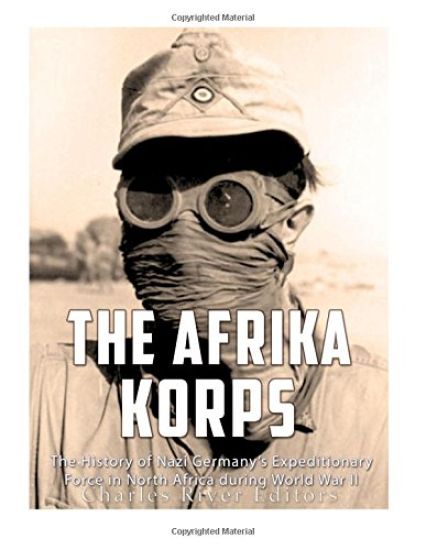
The Afrika Korps: The History of Nazi Germany's Expeditionary Force in North Africa during World War II
*Includes pictures *Includes accounts of the fighting *Includes online resources and a bibliography for further reading The fighting in North Africa during World War II is commonly overlooked, aside from the famous battle at El Alamein that pitted the British under General Bernard Montgomery against the legendary "Desert Fox," Erwin Rommel. But while the Second Battle of El Alamein would be the pivotal action in North Africa, the conflict in North Africa began all the way back in the summer of 1940 when Italian dictator Benito Mussolini declared Italy's entrance into the war. From his perspective, the fact that the British and French had their hands full with the Germans created an opportunity for Italy to enlarge its colonial holdings in Africa by seizing portions of the British Empire. However, British troops in the colony of Egypt responded to Italy's declaration of war by driving through the Egyptian-Ethiopian border and attacking Italian troops stationed in the Italian colony of Ethiopia. By September 13, 1940, Italian commanders in Ethiopia were finally ready to put Mussolini's plan into action and attack British colonial holdings, but British troops had already attacked a series of Italian frontier posts and had inflicted 3,500 casualties among Italy's North African troops. Dealing with the Italians was one thing, but the British faced an entirely different monster in North Africa when Erwin Rommel, a German general who had gained much fame for his role in the invasions of Poland and France, was sent to North Africa in February 1941. For the next two years, the Allies would face off against the legendary Desert Fox and his Afrika Korps. As a specific unit, the Afrika Korps represented only a small part of the German forces deployed in the North African theater, but the term "Afrika Korps" has since come to imply all forces under Rommel's command, and the Afrika Korps is now associated with all German war efforts in North Africa. Rommel's directives from the German headquarters were to maneuver in a way that would allow him to hide the fact that his ultimate goal was the capture of Cairo and the Suez Canal. The ultimate plan was that Rommel would not reveal the Germans' true intentions in North Africa until after the Germans had made headway in their invasion of the Soviet Union. With the Axis forces trying to push through Egypt towards the Suez Canal and the British Mandate of Palestine, American forces landed to their west in North Africa, which ultimately compelled Rommel to try to break through before the Allies could build up and overwhelm them with superior numbers. Given that the combined Allied forces under Montgomery already had an advantage in manpower, Montgomery also wanted to be aggressive, and the fighting would start in late October 1942 with an Allied attack. The Second Battle of El Alamein was a turning point in the campaign. While the scale of the battle paled in comparison to the battles of the Eastern Front, where the majority of German troops were concentrated, it still marked an important victory in World War II, especially from the British perspective. The British, who had suffered through three years of war in which they seemed to teeter on the brink of defeat, were able to hang their hats on the victory, reviving the nation's morale and reaffirming its military might. Over the next few weeks, the Allies made steady progress and forced Rommel to conduct a fighting retreat to safety until his army linked up with another Axis army in Tunisia, but the fighting at the end of 1942 inevitably compelled all Axis forces to quit the theater, the first time since the beginning of the war that Africa was safe for the Allies. The Afrika Korps: The History of Nazi Germany's Expeditionary Force in North Africa during World War II chronicles one of World War II's most famous fighting units.
The Afrika Korps: The History of Nazi Germany's Expeditionary Force in North Africa during World War II
*Includes pictures *Includes accounts of the fighting *Includes online resources and a bibliography for further reading The fighting in North Africa during World War II is commonly overlooked, aside from the famous battle at El Alamein that pitted the British under General Bernard Montgomery against the legendary "Desert Fox," Erwin Rommel. But while the Second Battle of El Alamein would be the pivotal action in North Africa, the conflict in North Africa began all the way back in the summer of 1940 when Italian dictator Benito Mussolini declared Italy's entrance into the war. From his perspective, the fact that the British and French had their hands full with the Germans created an opportunity for Italy to enlarge its colonial holdings in Africa by seizing portions of the British Empire. However, British troops in the colony of Egypt responded to Italy's declaration of war by driving through the Egyptian-Ethiopian border and attacking Italian troops stationed in the Italian colony of Ethiopia. By September 13, 1940, Italian commanders in Ethiopia were finally ready to put Mussolini's plan into action and attack British colonial holdings, but British troops had already attacked a series of Italian frontier posts and had inflicted 3,500 casualties among Italy's North African troops. Dealing with the Italians was one thing, but the British faced an entirely different monster in North Africa when Erwin Rommel, a German general who had gained much fame for his role in the invasions of Poland and France, was sent to North Africa in February 1941. For the next two years, the Allies would face off against the legendary Desert Fox and his Afrika Korps. As a specific unit, the Afrika Korps represented only a small part of the German forces deployed in the North African theater, but the term "Afrika Korps" has since come to imply all forces under Rommel's command, and the Afrika Korps is now associated with all German war efforts in North Africa. Rommel's directives from the German headquarters were to maneuver in a way that would allow him to hide the fact that his ultimate goal was the capture of Cairo and the Suez Canal. The ultimate plan was that Rommel would not reveal the Germans' true intentions in North Africa until after the Germans had made headway in their invasion of the Soviet Union. With the Axis forces trying to push through Egypt towards the Suez Canal and the British Mandate of Palestine, American forces landed to their west in North Africa, which ultimately compelled Rommel to try to break through before the Allies could build up and overwhelm them with superior numbers. Given that the combined Allied forces under Montgomery already had an advantage in manpower, Montgomery also wanted to be aggressive, and the fighting would start in late October 1942 with an Allied attack. The Second Battle of El Alamein was a turning point in the campaign. While the scale of the battle paled in comparison to the battles of the Eastern Front, where the majority of German troops were concentrated, it still marked an important victory in World War II, especially from the British perspective. The British, who had suffered through three years of war in which they seemed to teeter on the brink of defeat, were able to hang their hats on the victory, reviving the nation's morale and reaffirming its military might. Over the next few weeks, the Allies made steady progress and forced Rommel to conduct a fighting retreat to safety until his army linked up with another Axis army in Tunisia, but the fighting at the end of 1942 inevitably compelled all Axis forces to quit the theater, the first time since the beginning of the war that Africa was safe for the Allies. The Afrika Korps: The History of Nazi Germany's Expeditionary Force in North Africa during World War II chronicles one of World War II's most famous fighting units.
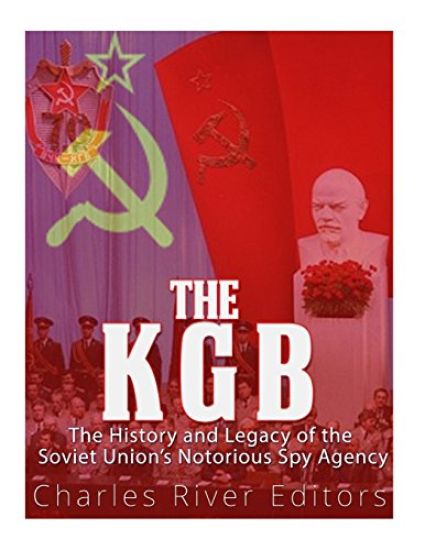
The KGB: The History and Legacy of the Soviet Union's Notorious Spy Agency

The KGB: The History and Legacy of the Soviet Union's Notorious Spy Agency

Charles River

Createspace Independent Publishing Platform
2017
nidottu
*Includes pictures *Includes online resources and a bibliography The KGB is one of the most famous abbreviations of the 20th century, and it has become synonymous with the shadowy and often violent actions of the Soviet Union's secret police and internal security agencies. In fact, it is often used to refer to the Soviet state security agencies throughout its history, from the inception of the inception of the Cheka (Extraordinary Commission) in 1917 to the official elimination of the KGB in 1992. Whether it's associated with the Russian Civil War's excesses, Stalin's purges, and even Vladimir Putin, the KGB has long been viewed as the West's biggest bogeyman during the second half of the 20th century. The KGB: The History and Legacy of the Soviet Union's Notorious Spy Agency examines the history of one of the most famous agencies in history. Along with pictures depicting important people, places, and events, you will learn about the KGB like never before.
The Workers' Party of Korea: The History and Legacy of the Political Party that Founded and Rules North Korea
*Includes pictures *Includes accounts of the party and its activities *Includes online resources and a bibliography for further reading In 2014, the International Space Station unleashed a series of photographs that had netizens around the globe simultaneously slapping their cheeks in disbelief for more reasons than one. For starters, the world was astounded by the crisp definition and stellar resolution of the images captured by the space agency's NightPod lenses, which showed striking satellite shots of the world at nighttime, illuminated by its dazzling city lights. But it was a close-up snap of the China-North Korea border that elicited reactions far greater than the rest, for the image, as terrific as it was, was equally troubling. Backed by a time-lapse video of the area, the images show an enormous patch of pitch-blackness - roughly 47,000 square miles of it, to be precise - flanked by 2 sweeping stretches of gold, the coruscating clusters of light marking the largest cities in the land. On one side lay the shimmering Chinese territories, and the other, the glittering grounds of South Korea. The patch of black in question was so dark it could very well be mistaken for an extension of either the Yellow Sea or the Sea of Japan. North Korea has long been the butt of jokes, and it has been a longstanding target of international criticism, but the startling satellite image was anything but amusing, for it demonstrated the truly catastrophic conditions North Koreans find themselves in. Statistics show that the average South Korean uses up to 10,162 kilowatt hours of power per year, whereas their neighbors in the north consume only 739. This is only one amongst a slew of stumbling blocks affecting the state, impeding it from proper progress. So why is North Korea so starkly different from its neighbors when nothing more but mere borders separate them? A tyrannical lineage secured by nepotism. An entire nation indoctrinated by chilling, mindboggling propaganda, molded by fear and forced ignorance. Mass purges doled out seemingly on whims, without fair trials. Unparalleled paranoia and cold-blooded assassinations left and right, seemingly around every curve and corner. An impoverished sphere of barren wastelands inhabited by malnourished masses, orbiting a world glittering with the gross opulence and superfluous riches of the elite. These sound like the elements of a particularly perilous period of autocracy enforced by some mad monarch of a bygone era, or perhaps a generic blurb for a far-fetched thriller set in a dystopian future. Alas, the description matches the modern state of North Korea almost flawlessly. For close to 7 decades and counting, the notorious Kim family has been subjected to a never-ending stream of shocking scandals and relentless ridicule. That being said, this frightful bloodline has managed to maintain absolute and all-encompassing power over the northern neck of the Korean peninsula. The reigns of these related tyrants are said to be so horrid that 2,000 intrepid souls risk their necks each year to escape from the suffocating grip of the state. And while many attribute the state's troubling antics to the controversial Kim dynasty, it takes an entire team to keep the 25 million oppressed North Koreans in check. This lesser-known, but all the more significant constituent of this intriguing system is the Choson Rodongdang, otherwise known as the "Workers' Party of Korea," the ruling political party of the state. The Workers' Party of Korea: The History and Legacy of the Political Party that Founded and Rules North Korea examines the party's predecessors and the events that led up to its formation, as well as its inner workings and the behind-the-scene operations of the infamous hermit kingdom. Along with pictures depicting important people, places, and events, you will learn about the Workers' Party of Korea like never before.
North Korea's Nuclear Program: The History of the Hermit Kingdom's Development of Nuclear Weapons
*Includes pictures *Includes quotes by the Kims about the nuclear program *Includes online resources and a bibliography for further reading "There is no force in the world that can block the powerful march of our army and people, who are holding high the banner of the suns of great Comrade Kim Il-sung and great Comrade Kim Jong-il and continuing to advance under the leadership of the party and with strong faith in sure victory." - Kim Jong-un North Korea would be horrific enough if it was a fictional place, but its nuclear weapons program is all too real. On September 17, 2017, President Donald Trump, whose use of Twitter may be what he's best known for, tweeted another nickname of the type he has infamously coined for his opponents: "I spoke with President Moon of South Korea last night. Asked him how Rocket Man is doing. Long gas lines forming in North Korea. Too bad " The "Rocket Man" in question, of course, was none other than the notoriously brutal and wildly erratic North Korean dictator, Kim Jong-Un. In less than 24 hours, the viral tweet had not only racked up tens of thousands of retweets and triple the "likes," it had spawned countless Elton John-themed memes and inspired headlines from just about every news source around the world. Capitalizing on the viral nature of the controversial tweet, Trump repeated the nickname just a few days later in his speech before the UN General Assembly. He warned the congregation of fidgety ambassadors about the grave threats posed by North Korea's "depraved regime." "The United States had great strength and patience, but if forced to defend itself or its allies, we will have no choice but to totally destroy North Korea... Rocket Man is on a suicide mission for himself and for his regime." Less than a week later came Kim Jong-Un's scathing response. "Action is the best option in treating the dotard who, hard of hearing, is uttering only what he wants to say... I will surely and definitely tame the mentally deranged U. S. dotard with fire." The usage of the archaic insult had even those well-versed in the English language whipping out their phones in unison to look up the term ("an old person, especially one who has become weak or senile," courtesy of the Oxford English dictionary). Apart from the avalanche of memes and comedic jabs from the usual arry of late-night hosts that ensued, a quick search of the word "dotard" now brings up unflattering pictures of the president. North Korea's bizarre feuds with the rest of the world have been turned into comedy gold time and time again, perhaps because their endless threats seem so far removed from reality. But just how serious is the threat of nuclear war against North Korea? North Korea's Nuclear Program: The History of the Hermit Kingdom's Development of Nuclear Weapons looks at how North Korea has developed and tested destructive nuclear weapons over the past several decades. Along with pictures depicting important people, places, and events, you will learn about North Korea's nuclear program like never before.
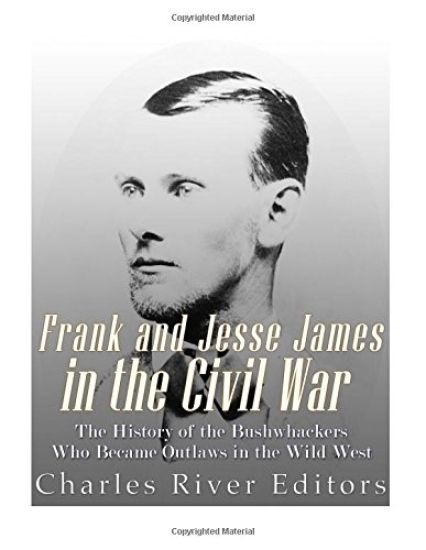
Frank and Jesse James in the Civil War: The History of the Bushwhackers Who Became Outlaws of the Wild West
*Includes pictures *Includes accounts of the bushwhacking committed by the James brothers written by participants *Includes online resources and a bibliography for further reading *Includes a table of contents The Civil War is best remembered for the big battles and the legendary generals who fought on both sides, like Robert E. Lee facing off against Ulysses S. Grant in 1864. In kind, the Eastern theater has always drawn more interest and attention than the West. However, while massive armies marched around the country fighting each other, there were other small guerrilla groups that engaged in irregular warfare on the margins. Among these partisan bushwhackers, none are as infamous as William Quantrill and Quantrill's Raiders. Quantrill's Raiders operated along the border between Missouri and Kansas, which had been the scene of partisan fighting over a decade earlier during the debate over whether Kansas and Nebraska would enter the Union as free states or slave states. In "Bleeding Kansas", zealous pro-slavery and anti-slavery forces fought each other, most notably John Brown, and the region became a breeding ground for Unionists and pro-slavery factions who shifted right back into similar fighting once the Civil War started. Rather than target military infrastructure or enemy soldiers, the bushwhackers rode in smaller numbers and targeted civilians on the other side of the conflict, making legends out of men like Bloody Bill Anderson and John Mosby. Though Quantrill's Raiders were named after their famous leader William Clark Quantrill, the most notorious of the Raiders was none other than Jesse James. Frank and Jesse James have become American legends for their daring robberies and narrow escapes from the law, and many people, especially in the South, see them as folk heroes, unreconstructed rebels fighting for the Lost Cause against rich Northern bankers and capitalists. While that last bit is a matter for debate, the James brothers did indeed consider themselves Southern rebels at heart. The Wild West has made legends out of many men after their deaths, but like Wild Bill Hickok, Jesse James was a celebrity during his life. However, while Hickok was (mostly) a lawman, Jesse James was and remains the most famous outlaw of the Wild West, with both his life of crime and his death remaining pop culture fixtures. James and his notorious older brother Frank were Confederate bushwhackers in the lawless region of Missouri during the Civil War. Despite being a teenager, Jesse James was severely wounded twice during the war, including being shot in the chest, but that would hardly slow him down after the war ended. Eventually, Quantrill's Raiders headed south, and they eventually split off into several groups. Quantrill himself was killed while fighting in June 1865, nearly two months after Lee surrendered to Grant at Appomattox, but his name was kept alive by the notorious deeds of his Raiders during the war and the criminal exploits of former Raiders like Jesse and Frank James, as well as the Younger brothers. These men became some of America's most famous outlaws, and they used guerrilla tactics to rob banks and trains while eluding capture. While their robberies were conducted more to enrich themselves than to strike back against the North, their rebel credentials were impeccable. The brothers came from a secessionist, slaveholding family and both fought for the Confederacy in the bitterest guerrilla war the nation has ever seen. To understand their outlaw careers, and their enduring legacy, one must understand how Frank and Jesse James fought during the Civil War. Frank and Jesse James in the Civil War: The History of the Bushwhackers Who Became Outlaws of the Wild West chronicles the history and events that involved the James brothers during the Civil War, and how the Civil War affected their lives as outlaws.
Executive Order 9066: The History of President Franklin D. Roosevelt's Controversial Decision to Intern Japanese American Citizens During World War II
*Includes pictures *Includes quotes by people interned and administration officials in charge of the internment *Includes online resources and a bibliography for further reading *Includes a table of contents "I don't want any of them here. They are a dangerous element. There is no way to determine their loyalty... It makes no difference whether he is an American citizen, he is still a Japanese. American citizenship does not necessarily determine loyalty... But we must worry about the Japanese all the time until he is wiped off the map." - General John L. DeWitt, head of the Western Command All Americans are familiar with the "day that will live in infamy." At 9:30 a.m. on Sunday, December 7, 1941, Pearl Harbor, the advanced base of the United States Navy's Pacific Fleet, was ablaze. It had been smashed by aircraft launched by the carriers of the Imperial Japanese Navy. All eight battleships had been sunk or badly damaged, 350 aircraft had been knocked out, and over 2,000 Americans lay dead. Indelible images of the USS Arizona exploding and the USS Oklahoma capsizing and floating upside down have been ingrained in the American conscience ever since. In less than an hour and a half the Japanese had almost wiped out America's entire naval presence in the Pacific. Even before Congress declared war on Japan the day after Pearl Harbor, the implications for people of Japanese ancestry living in the United States had begun. On December 7th, several hundred Issei, or first-generation Japanese immigrants, were arrested in Hawaii and on the mainland, having been earlier identified by the FBI as potentially disloyal to the United States. In the months that followed, the scope of suspicion would expand to include all of the 125,000 Japanese living on the mainland, and, though a smaller percentage, many in Hawaii as well. By the time the war ended, the period of internment of Japanese immigrants and citizens, lasting from 1941-1945, was considered one of the most unfortunate episodes of American history. Many government officials in the immediate aftermath of the war era continued to defend internment, citing the possibility of attack and the need to protect Americans at all costs. There were many Americans, however, whose rights as citizens went unprotected, and political arguments aside, no American can fail to acknowledge the costs of internment to Nikkei families, physically, financially, socially and psychologically. Executive Order 9066: The History of President Franklin D. Roosevelt's Controversial Decision to Intern Japanese American Citizens During World War II examines one of the darkest chapters in American history. Along with pictures of important people, places, and events, you will learn about the decision to intern Japanese Americans like never before.
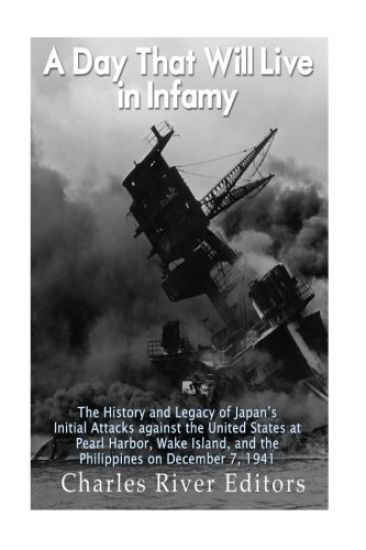
A Day That Will Live in Infamy: The History and Legacy of Japan's Initial Attacks against the United States at Pearl Harbor, Wake Island, and the Phil
*Includes pictures *Includes contemporary accounts *Includes online resources and a bibliography for further reading All Americans are familiar with the "day that will live in infamy." At 9:30 a.m. on Sunday, December 7, 1941, Pearl Harbor, the advanced base of the United States Navy's Pacific Fleet, was ablaze. It had been smashed by aircraft launched by the carriers of the Imperial Japanese Navy. All eight battleships had been sunk or badly damaged, 350 aircraft had been knocked out, and over 2,000 Americans lay dead. Indelible images of the USS Arizona exploding and the USS Oklahoma capsizing and floating upside down have been ingrained in the American conscience ever since. In less than an hour and a half the Japanese had almost wiped out America's entire naval presence in the Pacific. Less than 24 hours earlier, Japanese and American negotiators had been continuing their diplomatic efforts to stave off conflict in the region, but as they did, President Roosevelt and his inner circle had seen intelligence reports strongly suggesting an imminent attack - though they did not know where. The U. S. rightly believed that Japan would take action to prevent the Americans from interfering with their military activities in Southeast Asia, and American military forces in the Philippines were already bracing for a potential attack. However, as the negotiations were ongoing, the powerful Japanese carrier fleet had been surging southwards through the Pacific while maintaining radio silence, preparing to strike the blow that would ignite war in an area spanning half the globe. Navy Commander-in-Chief Isoroku Yamamoto, whose code of honor demanded that the Japanese only engage enemies after a formal declaration of war, had been given assurances that his nation would be formally at war with the United States prior to the arrival of his planes over Pearl Harbor. As it turned out, those assurances were worth nothing, and Yamamoto had been misled by extremists in his government just as the Americans were misled. In fact, the Japanese would infamously deliver documents formally cutting off negotiations with the American government after the attack on Pearl Harbor had already been conducted. Far from a formal declaration of war, America was attacked without warning, plunging the world's largest democracy into history's deadliest conflict. Posted on the other side of the world, it was early on the morning of December 8 in the Philippines when American general Douglas MacArthur received news of the Japanese attack on Pearl Harbor hours earlier. With that, it could only be a matter of time before the Japanese attacked the Philippines. Although MacArthur and Allied forces tried to hold out, they could only fight a delaying action, and the Japanese managed to subdue all resistance by the spring of 1942. One of the aspects of the war most forgotten is that the Japanese launched concerted attacks against the strategically located Wake Island in conjunction with the attack on Pearl Harbor. Isolated in the dark blue vastness of the west-central Pacific Ocean, the tiny chevron-shaped island of Wake, surrounded by barrier reefs, possessed outsized strategic significance during World War II. Given the possibility of war with Japan in the near future, the United States Navy began researching and developing the island for use as a forward airbase in 1940. Located between Hawaii and Japan, with the nearest inhabited land over 600 miles away, Wake appeared as a key strategic asset for America. Its status as U. S. territory made it possible for the Navy to construct a base there without antagonizing the Japanese. Since their war plan involved a surprise attack, with the declaration of war following the start of hostilities, they anticipated seizing Wake Island with minimal resistance from the contractors and U. S. Marines there. As it turned out, the Japanese would require multiple invasion attempts and a few weeks.
Mysterious North America: Mysteries, Legends, and Unexplained Phenomena across the United States, Mexico, and Canada
*Includes pictures *Includes online resources and a bibliography for further reading Canada has the reputation of being a boring place. More tranquil than its southern neighbor, it goes along in its quiet way sustaining one of the most stable and prosperous democracies in the world, and does so with little fuss or drama. It doesn't get in the news much, which considering the content of most news stories is a good thing. People get along, the economy is expanding, and there are no regular disasters. While all this makes Canada a pleasant place to live, it does not make it particularly interesting. But dig a little below the surface, and you'll find a different Canada, a stranger Canada, one of murder, mystery, and paranormal experiences. The stories that follow will show that Canada, far from being a dull, staid nation where nothing much happens, is an epicenter of the mysterious. At a time in antiquity when most of Europe was covered with forests and wandering tribes, Mexico had already developed complex civilizations, beginning with the Olmecs and followed by the Maya, a civilization with advanced knowledge of medicine, engineering and astronomy. The Maya calculated the precession of the equinoxes and cycles of the Pleiades, on which they based their year, since they believed they had come from that constellation. The last, and perhaps most famous, great civilization before the arrival of the Europeans was the Aztecs. With so many ancient peoples whose influence, beliefs, and modifications to the landscape extend to the present day, Mexico is fertile land for legends, ghosts, surprising places, and mysteries. A belief in communing with things that lie beyond (stars, constellations, and life after death), mysticism, and apparitions are intimately woven into the colorful fabric of the Mexican nation, to the point that a metaphysical event (the apparition of the Virgin of Guadalupe) is considered by many as one of the founding elements of the nation. Our Lady of Guadalupe has an eerie counterpart, another woman who appeared around the same time: La Llorona, the weeping woman. If the content of the former vision is loving and conciliatory, the latter is full of regret and agony. As for the United States, the Northeast has always had a special place in the national memory. The states of Connecticut, Maine, Massachusetts, New Hampshire, Rhode Island, Vermont, and New York have a long history as some of the earliest colonies in the New World. Their rich folklore and colorful history is woven into the national identity, and destinations such as Plymouth Rock, the lighthouses of Maine, and Vermont's autumn leaves are quintessential symbols of the United States. But the Northeast has always had a dark side, a strange side. Monsters and ghosts lurk in its woods and old houses, and strange monuments that may be from a forgotten civilization puzzle local investigators. All the while, the early inhabitants themselves were always superstitious, as evidenced by history's most famous witch trials. Today the Salem Witch Trials are often remembered as being a relic of a superstitious past, and Salem has transformed itself into a tourist haven and Halloween destination by capitalizing off the Salem Witch trials, but it was deadly serious in 1692, when 19 men and women found themselves taken to "Gallows Hill" and hanged for being witches. Another man who was over 80 years old was pressed to death for refusing to be tried for witchcraft, and from February 1692-May 1693, hundreds of others were accused of witchcraft. Dozens of them were imprisoned for months until the mass hysteria finally died down. Mysterious North America: Mysteries, Legends, and Unexplained Phenomena across the United States, Mexico, and Canada offers a vast compendium of strange, unexplained, and just plain odd stories across North America's various regions.
The History and Legacy of the Greatest Battles of the Napoleonic Wars

The History and Legacy of the Greatest Battles of the Napoleonic Wars

Charles River

Createspace Independent Publishing Platform
2017
nidottu
*Includes pictures *Includes accounts of the battles *Includes online resources and a bibliography for further reading Over the course of its history, England has engaged in an uncountable number of battles, but a select few have been celebrated like the Battle of Trafalgar, one of the most important naval battles in history. Before the battle, Napoleon still harbored dreams of sailing an invasion force across the English Channel and subduing England, but that would be dashed on October 21, 1805 by a British fleet that was outnumbered and outgunned. The impact of Trafalgar cannot be overstated, as it literally set the stage for the rest of the Napoleonic Era. Unable to invade England, Napoleon was limited to conducting war on the European continent, and while he spent the better part of a decade frustrating the British and their allies, he was eventually undone at Leipzig and then Waterloo nearly a decade after Nelson's victory at Trafalgar. For those questioning why generals continued using tactics from the Napoleonic Era even as technology changed the battlefield, the Battle of Austerlitz may provide the best answer. Napoleon is regarded as one of history's greatest generals, and Austerlitz was his greatest victory. In 1805, Britain, Austria, and Russia allied together to form the Third Coalition against the French, and the Third Coalition's forces consisted of armies from Austria and Russia, with Britain providing naval support as well as its financial powers. The Battle of Austerlitz was a tactical masterpiece that saw Napoleon actually invite an attack on his army by the bigger Coalition army, and over the course of about 9 hours, the French successfully defended their right flank while counterattacking in the center and splitting the Russo-Austrian army in two, allowing the French to hit the flank of the advancing left wing of the enemy. The result was a decisive victory that virtually annihilated the Third Coalition's army and made Napoleon the master of the European continent. By 1812, he had succeeded in subduing most of his enemies - though in Spain, the British continued to be a perpetual thorn in his flank that drained the Empire of money and troops - but his relationship with Russia, never more than one of mutual suspicion at best, had now grown downright hostile. On July 23rd, 1812, he launched his army across the border, despite the protestations of many of his Marshals. The Russian Campaign had begun, and it would turn out to be Napoleon's biggest blunder. Russia's great strategic depth already had a habit of swallowing armies, a fact many would-be conquerors learned the hard way. Napoleon, exceptional though he was in so many regards, proved that even military genius can do little in the face of the Russian winter and the resilience of its people. By the time the Grande Armee had reached the Berezina, it had been decimated: of the over 450,000 fighting men that had invaded Russia that autumn, less than 40,000 remained. These factors set the stage for the second setback, which essentially sealed the fate of Napoleon's empire. The four-day Battle of Leipzig in October 1813, romantically but accurately dubbed the "Battle of the Nations," proved the decisive encounter of the War of the Sixth Coalition and essentially determined the course the Napoleonic Wars took from that moment forward. Waterloo is the most famous battle in modern history if not all of history, and appropriately so. Gathering an army of 100,000 men, Napoleon marched into what is now Belgium, intent on driving his force between the advancing British army under the Duke of Wellington and the Prussian forces under Marshal Blucher. It was the kind of daring strategy that only Napoleon could pull off, as he had at places like Jena and Austerlitz. At Waterloo, however, it would end disastrously, as Napoleon's armies were unable to dislodge the British or Prussians, leading to defeat.