Kirjojen hintavertailu – 12 903 727 kirjaa ja 27 kauppaa

Kirjailija

Charles River

Kirjat ja teokset yhdessä paikassa: 4 673 kirjaa, julkaisuja vuosilta 2013–2022, suosituimpiin kuuluu William Powell and Myrna Loy: The Lives and Careers of One of Classical Hollywood's Most Iconic Duos. Vertaile teosten hintoja ja tarkista saatavuus suomalaisista kirjakaupoista.

4 673 kirjaa

Kirjojen julkaisuvuodet: 2013–2022.

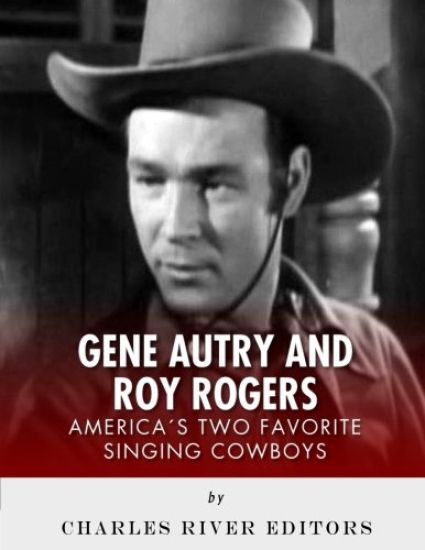
Gene Autry and Roy Rogers: America's Two Favorite Singing Cowboys

Gene Autry and Roy Rogers: America's Two Favorite Singing Cowboys

Charles River

Createspace Independent Publishing Platform
2017
nidottu
*Includes pictures *Includes their quotes about their lives and careers *Includes a bibliography for further reading "Music has been the better part of my career. Movies are wonderful fun and they give you a famous face. But how the words and melody are joined, how they come together out of air and enter the mind, this is art. Songs are forever" - Gene Autry "I did pretty good for a guy who never finished high school and used to yodel at square dances." - Roy Rogers In the early 20th century, Westerns were one of the most popular genres in Hollywood, and one of the young stars at the forefront was Gene Autry, a Texan whose life story made him a natural to be the country's most famous "singing cowboy". Autry would become a symbol of masculinity and morality on screen during the 1930s, but it was effortless for someone who had already grown up riding horses to school. Autry came of age at a time when the "singing cowboy" was at the apex of his popularity, and like his most famous successor, Roy Rogers, Autry actually got his start in show business as a singer. Even today, Autry might be best known for being a pioneer of country music and the author of Christmas hits "Here Comes Santa Claus", "Frosty the Snowman", and "Rudolph the Red-Nosed Reindeer". Autry would produce hundreds of recordings during his life, helping ensure the popularity of the country music genre and earning inductions into several related halls of fame. Of course, the popularity of Autry's music and country music in general was bolstered by the fact that he became one of the biggest stars in Hollywood. After he was discovered in 1934, Autry made dozens of films and was still one of the industry's biggest moneymakers when he went off to fight in World War II. Though his movie career had already hit its peak by the time he returned, Autry used his popularity and his skills to transition into television, and he dabbled in all kinds of other ventures, including owning a radio station and professional sports teams. By the end of his long life and career, Autry could lay claim to being the only man with 5 stars on the Hollywood Walk of Fame for film, television, music, radio, and live performances. Roy Rogers came from an Ohio farm, but regardless of his background, Rogers certainly looked the part of the quintessential cowboy, along with his wife Dale Evans and his horse Trigger. His versatile singing and acting abilities made him successful both on radio and on the screen. Rogers came of age at a time when the "singing cowboy" was at the apex of his popularity, and that was favorable because he actually got his start in show business as a singer. In the early '30s, he bounced around several groups as a country music singer before earning national attention as a member of the Sons of the Pioneers, who were signed to Decca and had a couple of hits. As a result, when he first appeared in movies in 1935, it was usually in bit roles that required singing, but when Gene Autry threatened to quit acting in 1938, Rogers was viewed as a suitable replacement for lead roles. As it turned out, he became the premiere "singing cowboy" in Autry's stead, and from 1939-1954, he was one of the Top 10 Western stars in Hollywood, and a Top 10 movie star overall during some of those years. As Rogers evolved into the "King of the Cowboys", he became a pop culture icon, and he was shrewd enough to capitalize on his image. All sorts of Roy Rogers merchandise hit stores, from action figures to comic strips, and Rogers even banked on the popularity of his horse Trigger by featuring him enough to make the horse a household name as well. Even today, people can find the name Roy Rogers all over the place, if only because he eventually had his name lent to a popular fast food chain in later years. Gene Autry and Roy Rogers examines the lives and careers of two of America's most famous Western actors.

The World's Most Notorious Secret Societies: The Histories and Mysteries of the Freemasons, the Illuminati, and the Rosicrucians
*Includes pictures *Includes contemporary accounts explaining the inner workings of the groups *Includes online resources and a bibliography for further reading For decades, parodies featuring ominous, mysterious cults have been a favorite gag in pop culture. These fraternal brothers are often depicted in some type of underground lair, dressed in extravagant ceremonial robes with their faces hidden in their hoods, seated around a long table brimming with Gothic chalices, skulls, and glittering dark treasure. Flicks on the more morbid side might even show choppy, flashing imagery of blood, torture, and sacrifices. Like all art, creativity is sparked by a source of inspiration, and one of the most widely recognized muses of these kinds of scenes is none other than the Freemasons. This ancient society, descended from the ancient culture of stonemasonry, is said to possess the deepest, darkest, and most inexplicable truths of the universe. They are said to possess mystical powers like no other - maybe even magic. But does this stigma against the brotherhood have any merit, or are they simply just severely misunderstood? As many are aware, Freemasons have been around for many centuries. The Renaissance, which came into full bloom between the 14th and 16th centuries, saw a burst in creativity and advancement in an array of art forms throughout Europe. Stonemason guilds rode the changing tides; no longer did incoming apprentices have to be restricted by trade. A great portion of these new apprentices were artists and free thinkers, but still vowed to adhere to traditional stone-cutter culture. This new breed of masons separated from the orthodox "operative" masonry, and began to foster what became known as "speculative" masonry. Of the countless secret societies that have risen and fallen since the dawn of time, none could come close to touching the notoriety of the Illuminati. Particularly in recent years, the legendary order has starred in thousands upon thousands of books, articles, documentaries, movies, music, internet memes, and other mediums of entertainment. They are one of the chief targets for conspiracy connoisseurs, and the supposed masters of symbolic subliminal messages hidden in the media. Regardless of the veracity behind any of the conspiracy theories, there can be no denying the profound impact of the group over the past few centuries. Even those who find nothing untoward in the history of the Illuminati understand the importance of the society's mystique, from its origins in Bavaria to its founder, Adam Weishaupt, along with those who carried the society to its peak. Without question, there have been an endless number of conspiracy theories surrounding the Illuminati that have long had the world buzzing, a trend that continues on to this very day. Early Europe saw a sudden burst of Gnostic and mystical religions and organizations, each with their own take on the true path to enlightenment. Conflicts that arose within the Catholic Church and other Christian communities only encouraged the growing wave of dissenters. In the 17th century, intrigued Parisians learned about one of these unconventional groups - perhaps the most prestigious of all these secret schools. This was the Fraternity of the Rose Cross, a brotherhood of Rosicrucians founded by Christian Rosenkreutz. Like the Illuminati, the Rosicrucians are a legendary order that has been featured in thousands upon thousands of books, articles, documentaries, movies, music, internet memes, and other mediums of entertainment. They are one of the chief targets for conspiracy connoisseurs, and the supposed masters of symbolic subliminal messages hidden in the media. Regardless of the veracity behind any of the conspiracy theories, there can be no denying the profound impact of the group over the past few centuries. Even those who find nothing untoward in the history of the Rosicrucians understand the society's mystiqu
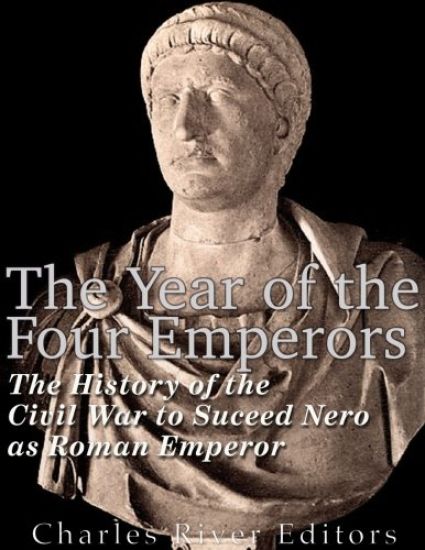
The Year of the Four Emperors: The History of the Civil War to Succeed Nero as Emperor of Rome
*Includes pictures *Highlights the reigns of each emperor and how Nero's reign set the chain of events in motion *Includes online resources and a bibliography for further reading *Includes a table of contents The 12 months known in history as the Year of the Four Emperors was a pivotal chapter in the long epoch of the Roman Empire. It marked the tumultuous end of the Julio-Claudian Dynasty and the advent of a year of civil war, renewal and realignment, the result of which was the establishment of a new era and the founding of a new (and arguably more rational and responsible) imperial dynasty. The controversial year began with the decline of the Julio-Claudian dynasty under the rule of Emperor Nero. Nero was the last ruler of a dynasty founded by Julius Caesar, who was perhaps the most famous Roman emperor that never was. The Julio-Claudian succession included such names as Augustus, Tiberius, Caligula, Claudius, and of course Nero, names that resonate with great power throughout the chronicles of Roman history, in many cases thanks to the violence, madness, misrule and decadence that seemed to take root at the center of imperial Rome at the dawn of the common era. In 54 CE, at the age of 16, Nero ascended to the imperial throne, and for the most part his arrival was well received. Among his early achievements was the granting of certain basic rights to slaves, the strengthening of the senate, a reduction in taxes and the general encouragement of modesty and restraint. He was initially attentive to the military, the central pillar of imperial power, and indeed, it was during his reign that the British resistance was broken in the aftermath of the rebellion of the Iceni Queen Boadicea, which in 61 CE resulted in a signature Roman victory. However, with the passage of time, the darker side of Nero's nature gradually began to manifest, and his cruelty and instability began to erode his early popularity. On July 18, 64 CE, Rome burned, with 3 of its 14 precincts destroyed and 7 others critically damaged. Although Nero responded to the disaster responsibly, by providing what assistance he could to those affected, rumors nonetheless circulated that he had been responsible for the fire, or at the very least had stood by and allowed it to consume those parts of Rome that he desired for the grandiose public works and building projects with which he was credited. In response to this, he blamed Christians for the fire, beginning the signature persecution of Roman Christians that has been so widely recorded in Roman history. Nero was eventually declared a public enemy, and finding himself without support, he committed suicide on June 9, 68 CE, the first Roman emperor to do so. Having left no heir, Nero's death plunged the empire into confusion and chaos, bringing to an end the Julio-Claudian lineage while at the same time offering no clear rule of succession. This presented the opportunity for influential individuals in the empire, and in particular provincial governors who also commanded large military garrisons, to express and further their own ambitions to power. The result was a period of instability and civil war as several pretenders to the throne, among them the emperors Galba, Otho and Vitellius, gained and lost power, until finally the emperor Vespasian seized and retained the imperial principate. Vespasian imposed order and discipline on a chaotic empire and founded the Flavian Dynasty, which survived until CE 96, encompassing the reigns of Vespasian himself (69-79), and his two sons Titus (79-81) and Domitian (81-96). The Year of the Four Emperors: The History of the Civil War to Succeed Nero as Emperor of Rome chronicles one of the most important years in the history of the Roman Empire. Along with pictures of important people, places, and events, you will learn about the Year of the Four Emperors like never before.
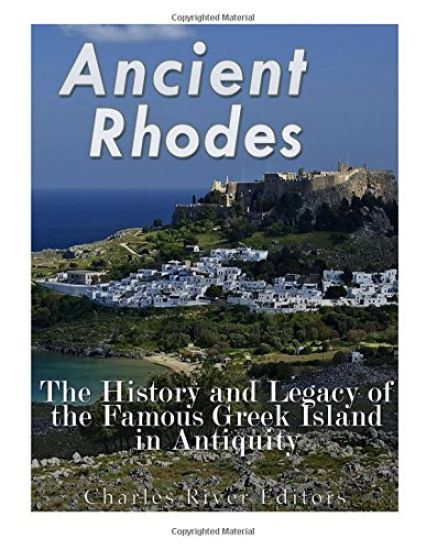
Ancient Rhodes: The History and Legacy of the Famous Greek Island in Antiquity

Ancient Rhodes: The History and Legacy of the Famous Greek Island in Antiquity

Charles River

Createspace Independent Publishing Platform
2017
nidottu
*Includes pictures *Includes ancient accounts of Rhodes *Includes online resources and a bibliography for further reading Modern perceptions of Classical Greece are almost invariably based on Athens and Sparta, but there are perhaps few areas as consistently undervalued as the island of Rhodes. Although solidly part of the Greek world for as long as there has been one, Rhodes, located just off the coast of Asia Minor, was also from its earliest times a port opening to the civilizations of the Eastern Mediterranean, and Rhodes was involved in every significant moment in ancient Greek history. The island often played a key role in world events which far surpassed its small size, and at one point even stood side-by-side with much larger kingdoms as one of the main powers in the Greek world. In the Archaic and Classical periods, Rhodes often stood as a prime exemplar of the highs and lows of its fellow Greek cities, and as the largest island of the Dodecanese, Rhodes' history is largely in line with that of the rest of those islands. Rhodes was first colonized by the Greeks of the Dorian tribe around the 8th century BCE, and it aligned with its fellow Dorian cities on the surrounding islands and the mainland of Asia Minor to form the so-called Doric Hexapolis. After the Ionian revolt near the end of the 6th century BCE, Rhodes, along with other islands, was in the path of the Persian fleet that crossed the Aegean to face off against the Greeks in the Persian Wars. In the aftermath of the Persian Wars, along with the rest of the islands and with Greek Asia Minor, Rhodes was subsumed into the Athenian alliance, which would soon become the Athenian Empire. However, Athens would soon lose its power, and around the end of the Peloponnesian War against Sparta, its hold on its allies would wane. In fact, in 408 BCE, Rhodes, sharing a Dorian heritage with Sparta, would be among the first and most powerful of Athens' allies to revolt, and it played a key role in the end of the Peloponnesian War by providing a basis for the new Spartan fleet to challenge Athenian naval supremacy. In the following century, Rhodes would vacillate between the Athenian and Spartan spheres of influence, all the while remaining too large to be permanently subdued by either city, and thus constantly growing in power. Rhodes would reach the zenith of its power in the Hellenistic period following the death of Alexander the Great in 323 BCE. Even as the rest of the city-states waned compared to the much larger kingdoms of Alexander's successors in Egypt and Asia, Rhodes would come to the forefront as a main power in the Greek world, standing toe-to-toe with these Hellenistic kingdoms. Rhodes was for a time the foremost naval power in the Eastern Mediterranean, and one of the most powerful and richest cities in the world. It was during this time that the Colossus of Rhodes, one of the Seven Wonders of the Ancient World, was built on the island to celebrate Rhodes' equally monumental triumph over the armies of Demetrius the Besieger. Rhodes also gained a foothold on other islands, and an extensive presence in Asia Minor. It was only due to the rise of Rome that Rhodes, along with the rest of the Greek world, lost power, and it was gradually integrated into the Roman sphere of influence as an ally before finally being annexed into the empire. Ancient Rhodes: The History and Legacy of the Famous Greek Island in Antiquity examines the history of one of the most important Greek powers of the ancient world. Along with pictures depicting important people, places, and events, you will learn about Rhodes like never before.
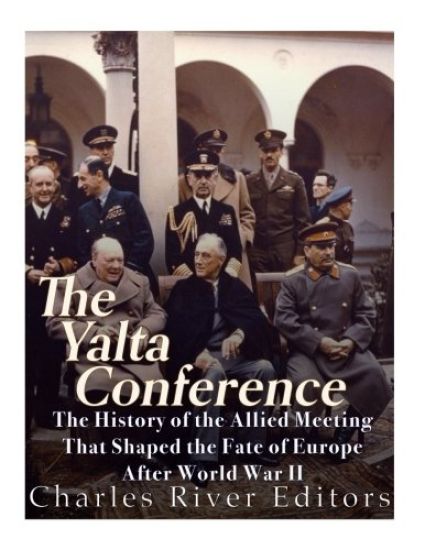
The Yalta Conference: The History of the Allied Meeting that Shaped the Fate of Europe After World War II
*Includes pictures *Includes accounts of the conference by participants *Includes online resources and a bibliography for further reading *Includes a table of contents "Do you think they will stop just to please you, or us for that matter? Do you expect us and Great Britain to declare war on Joe Stalin if they cross your previous frontier? Even if we wanted to, Russia can still field an army twice our combined strength, and we would just have no say in the matter at all." - President Franklin D. Roosevelt to the Polish ambassador in Washington, D. C. (Gardner, 1993, 208-209). Separated by vast gulfs of political, cultural, and philosophical divergence, the three chief Allied nations of World War II - the United States, the Soviet Union, and Great Britain - attempted to formulate a joint policy through a series of three conferences during and immediately after the conflict. The second meeting, named the Yalta Conference after its Black Sea venue, occurred in February 1945 and was both the most well-known and most influential of them all. Adolf Hitler's Third Reich had scant time remaining when the "Big Three" met to discuss the future of Germany, Europe, and the postwar world as a whole. No doubt existed regarding the war's outcome; the Americans had shattered the Wehrmacht's desperate last throw in the west, the Ardennes Offensive, during the Battle of the Bulge in the weeks immediately preceding Yalta, and the Soviet front lay just 50 miles east of Berlin, with the Red Army preparing for its final push into the Reich's capital after a successful surprise winter campaign. Among the agreements, the Conference called for Germany's unconditional surrender, the split of Berlin, and German demilitarization and reparations. Stalin, Churchill and Roosevelt also discussed the status of Poland, and Russian involvement in the United Nations. By this time Stalin had thoroughly established Soviet authority in most of Eastern Europe and made it clear that he had no intention of giving up lands his soldiers had fought and died for. The best he would offer Churchill and Roosevelt was the promise that he would allow free elections to be held. He made it clear, though, that the only acceptable outcome to any Polish election would be one that supported communism. The final question lay in what to do with a conquered Germany. Both the Western Allies and Stalin wanted Berlin, and knew that whoever held the most of it when the truce was signed would end up controlling the city. Thus they spent the next several months pushing their generals further and further toward this goal, but the Russians got there first. Thus, when the victorious allies met in Potsdam in 1945, it remained Britain and America's task to convince Stalin to divide the country, and even the city, between them. They accomplished this, but at a terrible cost: Russia got liberated Austria. Given its context and importance, the Yalta Conference represented a contentious matter in its own day, and it remains so among historians both professional and amateur. As just one example, while some lauded Roosevelt's political dexterity, many others viewed him as excessively na ve in his dealings with Stalin, or even as a pro-communist quisling. Yalta neither delayed nor created the Cold War; the collision between two utterly incompatible systems of thought - one that, despite its flaws, placed its faith in freedom, human rights, and majority rule, and the other that believed in paranoid dictatorship enforced through systematic state violence and terror - seemed inevitable either way. If anything, Yalta enabled the three leaders to project a momentary phantasm of unity, permitting them to postpone their intractable hostility for a few months in order to first defeat Germany. The Yalta Conference: The History of the Allied Meeting that Shaped the Fate of Europe After World War II looks at the controversial conference and its results.
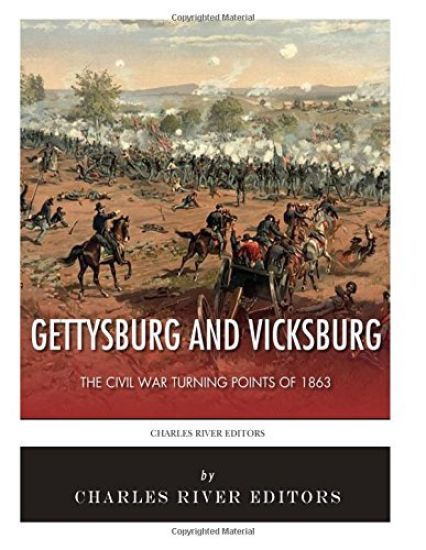
Gettysburg and Vicksburg: The Civil War Turning Points of 1863

Gettysburg and Vicksburg: The Civil War Turning Points of 1863

Charles River

Createspace Independent Publishing Platform
2017
nidottu
*Includes pictures. *Includes accounts of the fighting by important generals. *Includes bibliographies for further reading. Without question, the most famous battle of the American Civil War took place outside of the small town of Gettysburg, Pennsylvania, which happened to be a transportation hub, serving as the center of a wheel with several roads leading out to other Pennsylvanian towns. From July 1-3, Robert E. Lee's Confederate Army of Northern Virginia tried everything in its power to decisively defeat George Meade's Union Army of the Potomac, unleashing ferocious assaults that inflicted nearly 50,000 casualties in all. Day 1 of the battle would have been one of the 25 biggest battles of the Civil War itself, and it ended with a tactical Confederate victory. But over the next two days, Lee would try and fail to dislodge the Union army with attacks on both of its flanks during the second day and Pickett's Charge on the third and final day. Meade's stout defense held, barely, repulsing each attempted assault, handing the Union a desperately needed victory that ended up being one of the Civil War's turning points. After the South had lost the war, the importance of Gettysburg as one of the "high tide" marks of the Confederacy became apparent to everyone, making the battle all the more important in the years after it had been fought. While former Confederate generals cast about for scapegoats, with various officers pointing fingers at Robert E. Lee, James Longstreet, and James Stuart, historians and avid Civil War fans became obsessed with studying and analyzing all the command decisions and army movements during the entire campaign. Despite the saturation of coverage, Americans refuse to grow tired of visiting the battlefield and reliving the biggest battle fought in North America. At the start of 1863, Robert E. Lee's Army of Northern Virginia had been frustrating the Union in the Eastern theater for several months, but the situation in the West was completely different. The Confederates had lost control of several important states throughout 1862, and after New Orleans was taken by the Union, the North controlled almost all of the Mississippi River, which Confederate general James Longstreet called "the lungs of the Confederacy". By taking control of that vital river, the North would virtually cut the Confederacy in two, putting the South in a dire situation. The only domino left to fall was the stronghold of Vicksburg, and both sides knew it. The Union Army of the Tennessee, led by Ulysses S. Grant, would spend months trying to encircle the army and eventually force John Pemberton's Confederate army to surrender. Grant eventually succeeded on July 4, 1863, but since it came a day after the climactic finish of the Battle of Gettysburg, Vicksburg was (and still is) frequently overlooked as one of the turning points of the Civil War. In fact, had the Confederate's military leadership listened to Longstreet, who advocated detaching soldiers from Lee's army to head west and help the Confederates deal with Grant or Rosecrans in that theater, the Battle of Gettysburg might never have happened. While many read about the siege of Vicksburg in the summer of 1863, as well as the desperate straits the Confederate soldiers and Vicksburg residents found themselves in, Grant's initial attempts to advance towards Vicksburg met with several miserable failures, and it took several months just to get to the point where the Union forces could start a siege. First, Grant's supply base at Holly Springs was captured, and then an assault launched by Union General Sherman at Chickasaw Bayou was easily repulsed by Confederate forces, with serious Union casualties resulting. Grant then attempted to have his men build canals north and west of the city to facilitate transportation, which included grueling work and disease in the bayous.
The History and Legacy of the Greatest Battles of the Napoleonic Wars

The History and Legacy of the Greatest Battles of the Napoleonic Wars

Charles River

Createspace Independent Publishing Platform
2017
nidottu
*Includes pictures *Includes accounts of the battles *Includes online resources and a bibliography for further reading Over the course of its history, England has engaged in an uncountable number of battles, but a select few have been celebrated like the Battle of Trafalgar, one of the most important naval battles in history. Before the battle, Napoleon still harbored dreams of sailing an invasion force across the English Channel and subduing England, but that would be dashed on October 21, 1805 by a British fleet that was outnumbered and outgunned. The impact of Trafalgar cannot be overstated, as it literally set the stage for the rest of the Napoleonic Era. Unable to invade England, Napoleon was limited to conducting war on the European continent, and while he spent the better part of a decade frustrating the British and their allies, he was eventually undone at Leipzig and then Waterloo nearly a decade after Nelson's victory at Trafalgar. For those questioning why generals continued using tactics from the Napoleonic Era even as technology changed the battlefield, the Battle of Austerlitz may provide the best answer. Napoleon is regarded as one of history's greatest generals, and Austerlitz was his greatest victory. In 1805, Britain, Austria, and Russia allied together to form the Third Coalition against the French, and the Third Coalition's forces consisted of armies from Austria and Russia, with Britain providing naval support as well as its financial powers. The Battle of Austerlitz was a tactical masterpiece that saw Napoleon actually invite an attack on his army by the bigger Coalition army, and over the course of about 9 hours, the French successfully defended their right flank while counterattacking in the center and splitting the Russo-Austrian army in two, allowing the French to hit the flank of the advancing left wing of the enemy. The result was a decisive victory that virtually annihilated the Third Coalition's army and made Napoleon the master of the European continent. By 1812, he had succeeded in subduing most of his enemies - though in Spain, the British continued to be a perpetual thorn in his flank that drained the Empire of money and troops - but his relationship with Russia, never more than one of mutual suspicion at best, had now grown downright hostile. On July 23rd, 1812, he launched his army across the border, despite the protestations of many of his Marshals. The Russian Campaign had begun, and it would turn out to be Napoleon's biggest blunder. Russia's great strategic depth already had a habit of swallowing armies, a fact many would-be conquerors learned the hard way. Napoleon, exceptional though he was in so many regards, proved that even military genius can do little in the face of the Russian winter and the resilience of its people. By the time the Grande Armee had reached the Berezina, it had been decimated: of the over 450,000 fighting men that had invaded Russia that autumn, less than 40,000 remained. These factors set the stage for the second setback, which essentially sealed the fate of Napoleon's empire. The four-day Battle of Leipzig in October 1813, romantically but accurately dubbed the "Battle of the Nations," proved the decisive encounter of the War of the Sixth Coalition and essentially determined the course the Napoleonic Wars took from that moment forward. Waterloo is the most famous battle in modern history if not all of history, and appropriately so. Gathering an army of 100,000 men, Napoleon marched into what is now Belgium, intent on driving his force between the advancing British army under the Duke of Wellington and the Prussian forces under Marshal Blucher. It was the kind of daring strategy that only Napoleon could pull off, as he had at places like Jena and Austerlitz. At Waterloo, however, it would end disastrously, as Napoleon's armies were unable to dislodge the British or Prussians, leading to defeat.
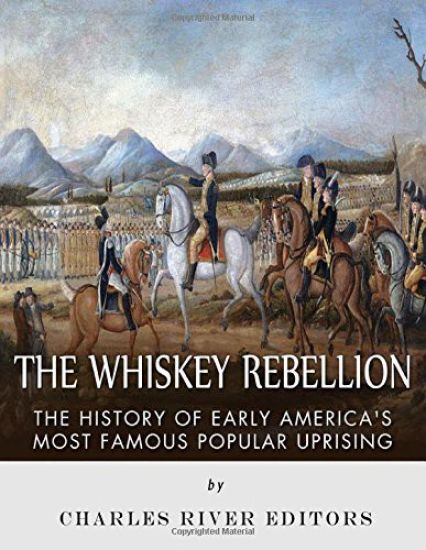
The Whiskey Rebellion: The History of Early America's Most Famous Popular Uprising

The Whiskey Rebellion: The History of Early America's Most Famous Popular Uprising

Charles River

Createspace Independent Publishing Platform
2017
nidottu
*Includes pictures *Includes contemporary accounts of the meetings and events that incited the rebellion *Includes online resources and a bibliography for further reading *Includes a table of contents "Such excise laws had always been unpopular among the small farmers in Great Britain; they excited hatred, which they brought with them to this country, and which may be regarded as hereditary. Scarcely any of the causes of complaint which led to the revolution, had so strong a hold on the people of Pennsylvania as the stamp act, an excise regarded as an oppressive tax on colonial industry." - H. H. Brackenridge, History of the Western Insurrection in Western Pennsylvania It should come as no surprise to anyone that it is much easier to overthrow a government than form a new one, and that in turn it is easier to form a government than to govern. The men who founded America knew these facts in theory, but in the last decade of the 18th century, they learned them by experience when just a few years after the new Constitution had been ratified, a rebellion arose over taxes. As it turned out, some of the people who fought a war against taxation without representation were also upset by taxation even with Congressional representation. Given that most people are averse to being parted from their hard-earned money for any reason, this is not surprising, but it still had to be dealt with, and firmly, or the new republic might not have survived. As Secretary of Treasury, Alexander Hamilton was looking for ways to shore up the young nation's finances and pay off the debts incurred by the Revolution. At the same time, he believed in strengthening the federal government vis- -vis the states, which would eventually make him a leader of the Federalist party but also compel him to push for a tax on distillers of alcohol, many of whom took their excess corn and grain crops and produced liquors. Ironically, Hamilton came up with the idea of this tax to avoid more direct forms of taxation, and because he didn't think it would be difficult to collect. What Hamilton didn't consider was just how ubiquitous the production of whiskey and other liquors were on the frontier, where they were often used as a form of currency itself. In addition to being upset at this new tax, Westerners believed it was disproportionately aimed at them because Americans still residing on the East Coast weren't as reliant on the production of whiskey. With opponents holding conventions in Pittsburgh, Pennsylvania, the very state currently hosting the Washington administration at the capital of Philadelphia, the opposition was viewed by many as a direct threat to the legitimacy of the federal government itself. In 1794, violence actually broke out, and with the tax opponents numbering in the thousands, President Washington himself felt compelled to raise a militia force and personally lead it to deal with the rebels, the only time an American president actually led soldiers in the field. Ultimately, no pitched battle took place once the militia was marched into western Pennsylvania, but dozens were arrested and tried for treason in the wake of the episode. While the breaking up of the revolt was praised by most Americans, Westerns continued to oppose the tax until Jefferson's administration repealed it upon coming to power in 1801. The Whiskey Rebellion of 1791: The History of Early America's Most Famous Popular Uprising looks at the origins behind one of the most famous insurrections in American history. Along with pictures of important people, places, and events, you will learn about the Whiskey Rebellion like never before, in no time at all.
North Korea: The History of the Notorious Hermit Kingdom

North Korea: The History of the Notorious Hermit Kingdom

Charles River

Createspace Independent Publishing Platform
2017
nidottu
*Includes pictures *Includes online resources and a bibliography for further reading "There is no force in the world that can block the powerful march of our army and people, who are holding high the banner of the suns of great Comrade Kim Il-sung and great Comrade Kim Jong-il and continuing to advance under the leadership of the party and with strong faith in sure victory." - Kim Jong-un In 2014, the International Space Station unleashed a series of photographs that had netizens around the globe simultaneously slapping their cheeks in disbelief for more reasons than one. For starters, the world was astounded by the crisp definition and stellar resolution of the images captured by the space agency's NightPod lenses, which showed striking satellite shots of the world at nighttime, illuminated by its dazzling city lights. But it was a close-up snap of the China-North Korea border that elicited reactions far greater than the rest, for the image, as terrific as it was, was equally troubling. Backed by a time-lapse video of the area, the images show an enormous patch of pitch-blackness - roughly 47,000 square miles of it, to be precise - flanked by 2 sweeping stretches of gold, the coruscating clusters of light marking the largest cities in the land. On one side lay the shimmering Chinese territories, and the other, the glittering grounds of South Korea. The patch of black in question was so dark it could very well be mistaken for an extension of either the Yellow Sea or the Sea of Japan. At first glance, it would seem as if there was not an inkling of life in sight, had it not been for the tiny twinkle floating in the center of the abyss. This twinkle was none other than the city of Pyongyang, and the missing piece of the puzzle was none other than the Democratic People's Republic of Korea. North Korea has long been the butt of jokes, and it has been a longstanding target of international criticism, but the startling satellite image was anything but amusing, for it demonstrated the truly catastrophic conditions North Koreans find themselves in. Statistics show that the average South Korean uses up to 10,162 kilowatt hours of power per year, whereas their neighbors in the north consume only 739. This is only one amongst a slew of stumbling blocks affecting the state, impeding it from proper progress. The mismatching network of sprawling, yet lifeless cities and squalid, poverty-stricken provinces stands eerily silent next to the bustling metropolises on either side of it. North Korea is trapped in an impenetrable, soundproof bubble, the entire state frozen in time. Notwithstanding a fractional sliver of the capital, where the Supreme Commander and the North Korean elites resided, the faded Pyongyang skyline and its blocky, monotone buildings - while a vast improvement from the rest of the state - seemed to be lifted straight out of the '70s at best. So why is North Korea so starkly different from its neighbors when nothing more but mere borders separate them? A tyrannical lineage secured by nepotism. An entire nation indoctrinated by chilling, mindboggling propaganda, molded by fear and forced ignorance. Mass purges doled out seemingly on whims, without fair trials. Unparalleled paranoia and cold-blooded assassinations left and right, seemingly around every curve and corner. An impoverished sphere of barren wastelands inhabited by malnourished masses, orbiting a world glittering with the gross opulence and superfluous riches of the elite. These sound like the elements of a particularly perilous period of autocracy enforced by some mad monarch of a bygone era, or perhaps a generic blurb for a far-fetched thriller set in a dystopian future. Alas, the description matches the modern state of North Korea almost flawlessly.
American Legends: The Hatfields and McCoys

American Legends: The Hatfields and McCoys

Charles River

Createspace Independent Publishing Platform
2017
nidottu
*Includes pictures of some of the important people, places, and events involved in the feud. *Explains the origins and legacy of the famous feud. *Includes a timeline of the feud. *Includes a Bibliography for further reading. "They were men, who matched the mountains, they were Hatfields and McCoys. They were men, who matched the mountains. They were men, when they were boys." - Jimmy Wolford A lot of ink has been spilled covering the lives of history's most influential figures, but how much of the forest is lost for the trees? In Charles River Editors' American Legends series, readers can get caught up to speed on the lives of America's most important men and women in the time it takes to finish a commute, while learning interesting facts long forgotten or never known. The feud between the Hatfields and McCoys is the stuff of American legend and has become synonymous for vendettas. In fact, it has become its own term for any large scale disagreement and has made its way into everything from music to television and movies. Though the fighting took place over a century ago, Americans remain so fascinated by it that The History Channel's 2012 miniseries about the feuding families set records for cable television ratings. These days, the feud between the Hatfields and McCoys is a celebrated piece of American folklore, but for two families living along the West Virginia-Kentucky border during the last half of the 19th century, the feud was literally a matter of life and death. 21st century America might celebrate this relic of the country's rural past, but modern society would also likely scoff at the idea of a couple of rural families taking pot shots at each other through the woods over slights as insignificant as a stolen pig. Nevertheless, for the Hatfields and McCoys, the feud was every bit as dangerous as a modern gang war or organized crime activity. While the feud may be harder to understand today, it was a microcosm of other conflicts that shaped America's destiny. First, it represents the heritage of the blood feud that came to the United States with those immigrating from Scotland and Ireland. The backcountry of the South was settled primarily by immigrants from the "Celtic fringe" of Great Britain: Scotland, Northern England, Cornwall, Wales, and Ireland. For these settlers, family ties were paramount; loyalty was key, and conflicts were settled with violence. The feud also demonstrated the continuing importance of honor in the South in the late 19th century, and a notion that personal honor should be defended against actual or perceived slights with violence. Clearly, the South's code of honor persisted long after the Civil War, as did tension between supporters of the Union and the Confederacy. American Legends: The Hatfields & The McCoys chronicles America's most famous blood feud, from the origins of each family to the events that sparked the fighting. Along with pictures of important people, places, and events, you will learn about The Hatfields and The McCoys like you never have before, in no time at all.
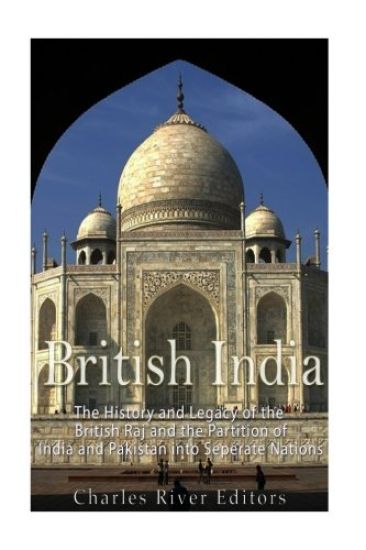
British India: The History and Legacy of the British Raj and the Partition of India and Pakistan into Separate Nations
*Includes pictures *Includes contemporary accounts of British India *Includes online resources and a bibliography for further reading The British East India Company served as one of the key players in the formation of the British Empire. From its origins as a trading company struggling to keep up with its superior Dutch, Portuguese, and Spanish competitors to its tenure as the ruling authority of the Indian subcontinent to its eventual hubristic downfall, the East India Company serves as a lens through which to explore the much larger economic and social forces that shaped the formation of a global British Empire. As a private company that became a non-state global power in its own right, the East India Company also serves as a cautionary tale all too relevant to the modern world's current political and economic situation. To the Indian people, the events of 1857 are known as the first War for Independence. For the British, the time is referred to as a mutiny, an uprising, or a rebellion. It is ironic that a similar story played out just under 100 years earlier, during the American Revolution, or as the Americans called it, the War for Independence. Whatever the moniker, in 1857, one of the Indian armies, the Bengal, mutinied. In the most cursory histories of the period, the cause of the rebellion is simply cited as an oversight, a change in the type of grease used in powder cartridges rumored to contain animal fat. This revelation horrified both Hindus and Muslims. The British response, which either failed to recognize the need to address the growing rumors or attempted to force Muslim and Hindu soldiers to use the ammunition despite their objections, made things worse. Once it had put a stop to the rebellion by defeating the various Indian rebel groups individually, the British government ended up ruling India directly. However, as McLeod pointed out, "Like much of British imperial expansion, taking formal control of India was not intentional. Instead when British lives and trading interests (represented by the East India Company) were threatened by violent reaction to encroaching westernization, London felt obligated to step in to take control of both the situation and the country." The news was delivered to the Indian people in a proclamation by the English government in 1858. Ultimately, the East India Company's activity across the Indian subcontinent led to further British involvement there, and the British Raj, a period of British dominance and rule over India that formally began in 1857 and lasted until 1947, remains a highly debated topic amongst historians, political scientists, the British people, and the people of modern India. By the time the British began to contemplate a withdrawal from India, 565 princely states were officially recognized, in addition to thousands of zamindaris and jagirs, which were in effect feudal estates. The stature of each Princely State was defined by the number of guns fired in salute upon a ceremonial occasion honoring one or other of the princes. These ranged from nine-gun to twenty-one-gun salutes and, in a great many cases, no salute at all. It stands to reason, therefore, as India began the countdown to independence after World War II, that the Indian Muslim leadership would begin to express anxiety over the prospect of universal suffrage and majority rule. At less than 20 percent of the population, Indian Muslims would inevitably find themselves overwhelmed by the Hindu majority, and as the British prepared to divest themselves of India, ancient enmities between Hindu and Muslim, long papered over by the secular and remote government of Britain, began once again to surface. British India: The History and Legacy of the British Raj and the Partition of India and Pakistan into Separate Nations looks at the centuries of British involvement in the region and its aftermath.
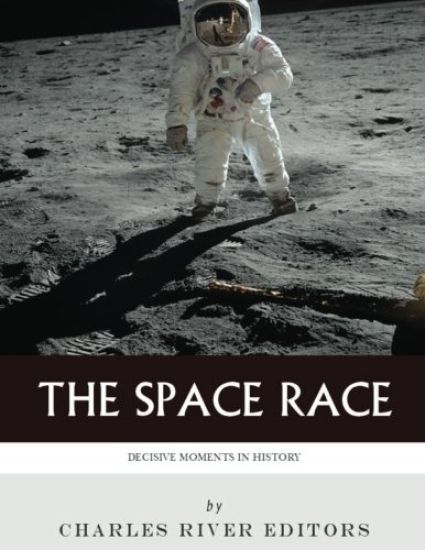
Decisive Moments in History: The Space Race

Decisive Moments in History: The Space Race

Charles River

Createspace Independent Publishing Platform
2017
nidottu
*Includes over 30 pictures of important people, places, and events, including Sputnik, Apollo 11, the Moon, Mars, Viking 1, and more. In the 19th century, the Scottish writer Thomas Carlyle famously wrote, "The history of the world is but the biography of great men", popularizing the "Great Man" theory that the course of history is shaped by a select few heroic individuals. While historians and others continue to debate the accuracy of the Great Man theory of history, there is no question that the course of history is permanently altered by decisive moments in time, where a different result would have produced drastically different outcomes. Charles River Editors' Decisive Moments in History examines the events that changed history forever and set the world down the path it finds itself on today. Today the Space Race is widely viewed poignantly and fondly as a race to the Moon that culminated with Apollo 11 "winning" the Race for the United States. In fact, it encompassed a much broader range of competition between the Soviet Union and the United States that affected everything from military technology to successfully launching satellites that could land on Mars or orbit other planets in the Solar System. Moreover, the notion that America "won" the Space Race at the end of the 1960s overlooks just how competitive the Space Race actually was in launching people into orbit, as well as the major contributions the Space Race influenced in leading to today's International Space Station and continued space exploration. Indeed, the Soviet Union had spent much of the 1950s leaving the United States in its dust (and rocket fuel). President Eisenhower and other Americans who could view Soviet rockets in the sky were justifiably worried that Soviet satellites in orbit could soon be spying on them, or, even worse, dropping nuclear bombs on them. And in 1960, when Eisenhower's administration began planning and funding for the famous Apollo program that would land the first men on the Moon in 1969, the Soviet Union was already thinking further ahead, literally. In one of the worst kept secrets of the Space Race, the Soviet Union launched two probes, Korabl 4 and Korabl 5, toward Mars in October 1960. Eventually, the Space Race produced some of the most iconic moments of the 20th century, including the landing of the first men on the Moon, and in the years after the Space Race and the Cold War ended, the competition itself had helped lay the groundwork for international cooperation in space, both in terms of space exploration and aboard the International Space Station, which continues to orbit Earth today. Decisive Moments in History: The Space Race covers the history of the Race and the major milestones that both nations achieved during it, while ultimately analyzing how the Space Race continues to leave a lasting legacy to this day. Along with pictures of important people, places, and events, places, you will learn about the Space Race like you never have before, in no time at all.
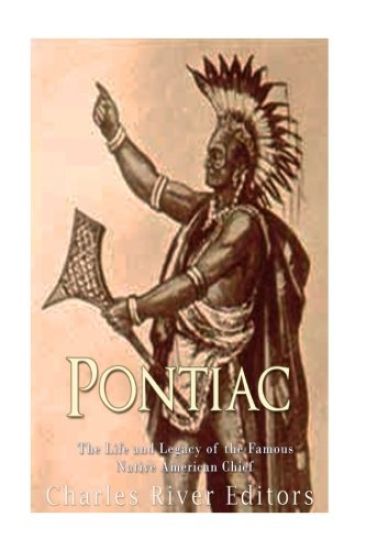
Pontiac: The Life and Legacy of the Famous Native American Chief

Pontiac: The Life and Legacy of the Famous Native American Chief

Charles River

Createspace Independent Publishing Platform
2017
nidottu
*Includes pictures *Includes contemporary accounts of Pontiac's War *Includes online resources and a bibliography for further reading "It is important for us, my brothers, that we exterminate from our lands this nation which seeks only to destroy us... Therefore, my brothers, we must all swear their destruction and wait no longer. Nothing prevents us: They are few in numbers, and we can accomplish it." - Pontiac Throughout history, there have been men of war and men of peace, but few have actually had a war named after them. One of them was Pontiac, also known as Obwandiyag, an Odawa chief who left his mark on history by continuing the battle against the British after their official triumph during the French and Indian War. While modern historians question how important Pontiac's role was in shaping America's destiny, his leadership during Pontiac's War was seen at that time as important enough to warrant significant articles and even a few 18th century books. Since these books were written by the British, or at least men who supported their cause, the descriptions of Pontiac were often not complimentary. Likewise, 19th century authors tended to portray him as something of an evil genius who plotted against the British and then drove his people into battle. Not surprisingly, 20th century scholarship depicted him differently, portraying Pontiac as an important leader who had more influence over his own local band of Native Americans than over some vast army. When it comes to Pontiac, a few facts are certain. For one thing, he certainly led the first major attack of Pontiac's War in May 1763, when he and 300 of his men attacked Fort Detroit in what is now the city by the same name. Unfortunately for his cause, Pontiac failed to gauge just how strong the British presence there was, and his attack was quickly repelled. On the other hand, he was not a man who gave up easily, so instead of retreating, he and his warriors would lay siege to the British stronghold. In the days that followed, word spread of his efforts, and in short order nearly 1,000 men from various tribes in the area had joined him. They remained camped around the fort throughout the summer before finally giving up the siege. While Pontiac and his ever-growing band of men were laying siege to Fort Detroit, other tribes heard of his efforts to keep the fight going and began to attack other settlements and enclaves. Thus, even after he did give up on the fort, Pontiac continued to fight, next attacking area in the Illinois Country, an area that included much of what is now the Midwestern United States. As time went, on his popularity and power increased to the point that the British ultimately sought him out to make peace. That is how, in July 1766, Pontiac came to meet with Sir William Johnson, the British Superintendent of Indian Affairs for the colonies. Together, the two men carved out a peace treaty that held for the remainder of the British presence in the region. Unfortunately, Pontiac's involvement in this treaty made him something of a pariah among some tribal leaders in the area. There was already a growing sense of resentment due to his reputation as a leader during the war, and many complained that he claimed a level of authority he had no right to have. This unrest grew to the point of violence, and in 1769, a warrior from the Peoria tribe attacked and killed Pontiac while he was visiting the small French villages of Cahokia. Pontiac: The Life and Legacy of the Famous Native American Chief examines the life of one of North America's most famous figures. Along with pictures of important people, places, and events, you will learn about Pontiac like never before.
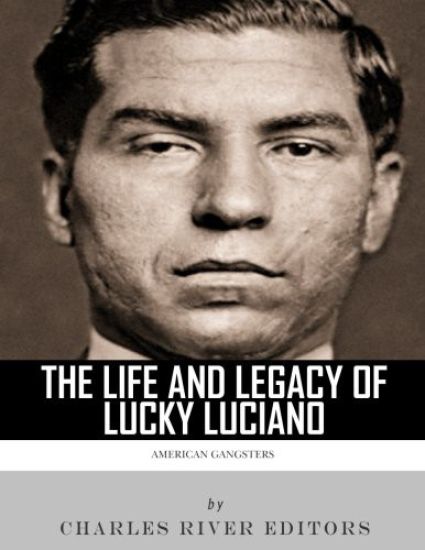
American Gangsters: The Life and Legacy of Lucky Luciano

American Gangsters: The Life and Legacy of Lucky Luciano

Charles River

Createspace Independent Publishing Platform
2017
nidottu
*Includes pictures of Lucky and other important people in his life. *Explains Lucky's relationships with other notorious gangsters of his era, including Gambino, Genovese, and Bugsy Siegel. *Includes some of Lucky's most colorful quotes and newspaper articles reporting his most famous hits. *Explains the connection between Lucky Luciano and Mario Puzo's The Godfather. *Includes a Bibliography for further reading. "He was born and died in Italy, yet the influence on America of a grubby street urchin named Salvatore Lucania ranged from the lights of Broadway to every level of law enforcement, from national politics to the world economy. First, he reinvented himself as Charles ("Lucky") Luciano. Then he reinvented the Mafia. His story was Horatio Alger with a gun, an ice pick and a dark vision of Big Business." - Edna Buchanan, Time Magazine The Mafia has long fascinated Americans, who have made celebrated pop culture fixtures out of men like Al Capone and turned movies and television series like The Godfather and The Sopranos into American institutions despite the violence associated with organized crime. Of all the notorious mobsters of the 20th century, the one most instrumental in putting the organization into organized crime and thus establishing the Mafia as it's recognized today was Lucky Luciano. The man who would become the Father of Organized Crime in the United States was born Salvatore Lucania in Sicily, but he would quickly make a name for himself after his family moved to New York City when he was still a child. By his teenage years, he was running the streets, organizing his own teenage gang, and moving in circles with the likes of Meyer Lansky, who would become key figures in Lucky's rise to power. Like so many young adults of his time, Lucky's participation in the criminal underworld began in earnest during Prohibition, and he was ambitious from the beginning. Lucky networked with other young mobsters, all of whom became known as the Young Turks, and when Lucky eliminated bosses Giuseppe Masseria and Salvatore Maranzano in 1931, he had reached the top of organized crime in New York. From the top, Luciano would implement the organizations and mob rackets that are so familiar to Americans today. In addition to having the New York scene divided into the Five Families, Luciano established The Commission to discuss and govern organized crime across the country, and dipped his toes into every conceivable racket, including gambling, bookmaking, loan-sharking, drug trafficking, unions, labor, construction and extortion. Eventually Lucky would run out of luck. After being arrested dozens of times over a 20 year period, Luciano was imprisoned in the mid-'30s, and a decade later he would be deported back to Italy. Nevertheless, Lucky continued to try to fight for control of organized crime in New York from his jail cell, Italy, and Cuba, staying in the game until the very end. American Gangsters: The Life and Legacy of Lucky Luciano looks at the life and crime of the mob boss, his influence on organized crime, and his legacy. Along with pictures of Luciano and important people, places, and events in his life, you will learn about the father of organized crime like you never have before, in no time at all.
Building the RMS Titanic: The Construction of the World's Most Famous Ship

Building the RMS Titanic: The Construction of the World's Most Famous Ship

Charles River

Createspace Independent Publishing Platform
2017
nidottu
*Includes pictures *Includes accounts written by some of the workers *Describes the design and construction of the ship, including its safety features, exterior, and first class amenities *Includes a bibliography for further reading "I cannot imagine any condition which would cause a ship to founder. I cannot conceive of any vital disaster happening to this vessel." - Captain Edward J. Smith "The appearance of safety was mistaken for safety itself." - Walter Lord, author of A Night to Remember Just before midnight on April 14, 1912, the RMS Titanic, the largest ship in the world, hit an iceberg, starting a chain of events that would ultimately make it history's most famous, and notorious, ship. In the over 100 years since it sank on its maiden voyage, the Titanic has been the subject of endless fascination, as evidenced by the efforts to find its final resting spot, the museums full of its objects, and the countless books, documentaries, and movies made about the doomed ocean liner. The Titanic was neither the first nor last big ship to sink, so it's clear that much of its appeal stems from the nature of ship itself. Indeed, the Titanic stands out not just for its end but for its beginning, specifically the fact that it was the most luxurious passenger ship ever built at the time. In addition to the time it took to come up with the design, the giant ship took a full three years to build, and no effort or cost was spared to outfit the Titanic in the most lavish ways. Given that the Titanic was over 100 feet tall, nearly 900 feet long, and over 90 feet wide, it's obvious that those who built her and provided all of its famous amenities had plenty of work to do. The massive ship was carrying thousands of passengers and crew members, each with their own experiences on board, and the various amenities offered among the different classes of passengers ensured that life on some decks of the ship was quite different than life on others. Thanks to the dramatization of the Titanic's sinking and the undying interest in the story, millions of people are familiar with various aspects of the ship's demise, and the nearly 1,500 people who died in the North Atlantic in the early morning hours of April 15, 1912. The sinking of the ship is still nearly as controversial now as it was over 100 years ago, and the drama is just as compelling. However, while the sinking of the Titanic will always be a compelling story, the construction of the Titanic is often overlooked, despite being an amazing story itself, and one that combined both comfort and raw power with the world's foremost technological advances. Building the RMS Titanic examines the history behind the origins of the ship, the construction of the boat, and a look at the rooms and amenities it held. Along with pictures of important people, places, and events, you will learn about the construction of the Titanic like never before, in no time at all.
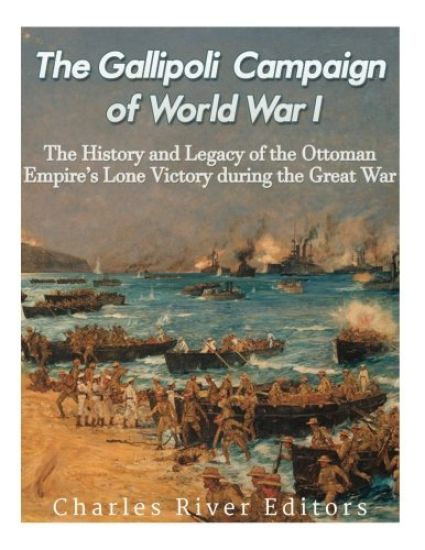
The Gallipoli Campaign of World War I: The History and Legacy of the Ottoman Empire's Lone Victory during the Great War
*Includes pictures *Includes accounts of the fighting *Includes online resources and a bibliography for further reading Early in the war, the Ottomans knew the Dardanelles strait would most certainly be attacked and had prepared significant defenses. The plan drafted by the then First Lord of the Admiralty, Winston Churchill, was meant to destroy Ottoman defenses along the Dardanelles. However, Allied forces comprised of British, Irish, Australian and New Zealand troops were unable to penetrate the Ottoman defenses, advancing only about 100 meters from the shores. The Ottomans, led by German General Liman von Sanders, further reinforced their positions. The later attempt of the British to establish a new beachhead was more successful, yet the British government refused to send significant reinforcements. In December 1915, what was certainly the most successful part of the Gallipoli offensive, the evacuation of the British forces began. The Ottomans' successful defense of the Dardanelles led to Churchill's resignation. More importantly, it bolstered the rising popularity of Mustafa Kemal, then Lieutenant Colonel, and offered hope that the Ottomans could indeed counter-balance their territorial losses. The successful defense of Gallipoli, however, convinced both Enver and Djemal that a second operation should be launched. Reinforcements arrived from Gallipoli and the Ottomans launched the second attempt in August 1916. British forces had, however, moved eastward toward Palestine, and they defeated the Ottoman forces at the Battle of Romani. The battle was the first clear British victory over the Ottomans and their German allies, resulting in a successful counter-offensive that led British General Edmund Allenby in Jerusalem. A final push with the Megiddo offensive and renewed campaign in Mesopotamia brought Entente forces even further into the Ottoman Empire. The Arab revolt has been engraved in modern memories by movies such as Lawrence of Arabia as a widespread nationalistic movement against the cruel Ottoman occupier. The reality is far more complex. In 1914, as the Ottomans entered the war, the Arabs' loyalty to the Sultan and Caliph was not in question. Arab nationalism did indeed emerge in the wake of the revolution of 1908, but it mostly attracted Arab intellectuals as the local population remained loyal subjects of the Empire. European encroachment on several former Ottoman provinces such as Algeria, Libya, Tunisia and Egypt made the danger of a possible Arab revolt relatively clear. The fall of the Ottoman Empire set the geopolitical scene of the new Middle East. In 1920, two years after the end of the war, the region was already experiencing growing instability. The issues and trends that would plague the region until today were growing. On April 4, Arab riots broke out in Jerusalem, fueled by the growing hostility against the Zionist movement. The British passivity would convince one of the Jewish leaders, Vladimir Jabotinsky (the future founder of the Israeli right-wing), of the strategic necessity of a strong Jewish military as the core of the future state. Just two weeks later in Turkey, the Grand National Assembly in Ankara set the foundation of the Turkish state, opening the way for 8 years of reforms. In Iraq, a Shiite revolt broke out in the south, as locals demanded the creation of an Islamic state. The British compromise was to place Faisal, the son of Sharif Hussein and a Sunni, on the throne. His father, meanwhile, was embroiled in a conflict with a local tribe, the Ibn Saud, that sought to carve a new kingdom in the Arabian Peninsula. These challenges, divides, and conflicts all stem from the power vacuum slowly left by the once powerful Ottoman Empire, and much of it stemmed from the events surrounding Gallipoli in 1915.
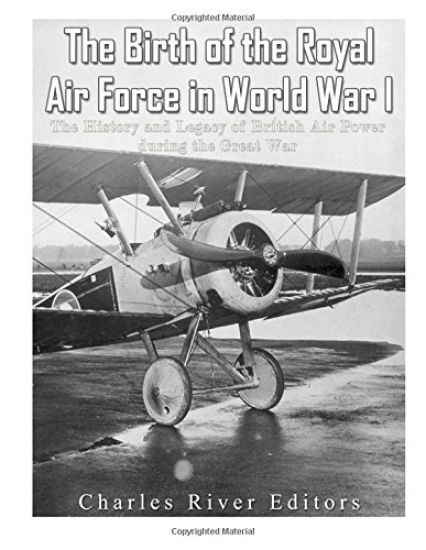
The Birth of the Royal Air Force in World War I: The History and Legacy of British Air Power during the Great War
*Includes pictures *Includes contemporary accounts *Includes online resources and a bibliography for further reading One of the most important breakthroughs in military technology associated with World War I, and certainly the one that continues to capture the public imagination, was the use of airplanes, which were a virtual novelty a decade before. While the war quickly ground to a halt in its first few months, the skies above the Western Front became increasingly busy. The great powers had already been acquiring aircraft for potential uses, but given that aerial warfare had never been a major component of any conflict, it's understandable that few on either side had any idea what the planes were capable of doing. Furthermore, at the start of the war, all sides' aircraft were ill-equipped for combat mostly because the idea that planes might somehow fight was still a novel one, and the adaptations had not yet been developed that would allow the aerial battles later in the war. As a result, aircraft were used almost entirely for reconnaissance early on, allowing generals to gain unprecedented levels of information about enemy movements. Such intelligence allowed the French to counter German movements in what became the First Battle of the Marne, ending Germany's hopes for victory through the Schlieffen plan. Similarly, in the east, German planes were vital in tracking, encircling and destroying Russian forces at Tannenberg. Some armies, such as the French, saw air intelligence as a strategic matter, with aircraft capable mainly of identifying enemy forces before battle and contributing to advanced preparations. The Germans, on the other hand, believed that aircraft could provide tactical information once battle had commenced. Pilots such as Oswald Boelcke, Germany's first great aerial officer, would fly over enemy positions in two-seat aircraft with a spotter in the back, identifying Allied positions and using colored lights to direct the fire of artillery on the ground. Of course, spotting took on great importance because of the growing range and power of artillery. Much of the fire from the great guns was aimed indirectly since the gunners could not see their targets and thus relied on intelligence from others to direct them. Maps of enemy-held territory were often woefully inadequate to start with, and with the need to know where moving enemy formations were positioned, the business gained an added complexity, but aircraft could cut through this by providing up-to-date intelligence on enemy positions and sending it back to the gun batteries which were lobbing shells over their own front lines. The Royal Air Force (RAF), Britain's legendary air arm, was born in the skies above the First World War. The British had previously used balloons for spotting and reconnaissance for decades, and in the years leading up to the war, planes started seeing military use. They mostly provided reconnaissance, though experiments were made in using them offensively. During the Boer War of 1899-1902, the British Army used the crews of helium-filled balloons to plot and help target artillery fire. But these were small, tentative steps. The first patent to fit a machine gun to a plane, taken out in 1910, had not yet led to active fighting vehicles, and there was no doctrine, no tactics, and no combat between massed air fleets. That changed during World War I, as the skies above the Western Front became the crucible in which the preceding fragments of aerial warfare were smelted in the white hot heat of war. For the British, this meant the creation of a large and unified flying force which by 1918 would become the RAF. The Birth of the Royal Air Force in World War I: The History and Legacy of British Air Power during the Great War examines the creation and evolution of the RAF over the course of World War I.
Squanto: The Life and Legacy of the Patuxet Native Who Saved the Pilgrims of the Mayflower
*Includes pictures *Includes contemporary accounts of Squanto *Includes online resources and a bibliography for further reading Squanto is a name so familiar to Americans that it is part of the very fabric of the nation's history, but somewhat fittingly, given the nation's less-than-stellar record concerning Native American culture, even some of the nation's foremost historians cannot agree on how it is to be spelled. In fact, a more correct pronunciation of his name would have been Tisquantum, sometimes spelled by 17th century people who wrote about him as Tasquantum or Tusquantum. As Shakespeare asked, "What's in a name?" In this case, not much it seems, for while Squanto's name could have meant "the rage of the Manitou" in his native language, there was nothing rageful about this man who, in spite of a lifetime of hardship and mistreatment, nonetheless had the strength of character to look past skin color and help a small group of starving English families survive their first winter in the "New World." At the same time, one of the obstacles in understanding Squanto's life is the fact that almost everything now known about him is based on information recorded by others who had a certain stake in what they wrote. As historian Jeffery Miller noted, "In their transatlantic correspondence, the Pilgrims presented an image of powerful conquerors subjecting territory through diplomacy and just war. However, as their writings reveal, they relied heavily on Native allies, such as Squanto, the Indian guide who had explained the meaning of the Narragansetts' snakeskin bundle. For centuries, Squanto has been celebrated as a selfless mediator who showed the Pilgrims how to plant corn and helped them survive their first winters. However, the details of Squanto's life and his role in English alliances are more complicated than admiring portraits reveal. Taken captive by traders in the early part of the seventeenth century, Squanto had traveled widely before meeting the Pilgrims, even living in London from 1616 to 1617. When he returned home, he found that his tribe had been destroyed by plague. ... While gunpowder diplomacy offered the Pilgrims a way to publicize their legitimacy, it offered Squanto a means to appear powerful in the eyes of other Natives through his association with the Pilgrims and their weapons." In fact, Squanto paid a high personal price in order to help the Pilgrims, and inadvertently secure himself a place in American history. Historian George Sabato has observed, "One of the earliest accounts of an Indian being captured and enslaved is that of Squanto. Squanto is traditionally introduced as the Indian who facilitated communication between the Pilgrims and the Indians. The part of the story generally not told is that Squanto had been captured and brought to England as a slave, later to be brought back to America with Captain John Smith. While in England, Squanto learned English and became a Christian. This is the 'secret revealed' as to how Squanto was able to speak English to the Pilgrims and serve as their translator, and was able to teach them to farm." Squanto: The Life and Legacy of the Patuxet Native Who Saved the Pilgrims of the Mayflower examines the life of one of North America's most famous figures. Along with pictures of important people, places, and events, you will learn about Squanto like never before.
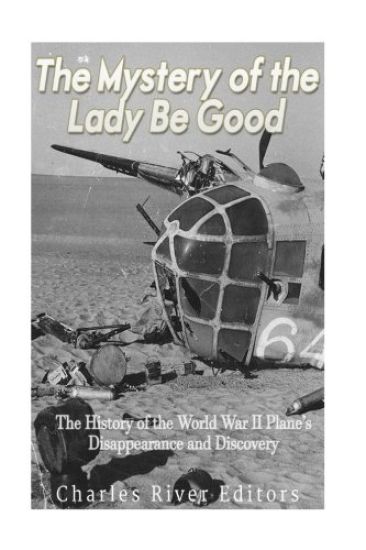
The Mystery of the Lady Be Good: The History of the World War II Plane's Disappearance and Discovery
*Includes pictures *Includes accounts of the Lady Be Good's fateful mission *Includes online resources and a bibliography for further reading "Things pretty well mixed up. Got lost returning, out of gas, jumped, landed in the desert at 2 a.m. in the morning." - Excerpt from a log kept by 2nd Lieutenant Robert F. Toner of the Lady Be Good Nazi Germany's North African defeat opened up the possibility of taking the war in the west to the European continent for the first time since France's lightning conquest by the Wehrmacht in 1940. The British and Americans debated the merits of landing in France directly in 1943, but they ultimately opted against it. The Soviets railed at the Westerners as "bastards of allies" - conveniently forgetting that they aided and abetted Hitler's violent expansionism in eastern Europe for over a year, starting in 1939 - but a 1943 "D-Day" style landing in France might have proven a strategic and logistical impossibility. Complex reasons lay behind England's successful insistence on the Mediterranean theater rather than the French theater as the scene of the next western Allied strike against Nazi Germany. Chief among these remained Britain's determination to keep a postwar empire, one that Churchill and his cabinet hoped would include Iraq and Iran, the source of oil needed to ensure that England continued to "rule the waves" with a powerful modern navy. This strategic imperative, indeed, formed the backbone of the British choice of Sicily as the target for military operations in the summer of 1943. Naturally, the preparations also included bombing missions over Italy ahead of an amphibious landing, and on April 4, 1943, one of the planes that took off from Libya to bomb Naples was the Lady Be Good, a B-24D Liberator bomber with a crew that had never flown a combat mission. The operation, which included over a dozen planes, was undone by poor flying conditions almost from the start, and the Lady Be Good never even made into formation with the others attacking Naples, thus flying out the mission on its own. Around midnight, pilot 1st Lt William J. Hatton radioed for directions back to base, but after that, the plane and its crew were never heard from again. A search and rescue effort found nothing, and it would be over a decade before the remains of the plane, which many assumed went down in the Mediterranean, was found deep in the desert over 400 miles away from the base. The mystery further deepened when no human remains were found at the crash site, which suggested the crew had bailed out of the plane. Eventually, the remains of several members of the crew were found, and it led to the stunning discovery that multiple survivors undertook a desperate journey to safety before perishing in the desert, one that was actually documented in some of the men's diaries. The government's Mortuary Affairs concluded, "The aircraft flew on a 150 degree course toward Benina Airfield. The craft radioed for a directional reading from the HF/DF station at Benina and received a reading of 330 degrees from Benina. The actions of the pilot in flying 440 miles into the desert, however, indicate the navigator probably took a reciprocal reading off the back of the radio directional loop antenna from a position beyond and south of Benina but 'on course'. The pilot flew into the desert, thinking he was still over the Mediterranean."
Al-Qaeda: The History of the World's Most Notorious Terrorist Organization

Al-Qaeda: The History of the World's Most Notorious Terrorist Organization

Charles River

Createspace Independent Publishing Platform
2017
nidottu
*Includes pictures *Includes quotes by bin Laden and other al-Qaeda leaders about the group's history and ideology *Explains the formation, influences, ideology, and goals of the group *Includes footnotes and a bibliography for further reading Since the attacks on September 11, 2001, the world has struggled to define al-Qaeda, an amorphous, growing, and seemingly inexhaustible organization. Once a relatively organized group based in one country with a defined hierarchy and clear leadership, al-Qaeda has transformed into a transnational phenomenon over the last few decades, with branches and affiliates operating in dozens of countries across the world. Many call al-Qaeda an enemy, while some define it as an ideology, and others analyze it as a network. Of course, a small minority takes it up as their cause and an extension of their religion. To that end, what is perhaps most clear about al-Qaeda is that there is no single definition that can comprehensively and precisely identify just what it is. Who can be described as an al-Qaeda terrorist? What is the exact makeup of al-Qaeda? These are all questions that are fairly straightforward and seem like they should be simple to answer - as they are with most other terrorist organizations - but in the case of al-Qaeda, there is no commonly accepted understanding. Bruce Hoffman, former director of RAND and a specialist in terrorism and counterterrorism affairs, wrote in 2003, "It is remarkable that more than a decade after its founding...al-Qaeda remains such a poorly understood phenomenon." He further noted, "Is al-Qaeda] a monolithic, international terrorist organization with an identifiable command and control apparatus or is it a broader, more amorphous movement tenuously held together by a loosely networked transnational constituency?... Is al-Qaeda a concept or a virus? An army or an ideology? A populist transnational movement or a vast international criminal enterprise? All of the above? None of the above? Or, some of the above?" The difficulty of defining al-Qaeda is reflected by the various ways the Arabic word qaeda can be translated. The most common translation is "base" or "foundation," but the word can also be used more ambiguously to mean "method," "principle," or "formula." Some maintain that the early founders of al-Qaeda were envisioning the name in the latter sense, while others believe that the name was applied to the group by outside powers. Osama bin Laden, the founder of al-Qaeda, stated in a February 2002 interview that the name al-Qaeda was "established a long time ago by mere chance," and that the group's training camp was called al-Qaeda ("the base"), a name that came to represent his entire organization. Even greater frustration arises when attempting to physically identify what group or groups constitute al-Qaeda. Are all groups that pledge allegiance to al-Qaeda considered part of the franchise? Is there a difference between the "al-Qaeda core" based in Pakistan and the various affiliates and associates scattered across the world. If so, what is the relationship between them? While both groups have sworn allegiance to al-Qaeda's core leadership, is al-Qaida in the Arabian Peninsula in Yemen fighting for the same cause as al-Shabaab in Somalia or ISIS in Iraq and Syria? Al-Qaeda: The History of the World's Most Notorious Terrorist Organization chronicles the birth and growth of al-Qaeda, including the key figures and events that impacted its formation, as well as the ideology of al-Qaeda and the historical context and environment that strengthened it. This book also looks at the various tactics and strategies al-Qaeda has employed to achieve its goals and further its ideology, especially its notorious terrorist attacks across the globe, and the various branches that have grown out of the core. Along with pictures of important people, places, and events, you will learn about al-Qaeda like never before.