Kirjojen hintavertailu – 12 903 727 kirjaa ja 27 kauppaa

Kirjailija

Charles River

Kirjat ja teokset yhdessä paikassa: 4 673 kirjaa, julkaisuja vuosilta 2013–2022, suosituimpiin kuuluu William Powell and Myrna Loy: The Lives and Careers of One of Classical Hollywood's Most Iconic Duos. Vertaile teosten hintoja ja tarkista saatavuus suomalaisista kirjakaupoista.

4 673 kirjaa

Kirjojen julkaisuvuodet: 2013–2022.

Loki: The Origins and History of the Famous Norse Trickster God

Loki: The Origins and History of the Famous Norse Trickster God

Andrew Scott; Charles River

Createspace Independent Publishing Platform
2017
nidottu
*Includes pictures *Includes medieval accounts of Loki *Includes online resources and a bibliography for further reading Much of what is known of the Norse myths comes from the 10th century onwards. Until this time and, indeed, for centuries afterwards, Norse culture (particularly that of Iceland, where the myths were eventually transcribed) was an oral culture. In fact, in all Scandinavian countries well into the thirteenth century laws were memorized by officials known as "Lawspeakers" who recited them at the "Thing." The Thing was the legislative assembly in Scandinavia "held for judicial purposes." One of the most famous of these Lawspeakers was the Icelander Snorri Sturluson, a masterful writer who wrote the Prose Edda in the thirteenth century. There are other sources for the Norse myths, namely the later "Poetic Edda," a collection of poems and prose work, and other sagas but the Snorri's Prose Edda is the most complete work whose attribution is known to modern scholars. It is believed that Snorri, a Christian, recorded these pagan beliefs so as to preserve and explain the stylistic poetry of Iceland, particularly the popular descriptive devices known as kennings. A kenning is made up of a base word and a modifying word that is used to describe a separate object. For example, "Gold" had a great many kennings, one of which was "Sif's Hair." If, however, the memory of Loki cutting off Sif's hair and replacing it with gold were lost, then this kenning would make no sense to later readers. There are many of these allusions to the myths and it is thanks to them that the myths have survived. The Norse Myths also appear to follow a chronological narrative, which the historian John Lindow describes as having a "Mythical Past, Present and Future." Loki features in each of these literary "epochs" and it helps to understand the complexity of his character, as well as the belief system, to view the myths in this way. While not as well-known as Thor or Odin, Loki's name is immediately recognizable to many, and his history is as enigmatic as his characters. Fittingly, as historian Rudolph Simek put it, his "sources are just as varied as his interpretations." He first appears in j lfr r Hv ni s 9th century poem Haustl ng, recorded in the Sk ldskaparm l, but the etymology of his name has still not been solved. Rudolph Simek has made a tentative assertion that Loki was related to the Old Norse "luka" (meaning to "close") and has surmised that there could be a connection between this and his role in the "closing" of the world during the apocalyptic event Ragnar k. Whatever the original meaning of his name, the surviving image of Loki is multifaceted but mostly negative. "Father of the Gods" enemies' Loki has been interpreted as a fool, a trickster and a devil, the latter being connected with his being a harbinger for the Norse "end of days" and the subsequent revival of peace and godliness that had clear echoes in the Christian Apocalypse. There is no evidence of cult activity for Loki, and despite many attempts at defining one, there appears to be no obvious religious "function" to his character. Nevertheless, he permeates many of the key moments in Norse mythology - for good and bad - beginning and ending with his role as "father of monsters." Loki: The Origins and History of the Famous Norse Trickster God looks at the story and the legendary Norse deity. Along with pictures depicting important people, places, and events, you will learn about Loki like never before.

Ragnarok: The Origins and History of the Apocalypse in Norse Mythology

Ragnarok: The Origins and History of the Apocalypse in Norse Mythology

Charles River

Createspace Independent Publishing Platform
2017
nidottu
*Includes pictures *Includes medieval accounts *Includes online resources and a bibliography for further reading "Brothers shall fight and fell each other, And sisters' sons shall kinship stain; Hard is it on earth, with mighty whoredom; Axe-time, sword-time, shields are sundered, Wind-time, wolf-time, ere the world falls; Nor ever shall men each other spare." One of the most fascinating elements of Norse cosmology is the fact that its end is foretold in crushing detail. This end of times will come about in a mighty battle called "Ragnar k", an event translated as either "the Fate of the Gods" or (in Richard Wagner's re-imagining) "the Twilight of the Gods." Moreover, not only is the event foretold, but the characters of this drama seem to know of its coming. This is in line with the Germanic faith in the concept of "fate." For the German pagans, fate or destiny was an integral part of human existence; while people may not know them ahead of time, their stories are written before they are born, and this was true of the gods as well. Although the gods seem to accept their fates, this concept was not the same as that of "destiny" in Christianity (especially Calvinist pre-destination), because the Norse believed that fate could perhaps be warped and shifted. According to historian Rudolph Simek, Ragnar k, the "Final Destiny of the Gods," was comprised of four principal cataclysmic events: the Fimbulwinter, a mighty winter that lasted three years; Surtr's "world fire" that consumed everything; the sinking of the earth beneath the waves whipped up by the "Midgard Serpent;" and the darkening/disappearance of the sun after Fenris-Wolf devoured it. Afterwards, there is also a resurrection of humanity and the gods that is often forgotten but gives a fascinating insight into the socio-political mindset of the Norse storytellers. The actual description of Ragnar k appears best in the medieval prose text, the Gylfaginning, and the prophetic poem the V lusp , but Ragnar k's antecedents are equally fascinating and present a catalog of crimes and errors that led to the fated "twilight" of the gods. This idea of "destiny," of fate, is key to understanding the culture behind these strange tales. Many of the allusions to characters, objects, and events in the sources available today are still mysterious to historians. Much has been lost to the abyss of time, but, although these references and connections often bemuse people, there is still enough poetic majesty in the sources that have survived to captivate readers and give a sense of what the medieval Scandinavian mindset was. A lot can be learned about people by probing how they envisaged the end of their world. Many people today believe that the Ragnar k is the tale of where all good fails, ushering in a future devoid of hope in which the gods, the supposed progenitors of "goodness," ultimately lose. However, an analysis of the legend and its origins make this viewpoint less tenable. Ragnar k: The Origins and History of the Apocalypse in Norse Mythology looks at the story and the legendary Norse mythology behind it. Along with pictures depicting important people, places, and events, you will learn about Ragnar k like never before.
Mary Magdalene: The Life and Legacy of the Woman Who Witnessed the Crucifixion and Resurrection of Jesus

Mary Magdalene: The Life and Legacy of the Woman Who Witnessed the Crucifixion and Resurrection of Jesus

Gustavo Vázquez Lozano; Charles River

Createspace Independent Publishing Platform
2017
nidottu
*Includes pictures *Includes Gospel passages and apocryphal passages *Includes online resources and a bibliography for further reading "After that, Jesus traveled about from one town and village to another. The Twelve were with him, and also some women who had been cured of evil spirits and diseases: Mary (called Mary Magdalene) from whom seven demons had come out-and many others. These women were helping to support them out of their own means." - Luke 8:1-3 Mary Magdalene is one of the most talked about figures in modern Christianity, a woman who mainstream media and modern sensibilities can hold with more conviction. The media, press, movie industry, and airport literature have been obsessed with this redhead for more than 100 years, a fascination that reached its climax in the first decade of this century, and does not seem likely to end any time soon. Mary Magdalene is frequently depicted as young and attractive, liberated and intelligent, a symbol of a freer spirituality, and not controlled by a male-dominated church. In the minds of many, she embodies opposition to a system dominated by old men in white cassocks, the "sacred feminine." As if that is not enough, she has the best bachelor in the world: Jesus Christ himself. The French-made, fair-haired Mary Magdalene who appears in innumerable works of medieval and modern art with a red robe, a symbol of rebellion and freedom (although in the Middle Ages the intention was to show her as a loose woman), is a creation of the Western Church and, more recently, the media. It is a depiction laden with centuries of intertextual struggles, patronizing homilies, medieval legends, novels looking for bestseller status, and documentaries for cable television. But there was a historical Mary Magdalene, a woman named Miriam (Hebrew for Mary) born in Galilee in the time of King Herod, and she died, most likely in present-day Turkey, when Christianity was only a variant of Judaism. Mary Magdalene would not recognize herself in modern portraits or the perception the average Christian of the last 1500 years has of her. If there has been a search for the historical Jesus since the 18th century, the real man who walked in the hills of Galilee and died on a cross in Jerusalem, a similar quest is necessary for the historical Mary Magdalene, but not out of mere curiosity, because she is important in the narrative of Jesus's life. If the early sources are accurate, Mary of Magdala was the first Christian in history, and the first to announce the fundamental kerygma of early Christianity: Jesus is risen Despite the shortage of information, there are a few certain facts historians know about Mary Magdalene. For example, she was a respected and well-remembered follower of Jesus, one of the female disciples who supported the movement of the Galilean preacher. Some scholars studying the gospels believe that Mary Magdalene was an elderly woman and probably well-to-do, if not wealthy. "For all we know," opines E. P. Sanders in The Historical Figure of Jesus, "she was eighty-six, childless, and keen to mother unkempt young men." She not only remained by Jesus side in his darkest hour, the crucifixion, she also had a strange experience at Jesus s tomb on Easter morning. The gospels disagree on the details, but not in the fact that it happened to her. Mary Magdalene: The Life and Legacy of the Woman Who Witnessed the Crucifixion and Resurrection of Jesus examines what is known and unknown about one of the Bible's most famous figures. Along with pictures depicting important people, places, and events, you will learn about Mary Magdalene like never before.
Mary Magdalene: The Life and Legacy of the Woman Who Witnessed the Crucifixion and Resurrection of Jesus

Mary Magdalene: The Life and Legacy of the Woman Who Witnessed the Crucifixion and Resurrection of Jesus

Gustavo Vázquez Lozano; Charles River

Createspace Independent Publishing Platform
2017
nidottu
*Includes pictures *Includes Gospel passages and apocryphal passages *Includes online resources and a bibliography for further reading "After that, Jesus traveled about from one town and village to another. The Twelve were with him, and also some women who had been cured of evil spirits and diseases: Mary (called Mary Magdalene) from whom seven demons had come out-and many others. These women were helping to support them out of their own means." - Luke 8:1-3 Mary Magdalene is one of the most talked about figures in modern Christianity, a woman who mainstream media and modern sensibilities can hold with more conviction. The media, press, movie industry, and airport literature have been obsessed with this redhead for more than 100 years, a fascination that reached its climax in the first decade of this century, and does not seem likely to end any time soon. Mary Magdalene is frequently depicted as young and attractive, liberated and intelligent, a symbol of a freer spirituality, and not controlled by a male-dominated church. In the minds of many, she embodies opposition to a system dominated by old men in white cassocks, the "sacred feminine." As if that is not enough, she has the best bachelor in the world: Jesus Christ himself. The French-made, fair-haired Mary Magdalene who appears in innumerable works of medieval and modern art with a red robe, a symbol of rebellion and freedom (although in the Middle Ages the intention was to show her as a loose woman), is a creation of the Western Church and, more recently, the media. It is a depiction laden with centuries of intertextual struggles, patronizing homilies, medieval legends, novels looking for bestseller status, and documentaries for cable television. But there was a historical Mary Magdalene, a woman named Miriam (Hebrew for Mary) born in Galilee in the time of King Herod, and she died, most likely in present-day Turkey, when Christianity was only a variant of Judaism. Mary Magdalene would not recognize herself in modern portraits or the perception the average Christian of the last 1500 years has of her. If there has been a search for the historical Jesus since the 18th century, the real man who walked in the hills of Galilee and died on a cross in Jerusalem, a similar quest is necessary for the historical Mary Magdalene, but not out of mere curiosity, because she is important in the narrative of Jesus's life. If the early sources are accurate, Mary of Magdala was the first Christian in history, and the first to announce the fundamental kerygma of early Christianity: Jesus is risen Despite the shortage of information, there are a few certain facts historians know about Mary Magdalene. For example, she was a respected and well-remembered follower of Jesus, one of the female disciples who supported the movement of the Galilean preacher. Some scholars studying the gospels believe that Mary Magdalene was an elderly woman and probably well-to-do, if not wealthy. "For all we know," opines E. P. Sanders in The Historical Figure of Jesus, "she was eighty-six, childless, and keen to mother unkempt young men." She not only remained by Jesus side in his darkest hour, the crucifixion, she also had a strange experience at Jesus s tomb on Easter morning. The gospels disagree on the details, but not in the fact that it happened to her. Mary Magdalene: The Life and Legacy of the Woman Who Witnessed the Crucifixion and Resurrection of Jesus examines what is known and unknown about one of the Bible's most famous figures. Along with pictures depicting important people, places, and events, you will learn about Mary Magdalene like never before.
British Legends: The Life and Legacy of King George III

British Legends: The Life and Legacy of King George III

Charles River

Createspace Independent Publishing Platform
2017
nidottu
*Includes pictures of George III and other important people in his life. *Explains George III's role and policies during the American Revolution and Napoleonic Era. *Discusses George III's mixed legacy and whether criticisms of it are fair. *Includes a Bibliography for further reading. "I wish nothing but good; therefore, everyone who does not agree with me is a traitor and a scoundrel." - King George III When he died in 1820, King George III had presided over the longest reign by a monarch in England's history and ruled the British Empire during one of its most turbulent and important periods, but he was remembered by the unappealing sobriquets "The Mad King" and "The King Who Lost America". The British remembered him based on the fact that he began suffering serious mental illnesses by the end of his life, and he was even more despised in America, with Jefferson summing up the public opinion of the British king in a letter to then-ambassador John Adams: "We I hope shall be left free to avail ourselves of the advantages of neutrality: and yet much I fear the English, or rather their stupid king, will force us out of it. (...) Common sense dictates therefore that they should let us remain neuter: ergo they will not let us remain neuter. I never yet found any other general rule for foretelling what they will do, but that of examining what they ought not to do." Given George III's descent into senility, and the fact that he was the monarch during the American Revolution, it was only natural that George III would be remembered those ways, but his reputation and legacy have been given a more objective and positive reexamination over the last few decades. The king played an important role in resisting the French in the aftermath of the French Revolution and the Napoleonic Era, while charges of tyranny made by his opponents were naturally colored with bias and extreme exaggerations. Perhaps just as importantly, George III oversaw a period during which the monarch retained less and less power within the framework of the British Empire's constitutional monarchy, and thus ushered in a transformation in which the monarch went from wielding power to being a cultural figurehead. British Legends: The Life and Legacy of King George III looks at the life, reign, and legacy left by one of Britain's most important rulers. Along with pictures of important people, places, and events, you will learn about George III like you never have before, in no time at all.
Free France: The History and Legacy of the Exiled Free French Government during World War II
*Includes pictures *Includes contemporary accounts *Includes online resources and a bibliography for further reading "Whatever happens, the flame of French Resistance must not be extinguished and will not be extinguished." - General Charles de Gaulle, radio broadcast from London, June 18, 1940 "A great man? Why, he's selfish, he's arrogant, he thinks he's the center of the universe...you're right, he's a great man " - Winston Churchill on General Charles de Gaulle The French Army crumbled swiftly under the powerful blows delivered to it in 1940 by Nazi Germany's confident Wehrmacht. Launching a massive feint into Belgium to lure mobile French armies and the British Expeditionary Force (BEF) away from the actual point of attack, the weakly protected Ardennes Forest, the Germans struck past the Maginot Line. In a lightning campaign, Heinz Guderian's panzers punched through to the coast, dividing Allied forces with a steel cordon across France and forcing the evacuation of the BEF from the port of Dunkirk. French morale collapsed very quickly in the face of the Third Reich's onslaught. The French population had not yet recovered from World War I's immense bloodshed, and many French preferred surrender to a second decimation of their young men. Accordingly, the Germans seized the northern French territories directly, while permitting Marshal Petain, an elderly war hero and right-wing fanatic, to found a rump state centered on Vichy. History dubbed the quasi-independent client state's government the Vichy Regime. Not all French people proved willing to surrender to the Nazi invaders, however. While large numbers "collaborated" - working for German or Vichy companies to provide for themselves or their families - and some wholeheartedly backed the new regime out of opportunism, fascist conviction, or other motivations, many courageous French resisted the Nazis and the quisling Vichy state. "De Gaulle described them as being bound together by a taste for risk and adventure ...] national pride sharpened by the suffering of their nation and 'an overwhelming confidence in the strength and cunning of their own plot'. ...] 'With him, it is ...] serving the Resistance and national honour, uncompromisingly demanding, ' wrote one. 'With him, we would have to get used to breathing the rarefied air of the summits.'" (Fenby, 2012, 109). While all Free French forces shared the same goal - opposition to the Germans their Vichy pawns - they viewed each other with some suspicion and sometimes cooperated only grudgingly. One of the biggest divides ran between the Gaullists (and those who favored de Gaulle simply as a convenient, but temporary, "banner" to provide a unifying influence) and the communists of the PCF (Partie Communiste Francais). De Gaulle and his followers viewed the communists with profound suspicion, believing they harbored a wish for violent revolution and a totalitarian Soviet-aligned state, yet they also needed their paramilitary skills and extraordinarily large cache of weaponry. While de Gaulle's suspicions proved overblown, the communists also tended to overstate their own role. They asserted, for example, that 75,000 communist Resistance members died in the struggle. During the war years, however, the Free French kept the spirit of an independent and defiant France alive, waiting for the opportunity to emerge again, regardless of the precise political beliefs of its members. Free France: The History and Legacy of the Exiled Free French Government during World War II examines the creation of Free France over the course of World War II. Along with pictures of important people, places, and events, you will learn about the Free French like never before.
El Vaticano y la Santa Sede: La historia y el legado del gobierno de la Iglesia Católica Romana
Cada a o, millones de personas visitan un espectacular circuito compuesto por maravillosas agrupaciones de edificios interconectados y encantadoras casas coloreadas de beige, arena y dem s matices terrosos. Al acercarse pueden ver el exterior renacentista de esas construcciones, y los exquisitos detalles capturados en las estatuas colocadas en el tope de palacios y catedrales. Cruzar las puertas de estos lugares hist ricos, es entrar en todo un mundo nuevo, incluso m s cautivador que la vista de la ciudad ba ada con el p rpura y el melocot n del crep sculo. Ubicado en Roma, este fascinante destino no es otro que la Ciudad del Vaticano. El Vaticano es una locaci n encantadora para la literatura, la m sica, y para la resplandeciente pantalla de plata, por muy buenas razones. Por supuesto, ser el estado soberano m s peque o del mundo con solo 44 hect reas es apenas uno de sus atractivos. Como sede secular de la Iglesia Cat lica, su atrayente y azarosa historia, sin mencionar la riqueza del arte y la arquitectura que contiene, hace que la influencia y la importancia del Vaticano supere con creces a su tama o. El Vaticano es ante todo conocido como el centro por excelencia del Catolicismo, por lo que m s de uno se sorprende al enterarse que la zona alberg un santuario pagano. Antes del siglo I EC, el Ager Vaticanus, el antiguo nombre de la ciudad, hac a referencia a los territorios al oeste del r o T ber. Este territorio se extend a desde la colina del Jan culo al Monte Mario, con el Mons Vaticanus, o Colina Vaticana, ubicada en el centro. En su mayor parte, las tierras pantanosas del Ager Vaticanus eran inhabitables; cualquier pedazo de la misma que los labradores cultivasen produc a muy poco o nada, y de acuerdo a Cicer n, el famoso pol tico romano que vivi en el siglo I AEC, las uvas eran agrias y rancio el vino producido a partir de ellas. La nica se al de vida parece haber sido hallada en un pueblo etrusco, ya extinto, llamado "Vaticum" en la Colina Vaticana. Esta puede haber sido la fuente etimol gica de "Vaticanus", que m s tarde se convirti en "Vaticano". El Vaticano y la Santa Sede: la historia y el legado del gobierno de la Iglesia Cat lica Romana examina el notable impacto que ha tenido el Vaticano en el mundo a lo largo de unos 2000 a os. Junto con im genes de personajes, lugares y eventos, usted aprender sobre el Vaticano como nunca antes.
Corinth: The History and Legacy of the Ancient Greek City-State

Corinth: The History and Legacy of the Ancient Greek City-State

Charles River

Createspace Independent Publishing Platform
2017
nidottu
*Includes pictures *Includes ancient accounts of Corinth *Includes online resources and a bibliography for further reading Modern perceptions of Classical Greece are almost invariably based on Athens and Sparta, but Corinth was also a key city-state in antiquity. When St. Paul visited in 51 CE, the Corinth he saw was actually a relatively new city, having been built a little over 100 years previously, but he found a city five times larger than Athens at that time and one which was the capital of a prosperous province. However, ancient Corinth had actually been founded in the 10th century BCE and was, for most of its history, the richest port and the largest city in all of Greece. Corinth had a population in excess of 90,000 in 400 BCE, but the Romans leveled this original city in 146 BCE, killing all the male inhabitants and selling the women and children into slavery. The few that survived fled to Delos, and for the next 100 years the site was deserted until Julius Caesar rebuilt it in 44 BCE. The story of the rise and fall of this powerful polis is intriguing, as are the reasons for ancient Corinth's reputation throughout the Greek world for its licentiousness. One of the Greek words for fornication was korinthiazomai, and while the city's association with sacred prostitutes scandalized contemporary Athenians in particular, it also made the city a favorite destination for many Greeks. Corinth was also where so much of what became recognized as "Greek art and architecture" was first developed, and it was here that Eastern influence on Greece can first and most obviously be detected. The destruction of ancient Corinth marked the end of free Greece, but despite the integral role it played in Hellas, Corinth has never been recognized as a great military or naval power in the way that Athens and Sparta have. It did not boast any exceptional schools of philosophy, nor are there any great buildings still remaining to attest to its successes. Corinth's contribution to the spread of Greek civilization, however, matches if not surpasses all of the more well-known poleis. Corinth also acted as a gateway for many of the artistic ideas from the East that local artisans adapted and developed to produce their own uniquely Corinthian style of pottery and art. In architecture, too, Corinth's contribution was significant, and the Corinthian style was utilized throughout Greece and the Greek world, especially in relation to temple building. The quintessential Greek ship, the trireme, was first developed in Corinth, and its role in defeating the Persians, a defeat that most historians agree changed world history, is still understated, probably because of the credence given to Herodotus' claims about the Corinthians' behavior in that war. The fact that the city was reestablished by Julius Caesar and, even today, is a highly important center of trade suggests that Corinth was destined to be a hub of trading activity and a prosperous city. Still, the advantages conferred by a favorable geographic position had to be seized, and this ancient Corinth did. Its impact on the ancient Greek world, and hence its influence on Western civilization, should not be underestimated, even as it mostly continues to be. Corinth: The History and Legacy of the Ancient Greek City-State examines the history of one of Greece's most important poleis. Along with pictures depicting important people, places, and events, you will learn about Corinth like never before.
La Historia y El Legado de María Magdalena, La Primera Cristiana y Apóstol de La Iglesia Primitiva

La Historia y El Legado de María Magdalena, La Primera Cristiana y Apóstol de La Iglesia Primitiva

Gustavo Vazquez Lozano; Charles River

Createspace Independent Publishing Platform
2017
nidottu
Mar a Magdalena es probablemente la figura m s c lebre del cristianismo popular, una mujer de nuestro tiempo, la que los medios de comunicaci n y las sensibilidades modernas pueden abrazar con mayor convicci n. La industria del entretenimiento como el cine, el teatro y la literatura de aeropuerto han tenido desde hace m s de cien a os una obsesi n con esta pelirroja, que lleg a su cl max en la primera d cada de este siglo y no parece que vaya a desvanecerse. Magdalena tiene todo para ser una super-estrella: joven y atractiva, liberada e inteligente, ejemplo de una espiritualidad m s libre, no sometida por una Iglesia controlada por hombres; en la mente de muchos, Magdalena encarna la oposici n a un sistema dominado por ancianos con sotana, lo "sagrado femenino", y por si fuera poco, tiene el mejor partido del mundo: el mism simo Jesucristo. Hasta aqu la imagen presentada por la cultura popular. Esta Magdalena afrancesada, de pelo suelto y brillante, que aparece en innumerables obras de artes medievales y modernas con un manto rojo, s mbolo de rebeld a y libertad (aunque en la Edad Media la intenci n era mostrarla como una mujer descarriada), es una creaci n de la Iglesia occidental, y m s recientemente de los medios masivos de comunicaci n. Es la Magdalena enterrada bajo siglos de luchas intertextuales, homil as condescendientes, leyendas medievales, novelas en busca de ventas y documentales para la televisi n por cable. Pero hubo una Mar a hist rica, la mujer llamada Miriam (su nombre hebreo) nacida en Galilea en tiempos del rey Herodes, y que muri , muy probablemente, en la actual Turqu a, venerada, cuando el cristianismo era solamente una variante del juda smo. Seguramente ella misma no se hubiera reconocido en nuestros retratos modernos o en la idea que el cristiano promedio ha tenido de ella desde hace 1500 a os. Si desde el siglo XVIII ha habido una b squeda del Jes s hist rico, el hombre real que camin en las colinas de Galilea y muri en una cruz en Jerusal n, hace falta tambi n una b squeda similar de la Magdalena hist rica; no por simple curiosidad; la figura en cuesti n no es menor: si hemos de dar cr dito a las fuentes del siglo I, Mar a de Magdala fue la primera cristiana de la historia, la primera en proclamar la tesis fundamental del cristianismo, la resurrecci n de Jes s. A pesar de la escasa informaci n confiable, hay algunos hechos que podemos saber con certeza sobre esta mujer; por ejemplo, que era una respetada y bien recordada seguidora de Jes s de Nazareth, una de las mujeres que apoyaron al movimiento del galileo desde su primera etapa. Algunos estudiosos de la Biblia creen ver evidencia interna en los evangelios que Magdalena era una mujer mayor de edad, muy probablemente bien acomodada, si no es que rica. "Por todos los indicios", opina E. P. Sanders en su libro The Historical Figure of Jesus, "ten a ochenta y seis a os, no ten a hijos, y ten a la tendencia a cuidar j venes desarraigados". Magdalena no s lo permaneci al lado de Jes s en su hora de mayor desgracia, la crucifixi n; tambi n tuvo una extra a experiencia junto a su tumba el domingo en la madrugada despu s de la Pascua. Los evangelios difieren en los detalles, pero no en el hecho de que le sucedi a ella.
Decisive Moments in History: The Assassination of Abraham Lincoln and the Manhunt for John Wilkes Booth
*Includes over 25 pictures of Booth, Lincoln, and other important people, places, and events. In the 19th century, the Scottish writer Thomas Carlyle famously wrote, "The history of the world is but the biography of great men", popularizing the "Great Man" theory that the course of history is shaped by a select few heroic individuals. While historians and others continue to debate the accuracy of the Great Man theory of history, there is no question that the course of history is permanently altered by decisive moments in time, where a different result would have produced drastically different outcomes. Charles River Editors' Decisive Moments in History examines the events that changed history forever and set the world down the path it finds itself on today. Until April 14, 1865, John Wilkes Booth was one of the most famous actors of his time, and President Abraham Lincoln had even watched him perform. But his most significant performance at a theater did not take place on the stage. That night, Booth became one of history's most infamous assassins when he assassinated President Lincoln at Ford's Theatre in Washington, D. C. Booth was a member of the prominent 19th century Booth theatrical family from Maryland and, by the 1860s, was a well-known actor. But he was also a Confederate sympathizer who dabbled in espionage, and he was increasingly outraged at the Lincoln Administration. Although Robert E. Lee's Army of Northern Virginia had surrendered days earlier, Booth believed the war was not yet over because Confederate General Joseph E. Johnston's army was still fighting the Union Army, so he and his group of conspirators plotted to kill Lincoln and other top officials in a bid to decapitate the federal government and help the South. Perhaps not surprisingly, the actor's flair for the dramatic came at a cost to the plot. It took almost no time for the shocked public and the federal government to begin unraveling Booth's conspiracy, which had mostly faltered from the beginning. Following the shooting, America's most famous manhunt commenced, which itself became the stuff of legends. After the shooting, during which it is believed he broke his leg, Booth fled south on horseback, with authorities hot on his tail. 12 days later, while he was at a farm in rural northern Virginia, Booth was tracked down and shot by Boston Corbett, a Union soldier who acted against orders. Eight others were tried for their alleged involvement in the plot and convicted, and four were hanged shortly thereafter as a result of some of the nation's most famous trials. Decisive Moments in History: The Assassination of Abraham Lincoln and the Manhunt for John Wilkes Booth covers the origins of Booth's plot, the assassination, and the eventual capture and killing of Booth, while assessing the aftermath and analyzing the what ifs. Along with pictures of the important people and places, you will learn about the Lincoln assassination and the manhunt for Booth like you never have before, in no time at all.
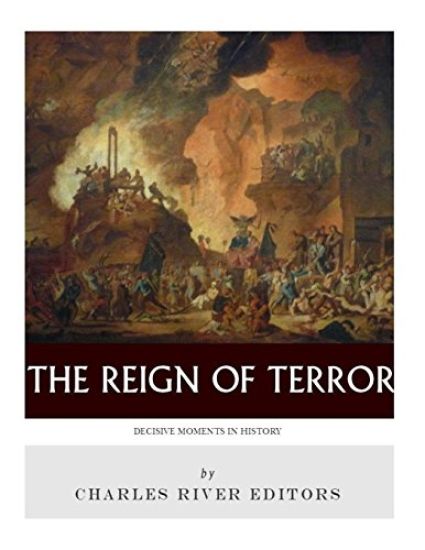
Decisive Moments in History: The Reign of Terror

Decisive Moments in History: The Reign of Terror

Charles River

Createspace Independent Publishing Platform
2017
nidottu
*Includes pictures of important people, places, and events. *Explains the lives and roles of key figures in the French Revolution and Reign of Terror, including King Louis XVI, Robespierre, Marat, Danton, Saint-Just and others. *Includes detailed descriptions of the deaths of Louis XVI, Marie Antoinette, Robespierre, and Marat. *Includes a Bibliography for further reading. "Citizens, did you want a revolution without a revolution?" - Maximilien Robespierre As one of the seminal social revolutions in human history, the French Revolution holds a unique legacy, especially in the West. The early years of the Revolution were fueled by Enlightenment ideals, seeking the social overthrow of the caste system that gave the royalty and aristocracy decisive advantages over the lower classes. But history remembers the French Revolution in a starkly different way, as the same leaders who sought a more democratic system while out of power devolved into establishing an incredibly repressive tyranny of their own once they acquired it. The height of Republican France's tyranny came during a 10 month period forever known as the Reign of Terror, the most notorious and arguably most memorable part of the French Revolution. One of the first victims of the Reign of Terror was its most famous: former French Queen Marie Antoinette. But Antoinette was followed by thousands more, including everyone from aristocrats to clergy to prostitutes and even instrumental revolutionaries like Danton, Desmoulins, and, most notably, Robespierre. It was Robespierre whose position on the Committee of Public Safety made him the Reign of Terror's instrumental figure until he himself became a victim of it in July 1794. Robespierre's date with the guillotine is often considered the official end of the Reign of Terror, but by then it is estimated that at least 16,000 people were guillotined in that time and possibly 25,000 more were summarily executed across the country. Although Robespierre is almost singlehandedly associated with the Reign of Terror and is typically blamed for it, many factors influenced the actions and beliefs of Paris and the remainder of France during late 1793 and 1794. Robespierre and the Committee of Public Safety believed passionately in the Revolution and fought to eliminate any threat to the young French Republic. Robespierre envisioned a Republic of Virtue, with no room for anyone who did not abide by his rules and morality. Counterrevolutionaries certainly did threaten the Revolution; however, most of those killed during the Reign of Terror were not counterrevolutionaries and posed no serious threat to the Revolution or Republic. Decisive Moments in History: The Reign of Terror chronicles this instrumental period of the French Revolution, explaining the historical background leading up to it, the seminal moments of the Reign of Terror, and its aftermath and legacy. Along with pictures of important people, places, and events, you will learn about the Reign of Terror like you never have before, in no time at all.
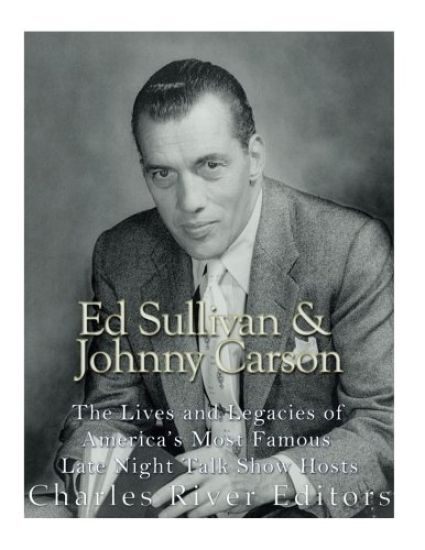
Ed Sullivan and Johnny Carson: The Lives and Legacies of America's Most Famous Late Night Talk Show Hosts
*Includes pictures *Includes their own quotes about their lives and careers *Includes online resources and a bibliography for further reading From the day television existed as an entertainment medium, giant companies have battled each other for viewers, but in the history of television programming, no show was as consistently excellent in the ratings as The Ed Sullivan Show, a variety show that brought on all kinds of acts, from dancers to artists and singers. It was the longest running show to maintain one time slot, and today it is widely remembered for introducing the nation to the likes of Elvis Presley and The Beatles. When Elvis was on the show in 1956, over 82% of the nation's entire television audience tuned in, a rating that would make even the Super Bowl blush. Indeed, being booked on The Ed Sullivan Show became so important for performers that Aretha Franklin once noted, "And I was booked once to go on 'Ed Sullivan' and I got bumped and ran out the back door crying." The Ed Sullivan Show has been commemorated as one of the most influential programs in the history of American television, and behind it all was the seemingly unassuming man whose name was on it. Even after Ed Sullivan had become an American institution on the strength of his show, one critic from Time asked, "What exactly is Ed Sullivan's talent?" Or as comedian (and frequent guest) Alan King put it, "Ed does nothing, but he does it better than anyone else in television." Of course, Ed Sullivan did have plenty of talent, especially when it came to identifying others', and over the course of nearly two decades, he became America's biggest starmaker. While Elvis and The Beatles are most remembered, Sullivan helped open the door to Motown acts, and his show was so culturally significant that Reverend Al Sharpton said of those performances, "I grew up in the 1950s and '60s, when it was almost a holiday when a black act would go on Ed Sullivan." Perhaps the most ironic aspect of Sullivan's fame is that almost everyone tended to agree that he was stilted and unnatural in front of cameras. In 1955, one writer for Time colorfully described Sullivan as "a cigar-store Indian, the Cardiff Giant and a stone-faced monument just off the boat from Easter Island. He moves like a sleepwalker; his smile is that of a man sucking a lemon; his speech is frequently lost in a thicket of syntax; his eyes pop from their sockets or sink so deep in their bags that they seem to be peering up at the camera from the bottom of twin wells." At the same time, however, the writer conceded, "Yet, instead of frightening children, Ed Sullivan charms the whole family." Among America's comedians, few if any have had the kind of influence on pop culture and society like Johnny Carson, the iconic host of The Tonight Show from 1962-1992. In addition to winning too many awards to count, Carson is proof that imitation is the sincerest form of flattery, as admitted by subsequent comedy show hosts like Jay Leno and David Letterman, who not only vied to replace Carson but also used his format for their own shows (and still continue to do so). For several years during the 1950s, Carson rotated around various daytime shows as host, meeting important friends like Ed McMahon along the way, but he made it big when he replaced Jack Paar as host of The Tonight Show in 1962. For the next 30 years, his mix of monologues, skits, and interviews would make his show must-see television on weekday nights, turning him into the highest paid television personality of the 1970s, and giving him the creative freedom to bring others along with him. In addition to bringing along his sidekick McMahon, Carson let guests host the show occasionally as well, thereby giving the spotlight to comedians like George Carlin, Letterman, Leno, and Joan Rivers. On the 25th anniversary of his debut on The Tonight Show, Carson earned a Peabody Award that labeled him "an American institution,"
Ebola: The History of the Virus and Its Outbreaks

Ebola: The History of the Virus and Its Outbreaks

Charles River

Createspace Independent Publishing Platform
2017
nidottu
*Includes pictures *Includes accounts written by doctors, scientists, and survivors about the history and effects of the virus *Includes a bibliography for further reading "The Ebola epidemic ravaging parts of West Africa is the most severe acute public health emergency seen in modern times. Never before in recorded history has a biosafety level four pathogen infected so many people so quickly, over such a broad geographical area, for so long." - World Health Organization, September 2014 It has long been a maxim that it is easy to forget when one is at war who the enemy really is, and that can certainly be said for the Ebola virus, which recently catapulted into headlines and instantly became the most feared disease in the world. In the case of the fight against Ebola, the enemy is not the person who has contracted the disease, nor is it the region where the virus has flourished. The enemy is a microscopic virus that, when seen under sufficient magnification, looks like a piece of loosely knotted rope. While a picture of Ebola under a microscope might look innocuous, it is a living organism that can be killed, but if it is not, it will multiply and evolve much like any other organism, including the human beings it so often kills. Despite the fact Ebola has been notorious for nearly 40 years, its ability to hide and change with the times has made its origins murky and left scientists without a vaccine. The World Health Organization (WHO) was able to identify the previously unknown disease after an outbreak in Sudan that killed a majority of the infected victims in 1976, and a doctor graphically described its effects later that year: "The illness is characterized with a high temperature of about 39 C 102 F], hematemesis, diarrhea with blood, retrosternal abdominal pain, prostration with 'heavy' articulations, and rapid evolution death after a mean of three days." Ultimately named after the Ebola River, the virus was a strain of the Marburg virus, and when it struck various nations in Africa from 1976-2003, it had incredibly high mortality rates and left hundreds dead in places like Zaire, Uganda, and the Democratic Republic of Congo. Most recently, a massive outbreak of Ebola began in Guinea and hit Liberia, where it has left thousands dead and ravaged local economies. All the while, the WHO conceded, "Countries affected to date simply do not have the capacity to manage an outbreak of this size and complexity on their own. I urge the international community to provide this support on the most urgent basis possible." In the meantime, the disease has trickled out to other nations, including the United States, and as of October 2014, there has been a scramble to isolate potential victims and race towards developing a vaccine. Ebola: The History of the Disease and Its Outbreaks looks at the origins of the disease and explains its causes, symptoms, and effects while discussing the current outbreak and previous ones. Along with pictures and a bibliography, you will learn about the Ebola virus like never before, in no time at all.
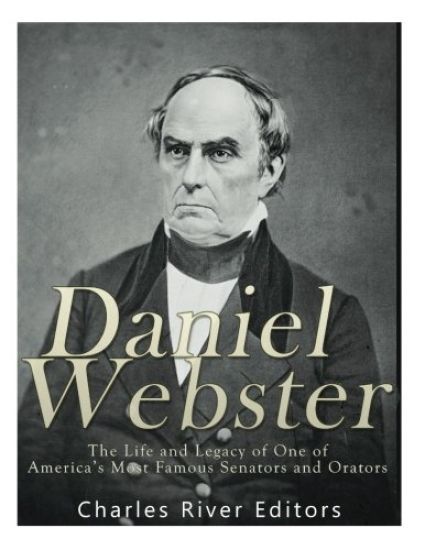
Daniel Webster: The Life and Legacy of One of America's Most Famous Senators and Orators
*Includes pictures*Includes excerpts of Webster's speeches*Includes a bibliography for further reading "When my eyes shall be turned to behold for the last time the sun in heaven, may I not see him shining on the broken and dishonored fragments of a once glorious Union; on States dissevered, discordant, belligerent; on a land rent with civil feuds, or drenched, it may be, in fraternal blood Let their last feeble and lingering glance rather behold the gorgeous ensign of the republic... not a stripe erased or polluted, nor a single star obscured, bearing for its motto, no such miserable interrogatory as 'What is all this worth' nor those other words of delusion and folly, 'Liberty first and Union afterwards'; but everywhere, spread all over in characters of living light, blazing on all its ample folds, as they float over the sea and over the land, and in every wind under the whole heavens, that other sentiment, dear to every true American heart, - Liberty and Union, now and for ever, one and inseparable " - Daniel Webster In a modern era that Americans often view wearily as being too partisan, elections often bring the same questions. Many look back nostalgically to earlier centuries in which it's assumed America had great statesmen, which is understandable in light of increasingly hostile political rhetoric that seems to be more aimed at dividing the country than uniting it. Of course, more serious historians analyze whether these elusive statesmen actually ever existed, and whether there was truly a time when politicians didn't engage in political rancor. It is impossible for any person, politician or not, to be completely pure of heart, but Daniel Webster certainly showed again and again throughout his career that he considered certain principles worth sacrificing nearly everything for. Throughout his life, Webster felt he had to live up to the highest ideals of patriotic loyalty to America's earliest founders. He also stated again and again that the United States Constitution, and the nation that it governed, had to stand, no matter what else might fall for its sake. During his lifetime, he demonstrated that he would make any sacrifice to preserve both, and in so doing, he was instrumental in helping to delay the American Civil War. Today Webster may be best known for being one of the greatest orators in American history, a reputation he earned as one of the young country's greatest lawyers, and even as a pop culture fixture thanks to works like "The Devil and Daniel Webster." But Webster also served in nearly every capacity in government but as president, from being Secretary of State to being a Congressman and Senator for decades. He was recognized as one of the country's 5 greatest Senators, thanks to his work on landmark legislation like the Compromise of 1850, which staved off the Civil War for possibly a decade (and ensured Webster wouldn't live long enough to see it actually take place). Like most men who do great things, Webster was both loved and hated during his lifetime, sometimes by the same people. However, the one thing no one could ever deny was his fiery way with words. In fact, to this day, his quotes turn up in everything from college term papers to political speeches. A countless number of others lived during his day, and hundreds served with him in various capacities in government, only to be forgotten, but Webster, by his words and deeds, secured himself a place in the great pantheon of political thought that may very well last until the end of time. Daniel Webster: The Life and Legacy of One of America's Most Famous Senators and Orators examines one of 19th century America's most influential figures. Along with pictures and a bibliography, you will learn about Daniel Webster like never before.
Dick Van Dyke & Mary Tyler Moore: The Premiere Sitcom Stars of the '60s and '70s

Dick Van Dyke & Mary Tyler Moore: The Premiere Sitcom Stars of the '60s and '70s

Charles River

Createspace Independent Publishing Platform
2017
nidottu
*Includes pictures *Includes the stars' quotes about their lives and careers *Includes a bibliography for further reading "I wanted to be Stan Laurel, then I wanted to be Fred Astaire and then Captain Kangaroo. I actually started out as a radio announcer when I was 17 and never left the business, so that's literally 70 years." - Dick Van Dyke "I'm Mary Tyler Moore and I am...an actress, an animal lover, the chairman of the Juvenile diabetes Research Foundation, the wife of Dr. Robert Levine... Suffice it to say there are a lot of ways to end that sentence, and I don't think I've come close to living through all the possibilities, thank heavens. But what I do know is that in every role I am a devotee of laughter and tears, committed to expressing the nuances of each." - Mary Tyler Moore If television was still coming into its own during the 1950s, it truly became a national phenomenon across America in the 1960s, and in an era where most Americans finally owned a television, one of the most popular shows on the air was The Dick Van Dyke Show. The show starred Van Dyke as a middle class writer who worked on a television show, and it also helped catapult Mary Tyler Moore (who played his wife) to superstardom and her own hit show, The Mary Tyler Moore Show. To this day, it is widely considered one of the greatest television shows in history, and Dick Van Dyke remains best known for it, but the show was merely the peak of a career that had already proven quite versatile. Van Dyke had long aspired to be in show business and even a television show host long before television was popular, and he got his start as a radio DJ when he was still in his early 20s. Always a fan of comedy, Van Dyke parlayed that into a comedy gig, and he then rode the success of his comedic performances to starring roles on Broadway. Van Dyke's skills and versatility ultimately helped make him a good choice to star in a television show in 1961, thus spawning the show that took his name. If anything, Mary Tyler Moore is now better known than Van Dyke, in part because her show was one of the most popular and influential shows of the '70s. Moore's show was the first mainstream television program to portray a single woman more focused on her job than her domestic life. Geoff Hammill wrote of the show, "As Mary Richards, a single woman in her thirties, Moore presented a character different from other single TV women of the time. She was not widowed or divorced or seeking a man to support her." Moore's show was so critically acclaimed that it won dozens of Emmy awards, holding a record for the most Emmy awards for nearly 25 years, and it was recently ranked one of the best shows of all time by the Writers Guild of America. The shows made Moore a superstar, and it's no surprise that she never had another show nearly as praised as the ones that brought her fame, but she had a long and storied career across TV, film, and Broadway. She has also participated in numerous charity endeavors and remains an activist well into her 70s.
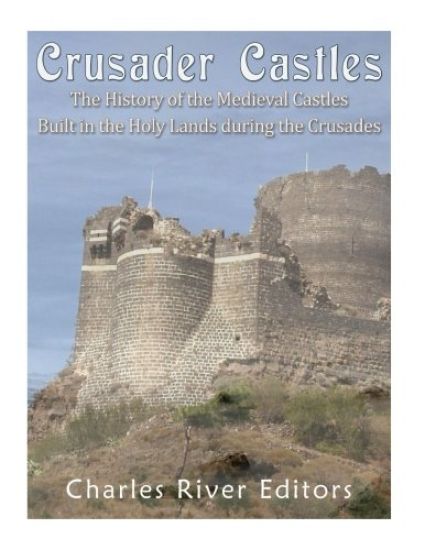
Crusader Castles: The History of the Medieval Castles Built in the Holy Lands during the Crusades
*Includes pictures *Profiles the various defensive features of castles and the technologies and weapons used by the sides attacking and defending them *Includes online resources and a bibliography for further reading A series of mountain chains frame the Levantine coast, growing in height as they approach modern-day Lebanon. These provided a natural defense along the important coast, and the few passes through these mountain ranges were the focal points of movement and communication. For this reason, these locations were where many crusader castles were erected. Bristling with fortifications, these impressive structures were occupied by orders of knights that came to the Holy Land with the Pope's blessing, and who have gained a most romantic status over history. These Crusaders were called al-Faranj ("Franks") by the Arabs in the Holy Land, reflecting the French origins of many of the knights, even though the knights, soldiers, and pilgrims came to the Holy Land from all over Europe, and in particular from southern Italy, Germany, and England. For the men who built and manned these castles, they were much more than buildings surrounded by stone walls or wooden palisades. They were also more than a headquarters for knights and their armies during battle, or a storehouse for goods in the remoteness of the Levant. These castles were the central focal point for those who held them and those trying to conquer them, and it would not be an exaggeration to claim that castles were the nexus for much activity and conflict within the Holy Lands. At the same time, the castles were filled with the hustle and bustle of activity caused by a wide range of actors even in times of relative peace and stability. Men-at-arms were the soldiers who manned the castle, protected the borders of the Crusader States, and followed the orders of their noble knight lords, but the castles also served as a gathering place for skilled craftsmen such as blacksmiths, potters, stone masons, bakers, carpenters, and the like. Many served as religious centers in their own right, containing at least one chapel of either Christian or Muslim faith. The Muslim efforts to reclaim and rule the Levant were just as important and interesting as those of the Crusaders. Initially led by the atabegs of Aleppo, and later by the renowned Saladin (known also as Salah Ed-Din), various Muslim forces took and retook the Holy City of Jerusalem. The cycle of conflicts between the Crusader states and the Muslim armies was disrupted in 1260 CE when the Mongols, having roved without obstruction across Eurasia, invaded the region with the support of the Armenians and some of the Crusader States. However, they were eventually defeated by the mighty Mamelukes of Egypt, who in turn focused their attention on consolidating their control over the Near East and eradicating the European presence in the region. Finally, in 1302 CE the Mamelukes conquered the last Crusader stronghold at Arwad, leaving one last remaining Crusader state - the Kingdom of Cyprus, which held out until it was invaded by the Ottomans in 1571 CE. Crusader Castles: The History of the Medieval Castles Built in the Holy Lands during the Crusades examines the construction of the castles, daily life inside of them, and the fighting over them during the Crusades. Along with pictures of important people, places, and events, you will learn about Crusader castles like never before.
Confucius: The Life and Legacy of China's Greatest Philosopher

Confucius: The Life and Legacy of China's Greatest Philosopher

Charles River

Createspace Independent Publishing Platform
2017
nidottu
*Includes pictures. *Includes Confucius's quotes and analyzes the most important texts of Confucianism. *Includes a bibliography for further reading. "At fifteen my heart was set on learning; at thirty I stood firm; at forty I had no more doubts; at fifty I knew the will of heaven; at sixty my ear was obedient; at seventy I could follow my heart's desire without overstepping the boundaries of what was right." - Confucius "Confucius has no interest in falsehood; he did not pretend to be prophet; he claimed no inspiration; he taught no new religion; he used no delusions; flattered not the emperor under whom he lived..." - Voltaire Many people argue that Confucius is the most influential person of all time, and if having a significant effect on the greatest number of people is the criterion, he may very well be. China is one of the largest and oldest civilizations on earth, and Confucius has been influential there from almost the beginning: the first Chinese dynasty was founded around 1600 BCE and Confucius lived from 551-479 BCE. Although he is still one of history's most famous philosophers, Confucius was in many respects an unremarkable man, and even his physical features were said to be unattractive. There is little evidence that he thought of himself as a harbinger of any kind, but shortly after his death, writings, sayings, and theories based on his life and ideas spread throughout China and even took hold of the imperial court of one of the most powerful and important dynasties, the Han (206 BCE-220 CE). It was during the Han Dynasty that Confucianism became closely tied to state affairs, and it would remain so until the fall of the last dynasty in 1912. Confucianism was closely tied to state religious and ritual practice, and naturally, it benefited greatly from this relationship and was able to subsequently exert influence on all aspects of society. As a "state religion", it provided "religious sanction for policy-making, official sacrifices, court ceremonies, royal marriage, funeral and mourning rights" as well as several major sacrifices to gods and ancestors. Confucianism continues to reverberate to the present day; the Chinese Communist Party still discusses Confucius in their official newspapers and references his thought when they think it will help promote a political or social stance. Eventually Confucius himself was worshiped as a sage, though accounts of his own opinions of himself are nothing but humble. As his great successor Mencius (372-289 BCE) put it, "Since humanity came into this world, there has never been one greater than Confucius." The description of the capture of a unicorn in the important Confucian classic, the Spring and Autumn Annals, was taken as a sign that Confucius was chosen by heaven to found a new moral dynasty. The state ritual sacrifice to Confucius grew rapidly in importance during the Han dynasty and continued to grow in later dynasties. In 630, for example, the Tang dynasty (618-907) founder ordered that every district and country establish a Confucius temple. Confucius: The Life and Legacy of China's Greatest Philosopher examines the life and teachings of the ancient philosopher. Along with pictures, footnotes and a bibliography, you will learn about Confucius like never before, in no time at all.
Colonial New York City: The History of the City under British Control before the American Revolution
*Includes pictures *Includes contemporary accounts describing colonial New York *Includes a bibliography for further reading "One belongs to New York instantly; one belongs to it as much in five minutes as in five years." - Tom Wolfe New York City. The Big Apple. The city of dreams. The city so nice they named it twice. These are just some of the monikers given to not only the most highly populated city in North America, but perhaps the most culturally diverse region in all the world. Modern age New York is stamped on the map for its breathtaking skylines and iconic financial centers, as well as being the quintessential melting pot, where people go to "make it big" and take a chance on long-awaited dreams. What is less known is the rich tapestry of history behind this one-of-a-kind city. It is one that tells the story of invigorating hope, new discoveries, and broadening horizons, shaped by power wrangles and blood-shedding - all for the sake of conquest. After much exploration in the early 17th century, the Dutch returned to build settlements on the southern tip of Manhattan and elsewhere, and by 1626 trade was brisk both between the Native Americans and the European settlers and between the settlers and their mother countries. In the 1620s, the Dutch established their first permanent base at Fort Orange, a city now known as Albany, and the Dutch dispatched vessels housing 30 families to Nutten Island and re-branded the settlement as "New Amsterdam." All in all, 110 men, women, and young children of the Belgian Huguenots - a French Protestant sect - settled in their new sanctuary. This would be the breeding ground for the Dutch's new experiment. They aimed to create a city of religious tolerance, where people from all backgrounds could seek refuge and live alongside one another in peace. More so, the Dutch were in the business of making money, a mission that still rings true of the state in this day and age. In 1652, England and the Netherlands were at war, but heavy losses on both sides hurried the prospect of peace. Nevertheless, the two countries' representatives in the New World were increasingly hostile toward each other, even though they were an ocean away from the main belligerents. The Puritans of New England were said to be intent on attacking Manhattan, so preparations were made in New Amsterdam. A wall would be erected at New Amsterdam's northern border, at a cost of 5,000 guilders, with the labor being cheaply supplied by slaves. Made of 15 foot planks, bastions, cannons, and two gates (one at the corner of present-day Wall and Pearl, the other at Wall and Broadway) the location of the wall would become not a barrier to invasion but the center of the financial world. In the meantime, however, the wall ultimately proved as useless as all other Dutch defenses and strategies. In 1664, Colonel Richard Nicolls was sent by the English Duke of York to take Manhattan and all other Dutch holdings. Nicolls sent Stuyvesant a letter that promised life and liberty for all if the inhabitants would lay down their arms and surrender. Stuyvesant hid this letter and tore up another, but powerful residents in New Amsterdam forced him to give up in the face of too formidable an enemy. In the end, the diversity of New Amsterdam helped assure that the people would rather become part of New York City than lose everything. The Dutch briefly reclaimed the city, but the tide had turned, and New York became an English settlement. For their own part, the Lenni-Lenape who had lived there for so long dwindled until there were only about 200 of them left at the beginning of the 18th century. Colonial New York City: The History of the City under British Control before the American Revolution chronicles the history of the city during its time in British hands. Along with pictures of important people, places, and events, you will learn about New York City as a British possession like never before, in no time at all.
Cnut the Great: The Life and Legacy of Scandinavia's Most Famous King

Cnut the Great: The Life and Legacy of Scandinavia's Most Famous King

Charles River

Createspace Independent Publishing Platform
2017
nidottu
*Includes pictures *Includes letters written by Cnut *Includes a bibliography for further reading "King of all England and Denmark and the Norwegians and of some of the Swedes" - Cnut's self-proclaimed title "Knut was exceptionally tall and strong, and the handsomest of men, all except for his nose, that was thin, high-set, and rather hooked. He had a fair complexion none-the-less, and a fine, thick head of hair. His eyes were better than those of other men, both the handsomer and the keener of their sight." - Knytlinga Saga In a sense, Cnut the Great was practically destined for greatness, if only because he came from a distinguished Danish royal family. Cnut's father was Sweyn Forkbeard, and his grandfather was Harald Bluetooth, both prominent and legendary kings of Denmark. Meanwhile, his mother was the widow of the Swedish king Erik the Victorious, the daughter of the Polish duke Mieszko, and a sister of the Polish king Boleslav Chrobry (Lund 1999: 28). Thanks to his background and his own abilities, Cnut became the most prominent of the Danish kings of England (from 1016), but he was also at times king of Denmark (from 1018-9), Norway (from 1028), and parts of Sweden (after 1026). During his reign, he united England, protected Denmark, and had a lot of influence throughout Scandinavia, a remarkable feat that he managed to accomplish through careful alliances and diplomacy, yet most often through direct force. For that reason, Cnut has been referred to as the greatest Anglo-Saxon king of England, despite the fact he wasn't actually Anglo-Saxon. His death in 1035 came shortly before the Norman conquest of England by William the Conqueror. For centuries, the Vikings had been raiding throughout the region, including in the British Isles, and Cnut's campaigns represented the apex of that activity. Somewhat ironically, Cnut is one of the best-documented leaders of the Vikings, a civilization that fascinates people mostly because they still seem mysterious and different compared to their European counterparts. Like many rulers of that era, Cnut was mostly forgotten in the centuries after his death, even though some medieval texts and chronicles documented his life and reign. However, an association with the Vikings has helped resurrect interest in Cnut nearly 1,000 years after his death. Interest in the Vikings peaked across Europe in the 18th and 19th centuries, particularly during the so-called Viking Revival of that era. With that came scholarly pursuits that sought to discover more about the Viking Age, as archaeologists began digging for Viking remains in earnest and linguistic enthusiasts looked to the Old Norse languages to better understand the English language. During that same time, the Vikings became ubiquitous in pop culture; the cultural depictions of Vikings in art and literature all contributed to the colorful mischaracterizations still associated with the Vikings today. Cnut the Great chronicles the life and legacy of one of the most famous and influential kings of the Middle Ages. Along with a bibliography and pictures of important people and places, you will learn about Cnut like never before, in no time at all.
Clint Eastwood & John Wayne: Hollywood's Western Icons

Clint Eastwood & John Wayne: Hollywood's Western Icons

Charles River

Createspace Independent Publishing Platform
2017
nidottu
*Includes pictures of important people and places.. *Analyzes the stars' legacies on the screen and off it. *Includes some of Wayne and Eastwood's most colorful and controversial quotes. *Includes bibliographies for further reading. Hollywood has produced no shortage of famous movie stars, but none have been as culturally significant as John Wayne. Marion Morrison was born in a quintessentially quaint Midwestern town, but he eventually grew up to become John Wayne, the legend of the silver screen who embodied the Western frontier. Wayne starred in so many movies (nearly 150 in all) that when asked to name his worst, he joked that 50 of them were tied, but the excessive number allowed Wayne to portray heroes of all stripes, from cowboys to soldiers, and he was invariably charming, courageous, and full of rugged, masculine swagger. Even as Westerns have certainly waned in popularity, Wayne himself has remained immensely popular, in part because he set the prototype for the heroic character, regardless of genre. Wayne will always be associated with Westerns, John Wayne transcended the Western genre. Through the portrayal of rugged, masculine characters, Wayne came to epitomize the American spirit and the way Americans view themselves. In that sense, he is truly America's actor, and he continues to live on in both the reels of Hollywood's archives and the living rooms of middle America. Today, the name Clint Eastwood conjures up many different and unforgettable images. While many will always associate him as the quintessential Western hero in classics like The Good, the Bad, and the Ugly, new generations know him as a critically acclaimed director and even an outspoken conservative firebrand. Even if he is no longer the most prominent star in Hollywood, he is assuredly the most decorated octogenarian in the industry. In addition to his acting, two of his pictures, Unforgiven (1992) and Million Dollar Baby (2004), garnered Oscars for Best Director and Best Picture. Eastwood's acting and directing abilities have long appealed to both high classes and mass audiences, although it is true that his early works were skewed more toward the popular while the later ones reflect the opposite dynamic. Debuting in the 1950s, Eastwood's career has now spanned over 50 years, and he has been involved in over 75 films, not to mention his appearances in television and other media. The sheer volume of films is especially impressive considering that he has also directed a significant number of them. As such a prolific figure of Hollywood, it is clear that Eastwood has approached his career with diligence and persistence, working hard through both success and failure. This work ethic has lent him an aura of accessibility that is relatively rare among Hollywood stars, as has his willingness to put himself out there on issues beyond the silver screen. Today, Eastwood is just as likely to evoke images of his speech at the 2012 Republican National Convention as he is images of the Western vigilante. Clint Eastwoood & John Wayne looks at the iconic actors' lives on and off the silver screen, from their influence on Hollywood to their outspoken views on politics. Along with pictures of important people, places, and events, you will learn about Eastwood and the Duke like you never have before.