Kirjojen hintavertailu – 12 903 725 kirjaa ja 27 kauppaa
Kirjailija
Charles River
Kirjat ja teokset yhdessä paikassa: 4 673 kirjaa, julkaisuja vuosilta 2013–2022, suosituimpiin kuuluu William Powell and Myrna Loy: The Lives and Careers of One of Classical Hollywood's Most Iconic Duos. Vertaile teosten hintoja ja tarkista saatavuus suomalaisista kirjakaupoista.
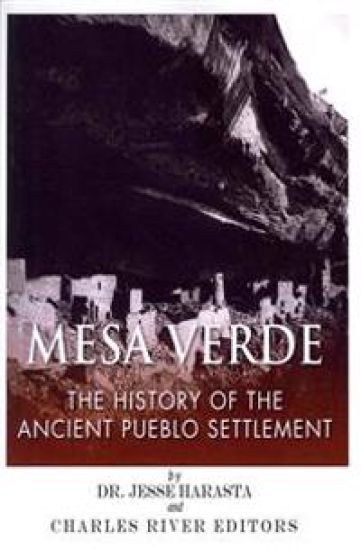
*Includes pictures. *Includes footnotes and a bibliography for further reading. When the Spanish came into contact with different tribes in the Southwest, they were so intrigued by the structure of the communities that they gave the natives the name Pueblo, a term they used to measure certain sizes for their own settlements.. Thus, while most Americans have heard of the Pueblo and Navajo, many remain unfamiliar with distinctions within the tribes. The Spaniards' interest was understandable, because the Pueblo fascinated those who came across their settlements, especially those located in desert regions and the sides of cliffs that involved the use of adobe mud, stone, carving homes out of cliffs. One such settlement, Oraibi, was created around 1100 A. D. and remains one of the oldest continuously inhabited settlements in North America, but the most famous of the cliff dwellings can be found at Mesa Verde, which was turned into a national park in the early 20th century, about 1500 years after the Ancient Pueblo established the settlement. Today's Puebloan tribes are descended from tribes known as the "Ancestral Puebloan People", one of which was the Anasazi, but anthropologists believe that the Anasazi were a common ancestor of every Pueblo group, so the Ancient Pueblo are often referred to simply as the Anasazi. The name Anasazi came from their enemies; it is a Navajo word that means "enemy ancestor". While that name understandably continues to offend the descendants of the Anasazi, it also underscores that there is still a lot of uncertainty regarding the history of the Anasazi. In fact, it is still unclear what the Anasazi called themselves, and though they resided near the "Four Corners" area of Utah, Arizona, Colorado and New Mexico for more than 700 years, they mysteriously abandoned their settlements shortly after they truly began to flourish around 1050-1150 A. D. Despite the mystery surrounding the Anasazi, it's widely agreed that they occupied Mesa Verde and its unique structures for a period of nearly 700 years, beginning as early as the 7th century. Thanks to its occupants taking advantage of the surrounding geologic formations, Mesa Verde is an amazing collection of cliff dwellings, as well as houses that utilize caves and rock overhangs, and structures consisting of adobe and sandstone. Unfortunately, the natural conditions that make Mesa Verde so special also likely played a role in its abandonment, with overpopulation and drought forcing inhabitants out near the end of the 13th century. Mesa Verde: The History of the Ancient Pueblo Settlement covers the establishment of Mesa Verde from its origins until its establishment as a national park. Along with pictures, footnotes, and a bibliography, you will learn about Mesa Verde like never before.
*Includes pictures. *Includes Depp's own quotes about his life and career. *Includes a bibliography for further reading. "I like the challenge of trying different things and wondering whether it's going to work or whether I'm going to fall flat on my face." - Johnny Depp A lot of ink has been spilled covering the lives of history's most influential figures, but how much of the forest is lost for the trees? In Charles River Editors' American Legends series, readers can get caught up to speed on the lives of America's most important men and women in the time it takes to finish a commute, while learning interesting facts long forgotten or never known. Throughout the history of Hollywood, perhaps no actor has a reputation as unique as Johnny Depp. Depp began his career in a very traditional manner by being a teen heartthrob on shows like 21 Jump Street, but as he once admitted, "As a teenager I was so insecure. I was the type of guy that never fitted in because he never dared to choose. I was convinced I had absolutely no talent at all. For nothing. And that thought took away all my ambition too." However, that ambition clearly resurfaced over the last 25 years, because Depp has since taken on some of the most unique and eccentric roles in the industry, explaining, "I like the challenge of trying different things and wondering whether it's going to work or whether I'm going to fall flat on my face." In addition to being renowned for portrayals of people like John Dillinger and Hunter S. Thompson, Depp has played some of the most memorable fictional characters of the last 30 years, including Edward Scissorhands, Captain Jack Sparrow, and Willy Wonka, making his larger-than-life roles pop culture fixtures and helping the movies bank billions of dollars. Of course, his success hasn't been limited to the box office, as he has also won countless awards and been nominated 3 times for the Oscar for Best Actor. It's no wonder Depp was recently named the highest paid actor in the world. Although Depp has played some of Hollywood's most famous characters, he has also cultivated one of the town's most alluring and mysterious reputations. Depp has matured from being a teen idol to People's Sexiest Man of the Year on multiple occasions, but even as he has gained millions of fans across the globe, he has maintained enough distance from the spotlight to leave people wondering what he's truly like, and some of the glimpses suggest he can be just as eccentric as his characters. Perhaps not surprisingly, he has approached it with some of his trademark humor, quipping, "I pretty much try to stay in a constant state of confusion just because of the expression it leaves on my face." American Legends: The Life of Johnny Depp examines the life and career of one of America's most famous living actors. Along with pictures of important people, places, and events, you will learn about Johnny Depp like never before, in no time at all.
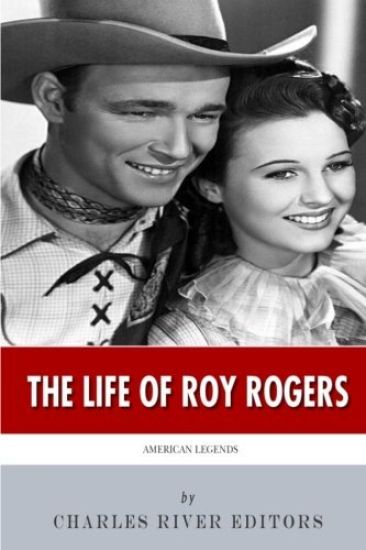
*Includes pictures. *Includes Rogers' own quotes about his life and career. *Includes a bibliography for further reading. "I did pretty good for a guy who never finished high school and used to yodel at square dances." - Roy Rogers A lot of ink has been spilled covering the lives of history's most influential figures, but how much of the forest is lost for the trees? In Charles River Editors' American Legends series, readers can get caught up to speed on the lives of America's most important men and women in the time it takes to finish a commute, while learning interesting facts long forgotten or never known. In the early 20th century, Westerns were one of the most popular genres in Hollywood, and one of the young stars at the forefront was Roy Rogers, who had come from an Ohio farm to transform himself into a cowboy. Regardless of his background, Rogers certainly looked the part of the quintessential cowboy, along with his wife Dale Evans and his horse Trigger. His versatile singing and acting abilities made him successful both on radio and on the screen. Rogers came of age at a time when the "singing cowboy" was at the apex of his popularity, and that was favorable because he actually got his start in show business as a singer. In the early '30s, he bounced around several groups as a country music singer before earning national attention as a member of the Sons of the Pioneers, who were signed to Decca and had a couple of hits. As a result, when he first appeared in movies in 1935, it was usually in bit roles that required singing, but when Gene Autry threatened to quit acting in 1938, Rogers was viewed as a suitable replacement for lead roles. As it turned out, he became the premiere "singing cowboy" in Autry's stead, and from 1939-1954, he was one of the Top 10 Western stars in Hollywood, and a Top 10 movie star overall during some of those years. As Rogers evolved into the "King of the Cowboys", he became a pop culture icon, and he was shrewd enough to capitalize on his image. All sorts of Roy Rogers merchandise hit stores, from action figures to comic strips, and Rogers even banked on the popularity of his horse Trigger by featuring him enough to make the horse a household name as well. Even today, people can find the name Roy Rogers all over the place, if only because he eventually had his name lent to a popular fast food chain in later years. Even as his movie career inevitably tailed off, Rogers remained popular enough to host a television show in the '60s with his wife, and though it was only on for a short while, the show's theme song, "Happy Trails", is still well-known today. Rogers continued to appear on television and was involved with a production company in later years, the capstone on a career that saw him earn 3 stars on the Hollywood Walk of Fame and induction into both the Western Performers Hall of Fame and Country Music Hall of Fame. American Legends: The Life of Roy Rogers chronicles the life and career of one of America's most famous actors. Along with pictures of important people, places, and events, you will learn about the "King of the Cowboys" like never before, in no time at all.
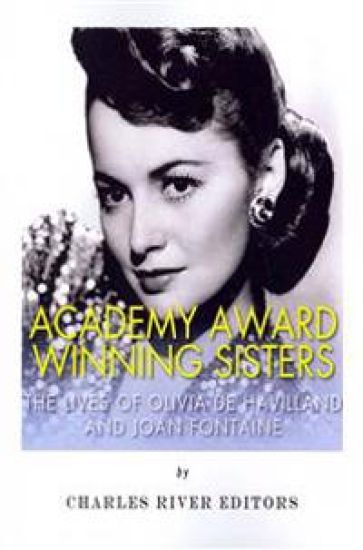
*Includes pictures. *Includes both actresses' quotes about each other and their careers. *Includes a bibliography for further reading. "Famous people feel that they must perpetually be on the crest of the wave, not realising that it is against all the rules of life. You can't be on top all the time, it isn't natural." - Olivia de Havilland "You know, I've had a helluva life. Not just the acting part. I've flown in an international balloon race. I've piloted my own plane. I've ridden to the hounds. I've done a lot of exciting things." - Joan Fontaine Olivia de Havilland is one of the last few living actresses who worked during the Golden Era of Hollywood, but also one of the most decorated, winning dozens of awards over the course of a 50 year career. Among those, she most notably won the Academy Award for Best Actress for To Each His Own (1946) and The Heiress (1949), more than a decade after she got her start as an 18 year old in Hollywood. Ironically, de Havilland was in California in part because the young British girl who had been born in Tokyo stopped in the States for medical treatment. Of course, de Havilland isn't well remembered for any of those accolades or other movies but because she played Melanie Hamilton in Gone With the Wind (1939), perhaps the most famous movie in American history. Although she was a veteran actress at the time, de Havilland's career hadn't progressed much since she started, and rumor has it that she eventually got the role after her own sister, Joan Fontaine, was asked to audition for the part and recommended Olivia instead. Olivia was ultimately nominated for an Academy Award for Best Supporting Actress and became a household name in her adopted country overnight. Having been typecast in light romantic comedies before Gone With the Wind, that performance ensured de Havilland subsequently had a long, productive and versatile career making everything from Westerns and dramas. Of those movies, she is perhaps most closely associated with the enigmatic Errol Flynn, another foreign-born actor who was more notorious for his roles off the screen than on it. Before his untimely death, they appeared in several films together and became one of Hollywood's most popular on-screen couples. Although Fontaine and de Havilland would make history by becoming the only sisters to both win an Academy Award for Best Actress, that anecdote was just one of the various stories about the siblings that has shed light on their notoriously contentious and complicated relationship. As Fontaine once put it, "I married first, won the Oscar before Olivia did, and if I die first, she'll undoubtedly be livid because I beat her to it " De Havilland herself once said, "Joan is very bright and sharp and can be cutting." Of course, one of the reasons people have remained interested in the sisters is that both of them had such long acting careers, and Fontaine became best remembered both for a career that spanned 60 years and several high profile marriages. With typical humor, Fontaine joked about the fact she had so many husbands, commenting in jest, "If you keep marrying as I do, you learn everybody's hobby." But that attention has only served to obscure her very serious professional career, which saw her won the Oscar for Best Actress for her role in Alfred Hitchcock's Suspicion (1941). She also earned a nomination for her performance in The Constant Nymph (1943), and in a television career that spanned several decades, she earned an Emmy nomination for her work on Ryan's Hope in 1980, nearly 40 years after winning the Academy Award for Suspicion. Fontaine even appeared on Broadway in a couple of productions that ran for several years. This book profiles the life and career of two of Hollywood's most prolific actresses. Along with pictures of important people, places, and events, you will learn about the sisters like never before.
*Includes pictures. *Includes Cash's quotes about his life and career. *Includes footnotes and a bibliography for further reading. "Sometimes I am two people. Johnny is the nice one. Cash causes all the trouble. They fight." - Johnny Cash A lot of ink has been spilled covering the lives of history's most influential figures, but how much of the forest is lost for the trees? In Charles River Editors' American Legends series, readers can get caught up to speed on the lives of America's most important men and women in the time it takes to finish a commute, while learning interesting facts long forgotten or never known. Johnny Cash, "The Man in Black", is among the most recognized and iconic vocal artists in the history of blues, country and gospel singing. During the second half of the 20th century, he produced a prolific and rarely-equaled career in the country genre as a singer, songwriter and guitarist, despite numerous struggles with alcohol and drug addiction. His trademark bass-baritone voice is instantly identifiable to listeners today, and his "parlando" style (combining an unaffected singing tone with a speech-like rhythm and pacing) has been taken up by the generation following his death in the early 21st century. Like Elvis Presley and other renowned artists who would later gather at Sun Records in Memphis during the 1950s, Johnny Cash emerged from the South and its blues and gospel traditions, and although his path to discovery took a more circuitous route, he came to join the biggest stars of his era, leaving a lasting mark on the industry and on American culture in the process. By the end of his life, Cash and his legendary voice of "emotional authority" had been inducted into the Country Music Hall of Fame, the Rock n' Roll Hall of Fame, the Gospel Music Hall of Fame, the Nashville Songwriters Hall of Fame, and the Rockabilly Hall of Fame, in addition to numerous other honors. Cash accomplished all of this despite holding a life-long "distaste for the Nashville mainstream," which he believed was heading the wrong direction into ultra-commercialism. Nevertheless, over the span of a nearly 50 year career, Johnny Cash sold over 50 million albums and toured most of the world. While Cash's career spanned half a century and produced a voluminous amount of music, later generations have come to know Johnny Cash more for his rebellious attitude and his unrepentant way of life. Even as he was producing hits, he was burning himself up, admitting he "tried every drug there was to try", and on numerous occasions his alcohol and drug addictions nearly killed him. While his image as an outlaw helped burnish his reputation among listeners, it also led to Cash being in poor health throughout his 60s, something reflected in some of the covers he performed in the last years of his life before he died at the age of 71. Aware of that fact, he mentioned in an interview shortly before his death, "People say, Well, he wore that body out. Well, maybe I did. But it was to a good purpose. They should be thankful that I wore it out to the purpose I wore it out and that was writing and recording and touring and doing concerts." American Legends: The Life of Johnny Cash examines the life and career of one of America's most famous musicians. Along with pictures of important people, places, and events, you will learn about Johnny Cash like never before, in no time at all.
*Includes pictures. *Includes accounts of battles by the two partisan leaders and other important soldiers. *Includes footnotes and a bibliography of each for further reading. The Civil War is best remembered for the big battles and the legendary generals who fought on both sides, like Robert E. Lee facing off against Ulysses S. Grant in 1864. In kind, the Eastern theater has always drawn more interest and attention than the West. However, while massive armies marched around the country fighting each other, there were other small guerrilla groups that engaged in irregular warfare on the margins, and perhaps the most famous of them was Colonel John Mosby and William Quantrill. Mosby, the "Gray Ghost" of the Confederate lore that celebrates the Lost Cause, has an image that has proven nearly impossible to corrupt or change, and time has done little good against it. Unlike the vanished 19th century code of honor that he represented, Mosby has retained the image and all its connotations; evident in the pictures taken of him in his Confederate uniform and historical portrayals of him, whether they were written just after the Civil War or much later. But that image, which he helped fashioned, was mostly an invention. While the South would come to idolize "Southern gentlemen" as epitomized by Robert E. Lee, Mosby operated under a far different nature. Though he enlisted with the Confederate army in Virginia after Fort Sumter, he ultimately left the infantry to join J. E. B. Stuart's cavalry, and he later became infamous as an irregular scout leading a group of rangers around Virginia. Of course, the successful feats of daring that Mosby would accomplish during the war, which included capturing a Union general and riding around behind enemy lines to raid and destroy supplies, were supported by the people of Virginia, thus legitimizing his unconventional move to leave army life. Mosby not only earned the nickname "Gray Ghost" by being elusive, he was so successful that part of Virginia was known as "Mosby's Confederacy" during the war, despite the presence of massive Union armies nearby. Quantrill's Raiders operated along the border between Missouri and Kansas, which had been the scene of partisan fighting over a decade earlier during the debate over whether Kansas and Nebraska would enter the Union as free states or slave states. In "Bloody Kansas", zealous pro-slavery and anti-slavery forces fought each other, most notably John Brown, and the region became a breeding ground for individuals like Quantrill who shifted right back into similar fighting once the Civil War started. Rather than target military infrastructure or enemy soldiers, the bushwhackers rode in smaller numbers and targeted civilians on the other side of the conflict, making legends out of men like Bloody Bill Anderson and John Mosby. However, none are remembered like Quantrill and his men, not only because of their deeds during the Civil War but because of the actions of some of the former Raiders after it. Quantrill is best known for raiding Lawrence, Kansas in August 1863 and slaughtering nearly 200 boys and men between the ages of 14-90, under the pretext that they were capable of holding a gun and thus helping the Union cause. After that massacre, Union forces in the area retaliated in similar fashion, forcing Southern sympathizers out of several counties in the area and burning the property. Union forces also detained those accused of assisting Quantrill's Raiders, including their relatives. Quantrill himself was killed while fighting in June 1865, nearly two months after Lee surrendered to Grant at Appomattox, but his name was kept alive by the notorious deeds of his Raiders during the war and the criminal exploits of former Raiders like Jesse James and his brother, as well as the Younger brothers. These men, who had fought with Quantrill, became some of America's most famous outlaws.
*Includes pictures *Includes MacLaine's quotes about her own life and career. *Includes a bibliography for further reading. "I think of life itself now as a wonderful play that I've written for myself, and so my purpose is to have the utmost fun playing my part." - Shirley MacLaine A lot of ink has been spilled covering the lives of history's most influential figures, but how much of the forest is lost for the trees? In Charles River Editors' American Legends series, readers can get caught up to speed on the lives of America's most important men and women in the time it takes to finish a commute, while learning interesting facts long forgotten or never known. Over the course of a career that spanned several decades and ranged from the stage to movies and television, Shirley MacLaine has been one of the most critically acclaimed actresses in America. After first being nominated for an Oscar in Some Came Running (1958), when she was still just in her mid-20s, she was nominated for two more for The Apartment (1960) and Irma la Douce (1963), all before she turned 30. Ironically, she won her first Academy Award for producing a documentary about her 1973 trip to China, and she finally won the Academy Award for Best Actress by playing a mother seeking to reconnect with her daughter in Terms of Endearment (1983), a full 25 years after earning her first nomination. Not surprisingly, she also added plenty of BAFTA and Golden Globe awards to the list during that time as well. Another 25 years after winning the Oscar for Terms of Endearment, MacLaine was nominated for an Emmy for portraying Coco Chanel in the television movie Coco Chanel (2008). While MacLaine's acting career has continued mostly unabated for about 60 years, she is also well-known for her esoteric spiritual beliefs, particularly as a proponent of New Age thought. MacLaine has authored several books, some of which have dealt with navigating Hollywood over the years, but others have discussed more controversial topics, such as her belief in multiple dimensions, reincarnation, UFOs, and more. All the while, MacLaine has managed to maintain a self-deprecatingly humorous view of herself, frequently joking and making light of her own life and experiences along the way. American Legends: The Life of Shirley MacLaine examines the life and career of one of America's most famous living actresses. Along with pictures of important people, places, and events, you will learn about Shirley MacLaine like never before, in no time at all.
*Includes pictures. *Includes Fontaine's quotes about her own life and career. *Highlights Fontaine's sibling rivalry with Olivia de Havilland. *Includes a bibliography for further reading. "You know, I've had a helluva life. Not just the acting part. I've flown in an international balloon race. I've piloted my own plane. I've ridden to the hounds. I've done a lot of exciting things." - Joan Fontaine In 1939, Olivia de Havilland had her most memorable role as Melanie Hamilton in Gone With the Wind (1939), perhaps the most famous movie in American history, but Hollywood legend has it that she only got the role because her own younger sister, Joan Fontaine, was asked to audition for the part and recommended Olivia instead so that she could audition for Scarlett O'Hara. Although Fontaine and de Havilland would make history by becoming the only sisters to both win an Academy Award for Best Actress, that anecdote was just one of the various stories about the siblings that has shed light on their notoriously contentious and complicated relationship. As Fontaine once put it, "I married first, won the Oscar before Olivia did, and if I die first, she'll undoubtedly be livid because I beat her to it " De Havilland herself once said, "Joan is very bright and sharp and can be cutting." Of course, one of the reasons people have remained interested in the sisters is that both of them had such long acting careers, and Fontaine became best remembered both for a career that spanned 60 years and several high profile marriages. With typical humor, Fontaine joked about the fact she had so many husbands, commenting in jest, "If you keep marrying as I do, you learn everybody's hobby." But that attention has only served to obscure her very serious professional career, which saw her won the Oscar for Best Actress for her role in Alfred Hitchcock's Suspicion (1941). She also earned a nomination for her performance in The Constant Nymph (1943), and in a television career that spanned several decades, she earned an Emmy nomination for her work on Ryan's Hope in 1980, nearly 40 years after winning the Academy Award for Suspicion. Fontaine even appeared on Broadway in a couple of productions that ran for several years. Legends of Hollywood: The Life of Joan Fontaine profiles the life and career of one of Hollywood's most prolific actresses. Along with pictures of important people, places, and events, you will learn about Joan Fontaine like never before, in no time at all.
*Includes pictures. *Includes Kubrick's quotes about his life and career. *Includes a bibliography for further reading. "When I made my first film, I think the thing was probably helped me the most was that it was such an unusual thing to do in the early 50s for someone who actually go and make a film. People thought it was impossible. It really is terribly easy. All anybody needs is a camera, a tape recorder, and some imagination." - Stanley Kubrick A lot of ink has been spilled covering the lives of history's most influential figures, but how much of the forest is lost for the trees? In Charles River Editors' American Legends series, readers can get caught up to speed on the lives of America's most important men and women in the time it takes to finish a commute, while learning interesting facts long forgotten or never known. There may be no director in American film history who was better able to combine commercial appeal with art house style like Stanley Kubrick. As his career progressed, his films grew increasingly challenging, with slow, methodical plots that made for running times that spanned upwards of three hours, but no matter how much Kubrick may have broken away from the standard 90-minute Hollywood fare and threatened to alienate his audience, there is no denying the special place his films hold in pop culture. 2001: A Space Odyssey (1969), A Clockwork Orange (1972), and The Shining (1982) remain among the more widely-loved films of the latter half of the 20th century among both critics and casual moviegoers alike. As much as Kubrick was able to satisfy the American viewer, his virtuoso camera technique and use of sound place him on par with major international directors of the art house circuit, like Ingmar Bergman, Federico Fellini, and Michelangelo Antonioni. If Kubrick's films regularly surface on college film curricula, it is not only because they remain culturally relevant but also because they had a formal sophistication that is perhaps unmatched in Hollywood over the past several decades. At first glance, Kubrick's career is almost intimidating; not only did he produce a bevy of films that have been designated as masterpieces, but his career spanned almost 50 years. Despite spanning nearly a half-century, however, Kubrick was not an especially prolific director, and his career is actually quite navigable, because Kubrick only completed 13 feature-length films, in addition to a small collection of short films prior to arriving in Hollywood. Even after reaching the prime of his career, it was not unusual for him to go several years between films, a duration that was integral in order for him to complete the voluminous research and attention to detail that he devoted to each picture. As a result, Kubrick did not have the sort of frenetic, one-film-per-year pace that others like Alfred Hitchcock, Howard Hawks, or other such Hollywood giants did, but at the same time, it means each Kubrick film occupies almost its own chapter in his career. American Legends: The Life of Stanley Kubrick examines Kubrick's life and career, taking a close look at the ways in which his family background both informed his later career and stand in contrast with it. Kubrick was a complex figure who retained a mysterious public persona, and given the paucity of his public appearances, one got the sense that Kubrick wished to avoid the public eye altogether. Nevertheless, he remains one of America's foremost master technicians, storytellers, and reclusive geniuses. Along with pictures of important people, places, and events, you will learn about Stanley Kubrick like never before, in no time at all.
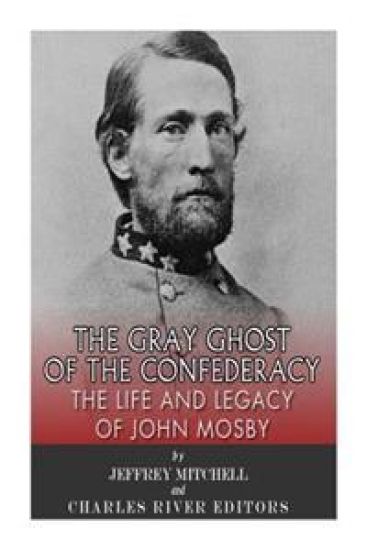
*Includes pictures. *Includes accounts of fighting written by Mosby and other generals. *Includes footnotes and a bibliography for further reading. "Our poor country has fallen a prey to the conqueror. The noblest cause ever defended by the sword is lost. The noble dead that sleep in their shallow though honored graves are far more fortunate than their survivors. I thought I had sounded the profoundest depth of human feeling, but this is the bitterest hour of my life." - John Mosby The Civil War is best remembered for the big battles and the legendary generals who fought on both sides, like Robert E. Lee facing off against Ulysses S. Grant in 1864. In kind, the Eastern theater has always drawn more interest and attention than the West. However, while massive armies marched around the country fighting each other, there were other small guerrilla groups that engaged in irregular warfare on the margins, and perhaps the most famous of them was Colonel John Mosby. Mosby, the "Gray Ghost" of the Confederate lore that celebrates the Lost Cause, has an image that has proven nearly impossible to corrupt or change, and time has done little good against it. Unlike the vanished 19th century code of honor that he represented, Mosby has retained the image and all its connotations; evident in the pictures taken of him in his Confederate uniform and historical portrayals of him, whether they were written just after the Civil War or much later. But that image, which he helped fashioned, was mostly an invention. Mosby styled himself a "Knight of the South", as other Virginians would do during the war, branding himself as a warrior of a culture who obeyed an unspoken code of honor. He defended women and lived by his word. Even the style of combat he chose conformed to the definition of honor that Southerners held. With repeated charges into the ranks of federal cavalry, Mosby was lionized by a culture that gloried in the acts of heroic violence. As the war dragged on, Mosby claimed to fight a style of war that was honorable, but if the Union ever entered into acts he considered uncivilized, he was never beyond revenge, including notorious summary executions of prisoners of war. He was so reviled in the North that rumors quickly spread that Mosby knew of John Wilkes Booth's conspiracy to assassinate Lincoln, and that he may have even assisted in it. While the South would come to idolize "Southern gentlemen" as epitomized by Robert E. Lee, Mosby operated under a far different nature. Though he enlisted with the Confederate army in Virginia after Fort Sumter, he ultimately left the infantry to join J. E. B. Stuart's cavalry, and he later became infamous as an irregular scout leading a group of rangers around Virginia. Of course, the successful feats of daring that Mosby would accomplish during the war, which included capturing a Union general and riding around behind enemy lines to raid and destroy supplies, were supported by the people of Virginia, thus legitimizing his unconventional move to leave army life. Mosby not only earned the nickname "Gray Ghost" by being elusive, he was so successful that part of Virginia was known as "Mosby's Confederacy" during the war, despite the presence of massive Union armies nearby. Mosby did all this while looking the part of a diminutive man, a physical appearance that Southern culture did not generally view as masculine. In fact, his small size, just 5'8 and 125 pounds, might actually have provoked his aggression. Either way, Mosby overcame and looked the part as a cavalier on a horse, weathered by the elements and war but never beaten down by the enemy he looked down upon from his mount. The Gray Ghost of the Confederacy chronicles the life of Mosby, as well as his Civil War record and legacy. Along with pictures of important people, places, and events, you will learn about the Gray Ghost like never before, in no time at all.
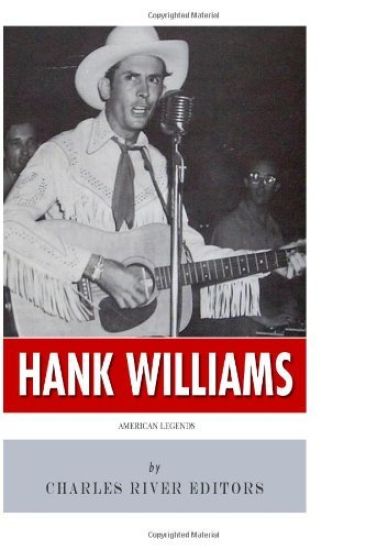
*Includes pictures. *Includes Williams' own quotes about his life and music. *Includes footnotes and a bibliography for further reading. "You have to have smelt a lot of mule manure before you can sing like a hillbilly." - Hank Williams A lot of ink has been spilled covering the lives of history's most influential figures, but how much of the forest is lost for the trees? In Charles River Editors' American Legends series, readers can get caught up to speed on the lives of America's most important men and women in the time it takes to finish a commute, while learning interesting facts long forgotten or never known. One of the most enduring and consistently popular singers and songwriters in the history of country music, Hank Williams is considered by many to be the first American superstar of the genre and the "father" of modern country music. In the post-World War II era, at a time when country music was an insulated and regionalized cottage industry, Williams almost personally oversaw its transition into a national mania that would be later taken up by such figures as Johnny Cash and Elvis Presley, even as the musicians remained loyal to the genre's older, rural roots. But unlike the wave of greats that followed his brief but stellar career, Williams remained distinctly and unapologetically Southern, thereby avoiding adoption by the larger pop world even as his remarkable sense of phrasing and authentic texts fascinated pop artists across the country. Among his most enduring hits are "Cold, Cold Heart," "Your Cheatin' Heart," "Hey, Good-Lookin'," "I'll Never Get Out of This Life Alive," "Lost Highway", and his signature hit, "Lovesick Blues." At his zenith in the late '40s and early '50s, Nashville had begun to shake off its hillbilly image and orient itself toward becoming a more universal, commercialized industry, welcoming cross-over artists from other styles. Had Williams lived, it's unclear whether he could have or would have fully adapted to the transformation initiated by country music's capital. However, the man dubbed as "the hillbilly Shakespeare," "Harm" (because his first name was Hiram), and "Herky" or "Skeets" by his friends, reached the larger national audience in a way that none had before, and as he once put it, "I don't know what you mean by country music. I just make music the way I know how." Williams' appeal extended even beyond that of the famous Carter family, whose members preserved the hill country tradition in both musical and presentational terms, and he has been likened to artists of the early era like Jimmie Rodgers, Bob Wills and Bill Monroe, but few others from that era could match his distinctiveness and natural gift for songwriting. American Legends: The Life of Hank Williams examines the life and career of one of America's most famous country music stars. Along with pictures of important people, places, and events, you will learn about Hank Williams like never before, in no time at all.
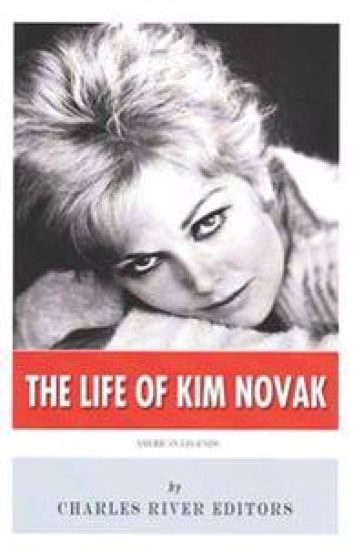
*Includes pictures. *Includes Novak's own quotes about her life and career. *Includes a bibliography for further reading. "My security comes from my senses, my sensing the direction I should go and suddenly I felt out of tune, out of step with what other people wanted or what other people expected of me." - Kim Novak A lot of ink has been spilled covering the lives of history's most influential figures, but how much of the forest is lost for the trees? In Charles River Editors' American Legends series, readers can get caught up to speed on the lives of America's most important men and women in the time it takes to finish a commute, while learning interesting facts long forgotten or never known. From the moment the film industry became a burgeoning business that offered actresses an opportunity to seek fame and fortune, millions of girls across America have dreamed of making it big on screen, despite the long odds against them. And yet, among the few that have catapulted to superstardom, few did it as quickly, effortlessly, or as seemingly disinterested as Kim Novak. An art student in her early 20s, Novak found herself in Los Angeles by chance and appeared as an extra in a 1954 film to earn money, only to be almost immediately discovered by Columbia and turned into a star when she appeared in Picnic (1955). Picnic began a 10 year run that witnessed Novak become one of the biggest names in Hollywood, starring in major hits like Pal Joey (1957), Middle of the Night (1959), The Notorious Landlady (1962), and Of Human Bondage (1964). However, Novak's most famous role was as one of Alfred Hitchcock's legendary "icy blondes" in Vertigo (1958), beguiling Jimmy Stewart's character to the point of madness in what is widely considered one of the greatest films ever made. In addition to being one of the country's most recognizable and alluring sex icons, the girl who originally wanted to be an artist had reached the upper echelon of Hollywood itself, all before she turned 30. Just about every actress would kill to have the success Novak had during her first decade as an actress, but after 1965, she'd decided that she was mostly through with making films, despite still being near the peak of her career. After starring in The Amorous Adventures of Moll Flanders (1965), Novak only made a dozen more films over the next 26 years, and she has not appeared in a movie since Liebestraum (1991). While her decision to get out of Hollywood presents a classic what-if over where her career may have ended up had she kept going, Novak has been one of the rare stars happier to thrive outside of the spotlight, continuing to paint and raise animals while living on an Oregon ranch with her husband of nearly 40 years. American Legends: The Life of Kim Novak examines the life and career of one of America's most famous actresses of the 1950s and 1960s. Along with pictures of important people, places, and events, you will learn about Kim Novak like never before, in no time at all.
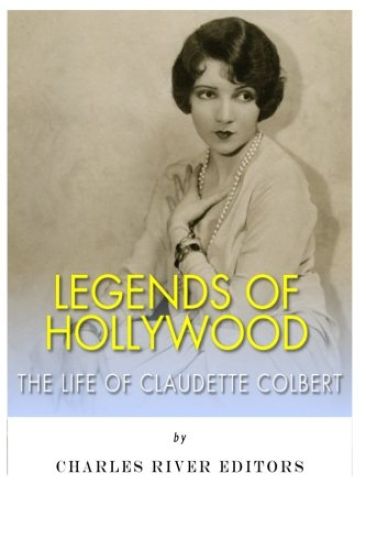
*Includes pictures. *Includes Colbert's quotes about her own life and career. *Includes a bibliography for further reading. "I know what's best for me, after all I have been in the Claudette Colbert business longer than anybody." - Claudette Colbert The 1930s were the height of the classical Hollywood era, known for lavish studio productions by heavyweights like MGM, RKO, Warner Brothers, Paramount, and 20th Century Fox, which were operating at the height of their powers. Every major studio possessed a long roster of contract players, and films were released at such a rapid pace that it made for an especially competitive environment within the industry. Even while America remained in the throes of the Great Depression, the film industry continued to flourish, and movies easily supplanted the theater as the main attraction for American entertainment. Indeed, it would be no exaggeration to claim that the film industry reached its zenith during the decade precisely because it offered an affordable (if very temporary) escape from the anxieties of the economic woes of the era. Despite that competition, Hollywood's biggest star at the box office in 1938 was French actress Claudette Colbert, who had already won an Oscar for Best Actress in It Happened One Night (1934) and used her Broadway experience from the previous decade to become perhaps the industry's most famous screwball comedienne. The fact that Colbert had gotten that far was impressive, given that Hollywood loved to cast foreign actresses in stereotypical roles, and she once noted, "In the very beginning, they wanted to give me French roles... That's why I used to say my name Col-bert just as it is spelled instead of Col-baire. I did not want to be typed as 'that French girl.'" Far from being pigeonholed, Colbert went on to perform in dozens of films, earning several nominations for Academy Awards and acting in both comedic and melodramatic roles effectively. Even as her film career waned, she resurrected her career both on television screens and the stage in the 1950s, and she continued to be an award winning stage performer well into her 70s. In 1999, the American Film Institute ranked Colbert the 12th best female screen legend, ahead of beloved actresses like Ginger Rogers and Grace Kelly. Legends of Hollywood: The Life and Legacy of Claudette Colbert examines the life and career of one of Hollywood's biggest stars. Along with pictures of important people, places, and events, you will learn about Claudette Colbert like never before, in no time at all.
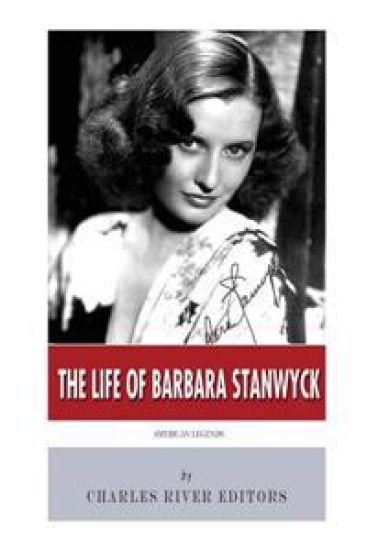
*Includes pictures.*Includes Stanwyck's quotes about her own life and career.*Includes a bibliography for further reading." Career is too pompous a word. It was a job, and I have always felt privileged to be paid for what I love doing." - Barbara StanwyckIn the 1940s, film noir was at its peak, and Hollywood was churning out dark, mysterious, exotic and erotic classics like The Big Sleep and To Have and Have Not, which helped turn some of the industry's sultry actresses into superstars. But in 1944, the premiere femme fatale was Barbara Stanwyck, who was the highest paid woman in America that year, thanks to roles like Double Indemnity (1944), in which she uses her persuasive powers to convince a man to commit murder. That film would earn Stanwyck 1 of her 4 Academy Award nominations, and after a nearly 60 year career in acting, the American Film Institute would recognize her as the 11th greatest female screen legend of the 20th century. If anything, Stanwyck's reputation for being a femme fatale obscured the fact that she played strong women that made her seem modern instead of traditional, and not just in noir films. In the comedy Ball of Fire, she played a strong woman that one viewer described as "the kind of woman that makes whole civilizations topple." Her versatility also led to roles in all kinds of genres, including Westerns and traditional dramas, but that should come as no surprise because she was legendary around Hollywood for being a consummate professional that everyone on set loved to work with. Frank Capra noted, "She was destined to be beloved by all directors, actors, crews and extras. In a Hollywood popularity contest she would win first prize hands down." Stanwyck's career was all the more remarkable because she suffered a tough childhood, especially once she was orphaned at the age of 4. Naturally, her rags to riches story made her appreciate the ability to climb the ladder in America and also instilled her with the belief that "hard work with the prospect of rich reward was the American way." This also influenced her political beliefs during the mid-20th century, a contentious time that witnessed the rise of McCarthyism and the Red Scare during the 1950s. American Legends: The Life of Barbara Stanwyck examines the life and career of one of Hollywood's biggest stars. Along with pictures of important people, places, and events, you will learn about Barbara Stanwyck like never before, in no time at all.