Kirjojen hintavertailu – 12 903 725 kirjaa ja 27 kauppaa

Kirjailija

Charles River

Kirjat ja teokset yhdessä paikassa: 4 673 kirjaa, julkaisuja vuosilta 2013–2022, suosituimpiin kuuluu William Powell and Myrna Loy: The Lives and Careers of One of Classical Hollywood's Most Iconic Duos. Vertaile teosten hintoja ja tarkista saatavuus suomalaisista kirjakaupoista.

4 673 kirjaa

Kirjojen julkaisuvuodet: 2013–2022.

American Legends: The Marx Brothers

American Legends: The Marx Brothers

Charles River

Createspace Independent Publishing Platform
2014
nidottu
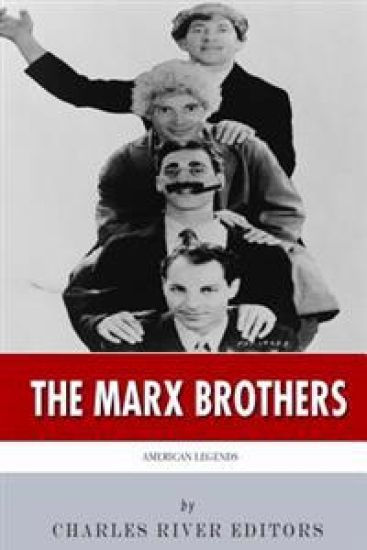
*Includes pictures. *Includes the brothers' funniest quotes. *Includes a bibliography for further reading. "The world would not be in such a snarl, had Marx been Groucho instead of Karl." - Irving Berlin "I sent the club a wire stating, 'PLEASE ACCEPT MY RESIGNATION. I DON'T WANT TO BELONG TO ANY CLUB THAT WILL ACCEPT PEOPLE LIKE ME AS A MEMBER.'" - Groucho Marx A lot of ink has been spilled covering the lives of history's most influential figures, but how much of the forest is lost for the trees? In Charles River Editors' American Legends series, readers can get caught up to speed on the lives of America's most important men and women in the time it takes to finish a commute, while learning interesting facts long forgotten or never known. When the American Film Institute ranked its top 50 screen legends of the 20th century, only one team of performers earned a collective spot: the Marx Brothers. Famous throughout the country for nearly half a century, several of the Marx Brothers performed together for over 40 years, and their nicknames - Groucho, Harpo, Chico, Gummo and Zeppo - are all well known today, especially Groucho. From the vaudeville stage to movie theaters, millions saw their performances, and the brothers became not only one of the most popular acts but the kind that paved the way for subsequent groups like The Three Stooges. As beloved and culturally significant as the Marx Brothers are, it is also important to acknowledge that the character they portrayed in their films were clearly personas, so one of the challenges of any close analysis of their lives involves digging past their performances and attempting to figure out what they were truly like as people. How much did the Groucho Marx audiences saw onscreen correspond with his offscreen personality, and where are the nuances and discrepancies that exist between the brothers' private and public selves? If anything, it's important to determine how their personas were actually shaped, a process that did not actually crystallize until Groucho was well into his adulthood. At the same time, the dynamic between the siblings, as well as the impact that their parents had on them, all necessarily influenced their careers. Analyzing these influences on their lives helps explain how the formation of the Marx Brothers was the result of a lengthy process, and just why no one could have justifiably predicted that they would achieve such fame and cultural status. American Legends: The Marx Brothers examines the lives and careers of one of America's most iconic performance teams. Along with pictures of important people, places, and events, you will learn about the Marx Brothers like never before, in no time at all.
Fred Astaire and Gene Kelly: The Golden Era of Hollywood's Musical Legends

Fred Astaire and Gene Kelly: The Golden Era of Hollywood's Musical Legends

Charles River

Createspace Independent Publishing Platform
2014
nidottu
*Includes pictures. *Includes quotes about both men's lives and careers. *Includes bibliographies of both men. Virtually all famous actors are regaled by the public, but even still, Fred Astaire occupies a privileged position in American pop culture. The specific films in which Astaire acted may not be especially famous in their own right - most people likely cannot recall the title of Top Hat (1935), his most decorated film - but Astaire's dancing prowess invariably creates a lasting impact on viewers. Instead of tying his fame to a single film, Astaire's genius lay in constructing his star persona around a specific set of iconographic imagery that has become embedded within American culture. Across his films, the recurring iconic images of the top hat, cane, and coat tails, as well as the image of Astaire dancing with Ginger Rogers, all constitute a timeless symbol for elegance that continues to captivate viewers who are unfamiliar with the plots of his films. There have been other film musical actors who were proficient dancers, Gene Kelly chief among them, but none were able to perform with the seamless elegance of Astaire, and none have been remembered nearly as well. Astaire's popularity can in large part be tied to the escapism that his films offered to impoverished Depression-era American audiences, and yet Astaire was a working man, albeit one who labored in the studios of Hollywood rather than the factories of America. Considering the quiet life that he led off the movie set, it can be difficult to disassociate Astaire from his films, and while he may have attempted to project the same image off the screen, the era and his personal background were extremely important. As someone who was born just before the start of the 20th century, Astaire's life sheds light on the developments that occurred in American entertainment, from the stage (where he first performed during his youth) to cinema (the site of his greatest triumphs) and finally to television (a medium Astaire entered at the end of his career.) Astaire's career tends to obscure his all-American success story, one in which hard work transformed a Nebraska boy from a working-class family into America's most prominent symbol of grace. Although they did collaborate on two occasions, in many ways Gene Kelly's rise to popularity in the 1940s amounted to a changing of the guard, because Astaire's career had begun to wane by the mid-1940s. For film historians and fans of the musical, however, even if they weren't contemporaries, Astaire and Kelly will forever be viewed as rivals, with each having left an indelible stamp on the genre that defined their careers. Regardless of which dancer viewers film, there is no denying the cultural significance of some of Kelly's most famous films, including An American in Paris (1949) and Singin' in the Rain (1952), movies that occupy a central position within the pantheon of Hollywood musicals. While it is true that a comparison between Astaire and Kelly is indispensible to any study of Kelly's life, much can also be gained simply by focusing mostly on his life and career. What made Kelly unusual for actors of that era is that he did not actually arrive in Hollywood until he was nearly 30 years old, so his early life and work before film had a crucial influence on his star image. Furthermore, given that he came to prominence after Astaire, Kelly's career offers a valuable lens through which to chart the evolution of the musical genre, as well as a look at the prevailing standards of masculinity within Hollywood at the time. Fred Astaire and Gene Kelly examines the lives and careers of two of Hollywood's most iconic dancers, tracing their rise to stardom and the forces within Hollywood and American popular culture that would ultimately lead to the end of their careers.
The Greatest Civil War Battles: The Vicksburg Campaign

The Greatest Civil War Battles: The Vicksburg Campaign

Charles River

Createspace Independent Publishing Platform
2014
nidottu
*Includes pictures. *Includes descriptions of the campaign by generals and some of Vicksburg's residents. *Includes footnotes and a bibliography for further reading. At the start of 1863, Robert E. Lee's Army of Northern Virginia had been frustrating the Union in the Eastern theater for several months, but the situation in the West was completely different. The Confederates had lost control of several important states throughout 1862, and after New Orleans was taken by the Union, the North controlled almost all of the Mississippi River, which Confederate general James Longstreet called "the lungs of the Confederacy". By taking control of that vital river, the North would virtually cut the Confederacy in two, putting the South in a dire situation. The only domino left to fall was the stronghold of Vicksburg, and both sides knew it. The Union Army of the Tennessee, led by Ulysses S. Grant, would spend months trying to encircle the army and eventually force John Pemberton's Confederate army to surrender. Grant eventually succeeded on July 4, 1863, but since it came a day after the climactic finish of the Battle of Gettysburg, Vicksburg was (and still is) frequently overlooked as one of the turning points of the Civil War. In fact, had the Confederate's military leadership listened to Longstreet, who advocated detaching soldiers from Lee's army to head west and help the Confederates deal with Grant or Rosecrans in that theater, the Battle of Gettysburg might never have happened. While many read about the siege of Vicksburg in the summer of 1863, as well as the desperate straits the Confederate soldiers and Vicksburg residents found themselves in, Grant's initial attempts to advance towards Vicksburg met with several miserable failures, and it took several months just to get to the point where the Union forces could start a siege. First, Grant's supply base at Holly Springs was captured, and then an assault launched by Union General Sherman at Chickasaw Bayou was easily repulsed by Confederate forces, with serious Union casualties resulting. Grant then attempted to have his men build canals north and west of the city to facilitate transportation, which included grueling work and disease in the bayous. On April 30, 1863, Grant finally launched the successful campaign against Vicksburg, marching down the western side of the Mississippi River while the navy covered his movements. He then crossed the river south of Vicksburg and quickly took Port Gibson on May 1, Grand Gulf on May 3, and Raymond on May 12. Realizing Vicksburg was the objective, the Confederate forces under the command of Pemberton gathered in that vicinity, but instead of going directly for Vicksburg, Grant took the state capital of Jackson instead, effectively isolating Vicksburg. Pemberton's garrison now had broken communication and supply lines. With Grant in command, his forces won a couple of battles outside Vicksburg at Champion Hill and Big Black River on May 16 and 17, forcing Pemberton's men into Vicksburg and completely enveloping it. When two frontal assaults were easily repulsed, Grant and his men settled into a nearly two month long siege that ultimately won the campaign. It was the largest troop surrender during the entire Civil War, and Vicksburg's residents were so embittered that popular folklore maintained Vicksburg didn't celebrate Independence Day for a generation. In any telling of military history, people can be easily seduced by straightforward explanations that say why one side won and the other was doomed, but in the Civil War, no greater epic of war tests that like the Vicksburg campaign. The Greatest Civil War Battles: The Vicksburg Campaign comprehensively covers the events that led up to the siege, the fighting itself, and the aftermath of the campaign.
American Legends: The Life of Bob Hope

American Legends: The Life of Bob Hope

Charles River

Createspace Independent Publishing Platform
2014
nidottu
*Includes pictures. *Includes Hope's quotes about his life and career. *Includes a bibliography for further reading. "You never get tired unless you stop and take time for it." - Bob Hope A lot of ink has been spilled covering the lives of history's most influential figures, but how much of the forest is lost for the trees? In Charles River Editors' American Legends series, readers can get caught up to speed on the lives of America's most important men and women in the time it takes to finish a commute, while learning interesting facts long forgotten or never known. Of all the show business icons in American history, one of the most beloved was Bob Hope, whose career spanned over 6 decades across film, television, vaudeville, comedy, and touring and earned him too many accolades to count. On the day of his 100th birthday, more than half of the states in America declared it "Bob Hope Day", a sign of just how monumental and influential he was as an entertainer. Along the way, he performed so many United Service Organization (USO) tours visiting troops that Congress made him the "first and only honorary veteran of the U. S. armed forces." Incredibly, he was given honorary awards for his career at the Academy Awards nearly 40 years before his death, and decades before he actually retired from public life. By the time he reached his twilight, he was an instantly recognized institution unto himself. All of that would have been impressive for any American, let alone someone who was actually born in England with the name Leslie Townes Hope. Indeed, the quintessential American entertainer wouldn't actually move to the country until he was 4, and while his English roots may have helped his impressive impersonation of Charlie Chaplin when Hope was merely a teen, he quickly became an American through and through. He later claimed he changed his first name to Bob because it had a folksy feel to it, and he definitely gave off that kind of aura throughout his 5 decades doing USO tours, his 4 decades making films, his television career of . In addition to his versatile career that ranged from Broadway to comedy, he was an accomplished athlete who once quipped that all of the money he made went towards his greens fees. In fact, Hope became notorious for carrying a golf club around, so much so that Stephen Colbert paid homage to him by carrying a golf club during his own USO performances in 2009. American Legends: The Life of Bob Hope examines the life and career of one of America's greatest entertainers, tracing his rise to stardom and the towering legacy he left behind. Along with pictures of important people, places, and events, you will learn about Bob Hope like never before, in no time at all.
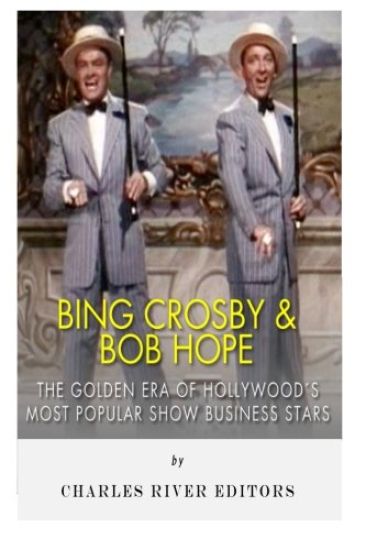
Bing Crosby and Bob Hope: The Golden Era of Hollywood's Most Popular Show Business Stars
*Includes pictures.*Includes Crosby and Hope's quotes about each other and their own lives and careers.*Includes a bibliography for further reading. "You never get tired unless you stop and take time for it." - Bob Hope"I think popular music in this country is one of the few things in the twentieth century that have made giant strides in reverse." - Bing CrosbyIn 1948, American polls rated Bing Crosby "the most admired man alive", and it's no surprise given how popular he was across every major form of entertainment during the decade. With a string of major hits, Crosby was the most popular singer in the country during that era, with classic songs like "White Christmas" helping pave the way for other singers as varied as Bob Hope, Dean Martin, and Frank Sinatra. In fact, young Sinatra modeled his clothing and style after Crosby, who was his idol growing up. And as good as he was at singing, Crosby's work with radio technology helped pave the way for multitracking songs and making it possible to broadcast the same radio programs across the country without cutting another live version. All told, Crosby sold an estimated 500 million records in the 20th century. In addition to being one of America's most beloved singers and an accomplished radio presence, Crosby not only made popular movies but acted well enough to be critically acclaimed. His Road To... movie series with Bob Hope produced some of the best-selling movies of the 1940s, 1950s, and 1960s, and he won an Oscar for Best Actor in Going My Way (1944) by playing Father Chuck O'Malley. When he was nominated for the same role in the 1945 sequel The Bells of St. Mary's, he became one of just 4 people nominated for two Oscars for playing the same role. Of all the show business icons in American history, one of the most beloved was Bob Hope, whose career spanned over 6 decades across film, television, vaudeville, comedy, and touring and earned him too many accolades to count. On the day of his 100th birthday, more than half of the states in America declared it "Bob Hope Day", a sign of just how monumental and influential he was as an entertainer. Along the way, he performed so many United Service Organization (USO) tours visiting troops that Congress made him the "first and only honorary veteran of the U. S. armed forces." Incredibly, he was given honorary awards for his career at the Academy Awards nearly 40 years before his death, and decades before he actually retired from public life. By the time he reached his twilight, he was an instantly recognized institution unto himself. All of that would have been impressive for any American, let alone someone who was actually born in England with the name Leslie Townes Hope. Indeed, the quintessential American entertainer wouldn't actually move to the country until he was 4, and while his English roots may have helped his impressive impersonation of Charlie Chaplin when Hope was merely a teen, he quickly became an American through and through. He later claimed he changed his first name to Bob because it had a folksy feel to it, and he definitely gave off that kind of aura throughout his 5 decades doing USO tours, his 4 decades making films, his television career of . In addition to his versatile career that ranged from Broadway to comedy, he was an accomplished athlete who once quipped that all of the money he made went towards his greens fees. In fact, Hope became notorious for carrying a golf club around, so much so that Stephen Colbert paid homage to him by carrying a golf club during his own USO performances in 2009. Bing Crosby and Bob Hope examines the lives and careers of the two most popular show business entertainers of the mid-20th century. Along with pictures of important people, places, and events, you will learn about both men like never before.
Wounded Knee: The Massacre that Ended the Indian Wars

Wounded Knee: The Massacre that Ended the Indian Wars

Charles River

Createspace Independent Publishing Platform
2014
nidottu
*Includes pictures of important people and scenes of the massacre. *Includes accounts of Wounded Knee *Includes a bibliography for further reading. "General Nelson A. Miles who visited the scene of carnage, following a three day blizzard, estimated that around 300 snow shrouded forms were strewn over the countryside. He also discovered to his horror that helpless children and women with babes in their arms had been chased as far as two miles from the original scene of encounter and cut down without mercy by the troopers. ... Judging by the slaughter on the battlefield it was suggested that the soldiers simply went berserk. For who could explain such a merciless disregard for life?" - Hugh McGinnis, 7th Cavalry Among all the events in the strained relations between the U. S. government and Native Americans during the 19th century, the most notorious and defining one was what is today called the Wounded Knee Massacre. Technically, it was the last armed engagement between Sioux warriors and the U. S. military, and it marked the end of effective resistance by any Sioux bands, but what actually occurred is far more controversial. In late December 1890, a group of roughly 350 Lakota Sioux led by Big Foot and Spotted Elk were escorted to the Wounded Knee Creek area and ordered to establish a camp there, but fearing another possible uprising despite the fact the band was comprised mostly of women, about 500 U. S. Army troops from the 7th Cavalry Regiment, led by Major Samuel M. Whitside, approached the Lakota encampment on the morning of December 29 with orders to disarm and escort the Native Americans to a railhead for transport to Omaha, Nebraska. Some of the men in the 7th Cavalry had also been part of the 7th Cavalry at Little Bighorn, so there could not have been a worse command to send on a mission that required interacting with the Lakota. As the troopers entered the encampment, a shot rang out. It is unclear who fired, but regardless, the single shot triggered a fusillade from the Army troops. One of the Army soldiers, Captain Edward Godfrey, explained, "I know the men did not aim deliberately and they were greatly excited. I don't believe they saw their sights. They fired rapidly but it seemed to me only a few seconds till there was not a living thing before us; warriors, squaws, children, ponies, and dogs ... went down before that unaimed fire." The resulting assault would eventually kill most of the Native Americans, including both Big Foot and Spotted Elk. Approximately 30 U. S. Army soldiers were killed and about 40 were wounded, nearly all struck by friendly fire in the chaotic, close-quarters shooting. Of the Native American dead, most were killed outright, but the wounded were left on the frozen ground to perish during the frigid night. The following day, the frozen bodies - which had been stripped by the soldiers for souvenirs - were buried in mass grave. The Wounded Knee Massacre had several outcomes. The soldiers who participated in the massacre were commended and awarded for their actions, with 20 of them receiving the nation's highest military award, the Congressional Medal of Honor, for action during the "battle." At the same time, Wounded Knee would grow to become a source of inspiration for a generation of Sioux people who came of age in the 1960s, and they sought to reestablish negotiations with the United States as a sovereign and independent nation. The American Indian Movement would engage in confrontational and at times violent resistance to perceived U. S. government oppression at Alcatraz, the Bureau of Indian Affairs building in Washington D. C., and later the town of Wounded Knee, South Dakota, and the Wounded Knee Massacre site. Wounded Knee: The Massacre that Ended the Indian Wars comprehensively covers the background leading up to that infamous day, as well as accounts of what happened and the aftermath.
American Legends: The Life of Richard Nixon

American Legends: The Life of Richard Nixon

Charles River

Createspace Independent Publishing Platform
2014
nidottu
*Includes pictures. *Includes Nixon's most famous quotes. *Includes footnotes and a bibliography for further reading. "I leave you gentleman now. You will now write it; you will interpret it; that's your right. But as I leave you I want you to know.... just think how much you're going to be missing. You don't have Nixon to kick around any more..." - Richard Nixon, 1962 A lot of ink has been spilled covering the lives of history's most influential figures, but how much of the forest is lost for the trees? In Charles River Editors' American Legends series, readers can get caught up to speed on the lives of America's most important men and women in the time it takes to finish a commute, while learning interesting facts long forgotten or never known. Best known as the 37th President of the United States, and the only president in American history to resign his office, Richard Nixon's lengthy political career would put him, during various times, at the center of regional, national and international politics for several decades. It was to be a career filled with unexpected twists and turns, high-profile defeats and unlikely resurrections, in which he made exhaustive efforts to reinvent himself in the public eye. From humble beginnings filled with disparate influences, Nixon's extraordinary intellect, strategic brilliance and imposing style of confrontation saw him through a stellar academic career at Duke Law School to seats in both the House and Senate, the vice-presidency and finally, the presidency, where he was and is considered by many to be among the strongest foreign policy presidents in the history of the United States. Of course, Nixon's presidency is an enigmatic one, given the alternating of previously unimaginable accomplishments in foreign relations with scandals at home. They began long before he became president too. When his name was bandied about for vice president on the Eisenhower ticket, Nixon had to worm his way out of serious trouble. America has seen more than its fair share of slick politicians, including those who manage to navigate out of political trouble through charm, but even though Nixon was notorious for not being a warm individual, he managed to orchestrate the infamous "Checkers" speech, which not only saved his political career but effectively worked to force Eisenhower to keep him on the ticket. By 1972, Nixon appeared to be well on his way to reelection, and sure enough, he enjoyed one of the biggest landslides against George McGovern that year. However, despite the fact that Nixon's reelection seemed a cinch, the seeds of his destruction were being sown in the months leading up to the election. Increasingly and mistakenly viewed as a single scandal within the United States government, what is commonly referred to as the Watergate scandal serves as an overarching term for a series of scandals beginning in 1971 and extending through 1974, although more than any other, it refers to the specific break-in at the Watergate Hotel and office complex in Washington, D. C. The crisis, originating in a secretive battle between the two major political parties, the Nixon White House's paranoia, and the ensuing conflict concerning the release of confidential information to the public, induced senior government officials into committing crimes (most notoriously petty burglary) and coverups for the purposes of character assassination and inter-political espionage. Ultimately, Watergate resulted in the first and only resignation of a sitting American president, but only after Nixon had tried at seemingly every turn to hinder investigations and coverup crimes committed by senior officials in his own administration. American Legends: The Life of Richard Nixon examines the life and legacy of America's most controversial president.
American Legends: The Life of Walt Disney

American Legends: The Life of Walt Disney

Charles River

Createspace Independent Publishing Platform
2014
nidottu
*Includes pictures.*Includes Disney's quotes about his life and work.*Includes a bibliography for further reading. "Over at our place, we're sure of just one thing: everybody in the world was once a child. So in planning a new picture, we don't think of grown-ups, and we don't think of children, but just of that fine, clean, unspoiled spot down deep in every one of us that maybe the world has made us forget and that maybe our pictures can help recall." - Walt DisneyA lot of ink has been spilled covering the lives of history's most influential figures, but how much of the forest is lost for the trees? In Charles River Editors' American Legends series, readers can get caught up to speed on the lives of America's most important men and women in the time it takes to finish a commute, while learning interesting facts long forgotten or never known. When it comes to the entertainment world and movie business, few names are as recognizable as Walt Disney, a versatile writer, producer, director, artist and voice actor who literally turned his name into a billion dollar business. Whether it was through the creation of iconic cartoons like Mickey Mouse or America's favorite theme parks, Disney and his assorted businesses have entertained countless numbers of people across the globe, particularly young kids. At a time when cinema was still a new and growing business, Disney staked out unique turf by bringing comics to life on screen, with his first big hit being Mickey Mouse. Of course, the popularity of Mickey Mouse helped spawn future creations like Donald Duck and Pluto, all household names that have long since become part of Americana and the English lexicon. Disney had already earned an Academy Award by 1932, but he was far from done, introducing viewers to new characters like Snow White and continuing to make popular cartoon series that played well on the big screen. By the late 1940s, Disney was turning his attention to a new form of entertainment: amusement parks. While other children's theme parks existed, none would rival the creation of Disneyland in the 1950s, part of Disney's grand vision: "I just want it to look like nothing else in the world. And it should be surrounded by a train." Disney also branched out into other businesses, ensuring that by the 1960s, his name was on one of the biggest production companies in the world. Walt Disney died in 1966, but his name and work have only become more popular over time, and today The Walt Disney Company is one of the biggest media empires in the world. While the company is now capable of things that Disney himself may have never thought possible, they have stayed true to his concept of providing family entertainment everyone can enjoy. American Legends: The Life of Walt Disney examines the life and work of one of America's most important entertainment icons. Along with pictures of important people, places, and events, you will learn about Disney like never before, in no time at all.
Richard Nixon and Watergate: The Life of the President and the Scandal That Brought Him Down
*Includes pictures. *Includes Nixon's most notorious quotes. *Includes footnotes for further reading. Best known as the 37th President of the United States, and the only president in American history to resign his office, Richard Nixon's lengthy political career would put him, during various times, at the center of regional, national and international politics for several decades. It was to be a career filled with unexpected twists and turns, high-profile defeats and unlikely resurrections, in which he made exhaustive efforts to reinvent himself in the public eye. From humble beginnings filled with disparate influences, Nixon's extraordinary intellect, strategic brilliance and imposing style of confrontation saw him through a stellar academic career at Duke Law School to seats in both the House and Senate, the vice-presidency and finally, the presidency, where he was and is considered by many to be among the strongest foreign policy presidents in the history of the United States. By 1972, Nixon appeared to be well on his way to reelection, and sure enough, he enjoyed one of the biggest landslides against George McGovern that year. However, despite the fact that Nixon's reelection seemed a cinch, the seeds of his destruction were being sown in the months leading up to the election. Increasingly and mistakenly viewed as a single scandal within the United States government, what is commonly referred to as the Watergate scandal serves as an overarching term for a series of scandals beginning in 1971 and extending through 1974, although more than any other, it refers to the specific break-in at the Watergate Hotel and office complex in Washington, D. C. The crisis, originating in a secretive battle between the two major political parties, the Nixon White House's paranoia, and the ensuing conflict concerning the release of confidential information to the public, induced senior government officials into committing crimes (most notoriously petty burglary) and coverups for the purposes of character assassination and inter-political espionage. Ultimately, Watergate resulted in the first and only resignation of a sitting American president, but only after Nixon had tried at seemingly every turn to hinder investigations and coverup crimes committed by senior officials in his own administration. Watergate has since become so synonymous with scandal that "gate" is typically added to the end of words associated with scandals even today. For the last 40 years, President Nixon has been mostly reviled, and understandably, he's ranked among the country's worst presidents, but this view of the President and the Watergate scandal was not and still is not necessarily unanimous. A growing number of Republicans, led by conservatives such as former Nixon speechwriter Pat Buchanan, describe the bringing down of the president as a quasi-coup generated by the press and liberal social forces from within the anti-war movement, which gravitated to the release of information on Vietnam, an increasingly unpopular war, and tapping the widespread campus unrest throughout the country. Paul Johnson, in his book, Modern Times: A History of the World from the 1920s to the Year 2000, referred to the whole affair as nothing more than "this Watergate witch hunt." Richard Nixon and Watergate examines the life and legacy of America's most controversial president, and provides a comprehensive analysis of the country's most famous political scandal. Along with pictures of important people, places, and events, you will learn about Nixon and Watergate like never before, in no time at all.
American Legends: The Life of Bing Crosby

American Legends: The Life of Bing Crosby

Charles River

Createspace Independent Publishing Platform
2014
nidottu
*Includes pictures. *Includes Crosby's quotes about his life and career. *Includes a bibliography for further reading. "I think popular music in this country is one of the few things in the twentieth century that have made giant strides in reverse." - Bing Crosby A lot of ink has been spilled covering the lives of history's most influential figures, but how much of the forest is lost for the trees? In Charles River Editors' American Legends series, readers can get caught up to speed on the lives of America's most important men and women in the time it takes to finish a commute, while learning interesting facts long forgotten or never known. In 1948, American polls rated Bing Crosby "the most admired man alive", and it's no surprise given how popular he was across every major form of entertainment during the decade. With a string of major hits, Crosby was the most popular singer in the country during that era, with classic songs like "White Christmas" helping pave the way for other singers as varied as Bob Hope, Dean Martin, and Frank Sinatra. In fact, young Sinatra modeled his clothing and style after Crosby, who was his idol growing up. And as good as he was at singing, Crosby's work with radio technology helped pave the way for multitracking songs and making it possible to broadcast the same radio programs across the country without cutting another live version. All told, Crosby sold an estimated 500 million records in the 20th century. In addition to being one of America's most beloved singers and an accomplished radio presence, Crosby not only made popular movies but acted well enough to be critically acclaimed. His Road To... movie series with Bob Hope produced some of the best-selling movies of the 1940s, 1950s, and 1960s, and he won an Oscar for Best Actor in Going My Way (1944) by playing Father Chuck O'Malley. When he was nominated for the same role in the 1945 sequel The Bells of St. Mary's, he became one of just 4 people nominated for two Oscars for playing the same role. American Legends: The Life of Bing Crosby examines the life and career of one of America's greatest and most versatile entertainers. Along with pictures of important people, places, and events, you will learn about Kelly like never before, in no time at all.
American Legends: The Life of Jean Harlow

American Legends: The Life of Jean Harlow

Charles River

Createspace Independent Publishing Platform
2014
nidottu
*Includes pictures. *Includes Harlow's quotes about her own life and career. *Includes a bibliography for further reading. "I wasn't born an actress. Events just made me one." - Jean Harlow A lot of ink has been spilled covering the lives of history's most influential figures, but how much of the forest is lost for the trees? In Charles River Editors' American Legends series, readers can get caught up to speed on the lives of America's most important men and women in the time it takes to finish a commute, while learning interesting facts long forgotten or never known. When the American Film Institute ranked its top 50 screen legends of the 20th century, many of the people named had careers spanning several decades, but one of them managed the feat despite living less than three decades. Ranked as the 22nd greatest actress of the 20th century, Jean Harlow was on the screen for less than 10 years, but in that time the "Blonde Bombshell" became the most popular actress of the 1930s, eclipsing superstars like Joan Crawford and Norma Shearer along the way. In fact, the platinum blonde accomplished that feat as a leading lady for just 5 years before her premature death of renal failure at just 26 years old. Although Harlow is remembered today more for her tragic fate than her career, she was influential well beyond the 1930s. Despite being so young, she managed to craft a persona as a seductive femme fatale that would critically shape how subsequent actresses approached similar roles, and of course, her platinum blonde hair served as a template for future blonde bombshells like Marilyn Monroe, who actually watched Harlow's movies and studied her performances to model her own early career off the dead legend. American Legends: The Life of Jean Harlow examines the short but influential life and career of one of America's first iconic blonde bombshells. Along with pictures of important people, places, and events, you will learn about Jean Harlow like never before, in no time at all.
The Greatest Battles in History: The Battle of Iwo Jima

The Greatest Battles in History: The Battle of Iwo Jima

Charles River

Createspace Independent Publishing Platform
2013
nidottu
*Includes historic pictures of the fighting. *Includes pictures of important people, places, and events. *Includes a bibliography for further reading. "From the Halls of Montezuma To the shores of Tripoli; We fight our country's battles In the air, on land, and sea; First to fight for right and freedom And to keep our honor clean; We are proud to claim the title Of United States Marine." On February 23, 1945, one of the most famous photographs in American history was taken atop Mount Suribachi, as five American soldiers began to raise an American flag. The picture, which most Americans are instantly familiar with, has come to symbolize the strength and sacrifice of America's armed forces, and though many realize it was taken during the Battle of Iwo Jima, much of the actual battle and the context of the picture itself have been overshadowed. The Battle of Iwo Jima, code name "Operation Detachment," is more of a misnomer than anything. It was fought as part of a large American invasion directed by steps toward the Japanese mainland, and it was more like a siege that lasted 36 days from February-March 1945, with non-stop fighting every minute. In fact, the iconic flag-raising photo was taken just four days into the battle, and as that picture suggests, the battle was not a pristine tactical event but an unceasing horror with no haven for protection. As veteran and author James F. Christ put it in the foreword of his exhaustive study of the action, "it is carnage...that is what Iwo was...the Gettysburg of the Pacific." Iwo Jima defined the classical amphibious assault of the World War II era, as much as the Normandy invasion did, but it came later in the war. In Europe, the Battle of the Bulge had already been won, and German forces would surrender in early May. However, the Japanese Empire was still at a considerable level of strength and state of resolve, and an essential offensive, grinding from island to island with naval unit to naval unit and air to air was met with maniacal resistance by the enemy. When Admiral Chester Nimitz was directed to capture an island in the Bonin group, Iwo Jima stood out for its importance in making progress against the mainland, with three airfields that would allow American air forces to attack the Japanese mainland. But the Japanese were also well aware of how important Iwo Jima was, and they fought desperately in bunkers and tunnels that required the Americans to carefully clear them out gradually. Less than 5% of the Japanese soldiers on Iwo Jima were taken alive, and American casualties were estimated at 26,000, with 6,800 killed or captured. A month later at Okinawa, which lasted from April-June, the Americans suffered an estimated 62,000 casualties, with 12,000 Americans killed or captured. These deadly campaigns came after widely-held predictions that taking these islands would amount to no more than a brief footnote in the overall theater. However, the national character of the Empire was equally misunderstood. Following the month of Iwo Jima, "commentator after commentator in the Anglo-American camp agreed that the Japanese were more despised than the Germans...uncommonly treacherous and savage...alluding to their remarkable tenacity...refused to give up any territory and incurred thousands of losses daily without any possibility of surrender." The fighting went a long way toward swaying the beliefs of American military advisors that invading Japan itself would cause millions of casualties, which ultimately helped induce President Truman to use the atomic bombs on Hiroshima and Nagasaki. The Greatest Battles in History: The Battle of Iwo Jima comprehensively covers the entire military situation that led up to the battle, analyzes the decisions made by the battle's most important leaders, and explains the aftermath of the American victory.
American Legends: The Life of James Cagney

American Legends: The Life of James Cagney

Charles River

Createspace Independent Publishing Platform
2013
nidottu
*Includes pictures. *Includes Cagney's own quotes about his life and career. *Includes a bibliography for further reading. "You don't psych yourself up for these things, you do them... I'm acting for the audience, not for myself, and I do it as directly as I can." - James Cagney A lot of ink has been spilled covering the lives of history's most influential figures, but how much of the forest is lost for the trees? In Charles River Editors' American Legends series, readers can get caught up to speed on the lives of America's most important men and women in the time it takes to finish a commute, while learning interesting facts long forgotten or never known. When the American Film Institute assembled its top 100 actors of all time at the close of the 20th century, one of the Top 10 was James Cagney, an actor whose acting and dancing talents spawned a stage and film career that spanned over 5 decades and once compelled Orson Welles to call him "maybe the greatest actor to ever appear in front of a camera." Indeed, his portrayal of "The Man Who Owns Broadway", George M. Cohan, earned him an Academy Award in the musical Yankee Doodle Dandy, and as famed director Milos Forman once put it, "I think he's some kind of genius. His instinct, it's just unbelievable. I could just stay at home. One of the qualities of a brilliant actor is that things look better on the screen than the set. Jimmy has that quality." Ultimately, it was portraying tough guys and gangsters in the 1930s that turned Cagney into a massive Hollywood star, and they were the kind of roles he was literally born to play after growing up rough in Manhattan at the turn of the 20th century. In movies like The Public Enemy (which included the infamous "grapefruit scene") and White Heat, Cagney convincingly played criminals that brought Warner to the forefront of Hollywood and the gangster genre. Cagney also helped pave the way for younger actors in the genre, like Humphrey Bogart, and he was so good that he found himself in danger of being typecast. While Cagney is no longer remembered as fondly or as well as Bogart, he was also crucial in helping establish the system in which actors worked as independent workers free from the constraints of studios. Refusing to be pushed around, Cagney was constantly involved in contract squabbles with Warner, and he often came out on top, bucking the conventional system that saw studios treat their stars as indentured servants who had to make several films a year. American Legends: The Life of James Cagney examines the life and career of one of Hollywood's most iconic actors. Along with pictures of important people, places, and events, you will learn about Cagney like never before, in no time at all.
Legends of Hollywood: The Life and Legacy of Greta Garbo

Legends of Hollywood: The Life and Legacy of Greta Garbo

Charles River

Createspace Independent Publishing Platform
2013
nidottu
*Includes pictures. *Includes a bibliography for further reading. "Her instinct, her mastery over the machine, was pure witchcraft. I cannot analyze this woman's acting. I only know that no one else so effectively worked in front of a camera." - Bette Davis Of all the great movie stars, there may be none more enigmatic than Greta Garbo, who remains internationally famous despite the fact her life and career raise more questions than answers. How did a Swedish actress with very little film acting experience in her native land arrive in the United States and achieve instant stardom? Most actresses had to wait years before they were offered starring roles in major films, yet Garbo was ushered to the front of the line and perched atop the MGM pantheon at a time in which it was the studio par excellence. How was she able to transition from silent films to "talkies" so fluidly, giving many of her most decorated performances during the 1930s? While stars like Charlie Chaplin never recovered from cinema's transition to synchronized sound, Garbo flourished, which is made all the more amazing by the fact she had a foreign accent that could easily have alienated American audiences and threatened her career. Finally, and perhaps most mystifying of all, why would Garbo retire in 1941, at just 36 years of age and two years removed from Ninotchka, arguably her most acclaimed film? As unique as Greta Garbo and her career were, there is no denying the impact that she had on audiences, both critics and working-class viewers. Not only was she the most lucrative star in the country by 1928, she also provoked awe from some of the most venerable film and cultural theorists, who attempted to articulate exactly what it was about her that proved so arresting (Swenson). Writing about her in a famous essay devoted to her face, Roland Barthes asserted, "Garbo still belongs to that moment in cinema when capturing the human face still plunged audiences into the deepest ecstasy, when one literally lose oneself in a human image as one would in a philtre, when the face represented a kind of absolute state of the flesh, which could be neither reached nor renounced. A few years earlier the face of Valentino was causing suicides; that of Garbo still partakes of the same rule of Courtly Love, where the flesh gives rise to mystical feelings of perdition." Barthes' description hints at how Garbo's face was the primary attraction of her films, to the point that she achieved a spellbinding influence that made her one of the true goddesses of film history. At the same time, for as famous as Greta Garbo is as an actress, her films are not remembered so positively, if they are remembered at all. While Garbo herself was nominated on three occasions for the Academy Award for Best Actress, only one film of hers, Grand Hotel (1932), was even nominated for an Academy Award for Best Picture. For the most part, Garbo acted in films that were seemingly well beneath her, which was certainly the case with her films from the silent era. During the late 1920s, for example, she was routinely paired with leading man John Gilbert, yet out of the films they appeared in together - Flesh and the Devil (1926), Love (1927), A Woman of Affairs (1928), and Queen Christina (1933) - only the latter is well-remembered today. Even the first film for which she was nominated for an Oscar, Romance (1930), is commemorated only by Garbo's most fervent admirers. Ironically enough, it was just as Garbo neared the end of her career that she was just beginning to star in more critically revered films, movies such as Anna Karenina (1935), Camille (1936), and most of all, Ninotchka (1939). Legends of Hollywood: The Life and Legacy of Greta Garbo explores the life and career of Greta Garbo, analyzing her fame and how a notably shy young girl rose to the top of Hollywood.
The Cuban Missile Crisis: 13 Days that Brought the Cold War to the Brink

The Cuban Missile Crisis: 13 Days that Brought the Cold War to the Brink

Charles River

Createspace Independent Publishing Platform
2013
nidottu
*Includes pictures. *Includes descriptions of the crisis written by important officials. *Includes a bibliography for further reading. "For, in the final analysis, our most basic common link is that we all inhabit this small planet. We all breathe the same air. We all cherish our children's future. And we are all mortal." - President John F. Kennedy, June 1963 When young president John F. Kennedy came to power in 1961, Soviet leader Nikita Khrushchev was eager to test his mettle from the start, and Khrushchev's belief that he could push the inexperienced American leader around grew in the wake of the Bay of Pigs fiasco and the inconclusive Vienna summit in June 1961 that left Kennedy complaining to his brother Bobby that Khrushchev was "like dealing with Dad. All give and no take." Given the events of the previous year, 1962 saw Khrushchev made his most decisive decision. Still questioning Kennedy's resolve, and attempting to placate the concerns of Cuban leader Fidel Castro following the failed Bay of Pigs invasion, Khrushchev attempted to place medium range nuclear missiles in Cuba, just 90 miles off the coast of the United States. Though Castro warned him that the act would seem like an act of aggression to the Americans, Khrushchev insisted on moving the missiles in quietly, under the cover of darkness. These missiles could serve not only as a deterrent against any invasion of Cuba but also as the ultimate first-strike capability in the event of a nuclear war. However, in October 1962, American spy planes discovered the Soviets were building nuclear missile sites in Cuba, and intelligence officials informed Kennedy of this on October 16th. It went without saying that nuclear missile sites located just miles off the coast of the American mainland posed a grave threat to the country, especially because missiles launched from Cuba would reach their targets in mere minutes. That would throw off important military balances in nuclear arms and locations that had previously ensured the Cold War stayed cold. Almost all senior American political figures agreed that the sites were offensive and needed to be removed, but how? Ultimately, some of the biggest arguments during the crisis took place among members of the Kennedy administration and the military. Members of the U. S. Air Force wanted to take out the sites with bombing missions and launch a full-scale invasion of Cuba, but Kennedy and his brother feared that military action could ignite a full-scale escalation leading to nuclear war. Though he had previously taken aggressive stances on Cuba, Bobby was one of the voices who opposed outright war and helped craft the eventual plan: a blockade of Cuba. That was the decision President Kennedy ultimately reached as well, but it remained to be seen whether Khrushchev would test Kennedy's resolve yet again. The Cuban Missile Crisis: 13 Days That Brought the Cold War to the Brink comprehensively covers the fateful days that brought the two superpowers closer to nuclear war than they had ever been before or would ever get again. The origins of the conflict, and the confidential manner in which the crisis was defused are also discussed. Along with pictures of important people, places, and events, you will learn about the Cuban Missile Crisis like never before, in no time at all.
American Legends: The Life of Betty Grable

American Legends: The Life of Betty Grable

Charles River

Createspace Independent Publishing Platform
2013
nidottu
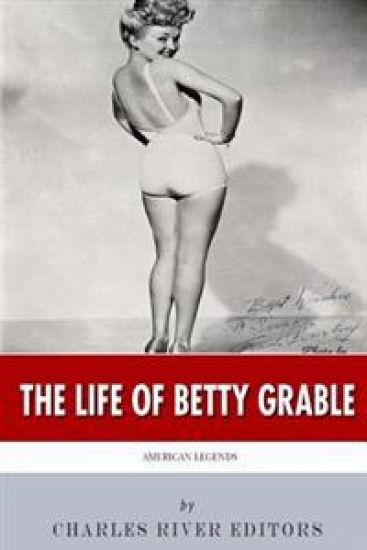
*Includes pictures. *Includes a bibliography for further reading. "There are two reasons why I'm in show business, and I'm standing on both of them." - Betty Grable A lot of ink has been spilled covering the lives of history's most influential figures, but how much of the forest is lost for the trees? In Charles River Editors' American Legends series, readers can get caught up to speed on the lives of America's most important men and women in the time it takes to finish a commute, while learning interesting facts long forgotten or never known. No history of American pop culture in the 1940s would be complete without mention of Betty Grable, the most popular pin-up girl of the World War II era. Grable possessed the outstanding fortune of not only having an ideal body but arriving at the most fortuitous time imaginable; the famous pin-up photo of her, taken by Frank Powolny, made her the highest-earning actress in Hollywood from 1943 to 1951. Indeed, it was not hyperbole that earned Grable the nickname of "the girl with the million dollar legs" - not only were her legs famously adored by American soldiers fighting overseas, they were actually insured to the tune of one million dollars (Suddath). Grable was the banner actress for the era before the advent of Playboy and other publications designed to satisfy the lust of the heterosexual male, an era that objectified women but in a more wholesome, less pornographic way that was designed to reinforce all-American values. However, if Grable was, monetarily speaking, the most successful actress of the 1940s, there is a major gulf between her commercial success and the critical appraisal of her acting talents. Grable never won an Academy Award, and the swift demise of her career testifies to her inability to sustain her career after she had begun to age and her glamour showed signs of atrophying. In a famous quote, Grable once noted she was "the kind of girl truck drivers like," a statement that simultaneously encapsulates her wide appeal but also the lack of sophistication that precluded her recognition among the premier acting talents of 1940s Hollywood (McLean 180). Decades later, her films are largely forgotten, which isn't surprising since they were a collection of movies that were designed to gain quick commercial success rather than long-term critical acclaim. Certainly, Grable should be acknowledged for her acting career, but her fame rests more on the impact she had on wartime American culture than the intrinsic value of any of her films. American Legends: The Life of Betty Grable looks at the significance of Betty Grable's place in war-era America, as well as her acting career, exploring how she came to gain such unprecedented popularity. This includes not just her rise to fame but also the reasons why her career did not last as long as many of her contemporaries in Hollywood, women like Katharine Hepburn, Joan Crawford, and Bette Davis. By analyzing her triumphs and adversities, it's possible to understand the whirlwind life and career of Betty Grable, and along with pictures of important people, places, and events, you will learn about Betty Grable like never before, in no time at all.
The Battle of the Little Bighorn: The History and Controversy of Custer's Last Stand

The Battle of the Little Bighorn: The History and Controversy of Custer's Last Stand

Charles River

Createspace Independent Publishing Platform
2013
nidottu
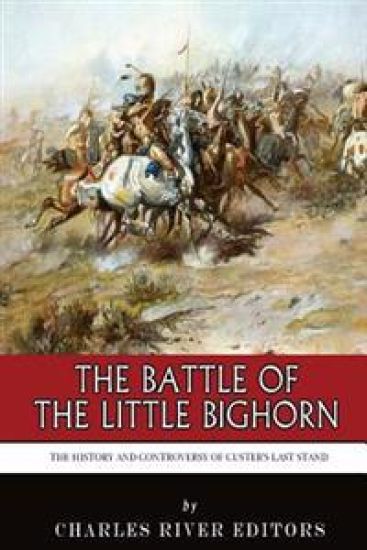
*Includes pictures of important people and places, as well as art depicting the battle. *Includes accounts of the fighting written by men on both sides. *Includes a bibliography for further reading. Since the Battle of the Little Bighorn, George Armstrong Custer has possessed one of the most unique places in American history. Although he was a capable cavalry officer who served honorably during the Civil War, he remains one of the most instantly identifiable and famous military men in American history due to the fact he was killed during one of the country's most well known and ignominious defeats, the Battle of Little Bighorn. At the same time, this one relatively insignificant battle during America's Indian Wars has become one of the country's most mythologized events and continues to fascinate Americans nearly 140 years later. On the morning of June 25, Custer's scouts discovered a Native American village about 15 miles away in the valley of the Little Bighorn River. Choosing to disregard his superiors' orders to wait for a concerted effort, the grandstanding Custer intended to deliver his own decisive victory by dividing his command into three units, an extremely bold tactic when done in the face of a much larger force. Due to their belief in the inferiority of the Plains Indians, and mindful of previous Indian tactics that sought to avoid pitched battle, Custer and his men were most concerned with forcing the action and failed to understand the true nature of the situation they had entered. The Native American gathering, centered around the famous Sioux chief Sitting Bull, numbered roughly 8,000 individuals, and about 2,000 of them were warriors. Custer's forces amounted to a mere 31 officers, 566 troopers, and 50 scouts and civilians, and they had been split into three columns in order to stop a possible retreat. Before the battle, it is believed Custer thought he was facing a group of about 800, which was Sitting Bull's strength in the weeks before the battle. However, the Army's Native American scouts and civilian scouts had not adequately informed the Army of the reinforcements that arrived, and at Little Bighorn, Custer's three-pronged attack was completely overwhelmed. How Custer met his fate, and whether there even was a Last Stand, remain subjects of debate, but what is known is that the Battle of the Little Bighorn was one of the U. S. military's biggest debacles. All told, the 7th Cavalry suffered over 50% casualties, with over 250 men killed and over 50 wounded. The dead included Custer's brothers Boston and Thomas, his brother-in-law James Calhoun, and his nephew Henry Reed. Custer and his men were buried where they fell. A year later, Custer's remains (or more accurately, the remains found in the spot labeled with his name) were relocated to West Point for final interment. The Battle of the Little Bighorn: The History and Controversy of Custer's Last Stand comprehensively covers the entire campaign leading up to the decisive battle, analyzes the decisions made by the battle's most important leaders, and explains the controversial aftermath and legacy of the fighting. Along with a bibliography and pictures of important people and places, you will learn about the Battle of the Little Bighorn like you never have before, in no time at all.