Kirjojen hintavertailu – 12 903 725 kirjaa ja 27 kauppaa

Kirjailija

Charles River

Kirjat ja teokset yhdessä paikassa: 4 673 kirjaa, julkaisuja vuosilta 2013–2022, suosituimpiin kuuluu William Powell and Myrna Loy: The Lives and Careers of One of Classical Hollywood's Most Iconic Duos. Vertaile teosten hintoja ja tarkista saatavuus suomalaisista kirjakaupoista.

4 673 kirjaa

Kirjojen julkaisuvuodet: 2013–2022.

The Greatest Show on Earth: The History of the Ringling Bros. and Barnum & Bailey Circus
*Includes pictures. *Highlights Barnum's entertainment career and transition into the circus. *Includes a bibliography for further reading. "We bring you the circus - that Pied Piper whose magic tunes lead children of all ages into a tinseled and spun-candied world of reckless beauty and mounting laughter; whirling thrills; of rhythm, excitement and grace; of daring, enflaring and dance; of high-stepping horses and high-flying stars. But behind all this, the circus is a massive machine whose very life depends on discipline, motion and speed - a mechanized army on wheels that rolls over any obstacle in its path - that meets calamity again and again, but always comes up smiling - a place where disaster and tragedy stalk the Big Top, haunts the back yard, and rides the circus train - where Death is constantly watching for one frayed rope, one weak link, or one trace of fear. A fierce, primitive fighting force that smashes relentlessly forward against impossible odds: That is the circus - and this is the story of the biggest of the Big Tops - and of the men and women who fight to make it." - Opening remarks from the film The Greatest Show On Earth , a drama set in the Ringling Brothers and Barnum & Bailey Circus. Americans have loved traveling circuses for generations, and none represent the country's love for entertainment quite like the most famous of them all, the Ringling Bros. and Barnum & Bailey Circus. The five brothers who started a circus in Wisconsin, as well as P. T. Barnum, have had their names become synonymous with the circus, so it's only fitting that the manner in which these men entered the business and the merging of their traveling circuses together also make for great stories. Circus promoters have long been viewed as somewhat shady hucksters, but none could top P. T. Barnum, who used a blend of traditional circus entertainment, freak show exhibits, and outright hoaxes to create "The Greatest Show on Earth". Barnum introduced America to Jumbo the Elephant, one of the most legendary acts in the history of the circus, as well as "exhibits" like Joice Heth, an elderly African American woman Barnum advertised as a 161 year old who nursed George Washington. He also notoriously perpetrated hoaxes with General Tom Thumb and claimed to have a live mermaid, so it's no surprise that Barnum is often apocryphally quoted as saying, "There's a sucker born every minute." While he didn't actually say that, he said something similar: "Nobody ever lost a dollar by underestimating the taste of the American public." Around the same time that Barnum was operating the Barnum & Bailey's circus, the Ringling Brothers were engaging in more traditional circus activities in Wisconsin. As their traveling circus became better known in the late 1880s, it was advertised as the "Ringling Brothers United Monster Shows, Great Double Circus, Royal European Menagerie, Museum, Caravan, and Congress of Trained Animals". The Ringling Brothers were eventually successful enough that they were able to buy Barnum's circus after Barnum had already died, and they merged the traveling circuses together in 1919. The Greatest Show on Earth: The History of the Ringling Bros. and Barnum & Bailey Circus examines the origins of the famous circuses, the background of the important individuals involved, and their merger into the most famous circus of all. Along with pictures of important people, places, and events, you will learn about "The Greatest Show on Earth" like never before, in no time at all.
The Ancient Olympic Games: The History and Legacy of Ancient Greece's Most Famous Sports Event
*Includes pictures. *Includes ancient accounts about the Games. *Includes a bibliography for further reading. "The most important thing in the Olympic Games is not winning but taking part; the essential thing in life is not conquering but fighting well."- Epictetus "Many are the sights to be seen in Greece, and many are the wonders to be heard; but on nothing does Heaven bestow more care than on the Eleusinian rites and the Olympic games." - Pausanias While they are still well-known, the Olympic Games of Ancient Greece are more relevant today than most people know, and the ways in which athletic sports pervade contemporary culture is comparable only to the spirit of athleticism in Hellenic Greece. Today, a large section of the media industry is devoted exclusively to sports, and in some nations, sports even figures as a critical component of their identity. In America, the Super Bowl could be considered a holiday of sorts, and of course, today's Olympic Games capture the attention of millions and millions of people around the world for two weeks. The Ancient Olympic Games were all these things and then some. It was a ritualized spectacle of great cultural importance in Greece, as well as an international communion that celebrated both diversity and unity, but most importantly, it was an ode to the strength of the human body and a paean to the vigor of the human spirit. For over a thousand years, from the 8th century BC to the 4th century AD, competitors and spectators traveled from all over Europe and Asia Minor to attend the legendary contests, bringing with them not only their passion for athletics but also their poetry, music, arts, and ideas. The ancient historian Strabo captured the spirit well when he described the Olympics: "... the glory of the temple persisted ... on account both of the festal assembly and of the Olympian Games, in which the prize was a crown and which were regarded as sacred, the greatest games in the world. The temple was adorned by its numerous offerings, which were dedicated there from all parts of Greece." Despite their international character, the Ancient Olympic Games belonged exclusively to the Greeks, even though prior to Alexander the Great, Ancient Greece consisted mostly of small city-states that warred constantly with each other. The Olympic Games served to assemble them and allow them to appreciate the commonality of their customs, gods, language, and other cultural characteristics, the very things that made them Greek. The historian Pausanias explained just how important the games were to the Greeks and their sense of pride by discussing one of the Olympics' best athletes: "Sotades at the ninety-ninth Festival was victorious in the long race and proclaimed a Cretan, as in fact he was. But at the next Festival he made himself an Ephesian, being bribed to do so by the Ephesian people. For this act he was banished by the Cretans." The Ancient Olympic Games: The History and Legacy of Antiquity's Most Famous Sports Competitions examines the origins of the games, highlights the competitions, and looks at the history and legacy of the events that spawned today's modern Olympics. Along with pictures depicting important people, places, and events, you will learn about the Ancient Olympics like never before, in no time at all.
American Legends: The Life of Jerry Lewis

American Legends: The Life of Jerry Lewis

Charles River

Createspace Independent Publishing Platform
2014
nidottu
*Includes pictures. *Includes Lewis' quotes about his own life and career. *Includes a bibliography for further reading. "I've had great success being a total idiot." - Jerry Lewis A lot of ink has been spilled covering the lives of history's most influential figures, but how much of the forest is lost for the trees? In Charles River Editors' American Legends series, readers can get caught up to speed on the lives of America's most important men and women in the time it takes to finish a commute, while learning interesting facts long forgotten or never known. Jerry Lewis has been in show business for over 7 decades, a multi-talented entertainer known for comedy, acting, singing, and producing and directing films to match. In many ways, his versatility is unprecedented even today, an era in which stars routinely alternate between film and musical careers, and Lewis has enjoyed it, as he once happily noted, "I get paid for what most kids get punished for." He has been paid in several ways, including with too many lifetime awards to count, and he remains a household name today. At the same time, however, Lewis remains best known for his work with Dean Martin, and in that sense, he remains overshadowed by his more famous partner. There's no doubt part of this was due to the stark contrast between their images, as Martin was suave and traditionally masculine while Lewis was a bundle of frantic energy. Although the circumstances that initiated their partnership are unusual and purely coincidental, the natural contrasts between the two ensured a perfect and complementary comedic fit. Working as "Martin and Lewis", the team became the most popular nightclub act in America, commanding huge fees for their appearances all across the country. Perhaps the most ironic aspect of their success is that Dean Martin was not a comedian in any real sense of the word, and even during their act, he essentially served as the straight man to Jerry Lewis. The routine ensured that critics took more notice of Jerry Lewis, who intentionally came across as an awkward figure with a brand of bodily humor that was borrowed from a lineage of Yiddish humor predicated on physical slapstick. And just as Martin benefited from Lewis' comedic skills, Lewis also further developed a singing career thanks to the more famous Martin's crooning. American Legends: The Life of Jerry Lewis profiles the life and career of one of America's most famous entertainers. Along with pictures of important people, places, and events, you will learn about Jerry Lewis like never before, in no time at all.
William Quantrill and Quantrill's Raiders: The Confederacy's Most Notorious Bushwhackers
*Includes pictures. *Includes accounts of Quantrill's raids by one of his Raiders. *Includes footnotes and a bibliography for further reading. "In all wars there have always been, and always will be a class of men designated as guerillas, but it can be said that the Missouri guerillas are more noted than those of any war in any country for ages. Their deeds of daring, their miraculous escapes, and the physical sufferings that they endured are almost beyond belief." - John McCorkle, one of Quantrill's Raiders The Civil War is best remembered for the big battles and the legendary generals who fought on both sides, like Robert E. Lee facing off against Ulysses S. Grant in 1864. In kind, the Eastern theater has always drawn more interest and attention than the West. However, while massive armies marched around the country fighting each other, there were other small guerrilla groups that engaged in irregular warfare on the margins, and among these partisan bushwhackers, none are as infamous as William Quantrill and Quantrill's Raiders. Quantrill's Raiders operated along the border between Missouri and Kansas, which had been the scene of partisan fighting over a decade earlier during the debate over whether Kansas and Nebraska would enter the Union as free states or slave states. In "Bloody Kansas", zealous pro-slavery and anti-slavery forces fought each other, most notably John Brown, and the region became a breeding ground for individuals like Quantrill who shifted right back into similar fighting once the Civil War started. Rather than target military infrastructure or enemy soldiers, the bushwhackers rode in smaller numbers and targeted civilians on the other side of the conflict, making legends out of men like Bloody Bill Anderson and John Mosby. However, none are remembered like Quantrill and his men, not only because of their deeds during the Civil War but because of the actions of some of the former Raiders after it. Quantrill is best known for raiding Lawrence, Kansas in August 1863 and slaughtering nearly 200 boys and men between the ages of 14-90, under the pretext that they were capable of holding a gun and thus helping the Union cause. After that massacre, Union forces in the area retaliated in similar fashion, forcing Southern sympathizers out of several counties in the area and burning the property. Union forces also detained those accused of assisting Quantrill's Raiders, including their relatives. After raiding Lawrence, Quantrill's Raiders headed south, and they eventually split off into several groups. Quantrill himself was killed while fighting in June 1865, nearly two months after Lee surrendered to Grant at Appomattox, but his name was kept alive by the notorious deeds of his Raiders during the war and the criminal exploits of former Raiders like Jesse James and his brother, as well as the Younger brothers. These men, who had fought with Quantrill, became some of America's most famous outlaws, and they used guerrilla tactics to rob banks and trains while eluding capture. William Quantrill and Quantrill's Raiders: The Confederacy's Most Notorious Bushwhackers chronicles the life of Quantrill, the Raiders' Civil War record, and their legacy. Along with pictures of important people, places, and events, you will learn about Quantrill and his Raiders like never before, in no time at all.
Tikal: The History of the Ancient Maya's Famous Capital

Tikal: The History of the Ancient Maya's Famous Capital

Jesse Harasta; Charles River

Createspace Independent Publishing Platform
2014
nidottu
*Includes pictures. *Includes footnotes and a bibliography for further reading. Many ancient civilizations have influenced and inspired people in the 21st century. The Greeks and Romans continue to fascinate the West today. But of all the world's civilizations, none have intrigued people more than the Mayans, whose culture, astronomy, language, and mysterious disappearance all continue to captivate people. In 2012 especially, there was a renewed focus on the Mayans, whose advanced calendar has led many to speculate the world would end on the same date the Mayan calendar ends, but if anything, the focus on the "doomsday" scenario overshadowed the Mayans' true contribution to astronomy, language, sports, and art. The Maya maintained power in the Yucatan for over a thousand years, and at the height of its "Classical era" (3rd-9th centuries A. D.), the city of Tikal was one of the power centers of the empire. Archaeologists believe Tikal had been built as early as the 5th or 4th century BC, and eventually it became a political, economic and military capital that was an important part of a far-flung network across Mesoamerica, despite the fact it was seemingly conquered by Teotihuacan in the 4th century AD. It seems the foreign rulers came to assimilate Mayan culture, thus ensuring Tikal would continue to be a power base, and as a result, the city would not be abandoned until about the 10th century AD. As one of the Ancient Maya's most important sites, construction at Tikal was impressive, and even though it was apparently conquered, the city's records were unusually well preserved. This includes a list of the city's dynastic rulers, as well as the tombs and monuments dedicated to them. Thanks to this preservation, Tikal offers researchers their best look at the Ancient Maya and has gone a long way toward helping scholars understand Mayan history. Tikal: The History of the Ancient Maya's Famous Capital covers the history of the city, as well as the speculation and debate surrounding it. Along with pictures and a bibliography, you will learn about Tikal like you never have before, in no time at all.
Chichen Itza & Mayapan: The Most Famous Mayan Capitals of the Postclassic Period

Chichen Itza & Mayapan: The Most Famous Mayan Capitals of the Postclassic Period

Jesse Harasta; Charles River

Createspace Independent Publishing Platform
2014
nidottu
*Includes pictures. *Includes footnotes and a bibliography for further reading. Many ancient civilizations have influenced and inspired people in the 21st century, like the Greeks and the Romans, but of all the world's civilizations, none have intrigued people more than the Mayans, whose culture, astronomy, language, and mysterious disappearance all continue to captivate people. At the heart of the fascination is the most visited and the most spectacular of Late Classic Maya cities: Chich n Itz . Chich n Itz was inhabited for hundreds of years and was a very influential center in the later years of Maya civilization. At its height, Chich n Itz may have had over 30,000 inhabitants, and with a spectacular pyramid, enormous ball court, observatory and several temples, the builders of this city exceeded even those at Uxmal in developing the use of columns and exterior relief decoration. Of particular interest at Chich n Itz is the sacred cenote, a sinkhole was a focus for Maya rituals around water. Because adequate supplies of water, which rarely collected on the surface of the limestone based Yucatan, were essential for adequate agricultural production, the Maya here considered it of primary importance. Underwater archaeology carried out in the cenote at Chich n Itz revealed that offerings to the Maya rain deity Chaac (which may have included people) were tossed into the sinkhole. Although Chich n Itz was around for hundreds of years, it had a relatively short period of dominance in the region, lasting from about 800-950 A. D. Today, tourists are taken by guides to a building called the Nunnery for no good reason other than the small rooms reminded the Spaniards of a nunnery back home. Similarly the great pyramid at Chich n Itz is designated El Castillo ("The Castle"), which it almost certainly was not, while the observatory is called El Caracol ("The Snail") for its spiral staircase. Of course, the actual names for these places were lost as the great Maya cities began to lose their populations, one by one. Chich n Itz was partially abandoned in 948, and the culture of the Maya survived in a disorganized way until it was revived at Mayap n. Mayap n emerged first as a minor settlement in the orbit of Chich n, but it slowly came to replace it after the larger city's trade connections with the Toltecs of Tula crumbled and it suffered a staggering defeat by Mayap n's armies. The building styles and art in their city show both admiring references to the great Chich n Itz as well as an attempt to position Mayap n as a more orthodox heir of Maya tradition. At the same time, they emulated many features and could not escape the tremendous influences - especially in religion - of Chich n. This is seen in the fact that many of the most important buildings in the new city appear to be small-scale reproductions of ones in Chich n. Due in part to the fact that it has long been overshadowed by Chich n Itz , a lot excavation and scholarly research on the site has only come about in recent decades, and even though there is still plenty of work to do, a lot of information about life in Mayap n has been unearthed. At its height, Mayap n may have boasted a population of over 15,000, and archaeologists have had their hands full trying to discover and restore the several thousand buildings both inside Mayap n's walls and outside them. Chich n Itz & Mayap n: The Most Famous Mayan Capitals of the Postclassic Period comprehensively covers the history of the city, as well as the speculation surrounding the purpose of Chich n Itz and the debate over the buildings. Along with pictures and a bibliography, you will learn about the Maya's most famous cities like you never have before, in no time at all.
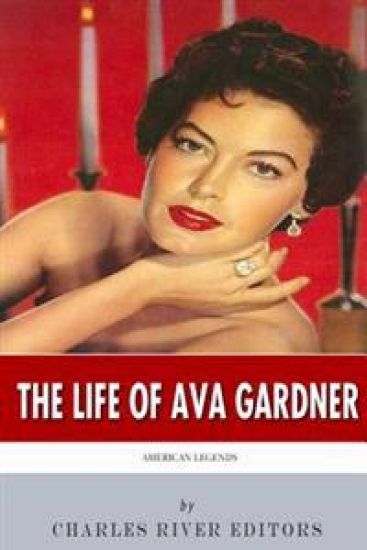
American Legends: The Life of Ava Gardner

American Legends: The Life of Ava Gardner

Charles River

Createspace Independent Publishing Platform
2014
nidottu
*Includes pictures. *Includes Ava's quotes about her own life and career. *Includes a bibliography for further reading. "Because I was promoted as a sort of a siren and played all those sexy broads, people made the mistake of thinking I was like that off the screen. They couldn't have been more wrong." - Ava Gardner A lot of ink has been spilled covering the lives of history's most influential figures, but how much of the forest is lost for the trees? In Charles River Editors' American Legends series, readers can get caught up to speed on the lives of America's most important men and women in the time it takes to finish a commute, while learning interesting facts long forgotten or never known. In the 1940s, there were few women capable of reaching the level of Hollywood screen goddess like young Ava Gardner, who was "discovered" after having a portrait taken and displayed in the window of a shop. She burst onto the scene playing a seductive gangster's moll in The Killers (1946), and Gardner would continue to act for the next 4 decades, adding critical acclaim to her reputation as a sex symbol with an Oscar nomination for Best Actress for her work in Mogambo (1953). Although Gardner's career spanned a long period of time and continued until a few years before her own death in 1990, she is better remembered today for being at the forefront of tabloids and gossip. While the same could be said of any major Hollywood celebrity, it was especially true with Gardner because of her third husband, Frank Sinatra, who left his previous wife Nancy for her. The couple had a tumultuous marriage that intrigued just about everyone, even though she confided to a friend, "With him it's impossible...it's like being with a woman. He's so gentle. It's as though he thinks I'll break, as though I'm a piece of Dresden china and he's gonna hurt me." The marriage lasted just 6 years, and Gardner went on to engage in other high profile relationships. She was able to put together an autobiography before her death, and in it she ruefully notes, "Although no one believes me, I have always been a country girl and still have a country girl's values." American Legends: The Life of Ava Gardner examines the life and career of one of America's most famous actresses. Along with pictures of important people, places, and events, you will learn about Ava Gardner like never before, in no time at all.
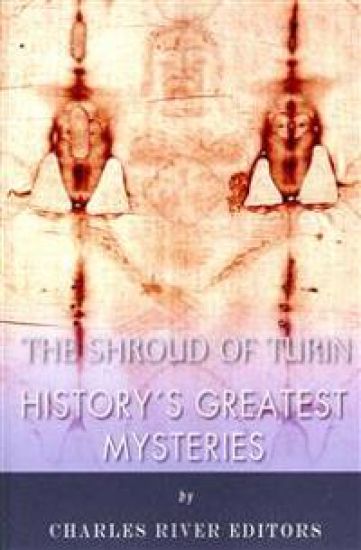
History's Greatest Mysteries: The Shroud of Turin

History's Greatest Mysteries: The Shroud of Turin

Charles River

Createspace Independent Publishing Platform
2014
nidottu
*Includes pictures. *Explains the history of the Shroud. *Includes the arguments made for and against the Shroud's authenticity. *Includes a bibliography for further reading. For centuries, professional historians have labored through the painstaking task of documenting history as accurately as possible, but even with modern technology, archaeology, and records, some questions have eluded attempts to answer them. From the origins of Atlantis to the Lost Colony of Roanoke, the mysteries behind some of history's most famous people and events have fascinated countless generations. In Charles River Editors' History's Greatest Mysteries series, readers can discover the known, the unknown, and the possible answers to history's most enduring questions in the time it takes to finish a commute, while learning interesting facts long forgotten or never known. Critics call it one of the greatest pieces of fraud in religious history. Believers call it one of the most important artifacts in Christianity. Everyone agrees that it's mysterious, interesting and controversial. The Shroud of Turin has been a controversial relic from the time it was first publicly displayed in northern France in the 14th century until the much-awaited Carbon 14 tests were performed on the cloth in 1988. One group consisting of religious believers and agnostic scientists has argued vehemently that this Shroud represents the actual burial cloth of Jesus of Nazareth, while another group of religious believers and critical scientists and scholars has argued that the Shroud of Turin is a medieval forgery created by an artist for Geoffrey de Charny or one of his ancestors in 14th century France. Indeed, the position one takes on the Shroud seems to cut across the usual divisions of creedal affirmation or general education level; some church leaders have decried it as a forgery, while a few have marveled at its authentic character. In some cases, the data that each side presents is different. For example, different experts have analyzed the cloth with the same scientific question and come up with a different result. In most cases, however, the data itself is identical, with the only difference being the interpretation given to the data. Writer John Walsh may have put it best when he stated, "The Shroud of Turin is either the most awesome and instructive relic of Jesus Christ in existence...or it is one of the most ingenious, most unbelievably clever products of the human mind and hand on record. It is one or the other; there is no middle ground." (Walsh, 1963, 8) As Walsh's comment notes, perhaps the most amazing thing about the Shroud is that while the radioactive carbon dating on the cloth suggests it dates back to medieval times, there's no consensus on just how the image got onto the cloth. Even back in the late 14th century, religious authorities considered it a fraud, yet modern science hasn't been able to explain how the artist responsible for the image rendered it. To this day, the Catholic Church has taken no definitive stance on its authenticity, with Pope Francis stopping short of that by stating "the Man of the Shroud invites us to contemplate Jesus of Nazareth." Given the arguments regarding the Shroud of Turin, and the questions that remain unanswered, it's only fair for a work on the Shroud to present the varied and contradictory evidence within the narrative of each respective side. History's Greatest Mysteries: The Shroud of Turin provides a brief physical description of the Shroud and then looks at the arguments that assert the Shroud is authentic, as well as the arguments that it is a brilliant medieval forgery.
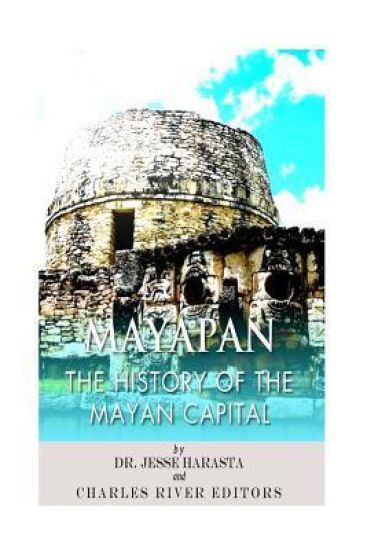
Mayapan: The History of the Mayan Capital

Mayapan: The History of the Mayan Capital

Jesse Harasta; Charles River

Createspace Independent Publishing Platform
2014
nidottu
*Includes pictures. *Includes footnotes for further reading. Many ancient civilizations have influenced and inspired people in the 21st century, like the Greeks and the Romans, but of all the world's civilizations, none have intrigued people more than the Mayans, whose culture, astronomy, language, and mysterious disappearance all continue to captivate people. At the heart of the fascination is Chich n Itz , the most visited Mayan site, but Chich n Itz 's prominence lasted for less than 200 years and was eventually succeeded by Mayap n, which lasted as the capital of the Maya for nearly 225 years until the middle of the 15th century. The Mayans are still remembered and celebrated for their culture and their contributions to astronomy, language, and sports, and many of their advancements came with Mayap n as their capital. Early Mayap n was closely connected to the overshadowing power of the region at the time: the mighty trading city of Chich n Itz . Mayap n emerged first as a minor settlement in the orbit of Chich n, but it slowly came to replace it after the larger city's trade connections with the Toltecs of Tula crumbled and it suffered a staggering defeat by Mayap n's armies. The building styles and art in their city show both admiring references to the great Chich n Itz as well as an attempt to position Mayap n as a more orthodox heir of Maya tradition. At the same time, they emulated many features and could not escape the tremendous influences - especially in religion - of Chich n. This is seen in the fact that many of the most important buildings in the new city appear to be small-scale reproductions of ones in Chich n. Due in part to the fact that it has long been overshadowed by Chich n Itz , a lot excavation and scholarly research on the site has only come about in recent decades, and even though there is still plenty of work to do, a lot of information about life in Mayap n has been unearthed. At its height, Mayap n may have boasted a population of over 15,000, and archaeologists have had their hands full trying to discover and restore the several thousand buildings both inside Mayap n's walls and outside them as well. Mayap n: The History of the Mayan Capital covers the history of the city, as well as the speculation and debate over the city's buildings. Along with pictures and a bibliography, you will learn about the Mayan capital like you never have before, in no time at all.
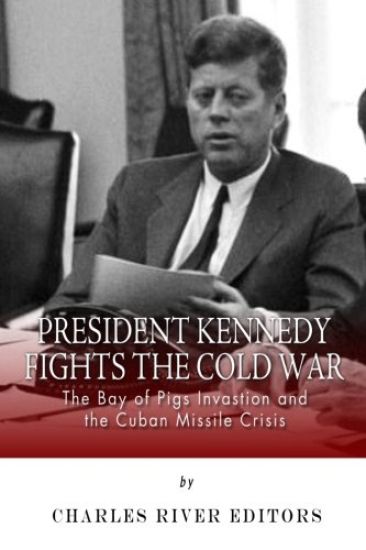
President Kennedy Fights the Cold War: The Bay of Pigs Invasion and the Cuban Missile Crisis
*Includes pictures. *Includes quotes from participants, including declassified CIA files. *Includes footnotes and a bibliography for further reading. Within just a month of becoming President, the issue of communist Cuba became central to John F. Kennedy and his administration. On February 3rd, 1961, President Kennedy called for a plan to support Cuban refugees in the U. S., and a month later, he created the Peace Corps, a program that trained young American volunteers to help with economic and community development in poor countries. Both programs were integral pieces of the Cold War and were attempts to align disadvantaged groups abroad with the United State and the West against the Soviet Union and its Communist satellites. Meanwhile, covert operations were laying the groundwork for overthrowing Cuban leader Fidel Castro, and he knew it. Castro railed against CIA involvement among Cubans trying to overthrow him and his still young revolution. Matters came to a head that April, when the Kennedy Administration moved beyond soft measures to direct action. From April 17-20, 1,400 CIA-trained Cuban exiles landed on the beaches of Western Cuba in an attempt to overthrow Castro. This plan, known as the "Bay of Pigs," had been originally drafted by the Eisenhower Administration. The exiles landed in Cuba and were expected to be greeted by anti-Castro forces within the country, after which the U. S. would provide air reinforcement to the rebels and the Castro regime would slowly be overthrown. Soviet leader Nikita Khrushchev's belief that he could push the inexperienced American leader around grew in the wake of the Bay of Pigs fiasco and the inconclusive Vienna summit in June 1961 that left Kennedy complaining to his brother Bobby that Khrushchev was "like dealing with Dad. All give and no take." Motivated by the events of the previous year, 1962 saw Khrushchev made his most decisive decision. Still questioning Kennedy's resolve, and attempting to placate the concerns of Cuban leader Fidel Castro following the failed Bay of Pigs invasion, Khrushchev attempted to place medium range nuclear missiles in Cuba, just 90 miles off the coast of the United States. Though Castro warned him that the act would seem like an act of aggression to the Americans, Khrushchev insisted on moving the missiles in quietly, under the cover of darkness. These missiles could serve not only as a deterrent against any invasion of Cuba but also as the ultimate first-strike capability in the event of a nuclear war. However, in October 1962, American spy planes discovered the Soviets were building nuclear missile sites in Cuba, and intelligence officials informed Kennedy of this on October 16th. It went without saying that nuclear missile sites located just miles off the coast of the American mainland posed a grave threat to the country, especially because missiles launched from Cuba would reach their targets in mere minutes. That would throw off important military balances in nuclear arms and locations that had previously ensured the Cold War stayed cold. Almost all senior American political figures agreed that the sites were offensive and needed to be removed, but how? Ultimately, some of the biggest arguments during the crisis took place among members of the Kennedy administration and the military. Members of the U. S. Air Force wanted to take out the sites with bombing missions and launch a full-scale invasion of Cuba, but Kennedy and his brother feared that military action could ignite a full-scale escalation leading to nuclear war. Though he had previously taken aggressive stances on Cuba, Bobby was one of the voices who opposed outright war and helped craft the eventual plan: a blockade of Cuba. That was the decision President Kennedy ultimately reached as well, but it remained to be seen whether Khrushchev would test Kennedy's resolve yet again.
Gettysburg and Vicksburg: The Civil War Turning Points of 1863

Gettysburg and Vicksburg: The Civil War Turning Points of 1863

Charles River

Createspace Independent Publishing Platform
2014
nidottu
*Includes pictures. *Includes accounts of the fighting by important generals. *Includes bibliographies for further reading. Without question, the most famous battle of the American Civil War took place outside of the small town of Gettysburg, Pennsylvania, which happened to be a transportation hub, serving as the center of a wheel with several roads leading out to other Pennsylvanian towns. From July 1-3, Robert E. Lee's Confederate Army of Northern Virginia tried everything in its power to decisively defeat George Meade's Union Army of the Potomac, unleashing ferocious assaults that inflicted nearly 50,000 casualties in all. Day 1 of the battle would have been one of the 25 biggest battles of the Civil War itself, and it ended with a tactical Confederate victory. But over the next two days, Lee would try and fail to dislodge the Union army with attacks on both of its flanks during the second day and Pickett's Charge on the third and final day. Meade's stout defense held, barely, repulsing each attempted assault, handing the Union a desperately needed victory that ended up being one of the Civil War's turning points. After the South had lost the war, the importance of Gettysburg as one of the "high tide" marks of the Confederacy became apparent to everyone, making the battle all the more important in the years after it had been fought. While former Confederate generals cast about for scapegoats, with various officers pointing fingers at Robert E. Lee, James Longstreet, and James Stuart, historians and avid Civil War fans became obsessed with studying and analyzing all the command decisions and army movements during the entire campaign. Despite the saturation of coverage, Americans refuse to grow tired of visiting the battlefield and reliving the biggest battle fought in North America. At the start of 1863, Robert E. Lee's Army of Northern Virginia had been frustrating the Union in the Eastern theater for several months, but the situation in the West was completely different. The Confederates had lost control of several important states throughout 1862, and after New Orleans was taken by the Union, the North controlled almost all of the Mississippi River, which Confederate general James Longstreet called "the lungs of the Confederacy". By taking control of that vital river, the North would virtually cut the Confederacy in two, putting the South in a dire situation. The only domino left to fall was the stronghold of Vicksburg, and both sides knew it. The Union Army of the Tennessee, led by Ulysses S. Grant, would spend months trying to encircle the army and eventually force John Pemberton's Confederate army to surrender. Grant eventually succeeded on July 4, 1863, but since it came a day after the climactic finish of the Battle of Gettysburg, Vicksburg was (and still is) frequently overlooked as one of the turning points of the Civil War. In fact, had the Confederate's military leadership listened to Longstreet, who advocated detaching soldiers from Lee's army to head west and help the Confederates deal with Grant or Rosecrans in that theater, the Battle of Gettysburg might never have happened. While many read about the siege of Vicksburg in the summer of 1863, as well as the desperate straits the Confederate soldiers and Vicksburg residents found themselves in, Grant's initial attempts to advance towards Vicksburg met with several miserable failures, and it took several months just to get to the point where the Union forces could start a siege. First, Grant's supply base at Holly Springs was captured, and then an assault launched by Union General Sherman at Chickasaw Bayou was easily repulsed by Confederate forces, with serious Union casualties resulting. Grant then attempted to have his men build canals north and west of the city to facilitate transportation, which included grueling work and disease in the bayous.