Kirjojen hintavertailu – 12 903 725 kirjaa ja 27 kauppaa

Kirjailija

Charles River

Kirjat ja teokset yhdessä paikassa: 4 673 kirjaa, julkaisuja vuosilta 2013–2022, suosituimpiin kuuluu William Powell and Myrna Loy: The Lives and Careers of One of Classical Hollywood's Most Iconic Duos. Vertaile teosten hintoja ja tarkista saatavuus suomalaisista kirjakaupoista.

4 673 kirjaa

Kirjojen julkaisuvuodet: 2013–2022.

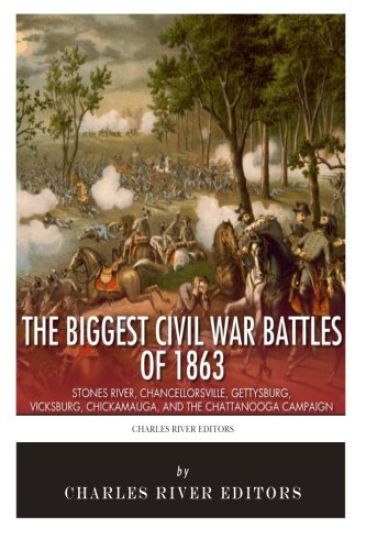
The Biggest Civil War Battles of 1863: Stones River, Chancellorsville, Gettysburg, Vicksburg, Chickamauga, and the Chattanooga Campaign
*Includes pictures. *Includes accounts of the battles by important generals who fought them. *Includes bibliographies for further reading. The Civil War was the deadliest conflict in American history, and had the two sides realized it would take 4 years and inflict over a million casualties, it might not have been fought. Since it did, however, historians and history buffs alike have been studying and analyzing the biggest battles ever since. Naturally, Americans have long been fascinated by the Civil War, marveling at the size of the battles, the leadership of the generals, and the courage of the soldiers. Since the war's start over 150 years ago, the battles have been subjected to endless debate among historians and the generals themselves. Of the 4 years, 1863 marked the year in which the Union truly turned the tide of the war. Robert E. Lee's Army of Northern Virginia had given the Confederacy hopes by turning away McClellan's Peninsula Campaign and winning decisive battles at Second Bull Run and Fredericksburg. In May 1863, he did it again at Chancellorsville, thwarting the Army of the Potomac and setting the stage for his invasion of Pennsylvania. After the South had lost the war, the importance of Gettysburg as one of the "high tide" marks of the Confederacy became apparent to everyone, making the battle all the more important in the years after it had been fought. While former Confederate generals cast about for scapegoats, with various officers pointing fingers at Robert E. Lee, James Longstreet, and James Stuart, historians and avid Civil War fans became obsessed with studying and analyzing all the command decisions and army movements during the entire campaign. At the start of 1863, Robert E. Lee's Army of Northern Virginia had been frustrating the Union in the Eastern theater for several months, but the situation in the West was completely different. The Confederates had lost control of several important states throughout 1862, and after New Orleans was taken by the Union, the North controlled almost all of the Mississippi River, which Confederate general James Longstreet called "the lungs of the Confederacy". By taking control of that vital river, the North would virtually cut the Confederacy in two, putting the South in a dire situation. The only domino left to fall was the stronghold of Vicksburg, and both sides knew it. Ulysses S. Grant's successful siege of Vicksburg ended the day after the Battle of Gettysburg, giving the Union two vital turning points in the war. At Chickamauga, the Union averted disaster when George H. Thomas prevented the destruction of the Army of the Cumberland, which would have certainly blunted the momentum Grant and Meade had secured in previous months at Vicksburg and Gettysburg. In fact, it might have completely changed the balance of power in the theater. After the Confederates squandered a golden opportunity to destroy a Union army in the field at Chickamauga, they lay siege to Chattanooga, only to have Grant and Sherman bring men, keep a line of supply open, and then lift the siege with the stunning battles of Lookout Mountain and Missionary Ridge. After the campaign, one Confederate soldier fatefully predicted, "This...is the death-knell of the Confederacy." The Biggest Civil War Battles of 1863 comprehensively covers the major campaigns of 1863, the battles, and the aftermath of the battles. Accounts of the battles by important participants are also included, along with maps of the battle and pictures of important people, places, and events. You will learn about the the biggest battles of 1863 like you never have before.
The Bay of Pigs Invasion: President Kennedy's Failed Attempt to Overthrow Fidel Castro
*Includes pictures. *Includes quotes about the plan and its failure, including from declassified CIA files. *Includes footnotes and a bibliography for further reading. "Openly and unabashedly they are organizing training camps; openly and unabashedly they are building air bases and air strips. Everyone knows who is building the strips and buying planes, that mercenaries are recruiting troops. They even have the cynicism to publish photographs." - Fidel Castro, March 1961 Within just a month of becoming President, the issue of communist Cuba became central to John F. Kennedy and his administration. On February 3rd, 1961, President Kennedy called for a plan to support Cuban refugees in the U. S., and a month later, he created the Peace Corps, a program that trained young American volunteers to help with economic and community development in poor countries. Both programs were integral pieces of the Cold War and were attempts to align disadvantaged groups abroad with the United State and the West against the Soviet Union and its Communist satellites. Meanwhile, covert operations were laying the groundwork for overthrowing Cuban leader Fidel Castro, and he knew it. Castro railed against CIA involvement among Cubans trying to overthrow him and his still young revolution. Matters came to a head that April, when the Kennedy Administration moved beyond soft measures to direct action. From April 17-20, 1,400 CIA-trained Cuban exiles landed on the beaches of Western Cuba in an attempt to overthrow Castro. This plan, known as the "Bay of Pigs," had been originally drafted by the Eisenhower Administration. The exiles landed in Cuba and were expected to be greeted by anti-Castro forces within the country, after which the U. S. would provide air reinforcement to the rebels and the Castro regime would slowly be overthrown. From the onset, almost every phase of the operation went wrong. Ships were prevented from reaching shore by reefs previously thought to be seaweed beds on the basis of U-2 photographs. Antiquated American bombers missed a high percentage of their targets, and with American involvement already apparent to the world, the second round of air attacks was cancelled. Most of those who reached the beach in the land invasion were killed or captured, and the United States suffered immeasurable embarrassment on the international stage. On April 21st, in a White House press conference, President Kennedy accepted full responsibility for the failure, and over the following year, the U. S. and Cuba negotiated the release of the imprisoned exiles, who were finally released in December of 1962 in exchange for $55.5 million worth of food and medicine. The aborted invasion also became a nationalistic rallying cry for Castro, helping to consolidate public support in favor of his revolutionary government. According to some, the invasion's famous name comes from a mistranslation for a type of fish found in the bay where the landing eventually occurred: the "Cochinos." Regardless, the Bay of Pigs is viewed historically as one of the most ill-conceived and poorly executed covert paramilitary actions in the history of the United States, or as one historian put it, "the ultimate symbol of boneheaded interventionism." More importantly, the failed invasion motivated Soviet leader Nikita Khrushchev to attempt to place medium range nuclear missiles in Cuba, due not only to his questioning of Kennedy's resolve but also to placate the concerns of Castro following the failed Bay of Pigs invasion. That would ultimately lead to the Cuban Missile Crisis in October 1962, arguably the closest the Cold War came to becoming a nuclear Armageddon.
Sophia Loren: The Life of Italy's Greatest Actress

Sophia Loren: The Life of Italy's Greatest Actress

Charles River

Createspace Independent Publishing Platform
2014
nidottu
*Includes pictures. *Includes Loren's quotes about her life and career. *Includes a bibliography for further reading. "Getting ahead in a difficult profession requires avid faith in yourself. That is why some people with mediocre talent, but with great inner drive, go so much further than people with vastly superior talent." - Sophia Loren Among all the stars in Hollywood, there are few alive who have achieved as iconic a status as Sophia Loren, a stunning beauty whose career started because of an appearance in a beauty pageant in Italy but quickly ascended to the top of the profession. Loren has won every kind of major award, from an Oscar to a Golden Globe, and she has too many lifetime achievements to count. Alongside Shirley Temple and Lauren Bacall, Loren is the only living actress who made the American Film Institute's list as one of the Top 50 actresses of the 20th century, and as one of just 13 on the list born outside the U. S., she is unquestionably Italy's most acclaimed and famous actresses. Loren's glamorous appearances have been seen by millions of viewers over the last 50 years, but few are familiar with what a stark contrast there was between her status as a sex symbol and her difficult childhood. Born in Italy in 1934, Loren's family wasn't well to do, and she came of age during World War II, and being in Italy, her family constantly had to deal with Allied bombing campaigns. In fact, one bombing raid left Loren injured by shrapnel as she attempted to reach shelter. She would later note, "The facts of life are that a child who has seen war cannot be compared with a child who doesn't know what war is except from television." Nevertheless, shortly after the war, she entered a beauty pageant at the age of 14 and was discovered there, leading to a career spanning about 60 years. Sophia Loren: The Life of Italy's Most Famous Actress examines the life and work of one of the world's most famous actresses. Along with pictures of important people, places, and events, you will learn about Loren like never before.
British Legends: The Life and Legacy of Laurence Olivier

British Legends: The Life and Legacy of Laurence Olivier

Charles River

Createspace Independent Publishing Platform
2014
nidottu
*Includes pictures. *Includes a bibliography for further reading. "If I wasn't an actor, I think I'd have gone mad. You have to have extra voltage, some extra temperament to reach certain heights. Art is a little bit larger than life - it's an exhalation of life and I think you probably need a little touch of madness." - Laurence Olivier A lot of ink has been spilled covering the lives of history's most influential figures, but how much of the forest is lost for the trees? In Charles River Editors' British Legends series, readers can get caught up to speed on the lives of Britain's most important men and women in the time it takes to finish a commute, while learning interesting facts long forgotten or never known. Of all the great actors of the 20th century, none personifies acting royalty more than Laurence Olivier, and some of this is simply due to the fact that he was actually knighted in 1947, along with a lengthy list of other honors that include being named a life peer in 1970 and admission to the Order of Merit in 1984. To speak of The Right Honourable Lord Laurence Olivier is not a figure of speech but rather a fact. Of course, in addition to the literal sense of the term, there is undeniably a manner in which Laurence Olivier qualifies as acting royalty, as it is not for nothing that Spencer Tracy once referred to Olivier as "the greatest actor in the English-speaking world" (Bacall). It is also important to note that Tracy refers to Olivier not as a film or theater actor specifically, because much of Olivier's lofty standing derives from his ability to successfully navigate different mediums like stage, film, and television. The breadth of mediums in which he worked, the various roles he inhabited within them (actor, producer, director), and the formidable time span of his career lend Olivier's career a scope of perhaps unmatched magnitude. Indeed, Laurence Olivier worked for so long and was so successful that few actors receive the level of visibility that he still enjoys, even more than two decades after his death. While his theatrical performances exist only as memories, his cinematic adaptations of several of Shakespeare's most famous plays remain the most canonical even to this day. Hamlet, for example, has been produced for the screen by several famous directors, but his version, released in 1948, is the most well-known and best-received. It is through his films that viewers also gain a full appreciation of his creative style, as Olivier assumed full authorial control (from actor to director to producer) over many of his films, particularly the Shakespearean ones. In this sense, it is appropriate to claim that Laurence Olivier was not only a storied actor but also an artist who worked best when enjoying full authority over his productions. Laurence Olivier's career was incredibly decorated, but questions still remain regarding the relationship between his career and his life outside of the stage and screen. To what extent do Olivier's upbringing and personal life cohere with or complicate the reputation he cultivated through his body of work? Other aspects of his life that are consequential and are yet often overlooked include his strict childhood, his experience fighting in World War Two, his discreet sexual life, and his troubled marriage to actress Vivien Leigh. British Legends: The Life and Legacy of Laurence Olivier examines the life and work of one of the world's most critically acclaimed actors. Along with pictures of important people, places, and events, you will learn about Olivier like never before, in no time at all.
The Oregon Trail: America's Most Famous Path to the Western Frontier

The Oregon Trail: America's Most Famous Path to the Western Frontier

Charles River

Createspace Independent Publishing Platform
2014
nidottu
*Includes pictures. *Includes accounts of people who traveled on the Oregon Trail. *Includes a bibliography for further reading. "My greatest pleasure in travelling through the country is derived from the knowledge that it has seldom been traversed, or at least never been described by any hackneyed tourist, that everything I see or look upon has been seen by me before it has become common by the vulgar gaze or description of others." - Dr. James Middleton The westward movement of Americans in the 19th century was one of the largest and most consequential migrations in history, and among the paths that blazed west, the most well-known is the Oregon Trail, which was not a single trail but a network of paths that began at one of four "jumping off" points. The eastern section of the Oregon Trail, which followed the Missouri River through Kansas, Nebraska, and Wyoming, was shared by people traveling along the California, Bozeman, and Mormon Trails. These trails branched off at various points, and the California Trail diverged from the Oregon Trail at Fort Hall in southern Idaho. From there, the Oregon Trail moved northward, along the Snake River, then through the Blue Mountains to Fort Walla Walla. From there, travelers would cross the prairie before reaching the Methodist mission at The Dalles, which roughly marked the end of the Trail. The Trail stretched roughly half the country, and hundreds of thousands of settlers would use it, yet the Oregon Trail is famous not so much for its physical dimensions but for what it represented. As many who used the Oregon Trail described in memoirs, the West represented opportunities for adventure, independence, and fortune, and fittingly, the ever popular game named after the Oregon Trail captures that mentality and spirit by requiring players to safely move a party west to the end of the trail. Perhaps most famously, the game that helped popularize current generations' interest in the Oregon Trail highlighted the obstacles the pioneers faced in moving West. Indeed, as all too many settlers discovered, traveling along the Trail was fraught with various kinds of obstacles and danger, including bitter weather, potentially deadly illnesses, and hostile Native Americans, not to mention an unforgiving landscape that famous American explorer Stephen Long deemed "unfit for human habitation." And while many would look back romantically at the Oregon Trail over time, 19th century Americans were all too happy and eager for the transcontinental railroad to help speed their passage west and render overland paths like the Oregon Trail obsolete. The Oregon Trail: America's Most Famous Path to the Western Frontier comprehensively covers the history of the Trail and the settlers who moved west along it, including descriptions of the Trail in accounts written by settlers. Along with pictures depicting important people, places, and events, you will learn about the Oregon Trail like you never have before.
The Taj Mahal: The History of India's Most Famous Monument

The Taj Mahal: The History of India's Most Famous Monument

Jesse Harasta; Charles River

Createspace Independent Publishing Platform
2014
nidottu
*Includes pictures. *Explains the Taj Mahal's construction history and cultural influences. *Includes footnotes and a bibliography for further reading. "Should guilty seek asylum here, Like one pardoned, he becomes free from sin. Should a sinner make his way to this mansion, All his past sins are to be washed away. The sight of this mansion creates sorrowing sighs; And the sun and the moon shed tears from their eyes. In this world this edifice has been made; To display thereby the creator's glory." - Emperor Shah Jahan's description of the Taj Mahal "The Taj Mahal rises above the banks of the river like a solitary tear suspended on the cheek of time." - Rabindranath Tagore, Bengali Nobel Laureate Poet "Rahul had wondered how someone could love their beloved so much that their dedication to them became one of the wonders of the world." - Faraaz Kazi, modern novelist Taj Mahal is Arabic for "crown of palaces", and the name could not be more fitting for one of the most instantly recognizable buildings in the world. Constructed over a span of about 20 years in the mid-17th century as a mausoleum for the wife of Emperor Shah Jahan, the Taj Mahal is aptly described by UNESCO, which designated it a World Heritage site, as "the jewel of Muslim art in India and one of the universally admired masterpieces of the world's heritage". Indeed, the Taj Mahal is truly a global icon because it masterfully fused the artistic and architectural elements of several cultures, including Indian, Ottoman, Persian, and Islamic cultures across the region. While the marble dome is the first feature that pops out about the Taj Mahal, the careful layout of the entire structure is also incredibly impressive, and it took thousands of laborers several years to work on the other features, from the gardens to the calligraphy inscribed on the exterior. The Taj Mahal also includes other buildings, including a mosque and other tombs and mausoleums for people close to the emperor. Not surprisingly, given the scope and quality of the work, the Taj Mahal has fascinated people around the world for centuries, and naturally, all sorts of myths about it have sprung up. For the most part, however, people are simply drawn to it today as one of the premiere tourist sites in the world, and millions of people come from around the world to visit it every year. The Taj Mahal: The History of India's Most Famous Monument chronicles the origins, construction, and history of the Taj Mahal over the last 350 years. Along with pictures of important people, places, and events, you will learn about one of the world's most famous memorials like you never have before.
The Acropolis of Athens: The History of Greece's Most Famous Landmark

The Acropolis of Athens: The History of Greece's Most Famous Landmark

Charles River

Createspace Independent Publishing Platform
2014
nidottu
*Includes pictures. *Includes ancient accounts describing the history of the Acropolis. *Includes a bibliography for further reading. "What I would prefer is that you should fix your eyes every day on the greatness of Athens as she really is, and should fall in love with her. When you realize her greatness, then reflect that what made her great was men with a spirit of adventure, men who knew their duty, men who were ashamed to fall below a certain standard. If they ever failed in an enterprise, they made up their minds that at any rate the city should not find their courage lacking to her, and they gave to her the best contribution that they could." - The Funeral Oration of Pericles, quoted by Thucydides The Acropolis, which literally means "a city on the heights," is a citadel whose currently surviving structures were mostly built during the 5th century B. C. in honor of Athena, the patron goddess of Athens. It functioned as a sacred precinct that contained the city's most important religious and municipal structures, many of which have remained relatively intact for over 2,000 years. The Propylaea (the gateway to the Acropolis), the Parthenon (the principal shrine to the goddess), the Erechtheion (a shrine that supposedly houses the burial grounds of mythical Athenian kings), and the Temple of Athena Nike all survive to this day, and for these reasons, the Acropolis is perhaps the definitive and most eloquent expression of classical architecture, if not of the classical form itself. In order to understand whether and how this might be the case, it is important to reflect not only on the aesthetic quality of the structures themselves but also to seek out the historical, religious and philosophical contexts that clarify the structures' purpose and significance. Naturally, like many other works of its type and influence, the structures on the Acropolis embody certain traditions, but they also depart from some traditions and also transformed others. Indeed, just as the Acropolis is Athens' most striking feature, it is also a perfect representative of the city's golden age, both in terms of classical style and civilization as a whole. It's no wonder that people continue to view the Acropolis as both a portal to antiquity but also a spot with living structures whose importance continues to reverberate to this day. The Acropolis of Athens: The History of Greece's Most Famous Landmark comprehensively covers the history and evolution of one of the most famous hills in the world. Along with a bibliography and pictures, you will learn about the Acropolis like you never have before, in no time at all.
American Legends: The Life of Orson Welles

American Legends: The Life of Orson Welles

Charles River

Createspace Independent Publishing Platform
2014
nidottu
*Includes pictures. *Includes Welles' quotes about his life and career. *Includes a bibliography for further reading. "I have always been more interested in experiment, than in accomplishment." - Orson Welles A lot of ink has been spilled covering the lives of history's most influential figures, but how much of the forest is lost for the trees? In Charles River Editors' American Legends series, readers can get caught up to speed on the lives of America's most important men and women in the time it takes to finish a commute, while learning interesting facts long forgotten or never known. When it comes to Hollywood and the entertainment industry, perhaps nobody catapulted to fame as quickly or as strangely as Orson Welles, but it would also be safe to say that few produced such critically acclaimed work either. Though he had worked on stage productions from an early age and seamlessly transitioned into radio, few were familiar with his work until a legendary 1938 radio broadcast of H. G. Wells' The War of the Worlds, during which some people who heard Welles narrating the work truly believed that an alien invasion was underway. As Welles famously apologized at the end of the broadcast, "This is Orson Welles, ladies and gentlemen, out of character, to assure you that The War of the Worlds has no further significance than as the holiday offering it was intended to be; The Mercury Theatre's own radio version of dressing up in a sheet and jumping out of a bush and saying 'Boo '" Although the alleged widespread hysteria caused by that broadcast is mostly overstated, the notorious broadcast made Welles a household name, and he only followed it up with one of the greatest movies ever made: Citizen Kane. As the co-writer, producer, director, and main star of the film, a biting social critique of newspaper baron William Randolph Hearst, Welles' first movie would end up being his most famous and critically acclaimed. Of course, it also ensured that he would continue to work across every entertainment medium for the next 4 decades, juggling radio, the stage, movies, and television throughout the rest of his illustrious career. American Legends: The Life of Orson Welles examines the life and career of one of America's greatest and most versatile entertainers. Along with pictures of important people, places, and events, you will learn about Welles like never before, in no time at all.
Watergate: The Scandal That Brought Down a President

Watergate: The Scandal That Brought Down a President

Charles River

Createspace Independent Publishing Platform
2014
nidottu
*Includes pictures. *Profiles the important participants in the Watergate scandal and their recollections of what happened. *Includes footnotes and quotes about Watergate, as well as quotes from some of the Nixon tapes. *Includes Nixon's resignation address. *Includes a bibliography for further reading. Increasingly and mistakenly viewed as a single scandal within the United States government, what is commonly referred to as the Watergate scandal serves as an overarching term for a series of scandals beginning in 1971 and extending through 1974. But more than any other, it refers to the specific break-in at the Watergate Hotel and office complex in Washington, D. C. The crisis, originating in a secretive battle between the two major political parties, the Nixon White House's paranoia, and the ensuing conflict concerning the release of confidential information to the public, induced senior government officials into committing crimes (most notoriously petty burglary) and coverups for the purposes of character assassination and inter-political espionage, and it ultimately resulted in the first and only resignation of a sitting American president, Richard Milhous Nixon. Watergate has since become so synonymous with scandal that "gate" is typically added to the end of words associated with scandals even today, and the Watergate complex still remains well known ( "Even today, it is home to former Senator Bob Dole, and was the place where Monica Lewinsky laid low.") In the wake of the seemingly peculiar burglary, gradual media and judicial pursuits of the thread of scandals led from one thing to another over the following years until it began to culminate with Congressional impeachment proceedings and a momentous showdown between the President and the Supreme Court over the release of presidential tapes, a moment in which Nixon seriously considered defying the Court and initiating a constitutional crisis. When he at last surrendered them, excerpts were blatantly missing, most famously an 18 minute stretch. Given the flurry of activities, it has only been in recent years that historians have gained a full measure of the nation's perilous status during the intense battle between the various branches of the federal government, and the American public's view of government in general took a decidedly negative turn, resulting in social and political disillusionment and distrust of the government that still resonates today. If anything good came out of the Watergate scandal, it was that "in its wake, Watergate spawned a reform-minded Congress." For the last 40 years, President Nixon has been mostly reviled, and understandably, he's ranked among the country's worst presidents, but this view of the President and the Watergate scandal was not and still is not necessarily unanimous. A growing number of Republicans, led by conservatives such as former Nixon speechwriter Pat Buchanan, describe the bringing down of the president as a quasi-coup generated by the press and liberal social forces from within the anti-war movement, which gravitated to the release of information on Vietnam, an increasingly unpopular war, and tapping the widespread campus unrest throughout the country. Paul Johnson, in his book, Modern Times: A History of the World from the 1920s to the Year 2000, referred to the whole affair as nothing more than "this Watergate witch hunt." Watergate: The Scandal That Brought Down a President chronicles the controversial events that led to Nixon's resignation and the impact the scandal has had on American politics ever since. Along with pictures of important people, places, and events, you will learn about Watergate like you never have before, in no time at all.
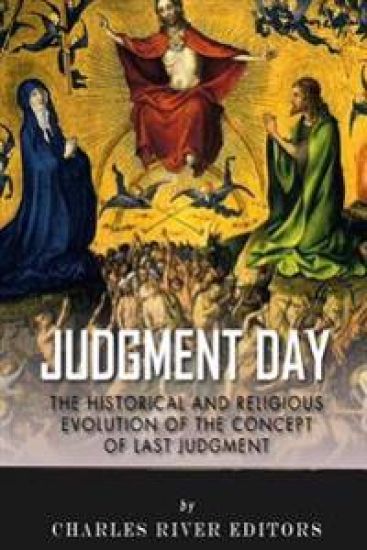
Judgment Day: The Historical and Religious Evolution of the Concept of Last Judgment

Judgment Day: The Historical and Religious Evolution of the Concept of Last Judgment

Charles River

Createspace Independent Publishing Platform
2014
nidottu
*Includes pictures of historic art depicting Judgment Day. *Explains how different cultures and religions conceived of Judgment Day, and how it affected Christian interpretations of it. *Includes a bibliography for further reading. "Then I saw a great white throne and him who was seated on it. From his presence earth and sky fled away, and no place was found for them. And I saw the dead, great and small, standing before the throne, and books were opened. Then another book was opened, which is the book of life. And the dead were judged by what was written in the books, according to what they had done. And the sea gave up the dead who were in it, Death and Hades gave up the dead who were in them, and they were judged, each one of them, according to what they had done. Then Death and Hades were thrown into the lake of fire. This is the second death, the lake of fire. And if anyone's name was not found written in the book of life, he was thrown into the lake of fire." - Revelation 20:11-15 The concept of a future day when the whole of humanity will stand before God in order to be judged for their actions upon Earth is pervasive in Western literature, mostly owing to its roots in the Judeo-Christian worldview, but such a religious concept is not limited to the Judeo-Christian religious tradition. In fact, it seems to be much more deeply seated in the human psyche because it appears in many disparate religious traditions. That said, the reasons for the pervasive nature of such a concept are not difficult to unravel. Human cultures across the world have a sense of fair play, and while they might have slightly different takes on what constitutes fair play, there is certainly a universal underlying conception of it. In addition to this, there is a distinct impression of a cosmic imbalance in terms of right and wrong; the sense of injustice inherent in human life is one of the most basic observations that poets and philosophers have made throughout human history, and such themes are interwoven throughout world literature, both ancient and modern. Obviously, there are occasions where good people who adhere to the rules of fair play seem to be unjustly punished, while bad people, who flagrantly disregard the same rules, often seem to be rewarded by such bad behavior. Naturally, this cries out for some resolution, and one common solution among the faiths is the idea that injustice in the present world will be righted in the world to come. The idea of Judgment Day restores balance to what might otherwise be conceived of as a cosmic imbalance, so while moral choices in this life might not have their full consequences realized, a just God has the opportunity to mete out appropriate rewards and punishments for moral behavior in the life to come. Religious believers see this concept as divine revelation regarding the events that will take place at the end of time, but non-believers view it primarily as a psychological coping strategy to deal with an innate sense of justice. Karl Marx articulated this view in his Communist Manifesto, asserting that religion in general (he did not distinguish between individual religions) seeks to comfort those suffering in the present life by means of persuading them of a joy to be found in the afterlife. Judgment Day: The Historical and Religious Evolution of the Concept of Last Judgment comprehensively looks at the origins of the concept, and how people's beliefs have evolved over time across different religions. Along with pictures, you will learn about the idea of Judgment Day like never before, in no time at all.
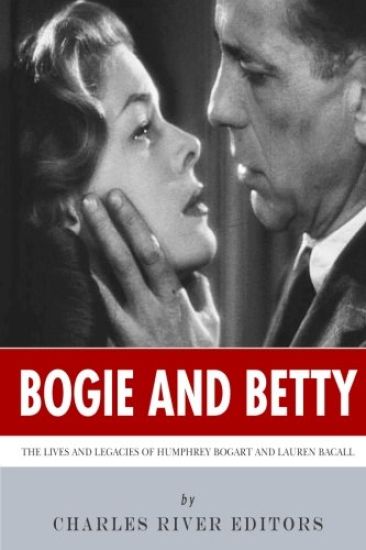
Bogie and Betty: The Lives and Legacies of Humphrey Bogart and Lauren Bacall

Bogie and Betty: The Lives and Legacies of Humphrey Bogart and Lauren Bacall

Charles River

Createspace Independent Publishing Platform
2014
nidottu
*Includes pictures. *Includes Bogart and Bacall's quotes about their lives and careers. *Includes a Bibliography for further reading. "All you owe the public is a good performance." - Humphrey Bogart "Imagination is the highest kite that can fly." - Lauren Bacall Americans have always loved movie stars, and there have been no shortage of Hollywood icons, but one man has long been considered the greatest male star. From the time he first became a leading man, Humphrey Bogart's screen image has resonated with viewers more than perhaps any other actor. At the end of the 20th century, when the American Film Institute assembled its list of the 50 Greatest American Screen Legends, Bogart was at the top of the list. His persona as a tough guy who manages to maintain his sense of virtue no matter how compromising the situation features in some of the most famous films ever made, including Casablanca (1942), The Maltese Falcon (1941), and Key Largo (1949). Bogart's screen persona was not only desirable (everyone wanted to be like Bogart) but also highly approachable, in the sense that he played the everyman figure far more than Cary Grant or Laurence Olivier, for example. Bogart also had good timing, with some of his popularity due to the fact that he rose to fame in an era when the film industry was at its most potent. Bogart's prime coincided with the Golden Age of cinema; sound had been successfully integrated and the studio system ruled over the industry. Bogart was the biggest star at a time in which the medium itself held immense mass appeal, and he has been famous ever since. It is exceedingly difficult to think about Lauren Bacall without also thinking of her famous husband, Humphrey Bogart. After all, it is no accident that Bacall was entirely unknown before starring at just 20 years old with her future husband in Howard Hawks' famous film To Have and Have Not in 1944. And of course, Bogart's infatuation with the young actress helped ensure she would continue to be cast in movies with him moving forward. "Bogie and Bacall" are just one of a number of legendary romantic screen duos in film history, and there have been other famous screen couples who made headlines off the set as well, but few compare in terms of success. In the wake of their first film together, Bacall and Bogart captivated audiences in other films during the decade, including The Big Sleep (1946), Dark Victory (1947), and finally, Key Largo (1948). Even though they did not appear in a large number of films together, the popularity and cultural significance of these films solidified the status of "Bogie and Bacall" as one of the premier romantic couples in film history. When Bogart died in 1957, Bacall was still in her 30s, yet from 1957 onward her name scarcely surfaces in popular culture, as though Bacall was simply wiped away with her late husband. In fact, it often comes as a great surprise to people that Bacall is still alive and well as she nears her 90th birthday. For her part, Bacall has remained at least partially in the public eye through her own meticulous documentation of her life, captured through two detailed memoirs (the first published in the late 1970s, the second published in 2005.) It is true that Bacall never reached anything close to the heights of the fame she enjoyed with Bogart, but she appeared in many movies in the years after his death and was even involved in a second high-profile marriage with actor Jason Robards from 1961-1969. She has remained active well into old age and never officially retired; in fact, she held a starring role in the 2012 film The Forger. Bogie and Betty profiles the lives, careers, and legacies of one of Hollywood's most famous couples. Along with pictures of important people, places, and events, you will learn about Bogart and Bacall like never before.
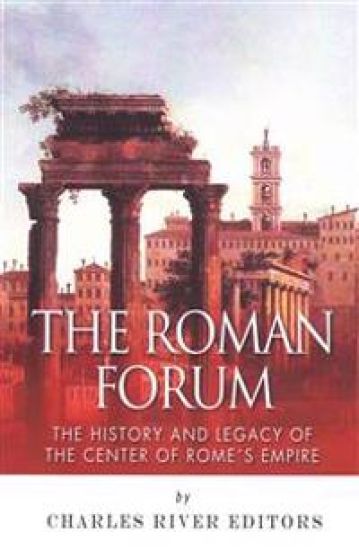
The Roman Forum: The History and Legacy of the Center of Rome's Empire

The Roman Forum: The History and Legacy of the Center of Rome's Empire

Charles River

Createspace Independent Publishing Platform
2014
nidottu
*Includes pictures. *Includes ancient descriptions of the Forum. *Includes footnotes for further reading. "A circular trench was dug around what is now the Comitium, and in this were deposited first-fruits of all things the use of which was sanctioned by custom as good and by nature as necessary; and finally, every man brought a small portion of the soil of his native land, and these were cast in among the first-fruits and mingled with them. They call this trench, as they do the heavens, by the name of 'mundus' 'the world']. Then, taking this as a center, they marked out the city in a circle round it." - Plutarch The Roman Empire is the most famous in history, and the center of the far-reaching empire's activities were located in the Forum, a low area between the Capitoline and Palatine hills in Rome. The topography held a great deal of significance for Romans, and consequently so many layers of myth were laid on top of the landscape and buildings that it is difficult to separate legend from actual historical fact. As a low-lying area near the Tiber river, the Forum was subject to much flooding, and even into the 20th century, the Forum area could flood upwards of over 40 feet above sea level. This would factor significantly in the imagination of Romans, who later ascribed the flooding with saving the city's founders, Romulus and Remus, from execution. However, in the 8th and 7th centuries B. C., this did not make for a good area for construction. Previous generations of excavators have concluded that in the beginning, there were waddle and daub huts in the Forum, as indicated by remains of organic food material, fragments of daub, and evidence of post holes dug in the ground for these structures. However, a recent environmental study has shown that such structures could not survive the flooding that was endemic to the Forum, suggesting that it took a few hundred years (during the period of the Roman kings) for the Romans to move up to 20,000 square meters of earth in order to reclaim land in the Forum, and a gravel pavement was placed on top of the landfill. If true, this project shows a high degree of organization and central planning. What is clear is that for well over a thousand years, the Forum was the scene of intense construction, as well as social, political, and commercial activity, making the Forum a boon for the study of Roman history, even though some buildings in the Forum are of such importance that they cannot be disassembled in order to discover the older layers underneath and thus find more evidence about the origins of this area. Ultimately, the Forum transformed from being a backwater used for grazing livestock into the religious and political center of Roman life, and it has long been an inspiration for subsequent generations, influencing the Renaissance, Romanticism, and even Fascism. Of course, it was just as important to generations of Romans, who witnessed everything from political meetings to military triumphal processions, funeral orations, and festival celebrations by the most famous Roman leaders, like Caesar and Augustus. The Roman Forum: The History and Legacy of the Center of Rome's Empire comprehensively covers the history and evolution of Rome's heart. Along with a bibliography and pictures, you will learn about the Forum like you never have before, in no time at all.