Kirjojen hintavertailu – 12 903 725 kirjaa ja 27 kauppaa

Kirjailija

Charles River

Kirjat ja teokset yhdessä paikassa: 4 673 kirjaa, julkaisuja vuosilta 2013–2022, suosituimpiin kuuluu William Powell and Myrna Loy: The Lives and Careers of One of Classical Hollywood's Most Iconic Duos. Vertaile teosten hintoja ja tarkista saatavuus suomalaisista kirjakaupoista.

4 673 kirjaa

Kirjojen julkaisuvuodet: 2013–2022.

Scarface vs. Eliot Ness and the Untouchables: The Lives and Legacies of Al Capone and Eliot Ness
*Includes detailed descriptions of the St. Valentine's Day Massacre and Capone's other infamous gangland hits. *Explains the investigations by Ness and others that brought Capone down. *Includes pictures of Capone, Ness, and other important people, places, and events in their lives. *Includes a Bibliography for further reading. "Unquestionably, it was going to be highly dangerous. Yet I felt it was quite natural to jump at the task. After all, if you don't like action and excitement, you don't go into police work. And, what the hell, I figured, nobody lives forever " - Eliot Ness On February 14, 1929, members of Bugs Moran's North Side gang arrived at a warehouse on North Clark Street in Chicago, only to be approached by several police officers. The officers then marched them outside up against a wall, pulled out submachine guns and shotguns, and gunned them all down on the spot. A famous legend is that one of the shot men, Frank Gusenberg, dying from 14 gunshot wounds, told police that nobody shot him. Though Gusenberg's statement is probably apocryphal, nobody opened their mouths. Nobody was ever convicted for the "Saint Valentine's Day Massacre," the most famous gangland hit in American history, but it's an open secret that it was the work of America's most famous gangster, Al Capone. Indeed, "Scarface" has captured the nation's popular imagination since Prohibition, managing to be the most notorious gangster in America while living a very visible and high profile life in Chicago. Born a Brooklyn tough, Capone engaged in a life of crime even as a teenager and had come to Chicago as a young man to smuggle liquor during Prohibition. Allying himself with Johnny Torrio, Capone began to accumulate power almost as quickly as he accumulated a reputation for being merciless, and after an attempted hit severely injured Torrio, the gang's operations were turned over to Capone. Despite his organized crime spree during the '20s, Capone was a popular figure in Chicago, viewed by many as a Robin Hood because he took pains to make charitable donations to the city. At the same time, he bribed government officials and cops, ensuring they looked the other way despite his violent ways of doing business. Throughout the decade, Capone was often out in public, despite several attempts on his life, and the gang war between Al Capone and Bugs Moran was well known and even celebrated to an extent. The man most famously associated with Capone's downfall, of course, is Eliot Ness, thanks in large measure to his own sensationalized version of the events that became the basis for the book Eliot Ness and the Untouchables." That work in turn spawned the memorable television series "The Untouchables", in which Robert Stack plays an intrepid Eliot Ness who has both seemingly omniscient detective skills and the ability to fight tommy-gun wielding gangsters in street battles. That portrayal of Ness was a mythological creation made for TV, but it has also cemented his legacy as the man who brought Al Capone down. "The Untouchables" has mostly obscured what the real man and his real work was like during that critical period, but it has also overshadowed the rest of Ness's life and career, which saw him mostly try and fail to parlay his success against Capone into success elsewhere. By the time Ness died, he was mostly down and out, and he had no clue that the book he was working on with writer Oscar Fraley would make him one of the most famous law enforcement officials in American history. Some have even dubbed him the patron saint of today's ATF. Scarface vs. Eliot Ness and the Untouchables chronicles Al Capone's rise through the mob, the efforts to stop him, and the way both men on opposite sides of the law have been remembered in American folklore. Along with pictures of important people, places, and events, you will learn about Capone and Ness like you never have before.
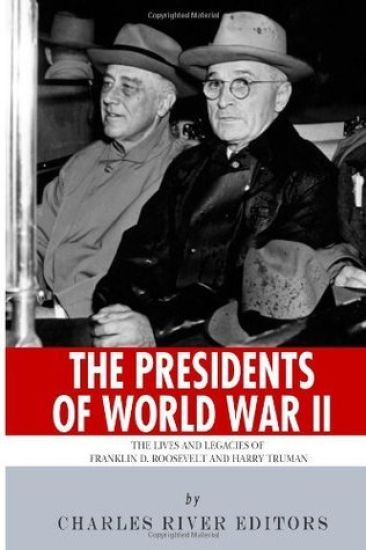
The Presidents of World War II: The Lives and Legacies of Franklin D. Roosevelt and Harry Truman
*Includes pictures of Truman, FDR, and important people, places, and events in their lives. *Includes Truman's most colorful quotes about politics, the Republican Party, and Richard Nixon. Franklin Delano Roosevelt might be America's greatest 20th century president, but there's no question that he was the most unique. A well-connected relative of Theodore Roosevelt, FDR was groomed for greatness until he was struck down by polio. Nevertheless, he persevered, rising through New York politics to reach the White House just as the country faced its greatest challenge since the Civil War, beginning his presidency with one of the most iconic lines ever spoken during an inaugural address. For over a decade, President Roosevelt threw everything he had at the Great Depression, and then threw everything the country had at the Axis powers during World War II. Ultimately, he succumbed to illness in the middle of his fourth term, just before the Allies won the war. When President Franklin Roosevelt died in April 1945, Vice President Truman, somewhat unprepared for the Presidency, now had to fill some of the biggest shoes in American history. Incredibly, Truman had not been informed of the country's secret attempt to build atomic bombs, confiding in his diary after learning about it, "We have discovered the most terrible bomb in the history of the world. It may be the fire destruction prophesied in the Euphrates Valley Era, after Noah and his fabulous Ark." The new president had to usher America through victory in Europe in his first month and decide to drop atomic bombs on Hiroshima and Nagasaki a few months later, but the end of World War II produced only the first of many consequential decisions Truman would face during his nearly 8 years in office. As president, Truman would lay the groundwork for the next 50 years of American foreign policy, as the architect of Cold War containment, the man who signed off on the Marshall Plan, and the commander-in-chief during much of the Korean War. He would also be the president who finally integrated the military, a crucial step on the way to full civil rights for the country's minorities. The Presidents of World War II chronicles the lives and presidencies of the two men who successfully led America through the war, but it also humanizes the aristocratic Roosevelt and the no-nonsense Midwesterner Truman. Along with pictures of important people, places, and events, you will learn about FDR and Truman like you never have before.
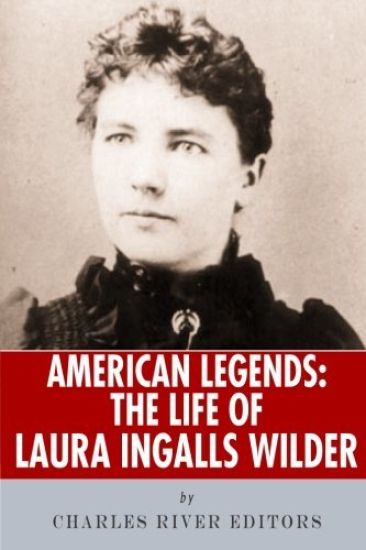
American Legends: The Life of Laura Ingalls Wilder

American Legends: The Life of Laura Ingalls Wilder

Charles River

Createspace Independent Publishing Platform
2013
nidottu
*Discusses the historical debate over whether Laura or her daughter Rose wrote the Little House books. *Includes pictures of Laura and important people and places in her life. *Includes Laura's quotes and excerpts from her books and journal articles. *Includes a Bibliography for further reading. "Every job is good if you do your best and work hard. A man who works hard stinks only to the ones that have nothing to do but smell." - Laura Ingalls Wilder A lot of ink has been spilled covering the lives of history's most influential figures, but how much of the forest is lost for the trees? In Charles River Editors' American Legends series, readers can get caught up to speed on the lives of America's most important men and women in the time it takes to finish a commute, while learning interesting facts long forgotten or never known. "A long time ago, when all the grandfathers and grandmothers of today were little boys and little girls or very small babies, or perhaps not even born, Pa and Ma and Mary and Laura and Baby Carrie left their little house in the Big Woods of Wisconsin." So begins the first of a series of primarily autobiographical books for children that would give 20th century America a look at what it was like when the country was still young and the West was a largely empty, untamed wilderness. They were written by a woman who had experienced a hardscrabble frontier life, Laura Ingalls Wilder, and they were first published in the 1930s, when the United States desperately needed a reminder that "tough times don't last but tough people do." In addition to giving Americans a nostalgic glimpse of the past, the books were a reminder of the nation's unique spirit and belief that hard work can overcome any obstacle. The semi-autobiographical Little House books were so popular in their time that Laura eventually became a well-known author around the world, even as an ensuing debate grew among scholars and historians over what role Laura's daughter Rose Wilder Lane played in the drafting of the books. Regardless of that controversy, the books were so beloved by children and their parents that they spawned spin-off television series both in the United States and Japan, as well as film adaptations. American Legends: The Life of Laura Ingalls Wilder chronicles the amazing life of the celebrated author and examines her books and legacy. Along with pictures of important people and places, you will learn about Laura Ingalls Wilder like you never have before, in no time at all.
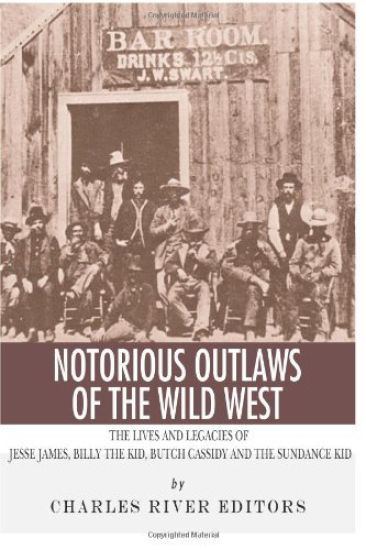
Notorious Outlaws of the Wild West: The Lives and Legacies of Jesse James, Billy the Kid, Butch Cassidy and the Sundance Kid
*Includes pictures of the outlaws and important people, places, and events in their lives. *Discusses the myths and legends surrounding the lives and deaths of each outlaw. *Includes a Bibliography for further reading. "There is a hell of excitement in this part of the country." - Jesse James "I'm not afraid to die like a man fighting, but I would not like to be killed like a dog unarmed.'' - Billy the Kid The Wild West has made legends out of many men after their deaths, but like Wild Bill Hickok, Jesse James was a celebrity during his life. However, while Hickok was (mostly) a lawman, Jesse James was and remains the most famous outlaw of the Wild West, with both his life of crime and his death remaining pop culture fixtures. Eventually James, his brother and their infamous gang became the most hunted outlaws in the country, but Jesse would famously be done in by the brother of his most trusted gang members. After Jesse moved in with the Ford brothers, Bob Ford began secretly negotiating turning in the famous outlaw to Missouri Governor Thomas Crittenden. On April 3, 1882, as the gang prepared for another robber, Jesse was famously shot in the back of the head by Bob Ford as he stood on a chair fixing a painting. While conspiracy theories have continued to linger that somehow James was not killed on that day, the Ford brothers would celebrate their participation in his murder, Bob himself would be murdered a few years later, and Jesse James's legacy had been ensured. Alongside Jesse James, Butch Cassidy and the Sundance Kid were two of the most notorious outlaws of the west. The duo had a full-fledged gang known as the Wild Bunch conducting robberies in the Southwest, and they became legendary for their shootouts and their escapes from the law. Eventually, Butch Cassidy and his most famous acquaintance fled as far east as New York City and as far south as Argentina. In fact, it was in South America that Butch Cassidy and the Sundance Kid are believed to have met their ultimate fate, in yet another shootout with Bolivian soldiers. The mystery and controversy surrounding that shootout (and whether the two bandits were actually them) have helped ensure their place in Western lore, and as with so many other legends of the West, people continue to speculate that Butch Cassidy and the Sundance Kid survived and lived out the rest of their lives. In many ways, the narrative of the Wild West has endured more as legend than reality, and a perfect example of that can be found in the legend of William Henry McCarty Jr., better known as William H. Bonney or "Billy the Kid". Indeed, separating fact from fiction when it comes to the life of the West's most famous outlaw is nearly impossible, due in great measure to the fact that the young man himself cultivated the image of a deadly outlaw and legendary gunman himself. Though Billy the Kid may have killed anywhere from 4-9 men in his short life, he was often credited for killing more than 20. With a wit as quick as his trigger, Billy the Kid had a bullet and a wisecrack for every man he killed, and his notoriety only grew when exaggerated accounts of his actions in Lincoln County eventually earned The Kid a bounty on his head. There was plenty of gunplay in the outlaw's life to help him become a well known if not celebrated figure in the West, but the legendary and controversial nature of his death has also helped him endure. Notorious Outlaws of the Wild West chronicles the lives and careers of the West's most famous outlaws, discusses the myths and legends surrounding their crimes and deaths, and analyzes their enduring legacies. Along with pictures of important people, places, and events, you will learn about Jesse James, Billy the Kid and Butch Cassidy like you never have before.
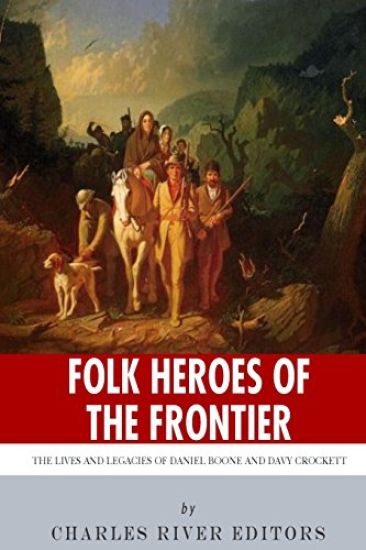
Folk Heroes of the Frontier: The Lives and Legacies of Daniel Boone and Davy Crockett

Folk Heroes of the Frontier: The Lives and Legacies of Daniel Boone and Davy Crockett

Charles River

Createspace Independent Publishing Platform
2013
nidottu
*Discusses some of the legends and controversies surrounding Boone's life and Crockett's life, including Crockett's death at the Alamo. *Includes the story about Crockett's famous Not Yours To Give speech, and the debate over whether he actually gave it. *Includes pictures of Boone, Crockett and other important people and places in their lives. *Includes a Bibliography for further reading. "Many heroic actions and chivalrous adventures are related of me which exist only in the regions of fancy. With me the world has taken great liberties, and yet I have been but a common man." - Daniel Boone "I know not whether, in the eyes of the world, a brilliant death is not preferred to an obscure life of rectitude. Most men are remembered as they died, and not as they lived. We gaze with admiration upon the glories of the setting sun, yet scarcely bestow a passing glance upon its noonday splendor." - Davy Crockett The Wild West and the frontier have long held a special place in the narrative of American history, and all of the legends and folk heroes who lived in the 19th century owe their reputation to the original American frontier folk hero, Daniel Boone. Boone was literally a trailblazer: the legendary pioneer established his Wilderness Road by striking west into present-day Kentucky and establishing Boonesborough, one of the earliest white settlements west of the Appalachians. Hundreds of thousands of settlers would follow his path by the end of the 18th century. While that was an important and proud legacy for the former Revolutionary War militiaman and Virginia State Assemblyman, Boone became known for the outsized tales and adventures associated with his foray into the frontier. Far and wide, people spoke of Boone's expert marksmanship, his encounters with wild bears, and his hardscrabble frontier life, making him a living legend and the prototypical Western frontier folk hero in America. All of it bewildered and bemused the actual man himself, whose own words about his affinity for the backwoods made him sound more like Henry David Thoreau than anything else. Boone once noted, "Situated, many hundred miles from our families in the howling wilderness, I believe few would have equally enjoyed the happiness we experienced. I often observed to my brother, You see now how little nature requires to be satisfied. Felicity, the companion of content, is rather found in our own breasts than in the enjoyment of external things..." Now known today as "The King of the Wild Frontier", Davy Crockett was also a living legend in his own life. Crockett was a hardscrabble frontiersman who could spin a good yarn but who also took a no-nonsense approach that brought him from the backwoods of Tennessee to the halls of Congress. Though he served during the presidency of another Westerner, Andrew Jackson, Crockett was very much his own man, and he was distrustful of other politicians, a sentiment that has only endeared him further to subsequent generations of Americans. Crockett was famous in his lifetime, but it was his death in Texas that made him an American legend. Though there is still some mystery and controversy surrounding exactly what transpired at the Battle of the Alamo, the deaths of Crockett, Travis, Bowie and the rest of the defenders at the hands of Santa Anna's Mexican soldiers became a symbol of sacrifice and defiance, and the battle itself became a rallying cry throughout the rest of Texas' War for Independence. Naturally, it also cemented Crockett's legacy as well. Folk Heroes of the Frontier chronicles the lives of the two frontier heroes, and the legends and tall tales that have helped shape their legacies. Along with pictures of important people, places, and events, you will learn about Daniel Boone and Davy Crockett like you never have before.
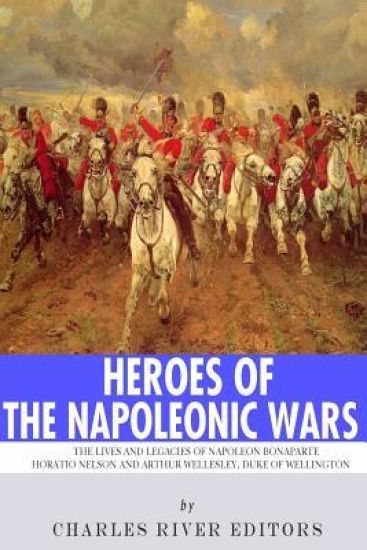
Heroes of the Napoleonic Wars: The Lives and Legacies of Napoleon Bonaparte, Horatio Nelson and Arthur Wellesley, the Duke of Wellington
*Includes pictures of Napoleon, Nelson, Wellington and important people, places, and events in their lives. *Includes maps of famous battles, including Trafalgar and Waterloo. *Answers common myths about Napoleon, including whether he was short, whether his men shot off the Sphinx's nose, whether he played chess, and whether he was poisoned. *Includes a Bibliography on each man for further reading. "Courage cannot be counterfeited. It is the one virtue that escapes hypocrisy." - Napoleon "England expects that every man will do his duty" - Horatio Nelson before the Battle of Trafalgar "Believe me, nothing except a battle lost can be half so melancholy as a battle won." - Duke of Wellington at Waterloo Trafalgar is one of Great Britain's most cherished victories, and Waterloo is the most famous battle in modern history if not all of history. On several occasions, Horatio Nelson foiled Napoleon's plans to lay the groundwork for an invasion of Britain, and he permanently established the Royal Navy's supremacy at Trafalgar. It would be the Duke of Wellington who would deliver the coup de grace to Napoleon 10 years later at Waterloo. The battle would end with the French suffering nearly 60% casualties, the end of Napoleon's reign, and the restructuring of the European map. Simply put, the next 200 years of European history can be traced back to the result of those two battles. When historians are asked to list the most influential people of the last 200 years, a handful of names might vary, but there is no question that the list will include Napoleon Bonaparte (1769-1821), the most successful French leader since Charlemagne and widely acknowledged one of the greatest generals ever. Indeed, Napoleon was likely the most influential man of the 19th century, leaving an indelible mark on everything from the strategy and tactics of warfare to the Napoleonic Code that drafted laws across the continent. To defeat Napoleon, the Europeans had to form large coalitions multiple times, which helped bring about the entangling alliances that sparked World War I after Europe was rebuilt following Waterloo and the Congress of Vienna. Nelson is well known across the world for his decisive victory at Trafalgar, made all the more legendary by the fact that he was mortally wounded at the height of his greatest feat. And it is understandable that any man who could thwart Napoleon's ambitions as well as Nelson did would earn a place in the history books. But Nelson embodied every virtue of his homeland; a dashing, courageous military officer who was impeccably cultured, and, of course, the best at what he did. By the time of his death, Wellington had been prime minister twice, a shrewd personal advisor to four British monarchs and one of the nation's most prominent politicians for three decades. But despite his nearly four decades of peacetime service in and out of politics, Wellington has remained one of the titans of the 19th century because of one June day in 1815. Then, as now, the Duke of Wellington is best remembered for defeating Napoleon in the most famous battle of modern history at Waterloo. Even then, the fact Wellington is remembered for Waterloo belies his extraordinary military career, which saw him come up through fighting in the Netherlands and India before opposing Napoleon's forces on the Iberian Peninsula for several years. By the time Wellington took command of allied forces during the Hundred Days Campaign and decisively finished the Napoleonic Era at Waterloo, he had participated in about 60 battles and was one of Britain's greatest war heroes. Heroes of the Napoleonic Wars looks at the lives and legacies of the era's three most famous military leaders, but it also humanizes the men off the battlefield. Along with pictures of important people, places, and events, you will learn about Napoleon, Nelson and Wellington like you never have before.
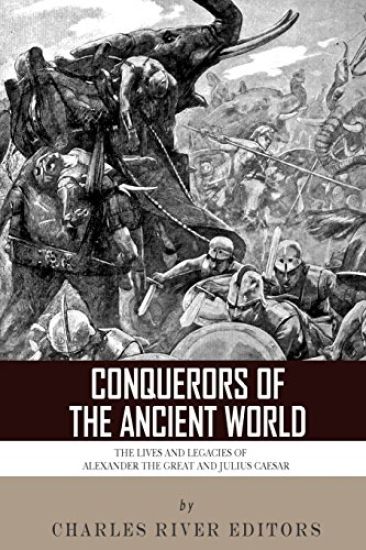
Conquerors of the Ancient World: The Lives and Legacies of Alexander the Great and Julius Caesar
*Includes pictures depicting important people, places, and events in the lives of Alexander and Caesar. *Discusses little known facts about both men and whether some of the legends and myths about them were true. *Includes a bibliography on Alexander the Great for further reading. Over the last 2,000 years, ambitious men have dreamed of forging vast empires and attaining eternal glory in battle, but of all the conquerors who took steps toward such dreams, none were ever as successful as antiquity's two most famous and successful conquerors. For thousands of years, leaders across the globe dreamed of emulating or rivaling the accomplishments of Julius Caesar, but Caesar himself found inspiration in Alexander the Great (356-323 B. C.), the Macedonian King who managed to stretch an empire from Greece to the Himalayas in Asia at just 30 years old. It took less than 15 years for Alexander to conquer much of the known world. Both men died untimely deaths. Alexander died of still unknown causes at the height of his conquests, when he was still in his early 30s. Although his empire was quickly divided, his legacy only grew, and Alexander became the stuff of legends even in his own time. Alexander was responsible for establishing 20 cities in his name across the world, most notably Alexandria in Egypt, and he was directly responsible for spreading Ancient Greek culture as far east as modern day India and other parts of Asia. For the ancient world, Alexander became the emblem of military greatness and accomplishment; it was reported that many of Rome's greatest leaders, including Pompey the Great, Augustus, and Caesar himself all visited Alexander's tomb in Alexandria, a mecca of sorts for antiquity's other leaders. Possibly the most important man of antiquity, and even all of history, was Julius Caesar. Alexander Hamilton, the famous American patriot, once remarked that "the greatest man who ever lived was Julius Caesar". Such a tribute, coming from one of the Founding Fathers of the quintessential modern democracy in reference to a man who destroyed the Roman Republic, is testament to the enduring mark that Caesar left upon the world. The ultimate conqueror, statesman, dictator, visionary, and opportunist, during his time in power Caesar expanded the borders of Rome to almost twice their previous size, revolutionized the infrastructure of the Roman state, and destroyed the Roman Republic for good, leaving a line of emperors in its place. His legacy is so strong that his name has become, in many languages, synonymous with power: the Emperors of Austria and Germany bore the title Kaiser, and the Czars of Russia also owe the etymology of their title to Caesar. His name also crept further eastward out of Europe, even cropping up in Hindi and Urdu, where the term for "Emperor" is Kaisar. Conquerors of the Ancient World provides an entertaining look at the facts, myths, and legends surrounding two of history's most famous men and conquerors, while exploring the lasting legacies they left on the ancient world and today's world. Along with pictures of important people, places, and events, you will learn about Alexander the Great and Julius Caesar like you never have before, in no time at all.
The History of Iran from Ancient Persia to the Ayatollahs

The History of Iran from Ancient Persia to the Ayatollahs

Charles River; M. Clement Hall

Createspace Independent Publishing Platform
2013
nidottu
*Covers the prehistoric era to the controversy over Iran's nuclear program. *Includes maps and pictures of important people. In 2011, violence erupted across the Middle East in the form of revolts against authoritarian regimes. Across the region, from Egypt to Syria, thousands fought and died to push out despots, some successfully and others unsuccessfully. Yet despite this historic violence, much of the world's foreign policy focus has been on Iran's nuclear program, and the potential for war between Iran, Israel, and the West. Although Iran had peaceful nuclear programs with Western cooperation before the Islamic revolution, it's widely believed that the regime, headed by Ayatollah Khomeini and now Ayatollah Khameini, began to work in earnest toward a nuclear program that could result in bombs around the late '90s. Still, it was (and remains) unclear the extent to which Iran's nuclear program has progressed, with the potential date of Iran obtaining nuclear weapons constantly changing. As Graham Allison, a Harvard professor and leading security strategist, put it in November 2011, the Iranian nuclear program is a "Cuban missile crisis in slow motion." People may know what's going on in Iran today, but the obsession over its nuclear program often overlooks the unique intricacies of the nation and its people, particularly the long, illustrious history of the Persian Empire. Iranians have long been proud of their history and culture, to the extent that foreign negotiators who do not entirely understand the history and culture have referred to a "Persian psyche". How did Iran get to where it is today, at the forefront of global affairs? The history of Iran and the theme of Persian conflict with the West stretches back thousands of years, and it is a unique history of empire, culture, art, pride, and religious nationalism. The History of Iran from Ancient Persia to the Ayatollahs comprehensively and descriptively covers this history, progressing through a timeline dating back to antiquity and examining all of the different religious, political, foreign, and military issues that affect Iran and are affected by Iran today. Along with maps showing how the modern state of Iran came to be formed, The History of Iran from Ancient Persia to the Ayatollahs will bring readers up to speed on one of the world's crucial countries today.
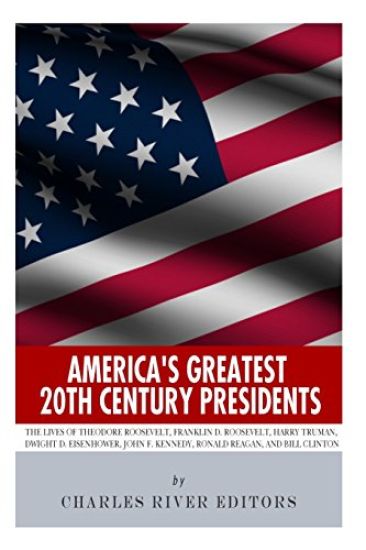
America's Greatest 20th Century Presidents: The Lives of Theodore Roosevelt, Franklin D. Roosevelt, Harry Truman, Dwight D. Eisenhower, John F. Kenned
*Includes dozens of pictures of the presidents and important people, places, and events in their lives. *Includes an original introduction for each president. *Includes bibliographies for further reading. If the 19th century was about America overcoming its own divisions to takes its place at the forefront of global affairs, the 20th century was about fulfilling those visions and goals. To get there, the nation needed the leadership of presidents of different stripes and ideologies to guide the United States toward its destiny. When McKinley was assassinated in 1901, young Theodore Roosevelt was thrust into the presidency, one that would earn him a place on Mount Rushmore, Roosevelt's "Square Deal" domestic policies favored average citizens while busting trusts and monopolies. Roosevelt also promoted conservation as an environmental stance, while his "speak softly and carry a big stick" foreign policy is still an oft used phrase today. Roosevelt even earned a Nobel Prize during his presidency. By the time Roosevelt died in 1919, he was an American icon. Franklin Delano Roosevelt might be America's greatest 20th century president, but there's no question that he was the most unique. A well-connected relative of Theodore Roosevelt, FDR was groomed for greatness until he was struck down by polio. Nevertheless, he persevered, rising through New York politics to reach the White House just as the country faced its greatest challenge since the Civil War. When President Franklin Roosevelt died in April 1945, Vice President Truman had to usher America through victory in Europe in his first month and decide to drop atomic bombs on Hiroshima and Nagasaki a few months later, but the end of World War II produced only the first of many consequential decisions Truman would face during his nearly 8 years in office. As president, Truman would lay the groundwork for the next 50 years of American foreign policy, as the architect of Cold War containment, the man who signed off on the Marshall Plan, and the commander-in-chief during much of the Korean War. During the middle of the 20th century, the United States completed its transformation into one of the world's superpowers, and few were as instrumental in this development as Dwight D. Eisenhower (1890-1969), renowned for being the nation's principal commanding general during World War II and the president who served during the early, tumultuous Cold War years. Despite being one of America's oldest presidents, Eisenhower redefined the public relations nature of the office, in addition to positioning America during the Cold War standoff with the Soviet Union. In many ways, John Fitzgerald Kennedy and his young family were the perfect embodiment of the '60s. In 1961, Kennedy made it seem like anything was possible, and Americans were eager to believe him. The Kennedy years were fondly and famously labeled "Camelot," by Jackie herself, suggesting an almost mythical quality about the young President and his family. In the famous movie Back to the Future, Marty McFly travels back to 1955, and, in an attempt to convince his friend Doc Brown that he is from 1985, tells the 1955 version of Doc Brown that Ronald Reagan is president. Doc looks at him incredulously and laughs, chortling, "Ronald Reagan? The actor?" In a story that could have come straight out of Hollywood, the golden actor rose through California politics to become California governor and eventually the 40th President. Widely hailed as the greatest politician of his era, Bill Clinton proved to be his own worst enemy, creating unnecessary scandals through his womanizing. Long considered the Democratic Party's greatest spokesman and surrogate, Clinton's presidency was defined by centrist "triangulation". And though he is still publicly popular and considered a great president, Clinton became just the second president to be impeached.
America's Greatest First Ladies of the 20th Century: The Lives and Legacies of Eleanor Roosevelt, Jackie Kennedy and Hillary Clinton
*Includes pictures of Eleanor, Jackie, Hillary and important people, places, and events in their lives. American presidents have shaped the course of global affairs for generations, but as the saying goes, behind every great man there's a great woman. While the First Ladies often remain overshadowed by their husbands, some have carved unique niches in their time and left their own lasting legacy. Dolley Madison helped establish the role of the First Lady in the early 1800s, Eleanor Roosevelt gave voice to policy issues in a way that made her a forerunner of First Ladies like Hillary Clinton, and Jackie Kennedy created glamorous trends that made her more popular than her husband. If Dolley Madison was instrumental in molding the role of First Lady in the 19th century, credit can be given to Eleanor Roosevelt for revolutionizing the political nature of the role in the 20th and 21st centuries and making it possible for presidents like Bill Clinton to enlist their wives to handle political duties. At the same time, history might remember Eleanor more for what she did outside of the White House, as she became a critically acclaimed and world famous international author and advocate of civil rights, women's rights. By the time she had finished working for the United Nations, working on the Universal Declaration of Human Rights, President Truman rightly called her "The First Lady of the World." In 1961, President John F. Kennedy made it seem like anything was possible, and Americans were eager to believe him. The next three years would be fondly and famously labeled "Camelot," suggesting an almost mythical quality about the young President and his family. The famous label came from John's fashionable and beautiful wife, Jackie, whose elegance and grace made her the most popular woman in the world. Her popularity threatened to eclipse even her husband's, who famously quipped on one presidential trip to France that he was "the man who accompanied Jacqueline Kennedy to Paris." Americans were fascinated by the young First Lady's style, and the manner in which she glamorously positioned both the First Family and the White House in those years, and Jackie remains one of the country's most popular First Ladies. But it was in the face of adversity that she truly made her lasting mark, with the country taking its cue from her in the aftermath of the president's assassination. Having devised and lit the eternal flame at JFK's tombstone, Jackie also set about securing her husband's legacy, a time still fondly and mythically remembered as Camelot today, despite his legendary transgressions and infidelities. During the presidential campaign in 1992, Democratic challenger Bill Clinton announced that by voting for him, Americans would get two presidents "for the price of one." The reference to his wife Hillary signified that she would be no ordinary First Lady, and indeed she was employed frequently by her husband in the White House to try to push legislation through Congress, most notably universal healthcare. While that proved to be one of the Clinton Administration's greatest failures, Hillary and her staff continued to act as a political surrogate for the president during his two terms. Of course, describing Hillary Clinton as just a First Lady belittles all of her accomplishments. Today she is the most powerful woman in the world and one of the most recognizable. America's Greatest First Ladies of the 20th Century explores the lives and legacies of the three women, analyzing their relationships with their husbands and the work they did as First Lady. Along with pictures of important people, places, and events, you will learn about Eleanor, Jackie and Hillary like you never have before.
The Cavaliers of the Confederacy: The Lives and Careers of JEB Stuart and Nathan Bedford Forrest
*Includes pictures of Forrest, Stuart, and important people, places, and events in their lives. *Includes Bibliographies on each man for further reading. Despite the fact that the Civil War was fought nearly 150 years ago, it remains a polarizing topic for the country to this day. While the Lost Cause celebrates the chivalry and virtue of men like Robert E. Lee, other Southerners celebrate the swagger, courage, and toughness of others. No two men represent the dichotomy more than the Confederacy's two greatest cavalry leaders, JEB Stuart and Nathan Bedford Forrest. Indeed, just about the only thing the two men had in common was successful but controversial Civil War careers, Stuart in the East and Forrest in the West. Alongside Lee, no one epitomized the chivalry and heroism celebrated by the Lost Cause more than JEB Stuart (1833-1864), the most famous cavalry officer of the Civil War. Stuart was equal parts great and grandiose, leading the cavalry for the Confederacy in Lee's Army of Northern Virginia until his death at the Battle of Yellow Tavern in May 1864. Stuart was a throwback to the past, colorfully dressing with capes, sashes, and an ostrich plumed hat, while sporting cologne and a heavy beard. But he was also brilliant in conducting reconnaissance, and he proved capable of leading both cavalry and infantry at battles like Chancellorsville. As the eyes and ears of Robert E. Lee's army, none were better, despite the fact that he was only in his late 20s and early 30s during the Civil War, far younger than most men of senior rank. However, Stuart's role at Gettysburg was far more controversial. Given great discretion in his cavalry operations before the battle, Stuart's cavalry was too far removed from the Army of Northern Virginia to warn Lee of the Army of the Potomac's movements. Lee's army inadvertently stumbled into the Union army at Gettysburg, walking blindly into what became the largest battle of the war. Stuart has been heavily criticized ever since. When the war broke out, Nathan Bedford Forrest enlisted in the army and was instructed to raise a battalion of cavalry. A self-made man with no formal military training, Forrest spent the entire war fighting in the Western theater, becoming the only individual in the war to rise from the rank of Private to Lieutenant General. By the end of the war, Forrest was known throughout the South as the "Wizard of the Saddle," and anecdotes of his prowess in battle were legendary. In addition to being injured multiple times in battle, Forrest has been credited with having killed 30 Union soldiers in combat and having 29 horses shot out from under him. But Forrest was also at the head of Confederate troops accused of massacring a Union garrison comprised mostly of black soldiers at Fort Pillow, and he was also a prominent slave trader, an overt racist, and likely a leader of the Ku Klux Klan after the Civil War. When he died in 1877, in part due to various war wounds, he was the nation's most notorious unreconstructed rebel. John E. Stanchack, an editor of the Civil War Times Illustrated, aptly noted in 1993, "Everything...about Forrest] is bent to fit some political or intellectual agenda." Ashdown and Caudill, authors of The Myth of Nathan Bedford Forrest, write that the story of Forrest "embraces violence, race, realism, sectionalism, politics, reconciliation, and repentance." The Cavaliers of the Confederacy addresses the controversies and battles that made these two leaders famous and infamous. Along with pictures of the two generals and other important people, places and events in their lives, you will learn about the Confederacy's greatest cavaliers like you never have before, in no time at all.
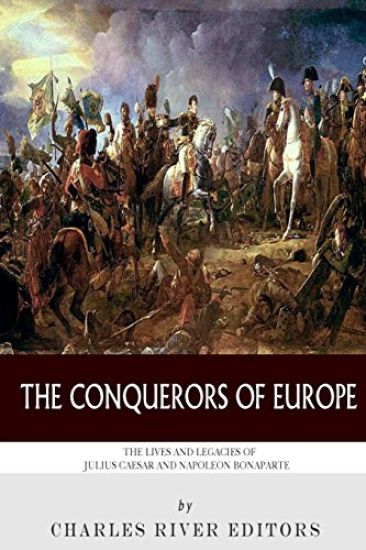
The Conquerors of Europe: The Lives and Legacies of Julius Caesar and Napoleon Bonaparte
*Includes pictures of the two men and important people, places, and events in their lives. *Discusses and answers common myths and misconceptions about Caesar and Napoleon. *Includes a bibliography on Napoleon's life for further study. Over the last 2,500 years, many would-be kings and conquerors have marched armies across Europe in the hopes of establishing a dominant empire on the continent. But though many have tried, almost all of them have failed. The two greatest exceptions to that rule were Julius Caesar and Napoleon Bonaparte, and their accomplishments ensured that they will forever be enshrined among the ranks of history's greatest generals. Possibly the most important man of antiquity, and even all of history, was Julius Caesar. Alexander Hamilton, the famous American patriot, once remarked that "the greatest man who ever lived was Julius Caesar". Such a tribute, coming from one of the Founding Fathers of the quintessential modern democracy in reference to a man who destroyed the Roman Republic, is testament to the enduring mark that Caesar left upon the world. The ultimate conqueror, statesman, dictator, visionary, and opportunist, during his time in power Caesar expanded the borders of Rome to almost twice their previous size, revolutionized the infrastructure of the Roman state, and destroyed the Roman Republic for good, leaving a line of emperors in its place. His legacy is so strong that his name has become, in many languages, synonymous with power: the Emperors of Austria and Germany bore the title Kaiser, and the Czars of Russia also owe the etymology of their title to Caesar. His name also crept further eastward out of Europe, even cropping up in Hindi and Urdu, where the term for "Emperor" is Kaisar. When historians are asked to list the most influential people of the last 200 years, a handful of names might vary, but there is no question that the list will include Napoleon Bonaparte (1769-1821), the most successful French leader since Charlemagne and widely acknowledged as one of the greatest generals ever. Indeed, in his quest to emulate Caesar, Napoleon was likely the most influential man of the 19th century, leaving an indelible mark on everything from the strategy and tactics of warfare to the Napoleonic Code that drafted laws across the continent. To defeat Napoleon, the Europeans had to form large coalitions multiple times, which helped bring about the entangling alliances that sparked World War I after Europe was rebuilt following Waterloo and the Congress of Vienna. Napoleon's influence on the United States was also palpable. To finance his endeavors, he struck a deal with President Thomas Jefferson that became the Louisiana Purchase, and it was Napoleonic warfare that was used throughout the Civil War, leading to massive casualties because the weaponry of the 1860s was now more advanced than the tactics of 1815. When Napoleon died at St. Helena, he still engendered fear and distaste among the Europeans, but the man and his legacy continued to be held in awe across the world. In Napoleon's time, emperors and leaders still hoped to become the next Julius Caesar. After the Napoleonic Era, emperors and generals hoped to become the next Napoleon. For the next century, military leaders and even civilians struck Napoleonic poses when having their pictures taken, and phrases like "Napoleonic complex" and "meeting one's Waterloo" are now common phrases in the English lexicon. It would be truly impossible to envision or understand geopolitics in the West over the last two centuries without Napoleon. Whether Napoleon eclipsed Caesar remains a subject of endless debate, but the two men will be forever linked. Along with pictures of the two men and important people, places and events in their lives, you will learn about Caesar and Napoleon like you never have before, in no time at all.
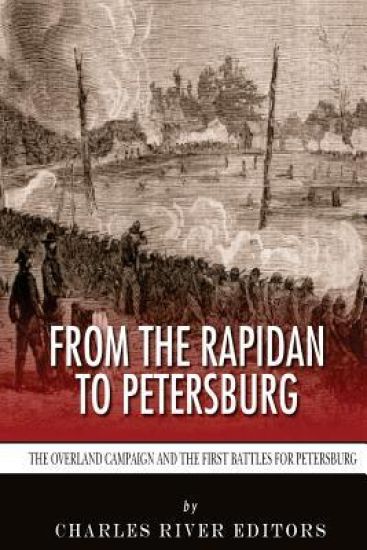
From the Rapidan to Petersburg: The Overland Campaign and the First Battles for Petersburg
*Covers Grant's advance from the Rapidan to besieging Petersburg, including the entire Overland Campaign and the battles before the siege of Petersburg in May-June 1864. *Includes pictures of the battles' important generals. *Includes several maps of the battles. *Includes accounts of the fighting written by generals and soldiers. *Includes a Bibliography of each battle for further reading. The Overland Campaign that pitted Robert E. Lee against Ulysses S. Grant is one of the most famous campaigns of the Civil War, and perhaps its greatest chess match. While Grant sought to destroy Lee's Army of Northern Virginia along the way to Richmond, Lee aimed to defend his capital while staying alert for a golden opportunity to strike a decisive blow against Grant's Army of the Potomac. The result was an incredibly costly campaign that saw 4 major battles and near continuous fighting in May and June 1864. At the Battle of the Wilderness (May 5-7, 1864), Ulysses S. Grant and Robert E. Lee had fought to a standstill in their first encounter, failing to dislodge each other despite incurring nearly 30,000 casualties between the Union Army of the Potomac and the Confederate Army of Northern Virginia. Despite the fierce fighting, Grant continued to push his battered but resilient army south, hoping to beat Lee's army to the crossroads at Spotsylvania Court House, but Lee's army beat Grant's to Spotsylvania and began digging in, setting the scene for on and off fighting from May 8-21 that ultimately inflicted more casualties than the Battle of the Wilderness. In fact, with over 32,000 casualties among the two sides, it was the deadliest battle of the Overland Campaign. After Spotsylvania, Grant and Lee both raced to the next natural defensive line, the North Anna River, where Lee sprang a trap for Grant by establishing an inverted V as a defensive line, with the salient touching the North Anna River. As fate would have it, Grant would fall into Lee's trap, only for Lee to be debilitated by illness at the crucial moments, allowing Grant to realize the potential mistake and avoid a major pitched battle. By the time the two armies reached Cold Harbor near the end of May 1864, Grant incorrectly thought that Lee's army was on the verge of collapse. On June 3, 1864, sensing he could break Lee's army, Grant ordered a full out assault. 7,000 Union soldiers were killed or wounded as 30,000 Confederate soldiers successfully held the line against 50,000 Union troops, losing just 1,500 men in the process. Refusing to attack Lee in frontal assaults, and aware that Lee dared not venture out to counterattack, Grant nearly captured Richmond in mid-June by stealing a march on Lee's army and crossing the James River. With that, Grant's forces had a golden opportunity to capture Petersburg, a critical railroad hub and supply line for Richmond, before Lee even realized where they were. All that stood in their way was an elaborate set of defensive fortifications manned by just a few thousand men under the command of P. G. T. Beauregard, who had been the Confederate hero of Fort Sumter an First Bull Run but had fallen out of favor well before June 1864. As it would turn out, the fog of war, poor luck, and a skillful impromptu defense by Beauregard and his men, which at times consisted of young boys, old men, and wounded veterans, stopped Benjamin Butler from taking Petersburg on June 9 and then stopped Grant from taking Petersburg from June 15-18. Amazingly, Beauregard managed to defend Petersburg while being heavily outnumbered, at times having less than 15% of the armies opposing him. From the Rapidan to Petersburg covers all of the drama and fighting during the months of May and June 1864, when the stakes were never higher. You will learn about the Overland Campaign and the first battles for Petersburg like never before.
Chichen Itza: The History and Mystery of the Maya's Most Famous City

Chichen Itza: The History and Mystery of the Maya's Most Famous City

Charles River; Jesse Harasta

Createspace Independent Publishing Platform
2013
nidottu
*Includes pictures of Chichen Itza's ruins and art. *Explains the history of the site and the theories about its purpose and abandonment. *Describes the layout of Chichen Itza, its important structures, and the theories about the buildings' uses. *Includes a bibliography for further reading. Many ancient civilizations have influenced and inspired people in the 21st century, like the Greeks and the Romans, but of all the world's civilizations, none have intrigued people more than the Mayans, whose culture, astronomy, language, and mysterious disappearance all continue to captivate people. At the heart of the fascination is the most visited and the most spectacular of Late Classic Maya cities: Chichen Itza. Chichen Itza was inhabited for hundreds of years and was a very influential center in the later years of Maya civilization. At its height, Chichen Itza may have had over 30,000 inhabitants, and with a spectacular pyramid, enormous ball court, observatory and several temples, the builders of this city exceeded even those at Uxmal in developing the use of columns and exterior relief decoration. Of particular interest at Chichen Itza is the sacred cenote, a sinkhole was a focus for Maya rituals around water. Because adequate supplies of water, which rarely collected on the surface of the limestone based Yucatan, were essential for adequate agricultural production, the Maya here considered it of primary importance. Underwater archaeology carried out in the cenote at Chichen Itza revealed that offerings to the Maya rain deity Chaac (which may have included people) were tossed into the sinkhole. Although Chichen Itza was around for hundreds of years, it had a relatively short period of dominance in the region, lasting from about 800-950 A. D. Today, tourists are taken by guides to a building called the Nunnery for no good reason other than the small rooms reminded the Spaniards of a nunnery back home. Similarly the great pyramid at Chichen Itza is designated El Castillo ("The Castle"), which it almost certainly was not, while the observatory is called El Caracol ("The Snail") for its spiral staircase. Of course, the actual names for these places were lost as the great Maya cities began to lose their populations, one by one. Chichen Itza was partially abandoned in 948, and the culture of the Maya survived in a disorganized way until it was revived at Mayap n around 1200. Why Maya cities were abandoned and left to be overgrown by the jungle is a puzzle that intrigues people around the world today, especially those who have a penchant for speculating on lost civilizations. Chichen Itza: The History and Mystery of the Maya's Most Famous City comprehensively covers the history of the city, as well as the speculation surrounding the purpose of Chichen Itza and the debate over the buildings. Along with pictures and a bibliography, you will learn about the Maya's most famous city like you never have before, in no time at all.
Conquerors: The Lives and Legacies of Alexander the Great, Julius Caesar, and Napoleon Bonaparte
*Includes pictures depicting important people, places, and events in each man's life. *Discusses interesting, lesser known facts about each man and answers common myths and misconceptions about them. Was Alexander referenced in the Qur'an? What were Caesar's last words? Was Napoleon really short? *Includes bibliographies on Napoleon and Alexander for further reading. "There is nothing impossible to him that will but try" - Alexander "I would rather be the first man in a humble village, than the second man in Rome" - Caesar "Courage cannot be counterfeited. It is the one virtue that escapes hypocrisy." - Napoleon Over the last 2,000 years, ambitious men have dreamed of conquering vast empires and attaining eternal glory in battle, but of all the men who took steps toward such dreams, few were as successful as Alexander the Great, Julius Caesar, and Napoleon Bonaparte, all of whom have been inextricably tied together by their successes and ambitions. Over the last 200 years, would-be conquerors and generals hoped to rival Napoleon's accomplishments, while Napoleon aimed to emulate the accomplishments of Julius Caesar. But Caesar himself found inspiration in Alexander the Great (356-323 B. C.), the Macedonian King who managed to stretch an empire from Greece to the Himalayas in Asia at just 30 years old. It took less than 15 years for Alexander to conquer much of the known world. Alexander was responsible for establishing 20 cities in his name across the world, most notably Alexandria in Egypt, and he was directly responsible for spreading Ancient Greek culture as far east as modern day India and other parts of Asia. Alexander was a legend in his own time, and one of the men who viewed his body was possibly the most important man of antiquity, and even all of history: Julius Caesar. The ultimate conqueror, statesman, dictator, visionary, and opportunist, during his time in power Caesar expanded the borders of Rome to almost twice their previous size, revolutionized the infrastructure of the Roman state, and destroyed the Roman Republic for good, leaving a line of emperors in its place. His legacy is so strong that his name has become, in many languages, synonymous with power: the Emperors of Austria and Germany bore the title Kaiser, and the Czars of Russia also owe the etymology of their title to Caesar. His name also crept further eastward out of Europe, even cropping up in Hindi and Urdu, where the term for "Emperor" is Kaisar. When historians are asked to list the most influential people of the last 200 years, a handful of names might vary, but there is no question that the list will include Napoleon Bonaparte (1769-1821), the most successful French leader since Charlemagne and widely acknowledged as one of the greatest generals ever. Indeed, Napoleon was likely the most influential man of the 19th century, leaving an indelible mark on everything from the strategy and tactics of warfare to the Napoleonic Code that drafted laws across the continent. To defeat Napoleon, the Europeans had to form large coalitions multiple times, which helped bring about the entangling alliances that sparked World War I after Europe was rebuilt following Waterloo and the Congress of Vienna. Conquerors chronicles the amazing lives and accomplishments of these conquerors, while discussing and explaining some of the myths and legends that have surrounded them for centuries. Along with pictures of important people, places, and events, you will learn about Alexander the Great, Julius Caesar, and Napoleon Bonaparte like you never have before, in no time at all.
American Legends: The Life of Rosa Parks

American Legends: The Life of Rosa Parks

Charles River

Createspace Independent Publishing Platform
2013
nidottu
*Includes pictures of Rosa and important people, places, and events in her life. *Includes some of her most inspirational quotes. *Discusses Rosa's participation in some of the Civil Rights Movement's most famous events. "People always say that I didn't give up my seat because I was tired, but that isn't true. I was not tired physically, or no more tired than I usually was at the end of a working day. I was not old, although some people have an image of me as being old then. I was forty-two. No, the only tired I was, was tired of giving in." - Rosa Parks A lot of ink has been spilled covering the lives of history's most influential figures, but how much of the forest is lost for the trees? In Charles River Editors' American Legends series, readers can get caught up to speed on the lives of America's most important men and women in the time it takes to finish a commute, while learning interesting facts long forgotten or never known. Rosa Parks is one of the most famous women in American history, and an instantly recognizable name among Americans of all age, thanks to the events of December 1, 1955. That afternoon, on her way home from work, Parks refused to give up her bus seat to a white person in defiance of Montgomery's segregated bus policies. Within days of her arrest, Montgomery's civil rights activists had organized a wide-scale boycott of Montgomery's buses by blacks. To lead the boycott, organizers formed the Montgomery Improvement Association, electing a young, 26 year old pastor president of the new group. His name was Dr. Martin Luther King, Jr. In many histories, the narrative of Rosa Parks' life ends there. While she was celebrated and hailed as a civil rights activist for the next 50 years until her death in 2005, few details of her life aside from her determined act and arrest are remembered. The context of the time and place are also largely overlooked, most notably the fact that she was not the first black woman who was arrested for refusing to give up her seat in 1955. All of that is largely unfair, considering the fact that Rosa Parks suffered further abuse and stigma living in the South during the Civil Rights Movement. And instead of cashing in on her fame, she gave much of the money she made to civil rights groups and organizations. American Legends: The Life of Rosa Parks profiles the life and legacy of one of America's most famous women and one of its greatest Civil Rights icons. Along with pictures of important people, places, and events, you will learn about Rosa Parks and her story like never before.
The Ultimate Pirate Collection: Blackbeard, Francis Drake, Captain Kidd, Captain Morgan, Grace O'Malley, Black Bart, Calico Jack, Anne Bonny, Mary Rea
*Examines the lives, legends and legacies of 11 of history's most famous pirates. *Explains how the myths and legends of pirates like Blackbeard created the instantly recognizable pirate stereotypes today. *Includes pictures depicting the pirates and important people, places, and events in their lives. *Includes contemporary accounts of the pirates written by Captain Charles Johnson *Includes Bibliographies The people who have lived outside the boundaries of normal societies and refused to play by the rules have long fascinated the world, and nowhere is this more evident than the continuing interest in the pirates of centuries past. As the subjects of books, movies, and even theme park rides, people continue to let their imaginations go when it comes to pirates, with buried treasure, parrots, and walking the plank all ingrained in pop culture's perception of them. While there is no question that the myths and legends surrounding history's most famous pirates are colorful, in some instances their actual lives made for even better stories. Before the Golden Age of Piracy, men and women like Sir Francis Drake and Grace O'Malley straddled the line between pirate and privateer, with Drake being knighted for fighting the Spanish and O'Malley representing many things to the Irish, including queen, legend, pirate, and folk hero. While Captain Morgan's ruthless piracy has actually been forgotten due to his association with the spiced rum company using his name, Captain William Kidd insisted he wasn't a pirate at all, and his entire reputation is based on the most notorious trial in the history of piracy. The Golden Age of Piracy generally refers to the era when history's most famous pirates roamed the seas of the West Indies from 1670-1720, and it is no coincidence that the beginning of it was marked by the rise of Henry Every. In his day Every was the "King of Pirates", and in addition to popularizing the famous skull and crossbones logo that would become the most famous pirate flag, Every conducted what is considered the most profitable pirate raid in history, leading to what is considered the first worldwide manhunt in history when the English put a large bounty on his head. It would be an understatement to say that pop culture's perception of piracy and pirates has been primarily influenced by Captain Edward Teach, known to the world as Blackbeard. Blackbeard is remembered today based more on myths than reality. People continue to let their imaginations go when it comes to Blackbeard, picturing a pirate who captured more booty than any other pirate, hid buried treasure, and lit his hair on fire before battle. People have long claimed that his ghost still haunts the Atlantic Ocean, and his contemporaries were so scared of him that they claimed to have seen his headless body swim around his pirate boat three times. Fittingly, some of history's most famous pirates sailed together. Black Bart Roberts is considered the most successful pirate in history, managing to capture about 500 ships before meeting his fate, but he learned the tricks of the trade from Howell Davis, whose cunning and courage led to some of the most spectacular acts of piracy in history. Then there are history's two most famous female pirates, Anne Bonny and Mary Read, who actually sailed together on Calico Jack's pirate ship. Together the three became history's most famous pirate crew and had one of the most colorful years of the Golden Age of Piracy before being captured. The Ultimate Pirate Collection looks at all of these notorious pirates, examining their careers and analyzing their legacies. Along with pictures, contemporary accounts, bibliographies, and a Table of Contents, you will learn about history's most famous pirates like never before.