Kirjojen hintavertailu – 12 903 725 kirjaa ja 27 kauppaa

Kirjailija

Charles River

Kirjat ja teokset yhdessä paikassa: 4 673 kirjaa, julkaisuja vuosilta 2013–2022, suosituimpiin kuuluu William Powell and Myrna Loy: The Lives and Careers of One of Classical Hollywood's Most Iconic Duos. Vertaile teosten hintoja ja tarkista saatavuus suomalaisista kirjakaupoista.

4 673 kirjaa

Kirjojen julkaisuvuodet: 2013–2022.

The Rock of Chickamauga: The Life and Career of General George H. Thomas

The Rock of Chickamauga: The Life and Career of General George H. Thomas

Charles River

Createspace Independent Publishing Platform
2013
nidottu

Halvin toimitettuna 13,80 €

*Includes pictures of Thomas and important people, places, and events in his life. *Includes maps of battles like Chickamauga and Franklin *Includes a bibliography for further reading. " Ulysses S. Grant and George H. Thomas deserve] monuments like those of Nelson and Wellington in London, well worthy to stand side by side with the one which now graces our capitol city of 'George Washington.'" - William Tecumseh Sherman Despite the fact that the Civil War began over 150 years ago, it remains one of the most widely discussed topics in America today, with Americans arguing over its causes, reenacting its famous battles, and debating which general was better than others. Americans continue to be fascinated by the Civil War icons who made the difference between victory and defeat in the war's great battles. One of the most unique and effective generals of the Civil War also happens to be one of the most overlooked. While there is a never ending stream of acclaim going to generals like Grant, Lee, and Sherman, General George H. Thomas has managed to fly under the radar, despite having an unusual background as a Southerner fighting for the Union and scoring almost inconceivable successes at Missionary Ridge, Franklin, and Nashville. Thomas also skillfully fought at Perryville, Stones River, and in Sherman's Atlanta Campaign. Despite all of those successes, however, Thomas is best remembered as "The Rock of Chickamauga". On September 19, 1863, a Union gaffe created a quarter-mile gap in the Union center, directly in the path of an eight-brigade (15,000 man) force led by Confederate General James Longstreet, which subsequently drove a third of the Union army from the field. While commanding general William Rosecrans retreated with those men, Thomas rallied the remaining parts of the army and formed an impromptu defensive stand on Horseshoe Ridge, holding off a series of well-executed (albeit costly) assaults until nightfall. Thomas's heroics prevented the destruction of the Union army and allowed it to successfully retreat to Chattanooga. Thomas had one of the most stellar records of any officer in the war, was instrumental in the Union's ultimate victory in the Western theater, and scored the kinds of decisive victories that eluded more celebrated generals like Lee. So why does Thomas fly under the radar? A stern military man, Thomas eschewed self-promotion and aggrandizement, and though his methodical generalship was almost always successful, it sometimes annoyed General Ulysses S. Grant. With Grant's star rising as his relationship with Thomas was cooling, Thomas was on the wrong end of history. And when he died in 1870, Thomas had burned his papers and had not written memoirs or an account of his participation in the war, missing his final opportunity to directly leave his mark instead of having others write it for him. The Rock of Chickamauga: The Life and Career of General George H. Thomas chronicles the life and career of one of the Union's most indispensable generals, humanizing the methodical military man who roomed with Sherman at West Point and was known as "Slow Trot Thomas" by his men, who came to respect and admire him. Along with pictures of important people, places, and events in his life, you will learn about George H. Thomas like you never have before, in no time at all.
Winning the West: The Lives and Legacies of Ulysses S. Grant, William Tecumseh Sherman, and George H. Thomas
*Weaves together each general's life and career into one chronological and entertaining narrative. *Includes pictures of the generals and important people, places, and events in their lives. *Includes an original introduction for each general. *Includes maps of some of the generals' most important battles. *Includes an analysis of each general's legacy. *Includes bibliographies on each general for further reading. Despite the fact that the Civil War began over 150 years ago, Americans continue to be fascinated by the Civil War icons who made the difference between victory and defeat in the war's great battles. Although much attention has been fixed on the East, the Civil War was essentially won in the West, where the Union was primarily led by Ulysses S. Grant, William Tecumseh Sherman and George H. Thomas. While all eyes were fixed on the Eastern theater at places like Manassas, Richmond, the Shenandoah Valley and Antietam, Grant went about a steady rise up the ranks through a series of successes in the West. His victory at Fort Donelson, in which his terms to the doomed Confederate garrison earned him the nickname "Unconditional Surrender" Grant, could be considered the first major Union victory of the war, and Grant's fame and rank only grew after that at battlefields like Shiloh and Vicksburg. Along the way, Grant nearly fell prey to military politics and the belief that he was at fault for the near defeat at Shiloh, but President Lincoln famously defended him, remarking, "I can't spare this man. He fights." Lincoln's steadfastness ensured that Grant's victories out West continued to pile up, and after Vicksburg and Chattanooga, Grant had effectively ensured Union control of the states of Kentucky and Tennessee, as well as the entire Mississippi River. William Tecumseh Sherman (February 8, 1820 - February 14, 1891) holds a unique position in American history. Synonymous with barbarity in the South, Sherman is lauded as a war hero in the North, and modern historians consider him the harbinger of total war. As a General in the Union Army during the American Civil War (1861-65), Sherman was recognized for his outstanding command of military strategy but criticized for the harshness of the "scorched earth" policies that he implemented in conducting total war against the Confederate States, especially in 1864 and 1865. Military historian B. H. Liddell Hart famously declared that Sherman was "the first modern general." One of the most unique and effective generals of the Civil War also happens to be one of the most overlooked. While there is a never ending stream of acclaim going to generals like Grant, Lee, and Sherman, General George H. Thomas has managed to fly under the radar, despite having an unusual background as a Southerner fighting for the Union and scoring almost inconceivable successes at Missionary Ridge, Franklin, and Nashville. Thomas also skillfully fought at Perryville, Stones River, and in Sherman's Atlanta Campaign, but he's best remembered as "The Rock of Chickamauga". On September 19, 1863, after a Confederate attack drove a third of the Union army from the field, including commanding general William Rosecrans, Thomas rallied the remaining parts of the army and formed an impromptu defensive stand on Horseshoe Ridge, holding off a series of well-executed (albeit costly) assaults until nightfall. Thomas's heroics prevented the destruction of the Union army and allowed it to successfully retreat to Chattanooga. Winning the West chronicles the lives of the three men primarily responsible for the Union's success in that theater during the Civil War. With pictures, maps, and more, you will learn about Grant, Sherman, and Thomas like you never have before.
The Essential Guide to Marketing

The Essential Guide to Marketing

Charles River

Createspace Independent Publishing Platform
2013
nidottu
It's been said that the only functions of business are marketing and innovation, and the two definitely need each other. Without marketing, the best ideas might go nowhere, and conversely the Hindenberg might be mistakenly ballyhooed. But marketing extends beyond the business world, too. In the game of life, people are constantly selling things - often nothing more than themselves Although The Essential Guide to Marketing is geared toward business-oriented readers, the concepts of marketing can help people in all walks of life, including consumers. The Essential Guide to Marketing consists of all 4 ebooks in The ABCs of Marketing series: In the first of the series, an MBA introduces readers to all of the necessary components of a successful marketing strategy, with chapters on Advertising, Branding (both Personal and Business), Demographics/Segments, Strategy/Planning, Marketing to Businesses vs. Consumers, Online and Offline Marketing, and Research. The goal is to provide an introductory understanding of the subject and familiarize the reader with key terms and practices. In the second ebook, Media Advertising, a former advertising executive provides an overview of seven popular advertising mediums and their functions. Sample cases provided include select clients, campaigns or instances that have been experienced or observed. The third installment, New Ways to Market with Social Media, explains how to use social networks like Facebook, Twitter, and Pinterest, as well as location-based marketing with Facebook Places, foursquare, and Loopt. It also explains how to utilize blogging, Youtube, and QR codes. Finally, the last ebook guides readers through marketing for a new small business or a startup, and how to successfully imprint your brand in the minds of the outside world. So let The Essential Guide to Marketing be your crash course in marketing and help you cover every step of the way.
"The Utility of the Union": The Lives and Legacies of Alexander Hamilton, James Madison, and the Federalist Papers
*Includes pictures of Hamilton, Madison and important people, places, and events in their lives. *Includes some of the most famous Federalist Papers and quotes from them. *Explains the history behind the drafting of the Articles of Confederation, the Constitution, and the Federalist Papers. *Includes a list of the Federalist Papers, their topics, and who is believed to have authored each one. *Analyzes how the Supreme Court has used and interpreted the Federalist Papers. *Includes a Bibliography for further reading. "It has been frequently remarked that it seems to have been reserved to the people of this country, by their conduct and example, to decide the important question, whether societies of men are really capable or not of establishing good government from reflection and choice, or whether they are forever destined to depend for their political constitutions on accident and force. If there be any truth in the remark, the crisis at which we are arrived may with propriety be regarded as the era in which that decision is to be made." - Alexander Hamilton, Federalist No. 1 The Founding Fathers have been revered by Americans for over 200 years, celebrated for creating a new nation founded upon the loftiest ideals of democracy and meritocracy. But if the American Dream has come to represent the ability to climb the social ladder with skill and hard work, no Founding Father represented the new America more than Alexander Hamilton. Unfortunately, one of the best known aspects of Hamilton's (1755-1804) life is the manner in which he died, shot and killed in a famous duel with Aaron Burr in 1804. But Hamilton started as an orphaned child in the West Indies before becoming one of the most instrumental Founding Fathers of the United States in that time, not only in helping draft and gain support for the U. S. Constitution but in also leading the Federalist party and building the institutions of the young federal government as Washington's Secretary of Treasury. Today James Madison's legacy mostly pales in comparison to the likes of George Washington, Ben Franklin and his closest colleague, Thomas Jefferson, but Madison's list of important accomplishments is monumental. A lifelong statesman, Madison was the youngest delegate at the Continental Congress from 1780-83, and at 36 he was one of the youngest men who headed to Philadelphia for the Constitutional Convention in 1787. Despite his age, he was the Convention's most influential thinker, and the man most responsible for the final draft of the U. S. Constitution. The Federalist Papers were written by Madison, Hamilton and Jay as a series of newspaper editorials that appeared in the American colonies during 1787 and 1789 urging the ratification of the new Constitution. 85 of these essays consist of what is today considered The Federalist Papers, with 77 of them published in The Independent Journal and The New York Packet between October 1787 and August 1788. A compilation of these and eight others, called The Federalist (or The New Constitution), was published in two volumes in 1788 by J. and A. McLean. The Federalist Papers sought to rally support for the Constitution's approval when those three anonymously wrote them, and given how different Hamilton and Madison proved to be ideologically, they demonstrate how men of vastly different political ideologies came to accept the same Constitution. 225 years later, the Federalist Papers are still just as relevant and influential as ever. In addition to being cited dozens of times a year by the Supreme Court in interpreting the Constitution and rendering decisions, the writings also allow readers and scholars today to get into the mindset of the Founding Fathers, including the "Father of the Constitution" himself.
The Roman Gladiators: The History and Legacy of Ancient Rome's Most Famous Warriors

The Roman Gladiators: The History and Legacy of Ancient Rome's Most Famous Warriors

Charles River

Createspace Independent Publishing Platform
2013
nidottu
*Includes pictures of art depicting important people, places, and events. *Describes the different classes of Roman gladiators and the armor and weaponry they used. *Describes gladiatorial combat and the myths and misconceptions about the fight. *Includes footnotes and a bibliography for further reading. "He vows to endure to be burned, to be bound, to be beaten, and to be killed by the sword." - The gladiator's oath, according to Petronius in the Satyricon. Gladiators are somewhat synonymous with ancient Rome, and even thousands of years after they performed on the sands, when people are asked about Roman culture, many think about and refer to the bloody spectacles of men fighting to the death in the arena. Gladiatorial combat is often regarded as barbaric, and most find it very difficult to comprehend how people could have enjoyed watching something so violent, but nevertheless, the spectacle still intrigues and fascinates people today, whether in movies like Gladiator or television shows about Spartacus. Gladiatorial combat traces its origins back to the early Republican period from the 5th-3rd century B. C., but it's still unclear where these combats first appeared. Credit has been given to both the Etruscans in northern Italy and the Campanians in southern Italy, though the first recorded gladiatorial combat occurred in the 3rd century B. C. at the funeral of D. Junius Brutus Pera. His sons organized a combat between three different pairs of gladiators who fought at their father's grave, but exactly what these first gladiatorial combats were supposed to represent remains unclear. Some believe that the spilling of human blood was a way of offering a sacrifice to the dead, while others suggest that the contests themselves were a funeral offering in honor of the dead. Gladiatorial combat began in the Republican period and was associated with death and burial, but due to its popularity it became an organized form of entertainment in the Imperial Age, and even as the gladiators were considered low class, they were also admired, leading to some Roman men and women volunteering to become gladiators. Whatever the original role of gladiatorial combats, they thrilled Roman audiences for many centuries. Each match usually pitted one type of gladiator against a different type of gladiator, with each having their own kind of armor, weaponry and fighting style. For example, the retiarius was a gladiator that used a net, dagger and trident as his offensive weapons, while only wearing a protective guard over his left arm for protection. The retiarius would typically fight against the secutor, a gladiator armed with a sword, large shield, helmet and protective covering on his right arm and left leg. Therefore, a retiarius sacrificed armor for quickness in battle, while the secutor did the opposite. Although people often think of gladiators fighting to the death, the outcome of gladiatorial combats was not always fatal for one of the participants. If a gladiator fought well, the sponsor of the show could spare him, particularly if the crowd desired it. The fact that the outcome of matches was never the same and the crowd could help determine the result of the match certainly added to the Roman public's pleasure, making it a lot less surprising that such an abhorrent spectacle still fascinated the modern world. The Roman Gladiators: The History and Legacy of Ancient Rome's Most Famous Warriors examines the history of the gladiators and the games they participated in, explaining what life and death was like for the men who fought in Rome's most famous form of entertainment. Along with pictures depicting important people, places, and events, you will learn about gladiators like you never have before.
The Tudors: The Lives and Legacies of King Henry VIII and Queen Elizabeth I

The Tudors: The Lives and Legacies of King Henry VIII and Queen Elizabeth I

Charles River

Createspace Independent Publishing Platform
2013
nidottu
*Includes pictures of King Henry VIII, Queen Elizabeth I, and important people and events in their lives. Although the last Tudor ruler died over 400 years ago, it still remains England's most famous royal line, and it produced the most famous king and queen in history, both of whom continue to fascinate people around the world today. Over 450 years after his reign, Henry VIII is still the most famous and recognizable King of England, but it's for all the wrong reasons. Though well regarded by contemporaries as a learned king and "one of the most charismatic rulers to sit on the English throne", he is best remembered today for his gluttony and multiple marriages, particularly the gruesome way in which he was widowed on more than one occasion. Naturally, that was the focus of the popular Show Time drama series centered around his life, The Tudors. Henry VIII will probably continue to be best known for beheading some of his wives, most notably Anne Boleyn, so it is somewhat fitting that his most decisive act came as a result of a marital mishap. Sharply at odds with the Catholic Church over his attempt to dissolve his marriage with Catherine of Aragon, Henry VIII ultimately broke with the Church and established the Church of England, which forever both the religious history of England and the social hierarchy of the nation and its empire. When Queen Elizabeth II came to the throne in 1952, many commentators heralded the beginning of her reign as the second Elizabethan age. The first one, of course, concerned the reign of Henry VIII's second surviving daughter and middle surviving child, Queen Elizabeth I, one of England's most famous and influential rulers. It was an age when the arts, commerce and trade flourished. It was the epoch of gallantry and great, enduring literature. It was also an age of wars and military conflicts in which men were the primary drivers and women often were pawns. Elizabeth I changed the rules of the game and indeed she herself was changed by the game. She was a female monarch of England, a kingdom that had unceremoniously broken with the Catholic Church, and the Vatican and the rest of Christendom was baying for her blood. She had had commercial and militaristic enemies galore. In the end, she helped change the entire structure of female leadership. Elizabeth was the last Tudor sovereign, the daughter of the cruel and magnificent King Henry VIII and a granddaughter of the Tudor House's founder, the shrewd Henry VII. Elizabeth, hailed as "Good Queen Bess," "Gloriana" and "The Virgin Queen" to this day in the public firmament, would improve upon Henry VIII's successes and mitigate his failures, and despite her own failings would turn out to "have the heart and stomach of a king, and a king of England too". Indeed, that was the phrase she would utter in describing herself while exhorting her troops to fight for England against the Spanish Armada. The Tudors chronicles the reigns of England's most famous king and queen, but it also humanizes the man who fashioned himself both an athlete and scholar and the woman who ruled one of the world's most powerful kingdoms in an age dominated by men. Along with pictures of important people, places, and events in their lives, you will learn about Henry VIII and Elizabeth I like you never have before, in no time at all.
The Big Three: The Lives and Legacies of Franklin D. Roosevelt, Winston Churchill and Joseph Stalin
*Weaves the lives of the three leaders together into one gripping narrative. *Includes pictures of the Big Three and important people, places, and events in their lives. *Includes a list of Churchill's greatest quotes. *Includes a bibliography for further reading. "I ask you to judge me by the enemies I have made." - Franklin D. Roosevelt "Winston Churchill led the life that many men would love to live. He survived 50 gunfights and drank 20,000 bottles of champagne... And of course, by resisting Hitler, he saved Europe and perhaps the world." - Mark Riebling in "Churchill's Finest Hour". "It is time to finish retreating. Not one step back Such should now be our main slogan." - Joseph Stalin One is widely considered America's greatest 20th century president. Another was voted the Greatest Briton of All Time by his own countrymen. The other is considered one of history's greatest tyrants. Each of the Big Three, Franklin Delano Roosevelt, Winston Churchill, and Joseph Stalin, led remarkably influential lives, and never before has history provided a better example of the old maxim that the enemy of my enemy is my friend. On one point though, the biographers and historians remain unanimous: Churchill led an astonishing life as a soldier, world statesman, historian and Noble Prize Laureate. When he died at 90 in 1965, one of the most important figures in modern history had left the stage. From providing some of the 20th century's greatest soundbytes to successfully navigating Great Britain to victory in World War II against great odds, Churchill was at the forefront of global events for decades, becoming one of the most influential Britons in history. In 2002, he was named the Greatest Briton of All Time, and 40 years earlier he was the first person to be made an Honorary Citizen of the United States. Franklin Delano Roosevelt might be America's greatest 20th century president, but there's no question that he was the most unique. A well-connected relative of Theodore Roosevelt, FDR was groomed for greatness until he was struck down by polio. Nevertheless, he persevered, rising through New York politics to reach the White House just as the country faced its greatest challenge since the Civil War, beginning his presidency with one of the most iconic lines ever spoken during an inaugural address. For over a decade, President Roosevelt threw everything he had at the Great Depression, and then threw everything the country had at the Axis powers during World War II. If Adolf Hitler had not inflicted the devastation of World War II upon Europe, it's quite likely that the West would consider Joseph Stalin (1878-1953) the 20th century's greatest tyrant. A Bolshevik revolutionary who played a crucial role in the Russian Revolution of 1917 and the establishment of the Soviet Union, Stalin was one of the Communist regime's earliest leaders and went about consolidating power after the death of Vladimir Lenin, whose final wishes were that Stalin be removed from his post as General Secretary of the Communist Party and not be given the ability to take power. Of course, Stalin managed to do just that, modernizing the Soviet Union at a breakneck pace on the backs of millions of poor laborers and prisoners. Before World War II, Stalin consolidated his position by frequently purging party leaders (most famously Leon Trotsky) and Red Army leaders, executing hundreds of thousands of people at the least. The Big Three chronicles the lives of the three unique leaders and their incredibly unconventional alliance, weaving their lives together into one gripping narrative and analyzing their lasting legacies. Along with pictures, a bibliography, and a Table of Contents, you will learn about Churchill, Stalin and Roosevelt like you never have before.
Mesoamerica's Greatest Civilizations: The History and Culture of the Maya and Aztec

Mesoamerica's Greatest Civilizations: The History and Culture of the Maya and Aztec

Charles River

Createspace Independent Publishing Platform
2013
nidottu
*Includes over 25 pictures of both civilizations' art, ruins, architecture, and more. *Describes everyday life for the Maya and Aztecs, from language to religion. *Comprehensively covers the civilizations' most famous characteristics, including Mayan astronomy and the Aztecs' infamous human sacrifice rituals. When the Spanish arrived in the New World, men like Columbus, Cortes, and Pizarro came into contact with a vast array of different Native American settlements. Though the Spanish mercilessly conquered their way through the Americas and aimed to convert the peoples they considered savages, the unique culture, architecture and aspects of the indigenous tribes fascinated even the conquistadors, who brought the accounts back to Europe and fascinated millions across the Atlantic. 500 years later, the world is more fascinated than ever by the American civilizations, particularly the Aztecs and Maya. Of all the world's civilizations, none have intrigued people more than the Mayans, whose culture, astronomy, language, and mysterious disappearance all continue to captivate people. In 2012 especially, there has been a renewed focus on the Mayans, whose advanced calendar has led many to speculate the world will end on the same date the Mayan calendar ends. The focus on the "doomsday" scenario, however, has overshadowed the Mayans' true contribution to astronomy, language, sports, and art. From the moment Spanish conquistador Hernan Cortes first found and confronted them, the Aztecs have fascinated the world, and they continue to hold a unique place both culturally and in pop culture. Nearly 500 years after the Spanish conquered their mighty empire, the Aztecs are often remembered today for their major capital, Tenochtitlan, as well as being fierce conquerors of the Valley of Mexico who often engaged in human sacrifice rituals. Ironically, and unlike the Mayans, the Aztecs are not widely viewed or remembered with nuance, in part because their own leader burned extant Aztec writings and rewrote a mythologized history explaining his empire's dominance less than a century before the Spanish arrived. Naturally, Cortes and other Spaniards depicted the Aztecs as savages greatly in need of conversion to Catholicism. While the Mayans are remembered for their astronomy, numeral system, and calendar, the Aztecs have primarily been remembered in a far narrower way, despite continuing to be a source of pride to Mexicans through the centuries. Mesoamerica's Greatest Civilizations gives a comprehensive and entertaining overview of the cultures and empires of these two amazing civilizations, describing everyday life, architecture, their capital cities and more. Along with dozens of pictures of important people, places, events, art, and ruins, you will learn about the Maya and Aztec like you never have before.
Everything You Need to Know About The Iliad

Everything You Need to Know About The Iliad

Charles River

Createspace Independent Publishing Platform
2013
nidottu
*Explains the Iliad's major themes, characters, and plot. *Includes historic artwork depicting important characters and events in the Iliad. *Discusses the historical basis of Homer, the Trojan War, and Ancient Greek culture. "Like leaves on trees the race of man is found, - Now green in youth, now withering on the ground; Another race the following spring supplies: They fall successive, and successive rise." - The Iliad Perhaps the most famous epic poem ever written, The Iliad has been read for nearly 3,000 years, making it also one of the oldest written works in the Western world. Although the story covers only a few weeks in the final year of the Trojan War, the poem has made characters like Paris, Helen, Achilles, Hector, and Ajax instantly recognizable. The Iliad and the Odyssey influenced Virgil, whose Aeneid is clearly modeled after them, and every other great poet since. The epic poems also literally put Troy on the map, motivating Heinrich Schliemann to search for and ultimately find the city of Troy in the 19th century. Believed to be penned around the 7 or 8th century B. C, the Iliad and the Odyssey served as both entertainment and a moral guidebook of sorts for ancient Greeks, as well as the foundation for Western literature. Although there is some scholarly debate regarding the epic's authorship, It is generally attributed to a poet named Homer. Given that he lived nearly 2800 years ago, not much is actually known about Homer. His birthplace is debated, but due to the dialect of Greek in which the works attributed to him were written, it is generally believed that he lived in Iona. The only other aspect of Homer's life that is generally agreed upon is that he was a blind poet, possibly also a bard. That naturally raises the question of how he wrote his epic poetry, but scholars assume he probably dictated them to a scribe, as the format suggests they were comprised from various shorter forms of oral poetry. In addition to the Iliad and Odyssey, Homer also wrote the popular "Homeric Hymns", which depict the various myths regarding the origins of the Gods. Everything You Need to Know About The Iliad is the perfect resource for understanding Homer's famous epic, including an introduction that looks at the historical basis of the Trojan War, and a comprehensive explanation of the epic's characters, plot, themes, and its influential and enduring legacy. With The Iliad as relevant as ever today, get caught up quickly with this resourceful guide.
The Kennedys: The Lives and Legacies of John, Jackie, Robert, and Ted Kennedy

The Kennedys: The Lives and Legacies of John, Jackie, Robert, and Ted Kennedy

Charles River

Createspace Independent Publishing Platform
2013
nidottu
*Includes pictures of the Kennedys and important people, places, and events in their lives. *Includes an introduction for each of the 4. Over the last 50 years, the name Kennedy has become the most famous one in America, with the Kennedy brothers coming to political power during the mid-20th century, while John's beautiful wife Jackie became a political wife and First Lady unlike any the nation had ever witnessed. In time, the Kennedys forged a political dynasty, leaving a lasting legacy in American politics that endures to this day. In many ways, John Fitzgerald Kennedy and his young family were the perfect embodiment of the '60s. The decade began with a sense of idealism, personified by the attractive Kennedy, his beautiful and fashionable wife Jackie, and his young children. Months into his presidency, Kennedy exhorted the country to reach for the stars, calling upon the nation to send a man to the Moon and back by the end of the decade. In 1961, Kennedy made it seem like anything was possible, and Americans were eager to believe him. The Kennedy years were fondly and famously labeled "Camelot," suggesting an almost mythical quality about the young President and his family. The famous label came from John's fashionable and beautiful wife, Jackie, whose elegance and grace made her the most popular woman in the world. Her popularity threatened to eclipse even her husband's, who famously quipped on one presidential trip to France that he was "the man who accompanied Jacqueline Kennedy to Paris." Americans were fascinated by the young First Lady's style, and the manner in which she glamorously positioned both the First Family and the White House in those years, and Jackie remains one of the country's most popular First Ladies. Robert Francis Kennedy (1925-1968) is the quintessential middle brother among the Kennedys, eclipsed in life while working in his brother John's administration, eclipsed in death both by his older brother's assassination and his younger brother's long, influential career in the Senate as a liberal lion. And yet, the politics of the 1960s and the ultimate legacy of the Kennedys, including the "Kennedy Curse," would have been incomplete without Bobby's place in the narrative. Today, unfortunately, Bobby is best remembered for his assassination, the way in which it helped perpetuate the "Kennedy Curse," and the fact that his political promise, including potentially becoming president in 1968, was never fulfilled. Ted may not have been the center of attention in the Kennedy family then or now, but he had the same charisma and skills of his older brothers, as well as the same controversial vices. And as fate would have it, Ted's political legacy may have eclipsed them all. His brothers were victims of two of the country's most tragic assassinations, two other siblings died in plane crashes, and he would have to eulogize nephews. But Ted had the extra gift of length of years, surviving his encounter with the "Kennedy Curse," a 1964 plane crash that severely injured and nearly killed him. Although controversy ensured Ted would never be president, he spent nearly half a century in the U. S. Senate, forging a legacy that earned him the nickname "The Lion of the Senate." Indeed, in the course of becoming the 4th longest serving Senator in American history, Ted became the patriarch of both the Kennedy family and the Democratic Party, as well as one of the most forceful and outspoken advocates of progressivism. The Kennedys tells the story of John, Jackie, Robert, and Ted, weaving their lives and legacies together into one narrative. Along with pictures of the Kennedy family and important people, places, and events in their lives, you will learn about the Kennedys like you never have before, in no time at all.
Legends of the Silver Screen: The Lives and Legacies of John Wayne and Marlon Brando

Legends of the Silver Screen: The Lives and Legacies of John Wayne and Marlon Brando

Charles River

Createspace Independent Publishing Platform
2013
nidottu
*Includes Wayne's and Brando's filmographies. *Includes pictures of Wayne, Brando and important people in their lives. *Includes some of Wayne's and Brando's most colorful and controversial quotes. *Discusses the controversies surrounding the lives of both actors. "Every country in the world loved the folklore of the West -- the music, the dress, the excitement, everything that was associated with the opening of a new territory. It took everybody out of their own little world. The cowboy lasted a hundred years, created more songs and prose and poetry than any other folk figure. The closest thing was the Japanese samurai. Now, I wonder who'll continue it." - John Wayne "He is the marker. There's 'before Brando' and 'after Brando'." - Martin Scorsese Hollywood has produced no shortage of famous movie stars, but none have been as culturally significant as John Wayne. Marion Morrison was born in a quintessentially quaint Midwestern town, but he eventually grew up to become John Wayne, the legend of the silver screen who embodied the Western frontier. Wayne starred in so many movies (nearly 150 in all) that when asked to name his worst, he joked that 50 of them were tied, but the excessive number allowed Wayne to portray heroes of all stripes, from cowboys to soldiers, and he was invariably charming, courageous, and full of rugged, masculine swagger. Even as Westerns have certainly waned in popularity, Wayne himself has remained immensely popular, in part because he set the prototype for the heroic character, regardless of genre. Wayne will always be associated with Westerns, John Wayne transcended the Western genre. Through the portrayal of rugged, masculine characters, Wayne came to epitomize the American spirit and the way Americans view themselves. In that sense, he is truly America's actor, and he continues to live on in both the reels of Hollywood's archives and the living rooms of middle America. Marlon Brando. Few names in the acting profession evoke such a strong, almost visceral reaction. Over the course of his long, prolific career, he was considered perhaps the greatest actor of the 20th century as well as one of the most complicated and misunderstood. Uniquely able to be both emotionally charged and technically constrained in the same performance, he single-handedly changed the direction of not only the American style of acting, influencing successors such as Robert De Niro, Al Pacino and even Johnny Depp, but the acting profession on a global scale. His iconic interpretations of characters such as Stanley Kowalski (A Streetcar Named Desire), Terry Malloy (On the Waterfront) and Vito Corleone (The Godfather) have been forever burned into the collective memory of film and theatre aficionados, scholars and critics for their immense passion, rage, love, defiance, vulnerability, cruelty and tenderness - basically, the full spectrum of the human condition. With several Oscars and Golden Globes to his name, Brando's contributions remain the gold standard of the acting craft, and the American Film Institute has listed him as the 4th greatest screen legend in history. Brando was one of his generation's sex idols, its most versatile actors, and a political activist, but who was the person behind the legend? What propelled a young man from the Midwest to become such a powerful, capricious and dominating force in the acting arena? How was he able to penetrate the human condition, replete with all its multilayered emotional baggage, and convey its strengths, weaknesses and delicate nuances so successfully, often while plagued by his own personal tragedies and demons? Legends of the Silver Screen look at the lives, controversies, and legacies of both film icons. Along with filmographies, quotes, and pictures, you will learn about John Wayne and Marlon Brando like you never have before.
Commanders of the Army of Northern Virginia: The Lives and Careers of Robert E. Lee and Joseph E. Johnston
*Includes pictures of the generals and important people, places, and events. *Includes maps of the generals' famous battles like Gettysburg, Antietam, and First Bull Run. *Includes a Bibliography for further reading. The Confederate Army of Northern Virginia had just two commanders during the Civil War, but they could not have more different legacies. The first commander of the army, and one of the South's most overlooked generals, was Joseph Johnston. And when he is remembered, fairly or not, it's for being overly cautious. During the Civil War, one of the tales that was often told among Confederate soldiers was that Joseph E. Johnston was a crack shot who was a better bird hunter than just about everyone else in the South. However, as the story went, Johnston would never take the shot when asked to, complaining that something was wrong with the situation that prevented him from being able to shoot the bird when it was time. The story is almost certainly apocryphal, but it was aptly used to demonstrate the Confederates' frustration with a man who everyone regarded as a capable general. Johnston began the Civil War as one of the South's senior commanders, leading the ironically named Army of the Potomac to victory in the Battle of First Bull Run over Irvin McDowell's Union Army. But Johnston would become known more for losing by not winning. Johnston was never badly beaten in battle, but he had a habit of strategically withdrawing until he had nowhere left to retreat. When Johnston had retreated in the face of McClellan's army before Richmond in 1862, he finally launched a complex attack that not only failed but left him severely wounded, forcing him to turn over command of the Army of Northern Virginia to Robert E. Lee. With the exception of George Washington, perhaps the most famous general in American history is Robert E. Lee (January 19, 1807 - October 12, 1870), despite the fact he led the Confederate Army of Northern Virginia against the Union in the Civil War. As the son of U. S. Revolutionary War hero Henry "Light Horse Harry" Lee III, and a relative of Martha Custis Washington, Lee was imbued with a strong sense of honor and duty from the beginning. And as a top graduate of West Point, Lee had distinguished himself so well before the Civil War that President Lincoln asked him to command the entire Union Army. Lee famously declined, serving his home state of Virginia instead after it seceded. Lee is remembered today for constantly defeating the Union's Army of the Potomac in the Eastern theater from 1862-1865, considerably frustrating Lincoln and his generals. His leadership of his army led to him being deified after the war by some of his former subordinates, especially Virginians, and he came to personify the Lost Cause's ideal Southern soldier. His reputation was secured in the decades after the war as a general who brilliantly led his men to amazing victories against all odds. Despite his successes and his legacy, Lee wasn't perfect. And of all the battles Lee fought in, he was most criticized for Gettysburg, particularly his order of Pickett's Charge on the third and final day of the war. Despite the fact his principle subordinate and corps leader, General James Longstreet, advised against the charge, Lee went ahead with it, ending the army's defeat at Gettysburg with a violent climax that left half of the men who charged killed or wounded. Commanders of the Army of Northern Virginia looks at the lives and records of the two generals, examining their generalship and their relationships with each other and Jefferson Davis. Along with pictures of important people, places, and events, you will learn about Johnston and Lee like you never have before.
Lennon-McCartney: The Story of Music's Greatest Songwriting Duo

Lennon-McCartney: The Story of Music's Greatest Songwriting Duo

Charles River

Createspace Independent Publishing Platform
2013
nidottu
*Includes Suggested Playlists for both Lennon and McCartney. *Includes detailed descriptions of the origins and recording of some of The Beatles' timeless classics, including Tomorrow Never Knows, Strawberry Fields Forever, and A Day in the Life. *Includes descriptions of the Beatles' famous encounters with Bob Dylan and Elvis Presley. *Includes pictures of Lennon, McCartney and important people, places, and events in their lives. *Includes a Bibliography for both Lennon and McCartney for further reading. In 1964, girls all across the United States filled venues, almost literally screamed their heads off, and fainted en masse. Almost from the second they played the first note, The Beatles would be hit with the resounding screams, which made it impossible for them to even hear themselves sing. When they made their American debut on The Ed Sullivan Show in early 1964, they were greeted by young fans who whipped themselves up into such a frenzy that some of them fainted. Beatlemania had struck North America, creating a musical and pop culture phenomenon unlike anything the world had ever seen. At the center of it all was John Lennon and Paul McCartney, the principal songwriting duo who were instrumental in creating the soundtrack of the 1960s, while producing some of the world's most timeless classics. Together with George Harrison and Ringo Starr, Lennon and McCartney propelled The Beatles to unprecedented heights, sparking Beatlemania on two sides of the Atlantic and experimenting with their sound in ways that revolutionized rock and inspired bands across various musical genres. Through it all, Lennon became one of the world's most interesting and outspoken men, a complex figure who survived a turbulent upbringing, addictions to drugs, and unstable relationships, only to be tragically killed just as he was settling into a serene, comfortable life. His loss is as widely felt today as it was in December 1980, as people remain in awe of his music and continue to grapple with the contradictory nature of his life and work, which at any given moment could oscillate from his notoriously acerbic wit to the endless optimism of Imagine. McCartney lacked the controversy of Lennon, the spirituality of Harrison, and the silliness of Starr, but he was unquestionably one of the driving forces behind the Beatles' most productive recording periods, especially on the Beatles' seminal Revolver album. It was also McCartney who tried hardest to keep the Beatles together from 1968-1970, even while his perfectionist attention to detail frequently drove his bandmates crazy. Ultimately, it was McCartney who was the first to publicly announce his departure from the Beatles. Sir Paul may have never topped the highs established by the Beatles, but he has gone on to have the longest and most productive solo career of the four. While that was helped in part by the tragic murder of Lennon in 1980, McCartney has nonetheless remained at the forefront of pop culture since 1970, and the Guinness Book of World Records has recognized him as the most successful recording artist of all time. Indeed, McCartney wrote or co-wrote over 30 #1 hits and has sold over 100 million albums and 100 million singles in his music career. Lennon-McCartney chronicles the lives and legacies of the two rock icons and analyzes their lasting musical legacies, humanizing both the rebellious hellion and the "cute" one. Along with suggested playlists of the two's greatest songs, descriptions of the recording and inspiration behind some of their classics, and pictures, you will learn about history's greatest songwriting duo like you never have before.
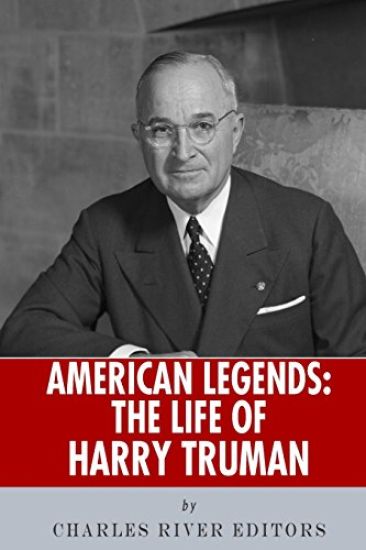
American Legends: The Life of Harry Truman

American Legends: The Life of Harry Truman

Charles River

Createspace Independent Publishing Platform
2013
nidottu
*Includes Truman's most colorful quotes about the World Wars, politics, the Republican Party, Richard Nixon, and more. *Includes pictures of Truman and important people, places, and events in his life. "The people can never understand why the President does not use his powers to make them behave. Well all the president is, is a glorified public relations man who spends his time flattering, kissing, and kicking people to get them to do what they are supposed to do anyway." - Harry Truman A lot of ink has been spilled covering the lives of history's most influential figures, but how much of the forest is lost for the trees? In Charles River Editors' American Legends series, readers can get caught up to speed on the lives of America's most important men and women in the time it takes to finish a commute, while learning interesting facts long forgotten or never known. Among America's presidents, Harry Truman's presidency produced some of the nation's most crucial decisions and left one of the nation's most unique legacies. When President Franklin Roosevelt died in April 1945, Vice President Truman, somewhat unprepared for the Presidency, now had to fill some of the biggest shoes in American history. Incredibly, Truman had not been informed of the country's secret attempt to build atomic bombs, confiding in his diary after learning about it, "We have discovered the most terrible bomb in the history of the world. It may be the fire destruction prophesied in the Euphrates Valley Era, after Noah and his fabulous Ark." The new president had to usher America through victory in Europe in his first month and decide to drop atomic bombs on Hiroshima and Nagasaki a few months later, but the end of World War II produced only the first of many consequential decisions Truman would face during his nearly 8 years in office. As president, Truman would lay the groundwork for the next 50 years of American foreign policy, as the architect of Cold War containment, the man who signed off on the Marshall Plan, and the commander-in-chief during much of the Korean War. He would also be the president who finally integrated the military, a crucial step on the way to full civil rights for the country's minorities. These accomplishments have earned Truman admiration and praise from most historians today, but the Korean War in particular made him especially unpopular during much of his presidency. To this day, his most memorable picture was a byproduct of his upset victory over Dewey in the 1948 election, with Truman holding up a Chicago Tribune newspaper incorrectly asserting, "Dewey Defeats Truman." While Americans today mostly remember that iconic picture and fondly recall "Give Em Hell Harry" and his memorable quotes, Truman would actually finish his presidency with historically low approval ratings. American Legends: The Life of Harry Truman chronicles the amazing life and career of a Midwesterner with humble roots who rose through party politics to become one of the most important presidents of the 20th century. Along with pictures of important people, places, and events, you will learn about Harry Truman like you never have before, in no time at all.
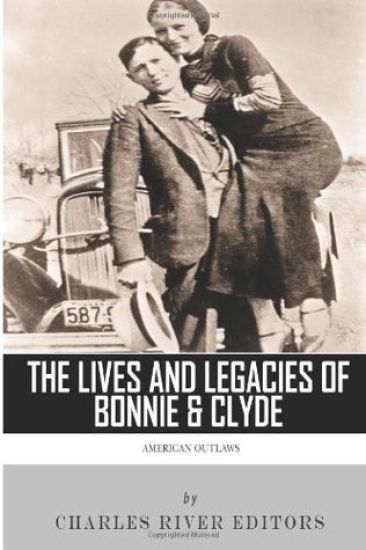
American Outlaws: The Lives and Legacies of Bonnie & Clyde

American Outlaws: The Lives and Legacies of Bonnie & Clyde

Charles River

Createspace Independent Publishing Platform
2013
nidottu
*Includes descriptions of Bonnie and Clyde and some of their most famous escapades by Barrow Gang member W. D. Jones *Includes Bonnie's poems "The Trail's End" and "Suicide Sal" *Includes pictures of Bonnie and Clyde, and important people, places, and events in their lives. *Includes a Bibliography for further reading. "You've read the story of Jesse James Of how he lived and died If you're still in need of something to read Here's the story of Bonnie and Clyde." - Bonnie Parker, "The Trail's End" America has always preferred heroes who weren't clean cut, an informal ode to the rugged individualism and pioneering spirit that defined the nation in previous centuries. While the Founding Fathers of the 18th century were revered, the early 19th century saw the glorification of frontier folk heroes like Davy Crockett and Daniel Boone. After the Civil War, the outlaws of the West were more popular than the marshals, with Jesse James and Billy the Kid finding their way into dime novels. And at the height of the Great Depression in the 1930s, there were the "public enemies", common criminals and cold blooded murderers elevated to the level of folk heroes by a public frustrated with their own inability to make a living honestly. There was no shortage of well known public enemies like John Dillinger and Baby Face Nelson, but none fascinated the American public as much as Bonnie and Clyde. While the duo and their Barrow Gang were no more murderous than other outlaws of the era, the duo's romantic relationship and the discovery of photographs at one of their hideouts added a more human dimension to Bonnie and Clyde, even as they were gunning down civilians and cops alike. When Bonnie and Clyde were finally cornered and killed in a controversial encounter with police, a fate they shared with many other outlaws of the period, their reputations were cemented. In some way though, the sensationalized version of their life on the run is less interesting than reality, which included actual human drama within the gang. American Outlaws: The Lives and Legacies of Bonnie and Clyde looks at the lives and crimes of the famous outlaws, but it also humanizes them and examines their relationship. Along with pictures of Bonnie Parker, Clyde Barrow and important people, places, and events in their lives, you will learn about two of America's most notorious outlaws like you never have before, in no time at all.
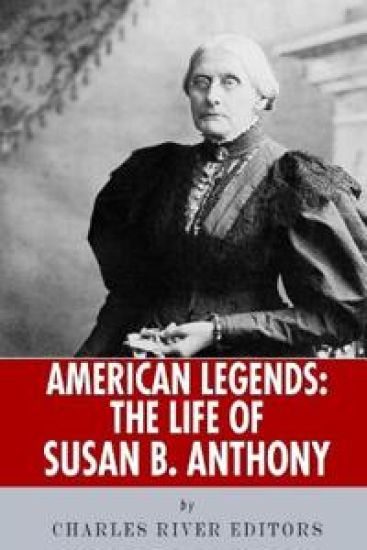
American Legends: The Life of Susan B. Anthony

American Legends: The Life of Susan B. Anthony

Charles River

Createspace Independent Publishing Platform
2013
nidottu
*Includes pictures. *Includes a Bibliography for further reading. "The true woman will not be exponent of another, or allow another to be such for her. She will be her own individual self... Stand or fall by her own individual wisdom and strength... She will proclaim the 'glad tidings of good news' to all women, that woman equally with man was made for her own individual happiness, to develop... every talent given to her by God, in the great work of life." - Susan B. Anthony A lot of ink has been spilled covering the lives of history's most influential figures, but how much of the forest is lost for the trees? In Charles River Editors' American Legends series, readers can get caught up to speed on the lives of America's most important men and women in the time it takes to finish a commute, while learning interesting facts long forgotten or never known. During the last 100 years, Susan B. Anthony has been one of the most venerated women in American history, but in the 80 years before that, she was one of the most hated women in American history. Anthony took note of her contemporaries' distaste for her but remained defiant, asserting, "I have encountered riotous mobs and have been hung in effigy, but my motto is: Men's rights are nothing more. Women's rights are nothing less." Today, of course, every American is taught about their nation's most famous suffragist, who tirelessly advocated and lobbied for women to be granted the right to vote. Though it wouldn't become legal until 14 years after Anthony's death, Anthony took it upon herself to illegally vote in 1872, which initiated one of the late 19th century's most famous political court cases. Anthony was able to publicize women's plight and her cause even as she was subjected to a kangaroo court in which the judge ordered the jury to find her guilty, but she managed to embarrass authorities so much that they released her from jail instead of allowing her to appeal the conviction and continue to bring attention to her case. Though Anthony is best remembered today for working towards women's suffrage with other women like Elizabeth Cady Stanton, she was an active and progressive advocate for all of the leading human rights issues of her time. Anthony was an ardent abolitionist from day one, and she spent much of the first 40 years of her life championing the cause of African-Americans, even befriending men like Frederick Douglass and William Lloyd Garrison along the way. She also championed "radical" ideas as 8 hour work days, minimum wage laws, and equal pay for women. American Legends: The Life of Susan B. Anthony chronicles the life of America's greatest human rights champion, examining her writings and her work across the political spectrum. Along with pictures, you will learn about Susan B. Anthony like you never have before, in no time at all.
America's Greatest 19th Century Presidents: The Lives of Thomas Jefferson, James Madison, Andrew Jackson, Abraham Lincoln, and Ulysses S. Grant
*Includes dozens of pictures of the presidents and important people, places, and events in their lives. The 19th century was the pivotal era in American history, determining how a new nation would overcome its most divisive issues and become a superpower in the 20th century. To get there, the nation needed the leadership of American legends of different stripes and ideologies to guide the United States toward its destiny. The first of the 19th century presidents was one of its most celebrated Founding Fathers. Thomas Jefferson was instrumental in all of the aforementioned debates, authoring the Declaration of Independence, laying out the ideological groundwork of the notion of states' rights, leading one of the first political parties, and overseeing the expansion of the United States during his presidency. Jefferson was followed by his protege, James Madison. A lifelong statesman, Madison was the youngest delegate at the Continental Congress from 1780-83, and at 36 he was one of the youngest men who headed to Philadelphia for the Constitutional Convention in 1787. Despite his age, he was the Convention's most influential thinker, and the man most responsible for the final draft of the U. S. Constitution. Along with Alexander Hamilton and John Jay, Madison was one of the most persuasive advocates for ratifying the Constitution, authoring some of the most famous Federalist Papers, and he drafted the Bill of Rights that was later added to the Constitution. During his own presidency, he oversaw the War of 1812. the president with the most controversial legacy might be "Old Hickory", Andrew Jackson. In his lifetime, Jackson came to represent what middle class Americans viewed as the quintessential American. Jackson had a modest upbringing, served as a teenager during the American Revolution, became a war hero during the War of 1812, and championed populism and the common American during his presidency. He also embodied courage and manliness, famously carrying a bullet from a duel in his body for decades until his death. On the other hand, critics continue to charge that Jackson's legacy is irreversibly stained by his stances on slavery and Native Americans. Abraham Lincoln (1809-1865) is one of the most famous Americans in history and one of the country's most revered presidents. Schoolchildren can recite the life story of Lincoln, the "Westerner" who educated himself and became a self made man, rising from lawyer to leader of the new Republican Party before becoming the 16th President of the United States. Lincoln successfully navigated the Union through the Civil War but didn't live to witness his crowning achievement, becoming the first president assassinated when he was shot at Ford's Theater by John Wilkes Booth on April 14, 1865. In the 19th century, one of the surest ways to rise to prominence in American society was to be a war hero, like Andrew Jackson and William Henry Harrison. But few would have predicted such a destiny for Hiram Ulysses Grant, who had been a career soldier with little experience in combat and a failed businessman when the Civil War broke out in 1861. Together, these men shaped and secured America's destiny and positioned it for its arrival on a global stage near the end of the 19th century. Along with pictures of the presidents and important people, places, and events in their lives, you will learn about Thomas Jefferson, James Madison, Andrew Jackson, Abraham Lincoln, and Ulysses S. Grant like you never have before.
Everything You Need to Know About The Iliad and The Odyssey

Everything You Need to Know About The Iliad and The Odyssey

Charles River

Createspace Independent Publishing Platform
2013
nidottu
*Explains the major themes, characters, and plots of both epics. *Includes historic artwork depicting important scenes in The Iliad and The Odyssey. *Discusses the historical basis of Homer, the Trojan War, and Ancient Greek culture. "Like leaves on trees the race of man is found, - Now green in youth, now withering on the ground; Another race the following spring supplies: They fall successive, and successive rise." - The Iliad "Tell me, Muse, of the man of many wiles." - The Odyssey, Book I, Line 1 Perhaps the most famous epic poems ever written, The Iliad and the Odyssey have been read for nearly 3,000 years, making it also one of the oldest written works in the Western world. The poems made characters like Paris, Helen, Odysseus, Achilles, Hector, and Ajax instantly recognizable, and they also influenced other ancient poets like Virgil, whose Aeneid is clearly modeled after them. The epic poems also literally put Troy on the map, motivating Heinrich Schliemann to search for and ultimately find the city of Troy in the 19th century. Believed to be penned around the 7 or 8th century B. C, the Iliad and the Odyssey served as both entertainment and a moral guidebook of sorts for ancient Greeks, as well as the foundation for Western literature. Although there is some scholarly debate regarding the epic's authorship, It is generally attributed to a poet named Homer. Given that he lived nearly 2800 years ago, not much is actually known about Homer. His birthplace is debated, but due to the dialect of Greek in which the works attributed to him were written, it is generally believed that he lived in Iona. The only other aspect of Homer's life that is generally agreed upon is that he was a blind poet, possibly also a bard. That naturally raises the question of how he wrote his epic poetry, but scholars assume he probably dictated them to a scribe, as the format suggests they were comprised from various shorter forms of oral poetry. In addition to the Iliad and Odyssey, Homer also wrote the popular "Homeric Hymns", which depict the various myths regarding the origins of the Gods. While the Iliad covered the final fighting of the Trojan War, The Odyssey covers the burning of Troy and chronicles Odysseus' 10 year long return home to Ithaca after the war, including the adventures his crew experiences as they combat sirens, gods, and a Cyclops. It also deals with the issues surrounding his family, who have understandably believed after 20 years away that Odysseus was dead. The poem is also considered revolutionary for the fact that it has a non-linear plot and features women and servants as major characters. Everything You Need to Know About The Iliad and The Odyssey is the perfect resource for understanding Homer's famous epics, including an introduction that looks at the historical basis of the Trojan War, and a comprehensive explanation of the poems' characters, plot, themes, and legacy. Get caught up quickly with this resourceful guide.