Kirjojen hintavertailu – 12 903 725 kirjaa ja 27 kauppaa

Kirjailija

Charles River

Kirjat ja teokset yhdessä paikassa: 4 673 kirjaa, julkaisuja vuosilta 2013–2022, suosituimpiin kuuluu William Powell and Myrna Loy: The Lives and Careers of One of Classical Hollywood's Most Iconic Duos. Vertaile teosten hintoja ja tarkista saatavuus suomalaisista kirjakaupoista.

4 673 kirjaa

Kirjojen julkaisuvuodet: 2013–2022.

The Top 5 Most Famous Queens: Nefertiti, Cleopatra, Elizabeth I, Catherine the Great, and Queen Victoria
*Includes pictures. *Includes bibliographies of each queen for further reading. In the early 20th century, over 3,000 years after her death, Nefertiti became a household name across the world and one of the most famous women of the ancient world. Egyptologists were aware that she was a queen of the New Kingdom Egypt during the later portion of the 18th dynasty, but she was little known until the presentation of a reconstructed bust depicting her at the Berlin Museum in 1924. Nefertiti means "the beautiful one has come", and if the presented bust is anything to judge by she, was indeed a beautiful woman. Cleopatra was a captivating figure even to contemporary Romans and the ancient world, and she was a controversial figure who was equally reviled and praised through the years, depicted as a benevolent ruler and an evil seductress, sometimes at the same time. Over 2,000 years after her death, everything about Cleopatra continues to fascinate people around the world, from her lineage as a Ptolemaic pharaoh, her physical features, the manner in which she seduced Caesar, her departure during the Battle of Actium, and her famous suicide. And despite being one of the most famous figures in history, there is still much mystery surrounding her, leading historians and archaeologists scouring Alexandria, Egypt for clues about her life and the whereabouts of her royal palace and tomb. As one of the most famous women rulers in history, Russian Empress Catherine the Great has long been remembered not only as one of the most powerful women of her time, but she was also one of the most powerful and capable rulers in all of Europe. And her path to the throne was just as remarkable as her reign. Despite the strong-arm tactics, Catherine came to power in the midst of the Enlightenment, which was flourishing in France and Britain, and she would rule as an Enlightened ruler. A known correspondent of Voltaire's, Catherine sought to modernize Russia and turn it into a force in its own right, creating a rich and cultured court at the same time. Over the course of nearly 35 years in power, Catherine ushered in the Russian Enlightenment and presided over a period of time known as the Golden Age of the Russian Empire. When Queen Elizabeth II came to the throne in 1952, many commentators heralded the beginning of her reign as the second Elizabethan age. The first one, of course, concerned the reign of Henry VIII's second surviving daughter and middle surviving child, Queen Elizabeth I, one of England's most famous and influential rulers. It was an age when the arts, commerce and trade flourished. It was the epoch of gallantry and great, enduring literature. It was also an age of wars and military conflicts in which men were the primary drivers and women often were pawns. Elizabeth I still wielded great power in the 16th century, whereas Victoria was a constitutional monarch with limited power over the workings of the British government. But in a way, that made Victoria even more unique, as she still proved able to mold the cultural identity of a nearly 65 year long epoch. Furthermore, Victoria established some of the ceremonial customs of the British monarch and became both the forerunner and role model of subsequent queens, a legacy that continues to endure with her great-great granddaughter, Queen Elizabeth II.

Vladimir Lenin, Joseph Stalin & Leon Trotsky: The Soviet Union's Big Three

Vladimir Lenin, Joseph Stalin & Leon Trotsky: The Soviet Union's Big Three

Charles River

Createspace Independent Publishing Platform
2013
nidottu
*Includes pictures of Lenin, Stalin, Trotsky and important people, places, and events in their lives. *Explains each man's role in the Revolution and its aftermath. *Discusses the conspiracy theories surrounding Stalin's death and how Stalin came to power against Lenin's wishes. *Includes a bibliography for further reading. Among the leaders of the 20th century, arguably none shaped the course of history as much as Vladimir Lenin (1870-1942), the Communist revolutionary and political theorist who led the Bolshevik Revolution that established the Soviet Union. In addition to shaping the Marxist-Leninist political thought that steered Soviet ideology, he was the first Soviet premier until his death and set the Soviet Union on its way to becoming one of the world's two superpowers for most of the century, in addition to being the West's Cold War adversary. As it turned out, the creation of the Soviet Union came near the end of Lenin's life, as he worked so hard that he had burned himself out by his 50s, dying in 1924 after a series of strokes had completely debilitated him. Near the end of his life, he expressly stated that the regime's power should not be put in the hands of the current General Secretary of the Communist Party, Joseph Stalin. Of course, Stalin managed to do just that, modernizing the Soviet Union at a breakneck pace on the backs of millions of poor laborers and prisoners. If Adolf Hitler had not inflicted the devastation of World War II upon Europe, it's quite likely that the West would consider Joseph Stalin (1878-1953) the 20th century's greatest tyrant. Before World War II, Stalin consolidated his position by frequently purging party leaders (most famously Leon Trotsky) and Red Army leaders, executing hundreds of thousands of people at the least. In one of history's greatest textbook examples of the idea that the enemy of my enemy is my friend, Stalin's Soviet Union allied with Britain and the United States to defeat Hitler in Europe, with the worst of the war's carnage coming on the eastern front during Germany's invasion of Russia. Nevertheless, the victory in World War II established the Soviet Union as of the world's two superpowers for nearly 50 years, in addition to being the West's Cold War adversary. Along with Vladimir Lenin, Trotsky led the October Bolshevik Revolution of 1917 and held crucial posts in the early Soviet governments, but after Lenin's death Trotsky was exiled, persecuted and finally murdered at the behest of his arch-rival, Joseph Stalin. For the final decade of his life, Trotsky was a man trapped in between two worlds. A communist seeking refuge in the capitalist West, Trotsky was deemed a secret agent of the capitalist powers by Stalin's propaganda, but the Soviet Union's enemies also viewed him with suspicion. In the initial aftermath of Lenin's death, Trotsky had been his ally's heir apparent, and for those inclined to believe the Soviet experiment had started promisingly but gone astray, Trotsky became the embodiment of the betrayed promise of the early Bolshevik revolution. There were certain ironies in this widespread sympathetic interpretation of Trotsky's legacy. For the Marxists and Marxist sympathizers appalled by Stalin's paranoid police state, Gulag concentration camps, and strict suppression of dissent, Trotsky was viewed as a humane and cosmopolitan opposite to Stalin. But Trotsky himself had overseen and spearheaded campaigns of persecution against Russians suspected of "counterrevolutionary" leanings, and he had written a long tract defending these "terroristic" measures as necessary safeguards of the revolution. The Soviet Union's Big Three explores the lives and legacies of Lenin, Trotsky and Stalin before the Bolshevik Revolution, as well as the crucial roles they played in establishing the Soviet Union and turning it into a modern superpower.
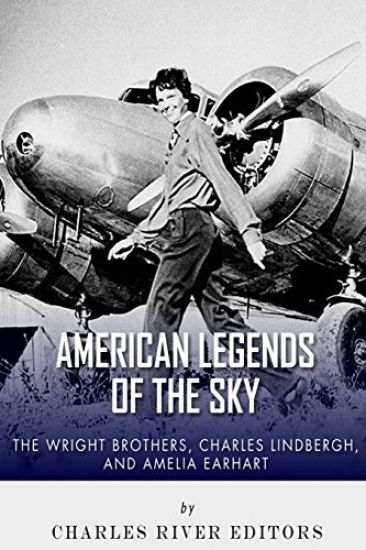
The Wright Brothers, Charles Lindbergh and Amelia Earhart: American Legends of the sky
*Includes pictures of important people, places, and events. *Includes Bibliographies on each for further reading. The lives of Wilbur and Orville Wright are quintessential American stories. Growing up in America's heartland, the boys lived very ordinary lives with 5 other siblings and worked in printing jobs and repair jobs that involved tinkering with tools and bicycles. But at the end of the 20th century, one of the brothers' passions became an obsession, especially for Wilbur, who would later write, "My brother and I became seriously interested in the problem of human flight in 1899." In December 1903, the brothers had done enough scientific work with concepts like lift to help their aeronautical designs, and they had the technical know-how to work with engines. On December 17, the brothers took turns making history's first successful powered flights. The fourth and final flight lasted nearly a minute and covered nearly 900 feet. Wilbur would work in aviation until dying of typhoid at the age of 45 in 1912, and by the time Orville died in 1948, planes had nearly reached supersonic speeds, a far cry from the days of bicycles and carriages he knew as a kid. In 1927, Charles Lindbergh became the first to make a nonstop Transatlantic solo flight, forever earning him fame and the moniker "Lucky Lindy". Two years later, Earhart was the first woman to cross the Atlantic in a plane, and her uncanny resemblance to Lindbergh earned her the nickname "Lady Lindy". Together they became America's most famous aviators, and their stories were inextricably interwoven by their lives, careers, and ill-fated destinies. In many ways, Charles Lindbergh represented the best and worst of America during the first half of the 20th century. Lindbergh became famous for being an aviation pioneer whose solo flight across the Atlantic captured the imagination of an entire world, yet he was an isolationist who wanted to keep American freedoms safe for Americans and no one else. Lindbergh was the quintessential family man, yet he fathered illegitimate children and suffered an unspeakable tragedy that became known as "The Crime of the Century." Lindbergh embodied some of his era's greatest virtues and harbored some of its worst prejudices, but it was those prejudices and his son's murder that have come to color much of his legacy.. By the mid-1930s, Earhart had set a multitude of altitude and distance records, but she wanted to attempt a circumnavigation of the world. After an ill-fated first attempt, Earhart and Fred Noonan set off on another attempt, creating one of the 20th century's most enduring mysteries. Earhart and Noonan were to land on Howland Island, 1700 miles southwest of Hawaii, but radio transmissions ceased between the plane and authorities on the ground the morning of July 2, 1937. Earhart and Noonan had disappeared, never to be seen again, despite one of the nation's largest and costliest manhunts to date. Unfortunately, the speculation over exactly what happened to Earhart and the mystery of her disappearance have come to overshadow and obscure her many accomplishments. American Legends of the Sky profiles the lives, careers, and legacies of America's most famous aviation pioneers. Along with pictures of important people, places, and events, you will learn about the Wright Brothers, Lindbergh, and Earhart like never before.
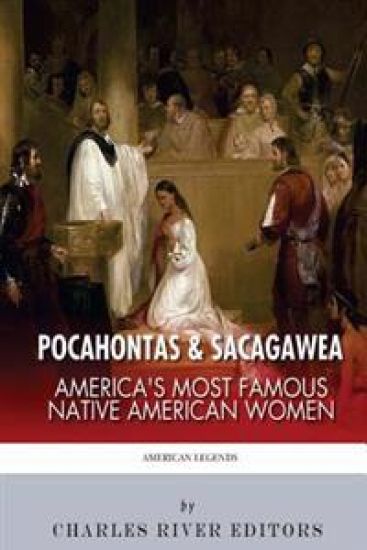
Pocahontas & Sacagawea: America's Most Famous Native American Women

Pocahontas & Sacagawea: America's Most Famous Native American Women

Charles River

Createspace Independent Publishing Platform
2013
nidottu
*Includes pictures of historic art depicting Pocahontas, Sacagawea and other important people and places. *Discuss the legends and myths that have become part of their legacies. *Include accounts of Pocahontas and Sacagawea written by John Smith, Lewis and Clark, and the Native Americans themselves. *Includes bibliographies for further reading. The life of Pocahontas fulfills a specific role in American culture and history. Her short life holds a bittersweet tragedy that is part of the mythology of Native America, especially the first encounters between English settlers and the local native tribes. The meaning of her name, "little plaything" or "little wanton," suggests that she was destined to be bandied about by the powers in her life. The men of the time simply assumed a young Native American girl did not deserve or even want respect. She had many other names, however, some which would have never been known to people outside her tribe, let alone European colonists. What historians do know is Pocahontas was also known as Matoaka, she was born sometime in 1595, and she was the daughter of the paramount chief (mamanatowick) Powhatan, leader of an Algonquian-speaking native group. She grew up in Tsenacommacha, the "densely inhabited Land" of eastern Virginia, where English explorers and settlers under the leadership of Lord Newport yearned to find a passage to the "other sea". The English settlers were also ready to play the role of the legendary Spanish conquistadors and hoping to find hidden gold in the region. Nevertheless, generations of Americans and English have been taught that Pocahontas was part of a unique fairytale, saving the life of explorer John Smith and later becoming his wife. While their relationship has been the subject of countless historical texts and even children's books, it has no historical basis in fact. There is still even some doubt over whether she saved his life in the famous encounter that has ensured her name remains instantly recognizable nearly 400 years after her death. Sacagawea is one of the most famous Native American women in American history, and few played such a central role in the settlement of the West for the young nation. As a young woman who was married to a French trapper from Quebec, Sacagawea happened to be in the right place at the right time for the legendary Lewis and Clark expedition, which set off for the Pacific coast after President Thomas Jefferson negotiated the Louisiana Purchase with France. The young Shoshone girl acted as a guide and interpreter for the expedition, helping it safely travel thousands of miles west from North Dakota to the Pacific over unfamiliar ground and amongst unfamiliar peoples. Put simply, the expedition could not have succeeded without her. Sacagawea's role in the Lewis and Clark expedition made her a national figure, and she continued to be popularized in literature and even among groups advocating for women's rights. Sacagawea is still taught to every American in school and stands alongside Pocahontas as the most famous Native American women, even though few people knew much about her life aside from her role in the trek. For that reason, few truly know about her life, her tribe, or her death, the latter of which is still controversial. At the same time, given the history and conflicts between the United States and various Native American tribes during the 19th century, Sacagawea's role in helping the nation push westward at the expense of Native Americans has taken on a more mixed and controversial character. Pocahontas & Sacagawea profiles the lives and legacies of the famous Native American girls. Along with pictures of important people, places, and events, you will learn about Pocahontas & Sacagawea like never before.
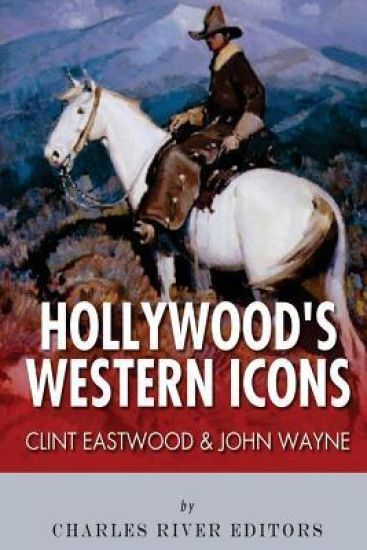
Clint Eastwood & John Wayne: Hollywood's Western Icons

Clint Eastwood & John Wayne: Hollywood's Western Icons

Charles River

Createspace Independent Publishing Platform
2013
nidottu
*Includes pictures of important people and places.. *Analyzes the stars' legacies on the screen and off it. *Includes some of Wayne and Eastwood's most colorful and controversial quotes. *Includes bibliographies for further reading. Hollywood has produced no shortage of famous movie stars, but none have been as culturally significant as John Wayne. Marion Morrison was born in a quintessentially quaint Midwestern town, but he eventually grew up to become John Wayne, the legend of the silver screen who embodied the Western frontier. Wayne starred in so many movies (nearly 150 in all) that when asked to name his worst, he joked that 50 of them were tied, but the excessive number allowed Wayne to portray heroes of all stripes, from cowboys to soldiers, and he was invariably charming, courageous, and full of rugged, masculine swagger. Even as Westerns have certainly waned in popularity, Wayne himself has remained immensely popular, in part because he set the prototype for the heroic character, regardless of genre. Wayne will always be associated with Westerns, John Wayne transcended the Western genre. Through the portrayal of rugged, masculine characters, Wayne came to epitomize the American spirit and the way Americans view themselves. In that sense, he is truly America's actor, and he continues to live on in both the reels of Hollywood's archives and the living rooms of middle America. Today, the name Clint Eastwood conjures up many different and unforgettable images. While many will always associate him as the quintessential Western hero in classics like The Good, the Bad, and the Ugly, new generations know him as a critically acclaimed director and even an outspoken conservative firebrand. Even if he is no longer the most prominent star in Hollywood, he is assuredly the most decorated octogenarian in the industry. In addition to his acting, two of his pictures, Unforgiven (1992) and Million Dollar Baby (2004), garnered Oscars for Best Director and Best Picture. Eastwood's acting and directing abilities have long appealed to both high classes and mass audiences, although it is true that his early works were skewed more toward the popular while the later ones reflect the opposite dynamic. Debuting in the 1950s, Eastwood's career has now spanned over 50 years, and he has been involved in over 75 films, not to mention his appearances in television and other media. The sheer volume of films is especially impressive considering that he has also directed a significant number of them. As such a prolific figure of Hollywood, it is clear that Eastwood has approached his career with diligence and persistence, working hard through both success and failure. This work ethic has lent him an aura of accessibility that is relatively rare among Hollywood stars, as has his willingness to put himself out there on issues beyond the silver screen. Today, Eastwood is just as likely to evoke images of his speech at the 2012 Republican National Convention as he is images of the Western vigilante. Clint Eastwoood & John Wayne looks at the iconic actors' lives on and off the silver screen, from their influence on Hollywood to their outspoken views on politics. Along with pictures of important people, places, and events, you will learn about Eastwood and the Duke like you never have before.
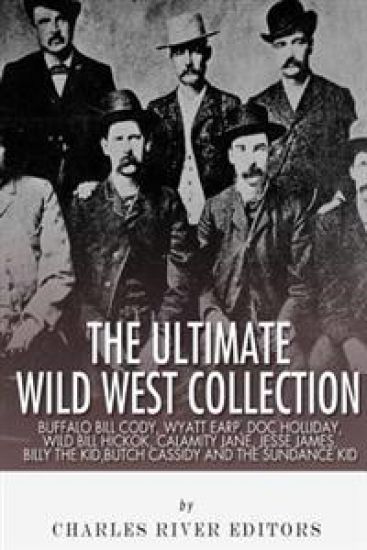
The Ultimate Wild West Collection: Buffalo Bill Cody, Wyatt Earp, Doc Holliday, Wild Bill Hickok, Calamity Jane, Jesse James, Billy the Kid, Butch Cas
*Includes biographies of each famous Western icon. *Discusses the mysteries and legends of their famous lives and deaths. *Comprehensively covers legendary events like the Shootout at the OK Corral, and the murders of Wild Bill and Jesse James. *Includes a Bibliography on each person for further reading. Space may be the final frontier, but no frontier has ever captured the American imagination like the "Wild West", which still evokes images of dusty cowboys, outlaws, gunfights, gamblers, and barroom brawls over 100 years after the West was settled. A constant fixture in American pop culture, the 19th century American West continues to be vividly and colorful portrayed not just as a place but as a state of mind. The spirit of adventure, the courage, the swagger, and even the hard drinking and violence have all come to capture what it meant to be an American at the time, and with so many interesting figures straddling both sides of the law, morality has gone out the window. Colorful lawmen like Wyatt Earp and Wild Bill became known for meting out justice but also taking things into their own hands, while Doc Holliday and Calamity Jane have gone down in history as eccentric sidekicks. Outlaws like Jesse James, Billy the Kid, Butch Cassidy and the Sundance Kid remain just as well known, and they have been long associated with daring heists and conspiracies surrounding their deaths. And Buffalo Bill captured all of the sights and sounds in his famous Wild West show, bringing the West to life all over the world. Each Western icon forged their own enduring legacy, but many of them also knew each other. Wyatt Earp, the law enforcer, gambler, saloon keeper, and vigilante, forged an unlikely friendship with hot-tempered dentist turned gambler Doc Holliday that proved pivotal in some of the West's most legendary events. Wild Bill and Calamity Jane had one of the most legendary and mythologized relationship, with Jane claiming they were married and Wild Bill's friends claiming he could barely stand her. Wyatt Earp (1848-1929), the "toughest and deadliest gunman of his day", symbolized the swagger, the heroism, and even the lawlessness of the West, notorious for being a law enforcer, gambler, saloon keeper, and vigilante. Then there was John Henry "Doc" Holliday (1851-1887), a dentist turned professional gambler who was widely recognized as one of the fastest draws in the West and one of its quirkiest figures. The only thing that might have been faster than the deadly gunman's draw was his violent temper, which was easily set off when Holliday was drunk, a frequent occurrence. By the early 1880s, Holliday had been arrested nearly 20 times. And then there's Butch Cassidy and the Sundance Kid, the West's most famous outlaw duo, who will always be associated with each other despite the fact there's no indication that they had any particularly close friendship or relationship aside from being members of the same gang. The Ultimate Wild West Collection chronicles the lives, legends, myths, lies, and legacies of the West's most famous individuals, separating fact from fiction and analyzing how they have affected the past and the present. Along with pictures of important people, places, and events, bibliographies, and a Table of Contents, you will learn about these Western icons like never before.
Braxton Bragg vs. William Rosecrans: The Battles of Stones River (Murfreesboro) and Chickamauga
*Includes pictures of the battles' important generals. *Includes several maps of the battles. *Includes accounts of the battles written by important generals. . *Includes a Bibliography for each battle. "I know Mr. Davis thinks he can do a great many things other men would hesitate to attempt. For instance, he tried to do what God failed to do. He tried to make a soldier of Braxton Bragg." - General Joseph E. Johnston Of all the commanders who led armies during major battles of the Civil War, historians have by and large agreed that the most inept generals to face each other were the Union's William Rosecrans and the Confederacy's Braxton Bragg. The two generals would command the Union Army of the Cumberland and the Confederate Army of Tennessee against each other during the Battle of Stones River (Battle of Murfreesboro) at the end of 1862 and at the Battle of Chickamauga in September 1863, two of the deadliest and most controversial battles of the war. In late December 1862, William Rosecrans's Union Army of the Cumberland was contesting Middle Tennessee against Braxton Bragg's Army of Tennessee, and for three days the two armies savaged each other as Bragg threw his army at Rosecrans in a series of desperate assaults. Bragg's army was unable to dislodge the Union army, and he eventually withdrew his army after learning that Rosecrans was on the verge of receiving reinforcements. Though the battle was stalemated, the fact that the Union army was left in possession of the field allowed Rosecrans to declare victory and embarrassed Bragg. Though Stones River is mostly overlooked as a Civil War battle today, it had a decisive impact on the war. The two armies had both suffered nearly 33% casualties, an astounding number in 1862 that also ensured Rosecrans would not start another offensive campaign in Tennessee until the following June. The Union victory also ensured control of Nashville, Middle Tennessee, and Kentucky for the rest of the war, prompting Lincoln to tell Rosecrans, "You gave us a hard-earned victory, which had there been a defeat instead, the nation could scarcely have lived over." The battle and its results also set into motion a chain of events that would lead to Rosecrans and Bragg facing off at the crucial battle of Chickamauga in September 1863, a battle that is often viewed as the last gasp for the Confederates' hopes in the West. During the height of the Battle of Chickamauga, Rosecrans inadvertently created a gap in his line just as a Confederate attack led by James Longstreet advanced straight toward that part of the line. Longstreet's attack was successful in driving one-third of the Union Army off the field, with Rosecrans himself running all the way to Chattanooga, where he was later allegedly found weeping and seeking solace from a staff priest. As the Confederate assault continued, George H. Thomas led the Union left wing against heavy Confederate attack even after nearly half of the Union army abandoned their defenses and retreated from the battlefield, racing toward Chattanooga. Dubbed "The Rock of Chickamauga", Thomas's heroics ensured that Rosecrans' army was able to successfully retreat back to Chattanooga. In the aftermath of the Battle of Chickamauga, several Confederate generals blamed the number of men lost during what would be the bloodiest battle of the Western Theater on Bragg's incompetence, and also criticizing him for refusing to pursue the escaping Union army. General Longstreet later stated to Jefferson Davis, "Nothing but the hand of God can help as long as we have our present commander." Bragg vs. Rosecrans comprehensively covers the campaigns and the events that led up to the battles, the fighting itself, and the aftermath of the battles. Accounts of the battles by important participants are also included, along with maps of the battles and pictures of important people, places, and events.
Black Bart & Howell Davis: Mastering Piracy

Black Bart & Howell Davis: Mastering Piracy

Charles River

Createspace Independent Publishing Platform
2013
nidottu
*Weaves the lives and piracy of the two famous pirates into one entertaining and educational narrative. *Explains how the myths and legends of the pirates helped create the instantly recognizable pirate stereotypes today. *Includes pictures depicting the pirates and important people, places, and events in their lives. *Includes contemporary accounts of the pirates written by Captain Charles Johnson *Includes Bibliographies "Roberts himself made a gallant Figure, at the Time of the Engagement, being dressed in a rich crimson Damask Wastcoat and Breeches, a red Feather in his Hat, a Gold Chain round his Neck, with a Diamond Cross hanging to it, a Sword in his Hand, and two Pair of Pistols hanging at the End of a Silk Sling, flung over his Shoulders (according to the Fashion of the Pyrates;)..." - Captain Charles Johnson Despite having one of the shortest careers of history's most famous pirates, Captain Howell Davis had one of the most colorful and important years during the Golden Age of Piracy. Though little is known about his life before July 1718, when he joined a pirate crew after they captured the slaver ship he was working on, it's a testament to his abilities that he became the captain of one of the pirates' ships very quickly after they had commandeered his ship. It also didn't take him long to earn a reputation for being devious and cunning, and more than once he was able to lie and bluff his way to taking a ship that probably could have defended itself against him. It was during one of his most daring escapades that one of his ruses was undone on the island of Principe, a Portuguese holding at the time. Though Davis didn't know it, one of his deceptions was unmasked, and the island's governor put his own plot in motion, setting Davis up for an ambush that left him and some of his men dead. But even in death, Davis remained influential; he had taken a pirate named Bartholomew Roberts under his wing, and Black Bart would succeed Davis as captain upon his death. Black Bart may not be as well known today as other pirates of the era, but he was truly the gold standard during the Golden Age of Piracy. Despite the fact he was initially reluctant to become a pirate and had to be talked into it, Roberts and his crew captured nearly 500 ships in just a few years, making him the most successful pirate in history. As tales of his exploits made their way around Europe and the Americas, Black Bart became a legend in his own time Although he was the most successful pirate of his time, he suffered a fate typical of the era's legendary pirates. In a battle with a Royal Navy ship in February 1722, Black Bart was killed by artillery on deck and his ships were captured, but not before his crew had tossed his body overboard, never to be seen again. Black Bart's death in battle was so important that pirate historian Marcus Rediker would later write, "The defeat of Roberts and the subsequent eradication of piracy off the coast of Africa represented a turning point in the slave trade and even in the larger history of capitalism." While Black Bart's success and infamous demise were both important parts of his story, the main reason he has endured is that he gave rise to some of the best known pirate stereotypes. In addition to making his crew swear to and uphold a pirate code, Roberts was known as a colorfully courageous commander who looked the part with extravagant costumes. It is thus no surprise that Roberts has been depicted as one of the foremost pirates of the age in literature and film, including in Robert Louis Stevenson's Treasure Island. Black Bart and Howell Davis looks at the lives and legends of the famous pirates, attempting to separate fact from fiction while analyzing their lasting legacies. Along with pictures, bibliographies and contemporary accounts, you'll learn about the two famous pirates like never before.
Chickamauga and Chattanooga: The Death Knell of the Confederacy

Chickamauga and Chattanooga: The Death Knell of the Confederacy

Charles River

Createspace Independent Publishing Platform
2013
nidottu
*Includes pictures of the battles' important generals. *Includes several maps of the battles. *Includes accounts of the fighting written by important generals like Grant, Sherman, Sheridan, Bragg, Rosecrans, Longstreet, George H. Thomas, D. H. Hill, and more. *Includes a Bibliography for further reading. "I know Mr. Davis thinks he can do a great many things other men would hesitate to attempt. For instance, he tried to do what God failed to do. He tried to make a soldier of Braxton Bragg." - General Joseph E. Johnston Americans have long been fascinated by the Civil War and its biggest battles, particularly Gettysburg, Antietam, and Shiloh, all of which involved Robert E. Lee or Ulysses S. Grant. But the second biggest battle of the entire war mostly gets overlooked among casual readers, despite the fact it represented the last great chance for the Confederates to salvage the Western theater. In mid-September, the Union Army of the Cumberland under General William Rosecrans had taken Chattanooga, but rather than be pushed out of the action, Army of Tennessee commander Braxton Bragg decided to stop with his 60,000 men and prepare a counterattack south of Chattanooga at a creek named Chickamauga. To bolster his fire-power, Confederate President Jefferson Davis sent 12,000 additional troops under the command of Lieutenant General James Longstreet, whose corps had just recently fought at Gettysburg in July. The Confederates nearly destroyed the Union army on September 20 during the battle of Chickamauga, when a Union blunder opened up a gap in front of a Confederate attack that sliced their army in two. As the Confederate assault continued, George H. Thomas led the Union left wing against heavy Confederate attack even after nearly half of the Union army abandoned their defenses and retreated from the battlefield, racing toward Chattanooga. Thomas rallied the remaining parts of the army and formed a defensive stand on Horseshoe Ridge, with more units spontaneously rallying to the new defensive line. Thomas and his men managed to hold until nightfall, when they made an orderly retreat to Chattanooga while the Confederates occupied the surrounding heights, ultimately besieging the city. Dubbed "The Rock of Chickamauga", Thomas's heroics ensured that Rosecrans' army was able to successfully retreat back to Chattanooga. In late September 1863, the Confederates began laying siege to the Union Army of the Cumberland around Chattanooga in what would be their last gasp for supremacy in the West. Having lost faith in Rosecrans after Chickamauga, Washington delegated Ulysses S. Grant with the task of lifting the siege by placing him in command of nearly the entire theater. Grant replaced Rosecrans with George H. Thomas, who had saved the army at Chickamauga, and ordered him to "hold Chattanooga at all hazards." Thomas replied, "We will hold the town till we starve." What followed were some of the most remarkable operations of the entire Civil War. Hooker and his reinforcements helped open up a vital supply line known as the "cracker line", effectively ensuring that enough supplies could reach Knoxville. With that, preparations turned to a pitched battle between the two sides, and in a series of actions in late November, Grant sought to lift the siege and drive back Bragg's Confederate army by attacking their positions on high ground. Although the Chattanooga Campaign was months long and involved several battles, it has become mostly remembered for the Battle of Missionary Ridge, one of the most remarkable and successful charges of the war. While Pickett's Charge, still the most famous attack of the war, was one unsuccessful charge, the Army of the Cumberland made over a dozen charges up Missionary Ridge and ultimately succeeded, winning the campaign for the Union. With this book, you'll learn about Chickamauga and Chattanooga like you never have before.
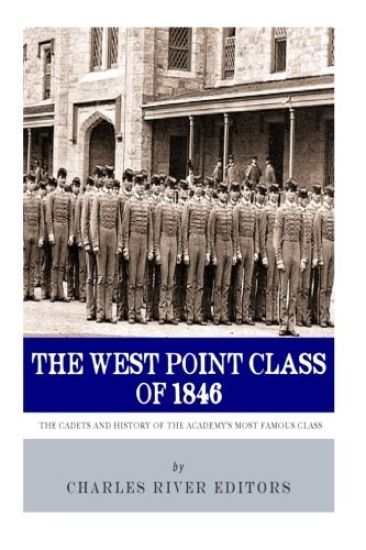
The West Point Class of 1846: The Cadets and History of the Academy's Most Famous Class
*Profiles the Class of 1846's most famous cadets, including George McClellan, Stonewall Jackson, George Pickett, A. P. Hill and others. *Discusses the relationships between the cadets and their lives during and after West Point. *Includes pictures of some of the cadets. *Includes a Bibliography for further reading. "Toiling up hill is not what it is cracked up to be " - Cadet George B. McClellan West Point has long been America's most famous military academy, but in the early 19th century, it was a highly unimpressive school consisting of a few ugly buildings facing a desolate, barren parade ground. Established with just five officers and ten cadets of the Corps of Engineers on March 16, 1802, the Academy was built on a spot just 50 miles north of New York City which had been a key Hudson River military fortress during the Revolutionary War. Cadets attending during the "Point's" first several decades were obliged to maintain their daily regimen knowing the school might shut down at any moment, as the U. S. government frequently questioned why it should provide free education. As it turned out, West Point would become the foremost military academy in the nation, and it would churn out the cadets who became the most important generals in the Civil War. With that, the future generals' years at West Point became a source of both camaraderie and colorful stories A clerical error by West Point administrators ensured that Hiram Ulysses Grant forever became known as Ulysses S. Grant, and years after Robert E. Lee met Albert Sidney Johnston and Jefferson Davis at West Point, George H. Thomas and William Tecumseh Sherman met each other and Richard S. Ewell. During the 1850s, classes included men like John Bell Hood, Union general Phil Sheridan and James Birdseye McPherson, who would become the only commanding general of a Union army to die in a Civil War battle when he fell in 1864 during Sherman's Atlanta Campaign. But none of the West Point classes became as famous as the Class of 1846, which boasted more than a dozen future Civil War generals. The Class of 1846 included a shy kid named Thomas Jonathan Jackson who made few friends and struggled with his studies, finishing 17th in his class 15 years before becoming Stonewall. Also in that class was A. P. Hill, who was already in love with the future wife of George McClellan, a young prodigy who finished second in the class of 1846. A popular and mischievous George Pickett would play hooky at the local bar and struggle just to finish last in the class, and the Class of 1846 also churned out critical Union generals like Jesse Reno, Darius Couch, and George Stoneman. Before these men opposed each other on Civil War battlefields, they forged their own friendships and charted their future paths together at West Point. The West Point Class of 1846 profiles the most famous cadets of the class, chronicles their time on campus together, and discusses their careers after the Academy. Along with pictures of important people and places, you will learn about the Class of 1846 like you never have before, in no time at all.
The Pueblo of Yesterday and Today: The History and Culture of the Anasazi and Hopi

The Pueblo of Yesterday and Today: The History and Culture of the Anasazi and Hopi

Charles River

Createspace Independent Publishing Platform
2013
nidottu
*Includes pictures of art, artifacts, ruins, and more. *Explains the origins, history, religion, and social structure of the Ancient Pueblo and the Hopi. *Includes a Bibliography for further reading. When European settlers and later American settlers came into contact with Native American tribes on the continent, they were frequently unable to differentiate between the subcultures within individual tribes, leading to all kinds of misunderstandings. When the Spanish came into contact with different tribes in the Southwest, they categorized several of them as Pueblo. Thus, while most Americans have heard of the Pueblo and Navajo, many remain unfamiliar with distinctions within the tribes. The Pueblo fascinated those who came across their settlements, especially those located in desert regions and the sides of cliffs that involved the use of adobe mud, stone, carving homes out of cliffs. One such settlement, Oraibi, was created around 1100 A. D. and remains one of the oldest continuously inhabited settlements in North America. The Spanish were so intrigued by the structure of the communities that they gave the natives the name Pueblo, a term they used to measure certain sizes for their own settlements. Today's Puebloan tribes are descended from tribes known as the "Ancestral Puebloan People", one of which was the Anasazi. The name Anasazi came from their enemies; it is a Navajo word that means "enemy ancestor". While that name understandably continues to offend the descendants of the Anasazi, it also underscores that there is still a lot of uncertainty regarding the history of the Anasazi. It is still unclear what the Anasazi called themselves, and though they resided near the "Four Corners" area of Utah, Arizona, Colorado and New Mexico for more than 700 years, they mysteriously abandoned their settlements shortly after they truly began to flourish around 1050-1150 A. D. Despite the unknowns, it is likely that all of the Puebloan tribes today are at least partially descended from the Anasazi, including the Hopi. Occupying a large portion of what is essentially the Navajo Nation Reservation, spanning Navajo and Coconino Counties on the edge of the Painted Desert, the Hopi (Ho-pee, a shortened form of Hopituh-Shi-nu-mu, meaning "peaceful people") are the westernmost of the Pueblo Native American groups. Perhaps most importantly, the location of the Hopi, and all the contact between them and European settlers, have helped create a thorough understanding of their culture. Explorers and anthropologists who came to Oraibi also learned enough about the culture there to come to understand the links between the Hopi and other tribes. While they ultimately suffered a similar fate to other tribes and were settled onto a reservation, there are still over 10,000 Hopi today, and their history continues to fascinate researchers. The Pueblo of Yesterday and Today comprehensively covers the culture and history of the Pueblo, profiling their origins, their way of life, their famous leaders, and their lasting legacy. Along with pictures of important people, places, and events, you will learn about the Anasazi and Hopi like never before.
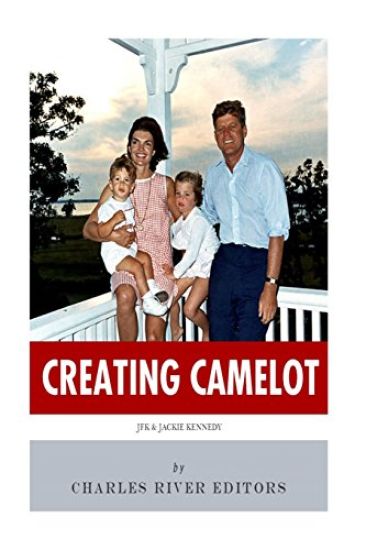
Creating Camelot: John F. Kennedy & Jackie Kennedy

Creating Camelot: John F. Kennedy & Jackie Kennedy

Charles River

Createspace Independent Publishing Platform
2013
nidottu
*Includes pictures of the Kennedys and important people, places, and events in their lives. *Includes an introduction. "Don't let it be forgot that once there was a spot for one brief shining moment that was known as Camelot" In many ways, John Fitzgerald Kennedy and his young family were the perfect embodiment of the '60s. The decade began with a sense of idealism, personified by the attractive Kennedy, his beautiful and fashionable wife Jackie, and his young children. Months into his presidency, Kennedy exhorted the country to reach for the stars, calling upon the nation to send a man to the Moon and back by the end of the decade. In 1961, Kennedy made it seem like anything was possible, and Americans were eager to believe him. The Kennedy years were fondly and famously labeled "Camelot" by Jackie herself, suggesting an almost mythical quality about the young President and his family. Much of the glamor and vigor of Camelot, if not the majority of it, was supplied by First Lady Jackie Kennedy, whose elegance and grace made her the most popular woman in the world. Her popularity threatened to eclipse even her husband's, who famously quipped on one presidential trip to France that he was "the man who accompanied Jacqueline Kennedy to Paris." Lady Jeanne Campbell put it best, writing for The London Evening Standard, "Jacqueline Kennedy has given the American people...one thing they have always lacked: Majesty." Americans were fascinated by the young First Lady's style, and the manner in which she glamorously positioned both the First Family and the White House in those years, and Jackie remains one of the country's most popular First Ladies. But it was in the face of adversity that she truly made her lasting mark, with the country taking its cue from her in the aftermath of the president's assassination. Having devised and lit the eternal flame at JFK's tombstone, Jackie also set about securing her husband's legacy, a time still fondly and mythically remembered as Camelot today, despite his legendary transgressions and infidelities. As it turned out, the '60s closely reflected the glossy, idealistic portrayal of John F. Kennedy, as well as the uglier truths. The country would achieve Kennedy's goal of a manned moon mission, and the landmark Civil Rights Act of 1964 finally guaranteed minorities their civil rights and restored equality, ensuring that the country "would live out the true meaning of its creed." But the idealism and optimism of the decade was quickly shattered, starting with Kennedy's assassination in 1963. The '60s were permanently marred by the Vietnam War, and by the time Robert F. Kennedy and Martin Luther King, Jr. were assassinated in 1968, the country was irreversibly jaded. The events of the decade produced protests and countercultures unlike anything the country had seen before, as young people came of age more quickly than ever. Creating Camelot chronicles the amazing lives and legacies of John and Jackie, weaving their lives and legacies together into one narrative. Along with pictures of the Kennedy family and important people, places, and events in their lives, you will learn about the John and Jackie like you never have before, in no time at all.
Current Events: Decoding the Conflict Between Israel and the Palestinians

Current Events: Decoding the Conflict Between Israel and the Palestinians

Charles River

Createspace Independent Publishing Platform
2013
nidottu
*Illustrated with dozens of pictures of leaders and places In May 2011, President Barack Obama gave speeches about the Middle East that discussed the Israeli-Palestinian conflict, using terms like "final status issues," "1967 lines with mutually agreed swaps," and "demographic realities." Obama's speeches were strongly denounced by both the Palestinians and the Israelis, while political commentators across the world debated what Obama's speeches actually meant. Four months later, in September, the Palestinians sought statehood at the United Nations. Why would the Palestinians go to the U. N. after President Obama had made clear for months that the U. S. would ultimately prevent any attempt at Palestinian statehood with its veto in the Security Council? Welcome to the Middle East conflict, a conflict that is technically 63 years old and counting but has its roots in over 2,000 years of history. With so much time and history, the peace process has become laden with unique, politically sensitive concepts like the right of return, contiguous borders, secure borders, demilitarized zones, and security requirements, with players like the Quartet, Palestinian Authority, Fatah, Hamas, the Arab League and Israel. Over time, it has become exceedingly difficult for even sophisticated political pundits and followers to keep track of it all. Until now. Decoding the Conflict Between Israel and the Palestinians cannot solve the peace process, nor does it heap credit or blame on any of the sides. This book goes about breaking down all the terms often thrown around in the Middle East that make the peace process a political minefield, and one that both beginners and sophisticated followers have a hard time keeping up with. Serving as both a glossary and primer of the history of the Middle East conflict and the peace process, Decoding the Conflict between Israel and the Palestinians defines the terms, looks at the region's history, discusses previous attempts at negotiations like Oslo and Taba, identifies important figures, and explains the arguments and mentalities of each side, showing why the conflict has proven so intractable. Along with analysis, anecdotes, and dozens of maps and pictures of important events and people, Decoding the Conflict between Israel and the Palestinians will get you up to speed on the history of the Middle East conflict and serve as a reference point that will help keep you updated as events in the region unfold.
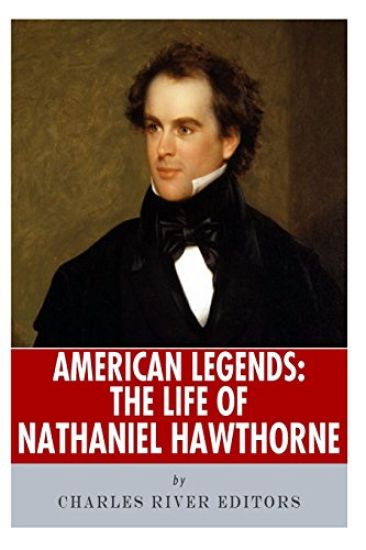
American Legends: The Life of Nathaniel Hawthorne

American Legends: The Life of Nathaniel Hawthorne

Charles River

Createspace Independent Publishing Platform
2013
nidottu
*Includes pictures of Hawthorne and other important people and places in his life. *Explains how Hawthorne's friends and family influenced his classic works. *Includes a Bibliography for further reading. "The bubble reputation is as much a bubble in literature as in war, and I should not be one whit the happier if mine were world-wide and time-long than I was when nobody but yourself had faith in me. The only sensible ends of literature are, first, the pleasurable toil of writing; second, the gratification of one's family and friends; and, lastly, the solid cash." - Nathaniel Hawthorne, 1851. A lot of ink has been spilled covering the lives of history's most influential figures, but how much of the forest is lost for the trees? In Charles River Editors' American Legends series, readers can get caught up to speed on the lives of America's most important men and women in the time it takes to finish a commute, while learning interesting facts long forgotten or never known. Nathaniel Hawthorne needs no formal introduction for any American who took a literature course in high school. It's impossible to avoid reading one of Hawthorne's classics, particularly The Scarlet Letter and The House of the Seven Gables. Hawthorne could trace his family roots back to the Puritans of the 17th century colonies, and he was clearly qualified to produce some of America's greatest historical fiction. In fact, people have long believed he changed the spelling of his last name to avoid association with an ancestor who had been involved in the Salem Witch trials, and his inclinations were on display with the way he portrayed Puritan Massachusetts in The Scarlet Letter. Given the fact that his home was Salem and he was a Transcendentalist, it's no surprise that much of Hawthorne's writing centers on New England, and his works were imbued with moral allegories that often featured the Puritans. With themes like evil, sin, and humanity, Hawthorne created unusually deep and complex characters in an era where it was rare to flesh out characters' psyches. Most Americans are roughly familiar with some of Hawthorne's life and work, but few are truly aware of just how prodigious Hawthorne was. In addition to his classic novels, Hawthorne wrote nearly 100 short stories, including classics like The Birthmark, and he rubbed elbows with men like Ralph Waldo Emerson, President Franklin Pierce, and other writers like Herman Melville. American Legends: The Life of Nathaniel Hawthorne profiles the life and career of one of America's greatest writers. Along with pictures of important people, places, and events, you will learn about Hawthorne like you never have before, in no time at all.
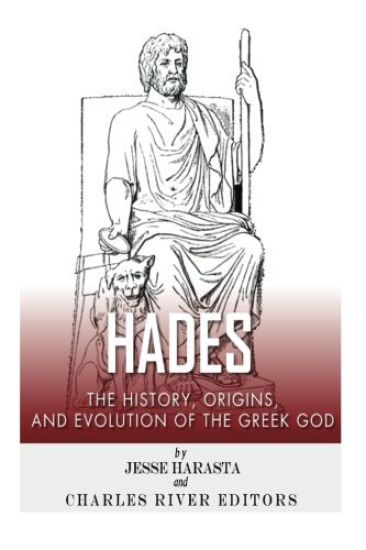
Hades: The History, Origins and Evolution of the Greek God

Hades: The History, Origins and Evolution of the Greek God

Charles River; Jesse Harasta

Createspace Independent Publishing Platform
2013
nidottu
*Includes pictures of historic art depicting Hades and other Greek gods. *Explains the historical origins of the god and the mythological tales about him. "The gloomy Hades enriches himself with our sighs and our tears " - Sophocles The Greek god Hades is something of an enigma. On the one hand, people can view him through the lens that was a byproduct of the Christian tradition, as a terrifying lord of death seated upon his ebony throne, an unseen force of power moving through the world. Certainly, many of the Ancient Greeks themselves saw the god in this light, whispering his name and making sacrifices of black sheep on dark nights and allowing the blood to trickle down into the earth to reach the underworld. On the other hand, there is a parallel Greek tradition that depicts Hades as a regal god and more of a dark parallel to his brother Zeus, who bears the same icons of sovereignty and may have some deep link to him in a primordial sense. The name "Hades" literally means "Unseen", but the Greeks had a superstitious fear of calling Hades by his proper name and thus created numerous ways of referring to the god. For instance, "Euboleus" means "Giver of Good Counsel," and "Polydectes" meant "he who receives many," "Stygeros" means "hateful one," and "Polydegmon" meant either "grey man" or "hospitable one." The most popular name was "Plouton" which means "wealth-giver" and referred to Hades' role in guarding the treasures of the earth. That name was eventually adopted and altered by the Romans to become their god "Pluto." Other names used for the god included Aidoneus, Ais, Clymenus and Pylartes. Given his importance as the lord of the underworld, Hades was a constant presence in Greek life, and descriptions of him, the river Styx, and his three-headed dog Cerberus are all instantly familiar to anyone who has read Greek mythology. At the same time, how did the Greeks attempt to appease Hades? Of particular importance was the division between Olympian gods, gods of the sky and of life, and Chthonic gods, gods of the earth and of death. While Hades was perhaps the best known of the Chthonic gods, the tradition of chthonic deities was much older and broader than him, so it's also useful to compare him to similar deities in other cultures' pantheons. This book explores the figure of Hades, including his origins, the stories told about him, the way he was worshiped and how he is remembered today. Along with pictures and a bibliography, you will learn about the Greek god like you never have before, in no time at all.
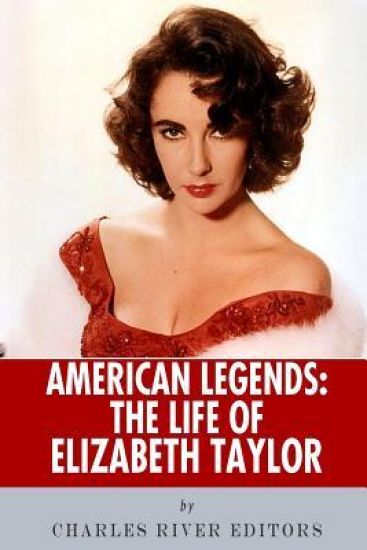
American Legends: The Life of Elizabeth Taylor

American Legends: The Life of Elizabeth Taylor

Charles River

Createspace Independent Publishing Platform
2013
nidottu
*Includes pictures of Taylor and important people, places, and scenes. *Includes Taylor's own quotes about her upbringing, films and relationships. *Includes a Bibliography for further reading. "I've always admitted that I'm ruled by my passions." - Elizabeth Taylor A lot of ink has been spilled covering the lives of history's most influential figures, but how much of the forest is lost for the trees? In Charles River Editors' American Legends series, readers can get caught up to speed on the lives of America's most important men and women in the time it takes to finish a commute, while learning interesting facts long forgotten or never known. Hollywood is full of cautionary tales for child actors like Judy Garland, Jackie Coogan, and Macaulay Caulkin, who all soared to fame in their youth only to suffer family feuds, drug addiction, or other ill effects of becoming famous so early in life. Even those child actors for whom stardom was not traumatic, such as Shirley Temple, had great difficulty succeeding in Hollywood as an adult, with their careers effectively over by the time they reached adulthood. Child actors may or may not enjoy the fame bestowed upon them so early in life, but their fame has almost always come at a cost, especially since it has traditionally been difficult for audiences to disassociate them from their early roles. On the other hand, the life of Elizabeth Taylor bears little in common with the paradigm of the troubled child star. After arriving in the United States at the age of 9, Taylor was indoctrinated into the life of the Hollywood studio system shortly after child stars Judy Garland and Mickey Rooney, but while Garland suffered great trauma at the hands of the studio system, Taylor's early experience in Hollywood represented the flip side of the coin. Groomed for a life in Hollywood by her zealous mother, Taylor enjoyed her life in the motion picture industry and reveled in the privileged lifestyle and opportunities she enjoyed by virtue of her profession. Acting supplied her with a lavish lifestyle and, more importantly for her, constant attention. From an early age, Taylor displayed a vociferous love for living in the public eye. Another difference separating her from other child stars is that Taylor was able to successfully transition from child star to major adult actress; in fact, her fame only escalated as she grew into adulthood. In many ways, Taylor enjoyed being in the public spotlight and living the lifestyle of the rich and famous, and her personal life very much resembled a performance suitable for Hollywood. Taylor faced great adversity throughout her life, including being married on eight different occasions to seven different spouses and fighting battles with weight and drug addiction. Still, while many actors grow resentful of public attention, even during her moments of personal struggle Taylor thrived on public attention and enjoyed a mutually adoring relationship with the American public. She was a creature of the studio system, yet she maintained a dynamic with the public that deviated sharply from the norms of child actors. American Legends: The Life of Elizabeth Taylor examines the life and career of Elizabeth Taylor, putting the spotlight on Taylor's child roles and her adult films, and the relationship between the two main stages of her career. Of course, it also documents the notorious elements of her personal life as well. Along with pictures of important people, places, and events, you will learn about Elizabeth Taylor like never before, in no time at all.
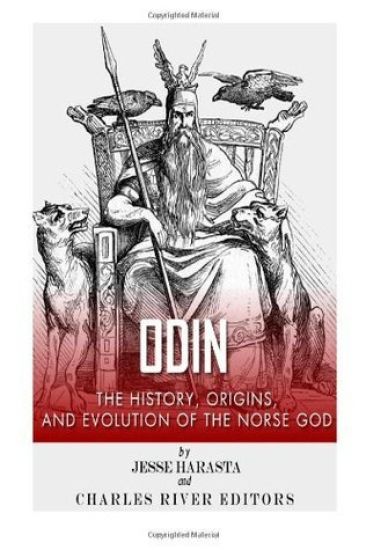
Odin: The Origins, History and Evolution of the Norse God

Odin: The Origins, History and Evolution of the Norse God

Charles River; Jesse Harasta

Createspace Independent Publishing Platform
2013
nidottu
*Includes pictures of important places and historic illustrations and art depicting Odin and other important Norse figures. *Explains the historical origins of the god, the mythological tales about him, and the religious evolution of Odin. *Includes a Bibliography for further reading. A one-eyed old man, with a gray cloak and a wide-brimmed hat leaning on a staff. A wanderer who appears when least expected, bringing triumph or doom. The god of prophecy, poetry and fate. A shapechanger. A sorcerer. The god Odin cuts a dramatic figure in Norse mythology and is still a part of the popular imagination. He is the inspiration for figures like J. R. R. Tolkien's Gandalf the Grey, and he still appears in modern literature as varied as Marvel Comics and Neil Gaiman's novel American Gods (2001). Alongside his son Thor, Odin is one of the best known Norse gods, and it's often easy to forget that he was once at the heart of a pantheon devoutly worshiped by millions of Europeans in the Middle Ages. Odin has numerous names and titles (over 200 by one account), but his best known title is "The All-Father," the co-creator of Earth ("Midgard"), humanity and all of the creatures that inhabitant this world. He is also, importantly, the god of prophecy, ecstasy, and poetry, all roles that were closely connected in the Norse world. Odin was a god of life and death as well, and was famous for taking the souls of warriors who died in combat back to his realm of Valhalla. This role was tied to his position as a god of war, a position that does not perhaps seem obvious to a modern reader for a god of knowledge and wisdom. However, Odin was the king of the gods and the master of Asgard; therefore, in the Norse understanding, one of his crucial tasks was the defense of that realm through military might if necessary. His living followers would call upon him in battle, and he was said to have taken champions and even led human armies to triumph. It is useful to compare Odin to two other prominent deities: Thor and Zeus. Thor, Odin's son, was a fellow Norse war god, and Zeus was a fellow king god. Yet in both cases, Odin differs greatly from these gods. He was more enigmatic, and his power is more indirect and subtle. Odin was a god of mysteries, of discovering hidden knowledge, and while he was mighty in battle, the stories where he shines are those where takes unassuming forms and gets others to divulge information that might not otherwise give. This differs from the other two gods' temperamental natures and their pride. Odin was always a god that plotted many steps ahead, was willing to make extreme short-term sacrifices to further his plans, and continuously worked to bend the nature of his fate. This book explores the figure of Odin, including his origins, the stories told about him, the way he was worshiped and what fragments and memories of him have survived into the modern era. Along with pictures and a bibliography, you will learn about Odin like you never have before, in no time at all.