Kirjojen hintavertailu – 12 903 725 kirjaa ja 27 kauppaa

Kirjailija

Charles River

Kirjat ja teokset yhdessä paikassa: 4 673 kirjaa, julkaisuja vuosilta 2013–2022, suosituimpiin kuuluu William Powell and Myrna Loy: The Lives and Careers of One of Classical Hollywood's Most Iconic Duos. Vertaile teosten hintoja ja tarkista saatavuus suomalaisista kirjakaupoista.

4 673 kirjaa

Kirjojen julkaisuvuodet: 2013–2022.

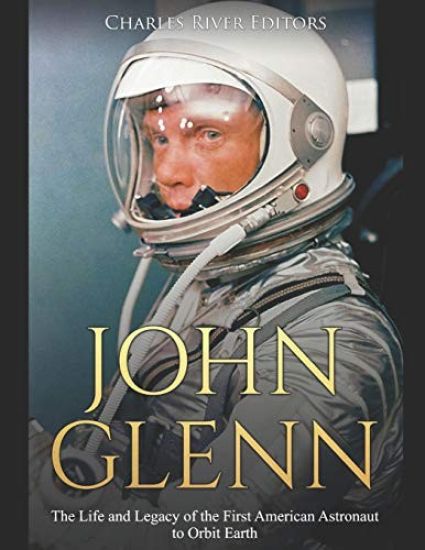
John Glenn: The Life and Legacy of the First American Astronaut to Orbit Earth
*Includes pictures*Includes a bibliography for further reading"As I hurtled through space, one thought kept crossing my mind - every part of this rocket was supplied by the lowest bidder." - John GlennToday the Space Race is widely viewed poignantly and fondly as a race to the Moon that culminated with Apollo 11 "winning" the Race for the United States. In fact, it encompassed a much broader range of competition between the Soviet Union and the United States that affected everything from military technology to successfully launching satellites that could land on Mars or orbit other planets in the Solar System. Moreover, the notion that America "won" the Space Race at the end of the 1960s overlooks just how competitive the Space Race actually was in launching people into orbit, as well as the major contributions the Space Race influenced in leading to today's International Space Station and continued space exploration. In fact, the Soviet Union had spent much of the 1950s leaving the United States in its dust. President Eisenhower and other Americans who could view Soviet rockets in the sky were justifiably worried that Soviet satellites in orbit could soon be spying on them or, even worse, dropping nuclear bombs on them. In 1960, when Eisenhower's administration began planning and funding for the famous Apollo program that would land the first men on the Moon in 1969, the Soviet Union was already thinking further ahead, literally. In one of the worst kept secrets of the Space Race, the Soviet Union launched two probes, Korabl 4 and Korabl 5, toward Mars in October 1960. From 1959-1963, the United States worked toward putting satellites and humans into orbit via the Mercury program, but they continued to lag behind the Soviets. With the opening of a new decade, the Soviets reinforced their Space Race lead in a big way. On April 12, 1961, the world watched as the Soviets scored two major victories: they sent the first human being into space and made that man the first to orbit the Earth. Yuri Gagarin's success seemed to both solidify the Soviet's lead in the Space Race and underline the importance of scientific achievements in the race for geopolitical prestige. Even on the other side of the world, the United States could not deny the significance of the Vostok mission. President Kennedy graciously congratulated the Soviets, while privately conceding that it would be impossible for the United States to match Soviet space achievements for some time. At the same time, American policymakers also understood the depth of this latest defeat in the Space Race. On February 20, 1962, John Glenn orbited the Earth, nearly a year after Gagarin's orbit, and he remains best known for that historic feat, but in many ways it obscures a life and career of astonishing depth. Before the Friendship 7 mission, Glenn was already a distinguished combat fighter in multiple wars, and he was one of America's best test pilots, a record that included making the first supersonic transcontinental flight in American history. He was an obvious candidate for the country's first team of astronauts, and it launched him not only into space but into a long political career. All told, Glenn earned too many awards to count, and along the way, he became the oldest person to fly in space. John Glenn: The Life and Legacy of the First American Astronaut to Orbit Earth profiles his life, chronicles his historic space mission, and details all the highlights before and after it. Along with pictures of important people, places, and events, you will learn about John Glenn like never before.
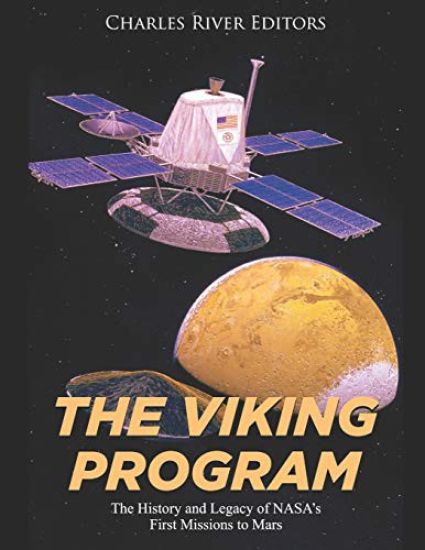
The Viking Program: The History and Legacy of NASA's First Missions to Mars
*Includes pictures*Includes a bibliography for further readingToday the Space Race is widely viewed poignantly and fondly as a race to the Moon that culminated with Apollo 11 "winning" the Race for the United States. In fact, it encompassed a much broader range of competition between the Soviet Union and the United States that affected everything from military technology to successfully launching satellites that could land on Mars or orbit other planets in the Solar System. Moreover, the notion that America "won" the Space Race at the end of the 1960s overlooks just how competitive the Space Race actually was in launching people into orbit, as well as the major contributions the Space Race influenced in leading to today's International Space Station and continued space exploration. In fact, the Soviet Union had spent much of the 1950s leaving the United States in its dust (and rocket fuel). President Eisenhower and other Americans who could view Soviet rockets in the sky were justifiably worried that Soviet satellites in orbit could soon be spying on them, or, even worse, dropping nuclear bombs on them. And in 1960, when Eisenhower's administration began planning and funding for the famous Apollo program that would land the first men on the Moon in 1969, the Soviet Union was already thinking further ahead, literally. In one of the worst kept secrets of the Space Race, the Soviet Union launched two probes, Korabl 4 and Korabl 5, toward Mars in October 1960. Even had the Soviet Union managed to keep the probes a secret, it wouldn't have mattered because both probes fell out of the sky before reaching Earth's orbit. The Soviets' rocket systems had failed, which would be a recurring problem for them throughout the 1960s. The race to Mars was off to a rough start, but it had started nonetheless. Several years before Mariner 9's successful orbiting mission, NASA had begun designing missions for unmanned landings on Mars that would use a spacecraft consisting of an orbiter module and a landing module. The design of the modular spacecraft came from NASA's successful use of a similar spacecraft delivery system for the Apollo program's manned missions to the Moon. The Viking 1 landing on Mars had originally been scheduled to coincide with the nation's bicentennial on July 4, 1976, but the dual celebration did not work out as planned because the original landing site was found to be unfit due to the number of large boulders that would be able to upend the craft upon landing. By then, Viking 1 had been heading to Mars for nearly a year, and Viking 2 was on its way as well. Viking 1's lander would successfully land on the Red Planet on July 20, 1976. Both Viking landers were huge successes just for landing on Mars and transmitting data, but they would end up exceeding NASA's wildest expectations. NASA hoped the Viking missions would provide better images of Mars' surface and the ability to determine the chemistry and biology of the soil, which might indicate signs of life. The Viking missions ended up providing an extremely comprehensive overview of the Martian surface and atmosphere. The Viking orbiters successfully orbited around Mars thousands of times, taking thousands of pictures, looking for signs of water in the atmosphere, and thermally mapping the heat on Mars' surface. Most importantly, the orbiters' pictures indicated wide, deep valleys on the surface, which was strong evidence of water. Both orbiters continued to transmit their data and the landers' data for a few years before running out of fuel. The Viking landers were even more successful. Both Viking landers functioned on Mars' surface for several years, successfully analyzing Martian soil, analyzing Mars' weather and atmosphere, searching for life, and taking pictures from the surface.
Weird Television: A Collection of Interrupted Broadcasts, Paranormal Apparitions, and Other Mysteries on TV
*Includes pictures*Includes a bibliography for further readingFor more than two generations, television has been a part of most people's lives, and few could remember a time when it wasn't there as a familiar, reliable source of information and entertainment. Today, viewers are accustomed to broadcasts running seamlessly with commercials following programming before more programs come on. The occasional glitch might happen here or there, including temporary blackouts due to storms, but for the most part, television runs incredibly smoothly. Of course, that wasn't all the case. At times, pranksters or political activists hacked into satellite feeds, protestors took over studios while live and on air, and intriguing paranormal events with few good explanations have been seen. In fact, the TV has always been a place of mystery, a battleground for competing ideologies, and a source of anonymous voices. Television broadcasts have been used to support war efforts, topple governments, communicate secretly, and even attempt to communicate with the dead. Weird Television: A Collection of Interrupted Broadcasts, Paranormal Apparitions, and Other Mysteries on TV includes strange stories that will make this familiar medium seem a bit less familiar and far more interesting. Along with pictures of important people, places, and events, you will learn about some of the world's strangest TV stories like never before.
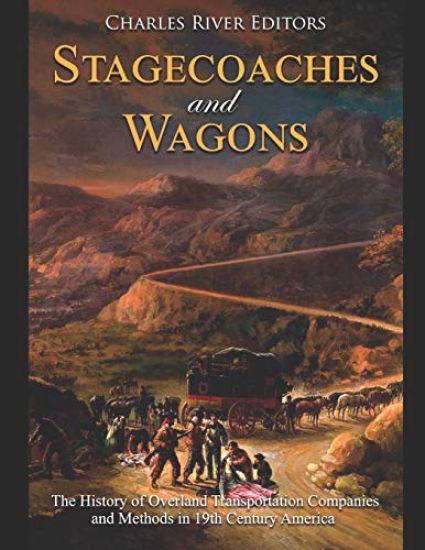
Stagecoaches and Wagons: The History of Overland Transportation Companies and Methods in 19th Century America
*Includes pictures*Includes online resources and a bibliography for further reading"A more uncouth clumsy machine can scarcely be imagined. In the front is a cabriolet fixed to the body of the coach, for the accommodation of three passengers, who are protected from the rain above, by the projecting roof of the coach, and in front by two heavy curtains of leather, well oiled, and smelling somewhat offensively, fastened to the roof. The inside, which is capacious, and lofty, and will hold six people in great comfort is lined with leather padded, and surrounded with little pockets, in which travellers deposit their bread, snuff, night caps, and pocket handkerchiefs, which generally enjoy each others company, in the same delicate depository. From the roof depends a large net work which is generally crouded with hats, swords, and band boxes, the whole is convenient, and when all parties are seated and arranged, the accommodations are by no means unpleasant. Upon the roof, on the outside, is the imperial, which is generally filled with six or seven persons more, and a heap of luggage, which latter also occupies the basket, and generally presents a pile, half as high again as the coach, which is secured by ropes and chains, tightened by a large iron windlass, which also constitutes another appendage of this moving mass. The body of the carriage rests upon large thongs of leather, fastened to heavy blocks of wood, instead of springs, and the whole is drawn by seven horses." - A European tourist's description of a stagecoach in the early 19th centuryThe United States is a massive country, with the continental 48 states covering over three million square miles. From the 13 colonies along the Atlantic Ocean, the nation spread ever westward, and before automobiles, airplanes, and railroads, the most reliable transportation was one's own two feet or a horse. Wagons, whether covered or uncovered, have been used to haul people and supplies for centuries. Roman armies marched with mule-powered wagons, and the Hussites utilized them to form defensive works in warfare. By the time the United States came into existence, wagons were a tried and true method of transportation, and to that end, men and their families expanded westward in wagons and stagecoaches, the automobiles of the era. Driven by oxen, horses, or mules, wagons and stagecoaches allowed people to traverse long distances much faster than walking, and although this form of travel remained relatively slow and perilous, the journey was often considered worth the risk. Some saw the potential profits in moving to the frontier, and as the nation expanded, enterprising individuals sought to form companies dedicated to stagecoach travel. In fact, trails would be forged across the country to help spread settlers, and the westward movement of Americans in the 19th century became one of the largest and most consequential migrations in history. Among the paths that blazed west, the most well-known is the Oregon Trail, which was not a single trail but a network of paths that began at one of four "jumping off" points. These trails branched off at various points and stretched roughly half the country, and hundreds of thousands of settlers would use it, yet the Oregon Trail is famous not so much for its physical dimensions but for what it represented. As many who used the Oregon Trail described in memoirs, the West represented opportunities for adventure, independence, and fortune. The stagecoaches and wagons were the vehicles carrying the supplies and people, making them crucial in shaping the nation. Stagecoaches and Wagons: The History of Overland Transportation Companies and Methods in 19th Century America looks at the vehicles that helped Americans travel across the young country. Along with pictures depicting important people, places, and events, you will learn about stagecoaches and wagons like never before.

La Compañía de las Indias Orientales: La historia de la más famosa empresa mercantil del Imperio británico
La Compa a Brit nica de las Indias Orientales fue uno de los jugadores cruciales en la formaci n del Imperio brit nico. Desde sus or genes como una empresa mercantil en puja por mantenerse a la par con sus competidores superiores -los holandeses, portugueses y espa oles-, a su per odo como la autoridad gobernante del subcontinente indio, hasta su ensoberbecida ca da, la Compa a de las Indias Orientales sirve como un lente a trav s del cual explorar las fuerzas sociales y econ micas de mayor escala que moldearon la formaci n de un Imperio brit nico global. Como una empresa privada que se convirti en un poder global no estatal por su propio m rito, la Compa a de las Indias Orientales tambi n sirve como una historia aleccionadora muy relevante para la situaci n pol tica y econ mica actual del mundo moderno. En su nivel m s b sico, la Compa a de las Indias Orientales jug un papel esencial en el desarrollo del comercio de larga distancia entre Inglaterra y Asia. El comercio en textiles, cer micas, t y otros bienes trajo consigo un enorme flujo de capital para la econom a brit nica. Esto no solo impuls la Revoluci n Industrial, sino que tambi n cre una demanda de productos de lujo entre la clase media. El crecimiento econ mico que hizo posible la Compa a fue un factor en el ascenso de Gran Breta a de un poder regional intermedio, a la naci n m s poderosa del planeta. Las ganancias generadas por la Compa a de las Indias Orientales tambi n fueron un incentivo para otras potencias europeas para seguir su ejemplo, lo que condujo a tres siglos de competencia colonialista alrededor del mundo. Este proceso abarc mucho m s que Asia y lleg a incluir al Medio Oriente y frica. M s all de su influencia m s obvia en reas como el comercio, la Compa a de las Indias Orientales tambi n sirvi como punto de contacto cultural entre gentes de los pa ses de Europa Occidental, Asia del Sur y Asia Oriental. Pr cticas brit nicas por excelencia, como tomar t , se hicieron posibles ampliamente gracias al comercio d la Compa a. Los productos y pr cticas culturales que viajaban de un continente a otro en nav os de la Compa a tambi n reconfiguraron la forma en que las sociedades en todo el mundo ve an asuntos de sexualidad, g nero, clases sociales y trabajo. En un nivel mucho m s oscuro, la Compa a de las Indias Orientales aliment la supremac a blanca y los conceptos europeos del Orientalismo (v ase Said, Orientalismo). Una de las principales razones por las que la Compa a de las Indias Orientales contin a siendo objeto de intenso inter s, es que las consecuencias de su influencia siguen siendo visibles en la India, Inglaterra y otras partes del mundo hoy en d a. Si bien la Corona inglesa finalmente reemplaz a la Compa a de las Indias Orientales como la autoridad gobernante en la India, los sistemas de producci n que sta hab a establecido permanecieron intactos. M s de medio siglo despu s de que la India se declarara independiente del Imperio brit nico, los efectos culturales y econ micos de este sistema colonial de producci n permanec an aparentes. Puede que las disparidades en riqueza y poder entre el Norte y el Sur globales no tengan su origen nicamente en la Compa a, pero sta jug un papel indisputable en los procesos imperiales. La Compa a de las Indias Orientales: La historia de la m s famosa empresa mercantil del Imperio brit nico examina la historia y el legado de una de las empresas comerciales m s notorias de la historia. En conjunto con fotograf as de personas, lugares y eventos importantes, aprender sobre la Compa a de las Indias Orientales como nunca antes, y en nada de tiempo.
La Compañía Neerlandesa de las Indias Orientales y Compañía Británica de las Indias Orientales: La historia y el legado de las empresas comerciales co
Desde la cl sica carne a la parrilla a sofisticados platos de cinco estrellas, la pimienta ha sido siempre la especia obligada. La pimienta a granel puede estar almacenada en los supermercados y tiendas de abarrote hoy en d a, pero hubo un tiempo cuando esa especie tan com n era considerada unos de los m s valiosos productos en el mundo. Los comerciantes se peleaban por poner sus manos sobre esas diminutas cuentas negras, que crecen en coloridos racimos de drupas parecidas a las bayas y que recuerdan a las luces de Navidad. Eran tan apreciadas que un n mero incontable de hombres cruzaban los turbulentos e inexplorados mares en busca de ellas. De hecho, la especia tropical era tan demandada que se derram sangre por este oro comestibles. Para muchos, la menci n de comerciantes mar timos evoca una galer a de ruidosos piratas ataviados seg n un estereotipo y con un colorido papagayo colocado sobre su hombro. Estos granujas n uticos vagan por los mares en busca de tesoros y aventuras. Aunque esa imagen sea inexacta, las compa as reales que alguna vez dominaron las aguas internacionales operaban con una sed parecida de riquezas. Quiz s la m s famosa -o como muchos dir an, infame- de estas corporaciones navales fue la Compa a Neerlandesa de las Indias Orientales, conocida tambi n como la VOC. Establecida hacia comienzos del siglo XVII, este mastodonte n utico se propuso aplastar y sacar a los dem s del mercado. Investida con el poder para librar guerras y exterminar a todo aquel que se atreviera a ponerse en su camino, el resto del mundo se paraliz mientras esta fuerza indetenible se adue aba del comercio mar timo internacional. La compa a destru a a sus oponentes a medida que ascend a a la cima, estableciendo un monopolio sobre el comercio global de especias que no solo sacudir a el mundo sino que cambiar a para siempre el curso de la historia moderna de los negocios. La Compa a Brit nica de las Indias Orientales fue uno de los jugadores cruciales en la formaci n del Imperio brit nico. Desde sus or genes como una empresa mercantil en puja por mantenerse a la par con sus competidores superiores -los holandeses, portugueses y espa oles-, a su per odo como la autoridad gobernante del subcontinente indio, hasta su ensoberbecida ca da, la Compa a de las Indias Orientales sirve como un lente a trav s del cual explorar las fuerzas sociales y econ micas de mayor escala que moldearon la formaci n de un Imperio brit nico global. Como una empresa privada que se convirti en un poder global no estatal por su propio m rito, la Compa a de las Indias Orientales tambi n sirve como una historia aleccionadora muy relevante para la situaci n pol tica y econ mica actual del mundo moderno. En su nivel m s b sico, la Compa a de las Indias Orientales jug un papel esencial en el desarrollo del comercio de larga distancia entre Inglaterra y Asia. El comercio en textiles, cer micas, t y otros bienes trajo consigo un enorme flujo de capital para la econom a brit nica. Esto no solo impuls la Revoluci n Industrial, sino que tambi n cre una demanda de productos de lujo entre la clase media. El crecimiento econ mico que hizo posible la Compa a fue un factor en el ascenso de Gran Breta a de un poder regional intermedio, a la naci n m s poderosa del planeta. Las ganancias generadas por la Compa a de las Indias Orientales tambi n fueron un incentivo para otras potencias europeas para seguir su ejemplo, lo que condujo a tres siglos de competencia colonialista alrededor del mundo. Este proceso abarc mucho m s que Asia y lleg a incluir al Medio Oriente y frica.
Weird Television: A Collection of Interrupted Broadcasts, Paranormal Apparitions, and Other Mysteries on TV
*Includes pictures*Includes a bibliography for further readingFor more than two generations, television has been a part of most people's lives, and few could remember a time when it wasn't there as a familiar, reliable source of information and entertainment. Today, viewers are accustomed to broadcasts running seamlessly with commercials following programming before more programs come on. The occasional glitch might happen here or there, including temporary blackouts due to storms, but for the most part, television runs incredibly smoothly. Of course, that wasn't all the case. At times, pranksters or political activists hacked into satellite feeds, protestors took over studios while live and on air, and intriguing paranormal events with few good explanations have been seen. In fact, the TV has always been a place of mystery, a battleground for competing ideologies, and a source of anonymous voices. Television broadcasts have been used to support war efforts, topple governments, communicate secretly, and even attempt to communicate with the dead. Weird Television: A Collection of Interrupted Broadcasts, Paranormal Apparitions, and Other Mysteries on TV includes strange stories that will make this familiar medium seem a bit less familiar and far more interesting. Along with pictures of important people, places, and events, you will learn about some of the world's strangest TV stories like never before.
The Viking Program: The History and Legacy of NASA's First Missions to Mars
*Includes pictures*Includes a bibliography for further readingToday the Space Race is widely viewed poignantly and fondly as a race to the Moon that culminated with Apollo 11 "winning" the Race for the United States. In fact, it encompassed a much broader range of competition between the Soviet Union and the United States that affected everything from military technology to successfully launching satellites that could land on Mars or orbit other planets in the Solar System. Moreover, the notion that America "won" the Space Race at the end of the 1960s overlooks just how competitive the Space Race actually was in launching people into orbit, as well as the major contributions the Space Race influenced in leading to today's International Space Station and continued space exploration. In fact, the Soviet Union had spent much of the 1950s leaving the United States in its dust (and rocket fuel). President Eisenhower and other Americans who could view Soviet rockets in the sky were justifiably worried that Soviet satellites in orbit could soon be spying on them, or, even worse, dropping nuclear bombs on them. And in 1960, when Eisenhower's administration began planning and funding for the famous Apollo program that would land the first men on the Moon in 1969, the Soviet Union was already thinking further ahead, literally. In one of the worst kept secrets of the Space Race, the Soviet Union launched two probes, Korabl 4 and Korabl 5, toward Mars in October 1960. Even had the Soviet Union managed to keep the probes a secret, it wouldn't have mattered because both probes fell out of the sky before reaching Earth's orbit. The Soviets' rocket systems had failed, which would be a recurring problem for them throughout the 1960s. The race to Mars was off to a rough start, but it had started nonetheless. Several years before Mariner 9's successful orbiting mission, NASA had begun designing missions for unmanned landings on Mars that would use a spacecraft consisting of an orbiter module and a landing module. The design of the modular spacecraft came from NASA's successful use of a similar spacecraft delivery system for the Apollo program's manned missions to the Moon. The Viking 1 landing on Mars had originally been scheduled to coincide with the nation's bicentennial on July 4, 1976, but the dual celebration did not work out as planned because the original landing site was found to be unfit due to the number of large boulders that would be able to upend the craft upon landing. By then, Viking 1 had been heading to Mars for nearly a year, and Viking 2 was on its way as well. Viking 1's lander would successfully land on the Red Planet on July 20, 1976. Both Viking landers were huge successes just for landing on Mars and transmitting data, but they would end up exceeding NASA's wildest expectations. NASA hoped the Viking missions would provide better images of Mars' surface and the ability to determine the chemistry and biology of the soil, which might indicate signs of life. The Viking missions ended up providing an extremely comprehensive overview of the Martian surface and atmosphere. The Viking orbiters successfully orbited around Mars thousands of times, taking thousands of pictures, looking for signs of water in the atmosphere, and thermally mapping the heat on Mars' surface. Most importantly, the orbiters' pictures indicated wide, deep valleys on the surface, which was strong evidence of water. Both orbiters continued to transmit their data and the landers' data for a few years before running out of fuel. The Viking landers were even more successful. Both Viking landers functioned on Mars' surface for several years, successfully analyzing Martian soil, analyzing Mars' weather and atmosphere, searching for life, and taking pictures from the surface.
John Glenn: The Life and Legacy of the First American Astronaut to Orbit Earth
*Includes pictures*Includes a bibliography for further reading"As I hurtled through space, one thought kept crossing my mind - every part of this rocket was supplied by the lowest bidder." - John GlennToday the Space Race is widely viewed poignantly and fondly as a race to the Moon that culminated with Apollo 11 "winning" the Race for the United States. In fact, it encompassed a much broader range of competition between the Soviet Union and the United States that affected everything from military technology to successfully launching satellites that could land on Mars or orbit other planets in the Solar System. Moreover, the notion that America "won" the Space Race at the end of the 1960s overlooks just how competitive the Space Race actually was in launching people into orbit, as well as the major contributions the Space Race influenced in leading to today's International Space Station and continued space exploration. In fact, the Soviet Union had spent much of the 1950s leaving the United States in its dust. President Eisenhower and other Americans who could view Soviet rockets in the sky were justifiably worried that Soviet satellites in orbit could soon be spying on them or, even worse, dropping nuclear bombs on them. In 1960, when Eisenhower's administration began planning and funding for the famous Apollo program that would land the first men on the Moon in 1969, the Soviet Union was already thinking further ahead, literally. In one of the worst kept secrets of the Space Race, the Soviet Union launched two probes, Korabl 4 and Korabl 5, toward Mars in October 1960. From 1959-1963, the United States worked toward putting satellites and humans into orbit via the Mercury program, but they continued to lag behind the Soviets. With the opening of a new decade, the Soviets reinforced their Space Race lead in a big way. On April 12, 1961, the world watched as the Soviets scored two major victories: they sent the first human being into space and made that man the first to orbit the Earth. Yuri Gagarin's success seemed to both solidify the Soviet's lead in the Space Race and underline the importance of scientific achievements in the race for geopolitical prestige. Even on the other side of the world, the United States could not deny the significance of the Vostok mission. President Kennedy graciously congratulated the Soviets, while privately conceding that it would be impossible for the United States to match Soviet space achievements for some time. At the same time, American policymakers also understood the depth of this latest defeat in the Space Race. On February 20, 1962, John Glenn orbited the Earth, nearly a year after Gagarin's orbit, and he remains best known for that historic feat, but in many ways it obscures a life and career of astonishing depth. Before the Friendship 7 mission, Glenn was already a distinguished combat fighter in multiple wars, and he was one of America's best test pilots, a record that included making the first supersonic transcontinental flight in American history. He was an obvious candidate for the country's first team of astronauts, and it launched him not only into space but into a long political career. All told, Glenn earned too many awards to count, and along the way, he became the oldest person to fly in space. John Glenn: The Life and Legacy of the First American Astronaut to Orbit Earth profiles his life, chronicles his historic space mission, and details all the highlights before and after it. Along with pictures of important people, places, and events, you will learn about John Glenn like never before.
The Inquisition in the New World: The History and Legacy of the Inquisition after Spain and Portugal Colonized the Americas
*Includes pictures*Includes a bibliography for further reading"When you tell someone your secret, your freedom is gone." - Fernando de RojasNone of these would hold a candle to the one birthed in the 15th century - the Spanish Inquisition. The notorious inquisition, the subject of multiple documentaries, movies, and other pop culture mediums, is an era darkly remembered for its oppression, barbarous torture, and religious tyranny. Serving as a backdrop for it all was a deadly disease, a man likened to Satan, and the tumultuous rise and fall of one of the most dreadful periods in European history. It was roughly around this time that a period of European exploration began. Trade was able to increase in Europe around the world due to more effective ships being introduced, and some of the improvements that were made to the ships were first introduced by the Chinese. The introduction of multiple mast ships and the sternpost rudders allowed the ships to travel quicker and be more maneuverable. By the start of the 15th century, ships were now much larger and able to support long distance travel with a minimum number of crew aboard. One explorer, Christopher Columbus, sought funding from the Portuguese to search for a passage to Asia by sailing westwards, but he was rejected. At this time in the late 15th century, Portugal's domination of the western African sea routes prompted the neighboring Crown of Castile and the Catholic monarchs in modern Spain to search for an alternative route to south and east Asia (termed Indies), so they provided Columbus with the funding he required. Ultimately, Columbus discovered the Americas in 1492, and Spanish settlements in the "West Indies" would eventually be established. New Spain was established in the aftermath of the Spanish conquest of the Aztec Empire in 1521, and as the most spectacular conquest and the richest province, New Spain quickly became the focus of Spanish America. The Viceroyalty of New Spain was established in 1535, comprising a vast region of what is now the American Southwest, all of Mexico and Central America, the various Spanish held islands of the Caribbean, the "Spanish Main," and the Spanish Far East Empire (comprised mainly of the Philippines). The Viceroyalty of New Castile (later named the Viceroyalty of Peru) was established in 1542 and comprised all of Spain's South American territory, such as it was defined, excluding the Guianas. In 1610, the viceregency of New Granada was established with its capital in Cartagena, comprising the modern states of Columbia, Venezuela, a portion of Equator and Panama. In 1776, after much jostling with the southern frontier of Portuguese Brazil, the viceregency of Rio la Plata was formed, comprising Argentina, Uruguay and Paraguay, with Buenos Aires a sits capital. The Portuguese, of course, established their territory of Brazil with its capital and Rio de Janeiro. Not surprisingly, as the Catholic empires expanded across the globe, persecution would travel with them, and the horrors experienced by indigenous populations in these colonies rivaled anything heretics back in Europe faced. The Inquisition in the New World: The History and Legacy of the Inquisition after Spain and Portugal Colonized the Americas looks at how the Inquisitions came to be, the manner in which it was exported west, and how people were tortured and executed. Along with pictures depicting important people, places, and events, you will learn about the Inquisition in the New World like never before.
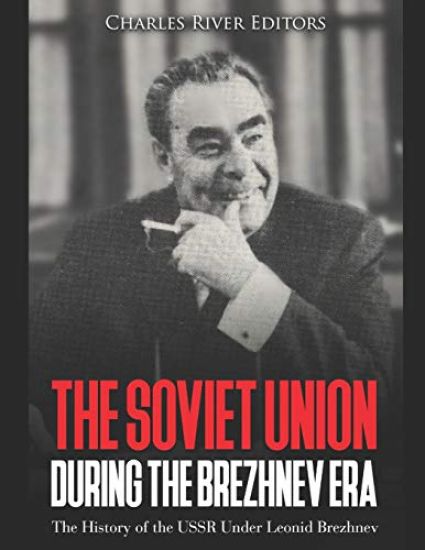
The Soviet Union during the Brezhnev Era: The History of the USSR Under Leonid Brezhnev
*Includes pictures*Includes a bibliography for further readingFor 30 years, much of the West looked on with disdain as the Bolsheviks took power in Russia and created and consolidated the Soviet Union. As bad as Vladimir Lenin seemed in the early 20th century, Joseph Stalin was so much worse that Churchill later remarked of Lenin, "Their worst misfortune was his birth... their next worst his death." Before World War II, Stalin consolidated his position by frequently purging party leaders (most famously Leon Trotsky) and Red Army leaders, executing hundreds of thousands of people at the least. And in one of history's greatest textbook examples of the idea that the enemy of my enemy is my friend, Stalin's Soviet Union allied with Britain and the United States to defeat Hitler in Europe during World War II. Stalin had ruled with an iron fist for nearly 30 years before his death in 1953, which may or may not have been murder, just as Stalin was preparing to conduct another purge. With his death, Soviet strongman and long-time Stalinist Nikita Khrushchev (1894-1971), who had managed to stay a step ahead of Stalin's purges if only because he participated in them, became the Soviet premier. A barely known figure outside of the Eastern bloc, Khrushchev was derided as a buffoon by one Western diplomat and mocked for his physical appearance by others, but any Western hopes that he would prove a more conciliatory figure than Stalin were quickly snuffed out as the hard-line Khrushchev embraced confrontational stances. In a statement to Western diplomats at the Polish embassy in Moscow, Khruschev famously warned, "We will bury you." And after his first meetings with President John F. Kennedy, Kennedy famously compared Khrushchev's negotiating techniques to his own father's. Even today, one of Khrushchev's most memorable moments is banging his shoe at a United Nations General Assembly meeting in September 1960 while a Filipino delegate was speaking. Personal histrionics aside, Khrushchev meant business when dealing with the West, especially the United States and its young president, John F. Kennedy. After sensing weakness and a lack of fortitude in Kennedy, Khrushchev made his most audacious and ultimately costly decision by attempting to place nuclear warheads at advanced, offensive bases located in Cuba, right off the American mainland. As it turned out, the Cuban Missile Crisis would show the Kennedy Administration's resolve, force Khrushchev to back down, and ultimately sow the seeds of Khrushchev's fall from power. By the time he died in 1971, he had been declared a non-citizen of the nation he had ruled for nearly 20 years. Leonid Brezhnev became First Secretary of the Communist Party in the Soviet Union in late 1964 after a plot to oust Khrushchev. Little is remembered in the public imagination about Brezhnev in comparison to Mikhail Gorbachev, Vladimir Lenin, or Joseph Stalin, despite the fact Brezhnev ruled the USSR from 1964-1982, longer than any Soviet leader other than Stalin. In fact, he held power during a tumultuous era that changed the world in remarkable ways, and that era has been favorably remembered by many former Soviet citizens. It marked a period of relative calm and even prosperity after the destruction of World War II and the tensions brought about by Khrushchev. Foremost amongst Brezhnev's achievements would be the d tente period in the early 1970s, when the Soviets and Americans came to a number of agreements that reduced Cold War pressures and the alarming threat of nuclear war. On the other side of the balance sheet, Brezhnev oversaw a malaise in Soviet society that later became known as an era of stagnation during which the Communist Bloc fell far behind the West in terms of economic output and standard of living. His regime also became notorious for its human rights abuses.
The Soviet Union during the Brezhnev Era: The History of the USSR Under Leonid Brezhnev
*Includes pictures*Includes a bibliography for further readingFor 30 years, much of the West looked on with disdain as the Bolsheviks took power in Russia and created and consolidated the Soviet Union. As bad as Vladimir Lenin seemed in the early 20th century, Joseph Stalin was so much worse that Churchill later remarked of Lenin, "Their worst misfortune was his birth... their next worst his death." Before World War II, Stalin consolidated his position by frequently purging party leaders (most famously Leon Trotsky) and Red Army leaders, executing hundreds of thousands of people at the least. And in one of history's greatest textbook examples of the idea that the enemy of my enemy is my friend, Stalin's Soviet Union allied with Britain and the United States to defeat Hitler in Europe during World War II. Stalin had ruled with an iron fist for nearly 30 years before his death in 1953, which may or may not have been murder, just as Stalin was preparing to conduct another purge. With his death, Soviet strongman and long-time Stalinist Nikita Khrushchev (1894-1971), who had managed to stay a step ahead of Stalin's purges if only because he participated in them, became the Soviet premier. A barely known figure outside of the Eastern bloc, Khrushchev was derided as a buffoon by one Western diplomat and mocked for his physical appearance by others, but any Western hopes that he would prove a more conciliatory figure than Stalin were quickly snuffed out as the hard-line Khrushchev embraced confrontational stances. In a statement to Western diplomats at the Polish embassy in Moscow, Khruschev famously warned, "We will bury you." And after his first meetings with President John F. Kennedy, Kennedy famously compared Khrushchev's negotiating techniques to his own father's. Even today, one of Khrushchev's most memorable moments is banging his shoe at a United Nations General Assembly meeting in September 1960 while a Filipino delegate was speaking. Personal histrionics aside, Khrushchev meant business when dealing with the West, especially the United States and its young president, John F. Kennedy. After sensing weakness and a lack of fortitude in Kennedy, Khrushchev made his most audacious and ultimately costly decision by attempting to place nuclear warheads at advanced, offensive bases located in Cuba, right off the American mainland. As it turned out, the Cuban Missile Crisis would show the Kennedy Administration's resolve, force Khrushchev to back down, and ultimately sow the seeds of Khrushchev's fall from power. By the time he died in 1971, he had been declared a non-citizen of the nation he had ruled for nearly 20 years. Leonid Brezhnev became First Secretary of the Communist Party in the Soviet Union in late 1964 after a plot to oust Khrushchev. Little is remembered in the public imagination about Brezhnev in comparison to Mikhail Gorbachev, Vladimir Lenin, or Joseph Stalin, despite the fact Brezhnev ruled the USSR from 1964-1982, longer than any Soviet leader other than Stalin. In fact, he held power during a tumultuous era that changed the world in remarkable ways, and that era has been favorably remembered by many former Soviet citizens. It marked a period of relative calm and even prosperity after the destruction of World War II and the tensions brought about by Khrushchev. Foremost amongst Brezhnev's achievements would be the d tente period in the early 1970s, when the Soviets and Americans came to a number of agreements that reduced Cold War pressures and the alarming threat of nuclear war. On the other side of the balance sheet, Brezhnev oversaw a malaise in Soviet society that later became known as an era of stagnation during which the Communist Bloc fell far behind the West in terms of economic output and standard of living. His regime also became notorious for its human rights abuses.
The Republic of Venice and Republic of Genoa: The History of the Italian Rivals and their Mediterranean Empires
*Includes pictures*Includes contemporary accounts*Includes a bibliography for further readingThe mystical floating city of Venice has inspired awe for generations, and it continues to be one of the most visited European cities for good reason. Tourists are drawn to the stunning blend of classical, Gothic, and Renaissance-inspired architecture across the picturesque towns and villages, the charming open-air markets, the mouthwatering traditional cuisine, and of course, the famous gondolas drifting down the twinkling blue waters. While these gondolas, along with the time-honored models of the Venetian vessels docked in the harbors, are one of the city's most defining landmarks, their beginnings are shrouded in a more obscure part of Venetian history. Founded in the wake of the decline of the Roman Empire, the Republic of Venice lasted for more than a thousand years, from 697-1797, and in order to understand its singular position in world history, it is necessary to first note its geographical positioning and its topographical make-up: Located in northeastern Italy at the head of the Adriatic, the city is made up of 120 islands that are connected by 430 bridges that cross over 170 canals, referred to as a "rio" or plural "rii" (Italian for river). As a maritime power, the interests of Venice once reached all the way to Asia, which allowed it to form an important crossroads within the Eastern Mediterranean, in terms of trade. In Venice, a vast array of products (raw materials, spices, cloth) came all the way from North Africa, Russia, and India and were exchanged for the goods and wealth of Europe." In a country that is as crowded with famous cities as Italy, Genoa is usually not one that first leaps to mind, at least for an English-speaking audience. If Venice, Florence, and Rome are the top three, they are often followed by Pisa, Sienna, and Naples, not to mention the islands of Sardinia and Sicily. Indeed, Genoa would come towards the end of a much longer list, and it might be most closely associated with its famous native son, Christopher Columbus, who ultimately sailed for Spain. For avid tourists, Genoa might be the port of call for those wishing to visit the stunning Cinque Terre on the Ligurian coast nearby, and for an expert in world politics, the city of Genoa might recall the memories of the tragic events of the 27th G8 summit in July 2001, when, at the height of the anti-globalization movement, protests turned violent and resulted in the death of a 23-year-old Carlo Giuliani. In today's news, Genoa might represent Italy's crumbling infrastructure and the apparent powerlessness of its government to repair it - on Tuesday, August 14, 2018, one of the main bridges of the city, the Morandi Bridge, collapsed, killing 43 people and leaving 600 homeless. The bridge's demise also destroyed Italy's reputation as an expert in mechanical engineering. Although Genoa cannot compete in the popular imagination with some of Italy's more famous cities, this busy port town perched above the sea once boasted a powerful empire that rivaled that of Venice. It also lasted for roughly the same time period, rising in the early Middle Ages and coming to an end at the hands of Napoleon Bonaparte near the end of the 18th century. Beyond its own success, the city's position at the head of the Mediterranean gave it an important strategic location from which to observe Italian and European history, as well as the world beyond. Today, historians are starting to correct the imbalance that has focused on Venice, Florence and Rome, and new histories are gradually introducing Genoa to the world, even as much remains to be uncovered. The Republic of Venice and Republic of Genoa: The History of the Italian Rivals and their Mediterranean Empires looks at the origins of the cities, their rise to power across the Mediterranean, and their inevitable demises.