Kirjojen hintavertailu – 12 903 725 kirjaa ja 27 kauppaa

Kirjailija

Charles River

Kirjat ja teokset yhdessä paikassa: 4 673 kirjaa, julkaisuja vuosilta 2013–2022, suosituimpiin kuuluu William Powell and Myrna Loy: The Lives and Careers of One of Classical Hollywood's Most Iconic Duos. Vertaile teosten hintoja ja tarkista saatavuus suomalaisista kirjakaupoista.

4 673 kirjaa

Kirjojen julkaisuvuodet: 2013–2022.

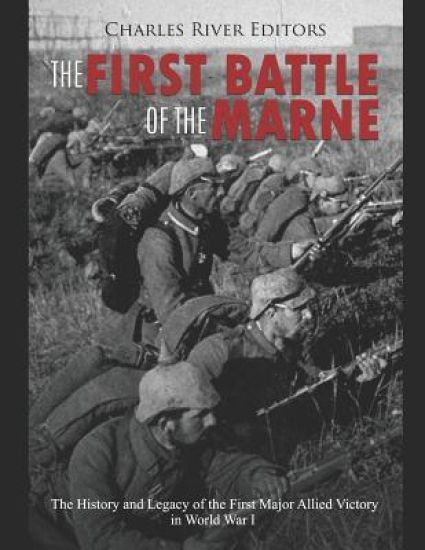
The First Battle of the Marne: The History and Legacy of the First Major Allied Victory in World War I
*Includes pictures*Includes online resources and a bibliography for further reading"So we come to the Marne. This will ever remain the Mystery Battle of all time. We can see more clearly across the mists of time how Hannibal conquered at Cannea, than why Joffre won at the Marne. No great acquisition of strength to either side - except that usually invaders outrun their supplies and defenders fall back upon their reserves - important, but not decisive. Not much real fighting, comparatively few casualties, no decisive episode in any part of the immense field; fifty explanations, all well documented, five hundred volumes of narrative and comment - but the mystery remains." - Winston ChurchillThe enduring image of World War I is of men stuck in muddy trenches, and of vast armies deadlocked in a fight neither could win. It was a war of barbed wire, poison gas, and horrific losses as officers led their troops on mass charges across No Man's Land and into a hail of bullets. While these impressions are all too true, they hide the fact that trench warfare was dynamic and constantly evolving throughout the war as all armies struggled to find a way to break through the opposing lines. Needless to say, the First World War came at an unfortunate time for those who would fight in it. After an initial period of relatively rapid maneuver during which the German forces pushing through Belgium and the French and British forces attempting to stymie them made an endless series of abortive flanking movements that extended the lines to the sea, a stalemate naturally tended to develop. The infamous trench lines soon snaked across the French and Belgian countryside, creating an essentially futile static slaughterhouse whose sinister memory remains to this day. However, if trench warfare was an inevitability during the war, it is only because the events leading up to the First Battle of the Marne were quite different. The armies at the beginning of the war moved quickly through the land, but the First Battle of the Marne devolved into a bloody pitched battle that led to the construction of trenches after the Germans retreated, blocked in their pursuit of Paris. When the aftermath disintegrated into a war between trenches, some Germans thought they had the upper hand since they were occupying French territory, but with fewer soldiers than the combined Allied nations and fewer resources and supplies, it was possibly only a matter of time before they were ultimately defeated. The commander of the German armies, General Helmuth von Moltke, allegedly said to Kaiser Wilhelm II immediately after the First Battle of the Marne, "Your Majesty, we have lost the war." Winston Churchill himself would later reference that anecdote, writing, "Whether General von Moltke actually said to the Emperor, 'Majesty, we have lost the war, ' we do not know. We know anyhow that with a prescience greater in political than in military affairs, he wrote to his wife on the night of the 9th, 'Things have not gone well. The fighting east of Paris has not gone in our favour, and we shall have to pay for the damage we have done.'"The First Battle of the Marne: The History and Legacy of the First Major Allied Victory in World War I analyzes one of the Great War's most important conflicts, and how it brought about trench warfare. Along with pictures of important people, places, and events, you will learn about the First Battle of the Marne like never before.
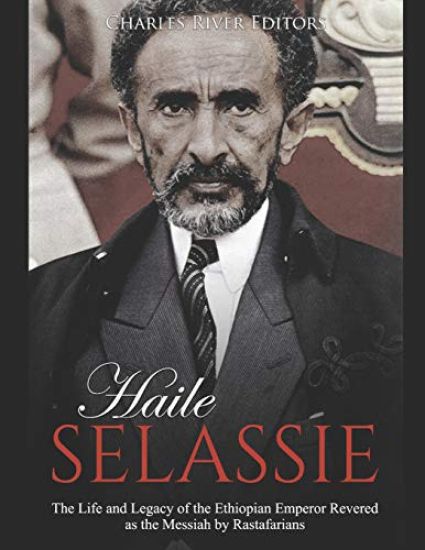
Haile Selassie: The Life and Legacy of the Ethiopian Emperor Revered as the Messiah by Rastafarians
*Includes pictures*Includes online resources and a bibliography for further reading"By virtue of His Imperial Blood, as well as by anointing He has received, the person of the Emperor is sacred. His dignity is inviolable and His power indisputable." - Article 4 of the revised Constitution of Ethiopia (1955)The modern history of Africa was, until very recently, written on behalf of the indigenous races by the white man, who had forcefully entered the continent during a particularly hubristic and dynamic phase of European history. In 1884, Prince Otto von Bismarck, the German chancellor, brought the plenipotentiaries of all major powers of Europe together, to deal with Africa's colonization in such a manner as to avoid provocation of war. This event-known as the Berlin Conference of 1884-1885-galvanized a phenomenon that came to be known as the Scramble for Africa. The conference established two fundamental rules for European seizure of Africa. The first of these was that no recognition of annexation would granted without evidence of a practical occupation, and the second, that a practical occupation would be deemed unlawful without a formal appeal for protection made on behalf of a territory by its leader, a plea that must be committed to paper in the form of a legal treaty. Before World War II, few in the West had ever heard of Abyssinia, and fewer still could point to a map and tell precisely where it was. On the eve of that war, in the autumn of 1935, as the forces of imperial Italy prepared to invade the sovereign territory of Ethiopia, the leaders of the Allies brimmed with sympathy for the imperiled African kingdom but offered nothing in the way of practical assistance. Rallying his subjects against the invaders was Negus Negusti, the "King of Kings," Emperor Haile Selassie, the last ruler of the great Solomonic Dynasty of Ethiopia. The Italians, led by Benito Mussolini, were practically unassailable at that point, and while a bold resistance was mounted to hold back their invasion, the effort was ultimately futile. On May 2, 1936, as the Italian army bore down on the capital at Addis Ababa, Emperor Haile Selassie boarded a train and fled east to the French territory of Djibouti. From there, he was granted asylum in Britain. The Allies' conquest of Ethiopia formed a cornerstone of the early phases of the North Africa Campaign during World War II, and the dramatic advance of Allied forces on Addis Ababa in the spring of 1941 placed Ethiopia very much at the forefront of Western affairs. In May of that year, Emperor Haile Selassie returned in triumph to the capital of his kingdom, the fanfare and hubris of which tended to project his personality to the forefront of the global political stage. Haile Selassie, a god-like figure among his devotees and followers, was recognized then as one of the great political personalities of the 20th century, and his influence over world affairs was disproportionate, bearing in mind the minor international significance of Ethiopia itself, a feudal society steeped in medieval traditions. His "Appeal to the League of Nations," an address delivered to the world body in 1936 that admonished it for betraying its own principles, still ranks today as one of the greatest moments of political oratory ever recorded. In the West, of course, the focus on Ethiopia commonly comes from the Italian standpoint, which overlooks just how important a figure the Ethiopian emperor was in the 20th century. Far from merely being the ruler of a land being carved up by imperialists, Haile Selassie's story is one of a remarkable rise, and his impact on the Rastafari movement and Ethiopia's global standing remain strong today. Haile Selassie: The Life and Legacy of the Ethiopian Emperor Revered as the Messiah by Rastafarians looks at one of the most famous rulers of the 20th century.

Haile Selassie: The Life and Legacy of the Ethiopian Emperor Revered as the Messiah by Rastafarians
*Includes pictures*Includes online resources and a bibliography for further reading"By virtue of His Imperial Blood, as well as by anointing He has received, the person of the Emperor is sacred. His dignity is inviolable and His power indisputable." - Article 4 of the revised Constitution of Ethiopia (1955)The modern history of Africa was, until very recently, written on behalf of the indigenous races by the white man, who had forcefully entered the continent during a particularly hubristic and dynamic phase of European history. In 1884, Prince Otto von Bismarck, the German chancellor, brought the plenipotentiaries of all major powers of Europe together, to deal with Africa's colonization in such a manner as to avoid provocation of war. This event-known as the Berlin Conference of 1884-1885-galvanized a phenomenon that came to be known as the Scramble for Africa. The conference established two fundamental rules for European seizure of Africa. The first of these was that no recognition of annexation would granted without evidence of a practical occupation, and the second, that a practical occupation would be deemed unlawful without a formal appeal for protection made on behalf of a territory by its leader, a plea that must be committed to paper in the form of a legal treaty. Before World War II, few in the West had ever heard of Abyssinia, and fewer still could point to a map and tell precisely where it was. On the eve of that war, in the autumn of 1935, as the forces of imperial Italy prepared to invade the sovereign territory of Ethiopia, the leaders of the Allies brimmed with sympathy for the imperiled African kingdom but offered nothing in the way of practical assistance. Rallying his subjects against the invaders was Negus Negusti, the "King of Kings," Emperor Haile Selassie, the last ruler of the great Solomonic Dynasty of Ethiopia. The Italians, led by Benito Mussolini, were practically unassailable at that point, and while a bold resistance was mounted to hold back their invasion, the effort was ultimately futile. On May 2, 1936, as the Italian army bore down on the capital at Addis Ababa, Emperor Haile Selassie boarded a train and fled east to the French territory of Djibouti. From there, he was granted asylum in Britain. The Allies' conquest of Ethiopia formed a cornerstone of the early phases of the North Africa Campaign during World War II, and the dramatic advance of Allied forces on Addis Ababa in the spring of 1941 placed Ethiopia very much at the forefront of Western affairs. In May of that year, Emperor Haile Selassie returned in triumph to the capital of his kingdom, the fanfare and hubris of which tended to project his personality to the forefront of the global political stage. Haile Selassie, a god-like figure among his devotees and followers, was recognized then as one of the great political personalities of the 20th century, and his influence over world affairs was disproportionate, bearing in mind the minor international significance of Ethiopia itself, a feudal society steeped in medieval traditions. His "Appeal to the League of Nations," an address delivered to the world body in 1936 that admonished it for betraying its own principles, still ranks today as one of the greatest moments of political oratory ever recorded. In the West, of course, the focus on Ethiopia commonly comes from the Italian standpoint, which overlooks just how important a figure the Ethiopian emperor was in the 20th century. Far from merely being the ruler of a land being carved up by imperialists, Haile Selassie's story is one of a remarkable rise, and his impact on the Rastafari movement and Ethiopia's global standing remain strong today. Haile Selassie: The Life and Legacy of the Ethiopian Emperor Revered as the Messiah by Rastafarians looks at one of the most famous rulers of the 20th century.
Weird Radio: A Collection of Spy Transmissions, Unidentified Stations, and other Mysteries of the Airwaves
*Includes pictures*Includes online resources and a bibliography for further readingFor more than a century, radio has been a part of people's lives. No one alive today remembers a time when it hadn't always been there as a familiar, reliable source of information and entertainment. Today, it seems a bit mundane, overtaken by the Internet and satellite television. Even in the 1980s, the development of cable television (50 channels instead of five) and the start of MTV made radio seem quaint, and as many once claimed, "Radio is dead." It wasn't, of course. Radio is still popular today, with as many stations as ever, and it remains a part of the world that is taken for granted. While not dead, its familiarity has made it seem a bit mundane, but people shouldn't think of it that way. In fact, the airwaves have always been a place of mystery, a battleground of competing ideologies, and a source of anonymous voices. Radio has been used to support war efforts, topple governments, communicate secretly, and even attempt to communicate with the dead. Weird Radio: A Collection of Spy Transmissions, Unidentified Stations, and other Mysteries of the Airwaves includes strange stories that will make this familiar medium seem a bit less familiar and far more interesting. Along with pictures of important people, places, and events, you will learn about some of the world's strangest radio stories like never before.
Weird Radio: A Collection of Spy Transmissions, Unidentified Stations, and other Mysteries of the Airwaves
*Includes pictures*Includes online resources and a bibliography for further readingFor more than a century, radio has been a part of people's lives. No one alive today remembers a time when it hadn't always been there as a familiar, reliable source of information and entertainment. Today, it seems a bit mundane, overtaken by the Internet and satellite television. Even in the 1980s, the development of cable television (50 channels instead of five) and the start of MTV made radio seem quaint, and as many once claimed, "Radio is dead." It wasn't, of course. Radio is still popular today, with as many stations as ever, and it remains a part of the world that is taken for granted. While not dead, its familiarity has made it seem a bit mundane, but people shouldn't think of it that way. In fact, the airwaves have always been a place of mystery, a battleground of competing ideologies, and a source of anonymous voices. Radio has been used to support war efforts, topple governments, communicate secretly, and even attempt to communicate with the dead. Weird Radio: A Collection of Spy Transmissions, Unidentified Stations, and other Mysteries of the Airwaves includes strange stories that will make this familiar medium seem a bit less familiar and far more interesting. Along with pictures of important people, places, and events, you will learn about some of the world's strangest radio stories like never before.