Kirjojen hintavertailu – 12 903 725 kirjaa ja 27 kauppaa

Kirjailija

Charles River

Kirjat ja teokset yhdessä paikassa: 4 673 kirjaa, julkaisuja vuosilta 2013–2022, suosituimpiin kuuluu William Powell and Myrna Loy: The Lives and Careers of One of Classical Hollywood's Most Iconic Duos. Vertaile teosten hintoja ja tarkista saatavuus suomalaisista kirjakaupoista.

4 673 kirjaa

Kirjojen julkaisuvuodet: 2013–2022.

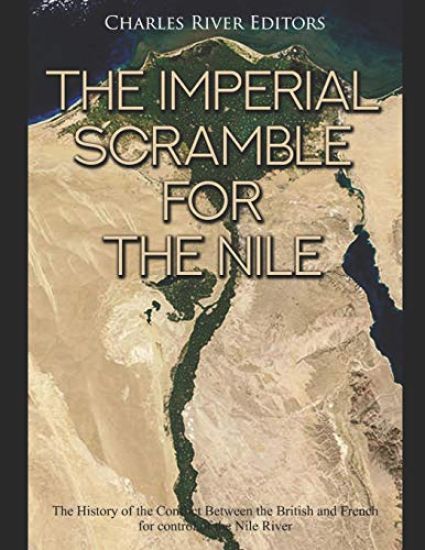
The Imperial Scramble for the Nile: The History of the Conflict Between the British and French for Control of the Nile River
*Includes pictures*Includes a bibliography for further reading"Before this time tomorrow I shall have gained a peerage, or Westminster Abbey." - Admiral Horatio Nelson before the Battle of the NileIn 1798, an initial review of France's naval forces had led Napoleon to conclude his navy could not hope to outfight the power of the Royal Navy, which had been the dominant naval power for centuries, so he was forced to look elsewhere. After months of planning, Napoleon crafted a scheme to attack and conquer Egypt, denying the British easy access to their colonies in India, with the ultimate goal of linking up with the Sultan Tipoo in India itself and defeating the British in the field there. Napoleon sailed with Admiral Brueys and 30,000 troops that June, heading for Egypt. Notionally part of the Ottoman Empire, Egypt was de facto a weak independent regime run by the breakaway Mamelukes. For France, it offered an overland route to India and a chance to beat Britain at her own game via economic strangulation. Napoleon could not have known it, but his campaign was the start of 150 years of imperialism along the Nile River, as Europeans endeavored to explore, control, and colonize the Nile River. This would bring them into all kinds of conflicts, not just with the indigenous natives residing there but also with each other, as each empire sought to get a leg up on the competition. Napoleon's Egyptian Campaign failed in all of its objectives other than in the acquisition of knowledge. Far from frustrating British ambitions in the Orient, the British triumphed in the minor war that Napoleon triggered, and it was the British who would dominate Egypt for the next 150 years. Even after the British took control of Egypt, knowledge about the Nile remained sparse, most importantly the source of the river, and exploration all over the continent took place among adventurers of various nationalities. Other countries also sought to get a foothold on the continent, to the extent that near the end of the 19th century, Otto von Bismarck, the German chancellor, brought the plenipotentiaries of all major powers of Europe together to deal with Africa's colonization in such a manner as to avoid provocation of war. This event, known as the Berlin Conference of 1884-1885, galvanized a phenomenon that came to be known as the Scramble for Africa. The conference established two fundamental rules for European seizure of Africa. The first of these was that no recognition of annexation would granted without evidence of a practical occupation, and the second, that a practical occupation would be deemed unlawful without a formal appeal for protection made on behalf of a territory by its leader, a plea that must be committed to paper in the form of a legal treaty. This began a rush, spearheaded mainly by European commercial interests in the form of Chartered Companies, to penetrate the African interior and woo its leadership with guns, trinkets and alcohol, and having thus obtained their marks or seals upon spurious treaties, begin establishing boundaries of future European African colonies. The ease with which this was achieved was due to the fact that, at that point, traditional African leadership was disunited, and the people had just staggered back from centuries of concussion inflicted by the slave trade. Thus, to usurp authority, to intimidate an already broken society, and to play one leader against the other was a diplomatic task so childishly simple, the matter was wrapped up, for the most part, in less than a decade. Even at that stage, however, the countries would keep jostling for position in Africa against each other, attempting to snap up more land and consolidate it. As such, the scramble kept going at a fevered pitch until the outbreak of World War I. The This book chronicles the competition between both countries for control of strategic parts of the continent.
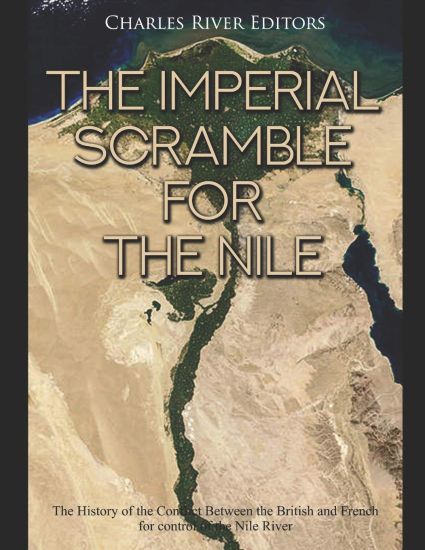
The Imperial Scramble for the Nile: The History of the Conflict Between the British and French for Control of the Nile River
*Includes pictures*Includes a bibliography for further reading"Before this time tomorrow I shall have gained a peerage, or Westminster Abbey." - Admiral Horatio Nelson before the Battle of the NileIn 1798, an initial review of France's naval forces had led Napoleon to conclude his navy could not hope to outfight the power of the Royal Navy, which had been the dominant naval power for centuries, so he was forced to look elsewhere. After months of planning, Napoleon crafted a scheme to attack and conquer Egypt, denying the British easy access to their colonies in India, with the ultimate goal of linking up with the Sultan Tipoo in India itself and defeating the British in the field there. Napoleon sailed with Admiral Brueys and 30,000 troops that June, heading for Egypt. Notionally part of the Ottoman Empire, Egypt was de facto a weak independent regime run by the breakaway Mamelukes. For France, it offered an overland route to India and a chance to beat Britain at her own game via economic strangulation. Napoleon could not have known it, but his campaign was the start of 150 years of imperialism along the Nile River, as Europeans endeavored to explore, control, and colonize the Nile River. This would bring them into all kinds of conflicts, not just with the indigenous natives residing there but also with each other, as each empire sought to get a leg up on the competition. Napoleon's Egyptian Campaign failed in all of its objectives other than in the acquisition of knowledge. Far from frustrating British ambitions in the Orient, the British triumphed in the minor war that Napoleon triggered, and it was the British who would dominate Egypt for the next 150 years. Even after the British took control of Egypt, knowledge about the Nile remained sparse, most importantly the source of the river, and exploration all over the continent took place among adventurers of various nationalities. Other countries also sought to get a foothold on the continent, to the extent that near the end of the 19th century, Otto von Bismarck, the German chancellor, brought the plenipotentiaries of all major powers of Europe together to deal with Africa's colonization in such a manner as to avoid provocation of war. This event, known as the Berlin Conference of 1884-1885, galvanized a phenomenon that came to be known as the Scramble for Africa. The conference established two fundamental rules for European seizure of Africa. The first of these was that no recognition of annexation would granted without evidence of a practical occupation, and the second, that a practical occupation would be deemed unlawful without a formal appeal for protection made on behalf of a territory by its leader, a plea that must be committed to paper in the form of a legal treaty. This began a rush, spearheaded mainly by European commercial interests in the form of Chartered Companies, to penetrate the African interior and woo its leadership with guns, trinkets and alcohol, and having thus obtained their marks or seals upon spurious treaties, begin establishing boundaries of future European African colonies. The ease with which this was achieved was due to the fact that, at that point, traditional African leadership was disunited, and the people had just staggered back from centuries of concussion inflicted by the slave trade. Thus, to usurp authority, to intimidate an already broken society, and to play one leader against the other was a diplomatic task so childishly simple, the matter was wrapped up, for the most part, in less than a decade. Even at that stage, however, the countries would keep jostling for position in Africa against each other, attempting to snap up more land and consolidate it. As such, the scramble kept going at a fevered pitch until the outbreak of World War I. The This book chronicles the competition between both countries for control of strategic parts of the continent.

19th Century America's Most Influential Naval Officers: The Lives, Careers, and Battles of Stephen Decatur, Oliver Hazard Perry, David Farragut, David
*Includes pictures*Includes excerpts of contemporary accounts"We have met the enemy and they are ours." - Oliver Hazard PerryAmericans had few things to celebrate during the Barbary Wars or the War of 1812, but one of them was the growing prestige of the U. S. Navy, and among those who were instrumental in its development, few were as influential as Stephen Decatur Jr. Decatur had an impact on nearly every war America fought in between the 1780s until his death in 1820, and his stardom ensured that he was a fixture among Washington, D. C.'s elite in his own lifetime. As with John Paul Jones during the American Revolution, Decatur's activities helped instantly associate his name with the fledgling country's success at sea. One of the only major victories the Americans won throughout the War of 1812 came at the Battle of Lake Erie in September 1813, and that action made Oliver Hazard Perry, a veteran of the Barbary Wars and commander of the USS Lawrence, a legend whose name has endured for over 200 years. Perry was so instrumental in the victory that British historian C. S. Forester noted "it was as fortunate for the Americans that the Lawrence still possessed a boat that would float, as it was that Perry was not hit." As one of the biggest naval battles of the war, the results meant that America maintained control of Lake Erie, an important location from which they could recover Detroit and be better positioned to confront the British and Shawnee leader Tecumseh's confederacy. For his part, Perry would forever be remembered as the "Hero of Lake Erie," even as he and compatriot Captain Jesse Elliot would feud over their respective actions during the battle for the rest of Perry's life. Despite his experiences throughout the Civil War, Farragut's name has become almost universally associated with a famous quote attributed to him during the Battle of Mobile Bay, when his flotilla encountered mines while trying to subdue the Confederacy's last major open port. After one of the ships hit a mine and sank, the others began to pull back, only for Farragut to urge his forces forward, yelling, "Damn the torpedoes " The ensuing victory earned Farragut another promotion in rank, and by the time Farragut died in 1870 at the age of 69, he had served in the U. S. Navy for nearly 60 years, ensuring that he would forever be remembered as one of his country's most important naval officers. Porter was recognized throughout the Civil War for his service, even as he was subjected to the kind of politicking that marked the war effort in Washington, and he became just the second man in the history of the U. S. Navy to attain the rank of Admiral. He would also have a distinguished career after the war as he helped reform the Navy. The Spanish-American War was famously labeled a "splendid little war." by John Hay, U. S. Ambassador to the United Kingdom, in a letter to Theodore Roosevelt, and while it is often overlooked today due to its brief and one-sided nature, the conflict produced one of the most popular military heroes in American history. While many are familiar with Roosevelt and his Rough Riders, the naval exploits of George Dewey were seemingly nothing short of miraculous. A former veteran of various naval engagements in the Civil War, Dewey managed to find himself in charge of the Asiatic Squadron, and in its most famous battle at Manila Bay, Dewey scored a decisive victory that destroyed Spain's Pacific fleet and subdued Manila's shore batteries while suffering just one American death. While he would never enjoy political success, his distinguished naval career resulted in a promotion to Admiral of the Navy, the equivalent of a six-star admiral. Dewey remains the only American to ever attain that rank, and he became the benchmark by which future naval officers measured themselves, especially during the 20th century's cataclysmic world wars.
The Fight for Zimbabwe: The History and Legacy of the British Empire's Attempt to Establish a Colony in the 19th Century
*Includes pictures*Includes a bibliography for further readingThe modern history of Africa was, until very recently, written on behalf of the indigenous races by the white man, who had forcefully entered the continent during a particularly hubristic and dynamic phase of European history. In 1884, Prince Otto von Bismark, the German chancellor, brought the plenipotentiaries of all major powers of Europe together, to deal with Africa's colonization in such a manner as to avoid provocation of war. This event-known as the Berlin Conference of 1884-1885-galvanized a phenomenon that came to be known as the Scramble for Africa. The conference established two fundamental rules for European seizure of Africa. The first of these was that no recognition of annexation would granted without evidence of a practical occupation, and the second, that a practical occupation would be deemed unlawful without a formal appeal for protection made on behalf of a territory by its leader, a plea that must be committed to paper in the form of a legal treaty. This began a rush, spearheaded mainly by European commercial interests in the form of Chartered Companies, to penetrate the African interior and woo its leadership with guns, trinkets and alcohol, and having thus obtained their marks or seals upon spurious treaties, begin establishing boundaries of future European African colonies. The ease with which this was achieved was due to the fact that, at that point, traditional African leadership was disunited, and the people had just staggered back from centuries of concussion inflicted by the slave trade. Thus, to usurp authority, to intimidate an already broken society, and to play one leader against the other was a diplomatic task so childishly simple, the matter was wrapped up, for the most part, in less than a decade. There were some exceptions to this, however, the most notable of which was perhaps the Zulu Nation, a centralized monarchy of enormous military prowess that required a British colonial war, the storied Anglo-Zulu War of 1879, to affect pacification. Another was the amaNdebele, an offshoot of the Zulu, established as early as the 1830s in the southeastern quarter of what would become Rhodesia, and later still Zimbabwe, in the future. Both were powerful, centralized monarchies, fortified by an organized and aggressive professional army, subdivided into regiments, and owing fanatical loyalty to the crown. The Zulu were not dealt with by treaty, and their history is perhaps the subject of another episode of this series, but the amaNdebele were, and early European treaty and concession gatherers were required to tread with great caution as they entered their lands. It would be a long time before the inevitable course of history forced the amaNdebele to submit to European domination. Although treaties and British gunboat diplomacy played a role, it was ultimately war, conquest, and defeat in battle that brought the amaNdebele to heel. Despite this, the amaNdebele, notwithstanding their eventual military defeat, commanded enormous respect from the British. This was also true with the Zulu. The British were a martial nation themselves, and they saw the concept of the "Noble Savage" as the romance of a bygone age, offering up the esteem due to a ruling aristocracy, according to the rules of chivalry. With the defeat of the amaNdebele in 1893 in a war that has come to be known as the Matabele War, agents of the British South Africa Company, as they assumed full administrative control of the territory, also established a rule of lionizing the amaNdebele. It became fashionable to mythologize the amaNdebele's noble origins, their courage and virtuosity in battle, and their incorruptible adherence to the Spartan code of war. This book chronicles the conflicts that marked Britain's efforts to start a colony in the region, the wars that were fought, and the results.
The Fight for Zimbabwe: The History and Legacy of the British Empire's Attempt to Establish a Colony in the 19th Century
*Includes pictures*Includes a bibliography for further readingThe modern history of Africa was, until very recently, written on behalf of the indigenous races by the white man, who had forcefully entered the continent during a particularly hubristic and dynamic phase of European history. In 1884, Prince Otto von Bismark, the German chancellor, brought the plenipotentiaries of all major powers of Europe together, to deal with Africa's colonization in such a manner as to avoid provocation of war. This event-known as the Berlin Conference of 1884-1885-galvanized a phenomenon that came to be known as the Scramble for Africa. The conference established two fundamental rules for European seizure of Africa. The first of these was that no recognition of annexation would granted without evidence of a practical occupation, and the second, that a practical occupation would be deemed unlawful without a formal appeal for protection made on behalf of a territory by its leader, a plea that must be committed to paper in the form of a legal treaty. This began a rush, spearheaded mainly by European commercial interests in the form of Chartered Companies, to penetrate the African interior and woo its leadership with guns, trinkets and alcohol, and having thus obtained their marks or seals upon spurious treaties, begin establishing boundaries of future European African colonies. The ease with which this was achieved was due to the fact that, at that point, traditional African leadership was disunited, and the people had just staggered back from centuries of concussion inflicted by the slave trade. Thus, to usurp authority, to intimidate an already broken society, and to play one leader against the other was a diplomatic task so childishly simple, the matter was wrapped up, for the most part, in less than a decade. There were some exceptions to this, however, the most notable of which was perhaps the Zulu Nation, a centralized monarchy of enormous military prowess that required a British colonial war, the storied Anglo-Zulu War of 1879, to affect pacification. Another was the amaNdebele, an offshoot of the Zulu, established as early as the 1830s in the southeastern quarter of what would become Rhodesia, and later still Zimbabwe, in the future. Both were powerful, centralized monarchies, fortified by an organized and aggressive professional army, subdivided into regiments, and owing fanatical loyalty to the crown. The Zulu were not dealt with by treaty, and their history is perhaps the subject of another episode of this series, but the amaNdebele were, and early European treaty and concession gatherers were required to tread with great caution as they entered their lands. It would be a long time before the inevitable course of history forced the amaNdebele to submit to European domination. Although treaties and British gunboat diplomacy played a role, it was ultimately war, conquest, and defeat in battle that brought the amaNdebele to heel. Despite this, the amaNdebele, notwithstanding their eventual military defeat, commanded enormous respect from the British. This was also true with the Zulu. The British were a martial nation themselves, and they saw the concept of the "Noble Savage" as the romance of a bygone age, offering up the esteem due to a ruling aristocracy, according to the rules of chivalry. With the defeat of the amaNdebele in 1893 in a war that has come to be known as the Matabele War, agents of the British South Africa Company, as they assumed full administrative control of the territory, also established a rule of lionizing the amaNdebele. It became fashionable to mythologize the amaNdebele's noble origins, their courage and virtuosity in battle, and their incorruptible adherence to the Spartan code of war. This book chronicles the conflicts that marked Britain's efforts to start a colony in the region, the wars that were fought, and the results.
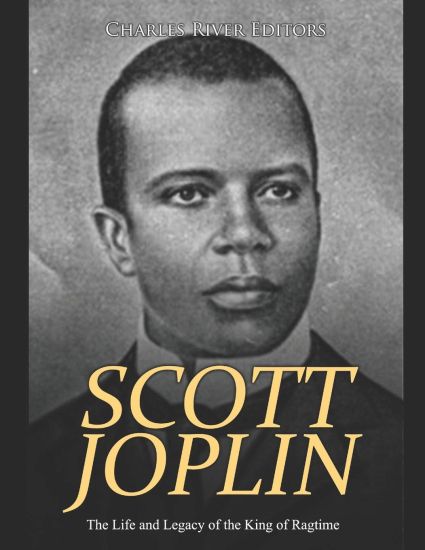
Scott Joplin: The Life and Legacy of the King of Ragtime
*Includes pictures*Includes a bibliography for further reading"What is scurrilously called ragtime is an invention that is here to stay. That is now conceded by all classes of musicians." - Scott JoplinDespite a general dearth of African American names rising to musical prominence during the years of Reconstruction, black talent existed in good measure for both popular and classical genres, and among the most notable musicians celebrated in the present day is composer Scott Joplin, who in his day earned the moniker "King of Ragtime." Joplin's use of ragtime as a piano genre was as natural to African American dances as the waltz was to Europeans. The new African-based musical language grew to such popularity that piano rags were programmed on formal classical programs. Originally employed as a verb, as in to "rag" a rhythm, the genre was first referred to as the "jig-piano" style. Ragtime features off-beat rhythms, a heavily accented first beat with the left hand making fast leaps to include the harmony. Pieces of the genre are as visually distinctive as they are in sound. Popular with honky-tonk pianists working along the Mississippi and Missouri Rivers, ragtime became the "predominant style of American popular music" by the end of the 19th century. Dance steps like the cakewalk, inspired by minstrel shows featuring modes of black banjo playing, were unlikely to be incorporated into white dance for many years to come, but white musicians incorporated the sound into their own daily repertoires as a pleasing style of melody and rhythm. The days of minstrel performances, in which white performers costumed themselves in black face without societal backlash, were eventually replaced by black performers such as Joplin and others like him. Once free from such mockery, black artists were free to produce musical offerings from the authentic culture. The term "rag," according to Joplin's use of the term, represented a musical evolution, an abrupt, edgy approach to the musical phrase, suggesting a "ragged movement." Mixing his gifts for ragtime, a forerunner of American jazz, with a classical education, Joplin produced hundreds of short piano works based on African vocal and dance music, and he worked tirelessly to bring them to a state of validation in the white American and European music world. Moving beyond miniatures, Joplin ventured into the bastion of European opera, highlighting blacks' intent to elevate and modernize black culture through education in the process. Paralleling the aspirations of Booker T. Washington, W. E. B. Du Bois, and Marcus Garvey, Joplin is often viewed as an influential part of a rising black society, excelling in an alien environment full of inequality. He shared fame among the top ragtime players in the nation along with artists such as Louis Chauvin and Thomas M. Turpin, the father of St. Louis ragtime, as well as Tony Jackson in New Orleans. While many ragtime artists were less concerned about incorporating the genre into the classical world, Joplin considered it to be a branch of formal music and fought for its recognition as such. Acceptance by the classical world signified a long-term validation for his new genre, and he was willing to suffer decades of rejection to witness the breakthrough. Scott Joplin: The Life and Legacy of the King of Ragtime profiles how he became one of 20th century music's most influential figures. Along with pictures of important people, places, and events, you will learn about Scott Joplin like never before.
Los hititas y los lidios: la historia y el legado de las civilizaciones más influyentes de la antigua Anatolia
Las p ginas de los libros de texto de historia mundial contienen una letan a de imperios y civilizaciones "perdidas", pero generalmente, tras una revisi n m s profunda, se revela que estos llamados imperios perdidos son a menudo culturas menos conocidas, que tuvieron un impacto menos aparente en la historia que otras civilizaciones mejor conocidas. Cuando se recorren las p ginas de la historia en busca de una civilizaci n que se perdi inexplicablemente, pero que tuvo un gran impacto durante su tiempo, pueden encontrarse muy pocos candidatos, pero los hititas son un ejemplo notable. De hecho, los hititas fueron un pueblo antiguo que sigue siendo algo enigm tico, y quiz s poco conocido para la mayor a de las personas, pero su influencia sobre el Antiguo Oriente Pr ximo es innegable. Desde lo alto de su capital, Hattusa, en el centro de Anatolia, los hititas pudieron conquistar y controlar un reino que abarc aproximadamente el rea de los estados-naci n modernos de Turqu a, Siria y partes de Irak y L bano, mediante una combinaci n de fuerza militar bruta y astutas maquinaciones diplom ticas. En comparaci n con algunos de sus contempor neos, incluidos los egipcios, asirios y babilonios, los hititas eran algo distantes, tanto cultural como geogr ficamente. Los hititas eran un grupo de habla indoeuropea en un oc ano de grupos afroasi ticos y sem ticos; su tierra natal estaba al norte de Mesopotamia, y no conten a ning n r o importante como los r os Nilo, Tigris o ufrates. El Imperio hitita tambi n fue mucho menos duradero que sus vecinos, pues solo existi entre 1800 y 1200 AEC, aproximadamente (van de Mieroop 2007, 156), lo que es considerablemente m s corto que la mayor a de los otros reinos principales del Cercano Oriente. Entre todos los imperios y reinos del mundo antiguo, pocos pueden compararse con el reino de Lidia en t rminos de riqueza y opulencia. Desde principios del siglo VII a. e. c. hasta mediados del siglo VI a. e. c., los lidios desempe aron un papel importante en la historia de la regi n del Mediterr neo oriental, al asumir el rol de intermediarios entre los imperios del Cercano Oriente y la emergente civilizaci n hel nica en Grecia. Desde su capital en Sardes, los reyes lidios comerciaron e hicieron alianzas y guerras con cantidad de reyes, tiranos y generales, lo que ultimadamente ciment su papel como un breve pero hist ricamente importante pueblo y reino en el mundo antiguo. Un examen del pueblo lidio y su reino revela que su poder no se materializ de la noche a la ma ana, sino que fue un proceso largo que dependi de varios factores. El principal factor que contribuy al xito de Lidia fue su riqueza. Los lidios tuvieron la suerte de poseer grandes dep sitos de metales preciosos dentro de su territorio, pero lo que realmente los hizo exitosos fue c mo explotaron y utilizaron estos recursos. Fueron el primer pueblo en inventor una moneda que no solo les permiti crear una pr spera econom a dentro de su propio territorio, sino que les dio una herramienta con qu influenciar tanto a sus amigos como a sus enemigos en el extranjero. La riqueza de Lidia impresion a los no lidios hasta tal punto que incluso los m s sublimes fil sofos griegos que generalmente evitaban la riqueza, elogiaron la alta cultura de Lidia y el pueblo lidio en general, y en particular la grandeza de su cuidad capital, Sardes. Lidia tambi n tuvo xito porque sus reyes fueron hombres astutos y pol ticamente inteligentes que conoc an el arte supremo de la diplomacia. Los reyes lidios hicieron alianzas basadas no solo en sus intereses inmediatos, sino tambi n con vistas al futuro, pues con frecuencia jugaron a enfrentar un reino contra otro. A la larga, a pesar de su riqueza y astucia, los lidios cayeron v ctimas del inexorable poder del gigante persa aquem nida, que consumi su reino, junto con muchos otros, a mediados del siglo VI a. e. c.
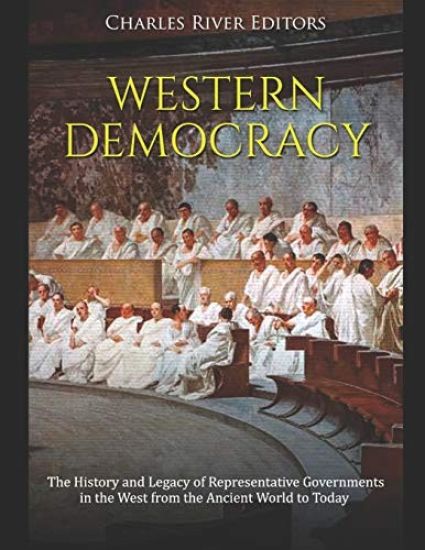
Western Democracy: The History and Legacy of Representative Governments in the West from the Ancient World to Today
*Includes pictures*Includes a bibliography for further readingIn today's modern world every political regime, even the most authoritarian or repressive, describes itself as democracy or a Democratic People's Republic. The concept of rule by the people, on behalf of the people, has come to be accepted as the norm, and very few would overtly espouse the cause of dictatorship, absolute monarchy or oligarchy as the most desirable political system upon which to base the government of any country. It is also generally accepted that democracy, as a political ideology, began in Greece, specifically in Athens, in the 7th century BCE and reached its zenith in the 5th century under the leadership of Pericles. Dating an exact starting point is impossible, but at the beginning of the 7th century BCE, Solon inaugurated a series of reforms that began the movement away from rule by individuals, or tyrants, and by the end of that century the reforms of Cleisthenes provided the basis of the Athenian democratic system that culminated in the radical institutions introduced by Ephialtes and Pericles in the 5th century. The result was the first, and possibly only, truly participative democratic state. Of course, not every inhabitant of Athens enjoyed the right to vote. Only full citizens could do that, and they represented approximately 30% of Athens's male population, numbering between 30,000 and 60,000 during Athens' Golden Age and declining rapidly throughout the Peoloponnesian War. The remainder was made up of metics and slaves, who vastly outnumbered free citizens and, indeed, almost all other slave populations in Hellas, a fact which the Athenians often conveniently chose to forget when singing the praises of their democracy. There is a very strong indication that foreign chattel slaves were an utter necessity to Athens' economy, and though they did not serve as fleet rowers as they would have done in Rome, they still carried out the myriad of unpleasant and demeaning jobs which allowed Athenian citizens the free time to actively participate in the city's politics. In many ways, without slaves, there would have been no democracy in Athens. The Greeks and Romans would not have recognized, or accepted, any of today's modern versions of democracy as being truly "democratic." A rejection of dictatorships masquerading as democracies would be understandable, but the ancients would have been equally scathing of Western-style representative democracies that they would undoubtedly have seen as anti-democratic. The key to democracy, as far as the Greeks and Romans were concerned, was active participation by the citizen body in all political aspects of life. While the French Revolution tried and ultimately failed to bring about an almost fully democratic system, the fledgling United States of America managed to bring about one of the most enduring forms of democratic government in the 1780s. The Constitution of the United States was not the first written expression of the democratic ideal, but it certainly was the most perfect in the context of the times. In the entire history of the British Empire, only two territories would attempt a unilateral declaration of independence. The first was the United States, and the second, 189 years later, was the rebel territory of Southern Rhodesia in the constellation of British African territories. The sheer audacity, in 1776, of a subject territory of the British Crown declaring itself independent sent shockwaves through the imperial establishment, setting into motion a reevaluation of British overseas policy and beginning the boldest experiment in democracy to date. The seeds of the American Revolution could be found in the fundamental distrust of distant government held by a local population of an independent character confronting a continent almost infinite in its scope.
Sekigahara and Shiroyama: The History of the Battles that Unified and Modernized Japan
*Includes pictures*Includes a bibliographyOn October 21, 1600, two massive Japanese armies, totaling an estimated 200,000 soldiers armed to the teeth with swords, yari (spears), arrows, muskets and cannons, faced off on a battlefield near the town of Sekigahara. A bitter fight to the death ensued, and the results would determine the course of Japanese history for the next 250 years. On the battlefield was the warlord Ieyasu Tokugawa, a man desiring domain over the entire island of Japan, but standing in his way was Ishida Mitsunari, a warlord controlling vast swaths of western Japan. Moving with his armies from the east, Ieyasu maneuvered into a position at Sekigahara. Ieyasu was relying heavily on the legendary Japanese samurai, but contrary to popular belief, the samurai warriors of that era were avid firearm users, and this battle would be no exception, as both armies bristled with muskets and cannons. Ieyasu was outnumbered, but he had a trump card: traitors placed in the enemy army. These treacherous warlords would join Ieyasu in the midst of the battle, turning it in his favor. When Ieyasu became shogun (military dictator) of Japan, he presided over the beginning of the Tokugawa shogunate, which brought peace and stability to all of Japan if only by ending the constant civil wars. Many changes took place, most notably in the capabilities of the samurai, Japan's ruling military class, who were no longer active combat participants. Instead, most of these warriors were fighters in name only, ruling, instead, as privileged bureaucrats. They served the Tokugawa Shogunate, a military government that moved to isolate Japan from the rest of the world, for more than two centuries, and military service became the exclusive domain of a privileged warrior class that combined the military with an intricate network of social status and vassalage to feudal lords. On September 25, 1877, on a rain-soaked, muddy field in Kagoshima, Japan, a small group of proud samurai warrior rebels prepared for one last stand. It was early morning, 6:00 a.m., and the remaining 40 samurai warriors still capable of fighting prepared themselves for the glory of death on the battlefield. They had been shelled by powerful artillery guns and naval cannons relentlessly through the night, and the rebels had no real shelter or protection. Instead, they cowered like rats in small, rain-filled mud holes, showered by a torrent of steel shells and shrapnel. For seven months, the samurai rebels had fought a losing battle against the army of Emperor Meiji, the new ruler of Japan's central government. It was a modern army, filled with conscripts, armed with rifles, and trained in European tactics. The samurai rebels were also armed with rifles, but months of fighting had stripped them of ammunition. They still possessed their distinctive personal weapons - their katana swords - and they intended to use them one last time. Despite the overwhelming firepower and numbers advantage wielded by the central government, the rebels, led by Saigō Takamori, a samurai warrior and proud defender of the samurai tradition, remained stoic in their final moments. By early morning, the last capable samurai drew their swords and launched a final suicidal charge into the rapidly firing rifles of 30,000 conscript troops, members of Japan's modern imperial army. It would be the samurai's last stand. Lionized in the Tom Cruise film The Last Samurai, the Battle of Shiroyama was the dying gasp of feudal Japan. For centuries, the Japanese warrior caste, known as the samurai, had held positions of high prestige and privilege in Japan. Paid a stipend and holding both military and civil positions, the samurai were a proud group that looked down upon Japan's commoners and merchants. They served the Tokugawa shogunate, a military dictatorship that ascended to power and isolated Japan from the rest of the world, for more than two centuries.
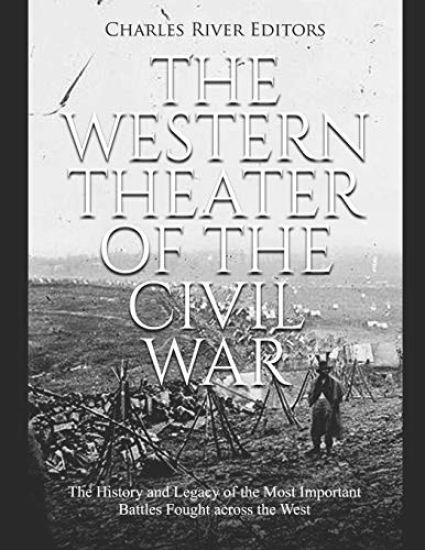
The Western Theater of the Civil War: The History and Legacy of the Most Important Battles Fought across the West
*Includes pictures*Includes excerpts of soldiers' accounts*Includes a bibliography for further readingWhile the Lincoln Administration and most Northerners were preoccupied with trying to capture Richmond in the summer of 1861, it would be the little known Ulysses S. Grant who delivered the Union's first major victories, over a thousand miles away from Washington. In January of 1862, Grant persuaded General Henry "Old Brains" Halleck to allow his men to launch a campaign on the Tennessee River. As soon as Halleck acquiesced, Grant moved against Fort Henry, in close coordination with the naval command of Flag Officer Andrew Hull Foote. The combination of infantry and naval bombardment helped force the capitulation of Fort Henry on February 6, 1862, and the surrender of Fort Henry was followed immediately by an attack on Fort Donelson on the Cumberland River, which earned Grant his famous nickname "Unconditional Surrender". The Battle of Shiloh lasted two days, but the battle over the battle had just begun. Grant's army had just won the biggest battle in the history of North America, with nearly 24,000 combined casualties among the Union and Confederate forces. As a result of the Battle of Shiloh, Grant was demoted to second-in-command of all armies in his department, an utterly powerless position. And when word of what many considered a "colossal blunder" reached Washington, several congressmen insisted that Lincoln replace Grant in the field. Lincoln famously defended Grant, telling critics, "I can't spare this man. He fights." Given its importance, it's somewhat surprising in retrospect that the Union managed to capture New Orleans in an easier manner than places like Vicksburg and Atlanta. Admiral David Farragut's naval forces battered their shaky Confederate counterparts and were able to get over a dozen ships upriver past a couple of crucial Confederate forts along the Mississippi. By May 1862, Union forces occupied the city and General Benjamin Butler became its military governor, leaving the last true bastion of Confederate defenses on the Mississippi at Vicksburg. When Grant captured that in July 1863, the Union controlled the entire river and essentially cut the Confederacy in two. Americans have long been fascinated by the Civil War and its biggest battles, particularly Gettysburg, Antietam, and Shiloh, all of which involved Robert E. Lee or Ulysses S. Grant. But one of the 6 biggest battles of the war, and the one that took the heaviest toll by % on both armies was fought at the end of 1862 in Tennessee, and it involved neither of those generals. At the start of 1863, Robert E. Lee's Army of Northern Virginia had been frustrating the Union in the Eastern theater for several months, but the situation in the West was completely different. The Confederates had lost control of several important states throughout 1862, and after New Orleans was taken by the Union, the North controlled almost all of the Mississippi River, which Confederate general James Longstreet called "the lungs of the Confederacy". By taking control of that vital river, the North would virtually cut the Confederacy in two, putting the South in a dire situation. The only domino left to fall was the stronghold of Vicksburg, and both sides knew it. In the aftermath of the Battle of Chickamauga, several Confederate generals blamed the number of men lost during what would be the bloodiest battle of the Western Theater on Bragg's incompetence, also criticizing him for refusing to pursue the escaping Union army. General Longstreet later stated to Jefferson Davis, "Nothing but the hand of God can help as long as we have our present commander." Although the Chattanooga Campaign was months long and involved several battles, it has become mostly remembered for the Battle of Missionary Ridge, one of the most remarkable and successful charges of the war.
Sekigahara and Shiroyama: The History of the Battles that Unified and Modernized Japan
*Includes pictures*Includes a bibliographyOn October 21, 1600, two massive Japanese armies, totaling an estimated 200,000 soldiers armed to the teeth with swords, yari (spears), arrows, muskets and cannons, faced off on a battlefield near the town of Sekigahara. A bitter fight to the death ensued, and the results would determine the course of Japanese history for the next 250 years. On the battlefield was the warlord Ieyasu Tokugawa, a man desiring domain over the entire island of Japan, but standing in his way was Ishida Mitsunari, a warlord controlling vast swaths of western Japan. Moving with his armies from the east, Ieyasu maneuvered into a position at Sekigahara. Ieyasu was relying heavily on the legendary Japanese samurai, but contrary to popular belief, the samurai warriors of that era were avid firearm users, and this battle would be no exception, as both armies bristled with muskets and cannons. Ieyasu was outnumbered, but he had a trump card: traitors placed in the enemy army. These treacherous warlords would join Ieyasu in the midst of the battle, turning it in his favor. When Ieyasu became shogun (military dictator) of Japan, he presided over the beginning of the Tokugawa shogunate, which brought peace and stability to all of Japan if only by ending the constant civil wars. Many changes took place, most notably in the capabilities of the samurai, Japan's ruling military class, who were no longer active combat participants. Instead, most of these warriors were fighters in name only, ruling, instead, as privileged bureaucrats. They served the Tokugawa Shogunate, a military government that moved to isolate Japan from the rest of the world, for more than two centuries, and military service became the exclusive domain of a privileged warrior class that combined the military with an intricate network of social status and vassalage to feudal lords. On September 25, 1877, on a rain-soaked, muddy field in Kagoshima, Japan, a small group of proud samurai warrior rebels prepared for one last stand. It was early morning, 6:00 a.m., and the remaining 40 samurai warriors still capable of fighting prepared themselves for the glory of death on the battlefield. They had been shelled by powerful artillery guns and naval cannons relentlessly through the night, and the rebels had no real shelter or protection. Instead, they cowered like rats in small, rain-filled mud holes, showered by a torrent of steel shells and shrapnel. For seven months, the samurai rebels had fought a losing battle against the army of Emperor Meiji, the new ruler of Japan's central government. It was a modern army, filled with conscripts, armed with rifles, and trained in European tactics. The samurai rebels were also armed with rifles, but months of fighting had stripped them of ammunition. They still possessed their distinctive personal weapons - their katana swords - and they intended to use them one last time. Despite the overwhelming firepower and numbers advantage wielded by the central government, the rebels, led by Saigō Takamori, a samurai warrior and proud defender of the samurai tradition, remained stoic in their final moments. By early morning, the last capable samurai drew their swords and launched a final suicidal charge into the rapidly firing rifles of 30,000 conscript troops, members of Japan's modern imperial army. It would be the samurai's last stand. Lionized in the Tom Cruise film The Last Samurai, the Battle of Shiroyama was the dying gasp of feudal Japan. For centuries, the Japanese warrior caste, known as the samurai, had held positions of high prestige and privilege in Japan. Paid a stipend and holding both military and civil positions, the samurai were a proud group that looked down upon Japan's commoners and merchants. They served the Tokugawa shogunate, a military dictatorship that ascended to power and isolated Japan from the rest of the world, for more than two centuries.
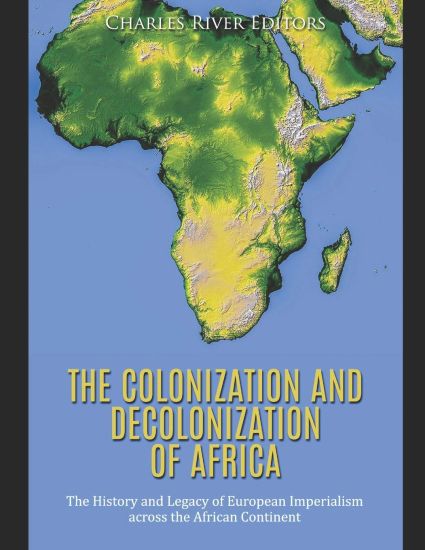
The Colonization and Decolonization of Africa: The History and Legacy of European Imperialism across the African Continent
*Includes pictures*Includes a bibliography for further readingThe modern history of Africa was, until very recently, written on behalf of the indigenous races by the white man, who had forcefully entered the continent during a particularly hubristic and dynamic phase of European history. In 1884, Prince Otto von Bismark, the German chancellor, brought the plenipotentiaries of all major powers of Europe together, to deal with Africa's colonization in such a manner as to avoid provocation of war. This event-known as the Berlin Conference of 1884-1885-galvanized a phenomenon that came to be known as the Scramble for Africa. The conference established two fundamental rules for European seizure of Africa. The first of these was that no recognition of annexation would granted without evidence of a practical occupation, and the second, that a practical occupation would be deemed unlawful without a formal appeal for protection made on behalf of a territory by its leader, a plea that must be committed to paper in the form of a legal treaty. This began a rush, spearheaded mainly by European commercial interests in the form of Chartered Companies, to penetrate the African interior and woo its leadership with guns, trinkets and alcohol, and having thus obtained their marks or seals upon spurious treaties, begin establishing boundaries of future European African colonies. The ease with which this was achieved was due to the fact that, at that point, traditional African leadership was disunited, and the people had just staggered back from centuries of concussion inflicted by the slave trade. Thus, to usurp authority, to intimidate an already broken society, and to play one leader against the other was a diplomatic task so childishly simple, the matter was wrapped up, for the most part, in less than a decade. During World War II, President Roosevelt pictured a very different post-war world than his British counterpart, Winston Churchill. When he and Churchill met at what came to be known as the Atlantic Conference, Churchill's pleas for U. S. manpower and aid were accepted, but only under clear conditions. If the United States was to come to the aid of Britain, it would be for the purpose of defeating the Germans and the Japanese and not to support the insupportable institutions of empire. Britain and, by extension, France and Portugal, the only remaining major European shareholders in foreign empire, would have to commit to decolonization as a basic prerequisite of substantial U. S. assistance. Meanwhile, the British were not the only European power to take note of this development. The French too were a major imperial power with a great deal to lose from such a monumental change, but their view of the global chessboard was somewhat different. France lay under German occupation, and an armistice had been signed on behalf of the French nation by Marshall Philippe P tain, commencing the era of Vichy France. In London, meanwhile, the firebrand French General Charles de Gaulle urged a continuation of the resistance, believing the French mainland to be only a small part of the picture. France was much more than just France. De Gaulle established the Free French movement in Britain, based on the loyalty and the ongoing Free French control of a majority of her overseas territories. The Free French movement and the Free French army based themselves in Francophone Africa. The saga of the Free French movement would impact the war in both North Africa and Europe, but most specifically, it would serve to radically redefine the French view of itself and her relationship with her overseas territories. Most importantly, it would set the tone for a style of decolonization very different from the British. This book examines the turbulent history of imperialism across Africa and the consequences it has had.
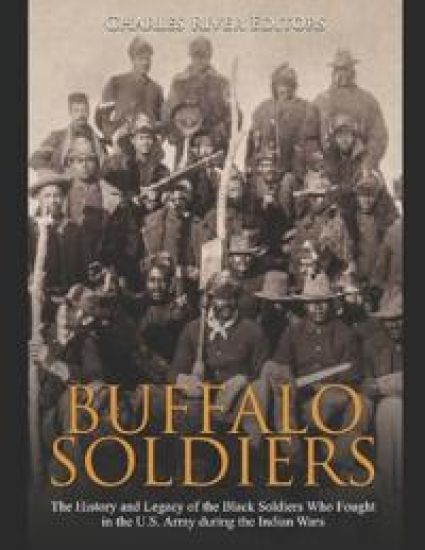
Buffalo Soldiers: The History and Legacy of the Black Soldiers Who Fought in the U.S. Army during the Indian Wars
*Includes pictures*Includes excerpts of contemporary accounts*Includes a bibliography for further readingDuring the Civil War, over 180,000 black men fought in volunteer units as part of the United States Colored Troop (USCT), but it was only after the end of it that they were allowed to enlist in the Regular Army. They did so in four segregated regiments, and they colloquially became known as Buffalo Soldiers. The evolution of these black units followed the course of the organization of the peacetime Regular Army. With the end of the Civil War came the demobilization of the millions of men who had volunteered to fight on behalf of the Union, including the USCT, which disbanded in late 1865. The first draft of a bill setting the organization of the Army sent to the House on March 7, 1866 called for the establishment of eight infantry regiments to be staffed by veterans of the USCT, but the legislation lacked similar provisions for black cavalry units. When the bill got to the Senate for approval, Senator Benjamin Wade succeeded in having a provision added that authorized black cavalry units. The bill that passed on July 28, 1866 authorized a total of 10 regiments of cavalry and 45 regiments of infantry, and in 1867, the Regular Army raised two regiments of black cavalry, designated the 9th (Colored) Cavalry and the 10th (Colored) Cavalry. In addition, the Army raised four regiments of black infantry: the 38th (Colored) Infantry, the 39th (Colored) Infantry, the 40th (Colored) Infantry, and the 41st (Colored) Infantry. Ultimately, however, the number of black regiments did not stay at six for very long, because in 1869 there was a further reduction in the size of the Regular Army, with the number of infantry regiments reduced to 25. As part of the reduction, the number of black regiments was reduced from four to two, so the 38th and 41st were reorganized as the 25th (Colored) Infantry, and the 39th and 40th were reorganized as the 24th (Colored) Infantry. The enlistment in both the cavalry and infantry was for five years, with soldiers being paid $13 a month, plus room, board, and clothing. Of course, these units are now known for the nickname attached to them, but exactly where the nickname Buffalo Soldiers came from is a subject of some dispute. Dr. Walter Hill wrote, "According to Benjamin H. Grierson, Colonel, 10th Cavalry, 1867 to 1890, the 10th acquired the name 'Buffalo Soldiers' during the 1871 campaign against the Comanches in the Indian Territory. Grierson said that the Comanches respected the soldiers' tireless marching and dogged trail skills. They had earned the name of the rugged and revered buffalo. The 10th made the 'Buffalo' its regimental coat of arms years later, but the term 'Buffalo Soldiers, ' became synonymous with both the 9th and 10th units." The term appeared in public for the first time in 1873, in reference to the 10th Cavalry, in a letter from Mrs. Frances M. A. Roe to a popular magazine. She wrote, "The officers say that the Negroes make good soldiers and fight like fiends...the Indians call them 'buffalo soldiers' because their woolly heads are so much like the matted cushion that is between the horns of the buffalo. Others believe that the nickname originated from the Cheyanne. Another possible source came from the Apaches for the buffalo coats they wore in the winter." Buffalo Soldiers: The History and Legacy of the Black Soldiers Who Fought in the U. S. Army during the Indian Wars examines how the regiments were raised, and what their service entailed over the course of several decades. Along with pictures depicting important people, places, and events, you will learn about the Buffalo Soldiers like never before.
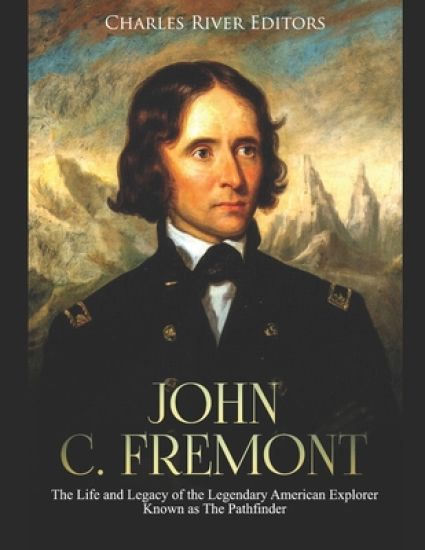
John C. Fremont: The Life and Legacy of the Legendary American Explorer Known as The Pathfinder
*Includes pictures*Includes excerpts of contemporary accounts*Includes a bibliography for further readingThe exploration of the American West, beginning with Lewis and Clark's transcontinental trek at the behest of President Thomas Jefferson, was not accomplished by standing armies, the era's new steam train technology, or by way of land grabs. These came later, but not until pathways known only to a few of the land's indigenous people were discovered, carved out, and charted in an area stretching from the eastern Rocky Mountains to the Pacific Ocean, and the present-day borders of Mexico and Canada. Even the great survey parties, such as Colonel William Powell's exploration of the Colorado River, came decades later. The first views of the West's enormity by white Americans were seen by individuals of an entirely different personality, in an era that could only exist apart from its home civilization. Naturally, the West was an endless source of fascination for those who were either personally or circumstantially ill-suited to travel there. As explorers opened trails and people expanded the frontier, unusual walks of life like cattle drives and hunting became commonplace, as did images of dusty boomtowns. Before the Transcontinental Railroad connected the Atlantic and Pacific, the West possessed a distinctly separate culture from the East Coast, and cowboys, early settlers, and an enormous array of indigenous peoples produced a hybrid culture that seemed doomed to disappear as a result of the inevitable modernization. Of all the Americans who became renowned for expeditions to the West, few were as famous - or infamous - as John Charles Fremont, whose work produced some of the region's most detailed maps and propelled him to national fame. Among other things, he taught mathematics to midshipmen on a Navy warship on a long cruise off South America, served as governor of two states and a Senator for one, was court-martialed for insubordination, issued the first emancipation proclamation, and eloped with the daughter of a powerful U. S. Senator. Today, Fremont is best known for leading five expeditions west, three of which were official U. S. expeditions and two of which were private. On his third official expedition, he was given secret instructions for when he reached California. While in California, he bought a lot of property with cloudy titles and found gold on his land, making him rich, but he also indulged in diplomacy and fighting that may have been a part of his instructions, which remain a topic of heavily contested debate today. Fremont subsequently joined a U. S. Navy commodore to set up a civil government, became military governor of California, claimed to outrank other local military figures, and set up an Army-Navy dispute that came close to being an actual battle and resulted in a court-martial in which he was convicted and subsequently pardoned by the president. Fremont retired after resigning his battlefield command in a huff. In 1864, radical Republicans who were unhappy with President Lincoln formed their own party and nominated Fremont to run for president. He could have split the Republican Party in two and assured a Democrat victory in 1864, but he dropped out of the race, assuring Lincoln's win in the election. Was he a patriot or a realist? As this all indicates, Fremont's life was full of intrigue, adventure, and controversy. John C. Fremont: The Life and Legacy of the Legendary American Explorer Known as The Pathfinder chronicles his colorful life and career in an attempt to separate fact from fiction. Along with pictures depicting important people, places, and events, you will learn about The Pathfinder like never before.
Alexander the Great in India: The History and Legacy of the Macedonian King's Final Campaign
*Includes pictures*Includes excerpts of ancient accounts*Includes a bibliography for further readingOver the last 2,000 years, ambitious men have dreamed of forging vast empires and attaining eternal glory in battle, but of all the conquerors who took steps toward such dreams, none were ever as successful as antiquity's first great conqueror. Leaders of the 20th century hoped to rival Napoleon's accomplishments, while Napoleon aimed to emulate the accomplishments of Julius Caesar. But Caesar himself found inspiration in Alexander the Great (356-323 BCE), the Macedonian king who managed to stretch an empire from Greece to the Himalayas in Asia by the age of 30. It took less than 15 years for Alexander to conquer much of the known world. After he had finished off the Persian Empire, Alexander must have been glad to leave Persia and its adjoining provinces at his back. Alexander was planning to march onwards, into India, and had made overtures to the wild tribesmen that inhabited the region that is now Pakistan, but he had been abruptly refused. The chieftains of the hill clans who guarded the passes of the mighty Hindu Kush mountains were determined to make a fight of it, secure in the knowledge that the high passes of their domains were virtually unconquerable. Alexander, never one to accept defiance, made his preparations and, in midwinter, a season traditionally reserved for rearmament and regrouping, he began his campaign. The Aspasioi, the Guraeans and the Assakenoi, inhabitants of the rocky valleys of north-western Pakistan, all opposed him, so Alexander destroyed their fortresses one by one, determined to extinguish them. The hill clans were fierce fighters, and each fortress, small though they generally were, was only carried by storm after days of vicious fighting which resulted in grievous losses among the Macedonian ranks. To give an idea of the brutality of this conflict, Alexander himself was seriously wounded twice during two separate sieges, taking a javelin through the shoulder fighting the Aspasioi and then a spear-thrust to the ankle in the assault against the Assakenoi fortress of Massaga. His reprisal was fierce: every fortress of the hill clans that did not surrender him was razed to the ground, and its inhabitants put to the sword, to the last man. Despite the war-weariness of his veterans and many of his generals, after having vanquished the hill tribes Alexander pressed south and east into the Punjab. There he clashed with the most powerful enemy he had encountered since he had vanquished Darius at Gaugamela, the great Indian ruler Rajah Porus, whose domains included virtually the whole Punjab and who commanded an army tens of thousands strong. Alexander's force came face to face with Porus's army at the Hydaspes River, in 326 BCE Despite Porus's strong defensive position, Alexander succeeded in forcing a crossing. When Porus threw forward his war elephants, the shock element of his force, Alexander's indomitable phalanx proved equal to the task: his men had faced war elephants before, and instead of bracing to resist their charge they opened their ranks, letting the beasts charge through, then encircled them and brought them and their riders down with their pikes. The phalanx then made short work of the lightly armoured Indian infantry, while Alexander's Companion Cavalry and allied horsemen drove the enemy skirmishers and horsemen from the field. Porus was captured still trying to fight, and Alexander was so impressed with his bravery that he made him governor of his previous kingdom, even going so far as to grant him additional lands. Alexander the Great in India: The History and Legacy of the Macedonian King's Final Campaign chronicles the push east into India, the fighting that took place, and the ramifications of Alexander's last campaign.
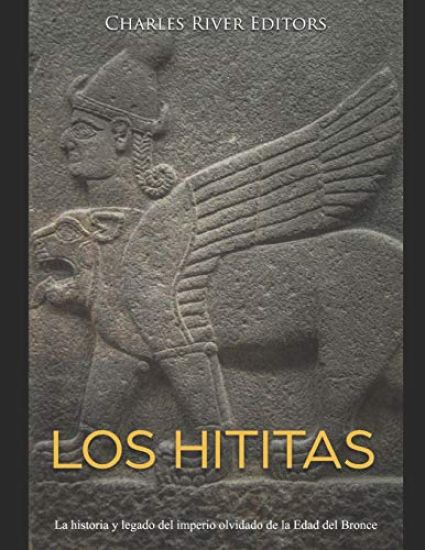
Los hititas: La historia y legado del imperio olvidado de la Edad del Bronce
"Quien sea que despu s de m se convierta en rey y reasiente Hattusa, que el Dios Tormenta del Cielo lo golpee " - Inscripci n hitita encontrada en la ciudad capital, Hattusa. Las p ginas de los libros de texto de historia mundial contienen una letan a de imperios y civilizaciones "perdidas", pero generalmente, tras una revisi n m s profunda, se revela que estos llamados imperios perdidos son a menudo culturas menos conocidas, que tuvieron un impacto menos aparente en la historia que otras civilizaciones mejor conocidas. Cuando se recorren las p ginas de la historia en busca de una civilizaci n que se perdi inexplicablemente, pero que tuvo un gran impacto durante su tiempo, pueden encontrarse muy pocos candidatos, pero los hititas son un ejemplo notable. De hecho, los hititas fueron un pueblo antiguo que sigue siendo algo enigm tico, y quiz s poco conocido para la mayor a de las personas, pero su influencia sobre el Antiguo Oriente Pr ximo es innegable. Desde lo alto de su capital, Hattusa, en el centro de Anatolia, los hititas pudieron conquistar y controlar un reino que abarc aproximadamente el rea de los estados-naci n modernos de Turqu a, Siria y partes de Irak y L bano, mediante una combinaci n de fuerza militar bruta y astutas maquinaciones diplom ticas. En comparaci n con algunos de sus contempor neos, incluidos los egipcios, asirios y babilonios, los hititas eran algo distantes, tanto cultural como geogr ficamente. Los hititas eran un grupo de habla indoeuropea en un oc ano de grupos afroasi ticos y sem ticos; su tierra natal estaba al norte de Mesopotamia, y no conten a ning n r o importante como los r os Nilo, Tigris o ufrates. El Imperio hitita tambi n fue mucho menos duradero que sus vecinos, pues solo existi entre 1800 y 1200 AEC, aproximadamente (van de Mieroop 2007, 156), lo que es considerablemente m s corto que la mayor a de los otros reinos principales del Cercano Oriente. Dicho esto, la influencia de los hititas en la pol tica, econom a y la situaci n en general del Antiguo Oriente no puede subestimarse; mientras existieron, los hititas fueron una fuerza a tener en cuenta. Las fuentes utilizadas para reconstruir la historia y la cronolog a hititas son muchas y variadas, y dado que los hititas eran un pueblo alfabetizado que desarroll un corpus de literatura bastante sofisticado, los antiguos archivos hititas pueden usarse para reconstruir eventos. Desafortunadamente, los hititas no tuvieron mucho inter s en fechar sus fuentes, por lo que la mayor parte de las dataciones dependen de fuentes del Antiguo Egipto (Macqueen 2003, 8). Las fuentes egipcias tambi n proporcionan excelentes detalles de eventos que los hititas se negaron a mencionar en sus propios textos, que no han sido descubiertos a n, o que se han perdido en el tiempo. Por supuesto, la arqueolog a moderna tambi n ha ayudado a completar el conocimiento acerca de la civilizaci n hitita, especialmente en lo concerniente a la vida palaciega y religiosa en la antigua capital, Hattusa. Bas ndose en estas fuentes, as como en estudios de eminentes estudiosos de la materia, es posible examinar qui nes fueron los hititas, su influencia en el Antiguo Oriente, y el colapso final de su imperio. Los hititas: La historia y legado del imperio olvidado de la Edad del Bronce analiza la historia y el legado de los hititas a lo largo de varios siglos. En conjunto con fotograf as de personas, lugares y eventos importantes, aprender sobre la historia de los hititas como nunca antes, y en muy poco tiempo.
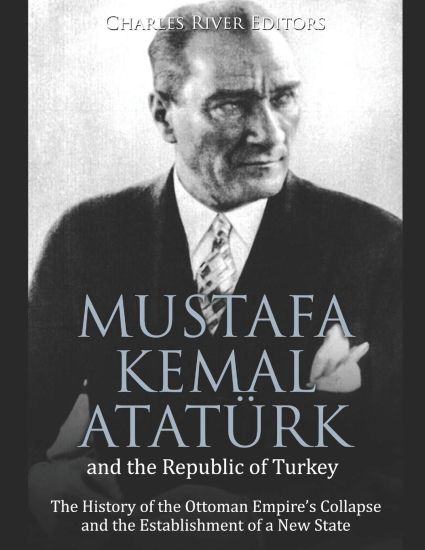
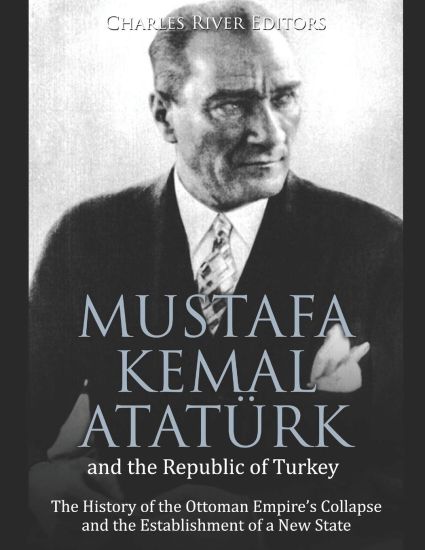
Mustafa Kemal Atatürk and the Republic of Turkey: The History of the Ottoman Empire's Collapse and the Establishment of a New State
*Includes pictures*Includes a bibliography for further reading"In human life, you will find players of religion until the knowledge and proficiency in religion will be cleansed from all superstitions, and will be purified and perfected by the enlightenment of real science." - Mustafa Kemal Atat rkThe long agony of the "sick man of Europe," an expression used by the Tsar of Russia to depict the falling Ottoman Empire, could almost blind people to its incredible power and history. Preserving its mixed heritage, coming from both its geographic position rising above the ashes of the Byzantine Empire and the tradition inherited from the Muslim Conquests, the Ottoman Empire lasted more than six centuries. Its soldiers fought, died, and conquered lands on three different continents, making it one of the few stable multi-ethnic empires in history, and likely one of the last. Thus, it's somewhat inevitable that the history of its decline is at the heart of complex geopolitical disputes, as well as sectarian tensions that are still key to understanding the Middle East, North Africa and the Balkans. Despite it all, the Ottoman Empire would survive for over 200 more years, and in the last century of its life it strove to reform its military, administration and economy until it was finally dissolved. Years before the final collapse of the Empire, the Tanzimat ("Reorganization"), a period of swiping reforms, led to significant changes in the country's military apparatus, among others, which certainly explains the initial success the Ottoman Empire was able to achieve against its rivals. Similarly, the drafting of a new Constitution (Kan n-u Es s , basic law) in 1876, despite it being shot down by Sultan Abdul Hamid II just two years later, as well as its revival by the "Young Turks" movement in 1908, highlights the understanding among Ottoman elites that change was needed, and their belief that such change was possible. The fall of the Ottoman Empire set the political and geostrategic scene of the new Middle East. In 1920, two years after the end of the war, the region was already experiencing growing instability. The issues and trends that would plague the region until today were growing. On April 4, Arab riots broke out in Jerusalem, fueled by the growing hostility against the Zionist movement. The British passivity would convince one of the Jewish leaders, Vladimir Jabotinsky (the future founder of the Israeli right-wing), of the strategic necessity of a strong Jewish military as the core of the future state. Just two weeks later in Turkey, the Grand National Assembly in Ankara set the foundation of the Turkish state, opening the way for several years of reforms. In Iraq, a Shiite revolt broke out in the south, as locals demanded the creation of an Islamic state. The British compromise was to place Faisal, the son of Sharif Hussein and a Sunni, on the throne. His father, meanwhile, was embroiled in a conflict with a local tribe, the Ibn Saud, that sought to carve a new kingdom in the Arabian Peninsula. More broadly, the long decline of the "sick man of Europe" fostered the emergence of nationalistic and ideological movements that are still key to any understanding of the Middle East today. The compatibility between the Islamic religion and culture and Western reforms were first discussed within the Ottoman Empire, and they are still up for debate today. Abdul Hamid's pan-Islamism, while its results at the time remain limited, still resonates within the Muslim world and can still be seen as a viable rival to the region's various nationalistic aspirations. This book examines how the empire collapsed and was replaced by modern Turkey. Along with pictures of important people and events, you will learn about Atat rk and the founding of Turkey like never before.
Mustafa Kemal Atatürk and the Republic of Turkey: The History of the Ottoman Empire's Collapse and the Establishment of a New State
*Includes pictures*Includes a bibliography for further reading"In human life, you will find players of religion until the knowledge and proficiency in religion will be cleansed from all superstitions, and will be purified and perfected by the enlightenment of real science." - Mustafa Kemal Atat rkThe long agony of the "sick man of Europe," an expression used by the Tsar of Russia to depict the falling Ottoman Empire, could almost blind people to its incredible power and history. Preserving its mixed heritage, coming from both its geographic position rising above the ashes of the Byzantine Empire and the tradition inherited from the Muslim Conquests, the Ottoman Empire lasted more than six centuries. Its soldiers fought, died, and conquered lands on three different continents, making it one of the few stable multi-ethnic empires in history, and likely one of the last. Thus, it's somewhat inevitable that the history of its decline is at the heart of complex geopolitical disputes, as well as sectarian tensions that are still key to understanding the Middle East, North Africa and the Balkans. Despite it all, the Ottoman Empire would survive for over 200 more years, and in the last century of its life it strove to reform its military, administration and economy until it was finally dissolved. Years before the final collapse of the Empire, the Tanzimat ("Reorganization"), a period of swiping reforms, led to significant changes in the country's military apparatus, among others, which certainly explains the initial success the Ottoman Empire was able to achieve against its rivals. Similarly, the drafting of a new Constitution (Kan n-u Es s , basic law) in 1876, despite it being shot down by Sultan Abdul Hamid II just two years later, as well as its revival by the "Young Turks" movement in 1908, highlights the understanding among Ottoman elites that change was needed, and their belief that such change was possible. The fall of the Ottoman Empire set the political and geostrategic scene of the new Middle East. In 1920, two years after the end of the war, the region was already experiencing growing instability. The issues and trends that would plague the region until today were growing. On April 4, Arab riots broke out in Jerusalem, fueled by the growing hostility against the Zionist movement. The British passivity would convince one of the Jewish leaders, Vladimir Jabotinsky (the future founder of the Israeli right-wing), of the strategic necessity of a strong Jewish military as the core of the future state. Just two weeks later in Turkey, the Grand National Assembly in Ankara set the foundation of the Turkish state, opening the way for several years of reforms. In Iraq, a Shiite revolt broke out in the south, as locals demanded the creation of an Islamic state. The British compromise was to place Faisal, the son of Sharif Hussein and a Sunni, on the throne. His father, meanwhile, was embroiled in a conflict with a local tribe, the Ibn Saud, that sought to carve a new kingdom in the Arabian Peninsula. More broadly, the long decline of the "sick man of Europe" fostered the emergence of nationalistic and ideological movements that are still key to any understanding of the Middle East today. The compatibility between the Islamic religion and culture and Western reforms were first discussed within the Ottoman Empire, and they are still up for debate today. Abdul Hamid's pan-Islamism, while its results at the time remain limited, still resonates within the Muslim world and can still be seen as a viable rival to the region's various nationalistic aspirations. This book examines how the empire collapsed and was replaced by modern Turkey. Along with pictures of important people and events, you will learn about Atat rk and the founding of Turkey like never before.
Modern Democracy: The History and Legacy of the World's Democratic Institutions Since the American Revolution
*Includes picturesIn today's modern world every political regime, even the most authoritarian or repressive, describes itself as democracy or a Democratic People's Republic. The concept of rule by the people, on behalf of the people, has come to be accepted as the norm, and very few would overtly espouse the cause of dictatorship, absolute monarchy or oligarchy as the most desirable political system upon which to base the government of any country. It is also generally accepted that democracy, as a political ideology, began in Greece, specifically in Athens, in the 7th century BCE and reached its zenith in the 5th century under the leadership of Pericles. Dating an exact starting point is impossible, but at the beginning of the 7th century BCE, Solon inaugurated a series of reforms that began the movement away from rule by individuals, or tyrants, and by the end of that century the reforms of Cleisthenes provided the basis of the Athenian democratic system that culminated in the radical institutions introduced by Ephialtes and Pericles in the 5th century. The result was the first, and possibly only, truly participative democratic state. At the same time, the ancients would not have recognized, or accepted, any of today's modern versions of democracy as being truly "democratic." A rejection of dictatorships masquerading as democracies would be understandable, but the ancients would have been equally scathing of Western-style representative democracies that they would undoubtedly have seen as anti-democratic. The key to democracy, as far as the Greeks and Romans were concerned, was active participation by the citizen body in all political aspects of life. While the French Revolution tried and ultimately failed to bring about an almost fully democratic system, the fledgling United States of America managed to bring about one of the most enduring forms of democratic government in the 1780s. The Constitution of the United States was not the first written expression of the democratic ideal, but it certainly was the most perfect in the context of the times. In the entire history of the British Empire, only two territories would attempt a unilateral declaration of independence. The first was the United States, and the second, 189 years later, was the rebel territory of Southern Rhodesia in the constellation of British African territories. The sheer audacity, in 1776, of a subject territory of the British Crown declaring itself independent sent shockwaves through the imperial establishment, setting into motion a reevaluation of British overseas policy and beginning the boldest experiment in democracy to date. The seeds of the American Revolution could be found in the fundamental distrust of distant government held by a local population of an independent character confronting a continent almost infinite in its scope. The cusp upon which this embryonic republic stood represented the first authentic opportunity to date for a European people, egalitarian in outlook and separated from the stifling social conventions of Europe, to redefine the rights of man according to what they believed was enshrined in the spirit of the Magna Carta. Therefore, before the mechanics of government and administration could begin to be constructed, a declaration of rights was deemed essential as the basis of any future political blueprint, to guarantee each citizen, free and included, a list of protections and immunities from their own government. This became the basic template for the Bill of Rights, the first 10 amendments to the Constitution of the United States of America, drafted to appease the anti-federalists suspicious of a return to imperial rule by the back door. The amendments specific to the Bill of Rights reinforced the Constitution with a series of detailed guarantees of personal rights and freedoms and clear limitations on governmental power and authority.