Kirjojen hintavertailu – 12 903 725 kirjaa ja 27 kauppaa

Kirjailija

Charles River

Kirjat ja teokset yhdessä paikassa: 4 673 kirjaa, julkaisuja vuosilta 2013–2022, suosituimpiin kuuluu William Powell and Myrna Loy: The Lives and Careers of One of Classical Hollywood's Most Iconic Duos. Vertaile teosten hintoja ja tarkista saatavuus suomalaisista kirjakaupoista.

4 673 kirjaa

Kirjojen julkaisuvuodet: 2013–2022.

The Battle of Issus: The History of Alexander the Great's Most Famous Victory against the Achaemenid Persian Empire
*Includes pictures *Includes excerpts of ancient accounts *Includes a bibliography for further reading At one point in antiquity, the Achaemenid Persian Empire was the largest empire the world had ever seen, but aside from its role in the Greco-Persian Wars and its collapse at the hands of Alexander the Great, it has been mostly overlooked. When it has been studied, the historical sources have mostly been Greek, the very people the Persians sought to conquer. Needless to say, their versions were biased, and attitudes about the Persians were only exacerbated by Alexander the Great and his biographers, who maintained a fiery hatred toward Xerxes I of Persia due to his burning of Athens. The Macedonians targeted many of his building projects after their capture of Persepolis, and they pushed an even bleaker picture of the king, one of an idle, indolent, cowardly, and corrupt ruler. It was not until excavations in the region during the 20th century that many of the relics, reliefs, and clay tablets that offer so much information about Persian life could be studied for the first time. Through archaeological remains, ancient texts, and work by a new generation of historians, a picture can today be built of this remarkable civilization and their most famous leaders. Of course, far more is known about Alexander the Great and his military accomplishments, the most important of which was bringing about the demise of the Persian Empire. Over the last 2,000 years, ambitious men have dreamed of forging vast empires and attaining eternal glory in battle, but of all the conquerors who took steps toward such dreams, none were ever as successful as antiquity's first great conqueror. Leaders of the 20th century hoped to rival Napoleon's accomplishments, while Napoleon aimed to emulate the accomplishments of Julius Caesar. But Caesar himself found inspiration in Alexander the Great (356-323 BCE), the Macedonian king who managed to stretch an empire from Greece to the Himalayas in Asia by the age of 30. It took less than 15 years for Alexander to conquer much of the known world. Ever since the famous Persian invasions that had been repelled by the Athenians at Marathon and then by the Spartans at Thermopylae and Plataea, Greece and Persia had been at odds. For the past few years they had enjoyed an uneasy peace, but that peace was shattered when, in 334 BCE, Alexander crossed the Hellespont into Persia. He brought with him an army of 50,000 infantry, 6,000 cavalry and a navy of over 100 ships, a mixed force of Macedonians, Greeks, Thracians and Illyrians, all chosen for their specific strengths (the Thessalians, for example, were famous cavalrymen). He was still just 22. Darius III, king of Persia at the time of Alexander's invasion, was no tactical genius, but he was an intelligent and persistent enemy who had been handed the throne just before the arrival of the indomitable Alexander. His misfortune was to face an enemy at the forefront of military innovation and flexibility, a fighting force that he was not equipped to handle, and the unconquerable will of the Macedonian army, fueled by devotion to their daring and charismatic king. He would personally face Alexander twice, once at the Battle of Issus and again at the Battle of Gaugamela, and the battles would decide the fate of his empire and the fate of the Western world. The Battle of Issus: The History of Alexander the Great's Most Famous Victory against the Achaemenid Persian Empire looks at one of antiquity's most important battles, and the profound ramifications of Alexander's campaign. Along with pictures depicting important people, places, and events, you will learn about the battle like never before.

The Battle of Issus: The History of Alexander the Great's Most Famous Victory against the Achaemenid Persian Empire
*Includes pictures *Includes excerpts of ancient accounts *Includes a bibliography for further reading At one point in antiquity, the Achaemenid Persian Empire was the largest empire the world had ever seen, but aside from its role in the Greco-Persian Wars and its collapse at the hands of Alexander the Great, it has been mostly overlooked. When it has been studied, the historical sources have mostly been Greek, the very people the Persians sought to conquer. Needless to say, their versions were biased, and attitudes about the Persians were only exacerbated by Alexander the Great and his biographers, who maintained a fiery hatred toward Xerxes I of Persia due to his burning of Athens. The Macedonians targeted many of his building projects after their capture of Persepolis, and they pushed an even bleaker picture of the king, one of an idle, indolent, cowardly, and corrupt ruler. It was not until excavations in the region during the 20th century that many of the relics, reliefs, and clay tablets that offer so much information about Persian life could be studied for the first time. Through archaeological remains, ancient texts, and work by a new generation of historians, a picture can today be built of this remarkable civilization and their most famous leaders. Of course, far more is known about Alexander the Great and his military accomplishments, the most important of which was bringing about the demise of the Persian Empire. Over the last 2,000 years, ambitious men have dreamed of forging vast empires and attaining eternal glory in battle, but of all the conquerors who took steps toward such dreams, none were ever as successful as antiquity's first great conqueror. Leaders of the 20th century hoped to rival Napoleon's accomplishments, while Napoleon aimed to emulate the accomplishments of Julius Caesar. But Caesar himself found inspiration in Alexander the Great (356-323 BCE), the Macedonian king who managed to stretch an empire from Greece to the Himalayas in Asia by the age of 30. It took less than 15 years for Alexander to conquer much of the known world. Ever since the famous Persian invasions that had been repelled by the Athenians at Marathon and then by the Spartans at Thermopylae and Plataea, Greece and Persia had been at odds. For the past few years they had enjoyed an uneasy peace, but that peace was shattered when, in 334 BCE, Alexander crossed the Hellespont into Persia. He brought with him an army of 50,000 infantry, 6,000 cavalry and a navy of over 100 ships, a mixed force of Macedonians, Greeks, Thracians and Illyrians, all chosen for their specific strengths (the Thessalians, for example, were famous cavalrymen). He was still just 22. Darius III, king of Persia at the time of Alexander's invasion, was no tactical genius, but he was an intelligent and persistent enemy who had been handed the throne just before the arrival of the indomitable Alexander. His misfortune was to face an enemy at the forefront of military innovation and flexibility, a fighting force that he was not equipped to handle, and the unconquerable will of the Macedonian army, fueled by devotion to their daring and charismatic king. He would personally face Alexander twice, once at the Battle of Issus and again at the Battle of Gaugamela, and the battles would decide the fate of his empire and the fate of the Western world. The Battle of Issus: The History of Alexander the Great's Most Famous Victory against the Achaemenid Persian Empire looks at one of antiquity's most important battles, and the profound ramifications of Alexander's campaign. Along with pictures depicting important people, places, and events, you will learn about the battle like never before.
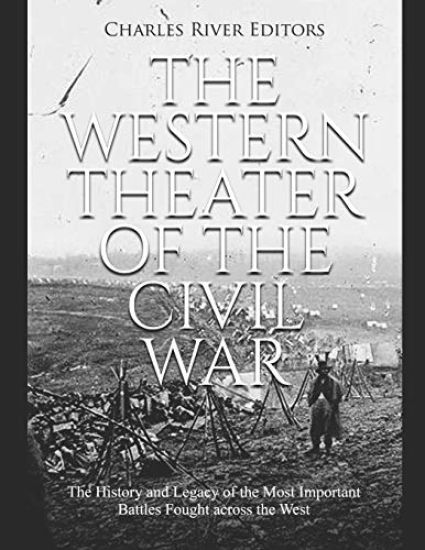
The Western Theater of the Civil War: The History and Legacy of the Most Important Battles Fought across the West
*Includes pictures*Includes excerpts of soldiers' accounts*Includes a bibliography for further readingWhile the Lincoln Administration and most Northerners were preoccupied with trying to capture Richmond in the summer of 1861, it would be the little known Ulysses S. Grant who delivered the Union's first major victories, over a thousand miles away from Washington. In January of 1862, Grant persuaded General Henry "Old Brains" Halleck to allow his men to launch a campaign on the Tennessee River. As soon as Halleck acquiesced, Grant moved against Fort Henry, in close coordination with the naval command of Flag Officer Andrew Hull Foote. The combination of infantry and naval bombardment helped force the capitulation of Fort Henry on February 6, 1862, and the surrender of Fort Henry was followed immediately by an attack on Fort Donelson on the Cumberland River, which earned Grant his famous nickname "Unconditional Surrender". The Battle of Shiloh lasted two days, but the battle over the battle had just begun. Grant's army had just won the biggest battle in the history of North America, with nearly 24,000 combined casualties among the Union and Confederate forces. As a result of the Battle of Shiloh, Grant was demoted to second-in-command of all armies in his department, an utterly powerless position. And when word of what many considered a "colossal blunder" reached Washington, several congressmen insisted that Lincoln replace Grant in the field. Lincoln famously defended Grant, telling critics, "I can't spare this man. He fights." Given its importance, it's somewhat surprising in retrospect that the Union managed to capture New Orleans in an easier manner than places like Vicksburg and Atlanta. Admiral David Farragut's naval forces battered their shaky Confederate counterparts and were able to get over a dozen ships upriver past a couple of crucial Confederate forts along the Mississippi. By May 1862, Union forces occupied the city and General Benjamin Butler became its military governor, leaving the last true bastion of Confederate defenses on the Mississippi at Vicksburg. When Grant captured that in July 1863, the Union controlled the entire river and essentially cut the Confederacy in two. Americans have long been fascinated by the Civil War and its biggest battles, particularly Gettysburg, Antietam, and Shiloh, all of which involved Robert E. Lee or Ulysses S. Grant. But one of the 6 biggest battles of the war, and the one that took the heaviest toll by % on both armies was fought at the end of 1862 in Tennessee, and it involved neither of those generals. At the start of 1863, Robert E. Lee's Army of Northern Virginia had been frustrating the Union in the Eastern theater for several months, but the situation in the West was completely different. The Confederates had lost control of several important states throughout 1862, and after New Orleans was taken by the Union, the North controlled almost all of the Mississippi River, which Confederate general James Longstreet called "the lungs of the Confederacy". By taking control of that vital river, the North would virtually cut the Confederacy in two, putting the South in a dire situation. The only domino left to fall was the stronghold of Vicksburg, and both sides knew it. In the aftermath of the Battle of Chickamauga, several Confederate generals blamed the number of men lost during what would be the bloodiest battle of the Western Theater on Bragg's incompetence, also criticizing him for refusing to pursue the escaping Union army. General Longstreet later stated to Jefferson Davis, "Nothing but the hand of God can help as long as we have our present commander." Although the Chattanooga Campaign was months long and involved several battles, it has become mostly remembered for the Battle of Missionary Ridge, one of the most remarkable and successful charges of the war.
The Byzantine Empire and the Plague: The History and Legacy of the Pandemic that Ravaged the Byzantines in the Early Middle Ages
*Includes pictures*Includes excerpts of medieval accounts*Includes a bibliography for further reading" Theodore] made very large pits, inside each of which 70,000 corpses were laid down. He thus appointed men there, who brought down corpses, sorted them and piled them up. They pressed them in rows on top of each other, in the same way as someone presses hay in a loft ... Men and women were trodden down, and in the little space between them the young and infants were pressed down, trodden with the feet and trampled down like spoilt grapes." - John of Ephesus The Bubonic Plague was the worst affliction ever visited upon Europe and the Mediterranean world. Within a few short years, a quarter of the population was taken after a short but torturous illness. Those who escaped faced famine and economic hardship, crops were left unsown; harvests spoiled for lack of harvesters, and villages, towns, and great cities were depopulated. Markets were destroyed, and trade ground to a halt. It must have seemed like the end of the world to the terrified populace. The horror abated, only to return years later, often with less virulence but no less misery. Many who read a description of that plague might immediately think of the Black Death, the great epidemic that ravaged Europe and the Middle East from 1347-1351, but it actually refers to the lesser-known but arguably worse Plague of Justinian that descended upon the Mediterranean world in 541 and continued to decimate it over the next 200 years. The effects of the pestilence on history was every bit as dramatic as the one in the Late Middle Ages. In fact, the case could be made that the Plague of Justinian was a major factor in the molding of Europe and, consequently, the rest of the world as it is known today, marking a monumental crossroad between the ancient and medieval worlds. It might also be asked why so little is known about the Plague of Justinian and the epidemics following it, which stands in stark contrast with the Black Death, which has been the subject of numerous books and papers. The explanation, at least in part, is probably cultural. The 300 years between the fall of the Western Roman Empire and its revival by the Franks has long been referred to as the Dark Ages, negatively comparing the cultural enlightenment of the Roman Empire with the supposed barbarity of the Germanic kingdoms that replaced it. This was popularized by the Romantic Movement in the 19th century and was premised on the belief that Western Civilization was superior. In doing so, Western Europeans ignored the rich cultural traditions of the Byzantine Empire and Persia and overlooked that the Germanic peoples actually preserved some elements of Roman civilization. Moreover, tribes converting to Christianity embraced the Catholic Church and thus Roman culture. Contrary to popular opinion, learning did not decline during this time in the West because monasticism brought schools, libraries, and institutes of higher learning throughout Western Europe. The Byzantine Empire and the Plague: The History and Legacy of the Pandemic that Ravaged the Byzantines in the Early Middle Ages charts the history of the pestilence over the course of two centuries and how it shaped subsequent events, bringing down nations while inadvertently lifting others. It also describes the diseases' victims, and how certain segments of society may have avoided contracting it. Along with pictures depicting important people, places, and events, you will learn about the Byzantine Empire and the plague like never before.
Los hititas y los lidios: la historia y el legado de las civilizaciones más influyentes de la antigua Anatolia
Las p ginas de los libros de texto de historia mundial contienen una letan a de imperios y civilizaciones "perdidas", pero generalmente, tras una revisi n m s profunda, se revela que estos llamados imperios perdidos son a menudo culturas menos conocidas, que tuvieron un impacto menos aparente en la historia que otras civilizaciones mejor conocidas. Cuando se recorren las p ginas de la historia en busca de una civilizaci n que se perdi inexplicablemente, pero que tuvo un gran impacto durante su tiempo, pueden encontrarse muy pocos candidatos, pero los hititas son un ejemplo notable. De hecho, los hititas fueron un pueblo antiguo que sigue siendo algo enigm tico, y quiz s poco conocido para la mayor a de las personas, pero su influencia sobre el Antiguo Oriente Pr ximo es innegable. Desde lo alto de su capital, Hattusa, en el centro de Anatolia, los hititas pudieron conquistar y controlar un reino que abarc aproximadamente el rea de los estados-naci n modernos de Turqu a, Siria y partes de Irak y L bano, mediante una combinaci n de fuerza militar bruta y astutas maquinaciones diplom ticas. En comparaci n con algunos de sus contempor neos, incluidos los egipcios, asirios y babilonios, los hititas eran algo distantes, tanto cultural como geogr ficamente. Los hititas eran un grupo de habla indoeuropea en un oc ano de grupos afroasi ticos y sem ticos; su tierra natal estaba al norte de Mesopotamia, y no conten a ning n r o importante como los r os Nilo, Tigris o ufrates. El Imperio hitita tambi n fue mucho menos duradero que sus vecinos, pues solo existi entre 1800 y 1200 AEC, aproximadamente (van de Mieroop 2007, 156), lo que es considerablemente m s corto que la mayor a de los otros reinos principales del Cercano Oriente. Entre todos los imperios y reinos del mundo antiguo, pocos pueden compararse con el reino de Lidia en t rminos de riqueza y opulencia. Desde principios del siglo VII a. e. c. hasta mediados del siglo VI a. e. c., los lidios desempe aron un papel importante en la historia de la regi n del Mediterr neo oriental, al asumir el rol de intermediarios entre los imperios del Cercano Oriente y la emergente civilizaci n hel nica en Grecia. Desde su capital en Sardes, los reyes lidios comerciaron e hicieron alianzas y guerras con cantidad de reyes, tiranos y generales, lo que ultimadamente ciment su papel como un breve pero hist ricamente importante pueblo y reino en el mundo antiguo. Un examen del pueblo lidio y su reino revela que su poder no se materializ de la noche a la ma ana, sino que fue un proceso largo que dependi de varios factores. El principal factor que contribuy al xito de Lidia fue su riqueza. Los lidios tuvieron la suerte de poseer grandes dep sitos de metales preciosos dentro de su territorio, pero lo que realmente los hizo exitosos fue c mo explotaron y utilizaron estos recursos. Fueron el primer pueblo en inventor una moneda que no solo les permiti crear una pr spera econom a dentro de su propio territorio, sino que les dio una herramienta con qu influenciar tanto a sus amigos como a sus enemigos en el extranjero. La riqueza de Lidia impresion a los no lidios hasta tal punto que incluso los m s sublimes fil sofos griegos que generalmente evitaban la riqueza, elogiaron la alta cultura de Lidia y el pueblo lidio en general, y en particular la grandeza de su cuidad capital, Sardes. Lidia tambi n tuvo xito porque sus reyes fueron hombres astutos y pol ticamente inteligentes que conoc an el arte supremo de la diplomacia. Los reyes lidios hicieron alianzas basadas no solo en sus intereses inmediatos, sino tambi n con vistas al futuro, pues con frecuencia jugaron a enfrentar un reino contra otro. A la larga, a pesar de su riqueza y astucia, los lidios cayeron v ctimas del inexorable poder del gigante persa aquem nida, que consumi su reino, junto con muchos otros, a mediados del siglo VI a. e. c.
The Chicago Police Department: The Controversial History and Legacy of the Windy City's Law Enforcement Agency
*Includes pictures*Includes a bibliography for further readingToday, as one of the biggest cities in the country, Chicago means a lot of different things to different people, but the Windy City, as culturally rich as it is, has long been known for controversial political corruption and its gangster past. While those kinds of crimes are less prominent today, one recent documentary, Chiraq, provided a new chilling, sobering, and wildly unfortunate sobriquet for the city, and for far too many of the city's youth, the places they call home are just a few steps removed from an actual war zone. According to a 2019 report by CBS News, roughly 1,099 of every 100,000 Chicagoans are likely to experience a violent crime. Records released by the FBI revealed that a staggering 653 people in Chicago were murdered in 2016, surpassing Los Angeles and New York City combined. The obvious dissimilarities between Chicago and a traditional battlefield aside, many experts can relate to the sentiment. BBC correspondent Ian Pannell, for one, described what he saw as striking resemblances: "People live with a threat or elements of danger, and although the degree is completely different, that's similar for civilian populations in both environments... What always amazes me - you see this in Chicago and you see this in places like Syria - is people, they'll be out on the street, they'll be doing the shopping, but they know the rules. As soon as trouble starts to happen...suddenly, everybody disappears..." Pannell further added, "I've never seen so many weapons in civilian hands outside of a...war zone as I did in parts of Chicago... Kids have become desensitized to violence. Someone's been shot, and kids are playing up and down the streets on their bikes, because they're used to seeing it, and that's also what you see in a war zone." More disturbing yet, veteran gangsters and juvenile street thugs may not be the only ones to blame for this senseless bloodshed. Not only is Chicago consistently nominated each year as one of the deadliest cities in America, the Windy City is infamous for its egregiously problematic police department, whose reputation has been marred by corruption, abuse, and systemic racism, among other kinds of misconduct. A 2019 Fortune report, citing a study conducted by the University of Illinois, found that Chicago's finest were responsible for 82% of the corruption convictions in the entire state. The discriminatory tendencies entrenched in Chicago's police department have undoubtedly become one of the most contentious hot-button issues to divide the city in recent years. Chicagoans and allies from cities near and far demand answers and justice for the number of unarmed black men who have died, such as 17-year-old Laquan McDonald, who, while carrying a folded 3-inch blade, was walking away from Officer Jason Van Dyke when he was shot at 16 times. It hasn't escaped people's notice that 67% of those booked in the Cook County Department of Corrections on a daily basis are black. Of course, the city can be plenty dangerous for the cops as well. Dozens of Chicago police officers have falledn in the line of duty, such as Officers Eduardo Marmolejo and Conrad Gary, who were struck and killed by a train while in pursuit of a suspected gunman. Officers like those two knowingly risk their lives each and every day, both on and off the clock, willing to thrust themselves into danger without a second's hesitation. In late November 2018, Officer Samuel Jimenez was on what would have been an uneventful assignment - mail delivery - when he was apprised of an active shooter at Mercy Hospital. Jimenez hastened to the premises at once in a noble effort to assist the squad dispatched to the scene, and he was shot and killed in the process. On a lighter note, one would be remiss not to acknowledge the endeavors of Officer Jennifer Maddox, one of 10 crowned "Heroes of the Year" by CNN New York in 2017.
The Chicago Police Department: The Controversial History and Legacy of the Windy City's Law Enforcement Agency
*Includes pictures*Includes a bibliography for further readingToday, as one of the biggest cities in the country, Chicago means a lot of different things to different people, but the Windy City, as culturally rich as it is, has long been known for controversial political corruption and its gangster past. While those kinds of crimes are less prominent today, one recent documentary, Chiraq, provided a new chilling, sobering, and wildly unfortunate sobriquet for the city, and for far too many of the city's youth, the places they call home are just a few steps removed from an actual war zone. According to a 2019 report by CBS News, roughly 1,099 of every 100,000 Chicagoans are likely to experience a violent crime. Records released by the FBI revealed that a staggering 653 people in Chicago were murdered in 2016, surpassing Los Angeles and New York City combined. The obvious dissimilarities between Chicago and a traditional battlefield aside, many experts can relate to the sentiment. BBC correspondent Ian Pannell, for one, described what he saw as striking resemblances: "People live with a threat or elements of danger, and although the degree is completely different, that's similar for civilian populations in both environments... What always amazes me - you see this in Chicago and you see this in places like Syria - is people, they'll be out on the street, they'll be doing the shopping, but they know the rules. As soon as trouble starts to happen...suddenly, everybody disappears..." Pannell further added, "I've never seen so many weapons in civilian hands outside of a...war zone as I did in parts of Chicago... Kids have become desensitized to violence. Someone's been shot, and kids are playing up and down the streets on their bikes, because they're used to seeing it, and that's also what you see in a war zone." More disturbing yet, veteran gangsters and juvenile street thugs may not be the only ones to blame for this senseless bloodshed. Not only is Chicago consistently nominated each year as one of the deadliest cities in America, the Windy City is infamous for its egregiously problematic police department, whose reputation has been marred by corruption, abuse, and systemic racism, among other kinds of misconduct. A 2019 Fortune report, citing a study conducted by the University of Illinois, found that Chicago's finest were responsible for 82% of the corruption convictions in the entire state. The discriminatory tendencies entrenched in Chicago's police department have undoubtedly become one of the most contentious hot-button issues to divide the city in recent years. Chicagoans and allies from cities near and far demand answers and justice for the number of unarmed black men who have died, such as 17-year-old Laquan McDonald, who, while carrying a folded 3-inch blade, was walking away from Officer Jason Van Dyke when he was shot at 16 times. It hasn't escaped people's notice that 67% of those booked in the Cook County Department of Corrections on a daily basis are black. Of course, the city can be plenty dangerous for the cops as well. Dozens of Chicago police officers have falledn in the line of duty, such as Officers Eduardo Marmolejo and Conrad Gary, who were struck and killed by a train while in pursuit of a suspected gunman. Officers like those two knowingly risk their lives each and every day, both on and off the clock, willing to thrust themselves into danger without a second's hesitation. In late November 2018, Officer Samuel Jimenez was on what would have been an uneventful assignment - mail delivery - when he was apprised of an active shooter at Mercy Hospital. Jimenez hastened to the premises at once in a noble effort to assist the squad dispatched to the scene, and he was shot and killed in the process. On a lighter note, one would be remiss not to acknowledge the endeavors of Officer Jennifer Maddox, one of 10 crowned "Heroes of the Year" by CNN New York in 2017.
The Maccabean Revolt: The History and Legacy of the Jewish Uprising against the Seleucid Empire that Restored Judea's Religious Freedom
*Includes pictures*Includes excerpts from the Bible and ancient accounts*Includes a bibliography for further readingIn 722 BCE, the Neo-Assyrian Empire destroyed the kingdom of Israel, and after a siege of three years, the city of Samaria fell to the troops of Sargon II. As was a common practice in the ancient world, the victor uprooted the inhabitants and forced them into exile, scattering the refugees throughout Asia Minor and possibly Africa to destroy them as a cohesive group and prevent them from possibly revolting. That exile brought about the end of the 10 lost tribes of Israel. Only the much smaller and less important kingdom of Judah, nestled in the arid lands of the south, survived the campaign of the king of Assyria in 701 BCE, which the Bible attributed to the intervention of angels. Modern historians believe that the failure of an army as powerful as Sennacherib's to finish the job was due to a plague or a disease spreading among the ranks and forcing them to withdraw. However it happened, for a few more decades, the kingdom of Judah survived, at the southern tip of the ancient Promised Land, along the western shore of the Dead Sea. It was subjected first to the empire that had tried to destroy it, and then to the Neo-Babylonians. Finally, King Nebuchadnezzar II razed Jerusalem. Jerusalem was uninhabited for much of the 6th century BCE. This period is known as the exile to Babylon, and Bible scholars believe that it was during those years that the Jewish people came into contact with several stories and legends that would later be incorporated into their sacred writings. A generation later, Achaemenid Persian Emperor Cyrus the Great allowed the Jews who so wished to return to Jerusalem to rebuild the temple and reestablish their nation. The reborn country, settled in the province called Yehud Medinata, survived semi-independently, although to a lesser extent than before, until it was again absorbed by the Greek kingdoms that arose after the conquests of Alexander the Great. After that, the Jews remained under the rule of the Hellenistic Seleucids, who ruled their Near Eastern kingdom from Mesopotamia, and occasionally under the rule of the Ptolemies, who reigned from Alexandria, Egypt. For nearly two centuries, the Jews and Greeks of the region were able to live in relative peace. The Seleucid rulers allowed the Jews to practice their religion unmolested, and many of the Jews adopted aspects of Hellenism in order to ingratiate themselves with the rulers. Eventually, though, a number of factors led to a Jewish revolt against Seleucid rule that started in 167 BCE and came to be known as the Maccabean Revolt. The uprising came about as the result of a growing sense of Jewish identity and a sort of proto-nationalism that viewed the Seleucids as enemy occupiers of the Holy Land. On the other side, the Seleucid King Antiochus IV (r. 175-164 BCE) viewed the Jews with suspicion due to their often insular nature and unwillingness to accept Hellenism. These attitudes collided, leading to the Maccabean Revolt. The Maccabean Revolt never clearly ended, so historians continue to debate the timeline, but as it dragged on for some time, it evolved from an independence movement into a war of Jewish conquest. Judea's sovereignty and temple worship were restored in Jerusalem, but as their luck would have it, the Jewish nation wouldn't last long due to the rise of Rome. Nevertheless, the revolt had permanent effects on Jewish culture and identity, the Bible, the celebration of Hanukkah, and the geopolitical situation in the ancient Near East. The Maccabean Revolt: The History and Legacy of the Jewish Uprising against the Seleucid Empire that Restored Judea's Religious Freedom examines the origins of the uprising, the people who led it, and the results. Along with pictures of important people, places, and events, you will learn about the Maccabean Revolt like never before.
The Maccabean Revolt: The History and Legacy of the Jewish Uprising against the Seleucid Empire that Restored Judea's Religious Freedom
*Includes pictures*Includes excerpts from the Bible and ancient accounts*Includes a bibliography for further readingIn 722 BCE, the Neo-Assyrian Empire destroyed the kingdom of Israel, and after a siege of three years, the city of Samaria fell to the troops of Sargon II. As was a common practice in the ancient world, the victor uprooted the inhabitants and forced them into exile, scattering the refugees throughout Asia Minor and possibly Africa to destroy them as a cohesive group and prevent them from possibly revolting. That exile brought about the end of the 10 lost tribes of Israel. Only the much smaller and less important kingdom of Judah, nestled in the arid lands of the south, survived the campaign of the king of Assyria in 701 BCE, which the Bible attributed to the intervention of angels. Modern historians believe that the failure of an army as powerful as Sennacherib's to finish the job was due to a plague or a disease spreading among the ranks and forcing them to withdraw. However it happened, for a few more decades, the kingdom of Judah survived, at the southern tip of the ancient Promised Land, along the western shore of the Dead Sea. It was subjected first to the empire that had tried to destroy it, and then to the Neo-Babylonians. Finally, King Nebuchadnezzar II razed Jerusalem. Jerusalem was uninhabited for much of the 6th century BCE. This period is known as the exile to Babylon, and Bible scholars believe that it was during those years that the Jewish people came into contact with several stories and legends that would later be incorporated into their sacred writings. A generation later, Achaemenid Persian Emperor Cyrus the Great allowed the Jews who so wished to return to Jerusalem to rebuild the temple and reestablish their nation. The reborn country, settled in the province called Yehud Medinata, survived semi-independently, although to a lesser extent than before, until it was again absorbed by the Greek kingdoms that arose after the conquests of Alexander the Great. After that, the Jews remained under the rule of the Hellenistic Seleucids, who ruled their Near Eastern kingdom from Mesopotamia, and occasionally under the rule of the Ptolemies, who reigned from Alexandria, Egypt. For nearly two centuries, the Jews and Greeks of the region were able to live in relative peace. The Seleucid rulers allowed the Jews to practice their religion unmolested, and many of the Jews adopted aspects of Hellenism in order to ingratiate themselves with the rulers. Eventually, though, a number of factors led to a Jewish revolt against Seleucid rule that started in 167 BCE and came to be known as the Maccabean Revolt. The uprising came about as the result of a growing sense of Jewish identity and a sort of proto-nationalism that viewed the Seleucids as enemy occupiers of the Holy Land. On the other side, the Seleucid King Antiochus IV (r. 175-164 BCE) viewed the Jews with suspicion due to their often insular nature and unwillingness to accept Hellenism. These attitudes collided, leading to the Maccabean Revolt. The Maccabean Revolt never clearly ended, so historians continue to debate the timeline, but as it dragged on for some time, it evolved from an independence movement into a war of Jewish conquest. Judea's sovereignty and temple worship were restored in Jerusalem, but as their luck would have it, the Jewish nation wouldn't last long due to the rise of Rome. Nevertheless, the revolt had permanent effects on Jewish culture and identity, the Bible, the celebration of Hanukkah, and the geopolitical situation in the ancient Near East. The Maccabean Revolt: The History and Legacy of the Jewish Uprising against the Seleucid Empire that Restored Judea's Religious Freedom examines the origins of the uprising, the people who led it, and the results. Along with pictures of important people, places, and events, you will learn about the Maccabean Revolt like never before.
Western Democracy: The History and Legacy of Representative Governments in the West from the Ancient World to Today
*Includes pictures*Includes a bibliography for further readingIn today's modern world every political regime, even the most authoritarian or repressive, describes itself as democracy or a Democratic People's Republic. The concept of rule by the people, on behalf of the people, has come to be accepted as the norm, and very few would overtly espouse the cause of dictatorship, absolute monarchy or oligarchy as the most desirable political system upon which to base the government of any country. It is also generally accepted that democracy, as a political ideology, began in Greece, specifically in Athens, in the 7th century BCE and reached its zenith in the 5th century under the leadership of Pericles. Dating an exact starting point is impossible, but at the beginning of the 7th century BCE, Solon inaugurated a series of reforms that began the movement away from rule by individuals, or tyrants, and by the end of that century the reforms of Cleisthenes provided the basis of the Athenian democratic system that culminated in the radical institutions introduced by Ephialtes and Pericles in the 5th century. The result was the first, and possibly only, truly participative democratic state. Of course, not every inhabitant of Athens enjoyed the right to vote. Only full citizens could do that, and they represented approximately 30% of Athens's male population, numbering between 30,000 and 60,000 during Athens' Golden Age and declining rapidly throughout the Peoloponnesian War. The remainder was made up of metics and slaves, who vastly outnumbered free citizens and, indeed, almost all other slave populations in Hellas, a fact which the Athenians often conveniently chose to forget when singing the praises of their democracy. There is a very strong indication that foreign chattel slaves were an utter necessity to Athens' economy, and though they did not serve as fleet rowers as they would have done in Rome, they still carried out the myriad of unpleasant and demeaning jobs which allowed Athenian citizens the free time to actively participate in the city's politics. In many ways, without slaves, there would have been no democracy in Athens. The Greeks and Romans would not have recognized, or accepted, any of today's modern versions of democracy as being truly "democratic." A rejection of dictatorships masquerading as democracies would be understandable, but the ancients would have been equally scathing of Western-style representative democracies that they would undoubtedly have seen as anti-democratic. The key to democracy, as far as the Greeks and Romans were concerned, was active participation by the citizen body in all political aspects of life. While the French Revolution tried and ultimately failed to bring about an almost fully democratic system, the fledgling United States of America managed to bring about one of the most enduring forms of democratic government in the 1780s. The Constitution of the United States was not the first written expression of the democratic ideal, but it certainly was the most perfect in the context of the times. In the entire history of the British Empire, only two territories would attempt a unilateral declaration of independence. The first was the United States, and the second, 189 years later, was the rebel territory of Southern Rhodesia in the constellation of British African territories. The sheer audacity, in 1776, of a subject territory of the British Crown declaring itself independent sent shockwaves through the imperial establishment, setting into motion a reevaluation of British overseas policy and beginning the boldest experiment in democracy to date. The seeds of the American Revolution could be found in the fundamental distrust of distant government held by a local population of an independent character confronting a continent almost infinite in its scope.
19th Century America's Most Influential Naval Officers: The Lives, Careers, and Battles of Stephen Decatur, Oliver Hazard Perry, David Farragut, David
*Includes pictures*Includes excerpts of contemporary accounts"We have met the enemy and they are ours." - Oliver Hazard PerryAmericans had few things to celebrate during the Barbary Wars or the War of 1812, but one of them was the growing prestige of the U. S. Navy, and among those who were instrumental in its development, few were as influential as Stephen Decatur Jr. Decatur had an impact on nearly every war America fought in between the 1780s until his death in 1820, and his stardom ensured that he was a fixture among Washington, D. C.'s elite in his own lifetime. As with John Paul Jones during the American Revolution, Decatur's activities helped instantly associate his name with the fledgling country's success at sea. One of the only major victories the Americans won throughout the War of 1812 came at the Battle of Lake Erie in September 1813, and that action made Oliver Hazard Perry, a veteran of the Barbary Wars and commander of the USS Lawrence, a legend whose name has endured for over 200 years. Perry was so instrumental in the victory that British historian C. S. Forester noted "it was as fortunate for the Americans that the Lawrence still possessed a boat that would float, as it was that Perry was not hit." As one of the biggest naval battles of the war, the results meant that America maintained control of Lake Erie, an important location from which they could recover Detroit and be better positioned to confront the British and Shawnee leader Tecumseh's confederacy. For his part, Perry would forever be remembered as the "Hero of Lake Erie," even as he and compatriot Captain Jesse Elliot would feud over their respective actions during the battle for the rest of Perry's life. Despite his experiences throughout the Civil War, Farragut's name has become almost universally associated with a famous quote attributed to him during the Battle of Mobile Bay, when his flotilla encountered mines while trying to subdue the Confederacy's last major open port. After one of the ships hit a mine and sank, the others began to pull back, only for Farragut to urge his forces forward, yelling, "Damn the torpedoes " The ensuing victory earned Farragut another promotion in rank, and by the time Farragut died in 1870 at the age of 69, he had served in the U. S. Navy for nearly 60 years, ensuring that he would forever be remembered as one of his country's most important naval officers. Porter was recognized throughout the Civil War for his service, even as he was subjected to the kind of politicking that marked the war effort in Washington, and he became just the second man in the history of the U. S. Navy to attain the rank of Admiral. He would also have a distinguished career after the war as he helped reform the Navy. The Spanish-American War was famously labeled a "splendid little war." by John Hay, U. S. Ambassador to the United Kingdom, in a letter to Theodore Roosevelt, and while it is often overlooked today due to its brief and one-sided nature, the conflict produced one of the most popular military heroes in American history. While many are familiar with Roosevelt and his Rough Riders, the naval exploits of George Dewey were seemingly nothing short of miraculous. A former veteran of various naval engagements in the Civil War, Dewey managed to find himself in charge of the Asiatic Squadron, and in its most famous battle at Manila Bay, Dewey scored a decisive victory that destroyed Spain's Pacific fleet and subdued Manila's shore batteries while suffering just one American death. While he would never enjoy political success, his distinguished naval career resulted in a promotion to Admiral of the Navy, the equivalent of a six-star admiral. Dewey remains the only American to ever attain that rank, and he became the benchmark by which future naval officers measured themselves, especially during the 20th century's cataclysmic world wars.
The Byzantine Empire and the Plague: The History and Legacy of the Pandemic that Ravaged the Byzantines in the Early Middle Ages
*Includes pictures*Includes excerpts of medieval accounts*Includes a bibliography for further reading" Theodore] made very large pits, inside each of which 70,000 corpses were laid down. He thus appointed men there, who brought down corpses, sorted them and piled them up. They pressed them in rows on top of each other, in the same way as someone presses hay in a loft ... Men and women were trodden down, and in the little space between them the young and infants were pressed down, trodden with the feet and trampled down like spoilt grapes." - John of Ephesus The Bubonic Plague was the worst affliction ever visited upon Europe and the Mediterranean world. Within a few short years, a quarter of the population was taken after a short but torturous illness. Those who escaped faced famine and economic hardship, crops were left unsown; harvests spoiled for lack of harvesters, and villages, towns, and great cities were depopulated. Markets were destroyed, and trade ground to a halt. It must have seemed like the end of the world to the terrified populace. The horror abated, only to return years later, often with less virulence but no less misery. Many who read a description of that plague might immediately think of the Black Death, the great epidemic that ravaged Europe and the Middle East from 1347-1351, but it actually refers to the lesser-known but arguably worse Plague of Justinian that descended upon the Mediterranean world in 541 and continued to decimate it over the next 200 years. The effects of the pestilence on history was every bit as dramatic as the one in the Late Middle Ages. In fact, the case could be made that the Plague of Justinian was a major factor in the molding of Europe and, consequently, the rest of the world as it is known today, marking a monumental crossroad between the ancient and medieval worlds. It might also be asked why so little is known about the Plague of Justinian and the epidemics following it, which stands in stark contrast with the Black Death, which has been the subject of numerous books and papers. The explanation, at least in part, is probably cultural. The 300 years between the fall of the Western Roman Empire and its revival by the Franks has long been referred to as the Dark Ages, negatively comparing the cultural enlightenment of the Roman Empire with the supposed barbarity of the Germanic kingdoms that replaced it. This was popularized by the Romantic Movement in the 19th century and was premised on the belief that Western Civilization was superior. In doing so, Western Europeans ignored the rich cultural traditions of the Byzantine Empire and Persia and overlooked that the Germanic peoples actually preserved some elements of Roman civilization. Moreover, tribes converting to Christianity embraced the Catholic Church and thus Roman culture. Contrary to popular opinion, learning did not decline during this time in the West because monasticism brought schools, libraries, and institutes of higher learning throughout Western Europe. The Byzantine Empire and the Plague: The History and Legacy of the Pandemic that Ravaged the Byzantines in the Early Middle Ages charts the history of the pestilence over the course of two centuries and how it shaped subsequent events, bringing down nations while inadvertently lifting others. It also describes the diseases' victims, and how certain segments of society may have avoided contracting it. Along with pictures depicting important people, places, and events, you will learn about the Byzantine Empire and the plague like never before.
Remembering the World Wars in Britain: The History and Legacy of British Commemorations and Their Social Memory of the Conflicts
*Includes pictures*Includes a bibliography for further reading"Good-morning, good-morning " the General said When we met him last week on our way to the line. Now the soldiers he smiled at are most of 'em dead, And we're cursing his staff for incompetent swine." He's a cheery old card," grunted Harry to JackAs they slogged up to Arras with rifle and pack. But he did for them both by his plan of attack. There is extensive empirical literature about memorialization, but very little theory despite the fact people have been commemorating events for millennia. The term is generally understood to mean the practices and behaviors used to commemorate those who died in a traumatic event such as a war, and these practices may involve statues, graveyards, museums, the naming of streets and buildings, awards of medals or colors, anniversaries, literature, art, music, and dress codes. This list is not exhaustive, and not all these methods will necessarily be used to memorialize any given event. Practices and behaviors are sometimes culturally specific and have evolved over time but are nearly always conceived solely in terms of commemorating the dead. At the same time, nations can memorialize sacrifices made in war by the way they care for those left in limbo between life and death, such as the wounded and the bereaved. Similarly, nations can memorialize the dead by reforming their postwar economy and society in order to show that sacrifices had not been made in vain. The differences in the extent to which these forms of memorialization were carried out successfully have been crucial to the formation of different social memories of the world wars in Britain. The commemoration of World War I and World War II have received a great deal of attention in recent years, especially coinciding with the centenary of World War I, but social memory as a historical study is still in its infancy, despite the fact societies have been commemorating important events for as long as societies have existed. In fact, it's clear at first glance that World War I and World War II are memorialized similarly in some respects, but quite differently in others, even as the emphasis of remembrances gradually shifted away from individual and community memorials to state sponsored national commemorations. This is also affected by literature and the entertainment industry, the different roles of various individuals, both civilian and military, and the nature of the fighting itself. Remembering the World Wars in Britain: The History and Legacy of British Commemorations and Their Social Memory of the Conflicts examines how the wars have been remembered by the British, and why there are notable differences. Along with pictures of important people, places, and events, you will learn about the social memory of the wars like never before.
Remembering the World Wars in Britain: The History and Legacy of British Commemorations and Their Social Memory of the Conflicts
*Includes pictures*Includes a bibliography for further reading"Good-morning, good-morning " the General said When we met him last week on our way to the line. Now the soldiers he smiled at are most of 'em dead, And we're cursing his staff for incompetent swine." He's a cheery old card," grunted Harry to JackAs they slogged up to Arras with rifle and pack. But he did for them both by his plan of attack. There is extensive empirical literature about memorialization, but very little theory despite the fact people have been commemorating events for millennia. The term is generally understood to mean the practices and behaviors used to commemorate those who died in a traumatic event such as a war, and these practices may involve statues, graveyards, museums, the naming of streets and buildings, awards of medals or colors, anniversaries, literature, art, music, and dress codes. This list is not exhaustive, and not all these methods will necessarily be used to memorialize any given event. Practices and behaviors are sometimes culturally specific and have evolved over time but are nearly always conceived solely in terms of commemorating the dead. At the same time, nations can memorialize sacrifices made in war by the way they care for those left in limbo between life and death, such as the wounded and the bereaved. Similarly, nations can memorialize the dead by reforming their postwar economy and society in order to show that sacrifices had not been made in vain. The differences in the extent to which these forms of memorialization were carried out successfully have been crucial to the formation of different social memories of the world wars in Britain. The commemoration of World War I and World War II have received a great deal of attention in recent years, especially coinciding with the centenary of World War I, but social memory as a historical study is still in its infancy, despite the fact societies have been commemorating important events for as long as societies have existed. In fact, it's clear at first glance that World War I and World War II are memorialized similarly in some respects, but quite differently in others, even as the emphasis of remembrances gradually shifted away from individual and community memorials to state sponsored national commemorations. This is also affected by literature and the entertainment industry, the different roles of various individuals, both civilian and military, and the nature of the fighting itself. Remembering the World Wars in Britain: The History and Legacy of British Commemorations and Their Social Memory of the Conflicts examines how the wars have been remembered by the British, and why there are notable differences. Along with pictures of important people, places, and events, you will learn about the social memory of the wars like never before.
A Concise History of Turkey: The History and Legacy of Turkey from Antiquity to Today
*Includes pictures*Includes a bibliography for further readingIt was not until the excavations of the 1930s that many of the relics, reliefs, and clay tablets that offer so much information about Persian life could be studied for the first time. Through archaeological remains, ancient texts, and work by a new generation of historians, a picture can today be built of this remarkable civilization and their capital city. Although the city had been destroyed, the legacy of the Persians survived, even as they mostly remain an enigma to the West and are not nearly as well understood as the Greeks, Romans, or Egyptians. In a sense, the Achaemenid Persian Empire holds some of the most enduring mysteries of ancient civilization. Of course, one of the reasons the Persians aren't remembered like the Greeks is because of the way the Greco-Persian Wars ended. The Ancient Greeks have long been considered the forefathers of modern Western civilization, but the Golden Age of Athens and the spread of Greek influence across much of the known world only occurred due to the Greeks' victory in two of history's most important wars. In 491 BCE, following a successful invasion of Thrace over the Hellespont, the Persian emperor Darius sent envoys to the main Greek city-states, including Sparta and Athens, demanding tokens of earth and water as symbols of submission, but Darius didn't exactly get the reply he sought. According to Herodotus in his famous Histories, "Xerxes however had not sent to Athens or to Sparta heralds to demand the gift of earth, and for this reason, namely because at the former time when Dareios had sent for this very purpose, the one people threw the men who made the demand into the pit and the others into a well, and bade them take from thence earth and water and bear them to the king." In terms of geopolitics, perhaps the most seminal event of the Middle Ages was the successful Ottoman siege of Constantinople in 1453. The city had been an imperial capital as far back as the 4th century, when Constantine the Great shifted the power center of the Roman Empire there, effectively establishing two almost equally powerful halves of antiquity's greatest empire. Constantinople would continue to serve as the capital of the Byzantine Empire even after the Western half of the Roman Empire collapsed in the late 5th century. Naturally, the Ottoman Empire would also use Constantinople as the capital of its empire after their conquest effectively ended the Byzantine Empire, and thanks to its strategic location, it has been a trading center for years and remains one today under the Turkish name of Istanbul. In the wake of taking Constantinople, the Ottoman Empire would spend the next few centuries expanding its size, power, and influence, bumping up against Eastern Europe and becoming one of the world's most important geopolitical players. It was a rise that would not truly start to wane until the 19th century. During the period that preceded its collapse, the Ottoman Empire was at the heart of a growing rivalry between two of the competing global powers of the time, England and France. The two powers asserted their influence over a declining empire, the history of which is anchored in Europe as much as in Asia. However, while the two powers were instrumental in the final defeat and collapse of the Ottoman Empire, their stance toward what came to be known as the "Eastern Question" - the fate of the Ottoman Empire - is not one of clear enmity. Both England and France found, at times, reasons to extend the life of the sick man of Europe until it finally sided with their shared enemies. Russia's stance toward the Ottoman Empire is much more clear-cut; the rising Asian and European powers saw the Ottomans as a rival, which they strove to contain, divide and finally destroy for more than 300 years in a series of wars against their old adversary.
The Battle of Sekigahara: The History and Legacy of the Battle that Unified Japan under the Tokugawa Shogunate
*Includes pictures*Includes a bibliography for further readingOn October 21, 1600, two massive Japanese armies, totaling an estimated 200,000 soldiers armed to the teeth with swords, yari (spears), arrows, muskets and cannons, faced off on a battlefield near the town of Sekigahara. A bitter fight to the death ensued, and the results would determine the course of Japanese history for the next 250 years. On the battlefield was the warlord Ieyasu Tokugawa, a man desiring domain over the entire island of Japan, but standing in his way was Ishida Mitsunari, a warlord controlling vast swaths of western Japan. Moving with his armies from the east, Ieyasu maneuvered into a position at Sekigahara. Ieyasu was relying heavily on the legendary Japanese samurai, but contrary to popular belief, the samurai warriors of that era were avid firearm users, and this battle would be no exception, as both armies bristled with muskets and cannons. Ieyasu was outnumbered, but he had a trump card: traitors placed in the enemy army. These treacherous warlords would join Ieyasu in the midst of the battle, turning it in his favor. When Ieyasu became shogun (military dictator) of Japan, he presided over the beginning of the Tokugawa shogunate, which brought peace and stability to all of Japan if only by ending the constant civil wars. Many changes took place, most notably in the capabilities of the samurai, Japan's ruling military class, who were no longer active combat participants. Instead, most of these warriors were fighters in name only, ruling, instead, as privileged bureaucrats. They served the Tokugawa Shogunate, a military government that moved to isolate Japan from the rest of the world, for more than two centuries, and military service became the exclusive domain of a privileged warrior class that combined the military with an intricate network of social status and vassalage to feudal lords. As a feudal government, the Tokugawa shogunate split control of state domains under feudal lords known as daimyō. Although given a high degree of autonomy, the daimyō were responsible to the shogun to provide "maintenance of armed forces, the protection of the coastline, and attendance on the shogun at appointed times." The maintenance of these functions required a large amount of support from society in general, including merchants, peasants, and artisans, but this system of military governance ensured that the warriors' social status was elevated to a position of high prestige. Thus, samurai held a virtual monopoly not only on military positions, but also administrative positions at both the central and regional levels, and as a symbol of their status, samurais were the only class allowed to carry weapons - a longsword and shortsword - in public. The blissful isolation changed with the arrival of American Commodore Matthew Perry in 1853. In awe of the American weapons and ships, the Tokugawa shogunate quickly realized that they needed to evolve and modernize their military to survive, and a time of rapid change descended on Japan. As it turned out, however, the shogunate would not have a chance to modernize the nation, because the Meiji Restoration supplanted the shogunate with a new dynasty, and within a mere 30 years, the Tokugawa shogunate and its samurai caste would be relics of the past. The Battle of Sekigahara: The History and Legacy of the Battle that Unified Japan under the Tokugawa Shogunate chronicles the events that led to one of the most important conflicts in Japanese history. Along with pictures depicting important people, places, and events, you will learn about the Battle of Sekigahara like never before.
The Battle of Sekigahara: The History and Legacy of the Battle that Unified Japan under the Tokugawa Shogunate
*Includes pictures*Includes a bibliography for further readingOn October 21, 1600, two massive Japanese armies, totaling an estimated 200,000 soldiers armed to the teeth with swords, yari (spears), arrows, muskets and cannons, faced off on a battlefield near the town of Sekigahara. A bitter fight to the death ensued, and the results would determine the course of Japanese history for the next 250 years. On the battlefield was the warlord Ieyasu Tokugawa, a man desiring domain over the entire island of Japan, but standing in his way was Ishida Mitsunari, a warlord controlling vast swaths of western Japan. Moving with his armies from the east, Ieyasu maneuvered into a position at Sekigahara. Ieyasu was relying heavily on the legendary Japanese samurai, but contrary to popular belief, the samurai warriors of that era were avid firearm users, and this battle would be no exception, as both armies bristled with muskets and cannons. Ieyasu was outnumbered, but he had a trump card: traitors placed in the enemy army. These treacherous warlords would join Ieyasu in the midst of the battle, turning it in his favor. When Ieyasu became shogun (military dictator) of Japan, he presided over the beginning of the Tokugawa shogunate, which brought peace and stability to all of Japan if only by ending the constant civil wars. Many changes took place, most notably in the capabilities of the samurai, Japan's ruling military class, who were no longer active combat participants. Instead, most of these warriors were fighters in name only, ruling, instead, as privileged bureaucrats. They served the Tokugawa Shogunate, a military government that moved to isolate Japan from the rest of the world, for more than two centuries, and military service became the exclusive domain of a privileged warrior class that combined the military with an intricate network of social status and vassalage to feudal lords. As a feudal government, the Tokugawa shogunate split control of state domains under feudal lords known as daimyō. Although given a high degree of autonomy, the daimyō were responsible to the shogun to provide "maintenance of armed forces, the protection of the coastline, and attendance on the shogun at appointed times." The maintenance of these functions required a large amount of support from society in general, including merchants, peasants, and artisans, but this system of military governance ensured that the warriors' social status was elevated to a position of high prestige. Thus, samurai held a virtual monopoly not only on military positions, but also administrative positions at both the central and regional levels, and as a symbol of their status, samurais were the only class allowed to carry weapons - a longsword and shortsword - in public. The blissful isolation changed with the arrival of American Commodore Matthew Perry in 1853. In awe of the American weapons and ships, the Tokugawa shogunate quickly realized that they needed to evolve and modernize their military to survive, and a time of rapid change descended on Japan. As it turned out, however, the shogunate would not have a chance to modernize the nation, because the Meiji Restoration supplanted the shogunate with a new dynasty, and within a mere 30 years, the Tokugawa shogunate and its samurai caste would be relics of the past. The Battle of Sekigahara: The History and Legacy of the Battle that Unified Japan under the Tokugawa Shogunate chronicles the events that led to one of the most important conflicts in Japanese history. Along with pictures depicting important people, places, and events, you will learn about the Battle of Sekigahara like never before.
Scott Joplin: The Life and Legacy of the King of Ragtime
*Includes pictures*Includes a bibliography for further reading"What is scurrilously called ragtime is an invention that is here to stay. That is now conceded by all classes of musicians." - Scott JoplinDespite a general dearth of African American names rising to musical prominence during the years of Reconstruction, black talent existed in good measure for both popular and classical genres, and among the most notable musicians celebrated in the present day is composer Scott Joplin, who in his day earned the moniker "King of Ragtime." Joplin's use of ragtime as a piano genre was as natural to African American dances as the waltz was to Europeans. The new African-based musical language grew to such popularity that piano rags were programmed on formal classical programs. Originally employed as a verb, as in to "rag" a rhythm, the genre was first referred to as the "jig-piano" style. Ragtime features off-beat rhythms, a heavily accented first beat with the left hand making fast leaps to include the harmony. Pieces of the genre are as visually distinctive as they are in sound. Popular with honky-tonk pianists working along the Mississippi and Missouri Rivers, ragtime became the "predominant style of American popular music" by the end of the 19th century. Dance steps like the cakewalk, inspired by minstrel shows featuring modes of black banjo playing, were unlikely to be incorporated into white dance for many years to come, but white musicians incorporated the sound into their own daily repertoires as a pleasing style of melody and rhythm. The days of minstrel performances, in which white performers costumed themselves in black face without societal backlash, were eventually replaced by black performers such as Joplin and others like him. Once free from such mockery, black artists were free to produce musical offerings from the authentic culture. The term "rag," according to Joplin's use of the term, represented a musical evolution, an abrupt, edgy approach to the musical phrase, suggesting a "ragged movement." Mixing his gifts for ragtime, a forerunner of American jazz, with a classical education, Joplin produced hundreds of short piano works based on African vocal and dance music, and he worked tirelessly to bring them to a state of validation in the white American and European music world. Moving beyond miniatures, Joplin ventured into the bastion of European opera, highlighting blacks' intent to elevate and modernize black culture through education in the process. Paralleling the aspirations of Booker T. Washington, W. E. B. Du Bois, and Marcus Garvey, Joplin is often viewed as an influential part of a rising black society, excelling in an alien environment full of inequality. He shared fame among the top ragtime players in the nation along with artists such as Louis Chauvin and Thomas M. Turpin, the father of St. Louis ragtime, as well as Tony Jackson in New Orleans. While many ragtime artists were less concerned about incorporating the genre into the classical world, Joplin considered it to be a branch of formal music and fought for its recognition as such. Acceptance by the classical world signified a long-term validation for his new genre, and he was willing to suffer decades of rejection to witness the breakthrough. Scott Joplin: The Life and Legacy of the King of Ragtime profiles how he became one of 20th century music's most influential figures. Along with pictures of important people, places, and events, you will learn about Scott Joplin like never before.
British Covert Operations in World War I: The History of Britain's Espionage and Dark Arts during the Great War
*Includes pictures*Includes a bibliography for further readingWorld War I, also known in its time as the "Great War" or the "War to End all Wars," was an unprecedented holocaust in terms of its sheer scale. Fought by men who hailed from all corners of the globe, it saw millions of soldiers do battle in brutal assaults of attrition which dragged on for months with little to no respite. Tens of millions of artillery shells and untold hundreds of millions of rifle and machine gun bullets were fired in a conflict that demonstrated man's capacity to kill each other on a heretofore unprecedented scale, and as always, such a war brought about technological innovation at a rate that made the boom of the Industrial Revolution seem stagnant. The most iconic images of the First World War are of the war on land. They depict the trench lines, the shell holes, and the barbed wire. They show a generation of young men in uniform, living in holes dug from the dirt, rifle in hand, waiting for the next devastating artillery bombardment, but part of that same generation faced a very different war, one that was just as important in deciding the fate of Europe, but which is often forgotten in popular histories. This was the war at sea. It was vital to the economic side of the war, as the Allies cut off Germany's supply lines from the outside world and so placed a squeeze on their opponents' military industries. Here events took place that would draw America into the war, providing the Allies with a new pool of manpower and so ensuring that the scales of the conflict tipped in their favor. Many members of British society viewed war as a sport, a lethal one admittedly, but one played by gentlemen in the spirit of amateurism and fair play as it had been throughout the British Empire in the preceding decades. The bloody stalemate on the Western Front caught them unprepared for the dark arts of covert warfare which would be needed to avert defeat, gain the initiative, win the war and, ultimately, shape the peace. Those operations would witness the evolution of an ad hoc coalition of stakeholders from the military, the political elite, academics, technical experts, various kinds of industry, the media, and even the artistic community, all of which came together to wage a variety of forms of covert warfare. Many of the programs were technically successful, and in some cases, they undoubtedly saved lives and shortened the war. In the process, the administration and execution of covert warfare became increasingly well-organized and sophisticated. Given the nature of war, many operations and many technologies have to be covert in order to be successful, and that imposes limits on democratic oversight, but in the case of the First World War, the boundaries of what was acceptable under the bounds of morality and the laws of war were repeatedly challenged and extended by all the participants. Concurrent with that, the powers of the British state were massively and permanently enhanced, but Parliament was rarely consulted and no mechanisms for internal consistency or democratic oversight were developed. In some cases that absence of democratic oversight was legitimate according to the needs and laws of war, but in other cases, it was not, and the democratic deficit which resulted has had lasting consequences. British Covert Operations in World War I: The History of Britain's Espionage and Dark Arts during the Great War examines some of the most daring operations conducted behind the lines. Along with pictures of important people, places, and events, you will learn about British covert ops during the war like never before.
British Covert Operations in World War I: The History of Britain's Espionage and Dark Arts during the Great War
*Includes pictures*Includes a bibliography for further readingWorld War I, also known in its time as the "Great War" or the "War to End all Wars," was an unprecedented holocaust in terms of its sheer scale. Fought by men who hailed from all corners of the globe, it saw millions of soldiers do battle in brutal assaults of attrition which dragged on for months with little to no respite. Tens of millions of artillery shells and untold hundreds of millions of rifle and machine gun bullets were fired in a conflict that demonstrated man's capacity to kill each other on a heretofore unprecedented scale, and as always, such a war brought about technological innovation at a rate that made the boom of the Industrial Revolution seem stagnant. The most iconic images of the First World War are of the war on land. They depict the trench lines, the shell holes, and the barbed wire. They show a generation of young men in uniform, living in holes dug from the dirt, rifle in hand, waiting for the next devastating artillery bombardment, but part of that same generation faced a very different war, one that was just as important in deciding the fate of Europe, but which is often forgotten in popular histories. This was the war at sea. It was vital to the economic side of the war, as the Allies cut off Germany's supply lines from the outside world and so placed a squeeze on their opponents' military industries. Here events took place that would draw America into the war, providing the Allies with a new pool of manpower and so ensuring that the scales of the conflict tipped in their favor. Many members of British society viewed war as a sport, a lethal one admittedly, but one played by gentlemen in the spirit of amateurism and fair play as it had been throughout the British Empire in the preceding decades. The bloody stalemate on the Western Front caught them unprepared for the dark arts of covert warfare which would be needed to avert defeat, gain the initiative, win the war and, ultimately, shape the peace. Those operations would witness the evolution of an ad hoc coalition of stakeholders from the military, the political elite, academics, technical experts, various kinds of industry, the media, and even the artistic community, all of which came together to wage a variety of forms of covert warfare. Many of the programs were technically successful, and in some cases, they undoubtedly saved lives and shortened the war. In the process, the administration and execution of covert warfare became increasingly well-organized and sophisticated. Given the nature of war, many operations and many technologies have to be covert in order to be successful, and that imposes limits on democratic oversight, but in the case of the First World War, the boundaries of what was acceptable under the bounds of morality and the laws of war were repeatedly challenged and extended by all the participants. Concurrent with that, the powers of the British state were massively and permanently enhanced, but Parliament was rarely consulted and no mechanisms for internal consistency or democratic oversight were developed. In some cases that absence of democratic oversight was legitimate according to the needs and laws of war, but in other cases, it was not, and the democratic deficit which resulted has had lasting consequences. British Covert Operations in World War I: The History of Britain's Espionage and Dark Arts during the Great War examines some of the most daring operations conducted behind the lines. Along with pictures of important people, places, and events, you will learn about British covert ops during the war like never before.