Kirjojen hintavertailu – 12 903 725 kirjaa ja 27 kauppaa

Kirjailija

Charles River

Kirjat ja teokset yhdessä paikassa: 4 673 kirjaa, julkaisuja vuosilta 2013–2022, suosituimpiin kuuluu William Powell and Myrna Loy: The Lives and Careers of One of Classical Hollywood's Most Iconic Duos. Vertaile teosten hintoja ja tarkista saatavuus suomalaisista kirjakaupoista.

4 673 kirjaa

Kirjojen julkaisuvuodet: 2013–2022.

Canadá misterioso: uma coleção de assombrações, mistérios e criaturas estranhas em toda a nação canadense
O Canad tem fama de ser um lugar aborrecido. Mais tranquilo do que o seu vizinho do Sul, preserva descansadamente uma das democracias mais pr speras e est veis do mundo, e f -lo sem dar nas vistas. N o aparece frequentemente nas not cias, o que positivo, atendendo ao conte do dos notici rios. Os cidad os d o-se bem, a economia encontra-se em crescimento, e n o comum ocorrerem desastres. Embora tudo isto torne o Canad num bom pa s para viver, n o o torna particularmente interessante. Mas se investigarmos um pouco, descobrimos um Canad diferente, estranho, um lugar de homic dio, mist rio e experi ncias paranormais. As hist rias que se seguem ir o mostrar que o Canad , longe de ser uma na o imperturb vel e enfadonha onde nada acontece, um epicentro de eventos peculiares.
America's Westward Expansion Trails: The History and Legacy of the 19th Century's Most Famous Routes to the West
*Includes pictures*Includes excerpts of contemporary accounts*Includes a bibliography for further readingThe Lewis and Clark Expedition, notwithstanding its merits as a feat of exploration, was also the first tentative claim on the vast interior and the western seaboard of North America by the United States. It set in motion the great movement west that began almost immediately with the first commercial overland expedition funded by John Jacob Astor's Pacific Fur Company and would continue with the establishment of the Oregon Trail and California Trail. The westward movement of Americans in the 19th century was one of the largest and most consequential migrations in history, and as it so happened, the paths were being formalized and coming into use right around the time gold was discovered in the lands that became California in January 1848. Located thousands of miles away from the country's power centers on the East Coast at the time, the announcement came a month before the Mexican-American War had ended, and among the very few Americans that were near the region at the time, many of them were Army soldiers who were participating in the war and garrisoned there. San Francisco was still best known for being a Spanish military and missionary outpost during the colonial era, and only a few hundred called it home. Mexico's independence, and its possession of those lands, had come only a generation earlier. The most well-known is the Oregon Trail, which was not a single trail but a network of paths that began at one of four "jumping off" points. The eastern section of the Oregon Trail, which followed the Missouri River through Kansas, Nebraska, and Wyoming, was shared by people traveling along the California, Bozeman, and Mormon Trails. These trails branched off at various points, and the California Trail diverged from the Oregon Trail at Fort Hall in southern Idaho. From there, the Oregon Trail moved northward, along the Snake River, then through the Blue Mountains to Fort Walla Walla. From there, travelers would cross the prairie before reaching the Methodist mission at The Dalles, which roughly marked the end of the trail. As it so happened, many of the paths were being formalized and coming into use right around the time gold was discovered in the lands that became California in January 1848. Located thousands of miles away from the country's power centers on the East Coast at the time, the announcement came a month before the Mexican-American War had ended, and among the very few Americans that were near the region at the time, many of them were Army soldiers who were participating in the war and garrisoned there. San Francisco was still best known for being a Spanish military and missionary outpost during the colonial era, and only a few hundred called it home. Mexico's independence, and its possession of those lands, had come only a generation earlier. The announcement of gold brought an influx of an estimated 90,000 "Forty-Niners" to the region in 1849, hailing from other parts of America and even as far away as Asia. All told, an estimated 300,000 people would come to California over the next few years, as men dangerously trekked thousands of miles in hopes of making a fortune, and in a span of months, San Francisco's population exploded, making it one of the first mining boomtowns to truly spring up in the West. This was a pattern that would repeat itself across the West anytime a mineral discovery was made, from the Southwest and Tombstone to the Dakotas and Deadwood. While many would look back romantically at the various trails over time, 19th century Americans were all too happy and eager for the Transcontinental Railroad to help speed their passage west and render overland paths obsolete. This book examines how the paths were forged, the people most responsible for them, and the most famous events associated with the trails' history.
Alexander the Great in India: The History and Legacy of the Macedonian King's Final Campaign
*Includes pictures*Includes excerpts of ancient accounts*Includes a bibliography for further readingOver the last 2,000 years, ambitious men have dreamed of forging vast empires and attaining eternal glory in battle, but of all the conquerors who took steps toward such dreams, none were ever as successful as antiquity's first great conqueror. Leaders of the 20th century hoped to rival Napoleon's accomplishments, while Napoleon aimed to emulate the accomplishments of Julius Caesar. But Caesar himself found inspiration in Alexander the Great (356-323 BCE), the Macedonian king who managed to stretch an empire from Greece to the Himalayas in Asia by the age of 30. It took less than 15 years for Alexander to conquer much of the known world. After he had finished off the Persian Empire, Alexander must have been glad to leave Persia and its adjoining provinces at his back. Alexander was planning to march onwards, into India, and had made overtures to the wild tribesmen that inhabited the region that is now Pakistan, but he had been abruptly refused. The chieftains of the hill clans who guarded the passes of the mighty Hindu Kush mountains were determined to make a fight of it, secure in the knowledge that the high passes of their domains were virtually unconquerable. Alexander, never one to accept defiance, made his preparations and, in midwinter, a season traditionally reserved for rearmament and regrouping, he began his campaign. The Aspasioi, the Guraeans and the Assakenoi, inhabitants of the rocky valleys of north-western Pakistan, all opposed him, so Alexander destroyed their fortresses one by one, determined to extinguish them. The hill clans were fierce fighters, and each fortress, small though they generally were, was only carried by storm after days of vicious fighting which resulted in grievous losses among the Macedonian ranks. To give an idea of the brutality of this conflict, Alexander himself was seriously wounded twice during two separate sieges, taking a javelin through the shoulder fighting the Aspasioi and then a spear-thrust to the ankle in the assault against the Assakenoi fortress of Massaga. His reprisal was fierce: every fortress of the hill clans that did not surrender him was razed to the ground, and its inhabitants put to the sword, to the last man. Despite the war-weariness of his veterans and many of his generals, after having vanquished the hill tribes Alexander pressed south and east into the Punjab. There he clashed with the most powerful enemy he had encountered since he had vanquished Darius at Gaugamela, the great Indian ruler Rajah Porus, whose domains included virtually the whole Punjab and who commanded an army tens of thousands strong. Alexander's force came face to face with Porus's army at the Hydaspes River, in 326 BCE Despite Porus's strong defensive position, Alexander succeeded in forcing a crossing. When Porus threw forward his war elephants, the shock element of his force, Alexander's indomitable phalanx proved equal to the task: his men had faced war elephants before, and instead of bracing to resist their charge they opened their ranks, letting the beasts charge through, then encircled them and brought them and their riders down with their pikes. The phalanx then made short work of the lightly armoured Indian infantry, while Alexander's Companion Cavalry and allied horsemen drove the enemy skirmishers and horsemen from the field. Porus was captured still trying to fight, and Alexander was so impressed with his bravery that he made him governor of his previous kingdom, even going so far as to grant him additional lands. Alexander the Great in India: The History and Legacy of the Macedonian King's Final Campaign chronicles the push east into India, the fighting that took place, and the ramifications of Alexander's last campaign.
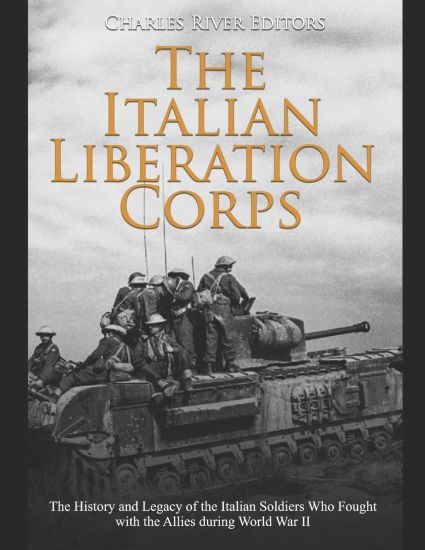
The Italian Liberation Corps: The History and Legacy of the Italian Soldiers Who Fought with the Allies during World War II
*Includes pictures*Includes a bibliography for further readingDespite British diplomatic efforts, Italy had joined the Axis in 1940 with the intention of expanding its African empire and reliving the glories of Ancient Rome. That proved to be a major mistake, and by the spring of 1943 Italy had lost all its African possessions. The Axis' North African defeat opened up the possibility of taking the war in the west to the European continent for the first time since France's lightning conquest by the Wehrmacht in 1940. The British and Americans debated the merits of landing in France directly in 1943, but they ultimately opted against it. The Soviets railed at the Westerners as "bastards of allies" - conveniently forgetting that they aided and abetted Hitler's violent expansionism in eastern Europe for over a year, starting in 1939 - but a 1943 "D-Day" style landing in France might have proven a strategic and logistical impossibility. Complex reasons lay behind England's successful insistence on the Mediterranean theater rather than the French theater as the scene of the next western Allied strike against Nazi Germany. Chief among these remained Britain's determination to keep a postwar empire, one that Churchill and his cabinet hoped would include Iraq and Iran, the source of oil needed to ensure that England continued to "rule the waves" with a powerful modern navy. This strategic imperative, indeed, formed the backbone of the British choice of Sicily as the target for military operations in the summer of 1943. The lackluster Allied showing on Sicily and the escape of most of the island's garrison encouraged Hitler to alter his plans and defend Italy vigorously. With its rugged mountain ridges, deep valleys, and numerous rivers, Italy contained tens of thousands of natural defensive positions. The Wehrmacht exploited these to the full during the ensuing campaign, bogging down the Anglo-American armies in an endless series of costly, time-consuming engagements. Even the rank and file German soldiers showed a clear awareness of the Italy's strategic significance: "'The Tommies will have to chew their way through us inch by inch, ' a German paratrooper wrote in an unfinished letter found on his corpse at Salerno, 'and we will surely make hard chewing for them.'" (Hastings, 2011, 408). These events effectively divided Italians into three groups, and the country into two rival political entities. In the absence of clear orders, the first group was the Italian troops who simply melted away, and the many civilians who just kept their heads down and tried to survive. Meanwhile, those still loyal to fascism established the Repubblica Sociale Italiana (Italian Social Republic, RSI) with a capital at Salo. Mussolini had been imprisoned after his deposition, but the Germans sprang for him in a daring special forces operation. He was reinstated as Duce in the RSI, but very much under German control. At the same time, the Allies set up Victor Emmanuel and Badoglio as leaders of the Regno del Sud (Kingdom of the South, RS) with the support of anti-fascist parties and armed resistance groups. This contest of transnational ideologies took place amidst Italy's own historical and geographical divisions and inequalities, amidst immense destruction, and all under the watchful eye of a multinational occupying army led by Great Britain. The Italian Liberation Corps: The History and Legacy of the Italian Soldiers Who Fought with the Allies during World War II examines how Italian soldiers joined the Allied forces during the fighting in Italy, and the events that followed. Along with pictures of important people, places, and events, you will learn about the Italian Liberation Corps like never before.
Rome and Germania: The History of the Roman Empire's Conflicts and Interactions with Germanic Tribes
*Includes pictures*Includes excerpts of ancient accounts*Includes a bibliography for further readingDespite all the accomplishments and widespread victories and conquests throughout the long history of Republican and Imperial Rome, general perception still deems the Romans to have failed in one crucial conquest: the subjugation of Germany. Indeed, historians have singled out this one failure as central to the ultimate downfall of the entire empire, as the constant wars against the Germanic tribes, and the need to defend the frontier on the Rhine at great expense against those tribes, helped bring the empire to its knees. There are elements of truth in such a conclusion, but the reality was far more fluid than is often realized. From the 1st century BCE until the collapse of the Western Roman Empire in the 5th century CE, the relationships between the wider empire and those living in what is now modern Germany were extremely complicated, involving much more than simple warfare. In fact, archaeologist Are Kolberg suggested that there were four distinct aspects that must be considered: military, trade, gifts, and plunder. One could also add the political aspect to this, given the impact that German troops came to exert in the elevation of different emperors to the throne at different times. As a Roman territory, Germania at one point included significant areas of land east of the Rhine, all the way up to the Elbe. The Romans would maintain a significant force on this eastern side until the 3rd century CE, but eventually a Frankish invasion ended that presence, and the term Germania came to refer specifically to the territory west of the Rhine, which included the two provinces of Germania Superior and Germania Inferior, or Upper and Lower Germany. Those provinces were key to the defense of the empire, so much so that Triers provided the location of one of the four seats of government near the end of Rome's reign. The people that came to be known as Germans originally came from Scandinavia and were mainly shepherds and hunters, but they comprised a number of distinct groups, the most important of which were the Goths, Vandals, Franks, and Saxons. Within each group, there were separate tribes, and as their populations grew, the land they occupied in Scandinavia was unable to support them, so they began migrating south, settling outside the borders of the Roman Empire. The Germans were fierce warriors who employed rather crude but effective tactics in battle. Their main approach was one of charging directly at an enemy and fighting hand-to-hand using their long swords and shields. Body armor was unknown, and they wore only animal-skins. Most warriors wore their hair long, dyed red and greased into ponytails. Friction between Rome and the German tribes can be traced back as far as 113 BCE, and the next 500 years brought full-scale campaigns by the Romans against the various individual tribes, resulting in numerous battles and constant uprisings wherever any part of the land east of the Rhine was occupied for any length of time. The impact of this constant warfare on both sides cannot be underestimated, and all the while, the fighting and other interactions had massive cultural and political influences going in both directions. Rome and Germania: The History of the Roman Empire's Conflicts and Interactions with Germanic Tribes examines the many battles and events that impacted how Rome co-existed with Germania over several centuries. Along with pictures depicting important people, places, and events, you will learn about Rome and Germania like never before.
The Battle of Ain Jalut: The History and Legacy of the Decisive Mamluk Victory that Halted the Mongol Empire's Expansion across the Middle East
*Includes pictures*Includes a bibliography for further readingEgypt in the 13th century was a glorious kingdom to behold. Spice merchants from Europe, Asia and Africa sailed up the Nile River to the great port city of Alexandria, carrying riches such as silk, jewels and spices. Cairo, the capital of Egypt, was the greatest city in the Islamic world, with a larger population and more wealth and splendor than any city in Europe. Cairo was a shining pinnacle of cosmopolitan splendor in the medieval world, and besides being a major trading hub, Cairo was famous for its scholars and intellectual class, offering countless academic opportunities for scholars across the Islamic world. The culture of Cairo was dynamic and famous for its wide range of intellectual debates on Islamic sciences and other academic fields, all of which far surpassed any contemporary city at the time. From across the Islamic world, scholars from all the major schools of thought were represented in Cairo. Spirited lectures occurred frequently in public squares and madrasas were often packed with patrons eagerly listening to readings by famed scholars. Cairo was a city filled with art, trade and knowledge. However, there was another factor that made Cairo infamous. The city represented the last bastion of the Muslim world. A great Islamic caliphate, centered in Iraq, had once stretched from the edges of Central Asia to Spain, but invasions by outside enemies had mostly overrun this once mighty empire. The Mongol armies, pouring forth from their grasslands in Asia, had sacked Baghdad in 1258, destroying the caliphate and sending the Islamic world into a state of deep peril. Moreover, the Crusaders had launched multiple invasions into Palestine and the Levant, threatening the very existence of the Muslim world. From the vast grasslands of the Asian steppes arose what is perhaps one of the most unstoppable armies in the history of the world: the Mongol Empire. A loosely aligned horde of tribal pastoral nomads, these warring tribes were united under one banner by Genghis Khan. Under his legendary leadership, the Mongols left their ancestral home in Mongolia on a campaign of conquest. Turning their eyes south toward China, the Mongols eventually conquered the rich empire to establish the Mongol Yuan Dynasty of China, but this did not satisfy the Mongol quest for conquest. The Mongols pushed west into Central Asia, defeating a series of kingdoms and empires and leaving carnage in their wake. These armies of elite horse archers crushed every foe in their path, conquering land all the way to Poland and Austria. The Middle East was not spared their wrath, as the Mongols staged some of their most devastating campaigns in Arab lands. In 1258, the Mongols sacked Baghdad, destroying the capital of the mighty Islamic Abbasid Caliphate, which was a major blow to the Islamic world. The Mongol armies continued west into the holy land of Syria and Palestine. There, the Mongols met the foe to rival them in war: the Mamluks. Hailing from the Eurasian steppes, the Mamluks were not Arab, but ethnically Turkish, enslaved at a young age, and sold into military service in Egypt, where they underwent intense military training in Cairo. Thus, these Turkish warriors were utterly alien from the Arab populations they eventually ruled over in ethnicity, language, and culture, but they were remarkably skilled in the mounted warfare styles of the nomadic tribes of the Eurasian grasslands and other aspects of medieval warfare. As a result, the Mamluks were some of the finest professional soldiers of their time, which they proved on multiple occasions through their brilliant military campaigns against the numerous enemies of Egypt.
The Ancient Indus Valley Civilization's Biggest Cities: The History and Legacy of Mohenjo-daro, Harappa, and Kalibangan
*Includes pictures*Includes excerpts of ancient accounts*Includes a bibliography for further readingWhen one thinks of the world's first cities, Sumer, Memphis, and Babylon are some of the first to come to mind, but if the focus then shifts to India, then Harappa and Mohenjo-daro will likely come up. These cities owe their existence to India's oldest civilization, known as the Indus Valley Civilization or the Harappan Civilization, which was contemporary with ancient Mesopotamia and ancient Egypt and had extensive contacts with the former, making it one of the most important early civilizations in the world. Spread out along the rivers of the Indus River Valley, hundreds of settlements began forming around 3300 BCE, eventually coalescing into a society that had all of the hallmarks of a true civilization, including writing, well-developed cities, a complex social structure, and long-distance trade. Mohenjo-daro was the largest city of the Indus Valley Civilization, one of the most advanced civilizations to have ever existed, and the best-known and most ancient prehistoric urban site on the Indian subcontinent. It was a metropolis of great cultural, economic, and political importance that dates from the beginning of the 3rd millennium BCE. Although it primarily flourished between approximately 2500 and 1500 BCE, the city had longer lasting influences on the urbanization of the Indian subcontinent for centuries after its abandonment. It is believed to have been one of two capital cities of the Indus Civilization, its twin being Harappa located further north in Punjab, Pakistan. The fact that the ancient Indus Valley Civilization is also often referred to as the Harappan Civilization demonstrates how important the discovery of Harappa is. As archaeologists and historians began to uncover more of the ancient Harappa site in the 19th and early 20th centuries, a more complete picture of the city emerged, namely its importance. Research has shown that Harappa was one of the three most important Indus Valley cities, if not the most important, with several mounds of settlements uncovered that indicate building activities took place there for over 1,000 years. At its height, Harappa was a booming city of up to 50,000 people who were divided into neighborhoods by walls and who went about their daily lives in well-built, orderly streets. Harappa also had drainage systems, markets, public baths, and other large structures that may have been used for public ceremonies. Ancient Harappa was truly a thriving and vibrant city that was on par with contemporary cities in Mesopotamia such as Ur and Memphis in Egypt. Among the many cities that formed in the region was a site known today as Kalibangan, which was unknown to the modern world until archaeologists began uncovering its secrets in excavations during the 1960s. They uncovered a city that was not as large or important as the better-known sites of Mohenjo-daro and Harappa, but one that was still relatively large and the most important of all Indus cities along the now extinct Saraswati River. Excavations at Kalibangan have revealed that the city had two phases of settlement which corresponded with the two major phases of Indus Valley Civilization, and that it influenced the smaller settlements along the Saraswati River. Archaeological work at Kalibangan has also shown that although it followed some of the patterns of larger Indus cities such as Mohenjo-daro and Harappa, it was also a unique city in many ways. Kalibangan was located on a different river from the other major Indus Valley Civilization cities, and its river suffered a fate that led to the end of the city. The city of Kalibangan also presented modern archaeologists with a treasure trove of findings because it was one of the best preserved Harappan sites, giving scholars a chance to see not only how the people of Kalibangan lived, but possibly how the city died.
The Ancient Indus Valley Civilization's Biggest Cities: The History and Legacy of Mohenjo-daro, Harappa, and Kalibangan
*Includes pictures*Includes excerpts of ancient accounts*Includes a bibliography for further readingWhen one thinks of the world's first cities, Sumer, Memphis, and Babylon are some of the first to come to mind, but if the focus then shifts to India, then Harappa and Mohenjo-daro will likely come up. These cities owe their existence to India's oldest civilization, known as the Indus Valley Civilization or the Harappan Civilization, which was contemporary with ancient Mesopotamia and ancient Egypt and had extensive contacts with the former, making it one of the most important early civilizations in the world. Spread out along the rivers of the Indus River Valley, hundreds of settlements began forming around 3300 BCE, eventually coalescing into a society that had all of the hallmarks of a true civilization, including writing, well-developed cities, a complex social structure, and long-distance trade. Mohenjo-daro was the largest city of the Indus Valley Civilization, one of the most advanced civilizations to have ever existed, and the best-known and most ancient prehistoric urban site on the Indian subcontinent. It was a metropolis of great cultural, economic, and political importance that dates from the beginning of the 3rd millennium BCE. Although it primarily flourished between approximately 2500 and 1500 BCE, the city had longer lasting influences on the urbanization of the Indian subcontinent for centuries after its abandonment. It is believed to have been one of two capital cities of the Indus Civilization, its twin being Harappa located further north in Punjab, Pakistan. The fact that the ancient Indus Valley Civilization is also often referred to as the Harappan Civilization demonstrates how important the discovery of Harappa is. As archaeologists and historians began to uncover more of the ancient Harappa site in the 19th and early 20th centuries, a more complete picture of the city emerged, namely its importance. Research has shown that Harappa was one of the three most important Indus Valley cities, if not the most important, with several mounds of settlements uncovered that indicate building activities took place there for over 1,000 years. At its height, Harappa was a booming city of up to 50,000 people who were divided into neighborhoods by walls and who went about their daily lives in well-built, orderly streets. Harappa also had drainage systems, markets, public baths, and other large structures that may have been used for public ceremonies. Ancient Harappa was truly a thriving and vibrant city that was on par with contemporary cities in Mesopotamia such as Ur and Memphis in Egypt. Among the many cities that formed in the region was a site known today as Kalibangan, which was unknown to the modern world until archaeologists began uncovering its secrets in excavations during the 1960s. They uncovered a city that was not as large or important as the better-known sites of Mohenjo-daro and Harappa, but one that was still relatively large and the most important of all Indus cities along the now extinct Saraswati River. Excavations at Kalibangan have revealed that the city had two phases of settlement which corresponded with the two major phases of Indus Valley Civilization, and that it influenced the smaller settlements along the Saraswati River. Archaeological work at Kalibangan has also shown that although it followed some of the patterns of larger Indus cities such as Mohenjo-daro and Harappa, it was also a unique city in many ways. Kalibangan was located on a different river from the other major Indus Valley Civilization cities, and its river suffered a fate that led to the end of the city. The city of Kalibangan also presented modern archaeologists with a treasure trove of findings because it was one of the best preserved Harappan sites, giving scholars a chance to see not only how the people of Kalibangan lived, but possibly how the city died.
The Colonization and Decolonization of Africa: The History and Legacy of European Imperialism across the African Continent
*Includes pictures*Includes a bibliography for further readingThe modern history of Africa was, until very recently, written on behalf of the indigenous races by the white man, who had forcefully entered the continent during a particularly hubristic and dynamic phase of European history. In 1884, Prince Otto von Bismark, the German chancellor, brought the plenipotentiaries of all major powers of Europe together, to deal with Africa's colonization in such a manner as to avoid provocation of war. This event-known as the Berlin Conference of 1884-1885-galvanized a phenomenon that came to be known as the Scramble for Africa. The conference established two fundamental rules for European seizure of Africa. The first of these was that no recognition of annexation would granted without evidence of a practical occupation, and the second, that a practical occupation would be deemed unlawful without a formal appeal for protection made on behalf of a territory by its leader, a plea that must be committed to paper in the form of a legal treaty. This began a rush, spearheaded mainly by European commercial interests in the form of Chartered Companies, to penetrate the African interior and woo its leadership with guns, trinkets and alcohol, and having thus obtained their marks or seals upon spurious treaties, begin establishing boundaries of future European African colonies. The ease with which this was achieved was due to the fact that, at that point, traditional African leadership was disunited, and the people had just staggered back from centuries of concussion inflicted by the slave trade. Thus, to usurp authority, to intimidate an already broken society, and to play one leader against the other was a diplomatic task so childishly simple, the matter was wrapped up, for the most part, in less than a decade. During World War II, President Roosevelt pictured a very different post-war world than his British counterpart, Winston Churchill. When he and Churchill met at what came to be known as the Atlantic Conference, Churchill's pleas for U. S. manpower and aid were accepted, but only under clear conditions. If the United States was to come to the aid of Britain, it would be for the purpose of defeating the Germans and the Japanese and not to support the insupportable institutions of empire. Britain and, by extension, France and Portugal, the only remaining major European shareholders in foreign empire, would have to commit to decolonization as a basic prerequisite of substantial U. S. assistance. Meanwhile, the British were not the only European power to take note of this development. The French too were a major imperial power with a great deal to lose from such a monumental change, but their view of the global chessboard was somewhat different. France lay under German occupation, and an armistice had been signed on behalf of the French nation by Marshall Philippe P tain, commencing the era of Vichy France. In London, meanwhile, the firebrand French General Charles de Gaulle urged a continuation of the resistance, believing the French mainland to be only a small part of the picture. France was much more than just France. De Gaulle established the Free French movement in Britain, based on the loyalty and the ongoing Free French control of a majority of her overseas territories. The Free French movement and the Free French army based themselves in Francophone Africa. The saga of the Free French movement would impact the war in both North Africa and Europe, but most specifically, it would serve to radically redefine the French view of itself and her relationship with her overseas territories. Most importantly, it would set the tone for a style of decolonization very different from the British. This book examines the turbulent history of imperialism across Africa and the consequences it has had.
The Battle of Shiroyama: The History and Legacy of the Samurai's Last Stand in Japan
*Includes pictures*Includes excerpts of contemporary accounts*Includes a bibliography for further readingOn September 25, 1877, on a rain-soaked, muddy field in Kagoshima, Japan, a small group of proud samurai warrior rebels prepared for one last stand. It was early morning, 6:00 a.m., and the remaining 40 samurai warriors still capable of fighting prepared themselves for the glory of death on the battlefield. They had been shelled by powerful artillery guns and naval cannons relentlessly through the night, and the rebels had no real shelter or protection. Instead, they cowered like rats in small, rain-filled mud holes, showered by a torrent of steel shells and shrapnel. For seven months, the samurai rebels had fought a losing battle against the army of Emperor Meiji, the new ruler of Japan's central government. It was a modern army, filled with conscripts, armed with rifles, and trained in European tactics. The samurai rebels were also armed with rifles, but months of fighting had stripped them of ammunition. They still possessed their distinctive personal weapons - their katana swords - and they intended to use them one last time. Despite the overwhelming firepower and numbers advantage wielded by the central government, the rebels, led by Saigō Takamori, a samurai warrior and proud defender of the samurai tradition, remained stoic in their final moments. By early morning, the last capable samurai drew their swords and launched a final suicidal charge into the rapidly firing rifles of 30,000 conscript troops, members of Japan's modern imperial army. It would be the samurai's last stand. Lionized in the Tom Cruise film The Last Samurai, the Battle of Shiroyama was the dying gasp of feudal Japan. For centuries, the Japanese warrior caste, known as the samurai, had held positions of high prestige and privilege in Japan. Paid a stipend and holding both military and civil positions, the samurai were a proud group that looked down upon Japan's commoners and merchants. They served the Tokugawa shogunate, a military dictatorship that ascended to power and isolated Japan from the rest of the world, for more than two centuries, ending a period of constant civil war. This blissful isolation changed with the arrival of American Commodore Matthew Perry in 1853. In awe of the American weapons and ships, the Tokugawa shogunate quickly realized that they needed to evolve and modernize their military to survive, and a time of rapid change descended on Japan. Within a mere 30 years, the Tokugawa period's great samurai caste was extinct. Military service was no longer the exclusive domain of the privileged warrior class who had combined the military with an intricate network of social status and vassalship to their feudal lords. For the new Meiji government of Japan, military conscription was an obligation for all able-bodied men. The social castes that had existed for centuries, including the samurai, commoners, and outcasts, were replaced by a new system of national subjecthood that would propel Japan into the modern era. One group of samurai dreaded these developments, which threatened their very existence, and they launched a rebellion under the legendary samurai Saigō Takamori. Japan descended into a civil war lasting seven bloody months, culminating with the battle that brought about the end of the samurai. The Battle of Shiroyama: The History and Legacy of the Samurai's Last Stand in Japan chronicles the events that brought about the rebellion, the dramatic battle, and the aftermath. Along with pictures depicting important people, places, and events, you will learn about the Battle of Shiroyama like never before.
Os Estados Unidos Estranhos e Misteriosos: Mistérios, Lendas e Fenômenos Inexplicáveis em toda a América
O Nordeste sempre teve um lugar especial na mem ria nacional. Os estados de Connecticut, Maine, Massachusetts, New Hampshire, Rhode Island, Vermont e Nova York t m uma longa hist ria como algumas das primeiras col nias do Novo Mundo. Seu rico folclore e hist ria colorida est o entrela adas na identidade nacional, e destinos como Plymouth Rock, os far is do Maine e as folhas de outono de Vermont s o s mbolos por excel ncia dos Estados Unidos. Mas o Nordeste sempre teve um lado sombrio, um lado estranho. Monstros e fantasmas espreitam em seus bosques e casas antigas, e estranhos monumentos que podem ser de uma civiliza o esquecida confundem os investigadores locais. Enquanto isso, os primeiros habitantes sempre foram supersticiosos, como evidenciado pelos julgamentos de bruxas mais famosos da hist ria. Hoje, os julgamentos das bruxas de Salem s o frequentemente lembrados como uma rel quia de um passado supersticioso, e Salem se transformou em um para so tur stico e destino de Halloween, capitalizando os julgamentos das bruxas de Salem, mas era muito grave em 1692, quando 19 homens e mulheres viram-se levados para "Gallows Hill" e enforcados por serem bruxos. Outro homem com mais de 80 anos foi morto por se recusar a ser julgado por bruxaria, e de fevereiro de 1692 a maio de 1693, centenas de outros foram acusados de bruxaria. Dezenas ficaram presos por meses at a histeria em massa finalmente desaparecer. O sul da Am rica deu origem a muitas das grandes hist rias e lendas do pa s. Desde os primeiros tempos coloniais, tem sido um lugar de mist rio, repleto de col nias desaparecidas e apari es estranhas na floresta, mas a longa e orgulhosa hist ria do Sul sempre teve um lado mais sombrio e estranho. De fato, um dos mist rios mais famosos da Am rica foi o primeiro. Apesar de ter deixado mais de 100 colonos na ilha de Roanoke em 1587, John White voltou a literalmente nada, com todos os vest gios do assentamento desaparecidos e nenhuma evid ncia de luta ou qualquer outra coisa que pudesse explicar o desaparecimento dos habitantes. White encontrou a palavra "Croatoan" esculpida em uma rvore pr xima, o que ele imaginou que poderia significar que os colonos se mudaram para uma ilha pr xima, mas ele n o foi capaz de realizar uma expedi o de busca por l . Os espanh is tamb m procuraram a col nia na esperan a de destru -la, mas nenhum dos europeus conseguiu encontrar os colonos de Roanoke ou explicar o que aconteceu com a col nia "perdida". O destino de Roanoke fascina as pessoas h mais de 400 anos, e n o faltam teorias sobre o desaparecimento da col nia. Al m da possibilidade de os colonos se mudarem para a Ilha Croatoan, a maioria das teorias especula que eles foram exterminados por nativos americanos pr ximos ou assimilados por uma tribo. e fen menos inexplic veis. Contos de monstros e fantasmas espreita em seus bosques e casas antigas, e estranhos monumentos que podem ser de uma civiliza o esquecida, confundem os investigadores locais. Enquanto isso, os primeiros habitantes sempre foram supersticiosos, seja na Fl rida, Ge rgia, Maryland, Carolina do Norte, Carolina do Sul, Virg nia, Virg nia Ocidental, Alabama, Kentucky, Mississippi, Tennessee e leste da Louisiana. O espa o pode ser a fronteira final, mas nenhuma fronteira jamais capturou a imagina o americana como o "Oeste Selvagem", que ainda evoca imagens de cowboys empoeirados, foras da lei, tiroteios, jogadores e brigas de bares mais de 100 anos depois que o Ocidente foi estabelecido. Um elemento constante na cultura pop americana, o oeste americano do s culo XIX continua a ser vividamente e colorido, retratado n o apenas como um lugar, mas como um estado de esp rito. Mesmo para quem viaja hoje pelo Ocidente, h muitos vest gios dos velhos tempos. As cidades fantasmas ainda est o em partes remotas do deserto e da pradaria, a arte rupestre dos nativos americanos ainda conta suas lendas mudas e as anti

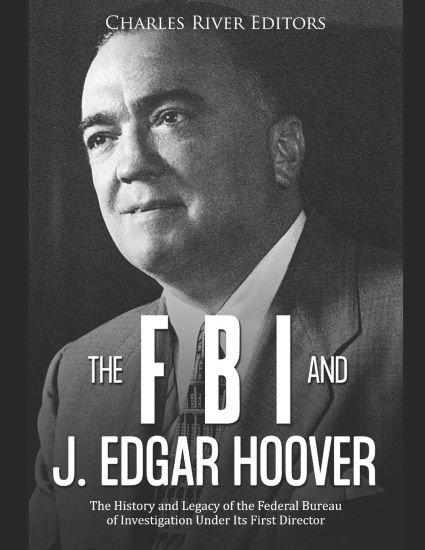
The FBI and J. Edgar Hoover: The History and Legacy of the Federal Bureau of Investigation Under Its First Director
*Includes pictures*Includes a bibliography for further reading"We are a fact-gathering organization only. We don't clear anybody. We don't condemn anybody." - J. Edgar HooverNo single figure in 20th century American history inspires such opposing opinions as J. Edgar Hoover, the iconic first Director of the Federal Bureau of Investigation. In his time, he was arguably the most powerful non-elected figure in the federal government. Serving under eight presidents (and outliving two of them), he remains the longest-serving head of a major government office, and Hoover died as he began: a civil servant, having been appointed by the Attorney General and serving at the pleasure of the president. That said, no civil servant had ever accrued to themselves the power and public attention that Hoover did. To many Americans in the 1930s, '40s, and '50s, Hoover was a real American hero. In a country suffering from the Great Depression and the crime wave of the early 1930s, Hoover was the symbol of law and order as his "G-Men" used the newest in scientific crime solving methods to bring gangsters like John Dillinger, Pretty Boy Floyd, and Baby Face Nelson to justice. In the 1940s, he protected a country at war from German and Japanese spies and saboteurs. In the 1950s, he led the charge against Soviet spies and domestic communists who he saw as undermining the institutions of the country. Every boy in the country wanted to be a G-Man, helping Mr. Hoover ferret out anyone who would harm the United States. However, by the 1960s and 1970s, Hoover the hero had become Hoover the villain. Various exposes and investigations revealed a darker side to the legend, one that included serious violations of the civil liberties of individuals. Hoover's G-Men, it was discovered, engaged in illegal break-ins and wiretaps of suspected subversives, wrote fake letters that undermined the reputations of public individuals, paid informants for information, and pushed the groups they belonged to into committing illegal acts. It was alleged that Hoover led a personal vendetta against Martin Luther King, Jr. and the entire Civil Rights Movement. Hoover, it was said, had stayed in office so long by gathering secret files of damaging information about politicians (including presidents) that shortly after his death in 1972, the Hoover legend was in tatters, replaced by a caricature of a vain, vindictive, power-mad petty dictator who was a closet cross-dresser. As with most larger-than-life figures, the truth lies somewhere between two myths. Views of Hoover as hero and Hoover as villain contain elements of truth. The same man who took a small insignificant office of the Justice Department and transformed it into the premier national law enforcement agency in the world was the same man who approved (or at least had knowledge of) actions that violated the Constitution he was sworn to uphold. The director who ordered his agents in the 1960s to destroy the Ku Klux Klan when they were engaging in violent acts against Civil Rights protesters also surveyed the leading figure of the Civil Rights Movement. J. Edgar Hoover was in many ways a walking contradiction, but his apparent contradictions embodied the issues at the heart of 20th century America. The FBI and J. Edgar Hoover: The History and Legacy of the Federal Bureau of Investigation Under Its First Director examines the events that led to the formation of the FBI, the most important cases it was involved in, and the controversies surrounding Hoover's methods. Along with pictures depicting important people, places, and events, you will learn about the FBI under Hoover like never before.
Buffalo Soldiers: The History and Legacy of the Black Soldiers Who Fought in the U.S. Army during the Indian Wars
*Includes pictures*Includes excerpts of contemporary accounts*Includes a bibliography for further readingDuring the Civil War, over 180,000 black men fought in volunteer units as part of the United States Colored Troop (USCT), but it was only after the end of it that they were allowed to enlist in the Regular Army. They did so in four segregated regiments, and they colloquially became known as Buffalo Soldiers. The evolution of these black units followed the course of the organization of the peacetime Regular Army. With the end of the Civil War came the demobilization of the millions of men who had volunteered to fight on behalf of the Union, including the USCT, which disbanded in late 1865. The first draft of a bill setting the organization of the Army sent to the House on March 7, 1866 called for the establishment of eight infantry regiments to be staffed by veterans of the USCT, but the legislation lacked similar provisions for black cavalry units. When the bill got to the Senate for approval, Senator Benjamin Wade succeeded in having a provision added that authorized black cavalry units. The bill that passed on July 28, 1866 authorized a total of 10 regiments of cavalry and 45 regiments of infantry, and in 1867, the Regular Army raised two regiments of black cavalry, designated the 9th (Colored) Cavalry and the 10th (Colored) Cavalry. In addition, the Army raised four regiments of black infantry: the 38th (Colored) Infantry, the 39th (Colored) Infantry, the 40th (Colored) Infantry, and the 41st (Colored) Infantry. Ultimately, however, the number of black regiments did not stay at six for very long, because in 1869 there was a further reduction in the size of the Regular Army, with the number of infantry regiments reduced to 25. As part of the reduction, the number of black regiments was reduced from four to two, so the 38th and 41st were reorganized as the 25th (Colored) Infantry, and the 39th and 40th were reorganized as the 24th (Colored) Infantry. The enlistment in both the cavalry and infantry was for five years, with soldiers being paid $13 a month, plus room, board, and clothing. Of course, these units are now known for the nickname attached to them, but exactly where the nickname Buffalo Soldiers came from is a subject of some dispute. Dr. Walter Hill wrote, "According to Benjamin H. Grierson, Colonel, 10th Cavalry, 1867 to 1890, the 10th acquired the name 'Buffalo Soldiers' during the 1871 campaign against the Comanches in the Indian Territory. Grierson said that the Comanches respected the soldiers' tireless marching and dogged trail skills. They had earned the name of the rugged and revered buffalo. The 10th made the 'Buffalo' its regimental coat of arms years later, but the term 'Buffalo Soldiers, ' became synonymous with both the 9th and 10th units." The term appeared in public for the first time in 1873, in reference to the 10th Cavalry, in a letter from Mrs. Frances M. A. Roe to a popular magazine. She wrote, "The officers say that the Negroes make good soldiers and fight like fiends...the Indians call them 'buffalo soldiers' because their woolly heads are so much like the matted cushion that is between the horns of the buffalo. Others believe that the nickname originated from the Cheyanne. Another possible source came from the Apaches for the buffalo coats they wore in the winter." Buffalo Soldiers: The History and Legacy of the Black Soldiers Who Fought in the U. S. Army during the Indian Wars examines how the regiments were raised, and what their service entailed over the course of several decades. Along with pictures depicting important people, places, and events, you will learn about the Buffalo Soldiers like never before.
Os Estados Unidos Estranhos e Misteriosos: Mistérios, Lendas e Fenômenos Inexplicáveis em toda a América
O Nordeste sempre teve um lugar especial na mem ria nacional. Os estados de Connecticut, Maine, Massachusetts, New Hampshire, Rhode Island, Vermont e Nova York t m uma longa hist ria como algumas das primeiras col nias do Novo Mundo. Seu rico folclore e hist ria colorida est o entrela adas na identidade nacional, e destinos como Plymouth Rock, os far is do Maine e as folhas de outono de Vermont s o s mbolos por excel ncia dos Estados Unidos. Mas o Nordeste sempre teve um lado sombrio, um lado estranho. Monstros e fantasmas espreitam em seus bosques e casas antigas, e estranhos monumentos que podem ser de uma civiliza o esquecida confundem os investigadores locais. Enquanto isso, os primeiros habitantes sempre foram supersticiosos, como evidenciado pelos julgamentos de bruxas mais famosos da hist ria. Hoje, os julgamentos das bruxas de Salem s o frequentemente lembrados como uma rel quia de um passado supersticioso, e Salem se transformou em um para so tur stico e destino de Halloween, capitalizando os julgamentos das bruxas de Salem, mas era muito grave em 1692, quando 19 homens e mulheres viram-se levados para "Gallows Hill" e enforcados por serem bruxos. Outro homem com mais de 80 anos foi morto por se recusar a ser julgado por bruxaria, e de fevereiro de 1692 a maio de 1693, centenas de outros foram acusados de bruxaria. Dezenas ficaram presos por meses at a histeria em massa finalmente desaparecer. O sul da Am rica deu origem a muitas das grandes hist rias e lendas do pa s. Desde os primeiros tempos coloniais, tem sido um lugar de mist rio, repleto de col nias desaparecidas e apari es estranhas na floresta, mas a longa e orgulhosa hist ria do Sul sempre teve um lado mais sombrio e estranho. De fato, um dos mist rios mais famosos da Am rica foi o primeiro. Apesar de ter deixado mais de 100 colonos na ilha de Roanoke em 1587, John White voltou a literalmente nada, com todos os vest gios do assentamento desaparecidos e nenhuma evid ncia de luta ou qualquer outra coisa que pudesse explicar o desaparecimento dos habitantes. White encontrou a palavra "Croatoan" esculpida em uma rvore pr xima, o que ele imaginou que poderia significar que os colonos se mudaram para uma ilha pr xima, mas ele n o foi capaz de realizar uma expedi o de busca por l . Os espanh is tamb m procuraram a col nia na esperan a de destru -la, mas nenhum dos europeus conseguiu encontrar os colonos de Roanoke ou explicar o que aconteceu com a col nia "perdida". O destino de Roanoke fascina as pessoas h mais de 400 anos, e n o faltam teorias sobre o desaparecimento da col nia. Al m da possibilidade de os colonos se mudarem para a Ilha Croatoan, a maioria das teorias especula que eles foram exterminados por nativos americanos pr ximos ou assimilados por uma tribo. e fen menos inexplic veis. Contos de monstros e fantasmas espreita em seus bosques e casas antigas, e estranhos monumentos que podem ser de uma civiliza o esquecida, confundem os investigadores locais. Enquanto isso, os primeiros habitantes sempre foram supersticiosos, seja na Fl rida, Ge rgia, Maryland, Carolina do Norte, Carolina do Sul, Virg nia, Virg nia Ocidental, Alabama, Kentucky, Mississippi, Tennessee e leste da Louisiana. O espa o pode ser a fronteira final, mas nenhuma fronteira jamais capturou a imagina o americana como o "Oeste Selvagem", que ainda evoca imagens de cowboys empoeirados, foras da lei, tiroteios, jogadores e brigas de bares mais de 100 anos depois que o Ocidente foi estabelecido. Um elemento constante na cultura pop americana, o oeste americano do s culo XIX continua a ser vividamente e colorido, retratado n o apenas como um lugar, mas como um estado de esp rito. Mesmo para quem viaja hoje pelo Ocidente, h muitos vest gios dos velhos tempos. As cidades fantasmas ainda est o em partes remotas do deserto e da pradaria, a arte rupestre dos nativos americanos ainda conta suas lendas mudas e as anti

Modern Democracy: The History and Legacy of the World's Democratic Institutions Since the American Revolution
*Includes picturesIn today's modern world every political regime, even the most authoritarian or repressive, describes itself as democracy or a Democratic People's Republic. The concept of rule by the people, on behalf of the people, has come to be accepted as the norm, and very few would overtly espouse the cause of dictatorship, absolute monarchy or oligarchy as the most desirable political system upon which to base the government of any country. It is also generally accepted that democracy, as a political ideology, began in Greece, specifically in Athens, in the 7th century BCE and reached its zenith in the 5th century under the leadership of Pericles. Dating an exact starting point is impossible, but at the beginning of the 7th century BCE, Solon inaugurated a series of reforms that began the movement away from rule by individuals, or tyrants, and by the end of that century the reforms of Cleisthenes provided the basis of the Athenian democratic system that culminated in the radical institutions introduced by Ephialtes and Pericles in the 5th century. The result was the first, and possibly only, truly participative democratic state. At the same time, the ancients would not have recognized, or accepted, any of today's modern versions of democracy as being truly "democratic." A rejection of dictatorships masquerading as democracies would be understandable, but the ancients would have been equally scathing of Western-style representative democracies that they would undoubtedly have seen as anti-democratic. The key to democracy, as far as the Greeks and Romans were concerned, was active participation by the citizen body in all political aspects of life. While the French Revolution tried and ultimately failed to bring about an almost fully democratic system, the fledgling United States of America managed to bring about one of the most enduring forms of democratic government in the 1780s. The Constitution of the United States was not the first written expression of the democratic ideal, but it certainly was the most perfect in the context of the times. In the entire history of the British Empire, only two territories would attempt a unilateral declaration of independence. The first was the United States, and the second, 189 years later, was the rebel territory of Southern Rhodesia in the constellation of British African territories. The sheer audacity, in 1776, of a subject territory of the British Crown declaring itself independent sent shockwaves through the imperial establishment, setting into motion a reevaluation of British overseas policy and beginning the boldest experiment in democracy to date. The seeds of the American Revolution could be found in the fundamental distrust of distant government held by a local population of an independent character confronting a continent almost infinite in its scope. The cusp upon which this embryonic republic stood represented the first authentic opportunity to date for a European people, egalitarian in outlook and separated from the stifling social conventions of Europe, to redefine the rights of man according to what they believed was enshrined in the spirit of the Magna Carta. Therefore, before the mechanics of government and administration could begin to be constructed, a declaration of rights was deemed essential as the basis of any future political blueprint, to guarantee each citizen, free and included, a list of protections and immunities from their own government. This became the basic template for the Bill of Rights, the first 10 amendments to the Constitution of the United States of America, drafted to appease the anti-federalists suspicious of a return to imperial rule by the back door. The amendments specific to the Bill of Rights reinforced the Constitution with a series of detailed guarantees of personal rights and freedoms and clear limitations on governmental power and authority.
The FBI and J. Edgar Hoover: The History and Legacy of the Federal Bureau of Investigation Under Its First Director
*Includes pictures*Includes a bibliography for further reading"We are a fact-gathering organization only. We don't clear anybody. We don't condemn anybody." - J. Edgar HooverNo single figure in 20th century American history inspires such opposing opinions as J. Edgar Hoover, the iconic first Director of the Federal Bureau of Investigation. In his time, he was arguably the most powerful non-elected figure in the federal government. Serving under eight presidents (and outliving two of them), he remains the longest-serving head of a major government office, and Hoover died as he began: a civil servant, having been appointed by the Attorney General and serving at the pleasure of the president. That said, no civil servant had ever accrued to themselves the power and public attention that Hoover did. To many Americans in the 1930s, '40s, and '50s, Hoover was a real American hero. In a country suffering from the Great Depression and the crime wave of the early 1930s, Hoover was the symbol of law and order as his "G-Men" used the newest in scientific crime solving methods to bring gangsters like John Dillinger, Pretty Boy Floyd, and Baby Face Nelson to justice. In the 1940s, he protected a country at war from German and Japanese spies and saboteurs. In the 1950s, he led the charge against Soviet spies and domestic communists who he saw as undermining the institutions of the country. Every boy in the country wanted to be a G-Man, helping Mr. Hoover ferret out anyone who would harm the United States. However, by the 1960s and 1970s, Hoover the hero had become Hoover the villain. Various exposes and investigations revealed a darker side to the legend, one that included serious violations of the civil liberties of individuals. Hoover's G-Men, it was discovered, engaged in illegal break-ins and wiretaps of suspected subversives, wrote fake letters that undermined the reputations of public individuals, paid informants for information, and pushed the groups they belonged to into committing illegal acts. It was alleged that Hoover led a personal vendetta against Martin Luther King, Jr. and the entire Civil Rights Movement. Hoover, it was said, had stayed in office so long by gathering secret files of damaging information about politicians (including presidents) that shortly after his death in 1972, the Hoover legend was in tatters, replaced by a caricature of a vain, vindictive, power-mad petty dictator who was a closet cross-dresser. As with most larger-than-life figures, the truth lies somewhere between two myths. Views of Hoover as hero and Hoover as villain contain elements of truth. The same man who took a small insignificant office of the Justice Department and transformed it into the premier national law enforcement agency in the world was the same man who approved (or at least had knowledge of) actions that violated the Constitution he was sworn to uphold. The director who ordered his agents in the 1960s to destroy the Ku Klux Klan when they were engaging in violent acts against Civil Rights protesters also surveyed the leading figure of the Civil Rights Movement. J. Edgar Hoover was in many ways a walking contradiction, but his apparent contradictions embodied the issues at the heart of 20th century America. The FBI and J. Edgar Hoover: The History and Legacy of the Federal Bureau of Investigation Under Its First Director examines the events that led to the formation of the FBI, the most important cases it was involved in, and the controversies surrounding Hoover's methods. Along with pictures depicting important people, places, and events, you will learn about the FBI under Hoover like never before.
Canadá misterioso: uma coleção de assombrações, mistérios e criaturas estranhas em toda a nação canadense
O Canad tem fama de ser um lugar aborrecido. Mais tranquilo do que o seu vizinho do Sul, preserva descansadamente uma das democracias mais pr speras e est veis do mundo, e f -lo sem dar nas vistas. N o aparece frequentemente nas not cias, o que positivo, atendendo ao conte do dos notici rios. Os cidad os d o-se bem, a economia encontra-se em crescimento, e n o comum ocorrerem desastres. Embora tudo isto torne o Canad num bom pa s para viver, n o o torna particularmente interessante. Mas se investigarmos um pouco, descobrimos um Canad diferente, estranho, um lugar de homic dio, mist rio e experi ncias paranormais. As hist rias que se seguem ir o mostrar que o Canad , longe de ser uma na o imperturb vel e enfadonha onde nada acontece, um epicentro de eventos peculiares.
The Italian Liberation Corps: The History and Legacy of the Italian Soldiers Who Fought with the Allies during World War II
*Includes pictures*Includes a bibliography for further readingDespite British diplomatic efforts, Italy had joined the Axis in 1940 with the intention of expanding its African empire and reliving the glories of Ancient Rome. That proved to be a major mistake, and by the spring of 1943 Italy had lost all its African possessions. The Axis' North African defeat opened up the possibility of taking the war in the west to the European continent for the first time since France's lightning conquest by the Wehrmacht in 1940. The British and Americans debated the merits of landing in France directly in 1943, but they ultimately opted against it. The Soviets railed at the Westerners as "bastards of allies" - conveniently forgetting that they aided and abetted Hitler's violent expansionism in eastern Europe for over a year, starting in 1939 - but a 1943 "D-Day" style landing in France might have proven a strategic and logistical impossibility. Complex reasons lay behind England's successful insistence on the Mediterranean theater rather than the French theater as the scene of the next western Allied strike against Nazi Germany. Chief among these remained Britain's determination to keep a postwar empire, one that Churchill and his cabinet hoped would include Iraq and Iran, the source of oil needed to ensure that England continued to "rule the waves" with a powerful modern navy. This strategic imperative, indeed, formed the backbone of the British choice of Sicily as the target for military operations in the summer of 1943. The lackluster Allied showing on Sicily and the escape of most of the island's garrison encouraged Hitler to alter his plans and defend Italy vigorously. With its rugged mountain ridges, deep valleys, and numerous rivers, Italy contained tens of thousands of natural defensive positions. The Wehrmacht exploited these to the full during the ensuing campaign, bogging down the Anglo-American armies in an endless series of costly, time-consuming engagements. Even the rank and file German soldiers showed a clear awareness of the Italy's strategic significance: "'The Tommies will have to chew their way through us inch by inch, ' a German paratrooper wrote in an unfinished letter found on his corpse at Salerno, 'and we will surely make hard chewing for them.'" (Hastings, 2011, 408). These events effectively divided Italians into three groups, and the country into two rival political entities. In the absence of clear orders, the first group was the Italian troops who simply melted away, and the many civilians who just kept their heads down and tried to survive. Meanwhile, those still loyal to fascism established the Repubblica Sociale Italiana (Italian Social Republic, RSI) with a capital at Salo. Mussolini had been imprisoned after his deposition, but the Germans sprang for him in a daring special forces operation. He was reinstated as Duce in the RSI, but very much under German control. At the same time, the Allies set up Victor Emmanuel and Badoglio as leaders of the Regno del Sud (Kingdom of the South, RS) with the support of anti-fascist parties and armed resistance groups. This contest of transnational ideologies took place amidst Italy's own historical and geographical divisions and inequalities, amidst immense destruction, and all under the watchful eye of a multinational occupying army led by Great Britain. The Italian Liberation Corps: The History and Legacy of the Italian Soldiers Who Fought with the Allies during World War II examines how Italian soldiers joined the Allied forces during the fighting in Italy, and the events that followed. Along with pictures of important people, places, and events, you will learn about the Italian Liberation Corps like never before.