Kirjojen hintavertailu – 12 903 727 kirjaa ja 27 kauppaa

Kirjailija

Charles River

Kirjat ja teokset yhdessä paikassa: 4 673 kirjaa, julkaisuja vuosilta 2013–2022, suosituimpiin kuuluu William Powell and Myrna Loy: The Lives and Careers of One of Classical Hollywood's Most Iconic Duos. Vertaile teosten hintoja ja tarkista saatavuus suomalaisista kirjakaupoista.

4 673 kirjaa

Kirjojen julkaisuvuodet: 2013–2022.

Casimir Pulaski: The Life and Legacy of the Polish Commander Who Became the Father of the American Cavalry during the Revolutionary War
*Includes pictures *Includes contemporary accounts *Includes online resources and a bibliography for further reading "I came here, where freedom is being defended, to serve it, and to live or die for it." - Pulaski Many Americans labor under the misconception that the nation's colonial and national heritage was almost wholly accomplished by an English migration, and the notion of early American diversity ends at an acknowledgment of the slave trade conducted between Southern buyers, Northern shippers, the African continent and the Caribbean region. However, early America witnessed the development of New York by the Dutch, the southernmost regions by Spain, and what would become eastern Canada by the French after lengthy battles with Britain. In fact, the Seven Years' War during the 1750s was fought on a nearly global scale between several European belligerents. As a result, when the Revolution began, the Continental Army sported numerous volunteers from Ireland, Scotland, virtually every European nation between France and Russia, and men from the northern and southern borders of the European continent. There are good reasons America doesn't possess a constitutionally-confirmed national language, despite an English-speaking majority; among the early proposals for such a common language, German and French served as contenders, with the latter going on to become Western Europe's official diplomatic language. Likewise, those who accomplished the legislative, diplomatic, and military miracles that helped 13 separate colonies hold off the greatest power in the world represented a multi-national heritage. With European nations unceasingly at war, soldiers from one side or the other often found themselves in disfavor, were marked men in exile, or were fleeing from a superior force. To General George Washington's good fortune, a few found their way to the colonies to join in the cause. Some were adventurers recently cut off from their own borders, while others embraced the American urge for freedom that so closely mirrored the same movements in their home countries. Nations such as France undoubtedly had an elevating effect on America's capacity to make formal war, and Lafayette is the most famous foreigner to serve in the Continental Army, but one of the most important individuals who arrived at Washington's door was Polish aristocrat Kazimierz Michal Wladyslaw Wiktor Pulaski, known to future generations as the "Father of the American Cavalry." Few foreign participants in early American events are as widely decorated in non-military society as this Polish cavalry officer driven into exile from his own nation's fight for independence. Pulaski considered the American urge for resistance against Britain to be an inseparable principle from Poland's lengthy struggle against Russian domination. Today, streets, bridges, monuments, and even neighborhoods bear Pulaski's name across the country, and in Polish communities, he is often hailed as a hero equal to General Washington himself. Historians speculate that without Pulaski having taken specific actions in one or more crucial battles, the war against Britain might well have taken a far different and darker turn. At the very least, it was Pulaski who made America's Congress and military leadership aware of the importance of cavalry units and a need for establishing the first "true legion" of warriors on horseback to act in support of the foot soldiers. A man of ferocious resolve despite a diminutive stature, Pulaski was the first to lead the unit bearing his name as a Brigadier General under Washington. Casimir Pulaski: The Life and Legacy of the Polish Commander Who Became the Father of the American Cavalry during the Revolutionary War profiles one of the Revolutionary War's most important figures. Along with pictures of important people, places, and events, you will learn about Pulaski like never before.
American Legends: The Life of Chief Joseph of the Nez Perce

American Legends: The Life of Chief Joseph of the Nez Perce

Charles River

Createspace Independent Publishing Platform
2018
nidottu
*Includes pictures of Chief Joseph and other important people and places in his life. *Explains the events that led up to the Nez Perce War and comprehensively covers the tribe's legendary retreat *Discusses Chief Joseph's legacy and controversies surrounding his life. "Our fathers gave us many laws, which they had learned from their fathers. These laws were good. They told us to treat all people as they treated us; that we should never be the first to break a bargain; that is was a disgrace to tell a lie; that we should speak only the truth; that it was a shame for one man to take another's wife or his property without paying for it." - Chief Joseph A lot of ink has been spilled covering the lives of history's most influential figures, but how much of the forest is lost for the trees? In Charles River Editors' American Legends series, readers can get caught up to speed on the lives of America's most important men and women in the time it takes to finish a commute, while learning interesting facts long forgotten or never known. When he died in 1904, most Americans who knew his people's story considered Chief Joseph, whose Nez Perc name is Himahtooyahlatkekt ("Thunder Rolling Down from the Mountains"), a military genius and an "Indian Napoleon." This assessment of the Native American leader was based on a 1,500-mile odyssey during which he and his people left their reservation in the hopes of escaping to Canada, where the Nez Perc intended to join Sitting Bull and his Hunkpapa Sioux band. The real Chief Joseph was a gifted speaker and more diplomat than war leader. It's not surprising that Chief Joseph was misunderstood and misrepresented by Americans because his people's name was as well; Nez Perc literally means "pierced nose" in French, but it is unclear whether the tribe ever used nose piercing as a form of ornament. At the time of Joseph's birth, the Nez Perc were rapidly becoming the most influential and wealthy tribe in the region, and their prospects seemed bright. Lewis and Clark had considered his ancestors sufficiently friendly and reliable that they left their horses with them as they loaded onto canoes and journeyed to the Pacific Coast. By the time of Joseph's birth in 1840, the Nez Perc had maintained friendly relations with American settlers for several decades. But their attitudes would soon change as the United States government began to coerce them to cede their traditional homeland to newly arrived white settlers, and the Nez Perc began suffering a fate very similar to that of other Native American tribes to the east. Joseph had inherited tribal leadership from his father in 1871, and for six tumultuous years he attempted to peacefully resist settlers who desired the tribe's fertile potential farmland in the Wallowa Valley of present-day northeastern Oregon. Thus it was Chief Joseph who fought the Nez Perce War against the U. S. Army in 1877, earning grudging respect from the people who sought to defeat them. American Legends: The Life of Chief Joseph of the Nez Perce profiles the amazing life and leadership of the famous Native American Chief, examining the results of the war and analyzing his lasting legacy. Along with pictures of important people, places, and events, you will learn about Chief Joseph like you never have before, in no time at all.
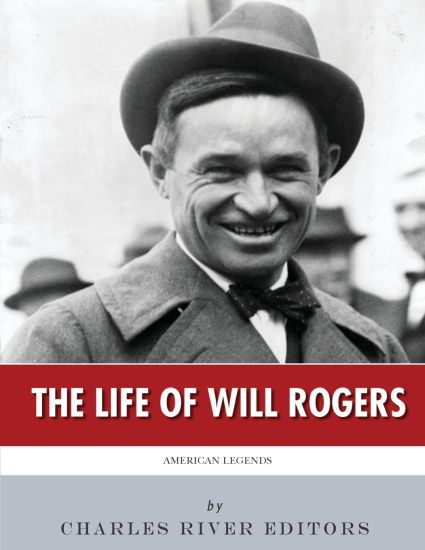
American Legends: The Life of Will Rogers

American Legends: The Life of Will Rogers

Charles River

Createspace Independent Publishing Platform
2018
nidottu
*Includes pictures. *Includes dozens of Will Rogers' quotes about life, politics, and more. *Includes a bibliography for further reading. "I don't make jokes. I just watch the government and report the facts." - Will Rogers A lot of ink has been spilled covering the lives of history's most influential figures, but how much of the forest is lost for the trees? In Charles River Editors' American Legends series, readers can get caught up to speed on the lives of America's most important men and women in the time it takes to finish a commute, while learning interesting facts long forgotten or never known. Biographers of Will Rogers are always faced with a tough task, because the list of things Will Rogers didn't do is a much shorter one than the list of things he did. By the time he died in 1935 in a plane crash in Alaska, he was one of the most famous men in the world, and one of the most versatile celebrities. With a career spanning several decades and most of his life, Rogers not only dabbled in vaudeville, film, writing, and politics but reached the pinnacle of most of those professions, even if they were more like hobbies to him. By the 1930s, he was not only a syndicated columnist but also the highest paid actor in Hollywood and widely considered an important voice in the Democratic Party. Rogers was also frequently on the radio and frequently on the move, traveling around the world several times and traveling when he died. While he was famous among his contemporaries for a wide variety of things, Will Rogers is still a household name nearly 80 years after his death. Even those who don't recall everything that he packed into his 55 years - the live shows, the movies, the radio broadcasts, and the 4,000 newspaper columns that were read by nearly a full third of the population - remember what Rogers stood for. While it was true that he came from a privileged background, he made his own way in the world, relying on a genuine style of honesty and approachability that made him popular even with those he teased. Politicians mostly accepted the barbs that came their way from Rogers' great wit, and it was part of the territory of being a public servant in his lifetime. Rogers was no backwoods hayseed though. He was an insightful man who found a way to capitalize on the American love for the nostalgia of the West and become the voice for many who did not have the same platform that he did. Noted satirist H. L. Mencken said that Rogers was "the most dangerous man alive" because of the length of his reach, and he used that power to speak out on issues such as freedom of religion and speech, child labor reform. He even raised money for relief for poor African Americans affected by floodwaters in Mississippi. American Legends: The Life of Will Rogers examines the life and career of one of America's most famous and beloved celebrities. Along with pictures of important people, places, and events, you will learn about Will Rogers like never before, in no time at all.
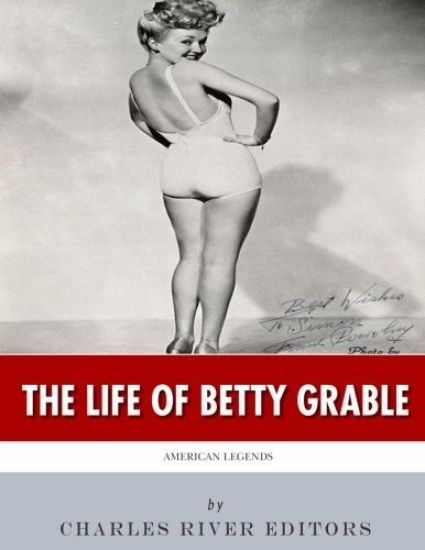
American Legends: The Life of Betty Grable

American Legends: The Life of Betty Grable

Charles River

Createspace Independent Publishing Platform
2018
nidottu
*Includes pictures. *Includes a bibliography for further reading. "There are two reasons why I'm in show business, and I'm standing on both of them." - Betty Grable A lot of ink has been spilled covering the lives of history's most influential figures, but how much of the forest is lost for the trees? In Charles River Editors' American Legends series, readers can get caught up to speed on the lives of America's most important men and women in the time it takes to finish a commute, while learning interesting facts long forgotten or never known. No history of American pop culture in the 1940s would be complete without mention of Betty Grable, the most popular pin-up girl of the World War II era. Grable possessed the outstanding fortune of not only having an ideal body but arriving at the most fortuitous time imaginable; the famous pin-up photo of her, taken by Frank Powolny, made her the highest-earning actress in Hollywood from 1943 to 1951. Indeed, it was not hyperbole that earned Grable the nickname of "the girl with the million dollar legs" - not only were her legs famously adored by American soldiers fighting overseas, they were actually insured to the tune of one million dollars (Suddath). Grable was the banner actress for the era before the advent of Playboy and other publications designed to satisfy the lust of the heterosexual male, an era that objectified women but in a more wholesome, less pornographic way that was designed to reinforce all-American values. However, if Grable was, monetarily speaking, the most successful actress of the 1940s, there is a major gulf between her commercial success and the critical appraisal of her acting talents. Grable never won an Academy Award, and the swift demise of her career testifies to her inability to sustain her career after she had begun to age and her glamour showed signs of atrophying. In a famous quote, Grable once noted she was "the kind of girl truck drivers like," a statement that simultaneously encapsulates her wide appeal but also the lack of sophistication that precluded her recognition among the premier acting talents of 1940s Hollywood (McLean 180). Decades later, her films are largely forgotten, which isn't surprising since they were a collection of movies that were designed to gain quick commercial success rather than long-term critical acclaim. Certainly, Grable should be acknowledged for her acting career, but her fame rests more on the impact she had on wartime American culture than the intrinsic value of any of her films. American Legends: The Life of Betty Grable looks at the significance of Betty Grable's place in war-era America, as well as her acting career, exploring how she came to gain such unprecedented popularity. This includes not just her rise to fame but also the reasons why her career did not last as long as many of her contemporaries in Hollywood, women like Katharine Hepburn, Joan Crawford, and Bette Davis. By analyzing her triumphs and adversities, it's possible to understand the whirlwind life and career of Betty Grable, and along with pictures of important people, places, and events, you will learn about Betty Grable like never before, in no time at all.
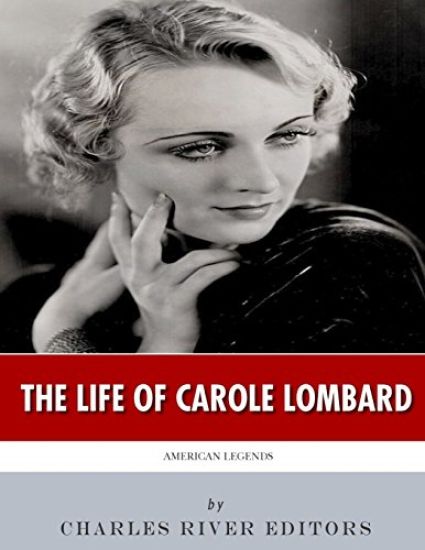
American Legends: The Life of Carole Lombard

American Legends: The Life of Carole Lombard

Charles River

Createspace Independent Publishing Platform
2018
nidottu
*Includes pictures. *Includes Lombard's quotes about her life and career. *Includes a bibliography for further reading. "Carole Lombard's tragic death means that something of gaiety and beauty have been taken from the world at a time they are needed most." - Errol Flynn A lot of ink has been spilled covering the lives of history's most influential figures, but how much of the forest is lost for the trees? In Charles River Editors' American Legends series, readers can get caught up to speed on the lives of America's most important men and women in the time it takes to finish a commute, while learning interesting facts long forgotten or never known. On January 16, 1942, just a few weeks after Pearl Harbor brought the United States into World War II, the nation suffered what were considered the first civilian deaths of the war when a plane crashed into the side of a mountain southwest of Las Vegas. Aboard the plane were 15 servicemen, but the plane was also carrying one of Hollywood's biggest stars: actress Carole Lombard. Although Lombard's death and her marriage to Gone With the Wind star Clark Gable have overshadowed her career, her untimely death in 1942 cut short the life of one of Hollywood's most prominent stars at the time. In fact, Lombard's platinum look and her unique mannerisms had helped her become the biggest star of the screwball genre by the end of the 1930s, and her movies were so successful that she was the highest paid actress in Hollywood by the start of the 1940s. As English critic Graham Greene said of her, "Platinum blonde, with a heart-shaped face, delicate, impish features and a figure made to be swathed in silver lam , Lombard wriggled expressively through such classics of hysteria as Twentieth Century and My Man Godfrey." Indeed, despite dying at the age of 33, the American Film Institute recognized her as one of the biggest film icons of the 20th century. Lombard has been memorialized in many fitting ways as an actress, but one of her biggest contributions to Hollywood was the blond archetype that the film industry used successfully for decades in screwball comedies, paving the way for the success of women like Marilyn Monroe. Perhaps the most remarkable aspect of that fact is that it was actually based on Carole's gushing personality. As famous director Howard Hawks noted of her, "She acted like a schoolgirl ... and she was stiff, she would try and imagine a character and then act according to her imaginings instead of being herself." When Lombard started simply portraying herself, Hawks told actor John Barrymore, " Y] ou've just seen a girl that's probably going to be big a star, and if we can just keep her from acting, we'll have a hell of a picture." American Legends: The Life of Carole Lombard examines the life and career of one of the Golden Era of Hollywood's biggest stars. Along with pictures of important people, places, and events, you will learn about Carole Lombard like never before, in no time at all.
Captain James Cook: The Life and Legacy of the Legendary British Explorer Who Discovered Hawaii
*Includes pictures *Includes Cook's accounts of his historic voyages *Includes online resources and a bibliography for further reading *Includes a table of contents "Do just once what others say you can't do, and you will never pay attention to their limitations again." - James Cook "To boldly go where no man has gone before" was a phrase made popular by Gene Rodenberry in a science fiction setting, but it was certainly the creed of countless explorers during the Age of Discovery and afterwards. In fact, as recently as the mid-18th century, a young sailor named James Cook determined to go "farther than any man has been before me, but as far as I think it is possible for a man to go." And unlike so many others who tried, he did just that. Cook was a war veteran who participated in the French & Indian War, but he remains best known over 250 years later for sailing thousands of miles across much of the Pacific, mapping regions, naming new places, and making scientific discoveries. Indeed, there are plenty of similarities between Cook's three voyages and the famed "five year mission" of the Enterprise. Like Captain Picard, Cook's missions were supposed to be peaceful and focused primarily on scientific research. His first voyage, which took him to New Zealand, was meant to transport astronomers to study Venus, and his second voyage also carried several scientists tasked with "exploring strange new worlds" that Cook and his crew encountered. At the same time, Cook also seemed to run across many of the same problems faced by explorers across all centuries, even the fabled 23rd century. He found himself making first contact with native peoples who had never met Europeans, and though Cook's intentions were supposedly peaceful, the men and women he encountered were justifiably concerned enough that they decided to attack rather than wait to be attacked. Cook himself often made bad decisions, especially when it came to interacting with aboriginal peoples, and these decisions cost a number of his crew their lives, as well as his own eventually. Perhaps fittingly, he was killed along the coast of Hawaii, one of his most important discoveries, and while that may have brought his discoveries to an end, his legacy is a mix of adventure and cautionary tale that can continue to inspire to this day. Captain James Cook: The Life and Legacy of the Legendary British Explorer Who Discovered Hawaii chronicles the historic expeditions that Cook made across the Pacific, and his climactic discoveries and death. Along with pictures of important people, places, and events, you will learn about Captain Cook like never before.
La Stasi: Historia y legado de la Agencia de Policía Secreta de Alemania Oriental

La Stasi: Historia y legado de la Agencia de Policía Secreta de Alemania Oriental

Charles River

Createspace Independent Publishing Platform
2018
nidottu
"La Stasi usaba a menudo un m todo que era realmente diab lico. Se llamaba Zersetzung, y se describe en otra pauta. La palabra es dif cil de traducir porque significa originalmente "biodegradaci n". Pero en realidad, es una descripci n bastante precisa. El objetivo era destruir secretamente la confianza en s misma de la gente, por ejemplo da ando su reputaci n, organizando fracasos en su trabajo y destruyendo sus relaciones personales. Teniendo esto en cuenta, Alemania Oriental era una dictadura muy moderna. La Stasi no intent arrestar a todos los disidentes. Prefer a paralizarlos, y pod a hacerlo porque ten a acceso a tanta informaci n personal y a tantas instituciones". Hubertus Knabe, historiador alem n. La historia de Alemania Oriental estuvo estrechamente ligada al desarrollo de sus servicios de seguridad, concretamente de la Stasi. En una poca de pa ses totalitarios dominados por agencias estatales represivas, la Stasi se destacaba por su tama o y por la amplitud y profundidad de su vigilancia. Pel culas como Das Leben der Anderen ("La vida de los otros") encapsulaban actitudes y concepciones posteriores a la unificaci n, tanto de la vida en Alemania Oriental como de las actividades de la Stasi. A pesar de su notoriedad, el legado de la Stasi es cuestionado en la Alemania moderna. Los antiguos alemanes occidentales, y los occidentales en general, alinean estrechamente el estado de Alemania Oriental y la Stasi, enmarcando un "estado de la Stasi". Los de la antigua Alemania Oriental, sin embargo, resienten las actitudes condescendientes y la fusi n de ambas instituciones, prefiriendo centrarse en los elementos sociales del Estado de Alemania Oriental. Uwe Spiekermann, del Instituto Hist rico Alem n, expone sucintamente las impresiones de muchos al considerar la Alemania Oriental y su cultura de vigilancia: "En retrospectiva, la Stasi se ha convertido en un s mbolo para la RDA Alemania Oriental]". El Servicio de Seguridad del Estado de Alemania Oriental, o Staatssicherheitsdienst en alem n (abreviado como Stasi) se fund en 1950. Se pretend a que fuera el "escudo y la espada" del Estado y vigil de cerca a gran parte de la poblaci n durante los pr ximos 40 a os. Algunas de las cifras son sorprendentes. A finales de los a os ochenta, la Stasi ten a archivos de seis millones de habitantes de un total de 18 millones. Cuando se abrieron los archivos de la Stasi en los a os 90, se descubrieron archivos que se extend an a lo largo de 178 kil metros. A lo largo de la existencia de Alemania Oriental, hasta dos millones de personas actuaron como esp as, y 90.000 personas trabajaron en el Ministerio, por no hablar de los numerosos informantes "no oficiales". Alemania Oriental tambi n contaba con un temido servicio de inteligencia extranjero de sus servicios de inteligencia, el HV A (Hauptverwaltung A o departamento central), que demostr ser experto en infiltrarse en la sociedad de Alemania Occidental y llevar a cabo operaciones en muchos otros pa ses. Pero, por qu se form la Stasi y c mo result ser tan eficaz? La respuesta a estas preguntas requiere el entendimiento de las circunstancias nicas en las que se form Alemania Oriental, as como la pol tica en Alemania al final de la Segunda Guerra Mundial y el comienzo de la Guerra Fr a. La Stasi: Historia y Legado de la Agencia de Polic a Secreta de Alemania Oriental examina la historia de una de las agencias m s notorias de la historia. Junto con fotos que representan a gente importante, lugares y eventos, usted aprender sobre la Stasi como nunca antes.
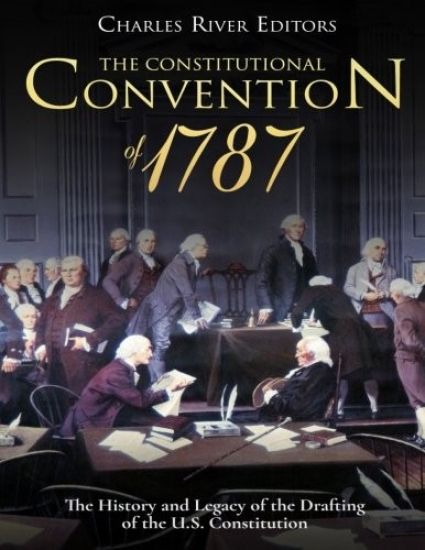
The Constitutional Convention of 1787: The History and Legacy of the Drafting of the U.S. Constitution
*Includes pictures *Includes contemporary accounts *Includes online resources and a bibliography for further reading "All communities divide themselves into the few and the many. The first are the rich and well born, the other the mass of the people. The voice of the people has been said to be the voice of God; and however generally this maxim has been quoted and believed, it is not true in fact. The people are turbulent and changing; they seldom judge or determine right. Give therefore to the first class a distinct, permanent share in the government. They will check the unsteadiness of the second, and as they cannot receive any advantage by a change, they therefore will ever maintain good government. Can a democratic assembly, who annually revolve in the mass of the people, be supposed steadily to pursue the public good? Nothing but a permanent body can check the imprudence of democracy. Their turbulent and uncontroling disposition requires checks." - Alexander Hamilton, quoted in Notes of the Secret Debates of the Federal Convention of 1787 By 1787, it became evident that the Articles of Confederation were inadequate for the new nation. With these problems hampering the national government under the Articles of Confederation and the threat of default on the nation's massive war debt looming, plans began being made to fix the problems of the Articles of Confederation. Thus, that summer a Constitutional convention was called, and each state sent delegates to Philadelphia. Among the delegates were prominent patriots and former members of the Continental Congress, including George Washington and Benjamin Franklin. However, while most of the delegates came to Philadelphia virtually starting with nothing, Alexander Hamilton and James Madison arrived in Philadelphia well-prepared and well-studied. Hamilton had been a leader in calling for a Constitutional Convention to restructure the nation's government at the convention in Annapolis a year earlier. At that convention, Hamilton had been elected to draft a document describing the reasons for a stronger national government. The letter was sent to each of the 13 states, and it was instrumental in leading to the opening of the Constitutional Convention in 1787. Meanwhile, Madison had been brushing up on his political theory and actually prepared extensively for the Convention. Madison used his extensive knowledge of ancient and foreign languages to study Constitutions from across the world, which he had done this prior to helping craft the Virginia Constitution. Thus, he was already considered something of an expert on Constitutionalism. Given that background, and the fact that he had done more legwork than anybody else at the Convention, delegates looked to him as a leader on the subject. The Constitution was a decisive move away from the Articles of Confederation which the proponents of the Constitution claimed promoted dissonance by giving the States too much autonomy. They argued that a strong federal government ought to be empowered to maintain standing armies, provide for a national militia, and be able to levy direct taxes to support its common defense and provide for economic prosperity. Certain fears about the federal government becoming omnipotent and abusing its military authority or right to tax, they argued, should be assuaged by understanding the role of legislature, or the representatives of the people, in determining the central government's authority to raise an army and levy taxes. This was a democratic experiment that had never been embarked upon before. The Constitutional Convention of 1787: The History and Legacy of the Drafting of the U. S. Constitution looks at how America's governing document came to be. Along with pictures of important people, places, and events, you will learn about the Constitutional Convention like never before.
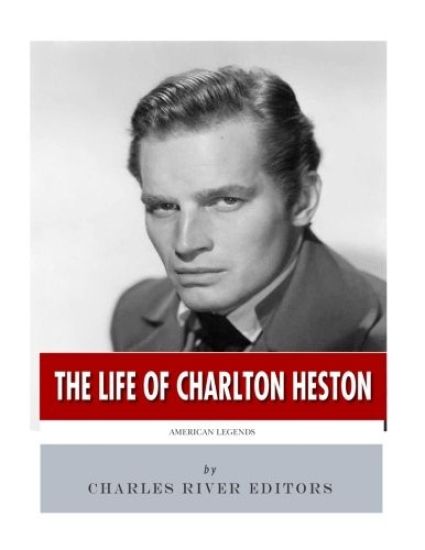
American Legends: The Life of Charlton Heston

American Legends: The Life of Charlton Heston

Charles River

Createspace Independent Publishing Platform
2018
nidottu
*Includes pictures. *Includes Heston's own quotes about his life, his career, and politics. *Includes a bibliography for further reading. " Fame] has complicated my life a little, but not enormously. I had to learn to be a public person, but fame has given me a good deal of control over my career, which I otherwise would not have had. Also, chances to work with some extraordinary men and women." - Charlton Heston "Charlton Heston was seen by the world as larger than life. He was known for his chiseled jaw, broad shoulders and resonating voice, and, of course, for the roles he played. No one could ask for a fuller life than his. No man could have given more to his family, to his profession and to his country." - An official statement made by Heston's family after his death A lot of ink has been spilled covering the lives of history's most influential figures, but how much of the forest is lost for the trees? In Charles River Editors' American Legends series, readers can get caught up to speed on the lives of America's most important men and women in the time it takes to finish a commute, while learning interesting facts long forgotten or never known. Charlton Heston had one of the longest and most critically acclaimed careers of any man in Hollywood during the second half of the 20th century, winning an Academy Award for Best Actor and appearing in some of Hollywood's most beloved classics, including The Greatest Show on Earth (1952), The Ten Commandments (1956), Touch of Evil (1958), Ben-Hur, (1959), El Cid (1961), The Agony and the Ecstasy, and Planet of the Apes (1968). Given so many popular and memorable roles, Heston became known across the nation for playing strong, moral men who were not just fatherly role models but also voices of authority and forces for good. Of course, it was no coincidence that Heston played roles with these characteristics, because he rejected appearing as a character who did not share his own personal, professional, political or religious outlook. Anyone who was unaware of that would've noticed that Heston was outspoken about his beliefs and unabashedly advocated them. During the 1960s, he championed Democratic candidates, but as he grew older, he became an ideological conservative and was perhaps more associated with the Republican Party than anyone else in Hollywood. Ironically, Heston may be best known by today's generations for speaking in favor of conservative causes and especially his affiliation with the National Rifle Association, even more than for his actual film career. If so, it certainly didn't bother Heston, who wrote a speech titled Fighting the Culture War in America and said, "The Constitution was handed down to guide us by a bunch of wise old dead white guys who invented our country Now some flinch when I say that. Why It's true-they were white guys So were most of the guys that died in Lincoln's name opposing slavery in the 1860s. So why should I be ashamed of white guys? Why is "Hispanic Pride" or "Black Pride" a good thing, while 'White Pride' conjures shaven heads and white hoods? Why was the Million Man March on Washington celebrated by many as progress, while the Promise Keepers March on Washington was greeted with suspicion and ridicule? I'll tell you why: Cultural warfare " Heston remained the president and face of the NRA until stepping down after being diagnosed with Alzheimer's, and he died a few years later in 2008. American Legends: The Life of Charlton Heston examines the life and career of one of America's most famous and infamous actors. Along with pictures of important people, places, and events, you will learn about Heston like never before, in no time at all.
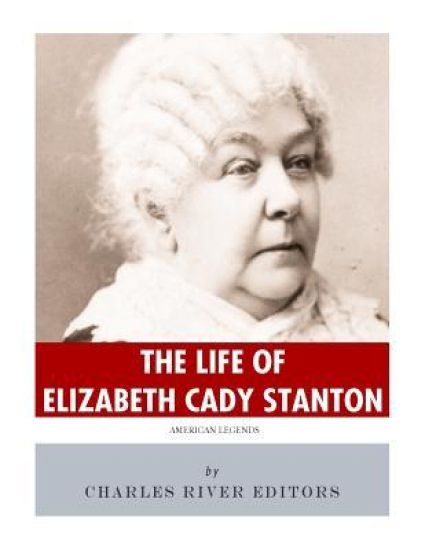
American Legends: The Life of Elizabeth Cady Stanton

American Legends: The Life of Elizabeth Cady Stanton

Charles River

Createspace Independent Publishing Platform
2018
nidottu
*Includes pictures of Stanton and important people in her life. *Includes Stanton's most colorful quotes on religion, abolition, and women's rights. *Includes a Bibliography for further reading. "The moment we begin to fear the opinions of others and hesitate to tell the truth that is in us, and from motives of policy are silent when we should speak, the divine floods of light and life no longer flow into our souls." - Elizabeth Cady Stanton A lot of ink has been spilled covering the lives of history's most influential figures, but how much of the forest is lost for the trees? In Charles River Editors' American Legends series, readers can get caught up to speed on the lives of America's most important men and women in the time it takes to finish a commute, while learning interesting facts long forgotten or never known. Elizabeth Cady Stanton is something of an unsung hero in the history of the feminist movement. Though she is still primarily known as an advocate of women's suffrage and is closely linked to the better known Susan B. Anthony, Stanton was shunned by many of her fellow suffragists because her ideas seem too radical and because many were disturbed by her barely Deist view of religion. Over a century after her death, modern feminists tend to overlook Stanton in favor of Anthony, while remembering that Stanton enjoyed taking on the traditional 19th century gender roles of being the mother of a large family and remaining devoted to her husband throughout her life. And while Anthony's comments about abortion are still fiercely debated by pro-life and pro-choice crowds, Stanton held conservative views toward abortion. It's clear that Elizabeth Cady Stanton was very much her own woman, certainly a fitting description that she would not have wanted any other way. Though she is not as well known or fondly remembered as her closest counterpart, Stanton preceded Anthony as an advocate of women's rights. It was Stanton who issued the Declaration of Sentiments at the first women's rights convention in Seneca Falls, New York in 1848, touching off the organized movement that worked toward suffrage and equality. At the same time, Stanton was an ardent abolitionist, and she focused on progressive issues like custody rights, divorce, women's property rights, employment issues, and even birth control. American Legends: The Life of Elizabeth Cady Stanton chronicles the amazing life and work of one of America's best known suffragists, examining her ideology and the controversies she generated. Along with pictures, you will learn about Elizabeth Cady Stanton like you never have before, in no time at all.
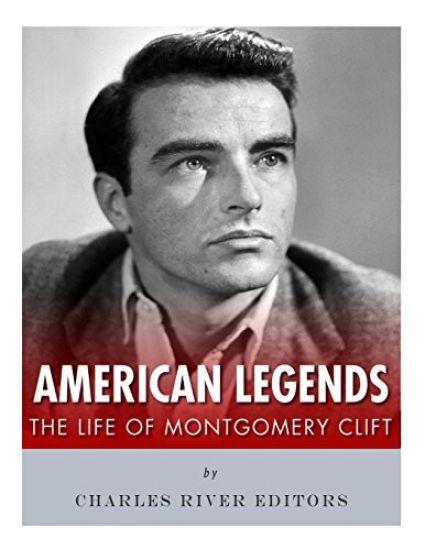
American Legends: The Life of Montgomery Clift

American Legends: The Life of Montgomery Clift

Charles River

Createspace Independent Publishing Platform
2018
nidottu
*Includes pictures *Includes Clift's own quotes about his life and career *Includes online resources, footnotes, and a bibliography for further reading *Includes a table of contents "Look, I'm not odd. I'm just trying to be an actor; not a movie star, an actor." - Montgomery Clift A lot of ink has been spilled covering the lives of history's most influential figures, but how much of the forest is lost for the trees? In Charles River Editors' American Legends series, readers can get caught up to speed on the lives of America's most important men and women in the time it takes to finish a commute, while learning interesting facts long forgotten or never known. In the World War II and post-war era, the figure of the male hero who was previously presented as an invulnerable, single-minded, and to a larger degree monolithic and unknowable warrior, began to develop into a more multi-faceted and intriguing character in the most important Hollywood films. This was to signal, and in a sense impel the same change in American society that has always mirrored itself after its cinematic models. Much like the era of Austen and the Bronte sisters, the American hero softened to resemble the older British one, vulnerable and uncertain, but still passionate and determined. In Edward Montgomery Clift, the public not only discovered an unusually gifted actor, but a persistent and stoical anti-authoritarian, an extreme non-conformist in a conformist age and a personal enigma who has remained the target of prying Hollywood reporting since his death. Described as the first "method" actor in Hollywood, he was to co-create and develop this lonely, unwilling and uncertain American hero, filled with deep personal ambiguities, a conflicting will, vulnerable and sensitive. In his eventual arrival to Hollywood following a lengthy period of resistance, he not only embodied this new male model, but inspired the next generation of fascinating characters who didn't "fit in," such as friends Marlon Brando and James Dean. He added to this screen persona a sexual dualism that, while not apparent on the surface, changed the way leading men were perceived by the late 1940s. A first-rate stage actor, Clift approached Hollywood on his own terms, and permanently upset the ruling order of the studio-to-star system, in which long-term contracts guaranteed corporate ownership of the artist, and in which casting was often based more on familiarity than suitability or acting skills. Obscuring Clift's evident gifts as a special actor of his generation is the persistent ruminating on his personal tortures, not only as a drug addict and alcoholic, but as a sexually split identity playing the handsome leading man on the screen while unable to find a haven in American society in his private time. The combination of these forces shortened Clift's career and life considerably, despite some of his finest performances being filmed in a state of near delirium and mental collapse. Somehow able to tap into his extraordinary gifts at the lowest moments, he struggled through his final films, evoking success when he should have been undergoing treatment. He even secured a fourth Oscar nomination for a ten-minute scene that was entirely improvised, as he was unable to remember a single line of the script. He was, at the last, a great American leading man who was, at the same time, virtually unemployable. Among the hardest men to know in the Hollywood industry, Clift was nevertheless treated with affection by most of his fellow actors who simply called him Monty, as he had been called his whole life. Born in Omaha, Nebraska, the same city that produced Marlon Brando, Clift would have grown up in a stolid Midwestern society as the son of a no-nonsense banker and a self-styled, aristocratic mother, for whom aristocratic children were a necessary part of the family image.
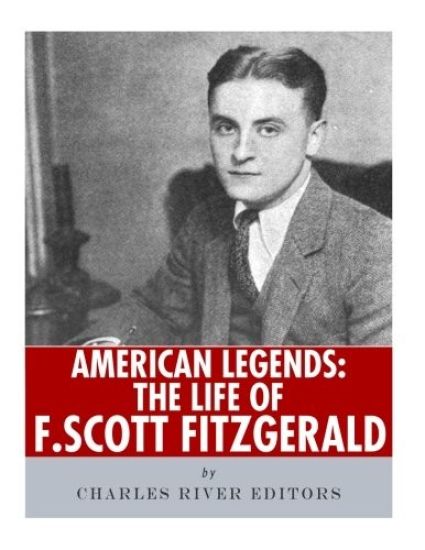
American Legends: The Life of F. Scott Fitzgerald

American Legends: The Life of F. Scott Fitzgerald

Charles River

Createspace Independent Publishing Platform
2018
nidottu
*Includes pictures of important people and places. *Includes some of Fitzgerald's most famous quotes. *Analyzes the real life inspirations behind Fitzgerald's work and the stormy relationship with Zelda. *Includes a Bibliography for further reading. "All good writing is swimming under water and holding your breath." - F. Scott Fitzgerald A lot of ink has been spilled covering the lives of history's most influential figures, but how much of the forest is lost for the trees? In Charles River Editors' American Legends series, readers can get caught up to speed on the lives of America's most important men and women in the time it takes to finish a commute, while learning interesting facts long forgotten or never known. The 1920s in the United States were known as the "Roaring Twenties" and the Jazz Age, a time in the nation that glorified hard and fast living. Nobody personified the age or wrote so descriptively about it better than F. Scott Fitzgerald (1896-1940), whose name became synonymous with the times after penning the epic Great Gatsby. Along with his dazzling wife Zelda, Fitzgerald was all too keen to play the role. When his writing made them celebrities, they were celebrated by the national press for being "young, seemingly wealthy, beautiful, and energetic." While Scott used their relationship as material in his novels, Zelda wrote herself, and she also strove to become a ballerina. However, the Fitzgeralds barely outlasted the '20s. Their hard living left Fitzgerald, a notorious alcoholic, in poor health by the '30s. Financially broke, he would die of a massive heart attack in 1940, by which time Zelda had already suffered various mental illnesses. Zelda died in a freak fire in 1948, both Fitzgeralds having burned out almost as quickly as they had shined. Interest in the Fitzgeralds, and particularly F. Scott Fitzgerald's writing, revived in the '50s and has been steady ever since, with Fitzgerald's Great Gatsby and other stories like This Side of Paradise being read in classrooms across the United States. In addition to their extraordinary literary quality, they continue to represent the optimism of the Roaring Twenties. American Legends: The Life of F. Scott Fitzgerald profiles the life and career of one of America's most famous writers and cultural icons. Along with pictures of important people, places, and events, you will learn about F. Scott Fitzgerald like you never have before, in no time at all.
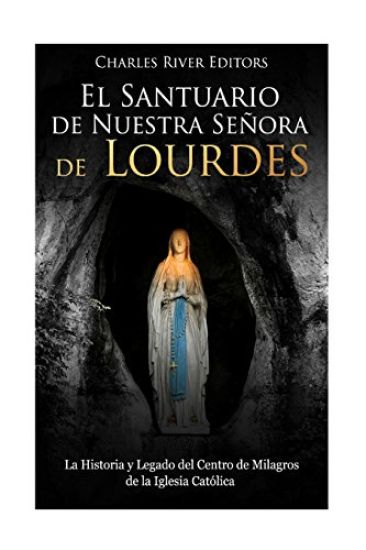
El Santuario de Nuestra Señora de Lourdes: La Historia y Legado del Centro de Milagros de la Iglesia Católica
Aunque es una admirable obra de arte creada por la acci n de las aguas del otrora turquesa r o Gave de Pau, la modesta gruta a sus orillas, escondida en el desfiladero al norte de la Massabielle ("Vieja Misa") en la pintoresca ciudad de Lourdes dif cilmente sea la m s majestuosa en la colecci n de la Madre Naturaleza. De hecho, la estrecha cueva era tan poco excepcional que permaneci , en buena parte, sin ser perturbada hasta mediados del siglo XVII, a excepci n de alguno que otro pescador o arriero que se refugiara all durante una tempestad inesperada. Rodeada de tupidos arbustos y envuelta en enredaderas de hiedra, la peque a gruta, tan h meda como es oscura, no es lo suficientemente espaciosa para albergar ni a un aquelarre de brujas. A pesar de su exterior com n y dimensiones menos que impresionantes, la gruta atrae hoy en d a a millones y millones de visitantes cada a o sin falta. Largas filas zigzagueantes de lugare os, visitantes y peregrinos cristianos por igual esperan pacientemente su oportunidad para no solo apreciar, sino ofrecer sus respetos a la fascinantemente magn tica gruta. Muchos de los creyentes, conmovidos, levantan sus manos, sus ojos llenos de l grimas sinceras, hacia la estatua de quienes los lugare os alaban como "Nuestra Se ora de Lourdes", la cual se encuentra en un nicho iluminado por un candelabro en forma de rbol de navidad, lleno de velas blancas. Adem s de servir como una referencia simb lica a la proclamaci n de Cristo -"Yo soy la luz del mundo"-, las velas representan la "fe, ansiedades y votos" de todos aquellos que visitan la gruta, descargando todas sus miserias e infortunios a los pies de la Se ora. Tan sagrado es este espacio, que la parte inferior de las r sticas paredes se ha ido alisando, por los incontables peregrinos que buscan recibir las bendiciones divinas tocando la piedra sagrada. Algunos levantan a sus hijos sobre sus hombros y los instan a tocar las h medas y musgosas paredes. Otros que llevan reci n nacidos en brazos, tocan gentilmente las suaves cabezas de sus infantes contra la piedra de la gruta. Tambi n est n aquellos que presionan prendas de ropa de sus hijos u otros parientes contra las paredes, mientras murmuran a ojos cerrados una plegaria por ellos. Una escena tal vez a n m s conmovedora es el fen meno de la extasiada congregaci n que se re ne all para escuchar la misa especial que se celebra cada 11 de febrero. Resaltan al frente de la congregaci n las docenas de visitantes en sillas de ruedas, sentados lado a lado en grupos de ocho. Parados juntos a ellos en esta multitud de varios miles, est n cientos de asistentes sosteni ndose en muletas, y otros m s que padecen aflicciones y angustias invisibles, tanto f sicas como mentales. Cualesquiera sean las propias creencias e historia de vida, la mirada pura de anhelo y esperanza que brilla en los ojos de quienes con tanta intensidad observan el manantial de la gruta -rodeado por plexigl s y delimitado por cuerdas- es suficiente para llegar al coraz n. Visto con m s detalle, el manantial en cuesti n no es m s que una apertura perfectamente circular en el suelo, que recuerda a una alcantarilla. Y, sin embargo, este manantial no es solo preservado, sino fervientemente elogiado, como evidencia el incesante n mero de visitantes y la variedad cual arco ris de hermosos buqu s florales, refrescados regularmente. Dicen que el juicio no existe en Lourdes. Una vez que uno pone un pie en este suelo sagrado, todas las barreras de raza, condici n social, antecedentes y diferencias de religi n dejan de existir. No es uno m s que un alma humilde en busca de la renovaci n de la propia conexi n con Dios. El Santuario de Nuestra Se ora de Lourdes: La Historia y Legado del Centro de Milagros de la Iglesia Cat lica narra la notable historia del sitio y c mo se convirti en uno de los lugares m s influyentes de la religi n.
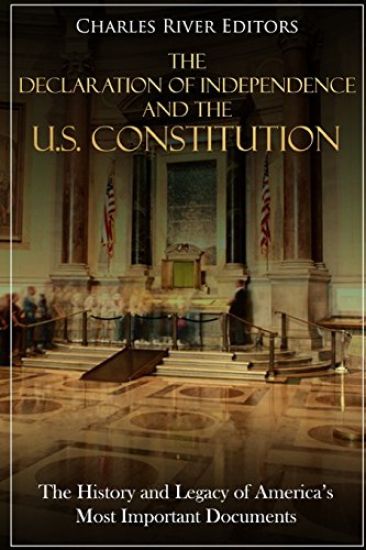
The Declaration of Independence and the U.S. Constitution: The History and Legacy of America's Most Important Documents
*Includes pictures *Includes contemporary accounts *Includes a bibliography for further reading Although the Declaration of Independence is now considered one of the most important political documents in history, the men that drafted it did not initially favor such a move at the start of the American Revolution. Despite its assumption of governing duties, the Second Continental Congress never intended, at least initially, to become the governing body of a new nation. Instead, it merely hoped to transform the relationship between Britain and her colonies to allow for greater self-government on their side of the Atlantic. Separation between the two was rarely favored, and this initial sentiment coalesced into the Olive Branch Petition, which sought a reasonable motion of reconciliation between George III and the colonies. It was drafted by one of Virginia's delegates, Thomas Jefferson. By the summer of 1776, John Adams, Samuel Adams and others arguing for a formal break with Britain convinced their fellow Congressmen that the time had come to formalize their break from Britain. John, along with Thomas Jefferson, Benjamin Franklin, Roger Sherman and Robert Livingston, were appointed to draft the announcement informing Britain of their intentions. Together they completed the rough draft of the preamble on May. The committee then wanted John to complete the document, but he felt that Jefferson was a better writer. Ultimately the two men worked together to create Declaration of Independence in late June, with Adams providing much of the legal insight and Jefferson the prose. As a document, the Declaration justified the call for independence by listing grievances against the King and anchoring them with natural and legal rights, which formed the most memorable lines in the document. In addition to summarizing Jefferson's political philosophy, the Declaration was an amalgamation of the words and thoughts of famous political philosophers of the previous century, including Montesquieu and John Locke. By 1787, it became evident that the Articles of Confederation were inadequate for the new nation. With these problems hampering the national government under the Articles of Confederation and the threat of default on the nation's massive war debt looming, plans began being made to fix the problems of the Articles of Confederation. Thus, that summer a Constitutional convention was called, and each state sent delegates to Philadelphia. Among the delegates were prominent patriots and former members of the Continental Congress, including George Washington and Benjamin Franklin. However, while most of the delegates came to Philadelphia virtually starting with nothing, Alexander Hamilton and James Madison arrived in Philadelphia well-prepared and well-studied. Hamilton had been a leader in calling for a Constitutional Convention to restructure the nation's government at the convention in Annapolis a year earlier. At that convention, Hamilton had been elected to draft a document describing the reasons for a stronger national government. The letter was sent to each of the 13 states, and it was instrumental in leading to the opening of the Constitutional Convention in 1787. Although the U. S. Constitution took some obvious departures from Madison's Virginia Plan, Madison's work was the blueprint for the Constitution. Madison's Plan called for a bicameral legislature, with both chambers made up of delegates from the 13 states, proportional to each state's population. This favored large states like Virginia, which was the largest at the time, and over the course of the convention the Virginia Plan became known as the Big State Plan. Madison's Plan, however, also made more lasting contributions by laying out the terms of the separation of powers, and a three-branch government of legislative, judicial and executive branches.
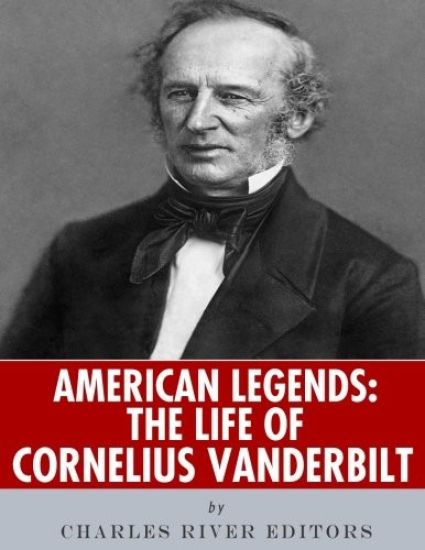
American Legends: The Life of Cornelius Vanderbilt

American Legends: The Life of Cornelius Vanderbilt

Charles River

Createspace Independent Publishing Platform
2018
nidottu
*Includes pictures *Includes Vanderbilt's quotes about his own life and work *Includes online resources and a bibliography for further reading *Includes a table of contents "I don't care half so much about making money as I do about making my point, and coming out ahead." - Cornelius Vanderbilt A lot of ink has been spilled covering the lives of history's most influential figures, but how much of the forest is lost for the trees? In Charles River Editors' American Legends series, readers can get caught up to speed on the lives of America's most important men and women in the time it takes to finish a commute, while learning interesting facts long forgotten or never known. The Gilded Age and the dawn of the 20th century are often remembered as an era full of monopolies, trusts, and economic giants in heavy industries like oil and steel. Men like Andrew Carnegie built empires like Carnegie Steel, and financiers like J. P. Morgan merged and consolidated them. The era also made names like Astor, Cooke, and Vanderbilt instantly recognizable across the globe. Over time, the unfathomable wealth generated by the businesses made the individuals on top incredibly rich, and that in turn led to immense criticism and an infamous epithet used to rail against them: robber barons. Dozens of men were called "robber barons", but few of them were as notorious as Cornelius Vanderbilt, who also happened to be one of the nation's first business titans. Vanderbilt was a railroad and shipping magnate at a time that the industry was almost brand new, but he rode his success to become one of the richest and most powerful men in American history. The industrial might wielded by men like Vanderbilt in the later 19th century directly led to a public backlash and made President Teddy Roosevelt the "trust buster", and there has since been countless regulations to attempt to avoid the types of monopolies found over 100 years ago. However, many 20th century historians and writers pushed back against the allegations hurled at the "robber barons" and even took issue with the name. Libertarian writer John Stossel argued, "They weren't robbers, because they didn't steal from anyone, and they weren't barons-they were born poor..." Moreover, Vanderbilt set a precedent of sorts with his philanthropy, most notably his gift to Vanderbilt University, which bears his name. American Legends: The Life of Cornelius Vanderbilt looks at the life and career of one of America's richest men. Along with pictures of important people, places, and events, you will learn about Vanderbilt like never before, in no time at all.
Sumer: The History of the Cities and Culture that Established Ancient Mesopotamia's First Civilization
*Includes pictures *Includes ancient accounts *Includes online resources and a bibliography for further reading When American archaeologists discovered a collection of cuneiform tablets in Iraq in the late 19th century, they were confronted with a language and a people who were at the time only scarcely known to even the most knowledgeable scholars of ancient Mesopotamia: the Sumerians. The exploits and achievements of other Mesopotamian peoples, such as the Assyrians and Babylonians, were already known to a large segment of the population through the Old Testament and the nascent field of Near Eastern studies had unraveled the enigma of the Akkadian language that was widely used throughout the region in ancient times, but the discovery of the Sumerian tablets brought to light the existence of the Sumerian culture, which was the oldest of all the Mesopotamian cultures. Although the Sumerians continue to get second or even third billing compared to the Babylonians and Assyrians, perhaps because they never built an empire as great as the Assyrians or established a city as enduring and great as Babylon, they were the people who provided the template of civilization that all later Mesopotamians built upon. The Sumerians are credited with being the first people to invent writing, libraries, cities, and schools in Mesopotamia (Ziskind 1972, 34), and many would argue that they were the first people to create and do those things anywhere in world. For a people so great it is unfortunate that their accomplishments and contributions, not only to Mesopotamian civilization but to civilization in general, largely go unnoticed by the majority of the public. Perhaps the Sumerians were victims of their own success; they gradually entered the historical record, established a fine civilization, and then slowly submerged into the cultural patchwork of their surroundings. They also never suffered a great and sudden collapse like other peoples of the ancient Near East, such as the Hittites, Assyrians and Neo-Babylonians did. A close examination of Sumerian culture and chronology reveals that the Sumerians set the cultural tone in Mesopotamia for several centuries in the realms of politics/governments, arts, literature, and religion. Even today, the world owes the Sumerians a tremendous amount. When Western Europe was still in the Stone Age, it was the Sumerians who invented writing and the wheel, divided time into minutes and seconds, tamed nature, and built gigantic cities. They embraced culture and the arts, and their caravans crossed the desert, opening up the first trade routes. Their myths and legends inspired various origin stories, and their memory lives on in the Old Testament. They wrote the history of the birth of mankind. The heritage of the Sumerian civilization and their successors is everywhere. Sumer: The History of the Cities and Culture that Established Ancient Mesopotamia's First Civilization chronicles the most important people, places, and events that took place across Sumer. Along with pictures of important people, places, and events, you will learn about Sumer like never before.
Red Cloud's War: The History and Legacy of the Only 19th Century War Won by Native Americans against the United States
*Includes pictures *Includes accounts of the fighting *Includes online resources and a bibliography for further reading Even before the American Revolution, Americans traveled west. From the narrow strip of the 13 colonies, across the Appalachians, ever westward they journeyed, and by the end of the 19th century, the United States of America stretched from sea to shining sea. Of course, just because the names on the borders changed, it did not tame the land or its previous residents. Americans desired California and Oregon, going to war for one and nearly going to war for the other. Once acquired, it now fell to the salt of the earth to settle these claimed lands, and everything in between. To do this meant crossing terrain unused to the heavy traffic of Westerners on the move. Though Indian trails followed rivers, hills, and valleys across the plains, Westerners often needed to create new paths capable of handling the heaver traffic and bulky covered wagons. At the same time, safety often required avoiding the natives. Though sometimes co-opting Indian trails for this purpose, oftentimes pioneering settlers worked to avoid such routes as well, especially when the natives took exception to their new neighbors. The Bozeman Trail ran through the Powder River country, which included the traditional hunting grounds of Lakota, Cheyenne, and Arapaho peoples. Attempts by the natives to prevent encroachment and armed defense of settlers along the trail led to conflicts in short order. Shortly after the Civil War, the U. S. found itself engaged against the Sioux in what came to be known as Red Cloud's War. Among the Oglala Lakota, one of the most famous bands of the Native American Tribe known as the Sioux, Red Cloud led the group for 40 years, in war, in peace, and on a reservation, becoming so esteemed and influential that Americans began to mistakenly take him for the leader of the entire Sioux tribe. In the summer of 1866, Colonel Henry B. Carrington set out from Fort Laramie to establish a series of forts along the Bozeman Trail with the goal of protecting migrants moving along the trail. The Bozeman Trail ran through the Powder River country, which included the traditional hunting grounds of Lakota, Cheyenne, and Arapaho peoples. Carrington had about 1,000 people in his column, of which about 700 were soldiers and 300 were civilians, likely soldiers' families and migrants. The ongoing hostilities, which included the notorious Fetterman's Massacre, ultimately convinced American officials to head back to the negotiating table with the Native Americans, and as a result, Red Cloud has often been labeled the only Indian chief to win a war against the Americans. After that, however, Red Cloud continued to lead his people to reservations first near the Black Hills and later westward after the Battle of the Little Bighorn. Though he was respected as a war chief, it was his political functions as a spokesman of the Oglala that truly allowed Red Cloud to leave his mark over the last several decades of his life. Whereas Sitting Bull and Crazy Horse suffered premature deaths, Red Cloud outlived the other important leaders of the Sioux until dying in 1909 at 87 years old. Near the end of his life, he reportedly said, "They made us many promises, more than I can remember. But they kept but one -- they promised to take our land...and they took it." Red Cloud's War: The History and Legacy of the Only 19th Century War Won by Native Americans against the United States analyzes the seminal moments that brought about the war, the war's most famous battles, and the aftermath. Along with pictures depicting important people, places, and events, you will learn about Red Cloud's War like never before.
American Legends: The Life of Clint Eastwood

American Legends: The Life of Clint Eastwood

Charles River

Createspace Independent Publishing Platform
2018
nidottu
*Includes pictures. *Includes some of Eastwood's most colorful quotes. *Includes a Bibliography for further reading. "The roles that Eastwood has played, and the films that he has directed, cannot be disentangled from the nature of the American culture of the last quarter century, its fantasies and its realities." - Edward Gallafent A lot of ink has been spilled covering the lives of history's most influential figures, but how much of the forest is lost for the trees? In Charles River Editors' American Legends series, readers can get caught up to speed on the lives of America's most important men and women in the time it takes to finish a commute, while learning interesting facts long forgotten or never known. Today, the name Clint Eastwood conjures up many different and unforgettable images. While many will always associate him as the quintessential Western hero in classics like The Good, the Bad, and the Ugly, new generations know him as a critically acclaimed director and even an outspoken conservative firebrand. Even if he is no longer the most prominent star in Hollywood, he is assuredly the most decorated octogenarian in the industry. In addition to his acting, two of his pictures, Unforgiven (1992) and Million Dollar Baby (2004), garnered Oscars for Best Director and Best Picture. Eastwood's acting and directing abilities have long appealed to both high classes and mass audiences, although it is true that his early works were skewed more toward the popular while the later ones reflect the opposite dynamic. Debuting in the 1950s, Eastwood's career has now spanned over 50 years, and he has been involved in over 75 films, not to mention his appearances in television and other media. The sheer volume of films is especially impressive considering that he has also directed a significant number of them. As such a prolific figure of Hollywood, it is clear that Eastwood has approached his career with diligence and persistence, working hard through both success and failure. This work ethic has lent him an aura of accessibility that is relatively rare among Hollywood stars, as has his willingness to put himself out there on issues beyond the silver screen. Today, Eastwood is just as likely to evoke images of his speech at the 2012 Republican National Convention as he is images of the Western vigilante. American Legends: The Life of Clint Eastwood profiles the life and career of one of Hollywood's greatest icons, both on and off the screen. Along with pictures of important people, places, and events, you will learn about Eastwood like you never have before, in no time at all.
The Abrahamic Covenant: The Establishment, Development, and Consummation of the Promises Made by God to Abraham
*Includes pictures *Includes Biblical citations *Includes online resources and a bibliography for further reading The beauty of a spider web cannot be appreciated if only one single strand thereof is seen; nor can only one piece of a jigsaw puzzle make the whole thereof understood. It is only when all the pieces are fitted that the significance and importance of each part can be appreciated. Even so the covenant that God established with Abraham has its prelude far in the past, and its development and consummation reach far into the future. The whole of the picture is essential to even just glimpse the incomprehensive nature of God's love, longsuffering, patience, and His persistence in reaching the goal that He had predetermined. Then we can also appreciate His message through the profit Isaiah: "My thoughts are not your thoughts, nor your ways My ways, says Jehovah. For as the heavens are higher than the earth, so are My ways higher than your ways, and My thoughts than your thoughts." (Isa.55:8-9). It is because of this that we have the old saying "Scripture explains Scripture". This means that, where there is uncertainty, we can look to the wider context in Scripture in order to understand what we are reading at present. A very good example of this is that we read in 1Cor.10:2 that all the Israelites were baptized into Moses in the events relating to the cloud and the sea. Now, if we read the story of the exodus from Egypt, it is clear that there was no physical ritual or ceremony relating to baptism, but what is seemingly a contradiction is clearly solved by the rest of Scripture. In the apostle Paul's other letters he makes it clear that he wanted to convey the fact that the Israelites identified with Moses by following him through the sea and after the cloud, as described in Ex.13:21-22 and 14:15-31. The Abrahamic Covenant: The Establishment, Development, and Consummation of the Promises Made by God to Abraham examines the various stages of the Abrahamic covenant and how they are all related to man's salvation. Along with pictures depicting important people, places, and events, you will learn about the Abrahamic Covenant like never before.
La Stasi: Historia y legado de la Agencia de Policía Secreta de Alemania Oriental

La Stasi: Historia y legado de la Agencia de Policía Secreta de Alemania Oriental

Charles River

Createspace Independent Publishing Platform
2018
nidottu
"La Stasi usaba a menudo un m todo que era realmente diab lico. Se llamaba Zersetzung, y se describe en otra pauta. La palabra es dif cil de traducir porque significa originalmente "biodegradaci n". Pero en realidad, es una descripci n bastante precisa. El objetivo era destruir secretamente la confianza en s misma de la gente, por ejemplo da ando su reputaci n, organizando fracasos en su trabajo y destruyendo sus relaciones personales. Teniendo esto en cuenta, Alemania Oriental era una dictadura muy moderna. La Stasi no intent arrestar a todos los disidentes. Prefer a paralizarlos, y pod a hacerlo porque ten a acceso a tanta informaci n personal y a tantas instituciones". Hubertus Knabe, historiador alem n. La historia de Alemania Oriental estuvo estrechamente ligada al desarrollo de sus servicios de seguridad, concretamente de la Stasi. En una poca de pa ses totalitarios dominados por agencias estatales represivas, la Stasi se destacaba por su tama o y por la amplitud y profundidad de su vigilancia. Pel culas como Das Leben der Anderen ("La vida de los otros") encapsulaban actitudes y concepciones posteriores a la unificaci n, tanto de la vida en Alemania Oriental como de las actividades de la Stasi. A pesar de su notoriedad, el legado de la Stasi es cuestionado en la Alemania moderna. Los antiguos alemanes occidentales, y los occidentales en general, alinean estrechamente el estado de Alemania Oriental y la Stasi, enmarcando un "estado de la Stasi". Los de la antigua Alemania Oriental, sin embargo, resienten las actitudes condescendientes y la fusi n de ambas instituciones, prefiriendo centrarse en los elementos sociales del Estado de Alemania Oriental. Uwe Spiekermann, del Instituto Hist rico Alem n, expone sucintamente las impresiones de muchos al considerar la Alemania Oriental y su cultura de vigilancia: "En retrospectiva, la Stasi se ha convertido en un s mbolo para la RDA Alemania Oriental]". El Servicio de Seguridad del Estado de Alemania Oriental, o Staatssicherheitsdienst en alem n (abreviado como Stasi) se fund en 1950. Se pretend a que fuera el "escudo y la espada" del Estado y vigil de cerca a gran parte de la poblaci n durante los pr ximos 40 a os. Algunas de las cifras son sorprendentes. A finales de los a os ochenta, la Stasi ten a archivos de seis millones de habitantes de un total de 18 millones. Cuando se abrieron los archivos de la Stasi en los a os 90, se descubrieron archivos que se extend an a lo largo de 178 kil metros. A lo largo de la existencia de Alemania Oriental, hasta dos millones de personas actuaron como esp as, y 90.000 personas trabajaron en el Ministerio, por no hablar de los numerosos informantes "no oficiales". Alemania Oriental tambi n contaba con un temido servicio de inteligencia extranjero de sus servicios de inteligencia, el HV A (Hauptverwaltung A o departamento central), que demostr ser experto en infiltrarse en la sociedad de Alemania Occidental y llevar a cabo operaciones en muchos otros pa ses. Pero, por qu se form la Stasi y c mo result ser tan eficaz? La respuesta a estas preguntas requiere el entendimiento de las circunstancias nicas en las que se form Alemania Oriental, as como la pol tica en Alemania al final de la Segunda Guerra Mundial y el comienzo de la Guerra Fr a. La Stasi: Historia y Legado de la Agencia de Polic a Secreta de Alemania Oriental examina la historia de una de las agencias m s notorias de la historia. Junto con fotos que representan a gente importante, lugares y eventos, usted aprender sobre la Stasi como nunca antes.