Kirjojen hintavertailu – 12 903 725 kirjaa ja 27 kauppaa

Kirjailija

Charles River

Kirjat ja teokset yhdessä paikassa: 4 673 kirjaa, julkaisuja vuosilta 2013–2022, suosituimpiin kuuluu William Powell and Myrna Loy: The Lives and Careers of One of Classical Hollywood's Most Iconic Duos. Vertaile teosten hintoja ja tarkista saatavuus suomalaisista kirjakaupoista.

4 673 kirjaa

Kirjojen julkaisuvuodet: 2013–2022.

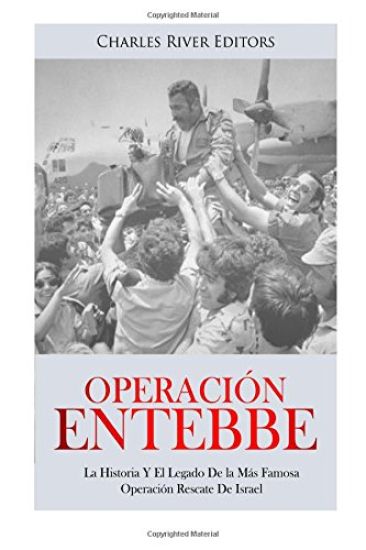
Operación Entebbe: La Historia Y El Legado De la Más Famosa Operación Rescate De Israel
"De la sangrienta historia de la naci n jud a, aprendemos que la violencia que comienza con el asesinato de jud os termina con la propagaci n de la violencia y el peligro a todos los pueblos, en todas las naciones. No tenemos otra opci n que atacar a las organizaciones terroristas dondequiera que podamos llegar a ellas. Esa es nuestra obligaci n hacia nosotros mismos y hacia la paz". Golda Meir "El 4 de julio de 1976, fue un gran d a para ser americano, y un gran d a para ser jud o, y fue, estoy seguro, un d a absolutamente sensacional para ser americano y jud o." George Will Durante la Guerra de los Seis D as en 1967, las fuerzas israel es atacaron repentinamente el Sina en respuesta a la violaci n por parte de Egipto de un tratado anterior que permit a el paso de barcos israel es a trav s del importante Estrecho de Tir n. En una campa a rel mpago, las fuerzas israel es bien entrenadas y bien dirigidas, equipadas con veh culos y aviones americanos y franceses, destrozaron decisivamente a las fuerzas armadas egipcias de baja calidad. Cuando Jordania y Siria atacaron a Israel en apoyo de Egipto, los israel es tambi n aplastaron sus fuerzas. Israel adquiri la mayor parte del Sina , adem s de ocupar Cisjordania, la Franja de Gaza y los Altos del Gol n. El 8 de mayo de 1972, un nuevo estilo de guerra sali a la luz cuando cuatro miembros de la Organizaci n Septiembre Negro, una rama amorfa del movimiento Fatah, secuestraron el vuelo belga 571 de Sabena en ruta de Bruselas a Tel Aviv. Para ganar tiempo, el sistema de seguridad israel accedi a permitir que el vuelo 571 aterrizara en el Aeropuerto Internacional de Lod, al sureste de Tel Aviv, donde fue escoltado inmediatamente hasta el otro extremo de la pista. El Ministro de Defensa Moshe Dayan fue acompa ado en el aeropuerto por el Ministro de Transporte Shimon Peres, el Jefe de Estado Mayor de las FDI, Teniente General David Elazar, y varios otros altos oficiales de las FDI y funcionarios del gobierno. El jefe de la secci n de interrogatorios del Shin Bet, el servicio de seguridad interna de Israel, se enfrent a los cuatro terroristas -dos hombres y dos mujeres- en negociaciones espurias mientras se decid a lo que se iba a hacer. Las demandas de los secuestradores fueron muy simples: la liberaci n de 315 palestinos condenados por delitos de terrorismo que se encontraban recluidos en prisiones israel es en ese momento. Aunque se iniciaron las negociaciones, los israel es no ten an intenci n alguna de acceder a ninguna exigencia. El proceso fue ofuscado y deliberadamente enfangado simplemente para privar de sue o a los cuatro secuestradores, y para dar tiempo a que se montara una operaci n de rescate. Sin embargo, la violencia no hizo m s que aumentar despu s de que los israel es ganaran la guerra de Yom Kippur de 1973, a pesar de los primeros xitos rabes. En el proceso de contrarrestar estos ataques y secuestros, los israel es desarrollaron valiosas habilidades en operaciones de comando y rescate de rehenes. Esta experiencia les ayud mucho en el verano de 1976, cuando un secuestro a gran escala llev a una audaz operaci n israel a miles de kil metros del Levante en el aeropuerto ugand s de Entebbe, entonces parte del dominio del dictador Idi "Big Daddy" Amin. Operaci n Entebbe: La Historia Y El Legado De La Operaci n De Rescate M s Famosa De Israel se refiere a una de las operaciones de comando m s dram ticas de todos los tiempos. Junto con fotos y bibliograf a, usted aprender sobre Entebbe como nunca antes.

Human Evolution: The History of the Evolution and Natural Selection Processes that Gave Rise to Modern Humans
*Includes pictures *Includes online resources and a bibliography for further reading "We must, however, acknowledge...that man with all his noble qualities... still bears in his bodily frame the indelible stamp of his lowly origin." - Charles Darwin Ever since the human mind developed the capacity for thought, people have pondered not just the meaning of life, but the genesis of the world, the universe, and all the natural marvels and precious forms of life within it. To this day, all of these intricate subjects continue to be matters of great contention, and they are often best encapsulated in the debate between creationism and evolution. On the one hand are those who are adamant that it was God, or some other supreme being, that designed and crafted every detail of the universe, as evidenced by the plethora of creation myths from various creeds and traditions. Among one of the most well-known etiological tales is the classic story of the Christian God who constructed the world in 6 days, and man and woman out of clay and man's rib, respectively. This is a concept that many still cling to today; approximately 38% of Americans believed in creationism in 2017, as reported by a Gallup Poll. Then, there are the more obscure narratives, such as the Japanese creation myth, which recounts how the god and goddess, Izanagi and Izanami, birthed from "elements mixed together with one germ of life," shaped the Japanese islands with some mud and the aid of a sacred staff. The Mayans preached about Tepeu, the maker of all things, and Gucumatz, the "feathered spirit," who produced the world with nothing but their thoughts, and placed on Earth the first quartet of humans fashioned out of white and yellow corn. On the other hand are those who believe (or as they would say, "accept") evolution and scientific processes as facts. As enthralling as such creation myths may be, insist critics of creationism, who campaign for their retirement, there is not a sound shred of logic behind these time-worn tales. Renowned theoretical physicist Stephen Hawking, arguably one of the most brilliant people to have ever lived, stated, "Before we understand science, it is natural to believe that God created the universe. But now science offers a more convincing explanation." His sentiments are echoed by famous atheist and evolutionary biologist Richard Dawkins in The Selfish Gene: "Today the theory of evolution is about as much open to doubt as the theory that the earth goes round the sun..." "Some claim that evolution is just a theory, as if it were merely an opinion," esteemed astrophysicist Neil deGrasse Tyson, another leading proponent of evolution, adds. "The theory of evolution - like the theory of gravity - is a scientific fact. Evolution really happened. Accepting our kinship with all life on Earth is not only solid science. In my view, it's also a soaring spiritual experience." Most scientists believe the evolution of humans has a history as long as life itself. Anatomically modern humans and all other life that has existed on the planet first came about from the single-celled microorganisms that emerged approximately 4 billion years ago. Through the processes of mutation and natural selection, all forms of life developed, and this continuous lineage of life makes it difficult to say precisely when one species completely separates from another. In other words, scientists still debate when a human became a human rather than the ancestor species that came before. In order to understand the history of human evolution, an understanding of the mechanisms that essentially "created" modern humans needs to be understood. These processes are natural selection and evolution. Human Evolution: The History of the Evolution and Natural Selection Processes that Gave Rise to Modern Humans examines how humans evolved from microorganisms, and the evolutionary theories that came about in the 19th century to explain it all.
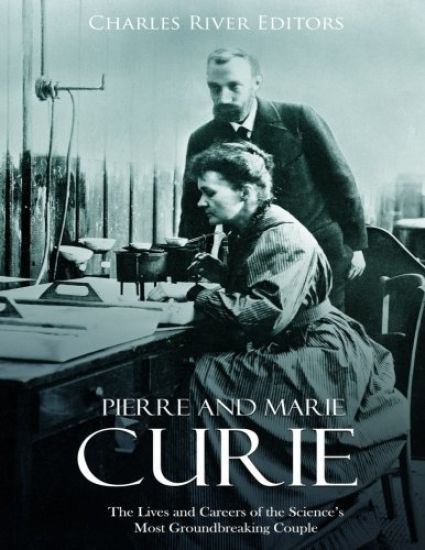
Pierre and Marie Curie: The Lives and Careers of the Science's Most Groundbreaking Couple
*Includes pictures *Includes online resources and a bibliography for further reading "Nothing in life is to be feared, it is only to be understood. Now is the time to understand more, so that we may fear less." - Marie Curie "Is it right to probe so deeply into Nature's secrets? The question must here be raised whether it will benefit mankind, or whether the knowledge will be harmful." - Pierre Curie The tens of millions who perished in the First World War - not to mention the horrendous turmoil that culminated in the outbreak of its successor - understandably marred the conception of the first decades of the 20th century. However, during that time, unparalleled minds from all over the globe unsnarled age-old mysteries and perfected prevailing theories, conjuring up wave after wave of breakthroughs that catapulted the world of science to unprecedented heights. Owing to this influx of novel ideas and innovative concepts, conferences had to be assembled to keep the relevant scientific spheres apprised of the latest advances. The formation of such conferences also allowed them to confront burning questions and investigate unexplored realms in their respective fields. The most notable of these gatherings was the Fifth Solvay International Conference on Electrons and Photons (attended by those pictured), 16 years after its inception. Not only did this batch of physicists aim to dissect the recently structured quantum theory, realists and instrumentalists intended to resolve the debate on scientific methods once and for all. The dispute ultimately ended in favor of the latter. In the picture of the conference participants, near none other than Albert Einstein, is an older scientist with a solemn face lined with wisdom, framed by the wispy, snow-white flyaways of her characteristic loose bun. Her thin lips are somewhat pursed in a scowl, and there is an aura of confidence radiating from her, the lone woman amidst a pack of exalted, intimidating men. Her shoulders are relaxed, her legs are crossed under her plain black cloak, and her felt bowler hat rests casually against her lap. This is none other than Madame Marie Curie, who not only cracked the glass ceiling but completely shattered it. Not surprisingly, early 20th century society, stunted by its narrow, patriarchal mindset, assailed her with double the toilsome trials and taxing tribulations, many of which were unique to her solely on account of her gender. Be that as it may, the tenacious pupil-turned-savant soldiered on through the discrimination and clambered over the often gratuitous stumbling blocks, ultimately cementing her place in history as one of the greatest scientists of all time. The fact Pierre has mostly been forgotten is the textbook definition of irony, because even the most enlightened minds of the early 20th century were stunted by a narrow, patriarchal mindset, forcing Marie to confront obstacles and tribulations that were unique solely to her as a scientist solely on account of gender. As such, some of her most groundbreaking moments would feature Pierre receiving the credit or giving the commemorative speech. It would be long after his death that his wife managed to ultimately cement her legacy as one of the greatest scientists of all time, and while their respective positions have changed over time, Pierre's personal discoveries continue to live on in a variety of vessels, from the ticking quartz watch on one's wrist to motors and engines, and even military-grade ultrasonic devices. Pierre and Marie Curie: The Lives and Careers of the Science's Most Groundbreaking Couple examines the life and career that made him one of the world's foremost scientists of his time. Along with pictures of important people, places, and events, you will learn about Pierre Curie like never before.
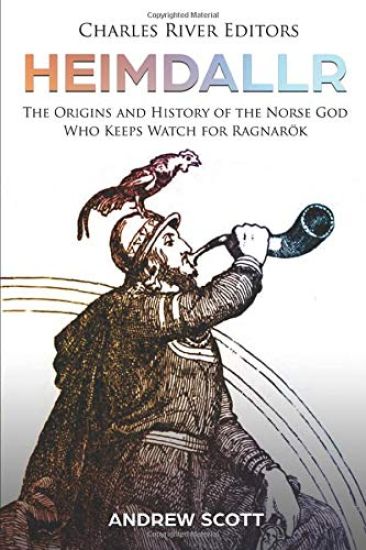
Heimdallr: The Origins and History of the Norse God Who Keeps Watch for Ragnarök

Heimdallr: The Origins and History of the Norse God Who Keeps Watch for Ragnarök

Charles River

Createspace Independent Publishing Platform
2018
nidottu
*Includes pictures*Includes medieval accounts*Includes online resources and a bibliography for further readingMuch of what is known of the Norse myths comes from the 10th century onwards. Until this time and, indeed, for centuries afterwards, Norse culture (particularly that of Iceland, where the myths were eventually transcribed) was an oral culture. In fact, in all Scandinavian countries well into the thirteenth century laws were memorized by officials known as "Lawspeakers" who recited them at the "Thing." The Thing was the legislative assembly in Scandinavia "held for judicial purposes." One of the most famous of these Lawspeakers was the Icelander Snorri Sturluson, a masterful writer who wrote the Prose Edda in the thirteenth century. There are other sources for the Norse myths, namely the later "Poetic Edda," a collection of poems and prose work, and other sagas but the Snorri's Prose Edda is the most complete work whose attribution is known to modern scholars. The Prose Edda is a collection of Norse Myths split into three sections, the Gylfaginning (the Deluding of Gylfi), the Sk ldskaparm l (the Language of Poetry) and the H ttatal (the Enumeration of Meters). The first has a frame story that entails a Swedish King, Gylfi, disguising himself as an old man, Gangleri, when he journeys to Asgard to meet the gods. When he arrives, he meets three men - "High One, Just-As-High, and Third" - who reveal to him stories of the world and the gods. The second section contains a warning for Christians not to believe in the Norse gods, specifically the two families, the sir and the Vanir, but also refutes the notion that they were demons, which was a common supposition among some Christians at the time. The Prose Edda begins in this line of thought with a euhemeristic prologue, which traces the history of the Norse Gods as human heroes of Troy, making Thor one of King Priam's sons. Thanks to recent modern Hollywood depictions of Heimdallr (by his Anglicized name Heimdall), played masterfully and enigmatically by the actor Idris Elba, this mysterious Norse god has once again emerged in pop culture. However, knowledge of his name has not brought with it many solutions to the problems of his character. The French philologist Georges Dum zil outlined the problems of Heimdallr excellently in his book Gods of the Ancient Northmen: "The god Heimdall poses one of the most difficult problems in Scandinavian mythography. As all who have dealt with him have emphasized, this is primarily because of a very fragmentary documentation; but even more because the few traits that have been saved from oblivion diverge in too many directions to be easily 'thought of together, ' or to be grouped as members of a unitary structure." Sadly, there is no known presence of any cult of Heimdallr that could help historians understand the practical role he played in Norse religion, though the myths surrounding him are many and varied. That being said, academics have not ceased to study Heimdallr because the enigmas surrounding him are precisely what make him so fascinating. In order to understand how this god, who was by no means a "lesser" deity in the Norse pantheon, could be so misunderstood today, it is worth analyzing the problems people still face when approaching the Norse "religion." Heimdallr: The Origins and History of the Norse God Who Keeps Watch for Ragnar k looks at the stories about the legendary Norse deity. Along with pictures depicting important people, places, and events, you will learn about Heimdallr like never before.
Saqqara: The History and Legacy of the Ancient Egyptian Necropolis near Memphis

Saqqara: The History and Legacy of the Ancient Egyptian Necropolis near Memphis

Charles River

Createspace Independent Publishing Platform
2018
nidottu
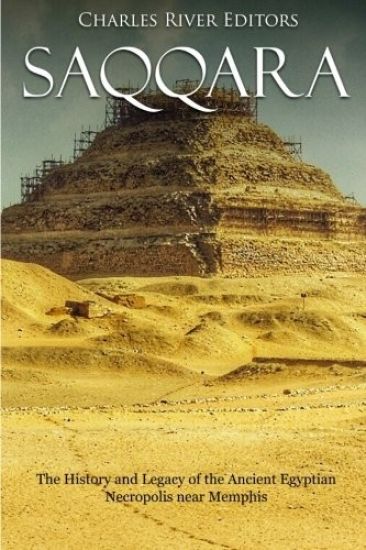
*Includes pictures *Includes online resources and a bibliography for further reading Africa may have given rise to the first human beings, and Egypt probably gave rise to the first great civilizations, which continue to fascinate modern societies across the globe nearly 5,000 years later. From the Library and Lighthouse of Alexandria to the Great Pyramid at Giza, the Ancient Egyptians produced several wonders of the world, revolutionized architecture and construction, created some of the world's first systems of mathematics and medicine, and established language and art that spread across the known world. With world-famous leaders like King Tut and Cleopatra, it's no wonder that today's world has so many Egyptologists. What makes the accomplishments of the Ancient Egyptians all the more remarkable is that Egypt was historically a place of great political turbulence. Its position made it both valuable and vulnerable to tribes across the Mediterranean and the Middle East, and Ancient Egypt had no shortage of its own internecine warfare. Its most famous conquerors would come from Europe, with Alexander the Great laying the groundwork for the Hellenic Ptolemy line and the Romans extinguishing that line after defeating Cleopatra and driving her to suicide. The pyramids of ancient Egypt have captured the world's imagination for centuries, and while the image that usually comes to mind is of the magnificent pyramids of Giza, there are many other pyramid fields in Egypt, and the one at Saqqara is the oldest and largest. It was the site for pyramids built by at least 11 pharaohs, along with subsidiary pyramids for their queens. In addition to having the most pyramids of any pyramid field in Egypt, Saqqara contains hundreds if not thousands of smaller tombs. Saqqara is located less than 10 miles south of Cairo on the west bank of the River Nile and runs about 3.75 miles on its north-south axis. The site is generally broken down into the region of North Saqqara and South Saqqara, since there are clusters of monuments on each end, but there are some interesting features in the middle portion as well. While the Step Pyramid of Djoser is by far the most famous monument at the site, Saqqara is a rich network of pyramids, temples, and tombs dating from the first dynasty of Egypt all the way to Greco-Roman times, an impressive span of more than 2,500 years. Indeed, Egyptologists have only uncovered a small fraction of the remains. Besides the Step Pyramid, several other important discoveries have been made here. Most significant is the earliest example of the Pyramid Texts, found in the pyramid of Unas. Excavations have been continuous for more than 150 years, so dedicated Egyptologists are still uncovering rich tombs, some of them having been undisturbed for more than 2,000 years. The entire site is a UNESCO World Heritage Site and is open to visitors. While not as grandiose as the pyramids at Giza or as imposing as the temple at Karnak, a visit to Saqqara is well worth the trip, not only to stand on the site of Egypt's first pyramid, but to explore the numerous well-preserved tombs. It is an easy day trip from Cairo, and a full day should be devoted to it in order to fully appreciate the tombs, temples, and pyramids that are open to the public. There is also a museum on site that explains the history of Saqqara and displays some of the artifacts found there. Saqqara: The History and Legacy of the Ancient Egyptian Necropolis near Memphis examines the history and excavations at the sacred burial site. Along with pictures depicting important people, places, and events, you will learn about Saqqara like never before.
Saqqara: The History and Legacy of the Ancient Egyptian Necropolis near Memphis

Saqqara: The History and Legacy of the Ancient Egyptian Necropolis near Memphis

Charles River

Createspace Independent Publishing Platform
2018
nidottu
*Includes pictures *Includes online resources and a bibliography for further reading Africa may have given rise to the first human beings, and Egypt probably gave rise to the first great civilizations, which continue to fascinate modern societies across the globe nearly 5,000 years later. From the Library and Lighthouse of Alexandria to the Great Pyramid at Giza, the Ancient Egyptians produced several wonders of the world, revolutionized architecture and construction, created some of the world's first systems of mathematics and medicine, and established language and art that spread across the known world. With world-famous leaders like King Tut and Cleopatra, it's no wonder that today's world has so many Egyptologists. What makes the accomplishments of the Ancient Egyptians all the more remarkable is that Egypt was historically a place of great political turbulence. Its position made it both valuable and vulnerable to tribes across the Mediterranean and the Middle East, and Ancient Egypt had no shortage of its own internecine warfare. Its most famous conquerors would come from Europe, with Alexander the Great laying the groundwork for the Hellenic Ptolemy line and the Romans extinguishing that line after defeating Cleopatra and driving her to suicide. The pyramids of ancient Egypt have captured the world's imagination for centuries, and while the image that usually comes to mind is of the magnificent pyramids of Giza, there are many other pyramid fields in Egypt, and the one at Saqqara is the oldest and largest. It was the site for pyramids built by at least 11 pharaohs, along with subsidiary pyramids for their queens. In addition to having the most pyramids of any pyramid field in Egypt, Saqqara contains hundreds if not thousands of smaller tombs. Saqqara is located less than 10 miles south of Cairo on the west bank of the River Nile and runs about 3.75 miles on its north-south axis. The site is generally broken down into the region of North Saqqara and South Saqqara, since there are clusters of monuments on each end, but there are some interesting features in the middle portion as well. While the Step Pyramid of Djoser is by far the most famous monument at the site, Saqqara is a rich network of pyramids, temples, and tombs dating from the first dynasty of Egypt all the way to Greco-Roman times, an impressive span of more than 2,500 years. Indeed, Egyptologists have only uncovered a small fraction of the remains. Besides the Step Pyramid, several other important discoveries have been made here. Most significant is the earliest example of the Pyramid Texts, found in the pyramid of Unas. Excavations have been continuous for more than 150 years, so dedicated Egyptologists are still uncovering rich tombs, some of them having been undisturbed for more than 2,000 years. The entire site is a UNESCO World Heritage Site and is open to visitors. While not as grandiose as the pyramids at Giza or as imposing as the temple at Karnak, a visit to Saqqara is well worth the trip, not only to stand on the site of Egypt's first pyramid, but to explore the numerous well-preserved tombs. It is an easy day trip from Cairo, and a full day should be devoted to it in order to fully appreciate the tombs, temples, and pyramids that are open to the public. There is also a museum on site that explains the history of Saqqara and displays some of the artifacts found there. Saqqara: The History and Legacy of the Ancient Egyptian Necropolis near Memphis examines the history and excavations at the sacred burial site. Along with pictures depicting important people, places, and events, you will learn about Saqqara like never before.
Swahili: The History and Legacy of Africa's Indigenous Culture and the Effects of European Colonization
*Includes pictures *Includes online resources and a bibliography for further reading The modern history of Africa was, until very recently, written on behalf of the indigenous races by the white man, who had forcefully entered the continent during a particularly hubristic and dynamic phase of European history. In 1884, Prince Otto von Bismark, the German chancellor, brought the plenipotentiaries of all major powers of Europe together, to deal with Africa's colonization in such a manner as to avoid provocation of war. This event-known as the Berlin Conference of 1884-1885-galvanized a phenomenon that came to be known as the Scramble for Africa. The conference established two fundamental rules for European seizure of Africa. The first of these was that no recognition of annexation would granted without evidence of a practical occupation, and the second, that a practical occupation would be deemed unlawful without a formal appeal for protection made on behalf of a territory by its leader, a plea that must be committed to paper in the form of a legal treaty. This began a rush, spearheaded mainly by European commercial interests in the form of Chartered Companies, to penetrate the African interior and woo its leadership with guns, trinkets and alcohol, and having thus obtained their marks or seals upon spurious treaties, begin establishing boundaries of future European African colonies. The ease with which this was achieved was due to the fact that, at that point, traditional African leadership was disunited, and the people had just staggered back from centuries of concussion inflicted by the slave trade. Thus, to usurp authority, to intimidate an already broken society, and to play one leader against the other was a diplomatic task so childishly simple, the matter was wrapped up, for the most part, in less than a decade. There were some exceptions to this, however, the most notable of which was perhaps the Zulu Nation, a centralized monarchy of enormous military prowess that required a British colonial war, the much storied Anglo-Zulu War of 1879, to affect pacification. Another was the amaNdebele, an offshoot of the Zulu, established as early as the 1830s in the southeastern quarter of what would become Rhodesia, and later still, Zimbabwe, in the future. Both were powerful, centralized monarchies, fortified by an organized and aggressive professional army, subdivided into regiments, and owing fanatical loyalty to the crown. The Zulu were not dealt with by treaty, and their history is perhaps the subject of another episode of this series, but the amaNdebele were, and early European treaty and concession gatherers were required to tread with great caution as they entered their lands. It would be a long time before the inevitable course of history forced the amaNdebele to submit to European domination. Although treaties and British gunboat diplomacy played a role, it was ultimately war, conquest, and defeat in battle that brought the amaNdebele to heel.
El Enfermo De Europa: La Historia Del Declive Del Imperio Otomano En El Siglo XIX

El Enfermo De Europa: La Historia Del Declive Del Imperio Otomano En El Siglo XIX

Charles River

Createspace Independent Publishing Platform
2018
nidottu
En t rminos geopol ticos, quiz s el acontecimiento m s importante de la Edad Media fue el xito del asedio otomano a Constantinopla en 1453. La ciudad hab a sido una capital imperial ya en el siglo IV, cuando Constantino el Grande traslad el centro de poder del Imperio Romano, estableciendo dos mitades casi igualmente poderosas del mayor imperio de la antig edad. Constantinopla continuar a sirviendo como capital del Imperio Bizantino incluso despu s de que la mitad occidental del Imperio Romano colapsara a finales del siglo V. Naturalmente, el Imperio Otomano tambi n usar a Constantinopla como la capital de su imperio despu s de que su conquista efectivamente terminara con el Imperio Bizantino, y gracias a su ubicaci n estrat gica, ha sido un centro comercial durante a os y sigue si ndolo hoy en d a bajo el nombre turco de Estambul. Tras la toma de Constantinopla, el Imperio Otomano pasar a los pr ximos siglos expandiendo su tama o, poder e influencia, chocando contra Europa del Este y convirti ndose en uno de los actores geopol ticos m s importantes del mundo. Fue un ascenso que no comenz a decaer hasta el siglo XIX. La larga agon a del "hombre enfermo de Europa", una expresi n utilizada por el Zar de Rusia para describir la ca da del Imperio Otomano, pod a casi cegar a la gente de su incre ble poder e historia. Preservando su herencia mixta, proveniente tanto de su posici n geogr fica que se elevaba sobre las cenizas del Imperio Bizantino como de la tradici n heredada de las conquistas musulmanas, el Imperio Otomano dur m s de seis siglos. Sus soldados lucharon, murieron y conquistaron tierras en tres continentes diferentes, convirti ndolo en uno de los pocos imperios multi tnicos estables de la historia, y probablemente uno de los ltimos. Por lo tanto, es algo inevitable que la historia de su declive est en el centro de complejas disputas geopol ticas, as como de tensiones sectarias que siguen siendo clave para entender Oriente Medio, el norte de frica y los Balcanes. Por ltimo, pero no menos importante, el ascenso del nacionalismo entre los pueblos bajo dominaci n otomana fue un factor clave en la disoluci n del imperio. A finales del siglo XIX, poco antes de su colapso final, el territorio del Imperio Otomano disminuy debido a la creciente demanda de independencia procedente de diferentes etnias que gobern durante cientos de a os. La inclusividad del Imperio, que lo marc como sucesor directo del Imperio Bizantino, fue ciertamente desafiada por un liderazgo envejecido. La incapacidad del Imperio Otomano para crear una identidad compartida, un estado central d bil y las crecientes disensiones internas fueron algunos de los principales factores que explicaron su larga desaparici n. Este fracaso tambi n explica la necesidad de crear una nueva forma de identidad, que en ltima instancia fue proporcionada por Mustaf Kemal, el padre fundador de la Turqu a moderna. En general, la historia de la disoluci n puede definirse como una carrera entre la creciente "enfermedad" del Imperio por un lado (la incapacidad Otomana para apaciguar y federar a los diversos pueblos dentro de su territorio), y los constantes intentos de encontrar una cura en forma de amplias reformas. Estas preguntas a menudo se presentan juntas, pero eso tiende a desplazar el enfoque hacia afuera, hacia los diversos pueblos y sus aspiraciones, junto con la creciente influencia de Europa sobre el destino del Imperio Otomano. Para considerar tanto la "enfermedad" como la cura, es necesario separarlos, antes de pasar a la causa directa de la disoluci n del imperio (Primera Guerra Mundial) y su herencia. El Enfermo De Europa: La Historia Del Declive Del Imperio Otomano En El Siglo XIX narra las luchas del vasto imperio turco antes de la Primera Guerra Mundial que provoc su disoluci n.
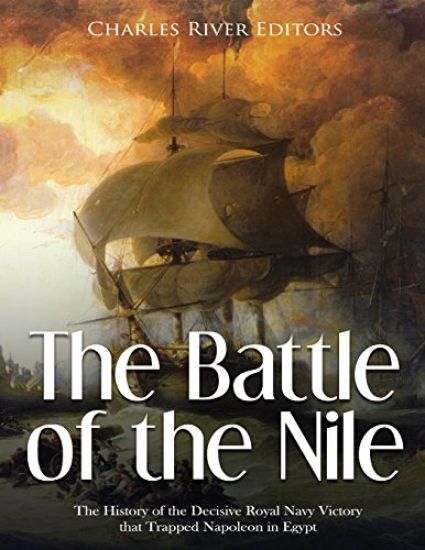
The Battle of the Nile: The History of the Decisive Royal Navy Victory that Trapped Napoleon in Egypt
*Includes pictures *Includes accounts of the fighting *Includes online resources and a bibliography for further reading Before Trafalgar, Admiral Horatio Nelson had already earned enduring fame for the British victory at the Battle of the Nile. In 1798, he was given command of a small squadron and sent ahead to Gibraltar, and eventually given instructions to hunt down and destroy Napoleon's fleet. An initial review of France's naval forces had led Napoleon to conclude his navy could not hope to outfight the power of the Royal Navy, which had been the dominant naval power for centuries, so he was forced to look elsewhere. After months of planning, Napoleon crafted a scheme to attack and conquer Egypt, denying the British easy access to their colonies in India, with the ultimate goal of linking up with the Sultan Tipoo in India itself and defeating the British in the field there. Napoleon sailed with Admiral Brueys and 30,000 troops that June, heading for Egypt. Notionally part of the Ottoman Empire, Egypt was de facto a weak independent regime run by the breakaway Mamelukes. For France, it offered an overland route to India and a chance to beat Britain at her own game via economic strangulation. Nelson however, could only speculate at French intentions. Whatever the destination of the French fleet, he sought a battle of annihilation, the culmination of all he had learned as an officer and admiral. Only by that means could Britain secure the Mediterranean and neutralize the threat of a French army operating overseas. His understanding was icily accurate. Ironically, Nelson and the British forces beat the French to Africa, failing to take into account their slower troop transports. While the British turned north, only two days later, on June 28, Napoleon's army disembarked at Alexandria. Back in Sicily, Nelson heard further reports about the French and again sailed south. Arriving at Alexandria late in the afternoon of August 1, he found the port crowded with French transports, but no battle fleet. At the same time, Brueys was only a few miles up the coast, anchored at Aboukir Bay. Nelson's scouts soon spotted the fleet at anchor, and without hesitation, the British attacked, their captains racing each other to be the first to engage. Brueys had made a number of mistakes, for which he paid with his life. His disposition was sloppy, with gaps between the ships and sufficient room between the line of his fleet at anchor and the shallows for an enemy to interpose himself. Many of his sailors were ashore, unable to rejoin their vessels quickly enough to defend them. Fundamentally though, he shouldn't have been there at all, as it was Napoleon, nervous about the Royal Navy and without a clear understanding of naval strategy, who had insisted that the French fleet anchor itself helplessly on the Egyptian coast. A patrolling French fleet at sea would at least have had a chance against Nelson. As it was, they were sitting ducks. It was the battle of annihilation Nelson had sought - of 13 French battleships engaged, 2 were destroyed and 9 were captured. British losses were negligible, with no ships lost and about 900 killed or wounded. French casualties were at least 2,000, with thousands more captured. The French Mediterranean fleet had been wiped out, and Napoleon's expeditionary force was now stranded. With Nelson's decisive victory, the Royal Navy had once again asserted itself as the dominant power in the Mediterranean. At the same time, Nelson's inability to intercept Napoleon at sea allowed the French transports and ground forces to survive unscathed, and they eventually made their way back to France. The stage was now set for over a decade of massive campaigns and battles that would only end more than 15 years later at Waterloo.
El Imperio Otomano: La historia y el legado del Imperio Transcontinental que dominó Europa Oriental y Medio Oriente durante casi 500 años
En t rminos de geopol tica, quiz s el acontecimiento m s importante de la Edad Media fue el exitoso asedio otomano a Constantinopla en 1453. La ciudad hab a sido una capital imperial ya en el siglo IV, cuando Constantino el Grande cambi el centro de poder del Imperio Romano, estableciendo efectivamente dos mitades casi igualmente poderosas del imperio m s grande de la antig edad. Constantinopla seguir a siendo la capital del Imperio Bizantino incluso despu s de que la mitad occidental del Imperio Romano se derrumbara a finales del siglo V. Naturalmente, el Imperio Otomano tambi n usar a a Constantinopla como capital de su imperio despu s de que su conquista terminara efectivamente con el Imperio Bizantino, y gracias a su ubicaci n estrat gica, ha sido un centro comercial durante a os y sigue siendo uno de ellos hoy en d a bajo el nombre turco de Estambul. El fin del Imperio Bizantino tuvo un profundo efecto no s lo en el Medio Oriente sino tambi n en Europa. Constantinopla hab a jugado un papel crucial en las Cruzadas, y la ca da de los bizantinos signific que los otomanos ahora compart an frontera con Europa. El imperio isl mico fue visto como una amenaza por el continente predominantemente cristiano en el oeste, y tom poco tiempo para que diferentes naciones europeas empezaran a chocar con los poderosos turcos. De hecho, los otomanos chocar an con rusos, austr acos, venecianos, polacos y m s, antes de colapsar como resultado de la Primera Guerra Mundial, cuando formaban parte de los poderes centrales. Durante el per odo que precedi a su colapso, el Imperio Otomano estuvo en el coraz n de una creciente rivalidad entre dos de las potencias globales rivales de la poca, Inglaterra y Francia. Ambas potencias afirmaron su influencia sobre un imperio en declive, cuya historia est anclada tanto en Europa como en Asia. Sin embargo, mientras que las dos potencias fueron instrumentales en la derrota final y el colapso del Imperio Otomano, su postura hacia lo que lleg a conocerse como la "Cuesti n Oriental" - el destino del Imperio Otomano - no es de clara enemistad. Tanto Inglaterra como Francia encontraron, a veces, razones para prolongar la vida del enfermo europeo hasta que finalmente se pusieron de parte de sus enemigos comunes. La postura de Rusia hacia el Imperio Otomano es mucho m s clara; las crecientes potencias asi ticas y europeas vieron a los otomanos como un rival, que se esforzaron por contener, dividir y finalmente destruir durante m s de 300 a os en una serie de guerras contra su viejo adversario. Por ltimo, pero no menos importante, el surgimiento del nacionalismo entre los pueblos bajo dominaci n otomana fue un factor clave en la disoluci n del imperio. A finales del siglo XIX, poco antes de su colapso final, el territorio del Imperio Otomano disminuy debido a la creciente demanda de independencia proveniente de diferentes etnias que gobern durante cientos de a os. La inclusividad del Imperio, que lo marc como sucesor directo del Imperio Bizantino, fue ciertamente desafiada por un viejo liderazgo. La incapacidad del Imperio Otomano para crear una identidad compartida, un Estado central d bil y las crecientes disensiones internas fueron algunos de los principales factores que explicaron su larga desaparici n. Tal fracaso tambi n explica la necesidad de crear una nueva forma de identidad, que en ltima instancia fue provista por Mustaf Kemal, el padre fundador de la Turqu a moderna. En general, la historia de la disoluci n puede definirse como una carrera entre la creciente "enfermedad" del Imperio por un lado (la incapacidad del otomano para apaciguar y federar a las diversas personas dentro de su territorio), y los constantes intentos de encontrar una cura en forma de amplias reformas.
The Declaration of Independence and the U.S. Constitution: The History and Legacy of America's Most Important Documents
*Includes pictures *Includes contemporary accounts *Includes a bibliography for further reading Although the Declaration of Independence is now considered one of the most important political documents in history, the men that drafted it did not initially favor such a move at the start of the American Revolution. Despite its assumption of governing duties, the Second Continental Congress never intended, at least initially, to become the governing body of a new nation. Instead, it merely hoped to transform the relationship between Britain and her colonies to allow for greater self-government on their side of the Atlantic. Separation between the two was rarely favored, and this initial sentiment coalesced into the Olive Branch Petition, which sought a reasonable motion of reconciliation between George III and the colonies. It was drafted by one of Virginia's delegates, Thomas Jefferson. By the summer of 1776, John Adams, Samuel Adams and others arguing for a formal break with Britain convinced their fellow Congressmen that the time had come to formalize their break from Britain. John, along with Thomas Jefferson, Benjamin Franklin, Roger Sherman and Robert Livingston, were appointed to draft the announcement informing Britain of their intentions. Together they completed the rough draft of the preamble on May. The committee then wanted John to complete the document, but he felt that Jefferson was a better writer. Ultimately the two men worked together to create Declaration of Independence in late June, with Adams providing much of the legal insight and Jefferson the prose. As a document, the Declaration justified the call for independence by listing grievances against the King and anchoring them with natural and legal rights, which formed the most memorable lines in the document. In addition to summarizing Jefferson's political philosophy, the Declaration was an amalgamation of the words and thoughts of famous political philosophers of the previous century, including Montesquieu and John Locke. By 1787, it became evident that the Articles of Confederation were inadequate for the new nation. With these problems hampering the national government under the Articles of Confederation and the threat of default on the nation's massive war debt looming, plans began being made to fix the problems of the Articles of Confederation. Thus, that summer a Constitutional convention was called, and each state sent delegates to Philadelphia. Among the delegates were prominent patriots and former members of the Continental Congress, including George Washington and Benjamin Franklin. However, while most of the delegates came to Philadelphia virtually starting with nothing, Alexander Hamilton and James Madison arrived in Philadelphia well-prepared and well-studied. Hamilton had been a leader in calling for a Constitutional Convention to restructure the nation's government at the convention in Annapolis a year earlier. At that convention, Hamilton had been elected to draft a document describing the reasons for a stronger national government. The letter was sent to each of the 13 states, and it was instrumental in leading to the opening of the Constitutional Convention in 1787. Although the U. S. Constitution took some obvious departures from Madison's Virginia Plan, Madison's work was the blueprint for the Constitution. Madison's Plan called for a bicameral legislature, with both chambers made up of delegates from the 13 states, proportional to each state's population. This favored large states like Virginia, which was the largest at the time, and over the course of the convention the Virginia Plan became known as the Big State Plan. Madison's Plan, however, also made more lasting contributions by laying out the terms of the separation of powers, and a three-branch government of legislative, judicial and executive branches.
The Suez Crisis: The History of the Suez Canal's Nationalization by Egypt and the War that Followed
*Includes pictures *Includes online resources and a bibliography for further reading "Nobody was kept more completely in the dark than the President of the United States." - Anthony Nutting, British Secretary of State for Foreign Affairs. World War II changed the dynamics of colonization irrevocably. India was granted independence in 1947, and that set the tone for decolonization across the European imperial spectrum. But as it turned out, decolonization was preempted in Egypt by a military coup in 1952. On January 25, 1952, British forces in the Suez Canal region took aggressive action when it ordered a police post in Ismailia to surrender for alleged support of anti-British activities. When the commander of the police post refused and mounted defenses, the British attacked, killing approximately 40 and injuring 70 Egyptian policemen. Outrage spilled out onto the streets in the form of protests and riots, leading to violence, looting, and the burning down of foreign businesses in Cairo. This coup, a minor revolutionary movement, had begun with the limited objective of overthrowing King Farouk, the incumbent ruler, but it became a far larger, anti-West, anti-imperialist and non-aligned nationalist movement. The country fell under the control of an armed forces council known as the Free Officers Movement, and the coup was initially led by Major General Mohammed Naguib, but it would bring about the rise of Nasser. Naturally, Nasser's disdain and distrust of the British and French was wholly reciprocated. The French were fighting insurgencies in Algeria and Morocco, which Nasser was openly supporting, while the British were attempting to adjust to its vastly reduced relevance in the post-war world. Faced with inevitable decolonization, the British government sensed that standing up to a belligerent bully like Nasser would be seen at home as defending Britain's declining international significance. On July 26, 1956, in a historic speech that stunned the world, Nasser announced the nationalization of the Suez Canal. By doing this, Nasser was not only emphasizing Egyptian independence and political might, but also creating another source of tax revenue for the country, which would ultimately be used for the Aswan High Dam project and other social and infrastructure projects. Though many of his advisors expressed their doubts with this abrupt maneuver to nationalize one of the most economically significant canals in the world, the Egyptian people were in full support of Nasser, whose popularity skyrocketed as a result. Of course, Nasser's sudden move was viewed as an abrupt slap against the countries with vested interests in the Suez Canal and the region at large. In October 1956, Britain, France, and Israel struck Egypt simultaneously - Israel from the ground, and Britain and French from the air - seizing key bases in the Sinai, and in one swift sweep, bombarding all the aircraft that Egypt had bought from the Soviets. Egypt hastily asked for aid from the Soviet Union, which pointedly refused. Aid ultimately came not from the Soviet Union, nor from neighboring Arab countries, but from the most unexpected country: the United States. Angered by the fact that the leader of the democratic bloc and Western alliance had not been forewarned about the coming aggression, and deeply affronted by the unilateralism of his European allies, President Dwight D. Eisenhower demanded that the three countries immediately halt their advance and withdraw their troops. Britain, France, and Israel - just as surprised about the forcefulness of the U. S. as Egypt was - had no choice but to comply. Egypt emerged largely unscathed and maintained full control of the Suez Canal, though without the intervention of the U. S., it would have certainly been defeated. The Suez Crisis: The History of the Suez Canal's Nationalization by Egypt and the War that Followed examines the tense events and the aftermath.
The Desert Rats: The History and Legacy of the British Army's 7th Armoured Division during World War II
*Includes pictures *Includes online resources and a bibliography for further reading The fighting in North Africa during World War II is commonly overlooked, aside from the famous battle at El Alamein that pitted the British under General Bernard Montgomery against the legendary "Desert Fox," Erwin Rommel. But while the Second Battle of El Alamein would be the pivotal action in North Africa, the conflict in North Africa began all the way back in the summer of 1940 when Italian dictator Benito Mussolini declared Italy's entrance into the war. From his perspective, the fact that the British and French had their hands full with the Germans created an opportunity for Italy to enlarge its colonial holdings in Africa by seizing portions of the British Empire. However, British troops in the colony of Egypt responded to Italy's declaration of war by driving through the Egyptian-Ethiopian border and attacking Italian troops stationed in the Italian colony of Ethiopia. By September 13, 1940, Italian commanders in Ethiopia were finally ready to put Mussolini's plan into action and attack British colonial holdings, but British troops had already attacked a series of Italian frontier posts and had inflicted 3,500 casualties among Italy's North African troops. Despite Italy's advantages, in December 1940, Operation Compass was launched under the overall command of British General Archibald Percival Wavell. In a mobile campaign, the Italian 10th Army was swiftly routed and pitched into retreat. A headlong pursuit followed, spearheaded by the 7th Armoured Division, who would become known as the legendary Desert Rats, and supported by a variety of British and Commonwealth troops. It was during this advance that the important port of Tobruk was taken, mainly by Australians troops, and held for 241 days, despite the ebb and flow of Allied military fortunes. Dealing with the Italians was one thing, but the British faced an entirely different monster in North Africa when Erwin Rommel, a German general who had gained much fame for his role in the invasions of Poland and France, was sent to North Africa in February 1941 along with the Afrika Korps. Rommel's directives from the German headquarters were to maneuver in a way that would allow him to hide the fact that his ultimate goal was the capture of Cairo and the Suez Canal. The ultimate plan was that Rommel would not reveal the Germans' true intentions in North Africa until after the Germans had made headway in their invasion of the Soviet Union. With the Axis forces trying to push through Egypt towards the Suez Canal and the British Mandate of Palestine, American forces landed to their west in North Africa, which ultimately compelled Rommel to try to break through before the Allies could build up and overwhelm them with superior numbers. Given that the combined Allied forces under Montgomery already had an advantage in manpower, Montgomery also wanted to be aggressive, and the fighting would start in late October 1942 with an Allied attack. The Second Battle of El Alamein was a turning point in the campaign. While the scale of the battle paled in comparison to the battles of the Eastern Front, where the majority of German troops were concentrated, it still marked an important victory in World War II, especially from the British perspective. The fighting at the end of 1942 inevitably compelled all Axis forces to quit the theater, the first time since the beginning of the war that Africa was safe for the Allies. The Desert Rats: The History and Legacy of the British Army's 7th Armoured Division during World War II chronicles the legendary unit's war record, and how the Desert Rats earned their name in North Africa. Along with pictures of important people, places, and events, you will learn about the Desert Rats like never before.
American Legends: The Life of Buster Keaton

American Legends: The Life of Buster Keaton

Charles River

Createspace Independent Publishing Platform
2018
nidottu
*Includes pictures. *Includes Keaton's own quotes about his life and career. *Includes a bibliography for further reading. "It's said that Chaplin wanted you to like him, but Keaton didn't care. I think he cared, but was too proud to ask. His films avoid the pathos and sentiment of the Chaplin pictures, and usually feature a jaunty young man who sees an objective and goes for it in the face of the most daunting obstacles. Buster survives tornados, waterfalls, avalanches of boulders, and falls from great heights, and never pauses to take a bow: He has his eye on his goal. And his movies, seen as a group, are like a sustained act of optimism in the face of adversity; surprising, how without asking, he earns our admiration and tenderness." - Roger Ebert A lot of ink has been spilled covering the lives of history's most influential figures, but how much of the forest is lost for the trees? In Charles River Editors' American Legends series, readers can get caught up to speed on the lives of America's most important men and women in the time it takes to finish a commute, while learning interesting facts long forgotten or never known. In the 1920s, the burgeoning movie industry was starting to come into its own, and alongside actor and director Charlie Chaplin, Buster Keaton was at the peak of Hollywood. It's no surprise that Keaton was so effective in silent films, because he had been practicing comedy in his family's vaudeville acts as "The Little Boy Who Can't Be Damaged", becoming a popular performer by the age of 5. Indeed, his physical form of comedy, which initially involved having his father throwing him around the stage, translated well onto the screen, and some of his slapstick and other comic gags remain legendary even today, in part because Keaton practiced his own stunts. In fact, Keaton wrote his own material and was a crucial comic influence on acts like The Marx Brothers and The Three Stooges. In addition to being one of the foremost comedians of his time and writing his own stuff, Keaton also directed many of his own films, and he mastered the use of cameras at a time when film was still relatively new. As Time magazine writer Richard Corliss noted, "Watch his beautiful, compact body as it pirouettes or pretzels in tortured permutations or, even more elegantly, stands in repose as everything goes crazy around it. Watch his mind as it contemplates a hostile universe whose violent whims Buster understands, withstands and, miraculously, tames. Watch his camera taking his picture (Keaton directed or supervised all his best films); it is as cool as the star it captured in its glass... The medium was still in its infancy; comics were pioneering the craft of making people laugh at moving images. Keaton, it turns out, knew it all - intuitively." When the American Film Institute listed the greatest actors of the 20th century, Keaton came in 21st, and second among the silent film stars behind Chaplin, but the transition to making talkies didn't go as smoothly for him. Keaton had developed a deadpan stare no matter what happened to his character or what stunt or "accident" befell him, which added comedic effect in vaudeville and silent films, but when sound moved the focus to dialogue, Keaton's physical brand of comedy didn't go over as well. Nonetheless, he remains incredibly popular and influential today, with contemporary stars like Jim Carrey, Kevin Spacey, and Jackie Chan all expressing their admiration for him in commemorative pieces. American Legends: The Life of Buster Keaton examines the life and career of one of America's most famous comic actors. Along with pictures of important people, places, and events, you will learn about Jean Arthur like never before, in no time at all.
The Ancient Kingdoms of Africa: The History and Legacy of the African Continent's Most Prominent Kingdoms in Antiquity
*Includes pictures*Includes ancient accounts*Includes online resources and a bibliography for further readingAfrica may have given rise to the first human beings, and Egypt probably gave rise to the first great civilizations, which continue to fascinate modern societies across the globe nearly 5,000 years later. From the Library and Lighthouse of Alexandria to the Great Pyramid at Giza, the Ancient Egyptians produced several wonders of the world, revolutionized architecture and construction, created some of the world's first systems of mathematics and medicine, and established language and art that spread across the known world. With world-famous leaders like King Tut and Cleopatra, it's no wonder that today's world has so many Egyptologists. Perhaps the most intriguing aspect of ancient Egyptian civilization was its inception from the ground up, as the ancient Egyptians had no prior civilization which they could use as a template. In fact, ancient Egypt itself became a template for the civilizations that followed. The Greeks and the Romans were so impressed with Egyptian culture that they often attributed many attributes of their own culture - usually erroneously - to the Egyptians. With that said, some minor elements of ancient Egyptian culture were, indeed, passed on to later civilizations. Egyptian statuary appears to have had an initial influence on the Greek version, and the ancient Egyptian language continued long after the pharaonic period in the form of the Coptic language. By the 4th century BCE, it appeared as though ancient Egypt was in its final death throes. It had long ceased to be an influential kingdom in the Near East and Mediterranean regions, and it had been ruled over by a succession of foreign peoples including Libyans, Nubians, Assyrians, and Persians. But just when Egypt seemed was doomed to pass forever into obscurity, it was reinvigorated by outsiders, most notably Alexander the Great. While in the process of campaigning to destroy the Achaemenid Persian Empire and conquer the world in 331 BCE, he made a pit stop in Egypt that forever changed the course of Egyptian history. Although his understanding of ancient Egyptian chronology and religion was minimal, Alexander was intrigued by ancient pharaonic culture, knowing, as the 5th century BCE Greek historian Herodotus once wrote, "Egypt is the gift of the Nile." As a result, Alexander endeavored to incorporate the land of the pharaohs into Hellenic Civilization. The three primary enemies of the Egyptians were the Libyans who occupied the Western Desert and its oases, the so-called Asiatics who lived in the Levant, and finally the Nubians to Egypt's south. Among the three peoples, the Nubians were the most "Egyptianized" and at times were integral to the development of Egyptian history. Truly, the Nubians were the greatest of all sub-Saharan peoples in pre-modern times and deserve to be studied in their own right, apart from ancient Egyptian history. In 1515, a Portuguese missionary explorer by the name of Father Francisco lvares entered Ethiopia and took note in the interior of the remnants of a civilization of obviously Christian origin, with living adherents conforming to a branch of the faith clearly founded in antiquity. Could this be the Kingdom of Prester John? Father lvares was intrigued, but he was wary of too fanciful a construction, and he speculated more practically on the legend of King Solomon, the Queen of Sheba, and other such muses. As for the city at the center of the civilization, he called it Aquasumo. Thus, the existence of the Kingdom of Aksum came to the notice of Christian Europe after almost 1,000 years of isolation. The Ancient Kingdoms of Africa: The History and Legacy of the African Continent's Most Prominent Kingdoms in Antiquity chronicles the tumultuous rise and fall of kingdoms like Egypt, Nubia, Aksum, and more.
Tiananmen Square: The Site of China's Most Infamous Protests

Tiananmen Square: The Site of China's Most Infamous Protests

Charles River

Createspace Independent Publishing Platform
2018
nidottu
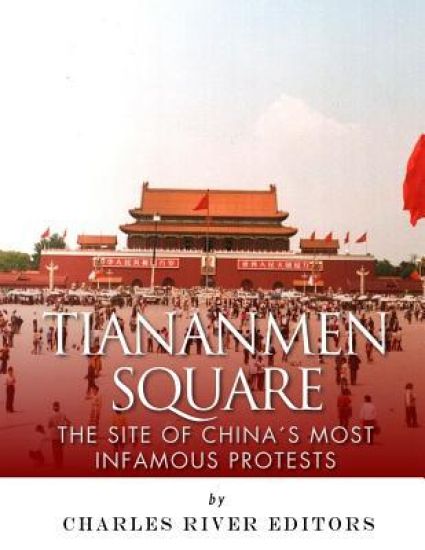
*Includes pictures *Includes footnotes and a bibliography for further reading *Includes a table of contents "Students, we came too late. We are sorry. You talk about us, criticize us, it is all necessary. The reason that I came here is not to ask you to forgive us. All I want to say is that students are getting very weak, it is the 7th day since you went on hunger strike, you can't continue like this. ...] You are still young, there are still many days yet to come, you must live healthy, and see the day when China accomplishes the four modernizations. You are not like us, we are already old, it doesn't matter to us any more." - Zhao Ziyang at Tiananmen Square. May 19, 1989. Tiananmen Square, a large city square in the centre of Beijing, can be said to represent the essence of Chinese culture, being the site of several important events in the country's history. It is characterized as being a vast open ground centered on and defined by a series of monuments constructed over a period of 500 years. Named after the Tiananmen gate, one that means the 'Gate of Heavenly Peace', the square is located towards the north of the gate, separating it from the Forbidden City. Considered the fourth largest city square in the world, its dimensions are 440,000 square meters. Outside China, the square has come to be best known as the pivotal point of the protests of 1989 which were part of a pro-democracy movement which ended on June 4, 1989, with the declaration of martial law in Beijing by the government, and a casualty rate of thousands of civilians. The square's gate has a special status as the "Gate of the Nation", as can be seen from its successive names. It normally remained closed, except when the Emperor passed through. Commoner traffic was diverted to side gates at the western and eastern ends of today's square. Because of this diversion in traffic, a busy marketplace called "Chessgrid Streets" developed in the big, fenced square to the south of this gate. The events that took place at this Square include the annual mass military displays on each anniversary of the 1949 proclamation, and the 1984 military parade for the 35th anniversary of the People's Republic of China which coincided with the ascendancy of Deng Xiaoping. It also staged military displays and parades on the 50th anniversary of the People's Republic in 1999 and on the 60th anniversary in 2009. In addition, many mark the Tiananmen Square self-immolation incident in 2001 as the downfall of this grand monument. Nonetheless, a series of mass movements taking place here have become landmarks in modern Chinese history: the demonstration on 4 May 1919 in protest against the Treaty of Versailles handing over Chinese lands to Japan; the patriotic march on 18 March 1926; the demonstration on 9 December 1935, which started the resistance movement against the Japanese invasion; the anti-autocratic movement during the Civil War on 20 May 1947; the mass memorial to the former prime minister Zhou Enlai on 5 April 1976; and finally the 1989 student uprising. Parallel to these grass-roots movements runs another sequence of "demonstrations" mobilized by authorities to display power including the Victory March in 1900, with the Allied Army celebrating their occupation of Beijing. Tiananmen Square: The Site of China's Most Infamous Protests chronicles the history of the square, including the protests held there in 1989. Along with pictures of important people, places, and events, you will learn about Tiananmen Square like never before, in no time at all.
The Constitutional Convention of 1787: The History and Legacy of the Drafting of the U.S. Constitution
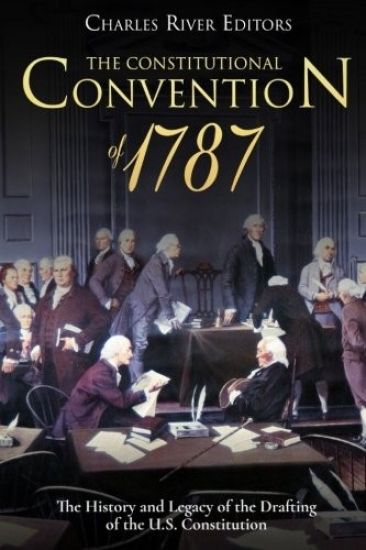
*Includes pictures *Includes contemporary accounts *Includes online resources and a bibliography for further reading "All communities divide themselves into the few and the many. The first are the rich and well born, the other the mass of the people. The voice of the people has been said to be the voice of God; and however generally this maxim has been quoted and believed, it is not true in fact. The people are turbulent and changing; they seldom judge or determine right. Give therefore to the first class a distinct, permanent share in the government. They will check the unsteadiness of the second, and as they cannot receive any advantage by a change, they therefore will ever maintain good government. Can a democratic assembly, who annually revolve in the mass of the people, be supposed steadily to pursue the public good? Nothing but a permanent body can check the imprudence of democracy. Their turbulent and uncontroling disposition requires checks." - Alexander Hamilton, quoted in Notes of the Secret Debates of the Federal Convention of 1787 By 1787, it became evident that the Articles of Confederation were inadequate for the new nation. With these problems hampering the national government under the Articles of Confederation and the threat of default on the nation's massive war debt looming, plans began being made to fix the problems of the Articles of Confederation. Thus, that summer a Constitutional convention was called, and each state sent delegates to Philadelphia. Among the delegates were prominent patriots and former members of the Continental Congress, including George Washington and Benjamin Franklin. However, while most of the delegates came to Philadelphia virtually starting with nothing, Alexander Hamilton and James Madison arrived in Philadelphia well-prepared and well-studied. Hamilton had been a leader in calling for a Constitutional Convention to restructure the nation's government at the convention in Annapolis a year earlier. At that convention, Hamilton had been elected to draft a document describing the reasons for a stronger national government. The letter was sent to each of the 13 states, and it was instrumental in leading to the opening of the Constitutional Convention in 1787. Meanwhile, Madison had been brushing up on his political theory and actually prepared extensively for the Convention. Madison used his extensive knowledge of ancient and foreign languages to study Constitutions from across the world, which he had done this prior to helping craft the Virginia Constitution. Thus, he was already considered something of an expert on Constitutionalism. Given that background, and the fact that he had done more legwork than anybody else at the Convention, delegates looked to him as a leader on the subject. The Constitution was a decisive move away from the Articles of Confederation which the proponents of the Constitution claimed promoted dissonance by giving the States too much autonomy. They argued that a strong federal government ought to be empowered to maintain standing armies, provide for a national militia, and be able to levy direct taxes to support its common defense and provide for economic prosperity. Certain fears about the federal government becoming omnipotent and abusing its military authority or right to tax, they argued, should be assuaged by understanding the role of legislature, or the representatives of the people, in determining the central government's authority to raise an army and levy taxes. This was a democratic experiment that had never been embarked upon before. The Constitutional Convention of 1787: The History and Legacy of the Drafting of the U. S. Constitution looks at how America's governing document came to be. Along with pictures of important people, places, and events, you will learn about the Constitutional Convention like never before.
American Legends: The Life of Walt Disney

American Legends: The Life of Walt Disney

Charles River

Createspace Independent Publishing Platform
2018
nidottu
*Includes pictures. *Includes Disney's quotes about his life and work. *Includes a bibliography for further reading. "Over at our place, we're sure of just one thing: everybody in the world was once a child. So in planning a new picture, we don't think of grown-ups, and we don't think of children, but just of that fine, clean, unspoiled spot down deep in every one of us that maybe the world has made us forget and that maybe our pictures can help recall." - Walt Disney A lot of ink has been spilled covering the lives of history's most influential figures, but how much of the forest is lost for the trees? In Charles River Editors' American Legends series, readers can get caught up to speed on the lives of America's most important men and women in the time it takes to finish a commute, while learning interesting facts long forgotten or never known. When it comes to the entertainment world and movie business, few names are as recognizable as Walt Disney, a versatile writer, producer, director, artist and voice actor who literally turned his name into a billion dollar business. Whether it was through the creation of iconic cartoons like Mickey Mouse or America's favorite theme parks, Disney and his assorted businesses have entertained countless numbers of people across the globe, particularly young kids. At a time when cinema was still a new and growing business, Disney staked out unique turf by bringing comics to life on screen, with his first big hit being Mickey Mouse. Of course, the popularity of Mickey Mouse helped spawn future creations like Donald Duck and Pluto, all household names that have long since become part of Americana and the English lexicon. Disney had already earned an Academy Award by 1932, but he was far from done, introducing viewers to new characters like Snow White and continuing to make popular cartoon series that played well on the big screen. By the late 1940s, Disney was turning his attention to a new form of entertainment: amusement parks. While other children's theme parks existed, none would rival the creation of Disneyland in the 1950s, part of Disney's grand vision: "I just want it to look like nothing else in the world. And it should be surrounded by a train." Disney also branched out into other businesses, ensuring that by the 1960s, his name was on one of the biggest production companies in the world. Walt Disney died in 1966, but his name and work have only become more popular over time, and today The Walt Disney Company is one of the biggest media empires in the world. While the company is now capable of things that Disney himself may have never thought possible, they have stayed true to his concept of providing family entertainment everyone can enjoy. American Legends: The Life of Walt Disney examines the life and work of one of America's most important entertainment icons. Along with pictures of important people, places, and events, you will learn about Disney like never before, in no time at all.
British Legends: The Life and Legacy of Sean Connery

British Legends: The Life and Legacy of Sean Connery

Charles River

Createspace Independent Publishing Platform
2018
nidottu
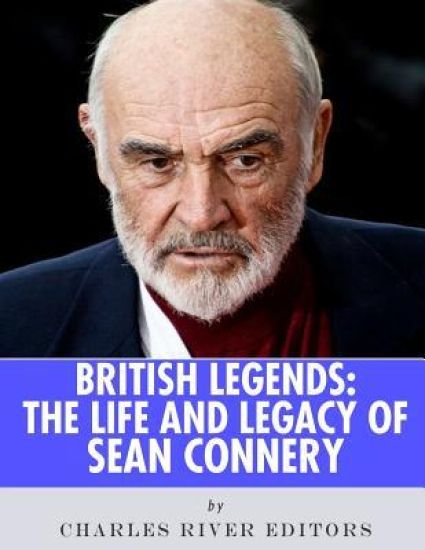
*Includes pictures. *Includes Connery's own quotes about his life and career. *Includes a Bibliography for further reading. A lot of ink has been spilled covering the lives of history's most influential figures, but how much of the forest is lost for the trees? In Charles River Editors' British Legends series, readers can get caught up to speed on the lives of Britain's most important men and women in the time it takes to finish a commute, while learning interesting facts long forgotten or never known. Perhaps no actor has been able to retain their popularity into old age as well as Sean Connery. Despite retiring in 2006, Connery remains a venerable figure who continued to receive accolades for his handsome virility and status within the Hollywood elite. After all, in 1989, just shy of his 60th birthday, Connery was feted by People magazine as the Sexiest Man Alive, and in the years that followed, Connery was awarded with even more lifetime achievement awards, including being named Sexiest Man of the Century by People magazine in 1999. As an actor, Connery won an Academy Award for his performance in The Untouchables (1989), and he has also been awarded Golden Globes and BAFTA awards as well. Based on these designations, one can reasonably place Connery among the ranks of the most acclaimed Hollywood actors of all time, a figure whose critical reputation only grew as he matured. Considering his personal acclaim as an actor, it is perhaps surprising that despite his status, most of the films in which Connery has appeared are not particularly acclaimed. Indeed, scanning his filmography, viewers finds very few films that have been showered with any significant awards, and even the role that brought Connery to fame, the James Bond franchise, initially received a largely lukewarm critical reception. On occasion, Connery has worked with directors of great critical standing, most notably Alfred Hitchcock in Marnie (1963), and yet even these films were not greeted with great praise. While Connery's skills as an actor remain unquestioned, his films themselves have not been canonized as outstanding, nor do they populate the curricula of film courses. Given the gulf between Connery's own reputation and those of his films, it is natural to conclude that Connery's fame has arisen despite appearing in films that were generally unworthy of his talents as an actor. One of the prevailing questions surrounding Connery, therefore, is how he was able to attain such fame and acclaim despite appearing in films that have continually been deemed less than outstanding. To answer that question, it is necessary to consider not only his film appearances but also the personal background that shaped his career decisions and contributed to the development of his star persona. In fact, the legend of Sean Connery is inseparable from his upbringing, as well as the precarious period of his young adulthood. Connery came from an impoverished background, and his willingness later in his career to accept roles that were seemingly beneath him can be attributed to a blue collar ethos that respects the value and importance of hard work. In light of his difficult upbringing, Connery's rise to stardom is an unlikely one, as Connery managed to progress from the poorest regions of Edinburgh, Scotland to the heights of Hollywood fame, becoming famous for his signature mix of suave, debonair comportment and virile masculinity. At the same time, Connery's eccentric behavior in later years, which might be criticized if other people acted that way, are often considered part of the unique Connery charm. British Legends: The Life and Legend of Sean Connery looks at the life of the iconic Bond actor on and off the silver screen. Along with pictures of important people, places, and events, you will learn about Sean Connery like you never have before, in no time at all.
Rollo the Viking: The Life and Legacy of the Viking Ruler Who Conquered Normandy

Rollo the Viking: The Life and Legacy of the Viking Ruler Who Conquered Normandy

Charles River

Createspace Independent Publishing Platform
2018
nidottu
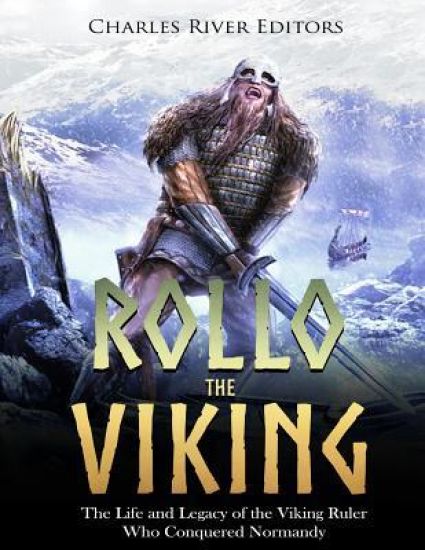
*Includes pictures*Includes online resources and a bibliography for further reading"A cowardly man thinks he will ever live, if warfare he avoids; but old age will give no peace, though spears may spare him." - old Norse proverb from the Viking AgeIn the autumn of 1911, an eye-watering mass of French citizens gathered around a churchyard in the heart of Rouen to celebrate the millennial anniversary of Normandy. A suspenseful hush fell over the congregation as a city official strode to the front of the crowd, placing his hands upon the large cloth draped over the mysterious statue. With a flick of his wrists, he unveiled an exquisite marble effigy of a handsome warrior, depicted with curly locks and a lush beard, with one hand wrapped around the handle of his sheathed sword as he gazed into the distance. The statue was of none other than Rollo the Viking, father of the Duchy of Normandy. Over the centuries, the West has become fascinated by the Vikings, one of the most mysterious and interesting European civilizations. In addition to being perceived as a remarkably unique culture among its European counterparts, what's known and not known about the Vikings' accomplishments has added an intriguing aura to the historical narrative. Were they fierce and fearsome warriors? Were they the first Europeans to visit North America? It seems some of the legends are true, and some are just that, legend. The commonly used term, Viking, for the trading and raiding peoples of Scandinavia may have originated from Viken (the large bay leading to Oslo), or it may have come from the Old Scandinavian words Vikingr (sea warrior) or Viking (expedition over the sea). The people from the north were known in Western Europe at the time as Northmen or Danes, in England as Danes or pagans and in Ireland as Finngall for those of Norwegian origin and Dubgall for those from Denmark. In the east, in Russia and in the Byzantine Empire, the Scandinavians were called Vaeringar or Varyags (Varangians) or Rus', the latter perhaps derived from the name Roslagen, a province in Uppland in Sweden. The ubiquitous picture of the Vikings as horn-helmeted, brutish, hairy giants that mercilessly marauded among the settlements of Northern Europe is based on a smattering of fact combined with an abundance of prejudicial historical writing by those who were on the receiving end of Viking depredations. At the same time, much of the popular picture of the Vikings is a result of the romantic imagination of novelists and artists. However, the Vikings' reputation for ferocious seaborne attacks along the coasts of Northern Europe is no exaggeration. It is true that the Norsemen, who traded extensively throughout Europe, often increased the profits obtained from their nautical ventures through plunder, acquiring precious metals and slaves. Of course, the Vikings were not the only ones participating in this kind of income generation; between the 8th and the 11th centuries, European tribes, clans, kingdoms and monastic communities were quite adept at fighting with each other for the purpose of obtaining booty. The Vikings were simply more successful than their contemporaries and thus became suitable symbols for the iniquity of the times. And among the Vikings, few were as successful as Rollo. Rollo the Viking: The Life and Legacy of the Viking Ruler Who Conquered Normandy chronicles the life of the great warrior, dives into his many adventures and exploits, and examines just how this lone wolf managed to conquer his foes. Along with pictures depicting important people, places, and events, you will learn about Rollo the Viking like never before.