Kirjojen hintavertailu – 12 903 727 kirjaa ja 27 kauppaa

Kirjailija

Charles River

Kirjat ja teokset yhdessä paikassa: 4 673 kirjaa, julkaisuja vuosilta 2013–2022, suosituimpiin kuuluu William Powell and Myrna Loy: The Lives and Careers of One of Classical Hollywood's Most Iconic Duos. Vertaile teosten hintoja ja tarkista saatavuus suomalaisista kirjakaupoista.

4 673 kirjaa

Kirjojen julkaisuvuodet: 2013–2022.

American Legends: The Life of Harriet Tubman

American Legends: The Life of Harriet Tubman

Charles River

Createspace Independent Publishing Platform
2018
nidottu
*Includes pictures of Harriet and important people and places in her life. *Includes contemporaneous accounts of Harriet, the Underground Railroad, and her Civil War service. *Examines the legends and mythology of Harriet's participation in the Underground Railroad, John Brown's Raid at Harpers Ferry, the Civil War, and the women's suffrage movement. *Includes a Timeline and Bibliography for further reading. "Excepting John Brown, of sacred memory, I know of no one who has willingly encountered more perils and hardships to serve our enslaved people than you have. Much that you have done would seem improbable to those who do not know you as I know you." - Frederick Douglass to Harriet Tubman A lot of ink has been spilled covering the lives of history's most influential figures, but how much of the forest is lost for the trees? In Charles River Editors' American Legends series, readers can get caught up to speed on the lives of America's most important men and women in the time it takes to finish a commute, while learning interesting facts long forgotten or never known. Harriet Tubman is one of the most famous women in American history, and from an early age every American learns of her contributions to abolition and the Underground Railroad. The woman who became known as the Moses of her people personally led more than 13 expeditions to free slaves in the South, and she was so integral in helping escaped slaves achieve freedom that her name is practically synonymous with the Underground Railroad today. If anything, the central role she played in the Underground Railroad has become so ingrained among subsequent generations that Tubman's life has been shrouded in legend, and other important aspects have been overlooked. In order to fully appreciate and understand both Harriet Tubman's life and the important role she played in the abolitionist movement, it is necessary to examine the circumstances in which she was raised and what events drove her to the path she chose. Anthropologist Douglas Armstrong notes " s]o little information about Tubman has been based on fact and so much based on myth and created history" that it has only been recently that historians have "come to the point where we can recognize her true contributions." In fact, Tubman's entire life consisted of struggles and persistence, whether she was fighting on behalf of slaves, the Union army during the Civil War, or women's rights. After managing to escape the severe beatings and humiliation of slavery herself, she put her life on the line over and over again to help others, and she could proudly boast, "I was the conductor of the Underground Railroad for eight years, and I can say what most conductors can't say - I never ran my train off the track and I never lost a passenger." But that was only part of her involvement with abolition; Tubman was well-acquainted with other famous abolitionists of her time, including Frederick Douglass and John Brown, and she threw herself into efforts to further the cause of abolition in various ways. Her life and work were publicized nearly 50 years before her death by Franklin Sanborn, who worked as an editor in an abolitionist newspaper and detailed the work of the Underground Railroad in the Boston Commonwealth in 1863. American Legends: The Life of Harriet Tubman profiles the life, legends, and legacies of one of America's most famous and influential women. Along with pictures of important people, places, and events, you will learn about Harriet Tubman like you never have before, in no time at all.

American Legends: The Life of Gregory Peck

American Legends: The Life of Gregory Peck

Charles River

Createspace Independent Publishing Platform
2018
nidottu
*Includes pictures. *Includes Peck's own quotes about his life and career. *Includes a bibliography for further reading. "Entertainment is all right, but entertainment with an idea behind it is much more important." - Gregory Peck A lot of ink has been spilled covering the lives of history's most influential figures, but how much of the forest is lost for the trees? In Charles River Editors' American Legends series, readers can get caught up to speed on the lives of America's most important men and women in the time it takes to finish a commute, while learning interesting facts long forgotten or never known. At the end of the 20th century, the American Film Institute ranked Gregory Peck 12th in its list of best actors, and it's not hard to see why. In addition to being one of the most popular actors in Hollywood for three decades, Peck won an Academy Award for Best Actor playing Atticus Finch in To Kill a Mockingbird, and he was also nominated several other times. Even when he wasn't being nominated for his performances, he appeared in some of the most acclaimed movies of the century, including How the West Was Won and Roman Holiday. Peck was a household name across America, but far from resting on his laurels, he poured just as much energy into humanitarian causes, though he didn't think much of it, saying, "I'm not a do-gooder. It embarrassed me to be classified as a humanitarian. I simply take part in activities that I believe in." Nonetheless, Peck's work as a humanitarian led to him being awarded a Presidential Medal of Freedom by Lyndon Johnson in 1969, when he was still near the height of his career. He championed several causes over the years, most of them liberal ones like gun control and gay rights. Always outspoken, he even lent his name and voice to politically charged commercials, including the notorious fight to stop Ronald Reagan's nomination of Robert Bork to the Supreme Court. Peck continued his work into the 21st century, and in 2011, several years after he died, he was commemorated with a postage stamp. American Legends: The Life of Gregory Peck profiles the life and career of one of America's greatest actors. Along with pictures of important people, places, and events, you will learn about Gregory Peck like never before, in no time at all.
American Legends: The Life of Ginger Rogers

American Legends: The Life of Ginger Rogers

Charles River

Createspace Independent Publishing Platform
2018
nidottu
*Includes pictures of Ginger and important people, places, and scenes. *Comprehensively analyzes her relationship with Fred Astaire and their films together. *Includes a Bibliography for further reading. "I adored Fred. We were good friends. Our only problem is that we never aspired to be any kind of a team. We didn't want to be Abbott and Costello. We thought of ourselves as individuals. We didn't intend to be another Frick and Frack. But it happened anyway, didn't it? And I'll be forever grateful it did." - Ginger Rogers A lot of ink has been spilled covering the lives of history's most influential figures, but how much of the forest is lost for the trees? In Charles River Editors' American Legends series, readers can get caught up to speed on the lives of America's most important men and women in the time it takes to finish a commute, while learning interesting facts long forgotten or never known. There is no denying that the career of Ginger Rogers cannot be entirely divorced from that of Fred Astaire. The unlikely pairing - Rogers was a statuesque blonde while Astaire fell well short of the masculine ideal expected of male movie stars - only made their screen romance more dreamlike, even as the physical contrasts between them melted away during their protracted dance numbers. Not only were Astaire and Rogers the preeminent box office attraction of the time period, but they remain the most recognizable faces of the musical genre as a whole. It is telling that, as Edward Gallafent notes, the duo are identified simply as Fred and Ginger, with no need to even provide their last names. Moreover, not only are films such as Top Hat (1935) and Shall We Dance (1937) cornerstones of the musical, but one of the great achievements of the Fred and Ginger team is that they never fell out of public favor. Indeed, the completeness of the Fred and Ginger pairing was punctuated by the fact that there was no bitter breakup between them, making it so that audiences are left only with the seamless screen romances between them. Considering the immense success of their films together, it is entirely understandable that Astaire and Rogers are joined at the hip in the eyes of the public. However, an appreciation for the Fred and Ginger musicals is only enhanced by knowledge of the personal backgrounds of the two stars. After all, the fact remains that Astaire and Rogers came from vastly different cultural backgrounds, and at the time that they met, their careers had unfolded in dissimilar ways. Astaire was a national celebrity for his skills as a stage performer (mainly with his sister Adele), while Rogers was raised in a more archetypal Midwestern setting and her professional success was reached entirely through cinema. While Astaire made a name for himself through his dancing, Rogers was more recognized for her singing talents. Clearly, it is still possible to discern fundamental differences between their professional talents, contrasts that would become more distinguishable once they ceased making films together. American Legends: The Life of Ginger Rogers profiles the life and career of one of America's most famous entertainers. Along with pictures of important people, places, and events, you will learn about Ginger Rogers like you never have before, in no time at all.
American Legends: The Life of Gene Tierney

American Legends: The Life of Gene Tierney

Charles River

Createspace Independent Publishing Platform
2018
nidottu
*Includes pictures *Includes Tierney's own quotes about her life and career *Includes a bibliography for further reading "I ask myself: Would I have been any worse off if I had stayed home or lived on a farm instead of shock treatments and medication?" - Gene Tierney "I was fine when it came to cheering up others, not so fine with myself." - Gene Tierney A lot of ink has been spilled covering the lives of history's most influential figures, but how much of the forest is lost for the trees? In Charles River Editors' American Legends series, readers can get caught up to speed on the lives of America's most important men and women in the time it takes to finish a commute, while learning interesting facts long forgotten or never known. When people are asked to list the pros and cons of a star in Hollywood, there's a good chance that Gene Tierney lived all of the highs and lows they would come up with. In many ways, Tierney had the prototypical career of an actress who experienced the best that Hollywood had to offer and got caught up with some of its most notorious pitfalls. With beauty queen looks, Tierney was almost immediately marked for success as an actress once she was discovered, and after just a year on Broadway, she was making her film debut around her 20th birthday. But once she seemed to be on the road to instant fame, her early career faltered, and all the while, she felt the stress and pressure to look her best, including adhering to a strict diet to maintain weight. She also became a heavy smoker in an attempt to lower her voice, which she complained made her sound too much like "an angry Minnie Mouse." Tierney was a major star in her 20s, was one of World War II's most notable pinups, and she was also nominated for an Academy Award for Best Actress by the age of 25, but life off the screen continued to cause her problems. By the time she was in her 30s, Tierney was struggling with severe bouts of depression, which led to her being institutionalized and even receiving electroshock therapy. Tierney hated the shock therapy and complained that it led to memory loss, and she once bitterly remarked, "I existed in a world that never is - the prison of the mind." On top of that, she suffered at least one miscarriage and gave birth to a premature baby that had mental handicaps in part because Tierney had contracted rubella, possibly from a fan who came into close contact with her. Struggling to cope with it all, Tierney attempted suicide, and after being committed yet again, her acting career was almost over. Tierney attempted a comeback of sorts in the 1960s, but after just a few projects, she was all but through with acting, making just one more appearance in a TV miniseries in 1980. In one final blow brought about in part due to her acting career, Tierney died of emphysema when she was 70, a disease caused by the smoking habit she had taken up in order to further herself in Hollywood. American Legends: The Life of Red Skelton chronicles the life and career of one of America's most famous actresses. Along with pictures of important people, places, and events, you will learn about Gene Tierney like never before, in no time at all.
American Legends: The Life of George Custer

American Legends: The Life of George Custer

Charles River

Createspace Independent Publishing Platform
2018
nidottu
*Discusses Little Bighorn in detail and explains the controversies and mysteries still surrounding Custer's Last Stand. *Includes pictures of Custer and important people, places, and events in his life. *Includes a Bibliography for further reading. Since the Battle of Little Bighorn, George Armstrong Custer (1839-1876) has possessed one of the most unique places in American history. Although he was a capable cavalry officer who served honorably during the Civil War, he remains one of the most instantly identifiable and famous military men in American history due to the fact he was killed during one of the country's most well known and ignominious defeats, the Battle of Little Bighorn. And yet, this one relatively insignificant battle during America's Indian Wars has become one of the country's most mythologized events and continues to fascinate Americans nearly 140 years later. Though he's now best remembered for "Custer's Last Stand", George Armstrong Custer began June 25, 1876 as one of America's better regarded cavalry officers, and a man whose ambitions might one day take him to higher office. In fact, decades before radio and television existed, Custer mastered the art of public relations, dressing impeccably and having newspaper correspondents accompany him on campaign, all in an effort to help cultivate and enhance his legacy. Custer's efforts worked, with one biographer noting that Americans during the 19th century viewed him as "a cavalier without fear and beyond reproach." Much like famous Confederate cavalry leader JEB Stuart, Custer added substance to the style. Despite being in his early 20s when the Civil War started, Custer rose through the ranks so quickly that he famously commanded a brigade of Michigan cavalrymen at Gettysburg, fighting the vaunted JEB Stuart and his horsemen to a standstill on the climactic 3rd day of that battle. Custer's success continued through until the end of the war, with his men playing an integral role during the Appomattox Campaign that forced the surrender of Robert E. Lee's Army of Northern Virginia. Had Custer's career ended there, he would have been both successful and largely forgotten. Instead, the last 10 years of his life were full of political and military intrigue, as he attempted to position himself both in politics and the Army while making himself one of the best known fighters of the Indian Wars. Those actions, along with the Battle of Little Bighorn, made him controversial even in his day, but with his death coming to be widely viewed as a sacrifice for his country, his legend and legacy grew throughout the nation. No matter what critics or supporters thought of him, George Armstrong Custer was unquestionably relevant. American Legends: The Life of George Custer details Custer's life and career, including all of its famous ups and infamous downs, while also addressing the controversial nature of Little Bighorn and his legacy. Along with pictures of important people, places, and events in his life, you will learn about Custer like you never have before, in no time at all.

Lourdes: La Historia y Legado del Lugar de Peregrinación Cristiano más Famoso de Francia
Dicen que el juicio no existe en Lourdes. Una vez que uno pone un pie en este suelo sagrado, todas las barreras de raza, condici n social, antecedentes y diferencias de religi n dejan de existir. No es uno m s que un alma humilde en busca de la renovaci n de la propia conexi n con Dios. En un comunicado emitido a la prensa francesa a mediados de agosto de 2008, el padre Jacques Nieuviarts garantiz lo siguiente: "Aquellos que tocan la roca de la gruta en Lourdes... Tal vez est n pidiendo ser imbuidos con la fuerza de esta roca. Aquellos que beben del agua de la fuente sienten que su sed interna est siendo saciada, que han sido cambiados y que el agua los ha purificado... Al encender la vela, se abren a s mismos a la claridad que proviene de Dios, y cuando al marcharse dejan una vela ardiendo, su plegaria contin a en uni n con aquellas de todas las dem s personas que han colocado sus velas encendidas en la gruta...". Dadas estas promesas de paz interior y despertares espirituales, sin mencionar los incontables casos -tanto declarados como "verificados"- de curaciones milagrosas de los que est repleto esta sobrenatural ciudad, no resulta una sorpresa que este una vez modesto pueblo sea actualmente el segundo destino tur stico m s popular en Francia, despu s de Par s. Con el pasar de los a os, el antes pintoresco pero vetusto pueblo de grises tejados ha sido m s que exitoso a la hora de hacerse notar mediante sus m sticos santuarios construidos sobre milagros, pero c mo lograron exactamente tal designaci n? Y, qu tanto de cierto -si lo hay- tienen estos supuestos milagros? Lourdes: La historia y legado del lugar de peregrinaci n cristiano m s famoso de Francia narra la notable historia del sitio y la influencia religiosa que ha tenido durante siglos. En conjunto con im genes que representan personas, lugares y eventos importantes, aprender sobre Lourdes como nunca.
Operation Catapult: The History of the Controversial British Campaign against the Vichy French Navy during World War II
*Includes pictures *Includes accounts *Includes online resources and a bibliography for further reading "You are charged with one of the most difficult and disagreeable tasks that a British admiral has ever been faced with. But we have complete confidence in you and rely on you to carry it out relentlessly." - Prime Minister Winston Churchill "90% of senior naval officers, including myself, thought Operation Catapult] a ghastly error and still do." - Royal Navy Admiral Andrew Cunningham, 1950 Emerging from France's catastrophic 1940 defeat like a bedraggled and rather sinister phoenix, the French State - better known to history as "Vichy France" or the "Vichy Regime" after its spa-town capital - stands in history as a unique and bizarre creation of German Fuhrer Adolf Hitler's European conquests. A patchwork of paradoxes and contradictions, the Vichy Regime maintained a quasi-independent French nation for some time after the Third Reich invasion until the Germans decided to include it in their occupation zone. While the French later disowned the Vichy government with considerable vehemence, evidence such as fairly broad-based popular support prior to Case Anton suggests a somewhat different story. The Petain government expressed one facet of French culture and thought. Its conservative, imperialistic nature did not represent the widespread love of "liberty, fraternity, and equality" also deeply ingrained in French thinking, but neither did it constitute a complete divergence from a national history that produced such famous authoritarians as Louis XIV and Napoleon Bonaparte. Of course, this precarious position left Britain in the unenviable position of figuring out what to do with its once erstwhile ally. France is seldom deemed a maritime power, yet during World War I and in the interwar period, the French Navy developed into a relatively powerful fighting force. While it could not rival the British, American, or Japanese forces, it represented one of the medium-sized naval powers like Germany or Italy. As such, the French Navy would have an interesting role to play in the development of the Vichy state during World War II. While the Third Reich naturally cast covetous eyes at the powerful French naval vessels in the hands of their ostensible Vichy ally, they proved content to see those ships remain neutral for several years after their victory in Western Europe. Only when the French changed their allegiance in the direction of the Allies did the Germans make an attempt to seize the French vessels. British Prime Minister Winston Churchill was not so content. The actions he initiated - opposed by many of the British naval officers involved, but nevertheless dutifully carried out - embittered relations between France and England for a generation. The stern leader showed a certain ruthlessness and even spitefulness in dealing with both neutrals and weaker allies during the war. England failed to provide material aid to Poland when the Germans and Soviets invaded it in 1939, and even neglected to declare war on the USSR. Churchill sacrificed Poland to Stalin's territorial ambition almost without a murmur of protest at war's end, and his successor, Clement Attlee, then carried on his existing policies by insisting the Poles pay a large sum to the Britain for British assistance, despite the fact that hundreds of thousands of Polish soldiers fought for the British only to see their homeland given away almost casually by their allies. This somewhat unflattering side of Churchill's character emerged in his dealings with Vichy as well. Despite the assurances of Darlan and others that the French would never hand their ships over to Germany, Churchill would put in motion a campaign attempting to destroy their fleet. As a result, the one-sided Operation Catapult would be one of the most controversial and unique episodes of World War II.
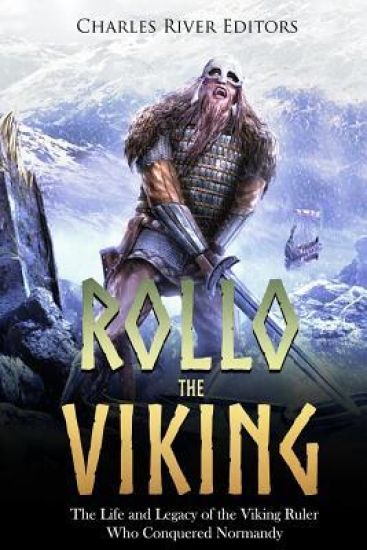
Rollo the Viking: The Life and Legacy of the Viking Ruler Who Conquered Normandy

Rollo the Viking: The Life and Legacy of the Viking Ruler Who Conquered Normandy

Charles River

Createspace Independent Publishing Platform
2018
nidottu
*Includes pictures*Includes online resources and a bibliography for further reading"A cowardly man thinks he will ever live, if warfare he avoids; but old age will give no peace, though spears may spare him." - old Norse proverb from the Viking AgeIn the autumn of 1911, an eye-watering mass of French citizens gathered around a churchyard in the heart of Rouen to celebrate the millennial anniversary of Normandy. A suspenseful hush fell over the congregation as a city official strode to the front of the crowd, placing his hands upon the large cloth draped over the mysterious statue. With a flick of his wrists, he unveiled an exquisite marble effigy of a handsome warrior, depicted with curly locks and a lush beard, with one hand wrapped around the handle of his sheathed sword as he gazed into the distance. The statue was of none other than Rollo the Viking, father of the Duchy of Normandy. Over the centuries, the West has become fascinated by the Vikings, one of the most mysterious and interesting European civilizations. In addition to being perceived as a remarkably unique culture among its European counterparts, what's known and not known about the Vikings' accomplishments has added an intriguing aura to the historical narrative. Were they fierce and fearsome warriors? Were they the first Europeans to visit North America? It seems some of the legends are true, and some are just that, legend. The commonly used term, Viking, for the trading and raiding peoples of Scandinavia may have originated from Viken (the large bay leading to Oslo), or it may have come from the Old Scandinavian words Vikingr (sea warrior) or Viking (expedition over the sea). The people from the north were known in Western Europe at the time as Northmen or Danes, in England as Danes or pagans and in Ireland as Finngall for those of Norwegian origin and Dubgall for those from Denmark. In the east, in Russia and in the Byzantine Empire, the Scandinavians were called Vaeringar or Varyags (Varangians) or Rus', the latter perhaps derived from the name Roslagen, a province in Uppland in Sweden. The ubiquitous picture of the Vikings as horn-helmeted, brutish, hairy giants that mercilessly marauded among the settlements of Northern Europe is based on a smattering of fact combined with an abundance of prejudicial historical writing by those who were on the receiving end of Viking depredations. At the same time, much of the popular picture of the Vikings is a result of the romantic imagination of novelists and artists. However, the Vikings' reputation for ferocious seaborne attacks along the coasts of Northern Europe is no exaggeration. It is true that the Norsemen, who traded extensively throughout Europe, often increased the profits obtained from their nautical ventures through plunder, acquiring precious metals and slaves. Of course, the Vikings were not the only ones participating in this kind of income generation; between the 8th and the 11th centuries, European tribes, clans, kingdoms and monastic communities were quite adept at fighting with each other for the purpose of obtaining booty. The Vikings were simply more successful than their contemporaries and thus became suitable symbols for the iniquity of the times. And among the Vikings, few were as successful as Rollo. Rollo the Viking: The Life and Legacy of the Viking Ruler Who Conquered Normandy chronicles the life of the great warrior, dives into his many adventures and exploits, and examines just how this lone wolf managed to conquer his foes. Along with pictures depicting important people, places, and events, you will learn about Rollo the Viking like never before.
Los fantasmas de Londres: Una colección de historias de fantasmas de la capital británica
Inglaterra es una antigua tierra llena de historia y tradici n, llena de ruinas prehist ricas, majestuosos castillos, y un paisaje esculpido de milenios de vida humana... Su paisaje ondulado est salpicado de t mulos funerarios prehist ricos y c rculos de piedra. Los siniestros castillos cuentan historias de derramamiento de sangre y honor. Las iglesias medievales tienen elaborados vitrales y esculturas horripilantes, reflejando una mezcla de esperanza y oscuridad. Cada aldea y pueblo tiene historias que se remontan a siglos atr s, y fiestas populares con ra ces paganas. Por lo tanto, no es sorprendente que muchos crean que Inglaterra es una tierra llena de fantasmas. Durante siglos, la gente ha contado historias de fantasmas que acechaban sus edificios hist ricos, extra as criaturas acechando en sus primitivos bosques y caminos inexplicables que unen sus antiguos sitios. Y naturalmente, como una de las capitales m s hist ricas del mundo, cada paso en Londres lleva a los visitantes a trav s de cientos de a os de historia cargados de intriga pol tica, guerra, romance e inspiraci n de genios art sticos y cient ficos. Desde las m s magn ficas avenidas y monumentos hasta las m s humildes calles y casas particulares, parece que cada ladrillo y adoqu n tiene una historia que contar. Los ingleses est n encantados con los esp ritus de los muertos. Est n entretejidos en las leyendas de los edificios hist ricos y ocupan un lugar destacado en la literatura inglesa, desde Shakespeare y Dickens hasta escritores modernos como Peter Ackroyd. Tanto edificios, calles e incluso estaciones de metro tienen fantasmas como residentes. Aqu est una colecci n de tales cuentos, de entre los cientos de leyendas locales y avistamientos modernos que hacen de Inglaterra uno de los pa ses m s embrujados del mundo. Los fantasmas de Londres: Una colecci n de historias de fantasmas de la capital brit nica ofrece una muestra de las muchas historias extra as de fantasmas y fen menos inexplicables que hacen de Londres un lugar tan intrigante. Adem s de fotos de personas importantes, lugares y eventos, aprender sobre los fantasmas de Londres como nunca antes.
Los fantasmas de Londres: Una colección de historias de fantasmas de la capital británica
Inglaterra es una antigua tierra llena de historia y tradici n, llena de ruinas prehist ricas, majestuosos castillos, y un paisaje esculpido de milenios de vida humana... Su paisaje ondulado est salpicado de t mulos funerarios prehist ricos y c rculos de piedra. Los siniestros castillos cuentan historias de derramamiento de sangre y honor. Las iglesias medievales tienen elaborados vitrales y esculturas horripilantes, reflejando una mezcla de esperanza y oscuridad. Cada aldea y pueblo tiene historias que se remontan a siglos atr s, y fiestas populares con ra ces paganas. Por lo tanto, no es sorprendente que muchos crean que Inglaterra es una tierra llena de fantasmas. Durante siglos, la gente ha contado historias de fantasmas que acechaban sus edificios hist ricos, extra as criaturas acechando en sus primitivos bosques y caminos inexplicables que unen sus antiguos sitios. Y naturalmente, como una de las capitales m s hist ricas del mundo, cada paso en Londres lleva a los visitantes a trav s de cientos de a os de historia cargados de intriga pol tica, guerra, romance e inspiraci n de genios art sticos y cient ficos. Desde las m s magn ficas avenidas y monumentos hasta las m s humildes calles y casas particulares, parece que cada ladrillo y adoqu n tiene una historia que contar. Los ingleses est n encantados con los esp ritus de los muertos. Est n entretejidos en las leyendas de los edificios hist ricos y ocupan un lugar destacado en la literatura inglesa, desde Shakespeare y Dickens hasta escritores modernos como Peter Ackroyd. Tanto edificios, calles e incluso estaciones de metro tienen fantasmas como residentes. Aqu est una colecci n de tales cuentos, de entre los cientos de leyendas locales y avistamientos modernos que hacen de Inglaterra uno de los pa ses m s embrujados del mundo. Los fantasmas de Londres: Una colecci n de historias de fantasmas de la capital brit nica ofrece una muestra de las muchas historias extra as de fantasmas y fen menos inexplicables que hacen de Londres un lugar tan intrigante. Adem s de fotos de personas importantes, lugares y eventos, aprender sobre los fantasmas de Londres como nunca antes.
The Gobi Desert: The History and Legacy of the Asia's Largest Desert

The Gobi Desert: The History and Legacy of the Asia's Largest Desert

Charles River

Createspace Independent Publishing Platform
2018
nidottu
*Includes pictures *Includes online resources and a bibliography for further reading "The Gobi Desert seems like earth reduced to its most basic elements: rock, sky, glaring sunlight, and little else. The apparent emptiness is both compelling and intimidating. But the Gobi is not empty, it is filled with space, sky, history, and landscapes..." - Conservation Ink In August of 2008, London-based Jane Macartney published this striking description of the Gobi Desert in The Times: "On the Mongolian steppes, the emptiness and the silence inspire awe. From time to time, a huge, tawny eagle drifts on the breeze, watching for small animals to snatch amid the grasses. The only movement on the ground comes from the flocks of sheep and goats, yaks and cattle that roam, heads down, as they much their way across the grasslands..." Alongside this stunning and therapeutic view of the grassland critters are a smattering of white yurts which belonged to the Mongolian nomads who now inhabit the land. Gazing upon the rest of the Gobi, furnished with rolling plains, sweeping steppes, cragged mountains, and singing sand dunes, the desert instills in one a similar sense of inner peace. In fact, these Kodak scenes are so picture-perfect that it is almost impossible to imagine the adventurous discoveries, devastating wars, colorful commerce, and dramatically different landscape that once appeared in its place. The Gobi Desert: The History and Legacy of the Asia's Largest Desert examines the history of Asia's greatest desert. Along with pictures of important people, places, and events, you will learn about the Gobi Desert like never before.
Legends of Hollywood: The Life of Woody Allen

Legends of Hollywood: The Life of Woody Allen

Charles River

Createspace Independent Publishing Platform
2018
nidottu
*Includes pictures. *Includes Woody Allen's own quotes about his life and career. *Includes a bibliography for further reading. "If you're not failing every now and again, it's a sign you're not doing anything very innovative." - Woody Allen Few celebrities have been as transparent over the course of their careers as Woody Allen, as even those who have seen just a fraction of his films can feel as though they know him. Woody has never made an attempt to hide the core aspects of his persona: a Jewish resident of New York City; a lover of jazz, baseball, and the New York Knicks, and, more controversially, someone who has been married on several occasions, most recently to the adopted daughter of his former partner. What's more, there seems to be very little separating the real-life Woody Allen from the characters he plays in his films, as he frequently appears to be playing himself. It is this quality that offers familiarity for those watching a Woody Allen movie, and viewers know to expect sharp dialogue, jazz music, a New York setting, and a strong dose of psychoanalysis), all of which add up to the prolific oeuvre of one of America's most gifted screenwriters of the past half-century. Since Woody Allen has been prolific in his output and transparent in his presentation to the public, it is easy to lose sight of the remarkable breadth of his career. Indeed, over his career, Woody has excelled at slapstick humor while also tackling philosophical themes, often in the same films. His films have appealed to both a mass audience as well as an international art house audience, the same audience that endorses Ingmar Bergman, Federico Fellini, and other such directors of international renown. As much as Woody is a gifted comic, he is also someone whose humor transcends the comedic genre, spilling seamlessly into dramatic themes of love, art, and mortality. While it is true that Woody Allen has always been a transparent, often self-deprecating figure, it is also important to acknowledge that he was not born with his persona, and that it was constructed with an eye toward professional success; after all, "Woody Allen" is a stage name, one that he felt would be more lucrative than Allan Konigsberg. Ironically, while his stage persona has remained consistent and is familiar to many across the world today, the ways in which Allen's public image changed over time have been dramatic. Legends of Hollywood: The Life of Woody Allen critically examines the personal life and films of Hollywood's most critically acclaimed screenwriter. Along with pictures of important people, places, and events, you will learn about Woody Allen like never before, in no time at all.
Charles Darwin: The Life and Legacy of the 19th Century's Most Famous Scientist

Charles Darwin: The Life and Legacy of the 19th Century's Most Famous Scientist

Charles River

Createspace Independent Publishing Platform
2018
nidottu
*Includes pictures *Includes contemporary accounts *Includes online resources and a bibliography for further reading "There is grandeur in this view of life, with its several powers, having been originally breathed into a few forms or into one; and that, whilst this planet has gone cycling on according to the fixed law of gravity, from so simple a beginning endless forms most beautiful and most wonderful have been, and are being, evolved." - Charles Darwin "We must, however, acknowledge, as it seems to me, that man with all his noble qualities... still bears in his bodily frame the indelible stamp of his lowly origin." - Charles Darwin Ever since the human mind developed the capacity for thought, people have pondered not just the meaning of life, but the genesis of the world, the universe, and all the natural marvels and precious forms of life within it. To this day, all of these intricate subjects continue to be matters of great contention, and they are often best encapsulated in the debate between creationism and evolution. On the one hand are those who are adamant that it was God, or some other supreme being, that designed and crafted every detail of the universe, as evidenced by the plethora of creation myths from various creeds and traditions. Among one of the most well-known etiological tales is the classic story of the Christian God who constructed the world in 6 days, and man and woman out of clay and man's rib, respectively. This is a concept that many still cling to today; approximately 38% of Americans believed in creationism in 2017, as reported by a Gallup Poll. Then, there are the more obscure narratives, such as the Japanese creation myth, which recounts how the god and goddess, Izanagi and Izanami, birthed from "elements mixed together with one germ of life," shaped the Japanese islands with some mud and the aid of a sacred staff. The Mayans preached about Tepeu, the maker of all things, and Gucumatz, the "feathered spirit," who produced the world with nothing but their thoughts, and placed on Earth the first quartet of humans fashioned out of white and yellow corn. On the other hand are those who subscribe to the belief of, or as they would say, "accept" evolution and scientific processes as fact. As enthralling as such creation myths may be, insist critics of creationism, who campaign for their retirement, there is not a sound shred of logic behind these time-worn tales. Renowned theoretical physicist Stephen Hawking, arguably one of the most brilliant minds to have ever lived, stated, "Before we understand science, it is natural to believe that God created the universe. But now science offers a more convincing explanation." His sentiments are echoed by famous atheist, evolutionary biologist, and coiner of the word "meme," Richard Dawkins, in The Selfish Gene: "Today the theory of evolution is about as much open to doubt as the theory that the earth goes round the sun..." The kindler of this impassioned existential dispute, of course, is none other than Charles Darwin, who himself devised the term "creationists" and propelled the controversial theory of evolution to prominence. Given that he went against the grain with his scientific work, he was clearly one of the most polarizing men of his age, and he wouldn't hesitate to question one of the central tenets of Western civilization in print: "I cannot persuade myself that a beneficent and omnipotent God would have designedly created parasitic wasps with the express intention of their feeding within the living bodies of Caterpillars." Bearing this in mind, while it was indeed Darwin who stoked the fire, he is not the hardcore, deity-despising atheist who obsessed about disproving God that most presume him to be. What lies within this fascinating man is a complicated, neurotic, and somewhat tortured individual, which, needless to say, only makes this pioneer all the more compelling.
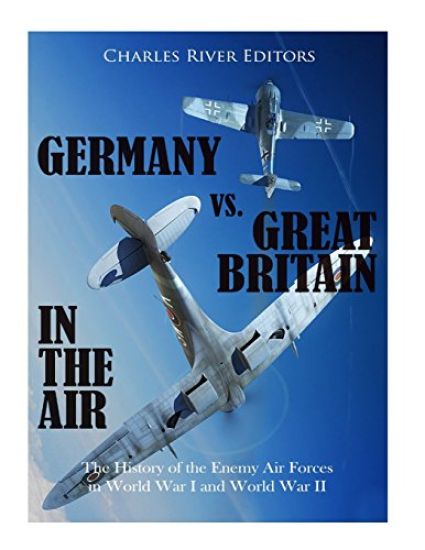
Germany vs. Great Britain in the Air: The History of the Enemy Air Forces in World War I and World War II
*Includes pictures *Includes accounts of fighting *Includes online resources and a bibliography for further reading One of the most important breakthroughs in military technology associated with World War I, and certainly the one that continues to capture the public imagination, was the use of airplanes, which were a virtual novelty a decade before. While the war quickly ground to a halt in its first few months, the skies above the Western Front became increasingly busy. The great powers had already been acquiring aircraft for potential uses, but given that aerial warfare had never been a major component of any conflict, it's understandable that few on either side had any idea what the planes were capable of doing. Furthermore, at the start of the war, all sides' aircraft were ill-equipped for combat mostly because the idea that planes might somehow fight was still a novel one, and the adaptations had not yet been developed that would allow the aerial battles later in the war. The Royal Air Force (RAF), Britain's legendary air arm, was born in the skies above the First World War. The British had previously used balloons for spotting and reconnaissance for decades, and in the years leading up to the war, planes started seeing military use. They mostly provided reconnaissance, though experiments were made in using them offensively. During the Boer War of 1899-1902, the British Army used the crews of helium-filled balloons to plot and help target artillery fire. But these were small, tentative steps. The first patent to fit a machine gun to a plane, taken out in 1910, had not yet led to active fighting vehicles, and there was no doctrine, no tactics, and no combat between massed air fleets. That changed during World War I, as the skies above the Western Front became the crucible in which the preceding fragments of aerial warfare were smelted in the white hot heat of war. For the British, this meant the creation of a large and unified flying force which by 1918 would become the RAF. The Third Reich's Luftwaffe began World War II with significant advantages over other European air forces, playing a critical role in the German war machine's swift, powerful advance. By war's end, however, the Luftwaffe had been decimated by combat losses and crippled by poor decisions at the highest levels of military decision-making, and it proved unable to challenge Allied air superiority despite a last-minute upsurge in German aircraft production. Though the superb fighting qualities of highly trained and motivated German soldiers, and the Third Reich's technological superiority in tank and weapon design, also had crucial roles to play, the Luftwaffe represented the key element making the successes of all other branches possible. While the Luftwaffe enjoyed air superiority, the combat fortunes of the Third Reich continued to ride high. When control of the air passed decisively to the Allies, Germany's hopes of victory began accelerating into a spiral of defeat. Much of it was due to the RAF and the Battle of Britain. The largest air campaign in history at the time, the vaunted Nazi Luftwaffe sought to smash the RAF as a prelude to German invasion, leaving the British public and its pilots engaged in what they believed was a desperate fight for national survival. That's what it looked like to the rest of the world too, as free men everywhere held their breaths. Could these pilots, many not yet old enough to shave, avoid the fate of Poland and France? The fate of the free world, at least as Europe knew it, hung in the balance over the skies of Britain during those tense months. Of course, the RAF was instrumental in other ways during the war. The RAF supported Allied forces all over the world, from Norway to Burma to Tunisia, and the RAF conducted devastating bombing campaigns against German industry and cities.
The Luftwaffe and the Royal Air Force: The History and Legacy of Nazi Germany and Great Britain's Air Forces in World War II
*Includes pictures *Includes accounts of the fighting *Includes online resource and a bibliography for further reading "My Luftwaffe is invincible... And so now we turn to England. How long will this one last - two, three weeks?" - Hermann G ring, June 1940 The Third Reich's Luftwaffe began World War II with significant advantages over other European air forces, playing a critical role in the German war machine's swift, powerful advance. By war's end, however, the Luftwaffe had been decimated by combat losses and crippled by poor decisions at the highest levels of military decision-making, and it proved unable to challenge Allied air superiority despite a last-minute upsurge in German aircraft production. Given its unique strengths and distinctive weaknesses by the personal quirks of the men who developed it, the Luftwaffe initially overwhelmed the more conservative, outdated military aviation of other countries. Its leaders embraced such concepts as the dive-bomber, which proved both utterly devastating and extremely useful for supporting the sweeping, powerful movements of Blitzkrieg, while other martial establishments rejected dive-bombers as impractical or even impossible. Though the superb fighting qualities of highly trained and motivated German soldiers, and the Third Reich's technological superiority in tank and weapon design, also had crucial roles to play, the Luftwaffe represented the key element making the successes of all other branches possible. While the Luftwaffe enjoyed air superiority, the combat fortunes of the Third Reich continued to ride high. When control of the air passed decisively to the Allies, Germany's hopes of victory began accelerating into a spiral of defeat. The Luftwaffe's eventual loss of aerial domination exposed the Germans to precisely the same misfortunes on the ground as they had once relentlessly inflicted on the Poles and Russians. In the Falaise Pocket in Normandy, for example, the splendidly lethal Panthers, Tigers, and Tiger II tanks of the Nazi Panzer Divisions never had the opportunity to destroy the flimsily-armored, outgunned Sherman tanks of their American opponents. Instead, American fighter-bombers systematically annihilated them and their supporting infantry formations from the air, leaving the landscape strewn with flipped-over tank hulks and in places literally carpeted with the flesh of dead men. Some 10,000 Germans died and 50,000 surrendered to the Western Allies at Falaise, due to Hitler's order to counterattack without air support. Of course, the loss of that domination was due in most part to the efforts of Britain's Royal Air Force, which prevented Nazi Germany from conquering Britain on their own. The Battle of Britain, fought throughout the summer and early autumn of 1940, was unquestionably epic in scope. The largest air campaign in history at the time, the vaunted Nazi Luftwaffe sought to smash the RAF as a prelude to German invasion, leaving the British public and its pilots engaged in what they believed was a desperate fight for national survival. The fate of the free world, at least as Europe knew it, hung in the balance over the skies of Britain. Of course, the RAF was instrumental in other ways during the war. The RAF supported Allied forces all over the world, from Norway to Burma to Tunisia, and the RAF conducted devastating bombing campaigns against German industry and cities. In the end, the Allies emerged victorious, even as Britain fell behind other leading nations in air technology. World War II witnessed the birth of the jet age, a future glimpsed briefly in the spectacular but doomed appearance of the Messerschmitt Me 262 near the war's end, and Britain would be the only nation other than Germany with a jet fighter in combat by the time World War II was through. The Luftwaffe and the Royal Air Force: The History and Legacy of Nazi Germany and Great Britain's Air Forces in World War II
The Royal Air Force during the World Wars: The History and Legacy of British Air Power in World War I and World War II
*Includes pictures *Includes accounts of fighting *Includes online resources and a bibliography for further reading One of the most important breakthroughs in military technology associated with World War I, and certainly the one that continues to capture the public imagination, was the use of airplanes, which were a virtual novelty a decade before. While the war quickly ground to a halt in its first few months, the skies above the Western Front became increasingly busy. The great powers had already been acquiring aircraft for potential uses, but given that aerial warfare had never been a major component of any conflict, it's understandable that few on either side had any idea what the planes were capable of doing. Furthermore, at the start of the war, all sides' aircraft were ill-equipped for combat mostly because the idea that planes might somehow fight was still a novel one, and the adaptations had not yet been developed that would allow the aerial battles later in the war. The Royal Air Force (RAF), Britain's legendary air arm, was born in the skies above the First World War. The British had previously used balloons for spotting and reconnaissance for decades, and in the years leading up to the war, planes started seeing military use. They mostly provided reconnaissance, though experiments were made in using them offensively. During the Boer War of 1899-1902, the British Army used the crews of helium-filled balloons to plot and help target artillery fire. But these were small, tentative steps. The first patent to fit a machine gun to a plane, taken out in 1910, had not yet led to active fighting vehicles, and there was no doctrine, no tactics, and no combat between massed air fleets. That changed during World War I, as the skies above the Western Front became the crucible in which the preceding fragments of aerial warfare were smelted in the white hot heat of war. For the British, this meant the creation of a large and unified flying force which by 1918 would become the RAF. A generation later, the RAF would get the lion's share of the credit for preventing Nazi Germany from conquering Britain in World War II. With the comfort of hindsight, historians now suggest that the picture was actually more complex than that, but the Battle of Britain, fought throughout the summer and early autumn of 1940, was unquestionably epic in scope. The largest air campaign in history at the time, the vaunted Nazi Luftwaffe sought to smash the RAF as a prelude to German invasion, leaving the British public and its pilots engaged in what they believed was a desperate fight for national survival. That's what it looked like to the rest of the world too, as free men everywhere held their breaths. Could these pilots, many not yet old enough to shave, avoid the fate of Poland and France? The fate of the free world, at least as Europe knew it, hung in the balance over the skies of Britain during those tense months. Of course, the RAF was also instrumental in other ways during the war. The RAF supported Allied forces all over the world, from Norway to Burma to Tunisia, and the RAF conducted devastating bombing campaigns against German industry and cities. In the end, the Allies emerged victorious, even as Britain fell behind other leading nations in air technology. World War II witnessed the birth of the jet age, a future glimpsed briefly in the spectacular but doomed appearance of the Messerschmitt Me 262 near the war's end, and Britain would be the only nation other than Germany with a jet fighter in combat by the time World War II was through. The Royal Air Force during the World Wars: The History and Legacy of British Air Power in World War I and World War II examines the creation and evolution of the RAF over the course of World War I and World War II. Along with pictures of important people, places, and events, you will learn about the RAF like never before.
The Royal Air Force in World War II: The History and Legacy of British Air Power against the Luftwaffe and Nazi Germany
*Includes pictures *Includes online resources and a bibliography for further reading "The gratitude of every home in our island, in our Empire, and indeed throughout the world except in the abodes of the guilty goes out to the British airmen who, undaunted by odds, unweakened by their constant challenge and mortal danger, are turning the tide of world war by their prowess and their devotion. Never in the field of human conflict was so much owed by so many to so few." - Winston Churchill, August 21, 1940. At the end of August 2012, BBC ran a report about the commemoration of a young man who had been killed over 70 years earlier. "A Battle of Britain pilot who was killed when his Spitfire crashed following a dogfight in the skies above Kent has been honored. Flying Officer Oswald St John 'Ossie' Pigg lost his life in the crash at Elvey Farm on 1 September 1940. The 22-year-old had been involved in an aerial fight with a Messerschmitt. A plaque was unveiled near the site by his niece Stephanie Haigh and the Battle of Britain Memorial Flight carried out a flypast on Thursday." Just 12 days before Pigg's death, British Prime Minister Winston Churchill had already immortalized the men of the Royal Air Force with one of the West's most famous war-time quotes. But the sentiment and gratitude Churchill expressed back in 1940 is very much alive today. The sacrifice made by "The Few", the British and Allied fighter pilots who won the Battle of Britain in 1940, remains close to the hearts of the British public, and the piece by the BBC is typical of the national sentiment manifested in air shows, museums, TV programs and books. Even as the last of "The Few" pass on, it seems unlikely that the legend they helped to create will be forgotten anytime soon. There are a number of reasons for that, chief among them the belief that it was this handful of men, many of them barely out of school, who prevented Nazi Germany from conquering Britain on their own. With the comfort of hindsight, historians now suggest that the picture was actually more complex than that, but the Battle of Britain, fought throughout the summer and early autumn of 1940, was unquestionably epic in scope. The largest air campaign in history at the time, the vaunted Nazi Luftwaffe sought to smash the RAF as a prelude to German invasion, leaving the British public and its pilots engaged in what they believed was a desperate fight for national survival. That's what it looked like to the rest of the world too, as free men everywhere held their breaths. Could these pilots, many not yet old enough to shave, avoid the fate of Poland and France? The fate of the free world, at least as Europe knew it, hung in the balance over the skies of Britain during those tense months. Thankfully, the RAF stood toe-to-toe with the Luftwaffe and ensured Hitler's planned invasion was permanently put on hold. The Allied victory in the Battle of Britain inflicted a psychological and physical defeat on the Luftwaffe and Nazi regime at large, and as the last standing bastion of democracy in Europe, Britain would provide the toehold for the June 1944 invasion of Europe that liberated the continent. For those reasons alone, the Battle of Britain was one of the decisive turning points of history's deadliest conflict. Of course, the RAF was instrumental in other ways during the war. The RAF supported Allied forces all over the world, from Norway to Burma to Tunisia, and the RAF conducted devastating bombing campaigns against German industry and cities. In the end, the Allies emerged victorious, even as Britain fell behind other leading nations in air technology. World War II witnessed the birth of the jet age, a future glimpsed briefly in the spectacular but doomed appearance of the Messerschmitt Me 262 near the war's end, and Britain would be the only nation other than Germany with a jet fighter in combat by the time World War II was through.
Operation Entebbe: The History and Legacy of Israel's Most Famous Rescue Operation

Operation Entebbe: The History and Legacy of Israel's Most Famous Rescue Operation

Charles River

Createspace Independent Publishing Platform
2018
nidottu
*Includes pictures *Includes online resources and a bibliography for further reading "From the blood-drenched history of the Jewish nation, we learn that violence which begins with the murder of Jews ends with the spread of violence and danger to all people, in all nations. We have no choice but to strike at terrorist organizations wherever we can reach them. That is our obligation to ourselves and to peace." - Golda Meir "July 4, 1976, was a great day to be an American, and a great day to be Jewish, and was, I am assured, an absolutely sensational day to be American and Jewish." - George Will During the Six Day War in 1967, Israeli forces struck suddenly into Sinai in response to Egyptian violation of an earlier treaty agreement allowing Israeli ships passage through the important Straits of Tiran. In a lightning campaign, the well-trained and well-led Israeli forces, equipped with American and French vehicles and aircraft, shattered the low quality Egyptian army forces decisively. When Jordan and Syria attacked Israel in support of Egypt, the Israelis smashed their forces also. Israel acquired most of the Sinai, as well as occupying the West Bank, the Gaza Strip, and the Golan Heights. Since the Six Day War had established Israel's military supremacy, Palestinian opposition developed a new strategy, and a greater emphasis began to be placed on covert, guerrilla actions against Israel and the development of organizations to carry out such attacks. On May 8, 1972, a new style of warfare came to the fore when 4 members of the Black September Organization, an amorphous branch of the Fatah movement, hijacked Belgian Sabena Flight 571 en route from Brussels to Tel Aviv. To buy time, the Israeli security establishment agreed to allow Flight 571 to land at Lod International Airport, southeast of Tel Aviv, where it was immediately escorted to the far end of the tarmac. Defense Minister Moshe Dayan was joined at the airport by Transport Minister Shimon Peres, IDF Chief of Staff Lieutenant General David Elazar, and several other senior IDF officers and government officials. The head of the interrogation branch of the Shin Bet, Israel's internal security service, engaged the four terrorists - two men and two women - in spurious negotiations while it was decided what would be done. The demands made by the hijackers were quite simple: the release of 315 Palestinians convicted of terror offenses who were currently being held in Israeli prisons. Although negotiations were initiated, the Israelis had no intention whatsoever of acceding to any demands. The process was obfuscated and deliberately strung out simply to deprive the four hijackers of sleep, and to allow time for a rescue operation to be mounted. Hijackings and similar attacks only increased in number and violence in the following years. In response, the Israelis instituted a policy of an "eye for an eye," destroying Arab aircraft whenever the Palestinians or others damaged or destroyed one of their own. They also established a custom of refusing to negotiate with hostage-takers and terrorists, while greatly increasing security measures surrounding their national airline, El Al. Nonetheless, the violence only increased after the Israelis won the Yom Kippur War of 1973 in spite of early Arab successes. In the process of countering these attacks and hijackings, the Israelis developed valuable skills in commando operations and hostage rescue. This experience stood them in good stead in the summer of 1976, when a large-scale hijacking led to a daring Israeli operation thousands of miles from the Levant at the Ugandan airport of Entebbe, then part of the domain of dictator Idi "Big Daddy" Amin. Operation Entebbe: The History and Legacy of Israel's Most Famous Rescue Operation looks at one of the most dramatic commando operations of all time. Along with pictures and a bibliography, you will learn about Entebbe like never before.
Operation Entebbe: The History and Legacy of Israel's Most Famous Rescue Operation

Operation Entebbe: The History and Legacy of Israel's Most Famous Rescue Operation

Charles River

Createspace Independent Publishing Platform
2018
nidottu
*Includes pictures *Includes online resources and a bibliography for further reading "From the blood-drenched history of the Jewish nation, we learn that violence which begins with the murder of Jews ends with the spread of violence and danger to all people, in all nations. We have no choice but to strike at terrorist organizations wherever we can reach them. That is our obligation to ourselves and to peace." - Golda Meir "July 4, 1976, was a great day to be an American, and a great day to be Jewish, and was, I am assured, an absolutely sensational day to be American and Jewish." - George Will During the Six Day War in 1967, Israeli forces struck suddenly into Sinai in response to Egyptian violation of an earlier treaty agreement allowing Israeli ships passage through the important Straits of Tiran. In a lightning campaign, the well-trained and well-led Israeli forces, equipped with American and French vehicles and aircraft, shattered the low quality Egyptian army forces decisively. When Jordan and Syria attacked Israel in support of Egypt, the Israelis smashed their forces also. Israel acquired most of the Sinai, as well as occupying the West Bank, the Gaza Strip, and the Golan Heights. Since the Six Day War had established Israel's military supremacy, Palestinian opposition developed a new strategy, and a greater emphasis began to be placed on covert, guerrilla actions against Israel and the development of organizations to carry out such attacks. On May 8, 1972, a new style of warfare came to the fore when 4 members of the Black September Organization, an amorphous branch of the Fatah movement, hijacked Belgian Sabena Flight 571 en route from Brussels to Tel Aviv. To buy time, the Israeli security establishment agreed to allow Flight 571 to land at Lod International Airport, southeast of Tel Aviv, where it was immediately escorted to the far end of the tarmac. Defense Minister Moshe Dayan was joined at the airport by Transport Minister Shimon Peres, IDF Chief of Staff Lieutenant General David Elazar, and several other senior IDF officers and government officials. The head of the interrogation branch of the Shin Bet, Israel's internal security service, engaged the four terrorists - two men and two women - in spurious negotiations while it was decided what would be done. The demands made by the hijackers were quite simple: the release of 315 Palestinians convicted of terror offenses who were currently being held in Israeli prisons. Although negotiations were initiated, the Israelis had no intention whatsoever of acceding to any demands. The process was obfuscated and deliberately strung out simply to deprive the four hijackers of sleep, and to allow time for a rescue operation to be mounted. Hijackings and similar attacks only increased in number and violence in the following years. In response, the Israelis instituted a policy of an "eye for an eye," destroying Arab aircraft whenever the Palestinians or others damaged or destroyed one of their own. They also established a custom of refusing to negotiate with hostage-takers and terrorists, while greatly increasing security measures surrounding their national airline, El Al. Nonetheless, the violence only increased after the Israelis won the Yom Kippur War of 1973 in spite of early Arab successes. In the process of countering these attacks and hijackings, the Israelis developed valuable skills in commando operations and hostage rescue. This experience stood them in good stead in the summer of 1976, when a large-scale hijacking led to a daring Israeli operation thousands of miles from the Levant at the Ugandan airport of Entebbe, then part of the domain of dictator Idi "Big Daddy" Amin. Operation Entebbe: The History and Legacy of Israel's Most Famous Rescue Operation looks at one of the most dramatic commando operations of all time. Along with pictures and a bibliography, you will learn about Entebbe like never before.
American Legends: The Life of Natalie Wood

American Legends: The Life of Natalie Wood

Charles River

Createspace Independent Publishing Platform
2018
nidottu
*Includes pictures. *Includes Wood's quotes about her own life and career. *Includes a bibliography for further reading. "Stardom is only a byproduct of acting. I don't think being a movie star is a good enough reason for existing." - Natalie Wood A lot of ink has been spilled covering the lives of history's most influential figures, but how much of the forest is lost for the trees? In Charles River Editors' American Legends series, readers can get caught up to speed on the lives of America's most important men and women in the time it takes to finish a commute, while learning interesting facts long forgotten or never known. Few actresses have ever gotten off to the kind of career start that Natalie Wood did during the 1950s. After appearing in film and on TV as a child, Wood broke out by appearing in the classic Rebel Without a Cause alongside James Dean in 1955, despite the fact she was still just 15 years old. She earned an Oscar nomination for Best Supporting Actress in that role, one of three Academy Award nominations she would rack up before the age of 25. That included starring in Splendor in the Grass (1961), West Side Story (1961), and Gypsy (1962), and altogether, she was in over 50 films, . Given that she was a successful actress for several decades, it's no surprise that Wood generated a lot of press during her career, and her personal life was tabloid fodder in particular. When she married star actor Robert Wagner, they had one of Hollywood's most famous and most successful marriages. But Wood was also notorious for relying on psychoanalysts, to the extent that she would become heavily reliant on constantly having access to one. People were also caught by surprise when Wood retired after the birth of her daughter in 1970, and unfortunately, that has contributed to the fact that she is best remembered today for her mysterious drowning in 1981. Wood was on a boat with Robert Wagner and Christopher Walken when she fell overboard on the night of November 28, and her drowning was ruled accidental, with the coroner noting that she was inebriated and under the effects of pain medication. However, that ruling has been controversial ever since because of the fact that when her body was found, Wood had bruises on her arms and a cut on her cheek, and nobody else on the boat could account for the timing of her disappearance. While the odd circumstances have led some to suspect foul play, investigations have continued over the years and haven't been able to shed much new light on her death. American Legends: The Life of Natalie Wood examines the life and career of one of America's favorite child stars. Along with pictures of important people, places, and events, you will learn about Natalie Wood like never before, in no time at all.