Kirjojen hintavertailu – 12 903 727 kirjaa ja 27 kauppaa

Kirjailija

Charles River

Kirjat ja teokset yhdessä paikassa: 4 673 kirjaa, julkaisuja vuosilta 2013–2022, suosituimpiin kuuluu William Powell and Myrna Loy: The Lives and Careers of One of Classical Hollywood's Most Iconic Duos. Vertaile teosten hintoja ja tarkista saatavuus suomalaisista kirjakaupoista.

4 673 kirjaa

Kirjojen julkaisuvuodet: 2013–2022.

American Legends: The Life of Laura Ingalls Wilder

American Legends: The Life of Laura Ingalls Wilder

Charles River

Createspace Independent Publishing Platform
2018
nidottu
*Discusses the historical debate over whether Laura or her daughter Rose wrote the Little House books. *Includes pictures of Laura and important people and places in her life. *Includes Laura's quotes and excerpts from her books and journal articles. *Includes a Bibliography for further reading. "Every job is good if you do your best and work hard. A man who works hard stinks only to the ones that have nothing to do but smell." - Laura Ingalls Wilder A lot of ink has been spilled covering the lives of history's most influential figures, but how much of the forest is lost for the trees? In Charles River Editors' American Legends series, readers can get caught up to speed on the lives of America's most important men and women in the time it takes to finish a commute, while learning interesting facts long forgotten or never known. "A long time ago, when all the grandfathers and grandmothers of today were little boys and little girls or very small babies, or perhaps not even born, Pa and Ma and Mary and Laura and Baby Carrie left their little house in the Big Woods of Wisconsin." So begins the first of a series of primarily autobiographical books for children that would give 20th century America a look at what it was like when the country was still young and the West was a largely empty, untamed wilderness. They were written by a woman who had experienced a hardscrabble frontier life, Laura Ingalls Wilder, and they were first published in the 1930s, when the United States desperately needed a reminder that "tough times don't last but tough people do." In addition to giving Americans a nostalgic glimpse of the past, the books were a reminder of the nation's unique spirit and belief that hard work can overcome any obstacle. The semi-autobiographical Little House books were so popular in their time that Laura eventually became a well-known author around the world, even as an ensuing debate grew among scholars and historians over what role Laura's daughter Rose Wilder Lane played in the drafting of the books. Regardless of that controversy, the books were so beloved by children and their parents that they spawned spin-off television series both in the United States and Japan, as well as film adaptations. American Legends: The Life of Laura Ingalls Wilder chronicles the amazing life of the celebrated author and examines her books and legacy. Along with pictures of important people and places, you will learn about Laura Ingalls Wilder like you never have before, in no time at all.

American Legends: The Life of Lauren Bacall

American Legends: The Life of Lauren Bacall

Charles River

Createspace Independent Publishing Platform
2018
nidottu
*Includes pictures. *Includes Bacall's own quotes about her life and career. *Includes a bibliography for further reading. "Imagination is the highest kite that can fly." - Lauren Bacall A lot of ink has been spilled covering the lives of history's most influential figures, but how much of the forest is lost for the trees? In Charles River Editors' American Legends series, readers can get caught up to speed on the lives of America's most important men and women in the time it takes to finish a commute, while learning interesting facts long forgotten or never known. It is exceedingly difficult to think about Lauren Bacall without also thinking of her famous husband, Humphrey Bogart. After all, it is no accident that Bacall was entirely unknown before starring at just 20 years old with her future husband in Howard Hawks' famous film To Have and Have Not in 1944. And of course, Bogart's infatuation with the young actress helped ensure she would continue to be cast in movies with him moving forward. "Bogie and Bacall" are just one of a number of legendary romantic screen duos in film history, and there have been other famous screen couples who made headlines off the set as well, but few compare in terms of success. In the wake of their first film together, Bacall and Bogart captivated audiences in other films during the decade, including The Big Sleep (1946), Dark Victory (1947), and finally, Key Largo (1948). Even though they did not appear in a large number of films together, the popularity and cultural significance of these films solidified the status of "Bogie and Bacall" as one of the premier romantic couples in film history. When Bogart died in 1957, Bacall was still in her 30s, yet from 1957 onward her name scarcely surfaces in popular culture, as though Bacall was simply wiped away with her late husband. In fact, it often comes as a great surprise to people that Bacall is still alive and well as she nears her 90th birthday. For her part, Bacall has remained at least partially in the public eye through her own meticulous documentation of her life, captured through two detailed memoirs (the first published in the late 1970s, the second published in 2005.) It is true that Bacall never reached anything close to the heights of the fame she enjoyed with Bogart, but she appeared in many movies in the years after his death and was even involved in a second high-profile marriage with actor Jason Robards from 1961-1969. She has remained active well into old age and never officially retired; in fact, she held a starring role in the 2012 film The Forger. American Legends: The Life of Lauren Bacall examines each period of Bacall's life, addressing her life before, during, and after her relationship with Humphrey Bogart. In particular, Bacall's career is a case study in how to age gracefully on film and television. Her life and career illuminate many pertinent areas of cinema and American culture, and the role of women in film and society. Along with pictures of important people, places, and events, you will learn about Lauren Bacall like never before, in no time at all.
American Legends: The Life of Little Richard

American Legends: The Life of Little Richard

Charles River

Createspace Independent Publishing Platform
2018
nidottu
*Includes pictures *Includes Little Richard's quotes *Includes footnotes and a bibliography for further reading *Includes a table of contents "The grass may be greener on the other side, but it's still difficult to cut" - Little Richard A lot of ink has been spilled covering the lives of history's most influential figures, but how much of the forest is lost for the trees? In Charles River Editors' American Legends series, readers can get caught up to speed on the lives of America's most important men and women in the time it takes to finish a commute, while learning interesting facts long forgotten or never known. As the present generation of rock music devotees looks back to the early days of the genre, each fan base heralds one artist or another as the founder of the movement that swept the country in the 1940s and '50s. Titles such as "King of Rock" and "Father of Rock" are spread freely among a small group of pioneers that are revered today as the greats of early rock. Buddy Holly is noted for his combination of a traditional look with a driving beat and a refreshing, simplistic American style of romantic lyrics, Elvis Presley stands alone in terms of exerting a charismatic, seductive hold over his audience, and Chuck Berry is known for his guitar innovations and appeal to teen romance and the American automobile. Within this generation came Richard Wayne Penniman, a young blues singer from Macon, Georgia affectionately known to the public as "Little Richard." Whereas Holly, Presley, and Berry were daring innovators, Penniman based his appeal on an outrageous stage personality, a catalog of special vocal effects, a barbaric set of piano techniques, and a raft of nonsensical texts bordering on gibberish, many of which had to be significantly cleaned up for public consumption. Added to the gifts brought by rock music's other pioneers, Penniman represented the beginnings of soul and funk as blended into the new hybrid form, bringing with it a ferocious level of vocal and instrumental excitement. At the heart of the public's coronation of Elvis Presley as the "King of Rock" is a somewhat hidden suggestion that black American music made it all possible, despite few of the black artists receiving sufficient credit for the form's inception. Despite this unfortunate view, Little Richard was to be known by a myriad of nicknames, from "The Real King of Rock and Roll," "The Queen of Rock and Roll," "The Emancipator," "The Bronze Liberace," and "The Georgia Peach." The overriding phenomenon, in that era, was that black forms combined with traditional country had formed a new paradigm in this country's listening and dancing habits and that no one understood how to do it any better than Presley. Black entertainers were not, as one might suppose, resentful of Presley's success. He tended to be generous with his fellow artists, black or white, and Little Richard, in fact, referred to the Tupelo phenom's career as a "blessing" because the powers of the industry would not have allowed black music to break through without him. What he views as rock itself is an amalgam of Rhythm & Blues with variations of Boogie-Woogie - "Rhythm and Blues had a baby, and someone named it rock and roll," adding that "Boogie Woogie and Rhythm and Blues is rock and roll." As titles are concerned, Little Richard has always trumpeted his part in the formation of rock, having appointed himself the "Architect of Rock 'n' Roll," the moniker of "king" being already taken. In a view that sees Buddy Holly as an early experimenter, Little Richard declares that he, along with Presley, Berry, and Jerry Lee Lewis, "established rock as a real form." American Legends: The Life of Little Richard looks at the life and career of one of America's most influential musicians. Along with pictures of important people, places, and events, you will learn about Little Richard like never before, in no time at all.
American Legends: The Life of Lyndon B. Johnson

American Legends: The Life of Lyndon B. Johnson

Charles River

Createspace Independent Publishing Platform
2018
nidottu
*Includes a list of LBJ's most colorful quotes, his inaugural address, and his statement announcing he would not seek reelection in 1968. *Includes pictures of Johnson and important people, places, and events in his life. *Discusses LBJ's personality and relationships with his most important contemporaries, including John and Bobby Kennedy. "The presidency has made every man who occupied it, no matter how small, bigger than he was; and no matter how big, not big enough for its demands." - Lyndon B. Johnson A lot of ink has been spilled covering the lives of history's most influential figures, but how much of the forest is lost for the trees? In Charles River Editors' American Legends series, readers can get caught up to speed on the lives of America's most important men and women in the time it takes to finish a commute, while learning interesting facts long forgotten or never known. Of all the politicians who have left their mark on American history, few have had a political career or list of accomplishments and accolades that can even come close to rivaling Lyndon B. Johnson. Johnson is one of only 4 Americans to serve as a House Rep, U. S. Senator, Vice President and President, and he made the most out of each experience. The hard-nosed Texas Democrat became one of the legendary strongmen in the Senate, mastering that political body from 1949-1961 and spending six years as Senate Majority Leader, two as Senate Minority Leader, and two as Senate Majority Whip. A fateful chain of events propelled then propelled Johnson from Capitol Hill to the White House. After Johnson's failed run for the Democratic nomination in 1960, winner John F. Kennedy chose Johnson as his running mate over his brother Bobby's objections. Kennedy figured Johnson's Texas roots would help balance Kennedy's decidedly Northeastern appeal, as well as adding a sense of age, experience and gravitas to the younger Kennedy's campaign. While this was all true and did indeed help Kennedy win the election in 1960, his assassination ultimately brought Johnson to the presidency. Kennedy has been nostalgically and fondly remembered for his youth, vigor and sense of unfinished potential, but it would be President Johnson who would bring much of the agenda to fruition. To the surprise of many, the Southern Democrat relied on his wealth of Senate experience and dogged determination to help push through an ambitious and progressive social agenda that formed the backbone of modern American society. Known as the Great Society, President Johnson's legislation included the landmark Civil Rights Act of 1964, as well as the establishment of Medicare, Medicaid, environmental protection, and the "War on Poverty." Everything from the National Endowment for the Arts to the Environmental Protection Agency has its roots in Johnson's presidency. Had Johnson's presidency included just his domestic agenda, he would have unquestionably been one of America's greatest presidents. Unfortunately, as he was engineering a new social contract at home, he was ramping up American military participation in a tiny country thousands of miles away in Southeast Asia. For a man who accomplished so much at home, it's ironic and tragic that his presidency and legacy were permanently marred by his escalation in the costly and contentious Vietnam War, a military quagmire and public relations disaster that compelled Johnson not to run for reelection in 1968. American Legends: The Life of Lyndon B. Johnson chronicles the amazing life of the president, examines his unprecedented legislative accomplishments, and analyzes the controversial Vietnam War and Johnson's mixed legacy. Along with pictures of important people, places, and events, you will learn about LBJ like you never have before, in no time at all.

American Legends: The Life of Kitty Carlisle

American Legends: The Life of Kitty Carlisle

Charles River

Createspace Independent Publishing Platform
2018
nidottu
*Includes pictures *Includes Kitty's own quotes about her life and career *Includes a bibliography for further reading "So in those days, they were scooping up any young person who could sing and look decent at the same time." - Kitty Carlisle A lot of ink has been spilled covering the lives of history's most influential figures, but how much of the forest is lost for the trees? In Charles River Editors' American Legends series, readers can get caught up to speed on the lives of America's most important men and women in the time it takes to finish a commute, while learning interesting facts long forgotten or never known. Kitty Carlisle surely stands as one of the most recognizable figures of the 20th century, but unlike major actors, actresses, and other artistic luminaries, however, Carlisle was not decorated so much for any specific performances. Instead, she came to embody the very face of art in the United States. To be sure, Carlisle maintained a successful singing and acting career, appearing in movies, television programs, quiz shows, and concerts (she continued to perform until the year before her death), but more than anything, Carlisle was a public intellectual, socialite, and supporter of the arts. Her reputation would further crystallize in 1976 after she was approached by Nelson Rockefeller to serve as the chair for the New York Council for the Arts. In other words, more than promoting her own career, Carlisle was invested in making sure that the arts were well-supported in American culture. With a career that spanned from her 20s well into her 90s, Kitty Carlisle remained in the public sphere for over 70 years, but there is still much about her life that people are not aware of, especially when it comes to her youth, family background, and education. Carlisle occupied a rather secure position in within the American entertainment elite, but she experienced a great deal of risk and turmoil early in her life, events that included but were not limited to the untimely death of her father and a dramatic relocation from the United States to Europe. The narrative of her adult life was similarly remarkable, as Carlisle eschewed marriage until an advanced age (for her era) and defied the natural constraints that age poses on most careers. At the same time, it was somewhat fitting that Carlisle did things differently, especially in transitioning from cinema to opera to television quiz shows to a prominent position in the fine arts scene. Furthermore, Kitty's marriage to playwright Moss Hart is also important, not only because it was the only time she was married but also because they constituted one of the most iconic couples in American entertainment circles during the time period. Indeed, by looking at Carlisle's life and career, it's possible to get a pretty good glimpse of what American entertainment was like across various media throughout most of the 20th century. American Legends: The Life of Kitty Carlisle looks at the life and career of one of America's most famous stars. Along with pictures of important people, places, and events, you will learn about Kitty Carlisle like never before, in no time at all.
American Legends: The Life of Kirk Douglas

American Legends: The Life of Kirk Douglas

Charles River

Createspace Independent Publishing Platform
2018
nidottu
*Includes pictures. *Includes Douglas' quotes about his own life and career. *Includes a bibliography for further reading. "When you become a star, you don't change - everyone else does." - Kirk Douglas A lot of ink has been spilled covering the lives of history's most influential figures, but how much of the forest is lost for the trees? In Charles River Editors' American Legends series, readers can get caught up to speed on the lives of America's most important men and women in the time it takes to finish a commute, while learning interesting facts long forgotten or never known. In 1996, Kirk Douglas was given an Honorary Academy Award "for 50 years as a creative and moral force in the motion picture community", and a few years later, the American Film Institute ranked him the 17th greatest actor of the 20th century. About 15 years after the AFI compiled that list, Kirk Douglas is the only screen legend on the list who is still alive, the patriarch of an acting family that includes popular actor Michael Douglas as well. Of course, Douglas didn't earn such honorary achievements merely because of the longevity that has seen him appear in movies over the course of 7 different decades. From the 1950s up until the end of the 1980s, Douglas starred in several classic movies, including perhaps his most iconic role as history's most famous gladiator in Spartacus (1960). He also appeared in critically acclaimed movies like Out of the Past (1947), Champion (1949), Ace in the Hole (1951), The Bad and the Beautiful (1952), 20,000 Leagues Under the Sea (1954), Lust for Life (1956), Paths of Glory (1957), Gunfight at the O. K. Corral (1957), The Vikings (1958), Lonely Are the Brave (1962), Seven Days in May (1964), The Heroes of Telemark (1965), Saturn 3 (1980) and Tough Guys (1986). And in addition to playing strong lead characters, Douglas was also outspoken and not afraid to share his views when he thought something was wrong in the industry, including the notorious blacklisting done as a result of the Red Scare in the 1950s. American Legends: The Life of Kirk Douglas profiles the life and career of one of America's greatest actors. Along with pictures of important people, places, and events, you will learn about Douglas like never before, in no time at all.
American Legends: The Life of Judy Garland

American Legends: The Life of Judy Garland

Charles River

Createspace Independent Publishing Platform
2018
nidottu
*Includes pictures of Garland and important people, places, and scenes. *Includes Garland's own quotes about her upbringing, films and relationships. *Includes a Bibliography for further reading. "I was born at the age of twelve on a Metro-Goldwyn-Mayer lot." - Judy Garland A lot of ink has been spilled covering the lives of history's most influential figures, but how much of the forest is lost for the trees? In Charles River Editors' American Legends series, readers can get caught up to speed on the lives of America's most important men and women in the time it takes to finish a commute, while learning interesting facts long forgotten or never known. In many ways, Judy Garland's rise to fame seems almost predestined. Not only was she a national sensation at a young age, but her parents and sisters were all vaudeville entertainers. On top of that, Garland's parents owned and operated a movie theater, making it all the easier to draw the conclusion that singing and acting were simply professions which she was born into by virtue of her pedigree. Judy's early childhood quickly demonstrated that she had a gifted voice that developed well beyond its years and seemingly did not require any formal training in order to achieve success; her first performance before a public audience came when she was still a toddler, and she would continue to act up until her death, never pausing for more than a few months at a time. That Garland was able to secure starring roles almost immediately after signing a contract with MGM in 1935 only corroborates the belief that Garland was practically born with the ability to succeed in show business and the motion picture industry. Of course, Garland might be known today based more on her demise than anything else, and there's no denying that one of the most fascinating (and tragic) aspects of her life story is the manner in which her downward spiral occurred with the same rapid progression as her meteoric ascent. Garland died in 1969 at the age of 47, but she had lost control over her life years earlier and was actually fortunate to live as long as she did. As early as 1950, when she was still yet to turn 30 years old and remained a box office attraction, Garland's contract was terminated by MGM and she would never again find consistent employment as a movie star. At an age in which most actresses were in the prime of their careers, Garland's career was nearly finished. The contrast between Garland's innocent, universally adored performances in films such as The Wizard of Oz (1939) and The Pirate (1948) could not be more dissimilar to the image of the wasted, drug-addled Garland who passed away as a result of a drug overdose before the age of 50. The question therefore remains: how did Garland go from a position of immense wealth and acclaim to the poverty-ridden individual who was too mentally unstable to act in movies and ultimately died prematurely? American Legends: The Life of Judy Garland profiles the life and career of one of America's most famous actresses. Along with pictures of important people, places, and events, you will learn about Judy Garland like you never have before, in no time at all.

American Legends: The Life of Joseph Smith

American Legends: The Life of Joseph Smith

Charles River

Createspace Independent Publishing Platform
2018
nidottu
*Explains Joseph Smith's life and the founding of the Mormon Church. *Includes pictures of Smith and important people, places, and events in his life. *Includes a Bibliography for further reading. "Our missionaries are going forth to different nations, and in Germany, Palestine, New Holland, the East Indies, and other places, the standard of truth has been erected: no unhallowed hand can stop the work from progressing, persecutions may rage, mobs may combine, armies may assemble, calumny may defame, but the truth of God will go forth boldly, nobly, and independent till it has penetrated every continent, visited every clime, swept every country, and sounded in every ear, till the purposes of God shall be accomplished and the great Jehovah shall say the work is done." - Joseph Smith A lot of ink has been spilled covering the lives of history's most influential figures, but how much of the forest is lost for the trees? In Charles River Editors' American Legends series, readers can get caught up to speed on the lives of America's most important men and women in the time it takes to finish a commute, while learning interesting facts long forgotten or never known. Among all the various figures in 19th century America who left controversial legacies, it is hard to find one as influential as Joseph Smith (1805-1844), the founder of the The Church of Jesus Christ of Latter Day Saints, Mormonism, and the Latter Day Saint movement. Revered as a prophet on the level of Moses by some, reviled as a perpetrator of large-scale fraud by others, what everyone can agree on is that Joseph Smith founded a religious movement that played a crucial role in the settlement of the West, especially in Utah. Locating Joseph Smith in history is to look for the "mess" of early America and find him standing in the middle, trying to make sense of the "native pandemonium" that gripped the nation in its formative years. All the things that Mormon recoil at, the mention of his treasure seeking days of youth, the use of the seer stones and looking into the hat to read "reformed Egyptian" help explain the youthful creativeness of a young United States trying to organize itself. There is a humor in his story, and especially those first years of creating the church that speak directly anyone who has felt the exhilaration of creativity. Inspired by the Second Great Awakening evidence of Native American cultures that surrounded him during his early years in western New York, Smith claimed that he had visions as a young adult that helped him produce the Book of Mormon, and he was able to create a society of like-minded followers who intended to strike west and found Zion. Smith's dream of Zion would lead the way for the trials and the tribulations of the Mormons for the rest of the 19th century, including countless conflicts with local authorities and the U. S. government. Smith himself would be a casualty of the clashing, murdered by a mob in 1844 after being imprisoned in Carthage, Illinois near the settlement of Nauvoo, which Smith had painstakingly tried to create as a commune for his people. American Legends: The Life of Joseph Smith profiles the life of Joseph Smith, the founding of his religion, and the aftermath of his death. Along with pictures of important people, places, and events, you will learn about Joseph Smith like you never have before, in no time at all.

American Legends: The Life of Johnny Depp

American Legends: The Life of Johnny Depp

Charles River

Createspace Independent Publishing Platform
2018
nidottu
*Includes pictures. *Includes Depp's own quotes about his life and career. *Includes a bibliography for further reading. "I like the challenge of trying different things and wondering whether it's going to work or whether I'm going to fall flat on my face." - Johnny Depp A lot of ink has been spilled covering the lives of history's most influential figures, but how much of the forest is lost for the trees? In Charles River Editors' American Legends series, readers can get caught up to speed on the lives of America's most important men and women in the time it takes to finish a commute, while learning interesting facts long forgotten or never known. Throughout the history of Hollywood, perhaps no actor has a reputation as unique as Johnny Depp. Depp began his career in a very traditional manner by being a teen heartthrob on shows like 21 Jump Street, but as he once admitted, "As a teenager I was so insecure. I was the type of guy that never fitted in because he never dared to choose. I was convinced I had absolutely no talent at all. For nothing. And that thought took away all my ambition too." However, that ambition clearly resurfaced over the last 25 years, because Depp has since taken on some of the most unique and eccentric roles in the industry, explaining, "I like the challenge of trying different things and wondering whether it's going to work or whether I'm going to fall flat on my face." In addition to being renowned for portrayals of people like John Dillinger and Hunter S. Thompson, Depp has played some of the most memorable fictional characters of the last 30 years, including Edward Scissorhands, Captain Jack Sparrow, and Willy Wonka, making his larger-than-life roles pop culture fixtures and helping the movies bank billions of dollars. Of course, his success hasn't been limited to the box office, as he has also won countless awards and been nominated 3 times for the Oscar for Best Actor. It's no wonder Depp was recently named the highest paid actor in the world. Although Depp has played some of Hollywood's most famous characters, he has also cultivated one of the town's most alluring and mysterious reputations. Depp has matured from being a teen idol to People's Sexiest Man of the Year on multiple occasions, but even as he has gained millions of fans across the globe, he has maintained enough distance from the spotlight to leave people wondering what he's truly like, and some of the glimpses suggest he can be just as eccentric as his characters. Perhaps not surprisingly, he has approached it with some of his trademark humor, quipping, "I pretty much try to stay in a constant state of confusion just because of the expression it leaves on my face." American Legends: The Life of Johnny Depp examines the life and career of one of America's most famous living actors. Along with pictures of important people, places, and events, you will learn about Johnny Depp like never before, in no time at all.
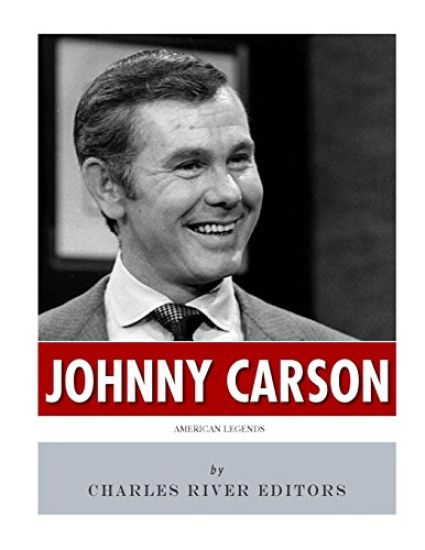
American Legends: The Life of Johnny Carson

American Legends: The Life of Johnny Carson

Charles River

Createspace Independent Publishing Platform
2018
nidottu
*Includes pictures. *Includes Carson's quotes about his life and career. *Includes a bibliography for further reading. "I know a man who gave up smoking, drinking, sex, and rich food. He was healthy right up to the day he killed himself." - Johnny Carson A lot of ink has been spilled covering the lives of history's most influential figures, but how much of the forest is lost for the trees? In Charles River Editors' American Legends series, readers can get caught up to speed on the lives of America's most important men and women in the time it takes to finish a commute, while learning interesting facts long forgotten or never known. Among America's comedians, few if any have had the kind of influence on pop culture and society like Johnny Carson, the iconic host of The Tonight Show from 1962-1992. In addition to winning too many awards to count, Carson is proof that imitation is the sincerest form of flattery, as admitted by subsequent comedy show hosts like Jay Leno and David Letterman, who not only vied to replace Carson but also used his format for their own shows (and still continue to do so). Carson may have pioneered the format of The Tonight Show, but he had already been involved in comedy for decades before then, starting with performances as "The Great Carsoni" when he was still a teen. The magic shows and comedy continued into college, where he had a running gag about interviewing pigeons on rooftops and asking them about a local political controversy. Carson's work was hailed by comedians like Red Skelton, who invited him to become a writer for him, and Jack Benny, who invited him onto the show, all before he had turned 30. For several years during the 1950s, Carson rotated around various daytime shows as host, meeting important friends like Ed McMahon along the way, but he made it big when he replaced Jack Paar as host of The Tonight Show in 1962. For the next 30 years, his mix of monologues, skits, and interviews would make his show must-see television on weekday nights, turning him into the highest paid television personality of the 1970s, and giving him the creative freedom to bring others along with him. In addition to bringing along his sidekick McMahon, Carson let guests host the show occasionally as well, thereby giving the spotlight to comedians like George Carlin, Letterman, Leno, and Joan Rivers. On the 25th anniversary of his debut on The Tonight Show, Carson earned a Peabody Award that labeled him "an American institution, a household word, the most widely quoted American." American Legends: The Life of Johnny Carson examines the life and work of one of America's most important entertainment icons. Along with pictures of important people, places, and events, you will learn about The Tonight Show's most famous host like never before, in no time at all.
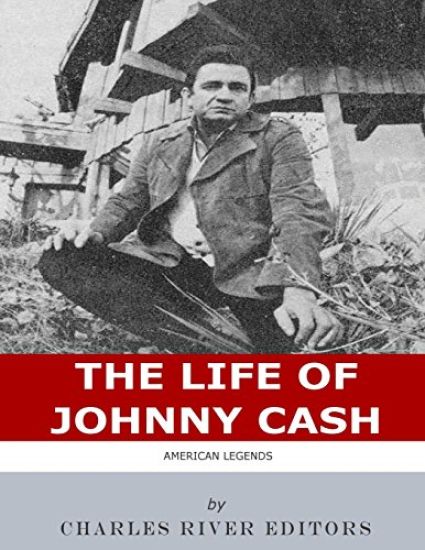
American Legends: The Life of Johnny Cash

American Legends: The Life of Johnny Cash

Charles River

Createspace Independent Publishing Platform
2018
nidottu
*Includes pictures. *Includes Cash's quotes about his life and career. *Includes footnotes and a bibliography for further reading. "Sometimes I am two people. Johnny is the nice one. Cash causes all the trouble. They fight." - Johnny Cash A lot of ink has been spilled covering the lives of history's most influential figures, but how much of the forest is lost for the trees? In Charles River Editors' American Legends series, readers can get caught up to speed on the lives of America's most important men and women in the time it takes to finish a commute, while learning interesting facts long forgotten or never known. Johnny Cash, "The Man in Black", is among the most recognized and iconic vocal artists in the history of blues, country and gospel singing. During the second half of the 20th century, he produced a prolific and rarely-equaled career in the country genre as a singer, songwriter and guitarist, despite numerous struggles with alcohol and drug addiction. His trademark bass-baritone voice is instantly identifiable to listeners today, and his "parlando" style (combining an unaffected singing tone with a speech-like rhythm and pacing) has been taken up by the generation following his death in the early 21st century. Like Elvis Presley and other renowned artists who would later gather at Sun Records in Memphis during the 1950s, Johnny Cash emerged from the South and its blues and gospel traditions, and although his path to discovery took a more circuitous route, he came to join the biggest stars of his era, leaving a lasting mark on the industry and on American culture in the process. By the end of his life, Cash and his legendary voice of "emotional authority" had been inducted into the Country Music Hall of Fame, the Rock n' Roll Hall of Fame, the Gospel Music Hall of Fame, the Nashville Songwriters Hall of Fame, and the Rockabilly Hall of Fame, in addition to numerous other honors. Cash accomplished all of this despite holding a life-long "distaste for the Nashville mainstream," which he believed was heading the wrong direction into ultra-commercialism. Nevertheless, over the span of a nearly 50 year career, Johnny Cash sold over 50 million albums and toured most of the world. While Cash's career spanned half a century and produced a voluminous amount of music, later generations have come to know Johnny Cash more for his rebellious attitude and his unrepentant way of life. Even as he was producing hits, he was burning himself up, admitting he "tried every drug there was to try", and on numerous occasions his alcohol and drug addictions nearly killed him. While his image as an outlaw helped burnish his reputation among listeners, it also led to Cash being in poor health throughout his 60s, something reflected in some of the covers he performed in the last years of his life before he died at the age of 71. Aware of that fact, he mentioned in an interview shortly before his death, "People say, Well, he wore that body out. Well, maybe I did. But it was to a good purpose. They should be thankful that I wore it out to the purpose I wore it out and that was writing and recording and touring and doing concerts." American Legends: The Life of Johnny Cash examines the life and career of one of America's most famous musicians. Along with pictures of important people, places, and events, you will learn about Johnny Cash like never before, in no time at all.
American Legends: The Life of John Belushi

American Legends: The Life of John Belushi

Charles River

Createspace Independent Publishing Platform
2018
nidottu
*Includes pictures *Includes Belushi's quotes about his life and career *Includes a bibliography for further reading "Some comedians love their characters. I don't fall in love with mine. In fact, I get tired of them very fast. You have to be willing to throw it all away." - John Belushi A lot of ink has been spilled covering the lives of history's most influential figures, but how much of the forest is lost for the trees? In Charles River Editors' American Legends series, readers can get caught up to speed on the lives of America's most important men and women in the time it takes to finish a commute, while learning interesting facts long forgotten or never known. Years before comedians like Chris Farley made their reputations with a particularly physical form of humor, there was John Belushi, the legendary comedian known for iconic performances in Animal House, The Blues Brothers, and as one of the original cast members of Saturday Night Live. Not surprisingly, posters of Belushi as Bluto Blutarsky wearing a shirt that simply says "College" still adorn the walls of countless dorm rooms over 35 years after Animal House came out, and The Blues Brothers is still a cult classic. Belushi made people keel over in laughter in different roles, but there was always a question of how much of the performances was an act, because Belushi's behavior both on and off the set amazed friends and strangers alike, whether it was through hilarious routines or bizarre antics like walking into a stranger's house asking for food and drinks. Indeed, Belushi's escapades in real life actually provided material for Saturday Night Live skits, including an extended spoof called "The Thing That Wouldn't Leave." At the same time, however, his abuse of drugs and alcohol made him unreliable to work with, and he quickly forged a reputation for causing headaches on the set. That reputation already preceded him by the time he began working on Animal House in the late '70s, and the delays he caused on The Blues Brothers contributed to making it one of the most expensive comedies ever produced at the time. As is often the case for people with such hectic lifestyles, it's hard to maintain a grip, and Belushi himself claimed he believed he'd be dead by the age of 30. He wasn't far off, thanks to a controversial overdose on a mixture of heroin and cocaine, a speedball that was given to him by Cathy Smith, a rock groupie who also dealt drugs during the era. Smith was later imprisoned 15 months for involuntary manslaughter as a result. American Legends: The Life of John Belushi explores the turbulent life and career of one of America's most notorious comedians of the late 20th century. Along with pictures of important people, places, and events, you will learn about John Belushi like never before, in no time at all.
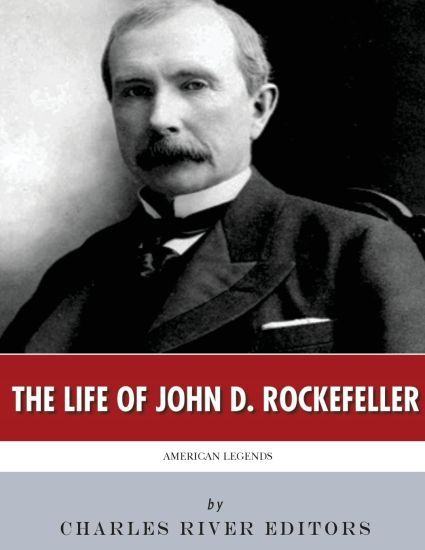
American Legends: The Life of John D. Rockefeller

American Legends: The Life of John D. Rockefeller

Charles River

Createspace Independent Publishing Platform
2018
nidottu
*Includes pictures *Includes Rockefeller's own quotes about his life and career *Includes a bibliography for further reading "I believe it is a religious duty to get all the money you can, fairly and honestly; to keep all you can, and to give away all you can." - John D. Rockefeller, 1928 The Gilded Age and the dawn of the 20th century are often remembered as an era full of monopolies, trusts, and economic giants in heavy industries like oil and steel. Men like Andrew Carnegie built empires like Carnegie Steel, and financiers like J. P. Morgan merged and consolidated them. The era also made names like Astor, Cooke, and Vanderbilt instantly recognizable across the globe. Over time, the unfathomable wealth generated by the businesses made the individuals on top incredibly rich, and that in turn led to immense criticism and an infamous epithet used to rail against them: robber barons. Dozens of men were called "robber barons", but none were as notorious or rich as John D. Rockefeller, who co-founded Standard Oil and turned it into the first real trust in the United States. Rockefeller had been groomed ambitiously by a huckster father nicknamed "Devil Bill", who was just as willing to cheat his son as an unsuspecting public, and John certainly chased his dreams of living long and large. Rockefeller forged his empire in the first few decades of his life and nearly worked himself to death by the time he was 50, which helped compel him to retire for the last several decades of his life. At one point, Rockefeller's wealth was worth more than 1.5% of the entire country's gross domestic product, and by adjusting for inflation, he is arguably the richest man in American history if not world history. Rockefeller was often demonized for being greedy, and there's no question that he was a capitalist par excellence, if not an outright proponent of Social Darwinism. Rockefeller often asserted that growing a business "is merely a survival of the fittest," and he even bragged, "I have ways of making money that you know nothing of." To charges that he was making his riches off the backbreaking work of others, Rockefeller admitted, "I would rather earn 1% off 100 people's efforts than 100% of my own efforts." The industrial might wielded by men like Rockefeller directly led to a public backlash and made President Teddy Roosevelt the "trust buster", and there has since been countless regulations to attempt to avoid the types of monopolies found over 100 years ago. However, many 20th century historians and writers pushed back against the allegations hurled at the "robber barons" and even took issue with the name. Libertarian writer John Stossel argued, "They weren't robbers, because they didn't steal from anyone, and they weren't barons-they were born poor... Rockefeller got rich selling oil. First competitors and then the government called him a monopolist, but he wasn't. At the time he had well over a hundred competitors. No one was forced to buy his oil. Rockefeller enticed people to buy it by selling it for less. That's what his competitors hated. His finding cheaper ways to get oil from the ground to the gas pump made life better for millions. Working-class people, who used to go to bed when it got dark, could suddenly afford fuel for lanterns, so they could stay up and read at night. Rockefeller's greed might have even saved the whales, because when he lowered the price of kerosene and gasoline, he eliminated the need for whale oil. The mass slaughter of whales suddenly stopped." American Legends: The Life of John D. Rockefeller looks at the life and career of one of America's most famous industrialists and the leader of Standard Oil. Along with pictures of important people, places, and events, you will learn about Rockefeller like never before, in no time at all.
American Legends: The Life of John Quincy Adams

American Legends: The Life of John Quincy Adams

Charles River

Createspace Independent Publishing Platform
2018
nidottu
*Includes pictures of John Quincy Adams and important people, places, and events in his life. *Includes quotes from his diary and letters. *Includes a Bibliography for further reading. "My toast would be, may our country always be successful, but whether successful or otherwise, always right." - John Quincy Adams A lot of ink has been spilled covering the lives of history's most influential figures, but how much of the forest is lost for the trees? In Charles River Editors' American Legends series, readers can get caught up to speed on the lives of America's most important men and women in the time it takes to finish a commute, while learning interesting facts long forgotten or never known. John Adams was one of his country's seminal Founding Fathers and one of its most experienced, distinguished diplomats and politicians. Few men in American history have a record anywhere near comparable, but one of them happened to be Adams's own son, John Quincy Adams. And yet, few Americans are familiar with him aside from the fact that he was his father's son and the 6th president of the United States. John Quincy Adams set a lot of firsts for his country. In addition to being the first son of a president to become president himself, John Quincy Adams also managed to be a U. S. Senator, a U. S. House Representative, a Secretary of State, and an ambassador to several countries. Though he is known primarily for his presidential races against Andrew Jackson, there is a general consensus among historians that he is one of America's greatest and most skilled diplomats, responsible for successes such as the Treaty of Ghent (which ended the War of 1812), the annexation of Florida from Spain, and the Monroe Doctrine. Along with his substantive record, Adams was one of the foremost ideological thinkers of the early to mid-19th century, particularly in his adamant opposition to slavery. Adams brought the issue to the forefront in government whenever he could, and he predicted the Civil War that would come less than 15 years after his death: "The conflict between the principle of liberty and the fact of slavery is coming gradually to an issue. Slavery has now the power, and falls into convulsions at the approach of freedom. That the fall of slavery is predetermined in the counsels of Omnipotence I cannot doubt; it is a part of the great moral improvement in the condition of man, attested by all the records of history. But the conflict will be terrible, and the progress of improvement perhaps retrograde before its final progress to consummation." Somewhat fittingly, Adams died in the Capitol Building, collapsing during a session of the House of Representatives in February 1848. But why is Adams a relative unknown? Perhaps it was because he was the first president to be elected without having participated in the Revolution. Through no fault of his own (he was only a child during the conflict), he would forever be kept out of that most exclusive group. It's also likely that he has always had the problem of being in his father's shadow, even though every letter and diary entry indicates John Adams was immensely proud of his son and worked very hard to promote his political career. American Legends: The Life of John Quincy Adams chronicles the amazing life and career of the distinguished politician and diplomat, analyzing his record and unshakable beliefs. Along with pictures of important people, places, and events in his life, you will learn about John Quincy Adams like you never have before, in no time at all.
American Legends: The Life of John Adams

American Legends: The Life of John Adams

Charles River

Createspace Independent Publishing Platform
2018
nidottu
*Includes several letters written by Abigail Adams, John Adams and Thomas Jefferson. *Includes pictures of Adams and important people, places, and events in his life. *Includes a Bibliography for further reading. "A Constitution of Government once changed from Freedom, can never be restored. Liberty, once lost, is lost forever." - John Adams A lot of ink has been spilled covering the lives of history's most influential figures, but how much of the forest is lost for the trees? In Charles River Editors' American Legends series, readers can get caught up to speed on the lives of America's most important men and women in the time it takes to finish a commute, while learning interesting facts long forgotten or never known. John Adams has become one of the more popular presidents in history relatively recently, but it was not always so. For most of his life he was seen as a bit of an outsider, different from his fellow first presidents in his temperament, birth, life and politics. Adams and his son were the only presidents out of the first seven who were born north of the Mason Dixon line, and he was not an easy man to understand or work with. Not only did he have few friends, but he also often fell into long term quarrels with those he had. Politically, Adams shared Washington's preference for Britain as well as his preference of non-interference. However, while he was certainly the more significant man in his work and his governing, he could never seem to move out of Washington's shadow. Even worse, his presidency was seen as threatening to the very essence of American liberty with the Alien and Sedition Acts, and his loss to Jefferson in 1800 was a repudiation of the Federalists that left Jeffersonians in power until John Quincy Adams was elected in 1824. His presidency is still viewed relatively unfavorably. Adams remained a celebrated figure in Boston for all the work he did in Massachusetts before and after the Revolution, but his national reputation has experienced quite a renaissance over the past decade, beginning with David Mccullough's best selling biography in 2001, followed in 2008 by the popular HBO series based on it. Then, in 2010, Dearest Friend, a record of the correspondence between Adams and his wife Abigail solidified his position as one of the most darling Founding Fathers of the 21st Century. Several factors explain the recent boost to his legacy. First, unlike Washington or Jefferson, Adams was not a cultural icon. Therefore, Americans have had more to learn about his life and work, whereas recent historical findings about men like Jefferson are either anti-climatic or disappointing. Moreover, Adams and his son are the only two of the first 10 presidents not to have owned slaves, making it easier and more politically correct to like them. Finally, the extensive letters that passed between him and Abigail have cast him as a romantic figure in a way that few other presidents enjoy. American Legends: The Life of John Adams chronicles the amazing life and work of one of America's Founding Fathers, but it humanizes the man who could be both mercurial and tender. Along with pictures of important people, places, and events in her life, you will learn about John Adams like you never have before, in no time at all.
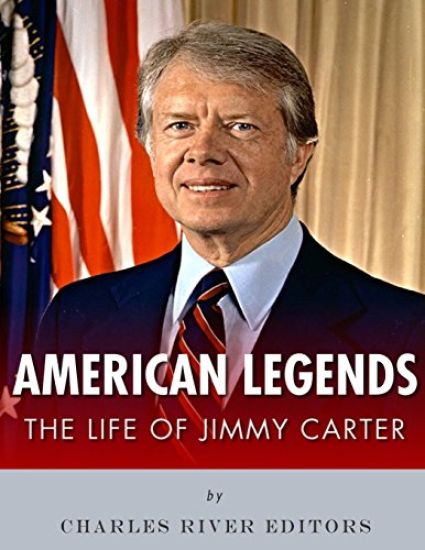
American Legends: The Life of Jimmy Carter

American Legends: The Life of Jimmy Carter

Charles River

Createspace Independent Publishing Platform
2018
nidottu
*Includes pictures *Includes Carter's own quotes about his life and career *Includes online resources and a bibliography for further reading *Includes a table of contents "I have experienced the intensity of patriotism as a submarine officer, the ambitions of a competitive businessman, and the intensity of political debate. I have been sorely tempted to launch a military attack on foreigners, and have felt the frustration of having to negotiate with allies or even former enemies to reach a consensus instead of taking more decisive unilateral action." - Jimmy Carter A lot of ink has been spilled covering the lives of history's most influential figures, but how much of the forest is lost for the trees? In Charles River Editors' American Legends series, readers can get caught up to speed on the lives of America's most important men and women in the time it takes to finish a commute, while learning interesting facts long forgotten or never known. When Americans elected Jimmy Carter in 1976, they seem to have wanted an ideal more than a man. The tragedies surrounding Vietnam and the scandal of Watergate, culminating in Richard Nixon's resignation, had left the public bruised and disillusioned. They wanted someone they could believe in, someone like themselves, or at least like they wanted to be. They believed they found that man in Carter. However, they soon learned that, while they had voted for an ideal, they had gotten a man, with all the virtues and faults, loves and hates, of any other human being, and by the end of his presidency, man had turned on him with the viciousness of disappointed children lashing out at a flawed parent. Carter's rise to the nation's top office was unique; he was known somewhat humorously for being a Georgia peanut farmer, and his family often made headlines (particularly his brother Billy), but he rode dissatisfaction with President Nixon and his successor Gerald Ford to become president. From there, he was a notorious micromanager who presided over some of the decade's most important events, from the Camp David Peace Accords to the Iranian Revolution. Carter's presidency still receives rather mixed reviews, but it's possible that his political career has actually been obscured by his post-presidential work and the ways in which he has changed the roles of previous living presidents. After starting the Carter Center in 1982, Carter has remained a champion of human rights and has become one of America's most visible dignitaries, traveling all over the world to promote various causes. Eventually, he earned a Nobel Peace Prize for his work in 2002, and he has remained active even after turning 90 and after recently being diagnosed with cancer. Like his presidency, Carter's advocacy has not been without controversy, but he remains one of America's most recognizable figures. American Legends: The Life of Jimmy Carter examines the life and legacy of the 39th president of the United States. Along with pictures of important people, places, and events, you will learn about Jimmy Carter like never before, in no time at all.
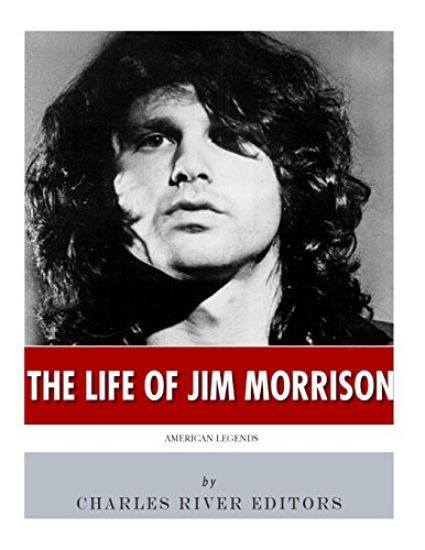
American Legends: The Life of Jim Morrison

American Legends: The Life of Jim Morrison

Charles River

Createspace Independent Publishing Platform
2018
nidottu
*Includes pictures. *Includes Morrison's quotes about his life and career. *Includes footnotes and a bibliography for further reading. "I see myself as an intelligent, sensitive human, with the soul of a clown which forces me to blow it at the most important moments." - Jim Morrison In the mid-1960s, an era on the cusp of change from the musical and social norms of the previous decade, the emergence of Jim Morrison, the charismatic poet/musician of The Doors, helped to transform the subgenre of rock n' roll as a stylistic flavor to the full-fledged institution of Rock Music. Morrison accomplished this transformation by avoiding membership in any of the known categories of modern rock music during the age of protest, but at the same time, he became the general symbol of anti-authoritarianism for his generation and the next, especially as rock music began to base itself on the urge of youth to revolt. In conjunction with that, The Doors became one of the most famous bands on the planet in the late '60s. Of course, Morrison accomplished all of this by being extreme, in every sense of the word. His poetry was assaultive, blatant and graphic, a sign of the times, and his voice was mystical and haunting, lacking any sense of what was previously or typically considered vocal beauty. Whether intentional or not, Morrison also led the charge of excessive defiance toward anything hierarchical or rule-laden, and the acting out of his subconscious urges on public stages around the world surpassed any of the frightening new artists that were unraveling the fabric of '50s behavior, including The Beatles and Elvis Presley. He took these qualities past the point that American audiences had previously experienced, and listeners were simultaneously tested, taunted and incited by the unorthodox stage performer. Such a dynamic would come to serve as the perfect outlet to one with a "lust for anything forbidden by the authority of conservative Middle America," and for one who was endlessly "fascinated by crowd dynamics". Morrison was aware of that trend himself, as he once put it, "Each generation wants new symbols, new people, new names. They want to divorce themselves from their predecessors." All the while, Morrison's writing and performances, as well as his most bizarre antics, were all fueled by drugs. Much like everything else, he took a metaphysical approach to using them, saying, "I believe in a long, prolonged, derangement of the senses in order to obtain the unknown." At the same time, he could be more down-to-earth about addictions, as he pointed out about alcohol, "It's like gambling somehow. You go out for a night of drinking and you don't know where you're going to end up the next day. It could work out good or it could be disastrous. It's like the throw of the dice." Fittingly, Morrison was just as controversial in death as he was in life. When he died in Paris, presumably of a heroin overdose, theories cropped up over how he actually died or whether he even faked his death. In the process, he also helped immortalize the "27 Club" with Janis Joplin and Jimi Hendrix, who had both died at the age of 27 within weeks of each other less than a year before Morrison. American Legends: The Life of Jim Morrison examines the life and career of one of America's most famous rock stars. Along with pictures of important people, places, and events, you will learn about Jim Morrison like never before, in no time at all.

American Legends: The Life of Jim Henson

American Legends: The Life of Jim Henson

Charles River

Createspace Independent Publishing Platform
2018
nidottu
*Includes pictures *Includes Henson's own quotes about his life and career *Includes a bibliography for further reading "When I was young, my ambition was to be one of the people who made a difference in this world. My hope is to leave the world a little better for having been there." - Jim Henson A lot of ink has been spilled covering the lives of history's most influential figures, but how much of the forest is lost for the trees? In Charles River Editors' American Legends series, readers can get caught up to speed on the lives of America's most important men and women in the time it takes to finish a commute, while learning interesting facts long forgotten or never known. When people discuss the great television characters of all time, names such as Lucille Ball, Andy Griffith, and Jerry Seinfeld are frequently mentioned, but so are fictional characters like Kermit the Frog. What makes Kermit an interesting choice is the fact that he's a Muppet, and just one of Jim Henson's many iconic Muppets at that. Millions of people are instantly familiar with Muppets like Kermit, Oscar the Grouch, Yorick, and Miss Piggy, and while the Muppets may lack the physical dimensions of the human television characters listed above, there is no denying the influence they have exerted on America's youth and popular culture more broadly. Their popularity remains undiminished even several decades following their inception. If the Muppets are among the most famous of all television characters, their significance also stems from the way in which their purpose was always about more than simply entertainment. Put simply, the Muppets have played an instrumental role in the education of America's youth, and there existed an educational imperative behind much of what Jim Henson created. For many children, learning to count, learning to read, and, on a broader level, learning to make sense of the world have all involved the Muppets, either on Sesame Street (1969-) or the many other movies and shows that have featured Jim Henson's characters. Of course, Henson's genius was also on display in the way he was able to captivate not just young children but also adults as well. As his career evolved, Henson began exploring more adults themes, and it is not for nothing that children and adults alike mourned his premature death in 1990. Henson's early passing leaves many questions unanswered regarding the direction that his future work would have taken, but even so, he left behind a broad and diverse body of work, even if existing loosely within the domain of puppetry. He began his career at an early age and for someone who died so young, his career was quite robust and balanced innovation with the repetition of salient themes. Indeed, Henson's works emphasized morality and the value of dreams, desires, education, and cooperation. American Legends: The Life of Jim Henson looks at the life and work of Jim Henson, from his childhood in Mississippi and Maryland to his young death in 1990 at the age of 53. Along with pictures of important people, places, and events, you will learn about Jim Henson like never before, in no time at all.
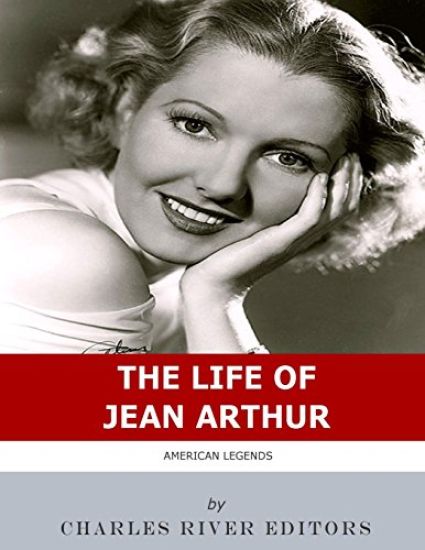
American Legends: The Life of Jean Arthur

American Legends: The Life of Jean Arthur

Charles River

Createspace Independent Publishing Platform
2018
nidottu
*Includes pictures. *Includes Arthur's own quotes about her life and career. *Includes a bibliography for further reading. "I guess I became an actress because I didn't want to be myself." - Jean Arthur "It's a strenuous job every day of your life to live up to the way you look on the screen." - Jean Arthur A lot of ink has been spilled covering the lives of history's most influential figures, but how much of the forest is lost for the trees? In Charles River Editors' American Legends series, readers can get caught up to speed on the lives of America's most important men and women in the time it takes to finish a commute, while learning interesting facts long forgotten or never known. At the peak of the Golden Era of Hollywood, one of the film industry's most popular genres was the screwball comedy, making stars out of young actresses like Jean Harlow and helping pave the way for future ones like Marilyn Monroe. But at the height of the era of the screwball comedy, the actress most associated with them was Jean Arthur, whose ability to portray everyday women made her incredibly popular in the 1930s and 1940s. As one critic put it, "No one was more closely identified with the screwball comedy than Jean Arthur. So much was she part of it, so much was her star personality defined by it, that the screwball style itself seems almost unimaginable without her." Her seemingly effortless abilities helped get her cast in some of legendary director Frank Capra's most famous films, including Mr. Deeds Goes to Town and Mr. Smith Goes to Washington. Capra's films were some of the most critically acclaimed and popular of Depression-era America thanks to viewers being able to relate to the characters, and Arthur was integral in this, as film critic Charles Champlin once explained, "To at least one teenager in a small town (though I'm sure we were a multitude), Jean Arthur suggested strongly that the ideal woman could be - ought to be - judged by her spirit as well as her beauty ... The notion of the woman as a friend and confidante, as well as someone you courted and were nuts about, someone whose true beauty was internal rather than external, became a full-blown possibility as we watched Jean Arthur." Arthur was an Oscar nominated actress and one of the richest women in the country in the mid-1940s, but she nevertheless retired after her contract with Columbia ended in 1944. While that seems like an odd decision, Arthur was notorious for wanting to avoid the spotlight and Hollywood's celebrity culture, which led to her being branded a recluse. In addition to avoiding interviews and even having her picture taken, she was bitterly critical of Hollywood, saying, "I hated the place - not the work, but the lack of privacy, those terrible prying fan magazine writers and all the surrounding exploitation." Life magazine made it sound alluring when they pointed out in 1940 that " n]ext to Garbo, Jean Arthur is Hollywood's reigning mystery woman", but Arthur would only appear in a couple of movies after her retirement, and she disappeared from the Hollywood scene almost as quickly as she burst onto it. American Legends: The Life of Jean Arthur examines the life and career of one of America's favorite screwball comedy queens. Along with pictures of important people, places, and events, you will learn about Jean Arthur like never before, in no time at all.
American Legends: The Life of Janis Joplin

American Legends: The Life of Janis Joplin

Charles River

Createspace Independent Publishing Platform
2018
nidottu
*Includes pictures. *Includes Joplin's own quotes about her life and career. *Includes footnotes and a bibliography for further reading. "The more you live, the less you die." - Janis Joplin The life and career of Janis Joplin marks such a stark departure from the blues, rock and soul traditions as American society has come to know them that her brief and tempestuous career defies artistic analysis, if only because there is so little precedent aside from the great African-American blues and jazz singers that influenced her. For a woman born in 1943 and coming into her professional prime in the 1960s, Joplin stood as a mesmerizing and baffling foil to the female tradition in non-classical music, which had previously been symbolized by pure, mellow voices singing thoughtful texts. In the world of rock ensembles, women often stood near the back to play peripheral percussion instruments, such as the tambourine, and from time to time, they filled in a harmony or enjoyed a brief stint on the front of the stage. However, due to Joplin's belief that the mellow and refined tradition was not the way for her to go, the young firebrand with the conflicted past and personality opted for a complete, unrestrained expression of her deepest feelings. In the process, she both thrilled and frightened American audiences who had never seen her kind and never would again. The American music scene was entirely unprepared to witness the emergence of a white woman who could sing the blues with such authenticity, force, and depth of feeling. Dubbed by many as the "First Lady" or "Queen" of Rock & Roll, Joplin both invented and installed the "rock mama paradigm" into the American rock consciousness, a patriarchal and fraternal industry that, much like the societal traits it protested, restricted women to a narrow and conservative criteria for entrance. However, when Joplin was fully committed, she would have none of it, and in time she became "the middle class white girl who sang the blues" for her generation and the generation to come, releasing four powerful albums between the socially intense years of 1966-1970. With only a very few kindred spirits, such as Grace Slick of Jefferson Airplane, "she pioneered a new range of expression for white women." In Joplin's case, performing was a critical aspect of her popularity, but drugs and alcohol were central to her performances, which often found her under the influence of heroin and sipping from a whiskey bottle while playing before live crowds. Despite the dangerous mixtures, Joplin's performances became such a phenomenon that they turned her into an unlikely sex symbol, something she had a hard time understanding and often joked about ("Guess what, I might be the first hippie pinup girl."). Nonetheless, she could pull it off because her "blues-soaked voice...was matched by her uninhibited physical movements...in a mesmerizing display of soulfulness few thought a white singer could pull off." At the height of her powers, before crippling addictions eventually overwhelmed her, her Monterey and Woodstock appearances are "considered by many specialists...to have been classic moments in the history of rock" Of course, for all the mention of Joplin's career, there is nearly as much focus on her untimely death at the age of 27, particularly because she died just a few weeks after Jimi Hendrix's death at the age of 27 and was followed in death by Jim Morrison at the age of 27 less than a year later. Those three all died as a result of alcohol and drug abuse, and they formed the starting point for the legendary "27 Club", which memorializes rock stars who died at the age of 27. American Legends: The Life of Janis Joplin examines the life and career of one of America's most famous musicians. Along with pictures of important people, places, and events, you will learn about Janis Joplin like never before, in no time at all.