Kirjojen hintavertailu – 12 903 727 kirjaa ja 27 kauppaa

Kirjailija

Charles River

Kirjat ja teokset yhdessä paikassa: 4 673 kirjaa, julkaisuja vuosilta 2013–2022, suosituimpiin kuuluu William Powell and Myrna Loy: The Lives and Careers of One of Classical Hollywood's Most Iconic Duos. Vertaile teosten hintoja ja tarkista saatavuus suomalaisista kirjakaupoista.

4 673 kirjaa

Kirjojen julkaisuvuodet: 2013–2022.

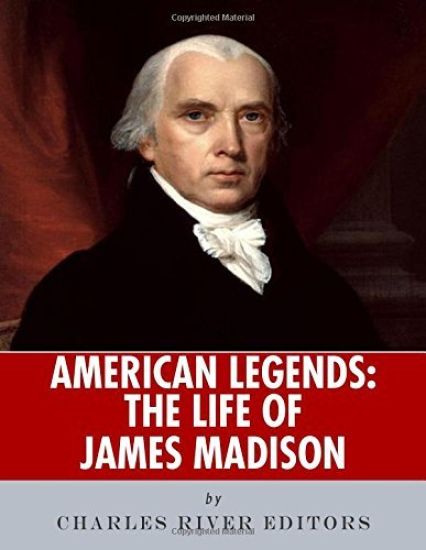
American Legends: The Life of James Madison

American Legends: The Life of James Madison

Charles River

Createspace Independent Publishing Platform
2018
nidottu
A lot of ink has been spilled covering the lives of history's most influential figures, but how much of the forest is lost for the trees? In Charles River Editors' American Legends series, readers can get caught up to speed on the lives of America's most important men and women in the time it takes to finish a commute, while learning interesting facts long forgotten or never known. The Founding Fathers have become so revered by Americans in the last 200 years that the "Father of the Constitution" himself is often overlooked among the rest of the pantheon. Today James Madison's legacy mostly pales in comparison to the likes of George Washington, Ben Franklin and his closest colleague, Thomas Jefferson, but Madison's list of important accomplishments is monumental. A lifelong statesman, Madison was the youngest delegate at the Continental Congress from 1780-83, and at 36 he was one of the youngest men who headed to Philadelphia for the Constitutional Convention in 1787. Despite his age, he was the Convention's most influential thinker, and the man most responsible for the final draft of the U. S. Constitution. Along with Alexander Hamilton and John Jay, Madison was one of the most persuasive advocates for ratifying the Constitution, authoring some of the most famous Federalist Papers, and he drafted the Bill of Rights that was later added to the Constitution. But his work was far from done; along with Thomas Jefferson, Madison was one of the founders and ideological cornerstones of the Democratic-Republican Party that guided the young nation in the first 30 years of the 19th century. That included his own presidency, in which he oversaw the War of 1812. Like the other Founding Fathers, Madison is better known in word and deed than as an actual person. American Legends: The Life of James Madison covers Madison's incredible accomplishments, but it also humanizes the classic thinker who idolized Thomas Jefferson and had a loving relationship with wife Dolley, who helped mold the position of First Lady as debutante. Along with pictures of Madison and other important people and events in his life, you will learn about the Father of the Constitution like you never have before, in no time at all.
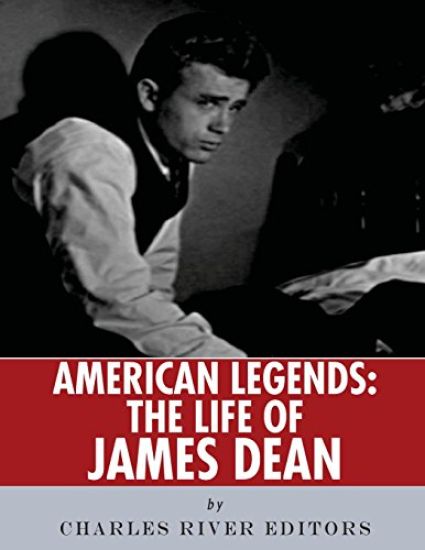
American Legends: The Life of James Dean

American Legends: The Life of James Dean

Charles River

Createspace Independent Publishing Platform
2018
nidottu
*Includes pictures of Dean and important people and places in his life. *Includes some of Dean's most famous quotes, and quotes about Dean made by friends and co-stars. *Includes a Bibliography for further reading. "Dream as if you'll live forever. Live as if you'll die today." - James Dean A lot of ink has been spilled covering the lives of history's most influential figures, but how much of the forest is lost for the trees? In Charles River Editors' American Legends series, readers can get caught up to speed on the lives of America's most important men and women in the time it takes to finish a commute, while learning interesting facts long forgotten or never known. It would be no exaggeration to say that James Dean has been more mythologized than any other actor in history, a development due more to his off-screen personality and conduct than the films he actually starred in. Much of Dean's appeal derives from his humble and ordinary origins, and audiences are drawn to the romance of the Indiana farm boy who catapulted to the top of the motion picture industry in a single year - the same year that would see him die. Of course, James Dean remains well-known for being anything but humble and ordinary. As famous as his films are, Dean's story is inextricably tied to his love for racing cars and his death in a high speed car crash. And though Dean was already wildly famous at the time of his death, there is no question that his death only enhanced his fame. One study found evidence of a "James Dean effect," which concluded that a star's popularity benefits if the star dies young instead of living longer and losing luster. By dying young, Dean actually ensured that his name would remain famous, and his appeal has transcended generations. For better or worse, the mythology surrounding him complicates any attempt to accurately depict his life, and it remains extraordinarily difficult to arrive at any cohesive understanding of many of the details of Dean's life. While Dean's fame will continue to live on, it is important to acknowledge that his star persona was formed in response to the era in which he came up. His film career illuminates 1950s Hollywood, a period that was rife with tension and change within the industry. Although Dean remains an American icon and culturally relevant, his popularity was also greatly tied to his own cultural epoch. At the same time, many cultural groups and fanzines have appropriated Dean as their own, making it that much harder to find the "true" details of Dean's life. American Legends: The Life of James Dean profiles the life and legacy of the famous actor and rebel without a cause. Along with pictures of important people, places, and events, you will learn about James Dean like you never have before, in no time at all.
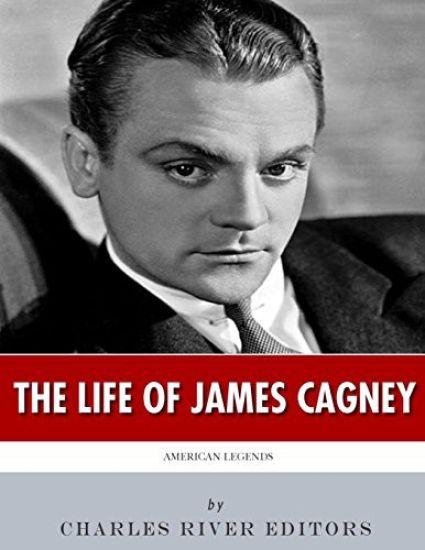
American Legends: The Life of James Cagney

American Legends: The Life of James Cagney

Charles River

Createspace Independent Publishing Platform
2018
nidottu
*Includes pictures. *Includes Cagney's own quotes about his life and career. *Includes a bibliography for further reading. "You don't psych yourself up for these things, you do them... I'm acting for the audience, not for myself, and I do it as directly as I can." - James Cagney A lot of ink has been spilled covering the lives of history's most influential figures, but how much of the forest is lost for the trees? In Charles River Editors' American Legends series, readers can get caught up to speed on the lives of America's most important men and women in the time it takes to finish a commute, while learning interesting facts long forgotten or never known. When the American Film Institute assembled its top 100 actors of all time at the close of the 20th century, one of the Top 10 was James Cagney, an actor whose acting and dancing talents spawned a stage and film career that spanned over 5 decades and once compelled Orson Welles to call him "maybe the greatest actor to ever appear in front of a camera." Indeed, his portrayal of "The Man Who Owns Broadway", George M. Cohan, earned him an Academy Award in the musical Yankee Doodle Dandy, and as famed director Milos Forman once put it, "I think he's some kind of genius. His instinct, it's just unbelievable. I could just stay at home. One of the qualities of a brilliant actor is that things look better on the screen than the set. Jimmy has that quality." Ultimately, it was portraying tough guys and gangsters in the 1930s that turned Cagney into a massive Hollywood star, and they were the kind of roles he was literally born to play after growing up rough in Manhattan at the turn of the 20th century. In movies like The Public Enemy (which included the infamous "grapefruit scene") and White Heat, Cagney convincingly played criminals that brought Warner to the forefront of Hollywood and the gangster genre. Cagney also helped pave the way for younger actors in the genre, like Humphrey Bogart, and he was so good that he found himself in danger of being typecast. While Cagney is no longer remembered as fondly or as well as Bogart, he was also crucial in helping establish the system in which actors worked as independent workers free from the constraints of studios. Refusing to be pushed around, Cagney was constantly involved in contract squabbles with Warner, and he often came out on top, bucking the conventional system that saw studios treat their stars as indentured servants who had to make several films a year. American Legends: The Life of James Cagney examines the life and career of one of Hollywood's most iconic actors. Along with pictures of important people, places, and events, you will learn about Cagney like never before, in no time at all.
American Legends: The Life of Jane Fonda

American Legends: The Life of Jane Fonda

Charles River

Createspace Independent Publishing Platform
2018
nidottu
*Includes pictures. *Includes Fonda's own quotes about her life and career. *Includes a bibliography for further reading. "Being Henry Fonda's daughter got me started. But it didn't keep me working." - Jane Fonda A lot of ink has been spilled covering the lives of history's most influential figures, but how much of the forest is lost for the trees? In Charles River Editors' American Legends series, readers can get caught up to speed on the lives of America's most important men and women in the time it takes to finish a commute, while learning interesting facts long forgotten or never known. Growing up in the shadow of one of America's most famous actors would be intimidating for anyone, but few have emerged out of that shadow like Jane Fonda, the oldest daughter of screen legend Henry Fonda. In fact, when Jane co-starred with her father in the last film he made, On Golden Pond, he won the Academy Award for Best Actor for it. However, she has accomplished more than enough in her own career to make her father proud, winning 2 Academy Awards, an Emmy and 7 Golden Globe Awards herself. Jane burst onto the scene in the early 1960s, when she was still in her 20s, and when she performed in Sunday in New York, one critic labeled her "the loveliest and most gifted of all our new young actresses". She has been acting at least off and on from that point forward, earning critical acclaim both for her acting skills and for many of the movies she appeared in. However, today many people associate Jane Fonda with political causes, most notoriously her stance against the Vietnam War. Indeed, she might still be the face of the anti-Vietnam movement because of an episode that earned her the notorious nickname "Hanoi Jane". In addition to speaking out against the war, Fonda actually traveled to Hanoi in July 1972 and was photographed sitting in a North Vietnamese anti-aircraft battery, immediately earning widespread condemnation that sought to brand her as anti-American. Fonda has spent the rest of her life trying to explain her regret over it, telling Barbara Walters in a 1988 interview, "I would like to say something, not just to Vietnam veterans in New England, but to men who were in Vietnam, who I hurt, or whose pain I caused to deepen because of things that I said or did. I was trying to help end the killing and the war, but there were times when I was thoughtless and careless about it and I'm very sorry that I hurt them... I will go to my grave regretting the photograph of me in an anti-aircraft gun, which looks like I was trying to shoot at American planes." Nevertheless, it has not tempered her liberal political activism. American Legends: The Life of Jane Fonda examines the life and career of one of America's most famous and infamous actresses. Along with pictures of important people, places, and events, you will learn about Jane Fonda like never before, in no time at all.
American Legends: The Life of Jack Lemmon

American Legends: The Life of Jack Lemmon

Charles River

Createspace Independent Publishing Platform
2018
nidottu
*Includes pictures *Includes Lemmon's own quotes *Includes a bibliography for further reading "It's hard enough to write a good drama, it's much harder to write a good comedy, and it's hardest of all to write a drama with comedy. Which is what life is." - Jack Lemmon A lot of ink has been spilled covering the lives of history's most influential figures, but how much of the forest is lost for the trees? In Charles River Editors' American Legends series, readers can get caught up to speed on the lives of America's most important men and women in the time it takes to finish a commute, while learning interesting facts long forgotten or never known. The great film director Billy Wilder once noted of Jack Lemmon that Lemmon "was my everyman", and Lemmon did indeed represent a great everyman to American audiences during the latter half of the 20th century. For rich, poor, and working class audiences alike, Lemmon was an accessible leading male, someone certainly less stately than Cary Grant or Laurence Olivier and seemingly more approachable even than archetypal leading men such as Jimmy Stewart or Henry Fonda. Viewers may not have known Lemmon on a personal level, yet his easygoing demeanor made it easy for the American public to feel as if they knew Lemmon. His wide appeal is summarized nicely by Richard T. Stanley, who noted that he "had the personality and versatile talent to star in any era," and Lemmon became intimately associated with other famous figures of Hollywood, including director Billy Wilder and actor Walter Matthau. If Lemmon's persona was that of the everyman, the actual narrative of his life tells a somewhat different story. In fact, he did not come from working-class roots but was instead raised in a wealthy family and educated only in the most exclusive institutions that many could buy, including exclusive prep schools and then Harvard University. Lemmon was an honorable citizen who served in the Navy, but he was also someone who benefitted from educational and economic opportunities that were unavailable to the vast majority of the country, and while he would never have reached the level of fame he attained without hard work, his life story does not reflect the upward mobility that can be seen in the biographies of many other famous actors. One could even argue that the miracle of his career is that someone from such wealth could manage to construct an everyman persona in the first place. In addition, while Lemmon was a master at shielding the darker aspects of his personal life, he experienced a great deal of adversity, from the separation of his parents to his struggles with alcoholism and the cancer that eventually took his life. Lemmon led a privileged life, but this biography examines these struggles as well as his triumphs in order to explicate the construction of his persona and the artistic and cultural implications of the life and career of this storied Hollywood actor. American Legends: The Life of Jack Lemmon chronicles the life and career of one of America's favorite actors. Along with pictures of important people, places, and events, you will learn about Jack Lemmon like never before, in no time at all.
American Legends: The Life of J. Edgar Hoover

American Legends: The Life of J. Edgar Hoover

Charles River

Createspace Independent Publishing Platform
2018
nidottu
*Discusses the rumors surrounding Hoover's secret files and sexuality. *Includes pictures of Hoover and important people, places, and events in his life. "We are a fact-gathering organization only. We don't clear anybody. We don't condemn anybody." - J. Edgar Hoover A lot of ink has been spilled covering the lives of history's most influential figures, but how much of the forest is lost for the trees? In Charles River Editors' American Legends series, readers can get caught up to speed on the lives of America's most important men and women in the time it takes to finish a commute, while learning interesting facts long forgotten or never known. No single figure in 20th century American history inspires such opposing opinions as J. Edgar Hoover, the iconic first director of the Federal Bureau of Investigation. In his time, he was arguably the most powerful non-elected figure in the U. S. government. Serving under 8 presidents (and outliving 2 of them), he remains the longest-serving head of a major government office. But in essence, Hoover died as he began-a civil servant, having been appointed by the Attorney General and serving at the pleasure of the president. But no civil servant had ever accrued to themselves the power and public attention that Hoover did. To many Americans in the 30s, 40s, and 50s J. Edgar Hoover was a real American hero. In a country suffering from the Great Depression and the crime wave of the early 1930s, Hoover was the symbol law and order as his "G-Men" used the newest in scientific crime solving methods to bring gangsters like John Dillinger, Pretty Boy Floyd, and Baby Face Nelson to justice. In the 1940s he protected a country at war from German and Japanese spies and saboteurs. In the 1950s he let the charge against Soviet spies and domestic Communists who he saw as undermining the institutions of the country. Every boy in the country wanted to be a G-Man, helping Mr. Hoover ferret out anyone who would harm the United States. But by the 1960s and 1970s Hoover the hero had become Hoover the villain. Various exposes and investigations revealed a darker side to the legend, one that included serious violations of the civil liberties of individuals. Hoover's G-Men, it was discovered, engaged in illegal break-ins and wiretaps of suspected subversives; they wrote fake letters that undermined the reputations of public individuals; they paid informants for information and push the groups they belonged to into committing illegal acts. It was alleged that Hoover led a personal vendetta against Martin Luther King, Jr., and the entire civil rights movement. Hoover, it was said, had stayed in office so long by gathering secret files of damaging information about politicians (including presidents). Shortly after his death in 1972, the Hoover legend was in tatters, replaced by a caricature of a vain, vindictive, power-mad petty dictator who was a closet homosexual and cross-dresser. As with most larger than life figures, the truth lies somewhere between two myths. Views of Hoover as hero and Hoover as villain contain elements of truth. The same man who took a small insignificant office of the Justice Department and transformed it into the premier national law enforcement agency in the world was the same man who approved (or at least had knowledge of) actions that violated the Constitution he was sworn to uphold. J. Edgar Hoover was in many ways a walking contradiction, but his apparent contradictions embodied the contradictions at the heart of 20th century America. American Legends: The Life of J. Edgar Hoover looks at the amazing life and career of the FBI Director, including the unprecedented successes, notorious lows, and all the myths and controversies inbetween. Along with pictures of Hoover and important people, places, and events in his life, you will learn about J. Edgar like you never have before, in no time at all.

American Legends: The Pilgrims and the Mayflower

American Legends: The Pilgrims and the Mayflower

Charles River

Createspace Independent Publishing Platform
2018
nidottu
*Includes pictures *Includes excerpts from the journals of two of the Mayflower's passengers "By God's providence, upon the ninth of November following, by break of the day we espied land which was deemed to be Cape Cod, and so afterward it proved. And the appearance of it much comforted us, especially seeing so goodly a land, and wooded to the brink of the sea. It caused us to rejoice together, and praise God that had given us once again to see land." - Edward Winslow A lot of ink has been spilled covering the lives of history's most influential figures, but how much of the forest is lost for the trees? In Charles River Editors' American Legends series, readers can get caught up to speed on the lives of America's most important men and women in the time it takes to finish a commute, while learning interesting facts long forgotten or never known. In September 1620, about 130 people set sail from Plymouth, England and headed west for a new land and new religious opportunities. Known colloquially as Separatists or Strangers, the group aimed to establish a new colonial settlement in the New World, but by the end of the following winter, half of them would be dead. And though they had intended to land farther to the south, the ship was blown off course during the journey and instead took them to Plymouth Harbor in Cape Cod, Massachusetts. The men, women and children who boarded the Mayflower that year were not the first colonists in North America, but they nevertheless have become the most famous, and every American is instantly familiar with the name of their boat. These pilgrims intended to create the first permanent colonial settlement in the region, and despite the hardships they managed to do so. Their legendary story naturally included their encounters with local Native Americans, many of which were hostile despite the fact Thanksgiving is celebrated because these first pilgrims survived the first year with help from nearby natives. American Legends: The Pilgrims and the Mayflower chronicles the amazing journey made by the pilgrims and their turbulent attempt to establish a permanent settlement. Along with pictures of important people, places, and events, you will learn about the Mayflower like you never have before, in no time at all.

American Legends: The Life of Henry Ford

American Legends: The Life of Henry Ford

Charles River

Createspace Independent Publishing Platform
2018
nidottu
*Includes pictures. *Includes Ford's quotes about his own life and career. *Discusses the controversies surrounding Ford and Nazi Germany. *Includes a bibliography for further reading. "A business that makes nothing but money is a poor business." - Henry Ford "I don't know much about history, and I wouldn't give a nickel for all the history in the world. It means nothing to me. History is more or less bunk. It's tradition. We don't want tradition. We want to live in the present and the only history that is worth a tinker's damn is the history we make today." - Henry Ford in a 1916 newspaper interview. A lot of ink has been spilled covering the lives of history's most influential figures, but how much of the forest is lost for the trees? In Charles River Editors' American Legends series, readers can get caught up to speed on the lives of America's most important men and women in the time it takes to finish a commute, while learning interesting facts long forgotten or never known. Few Americans have a reputation and legacy anything like Henry Ford's, the man whose name is still associated with one of the world's most famous car companies. Ford is unquestionably one of his country's most famous industrialists, and his use of an assembly line to mass produce automobiles was not only innovative but also made it possible for Americans to own cars en masse. To this day, Ford Motor Company's Model T is a household name more than a century after they were manufactured, not only because they were famous cars but because they represented affordable purchases that revolutionized the way people traveled across the country. Cars would never be a luxury item only for the wealthy again. Although Ford's use of an assembly line meant human labor was not as necessary as it would otherwise be, he became known for advocating on behalf of labor rights, including offering an unprecedented $5 work day (the equivalent of $120 today), which doubled how much his workers were previously making and helped ensure his company would be both popular and a destination for workers. Ford helped Detroit become the Motor Capital, and he was progressive when it came to hiring minorities and women. In the process, Ford, who was born into a farming family of modest means, also enriched himself beyond his wildest imaginations, with Forbes magazine recently estimating that his net worth in today's dollars was nearly $190 billion. However, while Ford may arguably be America's most famous businessman, part of that is due to his virulent anti-Semitism and his association with Nazi Germany in the 1930s and the lead up to World War II. He invested in a weekly publication that became notorious for its screeds, and Ford was the only American praised in Hitler's Mein Kampf because of his antagonism towards Jews. Hitler went so far as to call Ford an "inspiration". On his 75th birthday, Ford was awarded the Grand Cross of the German Eagle, which was the highest honor a non-German could receive from Nazi Germany, but one acquaintance later claimed that Ford was disgusted when he saw footage of Nazi concentration camps and what had happened to Jews across Europe. American Legends: The Life of Henry Ford profiles the life and career of one of America's most famous and infamous industrialists. Along with pictures of important people, places, and events, you will learn about Henry Ford like never before, in no time at all.
American Legends: The Life of Humphrey Bogart

American Legends: The Life of Humphrey Bogart

Charles River

Createspace Independent Publishing Platform
2018
nidottu
*Includes pictures of Bogart and important people and places in his life. *Includes some of his most colorful and memorable quotes. *Includes a Bibliography for further reading. "All you owe the public is a good performance." - Humphrey Bogart A lot of ink has been spilled covering the lives of history's most influential figures, but how much of the forest is lost for the trees? In Charles River Editors' American Legends series, readers can get caught up to speed on the lives of America's most important men and women in the time it takes to finish a commute, while learning interesting facts long forgotten or never known. Americans have always loved movie stars, and there have been no shortage of Hollywood icons, but one man has long been considered the greatest male star. From the time he first became a leading man, Humphrey Bogart's screen image has resonated with viewers more than perhaps any other actor. At the end of the 20th century, when the American Film Institute assembled its list of the 50 Greatest American Screen Legends, Bogart was at the top of the list. His persona as a tough guy who manages to maintain his sense of virtue no matter how compromising the situation features in some of the most famous films ever made, including Casablanca (1942), The Maltese Falcon (1941), and Key Largo (1949). Bogart's screen persona was not only desirable (everyone wanted to be like Bogart) but also highly approachable, in the sense that he played the everyman figure far more than Cary Grant or Laurence Olivier, for example. Bogart also had good timing, with some of his popularity due to the fact that he rose to fame in an era when the film industry was at its most potent. Bogart's prime coincided with the Golden Age of cinema; sound had been successfully integrated and the studio system ruled over the industry. Bogart was the biggest star at a time in which the medium itself held immense mass appeal, and he has been famous ever since. People have long been familiar with Bogart's career and movies, but the differences between his persona and his real life are also interesting. Bogart's everyman screen persona belies the fact that he came from immense privilege, and his down-to-earth film roles are in many ways a rebellion against a family with which he was never close. There were traits that Bogart inherited from his parents, but his film career also offered Bogart to escape a family culture that was antithetical to his personality. Bogart's screen persona as a jaded but ultimately indestructible figure also obscures the fact that his life was filled with substantial tragedy, culminating in his own premature death at the age of 57. Separating Bogart's real life from his reel life is still a subject of great interest and debate. American Legends: The Life of Humphrey Bogart profiles the life, career, and legacy of the man deemed by the American Film Institute as the greatest male star. Along with pictures of important people, places, and events, you will learn about Humphrey Bogart like you never have before, in no time at all.
American Legends: The Life of Harry Truman

American Legends: The Life of Harry Truman

Charles River

Createspace Independent Publishing Platform
2018
nidottu
*Includes Truman's most colorful quotes about the World Wars, politics, the Republican Party, Richard Nixon, and more. *Includes pictures of Truman and important people, places, and events in his life. "The people can never understand why the President does not use his powers to make them behave. Well all the president is, is a glorified public relations man who spends his time flattering, kissing, and kicking people to get them to do what they are supposed to do anyway." - Harry Truman A lot of ink has been spilled covering the lives of history's most influential figures, but how much of the forest is lost for the trees? In Charles River Editors' American Legends series, readers can get caught up to speed on the lives of America's most important men and women in the time it takes to finish a commute, while learning interesting facts long forgotten or never known. Among America's presidents, Harry Truman's presidency produced some of the nation's most crucial decisions and left one of the nation's most unique legacies. When President Franklin Roosevelt died in April 1945, Vice President Truman, somewhat unprepared for the Presidency, now had to fill some of the biggest shoes in American history. Incredibly, Truman had not been informed of the country's secret attempt to build atomic bombs, confiding in his diary after learning about it, "We have discovered the most terrible bomb in the history of the world. It may be the fire destruction prophesied in the Euphrates Valley Era, after Noah and his fabulous Ark." The new president had to usher America through victory in Europe in his first month and decide to drop atomic bombs on Hiroshima and Nagasaki a few months later, but the end of World War II produced only the first of many consequential decisions Truman would face during his nearly 8 years in office. As president, Truman would lay the groundwork for the next 50 years of American foreign policy, as the architect of Cold War containment, the man who signed off on the Marshall Plan, and the commander-in-chief during much of the Korean War. He would also be the president who finally integrated the military, a crucial step on the way to full civil rights for the country's minorities. These accomplishments have earned Truman admiration and praise from most historians today, but the Korean War in particular made him especially unpopular during much of his presidency. To this day, his most memorable picture was a byproduct of his upset victory over Dewey in the 1948 election, with Truman holding up a Chicago Tribune newspaper incorrectly asserting, "Dewey Defeats Truman." While Americans today mostly remember that iconic picture and fondly recall "Give Em Hell Harry" and his memorable quotes, Truman would actually finish his presidency with historically low approval ratings. American Legends: The Life of Harry Truman chronicles the amazing life and career of a Midwesterner with humble roots who rose through party politics to become one of the most important presidents of the 20th century. Along with pictures of important people, places, and events, you will learn about Harry Truman like you never have before, in no time at all.
American Legends: The Life of Muhammad Ali

American Legends: The Life of Muhammad Ali

Charles River

Createspace Independent Publishing Platform
2018
nidottu
*Includes Ali's most colorful quotes. *Includes pictures of Ali and other boxers he fought. "To prove I am great, he will fall in eight." - Muhammad Ali A lot of ink has been spilled covering the lives of history's most influential figures, but how much of the forest is lost for the trees? In Charles River Editors' American Legends series, readers can get caught up to speed on the lives of America's most important men and women in the time it takes to finish a commute, while learning interesting facts long forgotten or never known. The sports world has never suffered from a shortage of self-promoters, but none have ever walked the walk and backed up the talk like Muhammad Ali, boxing's greatest icon and possibly history's most famous athlete. Indeed, even referring to Ali just as a boxer does a disservice to the transcendent figure he has become around the world as a living legend. Of course, the legend of Ali begins in the squared circle, where a young, brash kid named Cassius Clay rose to the top of the boxing world with a style so unorthodox that anyone else attempting it would all but assure he'd get knocked out. But Ali became the heavyweight champ by keeping his hands low, "floating like a butterfly and stinging like a bee", and outboxing heavyweight champions like Sonny Liston, Joe Frazier, George Foreman, and Floyd Patterson. In his early years, Muhammad Ali truly was the Greatest, and he could only be stopped by the Vietnam War, when his refusal to enter the armed forces resulted in his arrest and the stripping of his title. Ali also lost 3 years of his fighting prime before returning to the ring, but his most iconic fights were still ahead of him, including the "The Thrilla in Manilla" and "The Rumble in the Jungle". By now, Ali's outspoken nature had earned him both praise and scorn in the boxing world and outside of it; Smokin Joe Frazier spent decades infuriated by Ali's disparaging comments about him during their clashes. In fact, it's unclear whether Ali would be as idolized as he is now if he hadn't suffered Parkinson's Disease, likely a result of all his fights and the longevity of his career. Since his retirement, Ali has remained a pop culture fixture and global icon, and he has been honored with too many awards to count. Held in awe just about everywhere, Ali has lit the torch at the Olympics, received the Presidential Medal of Freedom, and received the Presidential Citizens Medal, among other honors. American Legends: The Life of Muhammad Ali looks at the life and career of boxing's greatest icon, his colorful quotes, and his lasting legacy. Along with pictures of important people, places, and events, you will learn about Ali like you never have before, in no time at all.
American Legends: The Life of Marvin Gaye

American Legends: The Life of Marvin Gaye

Charles River

Createspace Independent Publishing Platform
2018
nidottu
*Includes pictures *Includes Gaye's quotes about his life and career *Includes footnotes and a bibliography for further reading "Great artists suffer for the people." - Marvin Gaye A lot of ink has been spilled covering the lives of history's most influential figures, but how much of the forest is lost for the trees? In Charles River Editors' American Legends series, readers can get caught up to speed on the lives of America's most important men and women in the time it takes to finish a commute, while learning interesting facts long forgotten or never known. Among the many stars gathered by Berry Gordy's Motown Records during the latter half of the 20th century, one of the most famous and successful was Marvin Gaye, even though the rigidity of the studio's operating procedures constantly collided with his capacity for stubbornness and insistence that he be given the independence to pursue his own artistic vision. Of course, it's easy to see it from both sides; despite the ceaseless thread of masterpieces emerging from Motown studio artists (many of them performed and recorded by Gaye), it might also be said in his defense that as part of the record company's mission statement, Motown operated in a state of near artistic lockdown where creative input by the artist was concerned. Unapologetically hit-driven, Motown measured success almost solely by chart rankings and units sold, and it naturally avoided any alteration of old formulas that produced results, all of which made Motown the epitome of an efficiently-run music entertainment provider. As Marvin Gaye learned, however, it was not the place in which to nourish his thirst for creative freedom and innovation. To further serve the Motown founder's vision, even the associated "charm school" of Maxine Powell was designed to train the singers to carry themselves well in any public situation, in accordance with the Motown mission. Gaye considered such a confining regimen to be worse than useless, and he showed no hesitation in saying so. He once complained, "I am not going to be dictated to by fans, certainly. I am dictated enough to by my record company to last me a million years." In the construct of Berry Gordy's vision, only the most successful Motown artists could protest or plead for creative expansion, and concessions were far from guaranteed. Motown made the careers of many famous artists, and they subsequently became household names across America, but it very often served as a studio from which many would move on and branch out once their credentials were established. In dealing with the rare artist and personality of Marvin Gaye, however, Motown met the one individual who could resist and even reshape the studio's model without leaving, at least until very late in his career. That said, while What's Going On bucked the trend so far as Motown was concerned, it can also be said that Gaye himself shaped Motown's signature sound with hits like "How Sweet It Is (To Be Loved By You)" and "I Heard It Through the Grapevine." Of course, Gaye also influenced the music industry as a whole, particularly the R&B genre. Midnight Love and the hit song "Sexual Healing" are classics that remain instantly recognizable today, and the sound can certainly be heard in the works of subsequent artists. Gaye's recording career was full of turbulence, and so was his personal life, a point tragically driven home by the fact that he was shot and killed by his own father the day before his 45th birthday. Before his untimely death, Gaye battled all kinds of demons, including drug abuse and depression, and he had stormy relationships with many of the most important figures in his life. If anything, the chaos surrounding him makes his incredible musical career all the more amazing. American Legends: The Life of Marvin Gaye looks at the life and career of one of America's most famous musicians.
American Legends: The Life of Meryl Streep

American Legends: The Life of Meryl Streep

Charles River

Createspace Independent Publishing Platform
2018
nidottu
*Includes pictures. *Includes Streep's own quotes about her life and career. *Includes a bibliography for further reading. "Acting is not about being someone different. It's finding the similarity in what is apparently different, then finding myself in there." - Meryl Streep A lot of ink has been spilled covering the lives of history's most influential figures, but how much of the forest is lost for the trees? In Charles River Editors' American Legends series, readers can get caught up to speed on the lives of America's most important men and women in the time it takes to finish a commute, while learning interesting facts long forgotten or never known. When Americans are asked who the best actress in the world is today, many of them will name Meryl Streep first, and with good reason. Though her career on screen has not yet spanned 40 years, she has been nominated for 18 Oscars and 28 Golden Globes, which are both records for highest number of nominations. Her Oscar nomination count dwarfs even Katharine Hepburn, who has the second most with 12. Of course, Streep has not only been nominated but won the awards for Best Actress several times, and across several decades, and all told, she can boast of winning 3 Academy Awards, 8 Golden Globes, 2 Emmy Awards, 2 Screen Actors Guild Awards, a Cannes Film Festival award, 5 New York Film Critics Circle Awards, 2 BAFTA awards, and 2 Australian Film Institute awards. It should come as no surprise that she'd already earned the American Film Institute's Lifetime Achievement Award by the age of 55. On top of the accolades, Streep is widely admired not just for her craft but for her life off-screen. With an all-American family background, Streep's perhaps most noteworthy for not generating headlines and tabloid fodder. After devotedly caring for her actor boyfriend John Cazale through his terminal cancer prognosis while they worked together on The Deer Hunter, she's been happily married for over 35 years, with 4 children. In fact, the closest Streep has come to being criticized is that her depiction of Margaret Thatcher in 2011's The Iron Lady wasn't entirely accurate. American Legends: The Life of Meryl Streep examines the life and work of America's most critically acclaimed living actress. Along with pictures of important people, places, and events, you will learn about Meryl Streep like never before, in no time at all.
American Legends: The Life of Thurgood Marshall

American Legends: The Life of Thurgood Marshall

Charles River

Createspace Independent Publishing Platform
2018
nidottu
*Includes the seminal Brown v. Board decision, which Marshall successfully argued. *Includes a timeline of Marshall's life, including important cases and events. *Includes pictures of Marshall and important people in his life. *Includes footnotes "A child born to a black mother in a state like Mississippi...has the same rights as a white baby born to the wealthiest person in the United States. It's not true, but I challenge anyone to say it is not a goal worth working for." - Thurgood Marshall A lot of ink has been spilled covering the lives of history's most influential figures, but how much of the forest is lost for the trees? In Charles River Editors' American Legends series, readers can get caught up to speed on the lives of America's most important men and women in the time it takes to finish a commute, while learning interesting facts long forgotten or never known. In the United States, the Civil Rights Movement is sometimes conveniently and narrowly remembered as a mid-20th century phenomenon that began with the 1954 Supreme Court decision invalidating segregation in Brown v. Board, but it actually came into existence long before it is presumed to have done so. In fact, the Movement's primary work was slow, evolving, gradual and long-term. Its more glamorous moments, such as the Montgomery Bus Boycott (1955-1956), the Selma to Montgomery March (1965), and the March on Washington (1963), were mainly supplemental to the all-important grassroots work already going on in communities, churches, legislatures and courts. Nobody is a bigger testament to that fact than Thurgood Marshall, the African-American lawyer who successfully argued the Brown v. Board case. Today Marshall is best known for being the first black Supreme Court justice, but that history setting precedent has come to overshadow the instrumental work he did as chief counsel for the National Association for the Advancement of Colored People. Marshall argued more cases before the Supreme Court than anyone in history and would win nearly 30 of them, including the seminal Brown v. Board case. Marshall was eventually appointed as an appellate justice by President Kennedy and was a very natural choice for the Supreme Court when President Lyndon Johnson appointed him. The appointment of Marshall made history, but Marshall left an indelible mark on American jurisprudence as a liberal anchor on the court for more than two decades. Naturally, he was a progressive voice on the issue of civil rights, and he also took strong stances on criminal procedure cases, including ardent opposition against the death penalty and the strengthening of legal protections for criminal defendants. American Legends: The Life of Thurgood Marshall chronicles the amazing life and career of the first black Supreme Court Justice, examining his work and legacy. Along with pictures of important people, places, and events, you will learn about Thurgood Marshall like you never have before, in no time at all.
American Legends: The Life of the Kingfish, Huey Long

American Legends: The Life of the Kingfish, Huey Long

Charles River

Createspace Independent Publishing Platform
2018
nidottu
*Includes pictures *Includes Long's own quotes about his career *Includes online resources and a bibliography for further reading *Includes a table of contents "For the present you can just call me the Kingfish." - Huey Long, 1933 The late 19th and early 20th centuries in America had no shortage of political graft and powerful politicians, but few were as influential or conspicuous as the Kingfish, Huey P. Long. A populist Democrat who hoped to elevate the lower classes in Louisiana, Long accrued massive amounts of power during his governorship, in the process revolutionizing political campaigning. As political scientist V. O. Key noted, Long relied on "patronage in all its forms, deprivation of perquisites, economic pressure, political coercion in one form or another, and now and then outright thuggery.... Long commanded the intense loyalties of a substantial proportion of the population... Supporters] came to believe that here was a man with a genuine concern for their welfare, not one of the gentlemanly do-nothing governors who had ruled the state for many decades." Long survived an impeachment attempt in the Louisiana legislature on charges of abuse of office and bribery, but that didn't tarnish his popularity. Instead, he moved on to a spot in the U. S. Senate after being elected in 1932, where he made waves with his outspokenness in support of progressive policies. After he broke with the Roosevelt administration at the height of the Great Depression, the president called him "one of the two most dangerous men in America," Roosevelt even pushed or a Senate investigation of Long and his political machine back in Louisiana. A fellow Senator quipped that Long was so unpopular among his peers that he could not "get the Lord's Prayer endorsed in this body." Naturally, Long's style generated plenty of enemies, and it resulted in his infamous assassination in 1935. Shortly after announcing he would run for president against Roosevelt in 1936, Long was back in Louisiana working to remove a state judge, and while he was at the state capitol, that judge's son-in-law, Dr. Carl Weiss, walked up to Long and shot him in the abdomen point blank. Though Long's bodyguards killed Weiss on the spot by shooting him over 60 times, Long was mortally wounded and died a few days later. His last words were reportedly, "God, don't let me die. I have so much to do." As the large gathering of mourners at the funeral made clear, a countless number of Louisianans loved the Kingfish to the end, and Key later attempted to identify the reasons, writing that Long " k]ept faith with his people and they with him. He gave them something and the corporations paid for it. . . . He is not to be dismissed as a mere rabble-rouser or as the leader of a gang of boodlers.... He brought it to his career a streak of genius, yet in his programs and tactics he was as indigenous to the Louisiana as pine trees and petroleum." The Kingfish's controversial legacy continued to resonate in the wake of his death, not only due to the strength of his surviving political machine but because of his brash personality and style. He was depicted countless times in books, movies, and even The Beatles' famous cover for Sgt. Pepper's Lonely Hearts Club Band in ensuing generations, and even 80 years after his death, he is still vividly remembered. American Legends: The Life of the Kingfish, Huey Long examines the life and legacy of one of America's most notorious 20th century politicians. Along with pictures of important people, places, and events, you will learn about Huey Long like never before, in no time at all.
The Iranian Revolution: The Islamic Revolution That Reshaped the Middle East

The Iranian Revolution: The Islamic Revolution That Reshaped the Middle East

Charles River

Createspace Independent Publishing Platform
2018
nidottu
*Includes pictures *Profiles Ayatollah Khomeini and his ideology and leadership before, during, and after the Revolution *Highlights the causes, key events, and effects of the Revolution *Includes footnotes and a bibliography for further reading The Iranian Revolution of 1979 has been described as an epochal event, called the peak of 20th century Islamic revivalism and revitalization, and analyzed as the one key incident that continues to impact politics across Iran, the Middle East, and the even the world as a whole. As a phenomenon that led to the creation of the first modern Islamic Republic in the world, the revolution marked the victory of Islam over secular politics, and Iran quickly became the aspiring model for Islamic fundamentalists and revivalists across the globe, regardless of nationality, culture, or religious sect. When Ayatollah Khomeini was declared ruler in December 1979 and the judicial system originally modeled on that of the West was swiftly replaced by one purely based on Islamic law, much of the world was in shock that such a religiously driven revolution could succeed so quickly, especially when it had such sweeping consequences beyond the realm of religion. Revolutions are nothing new, but most revolutions, especially those in the West, have tended to remain secular. Even when religious ideology and themes were present, as in the English Civil War of the 1640s, these were not dominant driving forces behind the revolution, nor were they a significant factor in its immediate results. Even outside the West, this has mostly proven to be true; the nationalist revolution and war for independence in Turkey, led by Mustafa Kemal Ataturk, was a battle for separation of church and state that called for democratic principles of equality, and the result was the formation of a modern and secular Turkey. However, the revolution that swept across Iran proved to be starkly different from past revolutions of the world. Its most influential leaders came from the orthodox clergy, and its most pronounced important goals were the ouster of the monarch, who was deemed anti-Islam and blasphemous, and the complete return of Iranian government and society to fundamental Islamic principles. As one of the leading scholars on Iran, Nikki R. Keddie, wrote, this revolution was "aberrant," refusing to fit into the theoretical and academic ideas of what modern revolutions should be like. Yet, there is no doubt that the Iranian Revolution ultimately led to a complete overhaul and restructuring of the age-old political, economic, social, religious, and ideological orders in Iran. Former Iranian Finance Minister Jahangir Amuzegar put it aptly, "The historical oddity, if not uniqueness, of the Iranian revolution can be seen in its four salient features: its unforeseen rapid rise; its wide base of urban support; its vague ideological character; and, above all, its ultimate singular objective, to oust the Shah." Furthermore, while the focus of the revolution was primarily about Islam, the revolution was also colored by disdain for the West, distaste for autocracy, and a yearning for religious and cultural identity. Though these are features of many other revolutions, the Iranian one was particularly unprecedented in the suddenness and rapidity of its occurrence, as well as the sheer amount of mass popular support it gained. Much of the world, including the U. S. and its Western allies, were initially caught off guard by the sudden occurrence and unanticipated strength of the revolution. The Islamic Revolution That Reshaped the Middle East explores the events leading up to the Iranian Revolution, as well as the political, economic, social, and religious characteristics of Iran before 1979. It also looks at the revolution and the lasting influence it has had both domestically and globally.
British Legends: The Life and Legacy of Freddie Mercury

British Legends: The Life and Legacy of Freddie Mercury

Charles River

Createspace Independent Publishing Platform
2018
nidottu
*Includes pictures *Includes Freddie Mercury's own quotes about his life and Queen *Includes online resources and a bibliography for further reading *Includes a table of contents "I won't be a rock star. I will be a legend." - Freddie Mercury "I like people to go away from a Queen show feeling fully entertained, having had a good time. I think Queen songs are pure escapism, like going to see a good film - after that, they can go away and say that was great, and go back to their problems. I don't want to change the world with our music." - Freddie Mercury Like many pop cultural icons (and rock icons in particular), Freddie Mercury is one of the most recognizable figures of the 20th century and yet one of the more enigmatic personalities as well. To be sure, anyone who was alive during the reign of Queen is well aware of who Mercury was and the sound of his music ( even those who despise rock music are familiar with the blasting, deliriously over-the-top rhythms of songs like "We Are the Champions"). At the same time, a noteworthy discrepancy existed between the flamboyant personality that Freddie maintained during his performances and public appearances and the rather guarded manner in which he kept his private life more or less shielded from public view. By way of example, while it is now common knowledge that Mercury was homosexual (or at least bisexual), this was a fact that he avoided disclosing to the general public, and even his band mates were kept unaware until 1975. In some cases, biographical details are still not entirely clear, although the past 15 years have done much to clear up certain aspects of his life that Mercury kept close to the vest. Regardless, this complex balance between public life and private life is a natural element of stardom in general, but Freddie Mercury's deft balancing act between ubiquitous on the one hand and somewhat mysterious on the other continues to make him a compelling figure of 20th century popular culture. If Freddie Mercury remains of interest, this is also because of the unique ideological and social dimensions raised by the construction of his star persona. In particular, Mercury opted not to disclose sexuality and refused to divulge his affliction with AIDS, the disease that took his life at the premature age of 45, even while he maintained a star persona that was undeniably flamboyant. Figuring out his star image requires not only examining Freddie's personality but also the way in which it was shaped and the way it shaped the conventions of gender and sexual orientation during his time. Also of note was his ethnicity; born in Zanzibar and of Persian descent, there was an exoticism attached to his public identity. Mercury is, therefore, a crucial figure in illuminating the intersections between rock music, gender and sexuality, and ethnicity in 1970s and 1980s American culture. British Legends: The Life and Legacy of Freddie Mercury explores the rock icon's life, looking at his musical and cultural background, as well as the way he influenced pop culture. Along with pictures of important people, places, and events, you will learn about Freddie Mercury like never before, in no time at all.
American Legends: The Life of Burt Lancaster

American Legends: The Life of Burt Lancaster

Charles River

Createspace Independent Publishing Platform
2018
nidottu
*Includes pictures. *Includes Lancaster's quotes about his own life and career. *Includes a bibliography for further reading. "Take the feeling of hunger out of your gut, and you're no longer a champion." - Burt Lancaster A lot of ink has been spilled covering the lives of history's most influential figures, but how much of the forest is lost for the trees? In Charles River Editors' American Legends series, readers can get caught up to speed on the lives of America's most important men and women in the time it takes to finish a commute, while learning interesting facts long forgotten or never known. In the 1940s, there were few actors who personified the all-American look like Burt Lancaster, who set Hollywood ablaze quickly with performances in movies like The Killers, The Flame and the Arrow, and The Crimson Pirate. Indeed, his status as a heartthrob was cemented by 1953's From Here to Eternity, when he and Deborah Kerr shot a romantic scene on a Hawaiian beach that ensured the film's inclusion in the American Film Institute's Top 100 Romantic Films of the 20th century. As it turned out, however, that was just the first phase in a critically acclaimed career that would span over 40 years. As Lancaster grew older, he wisely veered away from the early kinds of roles he had as a leading man and branched out into more distinguished roles that were also more challenging, earning him brand new levels of acclaim. In time, he would go on to be nominated for 4 Academy Awards for Best Actor, including a win for Elmer Gantry (1960) when he was in his late 40s. By the time he was finished, the American Film Institute named him 19th on its list of the 50 best actors of the 20th century. The versatile Lancaster also had other jobs on plenty of sets, especially as producer for the production company Hecht-Hill-Lancaster. That company's productions did so well that Life magazine noted in 1957, "After the independent production of a baker's dozen of pictures it has yet to have its first flop...(They were also good pictures.)" Lancaster directed a couple of films during his career and even wrote one, The Midnight Man, which he also produced and directed for. American Legends: The Life of Burt Lancaster examines the life and career of one of America's most critically acclaimed actors. Along with pictures of important people, places, and events, you will learn about Burt Lancaster like never before, in no time at all.
The Royal Air Force during the World Wars: The History and Legacy of British Air Power in World War I and World War II
*Includes pictures *Includes accounts of fighting *Includes online resources and a bibliography for further reading One of the most important breakthroughs in military technology associated with World War I, and certainly the one that continues to capture the public imagination, was the use of airplanes, which were a virtual novelty a decade before. While the war quickly ground to a halt in its first few months, the skies above the Western Front became increasingly busy. The great powers had already been acquiring aircraft for potential uses, but given that aerial warfare had never been a major component of any conflict, it's understandable that few on either side had any idea what the planes were capable of doing. Furthermore, at the start of the war, all sides' aircraft were ill-equipped for combat mostly because the idea that planes might somehow fight was still a novel one, and the adaptations had not yet been developed that would allow the aerial battles later in the war. The Royal Air Force (RAF), Britain's legendary air arm, was born in the skies above the First World War. The British had previously used balloons for spotting and reconnaissance for decades, and in the years leading up to the war, planes started seeing military use. They mostly provided reconnaissance, though experiments were made in using them offensively. During the Boer War of 1899-1902, the British Army used the crews of helium-filled balloons to plot and help target artillery fire. But these were small, tentative steps. The first patent to fit a machine gun to a plane, taken out in 1910, had not yet led to active fighting vehicles, and there was no doctrine, no tactics, and no combat between massed air fleets. That changed during World War I, as the skies above the Western Front became the crucible in which the preceding fragments of aerial warfare were smelted in the white hot heat of war. For the British, this meant the creation of a large and unified flying force which by 1918 would become the RAF. A generation later, the RAF would get the lion's share of the credit for preventing Nazi Germany from conquering Britain in World War II. With the comfort of hindsight, historians now suggest that the picture was actually more complex than that, but the Battle of Britain, fought throughout the summer and early autumn of 1940, was unquestionably epic in scope. The largest air campaign in history at the time, the vaunted Nazi Luftwaffe sought to smash the RAF as a prelude to German invasion, leaving the British public and its pilots engaged in what they believed was a desperate fight for national survival. That's what it looked like to the rest of the world too, as free men everywhere held their breaths. Could these pilots, many not yet old enough to shave, avoid the fate of Poland and France? The fate of the free world, at least as Europe knew it, hung in the balance over the skies of Britain during those tense months. Of course, the RAF was also instrumental in other ways during the war. The RAF supported Allied forces all over the world, from Norway to Burma to Tunisia, and the RAF conducted devastating bombing campaigns against German industry and cities. In the end, the Allies emerged victorious, even as Britain fell behind other leading nations in air technology. World War II witnessed the birth of the jet age, a future glimpsed briefly in the spectacular but doomed appearance of the Messerschmitt Me 262 near the war's end, and Britain would be the only nation other than Germany with a jet fighter in combat by the time World War II was through. The Royal Air Force during the World Wars: The History and Legacy of British Air Power in World War I and World War II examines the creation and evolution of the RAF over the course of World War I and World War II. Along with pictures of important people, places, and events, you will learn about the RAF like never before.
American Legends: The Life of George Burns

American Legends: The Life of George Burns

Charles River

Createspace Independent Publishing Platform
2018
nidottu
*Includes pictures *Includes Burns' own quotes about his life and career *Includes a bibliography for further reading "You can't help getting older, but you don't have to get old." - George Burns "I'm very pleased to be here. Let's face it, at my age I'm very pleased to be anywhere." - George Burns A lot of ink has been spilled covering the lives of history's most influential figures, but how much of the forest is lost for the trees? In Charles River Editors' American Legends series, readers can get caught up to speed on the lives of America's most important men and women in the time it takes to finish a commute, while learning interesting facts long forgotten or never known. Vaudeville comedy was one of the most important forms of entertainment in the history of the United States, though its hegemony faded during the early 20th century with the advent of radio, cinema, television, and finally social media. Still, in the years leading up to the development of the film industry in the last years of the 19th century, vaudeville was the leading form of mass entertainment, with a public comprised of a more working-class clientele than the traditionally bourgeois institutions of theater or opera. Moreover, the importance of vaudeville makes evident why the life and career of George Burns are significant. Not only was Burns one of the great vaudeville entertainers of the first few decades of the 20th century, he carried its legacy forward through his later work in radio, television, and film. Many Americans remember Burns today as the funny comedian who lived (and worked) for an incredibly long time, but Burns' prolific career, which lasted almost the last 75 years of the 20th century, not only demonstrates the enduring influence of vaudeville on radio, television, and cinema but also evidences important ideological developments, particularly related to ethnicity and gender. Where vaudeville historically relegated women to subordinate positions or excluded them altogether, George Burns' professional relationship with Gracie Allen represented a marked turn away from such retrograde gender politics, especially since it was Allen who proved to be the most popular of the duo. With regard to ethnicity, Burns was able to deftly do justice to the Jewish legacy that defined vaudeville, while also, as Lawrence Epstein has noted, managing to assimilate his Jewish humor with a Gentile audience. With his omnipresent cigar, Burns may have looked like a throwback to a traditional epoch, but he was an important progressive figure in the representation of Jewish-Americans and women in popular American entertainment. Although it's his career longevity that is mostly celebrated now, Burns' family background and career were inextricably intertwined, as his childhood was cut short in order for him to forge his career. Indeed, he turned to a career of comedy as a means through which to cope with great tragedy, but even after beginning his career, it would take more than two decades before he was truly able to succeed in the industry. It's also noteworthy that Burns had an uncanny ability to adapt to changes in entertainment, including the development of radio, films, and television. Throughout it all, Burns remained a master of consistency who sustained a career longer than many people live, an accomplishment he managed through subtly altering his performance style so that he could adapt to different media and the evolving tastes of the American public. As such, any biography of George Burns must explain not only what made George Burns famous but also how he managed to stay so famous and become one of the most recognizable comics of the century. American Legends: The Life of George Burns looks at the life and career of one of America's most beloved comedians. Along with pictures of important people, places, and events, you will learn about George Burns like never before, in no time at a