Kirjojen hintavertailu – 12 903 727 kirjaa ja 27 kauppaa
Kirjailija
Charles River
Kirjat ja teokset yhdessä paikassa: 4 673 kirjaa, julkaisuja vuosilta 2013–2022, suosituimpiin kuuluu William Powell and Myrna Loy: The Lives and Careers of One of Classical Hollywood's Most Iconic Duos. Vertaile teosten hintoja ja tarkista saatavuus suomalaisista kirjakaupoista.
*Includes pictures. *Includes ancient accounts describing the history of the Acropolis. *Includes a bibliography for further reading. "What I would prefer is that you should fix your eyes every day on the greatness of Athens as she really is, and should fall in love with her. When you realize her greatness, then reflect that what made her great was men with a spirit of adventure, men who knew their duty, men who were ashamed to fall below a certain standard. If they ever failed in an enterprise, they made up their minds that at any rate the city should not find their courage lacking to her, and they gave to her the best contribution that they could." - The Funeral Oration of Pericles, quoted by Thucydides The Acropolis, which literally means "a city on the heights," is a citadel whose currently surviving structures were mostly built during the 5th century B. C. in honor of Athena, the patron goddess of Athens. It functioned as a sacred precinct that contained the city's most important religious and municipal structures, many of which have remained relatively intact for over 2,000 years. The Propylaea (the gateway to the Acropolis), the Parthenon (the principal shrine to the goddess), the Erechtheion (a shrine that supposedly houses the burial grounds of mythical Athenian kings), and the Temple of Athena Nike all survive to this day, and for these reasons, the Acropolis is perhaps the definitive and most eloquent expression of classical architecture, if not of the classical form itself. In order to understand whether and how this might be the case, it is important to reflect not only on the aesthetic quality of the structures themselves but also to seek out the historical, religious and philosophical contexts that clarify the structures' purpose and significance. Naturally, like many other works of its type and influence, the structures on the Acropolis embody certain traditions, but they also depart from some traditions and also transformed others. Indeed, just as the Acropolis is Athens' most striking feature, it is also a perfect representative of the city's golden age, both in terms of classical style and civilization as a whole. It's no wonder that people continue to view the Acropolis as both a portal to antiquity but also a spot with living structures whose importance continues to reverberate to this day. The Acropolis of Athens: The History of Greece's Most Famous Landmark comprehensively covers the history and evolution of one of the most famous hills in the world. Along with a bibliography and pictures, you will learn about the Acropolis like you never have before, in no time at all.

*Includes pictures *Includes accounts of the earthquake and aftermath by people across the Bay Area, including policemen, firefighters, and people at the World Series *Includes a bibliography for further reading "I'll tell you what-we're having an earth-" - Al Michaels broadcasting the World Series on ABC as the earthquake struck and before the feed went out "Well folks, that's the greatest open in the history of television, bar none " - Al Michaels after the ABC feed was restored On October 17, 1989, millions of Americans tuning in to watch the Oakland Athletics face the San Francisco Giants in the World Series watched the cameras suddenly start to shake violently for several seconds. The national broadcast had just caught an earthquake registering a 6.9 on the Richter scale striking the Bay Area, and by the time the earthquake and the resulting fires were over and dealt with, over 60 people were dead, making it San Francisco's deadliest earthquake since the 1906 earthquake and fire. The damage and devastation across the Bay Area was widespread, despite the precautions and changes that the region had made in the wake of the 1906 calamity. After that disaster, San Francisco began the process of reinforcing new buildings and seismic retrofitting of old ones to help structures brace for earthquakes, but even in the 1980s they were still more concerned about potential fires resulting from an earthquake. Furthermore, after the earthquake in 1906, San Francisco created an Auxiliary Water Supply System that could distribute water to any section of the city, and the city built it with stringent codes in the event of an earthquake. In fact, just a few years before 1989, San Francisco created a Portable Water Supply System and upgraded the fire departments. San Francisco's water supply systems worked perfectly, quickly allowing firefighters to put out a fire in the Marina District before it spread, but this time the biggest problem was "liquefaction," in which saturated soil literally melted away as it was unable to hold any more liquid. The shaking of the earthquake then created cracks in the liquefied soil, and attempts to protect buildings from the violent movements could not safeguard them from the land melting away from under it. The most noteworthy damage occurred to several sections of highways in the Bay Area that did not hold up during the earthquake, despite the fact the earthquake in 1906 was much more powerful. A section of the Bay Bridge collapsed, and the double-decker I-880 collapsed at the Cypress Street Viaduct, killing more than 40 people in Oakland. As with the earthquake in 1906, the 1989 earthquake brought about changes in an effort to make the region safer. One immediate reaction by Bay Area leaders was to do away with double-decker highways; while highways like the Bay Bridge were seismically reinforced and retrofitted, I-880 was demolished, as was I-280 and the Central Freeway. Over the next several years, the Bay Area rebuilt and rerouted these highways, which cost billions of dollars. The unfinished double-decker Embarcadero Freeway, which had been approved over 30 years before the earthquake despite stiff resistance, was also demolished. The 1989 Bay Area Earthquake: The Story of San Francisco's Second Deadliest Earthquake chronicles one of the most notorious natural disasters in California's history and one of the most important seismic events on record. Along with pictures of important people, places, and events, you will learn about the 1989 Bay Area earthquake like never before, in no time at all.
*Includes pictures *Includes medieval accounts *Includes online resources and a bibliography for further reading "The Roman Church... says] that the heretics they persecute are the church of wolves. But this is absurd, for the wolves have always pursued and killed the sheep, and today it would have to be the other way around for the sheep to be so mad as to bite, pursue, and kill the wolves, and for the wolves to be so patient as to let the sheep devour them " - Excerpt from the alleged writings of the Cathars The unique, copper-red hue of the naturally cracked earth on the foothills of the French Pyrenees is obviously stunning, but if the rumors are to be believed, they, too, are rich with medicinal properties. For centuries, locals have been scooping up and bottling the precious dirt and turning them into an array of poultices, salves, and even tonics. This land is also home to several legends and local traditions. When the earth is drenched by heavy storms, the crumbling red soil drifts into the River Aude, staining the water with crimson. This beautiful, yet haunting phenomenon, which the locals call the "blood of the Cathars," is a symbolic reminder of the blood shed by these "heretics" at the hands of the Catholic Church. Despite the controversial events, and their supposed heresy, it seemed that the fall of the Cathars brought an everlasting curse upon the region. As one unnamed farmer, documented by French medievalist Jean Duernoy, put it, "Since the heretics were chased away from Sabartes, there is no longer good weather in this area." Another notary from Tarn echoed his sentiments, asserting, "When the heretics lived in these lands, we did not have so many storms and lightning. Now that we are with Franciscans and Dominicans, the lightning strikes more frequently..." But who were these Cathars, and why was the Catholic Church so committed to getting rid of them? The Cathars: The History and Legacy of the Gnostic Christian Sect During the Middle Ages examines the origins of the cult, their fascinating belief system, their gradual development over the years, and the events that contributed to their epic downfall. Along with pictures depicting important people, places, and events, you will learn about the Cathars like never before.
*Includes pictures *Includes online resources and a bibliography for further reading *Includes a table of contents "On the East Coast, people try to make life interesting. On the West Coast, they try to make it comfortable. The emphasis here is on fancy cars, how one looks, less on the mind per se." - Al Seckel The West Coast of the United States has always been a center of mystery. Native American legends, tantalizing traces of Chinese visits in the Middle Ages, lost gold mines, and supernatural visitations are only some of the phenomena in a region rich with stories of the unknown. The Weird West Coast: Monsters, Mysteries, and Madmen on the Pacific Rim is part of an ongoing series by Sean McLachlan and Charles River Editors that includes The Weird Wild West, Mysteries of the South, The Mysterious Midwest, and Mysterious New England, and more regional titles will be coming soon. This book offers a sampling of strange, unexplained, and just plain odd stories of the West Coast that have fascinated people in and around the region for centuries. Along with pictures of important people, places, and events, you will learn about the weird West Coast like never before, in no time at all.
*Includes pictures *Includes accounts of the standoff by federal agents and members of the Branch Davidians *Includes online resources and a bibliography for further reading *Includes a table of contents "If you are a Branch Davidian, Christ lives on a threadbare piece of land 10 miles east of here called Mount Carmel. He has dimples, claims a ninth-grade education, married his legal wife when she was 14, enjoys a beer now and then, plays a mean guitar, reportedly packs a 9mm Glock and keeps an arsenal of military assault rifles, and willingly admits that he is a sinner without equal." - The opening passage of "The Sinful Messiah," published in the Waco Tribune-Herald on February 27, 1993 In February 1993, President Bill Clinton had only been in office for a few weeks when one of the most important events of his presidency began to take shape. Ironically, it would involve a group that the vast majority of Americans had never heard of and knew absolutely nothing about. The Branch Davidians were an obscure religious sect located in Texas, but members of the group led by David Koresh in Waco, Texas stockpiled enough weaponry to catch the attention of the federal government. The U. S. Bureau of Alcohol, Tobacco, Firearms and Explosives (ATF) ultimately decided to serve arrest and search warrants at the compound for the possession of illegal weapons, even though they fully expected it would require a raid that could potentially turn fatal. The ATF hoped to use the element of surprise when it commenced the raid on February 28, but the Branch Davidians were ready for them, which led to an intense firefight between the two sides that resulted in the deaths of 4 ATF agents and a number of Branch Davidians. With that, the FBI got involved, and federal agents settled in for a standoff that would last about 50 days, trying everything from negotiating to using sleep deprivation tactics to coerce the Branch Davidians into ending the confrontation. Finally, on April 19, government agents breached the compound's walls and tried to use gas to flush the Branch Davidians out peacefully, but a series of fires broke out and quickly spread, killing the vast majority of the occupants inside, including many young children. Naturally, controversy spread over how the siege ended; for example, while most believe the Branch Davidians intentionally started the fires as part of a mass suicide, others insist it was the fault of the ATF. Debate also raged over whether the government could have and should have made different decisions to defuse the situation. No matter which side people came down on, the violent confrontation embarrassed government officials, and Dick Morris, an advisor of Clinton's, even claimed that Attorney General Janet Reno only kept her job after Waco by threatening to pin the blame on the president: " H]e went into a meeting with her, and he told me that she begged and pleaded, saying that . . . she didn't want to be fired because if she were fired it would look like he was firing her over Waco. And I knew that what that meant was that she would tell the truth about what happened in Waco. Now, to be fair, that's my supposition. I don't know what went on in Waco, but that was the cause. But I do know that she told him that if you fire me, I'm going to talk about Waco." In addition to influencing how the government approached potential future conflicts with other groups, Waco's most important legacy was that it enraged people who already had an anti-government bent. The most notable, of course, was Timothy McVeigh, who conducted what was at the time the deadliest terrorist attack in American history in Oklahoma City on the second anniversary of the final confrontation at Waco. The Waco Siege: The History of the Federal Government's Standoff with David Koresh and the Branch Davidians chronicles the controversial event and the influence it had.
*Includes pictures *Includes accounts describing the image and the theories surrounding its origins *Includes online resources and a bibliography for further reading No other artwork in the world is comparable to the Virgin of Guadalupe. What makes this painting unique -located in the Basilica of Guadalupe, north of Mexico City- is not precisely its artistic quality, as is the case with the Mona Lisa by Leonardo or The Kiss by Gustav Klimt, nor its place in the evolution of painting. It clearly does not constitute a landmark in art history, and the most visited painting in the world is certainly not the summit or the harbinger of a new aesthetic movement, like Dali s melting watches or Van Gogh s Starry Night. In fact, for some, the execution of the image is coarse and all its elements fit well known techniques. For others, it s merely a copy of a sculpture of the Virgin found in Spain. What distinguishes the Virgin of Guadalupe of Mexico is her universality: unlike any work of art in the world, it can be recognized by any local; it s certainly the most ubiquitous symbol in her country. It would be difficult to find a Mexican who cannot name her. Likewise, it would be complicated to find one who hasn t been at least once in his or her life before the image at the Basilica, either reluctantly or filled with devotion. The other thing that makes the Virgin of Guadalupe incomparable is her power to unite her nation, something that has been widely demonstrated throughout history. At different moments, and raised by different hands, the Virgin of Guadalupe (never the original painting) has led the troops that changed the history of the territory now known as Mexico. Not even a few hours had passed after the start of the War of Independence when the rebel army was already carrying the image of Guadalupe; in the twentieth century the image was present at the indigenous rebellion in Chiapas in 1994 and also materialized during the Mexican "perestroika" of 2000, which ended the single-party regime that had lasted for seven decades. Going further back, during Mexico s Conquest, Hern n Cort s carried an image of the Virgin that, to the disinterested observer, is obviously the prototype of the Mexican Madonna. For some, Guadalupe is the work of a talented Indian painter, and this work was retouched and embellished by others in later centuries. The majority of scholars note how the image "appeared" at a very convenient time in Mexico s history, when evangelization functioned as the ideological arm of the material conquest of the Aztec empire. There are even reasons to wonder whether the image currently on display in Mexico City is the same as in the 17th century since it is known from testimonies of the time that Mary had a crown on her head. That means if it s the same, at the very least it s been retouched, doctored and tampered with again. Conversely, for the believers, the image was miraculously stamped on the tilma or cloak of a man named Juan Diego. Among the latter are most of the 17 million persons who visit the original every year in Mexico City, which makes it the most visited painting in the country, and certainly the world. By comparison, the Mona Lisa at the Louvre in Paris receives six million visitors per year. What nobody questions -believers, skeptics or atheists- is that the Virgin of Guadalupe has been the most important symbol, religious or not, in Mexico s history, a kind of non-official flag. Her influence has spread even to the Mexican diaspora, where it has become a sign of identity, pride and resistance among undocumented immigrants in the United States. For Mexicans, it s not necessary to be religious to believe in the power of the Virgin of Guadalupe as a unifying symbol and embodiment of national identity. The Virgin of Guadalupe: The History and Legacy of One of the Catholic Church's Most Venerated Images looks at the history of the image.
*Includes pictures *Includes accounts of the fire by survivors and workers in the factory *Explains the aftermath of the fire and the changes made in response to it *Includes a bibliography for further reading "Word had spread through the East Side, by some magic of terror, that the plant of the Triangle Waist Company was on fire and that several hundred workers were trapped. Horrified and helpless, the crowds - I among them - looked up at the burning building, saw girl after girl appear at the reddened windows, pause for a terrified moment, and then leap to the pavement below, to land as mangled, bloody pulp. This went on for what seemed a ghastly eternity. Occasionally a girl who had hesitated too long was licked by pursuing flames and, screaming with clothing and hair ablaze, plunged like a living torch to the street. Life nets held by the firemen were torn by the impact of the falling bodies. The emotions of the crowd were indescribable. Women were hysterical, scores fainted; men wept as, in paroxysms of frenzy, they hurled themselves against the police lines." - Louis Waldman, a New York State Assemblyman During the afternoon of March 25, 1911, shortly before workers at the Triangle Shirtwaist Factory in the Asch Building left for the day, a fire broke out in a scrap bin on the 8th floor of the building. Fires were nothing new in such situations, and the industrial journal The Insurance Monitor noted that garment factories were "fairly saturated with moral hazard," but on this particular day, the spread of the fire to the main staircase made it impossible for workers still stuck on the 9th and 10th floors to escape. Furthermore, without today's labor regulations in place, an advanced warning of the fire never even made it to the 9th floor, despite the fire starting just one floor below, and door to the only other stairway had been locked to ensure the women working there didn't try to sneak out with stolen goods. Some workers made it to safety on the roof and others used two elevators while they were still operating, but the fire trapped dozens, turning the entire event into a gruesome spectacle that other New Yorkers watched from the street. When the emergency fire escape collapsed as a result of the weight of the nearly 20 people on it, it sent them crashing down to the street nearly 100 feet below. But that was only the beginning of the harrowing tragedy, as the workers still trapped near windows had to make individual decisions whether to jump or let the fire creep painfully closer to them with each passing second. Firefighters in carts drawn by horses eventually arrived, but their ladders could only reach up to the 6th floor, making it all but impossible to stop the blaze. Making matters worse, their attempts to catch jumpers with safety nets completely failed as the speed and weight of the people broke the netting. William Gunn Shepard, a reporter who witnessed the scene, later said, "I learned a new sound that day a sound more horrible than description can picture -- the thud of a speeding living body on a stone sidewalk." By the time the disaster was over, 146 workers had died, either from jumping to their deaths or from being overcome by the fire inside. In the wake of the fire, the owners of the building were arrested and charged, and while they were acquitted of criminal charges, they were found liable in civil suits. In addition to that, there were increased calls for unionization, and New York City made a number of regulatory changes in response to not only prevent similar tragedies but dramatically increase the quality of conditions for employees in the workplace. The Triangle Shirtwaist Factory Fire chronicles the deadly fire and the changes made in New York City after the disaster. Along with pictures of important people, places, and events, you will learn about the Triangle Shirtwaist Factory fire like never before, in no time at all.
*Includes pictures *Includes soldiers' accounts of the fighting *Includes bibliographies for further reading Although not as well-remembered as D-Day or even the attack at Pearl Harbor that preceded it, the Battle of Midway was one of the most unique and important battles fought during World War II. In fact, the turning point in the Pacific theater took place between June 4-7, 1942 as a Japanese fleet moved a sizable fleet intending to occupy Midway Island and draw the American navy near. Instead, American aircraft flying from three aircraft carriers that had been away from Pearl Harbor in December 1941 got a bearing on the Japanese fleet and sunk four Japanese aircraft carriers, permanently crippling Japan's navy. The Battle of Midway was one of the first major naval battles in history where the enemy fleets never actually saw or came into contact with each other. By the time the Battle of Midway was over, the defeat was so devastating that it was actually kept secret from all but the highest echelons of the Japanese government. Along with the loss of hundreds of aircraft and over 3,000 men killed, the four Japanese aircraft carriers lost, when compared to America's one lost carrier, was critical considering America's huge shipbuilding superiority. However, the Battle of Midway could also have easily turned out differently. Japan began the battle with more carriers, more and better aircraft, and more experienced crews than the Americans, and if the battle of the Coral Sea was any indication, the two sides had irrefutable proof of the dominance of the aircraft carrier in the Pacific. The implications of earlier clashes were now starkly underlined, and the fighting was now clearly about timing. The carrier fleets were incredibly powerful and crucially important, yet at the same time they were hugely vulnerable weapons systems. The protagonists at Midway were putting into practice a newly emerging naval doctrine, one which ultimately meted out a terrible punishment to the side that miscalculated. Carrier versus carrier combat had come of age. The Guadalcanal Campaign, which ran from August 1942 to February 1943, was a bitter and protracted struggle that also happened to be a strange and transitional confrontation quite unlike any other in the long Pacific War. In conjunction with the American victory at the Battle of Midway, Guadalcanal represented the crucial moment when the balance of power in the Pacific tipped in favor of the Allies, but the idea that Guadalcanal would be such a significant battle would have come as a surprise to military strategists and planners on both sides. Eventually, nearly 100,000 soldiers fought on the island, and the ferocity with which the Japanese fought was a fitting prelude to campaigns like Iwo Jima and Okinawa. The campaign would include six separate naval battles, three large-scale land clashes, and almost daily skirmishing and shelling. Not surprisingly, the campaign exacted a heavy toll, with more than 60 ships sunk, more than 1200 aircraft destroyed, and more than 38,000 dead. While the Japanese and Americans engaged at sea and in the skies, of the 36,000 Japanese defenders on the ground, over 30,000 of them would be dead by the end of the Guadalcanal campaign, while the Americans lost about 7,000 killed. By the end of the fighting, the Guadalcanal Campaign had unquestionably become a turning point in the Pacific War, representing both the last gasp of the Japanese offensive and the first stirrings of the American onslaught. The Turning Points in the Pacific comprehensively covers the events leading up to the campaign, analyzes the decisions made by the battles' most important leaders, and explains the aftermath of the American victories. Along with a bibliography and pictures of important people and places, you will learn about Guadalcanal like you never have before, in no time at all.

*Includes pictures *Includes accounts of fighting written by soldiers *Includes a bibliography for further reading *Includes a table of contents "God would never be cruel enough to create a cyclone as terrible as that Argonne battle. Only man would ever think of doing an awful thing like that. It looked like 'the abomination of desolation' must look like. And all through the long night those big guns flashed and growled just like the lightning and the thunder when it storms in the mountains at home. And, oh my, we had to pass the wounded. And some of them were on stretchers going back to the dressing stations, and some of them were lying around, moaning and twitching. And the dead were all along the road. And it was wet and cold. And it all made me think of the Bible and the story of the Anti-Christ and Armageddon. And I'm telling you the little log cabin in Wolf Valley in old Tennessee seemed a long long way off." - Alvin C. York World War I, also known in its time as the "Great War" or the "War to End all Wars", was an unprecedented holocaust in terms of its sheer scale. Fought by men who hailed from all corners of the globe, it saw millions of soldiers do battle in brutal assaults of attrition which dragged on for months with little to no respite. Tens of millions of artillery shells and untold hundreds of millions of rifle and machine gun bullets were fired in a conflict that demonstrated man's capacity to kill each other on a heretofore unprecedented scale, and as always, such a war brought about technological innovation at a rate that made the boom of the Industrial Revolution seem stagnant. The enduring image of World War I is of men stuck in muddy trenches, and of vast armies deadlocked in a fight neither could win. It was a war of barbed wire, poison gas, and horrific losses as officers led their troops on mass charges across No Man's Land and into a hail of bullets. While these impressions are all too true, they hide the fact that trench warfare was dynamic and constantly evolving throughout the war as all armies struggled to find a way to break through the opposing lines. Though World War I is almost synonymous with trench warfare, that method of combat was nothing new. There had been extensive use of trenches during the later stages of the American Civil War (1864-1865), and trench warfare was constant during the Second Boer War (1899-1902), the Russo-Japanese War (1904-1905), and the Balkan Wars (1912-1913). These conflicts showed that modern firepower combined with entrenched positions gave a decisive advantage to the defender, yet European observers failed to learn any lessons from these conflicts, and the scale of trench warfare in World War I far eclipsed anything seen before or since, especially on the Western Front. Since the Industrial Revolution, arms and materiel output had increased by orders of magnitude, as had the quality and uniformity of the products. Several developments had already taken place in the years building up to the conflict, stepping stones towards the vast escalation in military innovation which took place immediately prior to and during World War I. Chief among these was the invention of smokeless gunpowder, which took place concurrently among several powers between 1890 and 1905. This was a crucial development, as it eliminated the literal "fog of war" which in vast quantities obscured the battlefield entirely and on an individual level both gave away the position of marksmen and made it impossible for them to fire accurately unless they moved away from their own smoke-cloud. Further innovations included the adoption into service of the first belt-fed machine guns, predecessors of those which would wreak such slaughter in the trenches, and the development of cannon which did not roll backwards after each shot as 19th century pieces did, but remained fixed in place.
*Includes pictures *Includes accounts of fighting between the Luftwaffe and the Allies *Includes online resources and a bibliography for further reading *Includes a table of contents "My Luftwaffe is invincible... And so now we turn to England. How long will this one last - two, three weeks?" - Hermann Goering, June 1940 The Third Reich's Luftwaffe began World War II with significant advantages over other European air forces, playing a critical role in the German war machine's swift, powerful advance. By war's end, however, the Luftwaffe had been decimated by combat losses and crippled by poor decisions at the highest levels of military decision-making, and it proved unable to challenge Allied air superiority despite a last-minute upsurge in German aircraft production. Given its unique strengths and distinctive weaknesses by the personal quirks of the men who developed it, the Luftwaffe initially overwhelmed the more conservative, outdated military aviation of other countries. Its leaders embraced such concepts as the dive-bomber, which proved both utterly devastating and extremely useful for supporting the sweeping, powerful movements of Blitzkrieg, while other martial establishments rejected dive-bombers as impractical or even impossible. Though the superb fighting qualities of highly trained and motivated German soldiers, and the Third Reich's technological superiority in tank and weapon design, also had crucial roles to play, the Luftwaffe represented the key element making the successes of all other branches possible. While the Luftwaffe enjoyed air superiority, the combat fortunes of the Third Reich continued to ride high. When control of the air passed decisively to the Allies, Germany's hopes of victory began accelerating into a spiral of defeat. Early in the war, prowling masses of Luftwaffe aircraft fatally hampered the attempts of hostile forces to maneuver. The omnipresent Stuka dive-bombers crisscrossing the skies pounced on any infantry or vehicles incautious enough to emerge from hiding during the day, except in foul weather that kept the airplanes grounded. The German forces, meanwhile, moved freely and rapidly, surrounding or bypassing their enemies again and again and thus compelling their surrender. The Luftwaffe's eventual loss of aerial domination exposed the Germans to precisely the same misfortunes on the ground as they had once relentlessly inflicted on the Poles and Russians. In the Falaise Pocket in Normandy, for example, the splendidly lethal Panthers, Tigers, and Tiger II tanks of the Nazi Panzer Divisions never had the opportunity to destroy the flimsily-armored, outgunned Sherman tanks of their American opponents. Instead, American fighter-bombers systematically annihilated them and their supporting infantry formations from the air, leaving the landscape strewn with flipped-over tank hulks and in places literally carpeted with the flesh of dead men. Some 10,000 Germans died and 50,000 surrendered to the western Allies at Falaise, due to Hitler's order to counterattack without air support. During its heyday, however, the Luftwaffe amply proved the leading role played by air power in the modern combined arms formula. It also produced a remarkable number of aces, whose exploits overshadowed the finest pilots of the Soviet Union, the United Kingdom, or the United States. The Luftwaffe: The History of Nazi Germany's Air Force during World War II looks at the role the German air force played during the war, from its origins to its near demise. Along with pictures of important people, places, and events, you will learn about the Luftwaffe like never before, in no time at all.
*Includes pictures and illustrations. *Explains the controversies and debates over their relationship. *Explains the literary evolution of their legacies. "So it is, that some ten years ago being in Virginia, and taken prisoner by the power of Powhatan their chief King, I received from this great Savage exceeding great courtesy, especially from his son Nantaquaus, the most manliest, comeliest, boldest spirit, I ever saw in a Savage, and his sister Pocahontas, the King's most dear and well-beloved daughter, being but a child of twelve or thirteen years of age, whose compassionate pitiful heart, of my desperate estate, gave me much cause to respect her." - John Smith in a letter to Queen Anne, 1616 John Smith is one of the most common names in the English language and akin to the use of John Doe, but every Briton and American is familiar with the explorer and mercenary Captain John Smith, who helped found the first permanent British colony in the New World at Jamestown in 1607. From there, he went on to become the first Englishman to explore New England, and it was Smith who named the Chesapeake Bay. He wrote several accounts of his exploration and his time spent in the New World, becoming one of the first and most invaluable primary sources on European settlement in North America. In America, John Smith is better known for his association with the Native American princess Pocahontas. Smith's central role in the establishment of the British colonies has helped obscure the more controversial elements of his story, including his time as a mercenary in Turkey. Naturally, the conflicts between English settlers and the Native Americans were also glossed over for a long time. Today, historians have a much more mixed view of Smith's career and legacy. The life of Pocahontas fulfills a specific role in American culture and history. Her short life holds a bittersweet tragedy that is part of the mythology of Native America, especially the first encounters between English settlers and the local native tribes. The meaning of her name, "little plaything" or "little wanton," suggests that she was destined to be bandied about by the powers in her life. The men of the time simply assumed a young Native American girl did not deserve or even want respect. Generations of Americans and English have been taught that Pocahontas was part of a unique fairy tale, saving the life of explorer John Smith and later becoming his wife. While their relationship has been the subject of countless historical texts and even children's books, it has no historical basis in fact. There is still even some doubt over whether she saved his life in the famous encounter that has ensured her name remains instantly recognizable nearly 400 years after her death. The Lives, Legends, and Legacies of Pocahontas & John Smith chronicles the life and travels of the English explorer, as well as the life and travails of the Native American princess. It also analyzes their reputations and legacies. Along with pictures of important people, places, and events, you will learn about Pocahontas and John Smith like never before.
*Includes pictures of Diana, William, and important people, places, and events in their lives. *Includes detailed descriptions of both Royal Weddings. On 29 July 1981, millions across the world tuned in to watch one of the most televised events of the 20th century, the "fairytale" wedding of Charles, Prince of Wales and Lady Diana, which featured the inimitable splendour the British are famous for, and one of the most glamourous women of the 20th century. 30 years later, another royal wedding drew inevitable comparisons to the wedding of Diana and Charles. On 29 April 2011, it was the marriage of their first child, Prince William of Wales, second-in-line to the throne, that had hundreds of millions of people (and possibly over a billion) tuning in to watch. The royal wedding sparked renewed interest in the prince and Kate Middleton, his beautiful new wife. Thanks to her fame, the life and tragic death of "Princess Di" are known the world over, and she has remained immensely popular despite all of the controversies that swirled around her during her final years. Considered a saint by some and a traitor to the established order by others, Diana nevertheless remains one of the most famous and popular Britons in history. Ranked the 3rd Greatest Briton of All Time in a nationwide poll, Diana ranked ahead of icons like Isaac Newton and William Shakespeare, and she continues to be the standard by which all future women in the Royal Family will be judged. From his earliest years, Prince William has been a photographer's dream come true, in the same way his mother had been. While he is not necessarily known for his mother's media savvy, he is well-liked by the media and he is able, consciously or incidentally, to capitalize on this advantage. At the same time, from polo to charities, William is thoroughly his father Charles's son as a Windsor prince. Not only was William an attractive youngster with his mother's piercing blue eyes and blonde hair, attributes that he retained as he matured; Prince William also retained a touch that was both regal and common and modest. As Tina Brown put it, "her legacy is secure" through William. The Lives of Diana, Princess of Wales and Prince Williams, Duke of Cambridge details Diana's life and career, including its famous ups and infamous downs, but it also humanizes her and intimately explores what Lady Di was like before Legend Di enveloped her legacy. It also looks at the life of the young prince, his relationships with his famous relatives throughout the Royal Family, his recent marriage, and his future. Along with pictures of important people, places, and events, you will learn about Diana and William like you never have before, in no time at all.

*Explains the central issues of the debates, including the Missouri Compromise, the Kansas-Nebraska Act, popular sovereignty and the Dred Scott Decision, *Includes pictures of Lincoln, Douglas, and other important people. *Explains how the famous debates were conceived and planned. *Explains the importance of each debate with quotes of the candidates' speeches in each one. *Includes a Bibliography " I hold that New York had as much right to abolish slavery as Virginia has to continue it, and that each and every State of this Union is a sovereign power, with the right to do as it pleases upon this question of slavery, and upon all its domestic institutions." - Stephen Douglas "This declared indifference, but, as I must think, covert real zeal for the spread of slavery, I cannot but hate. I hate it because of the monstrous injustice of slavery itself. I hate it...especially because it forces so many really good men amongst ourselves into an open war with the very fundamental principles of civil liberty- criticizing the Declaration of Independence, and insisting that there is no right principle of action but self-interest." - Abraham Lincoln The most famous debates in American history were held over 150 years ago, and despite their fame, no official transcripts were ever taken. Throughout the Fall of 1858, U. S. Senate candidates Abraham Lincoln and Stephen Douglas participated in seven three-hour debates throughout Illinois. This unprecedented method of campaigning drew national attention, one that is still often idealized even today among those who feel politics is too bitterly partisan. The main theme of the debates was the topic being discussed across the nation: slavery. When Congress created the territories of Kansas and Nebraska in 1854, it allowed the citizens of those territories to vote whether the new states would be free states or slave states. This idea of allowing the citizens to vote was known as "popular sovereignty", and it was championed by the "Little Giant", Stephen Douglas. Casting himself as a moderate, Douglas believed popular sovereignty would not divide the nation, and thinking further ahead he believed slavery could not thrive in the Western territories because the land there was inhospitable to slave labor anyway. However, while Douglas viewed popular sovereignty as a more democratic means to solve problems, the North considered popular sovereignty a deliberate attempt to circumvent the Missouri Compromise, which was supposed to have banned slavery in any state above the parallel 36 30 north. While Lincoln recognized the right of states to maintain slavery where it already existed, he strongly opposed the expansion of slavery and argued forcefully against popular sovereignty, which he thought threatened to expand slavery across the entire nation. Douglas looked to blunt Lincoln's arguments during the debates by casting him as a radical "Black Republican", accusing him of advocating for the social and legal equality of the races. Though he opposed slavery on moral grounds, Douglas also wanted to deny citizenship to all African-Americans, which the Supreme Court had ruled in the Dred Scott case. In his rebuttal, Lincoln offered one of his most quotable moments: "I protest against the counterfeit logic which concludes that, because I do not want a black woman for a slave, I must necessarily want her for a wife. I need not have her for either, I can just leave her alone." The Lincoln-Douglas Debates chronicles the two candidates' famous debates, explaining the historical events that preceded the debates, the chronology and arguments of the debates, quotes from the candidates themselves, and the aftermath and legacy of the debates. Along with pictures of important people, places, and events, you will learn about the Lincoln-Douglas Debates like you never have before.
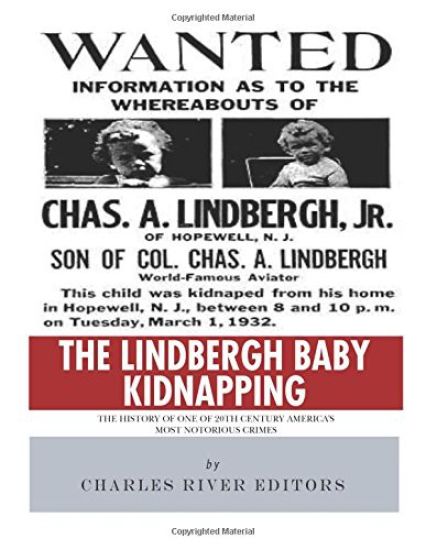
*Includes pictures *Includes accounts of the crime and trial *Includes online resources and a bibliography for further reading *Includes a table of contents "I am writing this literally within the shadow of the electric chair. For upward to fourteen months I have been confined in the cell nearest to the execution chamber in the New Jersey penitentiary. The courts of New Jersey have now said that I shall die on the night of April 3, and that I shall die in the chair that is just beyond the door that faces me and has faced me every waking hour of my life these past fourteen months. The courts have said that on the night of April 3 I shall be prepared to leave the cell which has been my home; walk through the door which has been facing me these weary months; tread the few steps that lead from that door to the electric chair; that on that night I shall be led out on a walk from which I shall never return." - Bruno Richard Hauptmann Amelia Earhart once noted, "In my life I had come to realize that when things were going very well indeed it was just the time to anticipate trouble." And so it would be with America's other famous aviator. Charles Lindbergh had spent the first 30 years of his life escaping multiple plane crashes, becoming a hero across the world, and starting a family, but his luck ran out in an awful way in March of 1932. Tragically, the other major life event associated with Charles Lindbergh besides his historic transatlantic flight was "the crime of the century." On March 1, 1932, 20 month old Charles, Jr. was kidnapped right out of his crib from the family's home in rural East Amwell, New Jersey, and for 10 long weeks, the nation hoped and prayed in chorus with the distraught parents for his safe return. Both Charles and his pregnant wife Anne made frequent, public pleas for their son's safe return, while ransom negotiations took place between a self-identified kidnapper and Dr. John F. Condon, a volunteer intermediary. On April 2, the Lindbergh family paid a ransom of $50,000 in exchange for information about the child's whereabouts, but the information was false. The mystery continued until May 12, when a passing trucker found the corpse of a dead toddler by chance in the woods outside of Mount Rose, New Jersey. Through careful investigation, the police were able to arrest Bruno Richard Hauptmann for the crime about 30 months later, after they tracked some of the money paid through the ransom to a gas station in Manhattan. Hauptmann still had more than $13,000 of the ransom hidden in his garage when authorities closed in. Following his six-week long trial in for kidnapping and murder in early 1935, the jury found him guilty on all counts and Judge Thomas Trenchard sentenced him to death by electrocution, which was carried out on April 3, 1936 at Trenton State Penitentiary. Unfortunately, the kidnapping of his son became more than just a personal matter for Charles Lindbergh; over the next several years, it evolved in his mind to a dislike of America in general. It is almost as if, unable to accept the role that his personal popularity and fame played in the tragedy, Lindbergh chose instead to blame those who made him famous and popular. In an extremely emotional interview with his friend, reporter Lauren Lyman, he said, "We Americans are a primitive people. We do not have discipline. Our moral standards are low. It shows up in the private lives of people we know - their drinking and 'behavior with women.' It shows in the newspapers, the morbid curiosity over crimes and murder trials. Americans seem to have little respect for law, or the rights of others." In a perfect world, or even simply one not on the brink of war, his remarks might have been forgotten, or at the very least heard with a sympathetic ear as the rantings of a grieving father. However, they would be quoted again and again in future years, coming to epitomize the world's view of Lindbergh's politics and values.
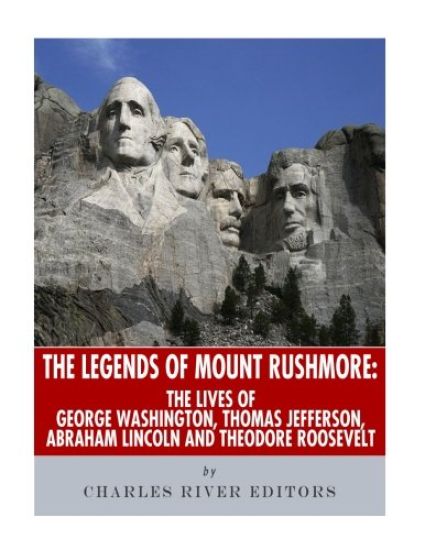
*Includes biographies of all 4 presidents on Mount Rushmore. *Includes pictures of Mount Rushmore, the 4 presidents, and important people, places and events in their lives. *Includes an introduction for each president A lot of ink has been spilled covering the lives of history's most influential figures, but how much of the forest is lost for the trees? In Charles River Editors' American Legends series, readers can get caught up to speed on the lives of America's most important men and women in the time it takes to finish a commute, while learning interesting facts long forgotten or never known. In the 1920s, plans were made to carve the figures of America's greatest presidents into Mount Rushmore, the tallest spot in the Black Hills of the Dakotas. By 1939 the faces of George Washington, Thomas Jefferson, Abraham Lincoln, and Theodore Roosevelt had been carved into the rock, and one of America's greatest national monuments was born. The four men were certainly worthy of being immortalized in granite. Every American is taught a pristine narrative of the life and legacy of George Washington and can easily recite the highlights and myths of Washington's life. Thomas Jefferson was instrumental in authoring the Declaration of Independence, laying out the ideological groundwork of the notion of states' rights, leading one of the first political parties, and overseeing the expansion of the United States during his presidency. Schoolchildren can recite the life story of Lincoln, the "Westerner" who educated himself and became a self made man, rising from lawyer to leader of the new Republican Party before becoming the 16th President of the United States and saving the Union. And at the turn of the 20th century, Theodore Roosevelt came to be recognized as the quintessential American, remembered for being a president, explorer, hunter, author, soldier, president, and safari adventurer, all of which combine into one unique reputation. Mount Rushmore poignantly symbolizes the legacies and legends of these men, which often overshadow the actual men themselves. In addition to covering all of the accomplishments and the growing legacies of these 4 presidents, The Legends of Mount Rushmore humanizes each of these great leaders, examining what they were truly like. Along with pictures of each president and the important people, places and events in their lives, you will learn about the Mount Rushmore presidents like you never have before, in no time at all.

*Weaves the lives and careers of the 4 famous cadets into one entertaining and educational narrative. *Includes pictures of important people and places, as well as maps of battles like Antietam and Gettysburg. *Discusses the relationships between the men, including Hill's close friendship with McClellan and Hill's feuds with Jackson. *Includes Bibliographies of each general. *Includes quotes and letters from the generals. West Point has long been America's most famous military academy, but in the early 19th century, it was a highly unimpressive school consisting of a few ugly buildings facing a desolate, barren parade ground. Established with just five officers and ten cadets of the Corps of Engineers on March 16, 1802, the Academy was built on a spot just 50 miles north of New York City which had been a key Hudson River military fortress during the Revolutionary War. Cadets attending during the "Point's" first several decades were obliged to maintain their daily regimen knowing the school might shut down at any moment, as the U. S. government frequently questioned why it should provide free education. As it turned out, West Point would become the foremost military academy in the nation, but none of the West Point classes became as famous as the Class of 1846, which boasted more than a dozen future Civil War generals. The Class of 1846 included a shy kid named Thomas Jonathan Jackson who made few friends and struggled with his studies, finishing 17th in his class 15 years before becoming Stonewall. Also in that class was A. P. Hill, who was already in love with the future wife of George McClellan, a young prodigy who finished second in the class of 1846. A popular and mischievous George Pickett would play hooky at the local bar and struggle just to finish last in the class, and the Class of 1846 also churned out critical Union generals like Jesse Reno, Darius Couch, and George Stoneman. Before these men opposed each other on Civil War battlefields, they forged their own friendships and charted their future paths together at West Point and the Mexican-American War. The Legends of the West Point Class of 1846 profiles the lives and careers of that class's 4 most famous cadets, chronicling their relationships with each other and their Civil War records. Along with pictures of important people and places, you will learn about Stonewall, McClellan, A. P. Hill and Pickett like you never have before.
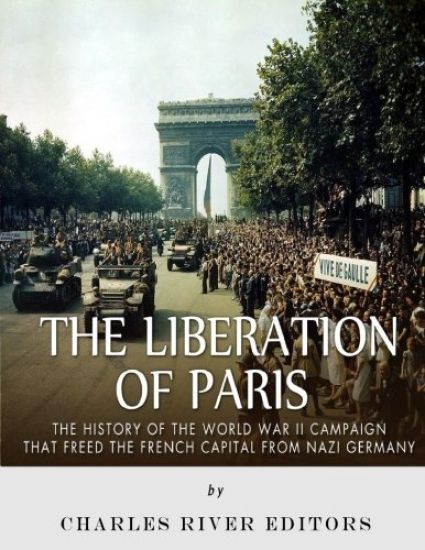
*Includes pictures *Includes accounts of the fighting, liberation, and victory processions written by participants *Includes online resources and a bibliography for further reading *Includes a table of contents "People of Paris ...] the long-awaited day has arrived French and Allied troops are at the gates of Paris. It is the sacred duty of all Parisians to do battle The hour of national resurrection has sounded." - poster displayed in Paris in August 1944 One of the most famous people in the world came to tour the city of Paris for the first time on June 28, 1940. Over the next three hours, he rode through the city's streets, stopping to tour L'Op ra Paris. He rode down the Champs- lys es toward the Trocadero and the Eiffel Tower, where he had his picture taken. After passing through the Arc de Triomphe, he toured the Pantheon and old medieval churches, though he did not manage to see the Louvre or the Palace of Justice. Heading back to the airport, he told his staff, "It was the dream of my life to be permitted to see Paris. I cannot say how happy I am to have that dream fulfilled today." Four years after his tour, Adolf Hitler would order the city's garrison commander, General Dietrich von Choltitz, to destroy Paris, warning his subordinate that the city "must not fall into the enemy's hand except lying in complete debris." Of course, Paris was not destroyed before the Allies liberated it, but it would take more than 4 years for them to wrest control of France from Nazi Germany after they took the country by storm in about a month in 1940. By the end of D-Day, June 6, 1944, the Allies had managed to successfully land 170,000 men, with over 75,000 on the British and Canadian beaches, 57,000 on the American beaches, and over 24,000 airborne troops. Thanks to Allied deception, the German army had failed to react to prevent the Allies from making the most of their landings. Just one division, the Hitlerjugend, would arrive the following day. Despite a fearsome and bloody day, the majority of the Allied forces had held their nerve, and most importantly, achieved their objectives. This ensured Operation Overlord was ultimately successful, and victory in Europe would be achieved within less than a year. Given how the rest of the war played out, it's often forgotten that the British and Americans, after breaking out from their D-Day beachhead on the continent, did not free Paris from its Third Reich garrison. Instead, it was the people of Paris themselves, encouraged by the Allied armies putting the Germans to rout nearby, who retook the city, led by figures from the French Resistance. The revolt that emerged involved many factions, chiefly the followers of Charles de Gaulle, or the "Gaullists," and the communists of the PCF (Parti Communiste Francais, French Communist Party). These factions provided the spearhead and the catalyst sparking the people of Paris into rebellion against their Nazi masters, and the leadership coordinating that uprising and making it a success. Their rivalry and thirst for power spurred them on to outdo each other, but they all sought the same objective: defeat of the foreign occupiers. The Liberation, once it began, required just one week to complete. Parisians fired the first shots on August 19, even as the Allies remained wary of trying to liberate Paris due to its cultural significance, knowing full well that Hitler could order the city destroyed. Nevertheless, on August 24, 1944, the French 2nd Armored Division began liberating parts of Paris, with overjoyed crowds of Parisians welcoming them, while the other Allies entered the eastern part of the city. General von Choltitz decided not to bomb Paris during a retreat, instead surrendering the city intact on August 25. That same day, Charles de Gaulle made a speech at the Hotel de Ville celebrating the freeing of the city and calling for French armies to sweep into Germany and exact "revenge" on the Germans.
Experiments done in astronomy are quite different from other sciences. Unlike biology, chemistry, and physics, astronomers cannot hold their specimens in a petri dish and put them under a microscope. We rely solely on electromagnetic radiation to travel through space, into our telescopes, and interact with our detectors. While there have been impressive advances in our understanding of astronomy and the physical world, we are still quite limited by the sensitivity of our instruments, the size of our detectors, and our inability to probe the far reaches of the cosmos. As such, scientists can only attempt to answer questions that are within grasp of our current technology. Wondering what happened before our universe existed is a matter best left for dreaming, since making such observations are not (yet) possible. The Life and Death of the Universe: The History of the Big Bang and the Ultimate Fate of the Universe examines the fascinating history of deep space, and what the future holds. Along with pictures of important people, places, and events, you will learn about the universe like never before.
*Includes pictures of Smith, Young and important people and places in their lives. *Discusses their leadership of the Mormons, their religious views, and their controversial battles with state militias and federal authorities. *Includes a Bibliography of each man for further reading. "Our missionaries are going forth to different nations, and in Germany, Palestine, New Holland, the East Indies, and other places, the standard of truth has been erected: no unhallowed hand can stop the work from progressing, persecutions may rage, mobs may combine, armies may assemble, calumny may defame, but the truth of God will go forth boldly, nobly, and independent till it has penetrated every continent, visited every clime, swept every country, and sounded in every ear, till the purposes of God shall be accomplished and the great Jehovah shall say the work is done." - Joseph Smith "I know just as well what to teach this people and just what to say to them and what to do in order to bring them into the celestial kingdom... I have never yet preached a sermon and sent it out to the children of men, that they may not call Scripture. Let me have the privilege of correcting a sermon, and it is as good Scripture as they deserve. The people have the oracles of God continually." - Brigham Young Among all the various figures in 19th century America who left controversial legacies, it is hard to find one as influential as Joseph Smith (1805-1844), the founder of the The Church of Jesus Christ of Latter Day Saints, Mormonism, and the Latter Day Saint movement. Revered as a prophet on the level of Moses by some, reviled as a perpetrator of large-scale fraud by others, what everyone can agree on is that Joseph Smith founded a religious movement that played a crucial role in the settlement of the West, especially in Utah. Smith's dream of Zion would lead the way for the trials and the tribulations of the Mormons for the rest of the 19th century, including countless conflicts with local authorities and the U. S. government. Smith himself would be a casualty of the clashing, murdered by a mob in 1844 after being imprisoned in Carthage, Illinois near the settlement of Nauvoo, which Smith had painstakingly tried to create as a commune for his people. After Smith's death, it was Young who led Mormon pioneers westward in a journey that the Latter Day Saints often likened to the Exodus, and Young became popular as "American Moses". At the same time, Young and his group were involved in a seemingly never ending list of controversies, both of their own making and the misconceptions of so many Americans who were unfamiliar with the religion. What can be said about Young is his plain-spoken demeanor of appearance and personality made his efforts to connect with the members of his church all the more authentic. He looked and acted like most Mormons, and despite the dressed up appearance he gave to dignitaries who met him, his common touch worked because he genuinely cared about his fellow Saints. No matter the controversies that raged in the territory of Utah about Mormon lieutenants harassing federal officials, or the rumors of Danite murders of non-Mormons and apostates, the people of Zion viewed him as their representative and the defender of their way of life. The Leaders of the Mormons profiles the extraordinary lives of both men, chronicling Smith's founding of the Church and Young's leadership of it in the wake of his death. Along the way it discusses the Book of Mormon and the religious beliefs espoused by both men. With pictures, bibliographies, and a Table of Contents, you will learn about Joseph Smith and Brigham Young like never before.
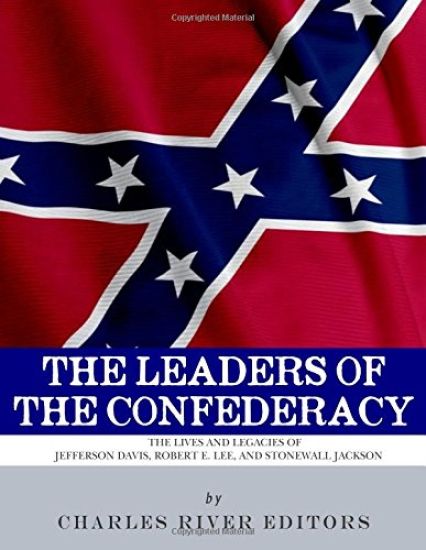
*Includes pictures of each leader, and important people, places, and events in their life. *Includes an original introduction for each leader. *Includes a bibliography for each leader. Despite the fact that the Civil War began over 150 years ago, it remains one of the most widely discussed topics in America today, with Americans arguing over its causes, reenacting its famous battles, and debating which general was better than others. Americans continue to be fascinated by the Civil War icons who made the difference between victory and defeat in the war's great battles, as well as the presidents who oversaw them. The Confederacy and its leaders continue to be the most popular topics of Civil War history, as historians attempt to analyze exactly why they lost, and how to attribute blame and success to its leaders. Foremost among the South's leaders were President Jefferson Davis and his two most popular and successful generals, Robert E. Lee and Stonewall Jackson. Jefferson Davis (1808-1889) holds a unique place in American history, as the man best remembered for being the president of the Confederacy during the Civil War. While other famous Confederates like Robert E. Lee and Stonewall Jackson are still celebrated across the reunited country, Davis continues to be the object of scorn, derided over his attempt to flee after the Civil War and criticized as ineffective by historians. Among the Confederates still lauded by today's Southerners, Davis is well down the list. With the exception of George Washington, perhaps the most famous general in American history is Robert E. Lee (January 19, 1807 - October 12, 1870), despite the fact he led the Confederate Army of Northern Virginia against the Union in the Civil War. As the son of U. S. Revolutionary War hero Henry "Light Horse Harry" Lee III, and a relative of Martha Custis Washington, Lee was imbued with a strong sense of honor and duty from the beginning. And as a top graduate of West Point, Lee had distinguished himself so well before the Civil War that President Lincoln asked him to command the entire Union Army. Lee famously declined, serving his home state of Virginia instead after it seceded. Thomas Jonathan Jackson is one of the most famous generals of the Civil War, but many of the people he continues to fascinate probably don't remember his whole name. That's because Jackson earned his famous "Stonewall" moniker at the First Battle of Manassas or Bull Run, when Brigadier-General Bee told his brigade to rally behind Jackson, whose men were standing like a stone wall. Ironically, it's still unclear whether that was a compliment for standing strong or an insult for not moving his brigade, but the nickname stuck for the brigade and the general itself. The Leaders of the Confederacy: The Lives and Legacies of Jefferson Davis, Robert E. Lee, and Stonewall Jackson analyzes the lives of these three leaders, covering their career and examining their legacies. Along with pictures of the three men, and important people, places, and events in their lives, you will learn about the Leaders of the Confederacy like you never have before, in no time at all.