Kirjojen hintavertailu – 12 903 727 kirjaa ja 27 kauppaa

Kirjailija

Charles River

Kirjat ja teokset yhdessä paikassa: 4 673 kirjaa, julkaisuja vuosilta 2013–2022, suosituimpiin kuuluu William Powell and Myrna Loy: The Lives and Careers of One of Classical Hollywood's Most Iconic Duos. Vertaile teosten hintoja ja tarkista saatavuus suomalaisista kirjakaupoista.

4 673 kirjaa

Kirjojen julkaisuvuodet: 2013–2022.

The Greatest Battles of the Greco-Persian Wars: Marathon, Thermopylae, and Salamis

The Greatest Battles of the Greco-Persian Wars: Marathon, Thermopylae, and Salamis

Charles River

Createspace Independent Publishing Platform
2018
nidottu
*Includes pictures *Includes ancient accounts of the battles *Describes how the Greeks and Persians fought on land and at sea, as well as the weapons they used *Includes a bibliography for further reading *Includes a table of contents The Ancient Greeks have long been considered the forefathers of modern Western civilization, but the Golden Age of Athens and the spread of Greek influence across much of the known world only occurred due to one of the most crucial battles of antiquity: the Battle of Marathon. In 491 B. C., following a successful invasion of Thrace over the Hellespont, the Persian emperor Darius sent envoys to the main Greek city-states, including Sparta and Athens, demanding tokens of earth and water as symbols of submission, but Darius didn't exactly get the reply he sought. According to Herodotus in his famous Histories, "Xerxes however had not sent to Athens or to Sparta heralds to demand the gift of earth, and for this reason, namely because at the former time when Dareios had sent for this very purpose, the one people threw the men who made the demand into the pit and the others into a well, and bade them take from thence earth and water and bear them to the king." Thus, in 490 B. C., after the revolt in Ionia had been crushed, Darius sent his general Mardonius, at the head of a massive fleet and invading force, to destroy the meddlesome Greeks, starting with Athens. The Persian army, numbering anywhere between 30,000 and 300,000 men, landed on the plain at Marathon, a few dozen miles from Athens, where an Athenian army of 10,000 hoplite heavy infantry supported by 1,000 Plataeans prepared to contest their passage. The Athenians appealed to the Spartans for help, but the Spartans dithered; according to the Laws of Lycurgus, they were forbidden to march until the waxing moon was full. Accordingly, their army arrived too late. Thus, it fell upon the Athenians to shoulder the burden. With their army led by the great generals Miltiades and Themistocles, the Athenians charged the outnumbering Persians. Outmatched by the might of the heavy, bronze-armored Greek phalanx, the inferior Persian infantry was enveloped and destroyed, causing them to flee for their ships in panic. The Athenians had won a colossal victory against an overwhelming and seemingly invincible enemy. There are few battles in history in which the vanquished are better remembered and celebrated than the victors, and even fewer where a defeat is considered a victory. But that has become the enduring legacy of the Battle of Thermopylae, a battle as unique as it is famous. The story of the battle and the willing sacrifice of the Greek defenders to buy the rest of the retreating Greeks time is well known across the world and still resonates with audiences to this day. Last stands are the stuff of martial legends, and Thermopylae is the greatest of them all. Though there was another contingent of Greeks fighting alongside them, Thermopylae is remembered for the stand of the 300 Spartans, who, with no compulsion binding them, chose to fight and die in the remote mountain pass against insurmountable odds. Their story has been told in literature, art, film, and even in graphic novels. When the Spartans' famous and sacrificial stand at the Battle of Thermopylae ended, the Athenian fleet was forced to fall back, and Xerxes' massive Persian army marched unopposed into Greece before advancing on Athens. However, Themistocles managed to lure the Persian fleet into the straits of Salamis. There, on a warm day in September 480 BCE, hundreds of Greek and Persian ships faced each other in a narrow strait between the Attic peninsula of Greece and the island of Salamis. The battle that ensued would prove to be epic on a number of different levels, as it set a precedent for how later naval battles were fought in the ancient Mediterranean, turned the tide in the Greeks' favor against the Persians in the Persian Wars.
The Greatest Battles in History: The Battle of Trafalgar

The Greatest Battles in History: The Battle of Trafalgar

Charles River

Createspace Independent Publishing Platform
2018
nidottu
*Includes pictures. *Explains the campaign that led to the battle and the aftermath of Trafalgar. *Includes a bibliography for further reference. Over the course of its history, England has engaged in an uncountable number of battles, but a select few have been celebrated like the Battle of Trafalgar, one of the most important naval battles in history. Before the battle, Napoleon still harbored dreams of sailing an invasion force across the English Channel and subduing England, but that would be dashed on October 21, 1805 by a British fleet that was outnumbered and outgunned. That morning, Admiral Horatio Nelson's fleet, 27 strong, bore down on the Franco-Spanish fleet, approaching at right angles in two columns. French Admiral Pierre-Charles Villeneuve's disposition was conventional - a single line of battle, ill formed due to the very light winds and the poor seamanship of many of the crews. Traditional naval warfare strategies called for approaching an enemy fleet in one line and then creating a parallel line that allowed as many guns as possible to fire. At the same time, that kind of line of battle allowed for admirals to signal during battle, and it made retreating in an orderly fashion easier. After all, if an enemy's ships pursued during a retreat, they would break their own line. The problem with that strategy as Nelson saw it is that the ability to retreat meant fighting a decisive naval battle would be made much more difficult. Thus, at Trafalgar he employed a completely innovative strategy. The British plan was to punch straight through the enemy line with two approaching columns of ships, which would cut the Franco-Spanish fleet's line in three, prompting the melee that they knew would capitalize on their tactical superiority. By the time the Battle of Trafalgar was finished, Nelson had scored arguably the most decisive victory in the history of naval warfare. The British took 22 vessels of the Franco-Spanish fleet and lost none, but as fate would have it, the man most responsible for the victory in one of history's most famous naval battles did not get to enjoy his crowning experience. Nelson's tactics were bold and innovative, but they also unquestionably exposed the advancing column to merciless fire during the approach, especially the Victory, which was naturally at the head of the advance. Around 1:00, the Victory herself was locked in combat with the French ship Redoutable when a sniper on the French ship's mizzentop took aim at Nelson from about 50 feet away. From such a distance, Nelson was an unquestionably conspicuous target, since he was impeccably dressed in his finest military attire. It was a habit that had caused great consternation before among his men, who had asked that he cover the stars on his uniform so that enemies wouldn't recognize his rank. Nevertheless, Nelson insisted on wearing them, famously countering, "In honour I gained them, and in honour I will die with them." The impact of Trafalgar cannot be overstated, as it literally set the stage for the rest of the Napoleonic Era. Unable to invade England, Napoleon was limited to conducting war on the European continent, and while he spent the better part of a decade frustrating the British and their allies, he was eventually undone at Leipzig and then Waterloo nearly a decade after Nelson's victory at Trafalgar. The Greatest Battles in History: The Battle of Trafalgar comprehensively covers the entire campaign, analyzes the decisions made by the battle's most important leaders, and explains the aftermath of the British victory. Along with a bibliography, maps of the battle, and pictures of important people and places, you will learn about the Battle of Trafalgar like you never have before, in no time at all.
The Greatest Battles in History: The Battle of the Bulge

The Greatest Battles in History: The Battle of the Bulge

Charles River

Createspace Independent Publishing Platform
2018
nidottu
*Includes historic pictures of the fighting. *Includes accounts of the fighting written by common soldiers and important generals. *Includes pictures of important people, places, and events. *Includes a bibliography for further reading. "We were across the Saar River in Dellingen, where the Battle of the Bulge started. That was where Axis Sally told us about the Bulge. The Germans had a loud speaker back in the woods and she was talking on that. They played a few American records first. I don't remember everything she said. She said, 'Your wives and girlfriends are probably home in a nice warm building, dancing with some other men. You're over here in the cold.'" - Dent Wheeler After the successful amphibious invasion on D-Day in June 1944, the Allies began racing east toward Germany and liberating France along the way. The Allies had landed along a 50 mile stretch of French coast, and despite suffering 8,000 casualties on D-Day, over 100,000 still began the march across the western portion of the continent. By the end of August 1944, the German Army in France was shattered, with 200,000 killed or wounded and a further 200,000 captured. However, Adolf Hitler reacted to the news of invasion with glee, figuring it would give the Germans a chance to destroy the Allied armies that had water to their backs. As he put it, "The news couldn't be better. We have them where we can destroy them." While that sounds delusional in retrospect, it was Hitler's belief that by splitting the Allied march across Europe in their drive toward Germany, he could cause the collapse of the enemy armies and cut off their supply lines. Part of Hitler's confidence came as a result of underestimating American resolve, but with the Soviets racing toward Berlin from the east, this final offensive would truly be the last gasp of the German war machine, and the month long campaign was fought over a large area of the Ardenne Forest, through France, Belgium and parts of Luxembourg. From an Allied point of view, the operations were commonly referred to as the Ardennes Offensive, while the German code phrase for the operation was Unternehmen Wacht am Rhein ("Operation Watch on the Rhine"), with the initial breakout going under the name of "Operation Mist." Today, Americans know it best as the Battle of the Bulge. Regardless of the term for it, and despite how desperate the Germans were, the Battle of the Bulge was a massive attack against primarily American forces that inflicted an estimated 100,000 American casualties, the worst American losses in any battle of the war, However, while the German forces did succeed in bending, and at some points even breaking through Allied lines (thus causing the "bulge" reflected in the moniker), the Germans ultimately failed. As Winston Churchill himself said of the battle, "This is undoubtedly the greatest American battle of the war, and will, I believe be regarded as an ever famous American victory." After resisting the German attack, the Allied armies began advancing, and with that, the race to Berlin was truly on, with the Allied armies in Western Europe desperate to reach the German capital before Stalin's Soviets could arrive from the east. Less than 2 months after the Battle of the Bulge ended, Allied armies entered Germany, and by early May, Hitler would be dead in his bunker and the war in Europe would be over. The Greatest Battles in History: The Battle of the Bulge comprehensively covers the entire military situation that led up to the battle, analyzes the decisions made by the battle's most important leaders, and explains the aftermath of the Allied victory. Along with a bibliography and pictures of important people and places, you will learn about the Bulge like you never have before, in no time at all.
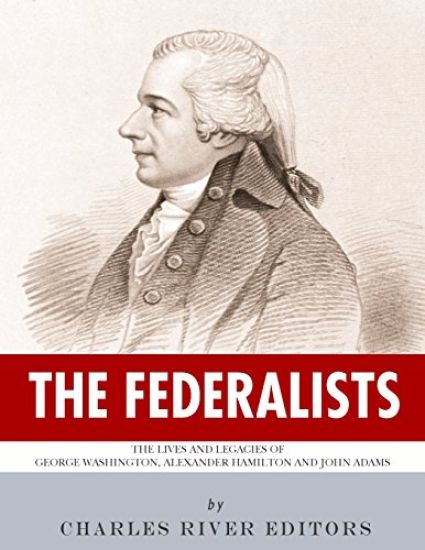
The Federalists: The Lives and Legacies of George Washington, Alexander Hamilton and John Adams
*Includes pictures of Washington, Hamilton, Adams and important people, places, and events in their lives. *Comprehensively covers the role each played in the Revolution, the drafting of the Constitution, and the Federalist Party. *Looks at some of the myths and controversies surrounding each man, including legends about Washington's false teeth and the Hamilton-Burr duel. *Includes a Bibliography for further reading. Every American is taught a pristine narrative of the life and legacy of George Washington and can easily recite the highlights of the "Father of Our Country". He may not have actually chopped down a cherry tree or tossed a silver dollar across the Potomac, but his contemporaries considered his character above reproach. When Washington voluntary resigned as commander of the armies, he stunned the world. Everyone in the colonies and the world realized that Washington, at the head of the last army standing in the colonies, could have made himself king of the new United States on the spot, and it would have been a move supported by his rank and file soldiers. Instead, Washington became the first Westerner to voluntarily demobilize his army, ensuring civilian control of the new nation. King George III called Washington "the greatest character of the age" for making that decision. As President from 1788-1796, Washington set every precedent for the executive branch of the new government, from forming a "Cabinet" to limiting himself to two terms. He even set precedents with his farewell address, which helped guide the policies of subsequent presidents. It was also under his watch that his protege, Hamilton, developed the Federalist party. Unfortunately, one of the best known aspects of Hamilton's (1755-1804) life is the manner in which he died, shot and killed in a famous duel with Aaron Burr in 1804. But Hamilton started as an orphaned child in the West Indies before becoming one of the most instrumental Founding Fathers of the United States in that time, not only in helping draft and gain support for the U. S. Constitution but in also leading the Federalist party and building the institutions of the young federal government as Washington's Secretary of Treasury. Hamilton is also well remembered for his authorship, along with John Jay and James Madison, of the Federalist Papers. John Adams has become one of the more popular presidents in history relatively recently, but it was not always so. For most of his life he was seen as a bit of an outsider, different from his fellow first presidents in his temperament, birth, life and politics. Adams and his son were the only presidents out of the first seven who were born north of the Mason Dixon line, and he was not an easy man to understand or work with. Politically, Adams shared Washington's preference for Britain as well as his preference of non-interference. However, while he was certainly the more significant man in his work and his governing, he could never seem to move out of Washington's shadow. Even worse, his presidency was seen as threatening to the very essence of American liberty with the Alien and Sedition Acts, and his loss to Jefferson in 1800 was a repudiation of the Federalists that left Jeffersonians in power until John Quincy Adams was elected in 1824. His presidency is still viewed relatively unfavorably. The Federalists chronicles the amazing lives and political careers of each man, as well as their contributions to the founding of the country and the Federalist Party. Along with pictures of important people, places, and events, you will learn about Hamilton, Washington, and Adams like you never have before.
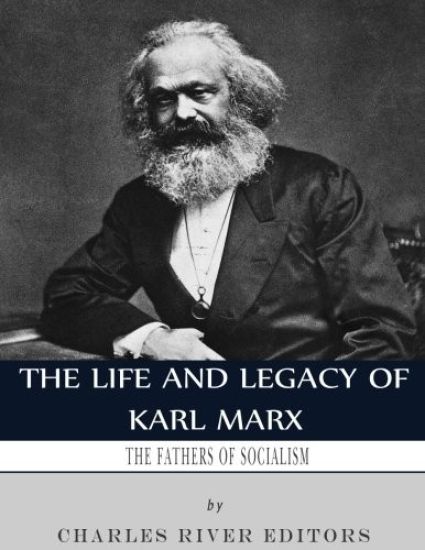
The Fathers of Socialism: The Life and Legacy of Karl Marx

The Fathers of Socialism: The Life and Legacy of Karl Marx

Charles River

Createspace Independent Publishing Platform
2018
nidottu
*Includes pictures of Marx and important people in his life. *Explains Marx's social and economic theories and ideology. *Includes a Bibliography for further reading. "The philosophers have only interpreted the world, in various ways. The point, however, is to change it." - Karl Marx During the 19th century, Europe witnessed one of history's most powerful leaders, Napoleon Bonaparte, establish an empire that resulted in the redrawing of the European map after his defeat. But while Europe's imperialistic nations continued to amass greater power across the globe, one of the 19th century's most influential Europeans went about changing the status quo at home. It would be almost impossible to exaggerate the influence Karl Marx has had upon the world in the last 150 years. Marx was an influential historian, journalist and economist who is widely considered one of the first social scientists, but he is best remembered for advocating socialism, particularly the brand that would take his name. As the father of Marxism, Marx predicted that capitalistic societies, ruled by a "dictatorship of the bourgeoise", would eventually give way via class struggles to a "dictatorship of the proletariat", and eventually to a more stateless form of communism. Marx certainly wasn't the first to espouse these kinds of political views, but nobody before or since had as much influence in actually bringing about the implementation of their ideas. Working with Friedrich Engels and others, Marx went about authoring a series of works, most notably The Communist Manifesto (1848) and Capital (1867-1894), championing his ideas. While Marx laid out the ideological groundwork, many put it into action, leading to the formation of socialist powers in the Soviet Union and China during the first half of the 20th century. Marx's writings and philosophy had an impact on the social sciences and economic theories, but one of his biographers could comfortably and accurately assert that the political history of the 20th century was "Marx's legacy". Whether fairly or not, in the West Marx has bcome inextricably linked with some of the totalitarian excesses of the regimes that claimed to espouse his ideology, and for that reason Marx is often associated with some of the negative connotations that come with the Soviets. Nevertheless, few would deny the very decisive impact Marxism had on the global landscape, and the ramifications continue to have a political influence today. Although Marx will forever be most closely associated with socialism and communism, The Fathers of Socialism: The Life and Legacy of Karl Marx looks at his entire life and work in detail, analyzing his ideology and lasting legacy. Along with pictures of important people, places and events in his life, you will learn about Karl Marx like you never have before, in no time at all.
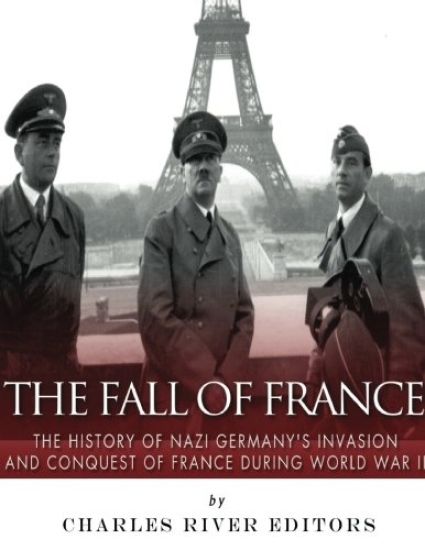
The Fall of France: The History of Nazi Germany's Invasion and Conquest of France During World War II
*Includes pictures *Includes accounts of the fighting *Includes online resources and a bibliography for further reading *Includes a table of contents "My Luftwaffe is invincible... And so now we turn to England. How long will this one last - two, three weeks?" - Hermann Goering, June 1940 One of the most famous people in the world came to tour the city of Paris for the first time on June 28, 1940. Over the next three hours, he rode through the city's streets, stopping to tour L'Op ra Paris. He rode down the Champs- lys es toward the Trocadero and the Eiffel Tower, where he had his picture taken. After passing through the Arc de Triomphe, he toured the Pantheon and old medieval churches, though he did not manage to see the Louvre or the Palace of Justice. Heading back to the airport, he told his staff, "It was the dream of my life to be permitted to see Paris. I cannot say how happy I am to have that dream fulfilled today." Four years after his tour, Adolf Hitler would order the city's garrison commander, General Dietrich von Choltitz, to destroy Paris, warning his subordinate that the city "must not fall into the enemy's hand except lying in complete debris." Of course, Paris was not destroyed before the Allies liberated it, but it would take more than 4 years for them to wrest control of France from Nazi Germany after they took the country by storm in about a month in 1940. That said, it's widely overlooked today given how history played out that as the power of Nazi Germany grew alarmingly during the 1930s, the French sought means to defend their territory against the rising menace of the Thousand-Year Reich. As architects of the most punitive measures in the Treaty of Versailles following World War I, France was a natural target for Teutonic retribution, so the Maginot Line, a series of interconnected strongpoints and fortifications running along much of France's eastern border, helped allay French fears of invasion. The true flaw in French military strategy during the opening days of World War II lay not in reliance on the Maginot fortifications but in the army's neglect to exploit the military opportunities the Line created. In other words, the border defense performed as envisioned, but the other military arms supported it insufficiently to halt the Germans. The French Army squandered the opportunity not because the Maginot Line existed but because they failed to utilize their own defensive plan properly; the biggest problem was that the Germans simply skirted past the intricate defensive fortifications by invading neutral Belgium and swinging south, thereby avoiding the Maginot Line for the most part. The French had not expected the Germans would be able to move armored units through the Ardennes Forests, a heavily wooded region spanning parts of Belgium, France and the Netherlands. To the Allies' great surprise, the Germans had no trouble rolling across these lands in the span of weeks. And by invading France from the north, the Germans simply avoided the Maginot Line. The French surrendered in June 1940, and the British narrowly escaped disaster by transporting thousands of soldiers and equipment across the English Channel at Dunkirk. Thus, by the middle of 1940, the Axis powers and the Soviet Union had overrun nearly all of Western Europe. With France out of the war, and without active participation by the United States, Great Britain virtually stood alone. The Fall of France: The History of Nazi Germany's Invasion and Conquest of France During World War II chronicles the background and construction of the much maligned defensive fortifications. Along with pictures of important people, places, and events, you will learn about the fall of France like never before, in no time at all.
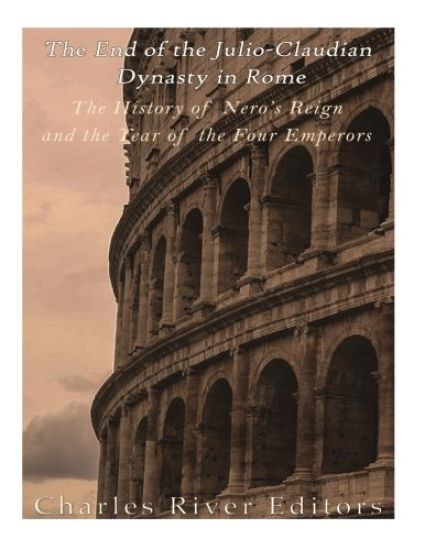
The End of the Julio-Claudian Dynasty in Rome: The History of Nero's Reign and the Year of the Four Emperors
*Includes pictures *Includes ancient historians' accounts of Nero *Includes online resources and a bibliography for further reading *Includes a table of contents Nero ranks among the very worst of the Caesars, alongside the likes of mad Caligula, slothful Commodus, and paranoid Domitian, a figure so hated that, in many ancient Christian traditions, he is literally, without hyperbole, considered the Antichrist; according to a notable Biblical scholar, the coming of the Beast and the number 666 in the Book of Revelation are references to Nero. He was the man who, famously, "fiddled while Rome burned", an inveterate lecher, a murderous tyrant who showed little compunction in murdering his mother and who liked to use Christian martyrs as a source of illumination at night - by burning them alive. His economic policies, according to many historians, virtually bankrupted Rome. The best known accounts of Nero come from biographers like Tacitus, Cassius Dio, Suetionius and Josephus, but there are also indications that, to some extent, reports of Nero's cruelty were exaggerated. Nero was popular with the common people and much of the army, and during his reign the Empire enjoyed a period of remarkable peace and stability. Many historians, including some of his ancient biographers - such as Josephus - suggest that there existed a strong bias against Nero. Part of this is because his successors wished to discredit him, and justify the insurrections which eventually drove him, hounded from the throne, to a lonely suicide. Much of the bias against Nero can also be attributed to the fact that he was a renowned persecutor of Christians, and since many of the historians who wrote about Nero in the years after his death were Christians themselves, it made sense for them to have a jaundiced view of their erstwhile nemesis. Because of this, some historians have suggested that Nero's demeanour and reputation might not be as black as the original sources might be inclined to suggest. Having left no heir, Nero's death plunged the empire into confusion and chaos, bringing to an end the Julio-Claudian lineage while at the same time offering no clear rule of succession. This presented the opportunity for influential individuals in the empire, and in particular provincial governors who also commanded large military garrisons, to express and further their own ambitions to power. The result was a period of instability and civil war as several pretenders to the throne, among them the emperors Galba, Otho and Vitellius, gained and lost power, until finally the emperor Vespasian seized and retained the imperial principate. Vespasian imposed order and discipline on a chaotic empire and founded the Flavian Dynasty, which survived until CE 96, encompassing the reigns of Vespasian himself (69-79), and his two sons Titus (79-81) and Domitian (81-96). The 12 months known in history as the Year of the Four Emperors was a pivotal chapter in the long epoch of the Roman Empire. It marked the tumultuous end of the Julio-Claudian Dynasty and the advent of a year of civil war, renewal and realignment, the result of which was the establishment of a new era and the founding of a new (and arguably more rational and responsible) imperial dynasty. The End of the Julio-Claudian Dynasty in Rome: The History of Nero's Reign and the Year of the Four Emperors looks at the life of one of Rome's most notorious emperors and the chaos that engulfed Rome after his death. Along with pictures of important people, places, and events, you will learn about Nero and the Year of the Four Emperors like you never have before.
The Election of 1876: The History of the Controversial Election that Ended Reconstruction
*Includes pictures *Includes contemporary accounts describing the candidates, the conventions, and the election *Includes online resources and a bibliography for further readers *Includes a table of contents "It is impossible, at so early a time, to obtain the result." - Rutherford B. Hayes after the election It seems that every time a presidential election rolls around in America, voters are told that the nation is at a critical fork in its history, and that the decisions reached and the candidates elected will change the course of history. While this is always true to some extent, there are times when it is true to a critical extent. Such was the case in 1876, when the country, weary of four years of Civil War and more than a decade of Reconstruction, was once again on the brink of splitting. While the Northern states celebrated the centennial of American Independence, the South found itself chaffing under the weight of federal occupation. At the same time, the entire nation was shocked and horrified at the direction the Indian Wars in the West were going, culminating just weeks before the election with George Custer's shocking defeat at the Battle of the Little Bighorn. Many assumed that President Ulysses S. Grant, the popular Civil War general who was still a relatively young man at the end of his second term in office, would surely run for a third, but many Americans knew nothing of the scandals and corruption that had surrounded Grant's administration, and he wanted to keep it that way, preferring to be remembered as a successful general rather than a failed president. Thus, after extensive consultations with his advisors, he decided to retire from political life, leaving the Republican nomination wide open. At the same time, Southern politicians were beginning to make a comeback and the Democratic Party was gaining strength, especially in the former Confederate states. The South hoped that if it could once again win the White House, it could finally resume its position as an equal part of the nation, rather than a section being punished for its past. All of this set the stage for one of the strangest interludes in American history. As the nation's two major parties each put forth a large slate of candidates for nomination, two candidates had to come to the fore, and each party selected both a presidential and vice-presidential candidate. These four men ran a bitterly contested race just to reach the general election, and that general election became the most controversial in American history. By the time results rolled in, Democrat Samuel Tilden had won the popular vote and was up by 19 electoral votes, but 20 electoral votes were disputed, and despite claims of fraud, the two sides eventually forged the Compromise of 1877, which gave the presidency to the Republican Rutherford B. Hayes in exchange for the removal of federal troops from the South. The Compromise effectively ended the Reconstruction era, and while it helped bring about the sectional reconciliation of the country, it also allowed the Solid South to emerge, which included the implementation of Jim Crow across the region. In effect, the election ensured another major battle over the civil rights of minorities would ensue decades later. The Election of 1876: The History of the Controversial Election that Ended Reconstruction looks at one of America's most controversial aspects of the 19th century. Along with pictures of important people, places, and events, you will learn about the Missouri Compromise like never before.
The Election of 1800: The History and Legacy of America's Most Controversial Presidential Election
*Includes pictures *Includes contemporary accounts of the election *Includes online resources and a bibliography for further reading *Includes a table of contents The voters must have been happy after the election was over. For months, they had endured vicious attacks made by members of two warring parties against each other as time and time again issues were ignored in favor of personal attacks. One party was seen as caring more about the interests of the wealthy and supporting bankers and businesses. The other party was supposed to favor the working man, the farmer and small businessman trying to eke out a living. The first party was said to be in the back pocket of America's most recent enemy, while the other party was much to devoted to the nation's first, even though many of its policies had changed since their first alliances ended. Then there were the candidates. One was the incumbent, a staid fellow of middle class origins who was known to ruthlessly weed out his enemies. Another candidate had no Federal experience and very little political experience at the state level. Having been born into a wealthy, politically active family, he vocally supported a strong military and insisted that American must stand strong against anyone who rattle a saber in her direction. The third candidate was popular and good looking, with extensive political experience at the state and federal level. Highly intelligent and well-educated, he was rumored to have loose morals and at least two mistresses. The final candidate was a hot head, known to shoot off his mouth at the least provocation. So wild were some of his ideas that even some of the members of his own party shunned him. Though people characterize politics as nasty today, this election took place more than 200 years ago during a time when America was supposedly a kinder and more gracious place. While that may be true of the common people, and even of some politicians, it was certainly never true of this group. Indeed, while George Washington is still remembered for his almost apolitical approach to governing the nation, the men who succeeded him, some of them his friends, were anything but apolitical. John Adams had been his Vice-President and succeeded him in office, but he was sensitive to every slight and difficult to get along with. Charles Pinckney had fought nobly under Washington's command during the Revolutionary War, but that did not mean that he would hesitate in spreading vicious rumors about another candidate, Thomas Jefferson, who hailed from Washington's home state and shared his love of farming. Finally, Aaron Burr would become so upset about the outcome of the election that he would eventually kill Washington's strong political ally, Alexander Hamilton, in a duel over slights he felt had been dealt him. As the Constitution prescribed, the election was determined in the House of Representatives when a mix-up led to Jefferson and Burr receiving the same number of electoral votes. This proved problematic as well. The Federalists controlled the House that decided who would be President. With Jefferson as their arch-nemesis, they were hardly happy to support him, and many initially voted for Burr. The first 35 ballots were always a tie between Burr and Jefferson. Not until mid-February of 1801, when Alexander Hamilton, another of Jefferson's nemeses, came out to endorse the Vice President, did Jefferson come out ahead. Hamilton's disdain for Burr was so strong that he virtually handed the presidency to Jefferson, who had been his ideological opponent for the better part of a decade. Hamilton's decision created personal animus between Hamilton and Burr that stewed for years and famously culminated with the duel that ended Hamilton's life in 1804. The Election of 1800: The History and Legacy of America's Most Controversial Presidential Election chronicles one of the most bitter contests in American history.
The Election of 1800 and the Election of 1876: The History and Legacy of the Only Presidential Elections Decided by Congress
*Includes pictures *Includes contemporary descriptions of the campaigns, elections, and results *Includes online resources and a bibliography for further reading *Includes a table of contents In 1800, Thomas Jefferson beat sitting President John Adams, albeit narrowly, and denied Adams the second term he coveted. Adams escaped to Massachusetts and left a curt note about the state of the White House stables behind. No congratulations were exchanged, and the two men did not speak to one another for over a decade afterwards. Jefferson's election to the Presidency also left an important electoral legacy. By 1800, the Alien and Sedition Acts had made Adams an unpopular President, especially in the South. Without formal parties to effectively nominate candidates in a President-Vice President ticket, the Democratic-Republicans had two nominees: Thomas Jefferson and New York's Aaron Burr, who had been tabbed to serve as Jefferson's Vice President. Once the Electoral College cast its ballots, Jefferson and Burr had the same number of electoral votes with 73, while Adams came in third with 65. This was, however, a mix-up. The Democratic-Republican electors were supposed to have one elector abstain from voting for Burr, which would make Jefferson President and Burr Vice-President. In the 1800 election, states selected their electors from April until October. The last state to select its electors, South Carolina, selected Democratic-Republicans but neglected to have one voter abstain. The final vote was thus a tie. As the Constitution prescribed, the election was determined in the House of Representatives. This proved problematic as well. The Federalists controlled the House that decided who would be President. With Jefferson as their arch-nemesis, they were hardly happy to support him, and many initially voted for Burr. The first 35 ballots were always a tie between Burr and Jefferson. Not until mid-February of 1801, when Alexander Hamilton, another of Jefferson's nemeses, came out to endorse the Vice President, did Jefferson come out ahead. Hamilton's disdain for Burr was so strong that he virtually handed the presidency to Jefferson, who had been his ideological opponent for the better part of a decade. Hamilton's decision created personal animus between Hamilton and Burr that stewed for years and famously culminated with the duel that ended Hamilton's life in 1804. Many assumed that President Ulysses S. Grant, the popular Civil War general who was still a relatively young man at the end of his second term in office, would surely run for a third, but many Americans knew nothing of the scandals and corruption that had surrounded Grant's administration, and he wanted to keep it that way All of this set the stage for one of the strangest interludes in American history. As the nation's two major parties each put forth a large slate of candidates for nomination in 1876, two candidates had to come to the fore, and each party selected both a presidential and vice-presidential candidate. These four men ran a bitterly contested race just to reach the general election, and that general election became the most controversial in American history. By the time results rolled in, Democrat Samuel Tilden had won the popular vote and was up by 19 electoral votes, but 20 electoral votes were disputed, and despite claims of fraud, the two sides eventually forged the Compromise of 1877, which gave the presidency to the Republican Rutherford B. Hayes in exchange for the removal of federal troops from the South. The Compromise effectively ended the Reconstruction era, and while it helped bring about the sectional reconciliation of the country, it also allowed the Solid South to emerge, which included the implementation of Jim Crow across the region. In effect, the election ensured another major battle over the civil rights of minorities would ensue decades later.
The Egyptian Pyramids: The Origins and History of the World's Most Famous Monume

The Egyptian Pyramids: The Origins and History of the World's Most Famous Monume

Charles River

Createspace Independent Publishing Platform
2018
nidottu
*Includes pictures of the various pyramids and computer generated layouts of the pyramid complexes. *Includes footnotes and a bibliography for further reading. "When we find something new at Giza, we announce it to the world. The Sphinx and the Pyramids are world treasures. We are the guardian's of these treasures, but they belong to the world." - Zahi Hawass, Egyptologist The pyramids of Egypt are such recognizable symbols of antiquity that for millennia, people have made assumptions about what they are and why they exist, without full consideration of the various meanings these ancient symbolic structures have had over the centuries. Generations have viewed them as symbols of a lost past, which in turn is often portrayed as a world full of romance and mystery. This verbal meaning has become associated with the structures through the tourism industry, where intrigue obviously boosts ticket sales. In fact, the Egyptian pyramids are so old that they were also drawing tourists even in ancient times. In antiquity, the Great Pyramid of Giza was listed as one of Seven Ancient Wonders of the World, and it is the only one still surviving today. The age and structural integrity of the pyramids also make them symbols of longevity and power, which is only fitting because those are two purposes the ancient pharaohs who commissioned these works intended them to serve. For the pharaohs, the construction of these large monuments presented an opportunity for them to showcase their influence and become something to be remembered by, both in the society they ruled and in the annals of history that would follow. Even as new dynasties came and went, and even as Egypt was subjected to foreign domination and rulers from across the world, the pyramids have continued to stand as a prominent testament to Ancient Egypt's glorious past. The Egyptian Pyramids: The Origins and History of the World's Most Famous Monuments comprehensively covers the origins, history, mysteries, and theories surrounding the ancient monuments. Along with pictures and a bibliography, you will learn about the pyramids like you never have before, in no time at all.
The Historical and Theological Evolution of Satan, the Devil, and Hell

The Historical and Theological Evolution of Satan, the Devil, and Hell

Charles River

Createspace Independent Publishing Platform
2018
nidottu
*Includes pictures of historic art depicting the Devil and Hell. *Explains the origins of the belief in Hell, and the way in which descriptions of Hell changed over time. *Includes a Bibliography for further reading. The Catholic Church has defined Hell as "a state of definitive self-exclusion from communion with God and the blessed", but the images most have of the Devil and Hell are far more vivid. Even non-Christians are fully familiar with the idea of Hell being a fiery realm of eternal damnation, and the Devil has been depicted so frequently in literature, movies, and television that the figure is instantly recognizable. While most people know the fairly consistent description of Hell that exists today, the description of Hell has evolved countless times over the centuries, including within the Christian faith. During medieval times, many Christian writers described parts or all of Hell as cold and desolate places, going as far back as the 4th century work Apocalypse of Paul. At the same time, the concepts of the Devil and Hell are not unique to Christianity; other major faiths have similar concepts, while ancient religions had an underworld and assorted characters, such as the Greeks' Hades. Satan, the Devil, and the History of Hell looks at the historical origins of these crucial concepts, as well as the evolution of them over time among Christian and Jewish works, in an effort to trace the history and development of them as central religious tenets. This work includes pictures of historic artwork and a bibliography.
The Explosion of the SS Sultana: The Deadliest Maritime Disaster in American History

The Explosion of the SS Sultana: The Deadliest Maritime Disaster in American History

Charles River

Createspace Independent Publishing Platform
2018
nidottu
*Includes pictures *Includes accounts of the explosion and sinking of the Sultana *Includes a bibliography for further reading There is a popular saying that declares "timing is everything," and in no other field of study is that truer than in history. For instance, under normal conditions, a ship that sank with more than 2,000 passengers aboard - most of whom died - would be big news, yet today the sinking of the SS Sultana is often overlooked if not entirely forgotten. While it might have generated the type of publicity and reaction of the Johnstown Flood of 1889 or the Galveston Hurricane of 1900 under normal circumstances, the explosion and sinking of the Sultana on April 27, 1865 has become something of a historical footnote. The irony is that the Sultana is a historical footnote because of the Civil War, but it was also intimately tied to the war. Although Robert E. Lee's surrender to Ulysses Grant at Appomattox was not technically the end of the Civil War, it took one of the last remaining Confederate armies out of the field. Furthermore, on the night of April 14, many of the Union's hopes for the future were dashed when President Abraham Lincoln was shot at Ford's Theatre in Washington, D. C. The people of the nation quickly became a volatile mix of grief and outrage, uninterested in anything that did not relate to the death of their beloved president. In fact, just the day before the disaster, as the Sultana was sailing up the Mississippi River to her rendezvous with destiny, Union Army soldiers cornered and killed Lincoln's assassin, John Wilkes Booth. The Sultana's chief engineer, N. Wintringer, tried to give his readers a sense of the context in which the accident took place when he wrote, "As I was chief engineer of that ill-fated steamer at the time of her explosion I thought that my recollections of that terrible calamity would be of some interest. I believe that George Oayton, one of the pilots and myself were the only officers of the boat that escaped with our lives. ... The 'Sultana' left Cairo on that fatal trip the 15th of April, 1865, the day after the death of President Lincoln, and as all wire communications with the south were cut off at that time, the 'Sultana' carried the news of his assassination and death to all points and military posts on the Mississippi river as far as New Orleans." In short, the entire nation was in a state of chaos and too exhausted from four years of war that culminated in the death of the president to give the disaster the attention and grief it deserved. Perhaps the cruelest irony of the disaster is that the Sultana was packed full of men who had survived every conceivable trial and tribulation of the war, from wounds and sicknesses to being prisoners. Having lost hundreds of thousands, America was almost numb to the loss of a couple of thousand more, especially when many of the dead were soldiers themselves, and in a sense, it was left for future generations to try to unravel what went wrong and to pay tribute to the men who died on that dark night. The Explosion of the SS Sultana chronicles the story of America's deadliest maritime disaster. Along with pictures of important people, places, and events, you will learn about the explosion and sinking of the Sultana like never before, in no time at all.
The Doolittle Raid: The History and Legacy of the First American Attack on Tokyo During World War II
*Includes pictures *Explains the planning and training for the raid *Includes accounts of the raid written by Doolittle and other survivors *Includes a bibliography for further reading *Includes a table of contents "The Japanese people had been told they were invulnerable ... An attack on the Japanese homeland would cause confusion in the minds of the Japanese people and sow doubt about the reliability of their leaders. There was a second, and equally important, psychological reason for this attack ... Americans badly needed a morale boost." - Jimmy Doolittle All Americans are familiar with the "day that will live in infamy." At 9:30 a.m. on Sunday, December 7, 1941, Pearl Harbor, the advanced base of the United States Navy's Pacific Fleet, was ablaze. It had been smashed by aircraft launched by the carriers of the Imperial Japanese Navy. All eight battleships had been sunk or badly damaged, 350 aircraft had been knocked out, and over 2,000 Americans lay dead. Indelible images of the USS Arizona exploding and the USS Oklahoma capsizing and floating upside down have been ingrained in the American conscience ever since. In less than an hour and a half the Japanese had almost wiped out America's entire naval presence in the Pacific. The Americans would turn the war in the Pacific around in the middle of 1942, but in the wake of Pearl Harbor and the Japanese invasion of the Philippines, the country was in desperate need of a morale boost, and it would come in the form of the Doolittle Raid. In part to show that the Japanese were not invincible, and in part to reassure the American public that the nation would not lose the war, the Doolittle Raid included both Army and Navy units that launched 16 land-based medium bombers from an aircraft carrier, a feat that was the first of its kind but also one involving a great deal of risk. Getting the bombers and carriers in place to execute the mission involved much strategic planning and cooperation within the American military, and had it failed, it could have dealt a serious blow to the Americans' Pacific presence due to the nation's limited resources in that theater. As if getting in position wasn't challenging enough, the raid was never designed to include a round trip back to the carrier. Given the size of the bombers, the planes were unable to land back on the USS Hornet, so the plan was to have them fly over Japan and ditch in China after bombing Tokyo. While most of the crew would survive the mission, a few died during the raid, all of the planes were lost, and Japanese search parties eventually captured a number of Americans and executed three of them. One of the crews landed in the Soviet Union and would end up being interned there for a year. From a tactical standpoint, the raid accomplished nothing of note, and Doolittle actually thought he would be punished for the results, but the Doolittle Raid served its purpose of boosting American resolve and demonstrating to the Japanese that they could be attacked at home as well. Furthermore, the Doolittle Raid showed the importance of air power in the war. It helped convince military planners of the power of a strong air force that could not only shift the balance of battles but could also hit military-industrial areas from long-range and thus cripple a nation's war-making abilities. The Japanese would take the capabilities of airplanes into account when formulating how to defend their empire, and it would help compel their leaders to make decisions such as the ones that led to the decisive Battle of Midway later in 1942. The Doolittle Raid chronicles the history and legacy of one of World War II's most audacious air raids. Along with pictures of important people, places, and events, you will learn about the Doolittle Raid like never before, in no time at all.
The Assassination of Archduke Franz Ferdinand: The History and Legacy of the Event That Triggered World War I
*Includes pictures *Profiles Franz Ferdinand and the people behind the overarching conspiracy to assassinate him *Includes a bibliography for further reading *Includes a table of contents "It is nothing." - Archduke Franz Ferdinand after being shot on June 28, 1914 Although a couple of wars were fought on the European continent during the 19th century, an uneasy peace was mostly maintained across the continent for most of the 19th century after Napoleon. Despite this ostensible peace, the Europeans were steadily conducting arms races against each other, particularly Germany and Britain. Britain had been the world's foremost naval power for centuries, but Germany hoped to build its way to naval supremacy. The rest of Europe joined in on the arms race in the decade before the war started. With Europe anticipating a potential war, all that was missing was a conflagration. That would start in 1908, when Austria-Hungary annexed Bosnia-Herzegovina in the Balkan Peninsula, drawing it into dispute with Russia. Moreover, this upset neighboring Serbia, which was an independent nation. From 1912-1913, a conflict was fought in the Balkans between the Balkan League and the Ottoman Empire, resulting in the weakening of the Ottoman Turks. After the First Balkan War, a second was fought months later between members of the Balkan League itself. The final straw came June 28, 1914, when a Serbian assassinated Archduke Franz Ferdinand, the heir to the throne of Austria-Hungary, in Sarajevo, Bosnia. Austria-Hungary immediately issued ultimatums to Serbia, but when they declared war on Serbia July 28, 1914, Russia mobilized for war as well. The Germans mobilized in response to Russia on July 30, and the French, still smarting from the Franco-Prussian War, mobilized for war against Germany. The British also declared war on Germany on August 4. Thus, in the span of one week, six nations had declared war, half of which had no interest in the Balkans. Though nobody can know for sure, it's altogether possible that World War I would have still broken out even if Franz Ferdinand had not been murdered. Regardless of events in the Balkans, Germany was already bellicose, France and Austria were concerned and involved, Russia was outwardly aggressive but also dealing with internal dissatisfaction, Italy was poised on the brink, and Britain was desperate to remain aloof but committed to its continental allies and a host of smaller countries clamoring for independence. Europe was too explosive to be rescued by any but the best of diplomats, if at all. At the same time, it's important not to underestimate the importance of Franz Ferdinand's assassination. In many respects, it was a momentous occasion, both because of the nationality of the conspirators and the context and manner in which it occurred, as well as the disturbing facts that came to light during the subsequent trial. The Assassination of Archduke Franz Ferdinand: The History and Legacy of the Event That Triggered World War I chronicles the history and legacy of one of the 20th century's most important events. Along with pictures of important people, places, and events, you will learn about the assassination of Franz Ferdinand like never before, in no time at all.
The Apache and Comanche: The History and Legacy of the Southwest's Most Famous Warrior Tribes
*Includes pictures From the "Trail of Tears" to Wounded Knee and Little Bighorn, the narrative of American history is incomplete without the inclusion of the Native Americans that lived on the continent before European settlers arrived in the 16th and 17th centuries. Since the first contact between natives and settlers, tribes like the Sioux, Cherokee, and Navajo have both fascinated and perplexed outsiders with their history, language, and culture. Among all the Native American tribes, the Spanish, Mexicans, and Americans learned the hard way that the warriors of the Apache were perhaps the fiercest in North America. Based in the Southwest, the Apache fought all three in Mexico and the American Southwest, engaging in seasonal raids for so many centuries that the Apache struck fear into the hearts of all their neighbors. Given the group's reputation, it's fitting that they are inextricably associated with one of their most famous leaders, Geronimo. Descendants of people killed by "hostile" Apache certainly considered warriors like Geronimo to be murderers and thieves whose cultures and societies held no redeeming values, and even today, many Americans associate the name Geronimo with a war cry. The name Geronimo actually came about because of a battle he fought against the Mexicans. Over time, however, the historical perception of the relationship between America and Native tribes changed drastically. With that, Geronimo was viewed in a far different light, as one of a number of Native American leaders who resisted the U. S. and Mexican governments when settlers began to push onto their traditional homelands. Like the majority of Native American groups, the Apache were eventually vanquished and displaced by America's westward push, and Geronimo became an icon for eluding capture for so long. On the north side of San Antonio, Texas, a stone tower sits atop a hill in a city park. Originally, the tower was manned and served to warn the residents of San Antonio of the approach of Comanche raiding parties. In Texas, the Comanche are vilified and serve as a convenient reminder of the difficulties and hardships faced and overcome by brave white settlers. In reality, the Comanche provided settlers in Texas what William S. Burroughs called "a modicum of challenge and danger." For many Texans, the word "Comanche" is still akin to a curse word. For centuries, the Comanche thrived in a territory called Comancheria, which comprised parts of eastern New Mexico, southern Colorado, northeastern Arizona, southern Kansas, Oklahoma, and some of northwest Texas. Before conflicts with white settlers began in earnest, it's been estimated that the tribe consisted of more than 40,000 members. While the Comanche are still a federally recognized nation today and live on a reservation in part of Oklahoma, they have remained a well-known tribe due to their 19th century notoriety. Indeed, the conflict between the Comanche and white settlers in the Southwest was particularly barbaric compared to other native tribes. During Comanche raids, all adult males would be killed outright, and sometimes women and children met the same fate. On many occasions, older children were taken captive and gradually adopted into the tribe, until they gradually forgot life among their white families and accepted their roles in Comanche society. Popular accounts written by whites who were captured and lived among the Comanche only brought the terror and the tribe closer to home among all Americans back east as well. The Apache and Comanche: The History and Legacy of the Southwest's Most Famous Warrior Tribes comprehensively covers the cultures and histories of the two tribes, profiling their origins and their lasting legacy. Along with pictures of important people, places, and events, you will learn about the Apache and Comanche like never before.
The Ancient Nubians: The History of One of the Oldest Civilizations in Africa

The Ancient Nubians: The History of One of the Oldest Civilizations in Africa

Charles River

Createspace Independent Publishing Platform
2018
nidottu
*Includes pictures *Includes accounts of the Nubians written by the ancient Egyptians and other ancient historians *Includes online resources and a bibliography for further reading *Includes a table of contents During the several centuries that ancient Egypt stood as one of the greatest, if not the greatest, civilizations of the ancient world, conflicts with its neighbors often played a central role in hieroglyphic texts and art from temples and tombs. The three primary enemies of the Egyptians were the Libyans who occupied the Western Desert and its oases, the so-called Asiatics who lived in the Levant, and finally the Nubians to Egypt's south. Among the three peoples, the Nubians were the most "Egyptianized" and at times were integral to the development of Egyptian history. Truly, the Nubians were the greatest of all sub-Saharan peoples in pre-modern times and deserve to be studied in their own right, apart from ancient Egyptian history. Unfortunately, it is often difficult for scholars to separate aspects of ancient Nubian culture that were truly unique and "Nubian" from those elements that were Egyptian, as the Nubians borrowed heavily in terms of culture from their northern neighbor. One historian noted, "As expected, strong Nubian features and dark coloring are seen in their sculpture and relief work. This dynasty ranks as among the greatest, whose fame far outlived its actual tenure on the throne. Especially interesting, it was a member of this dynasty that decreed that no Nehsy (riverine Nubian of the principality of Kush), except such as came for trade or diplomatic reasons, should pass by the Egyptian fortress and cops at the southern end of the Second Nile Cataract. Why would this royal family of Nubian ancestry ban other Nubians from coming into Egyptian territory? Because the Egyptian rulers of Nubian ancestry had become Egyptians culturally; as pharaohs, they exhibited typical Egyptian attitudes and adopted typical Egyptian policies." Robert S. Bianchi went even further: "It is an extremely difficult task to attempt to describe the Nubians during the course of Egypt's New Kingdom, because their presence appears to have virtually evaporated from the archaeological record. The result has been described as a wholesale Nubian assimilation into Egyptian society. This assimilation was so complete that it masked all Nubian ethnic identities insofar as archaeological remains are concerned beneath the impenetrable veneer of Egypt's material culture." An in-depth examination of the ancient Nubians reveals that although the Nubians were closely related culturally in many ways to the Egyptians, they produced a culture that had many of its own unique attributes and was far more advanced than any other culture in sub-Saharan Africa. Although the ancient Nubians get second billing to the Egyptians and are therefore not known as well to the general public, they were truly a remarkable people who left a cultural legacy that has stood the test of time. The Ancient Nubians: The History of One of the Oldest Civilizations in Africa looks at the history of the group and its influence across the region. Along with pictures of important people, places, and events, you will learn about Megiddo like never before, in no time at all.
The Ancient Israelites and Egypt: The History of the Egyptian Enslavement of the Jews, the Exodus, and Relations With Israel
*Includes pictures *Includes ancient accounts written by Egyptian and Assyrian rulers *Discusses the historicity of the Biblical account of Exodus *Includes online resources and a bibliography for further reading *Includes a table of contents "And the Lord said to Moses, 'Why do you cry to Me? Tell the children of Israel to go forward. But lift up your rod, and stretch out your hand over the sea and divide it. And the children of Israel shall go on dry ground through the midst of the sea. And I indeed will harden the hearts of the Egyptians, and they shall follow them. So I will gain honor over Pharaoh and over all his army, his chariots, and his horsemen. Then the Egyptians shall know that I am the Lord, when I have gained honor for Myself over Pharaoh, his chariots, and his horsemen.'" - Exodus 14 The story of the Ancient Israelites in Egypt is one of the most famous stories in the world, and one of the most contentious from a historical standpoint. Today, most people know about the relationship between the ancient Israelites and the Egyptians from the Old Testament book of Exodus, and the numerous feature films that often depict the dealings between the two peoples in contentious ways. The deadly plagues, the crossing of the Red Sea, the arduous 40 years the Israelites spent in the desert, and the Ten Commandments all make the Exodus unforgettable, but they've also left generations of scholars wondering just how accurate the Scripture is, with some seeking to prove the historicity of the account and others trying to tie it to the Babylonian exile of the Israelites in the 7th century BCE. It is true that the Egyptians and Israelites had, at times, a difficult relationship that stemmed from Egypt's status as an imperial power and the Israelites as a conquered people, but their shared history began long before the Biblical Exodus, and continued long after both peoples were no longer relevant as ancient powers. Indeed, a closer examination of the Israelites' ties to Egypt reveals that there is more to the story than just the book of Exodus, and that the fortunes and miseries of the Israelites were often inextricably intertwined with that of their Egyptian neighbors. The story of the Israelites in Egypt begins in the first book of the Old Testament, Genesis, when the Israelites were known as Hebrews, and ends after Egypt passed under foreign rule and the Israelites became known by their more modern appellation: Jews. The Old Testament provides the backbone of the ancient sources for the story of Israelite-Egyptian relations, but archaeological evidence from Egypt and the Levant, along with textual sources from Egypt and Mesopotamia, also provide a fuller picture of the two peoples' geopolitical interactions. A study of the sources reveals that ancient Israelite-Egyptian relations were truly complex, and that the events of the Exodus were merely just a few in a series that ebbed and flowed, according to the desires and abilities of either people. Both the Israelites and Egyptians used their relationship with the other in order to obtain wider geopolitical objectives in the ever changing world of the late Bronze Age and early Iron Age Near East, and at times they battled together against other nations, notably the Babylonians and Assyrians. The Ancient Israelites in Egypt: The History of the Egyptian Enslavement of the Jews and the Exodus to the Promised Land looks at the historical record behind some of the world's most famous events. Along with pictures depicting important people, places, and events, you will learn about the Israelites in Egypt like never before.
The Ancient Egyptian City of Thebes: The History and Legacy of the Capital that Became Luxor
*Includes pictures *Describes the history of the city and the layout of its famous temple complexes *Includes footnotes, online resources and a bibliography for further reading *Includes a table of contents "Let Agamemnon] offer me the wealth...of Egyptian Thebes, the richest city in the whole world...which has a hundred gates through each of which two hundred may drive at once with their chariots and horses...but not even so shall he move me." - Homer, The Iliad Africa may have given rise to the first humans, and Egypt probably gave rise to the first great civilizations, which continue to fascinate modern societies across the globe nearly 5,000 years later. From the Library and Lighthouse of Alexandria to the Great Pyramid at Giza, the Ancient Egyptians produced several wonders of the world, revolutionized architecture and construction, created some of the world's first systems of mathematics and medicine, and established language and art that spread across the known world. With world-famous leaders like King Tut and Cleopatra, it's no wonder that today's world has so many Egyptologists. In just a few lines of his renowned Iliad, Homer immortalized in writing what the Thebans had immortalized in stone nearly a millennium before - Thebes "of the Hundred Gates" was home to some of the most splendid relics of the religion, history, and art of ancient Egypt and indeed of all the ancient world. As Thebes grew from an unimportant settlement to the richest city in the ancient world, unparalleled in its beauty and splendor, nearly all of its leaders left his or her mark in the form of one or more legendary monuments at the great temple complex to Amun-Ra at Karnak, the temple to Amun-Ra at Luxor, and the mortuary temples and tombs of the Valley of the Kings. As Thebes underwent the dramatic changes that came with its 3,000 years of political shifts, religious reforms, and ritual changes - not to mention its sometimes abrupt changes in fortune - its monuments grew and changed with it. The study of the fascinating archaeology of these sprawling structures thus provides an excellent point of entry for understanding nearly all aspects of Theban history and culture. The Ancient Egyptian City of Thebes: The History and Legacy of the Capital that Became Luxor examines the history of the city and examines the architecture of the ancient Egyptian capital. Along with pictures of important people, places, and events, you will learn about Thebes like never before, in no time at all.
The Amistad: The Slave Revolt and Legal Case that Changed the World

The Amistad: The Slave Revolt and Legal Case that Changed the World

Charles River

Createspace Independent Publishing Platform
2018
nidottu
*Includes pictures *Includes contemporary accounts written about the revolt on the ship *Includes excerpts from the legal cases and arguments *Includes a bibliography for further reading "25,000 slaves were brought into Cuba every year - with the wrongful compliance of, and personal profit by, Spanish officials." - Dr. Richard Madden "Now, the unfortunate Africans whose case is the subject of the present representation, have been thrown by accidental circumstances into the hands of the authorities of the United States Government whether these persons shall recover the freedom to which they are entitled, or whether they shall be reduced to slavery, in violation of known laws and contracts publicly passed, prohibiting the continuance of the African slave-trade by Spanish subjects." - Henry Stephen Fox, British diplomat By the early 19th century, several European nations had banned slavery, but while the United States had banned the international slave trade, slavery was still legal in the country itself. As a result, there was still a strong financial motive for merchants and slave traders to attempt to bring slaves to the Western hemisphere, and a lot of profits to be gained from successfully sneaking slaves into the American South and the Caribbean by way of locations like Havana, Cuba. At the same time, the cruelties of the slave trade often led to desperate attempts by slaves or would-be slaves to avoid the horrific fate that they were either experiencing or about to face. In 1831, Nat Turner's revolt shocked the South and scared plantation owners across the country, while also bringing the issue of slavery to the forefront of the national debate. But just years after Turner's rebellion was quickly put down, the United States was embroiled in another similar controversy as a result of the successful insurrection aboard the Amistad, a Spanish schooner that was carrying Africans taken from modern day Sierra Leone and brought across the Atlantic to Cuba. In 1839, the Amistad was loaded in Havana with Africans who had been brought across the ocean to be made slaves, but after the ship left Havana for another location on Cuba, the Africans escaped their shackles, killed the captain, and took over the ship. When they demanded to be taken back to Africa, the ship's crew instead sailed north, and the ship was ultimately captured off the coast of Long Island in New York by the USS Washington. All of this resulted in one of the most famous maritime cases in history, and one that affected not just the international slave trade ban but also how jurisdiction over such a case was determined. While the British were interested in enforcing the ban on the slave trade, Spain wanted to protect its own rights by asserting that their property (crew and ship) could not be subjected to American jurisdiction, and that since slavery was legal in Cuba, a foreign country had no right to determine the legal status of the Africans aboard the Amistad. On top of that, both the Spanish slave traders intending to sail the ship around Cuba and the American captain who seized the Amistad claimed ownership of the Africans. The legal case proceeded all the way up to the United States Supreme Court, which eventually affirmed a lower court ruling that allowed the Africans to be returned home as free men, but not before the British and Spanish used diplomatic and political leverage to try to influence the outcome. Ultimately, the rebellion on the Amistad and the case that followed became a watershed moment in the debate over slavery and abolition in America about 20 years before the Civil War. The Amistad: The Slave Revolt and Legal Case that Changed The World chronicles the events that led up to one of history's most famous slave uprisings, and the lasting legacy of the case that determined the fate of the Africans on the ship.