Kirjojen hintavertailu – 12 903 727 kirjaa ja 27 kauppaa

Kirjailija

Charles River

Kirjat ja teokset yhdessä paikassa: 4 673 kirjaa, julkaisuja vuosilta 2013–2022, suosituimpiin kuuluu William Powell and Myrna Loy: The Lives and Careers of One of Classical Hollywood's Most Iconic Duos. Vertaile teosten hintoja ja tarkista saatavuus suomalaisista kirjakaupoista.

4 673 kirjaa

Kirjojen julkaisuvuodet: 2013–2022.

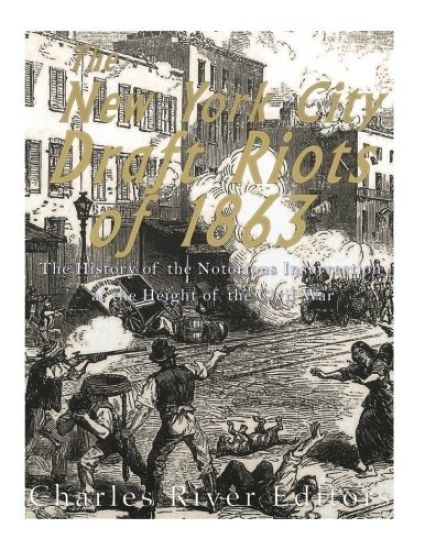
The New York City Draft Riots of 1863: The History of the Notorious Insurrection at the Height of the Civil War
*Includes pictures *Includes accounts of the riots from New York residents and authorities *Includes online resources and a bibliography for further reading *Includes a table of contents "Martial law ought to be proclaimed, but I have not a sufficient force to enforce it." - Major General John E. Wool, commander of the Department of the East Most adults alive today either remember or have heard of the turbulent 1960s, but far fewer are familiar with the similarities those more recent protests had with the earlier unrest of a century earlier. Although the Civil War is remembered as the seminal event of American history, and it is often portrayed as the Lincoln administration and the North fighting bravely to preserve the Union and ultimately end slavery, the truth at the time was far more complicated. Perhaps most notably, as with Vietnam, the Civil War was very unpopular among many in the North, especially in large, manufacturing cities that were dependent on the South for raw materials. Also, as African Americans made their way north in the hopes of making new lives for themselves, they often encountered racism and outright violence. Native born Americans and newly arrived immigrants alike often resented black men taking jobs they felt were theirs by right, and in the wake of the Emancipation Proclamation, many men were hesitant to fight on behalf of a cause that they saw as being for the benefit of blacks. With the Civil War still raging and no end in sight, the Lincoln administration instituted the first conscription laws in the North in 1863, and it led quickly to an outbreak of violence in New York City and other large cities. In fact, the New York City draft riots, which lasted several days in July of that year, still stand today as the bloodiest and deadliest in American history. More than 100 people died during the week of July 12-18 as mobs of thousands looted and burned buildings across the city in protest. However, in addition to targeting the draft, people also attacked African American men, women and children and anyone who might try to defend them. It's been estimated that over a dozen blacks were lynched across the city during the unrest, and thousands of people were injured. Ultimately, the city's police department was forced to call in forces from all around, including a number of battle weary soldiers who had just fought a few weeks earlier at Gettysburg, to put down what seemed to be moving toward a new insurrection. In the end, the authorities were able to stop the violence, but the heavy price paid by the city's newest black citizens would tarnish race relations in that area for another century. The New York City Draft Riots of 1863: The History of the Notorious Insurrection at the Height of the Civil War chronicles the controversial violence that wreaked havoc across New York City in the summer of 1863. Along with pictures and a bibliography, you will learn about the New York City draft riots like never before.
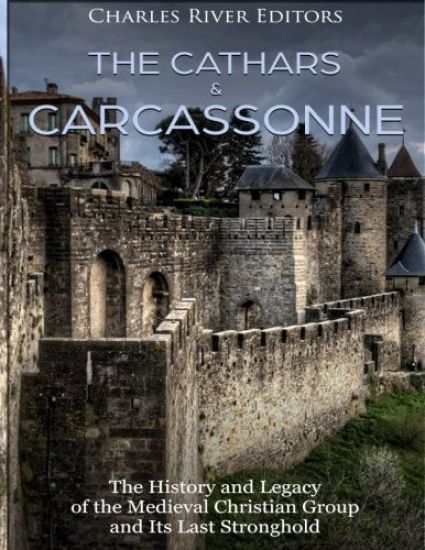
The Cathars and Carcassonne: The History and Legacy of the Medieval Christian Group and Its Last Stronghold
*Includes pictures *Includes medieval accounts *Includes online resources and a bibliography for further reading "The Roman Church... says] that the heretics they persecute are the church of wolves. But this is absurd, for the wolves have always pursued and killed the sheep, and today it would have to be the other way around for the sheep to be so mad as to bite, pursue, and kill the wolves, and for the wolves to be so patient as to let the sheep devour them " - Excerpt from the alleged writings of the Cathars Carcassonne today is the capital of the Aude department in the Occitanie region of southwestern France, about 58 miles from Toulouse. It lies by the "eastward bend" of the glittering cobalt waters of the River Aude, which serves as a barrier between the two towns of the city: the Cit and the Ville Basse. It is the old Cit that attracts most of Carcassonne's visitors (3 million of them each year), for it houses the historic fortress that looks like it came straight out of a fairy tale and supposedly became the muse behind the captivating castles featured in Walt Disney's acclaimed 1959 classic Sleeping Beauty. But this breathtaking town is so much more than just the perfect spot for wedding shoots and social media narcissism, for it is a place that oozes medieval history. This land is also home to several legends and local traditions. When the earth is drenched by heavy storms, the crumbling red soil drifts into the River Aude, staining the water with crimson. This beautiful, yet haunting phenomenon, which the locals call the "blood of the Cathars," is a symbolic reminder of the blood shed by these "heretics" at the hands of the Catholic Church. Despite the controversial events, and their supposed heresy, it seemed that the fall of the Cathars brought an everlasting curse upon the region. As one unnamed farmer, documented by French medievalist Jean Duernoy, put it, "Since the heretics were chased away from Sabartes, there is no longer good weather in this area." Another notary from Tarn echoed his sentiments, asserting, "When the heretics lived in these lands, we did not have so many storms and lightning. Now that we are with Franciscans and Dominicans, the lightning strikes more frequently..." The Cathars and Carcassonne: The History and Legacy of the Medieval Christian Group and Its Last Stronghold examines the origins of the group and the city. Along with pictures depicting important people, places, and events, you will learn about the Cathars and Carcassonne like never before.
The Cathars and Carcassonne: The History and Legacy of the Medieval Christian Group and Its Last Stronghold
*Includes pictures *Includes medieval accounts *Includes online resources and a bibliography for further reading "The Roman Church... says] that the heretics they persecute are the church of wolves. But this is absurd, for the wolves have always pursued and killed the sheep, and today it would have to be the other way around for the sheep to be so mad as to bite, pursue, and kill the wolves, and for the wolves to be so patient as to let the sheep devour them " - Excerpt from the alleged writings of the Cathars Carcassonne today is the capital of the Aude department in the Occitanie region of southwestern France, about 58 miles from Toulouse. It lies by the "eastward bend" of the glittering cobalt waters of the River Aude, which serves as a barrier between the two towns of the city: the Cit and the Ville Basse. It is the old Cit that attracts most of Carcassonne's visitors (3 million of them each year), for it houses the historic fortress that looks like it came straight out of a fairy tale and supposedly became the muse behind the captivating castles featured in Walt Disney's acclaimed 1959 classic Sleeping Beauty. But this breathtaking town is so much more than just the perfect spot for wedding shoots and social media narcissism, for it is a place that oozes medieval history. This land is also home to several legends and local traditions. When the earth is drenched by heavy storms, the crumbling red soil drifts into the River Aude, staining the water with crimson. This beautiful, yet haunting phenomenon, which the locals call the "blood of the Cathars," is a symbolic reminder of the blood shed by these "heretics" at the hands of the Catholic Church. Despite the controversial events, and their supposed heresy, it seemed that the fall of the Cathars brought an everlasting curse upon the region. As one unnamed farmer, documented by French medievalist Jean Duernoy, put it, "Since the heretics were chased away from Sabartes, there is no longer good weather in this area." Another notary from Tarn echoed his sentiments, asserting, "When the heretics lived in these lands, we did not have so many storms and lightning. Now that we are with Franciscans and Dominicans, the lightning strikes more frequently..." The Cathars and Carcassonne: The History and Legacy of the Medieval Christian Group and Its Last Stronghold examines the origins of the group and the city. Along with pictures depicting important people, places, and events, you will learn about the Cathars and Carcassonne like never before.
The Suez Canal: The History and Legacy of the World's Most Famous Waterway

The Suez Canal: The History and Legacy of the World's Most Famous Waterway

Charles River

Createspace Independent Publishing Platform
2018
nidottu
*Includes pictures *Includes online resources and a bibliography for further reading In 1831, a 26-year old French foreign service official by the name of Ferdinand de Lesseps was sent to Alexandria to serve as vice-consul. While undergoing an obligatory period of quarantine, the French Consul-General, Monsieur Mimaut, sent his new understudy a number of books to help pass the time, and one of these books proved to be a lengthy memorandum composed by French engineer Jacques-Marie le P re, writing on instructions from Napoleon Bonaparte. The subject was the linking of the Red Sea with the Mediterranean by the construction of a canal. This study made a deep impression on the mind of the young diplomat, and for the remainder of his term of service in Egypt, he applied himself to studying the question. Eventually, he came to believe that it was not only a viable project, but a potentially profitable one too, and, of course, it would be nothing less than a stupendous gift to mankind. As it turned out, the concept of linking the Red Sea with the Mediterranean was not by any means new. In fact, the idea was as old as trade across the isthmus itself. Work on the Canal of the Pharaohs, or Necho's Canal, as it is more commonly known, began during Egypt's Nineteenth Dynasty, under the reign either of Sethi I, or his son, the great Rameses II. The project sought to link the two oceans through an artificial canal of modest length linking a navigable stretch of the Nile to the Bitter Lakes, and then to the Red Sea. The Suez Canal: The History and Legacy of the World's Most Famous Waterway examines the various attempts to create the canal over thousands of years, and how the modern Suez Canal came to be. Along with pictures and a bibliography, you will learn about the Suez Canal like never before.
The Sanctuary of Our Lady of Lourdes: The History and Legacy of the Catholic Church's Haven of Miracles
*Includes pictures *Includes medieval accounts *Includes online resources and a bibliography for further reading While an admirable work of art created by the lapping waters of the once turquoise Gave de Pau, the unassuming riverside grotto tucked away on the northern neck of the Massabielle ("Old Mass") in the quaint town of Lourdes is hardly the most majestic in Mother Nature's collection. In fact, the cramped cave was so unexceptional that, for the most part, it remained untouched until the mid-19th century, save for a few stranded fishermen or herdsmen who took refuge there from unanticipated tempests and thunderstorms. Surrounded by hearty shrubs and swathed in winding vines of ivy, the shallow grotto, as damp as it is dim, is not even large enough to accommodate a coven of witches. Despite its quotidian exterior and underwhelming dimensions, the grotto draws in millions upon millions of visitors year after year without fail today. Zigzagging queues of locals, out-of-towners, and Christian pilgrims alike wait patiently for their chance to not only appreciate, but pay their respects to the mystifyingly magnetic grotto. Many of the starstruck believers raise their hands, their eyes welling with genuine tears, towards a statue of whom the locals hail "Our Lady of Lourdes," which is housed in a niche illuminated by a Christmas-tree-shaped candelabra holding stacks of white taper candles. They say that judgment does not exist in Lourdes. Once one sets foot on this hallowed soil, all barriers of race, social status, background, and religious differences cease to exist. One is no more than a humble soul in search of a renewal of one's connection to God. In a statement released to the French press in mid-August of 2008, Father Jacques Nieuviarts guaranteed the following: "Those who touch the rock at the grotto in Lourdes... Perhaps they are praying to be imbued with the strength of this rock. Those who drink the water from the fountain feel that their inner thirst is being quenched, that they have been changed, and that the water has purified them... In lighting the candle, they open themselves up to the clarity that comes from God, and when they depart leaving a burning candle, their prayer continues in union with the prayers of all the other people who have placed their lighted candles at the grotto..." Given these promises of inner peace and spiritual awakenings, not to mention the countless cases - both claimed and "verified" - of miraculous healing this supernatural town is teeming with, it comes as no surprise that this once unassuming town has now become the second most popular tourist destination in France, following Paris. Over the years, this formerly quaint, but rinky-dink, gray-roofed cottage town has more than succeeded in putting itself on the map through its mystical sanctuaries built on miracles, but how exactly did they achieve such a designation? And how much truth, if any at all, is there in these so-called miracles? The Sanctuary of Our Lady of Lourdes: The History and Legacy of the Catholic Church's Haven of Miracles chronicles the remarkable history of the site and how it became one of the religion's most influential spots. Along with pictures depicting important people, places, and events, you will learn about the Sanctuary of Our Lady of Lourdes like never before.
El ascenso y la caída del Imperio otomano: la historia de la creación del imperio turco y su destrucción más de 600 años después
En t rminos de geopol tica, quiz s el acontecimiento m s importante de la Edad Media fue el exitoso asedio otomano a Constantinopla en 1453. La ciudad hab a sido una capital imperial ya en el siglo IV, cuando Constantino el Grande cambi el centro de poder del Imperio Romano, estableciendo efectivamente dos mitades casi igualmente poderosas del imperio m s grande de la antig edad. Constantinopla seguir a siendo la capital del Imperio Bizantino incluso despu s de que la mitad occidental del Imperio Romano se derrumbara a finales del siglo V. Naturalmente, el Imperio Otomano tambi n usar a a Constantinopla como capital de su imperio despu s de que su conquista terminara efectivamente con el Imperio Bizantino, y gracias a su ubicaci n estrat gica, ha sido un centro comercial durante a os y sigue siendo uno de ellos hoy en d a bajo el nombre turco de Estambul. La conquista otomana de Constantinopla tambi n desempe un papel decisivo en el fomento del Renacimiento en Europa occidental. La influencia del Imperio Bizantino hab a ayudado a asegurar que era el guardi n de varios textos antiguos, sobre todo de los antiguos griegos, y cuando Constantinopla cay , los refugiados bizantinos acudieron en masa al oeste para refugiarse en Europa. Esos refugiados trajeron libros que ayudaron a despertar el inter s por la antig edad, que aliment el renacimiento italiano y esencialmente puso fin a la Edad Media. La larga agon a del "hombre enfermo de Europa", una expresi n utilizada por el Zar de Rusia para describir el imperio en decadencia, podr a casi cegar a la gente sobre su incre ble poder e historia. Preservando su herencia mixta, proveniente tanto de su posici n geogr fica que se elevaba sobre las cenizas del Imperio Bizantino como de la tradici n heredada de las conquistas musulmanas, el Imperio Otomano dur m s de seis siglos. Sus soldados lucharon, murieron y conquistaron tierras en tres continentes diferentes, convirti ndolo en uno de los pocos imperios multi tnicos estables en la historia, y probablemente uno de los ltimos. As pues, es algo inevitable que la historia de su disoluci n se encuentre en el centro de complejas disputas geopol ticas, as como de tensiones sectarias que siguen siendo fundamentales para comprender Oriente Medio, el norte de frica y los Balcanes. A pesar de todo esto, el Imperio Otomano sobrevivir a m s de 200 a os m s, y en el ltimo siglo de su vida luch por reformar su ej rcito, administraci n y econom a hasta que finalmente se disolvi . A os antes del colapso final del Imperio, el Tanzimat ("Reorganizaci n"), un per odo de reformas repentinas, condujo a cambios significativos en el aparato militar del pa s, entre otros, lo que ciertamente explica el xito inicial que el Imperio Otomano fue capaz de lograr contra sus rivales. Del mismo modo, la redacci n de una nueva Constituci n (Kan n-u Es s , ley fundamental) en 1876, a pesar de que fue rechazada por el sult n Abdul Hamid II apenas dos a os despu s, as como su reactivaci n por el movimiento "J venes Turcos" en 1908, pone en relieve la comprensi n entre las lites otomanas de que era necesario el cambio, y su convicci n de que ese cambio era posible. En general, la historia de la disoluci n puede definirse como una carrera entre la creciente "enfermedad" del Imperio por un lado (la incapacidad del otomano para apaciguar y federar a las diversas personas dentro de su territorio), y los constantes intentos de encontrar una cura en forma de amplias reformas. Estas cuestiones se presentan a menudo juntas, pero eso tiende a cambiar el enfoque hacia fuera, sobre los diversos pueblos y sus aspiraciones, junto con la creciente influencia de Europa sobre el destino del Imperio Otomano. Para considerar tanto la "enfermedad" como la cura, es necesario separarlos, antes de pasar a la causa directa de la disoluci n del imperio (la Primera Guerra Mundial) y su her
El ascenso y la caída del Imperio otomano: la historia de la creación del imperio turco y su destrucción más de 600 años después
En t rminos de geopol tica, quiz s el acontecimiento m s importante de la Edad Media fue el exitoso asedio otomano a Constantinopla en 1453. La ciudad hab a sido una capital imperial ya en el siglo IV, cuando Constantino el Grande cambi el centro de poder del Imperio Romano, estableciendo efectivamente dos mitades casi igualmente poderosas del imperio m s grande de la antig edad. Constantinopla seguir a siendo la capital del Imperio Bizantino incluso despu s de que la mitad occidental del Imperio Romano se derrumbara a finales del siglo V. Naturalmente, el Imperio Otomano tambi n usar a a Constantinopla como capital de su imperio despu s de que su conquista terminara efectivamente con el Imperio Bizantino, y gracias a su ubicaci n estrat gica, ha sido un centro comercial durante a os y sigue siendo uno de ellos hoy en d a bajo el nombre turco de Estambul. La conquista otomana de Constantinopla tambi n desempe un papel decisivo en el fomento del Renacimiento en Europa occidental. La influencia del Imperio Bizantino hab a ayudado a asegurar que era el guardi n de varios textos antiguos, sobre todo de los antiguos griegos, y cuando Constantinopla cay , los refugiados bizantinos acudieron en masa al oeste para refugiarse en Europa. Esos refugiados trajeron libros que ayudaron a despertar el inter s por la antig edad, que aliment el renacimiento italiano y esencialmente puso fin a la Edad Media. La larga agon a del "hombre enfermo de Europa", una expresi n utilizada por el Zar de Rusia para describir el imperio en decadencia, podr a casi cegar a la gente sobre su incre ble poder e historia. Preservando su herencia mixta, proveniente tanto de su posici n geogr fica que se elevaba sobre las cenizas del Imperio Bizantino como de la tradici n heredada de las conquistas musulmanas, el Imperio Otomano dur m s de seis siglos. Sus soldados lucharon, murieron y conquistaron tierras en tres continentes diferentes, convirti ndolo en uno de los pocos imperios multi tnicos estables en la historia, y probablemente uno de los ltimos. As pues, es algo inevitable que la historia de su disoluci n se encuentre en el centro de complejas disputas geopol ticas, as como de tensiones sectarias que siguen siendo fundamentales para comprender Oriente Medio, el norte de frica y los Balcanes. A pesar de todo esto, el Imperio Otomano sobrevivir a m s de 200 a os m s, y en el ltimo siglo de su vida luch por reformar su ej rcito, administraci n y econom a hasta que finalmente se disolvi . A os antes del colapso final del Imperio, el Tanzimat ("Reorganizaci n"), un per odo de reformas repentinas, condujo a cambios significativos en el aparato militar del pa s, entre otros, lo que ciertamente explica el xito inicial que el Imperio Otomano fue capaz de lograr contra sus rivales. Del mismo modo, la redacci n de una nueva Constituci n (Kan n-u Es s , ley fundamental) en 1876, a pesar de que fue rechazada por el sult n Abdul Hamid II apenas dos a os despu s, as como su reactivaci n por el movimiento "J venes Turcos" en 1908, pone en relieve la comprensi n entre las lites otomanas de que era necesario el cambio, y su convicci n de que ese cambio era posible. En general, la historia de la disoluci n puede definirse como una carrera entre la creciente "enfermedad" del Imperio por un lado (la incapacidad del otomano para apaciguar y federar a las diversas personas dentro de su territorio), y los constantes intentos de encontrar una cura en forma de amplias reformas. Estas cuestiones se presentan a menudo juntas, pero eso tiende a cambiar el enfoque hacia fuera, sobre los diversos pueblos y sus aspiraciones, junto con la creciente influencia de Europa sobre el destino del Imperio Otomano. Para considerar tanto la "enfermedad" como la cura, es necesario separarlos, antes de pasar a la causa directa de la disoluci n del imperio (la Primera Guerra Mundial) y su her
La Irlanda Extraña: Una Historia de Misterios Antiguos, Folklore Fantástico y Leyendas Urbanas a Través de la Isla Esmeralda
Irlanda tiene un rico folclore. Todo el mundo sabe acerca de las hadas y los duendes y muchos han o do hablar de la temible banshee. Tambi n est n las habituales historias de fantasmas que se encuentran en todas las tierras antiguas. El lado extra o de la Isla Esmeralda va mucho m s profundo que eso, sin embargo, con historias de ej rcitos fantasmas marchando a trav s del cielo, monstruos marinos nadando en las aguas alrededor de la isla, e historias de extra os poderes y magia oscura. De hecho, estos relatos no est n confinados al pasado; muchos sucesos inexplicables contin an ocurriendo, incluso hoy en d a. Aqu presentamos una muestra de algunos de los aspectos m s extra os de Irlanda. Esperamos que sirva de inspiraci n a los lectores para aprender m s sobre el pasado misterioso de Irlanda y su presente inusual, y tal vez conseguir que los lectores visiten Irlanda en persona. La Irlanda Extra a: Una Historia de Misterios Antiguos, Folklore Fant stico y Leyendas Urbanas a Trav s de la Isla Esmeralda es parte de una serie en curso de Sean McLachlan y Charles River Editors que incluye Escocia Extra a, Londres Misterioso, y m s. Este libro ofrece una muestra de extra as, inexplicables y sencillas historias de Irlanda que han fascinado a su gente y alrededor de la regi n durante siglos. Adem s de fotos de personas importantes, lugares y eventos, aprender acerca de La Irlanda Extra a como nunca antes.
The Greatest Conquerors of the Middle Ages: Charlemagne, Saladin and Genghis Khan

The Greatest Conquerors of the Middle Ages: Charlemagne, Saladin and Genghis Khan

Charles River

Createspace Independent Publishing Platform
2018
nidottu
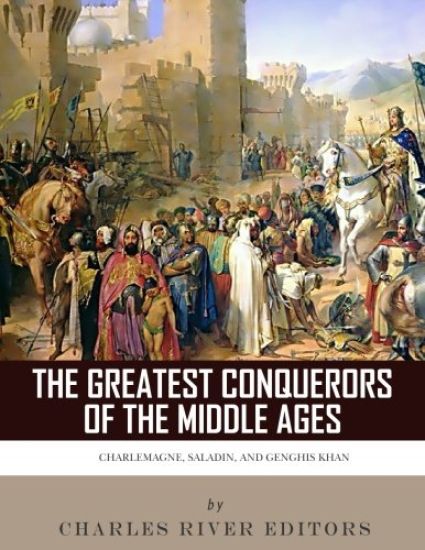
*Includes maps of each conqueror's empire and pictures depicting the conquerors and other important people and places. *Discusses legends and controversies surrounding the lives, deaths, and legacies of the conquerors. *Includes a Bibliography for further reading. The most famous man of the Middle Ages was probably Charlemagne, and few would argue that he was also the most important man during those centuries. Upon the death of his father, Pepin the Short, in 768, Charlemagne became King of the Franks, and he proceeded to create one of the largest European empires since the collapse of Rome. Through his conquests across Western Europe and Italy, Charlemagne became the first Holy Roman Emperor after a famous imperial coronation by Pope Leo III. In becoming the first Holy Roman Emperor, Charlemagne essentially established the new order on the European continent, thereby directly influencing how European politics and royalty proceeded in the coming centuries. As if to demonstrate how large he loomed in life, Charlemagne was numbered Charles I in Germany, France, and the Holy Roman Empire. Charlemagne is also viewed as having brought about the Carolingian Renaissance, a revival of art, religion, and culture through the Catholic Church that predated the Italian Renaissance by centuries. The Carolingian Renaissance helped establish a uniform European culture, helping Charlemagne earn the title "Father of Europe". In a world fascinated by men like Alexander the Great and Julius Caesar, Genghis Khan is one of history's greatest and most famous conquerors. No man, before or since, has ever started with so little and gone on to achieve so much. From a noble family but raised in poverty that drove him to the brink of starvation, Genghis Khan rose to control the second-largest empire the world has ever known (the largest being, arguably, the British Empire of the 18th and 19th centuries), and easily the largest empire conquered by a single man. And while many empires disintegrate upon the death of an emperor, like Alexander the Great's, Genghis Khan's empire endured and was actually enlarged by his successors, who went on to establish dynasties that in some cases lasted for centuries. Though history is usually written by the victors, history was largely written by those who Genghis Khan and Saladin vanquished. And while that meant Genghis Khan became widely reviled, it had the opposite effect on Saladin. Saladin is widely considered one of the greatest generals in history and one of the most famous leaders of the Middle Ages, but he remains a paradox, both in personal and in historical terms. A military genius, he first served other generals and was overshadowed, late in life, by his greatest rival, Richard I of England. He was far more admired by his Christian enemies, who extolled his chivalry, than some of his Muslim rivals, who fought him for control of Egypt and Syria in the 12th century. His Christian enemies continued his name long after it was forgotten in the Middle East, only to spark a revival of his reputation in Arab culture in the 20th century. Revered as the flower of Arab culture, he was really a Kurd who nearly destroyed it. Taught to Egyptian children as a native born Egyptian hero, he was, in fact, Egypt's conqueror, the man who destroyed its native dynasty and suppressed the local Shi'ite sect. The Greatest Conquerors of the Middle Ages chronicles the amazing lives and conquests of the three men, while examining their empires and their enduring legacies. Along with pictures of important people, places and events, you will learn about Charlemagne, Saladin and Genghis Khan like you never have before.
The Greatest Civilizations of the Americas: The History and Culture of the Maya, Aztec, and Inca
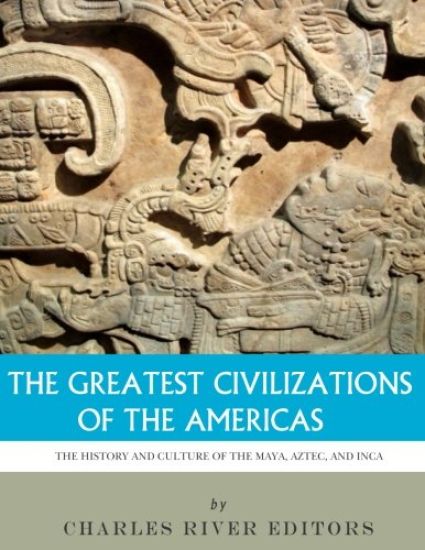
*Includes over 50 pictures of the civilizations' art, ruins, architecture, and more. *Describes everyday life for the Maya, Inca and Aztecs, from language to diet. *Comprehensively covers the civilizations' most famous characteristics, including Mayan astronomy, the Aztecs' infamous human sacrifice rituals, and the Inca's Macchu Picchu. When the Spanish arrived in the New World, men like Columbus, Cortes, and Pizarro came into contact with a vast array of different Native American settlements. Though the Spanish mercilessly conquered their way through the Americas and aimed to convert the peoples they considered savages, the unique culture, architecture and aspects of the indigenous tribes fascinated even the conquistadors, who brought the accounts back to Europe and fascinated millions across the Atlantic. 500 years later, the world is more fascinated than ever by the American civilizations, particularly the Aztecs, Maya and Inca. Of all the world's civilizations, none have intrigued people more than the Mayans, whose culture, astronomy, language, and mysterious disappearance all continue to captivate people. In 2012 especially, there has been a renewed focus on the Mayans, whose advanced calendar has led many to speculate the world will end on the same date the Mayan calendar ends. The focus on the "doomsday" scenario, however, has overshadowed the Mayans' true contribution to astronomy, language, sports, and art. From the moment Spanish conquistador Hernan Cortes first found and confronted them, the Aztecs have fascinated the world, and they continue to hold a unique place both culturally and in pop culture. Nearly 500 years after the Spanish conquered their mighty empire, the Aztecs are often remembered today for their major capital, Tenochtitlan, as well as being fierce conquerors of the Valley of Mexico who often engaged in human sacrifice rituals. Ironically, and unlike the Mayans, the Aztecs are not widely viewed or remembered with nuance, in part because their own leader burned extant Aztec writings and rewrote a mythologized history explaining his empire's dominance less than a century before the Spanish arrived. Naturally, Cortes and other Spaniards depicted the Aztecs as savages greatly in need of conversion to Catholicism. While the Mayans are remembered for their astronomy, numeral system, and calendar, the Aztecs have primarily been remembered in a far narrower way, despite continuing to be a source of pride to Mexicans through the centuries. The Inca Empire, which flourished in modern day Peru and along the west coast of South America, was the largest Native American empire in pre-Columbian America until Pizarro and the Spanish conquistadors conquered them in the 16th century. Though the Spanish physically conquered them in quick fashion, the culture and legacy of the Inca Empire has continued to endure throughout the centuries in both Europe and South America, due in no small part to the fact they were one of the most advanced and sophisticated cultures on the continent. Like the Aztecs, the Spanish burned much of the Inca's extant writings, but it is estimated that as many as 35 million once fell under their banner, and the empire's administrative skills were so sharp that they kept accurate census records. The Greatest Civilizations of the Americas presents a comprehensive and entertaining overview of the cultures and empires of these 3 amazing civilizations, from describing their technology to explaining what everyday life was like in their capital cities. Along with dozens of pictures of important people, places, events, art, and ruins, you will learn about the Maya, Aztec, and Inca like you never have before.
The Greatest Civil War Battles: The Second Battle of Bull Run (Second Manassas)

The Greatest Civil War Battles: The Second Battle of Bull Run (Second Manassas)

Charles River

Createspace Independent Publishing Platform
2018
nidottu
*Includes pictures of important people, places, and events. *Includes maps of the battle. *Analyzes the generalship of the battle's most important leaders, including Robert E. Lee, James Longstreet, and John Pope. *Includes descriptions of the fighting from the post-battle reports and memoirs of some of the leading generals, including Stonewall Jackson, Longstreet, Pope, Lee, and more. *Includes a Bibliography for further reading. "A splendid army almost demoralized, millions of public property given up or destroyed, thousands of lives of our best men sacrificed for no purpose. I dare not trust myself to speak of this commander as I feel and believe. Suffice to say...that more insolence, superciliousness, ignorance, and pretentiousness were never combined in one man." - Union II Corps Commander Alpheus Williams The Second Battle of Bull Run (August 28-30, 1862) was one of the most decisive battles fought during the Civil War, and it was also one of the most unlikely. Less than three months before the battle, Joseph E. Johnston's Army of Northern Virginia had been pushed back nearly all the way to Richmond by George B. McClellan's Army of the Potomac, so close that Union soldiers could see the church steeples of the Confederate capital. And yet, at the end of Second Manassas, Robert E. Lee's Army of Northern Virginia found itself in the field unopposed about 20 miles away from the Union capital of Washington D. C. How could such a remarkable reversal of fortunes take place so quickly? After Lee succeeded the wounded Johnston, he pushed McClellan's Army of the Potomac away from Richmond and back up the Peninsula in late June, only to then swing his army north to face a second Union army, John Pope's Army of Virginia. Needing to strike out before the Army of the Potomac successfully sailed back to Washington and linked up with Pope's army, Lee daringly split his army to threaten Pope's supply lines, forcing Pope to fall back to Manassas to protect his flank and maintain his lines of communication. At the same time, it left half of Lee's army (under Stonewall Jackson) potentially exposed against the larger Union army until the other wing (under James Longstreet) linked back up. Thus, in late August 1862, the Army of Northern Virginia and the Army of Virginia found themselves fighting over nearly the exact same land the South and North fought over in the First Battle of Bull Run 13 months earlier. When Pope's army fell back to Manassas to confront Jackson, his wing of Lee's army dug in along a railroad trench and took a defensive stance. Pope spent the first two days of the battle concentrating on Jackson's men, which unwittingly opened up the Union army's left flank for Longstreet's wing, which marched 30 miles in 24 hours to reach the battlefield by the late afternoon of August 29. Lee used Longstreet's wing on August 30 to deliver a devastating flank attack before enough reinforcements from the retreating Army of the Potomac reached the field, sweeping Pope's Army from Manassas and forcing the Union soldiers into yet another retreat from Manassas to Washington D. C., a scene eerily reminiscent of the First Battle of Bull Run. The Greatest Civil War Battles: The Second Battle of Bull Run comprehensively covers the campaign and the events that led up to the battle, the fighting itself, and the aftermath of the battle. Accounts of the battle by important participants are also included, along with maps of the battle and pictures of important people, places, and events. You will learn about the Second Battle of Bull Run like you never have before, in no time at all.
The Greatest Civil War Battles: The Chattanooga Campaign

The Greatest Civil War Battles: The Chattanooga Campaign

Charles River

Createspace Independent Publishing Platform
2018
nidottu
*Includes pictures of the campaign's important generals. *Includes several maps of the campaign's battles. *Includes accounts of the fighting written by important generals like Grant, Bragg, Sherman, Sheridan, Longstreet, Cleburne, and more. *Includes a Bibliography for further reading. In late September 1863, the Confederates began laying siege to the Union Army of the Cumberland around Chattanooga in what would be their last gasp for supremacy in the West. Following the devastating Union defeat at the Battle of Chickamauga on September 20, the army and its shaken commander, General William S. Rosecrans, began digging in around the city and waiting for reinforcements to arrive. Meanwhile, the Confederate Army of Tennessee, under General Braxton Bragg, took the surrounding heights, including Missionary Ridge to the east and Lookout Mountain to the southwest, allowing them control over the vital rail and river supply lines needed by the Union forces in the city. Bragg planned to lay siege to the city and starve the Union forces into surrendering. Having lost faith in Rosecrans after Chickamauga, Washington delegated Ulysses S. Grant with the task of lifting the siege by placing him in command of nearly the entire theater. Grant replaced Rosecrans with George H. Thomas, who had saved the army at Chickamauga, and ordered him to "hold Chattanooga at all hazards." Thomas replied, "We will hold the town till we starve." Meanwhile, President Lincoln detached General Hooker and two divisions from the Army of the Potomac and sent them west to reinforce the garrison at Chattanooga. What followed were some of the most remarkable operations of the entire Civil War. Hooker and his reinforcements helped open up a vital supply line known as the "cracker line", effectively ensuring that enough supplies could reach Knoxville. With that, preparations turned to a pitched battle between the two sides, and in a series of actions in late November, Grant sought to lift the siege and drive back Bragg's Confederate army by attacking their positions on high ground. Although the Chattanooga Campaign was months long and involved several battles, it has become mostly remembered for the Battle of Missionary Ridge, one of the most remarkable and successful charges of the war. As Thomas's men reached the base of the Missionary Ridge, they found that it had not afforded them protection from the Confederate defenders in their front. As a result, they began making impromptu charges up the hill, in defiance of Grant's orders, since Grant had only ordered them to take the rifle pits at the base of Missionary Ridge and believed that a frontal assault on that position would be futile and fatal. As the Union soldiers stormed ahead, General Grant caught the advance from a distance and asked General Thomas why he had ordered the attack. Thomas informed Grant that he hadn't; his army had taken it upon itself to charge up the entire ridge. To the amazement of everyone watching, the Union soldiers scrambled up Missionary Ridge in a series of uncoordinated and disorganized attacks that somehow managed to send the Confederates into a rout, thereby lifting the siege on Chattanooga. While Pickett's Charge, still the most famous attack of the war, was one unsuccessful charge, the Army of the Cumberland made over a dozen charges up Missionary Ridge and ultimately succeeded. The Greatest Civil War Battles: The Chattanooga Campaign comprehensively covers the campaign and the events that led up to the climactic battles, the fighting itself, and the aftermath of the battles. Accounts of the campaign by important participants are also included, along with maps and pictures of important people, places, and events. You will learn about the Chattanooga Campaign like you never have before, in no time at all.
The Greatest Civil War Battles: The Battle of the Wilderness

The Greatest Civil War Battles: The Battle of the Wilderness

Charles River

Createspace Independent Publishing Platform
2018
nidottu
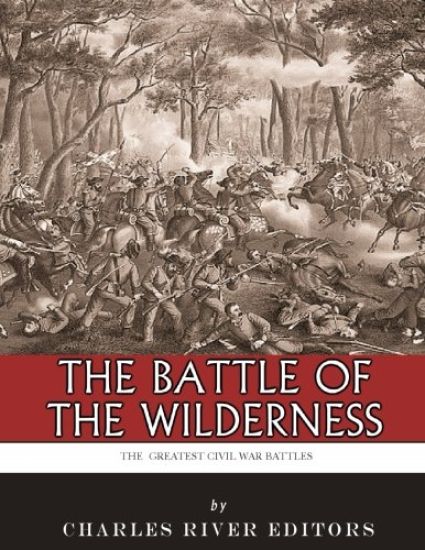
*Includes pictures of the battle's important generals. *Includes several maps of the battle. *Includes accounts of the fighting written by important generals like Grant, Longstreet, John Gordon, Theodore Lyman, and more. *Includes a Bibliography for further reading. "Numbers meant little-in fact, they were frequently an encumbrance on the narrow trails. Visibility was limited, making it extremely difficult for officers to exercise effective control. Attackers could only thrash noisily and blindly forward through the underbrush, perfect targets for the concealed defenders." - Col. Vincent J. Esposito With Robert E. Lee's Army of Northern Virginia continuing to frustrate the Union Army of the Potomac's attempts to take Richmond in 1862 and 1863, President Lincoln shook things up by turning command of all the armies of the United States to Ulysses S. Grant in March 1864., Lee had won stunning victories at battles like Chancellorsville and Second Bull Run by going on the offensive and taking the strategic initiative, but Grant and Lincoln had no intention of letting him do so anymore. Attaching himself to the Army of the Potomac, Grant ordered Army of the Potomac commander George Meade, "Lee's army is your objective point. Wherever Lee goes, there you will go also." From May 5-7, the two most famous generals of the Civil War squared off for the first time. The 100,000 strong Army of the Potomac was double the size of Lee's hardened but battered Army of Northern Virginia. It was a similar position to the one George McClellan had in 1862 and Joe Hooker had in 1863, and Grant's first attack, at the Battle of the Wilderness, followed a similar pattern. Nevertheless, Lee proved more than capable on the defensive. The Battle of the Wilderness was fought so close to where the Battle of Chancellorsville took place a year earlier that soldiers encountered skeletons that had been buried in shallow graves in 1863. Moreover, the woods were so thick that neither side could actually see who they were shooting at, and whole brigades at times got lost in the forest. Both armies sustained heavy casualties while Grant kept attempting to move the fighting to a setting more to his advantage, but the heavy forest made coordinated movements almost impossible. On May 5 and May 6, both armies attempted desperate attacks and counterattacks to strike a knockout blow, but they were ultimately unable to dislodge each other. Given the terrain and the nature of the fighting, it was one of the most horrendous battles of the war, with some wounded men literally burning to death in fires ignited by the battle that sparked the nearby underbrush and spread rapidly. The defending Confederates technically won a tactical victory by holding their ground, but they did so at a staggering cost, inflicting 17,000 casualties on the Army of the Potomac and suffering 11,000 of their own. On May 7, Grant disengaged his army from the battle. His objective had been frustrated by Lee's skillful defense, and his men got the familiar dreadful feeling that they would retreat back toward Washington, as they had too many times before. This time, however, Grant made the fateful decision to keep moving south, inspiring his men by telling them that he was prepared to "fight it out on this line if it takes all Summer." The Battle of the Wilderness would only be the beginning of the Overland Campaign, not the end of it. The Greatest Civil War Battles: The Battle of the Wilderness comprehensively covers the campaign and the events that led up to the battle, the fighting itself, and the aftermath of the battle. Accounts of the battle by important participants are also included, along with maps of the battle and pictures of important people, places, and events. You will learn about the Wilderness like like you never have before, in no time at all.
The Greatest Civil War Battles: The Battle of Stones River (Murfreesboro)

The Greatest Civil War Battles: The Battle of Stones River (Murfreesboro)

Charles River

Createspace Independent Publishing Platform
2018
nidottu
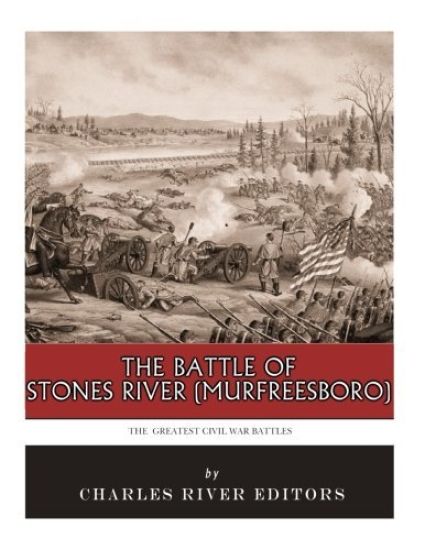
*Includes pictures of the battle's important generals. *Includes several maps of the battle. *Includes accounts of the battle written by important generals. *Includes a Bibliography for the battle. "In all, fifty-eight pieces of artillery played upon the enemy. Not less than one hundred shots per minute were fired. As the mass of men swarmed down the slope they were mowed down by the score. Confederates were pinioned to the earth by falling branches." - G. C. Kniffin, aide to General Crittenden Americans have long been fascinated by the Civil War and its biggest battles, particularly Gettysburg, Antietam, and Shiloh, all of which involved Robert E. Lee or Ulysses S. Grant. But one of the 6 biggest battles of the war, and the one that took the heaviest toll by % on both armies was fought at the end of 1862 in Tennessee, and it involved neither of those generals. In late December 1862, William Rosecrans's Union Army of the Cumberland was contesting Middle Tennessee against Braxton Bragg's Army of Tennessee, and for three days the two armies savaged each other as Bragg threw his army at Rosecrans in a series of desperate assaults. Bragg's army was unable to dislodge the Union army, and he eventually withdrew his army after learning that Rosecrans was on the verge of receiving reinforcements. Though the battle was stalemated, the fact that the Union army was left in possession of the field allowed Rosecrans to declare victory and embarrassed Bragg. Though Stones River is mostly overlooked as a Civil War battle today, it had a decisive impact on the war. The two armies had both suffered nearly 33% casualties, an astounding number in 1862 that also ensured Rosecrans would not start another offensive campaign in Tennessee until the following June. The Union victory also ensured control of Nashville, Middle Tennessee, and Kentucky for the rest of the war, prompting Lincoln to tell Rosecrans, "You gave us a hard-earned victory, which had there been a defeat instead, the nation could scarcely have lived over." The battle and its results also set into motion a chain of events that would lead to Rosecrans and Bragg facing off at the crucial battle of Chickamauga in September 1863, a battle that is often viewed as the last gasp for the Confederates' hopes in the West. The Greatest Civil War Battles: The Battle of Stones River (Murfreesboro) comprehensively covers the campaign and the events that led up to the battle, the fighting itself, and the aftermath of the battle. Accounts of the battle by important participants are also included, along with maps of the battle and pictures of important people, places, and events. You will learn about the Battle of Stones River like you never have before, in no time at all.
The Greatest Civil War Battles: The Battle of Spotsylvania Court House

The Greatest Civil War Battles: The Battle of Spotsylvania Court House

Charles River

Createspace Independent Publishing Platform
2018
nidottu
*Includes pictures of the battle's important generals. *Includes several maps of the battle. *Includes accounts of the fighting written by generals and soldiers. *Includes a Bibliography for further reading. "The appalling sight presented was harrowing in the extreme. Our own killed were scattered over a large space near the "angle," while in front of the captured breastworks the enemy's dead, vastly more numerous than our own, were piled upon each other in some places four layers deep, exhibiting every ghastly phase of mutilation. Below the mass of fast-decaying corpses, the convulsive twitching of limbs and the writhing of bodies showed that there were wounded men still alive and struggling to extricate themselves from the horrid entombment. Every relief possible was afforded, but in too many cases it came too late. The place was well named the "Bloody Angle." - Horace Porter, Campaigning with Grant At the Battle of the Wilderness (May 5-7, 1864), Ulysses S. Grant and Robert E. Lee had fought to a standstill in their first encounter, failing to dislodge each other despite incurring nearly 30,000 casualties between the Union Army of the Potomac and the Confederate Army of Northern Virginia. Despite the fierce fighting, Grant continued to push his battered but resilient army south, hoping to beat Lee's army to the crossroads at Spotsylvania Court House, but Lee's army beat Grant's to Spotsylvania and began digging in, setting the scene for on and off fighting from May 8-21 that ultimately inflicted more casualties than the Battle of the Wilderness. In fact, with over 32,000 casualties among the two sides, it was the deadliest battle of the Overland Campaign. Although the Battle of Spotsylvania technically lasted nearly 2 weeks, it is best remembered for the fighting that took place on May 12 at a salient in the Confederate line manned by Richard S. Ewell's corps. Known as the Mule Shoe, a Union assault on the salient produced 24 hours of the most savage fighting conducted during the war, forever christening that point in the line as the Bloody Angle. Although Winfield Scott Hancock's II Corps established a temporary breakthrough, the Confederates were ultimately able to repulse the Union soldiers in bloody hand-to-hand fighting. After their inability to break Lee's line on May 12, Grant continued to probe Lee's line for weaknesses, attempting to gain a perceptible advantage. However, by 1864 Civil War soldiers had become adept at digging in and building the kind of trenches that would dominate the fighting of World War I 50 years later. By winning the race to Spotsylvania, the Confederates had enough time to dig in and prepare for the kind of defensive fighting that made assaults futile. On May 20, Grant began the process of disengaging from his lines and marching the Army of the Potomac further south, forcing Lee into another race toward the North Anna River. The two armies had suffered a combined 50,000 casualties in about 15 days of fighting, but the Overland Campaign was still only half finished. The Greatest Civil War Battles: The Battle of Spotsylvania Court House comprehensively covers the events that led up to the battle, the fighting itself, and the aftermath of the battle. Accounts of the battle by important participants are also included, along with maps of the battle and pictures of important people, places, and events. You will learn about the Battle of Spotsylvania Court House like you never have before, in no time at all.
The Greatest Civil War Battles: The Battle of Missionary Ridge

The Greatest Civil War Battles: The Battle of Missionary Ridge

Charles River

Createspace Independent Publishing Platform
2018
nidottu
*Includes pictures of the battle's important generals. *Includes several maps of the battle. *Includes accounts of the fighting written by important generals like Grant, Sherman, Sheridan, Bragg, Longstreet, and more. *Includes a Bibliography for further reading. "When those fellows get started all hell can't stop them." - Union corps commander Gordon Granger during the Battle of Missionary Ridge In late September 1863, the Confederates began laying siege to the Union Army of the Cumberland around Chattanooga in what would be their last gasp for supremacy in the West. Following the devastating Union defeat at the Battle of Chickamauga on September 20, the army and its shaken commander, General William S. Rosecrans, began digging in around the city and waiting for reinforcements to arrive. Meanwhile, the Confederate Army of Tennessee, under General Braxton Bragg, took the surrounding heights, including Missionary Ridge to the east and Lookout Mountain to the southwest, allowing them control over the vital rail and river supply lines needed by the Union forces in the city. Bragg planned to lay siege to the city and starve the Union forces into surrendering. Having lost faith in Rosecrans after Chickamauga, Washington delegated Ulysses S. Grant with the task of lifting the siege by placing him in command of nearly the entire theater. Grant replaced Rosecrans with George H. Thomas, who had saved the army at Chickamauga, and ordered him to "hold Chattanooga at all hazards." Thomas replied, "We will hold the town till we starve." Meanwhile, President Lincoln detached General Hooker and two divisions from the Army of the Potomac and sent them west to reinforce the garrison at Chattanooga. What followed were some of the most remarkable operations of the entire Civil War. Hooker and his reinforcements helped open up a vital supply line known as the "cracker line", effectively ensuring that enough supplies could reach Knoxville. With that, preparations turned to a pitched battle between the two sides, and in a series of actions in late November, Grant sought to lift the siege and drive back Bragg's Confederate army by attacking their positions on high ground. Although the Chattanooga Campaign was months long and involved several battles, it has become mostly remembered for the Battle of Missionary Ridge, one of the most remarkable and successful charges of the war. As Thomas's men reached the base of the Missionary Ridge, they found that it had not afforded them protection from the Confederate defenders in their front. As a result, they began making impromptu charges up the hill, in defiance of Grant's orders, since Grant had only ordered them to take the rifle pits at the base of Missionary Ridge and believed that a frontal assault on that position would be futile and fatal. As the Union soldiers stormed ahead, General Grant caught the advance from a distance and asked General Thomas why he had ordered the attack. Thomas informed Grant that he hadn't; his army had taken it upon itself to charge up the entire ridge. To the amazement of everyone watching, the Union soldiers scrambled up Missionary Ridge in a series of uncoordinated and disorganized attacks that somehow managed to send the Confederates into a rout, thereby lifting the siege on Chattanooga. While Pickett's Charge, still the most famous attack of the war, was one unsuccessful charge, the Army of the Cumberland made over a dozen charges up Missionary Ridge and ultimately succeeded. The Greatest Civil War Battles: The Battle of Missionary Ridge comprehensively covers the campaign and the events that led up to the climactic battle, the fighting itself, and the aftermath of the battle. Accounts of the fighting by important participants are also included, along with maps and pictures of important people, places, and events. You will learn about the Battle of Missionary Ridge like you never have before, in no time at all.
The Greatest Civil War Battles: The Battle of Nashville

The Greatest Civil War Battles: The Battle of Nashville

Charles River

Createspace Independent Publishing Platform
2018
nidottu
*Includes pictures *Includes accounts of the fighting by generals and soldiers on both sides *Includes online resources and a bibliography for further reading *Includes a table of contents "Never had there been such an overwhelming victory during the Civil War - indeed, never in American military history." - Wiley Ford's comment on the Franklin-Nashville Campaign As Sherman began his infamous march to the sea, Lincoln instructed Grant to redirect General George H. Thomas' efforts back to Tennessee to protect Union supply lines and stop the offensive mounted by Confederate general John Bell Hood. Hood had broken away from Atlanta and was trying to compel Sherman to follow him, thus diverting him from his intended path of destruction. With Sherman marching east toward the sea, he directed Thomas to try to block Hood around Nashville. On November 30, the Union army began digging in around Franklin, and that afternoon Hood ordered a frontal assault on the dug in Union army which deeply upset his own officers. Hood stressed the necessity of defeating Schofield's forces before Thomas could arrive, though some historians believe his decision to mount a frontal attack was a rash decision made out of fury at the fact Schofield had escaped his grasp. Either way, after repeated frontal assaults failed to create a gap in the Union lines, Schofield withdrew his men across the river on the night of November 30, successfully escaping Hood's army. Meanwhile, Hood had inflicted nearly 8,000 casualties upon his army (men the Confederacy could scarcely afford to lose), while the Union lost about a quarter of that. Despite practically wrecking his army, which was now only about 25,000 strong, Hood marched his battered army to a position outside Nashville, Tennessee, where he took up defensive positions while awaiting reinforcements from Texas. On December 1, General Thomas sent word to Grant that he had "retired to the fortifications around Nashville until I can get my cavalry equipped", a reference to the fact that Forrest's cavalry had more than double the manpower of the Union cavalry. But Thomas also added that "if Hood attacks our position, we] would be seriously damaged, but if he makes no attack until our cavalry can be equipped, I] or General Schofield will move against him at once." The following day Grant wired back, "If Hood is permitted to remain quietly about Nashville, you will lose all the road back to Chattanooga, and possibly have to abandon the line of the Tennessee. Should he attack you it is all well; but if he does not, you should attack him before he fortifies. Arm and put in the trenches your quartermaster's employees, citizens, etc." Even as Grant sniped at him, Thomas held back for nearly two weeks, partly because of a bad ice storm, and his delay nearly resulted in having Grant remove him from command. When reinforcements didn't arrive by December 15, Thomas finally devised a complex two-pronged attack that feinted at Hood's right flank while bringing overwhelming force on the left flank. During the two day battle, Thomas effectively destroyed Hood's command, inflicting over 6,000 more Confederate casualties while losing less than half that. Upon reaching his headquarters at Tupelo, Mississippi, General Hood requested to be relieved of command rather than be removed in disgrace. The Greatest Civil War Battles: The Battle of Nashville analyzes the events leading up to the important Union victory and the end of the Franklin-Nashville Campaign. Along with pictures of important people, places, and events, you will learn about the Battle of Nashville like never before.
The Greatest Battles in History: The Peloponnesian War

The Greatest Battles in History: The Peloponnesian War

Charles River

Createspace Independent Publishing Platform
2018
nidottu
*Includes pictures depicting important people, places, and events. *Includes Pericles' famous Funeral Oration *Includes a Bibliography for further reading. "Thucydides, an Athenian, wrote the history of the war between the Peloponnesians and the Athenians, beginning at the moment that it broke out, and believing that it would be a great war and more worthy of relation than any that had preceded it. This belief was not without its grounds... Indeed this was the greatest movement yet known in history, not only of the Hellenes, but of a large part of the barbarian world-I had almost said of mankind." - Thucydides, History of the Peloponnesian War The Peloponnesian War, as the great historian Thucydides wrote in the introduction to his eponymous book, which has become one of the greatest historical treatises of antiquity, was an event of such calamitous magnitude that Greece had never witnessed its like in all of recorded history. Not the Trojan War, not the Dorian Invasion, not even the recent Persian invasions - which had devastated mainland Greece and seen Athens herself evacuated and put to the flame, the buildings on her Acropolis razed into dust - could compare to the scale of the devastation that engulfed all of Greece for almost three decades, causing the deaths of tens, perhaps hundreds of thousands. Entire populations were displaced, whole cities destroyed, and mountainous sums of money spent, all in order for Greece's two most famous city-states to establish who had dominion over Greece. Sparta, whose invincible armies had recently led the Greeks to victory against Xerxes's hordes at Plataea was at the head of the Peloponnesian League. Their opponents were led by proud Athens, possessor of a fleet that virtually dominated the entire Mediterranean and decimated the Persian navy at Salamis and Mycale, at the head of the Delian League. Sparta was insular and old-fashioned, while Athens was dynamic and democratic, but both were bent on imperialistic expansion, and the two ancient rivals, at loggerheads for so long, eventually sucked every other major city-state in Greece into the war. The Peloponnesian War would rage on a scale that was unimaginable to the Greeks, ranging from Italy to Asia Minor. By war's end, nothing would be the same and nothing would be sacred. Even the Spartans, the proud vanquishers of the Persian hordes, whose king Leonidas and his Three Hundred had died to the last man at Thermopylae to help preserve Greek freedom, were forced to go cap in hand to the Persian emperors and beg for money to continue the war. The war between Athens and Sparta was a war of nations, and it lasted so long that many who were alive and well at its beginning were dead of disease and old age - quite apart from the hazards of the battlefield - by its finish. The Greatest Battles in History: The Peloponnesian War comprehensively covers the history behind one of the most famous wars of antiquity, the men who led and fought in the war, and the war's lasting legacy. Along with a bibliography, maps, and pictures of important people and places, you will learn about the Peloponnesian War like you never have before.
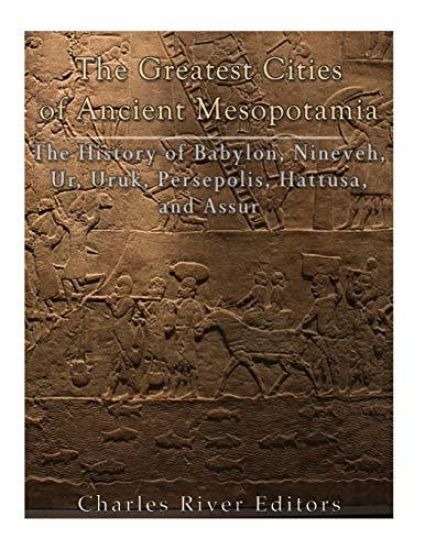
The Greatest Cities of Ancient Mesopotamia: The History of Babylon, Nineveh, Ur, Uruk, Persepolis, Hattusa, and Assur
*Includes pictures *Includes ancient accounts of the cities *Includes online resources and bibliographies for further reading Long before Alexandria was a city and even before Memphis and Babylon had attained greatness, the ancient Mesopotamian city of Ur stood foremost among ancient Near Eastern cities. Today, the greatness and cultural influence of Ur has been largely forgotten by most people, partially because its monuments have not stood the test of time the way other ancient culture's monuments have. For instance, the monuments of Egypt were made of stone while those of Ur and most other Mesopotamian cities were made of mud brick and as will be discussed in this report, mud-brick may be an easier material to work with than stone but it also decays much quicker. The same is true to a certain extent for the written documents that were produced at Ur. No site better represents the importance of the Sumerians than the city of Uruk. Between the fourth and the third millennium BCE, Uruk was one of several city-states in the land of Sumer, located in the southern end of the Fertile Crescent, between the two great rivers of the Tigris and the Euphrates. Discovered in the late 19th century by the British archaeologist William Loftus, it is this site that has revealed much of what is now known of the Sumerian, Akkadian, and Neo-Sumerian people. Hattusa was different from the other major cities of the ancient Near East in one major respect: it was landlocked and not located on a major river. At first glance, such a situation may seem like a liability, which it was in terms of trade, but for the most part its central position meant that the Hittites could move their armies more efficiently from one theater of operations to another (Macqueen 2003, 56). As a landlocked capital, Hattusa was also safe from naval attacks from other kingdoms, so if the Hittites' enemies wanted to invade their capital, they would have to trek through the middle of the kingdom to get there, which was most unlikely. As Hittite power grew during the Old Kingdom, the royal city of Hattusa became more important and even wealthier. From his citadel overlooking Hattusa, Hattusili I launched the first major Hittite attacks into the Near East, first conquering the cities between Hattusa and the Mediterranean (Macqueen 2003, 36). Although the Biblical accounts of the Assyrians are among the most interesting and are often corroborated with other historical sources, the Assyrians were much more than just the enemies of the Israelites and brutal thugs. Among all the cities that thrived in the ancient Near East, few can match the opulence and ostentatiousness of Nineveh, the capital of the Assyrian Empire for much of the seventh century BCE. During that time it became known for its mighty citadels, grand palaces, beautiful gardens, and even its zoos. In fact, the beauty of Nineveh, especially its gardens, impressed later writers so much that they assigned its gardens as one of the original Seven Wonders of the World, except unfortunately for Nineveh's memory, the location was placed in Babylon. The confusion that assigned one of the Wonders of the World to Babylon instead of Nineveh is in fact a large part of Nineveh's history - it was a great city during its time, but incessant warfare brought the metropolis to oblivion and eventually its history was forgotten or distorted. Today, Babylon has become a byword for greed, excess, and licentiousness, mostly due to its mention in the Bible, but a closer examination reveals that Babylon was so much more, and even perhaps the most important city in the ancient world. Ancient Babylon was home to great dynasties that produced some of the world's most influential leaders, most notably Hammurabi and Nebuchadnezzar.
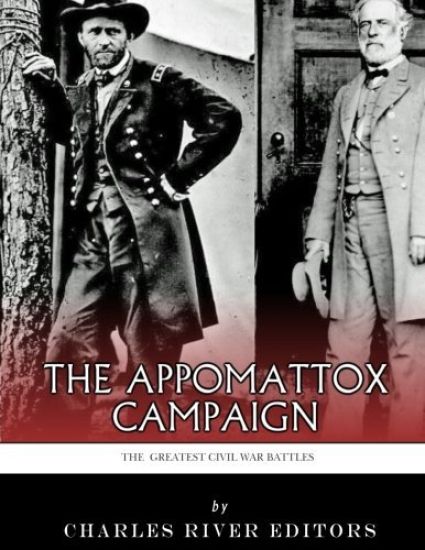
The Greatest Civil War Battles: The Appomattox Campaign

The Greatest Civil War Battles: The Appomattox Campaign

J. D. Mitchell; Charles River

Createspace Independent Publishing Platform
2018
nidottu
*Includes pictures *Includes accounts of the fighting and surrender by generals on both sides *Includes footnotes and a bibliography for further reading Of all the dramatic events that transpired during the Civil War, the end of the war in April 1865 brought perhaps the most remarkable of them all, and they came in such quick succession that it's still hard to believe nearly 150 years later. On April 2, the long siege of Petersburg by Ulysses S. Grant ended with Robert E. Lee's Army of Northern Virginia finally having its line broken, forcing Lee to retreat and give up Richmond in the process. Lee's battered army began stumbling toward a rail depot in the hopes of avoiding being surrounded by Union forces and picking up much needed food rations. While Grant's army continued to chase Lee's retreating army westward, the Confederate government sought to escape across the Deep South. On April 4, President Lincoln entered Richmond and toured the home of Confederate President Jefferson Davis. Fittingly, the food rations Lee moved toward did not arrive as anticipated, and on April 7, 1865, Grant sent Lee the first official letter demanding Lee's surrender. In it Grant wrote, "The results of the last week must convince you of the hopelessness of further resistance on the part of the Army of Northern Virginia in this struggle. I feel it is so, and regret it as my duty to shift myself from the responsibility of any further effusion of blood by asking of you the surrender of that portion of the Confederate States army known as the Army of Northern Virginia." Passing the note to General Longstreet, now his only advisor, Longstreet said, "Not yet." But by the following evening during what would be the final Confederate Council of War (and after one final attempt had been made to break through Union lines), Lee finally succumbed, stating regretfully, "There is nothing left me but to go and see General Grant, and I had rather die a thousand deaths." Communications continued until April 9, at which point Lee and Grant two met at Appomattox Court House. When Lee and Grant met, the styles in dress captured the personality differences perfectly. Lee was in full military attire, while Grant showed up casually in a muddy uniform. The Civil War's two most celebrated generals were meeting for the first time since the Mexican-American War. The Confederate soldiers had continued fighting while Lee worked out the terms of surrender, and they were understandably devastated to learn that they had surrendered. Some of his men had famously suggested to Lee that they continue to fight on. Porter Alexander would later rue the fact that he suggested to Lee that they engage in guerrilla warfare, which earned him a stern rebuke from Lee. As a choked-up Lee rode down the troop line on his famous horse Traveller that day, he addressed his defeated army, saying, "Men, we have fought through the war together. I have done my best for you; my heart is too full to say more." Although the surrender of the Army of Northern Virginia to Grant and the Army of the Potomac at Appomattox Courthouse did not officially end the long and bloody Civil War, the surrender is often considered the final chapter of the war. For that reason, Appomattox has captured the popular imagination of Americans ever since Lee's surrender there on April 9, 1865. The Greatest Civil War Battles: The Appomattox Campaign chronicles the final campaign between the Army of the Potomac and the Army of Northern Virginia, and the one popularly remembered as sealing the fate of the Confederacy. Along with pictures and a bibliography, you will learn about Appomattox like never before, in no time at all.