Kirjojen hintavertailu – 12 859 824 kirjaa ja 27 kauppaa

Kirjailija

Dante Alighieri

Kirjat ja teokset yhdessä paikassa: 1 370 kirjaa, julkaisuja vuosilta 1972–2027, suosituimpiin kuuluu The Divine Comedy. Vertaile teosten hintoja ja tarkista saatavuus suomalaisista kirjakaupoista.

1 370 kirjaa

Kirjojen julkaisuvuodet: 1972–2027.

The Divine Comedy

The Divine Comedy

Dante Alighieri

Engage Books
2021
sidottu
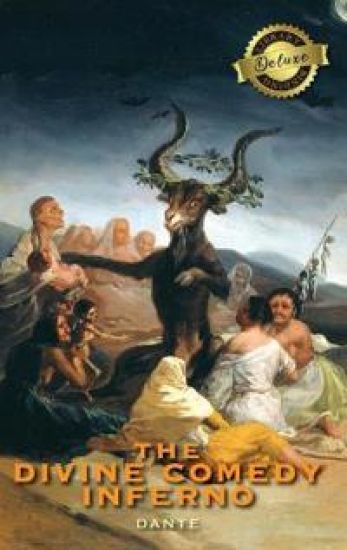
The Divine Comedy describes Dante's travels through Hell, Purgatory, and Paradise and represents the soul's journey towards God. This edition includes the complete texts of Dante's Inferno, Purgatoria, and Paradiso. Inferno - Inferno begins with Dante lost in a dark wood, assailed by beasts he cannot evade, and unable to find the straight way to salvation. Conscious that he is ruining himself and that he is falling into a dark place, Dante is at last rescued by Virgil, and the two of them begin their journey to the underworld. Allegorically, the Inferno represents the Christian soul seeing sin for what it really is, and the three beasts represent three types of sin: the self-indulgent, the violent, and the malicious. Purgatoria - Having survived the depths of Hell, Dante and Virgil ascend out of the undergloom to the Mountain of Purgatory on the far side of the world. The mountain has seven terraces, corresponding to the seven deadly sins. Dante's illustrative examples of sin and virtue draw on classical sources as well as on the Bible and on contemporary events. Paradiso - After an initial ascension, Beatrice guides Dante through the nine celestial spheres of Heaven. These are concentric and spherical, as in Aristotelian and Ptolemaic cosmology. The structure of Paradiso is based on the four cardinal virtues and the three theological virtues. In Paradiso, Dante meets and converses with several great saints of the Church, including Saint Peter, and St. John. Allegorically, the poem represents the soul's ascent to God.
Purgatorio

Purgatorio

Dante Alighieri

GRAYWOLF PRESS
2021
nidottu
The second installment in Mary Jo Bang's exhilarating, innovative translation of Dante's The Divine Comedy Award-winning poet Mary Jo Bang's new translation of Purgatorio is the extraordinary continuation of her journey with Dante, which began with her transformative version of Inferno. In Purgatorio, still guided by the Roman poet Virgil, Dante emerges from the horrors of Hell to begin the climb up Mount Purgatory, a seven-terrace mountain with each level devoted to those atoning for one of the seven deadly sins. At the summit, we find the Terrestrial Heaven and Beatrice--who will take over for Virgil, who, as a pagan, can only take Dante so far. During the climb, we are introduced to the myriad ways in which humans destroy the social fabric through pride, envy, and vindictive anger. In her signature lyric style, accompanied by her wise and exuberant notes, Bang has produced a stunning translation of this fourteenth-century text, rich with references that span time, languages, and cultures. The contemporary allusions echo the audacious character of the original, and slyly insist that whatever was true in Dante's era is still true. Usain Bolt, Tootsie Fruit Chews, the MGM logo, Leo the Lion, Amy Winehouse, Marvin Gaye, Bob Dylan, and Gertrude Stein are among those who make cameo appearances as Bang, with eloquence and daring, shepherds The Divine Comedy into the twenty-first century.
The Banquet (Il Convito)

The Banquet (Il Convito)

Dante Alighieri

Alpha Edition
2021
nidottu
The Banquet (Il Convito), has been considered by academicians and scholars of great significance and value to literature. This forms a part of the knowledge base for future generations. So that the book is never forgotten we have represented this book in a print format as the same form as it was originally first published. Hence any marks or annotations seen are left intentionally to preserve its true nature.
The Divine Comedy (complete)

The Divine Comedy (complete)

Dante Alighieri

Graphic Arts Books
2021
pokkari
The Divine Comedy (1320) is a narrative poem by Dante Alighieri. Begun in 1308 while Dante was exiled from his native Florence, The Divine Comedy—a long poem divided into three books of 33 cantos each—presents the author’s spiritual journey from sinfulness and despair to salvation and self-understanding. Written in the Tuscan vernacular, the poem was influential in establishing a standardized Italian language. In the first book, Inferno, Dante is led by the Roman poet Virgil into Hell. There, he comes to terms with his own sinfulness while observing the horrors and tortures suffered by those condemned to eternity in its circles. Along the way, Dante encounters historical figures, acquaintances, and other individuals whose violence, fraud, treachery, and betrayal led their spirits to terrible suffering. This technique, which incorporates dialogue with detailed description, is used throughout The Divine Comedy to provide context on historical, theological, and political subjects while simultaneously situating the poet as narrator and interlocutor in his own work. In this way, the physical and spiritual journey portrayed in the poem becomes a journey for Dante himself, a way of transcending the despair he describes at its beginning. In Purgatorio, Dante follows Virgil on an ascent of the Mountain of Purgatory, where he encounters the souls of sinners who must atone for their actions in life before entering Heaven. Leaving Virgil behind, Dante, in Paradiso, follows a divine Beatrice through the celestial spheres of Heaven. As he approaches God and his own salvation, changed by a newfound sense of “the Love which moves the sun and the other stars,” Dante ascends to the heights of world literature, uniting the created soul and the artist’s creation as no other poet has done before or since. With a beautifully designed cover and professionally typeset manuscript, this edition of Dante Alighieri’s The Divine Comedy is a classic of Italian literature reimagined for modern readers.
The New Life

The New Life

Dante Alighieri

Graphic Arts Books
2021
pokkari
The New Life (1294) is a work of verse and prose by Italian poet Dante Alighieri. Composed in the prosimetrum style, The New Life explores the popular medieval theme of courtly love. Made up of alternating commentaries, sonnets, and canzoni, the work is an essential expression of Dante’s poetic gift, and a foundational work for the dolce stil novo literary movement to which Dante was a central figure. Written in the Tuscan vernacular, the poem was influential in establishing a standardized Italian language. Compiled and published following the death of Beatrice Portinari, whom Dante loved from the age of nine when he saw her on the streets of Florence, The New Life translates his personal grief into a moving and universally recognizable work on the nature of love. Dante, who believed that romantic love could lead to a development of the soul, subsequently bringing one to the love of God—a concept central to The Divine Comedy—divided his work into prose commentaries and poems in verse, a popular style known as prosimetrum. Despite this debt to tradition, however, Dante wrote The New Life in the Tuscan vernacular as opposed to Latin, making his work more accessible to readers. Autobiographical in nature, The New Life portrays Dante coming to terms with his grief, praising the deceased Beatrice, and turning friends and acquaintances into figures populating his poems. From sorrow to salvation, Dante finds the light of God through the darkness of death, testifying to the transformative power of love while proving beyond any doubt the power of a transformative poetry. With a beautifully designed cover and professionally typeset manuscript, this edition of Dante Alighieri’s The New Life is a classic of Italian literature reimagined for modern readers.
The Divine Comedy

The Divine Comedy

Dante Alighieri

Royal Classics
2021
sidottu

Halvin toimitettuna 58,40 €

The Divine Comedy describes Dante's travels through Hell, Purgatory, and Paradise and represents the soul's journey towards God. This edition includes the complete texts of Dante's Inferno, Purgatoria, and Paradiso. Inferno - Inferno begins with Dante lost in a dark wood, assailed by beasts he cannot evade, and unable to find the straight way to salvation. Conscious that he is ruining himself and that he is falling into a dark place, Dante is at last rescued by Virgil, and the two of them begin their journey to the underworld. Allegorically, the Inferno represents the Christian soul seeing sin for what it really is, and the three beasts represent three types of sin: the self-indulgent, the violent, and the malicious. Purgatoria - Having survived the depths of Hell, Dante and Virgil ascend out of the undergloom to the Mountain of Purgatory on the far side of the world. The mountain has seven terraces, corresponding to the seven deadly sins. Dante's illustrative examples of sin and virtue draw on classical sources as well as on the Bible and on contemporary events. Paradiso - After an initial ascension, Beatrice guides Dante through the nine celestial spheres of Heaven. These are concentric and spherical, as in Aristotelian and Ptolemaic cosmology. The structure of Paradiso is based on the four cardinal virtues and the three theological virtues. In Paradiso, Dante meets and converses with several great saints of the Church, including Saint Peter, and St. John. Allegorically, the poem represents the soul's ascent to God. This case laminate collector's edition includes a Victorian inspired dust-jacket.
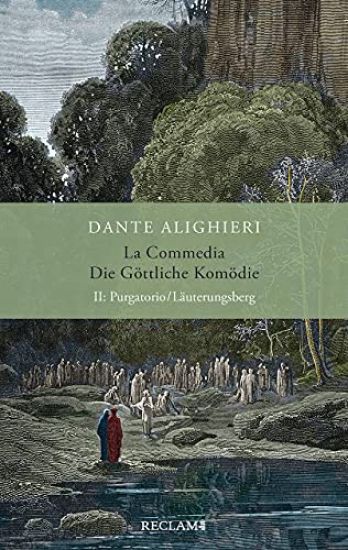
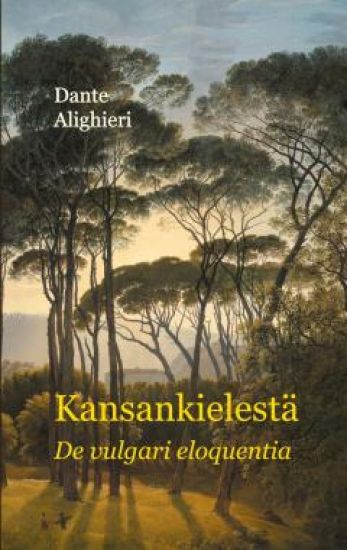
Kansankielestä

Kansankielestä

Dante Alighieri

Faros
2021
pokkari
Kansankielestä (De vulgari eloquentia) on maanpaossa vaeltaneen poliittisen pakolaisen pieni mutta painava kirja. Vuonna 1302 Dante Alighieri sai kuolemantuomion ja hänet karkotettiin Firenzestä. Italian kielellinen ja poliittinen murros heijastui Danten tuotantoon tätä seuranneina pakolaisuuden vuosina. Teos Kansankielestä pyrki kohottamaan italian kielen muiden romaanisten kielten ja latinan rinnalle, vieläpä niiden ohi runouden kielenä. Muotoutuvan Euroopan kohtalot, kielten vaiheet ja Danten ajatus "maailmasta isänmaana" ovat aiheina yhä ajankohtaisia. Teos jäi keskeneräiseksi, mutta se oli pioneerityö kielten synnystä, olemuksesta, leviämisestä ja käytöstä Euroopassa. Teos ilmestyy nyt ensi kertaa suomeksi Päivi Mehtosen ja Jaana Vaahteran suomentamana. Kaksikielinen editio tarjoaa lukijalle latinankielisen alkutekstin lisäksi laajan johdannon ja selitysosan.
La Vita Nuova

La Vita Nuova

Dante Alighieri

Macmillan Collector's Library
2021
sidottu

Halvin toimitettuna 17,00 €

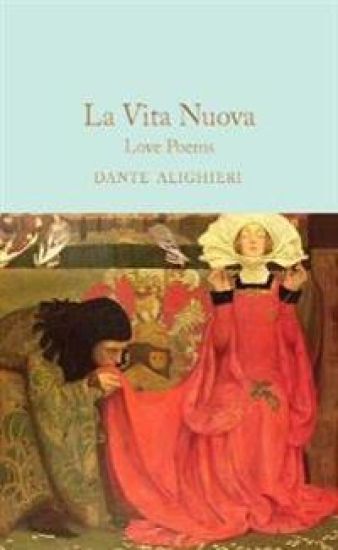
In La Vita Nuova, Italy's greatest poet recounts the famous story of his passionate love for Beatrice. The drama of their relationship unravels through stunning poetry and prose in this, one of the most celebrated love stories in history. Part of the Macmillan Collector’s Library; a series of stunning, clothbound, pocket-sized classics with gold foiled edges and ribbon markers. These beautiful books make perfect gifts or a treat for any book lover. From the first time the poet sets eyes on Beatrice, he proclaims that ‘love quite governed my soul’ and his devotion to her knows no end. By recalling each meeting with Beatrice this short book is at once a heartfelt account of youthful love and a religious allegory. La Vita Nuova serves as an important precursor to Dante’s masterpiece, The Divine Comedy. This edition is the English translation by Dante Gabriel Rossetti from the original Italian. It was first published in The Early Italian Poets in 1861 and then reissued in 1874 by Dante and his circle. It was met with great acclaim acknowledging Rossetti’s skill as a meticulous and poetic translator.
The Divine Comedy

The Divine Comedy

Dante Alighieri

Engage Classics
2020
sidottu
Inferno begins with Dante lost in a dark wood, assailed by beasts he cannot evade, and unable to find the straight way to salvation. Conscious that he is ruining himself and that he is falling into a dark place, Dante is at last rescued by Virgil, and the two of them begin their journey to the underworld. Allegorically, the Inferno represents the Christian soul seeing sin for what it really is, and the three beasts represent three types of sin: the self-indulgent, the violent, and the malicious. The Divine Comedy represents a vision of the afterlife of the medieval world-view as it had developed in the Western Church by the 14th century. The narrative describes Dante's travels through Hell, Purgatory, and Paradise, while allegorically the poem represents the soul's journey towards God. The poem is widely considered to be the pre-eminent work in Italian literature and one of the greatest works of world literature.