Kirjailija
Dante Alighieri
Kirjat ja teokset yhdessä paikassa: 1 370 kirjaa, julkaisuja vuosilta 1972–2027, suosituimpiin kuuluu The Divine Comedy. Vertaile teosten hintoja ja tarkista saatavuus suomalaisista kirjakaupoista.
1 370 kirjaa
Kirjojen julkaisuvuodet: 1972–2027.
After an initial ascension, Beatrice guides Dante through the nine celestial spheres of Heaven. These are concentric and spherical, as in Aristotelian and Ptolemaic cosmology. The structure of Paradiso is based on the four cardinal virtues and the three theological virtues. In Paradiso, Dante meets and converses with several great saints of the Church, including Saint Peter, and St. John. Allegorically, the poem represents the soul's ascent to God. The Divine Comedy represents a vision of the afterlife of the medieval world-view as it had developed in the Western Church by the 14th century. The narrative describes Dante's travels through Hell, Purgatory, and Paradise, while allegorically the poem represents the soul's journey towards God. The poem is widely considered to be the pre-eminent work in Italian literature and one of the greatest works of world literature.
Having survived the depths of Hell, Dante and Virgil ascend out of the undergloom to the Mountain of Purgatory on the far side of the world. The mountain has seven terraces, corresponding to the seven deadly sins. Dante's illustrative examples of sin and virtue draw on classical sources as well as on the Bible and on contemporary events. The Divine Comedy represents a vision of the afterlife of the medieval world-view as it had developed in the Western Church by the 14th century. The narrative describes Dante's travels through Hell, Purgatory, and Paradise, while allegorically the poem represents the soul's journey towards God. The poem is widely considered to be the pre-eminent work in Italian literature and one of the greatest works of world literature.
Divine Comedy (Complete Edition)
Dante Alighieri; Henry Francis Cary; Gustave Doré
E-Artnow
2020
pokkari
The Divine Comedy is a long narrative poem by Dante Alighieri, begun c. 1308 and completed in 1320, a year before his death in 1321. It is widely considered to be the preeminent work in Italian literature and one of the greatest works of world literature. The poem's imaginative vision of the afterlife is representative of the medieval world-view as it had developed in the Western Church by the 14th century. The narrative describes Dante's travels through Hell, Purgatory, and Paradise or Heaven, while allegorically the poem represents the soul's journey towards God. Dante draws on medieval Christian theology and philosophy, especially Thomistic philosophy and the Summa Theologica of Thomas Aquinas. Consequently, the Divine Comedy has been called "the Summa in verse". In Dante's work, Virgil is presented as human reason and Beatrice is presented as divine knowledge. This edition brings to you the inimitable translation of Divine Comedy by Henry Francis Cary and is accompanied by the beautiful illustrations of Gustave Dor .
Divine Comedy is one of the greatest works of world literature. The poem's imaginative vision of the afterlife is representative of the medieval world-view. The narrative describes Dante's travels through Hell, Purgatory, and Paradise or Heaven, while allegorically the poem represents the soul's journey towards God. Contents: - Divine Comedy - Inferno - Purgatorio - Paradiso - Six Sonnets on Dante's Divine Comedy
The Divine Comedy is widely considered to be the preeminent work in Italian literature and one of the greatest works of world literature. The narrative describes Dante's travels through Hell, Purgatory, and Paradise or Heaven, while allegorically the poem represents the soul's journey towards God. Dante draws on medieval Christian theology and philosophy where the poet Virgil is presented as human reason and Beatrice is presented as divine knowledge. Thus, this edition brings to you the annotated translation of the Divine Comedy by Henry Francis Cary for a pleasant enjoyment of the world's greatest classic.
The Divine Comedy is widely considered to be the preeminent work in Italian literature and one of the greatest works of world literature. The poem's imaginative vision of the afterlife is representative of the medieval world-view of the 14th century. The first-person narrative describes Dante's travels through Hell, Purgatory, and Paradise or Heaven, while allegorically the poem represents the soul's journey towards God. In Dante's work, Virgil is presented as human reason and Beatrice is presented as divine knowledge. This edition contains the famed illustrations by Gustave Dor which is matched by the inimitable translation of H. W. Longfellow, the first and formidable American translator of the Divine Comedy who is still considered as one of the best translators of this great classic.
Michael Palma’s translation of the Inferno reproduces in contemporary English Dante’s intricate triple-rhyming terza rima form, defying the conventional wisdom of literary commentators who long argued that it simply cannot be done. This spectacular feat of poetic artistry— “accurate … admirably clear, and readable” (Richard Wilbur)—“in capturing the sense, sound, and spirit of the original … comes close to perfection” (X. J. Kennedy).
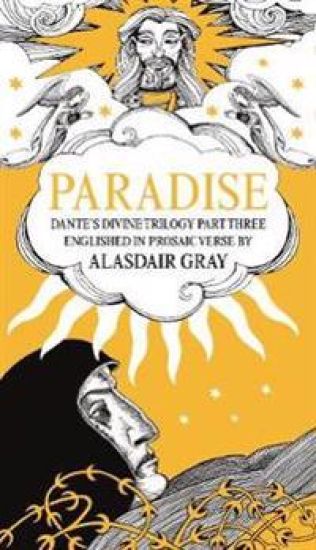
'Reveals Gray's powers of insight and invention' Guardian'One of the most vital retellings of the poem to date' SpectatorDante, now guided by Beatrice, faces the final third of his epic journey through the wheels of divine justice. Yet as he passes through the spheres of Heaven, he struggles with his faith, striving to understand the scales of good and evil that determine the fate of a human soul. The final book from Alasdair Gray, Paradise is a fitting conclusion to his own irreplaceable body of work, as well as to his masterful retelling of Dante's trilogy.
The Banquet (Il Convito): Translated By Elizabeth Price Sayer With An Introduction By Henry Morely This book is a result of an effort made by us towards making a contribution to the preservation and repair of original classic literature. In an attempt to preserve, improve and recreate the original content, we have worked towards: 1. Type-setting & Reformatting: The complete work has been re-designed via professional layout, formatting and type-setting tools to re-create the same edition with rich typography, graphics, high quality images, and table elements, giving our readers the feel of holding a 'fresh and newly' reprinted and/or revised edition, as opposed to other scanned & printed (Optical Character Recognition - OCR) reproductions. 2. Correction of imperfections: As the work was re-created from the scratch, therefore, it was vetted to rectify certain conventional norms with regard to typographical mistakes, hyphenations, punctuations, blurred images, missing content/pages, and/or other related subject matters, upon our consideration. Every attempt was made to rectify the imperfections related to omitted constructs in the original edition via other references. However, a few of such imperfections which could not be rectified due to intentional\unintentional omission of content in the original edition, were inherited and preserved from the original work to maintain the authenticity and construct, relevant to the work. We believe that this work holds historical, cultural and/or intellectual importance in the literary works community, therefore despite the oddities, we accounted the work for print as a part of our continuing effort towards preservation of literary work and our contribution towards the development of the society as a whole, driven by our beliefs. We are grateful to our readers for putting their faith in us and accepting our imperfections with regard to preservation of the historical content. HAPPY READING

The divine comedy of Dante Alighieri
Henry W. Longfellow; Dante Alighieri; Henry Wadsworth Longfellow
Hansebooks
2020
nidottu