
Kirjailija
Dante Alighieri
Kirjat ja teokset yhdessä paikassa: 1 370 kirjaa, julkaisuja vuosilta 1972–2027, suosituimpiin kuuluu The Divine Comedy. Vertaile teosten hintoja ja tarkista saatavuus suomalaisista kirjakaupoista.
1 370 kirjaa
Kirjojen julkaisuvuodet: 1972–2027.

The Poems of the Vita Nuova and Convito
Dante Alighieri
Createspace Independent Publishing Platform
2016
nidottu
A collected work of Dante's Divine Comedy where the main protagonist goes through Hell, Purgatory and Heaven describing what he sees and discovers in the three realms of the afterlife. This epic poem has shaped the thinking of many writers and theologians for many years and its impact and importance is being still felt today.

Love That Moves the Sun and Other Stars
Dante Alighieri
Penguin Classics
2016
nidottu
Halvin toimitettuna 9,90 €
'Happiness beyond all words! A life of peace and love, entire and whole!'A collection of cantos from Paradiso, the most original and experimental part of the Divina Commedia. One of 46 new books in the bestselling Little Black Classics series, to celebrate the first ever Penguin Classic in 1946. Each book gives readers a taste of the Classics' huge range and diversity, with works from around the world and across the centuries - including fables, decadence, heartbreak, tall tales, satire, ghosts, battles and elephants.
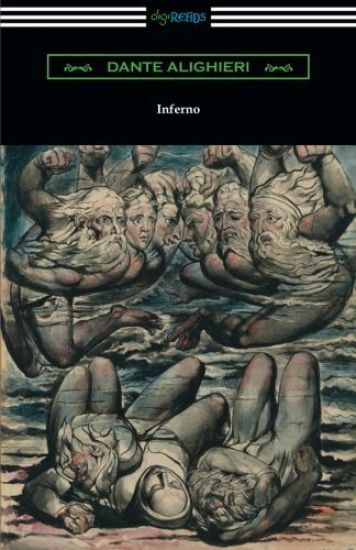
Dante's Inferno (The Divine Comedy
Dante Alighieri
Digireads.com
2016
pokkari
Halvin toimitettuna 19,40 €
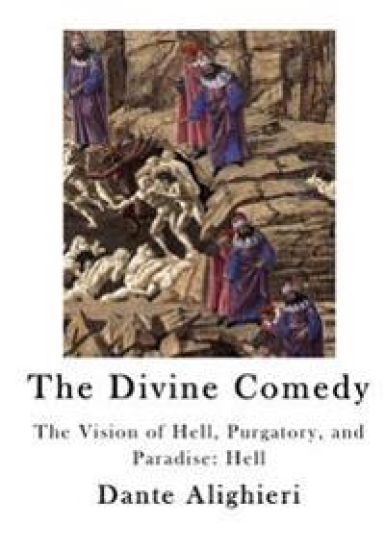
The Divine Comedy: The Vision of Hell, Purgatory, and Paradise: Hell
Dante Alighieri
Createspace Independent Publishing Platform
2016
nidottu
The Divine ComedyThe Vision of Hell, Purgatory, and Paradise: HellDante AlighieriTranslated by The Rev. H. F. Cary, M. A. Illustrated by Gustave Dor The Divine Comedy (Italian: Divina Commedia is an epic poem by Dante Alighieri, begun c. 1308 and completed 1320, a year before his death in 1321. It is widely considered the preeminent work of Italian literature and is seen as one of the greatest works of world literature. The poem's imaginative vision of the afterlife is representative of the medieval world-view as it had developed in the Western Church by the 14th century. It helped establish the Tuscan language, in which it is written, as the standardized Italian language. It is divided into three parts: Inferno, Purgatorio, and Paradiso. On the surface, the poem describes Dante's travels through Hell, Purgatory, and Paradise or Heaven; but at a deeper level, it represents, allegorically, the soul's journey towards God. At this deeper level, Dante draws on medieval Christian theology and philosophy, especially Thomistic philosophy and the Summa Theologica of Thomas Aquinas. Consequently, the Divine Comedy has been called "the Summa in verse." The work was originally simply titled Comed a and the word Divina was added by Giovanni Boccaccio. The first printed edition to add the word divina to the title was that of the Venetian humanist Lodovico Dolce, published in 1555 by Gabriele Giolito de' Ferrari.
The Divine Comedy (Translated by Henry Wadsworth Longfellow with an Introduction by Henry Francis Cary)
Dante Alighieri
Digireads.com
2015
pokkari
The Divine Comedy / La Divina Commedia - Parallel Italian / English Translation
Dante Alighieri; Henry Wadsworth Longfellow
Benediction Classics
2015
pokkari
The Commedia and Canzoniere of Dante Alighieri, Tr. with Notes, Essays and Intr. by E.H. Plumptre
Dante Alighieri
Arkose Press
2015
sidottu

The first part of Dante's Divine Comedy, the "Inferno" (or "Hell") begins on the night before Good Friday in the year 1300, "halfway along our life's path". Dante is thirty-five years old, half of the biblical life expectancy of 70, lost in a dark wood, assailed by beasts he cannot evade, and unable to find the straight way to salvation. Conscious that he is ruining himself and that he is falling into a deep place where the sun is silent, Dante is at last rescued by Virgil, and the two of them begin their journey to the underworld. Each sin's punishment in Inferno is a contrapasso, a symbolic instance of poetic justice Includes unique illustrations.
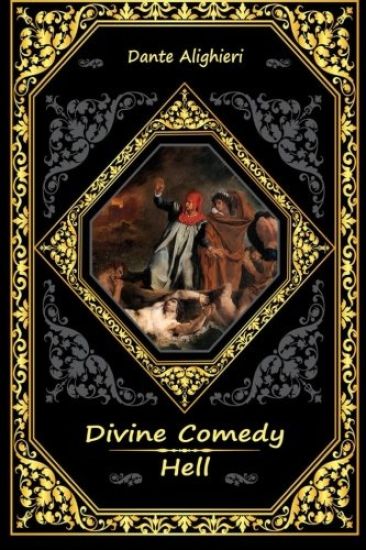
The first part of Dante's Divine Comedy, the "Inferno" (or "Hell") begins on the night before Good Friday in the year 1300, "halfway along our life's path". Dante is thirty-five years old, half of the biblical life expectancy of 70, lost in a dark wood, assailed by beasts he cannot evade, and unable to find the straight way to salvation. Conscious that he is ruining himself and that he is falling into a deep place where the sun is silent, Dante is at last rescued by Virgil, and the two of them begin their journey to the underworld. Each sin's punishment in Inferno is a contrapasso, a symbolic instance of poetic justice Includes unique illustrations.
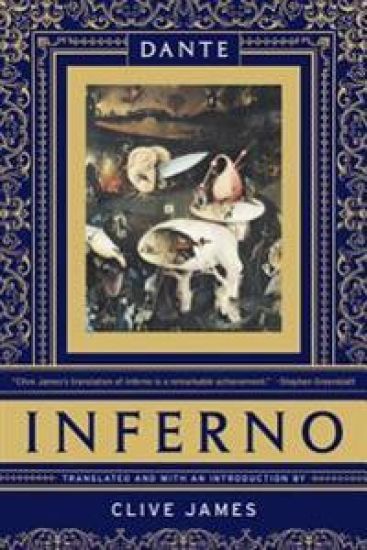
The most captivating part of perhaps the greatest epic poem ever written, Dante's Inferno still holds the power to thrill and inspire. The medieval equivalent of a thriller, Inferno follows Dante and his faithful guide, Virgil, as they traverse the complex geography of Hell, confronting its many threats, macabre punishments, and historical figures, before reaching the deep chamber where Satan himself resides. Now, in this new translation, Clive James communicates not just the transcendent poetry of Dante's language but also the excitement and terror of his journey through the underworld. Instead of Dante's original terza rima, a form which in English tends to show the strain of composition, James employs fluently linked quatrains, thereby conveying the seamless flow of Dante's poetry and the headlong momentum of the action. As James writes in his introduction, Dante's great poem "can still astonish us, whether we believe in the supernatural or not. At the very least it will make us believe in poetry."
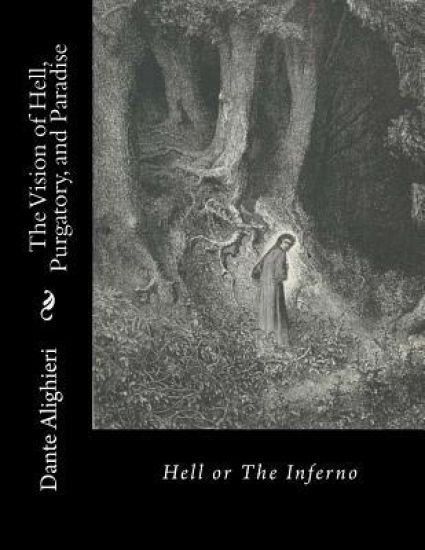
The Vision of Hell, Purgatory, and Paradise: Hell or The Inferno
Dante Alighieri
Createspace Independent Publishing Platform
2015
nidottu
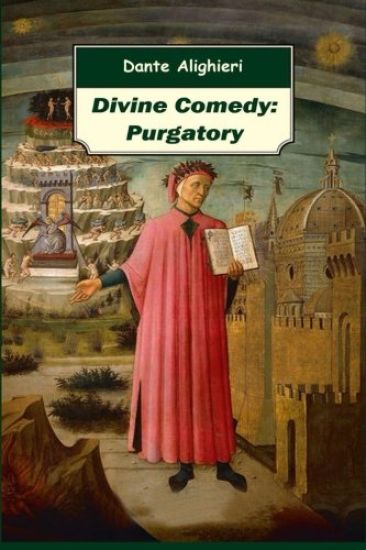
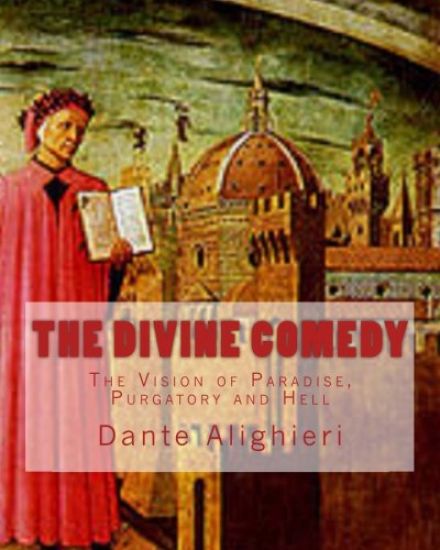
The Divine Comedy: The Vision of Paradise, Purgatory and Hell
Dante Alighieri
Createspace Independent Publishing Platform
2015
nidottu
Durante degli Alighieri, usually referred to simply as Dante was born in Italy, and lived from c. 1265 to c. 1321. He was a major poet during the Middle Ages. He wrote the famouse Divine Comedy, which was originally called Comed