Kirjojen hintavertailu – 12 903 725 kirjaa ja 27 kauppaa
Kirjailija
David Harvey
Kirjat ja teokset yhdessä paikassa: 93 kirjaa, julkaisuja vuosilta 1989–2027, suosituimpiin kuuluu Accounting. Vertaile teosten hintoja ja tarkista saatavuus suomalaisista kirjakaupoista.
Fiscal crises have cascaded across much of the developing world with devastating results, from Mexico to Indonesia, Russia and Argentina. The extreme volatility in contemporary economic fortunes seems to mock our best efforts to understand the forces that drive development in the world economy. David Harvey, the single most important geographer writing today and a leading social theorist of our age, offers a comprehensive critique of contemporary capitalism. In this fascinating book, he shows the way forward for just such an understanding, enlarging upon the key themes in his recent work: the development of neoliberalism, the spread of inequalities across the globe, and 'space' as a key theoretical concept. Both a major declaration of a new research programme and a concise introduction to David Harvey's central concerns, this book will be essential reading for scholars and students across the humanities and social sciences.
Long before Occupy, cities were the subject of much utopian thinking. They are the centers of capital accumulation as well as of revolutionary politics, where deeper currents of social and political change rise to the surface. Do the financiers and developers control access to urban resources or do the people? Who dictates the quality and organization of daily life? Rebel Cities places the city at the heart of both capital and class struggles, looking at locations ranging from Johannesburg to Mumbai, from New York City to S o Paulo. Drawing on the Paris Commune as well as Occupy Wall Street and the London Riots, Harvey asks how cities might be reorganized in more socially just and ecologically sane ways--and how they can become the focus for anti-capitalist resistance.
Now a classic of Marxian economics, The Limits to Capital provides one of the best theoretical guides to the history and geography of capitalist development. In this edition, Harvey updates his classic text with a substantial discussion of the turmoil in world markets today. In his analyses of 'fictitious capital' and 'uneven geographical development' Harvey takes the reader step by step through layers of crisis formation, beginning with Marx's controversial argument concerning the falling rate of profit, moving through crises of credit and finance, and closing with a timely analysis geopolitical and geographical considerations.
In recent years, we have witnessed a surge of interest in Marx's work in the effort to understand the origins of our current predicament. For nearly forty years, David Harvey has written and lectured on Capital, becoming one of the world's most foremost Marx scholars. Based on his recent lectures, this current volume - finally bringing together his guides to Volumes I, II and much of III of Das Kapital - aims to bring this depth of learning to a broader audience, guiding first-time readers through a fascinating and deeply rewarding text. A Companion to Marx's Capital offers fresh, original and sometimes critical interpretations of a book that changed the course of history and, as Harvey intimates, may do so again. David Harvey's video lecture course can be found here: davidharvey.org/reading-capital/
Walsall’s bus fleet was always idiosyncratic, reflecting particularly the ideas of their General Managers. A bus fleet that not only served the town’s many housing estates, its large fleet was used extensively on works and colliery services fa beyond Walsall’s boundaries. Financial constraints meant that buses were often built to the most basic specification and classes of buses rarely exceeded a dozen or so vehicles. Even the original two-tone blue livery was pared down to an all-over light blue with a thin relief of a yellow band. Yet for all its faults it was always a fascinating bus fleet with the wartime fleet in particular being subjected to an extensive rebodying programme usually involving pre-war bodies being mounted on wartime chassis. Unusually for a West Midlands operator, the pre-war fleet was nearly all manufactured by Dennis, while during the Second World War and immediately afterwards Guy Arabs were either allocated or bought. Then came Ronald Edgley Cox and nothing was ever the same again with buses built to almost Pullman standard, an actual class of buses given the nickname of ‘jumping jacks’, a large number of very short Daimler Fleetlines as well as probably one of the largest double-deckers ever operated in the UK, which proved to be both a swan song and a white elephant.
WARNING: Resellers of "Used" and "New" books may not be selling copies of this book but photocopies of the original Cochrane manuscripts available free online. To ensure you receive a copy of this book, purchase only a new paperback from amazon or a kindle version Belleau Wood echoes through the history of the U. S. Marine Corps and the United States military. It was one of the first major battles fought by American forces in World War I, and a critical part of the Aisne Marne defensive. Many legends emerged from the battle, including two time Medal of Honor recipient Dan Daly's famous charge and the (supposed) origin of the phrase "Devil Dogs" among a host of other myths and stories about the battle. These stories are recited from Parris Island to Okinawa and remain an important part of Marine Corps identity. Yet, many of these stories are more legend than history. The true history has a darker side, from mistakes on the battlefield that cost the lives of many, to the origins of Marine Corps and Army inter-service rivalry that created many problems in the Pacific during World War II. This book looks at Belleau Wood and aspects of the larger campaign in and around Chateau-Thierry as part of the Aisne-Marne campaign in 1918, focusing on the 2nd Division of the AEF, of which the Marines were one brigade. In particular, this account looks at the role of chemical warfare, a feature that defined the battle. This book was originally written in draft form during the 1950s and is updated and offered in book form with additional material for the first time. The historian Rexmond C. Cochrane, a co-author of the official history of the Chemical Warfare Service in World War II, wrote 20 draft historical studies for the US Army Chemical Corps Historical Office at the Army Chemical Center, Edgewood, Maryland in the 1950s. These were never completed or published other than in their typewritten form. Those versions feature photocopied typewritten pages, with the occasional typo or punctuation error, idiosyncratic footnotes, all featuring penciled notes and/or corrections, hand-drawn diagrams and maps, encapsulated in unsearchable PDF files of varied quality. This new collection of Cochrane's work brings it to a wider audience, in a more accessible format. The CBRNPro.net edition is is a significant "update" of Cochrane's work, offering better maps, pictures, references, bibliographies, and an assortment of other additions to aid the reader who may be unfamiliar with some of the military minutiae Cochrane explores. This collection is newly annotated, offering additional insight and guidance reflecting the current state of scholarship, updating that of Cochrane's day. These new annotations are extensive and provide significant insight and references for those unfamiliar with the topics Cochrane addresses. This is a "new" old work, containing both public domain and original, new material. It belongs on the bookshelf of every historian and student of World War I and for those engaged in professions related to chemical warfare, CBRN weapons, national security, and defense. The book is supported by material available on CBRNPro.net, including links and a copy of this book's extensive "Further Reading" annotated bibliography supplemented with additional, up to date material.
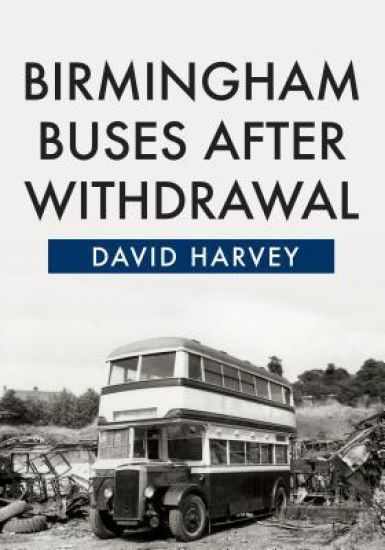
From the mid-1930s, many of the Birmingham City Transport bus fleet were stored pending disposal. Once sold, many were taken to scrapyards and broken up while some of the better ones were sold for further use. In this book, author David Harvey looks at these three scenarios up until the 1980s, though the main period was between 1947 until 1965 when there was still a large market for second-hand Birmingham buses that were generally still in excellent condition. Many of the photographs have never been seen before – especially those taken in the huge vehicle ‘dump’ at Holford Drive, Perry Barr. Breaking-up locations such as scrap merchants at Oldbury, Great Barr and Stratford are a sad reminder of the way unwanted buses were unceremoniously broken up. A happier end result is seen with the buses that escaped, with many going to independent operators in Scotland while some were even exported to Cyprus.
Karl Marx huvudarbete "Das Kapital" är ett av de mest betydande verken i samhällsvetenskapens och den politiska idédebattens historia och helt centralt för vår förståelse av det moderna, kapitalistiska samhället. "Kapitalets" första bok, "Kapitalets produktionsprocess", är den mest kända och lästa delen. Men första boken vilar på och förutsätter de teorem som formuleras i andra och tredje boken, särskilt vad gäller kapitalismens återkommande kriser. Andra boken, "Kapitalets cirkulationsprocess", tar som namnet antyder sin utgångspunkt i cirkulationen av kapital i dess olika former snarare än i produktionen. Marx lyfter här blicken från fabriksgolvet mot kapitalismen som makroekonomiskt system och dess jämviktsbetingelser, vilket ger ett annat perspektiv på hur kapitalet fungerar än i den första boken. Denna tredje upplaga av andra boken har försetts med en klargörande inledning av den brittiske kulturgeografen och samhällsteoretikern David Harvey, som skrivit flera uppmärksammade verk om kapitalismens utveckling och handledningar till både första och andra boken av Kapitalet. "Om den flitigt studerade första boken överbetonas och den andra boken försummas och uppfattas som mindre viktig, vilket tyvärr inte sällan är fallet, får vi i bästa fall bara halva bilden av Marx' förståelse av kapitalets politiska ekonomi. Men det är i själva verket mycket värre än så att inte ta den andra boken på allvar: vi kan då inte till fullo förstå vad som sägs i den första boken, eftersom vi måste sätta dess resultat i dialektiskt förhållande till den andra bokens resultat för att begripa dem ordentligt." Ur David Harveys inledning
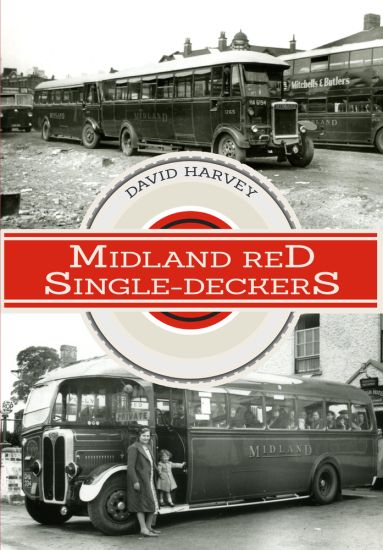
Throughout their existence from 1904 until 1981, the Birmingham & Midland Motor Omnibus Co. was an idiosyncratic operator whose operational area covered an area from the Welsh Marches and Shropshire in the west to Northamptonshire and Rutland in the east and from Oxfordshire and Gloucestershire in the south to Staffordshire and Derbyshire in the north. Immediately after the First World War, Midland Red had used single-decker buses on Tilling-Stevens petrol-electric chassis but in 1922 these were replaced by the first SOS buses, designed by Chief Engineer Wyndham Shire and manufactured at Midland Red’s Carlyle Road Works. These innovative and forward-thinking buses would out-compete many Edwardian tram systems in the 1920s, especially in the Black Country. After the Second World War, Midland Red introduced the S class, which would play a key role in revolutionising the company’s urban and rural bus services. The last buses to be produced for Midland Red at Carlyle Road would come in the early 1960s. With a plethora of rare images, David Harvey examines the history of each type of single-decker and offers a fascinating insight into the history of these captivating, iconic buses.
Karl Marx's Capital is one of the most important texts written in the modern era. Since 1867, when the first of its three volumes was published, it has had a profound effect on politics and economics in theory and practice throughout the world. But Marx wrote in the context of capitalism in the second half of the nineteenth century, and his assumptions and analysis need to be updated in order to address to the technological, economic, and industrial change that has followed Capital's initial publication. In Marx, Capital, and the Madness of Economic Reason, David Harvey not only provides a concise distillation of his famous course on Capital, but also makes the text relevant to the twenty-first century's continuing processes of globalization. This book serves as an accessible window into Harvey's unique approach to Marxism and takes readers on a riveting roller coaster ride through recent global history. It demonstrates how and why Capital remains a living, breathing document with an outsized influence on contemporary social thought.
David Harvey is one of most famous Marxist intellectuals in the past half century, as well as one of the world's most cited social scientists. Beginning in the early 1970s with his trenchant and still-relevant book Social Justice and the City and through this day, Harvey has written numerous books and dozens of influential essays and articles on topics across issues in politics, culture, economics, and social justice. In The Ways of the World, Harvey has gathered his most important essays from the past four decades. They form a career-spanning collection that tracks not only the development of Harvey over time as an intellectual, but also a dialectical vision that gradually expanded its reach from the slums of Baltimore to global environmental degradation to the American imperium. While Harvey's coverage is wide-ranging, all of the pieces tackle the core concerns that have always animated his work: capitalism past and present, social change, freedom, class, imperialism, the city, nature, social justice, postmodernity, globalization, and the crises that inhere in capitalism. A career-defining volume, The Ways of the World will stand as a comprehensive work that presents the trajectory of Harvey's lifelong project in full.
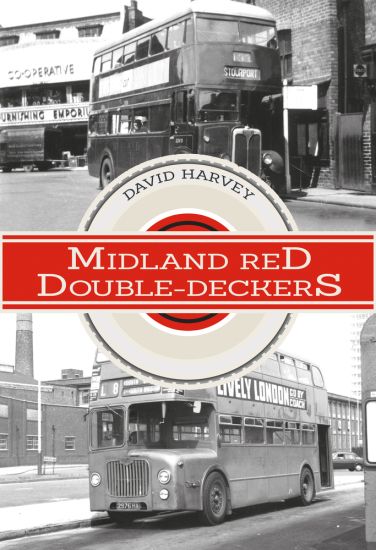
Throughout their existence from 1904 until 1981, the Birmingham & Midland Motor Omnibus Co. was an idiosyncratic operator whose operational area ranged from the Welsh Marches and Shropshire in the west to Northamptonshire and Rutland in the east; and from Oxfordshire and Gloucestershire in the south to Staffordshire and Derbyshire in the north. Much of their area was distinctly rural but, in Birmingham and the Black Country, Worcester and Hereford, Stafford and Leicester, intense urban services were operated mainly by double-decker buses and it is these buses that this volume examines. For most of its operational life, BMMO constructed their own chassis fitted with proprietary bodies to their own often novel and frequently advanced designs. During the 1930s around 400 double-deck, rear-entrance REDDs and front-entrance FEDDs were built, plus others for both Trent and Potteries Motor Traction. During the Second World War double-deck buses were allocated to the company by the Ministry of War Transport but, after the end of hostilities, bus production resumed until economic pressures caused the cessation of double-deck manufacture at Carlyle Road Works in 1966. Shortages of buses did result in the purchase of twenty Guy Arab IIIs and 100 Leyland Titan PD2/12s between 1849 and 1954 but, from the 1960s until the company was split up, the rear-entrance Daimler Fleetline was the chassis of choice. This book examines each type of double-decker with a history of the model, a brief technical specification and captioned photographs taken during the type's period in service.
The essential anthology of writings by the world's leading Marxist thinker: this book presents a sequence of landmark works in David Harvey's intellectual journey over five decades. It shows how experiencing the riots, despair and injustice of 1970s Baltimore led him to seek an explanation of capitalist inequalities via Marx and to a sustained intellectual engagement that has made him the world's leading exponent of Marx's work. The book takes the reader through the development of his unique synthesis of Marxist method and geographical understanding that has allowed him to develop a series of powerful insights into the ways of the world, from the new mechanics of imperialism, crises in financial markets and the effectiveness of car strikers in Oxford, to the links between nature and change, why Sacré Coeur was built in Paris, and the meaning of the postmodern condition. David Harvey is renowned for originality, acumen and the transformative value of his insights. This book shows why.
Available for the first time in paperback, this is the pre-eminent critical study, and exploration, of how myth and legend played such a significant role in the works of J. R. R. Tolkien.
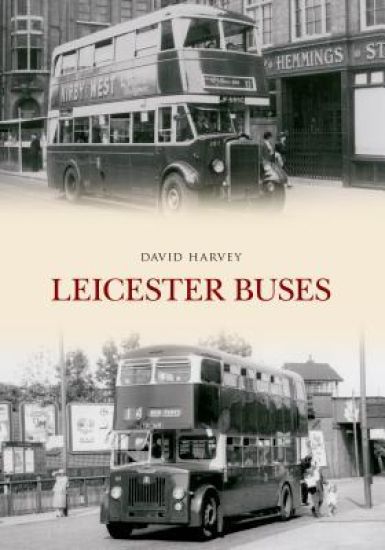
In July 1901, the Leicester Tramways Company was taken over by Leicester Corporation. Although most of the company's vehicles were tramcars, there were also thirty horse-drawn buses. The first Corporation motor buses, however, did not arrive in the city until 1924; Midland Red and various independent operators ran services from earlier in the 1920s. Following the end of the Second World War, Leicester placed an order for 160 new vehicles from Daimler, AEC and Leyland, which started arriving in November 1948. A year later, the tram network was officially closed, the routes being covered by bus services. In the 1960s and 1970s, Leicester City Transport was involved in several important new developments, running one of the first Park & Ride schemes in December 1966, and pioneering the use of VHF radio and CCTV to improve the efficiency of bus services. On 7 October 1984, Leicester City Transport became Leicester CityBus. David Harvey brings this history of Leicester's buses to life with a comprehensive collection of period images and a wealth of information about each bus. The text evokes and pays tribute to bygone times, with thoughtful details about the historic buildings and cultural landmarks that recur in the photographs.
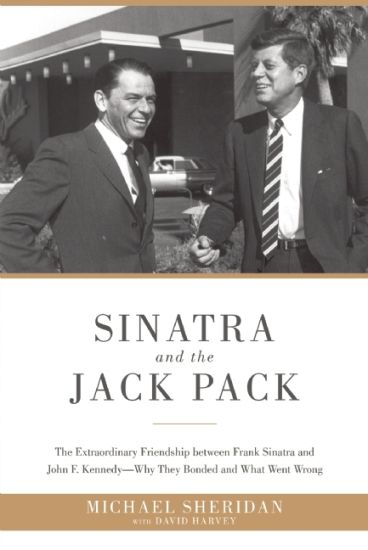
A New York Times Bestseller Frank Sinatra desperately wanted to be part of John F. Kennedy’s gang. He had his own famed ? Rat Pack,” made up of hard drinking, womanizing individuals like himself?guys like Dean Martin, Sammy Davis, Jr., and Peter Lawford?but the guy ? Ol’ Blue Eyes” really wanted to hang with was Lawford’s brother-in-law, the real chairman of the board, John F. Kennedy. In Sinatra and the Jack Pack, Michael Sheridan delves deep into the acclaimed singer’s relationship with the former president. He shares how Sinatra emerged from a working class Italian family and carved out a unique place for himself in American culture, and how Kennedy, also of immigrant stock, came from a privileged background of which the young Frank could only have dreamed. By the time the men met in the 1950s, both were thriving?and both liked the good life. They bonded over their mutual ability to attract beautiful women, male admirers, and adoring acolytes. They also shared a scandalous secret: each had dubious relationships with the mafia. It had promoted Frank’s career and helped Kennedy buy votes. FBI Director J. Edgar Hoover had, over two decades, compiled detailed and damning dossiers on their activities. From all accounts the friendship thrived. Then, suddenly, in March 1962, Frank was abruptly ejected from JFK’s gang. This unique volume tells why. It will release shortly after a television documentary inspired by the book airs, is filled with a beloved cast of characters, and is the compelling, untold story of a tumultuous relationship between two American icons. Skyhorse Publishing, as well as our Arcade imprint, are proud to publish a broad range of books for readers interested in history--books about World War II, the Third Reich, Hitler and his henchmen, the JFK assassination, conspiracies, the American Civil War, the American Revolution, gladiators, Vikings, ancient Rome, medieval times, the old West, and much more. While not every title we publish becomes a New York Times bestseller or a national bestseller, we are committed to books on subjects that are sometimes overlooked and to authors whose work might not otherwise find a home.
'Accounting for Business' is ideal for undergraduate students on business and accounting courses who need to understand the nuts and bolts of financial accounting. This popular textbook has always enjoyed a deserved reputation for accessibility and thoroughness. Now in its third edition, its contents have been fully updated and restructured to make them even easier to use. Readers will benefit from the coverage of current accounting practices and legislation, in addition to the range of worked examples and self-test activities throughout the book. 'Accounting for Business' clearly explains accounting information's role in making sound business decisions and focuses upon the aspects of accounting practice which are most relevant to the non-specialist manager. It is ideal for first year undergraduates of business studies, higher students and those pursuing professional accountancy qualifications. This third edition has been restructured, to further enhance its 'student centred' approach. The content has now been broken down into 25 roughly equivalent 'bite-sized' individual study topics. Each of these requires 6 hours of study time, enabling this book to support a full scale semester course with two topics a week, or a full year course at one topic a week. Includes a wide selection of topical case studies, with a broad spread of international examples.
David Harvey is one of most famous Marxist intellectuals in the past half century, as well as one of the world's most cited social scientists. Beginning in the early 1970s with his trenchant and still-relevant book Social Justice and the City and through this day, Harvey has written numerous books and dozens of influential essays and articles on topics across issues in politics, culture, economics, and social justice. In The Ways of the World, Harvey has gathered his most important essays from the past four decades. They form a career-spanning collection that tracks not only the development of Harvey over time as an intellectual, but also a dialectical vision that gradually expanded its reach from the slums of Baltimore to global environmental degradation to the American imperium. While Harvey's coverage is wide-ranging, all of the pieces tackle the core concerns that have always animated his work: capitalism past and present, social change, freedom, class, imperialism, the city, nature, social justice, postmodernity, globalization, and the crises that inhere in capitalism. A career-defining volume, The Ways of the World will stand as a comprehensive work that presents the trajectory of Harvey's lifelong project in full.
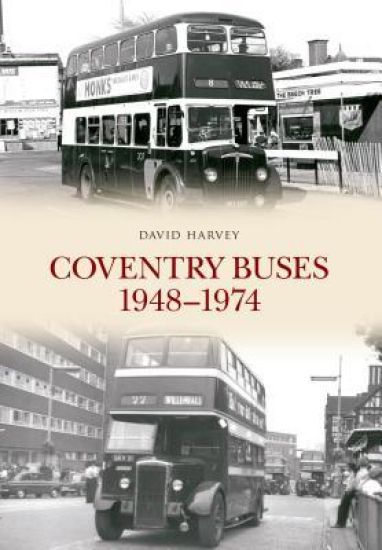
Coventry’s buses had first entered service in 1914, supplementing the tram network. The city’s transport network was heavily damaged by bombing during the Second World War. After the end of the war and the end of austerity, new Daimler buses began to arrive in the city to replace the austerity and producer gas vehicles run during the war years, and those provided by other operators to cover the gaps in service created by the loss of the city’s trams and by the loss of buses to the bombing. Some Maudslays and other models notwithstanding, the core of the Coventry fleet remained Daimlers right through until Coventry Corporation Transport was absorbed into the West Midlands Passenger Transport Executive on 1 April 1974. In this book, David Harvey uses his unique collection of photographs to take a look at the post-war history of the Coventry bus network from 1948 to 1974.