Kirjojen hintavertailu – 12 903 725 kirjaa ja 27 kauppaa
Kirjailija
David Harvey
Kirjat ja teokset yhdessä paikassa: 93 kirjaa, julkaisuja vuosilta 1989–2027, suosituimpiin kuuluu Accounting. Vertaile teosten hintoja ja tarkista saatavuus suomalaisista kirjakaupoista.
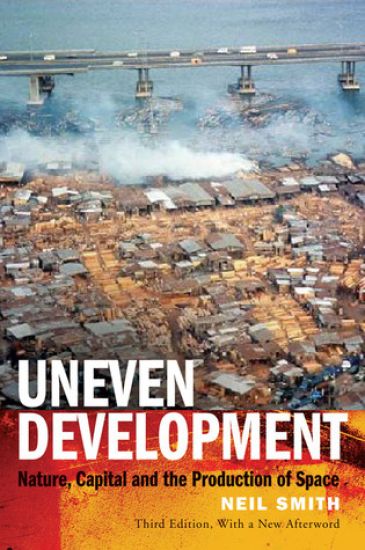
In Uneven Development, a classic in its field, Neil Smith offers the first full theory of uneven geographical development, entwining theories of space and nature with a critique of capitalism. Featuring groundbreaking analyses of the production of nature and the politics of scale, Smith's work anticipated many of the uneven contours that now mark neoliberal globalization. This third edition features an afterword examining the impact of Neil's argument in a contemporary context.
This major new textbook from the premier Marxist political thinker guides us through the classic text of political economy. For nearly forty years, David Harvey has taught and lectured on Marx's "Capital". In this book he draws on his rich knowledge of the text to create a step-by-step guide to the most important and influential study of capitalism. Aimed to guide first-time readers through a dense and complicated as well as a rich and fascinating text, the book offers fresh, original and sometimes critical interpretations of Marx's most famous work. The contemporary relevance of "Capital" to understanding the state of contemporary capitalism shines through in every chapter, making this a must-read for anyone interested in understanding the world today and its crises.
"My aim is to get you to read a book by Karl Marx called Capital, Volume 1, and to read it on Marx's own terms." The biggest financial crisis since the Great Depression has generated a surge of interest in Marx's work in the effort to understand the origins of our current predicament. For nearly forty years, David Harvey has written and lectured on Capital, becoming one of the world's most foremost Marx scholars. Based on his recent lectures, this current volume aims to bring this depth of learning to a broader audience, guiding first-time readers through a fascinating and deeply rewarding text. A Companion to Marx's Capital offers fresh, original and sometimes critical interpretations of a book that changed the course of history and, as Harvey intimates, may do so again. David Harvey's video lecture course can be found here: davidharvey.org/reading-capital/
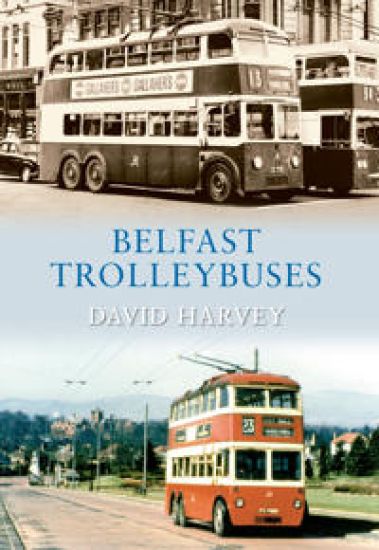
This is the story of Belfast's trolleybus system, told through an eclectic collection of over 200 photographs, from its opening in 1938 to its closure in 1968. During that time it had the largest number of operating trolleybuses in the UK outside London Transport's enormous fleet. 246 trolleybuses ran over 37A miles of route and but for World War II, and a subsequent change of policy by a new general manager, the size of the operation would have been even greater. Rather than look at the trolleybus routes David Harvey concentrates on each of the 246 vehicles, showing them in their geographic, historic and social settings. Belfast Trolleybuses From Old Photographs is the latest in an impressive repertoire of transport titles from this prolific author.
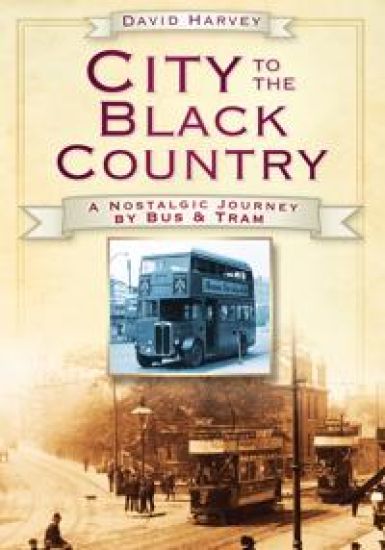
This fascinating collection of 200 archive photographs takes the reader on a nostalgic bus and tram ride through the north-west of Birmingham, from the city centre along the A41 to Hockley, taking in the famous Jewellery Quarter and the many Victorian housing developments around Handsworth. Travelling through numerous shopping centres and the important town centre of West Bromwich with its ‘golden mile’, the route splits at Carter’s green. Taking in the well-known steel and tube manufacturing centre Wednesbury, as well as Black Country capital Dudley, this entertaining book is full of detail sure to delight local residents and transport enthusiasts alike.
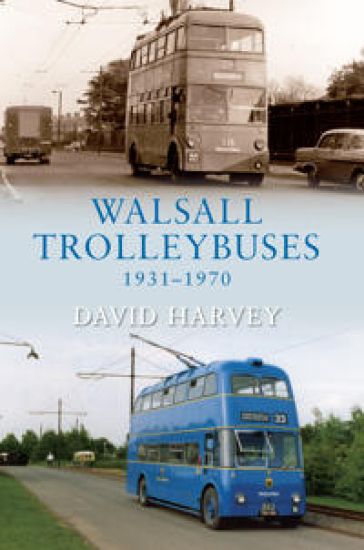
This is the story of Walsall's trolleybus system, from its opening in 1931 through to its eventual closure in October 1970. David Harvey takes us through the geography of the area, social change, development, expansion and the effects of demands on the fleet during World War II. He shows us how 1952 saw an expansion of the trolleybus system and that further routes were constructed to serve the new post-war housing developments. During the 1960s further expansion plans were abandoned when Walsall Corporation were taken over by West Midlands P. T. E, which ran the service until October 1970 when it was finally closed. Walsall Trolleybuses 1931-1970 is the latest in an impressive repertoire of transport titles from this prolific author.
Throughout his distinguished and influential career, David Harvey has defined and redefined the relationship between politics, capitalism, and the social aspects of geographical theory. Laying out Harvey’s position that geography could not remain objective in the face of urban poverty and associated ills, Social Justice and the City is perhaps the most widely cited work in the field. Harvey analyzes core issues in city planning and policy—employment and housing location, zoning, transport costs, concentrations of poverty—asking in each case about the relationship between social justice and space. How, for example, do built-in assumptions about planning reinforce existing distributions of income? Rather than leading him to liberal, technocratic solutions, Harvey’s line of inquiry pushes him in the direction of a “revolutionary geography,” one that transcends the structural limitations of existing approaches to space. Harvey’s emphasis on rigorous thought and theoretical innovation gives the volume an enduring appeal. This is a book that raises big questions, and for that reason geographers and other social scientists regularly return to it.
David Harvey är en av vår tids ledande samhällsteoretiker och den enskilt viktigaste idag verksamme geografen. Genom sin banbrytande forskning har han utarbetat en omfattande kritik av den samtida kapitalismen som rönt uppmärksamhet inom en rad akademiska discipliner. I Den globala kapitalismens rum lägger han grunden för en förståelse av det världsekonomiska läget genom att utveckla sina huvudteman: nyliberalismens utveckling, den växande globala ojämlikheten, kapitalackumulation genom fråntagande och det teoretiska nyckelbegreppet rum. Som programförklaring och kortfattad introduktion till David Harveys centrala teman är den här boken oumbärlig för forskare och studenter inom humaniora och samhällsvetenskap. David Harvey undervisar vid City University of New York och är bland annat författare till böckerna The limits to capital, The condition of postmodernity, Spaces of capital, Paris, capital of modernity, The new imperialism, och Justice, nature and the geography of difference.
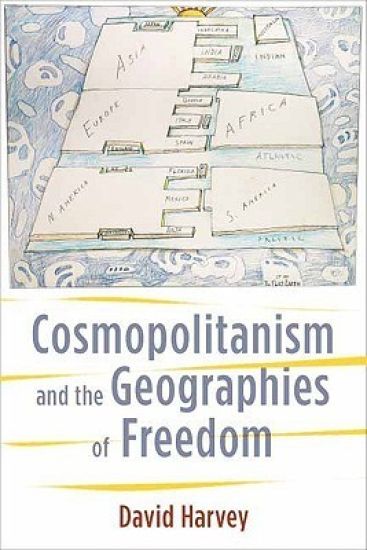
Liberty and freedom are frequently invoked to justify political action. Presidents as diverse as Woodrow Wilson, Franklin Delano Roosevelt, John F. Kennedy, Ronald Reagan, and George W. Bush have built their policies on some version of these noble values. Yet in practice, idealist agendas often turn sour as they confront specific circumstances on the ground. Demonstrated by incidents at Abu Ghraib and Guantanamo Bay, the pursuit of liberty and freedom can lead to violence and repression, undermining our trust in universal theories of liberalism, neoliberalism, and cosmopolitanism. Combining his passions for politics and geography, David Harvey charts a cosmopolitan order more appropriate to an emancipatory form of global governance. Political agendas tend to fail, he argues, because they ignore the complexities of geography. Incorporating geographical knowledge into the formation of social and political policy is therefore a necessary condition for genuine democracy. Harvey begins with an insightful critique of the political uses of freedom and liberty, especially during the George W. Bush administration. Then, through an ontological investigation into geography's foundational concepts--space, place, and environment--he radically reframes geographical knowledge as a basis for social theory and political action. As Harvey makes clear, the cosmopolitanism that emerges is rooted in human experience rather than illusory ideals and brings us closer to achieving the liberation we seek.
Mer än halva mänskligheten bor nu i städer. Och det är inte i nord som den största tillväxten av stadsbefolkningar sker, utan i syd. Föreställningen om syd som ruralt och jordbruksdominerat, i motsats nord som antas vara urbant och industriellt, förefaller därmed inte längre vara giltig. I Fronesis nr 18 granskas stadens roll i en globaliserad kapitalism, och dess roll för flödena av människor och ekonomiska värden. Det handlar om framväxten av en nyliberal stadspolitik, byggd på nya klass- och könsorättvisor, nya gränser och kontroll. Innehåll i Fronesis nr 18 (223 sidor) Magnus Hörnqvist, Anders Lund Hansen, Hanna Pettersson, Olav Unsgaard och Magnus Wennerhag: En öppen stad, en ej befästad Mike Davis: Slummens planet: Urban tillbakagång och det informella proletariatet Christan Abrahamsson och Frida Andersson: Harvey, kapitalismen och staden David Harvey: Pengar, tid, rum och staden Anders Lund Hansen: Rumskrig, nyliberalism och skalpolitik Neil Smith: Ny globalism, ny urbanism:ojämn utveckling i det tjugoförsta århundradet Lars Mikael Raattamaa: Den offentliga klassen Dalia Mukhtar-Landgren: Den delade staden – Välfärd för alla i kunskapsstaden Malmö Pär Thörn: Den kommunala kroppen Mats Franzén: Mellan stigma och karisma. Stureplan, Sergels torg och platsens politik Saskia Sassen: Strategiska representationer av kön: Globala städer och överlevnadskretsar Catharina Thörn: Tecken på vad? Graffiti, nolltolerans och ytans politik Jan Wehrheim: Den sönderfallande säkerhetsstaden Massimo De Angelis: Globalt kapital, livsuppehälle och frågan om alternativ Asef Bayat: Globaliseringen och de informellas politik i Syd
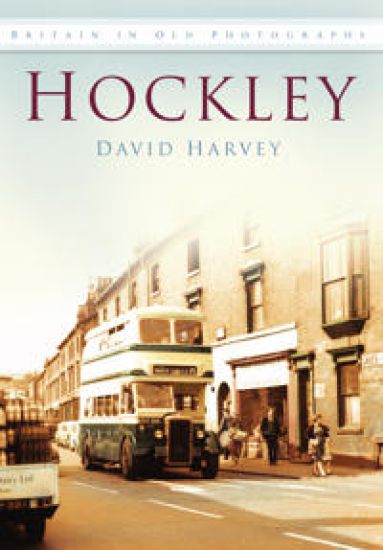
This fascinating collection of photographs, including many rare and old images (some from as early as 1865) explores Hockley over the past century and a half, and details the social, architectural and functional changes in the area. With sections on industry, transport, leisure and religion, all aspects of everyday life are covered. This volume provides a unique insight into life in the town as it used to be. This book will be a nostalgic journey for older residents and a revelation to newcomers to the area.
In Uneven Development, a classic in its field, Neil Smith offers the first full theory of uneven geographical development, entwining theories of space and nature with a critique of capitalist development. Featuring pathbreaking analyses of the production of nature and the politics of scale, Smith's work anticipated many of the uneven contours that now mark neoliberal globalization. This third edition features an afterword updating the analysis for the present day.
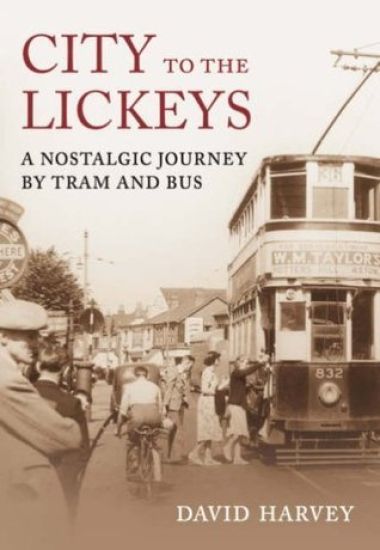
As Birmingham grew in the late Victorian and Edwardian period, the city slowly consumed farmland and small villages on its outskirts. With this growth came a need to transport workers to their jobs or for leisure. Firstly trams, and then buses would transport the worker or day tripper around the city. In Birmingham by the Bus David Harvey takes us on a nostalgic journey back in time, when it was possible to travel the city's roads without the congestion we see today. From open top trams and buses to roads any resident will be familiar with, David Harvey presents a collection of 200 fascinating images of the city, its workers and the public transport from the city centre to the Lickey Hills.
Part of the "Recollections Series", this title takes us back to the year 1959. Through the archive pictures of Midland Red buses, selected to show the buses in their everyday role, it presents street scenes of the period throughout the British Midlands.
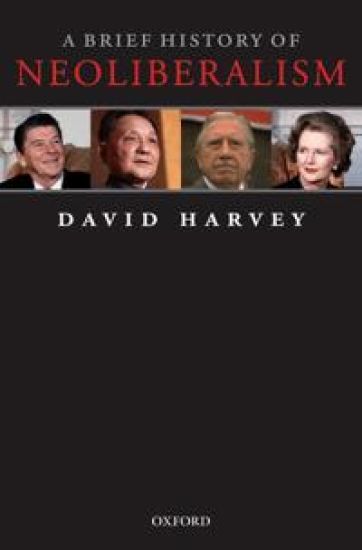
Neoliberalism - the doctrine that market exchange is an ethic in itself, capable of acting as a guide for all human action - has become dominant in both thought and practice throughout much of the world since 1970 or so. Its spread has depended upon a reconstitution of state powers such that privatization, finance, and market processes are emphasized. State interventions in the economy are minimized, while the obligations of the state to provide for the welfare of its citizens are diminished. David Harvey, author of 'The New Imperialism' and 'The Condition of Postmodernity', here tells the political-economic story of where neoliberalization came from and how it proliferated on the world stage. While Thatcher and Reagan are often cited as primary authors of this neoliberal turn, Harvey shows how a complex of forces, from Chile to China and from New York City to Mexico City, have also played their part. In addition he explores the continuities and contrasts between neoliberalism of the Clinton sort and the recent turn towards neoconservative imperialism of George W. Bush. Finally, through critical engagement with this history, Harvey constructs a framework not only for analyzing the political and economic dangers that now surround us, but also for assessing the prospects for the more socially just alternatives being advocated by many oppositional movements.
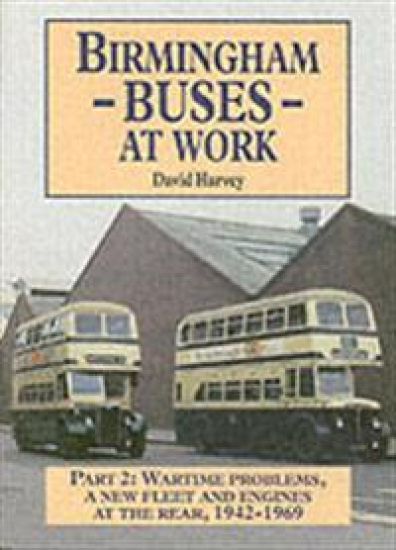
In 1942, the first true 'utility' buses arrived in the city, then in 1947-54 a new fleet was acquired, almost sweeping away the pre-war vehicles. Routes were lengthened and new services introduced, but by the end of the 1950s the glory days were over, culminating in the formation of the West Midlands Passenger Transport Executive in 1969.
Collecting David Harvey's finest work on Paris during the second empire, Paris, Capital of Modernity offers brilliant insights ranging from the birth of consumerist spectacle on the Parisian boulevards, the creative visions of Balzac, Baudelaire and Zola, and the reactionary cultural politics of the bombastic Sacre Couer. The book is heavily illustrated and includes a number drawings, portraits and cartoons by Daumier, one of the greatest political caricaturists of the nineteenth century.
People around the world are confused and concerned. Is it a sign of strength or of weakness that the US has suddenly shifted from a politics of consensus to one of coercion on the world stage? What was really at stake in the war on Iraq? Was it all about oil and, if not, what else was involved? What role has a sagging economy played in pushing the US into foreign adventurism and what difference does it make that neo-conservatives rather than neo-liberals are now in power? What exactly is the relationship between US militarism abroad and domestic politics? These are the questions taken up in this compelling and original book. Closely argued but clearly written, 'The New Imperialism' builds a conceptual framework to expose the underlying forces at work behind these momentous shifts in US policies and politics. The compulsions behind the projection of US power on the world as a 'new imperialism' are here, for the first time, laid bare for all to see. This new paperback edition contains an Afterword written to coincide with the result of the 2004 American presidental election.