Kirjailija
David Harvey
Kirjat ja teokset yhdessä paikassa: 93 kirjaa, julkaisuja vuosilta 1989–2027, suosituimpiin kuuluu Accounting. Vertaile teosten hintoja ja tarkista saatavuus suomalaisista kirjakaupoista.
93 kirjaa
Kirjojen julkaisuvuodet: 1989–2027.
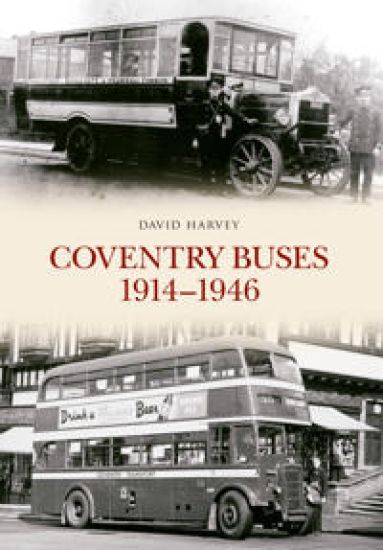
Although Coventry Corporation had been running a tram service since the 1880s, the Corporation’s first bus services did not come into operation until 1914. The outbreak of the First World War that September, however, meant that the bus chassis built for Coventry by Maudslay were requisitioned by the War Office for Army use. When the war came to an end, new buses were ordered from Maudslay, and later from Daimler, and the service resumed in 1919. Bus services expanded during the interwar years, while from the 1930s tram services contracted. The death knell for the city’s trams came with the infamous air raid of the night of 14/15 November 1940, which destroyed the infrastructure they required. Austerity buses and vehicles from other corporation departments were brought into the city to make good the losses from that night, and from more heavy air raids that hit the city in April 1941 and August 1942. In this book, David Harvey examines the Coventry bus fleet from when it first began in 1914 to 1946, when the final delivery of Austerity buses arrived in the city.
Seventeen Contradictions and the End of Capitalism
David Harvey
Profile Books Ltd
2015
pokkari
Halvin toimitettuna 19,40 €
You thought capitalism was permanent? Think again. David Harvey unravels the contradictions at the heart of capitalism-its drive, for example, to accumulate capital beyond the means of investing it, it's imperative to use the cheapest methods of production that leads to consumers with no means of consumption, and its compulsion to exploit nature to the point of extinction. These are the tensions which underpin the persistence of mass unemployment, the downward spirals of Europe and Japan, and the unstable lurches forward of China and India. Not that the contradictions of capital are all bad: they can lead to the innovations that make capitalism resilient and, it seems, permanent. Yet appearances can deceive: while many of capital's contradictions can be managed, others will be fatal to our society. This new book is both an incisive guide to the world around us and a manifesto for change.
Seventeen Contradictions and the End of Capitalism
David Harvey
Oxford University Press
2015
nidottu
Halvin toimitettuna 22,70 €
"What I am seeking here is a better understanding of the contradictions of capital, not of capitalism. I want to know how the economic engine of capitalism works the way it does, and why it might stutter and stall and sometimes appear to be on the verge of collapse. I also want to show why this economic engine should be replaced, and with what." --from the Introduction To modern Western society, capitalism is the air we breathe, and most people rarely think to question it, for good or for ill. But knowing what makes capitalism work--and what makes it fail--is crucial to understanding its long-term health, and the vast implications for the global economy that go along with it. In Seventeen Contradictions and the End of Capitalism, the eminent scholar David Harvey, author of A Brief History of Neoliberalism, examines the internal contradictions within the flow of capital that have precipitated recent crises. He contends that while the contradictions have made capitalism flexible and resilient, they also contain the seeds of systemic catastrophe. Many of the contradictions are manageable, but some are fatal: the stress on endless compound growth, the necessity to exploit nature to its limits, and tendency toward universal alienation. Capitalism has always managed to extend the outer limits through "spatial fixes," expanding the geography of the system to cover nations and people formerly outside of its range. Whether it can continue to expand is an open question, but Harvey thinks it unlikely in the medium term future: the limits cannot extend much further, and the recent financial crisis is a harbinger of this. David Harvey has long been recognized as one of the world's most acute critical analysts of the global capitalist system and the injustices that flow from it. In this book, he returns to the foundations of all of his work, dissecting and interrogating the fundamental illogic of our economic system, as well as giving us a look at how human societies are likely to evolve in a post-capitalist world.
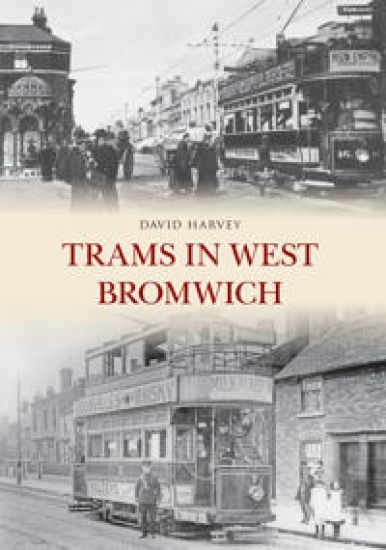
The first trams to be operated in West Bromwich belonged to the South Staffordshire Tramways Company, which began operating double-deck steam trams from Handsworth to Wednesbury in 1883, eventually extending the route to Dudley. Between 1885 and 1893 the Birmingham & Midland Tramways Company operated a route with steam trams between Bromford Lane and Spon Lane and these were somewhat unusually replaced by horse trams before the routes were electrified in 1903. The B&M also operated the Birmingham to Dudley service via Smethwick and Oldbury, which joined up with the Bromford and Spon Lane services. These were the foundations of the tram services that ran through the West Bromwich area and which were abandoned in 1939, the last of which was closed just after the outbreak of the Second World War. In this book, David Harvey uses photographs from his collection to show the development of tram services over their more than fifty-seven years in West Bromwich and nearby Smethwick, Oldbury and Dudley.
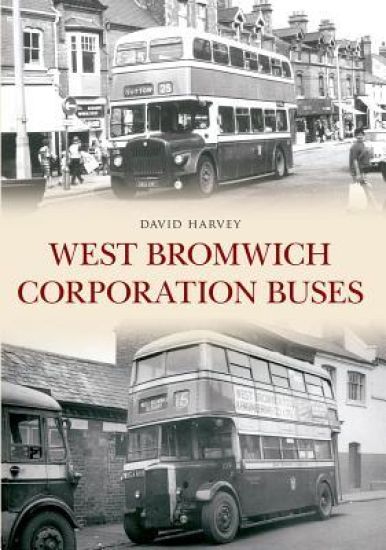
The West Bromwich Corporation Act of 1913 gave the Corporation the powers to operate motor buses, the first of which were four Albion single-deckers that lasted for less than seven weeks before the chassis were commandeered for war work in October 1914. After the First World War, bus services began to expand across Britain and West Bromwich was no exception; by the early 1930s there were routes to Great Bridge, Stone Cross, Hamstead, Streetly, Tantany, Black Lake, Hill Top, Greets Green and Smethwick and the Corporation's first joint route, to Walsall, had also been developed. The West Bromwich fleet was largely made up of single-deck vehicles until the mid-1930s, and after the Corporation's tramways were replaced on 1 January 1939, the Daimler COG6 became the standard double-decker, replaced during the Second World War by the Daimler CWA6 and nineteen Austerity buses. After the war, Daimler CVG6s and CVG6/30s became the vehicle of choice, in a beautiful blue livery that lit up West Bromwich. In this book, David Harvey looks at the West Bromwich Corporation bus fleet from 1914 to its last purchases of Daimler Fleetlines in 1969 just prior to being swallowed up by West Midlands PTE.
Here is one of the first books to assert that mass protest movements in disparate places such as Greece, Argentina, and the United States share an agenda-to raise the question of what democracy should mean. These horizontalist movements, including Occupy, exercise and claim participatory democracy as the ground of revolutionary social change today. Written by two international activist intellectuals and based on extensive interviews with movement participants in Spain, Venezuela, Japan, across the United States, and elsewhere, this book is both one of the most expansive portraits of the assemblies, direct democracy forums, and organizational forms championed by the new movements, and an analytical history of direct and participatory democracy from ancient Athens to Athens today. The new movements put forward the idea that liberal democracy is not democratic, nor was it ever.
Seventeen Contradictions and the End of Capitalism
David Harvey
Oxford University Press
2014
sidottu
Halvin toimitettuna 28,90 €
"What I am seeking here is a better understanding of the contradictions of capital, not of capitalism. I want to know how the economic engine of capitalism works the way it does, and why it might stutter and stall and sometimes appear to be on the verge of collapse. I also want to show why this economic engine should be replaced, and with what." --from the Introduction To modern Western society, capitalism is the air we breathe, and most people rarely think to question it, for good or for ill. But knowing what makes capitalism work--and what makes it fail--is crucial to understanding its long-term health, and the vast implications for the global economy that go along with it. In Seventeen Contradictions and the End of Capitalism, the eminent scholar David Harvey, author of A Brief History of Neoliberalism, examines the internal contradictions within the flow of capital that have precipitated recent crises. He contends that while the contradictions have made capitalism flexible and resilient, they also contain the seeds of systemic catastrophe. Many of the contradictions are manageable, but some are fatal: the stress on endless compound growth, the necessity to exploit nature to its limits, and tendency toward universal alienation. Capitalism has always managed to extend the outer limits through "spatial fixes," expanding the geography of the system to cover nations and people formerly outside of its range. Whether it can continue to expand is an open question, but Harvey thinks it unlikely in the medium term future: the limits cannot extend much further, and the recent financial crisis is a harbinger of this. David Harvey has long been recognized as one of the world's most acute critical analysts of the global capitalist system and the injustices that flow from it. In this book, he returns to the foundations of all of his work, dissecting and interrogating the fundamental illogic of our economic system, as well as giving us a look at how human societies are likely to evolve in a post-capitalist world.
David Harvey takes us on a journey on the second longest bus route that was initiated by Birmingham Corporation. The 29A bus route operated across Birmingham and technically it was the only Corporation bus service that crossed the city boundary at both termini. From Pheasey Estate and the huge municipal housing area in Kingstanding on the northern side of the city, it went through the City Centre to suburban Hall Green on the border with Solihull to the south. Although focusing on the 29A bus service, this book also covers the associated routes such as the 30, 33, 90 and 91, and with the 5 and 6 routes brings the story up to date with recent developments which extended existing bus services into Solihull. David Harvey shows this cross-section of Birmingham from the introduction of the service in 1928 to its replacement in the days of the West Midlands Passenger Transport Executive, which began work in 1969, and National Express West Midlands. This book covers an historical period of great urban and social change in Birmingham, from the massive expansion of council housing following the First World War, the contrast from back-to-back housing in the inner areas to leafy suburbia nearer to the City's boundaries, redevelopment of the city in the 1960s, industrial expansion and decline as well as current urban development along the routes. The 29A and its associated routes is primarily about Birmingham's buses and the whole range of vehicles dating from the late 1920s right up to the present day. The evolution of the city and the associated routes on the transect across from Kingstanding to Hall Green is well represented by a wonderful collection of photographs.
The biggest financial crisis since the Great Depression shows no sign of ending, and Marx's work remains key to any attempt to understand the ebb and flow of capitalist economies. For nearly forty years, David Harvey has written and lectured on Capital, becoming one of the world's foremost Marx scholars. Based on his recent lectures, and following the success of his companion to the first volume of Capital, Harvey turns his attention to Volume 2, aiming to bring his depth of learning to a broader audience, guiding first-time readers through a fascinating and often-neglected text. Whereas Volume 1 focuses on production, Volume 2 looks at how value comes into being through the buying and selling of goods. Harvey also introduces elements from Volume 3 on credit and finance to help illustrate aspects of the contemporary crisis.
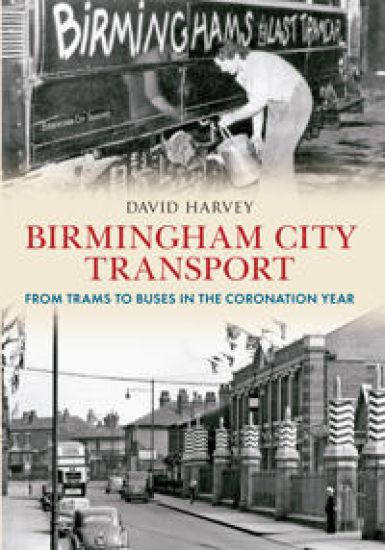
In this book, David Harvey takes a look at Birmingham city transport in the Coronation year of 1953, covering the city's buses and trams. He starts by giving a brief overview of Birmingham in 1953 and then goes on to examine the Birmingham bus network, starting off by showing buses decorated for the Coronation and amid Birmingham's wider celebrations. The focus then shifts to the switch-over from trams to buses, first concentrating on the buses that took over from the trams, and then on the trams themselves. David pays particular attention to the final tram routes operating in the city, and then to the final day of operations and the very last trams. He also shows the scrapping of the trams. In this wonderful collection of photographs, some of which have never been published before, David Harvey gives a unique view of Birmingham in 1953, a period of great change in the city, and the country as a whole.
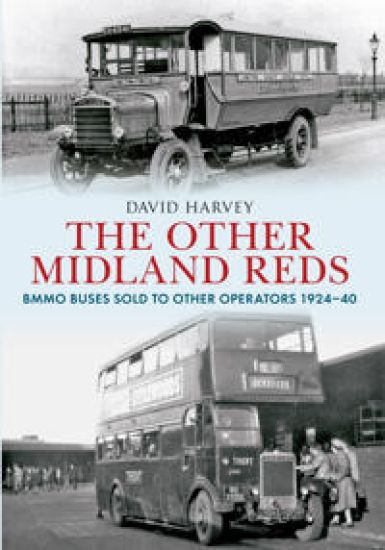
The Birmingham & Midland Motor Omnibus Company began to operate motor buses in the Birmingham and Black Country area in 1912, radiating their services out as far as Leicester. By the 1920s they were building their own buses and SOS was born, standing for 'Shire's Own Specification', named after Midland Red's Chief Engineer. The advantage of this was that the company could design exactly what it wanted without having to compromise by adopting a vehicle from an outside manufacturer. These new single deckers, inspired by American designs, were responsible for the closure of many tramways. An important by-product of this decision to manufacture their own buses was that the company could manufacture for other BET Group operators such as the Northern General group, Potteries Motor Traction and Trent Motor Traction. For these and others, the company built many SOS buses, the fleets being seen all over England and Wales. David Harvey tells the story of the SOS buses, of which five have survived into preservation.
Den senaste tidens finansiella tumult har skakat om världsordningen i grunden. Politiker, ekonomer och andra experter har stått handfallna och varit lika oförmögna att förutse som ta itu med de namnlösa krafter som på ett ögonblick kan föröda ekonomier och rasera människors tillvaro. Den kris som vi befinner oss i tycks vara såväl obeveklig som omöjlig att förstå. David Harvey menar dock att den senaste kraschen endast kan begripas om den ses i ljuset av kapitalismens långsiktiga utveckling. Genom att sätta den nuvarande krisen i denna breda historiska kontext, med särskilt fokus på den finansiella expansion som har skett från 1970-talet och framåt, parallellt med nyliberalismens frammarsch, visar Harvey att kriser slår hårdast mot den arbetande befolkningen, men att de också öppnar nya möjligheter att ifrågasätta systemets legitimitet. Från och med nu kommer kampen att stå mellan de som vill återupprätta det havererade systemet och de som vill ersätta det med en alternativ ordning som bygger på social rättvisa och ekonomisk jämlikhet David Harvey är professor i antropologi vid City University of New York och författare till en lång rad böcker om kapitalismens historiska och geografiska utveckling.
The Enigma of Capital: And the Crises of Capitalism
David Harvey
Oxford University Press
2011
nidottu
For over forty years, David Harvey has been one of the world's most trenchant and critical analysts of capitalist development. In The Enigma of Capital, he delivers an impassioned account of how unchecked neoliberalism produced the system-wide crisis that now engulfs the world. Beginning in the 1970s, profitability pressures led the capitalist class in advanced countries to shift away from investment in industrial production at home toward the higher returns that financial products promised. Accompanying this was a shift towards privatization, an absolute decline in the bargaining power of labor, and the dispersion of production throughout the developing world. The decades-long and ongoing decline in wages that accompanied this turn produced a dilemma: how can goods--especially real estate--sell at the same rate as before if workers are making less in relative terms? The answer was a huge expansion of credit that fueled the explosive growth of both the financial industry and the real estate market. When one key market collapsed--real estate--the other one did as well, and social devastation resulted. Harvey places today's crisis in the broadest possible context: the historical development of global capitalism itself from the industrial era onward. Moving deftly between this history and the unfolding of the current crisis, he concentrates on how such crises both devastate workers and create openings for challenging the system's legitimacy. The battle now will be between the still-powerful forces that want to reconstitute the system of yesterday and those that want to replace it with one that prizes social justice and economic equality. The new afterword focuses on the continuing impact of the crisis and the response to it in 2010.
For three centuries the capitalist system has shaped western society, informed its rulers, and conditioned the lives of its people. Has the time come to move beyond it? Using his unrivalled knowledge of the subject, Harvey lays bare the follies of the international financial system, looking at the nature of capitalism, how it works and why sometimes it doesn't. He examines the vast flows of money that surge round the world in daily volumes well in excess of the sum of all its economies. He looks at the cycles of boom and bust in the world's housing and stock markets and shows that periodic episodes of meltdown are not only inevitable in the capitalist system but essential to its survival. The Enigma of Capital is a timely call-to-arms for the end of the capitalism, and makes a compelling case for a new social order that would allow us to live within a system that could be responsible, just and humane
When I decided to become a motorcycle instructor I was surprised at how little documentation there was available in the UK on this topic. There is a small but worthwhile collection of books about how to ride a motorcycle but nothing formally published on how to become a motorcycle instructor. Until something better comes along, this is my attempt to fill that small gap in the market. This book is aimed at potential and existing DSA (Driving Standards Agency) qualified motorcycle instructors in the UK.
The No. 11 bus route journeys around a twenty-six mile perimeter of Birmingham, following the Outer Circle through many of the city's suburbs including Harborne, King's Heath, Acocks Green, Yardley, Stechford, Bromford, Erdington, Stockland Green, Handsworth Wood and Bearwood. It came into operation in April 1926 and has changed en route during the eighty years in which the service has been running. The buses too have changed, from solic tyres and conductors to double-deckers and suspension. This superb new selection of over 200 old photographs, many published here for the first time, have been drawn from David Harvey's own collection and that of the Local Studies section of Birmingham Central Library. These rare images recall local street scenes, important buildings, shops and pubs, including The King's Head, The Swan and The Yew Tree, which served as destination points along this popular and busy route. This book is a fascinating accompaniment to the author's publication The Inner Circle: Birmingham's No. 8 Bus Route and is sure to appeal to transport enthusiasts, commutes and anyone else with an interest in the history of Birmingham.
Inclusive education continues to be an exciting but challenging component of the everyday life of the classroom teacher. Whist there is no recipe for successful inclusion, meaningful inclusion involves engaging in a flexible process in which educators work in partnership with parents, students, and other professionals in order to meet the needs of all children. Drawing from conceptual principles and empirical findings, this fully revised edition of Inclusive Education demonstrates how to empower teachers and leaders and foster professional practices that create a successful inclusive school community. Presenting a hands-on process that addresses evidence, partnerships, curriculum and instruction, this book strikes the right balance between theory and practice. The authors provide educational leaders and school reformers with tools for collaborating and doing the work of improving inclusive practices for equity and student learning. Including links to web resources that include a huge range of planning templates and assessment tools, as well as procedures to create school-based leadership teams to drive and sustain discussions and decision-making, this extensive text and collection of tools is invaluable for students, school leaders and teachers who are serious about ensuring success for all students.