Kirjojen hintavertailu – 12 859 818 kirjaa ja 27 kauppaa
Kirjailija
David Williams
Kirjat ja teokset yhdessä paikassa: 219 kirjaa, julkaisuja vuosilta 1966–2026, suosituimpiin kuuluu The Bible, Teetotalism, and Dr. Lees [A Reply to Teetotalism Plainly Taught in the Bible]. Vertaile teosten hintoja ja tarkista saatavuus suomalaisista kirjakaupoista.
In the autumn of 1915 Will Bird was working on a farm in Saskatchewan when the ghost of his brother Stephen, killed by German mines in France, appeared before him in uniform. Rattled, Bird rushed home to Nova Scotia and enlisted in the army to take his dead brother's place. And We Go On is a remarkable and harrowing memoir of his two years in the trenches of the Western Front, from October 1916 until the Armistice. When it first appeared in 1930, Bird's memoir was hailed by many veterans as the most authentic account of the war experience, uncompromising in its portrayal of the horror and savagery, while also honouring the bravery, camaraderie, and unexpected spirituality that flourished among the enlisted men. Written in part as a reaction to anti-war novels such as All Quiet on the Western Front, which Bird criticized for portraying the soldier as "a coarse-minded, profane creature, seeking only the solace of loose women or the courage of strong liquor," And We Go On is a nuanced response to the trauma of war, suffused with an interest in the spiritual and the paranormal not found in other war literature. Long out of print, it is a true lost classic that arguably influenced numerous works in the Canadian literary canon, including novels by Robertson Davies and Timothy Findley. In an introduction and afterword, David Williams illuminates Bird's work by placing it within the genre of Great War literature and by discussing the book's publication history and reception.
In the autumn of 1915 Will Bird was working on a farm in Saskatchewan when the ghost of his brother Stephen, killed by German mines in France, appeared before him in uniform. Rattled, Bird rushed home to Nova Scotia and enlisted in the army to take his dead brother's place. And We Go On is a remarkable and harrowing memoir of his two years in the trenches of the Western Front, from October 1916 until the Armistice. When it first appeared in 1930, Bird's memoir was hailed by many veterans as the most authentic account of the war experience, uncompromising in its portrayal of the horror and savagery, while also honouring the bravery, camaraderie, and unexpected spirituality that flourished among the enlisted men. Written in part as a reaction to anti-war novels such as All Quiet on the Western Front, which Bird criticized for portraying the soldier as "a coarse-minded, profane creature, seeking only the solace of loose women or the courage of strong liquor," And We Go On is a nuanced response to the trauma of war, suffused with an interest in the spiritual and the paranormal not found in other war literature. Long out of print, it is a true lost classic that arguably influenced numerous works in the Canadian literary canon, including novels by Robertson Davies and Timothy Findley. In an introduction and afterword, David Williams illuminates Bird's work by placing it within the genre of Great War literature and by discussing the book's publication history and reception.
It's the amazing miracle diet inspired by the teaching principles of Jesus After decades of studying scripture, pastor and author David Williams unlocks the secret he's used in his own weight loss, using the method Jesus himself taught Um... Well... Honestly, this book only has four words in it. Jesus didn't say squat about dieting. I think the whole idea would have made him a little confused. "Eat less," it says on page one. "Exercise more," it says on page seventy seven. The rest of the pages are blank. Which is sort of the point. As a teacher, Jesus gave us the basic principles that would guide us, and then made us figure out the rest on our own. So. It's a sort of silly book, and kind of serious at the same time. Makes for good conversation. Or so I'd like to think.
This groundbreaking single-authored textbook equips students with everything they need to know to truly understand the hugely topical field of biomaterials science, including essential background on the clinical necessity of biomaterials, relevant concepts in biology and materials science, comprehensive and up-to-date coverage of all existing clinical and experimental biomaterials, and the fundamental principles of biocompatibility. It features extensive case studies interweaved with theory, from a wide range of clinical disciplines, equipping students with a practical understanding of the phenomena and mechanisms of biomaterials performance; a whole chapter dedicated to the biomaterials industry itself, including guidance on regulations, standards and guidelines, litigation, and ethical issues to prepare students for industry; informative glossaries of key terms, engaging end-of-chapter exercises and up-to-date lists of recommended reading. Drawing on the author's forty years' experience in biomaterials, this is an indispensable resource for students studying these lifesaving technological advances.
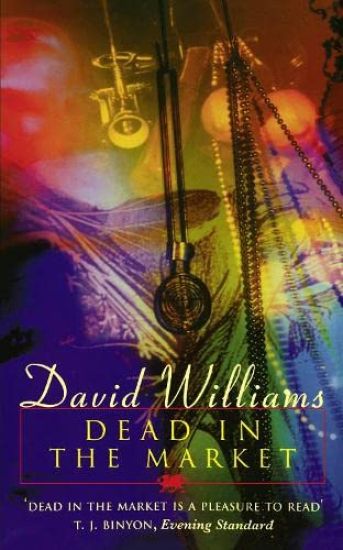
Mervyn Davies left South Wales under a cloud forty years ago, but now he's back to collect a vast inheritance left to him by his childhood friend Edwin Edworth. Some are surprised; others are disgusted ... but who wanted him dead?
DCI Merlin Parry has to use all his skill and experience to crack a murder case where the victim was killed in front of thousands of shoppers, but not a single witness is to be found.
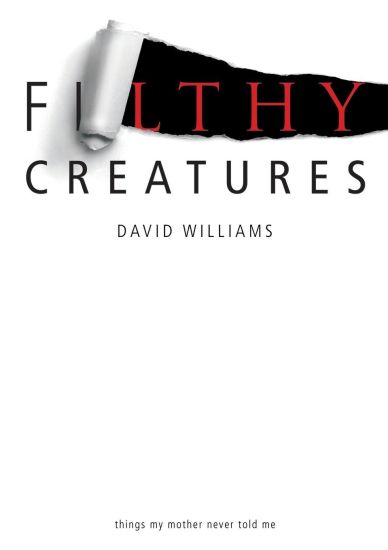
Whether we like it or not, not all of God's creatures are beautiful. With that in mind, David Williams shares a poetic tour of the world's best loved and most filthy creatures. He celebrates their naughty traits, sympathizes with the animals and their plights, and encourages reflection about their future. Williams, who intersperses wry wit, illustrations, and tongue-in-cheek lessons in his lyrical verse, offers a glimpse into the quirks, habits, and lovable characteristics of a variety of creatures. He shares verses of lovable Labradors, miserable mosquitoes, adorable aardvarks, whimsical wildebeests, a really wild boar, and cheeky chimps. Williams gives a voice to animals both near and far, revealing both the endearing and annoying qualities that highlight each creature's individuality. Filthy Creatures presents a collection of poetry that is a modern set of Aesop's fables with a bite or two thrown in.
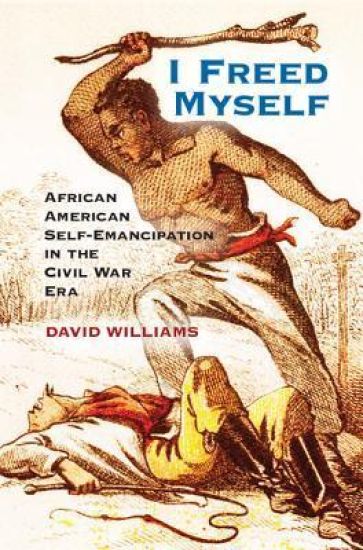
For a century and a half, Abraham Lincoln's signing of the Emancipation Proclamation has been the dominant narrative of African American freedom in the Civil War era. However, David Williams suggests that this portrayal marginalizes the role that African American slaves played in freeing themselves. At the Civil War's outset, Lincoln made clear his intent was to save the Union rather than free slaves - despite his personal distaste for slavery, he claimed no authority to interfere with the institution. By the second year of the war, though, when the Union army was in desperate need of black support, former slaves who escaped to Union lines struck a bargain: they would fight for the Union only if they were granted their freedom. Williams importantly demonstrates that freedom was not simply the absence of slavery but rather a dynamic process enacted by self-emancipated African American refugees, which compelled Lincoln to modify his war aims and place black freedom at the center of his wartime policies.
For a century and a half, Abraham Lincoln's signing of the Emancipation Proclamation has been the dominant narrative of African American freedom in the Civil War era. However, David Williams suggests that this portrayal marginalizes the role that African American slaves played in freeing themselves. At the Civil War's outset, Lincoln made clear his intent was to save the Union rather than free slaves - despite his personal distaste for slavery, he claimed no authority to interfere with the institution. By the second year of the war, though, when the Union army was in desperate need of black support, former slaves who escaped to Union lines struck a bargain: they would fight for the Union only if they were granted their freedom. Williams importantly demonstrates that freedom was not simply the absence of slavery but rather a dynamic process enacted by self-emancipated African American refugees, which compelled Lincoln to modify his war aims and place black freedom at the center of his wartime policies.
The transcripts of the three Kyoto School roundtable discussions of the theme of ‘the standpoint of world history and Japan’ may now be judged to form the key source text of responsible Pacific War revisionism. Published in the pages of Chuo Koron, the influential magazine of enlightened elite Japanese opinion during the twelve months after Pearl Harbor, these subversive discussions involved four of the finest minds of the second generation of the Kyoto School of philosophy. Tainted by controversy and shrouded in conspiratorial mystery, these transcripts were never republished in Japan after the war, and they have never been translated into English except in selective and often highly biased form. David Williams has now produced the first objective, balanced and close interpretative reading of these three discussions in their entirety since 1943. This version of the wartime Kyoto School transcripts is neither a translation nor a paraphrase but a fuller rendering in reader-friendly English that is convincingly faithful to the spirit of the original texts. The result is a masterpiece of interpretation and inter-cultural understanding between the Confucian East and the liberal West. Seventy years after Tojo came to power, these documents of the Japanese resistance to his wartime government and policies exercise a unique claim on students of Japanese history and thought today because of their unrivalled revelatory potential within the vast literature on the Pacific War. The Philosophy of Japanese Wartime Resistance may therefore stand as the most trenchant analysis of the political, philosophic and legal foundations of the place of the Pacific War in modern Japanese history yet to appear in any language.
One of the most thorough and comprehensive treatments available on the subject of the name Junia in Romans 16:7 and whether she was a woman apostle. Culminating in a devastating forensic critique of the allegedly scholarly view that the Greek should be translated as 'known to' as opposed to 'outstanding among' the apostles - worth the price of the book on its own. Although the author makes his position clear from the outset (Junia was a woman and an apostle), the reader is encouraged to examine the arguments and evidence for themselves and draw their own conclusion. Written specifically for non-scholars, the issues arising from Romans 16:7 are divided into three main questions; i) was Junia a man or a woman? ii) were the people being spoken of 'apostles' or 'messengers'? iii) was Junia 'among' them or 'known to' them? Each question is dealt with in turn, with full details being provided of the competing views and the evidence relied on in support. There are also some interesting and extremely helpful explanatory sections on related topics, such as 'New Testament textual criticism' and 'New Testament Greek', which enable the reader to understand all the technical issues arising from the evidence. Man or Woman? The reader is introduced to 20 of the most common arguments against Junia being a woman, drawn from well-known authors such as Wayne Grudem and John Piper. Starting with a list of all 20, the arguments are divided into categories to be dealt with in separate sections. Without exception, upon examination they are found wanting and at the end of each section the list of arguments is depleted until all have been dismissed. Apostles or Messengers? Perhaps the least controversial of the three questions, the evidence is set out and the reader is driven to the inescapable conclusion that the people being spoken of in Romans 16:7 were apostles. Among the apostles or known to them? In recent years, Bibles such as the English Standard Version (ESV) and the New English Translation (NET), together with authors such as Wayne Grudem, have popularized the view that Junia was 'known to' the apostles. This view is dealt with in three stages. First, the author traces its history back to its source - a 2001 paper by Burer and Wallace. Secondly, that paper is explained and summarised from a neutral standpoint, what might be called the calm before the storm. What then follows can only be described as a devastating critique of the paper, which leaves its credibility in tatters.
This book was written for you because you need to learn how to take advantage of 2014/15 - two years where there will be a MAJOR jump forward in the Wellness MLM industry. Miss these steps and you will regret it. Check out just some of the Table of Contents: Who and How to Recruit How to Brand yourself on the net Holistic Wellness: The new Holy Grail Recruiting ground - if you do it right How to turn this 'Holistic' trend into a downline exploding movement Wellness: The answer to the Health Crisis and an Engine for Income behind Network Marketing Sharing of Wellness: Why Network Marketing The REAL reasons why Wellness has Become More Profitable for the Networker How to create a Product Zealot How to use the Increase of Baby Boomers and Active Older Adults to light a fire in your recruiting Where to find Boomers Targeting the Fitness and Weight Loss Market 9 Reasons Why Obesity will fatten your bank account Why Leading with the Product is Insanely Bad advice The 2 Words That Will Make Wealth for the Network Marketer The 9 Key Wellness categories - Where is the money for Networkers And much more... The Big Money One of most important (and in turn, one of the most profitable) industries in the United States today is the wellness industry. The wellness industry touches almost everyone around the world, so it's no wonder that the industry continues to grow. This book will show you the wellness trends that you as a networker need to know, and how to take advantage of those. It will show you new and fertile recruiting grounds, as well as retail product sales markets. Included are Action Steps for 2014 listing what you need to do to develop your wellness networking business to take it to the top. That's why you need this book. Because what you'll learn will give you and your team more than a slight edge, you'll get a great leap forward. Because it will show you where and how to recruit in the Wellness industry. Once you understand your industry, by just using some of the facts in this book or the terminology, you'll be able to master the conversation, write effective presentations, deliver great testimonials and recruit 'up'. You'll be able to sign up wellness professionals and build a rock solid organization of real believers and not a bunch of mlm junkies. In short, you'll find long term income and success. Imagine recruiting from people who already are pre-sold on what you do. It's like fishing from a stocked pond. The information in this book will provide you with REAL reasons for being in the Wellness industry so you can dominate your prospecting and keep your team excited when they hit those emotional road blocks. Recruiting: it will show you where to find prospects who are ready to start and who are already excited by wellness products. It will show you how to approach them, what to say, and the biggie, what NOT to say You will also learn how to 'Brand Yourself on the Net': This book will provide you with lots of great material for making YouTube videos, social media posts, Facebook messages, info graphics, all that will link back to you for self-branding and wellness. Lastly, the book will provide you with Action Steps of what to do to ride the wave of wellness. 1)Create your Internet content with information from this book to brand yourself 2)Use this information to educate & excite your prospects and new distributors 3)Find product zealots by sampling to targeted groups as shown here 4)Recruit Holistic practitioners - people already committed to Wellness This is an invitation to wealth. You can't help but get rich if you take action now and build in 2014. Read MLM and Network Marketing professionals guide to Recruiting Wellness and Holistic Practitioners for 2014 The Wellness Industry Handbook for Exploding your Downline TODAY