Kirjojen hintavertailu – 12 859 818 kirjaa ja 27 kauppaa

Kirjailija

David Williams

Kirjat ja teokset yhdessä paikassa: 219 kirjaa, julkaisuja vuosilta 1966–2026, suosituimpiin kuuluu The Bible, Teetotalism, and Dr. Lees [A Reply to Teetotalism Plainly Taught in the Bible]. Vertaile teosten hintoja ja tarkista saatavuus suomalaisista kirjakaupoista.

219 kirjaa

Kirjojen julkaisuvuodet: 1966–2026.

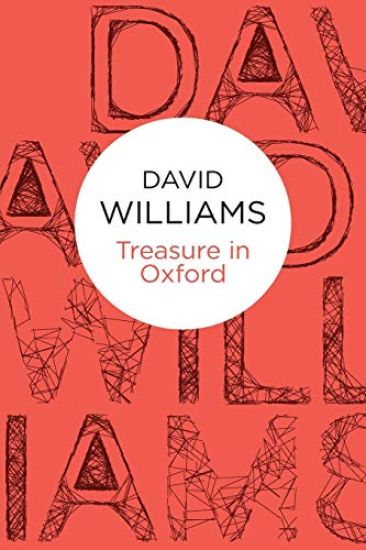
Treasure in Oxford

Treasure in Oxford

David Williams

Macmillan Bello
2012
pokkari
It’s high summer in Oxford. The university vacation has just begun. The eight governors of the Moneybuckle Endowment (an architectural library) are assembling at All Saints College for the annual dinner before their meeting under chairman Mark Treasure, merchant banker. The talk at the table is of some pricey sketches said to be by Constable, and an offer from a dealer in the town. But the talk turns to shock when murder’s done in Walton Street with the sketches as the obvious motive. The police are quick to make an arrest, but Treasure is sure they’ve got the wrong suspect—even though all other likely culprits are Moneybuckle governors, or Moneybuckle’s custodian himself. ‘As nifty a puzzle as clever Williams has yet devised, redolent with the reddest of herrings.’ Sunday Times ‘Elegant, literate, ingenious and a joy to read.’ Birmingham Post
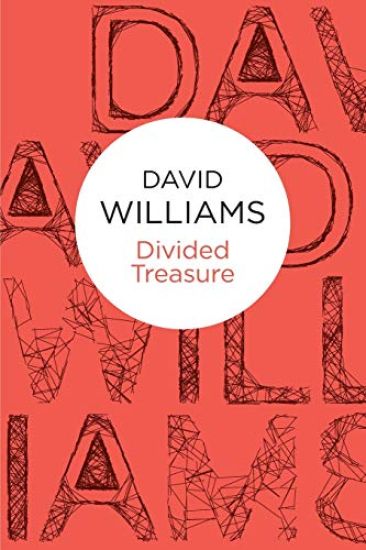
Divided Treasure

Divided Treasure

David Williams

Macmillan Bello
2012
pokkari
Llanegwen – on the coast of North Wales – used to be an attractive, healthy place for respectable people. But now it’s a mixed bag of allsorts — there’s a masked rapist stalking the streets, a petty thief with an eye to the main chance and anonymous businessmen who take over the local sweet factory after a highly convenient death. And when there is a polite and discreet demonstration by the workers outside his home, Mark Treasure is drawn into a fight to save their pension fund and even their jobs. Treasure needs all his skills as a banker to uncover the layers of greed and deceit at the factory. But he must turn sleuth again when a saucy scamper around the shop-floor ends in a bizarre double murder. Can he get to the heart of the mystery before everything goes sour and another life is lost . . . ? ‘His sense of character is as keen as his sense of place, and the plot, while as thick as the sugar syrup it involves, is also completely convincing. Tasty fare.’ Financial Times ‘Treasure is a likable suave hero’ Booklist ‘An efficient, deft thriller.’ Publishers Weekly
Wedding Treasure

Wedding Treasure

David Williams

Macmillan Bello
2012
pokkari
Marton Manor, in rural Herefordshire, makes a romantic setting even for a hastily organised wedding. And it is a quickly-arranged ceremony indeed that Fleur Jarvas is demanding — even though marrying before her twenty-first birthday means forfeiting a large inheritance. Naturally all the guests, including Mark Treasure and his wife Molly, are dying to know why . . . But that is only the first mystery of a sinister country weekend. The real question is why the long-straying father of the bride shows up uninvited . . . As the wedding-eve rituals gather pace, so does the tension. And when the next day dawns, it is not to bells and confetti but to two unexplained deaths, a pointed disappearance — and a testing case for Treasure. ‘Clues and red herrings jostle agreeably; Mark Treasure sorts ’em out, bankable as ever’ Sunday Times ‘A tale well told. The ebullient Mr Williams in top form’ Financial Times ‘An intriguing financial mystery . . . the murder is wonderfully, whimsically complicated, and the plot, ably worked out, is played for laughs’ Chicago Sun-Times
Holy Treasure!

Holy Treasure!

David Williams

Macmillan Bello
2012
pokkari
Hardly anyone attends St Martin’s Church, Kengrave Square, in West London, and it’s very nearly falling down. But when news gets out that it’s to be closed, and possibly sold, there’s a significant flurry of interest. The site is worth millions. Aziz Developments are after it, and so is the Community of Investors for Jesus – a curious American group of tele-evangelists. Enter the Honourable Mrs Monica Lodey, Kengrave Square resident, whose grandfather built the church. The venerable Mrs Lodey is determined to save St Martin’s. She’s not only rich but she can also exert huge influence: her brother is Chairman of Grenwood, Phipps, the merchant bankers, where Mark Treasure is Chief Executive. When the vicar’s wife launches a fund to repair St Martin’s, there’s a rowdy parish meeting where Treasure’s actress wife Molly is the first to promise money. Treasure hopes that can be the extent of his involvement. But when a sudden death follows, spawning more dramatic events, both he and Molly find themselves gradually drawn into yet another investigation, and this time very close to home ground. ‘As nifty a puzzle as clever Williams has yet devised, redolent with the reddest of herrings.’ Sunday Times ‘As usual, the writer salts his tale with humour: but, also as usual, you leave the book with the sensation of having read more than just another thriller.’ Financial Times ‘Anyone who regrets the passing of the old-fashioned detective story could do much worse than turn to Mr Williams, with his astute but wry characterisation of English social life and his adept plotting.’ Sunday Telegraph
International Development and Global Politics
This textbook provides a historical survey of economic and political development theory and practice from 1945. Against the background of changes in global politics, it explores how the project of international development has been shaped in a series of wider contexts. Divided into two historical parts: the Sovereign Order, post 1945 to the early-1980s, and the Liberal post-Cold War Era from the 1980s to the present day, it examines:the evolution of ideas of international development: how the problem of development was conceived and is understood in relation to development economics and political development. It also addresses the impact of neo-liberal ‘counterrevolution’ in development theory, the rise of good governance, participation and ownership, as well as the impact of the ‘war on terror’ and the ‘securitisation of development’institutions in international development: from the emergence of development agencies, their policies and the provision of different types of aid to changing aid flows and the growth of a more integrated ‘development community’ with implications for developing countries. Finally, it looks at the how the ‘war on terror’ and the ‘securitisation of development’ have shaped what these agencies dothe practices of international development: these chapters examine a number of countries and their relations with development agencies; the kinds of projects and programmes these agencies supported; and the outcomes of these projects and programmes. This valuable and important teaching tool will be of interest to students of development, international relations, politics and economics.
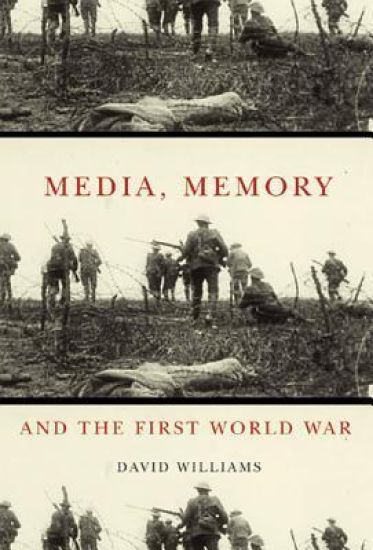
Media, Memory, and the First World War

Media, Memory, and the First World War

David Williams

McGill-Queen's University Press
2011
nidottu
Of interest to historians, classicists, media and digital theorists, literary scholars, museologists, and archivists, Media, Memory, and the First World War is a comparative study that shows how the dominant mode of communication in a popular culture - from oral traditions to digital media - shapes the structure of memory within that culture.
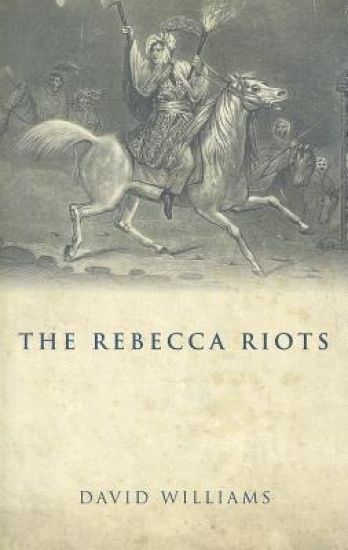
The Rebecca Riots

The Rebecca Riots

David Williams

University of Wales Press
2011
nidottu
The Rebecca Riots in west Wales began in the summer of 1839. They ceased as suddenly as they had started, and for three and a half years the countryside was undisturbed. Then, in the winter of 1842, they broke out again with greater violence. By day the countryside seemed quiet, but at night fantastically disguised horsemen, many dressed as women, careered along highways and through narrow lanes on their mysterious errands. The movement has been unusually been represented as the uprising of an oppressed peasantry, particularly against the burden of the toll-gates. Its causes, however, were far more deep-seated than that.
The World Bank and Social Transformation in International Politics
In the 1990s the World Bank changed its policy to take the position that the problems of poverty and governance are inextricably linked, and improving the governance of its borrower countries became increasingly accepted as a legitimate and important part of the World Bank’s development activities. This book examines why the World Bank came to see good governance as important and evaluate what the World Bank is doing to improve the governance of its borrower countries. David Williams examines changing World Bank policy since the late 1970s to show how a concern with good governance grew out of the problems the World Bank was experiencing with structural adjustment lending, particularly in Sub-Saharan Africa. The book provides an account of the early years of the World Bank and traces the increasing acceptance of the idea of good governance within the Bank through the 1990s, while systematically relating the policies of good governance to liberalism. The author provides a detailed case study of World Bank lending to Ghana to demonstrate what the attempt to improve ‘governance’ looks like in practice. Williams assesses whether the World Bank has been successful in its attempts to improve governance, and draws out some of the implications of the argument for how we should think about sovereignty, for how we should understand the connections between liberalism and international politics. This book will be of interest to students and scholars of international relations, politics, economics, development and African studies.
The ManuFuture Road

The ManuFuture Road

Francesco Jovane; Engelbert Westkämper; David Williams

Springer-Verlag Berlin and Heidelberg GmbH Co. K
2010
nidottu
Manufacturing in Europe is under great pressure from structural changes in the global economy. The high technical, social and cultural standards in Europe mean that our manufacturing enterprises lead the world but inevitably production and consumption continues to migrate to regions that allow higher profitability from lower costs of production with the promise of new markets. Structural changes in European industries will influence employment and welfare. However, there are signs of a new High-Adding-Value industrial revolution. This book has the answers that will allow us to avoid the negative consequences of this migration. A new model of future manufacturing – ManuFuture - has been forged in discussion with the world’s leading scientists in manufacturing and many experts from research, industry and economic policy. The results of this, the road to competitive and sustainable manufacturing, are captured in this fundamental book. The generic Model of ManuFuture, a Vision 2020 and a Strategic Research Agenda and the proactive initiatives required are presented here. They show the approach to manufacturing in the age of knowledge and the actions that must be taken.
Muistikato, dementia, Alzheimerin tauti

Muistikato, dementia, Alzheimerin tauti

David Williams

Lootus-Kirja
2010
nidottu
Tavallinen B3-vitamiini niasiini edistää myös aivojen välitysaineen asetyylikoliinin tuotantoa. Niasiinin bonuksena on lisäksi sen verenpainetta alentava vaikutus. Niasiinin ottaminen on helpoimpia menetelmiä kohottaa hyvän kolesterolin HDL:n tasoa ja ylläpitää sitä. Kirjassa tarkastellaan myös ravinnon ja useiden muiden ravintolisien merkitystä. Kunnollisen aivotoiminnan avaintekijöitä ovat omega-3 -rasvahapot EPA ja DHA. Muistin heikentymisen ja Alzheimerin taudin edistymistä voidaan hidastaa lisäämällä asetyyli-L-karnitiinia, lesitiiniää, ginkgoa ja Padman Basic -yrttiyhdistelmää ruokavalioon. Tohtori Williams käsittelee myös riittävän jodin saannin merkitystä oikealle aivotoiminnalle sekä diabeteksen ja Alzheimerin taudin välistä yhteyttä, myös sokerin ja kemiallisten aineiden haittoja. Raskametallien poistaminen on myös tarkastelun kohteena.