Kirjojen hintavertailu – 12 859 818 kirjaa ja 27 kauppaa

Kirjailija

David Williams

Kirjat ja teokset yhdessä paikassa: 219 kirjaa, julkaisuja vuosilta 1966–2026, suosituimpiin kuuluu The Bible, Teetotalism, and Dr. Lees [A Reply to Teetotalism Plainly Taught in the Bible]. Vertaile teosten hintoja ja tarkista saatavuus suomalaisista kirjakaupoista.

219 kirjaa

Kirjojen julkaisuvuodet: 1966–2026.

The Trickster Brain

The Trickster Brain

David Williams

Lexington Books
2013
nidottu
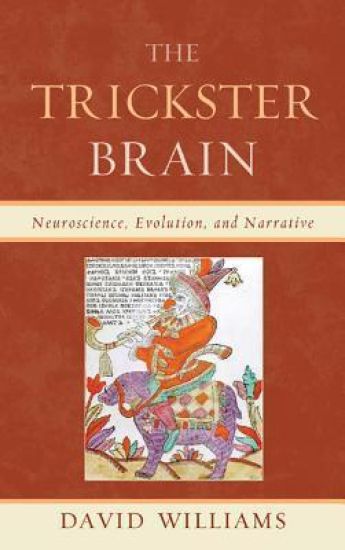
Until recently, scientific and literary cultures have existed side-by-side but most often in parallel universes, without connection. The Trickster Brain: Neuroscience, Evolution, and Nature by David Williams addresses the premise that humans are a biological species stemming from the long process of evolution, and that we do exhibit a universal human nature, given to us through our genes. From this perspective, literature is shown to be a product of our biological selves. By exploring central ideas in neuroscience, evolutionary biology, linguistics, music, philosophy, ethics, religion, and history, Williams shows that it is the circuitry of the brain’s hard-wired dispositions that continually create similar tales around the world: “archetypal” stories reflecting ancient tensions that arose from our evolutionary past and the very construction of our brains. The book asserts that to truly understand literature, one must look at the biological creature creating it. By using the lens of science to examine literature, we can see how stories reveal universal aspects of the biological mind. The Trickster character is particularly instructive as an archetypal character who embodies a raft of human traits and concerns, for Trickster is often god, devil, musical, sexual, silver tongued, animal, and human at once, treading upon the moral dictates of culture. Williams brings together science and the humanities, demonstrating a critical way of approaching literature that incorporates scientific thought.

Second Sight

Second Sight

David Williams

SIMON SCHUSTER
2013
nidottu
This classic, much-loved novel tells the story of Jennie Logan, a woman caught between two worlds, two times, and the two men she loves--one her husband and one an artist who may have died in 1899. David Williams's novel is a thrilling read, part love story, part mystery--a tale of time travel (or is it madness?) that keeps the reader guessing until the very end. Now back in print, this exquisitely written book is not to be missed.
West Somerset Railway

West Somerset Railway

David Williams

Silver Link Publishing Ltd
2012
pokkari
The length of The West Somerset railway line ensures many varied contrasts - with ten highly individual stations, a large stable of locomotives and rolling stock, and a route that runs through gently rolling countryside. Suitable for the railway enthusiast, this title tells the story of its building, decline, closure and glorious renaissance.
The Trickster Brain

The Trickster Brain

David Williams

Lexington Books
2012
sidottu
Until recently, scientific and literary cultures have existed side-by-side but most often in parallel universes, without connection. The Trickster Brain: Neuroscience, Evolution, and Nature by David Williams addresses the premise that humans are a biological species stemming from the long process of evolution, and that we do exhibit a universal human nature, given to us through our genes. From this perspective, literature is shown to be a product of our biological selves. By exploring central ideas in neuroscience, evolutionary biology, linguistics, music, philosophy, ethics, religion, and history, Williams shows that it is the circuitry of the brain’s hard-wired dispositions that continually create similar tales around the world: “archetypal” stories reflecting ancient tensions that arose from our evolutionary past and the very construction of our brains. The book asserts that to truly understand literature, one must look at the biological creature creating it. By using the lens of science to examine literature, we can see how stories reveal universal aspects of the biological mind. The Trickster character is particularly instructive as an archetypal character who embodies a raft of human traits and concerns, for Trickster is often god, devil, musical, sexual, silver tongued, animal, and human at once, treading upon the moral dictates of culture. Williams brings together science and the humanities, demonstrating a critical way of approaching literature that incorporates scientific thought.

Planning on Murder

Planning on Murder

David Williams

Macmillan Bello
2012
pokkari
The plan to save the Elizabethan stately home Vormer House by selling part of its deer park for a golf and hotel complex has a mixed reception from local politicians, and others. Merchant banker Mark Treasure is financial advisor to the property group behind the development. He and his wife Molly drive up to attend the Thatchford town meeting called to air the project. Scandalous accusations are made, but worse is to come when a party in the house where the Treasures are staying is interrupted by the police, come to question the local MP after finding his glamorous secretary ghoulishly murdered. While the probable suicide of the likeliest suspect promises a swift and easy solution to the case, it’s too much so for the conscientious DCI Furlong, especially when another less explicable death occurs. But when Treasure discovers that Furlong is about to arrest someone who the banker is positive is blameless, he sets up his own investigation.
Treasure Preserved

Treasure Preserved

David Williams

Macmillan Bello
2012
pokkari
It’s action all the way in this classic and witty whodunit centred round the fate of the 19th-century Round House could wreck the multi-million pound development in a south coast resort. A dozen interested parties are in favour of knocking it down. They include an Arab oil sheikh, a sexy English Literature drop-out from Sussex University, the head of a construction company, and a romantic novelist. And where does Canon Tring’s languorous young wife fit in to all this? Only Louella, Lady Brasset, is committed to keeping the Round House standing; she believes it to be the joint creation of two famous architects, Sir John Soane and William Butterfield. But four hours after Treasure promises her a stay of execution on the house, it’s Louella who is blown up—and another accident follows. Double accident—or double murder?
Murder for Treasure

Murder for Treasure

David Williams

Macmillan Bello
2012
pokkari
Could the take-over of Rigley’s Patent Footbalm by the giant American Hutstacker Chemical Corporation really be scuppered by Mrs Ogmore-Davies’s parrot finding a body in Panty Harbour? It looked like it, but banker sleuth Mark Treasure took a different view when a second body was discovered the morning after he arrived in the little West Wales sailing village close to St David’s. By then Treasure had already survived a murderous assault aboard the Fishguard Express, a pitched battle on Whitland Station, and the inexplicable disappearance of a battered Australian clergyman. And that was only the start of his exceedingly unquiet weekend. ‘Lots of hilarious touches.’ Matthew Coady, Guardian ‘Williams’s best so far.’ William Weaver, Financial Times
Prescription for Murder

Prescription for Murder

David Williams

Macmillan Bello
2012
pokkari
The Closter Drug company is going to double in value as soon as it perfects its cure for migraine: most of the directors are set to make sizeable fortunes as they float the company on the Stock Exchange. When a group pledged to stopping experiments on animals demonstrates at a Closter news conference, the action is seen as no more than embarrassing. But the kidnap of one of the Closter directors that follows cannot be so easily ignored, especially when, instead of a ransom, the kidnappers demand that the other directors sell their company shares at a crippling loss. No one understands what the kidnappers themselves are gaining by this, until banker Mark Treasure – the non-executive Chairman of Closter Drug – returns from an American trip and works out what’s really happening. Even so he is too late to prevent two murders and the stock market skulduggery that decimates Closter management and threatens to wipe out the company. ‘An ingenious puzzle.’ Mail on Sunday ‘David Williams consistently offers well-crafted English mystery novels, polite, amusing and socially observant.’ The Tablet
Treasure by Post

Treasure by Post

David Williams

Macmillan Bello
2012
pokkari
Mark Treasure has no idea that accompanying his actress wife on location to a picturesque West Country town could possibly lead to murder . . . The merchant banker is asked by Chiversley’s area bishop to become involved in the financial affairs of the local convent – a convent with only three nuns left in residence and assets worth eleven million pounds. But this simple challenge develops into a double murder mystery when it becomes clear that one of the people already responsible for managing the convent finances has died in suspicious circumstances, and when a second is found half-naked and strangled soon after leaving an important dinner party. And what of a callous arson attack on the convent itself? Convinced that the police are about to arrest the wrong suspect, Treasure must use all his experience and ingenuity to uncover important evidence and unravel a complex web of deception. But time is against him and a killer is on the loose . . . ‘As always, Williams maintains suspense while keeping the masks of comedy and tragedy spinning like tops.’ Sunday Times
Banking on Murder

Banking on Murder

David Williams

Macmillan Bello
2012
pokkari
Sir Ray Bims is about to be charged as the principal in a Caribbean bank that’s laundering international drug money. Lord Grenwood, octogenarian chairman of Grenwood, Phipps, the London merchant bankers, is appalled. Three years ago he sold the Eel Bridge Rovers Football Club – known as the Eels – to Bims. The club was founded by Grenwood’s grandfather and is still associated with the Grenwoods in the public’s mind. Now his lordship wants to buy it back to avoid the suggestion of family involvement in Bims’s disgrace. Only hours after refusing Grenwood’s offer for the Eels, Bims commits suicide – except that Detective-Inspector Jeckels of the Fulham CID concludes gradually that it was murder. And he discovers a string of people with motive and opportunity to dispose of Bims – among them the husband of Bims’s mistress; the Eels’ manager whom Bims had been about to fire; a well-known concert pianist; a curiously religious pest controller; not to mention several Eels players, and Bims’s wife and ex-wife. ‘Williams continues to astonish with his command of subtlety and assured comic invention’ Daily Telegraph ‘A nicely wily Williams whodunit’ Sunday Times
Copper, Gold and Treasure

Copper, Gold and Treasure

David Williams

Macmillan Bello
2012
pokkari
Roderick Copper (67), retired Major, and Benny Gold (70), London cabbie, apply on the same morning for residential places with the Rudyard Trust for Retired Officers and Gentlemen. But its eccentric and drunken Director tells them the Trust is technically bankrupt, its multi-million-pound assets about to be divided between the Founder’s descendants – a curious, motley crew. Banker Mark Treasure is called in when Copper and Gold’s bizarre scheme to preserve the charity goes wrong with terrifying consequences – kidnap, stabbing and sudden death – involving one of the bank’s clients, ex-President Cruba of Ngonga, exiled in London with his sensuous third wife, his 15-year-old son, and Gerard Opac, his handsome, ambitious aide. ‘Banker sleuth Mark Treasure heads an irresistibly comic cast.’ Guardian ‘Sparkling fun.’ Financial Times ‘Nobody is going to argue about Mr. Williams’s writing ability. He has charm, he has an authentic light touch, he understands people, and his outlook on life is sophisticated.’ New York Times
Murder in Advent

Murder in Advent

David Williams

Macmillan Bello
2012
pokkari
Litchester Cathedral, usually an oasis of cloistered calm, suddenly finds itself at the centre of an acrimonious dispute over the proposed sale of its 1225 copy of the Magna Carta. Merchant banker Mark Treasure is invited down to sort out the squabbling cathedral chapter. But even as he journeys down to Litchester a fire destroys the ecclesiastical library – Magna Carta and all – and a body is discovered in the debris. But it wasn’t fire that killed the Dean’s verger. And as Treasure’s murder investigation unravels evidence of some most unholy mayhem and dark skulduggery, he realises that Litchester is a place where sins and secrets abound . . . ‘Mr Williams in knowledgeable and delectable top form’ Sunday Times ‘An engrossing tale . . . all the elements of a classic mystery.’ Library Journal