Kirjojen hintavertailu – 12 903 724 kirjaa ja 27 kauppaa

Kirjailija

Desiderius Erasmus

Kirjat ja teokset yhdessä paikassa: 315 kirjaa, julkaisuja vuosilta 1933–2026, suosituimpiin kuuluu Ulrich Von Hutten Gegen Desiderius Erasmus, Und Desiderius Erasmus Gegen Ulrich Von Hutten. Vertaile teosten hintoja ja tarkista saatavuus suomalaisista kirjakaupoista.

315 kirjaa

Kirjojen julkaisuvuodet: 1933–2026.

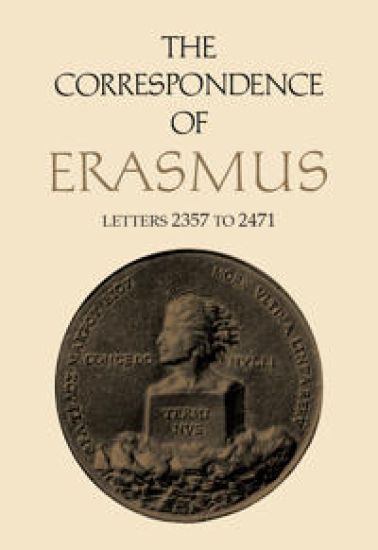
The Correspondence of Erasmus

The Correspondence of Erasmus

Desiderius Erasmus

University of Toronto Press
2016
sidottu
Many of the letters in this volume, which covers the period August 1530 to March 1531, reflect Erasmus' anxieties over events at the Diet of Augsburg (June-November 1530), at which the first of many attempts to achieve a negotiated settlement of the religious division in Germany came to a rancorous conclusion, thus fostering the fear that religious controversy would eventually lead to war. His other chief concerns were the continued attacks on him by Catholic critics who regarded him as a clandestine Lutheran, and the insistence of many evangelical reformers that he was their spiritual father. The literary output of the period covered includes major works aimed at members of both groups. Volume 17 of the Collected Works of Erasmus series.
Éloge de la Folie d'Érasme 3e Édition

Éloge de la Folie d'Érasme 3e Édition

Desiderius Erasmus

Hachette Livre - BNF
2016
pokkari
eloge de la folie d'erasme (3e edition) / traduit par Victor Develay; et accompagne des dessins de Hans HolbeinDate de l'edition originale: 1876Ce livre est la reproduction fidele d'une oeuvre publiee avant 1920 et fait partie d'une collection de livres reimprimes a la demande editee par Hachette Livre, dans le cadre d'un partenariat avec la Bibliotheque nationale de France, offrant l'opportunite d'acceder a des ouvrages anciens et souvent rares issus des fonds patrimoniaux de la BnF. Les oeuvres faisant partie de cette collection ont ete numerisees par la BnF et sont presentes sur Gallica, sa bibliotheque numerique. En entreprenant de redonner vie a ces ouvrages au travers d'une collection de livres reimprimes a la demande, nous leur donnons la possibilite de rencontrer un public elargi et participons a la transmission de connaissances et de savoirs parfois difficilement accessibles. Nous avons cherche a concilier la reproduction fidele d'un livre ancien a partir de sa version numerisee avec le souci d'un confort de lecture optimal. Nous esperons que les ouvrages de cette nouvelle collection vous apporteront entiere satisfaction. Pour plus d'informations, rendez-vous sur www.hachettebnf.fr
Les Paraphrases, d'Erasme, Divisées En 2 Tomes, Dont Le Premier Contient l'Exposition Des
Les paraphrases, d'Erasme, divisees en 2 tomes, dont le premier contient l'Exposition des quatre Evangelistes et des Actes des Apotres, nouvellement translatees de latin en francoys. - Le Second tome de la Paraphrase de Didier Erasme, ... sur la reste du Nouveau Testament, c'est assavoir sur toutes les Epistres des ApostresDate de l'edition originale: 1563Ce livre est la reproduction fidele d'une oeuvre publiee avant 1920 et fait partie d'une collection de livres reimprimes a la demande editee par Hachette Livre, dans le cadre d'un partenariat avec la Bibliotheque nationale de France, offrant l'opportunite d'acceder a des ouvrages anciens et souvent rares issus des fonds patrimoniaux de la BnF. Les oeuvres faisant partie de cette collection ont ete numerisees par la BnF et sont presentes sur Gallica, sa bibliotheque numerique. En entreprenant de redonner vie a ces ouvrages au travers d'une collection de livres reimprimes a la demande, nous leur donnons la possibilite de rencontrer un public elargi et participons a la transmission de connaissances et de savoirs parfois difficilement accessibles. Nous avons cherche a concilier la reproduction fidele d'un livre ancien a partir de sa version numerisee avec le souci d'un confort de lecture optimal. Nous esperons que les ouvrages de cette nouvelle collection vous apporteront entiere satisfaction. Pour plus d'informations, rendez-vous sur www.hachettebnf.fr
The Correspondence of Erasmus

The Correspondence of Erasmus

Desiderius Erasmus

University of Toronto Press
2016
pokkari
This volume covers a number of significant events and issues in Erasmus' life and in the history of his times. He travels on horseback from Louvain to Basel to assist his publisher and friend Johann Froben during the crucial phases in the production of his revised New Testament, the edition that he feels will be his lasting contribution to the scholarly foundations of the Christian faith. Once it is in the hands of the public he feels he will be able to face the approach of old age more calmly. On the return journey to Louvain he falls gravely ill from what is diagnosed as bubonic plague, but recovers in a month and convalesces in the home of another publisher-friend, Dirk Martens. International politics continue to capture his attention. Requests for funds in support of a papal crusade against the Turks arouse the flames of German national sentiment. With the death of Maximilian I, friends of Erasmus such as Richard Pace, Ulrich von Hutten, and Guillaume Budé are involved in diplomatic negotiations concerning the imperial succession. When Prince Ferdinand arrives from Spain and requires a tutor, the question of Erasmus' own return to active court duties is raised. After the appearance of Luther's Ninety-five Theses on indulgences, purgatory, and papal authority, the question arises among conservatives whether Erasmus' work too is a threat to the traditional ways of the church and society. For the time being, Erasmus is prepared to commend Luther and defend the latter's right to be critical of the church. Erasmus' overriding conviction at this point is that he and Luther are both part of the great intellectual and spiritual renewal that is taking place in so many parts of Europe. As Luther's appearance lends a new kind of spiritual and patriotic vigour to German humanism, the cult of Erasmus–Erasmus the fellow German–becomes an integral part of that new enthusiasm, with Saxony and its elector, Frederick the Wise, at its center. Volume 6 of the Collected Works of Erasmus series
23-24Collected Works of Erasmus

23-24Collected Works of Erasmus

Desiderius Erasmus

University of Toronto Press
2016
pokkari
These volumes are the first in a series containing works by Erasmus 'that concern literature and education': interests which to him were scarcely separable. The aim of Erasmian education was a civilized life, expressed in Christian piety and the fulfilment of public and private duties and embellished by learning and literature. Towards these ends the soundest training for youth was what Erasmus often called bonne litterae, 'good letters,' a literary and rhetorical training based on Greek and Latin authors. For centuries the classical curriculum was the core of liberal education, and Erasmus was long regarded as its exemplar. Though never a university teacher except briefly at Cambridge (1311-14), he was a 'teacher of teachers' through his treatises on pedagogy and rhetoric and his many works of scholarship. The four works presented here in annotated translations are characteristic expressions of his dedication to learning and his confidence in the values of classical literature for the modern world of his time. Antibarbari (1520), translated and annotated by Margaret Mann Phillips, is a defence of the humanities against ignorant and misguided critics who question both their supposed worth and the appropriateness of pagan writings for Christian pupils. The reply of Erasmus becomes a manifesto on behalf of reason, scholarship, and literature. As for paganism, he insists that if secular knowledge is used properly it cannot harm but must help Christians. 'None of the liberal disciplines is Christian' because they all antedated Christianity, yet they 'all concern Christ' because they can be put to Christian uses. Parabolae (1514), translated and annotated by R. A. B. Mynors, a work that 'contributes eminently to style,' is a collection of similitudes drawn from observations of men, customs, and nature. Many are culled from Plutarch and Seneca, but for those from Seneca, and from Aristotle, the moral applications are added by Erasmus. As an exercise in the rhetoric of moral philosophy - 'many jewels in one small box,' Erasmus terms it-this book quickly became popular and long remained so. De copia (1512), translated and annotated by Betty I. Knott, is not a plan for the entire curriculum but a treatise on the 'abundant' or rich style in writing and speaking Latin, a guide to attaining fluency and variety in discourse. As a manual for students De copia broke new ground. It was a remarkably successful work, used in schools in many lands for generations. From 1312 to 1600, more than 130 printings are recorded. De ratione studii (1312), translated and annotated by Brian McGregor, furnishes a concise but clear exposition of the curriculum, text, and methods of Erasmus' programme for liberal studies in grammar schools. Here as in all of his writings on education, language is the heart of the matter. The main goals are accurate, effective expression and communication in Latin, though Erasmus expects much besides literature to be learned from the study of literature. He emphasizes the necessity for competent and sympathetic teachers. Each translation is introduced by the translator, and a general introduction by the editor discusses the significance of each of the works, its relation to the others, and its subsequent fortunes. Wallace K. Ferguson provides an introductory essay, 'The Works of Erasmus.' Volumes 23 and 24 of the Collected Works of Erasmus series – Two-volume set.

85-86Collected Works of Erasmus

85-86Collected Works of Erasmus

Desiderius Erasmus

University of Toronto Press
2016
pokkari
The final two volumes in the CWE contain an edition and translation of Erasmus's poetry. For Erasmus scholars this work affords the first opportunity to evaluate and analyse Erasmus' poems in English. And for those interested in Renaissance and Reformation poetry in general, these offer an intriguing look at the work of one of the towering figures of the period writing in a genre that was, for him, unusual. The annotations include a path-breaking commentary piece by Harry Vredeveld on Erasmus' most famous poem, `Poem on the Trouble of Old Age.' Another important feature is the appearance of the original Latin of each poem alongside the English translation. Volumes 85 and 86 of the Collected Works of Erasmus series – Two-volume set.
Collected Works of Erasmus

Collected Works of Erasmus

Desiderius Erasmus

University of Toronto Press
2016
pokkari
This sixth of seven volumes devoted to the Adages in the Collected Works of Erasmus completes the translation and annotation of the more than 4000 proverbs gathered and commented on by Erasmus in his Adagiorum Chiliades (Thousands of Adages, usually known more simply as the Adagia). This volume’s aim, like that of the others, is to provide a fully annotated, accurate, and readable English version of Erasmus' commentaries on these Greek and Latin proverbs, and to show how Erasmus continued to expand this work, originally published in 1508, until his death in 1536. An indication of Erasmus' unflagging interest in classical proverbs is that almost 500 of the 951 adages translated in this volume did not make their first appearance until the edition of 1533. Following in the tradition of meticulous scholarship for which the Collected Works of Erasmus is widely known, the notes to this volume identify the classical sources and illustrate how the content of his commentaries on the adages often reflects Erasmus' scholarly and editing interests in the classical authors at a particular time. The work was highly acclaimed and circulated widely in Erasmus' time, serving as a conduit for transmitting classical proverbs into the vernacular languages, in which many of the proverbs still survive to this day. Volume 36 of the Collected Works of Erasmus series.
Collected Works of Erasmus

Collected Works of Erasmus

Desiderius Erasmus

University of Toronto Press
2016
sidottu
Erasmus yearned to make the New Testament an effective instrument of reform in society, church, and everyday life, and to this end he composed the Paraphrases, in which the words of Holy Scripture provide the core of a text that was vastly expanded to embrace the reforming "philosophy of Christ." Paraphrase on Luke 1–10 contains the first half of Erasmus’s Paraphrase on Luke – the second half of which appeared in this series in 2003 – and completes the set of translations of the Paraphrases into English. In his Paraphrase on Luke, Erasmus expands on the original Gospel of Luke in the voice of its original author. The narrative is supplemented by Erasmus’ explications of the text’s moral, theological, and allegorical meanings and its psychological, historical, and geographical context. In addition to a fluid and idiomatic translation, Paraphrase on Luke 1–10 includes extensive annotations for the general or scholarly reader, making this a valuable and accessible resource for the study of both Erasmus and the New Testament. Volume 47 of the Collected Works of Erasmus series.
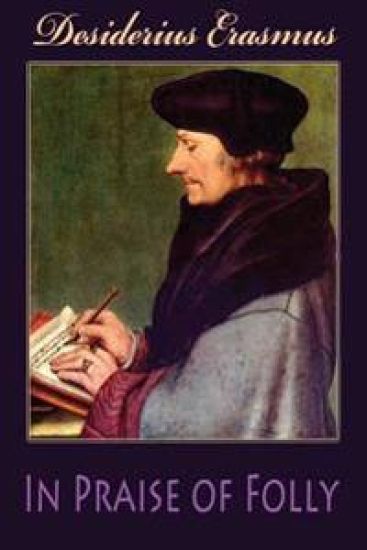
The Praise of Folly

The Praise of Folly

Desiderius Erasmus

Createspace Independent Publishing Platform
2015
nidottu
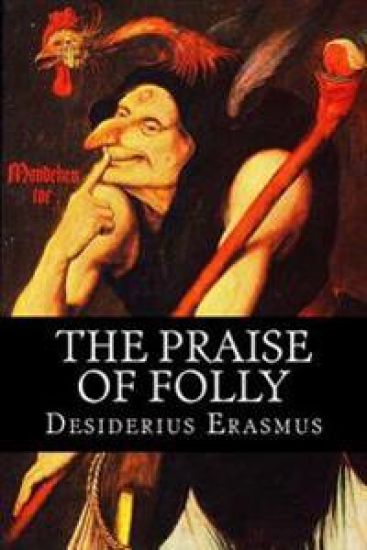
Praise of Folly is an essay written in Latin in 1509 by Desiderius Erasmus of Rotterdam and first printed in 1511. Inspired by De Triumpho Stultitiae, written by the Italian humanist Faustino Perisauli, born at Tredozio, near Forl . Praise of Folly is considered one of the most notable works of the Renaissance and played an important role in the beginnings of the Protestant Reformation.
Collected Works of Erasmus

Collected Works of Erasmus

Desiderius Erasmus

University of Toronto Press
2015
sidottu
Among the most important of Erasmus’ contributions to Christian humanism were his Greek text, new Latin translation, and annotations of the New Testament, an implicit challenge to the authority of the Vulgate and one that provoked numerous responses. This volume of the Collected Works contains translations of four of Erasmus’ responses to his critics, written between 1520 and 1532 and directed primarily to his Franciscan and Dominican contemporaries at the university in Louvain. Three are connected to his Annotations on the New Testament. The fourth, a letter to Christopher von Utenheim, bishop of Basel, deals with pastoral questions such as fasting, abstinence, and the celibacy of priests. Though they mostly deal with philological rather than doctrinal matters, these debates were no less important to Erasmus’ work. Carefully and extensively annotated by the translator, Denis L. Drysdall, volume 73 of the Collected Works invites the reader to examine Erasmus’ own explanations of his philological method and its theological significance. Volume 73 of the Collected Works of Erasmus series.
67-68Collected Works of Erasmus

67-68Collected Works of Erasmus

Desiderius Erasmus

University of Toronto Press
2015
sidottu
Among Erasmus of Rotterdam’s many influential treatises on theology during the early Reformation, Exomologesis (1524; revised 1530) and Ecclesiastes (1535) stand out as two of his most significant. Exomologesis, or The Manner of Confessing, in which Erasmus articulated his views on the true manner of Christian confession, was sufficiently controversial that he published an expanded version with concessions and clarifications six years later. Ecclesiastes, or The Method of Preaching, was an extensive exposition on how to employ scripture, the writings of Church Fathers, and classic rhetoric to reinvigorate the practice of preaching. This innovative work ushered in a new genre of homiletic treatises that supplanted medieval preaching manuals and paved the way for what has been called "the age of eloquence." The Collected Works of Erasmus presents these two important works, complete with extensive introductions and annotations, in an elegant and precise two-volume modern translation for the first time. Volumes 67 and 68 of the Collected Works of Erasmus series – Two-volume set.

The Praise of Folly

The Praise of Folly

Desiderius Erasmus; Anthony Grafton

Princeton University Press
2015
pokkari
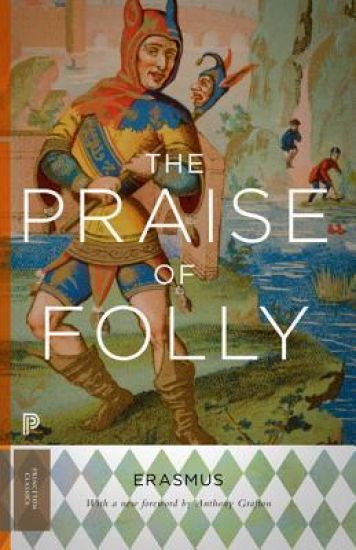
Desiderius Erasmus (1466-1536) was a Dutch humanist, scholar, and social critic, and one of the most important figures of the Renaissance. The Praise of Folly is perhaps his best-known work. Originally written to amuse his friend Sir Thomas More, this satiric celebration of pleasure, youth, and intoxication irreverently pokes fun at the pieties of theologians and the foibles that make us all human, while ultimately reaffirming the value of Christian ideals. No other book displays quite so completely the transition from the medieval to the modern world, and Erasmus's wit, wisdom, and critical spirit have lost none of their timeliness today. This Princeton Classics edition of The Praise of Folly features a new foreword by Anthony Grafton that provides an essential introduction to this iridescent and enduring masterpiece.
The Correspondence of Erasmus

The Correspondence of Erasmus

Desiderius Erasmus

University of Toronto Press
2015
sidottu
The letters in this volume reflect Erasmus’ anxiety about the endemic warfare in Western Europe, the advance of the Ottoman Turks into Europe, and the increasing threat of armed conflict between Catholics and Protestants in Germany. Unable and unwilling to attend the Diet of Augsburg (June–November 1530), summoned by Emperor Charles V in the attempt to mediate a religious settlement, Erasmus corresponded with those in attendance, urging them (in vain) to preserve peace at all costs. The letters also shed light on Erasmus’ controversies with Catholic critics (Luis de Carvajal and Frans Titelmans) who accused him of Lutheran sympathies, and former friends among the Protestant reformers (Gerard Geldenhouwer and others in Strasbourg), who embarrassed him by citing him in support of their views. Because of a mysterious and debilitating illness (identified in an appendix to the volume) the twelve months covered were less productive of scholarship than was usual for Erasmus, but it did see the publication of the five-volume Froben edition of St. John Chrysostom in Latin. Volume 16 of the Collected Works of Erasmus series.
37 & 38Collected Works of Erasmus

37 & 38Collected Works of Erasmus

Desiderius Erasmus

University of Toronto Press
2014
sidottu
Assembled for the young Prince William of Cleves, Erasmus’ Apophthegmata consists of thousands of sayings and anecdotes collected from Greek and Latin literature for the moral education of the future ruler. Betty I. Knott and Elaine Fantham’s two-volume annotated translation of the aphorisms and Erasmus’ commentary on them makes this once popular literary and educational text accessible to modern audiences. The introduction discusses the origins of the Apophthegmata, the contents of the collection, and Erasmus’ sources. Volumes 37 and 38 of the Collected Works of Erasmus series – Two-volume set.