Kirjojen hintavertailu – 12 903 724 kirjaa ja 27 kauppaa

Kirjailija

Desiderius Erasmus

Kirjat ja teokset yhdessä paikassa: 315 kirjaa, julkaisuja vuosilta 1933–2026, suosituimpiin kuuluu Ulrich Von Hutten Gegen Desiderius Erasmus, Und Desiderius Erasmus Gegen Ulrich Von Hutten. Vertaile teosten hintoja ja tarkista saatavuus suomalaisista kirjakaupoista.

315 kirjaa

Kirjojen julkaisuvuodet: 1933–2026.

Erasmus in Praise of Folly: With Portrait, Life of Erasmus, and His Epistle to Sir Thomas More (1922)
Erasmus In Praise Of Folly is a classic work of literature by the renowned Dutch philosopher and theologian, Desiderius Erasmus. This book was originally published in Latin in 1511 and is a satirical essay that is written from the perspective of Folly, who praises herself for the benefits she brings to humanity. The book is a commentary on the societal norms and the flaws of the church during the Renaissance period. This 1922 edition of the book includes a portrait of Erasmus, a life story of the author, and his epistle to Sir Thomas More. The portrait provides readers with a visual representation of the author, while the life story offers insights into his personal life and the context in which he wrote the book. The epistle to Sir Thomas More is a letter written by Erasmus to his friend, in which he discusses the themes and ideas of the book. Erasmus In Praise Of Folly is a timeless work that continues to be relevant to contemporary society. It is a must-read for anyone interested in philosophy, theology, or the history of the Renaissance period. The book is written in a witty and humorous style, which makes it an enjoyable read for both scholars and casual readers. This Is A New Release Of The Original 1922 Edition. This scarce antiquarian book is a facsimile reprint of the old original and may contain some imperfections such as library marks and notations. Because we believe this work is culturally important, we have made it available as part of our commitment for protecting, preserving, and promoting the world's literature in affordable, high quality, modern editions, that are true to their original work.
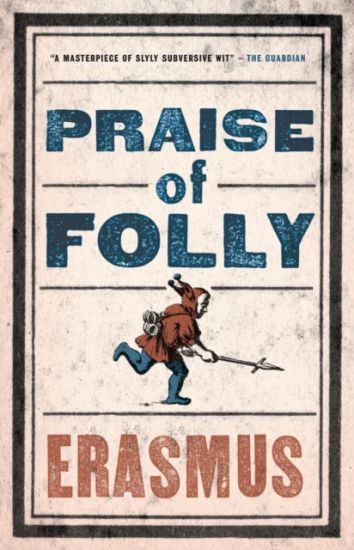
Praise of Folly

Praise of Folly

Desiderius Erasmus

Alma Classics
2013
nidottu

Halvin toimitettuna 17,90 €

In addition to a sparkling modern translation of Praise of Folly, this volume also includes other works by Erasmus: Pope Julius Barred from Heaven, Epigram against Pope Julius II and a selection of his Adages. Together with the extensive annotation of the texts, these help to set Erasmus’s masterpiece in an accessible context for the modern reader. A central text of the Renaissance, Praise of Folly is an essential part of the Western canon, without which much that has followed – in culture, theology and literature – would not exist. Deeply subversive in its time, the book, after the initial controversy it created, finally gained acceptance as theologians, philosophers and readers came to appreciate Erasmus’s lucid, playful and eloquent reasoning.
Dulce Bellum

Dulce Bellum

Desiderius Erasmus

Lulu.com
2013
nidottu
Perhaps the earliest piece of pacifist writing from the west. - Erasmus' sharp and moving treatise against war: from the Latin proverb DULCE BELLUM INEXPERTIS. - 'War's lovely - if you're not involved', or ( the succinct Latin is near-untranslatable) ' huzza for war - for others'
Discourse on Free Will

Discourse on Free Will

Desiderius Erasmus; Martin Luther

Bloomsbury Academic
2013
nidottu
Desiderius Eramsus (1466/9-1536) was the most renowned scholar of his age, a celebrated humanist and Classicist, and the first teacher of Greek at Cambridge. An influential figure in the Protestant Reformation, though without ever breaking from the Church himself, he satirised both human folly and the corruption of the Church. Martin Luther (1483-1546) was the founder of the German Reformation. His 95 Theses became a manifesto for reform of the Catholic Church and led to his being tried for heresy. He remained in Germany, Professor of Biblical Exegesis at the University of Wittenburg, until his death, publishing a large number of works, including three major treatises and a translation of the New Testament into German. Comprising Erasmus's "The Free Will" and Luther's "The Bondage of the Will", Discourse on Free Will is a landmark text in the history of Protestantism. Encapsulating the perspective on free will of two of the most important figures in the history of Christianity, it remains to this day a powerful, thought-provoking and timely work.
Collected Works of Erasmus

Collected Works of Erasmus

Desiderius Erasmus

University of Toronto Press
2012
sidottu
Erasmus' humanistic approach to theology and biblical exegesis presented a shocking challenge to the theologians at the University of Paris, which had been dominated by scholastic theology for centuries. He engaged in a decade-long controversy over his theological, exegetical, and ethical positions with the Theological Faculty, and especially with their director, Noël Béda. This volume—which translates this crucial quarrel from Latin for the first time—details the formal, wide-ranging attack on Erasmus' theories printed by the faculty in 1531, along with his two replies. Erasmus published his first rebuttal in the spring of 1532, and that fall issued a second edition with substantial revisions and lengthy additions to his original text. With an extensive introduction and detailed commentary by Clarence H. Miller and James K. Farge, this volume highlights the differences between the humanist and scholastic views of genuine theology more fully and extensively than most of Erasmus' other polemical works. Volume 82 of the Collected Works of Erasmus series.
The Correspondence of Erasmus

The Correspondence of Erasmus

Desiderius Erasmus; James M. Estes

University of Toronto Press
2012
sidottu
This volume contains the surviving correspondence of Erasmus for the first seven months of 1529. For nearly eight years he had lived happily and productively in Basel. In the winter of 1528-9, however, the Swiss version of the Lutheran Reformation triumphed in the city, destroying the liberal-reformist atmosphere Erasmus had found so congenial. Unwilling to live in a place where Catholic doctrine and practice were officially proscribed, Erasmus resettled in the quiet, reliably Catholic university town of Freiburg im Breisgau, Despite the turmoil of moving, Erasmus managed to complete the new Froben editions of Seneca and St Augustine, both monumental projects that had been underway for years. He also found time to engage in controversy with his conservative Catholic critics, as well as to write a long letter lamenting the execution for heresy of his friend Louis de Berquin at Paris. Volume 15 of the Collected Works of Erasmus series.