Kirjojen hintavertailu – 12 859 818 kirjaa ja 27 kauppaa

Kirjailija

Friedrich Nietzsche

Kirjat ja teokset yhdessä paikassa: 921 kirjaa, julkaisuja vuosilta 1885–2026, suosituimpiin kuuluu Näin puhui Zarathustra. Vertaile teosten hintoja ja tarkista saatavuus suomalaisista kirjakaupoista.

921 kirjaa

Kirjojen julkaisuvuodet: 1885–2026.

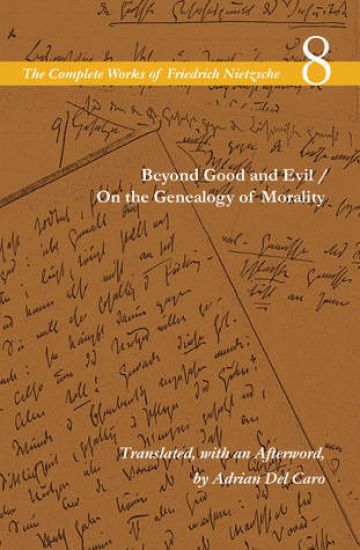
Beyond Good and Evil / on the Genealogy of Morality

Beyond Good and Evil / on the Genealogy of Morality

Friedrich Nietzsche

Stanford University Press
2014
sidottu
Beyond Good and Evil is Nietzsche's first sustained philosophical treatment of issues important to him. Unlike the expository prose of the essayistic period (1872-76), the stylized forays and jabs of the aphoristic period (1878-82), and the lyrical-philosophical rhetoric of the Zarathustra-period (1882-85), Beyond Good and Evil inscribes itself boldly into the history of philosophy, challenging ancient and modern notions of philosophy's achievements and insisting on a new task for "new philosophers." This is a watershed book for Nietzsche and for philosophy in the modern era. On the Genealogy of Morality applies Nietzsche's celebrated genealogical method, honed in the earlier aphoristic writings, to the problem of morality's influence on the human species. In three treatises that strikingly anticipate insights appearing much later in Freud's Civilization and Its Discontents (1930), Nietzsche provides an anthropological psychograph of our species, revealing the origins of the concepts of good and evil, the roles played by guilt and bad conscience, and the persistence of ascetic ideals. Manifesting a hopeful yet unsentimental assessment of the human condition, these books resonated throughout the 20th century and continue to exert broad appeal.
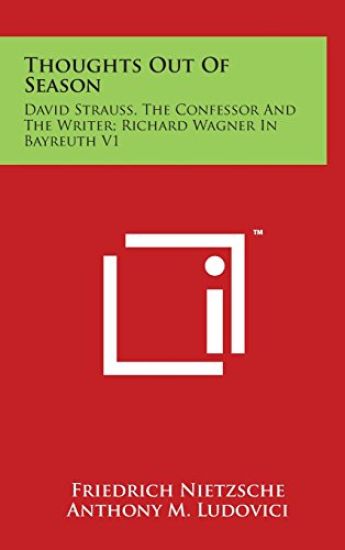
Thoughts Out Of Season: David Strauss, The Confessor And The Writer; Richard Wagner In Bayreuth V1
Thoughts Out Of Season: David Strauss, The Confessor And The Writer; Richard Wagner In Bayreuth V1 is a book written by Friedrich Nietzsche. It is a collection of essays that were originally published in 1873 and 1874. The book contains two essays, the first one is about David Strauss, a German theologian and writer, and the second one is about Richard Wagner, a German composer and conductor. In the first essay, Nietzsche discusses the work of David Strauss, particularly his book The Life of Jesus. Nietzsche criticizes Strauss's approach to the Bible and argues that he fails to understand the true nature of Christianity. Nietzsche also explores the relationship between religion and culture in modern society. In the second essay, Nietzsche discusses the work of Richard Wagner and his impact on German culture. Nietzsche praises Wagner's music and his vision of art as a means of creating a new cultural identity for Germany. However, Nietzsche also criticizes Wagner's political views and his use of mythology in his work. Overall, Thoughts Out Of Season: David Strauss, The Confessor And The Writer; Richard Wagner In Bayreuth V1 is a thought-provoking collection of essays that explores the relationship between religion, culture, and art in modern society. Nietzsche's insights into the work of David Strauss and Richard Wagner continue to be relevant and influential today. This Is A New Release Of The Original 1909 Edition. This scarce antiquarian book is a facsimile reprint of the old original and may contain some imperfections such as library marks and notations. Because we believe this work is culturally important, we have made it available as part of our commitment for protecting, preserving, and promoting the world's literature in affordable, high quality, modern editions, that are true to their original work.
On the Genealogy of Morals

On the Genealogy of Morals

Friedrich Nietzsche

Penguin Classics
2013
pokkari

Halvin toimitettuna 16,20 €

The companion book to Beyond Good and Evil, the three essays included here offer vital insights into Nietzsche's theories of morality and human psychology. Nietzsche claimed that the purpose of The Genealogy of Morals was to call attention to his previous writings. But in fact the book does much more than that, elucidating and expanding on the cryptic aphorisms of Beyond Good and Evil and signalling a return to the essay form. In these three essays, Nietzsche considers the development of ideas of 'good' and 'evil'; explores notions of guilt and bad consience; and discusses ascetic ideals and the purpose of the philosopher. Together, they form a coherent and complex discussion of morality in a work that is more accessible than some of Nietzsche's previous writings. Friedrich Nietzsche was born near Leipzig in 1844. When he was only twenty-four he was appointed to the chair of classical philology at Basel University. From 1880, however, he divorced himself from everyday life and lived mainly abroad. Works published in the 1880s include The Gay Science, Thus Spoke Zarathustra, Beyond Good and Evil, On the Genealogy of Morals, Twilight of the Idols and The Antichrist. In January 1889, Nietzsche collapsed on a street in Turin and was subsequently institutionalized, spending the rest of his life in a condition of mental and physical paralysis. Works published after his death in 1900 include Will to Power, based on his notebooks, and Ecce Homo, his autobiography. Michael A. Scarpitti is an independent scholar of philosophy whose principal interests include English and German thought of the eighteenth and nineteenth centuries, as well as exegesis and translation theory. Robert C. Holub is currently Ohio Eminent Scholar and Professor of German at the Ohio State University. Among his published works are monographs on Heinrich Heine, German realism, Friedrich Nietzsche, literary and aesthetic theory, and Jürgen Habermas.
The Dionysian Vision of the World

The Dionysian Vision of the World

Friedrich Nietzsche

Univocal Publishing LLC
2013
nidottu
Before the world knew of the thinker who “philosophizes with a hammer,” there was a young, passionate thinker who was captivated by the two forces found within Greek art: Dionysus and Apollo. In this essay, which was the forerunner to his groundbreaking book The Birth of Tragedy, The Dionysian Vision of the World provides an unparalleled look into the philosophical mind of one of Europe’s greatest and provocative intellects at the beginning of his philosophical interrogation on the subject of art. “While dreaming is the game man plays with reality as an individual, the visual artist (in the larger sense) plays a game with dreaming.” This is the Dionysian vision of the world.
Utidsmessige betraktninger

Utidsmessige betraktninger

Friedrich Nietzsche

Spartacus
2013
sidottu
Utidsmessige betraktninger består av fire essay publisert mellom 1873 og 1876 som på hver sin måte sier noe om tilstanden til europeisk, og da særlig tysk, kultur. Tematikken spenner fra forholdet mellom populærkultur og høykultur, strategier for kulturell reform, betydningen av (ut)dannelse og forholdet mellom liv, kunst og vitenskap. Tekstene er skrevet i en tidlig fase av forfatterskapet og inneholder mange frampek mot senere skrifter. De fire essayene er essensielle for å forstå utviklingen i Nietzsches tenkning. Oversatt av Lars Petter Storm Torjussen (1., 3. og 4 stykke), Øystein Skar og Bjarne Hansen (2. stykke). Etterord av Espen Hammer.
Utvalgte kortere tekster

Utvalgte kortere tekster

Friedrich Nietzsche

Spartacus
2013
sidottu
Utvalgte kortere tekster består av skrifter fra ulike perioder i Nietzsches forfatterskap. Boken innholder fem fortaler til fem uskrevne bøker: Filosofien i grekernes tragiske tidsalder Om sannhet og løgn i utenommoralsk forstand Vi filologer Tilfellet Wagner Nietzsche contra Wagner Etterord av Christian Janss.
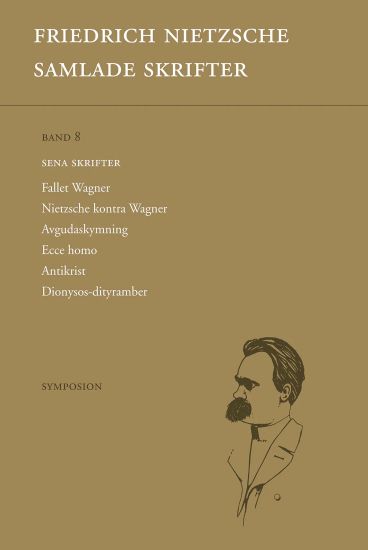
Samlade skrifter. Bd 8, Sena skrifter

Samlade skrifter. Bd 8, Sena skrifter

Friedrich Nietzsche

Brutus Östlings bokf Symposion
2013
nidottu
SENA SKRIFTER är en del i Symposions stora statsning på en vetenskapligt baserad utgivning av Nietzsches samlade verk på svenska. Efter mer än tjugo år är projektet fullbordat. Detta band innehåller de sista sex skrifterna som Nietzsche färdigställde för publicering. Bland dessa finns några av hans viktigaste och mest kända texter, uppgörelsen med Wagner och dekadensen i konsten Fallet Wagner respektive Nietzsche kontra Wagner) och Avgudaskymning, som han själv beskriver som sin filosofi i ett nötskal. Antikrist, hans oförsonliga kritik av kristendomen och moderna värderingar överhuvudtaget och hans egensinniga självbiografi Ecce homo. Bandet avslutas med en samling dikter, Dionysos-dityramber, samt noter och efterord. SENA SKRIFTERFallet Wagner: Ett musikantproblemNietzsche kontra Wagner: Ur en psykologs akterAvgudaskymning: eller Hur man filosoferar med hammarenEcce Homo: Hur man blir den man ärAntikristDionysos-dityramber
Le Voyageur Et Son Ombre Opinions Et Sentences Mêlées (Humain, Trop Humain, 2e Partie)
Le voyageur et son ombre; Opinions et sentences melees: (Humain, trop humain, 2e partie) (2e edition) / Frederic Nietzsche; traduits par Henri AlbertDate de l'edition originale: 1902"Collection: Collection d'auteurs etrangers"Ce livre est la reproduction fidele d'une oeuvre publiee avant 1920 et fait partie d'une collection de livres reimprimes a la demande editee par Hachette Livre, dans le cadre d'un partenariat avec la Bibliotheque nationale de France, offrant l'opportunite d'acceder a des ouvrages anciens et souvent rares issus des fonds patrimoniaux de la BnF. Les oeuvres faisant partie de cette collection ont ete numerisees par la BnF et sont presentes sur Gallica, sa bibliotheque numerique. En entreprenant de redonner vie a ces ouvrages au travers d'une collection de livres reimprimes a la demande, nous leur donnons la possibilite de rencontrer un public elargi et participons a la transmission de connaissances et de savoirs parfois difficilement accessibles. Nous avons cherche a concilier la reproduction fidele d'un livre ancien a partir de sa version numerisee avec le souci d'un confort de lecture optimal. Nous esperons que les ouvrages de cette nouvelle collection vous apporteront entiere satisfaction. Pour plus d'informations, rendez-vous sur www.hachettebnf.fr
Par-Delà Le Bien Et Le Mal: Prélude d'Une Philosophie de l'Avenir (10e Édition)
Par-dela le bien et le mal: prelude d'une philosophie de l'avenir (10e edition) / Frederic Nietzsche; traduit par Henri AlbertDate de l'edition originale: 1913"Collection: Collection d'auteurs etrangers"Ce livre est la reproduction fidele d'une oeuvre publiee avant 1920 et fait partie d'une collection de livres reimprimes a la demande editee par Hachette Livre, dans le cadre d'un partenariat avec la Bibliotheque nationale de France, offrant l'opportunite d'acceder a des ouvrages anciens et souvent rares issus des fonds patrimoniaux de la BnF. Les oeuvres faisant partie de cette collection ont ete numerisees par la BnF et sont presentes sur Gallica, sa bibliotheque numerique. En entreprenant de redonner vie a ces ouvrages au travers d'une collection de livres reimprimes a la demande, nous leur donnons la possibilite de rencontrer un public elargi et participons a la transmission de connaissances et de savoirs parfois difficilement accessibles. Nous avons cherche a concilier la reproduction fidele d'un livre ancien a partir de sa version numerisee avec le souci d'un confort de lecture optimal. Nous esperons que les ouvrages de cette nouvelle collection vous apporteront entiere satisfaction. Pour plus d'informations, rendez-vous sur www.hachettebnf.fr
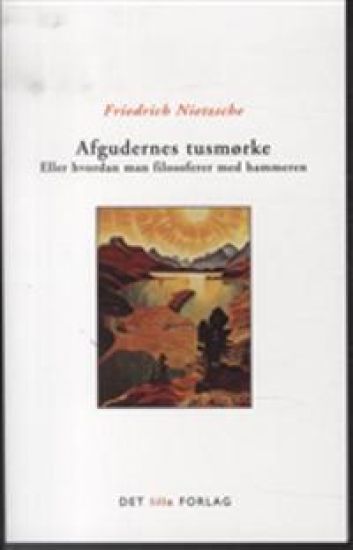
Afgudernes tusmørke

Afgudernes tusmørke

Friedrich Nietzsche

Lindhardt og Ringhof
2013
nidottu
"Afgudernes Tusmørke" er det tredje af de fire mindre skrifter, som Nietzsche skrev i sit sidste år, hvor tanken ikke alene var fuldt intakt, men også sprogligt og vitalt skærpet: såvel hvad angår koncise formuleringer som diverse giftigheder. Med afguder tænker Nietzsche på alle dogmer og falske genier, alle religiøse frontskikkelser og filosofiske illusionister. Det er et oprydningsskrift, der vil sende disse afguder ind i tusmørket og derved gøre klar til en ny morgenrøde, hvor noget sundt og stærkt kan dæmre. Derfor hentyder undertitlen til den billedstormer, der – før hammeren falder – slår afgudebusterne an med en filosofisk stemmegaffel for at undersøge klangen: er den hul og falsk, så er det ud af vagten! Derfor kan man også karakterisere Afgudernes Tusmørke som en karakterbog, hvor Nietzsche overskuer en række temaer og skikkelser i den europæiske kultur – og fælder dom.
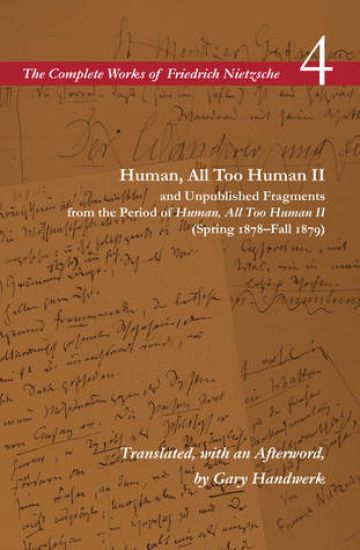
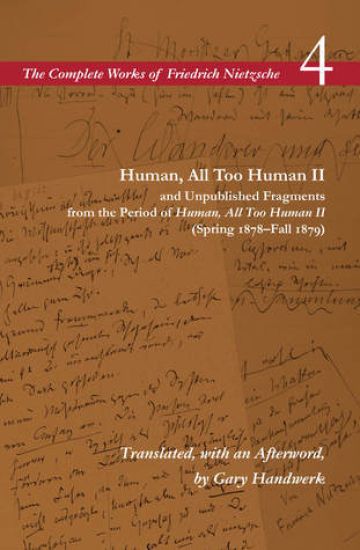
Human, All Too Human II / Unpublished Fragments from the Period of Human, All Too Human II (Spring 1878–Fall 1879)
Volume 4 of The Complete Works of Friedrich Nietzsche contains two works, Mixed Opinions and Maxims (1879) and The Wanderer and His Shadow (1880), originally published separately, then republished together in the 1886 edition of Nietzsche's works. They mingle aphorisms drawn from notebooks of 1875-79, years when worsening health forced Nietzsche toward an increasingly solitary existence. Like its predecessor, Human, All Too Human II is above all an act of resistance not only to the intellectual influences that Nietzsche felt called upon to critique, but to the basic physical facts of his daily life. It turns an increasingly sharply formulated genealogical method of analysis toward Nietzsche's persistent concerns—metaphysics, morality, religion, art, style, society, politics and culture. The notebook entries included here offer a window into the intellectual sources behind Nietzsche's evolution as a philosopher, the reading and self-reflection that nourished his lines of thought. The linking of notebook entries to specific published aphorisms, included in the notes, allows readers of Nietzsche in English to trace for the first time the intensive process of revision through which he transformed raw notebook material into the finely crafted sequences of aphoristic reflection that signal his distinctiveness as a philosophical stylist.
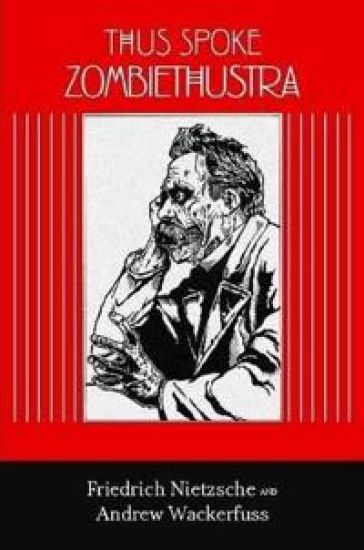
Thus Spoke Zombiethustra

Thus Spoke Zombiethustra

Andrew Wackerfuss; Friedrich Nietzsche

Lulu.com
2012
pokkari
"I proclaim the coming of the Uberzombie." Thus speaks Zombiethustra, an undead reincarnation of one of the 19th century's most famous fictional philosophers. As in Friedrich Nietzsche's original, Zombiethustra comes to tell the world of a higher form of being, a transcendent state of consciousness that only those of the strongest will can achieve. But this philosopher-sage must also face new challenges inherent to a post-apocalyptic and undead world. In this re-imagining, one of the preeminent works of 19th century philosophy gains new bite as the tale of a zombie sage who must fight the forces of rot and decay, defeat supernatural enemies, and gain undead allies in his quest to bring enlightenment to the shambling and ravenous hordes.