Kirjojen hintavertailu – 12 859 818 kirjaa ja 27 kauppaa

Kirjailija

Friedrich Nietzsche

Kirjat ja teokset yhdessä paikassa: 921 kirjaa, julkaisuja vuosilta 1885–2026, suosituimpiin kuuluu Näin puhui Zarathustra. Vertaile teosten hintoja ja tarkista saatavuus suomalaisista kirjakaupoista.

921 kirjaa

Kirjojen julkaisuvuodet: 1885–2026.
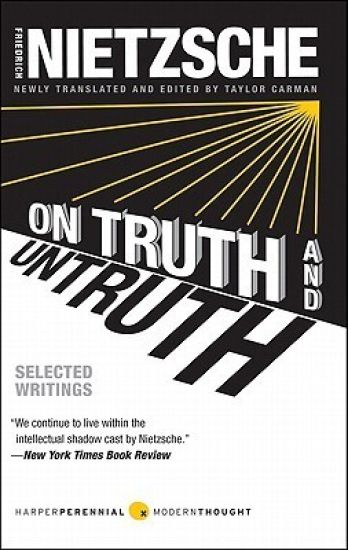
On Truth and Untruth

On Truth and Untruth

Friedrich Nietzsche

Harper Perennial Modern Classics
2010
nidottu
This is Nietzsche's celebrated essay, in which he argues that truth is an illusion. Those ideas commonly agreed to be truths, according to Nietzsche, are mere beliefs and arbitrary constructions of human thought. From the Stanford Encyclopedia of Philosophy: Scholars regard Nietzsche's 1873 unpublished essay, "On Truth and Lies" [the full title is "On Truth and Lies in a Non-Moral Sense"] as a keystone in his thought. In this essay, Nietzsche rejects the idea of universal constants, and claims that what we call truth is only a mobile army of metaphors, metonyms, and anthropomorphisms. His view at this time is that arbitrariness prevails within human experience: concepts originate via the transformation of nerve stimuli into images, and truth is nothing more than the invention of fixed conventions for practical purposes, especially those of repose, security and consistency. Viewing human existence from a great distance, Nietzsche further notes that there was an eternity before human beings came into existence, and believes that after humanity dies out, nothing significant will have changed in the great scheme of things.
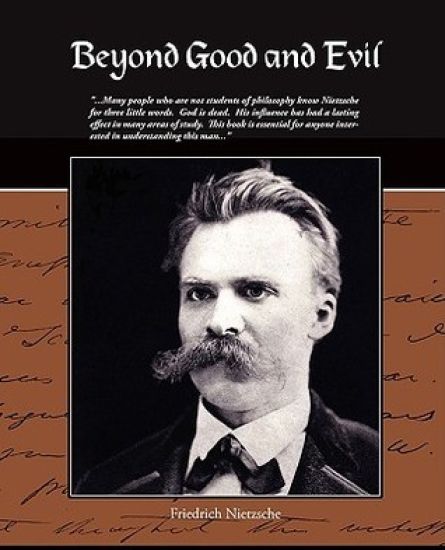
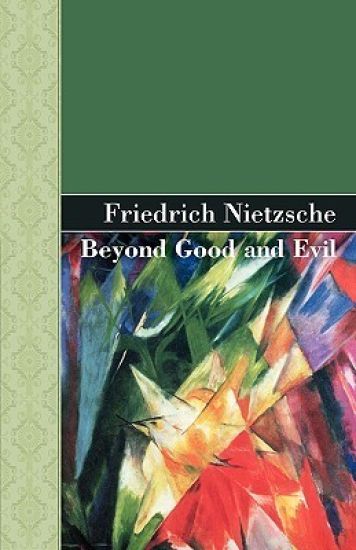
Beyond Good and Evil

Beyond Good and Evil

Friedrich Nietzsche

Tribeca Books
2010
nidottu
"Beyond Good and Evil" is Nietzsche at his best. In the book the philosopher attempts to systematically sum up his philosophy through a collection of 296 aphorisms grouped into nine different chapters based on their common theme. For the reader who has yet to discover Nietzsche in this translation by Helen Zimmern will be found a fabulous introduction. For those who have already discovered Nietzsche here you will find the opportunity to understand the whole of Nietzsche's philosophy.
Beyond Good and Evil: Prelude to a Philosophy of the Future

Beyond Good and Evil: Prelude to a Philosophy of the Future

Friedrich Nietzsche

Theophania Publishing
2010
nidottu
Thank you for checking out this book by Theophania Publishing. We appreciate your business and look forward to serving you soon. We have thousands of titles available, and we invite you to search for us by name, contact us via our website, or download our most recent catalogues. Beyond Good and Evil (German: Jenseits von Gut und B se), subtitled "Prelude to a Philosophy of the Future" (Vorspiel einer Philosophie der Zukunft) It takes up and expands on the ideas of his previous work, Thus Spoke Zarathustra, but approached from a more critical, polemical direction. In Beyond Good and Evil, Nietzsche attacks past philosophers for their alleged lack of critical sense and their blind acceptance of Christian premises in their consideration of morality. The work moves into the realm "beyond good and evil" in the sense of leaving behind the traditional morality which Nietzsche subjects to a destructive critique in favour of what he regards as an affirmative approach that fearlessly confronts the perspectival nature of knowledge and the perilous condition of the modern individual.
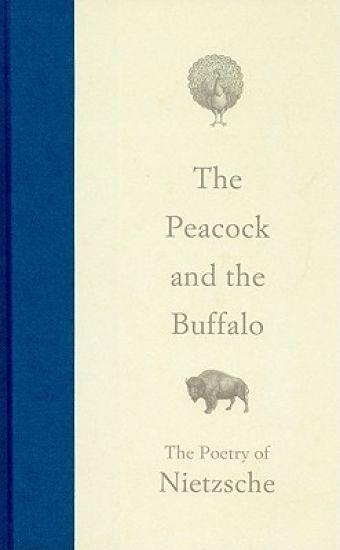
The Peacock and the Buffalo

The Peacock and the Buffalo

Friedrich Nietzsche

Continuum Publishing Corporation
2010
sidottu
This is the first complete English translation of Nietzsche's poetry. "The Peacock and the Buffalo" presents the first complete English translation of the poetry of the celebrated and hugely influential German thinker, Friedrich Nietzsche (1844-1900). From his first poems, written at the age of fourteen, to his last extant writings, this definitive bi-lingual edition includes all his 275 poems and aphorisms. Nietzsche's interest in poetry is no secret, as evidenced in his literary and philosophical masterpiece, "Thus Spoke Zarathustra", not to mention the poetry included in his published philosophical works. This important collection shows that Nietzsche's commitment to poetry was in fact longstanding and integral to his articulation of the truth and lies of human existence. "The Peacock and the Buffalo" is a must-read for anyone with an interest in German literature or European philosophy.
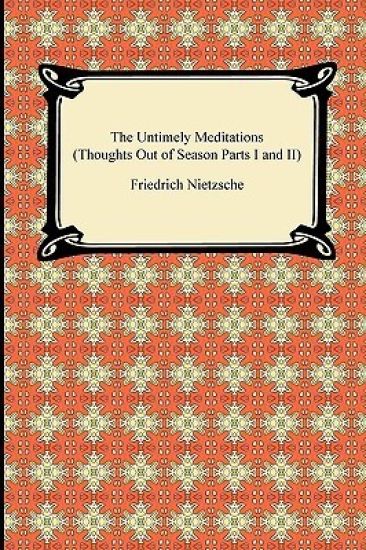
The Untimely Meditations (Thoughts Out of Season Parts I and II)
Written between 1873 and 1876, The "Untimely Meditations", or "Thoughts out of Season" is a collection of four essays by famed philosopher Friedrich Nietzsche. In the first essay 'David Strauss: the Confessor and the Writer', Nietzsche attacks David Strauss' "The Old and the New Faith: A Confession". In the second essay 'On the Use and Abuse of History for Life', Nietzsche presents an alternative way of reading history, one where living life becomes the primary concern. In the third essay 'Schopenhauer as Educator', Nietzsche describes how the philosophic genius of Schopenhauer might bring on a resurgence of German culture. In the fourth and final essay 'Richard Wagner in Bayreuth', Nietzsche investigates the music, drama and personality of Richard Wagner. Nietzsche originally planned this work to comprise thirteen essays but it is suggested that he lost interest in the work after writing just four. In this early philosophical work one can begin to see the development of a brilliant philosophical mind, which would become more evidenced by his later works.
Avgudenes ragnarok

Avgudenes ragnarok

Friedrich Nietzsche

Spartacus
2009
sidottu
I Avgudenes ragnarok bryter Nietzsche med den filosofien som vil bygge tilværelsen på en hinsidig, "sann" verden. Det er den dennesidige, den reelle og empiriske verden som er den eneste ene, hevder han. Både Platons og kristendommens dualisme blir her revet i filler. De store fortellingene, de overhengende verdisystemene, ja hele den vest-euopeiske kulturens fundament, blir gjenstand for Nietzsches harme. Undertittelen til Avgudenes ragnarok sier sitt: Hvordan filosofere med hammeren? Denne lille boken, som ble skrevet på kort tid i 1888, favner bredere enn mange andre av Nietzsches verker. Her reflekterer han over sin egen tenkning, og Avgudenes ragnarok peker mot den selvbiografiske Ecce Homo. For den som vil lese Nietzsches samlede verker, er Avgudenes ragnarok et glimrende utgangspunkt.
Hinsides godt og ondt

Hinsides godt og ondt

Friedrich Nietzsche

Spartacus
2009
sidottu
Hinsides godt og ondt er en hyllest til livet og kreativiteten og på mange måter et endelig farvel med metafysikken. I åpningen sier Nietzsche at sannheten er som en kvinne som all tidligere dogmatikk har mislyktes i å forføre. Søken etter den eneste gyldige sannheten er en form for filosofi som Nietszche her en gang for alle slår luften ut av. Her får de filosofer unngjelde som holder fast ved den tradisjonelle, kristne moraliteten. Nietzsche beveger seg hinsides de tradisjonelle begrepene om godt og ondt i søken etter "den frie ånd", det vil si det mennesket som - i likhet med ham selv - våger å gå på tvers av den blinde dogmatikken.
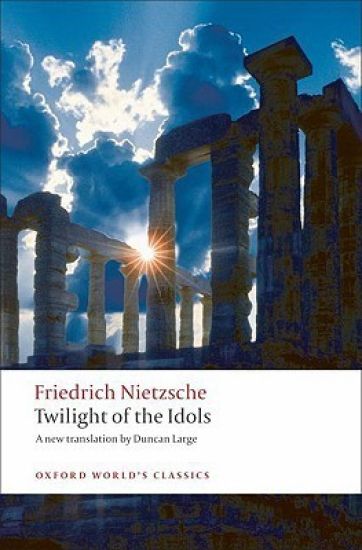
Twilight of the Idols

Twilight of the Idols

Friedrich Nietzsche

Oxford University Press
2008
nidottu

Halvin toimitettuna 17,90 €

`Anyone who wants to gain a quick idea of how before me everything was topsy-turvy should make a start with this work. That which is called idol on the title-page is quite simply that which was called truth hitherto. Twilight of the Idols - in plain words: the old truth is coming to an end...' Nietzsche intended Twilight of the Idols to serve as a short introduction to his philosophy, and as a result it is the most synoptic of all his books. Continuing in the spirit of its immediate predecessors On The Genealogy of Morals and The Wagner Case, it is a masterpiece of polemic, targeting not only `eternal idols' like Socratic rationality and Christian morality but also their contemporary counterparts, as Nietzsche the `untimely man' goes roaming in the gloaming of nineteenth-century European culture. He allies philosophy with psychology and physiology, relentlessly diagnozing the symptoms of decadence, and his stylistic virtuosity is such that the sheer delight he takes in his 'demonic' mischief-making communicates itself on every page. A brilliant new translation, this edition provides detailed commentary on a highly condensed and allusive work. ABOUT THE SERIES: For over 100 years Oxford World's Classics has made available the widest range of literature from around the globe. Each affordable volume reflects Oxford's commitment to scholarship, providing the most accurate text plus a wealth of other valuable features, including expert introductions by leading authorities, helpful notes to clarify the text, up-to-date bibliographies for further study, and much more.
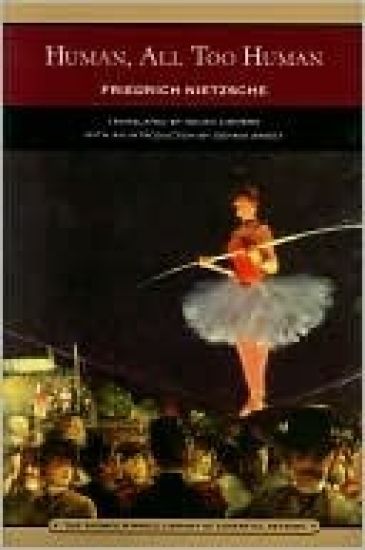
Human, All Too Human

Human, All Too Human

Friedrich Nietzsche

Union Square Co.
2008
pokkari
Subtitled “A Book for Free Spirits,” Human, All to Human rejects the conventional wisdom of the day for a more enlightened pursuit of reason. No longer influenced by the romanticism of Wagner and Schopenhauer, Friedrich Nietzsche turns to the skepticism and positivism that would define his philosophy for years to come. The witty aphorisms contained in this work have captivated readers since 1909 and still remain relevant.
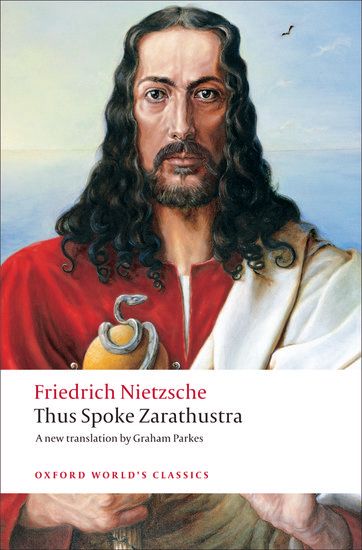
Thus Spoke Zarathustra

Thus Spoke Zarathustra

Friedrich Nietzsche

Oxford University Press
2008
nidottu

Halvin toimitettuna 18,90 €

'The profoundest book there is, born from the innermost richness of truth, an inexhaustible well into which no bucket descends without coming up with gold and goodness.' Thus Spoke Zarathustra (1885) was Nietzsche's own favourite among all his books and has proved to be his most popular, having sold millions of copies in many different languages. In it he addresses the problem of how to live a fulfilling life in a world without meaning, in the aftermath of 'the death of God'. Nietzsche's solution lies in the idea of eternal recurrence which he calls 'the highest formula of affirmation that can ever be attained'. A successful engagement with this profoundly Dionysian idea enables us to choose clearly among the myriad possibilities that existence offers, and thereby to affirm every moment of our lives with others on this 'sacred' earth. This translation of Zarathustra (the first new English version for over forty years) conveys the musicality of the original German, and for the first time annotates the abundance of allusions to the Bible and other classic texts with which Nietzsche's masterpiece is in conversation. ABOUT THE SERIES: For over 100 years Oxford World's Classics has made available the widest range of literature from around the globe. Each affordable volume reflects Oxford's commitment to scholarship, providing the most accurate text plus a wealth of other valuable features, including expert introductions by leading authorities, helpful notes to clarify the text, up-to-date bibliographies for further study, and much more.