Kirjojen hintavertailu – 12 859 818 kirjaa ja 27 kauppaa

Kirjailija

Friedrich Nietzsche

Kirjat ja teokset yhdessä paikassa: 921 kirjaa, julkaisuja vuosilta 1885–2026, suosituimpiin kuuluu Näin puhui Zarathustra. Vertaile teosten hintoja ja tarkista saatavuus suomalaisista kirjakaupoista.

921 kirjaa

Kirjojen julkaisuvuodet: 1885–2026.

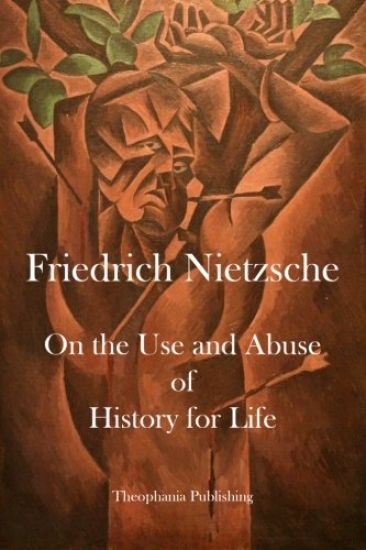
On the Use and Abuse of History for Life

On the Use and Abuse of History for Life

Friedrich Nietzsche

Createspace Independent Publishing Platform
2012
nidottu
Thank you for checking out this book by Theophania Publishing. We appreciate your business and look forward to serving you soon. We have thousands of titles available, and we invite you to search for us by name, contact us via our website, or download our most recent catalogues. "Incidentally, I despise everything which merely instructs me without increasing or immediately enlivening my activity." These are Goethe's words. With them, as with a heartfelt expression of Ceterum censeo I judge otherwise], our consideration of the worth and the worthlessness of history may begin. For this work is to set down why, in the spirit of Goethe's saying, we must seriously despise instruction without vitality, knowledge which enervates activity, and history as an expensive surplus of knowledge and a luxury, because we lack what is still most essential to us and because what is superfluous is hostile to what is essential. To be sure, we need history. But we need it in a manner different from the way in which the spoilt idler in the garden of knowledge uses it, no matter how elegantly he may look down on our coarse and graceless needs and distresses. That is, we need it for life and action, not for a comfortable turning away from life and action or merely for glossing over the egotistical life and the cowardly bad act. We wish to use history only insofar as it serves living. But there is a degree of doing history and a valuing of it through which life atrophies and degenerates. To bring this phenomenon to light as a remarkable symptom of our time is every bit as necessary as it may be painful.
Menneskelig, altfor menneskelig

Menneskelig, altfor menneskelig

Friedrich Nietzsche

Spartacus
2012
sidottu
I denne boken kutter Nietzsche båndene til romantikken og til dem som inspirerte ham mest i de tidligere årene, Wagner og Schopenhauer.. Menneskelig, altfor menneskelig er skrevet i opplysningstidens ånd. I stedet for å videreføre Schopenhauers metafysikk vil Nietzsche bevege seg i retning vitenskapens fornuft: «Det finnes ingen evige kjensgjerninger, slik som det heller ikke finnes noen absolutte sannheter.» Menneskelig, altfor menneskelig er et vendepunkt og et frampek mot senere verker, særlig Slik talte Zarathustra, i og med at Nietzsche her sår kimen til «Den frie ånd». Den frie ånd er den som får «lov til å leve i forsøket og å stille seg til disposisjon for det eventyrlige». Det er også her Nietzsche begynner å finne den aforistiske formen, som er så karakteristisk for hans senere bøker. Stilen varierer fra mytologisk metaforikk til mer prosaiske passasjer. Her finnes også en lyrisk form, slik man kjenner den fra Den muntre vitenskapen. Bind 1 og 2 i samme bok. Etterord av Marit Grøtta
Unmodern Observations (Unzeitgemässe Betrachtungen)

Unmodern Observations (Unzeitgemässe Betrachtungen)

Friedrich Nietzsche

Yale University Press
2011
pokkari
This translation of Nietzsche’s early Unzeitgemässe Betrachtungen consists of four long essays and notes for a fifth. Nietzsche planned these works as part of an extremely ambitious critique of German culture. Although the project was never completed, the essays thematically linked and should be considered as a whole. This book, which presents these important works together in English for the first time, unifies the essays, provides introductions and annotations to each, and translates them in a way that does justice to the brilliance and versatility of Nietzsche’s style. The dominant idea of Nietzsche’s project is the regeneration of culture through a radical reshaping of modern educational institutions. Nietzsche believed that philosophy, the arts, and the ennobling study of antiquity had all been corrupted by systematic miseducation, the work of so-called educators, who, as culture-philistines, had disgraced the highest of vocations. In response to this fragmented modern world, Nietasche argues for the creation of a”manworthy” culture with a single uniftying style—a style that integrated theology, philosophy, education, classical scholarship, journalism, and art in a seamless, dynamic whole. This style, Nietzsche contends, can best be realized by heeding the great creative examples of the pre-Socratic philosophers, Schopenhauer, and Wagner, and by reforming education, above all the study of history and the archaic culture of Greece, so that it serves, rather than obstructs, the needs of human life. The essays include David Strauss: Writer and Confessor, introduced and translated by Herbert Golder; History in the Service and Disservice of Life, introduced by Werner Dannhauser and translated by Gary Brown; Schopenhauer as Educator, introduced by Richard Schacht and translated by William Arrowsmith; Richard Wagner in Bayreuth, introduced and translated by Gary Brown; and We Classicists, introduced and translated by William Arrowsmith.

Den glada vetenskapen

Den glada vetenskapen

Friedrich Nietzsche

Bokförlaget Korpen
2011
pokkari
Friedrich Nietzsche betraktade "Den glada vetenskapen" som sin mest personliga bok. Den är ett mikrokosmos av allt det som Nietzsche brukar förknippas med: aforismer och storslagna diskussioner av filosofiska problem, etik och kunskapsteori, reflektioner om konst och om Guds död, den eviga återkomsten och Zarathustra. Med sin icke-akademiska stil och sönderbrutna form är detta en i högsta grad levande och aktuell klassiker. "Oaktat sina ursinnigheter är den mera samtida än de flesta böcker som råkar vara skrivna nu." (Horace Engdahl, Dagens Nyheter)
Antikristus

Antikristus

Friedrich Nietzsche

DELFIINI KIRJAT
2011
nidottu

Halvin toimitettuna 21,10 €

"En ole ihminen, olen dynamiittia!" "Liekki olen varmasti!" "Kirjani jyrähtää kuin tykinlaukaus!" Näin luonnehti itseään ja tuotantoaan aikansa henkinen tulivuori Friedrich Wilhelm Nietzsche. Jonkun muun kirjoittamana yllä olevat huudahdukset olisivat merkinneet silkkaa suuruudenhulluutta, mutta Nietzscheä tunteva tietää, että hän oli turhan vaatimaton - jotain kertoo jo sekin, että Nietzsche valittiin 24-vuotiaana Baselin yliopiston filologian professoriksi. Nietzschelle oli samantekevää kuinka häntä ymmärrettiin - kaikki tulkinnat olivat yhtä oikeita tai vääriä. Nietzsche halusi ravistella lukijoitaan, joskus jopa räikein loukkauksin. "Kaikki luonnonvastaisuus on rappiota. Rappeutunein ihmislaji on pappi: hän opettaa luonnonvastaisuutta." (Nietzschen oma isä oli pappi.) Nietzschen mukaan kristinusko on elämälle vihamielistä kuvitelmaa vailla kosketusta todellisuuteen. "Joka tuomitsee seksuaalisuuden ja tahraa sen nimellä 'epäpuhdas', syyllistyy perisyntiin elämän pyhää henkeä vastaan."
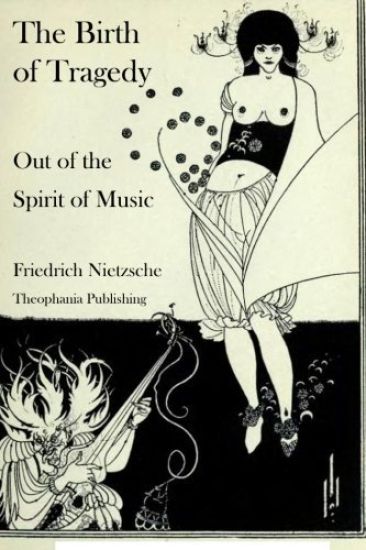
Tragediens fødsel

Tragediens fødsel

Friedrich Nietzsche

Spartacus
2010
sidottu
Nietzsches filosofi er et av de første forsøk på å fange inn typiske trekk ved vår kultur: oppløsning av alle faste verdisystemer, motsetningen mellom det intellektuelle og det fritt skapende menneske, følelsen av total frihet i en meningsløs verden. Boka viser hvordan den greske tragedien skapte en syntese av det plastiske og det ekstatiske i kunsten, og hvordan dens senere utvikling tørket ut denne kilden.