Kirjojen hintavertailu – 12 859 819 kirjaa ja 27 kauppaa

Kirjailija

G. K. Chesterton

Kirjat ja teokset yhdessä paikassa: 2 054 kirjaa, julkaisuja vuosilta 1900–2026, suosituimpiin kuuluu A Miscellany of Poems by G. K. Chesterton. Vertaile teosten hintoja ja tarkista saatavuus suomalaisista kirjakaupoista.

Nimi esiintyy myös muodoissa: G K Chesterton, G.K. Chesterton, G.K Chesterton, G. K Chesterton

2 054 kirjaa

Kirjojen julkaisuvuodet: 1900–2026.

The Innocence of Father Brown

The Innocence of Father Brown

G K Chesterton

True Sign Publishing House
2021
pokkari
This work has been selected by scholars as being culturally important, and is part of the knowledge base of civilization as we know it. This work was reproduced from the original artifact, and remains as true to the original work as possible. The Innocence of Father Brown is the first of five collections of mystery stories by G. K. Chesterton which first appeared in 1911. Modest in appearance, Father Brown has a mysterious ability to see into the bleak abyss of the criminal mind. This skill, according to Father Brown himself, comes from his experience as a priest and a confessor. Absolute rationality is another one of his characteristics. He always seeks the natural explanation for any kind f phenomenon. Combining captivating stories and insightful commentary, The Innocence of Father Brown is a delightful read.
The Everlasting Man

The Everlasting Man

G K Chesterton

Canon Press
2021
pokkari
"In 1920, H. G. Wells wrote a two-volume work which became a best-seller, The Outline of History . . . Why not engage the same subject matter Wells had taken up, but from a perspective fully appreciative of the unique place Christianity held in human history? The result is The Everlasting Man." From Kevin Belmonte's IntroductionIn The Everlasting Man, a humorous defense of Christianity which inspired C. S. Lewis, Chesterton shows that once man is reduced to animal, history becomes utterly meaningless. What truly gives man his dignity is the fact that he is so different from the beasts. What makes Christianity so different is that it tells of the story of the true man, the final man, the everlasting man, who came down in history and transformed it." This sketch of the human story began in a cave; the cave which popular science associates with the cave-man and in which practical discovery has really found archaic drawings of animals. The second half of human history, which was like a new creation of the world, also begins in a cave . . . It was here that a homeless couple had crept underground with the cattle when the doors of the crowded caravanserai had been shut in their faces. And it was here beneath the very feet of the passers-by, in a cellar under the very floor of the world, that Jesus Christ was born." From The Everlasting Man
The Ball and the Cross

The Ball and the Cross

G K Chesterton

E-Artnow
2020
pokkari
Due to certain irreconcilable differences two Scottish men, one being Catholic and the other being atheist, decide to fight a duel to the death. However, duels are against the law, so they have to find a secret place for that occasion. Searching for such place they must avoid authorities, and also numerous kinds of people who all try to convince them to give up on a duel, leading to many comic adventures.
Dickens by Chesterton

Dickens by Chesterton

G K Chesterton

E-Artnow
2020
pokkari
Charles Dickens was an English writer and social critic, widely recognized as a literary genius. He created some of the world's best-known fictional characters and is regarded by many as the greatest novelist of the Victorian era. G. K. Chesterton took great interest in the literature of Charles Dickens, writing several books concerning his life and his works: Charles Dickens - Biographical Sketch Charles Dickens - Critical Study Appreciations and Criticisms of the Works of Charles Dickens
The Flying Inn

The Flying Inn

G K Chesterton

E-Artnow
2020
pokkari

Halvin toimitettuna 15,70 €

The Flying Inn is set in a future England where the Temperance movement has allowed a bizarre form of "Progressive" Islam to dominate the political and social life of the country. Because of this, alcohol sales to the poor are effectively prohibited, while the rich can get alcoholic drinks "under a medical certificate". The story relates the adventures of Humphrey Pumph and Captain Patrick Dalroy, who roam the country in their cart with a barrel of rum in an attempt to evade Prohibition, exploiting loopholes in the law to temporarily prevent the police taking action against them. Eventually the heroes and their followers foil an attempted coup by an Islamic military force.
Manalive

Manalive

G K Chesterton

E-Artnow
2020
pokkari
Manalive concerns Innocent Smith, a mysterious man who arrives as the new tenant at Beacon House, a London boarding establishment. This man is accompanied by a great wind and he breathes new life into the household with his games and antics. During his first day in residence the eccentric Smith creates the High Court of Beacon and helps several other tenants to accomplish some great deeds. However, when the household is at its happiest two doctors appear with awful news: Smith is wanted on charges of burglary, desertion of a spouse, polygamy, and attempted murder. Before Smith can be taken to a jail or an asylum, one of the tenants declares that the case falls under the purview of the High Court of Beacon and suggests that the household investigate the matter before involving the authorities or the press. Although things do not look good for Smith, evidence presented to the court will throw a new light on his convictions.
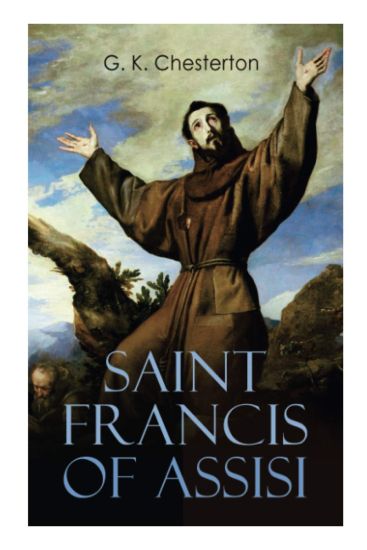
Saint Francis of Assisi

Saint Francis of Assisi

G K Chesterton

E-Artnow
2020
pokkari

Halvin toimitettuna 13,90 €

Saint Francis of Assisi (1181-1226) was an Italian Catholic friar, deacon and preacher. He founded the men's Order of Friars Minor, the women's Order of Saint Clare, the Third Order of Saint Francis and the Custody of the Holy Land. Francis is one of the most venerated religious figures in history. In Chesterton's portrayal St. Francis is a mysterious figure and a man of paradox. Putting him and his life into historical perspective, Chesterton describes why his asceticism was necessary for his cause and what drove him to his life.
A Short History of England

A Short History of England

G K Chesterton

E-Artnow
2020
pokkari
A Short History of England is a history book written by G. K. Chesterton in which he summarizes British history from the time of Roman provinces on the British Island to the great wars in 20th century. Chesterton takes a rather romanticized view of the absolute monarchy of olden times and naturally gets increasingly more political as his history nears his own time period of World War I. Chesterton's unique perspective as a Catholic and as a collectivist are all reflected in his interpretation of everything from the dissolution of the monasteries to the poor laws of the 19th and 20th centuries
The New Jerusalem

The New Jerusalem

G K Chesterton

E-Artnow
2020
pokkari
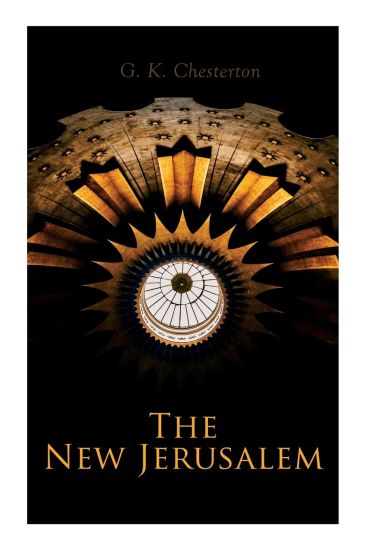
The New Jerusalem is a history book written by G. K. Chesterton which deals with the world of the Middle East, and serves as a eulogy on the Middle Ages and the true end of the Roman Empire. Revolving around the central idea of Jerusalem and Zionism, the book gives the basic idea of the Middle East history, offering some insights to its future. Chesterton recognizes the profound differences in approaching the world among groups like Arabs, Jewish people and Western people, and offers some interesting and poetical insights of the Middle East.
The Man Who Was Thursday

The Man Who Was Thursday

G K Chesterton

E-Artnow
2020
pokkari
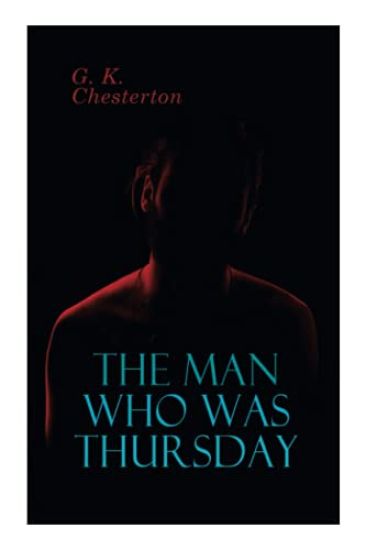
Gabriel Syme is recruited at Scotland Yard to a secret anti-anarchist police corps. Lucian Gregory, an anarchistic poet, lives in the suburb of Saffron Park. They meet at a party and, after a heating debate, Gregory takes Syme to London underground, revealing that he is an influential member of the European anarchist council. The central council consists of seven men, each using the name of a day of the week as a cover. The position of Thursday is about to be elected by Gregory's local chapter and Gregory expects to win the election. However, just before the election, Syme reveals to Gregory after an oath of secrecy that he is a secret policeman. Fearful that Syme may use his speech in evidence of a prosecution, Gregory's weakened words fail to convince the local chapter that he is sufficiently dangerous for the job. Syme then makes a rousing anarchist speech and wins the vote. He is sent immediately as the chapter's delegate to the central council.
The Man Who Was Thursday

The Man Who Was Thursday

G K Chesterton

Les Prairies Numeriques
2020
pokkari
"G. K. Chesterton's The Man Who Was Thursday is a wacky, nightmarish, deliriously well-written adventure story for grownups in which nothing is what it seems and everyone wears a mask, whether figurative or literal. It's hard to think of a more thrilling book." -Kate Christensen, TIME Magazine's Summer Reading List 2009. First published in 1908, G. K. Chesterton's "The Man Who Was Thursday" has been described as a metaphysical thriller. It is the story of Gabriel Syme, who is recruited by Scotland Yard as part of an anti-anarchist task force. When he meets Lucian Gregory, a poet and member of a secret society of anarchists, he gains access to the underground movement. The group is lead by a central council of seven men, each named for a day of the week. Gabriel convinces the local chapter to elect him to the vacant position of "Thursday" and he soon discovers that he is not the only one pretending to be something that he is not. What follows is one of the most absurd and clever plots to ever have been written, one in which Chesterton's wonderfully high-spirited prose carries the reader along in a boisterous rush. Arguably the author's finest work, certainly his most popular, "The Man Who Was Thursday" is a wild, mad, hilarious and profoundly moving tale that ultimately defies classification. This edition is printed on premium acid-free paper. About the AuthorGilbert Keith Chesterton (29 May 1874 - 14 June 1936) better known as G. K. Chesterton, was an English writer, lay theologian, poet, philosopher, dramatist, journalist, orator, literary and art critic, biographer, and Christian apologist.
The Napoleon of Notting Hill

The Napoleon of Notting Hill

G K Chesterton

Les Prairies Numeriques
2020
pokkari
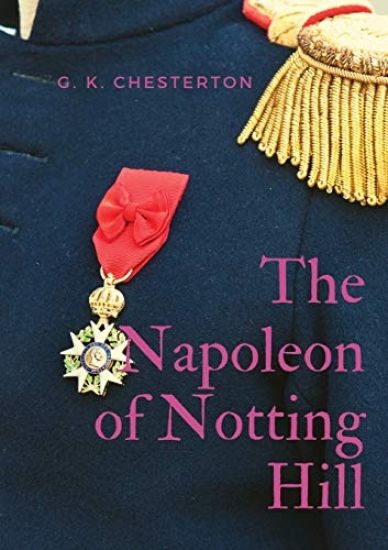
THE NAPOLEON OF NOTTING HILL IS A NOVEL WRITTEN BY G. K. CHESTERTON IN 1904, SET IN A NEARLY UNCHANGED LONDON IN 1984. ALTHOUGH THE NOVEL IS SET IN THE FUTURE, IT IS, IN EFFECT, SET IN AN ALTERNATIVE REALITY OF CHESTERTON'S OWN PERIOD, WITH NO ADVANCES IN TECHNOLOGY OR CHANGES IN THE CLASS SYSTEM OR ATTITUDES. IT POSTULATES AN IMPERSONAL GOVERNMENT, NOT DESCRIBED IN ANY DETAIL, BUT APPARENTLY CONTENT TO OPERATE THROUGH A FIGUREHEAD KING, RANDOMLY CHOSEN. About the AuthorGilbert Keith Chesterton (29 May 1874 - 14 June 1936) better known as G. K. Chesterton, was an English writer, lay theologian, poet, philosopher, dramatist, journalist, orator, literary and art critic, biographer, and Christian apologist.
The Innocence of Father Brown

The Innocence of Father Brown

G K Chesterton

Les Prairies Numeriques
2020
pokkari
Between the silver ribbon of morning and the green glittering ribbon of sea, the boat touched Harwich and let loose a swarm of folk like flies, among whom the man we must follow was by no means conspicuous-nor wished to be. There was nothing notable about him, except a slight contrast between the holiday gaiety of his clothes and the official gravity of his face. His clothes included a slight, pale grey jacket, a white waistcoat, and a silver straw hat with a grey-blue ribbon. His lean face was dark by contrast, and ended in a curt black beard that looked Spanish and suggested an Elizabethan ruff. He was smoking a cigarette with the seriousness of an idler. There was nothing about him to indicate the fact that the grey jacket covered a loaded revolver, that the white waistcoat covered a police card, or that the straw hat covered one of the most powerful intellects in Europe. For this was Valentin himself, the head of the Paris police and the most famous investigator of the world and he was coming from Brussels to London to make the greatest arrest of the century. - Taken from "The Innocence of Father Brown" written by Gilbert Keith ChestertonABOUT THE AUTHORGILBERT KEITH CHESTERTON (29 MAY 1874 - 14 JUNE 1936) BETTER KNOWN AS G. K. CHESTERTON, WAS AN ENGLISH WRITER, LAY THEOLOGIAN, POET, PHILOSOPHER, DRAMATIST, JOURNALIST, ORATOR, LITERARY AND ART CRITIC, BIOGRAPHER, AND CHRISTIAN APOLOGIST. Father Brown is a fictional Roman Catholic priest and amateur detective who is featured in 53 short stories published between 1910 and 1936 written by English novelist G. K. Chesterton. Father Brown solves mysteries and crimes using his intuition and keen understanding of human nature. Chesterton loosely based him on the Rt Rev. Msgr. John O'Connor (1870-1952), a parish priest in Bradford, who was involved in Chesterton's conversion to Catholicism in 1922. The Innocence of Father Brown, published in 1911, includes: "The Blue Cross", The Story-Teller, September 1910 first published as "Valentin Follows a Curious Trail", The Saturday Evening Post, 23 July 1910"The Secret Garden", The Story-Teller, October 1910. (The Saturday Evening Post, Sep 3, 1910)"The Queer Feet", The Story-Teller, November 1910. (The Saturday Evening Post, Oct 1, 1910)"The Flying Stars", The Saturday Evening Post, 20 May 1911." The Invisible Man"

The Wisdom of Father Brown

The Wisdom of Father Brown

G K Chesterton

Les Prairies Numeriques
2020
pokkari
Father Brown is a fictional Roman Catholic priest and amateur detective who is featured in 53 short stories published between 1910 and 1936 written by English novelist G. K. Chesterton. 1] Father Brown solves mysteries and crimes using his intuition and keen understanding of human nature. Chesterton loosely based him on the Rt Rev. Msgr. John O'Connor (1870-1952), a parish priest in Bradford, who was involved in Chesterton's conversion to Catholicism in 1922. Chesterton portrays Father Brown as a short, stumpy Roman Catholic priest, with shapeless clothes, a large umbrella, and an uncanny insight into human evil. In "The Head of Caesar" he is "formerly priest of Cobhole in Essex, and now working in London". He makes his first appearance in the story "The Blue Cross" published in 1910 and continues to appear throughout forty-eight short stories in five volumes, with two more stories discovered and published posthumously, often assisted in his crime-solving by the reformed criminal M. Hercule Flambeau. Father Brown also appears in a third story - making a total of fifty-one - that did not appear in the five volumes published in Chesterton's lifetime, "The Donnington Affair", which has a curious history. In the October 1914 issue of an obscure magazine, The Premier, Sir Max Pemberton published the first part of the story, then invited a number of detective story writers, including Chesterton, to use their talents to solve the mystery of the murder described. Chesterton and Father Brown's solution followed in the November issue. The story was first reprinted in the Chesterton Review (Winter), 1981, pp. 1-35 in the book Thirteen Detectives. Unlike the better-known fictional detective Sherlock Holmes, Father Brown's methods tend to be intuitive rather than deductive. He explains his method in "The Secret of Father Brown" "You see, I had murdered them all myself.... I had planned out each of the crimes very carefully. I had thought out exactly how a thing like that could be done, and in what style or state of mind a man could really do it. And when I was quite sure that I felt exactly like the murderer myself, of course I knew who he was." Brown's abilities are also considerably shaped by his experience as a priest and confessor. In "The Blue Cross", when asked by Flambeau, who has been masquerading as a priest, how he knew of all sorts of criminal "horrors," Father Brown responds: "Has it never struck you that a man who does next to nothing but hear men's real sins is not likely to be wholly unaware of human evil?" He also states how he knew Flambeau was not really a priest: "You attacked reason. It's bad theology." The stories normally contain a rational explanation of who the murderer was and how Brown worked it out. He always emphasises rationality some stories, such as "The Miracle of Moon Crescent", "The Oracle of the Dog", "The Blast of the Book" and "The Dagger with Wings", poke fun at initially sceptical characters who become convinced of a supernatural explanation for some strange occurrence, but Father Brown easily sees the perfectly ordinary, natural explanation. In fact, he seems to represent an ideal of a devout but considerably educated and "civilised" clergyman. That can be traced to the influence of Roman Catholic thought on Chesterton. Father Brown is characteristically humble and is usually rather quiet, except to say something profound. Although he tends to handle crimes with a steady, realistic approach, he believes in the supernatural as the greatest reason of all.