Kirjailija
G. K. Chesterton
Kirjat ja teokset yhdessä paikassa: 2 054 kirjaa, julkaisuja vuosilta 1900–2026, suosituimpiin kuuluu A Miscellany of Poems by G. K. Chesterton. Vertaile teosten hintoja ja tarkista saatavuus suomalaisista kirjakaupoista.
Nimi esiintyy myös muodoissa: G K Chesterton, G.K. Chesterton, G.K Chesterton, G. K Chesterton
2 054 kirjaa
Kirjojen julkaisuvuodet: 1900–2026.
In 1910, when the industrialists and intelligentsia both promised only "progress," G. K. Chesterton was among the few in the West who could see the brewing ideological storms that would soon make landfall, not just in the form of world wars and totalitarianism but in the pervasive modern dehumanization that consumes us to this day. More than a century ago, Chesterton perceived the beginnings of "woke capital" and how it aligns with and promotes social progressivism. There is an unspoken alliance between big business and progressives, he explains. The one (big business) impoverishes the worker, eviscerating the material conditions of family life, while the other (the progressive) tells him he doesn't need family anyway. Big business "wants women workers because they are cheaper," while the progressive "calls the women's work 'freedom to live her own life.' "Chesterton saw, too, how economic individualism ultimately led to more intrusive government because of the inability of the worker to enter into modest ownership of the kind accessible to his forebears, leaving him vulnerable to looking to the State for help. It is in examining these threats to a decent, stable, ordinary life that What's Wrong with the World proves astonishingly, almost unbelievably, prophetic. Although Chesterton's conversion to Catholicism was still a decade away, one can see in these pages that his arguments were already unmistakably contoured by Catholic teaching, concerned as he is with the false emphasis on "science," sexual license as "liberating," socialism's fake humanity, and how "faith in the future" is actually a sign of cowardice and fear of our past. As readable today as when it was first written, no other book offers such an incisive analysis of what is truly wrong with our world.
The Man Who Was Thursday: A Nightmare is a 1908 novel by G. K. Chesterton. The book has been described as a metaphysical thriller.
Se um homem n o deve acreditar em si mesmo, em que ele deve acreditar?. Depois de uma longa pausa, respondi: vou para casa escrever um livro em resposta Nesta obra, Chesterton faz uma an lise de si para provar que falar sobre ortodoxia n o discursar de forma enfadonha.
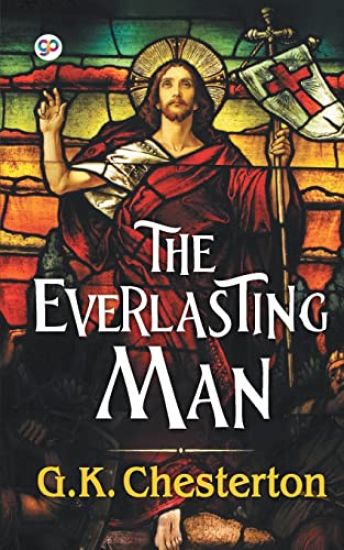
The Everlasting Man
G. K. Chesterton; Gilbert Keith Chesterton
Martino Fine Books
2021
nidottu
Halvin toimitettuna 14,00 €
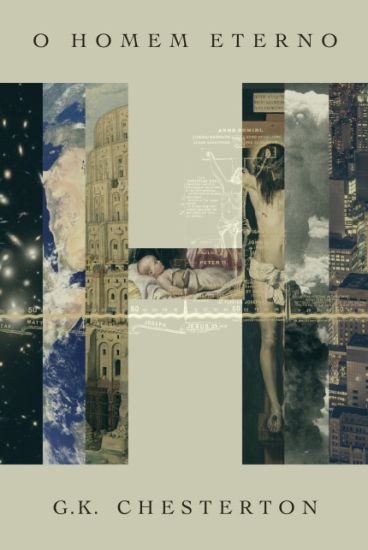
De toda a extensa obra de G. K. Chesterton (1874-1936), O Homem Eterno sua cria o mais surpreendente. A hist ria da humanidade aqui recontada de forma brilhante, a partir de duas perspectivas que se complementam: a criatura chamada homem e o homem chamado Cristo. Com sua prosa peculiar, seu humor brit nico certeiro e seus racioc nios envolventes e provocativos, Chesterton delicia o leitor. Sua obra alveja os cr ticos da religi o e, em especial, os cr ticos do cristianismo. Para ele, a vis o m ope do ate smo impede que se compreenda a fascinante a o de Deus na hist ria, celebrada magistralmente neste cl ssico da literatura crist .
In this book G. K. Chesterton explains how religion-a blend of philosophy and mythology-satisfies both the human intellect and the spirit, and sets man starkly apart from any other living creature. Addressing evolution, feminism, and cultural relativism within the context of religion, the book also examines religious skepticism. According to Chesterton, the shape of the key is not important. What matters is that it fits the lock and opens the door. An emphatic affirmation of Christian faith, The Everlasting Man is leavened with the author's characteristic wit and wisdom, and appeals to the mind as well as the heart.
Eugenics and Other Evils, is many of the old books which have been considered important throughout the human history. They are now extremely scarce and very expensive antique. So that this work is never forgotten we republish these books in high quality, using the original text and artwork so that they can be preserved for the present and future generations. This whole book has been reformatted, retyped and designed. These books are not made of scanned copies of their original work and hence the text is clear and readable.
The Everlasting Man, is many of the old books which have been considered important throughout the human history. They are now extremely scarce and very expensive antique. So that this work is never forgotten we republish these books in high quality, using the original text and artwork so that they can be preserved for the present and future generations. This whole book has been reformatted, retyped and designed. These books are not made of scanned copies of their original work and hence the text is clear and readable.
Father Brown is an insightful sleuth who travels far and wide to solve a new set of mysteries that require his unique skills and wisdom. This selection of short stories also includes a variety of locales from Italy to Cornwall and everywhere in between. Once again, Father Brown has found himself at the center of the action. The Wisdom of Father Brown is the follow-up to G. K. Chesterton’s first entry, The Innocence of Father Brown. The sequel builds upon the growing popularity of the amateur detective whose unusual methods deliver positive results. This collection of stories includes "The Man in the Passage," "The Head of Caesar," and "The Perishing of the Pendragons." Each tale is an exhilarating read full of twists, turns and welcome surprises. The Wisdom of Father Brown is the second installment in the famous line of detective stories. The beloved title character is a fixture in the genre spawning television shows and film adaptations. The Wisdom of Father Brown is a delightful addition to its enduring legacy. With an eye-catching new cover, and professionally typeset manuscript, this edition of The Wisdom of Father Brown is both modern and readable.
When the government cracks down on alcohol sales, two men decide to leave their small fishing village to avoid the law and find new opportunities. The Flying Inn is an irreverent satire that delivers a unique commentary on power and politics. Humphrey Pump, also known as “Hump,” is a bar owner whose business is undercut by strict alcohol regulations. Adult beverages can only be sold when a pub sign in present. But instead of adhering to the rules, he hits the road with a sign and barrel of rum in tow. Pump is joined by Patrick Dalroy, an entertaining companion, who is just as committed to his wandering way of life. Despite their attempts to escape police, the rogue partners are eventually roped into a much larger plot. The Flying Inn is a daring piece of speculative fiction that uses satire to balance its more serious elements. Published in 1914, the story is greatly influence by the social and political concepts of its day. This gives readers insight into the many fears surrounding early twentieth century government. With an eye-catching new cover, and professionally typeset manuscript, this edition of The Flying Inn is both modern and readable.
A man of means, Horne Fisher is a well-connected detective who’s social and political influence gives him special insight into the underbelly of Britain’s elite. G. K. Chesterton uses the protagonist to shine a light on the true nature on the ruling class. In The Man Who Knew Too Much, Horne Fisher leads a collection of short stories that constantly test his morals. He is frequently joined by his partner, a political journalist, named Harold March. Together, they work on various criminal cases often involving murder. Some of the most notable stories include "The Face in the Target," "The Vanishing Prince," "The Soul of the Schoolboy" and "The Bottomless Well." It is a compelling series of suspenseful tales with intriguing characters. The Man Who Knew Too Much was initially published as a serial in Harper's Monthly Magazine, and then as a full collection in 1922. It was also famously adapted for film by Alfred Hitchcock in 1934 and 1956, respectively. With an eye-catching new cover, and professionally typeset manuscript, this edition of The Man Who Knew Too Much is both modern and readable.
This is many of the old books which has been considered important throughout the human history. They are now extremely scarce and very expensive antique. So that this work is never forgotten We republish them in high quality, using the original text and artwork so that they can be preserved for the present and future generations. This whole book has been reformatted, retyped and designed. These books are not made of scanned copies of their original work and hence the text is clear and readable.
G. K. Chesterton delivers insightful commentary on modern behavior and social practices influenced by big business, gender roles, government and other notable figures throughout his lifetime. The book is inspired by his own personal beliefs regarding faith, family and the working man. What’s Wrong with the World is a critical analysis of various topics covered by acclaimed writer G. K. Chesterton. He tackles contemporary ideals that dominate society and dictate culture. This book compiles Chesterton’s most prominent beliefs about the dangers of consumerism and a social hierarchy that thrives on oppression. It’s an indictment of what he considers the world’s most undeniable ills. G. K. Chesterton was a principled man with old fashioned values. His personal views shaped his literary work as well as his opinion of others. His catalog is full of essays offering distinct commentary with an indelible writing style. With an eye-catching new cover, and professionally typeset manuscript, this edition of What’s Wrong with the World is both modern and readable.
Tremendous Trifles is comprised of 39 chapters, each functioning as their own essay or story. With whimsical, light-hearted prose, vivid figurative language, and unparalleled insight, Chesterton covers a variety of philosophical principles of everyday life. Chesterton often used ordinary events and objects to explain deeper matters. Using relatable and accessible examples, Tremendous Trifles also test biases and preconceived ideas, specifically in the cases of fairy tales and folk lore. Stories of these genres are passed down from generation to generation, changed each time they are told, yet usually framed more optimistically than the original tale. Chesterton encourages readers to question this, and examine the implications the example may have on the other stories they hear. Accompanying the suggestion to recognize bias, the importance of one’s point of view is also examined. In Tremendous Trifles, Chesterton uses a metaphor to explain perspective. There are only two ways to see the world—either as a giant, or as a nymph. One sees all the wonders of the world as a speck of dust, the other is in awe of a single blade of grass. While advocating for seeing the beauty in simple, everyday encounters, Tremendous Trifles raises thought-provoking questions and advises that sometimes a better life is just a change of perspective away. Containing both essays of importance and intrigue and stories of silly nature, Tremendous Trifles is the perfect combination of excitement and understanding. Written in a conversational and intimate format, Tremendous Trifles by G. K Chesterton is a collection of essays and stories that features philosophical theories of happiness, perspective, and narratives. Described as thought-provoking and humorous, Tremendous Trifles educates without the use intimidating or exclusive advice. While celebrating simplicity and encouraging people to find joy in the mundane, Tremendous Trifles uncovers truths about humankind that have remained relevant to modern audiences. This edition of Tremendous Trifles by G. K Chesterton is now presented in an easy-to-read font and features a striking new cover design. With these accommodations, Tremendous Trifles is restored to modern standards while preserving its original ingenuity.
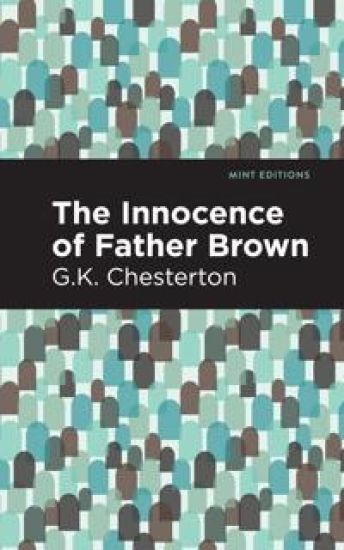
The Innocence of Father Brown
G. K. Chesterton
Mint Editions
2021
sidottu
Halvin toimitettuna 25,00 €
Originally published in 1911, The Innocence of Father Brown is the first of five official collections of short stories focused on the crime-solving Roman Catholic. He is an endearing character often compared to another famous detective, Sherlock Holmes. Father Brown is a devout Roman Catholic priest who has a penchant for detective work. He first appears in the short story, “The Blue Cross,” which was previously published in 1910 in the Saturday Evening Post. Father Brown stumbles across unusual cases that require his distinct reasoning and deduction skills. He’s often described as a short man with a stocky figure who can see into the heart of evil. His first outing, The Innocence of Father Brown, features 12 stories including “The Hammer of God,” “The Invisible Man” and "The Sins of Prince Saradine." The Innocence of Father Brown is the inaugural edition of G. K. Chesterton’s delightful detective series. It consists of many famous cases and characters including frequent collaborator, Hercule Flambeau. This book is a great introduction to these delightful stories that are fueled by heart and humanity. With an eye-catching new cover, and professionally typeset manuscript, this edition of The Innocence of Father Brown is both modern and readable.