Kirjojen hintavertailu – 12 859 824 kirjaa ja 27 kauppaa
Kirjailija
G. K. Chesterton
Kirjat ja teokset yhdessä paikassa: 2 054 kirjaa, julkaisuja vuosilta 1900–2026, suosituimpiin kuuluu A Miscellany of Poems by G. K. Chesterton. Vertaile teosten hintoja ja tarkista saatavuus suomalaisista kirjakaupoista.
Nimi esiintyy myös muodoissa: G K Chesterton, G.K. Chesterton, G.K Chesterton, G. K Chesterton
Gilbert Keith Chesterton, KC (29 May 1874 - 14 June 1936), was an English writer, poet, philosopher, dramatist, journalist, orator, lay theologian, biographer, and literary and art critic. Chesterton is often referred to as the "prince of paradox." Time magazine has observed of his writing style: "Whenever possible Chesterton made his points with popular sayings, proverbs, allegories-first carefully turning them inside out." Chesterton is well known for his fictional priest-detective Father Brown, and for his reasoned apologetics. Even some of those who disagree with him have recognised the wide appeal of such works as Orthodoxy and The Everlasting Man.
Gilbert Keith Chesterton, KC (29 May 1874 - 14 June 1936), was an English writer, poet, philosopher, dramatist, journalist, orator, lay theologian, biographer, and literary and art critic. Chesterton is often referred to as the "prince of paradox". Time magazine has observed of his writing style: "Whenever possible Chesterton made his points with popular sayings, proverbs, allegories-first carefully turning them inside out." Chesterton is well known for his fictional priest-detective Father Brown, and for his reasoned apologetics. Even some of those who disagree with him have recognised the wide appeal of such works as Orthodoxy and The Everlasting Man.
Gilbert Keith Chesterton, KC (29 May 1874 - 14 June 1936), was an English writer, poet, philosopher, dramatist, journalist, orator, lay theologian, biographer, and literary and art critic. Chesterton is often referred to as the "prince of paradox". Time magazine has observed of his writing style: "Whenever possible Chesterton made his points with popular sayings, proverbs, allegories-first carefully turning them inside out." Chesterton is well known for his fictional priest-detective Father Brown, and for his reasoned apologetics. Even some of those who disagree with him have recognised the wide appeal of such works as Orthodoxy and The Everlasting Man.
Prefatory Note 4 Introduction: The Plan of This Book 5 PART I: ON THE CREATURE CALLED MAN 17 I The Man in the Cave 17 II Professors and Prehistoric Men 38 III The Antiquity of Civilisation 58 IV God and Comparative Religion 90 V Man and Mythologies 113 VI Demons and Philosophers 132 VII The War of the Gods and Demons 158 VIII The End of the World 176 PART II: ON THE MAN CALLED CHRIST 194 I The God in the Cave 194 II The Riddles of the Gospel 215 III The Strangest Story in the World 231 IV The Witness of the Heretics 250 V The Escape from Paganism 273 VI The Five Deaths of the Faith 295 CONCLUSION: THE SUMMARY OF THIS BOOK 310 Appendix I. On Prehistoric Man 322 Appendix II. On Authority and Accuracy 324 This book needs a preliminary note that its scope be not misunderstood The view suggested is historical rather than theological, and does not deal directly with a religious change which has been the chief event of my own life; and about which I am already writing a more purely controversial volume. It is impossible, I hope, for any Catholic to write any book on any subject, above all this subject, without showing that he is a Catholic; but this study is not specially concerned with the differences between a Catholic and a Protestant. Much of it is devoted to many sorts of Pagans rather than any sort of Christians; and its thesis is that those who say that Christ stands side by side with similar myths, and his religion side by side with similar religions, are only repeating a very stale formula contradicted by a very striking fact. To suggest this I have not needed to go much beyond matters known to us all; I make no claim to learning; and have to depend for some things, as has rather become the fashion, on those who are more learned. As I have more than once differed from Mr. H. G. Wells in his view of history, it is the more right that I should here congratulate him on the courage and constructive imagination which carried through his vast and varied and intensely interesting work; but still more on having asserted the reasonable right of the amateur to do what he can with the facts which the specialists provide. INTRODUCTION THE PLAN OF THIS BOOK There are two ways of getting home; and one of them is to stay there. The other is to walk round the whole world till we come back to the same place; and I tried to trace such a journey in a story I once wrote. It is, however, a relief to turn from that topic to another story that I never wrote. Like every book I never wrote, it is by far the best book I have ever written. It is only too probable that I shall never write it, so I will use it symbolically here; for it was a symbol of the same truth. I conceived it as a romance of those vast valleys with sloping sides, like those along which the ancient White Horses of Wessex are scrawled along the flanks of the hills. It concerned some boy whose farm or cottage stood on such a slope, and who went on his travels to find something, such as the effigy and grave of some giant; and when he was far enough from home he looked back and saw that his own farm and kitchen-garden, shining flat on the hill-side like the colours and quarterings of a shield, were but parts of some such gigantic figure, on which he had always lived, but which was too large and too close to be seen. That, I think, is a true picture of the progress of any really independent intelligence today; and that is the point of this book.
From London to Cornwall, then to Italy and France, a short, shabby priest runs to earth bandits, traitors, killers. Why is he so successful? The reason is that after years spent in the priesthood, Father Brown knows human nature and is not afraid of its dark side. Thus he understands criminal motivation and how to deal with it. The stories included are "The Paradise of Thieves," "The Duel of Dr. Hirsch," "The Man in the Passage," "The Mistakes of the Machine," "The Head of the Caesar," "The Purple Wig," "The Perishing of the Pendragons," "The God of the Gongs," "The Salad of the Colonel Cray," "The Strange Crime of John Boulnois" and "The Fairy Tale of Father Brown." We are delighted to publish this classic book as part of our extensive Classic Library collection. Many of the books in our collection have been out of print for decades, and therefore have not been accessible to the general public. The aim of our publishing program is to facilitate rapid access to this vast reservoir of literature, and our view is that this is a significant literary work, which deserves to be brought back into print after many decades. The contents of the vast majority of titles in the Classic Library have been scanned from the original works. To ensure a high quality product, each title has been meticulously hand curated by our staff. Our philosophy has been guided by a desire to provide the reader with a book that is as close as possible to ownership of the original work. We hope that you will enjoy this wonderful classic work, and that for you it becomes an enriching experience.
The metaphysical thriller The Man Who Was Thursday: A Nightmare, written by G. K. Chesterton in 1908, deals with a philosophical or theological anarchism; more a rejection of God than a rejection of government. The novel was described by Adam Gopnik as "one of the hidden hinges of twentieth-century writing, the place where, before our eyes, the nonsense-fantastical tradition of Lewis Carroll and Edward Lear pivots and becomes the nightmare-fantastical tradition of Kafka and Borges."
The Innocence of Father Brown by G. K. Chesterton. Father Brown is a fictional Roman Catholic priest and amateur detective who is featured in 53 short stories published between 1910 and 1936 written by English novelist G. K. Chesterton. Father Brown solves mysteries and crimes using his intuition and keen understanding of human nature. Chesterton loosely based him on the Rt Rev. Msgr. John O'Connor (1870-1952), a parish priest in Bradford, who was involved in Chesterton's conversion to Catholicism in 1922. Chesterton portrays Father Brown as a short, stumpy Roman Catholic priest, with shapeless clothes, a large umbrella, and an uncanny insight into human evil. In "The Head of Caesar" he is "formerly priest of Cobhole in Essex, and now working in London". He makes his first appearance in the story "The Blue Cross" published in 1910 and continues to appear throughout forty-eight short stories in five volumes, with two more stories discovered and published posthumously, often assisted in his crime-solving by the reformed criminal M. Hercule Flambeau.
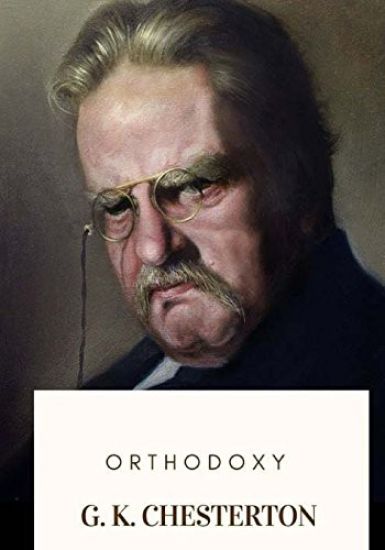
The Christian Classic ORTHODOXY by G. K. Chesterton A self-described agnostic in his youth, Chesterton reveals how he came to believe in the Christianity message. As he describes in his preface to the book: "It is the purpose of the writer to attempt an explanation, not of whether the Christian Faith can be believed, but of how he personally has come to believe it. The book is therefore arranged upon the positive principle of a riddle and its answer. It deals first with all the writer's own solitary and sincere speculations and then with all the startling style in which they were all suddenly satisfied by the Christian Theology." In Orthodoxy, G. K. Chesterton applies his prodigious intellect to dismantle modern thought and expose it for its utter emptiness.
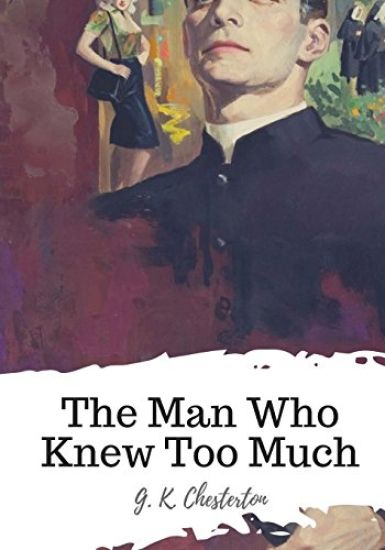
The Man Who Knew Too Much is a collection of short stories by British writer Gilbert K. Chesterton, featuring his detective Horne Fisher. From the upper-classes himself, Fisher has a unique insight into political power-a position which complicates his investigations when they approach the higher levels of corrupt government. Chesterton's witty, paradoxical work, published in 1922, gives an interesting view of the pre-Great War era.
In Orthodoxy, a classic work of Christian apologetics, G. K. Chesterton writes with the purpose of attempting "an explanation, not of whether the Christian Faith can be believed, but of how he personally has come to believe it." Christianity, in Chesterton's original view, is the "answer to a riddle" and the natural solution to our needs, and in this way it is deeply personal rather than an arbitrary truth from outside one's experience. Orthodoxy is the culmination of Chesterton's free-thinking and well-reasoned inquiry as he seeks an explanation to the mystery of being human.
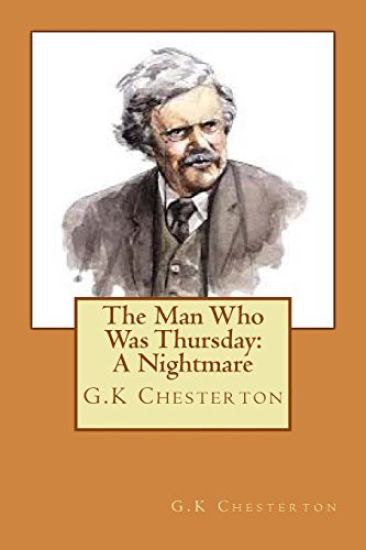
G. K. Chesterton's 1908 masterpiece, The Man Who Was Thursday, is a metaphysical thriller, and a detective story filled with poetry and politics. Gabriel Syme is a poet and a police detective. Lucian Gregory is a poet and a bomb-throwing anarchist. Syme infiltrates a secret meeting of anarchists and becomes 'Thursday', one of the seven members of the Central Anarchist Council. He soon learns, however, that he is not the only one in disguise, and the nightmare begins
During his lifetime, British author and thinker G. K. Chesterton gained a reputation as a top-rate intellectual and social critic. In this volume, Chesterton turns his attention to a series of major problems facing the world at the turn of the twentieth century, offering his one-of-a-kind take on each topic.
Criminals beware-there is no eluding the extraordinary mind of Father Brown Dr. Orion Hood is one of the eminent thinkers of his day, a psychologist whose expert opinion on human nature is sometimes sought by the police. Usually, he is called on to solve only the most spectacular crimes-a nobleman murdered, a diplomat poisoned-but today a more ordinary problem presents itself. An amiable little priest named Father Brown asks Dr. Hood to help a young couple whose families do not want them to marry.
This is the second of five books of short stories about G. K. Chesterton's fictional detective, first published in 1914. Father Brown is a short, nondescript Catholic Priest with shapeless clothes and a large umbrella who has an uncanny insight into human evil. His methods, unlike those of his near contemporary Sherlock Holmes, although based on observation of details often unnoticed by others, tended to be intuitive rather than deductive. Although clearly devout, he always emphasizes rationality: despite his religiousness and his belief in God and miracles, he manages to see the perfectly ordinary, natural explanation of the problem. He is a devout, educated and "civilized" clergyman, who is totally familiar with contemporary and secular thought and behavior. His character was thought to be based on Father John O'Connor (1870 - 1952), a parish priest in Bradford, Yorkshire.
Chesterton portrays Father Brown as a short, stumpy Roman Catholic priest, with shapeless clothes and a large umbrella, and an uncanny insight into human evil. "How in Tartarus," cried Flambeau, "did you ever hear of the spiked bracelet?" -- "Oh, one's little flock, you know " said Father Brown, arching his eyebrows rather blankly. "When I was a curate in Hartlepool, there were three of them with spiked bracelets."
Chesterton (The Man Who Knew Too Much) capped his brilliant literary career with this exploration of "right thinking," and how it led to his acceptance of the Christian faith. Although this is a very personal account of his conversion, Chesterton makes it clear he came to a rational decision based upon his scholarly examination of Christianity's arguments, intending to provide a "positive" companion to the previous Heretics.
Orthodoxy (1908) is a book by G. K. Chesterton that has become a classic of Christian apologetics. Chesterton considered this book a companion to his other work, Heretics, writing it expressly in response to G. S. Street's criticism of the earlier work, "that he was not going to bother about his theology until I had really stated mine". In the book's preface Chesterton states the purpose is to "attempt an explanation, not of whether the Christian faith can be believed, but of how he personally has come to believe it." In it, Chesterton presents an original view of Christian religion. He sees it as the answer to natural human needs, the "answer to a riddle" in his own words, and not simply as an arbitrary truth received from somewhere outside the boundaries of human experience.
Father Brown is a fictional character created by English novelist G. K. Chesterton, who appears in 50 short stories. Father Brown's powers of detection allow him to sit beside the immortal Sherlock Holmes but he is also, to quote Rufus King, 'in all senses a most pleasantly fascinating human being'. You will be enchanted by the scandalously innocent man of the cloth, with the umbrella, who exhibits such uncanny insight into ingeniously tricky human problems.
The Man Who Was Thursday: A Nightmare is a novel by G. K. Chesterton, first published in 1908. The book has been referred to as a metaphysical thriller. Although it deals with anarchists, the novel is not an exploration or rebuttal of anarchist thought; Chesterton's ad hoc construction of "Philosophical Anarchism" is distinguished from ordinary anarchism and is referred to several times not so much as a rebellion against government but as a rebellion against God. The novel has been described as "one of the hidden hinges of twentieth-century writing, the place where, before our eyes, the nonsense-fantastical tradition of Lewis Carroll and Edward Lear pivots and becomes the nightmare-fantastical tradition of Kafka and Borges." We are delighted to publish this classic book as part of our extensive Classic Library collection. Many of the books in our collection have been out of print for decades, and therefore have not been accessible to the general public. The aim of our publishing program is to facilitate rapid access to this vast reservoir of literature, and our view is that this is a significant literary work, which deserves to be brought back into print after many decades. The contents of the vast majority of titles in the Classic Library have been scanned from the original works. To ensure a high quality product, each title has been meticulously hand curated by our staff. Our philosophy has been guided by a desire to provide the reader with a book that is as close as possible to ownership of the original work. We hope that you will enjoy this wonderful classic work, and that for you it becomes an enriching experience.