Kirjojen hintavertailu – 12 859 824 kirjaa ja 27 kauppaa

Kirjailija

G. K. Chesterton

Kirjat ja teokset yhdessä paikassa: 2 054 kirjaa, julkaisuja vuosilta 1900–2026, suosituimpiin kuuluu A Miscellany of Poems by G. K. Chesterton. Vertaile teosten hintoja ja tarkista saatavuus suomalaisista kirjakaupoista.

Nimi esiintyy myös muodoissa: G K Chesterton, G.K. Chesterton, G.K Chesterton, G. K Chesterton

2 054 kirjaa

Kirjojen julkaisuvuodet: 1900–2026.

Poems

Poems

G. K. Chesterton

Createspace Independent Publishing Platform
2018
nidottu
Gilbert Keith Chesterton, KC (29 May 1874 - 14 June 1936), was an English writer, poet, philosopher, dramatist, journalist, orator, lay theologian, biographer, and literary and art critic. Chesterton is often referred to as the "prince of paradox". Time magazine has observed of his writing style: "Whenever possible Chesterton made his points with popular sayings, proverbs, allegories-first carefully turning them inside out." Chesterton is well known for his fictional priest-detective Father Brown, and for his reasoned apologetics. Even some of those who disagree with him have recognised the wide appeal of such works as Orthodoxy and The Everlasting Man.
The Trees of Pride

The Trees of Pride

G. K. Chesterton

Createspace Independent Publishing Platform
2018
nidottu
Gilbert Keith Chesterton, KC (29 May 1874 - 14 June 1936), was an English writer, poet, philosopher, dramatist, journalist, orator, lay theologian, biographer, and literary and art critic. Chesterton is often referred to as the "prince of paradox". Time magazine has observed of his writing style: "Whenever possible Chesterton made his points with popular sayings, proverbs, allegories-first carefully turning them inside out." Chesterton is well known for his fictional priest-detective Father Brown, and for his reasoned apologetics. Even some of those who disagree with him have recognised the wide appeal of such works as Orthodoxy and The Everlasting Man.
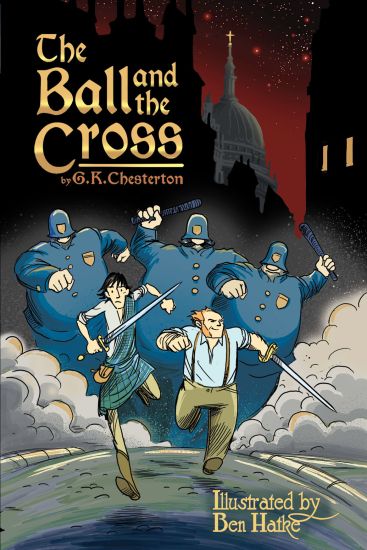
The Ball and the Cross

The Ball and the Cross

G. K. Chesterton

Tan Books
2018
nidottu
When two men decide to fight for their respective beliefs, they discover to their astonishment that an unbelieving world won't let them, and they find themselves partners and fugitives from the law in this steampunk satire. Penned by G. K. Chesterton in 1909, this whimsical and biting novel eerily foreshadows a world in which "tolerance" is the only god and all those who believe ideas are worth dying for are forced to stand together to defend freedom of speech and belief. For high school-aged readers and up.
O Napoleao de Notting Hill

O Napoleao de Notting Hill

G. K. Chesterton

Createspace Independent Publishing Platform
2018
nidottu
Gilbert Keith Chesterton, KC (29 May 1874 - 14 June 1936), was an English writer, poet, philosopher, dramatist, journalist, orator, lay theologian, biographer, and literary and art critic. Chesterton is often referred to as the "prince of paradox." Time magazine has observed of his writing style: "Whenever possible Chesterton made his points with popular sayings, proverbs, allegories-first carefully turning them inside out." Chesterton is well known for his fictional priest-detective Father Brown, and for his reasoned apologetics. Even some of those who disagree with him have recognised the wide appeal of such works as Orthodoxy and The Everlasting Man.
The New Jerusalem

The New Jerusalem

G. K. Chesterton

Createspace Independent Publishing Platform
2018
nidottu
Gilbert Keith Chesterton, KC (29 May 1874 - 14 June 1936), was an English writer, poet, philosopher, dramatist, journalist, orator, lay theologian, biographer, and literary and art critic. Chesterton is often referred to as the "prince of paradox". Time magazine has observed of his writing style: "Whenever possible Chesterton made his points with popular sayings, proverbs, allegories-first carefully turning them inside out." Chesterton is well known for his fictional priest-detective Father Brown, and for his reasoned apologetics. Even some of those who disagree with him have recognised the wide appeal of such works as Orthodoxy and The Everlasting Man.
The Wisdom of Father Brown

The Wisdom of Father Brown

G. K. Chesterton

Createspace Independent Publishing Platform
2018
nidottu
Gilbert Keith Chesterton, KC (29 May 1874 - 14 June 1936), was an English writer, poet, philosopher, dramatist, journalist, orator, lay theologian, biographer, and literary and art critic. Chesterton is often referred to as the "prince of paradox". Time magazine has observed of his writing style: "Whenever possible Chesterton made his points with popular sayings, proverbs, allegories-first carefully turning them inside out." Chesterton is well known for his fictional priest-detective Father Brown, and for his reasoned apologetics. Even some of those who disagree with him have recognised the wide appeal of such works as Orthodoxy and The Everlasting Man.

Varied Types

Varied Types

G. K. Chesterton

Createspace Independent Publishing Platform
2018
nidottu
Gilbert Keith Chesterton, KC (29 May 1874 - 14 June 1936), was an English writer, poet, philosopher, dramatist, journalist, orator, lay theologian, biographer, and literary and art critic. Chesterton is often referred to as the "prince of paradox." Time magazine has observed of his writing style: "Whenever possible Chesterton made his points with popular sayings, proverbs, allegories-first carefully turning them inside out." Chesterton is well known for his fictional priest-detective Father Brown, and for his reasoned apologetics. Even some of those who disagree with him have recognised the wide appeal of such works as Orthodoxy and The Everlasting Man.
Utopia of Usurers and Other Essays

Utopia of Usurers and Other Essays

G. K. Chesterton

Createspace Independent Publishing Platform
2018
nidottu
Gilbert Keith Chesterton, KC (29 May 1874 - 14 June 1936), was an English writer, poet, philosopher, dramatist, journalist, orator, lay theologian, biographer, and literary and art critic. Chesterton is often referred to as the "prince of paradox". Time magazine has observed of his writing style: "Whenever possible Chesterton made his points with popular sayings, proverbs, allegories-first carefully turning them inside out." Chesterton is well known for his fictional priest-detective Father Brown, and for his reasoned apologetics. Even some of those who disagree with him have recognised the wide appeal of such works as Orthodoxy and The Everlasting Man.

Twelve Types

Twelve Types

G. K. Chesterton

Createspace Independent Publishing Platform
2018
nidottu
Gilbert Keith Chesterton, KC (29 May 1874 - 14 June 1936), was an English writer, poet, philosopher, dramatist, journalist, orator, lay theologian, biographer, and literary and art critic. Chesterton is often referred to as the "prince of paradox". Time magazine has observed of his writing style: "Whenever possible Chesterton made his points with popular sayings, proverbs, allegories-first carefully turning them inside out." Chesterton is well known for his fictional priest-detective Father Brown, and for his reasoned apologetics. Even some of those who disagree with him have recognised the wide appeal of such works as Orthodoxy and The Everlasting Man.

Tremendous Trifles

Tremendous Trifles

G. K. Chesterton

Createspace Independent Publishing Platform
2018
nidottu
Gilbert Keith Chesterton, KC (29 May 1874 - 14 June 1936), was an English writer, poet, philosopher, dramatist, journalist, orator, lay theologian, biographer, and literary and art critic. Chesterton is often referred to as the "prince of paradox". Time magazine has observed of his writing style: "Whenever possible Chesterton made his points with popular sayings, proverbs, allegories-first carefully turning them inside out." Chesterton is well known for his fictional priest-detective Father Brown, and for his reasoned apologetics. Even some of those who disagree with him have recognised the wide appeal of such works as Orthodoxy and The Everlasting Man.
Orthodoxy

Orthodoxy

G. K. Chesterton

Createspace Independent Publishing Platform
2018
nidottu

Halvin toimitettuna 12,00 €

Gilbert Keith Chesterton, KC (29 May 1874 - 14 June 1936), was an English writer, poet, philosopher, dramatist, journalist, orator, lay theologian, biographer, and literary and art critic. Chesterton is often referred to as the "prince of paradox". Time magazine has observed of his writing style: "Whenever possible Chesterton made his points with popular sayings, proverbs, allegories-first carefully turning them inside out." Chesterton is well known for his fictional priest-detective Father Brown, and for his reasoned apologetics. Even some of those who disagree with him have recognised the wide appeal of such works as Orthodoxy and The Everlasting Man.

Manalive

Manalive

G. K. Chesterton

Createspace Independent Publishing Platform
2018
nidottu
Gilbert Keith Chesterton, KC (29 May 1874 - 14 June 1936), was an English writer, poet, philosopher, dramatist, journalist, orator, lay theologian, biographer, and literary and art critic. Chesterton is often referred to as the "prince of paradox". Time magazine has observed of his writing style: "Whenever possible Chesterton made his points with popular sayings, proverbs, allegories-first carefully turning them inside out." Chesterton is well known for his fictional priest-detective Father Brown, and for his reasoned apologetics. Even some of those who disagree with him have recognised the wide appeal of such works as Orthodoxy and The Everlasting Man.
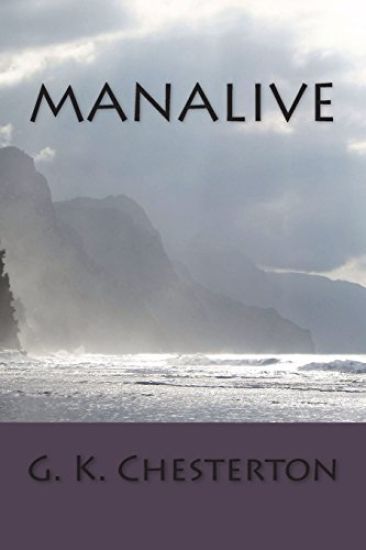
Magic

Magic

G. K. Chesterton

Createspace Independent Publishing Platform
2018
nidottu
Gilbert Keith Chesterton, KC (29 May 1874 - 14 June 1936), was an English writer, poet, philosopher, dramatist, journalist, orator, lay theologian, biographer, and literary and art critic. Chesterton is often referred to as the "prince of paradox". Time magazine has observed of his writing style: "Whenever possible Chesterton made his points with popular sayings, proverbs, allegories-first carefully turning them inside out." Chesterton is well known for his fictional priest-detective Father Brown, and for his reasoned apologetics. Even some of those who disagree with him have recognised the wide appeal of such works as Orthodoxy and The Everlasting Man.
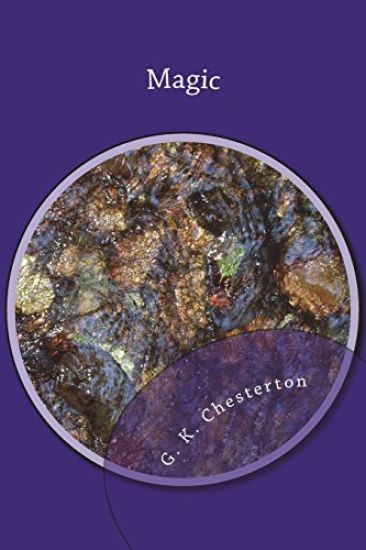
Manalive

Manalive

G. K. Chesterton

Createspace Independent Publishing Platform
2018
nidottu
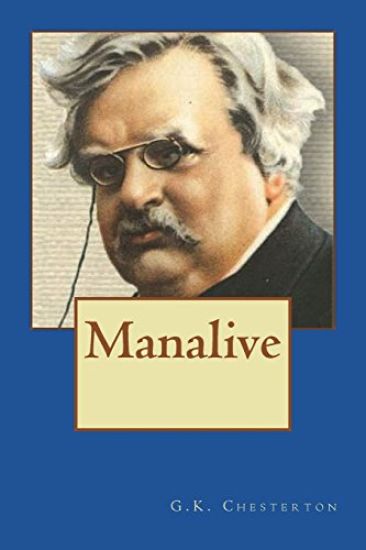
A masterpiece in two parts, G. K. Chesterton's Manalive is a commentary on the "Holy Fool" trope that shows up in many classic texts such as Don Quixote. The book follows the fun loving Innocent Smith who, after bringing joy to a boarding house, is charged with a series of crimes including attempted murder. The second half covers the trial which, through many twists and turns, brings out a stunning conclusion that touches upon many larger ideas. At the center of the novel is the idea of human life, and what makes everyday living worthwhile.
The Man Who Was Thursday: A Nightmare

The Man Who Was Thursday: A Nightmare

G. K. Chesterton

Createspace Independent Publishing Platform
2018
nidottu
Gabriel Syme is a man in revolt-a revolt into sanity. He is a poet turned police officer, an advocate of order who attends an anarchist meeting and is elected to the role of Thursday, one of the seven members of the Central Council, under the leadership of Sunday, a mysterious figure whose real purpose is hidden till the end. Written at a time when Chesterton was wrestling with his own doubts, The Man Who Was Thursday, in his own words, "was not intended to describe the real world as it was, or as I thought it was, even when my thoughts were considerably less settled than they are now. It was intended to describe the world of wild doubt and despair which the pessimists were generally describing at that date; with just a gleam of hope in some double meaning of the doubt, which even the pessimists felt in some fitful fashion." The Man Who Was Thursday works both as a thriller and as a novel of ideas, pulling the reader along for a roller coaster ride of turns and revelations to the end.
The Man Who Was Thursday

The Man Who Was Thursday

G. K. Chesterton

Createspace Independent Publishing Platform
2018
nidottu
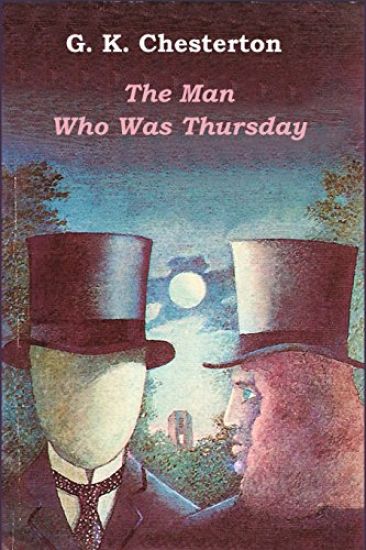
Rare edition with unique illustrations and elegant classic cream paper. G. K. Chesterton's classic novella tackles anarchy, social order, God, peace, war, religion, human nature, and a few dozen other weighty concepts. And somehow he manages to blend all of it together into a delightful satire, full of tongue-in-cheek commentary that is still relevant today. As the book opens, Gabriel Symes is debating with a soapbox anarchist. The two men impress each other enough that the anarchist introduces Symes to a seven-man council of anarchists, all named after days of the week. Soon they elect Symes their newest member-Thursday. But they don't know he's also been recruited by an anti-anarchist organization. And soon Symes finds out that he's not the only person on the council who is not what he seems. There are other spies and double-agents, all working for the same cause. But who-and what-is the jovial, powerful Mr. Sunday, the head of the organization? Hot-air balloons, elaborate disguises, duels, and police chases-all go to make up this satirical spy novel that both educates and entertains. Includes unique illustrations.
The Ballad of the White Horse

The Ballad of the White Horse

G. K. Chesterton

Createspace Independent Publishing Platform
2018
nidottu
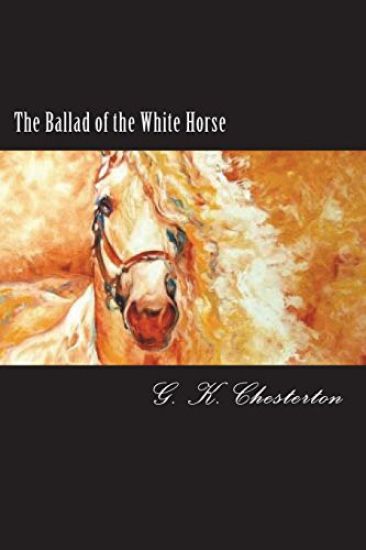
The Ballad of the White Horse is a poem by G. K. Chesterton about the idealised exploits of the Saxon King Alfred the Great, published in 1911. Written in ballad form, the work has been described as one of the last great traditional epic poems ever written in the English language. The poem narrates how Alfred was able to defeat the invading Danes at the Battle of Ethandun under the auspices of God working through the agency of the Virgin Mary. In addition to being a narration of Alfred's military and political accomplishments, it is also considered a Roman Catholic allegory. Chesterton incorporates a significant amount of philosophy into the basic structure of the story.
The Innocence of Father Brown

The Innocence of Father Brown

G. K. Chesterton

Createspace Independent Publishing Platform
2018
nidottu
In 1911, G. K. Chesterton published this first collection of twelve short stories featuring Father Brown, a priest turned detective who combines philosophical and spiritual reasoning with scientific observation to solve crimes: "The Blue Cross," "The Secret Garden," "The Queer Feet," "The Flying Stars," "The Invisible Man," "The Honour of Israel Gow," "The Wrong Shape," "The Sins of Prince Saradine," "The Hammer of God," "The Eye of Apollo," "The Sign of the Broken Sword," and "The Three Tools of Death."
The Victorian Age in Literature

The Victorian Age in Literature

G. K. Chesterton

Createspace Independent Publishing Platform
2018
nidottu
Gilbert Keith Chesterton, KC (29 May 1874 - 14 June 1936), was an English writer, poet, philosopher, dramatist, journalist, orator, lay theologian, biographer, and literary and art critic. Chesterton is often referred to as the "prince of paradox". Time magazine has observed of his writing style: "Whenever possible Chesterton made his points with popular sayings, proverbs, allegories-first carefully turning them inside out." Chesterton is well known for his fictional priest-detective Father Brown, and for his reasoned apologetics. Even some of those who disagree with him have recognised the wide appeal of such works as Orthodoxy and The Everlasting Man.