Kirjojen hintavertailu – 12 859 828 kirjaa ja 27 kauppaa
Kirjailija
George Berkeley
Kirjat ja teokset yhdessä paikassa: 300 kirjaa, julkaisuja vuosilta 1960–2026, suosituimpiin kuuluu A Letter to T----- P---, Esq; From the Author of Siris. Containing Some Farther Remarks on the Virtues of Tar-Water, and the Methods for Preparing and Using It.. Vertaile teosten hintoja ja tarkista saatavuus suomalaisista kirjakaupoista.
Three Dialogues between Hylas and Philonous is a book written by George Berkeley in 1713. Three important concepts discussed in the Three Dialogues are perceptual relativity, the conceivability/master argument ("master argument" was coined by Andr Gallois), and Berkeley's phenomenalism. Perceptual relativity argues that the same object can appear to have different characteristics (e.g. shape) depending on the observer's perspective. Since objective features of objects cannot change without an inherent change in the object itself, shape must not be an objective feature.
Selections from Berkeley - With an Introduction to the Problems of Modern Philosophy fopr the Use of Students in Colledges and Universities is an unchanged, high-quality reprint of the original edition of 1879. Hansebooks is editor of the literature on different topic areas such as research and science, travel and expeditions, cooking and nutrition, medicine, and other genres. As a publisher we focus on the preservation of historical literature. Many works of historical writers and scientists are available today as antiques only. Hansebooks newly publishes these books and contributes to the preservation of literature which has become rare and historical knowledge for the future.
The works of George Berkeley, D. D., Bishop of Cloyne; - Vol. III is an unchanged, high-quality reprint of the original edition of 1897. Hansebooks is editor of the literature on different topic areas such as research and science, travel and expeditions, cooking and nutrition, medicine, and other genres. As a publisher we focus on the preservation of historical literature. Many works of historical writers and scientists are available today as antiques only. Hansebooks newly publishes these books and contributes to the preservation of literature which has become rare and historical knowledge for the future.
The works of George Berkeley, D. D., Bishop of Cloyne - Vol. 1 is an unchanged, high-quality reprint of the original edition of 1897. Hansebooks is editor of the literature on different topic areas such as research and science, travel and expeditions, cooking and nutrition, medicine, and other genres. As a publisher we focus on the preservation of historical literature. Many works of historical writers and scientists are available today as antiques only. Hansebooks newly publishes these books and contributes to the preservation of literature which has become rare and historical knowledge for the future.
Principios del conocimiento humano, es una obra de 1710 del fil sofo empirista George Berkeley. Principalmente, este libro trata de refutar las posiciones de su contempor neo John Locke acerca de la naturaleza de la percepci n humana. Aunque, como todos los fil sofos empiristas, tanto Locke como Berkeley coincid an en que existe un mundo externo, y en que este mundo es el que causa las ideas que uno tiene dentro de su mente, Berkeley trat de probar que el mundo externo tambi n se compone nicamente de ideas. Berkeley lo hizo sugiriendo que las ideas s lo pueden asemejarse a las ideas: las ideas mentales que poseemos s lo pueden asemejarse a otras ideas (no a objetos f sicos) y de este modo el mundo externo no consiste en una forma f sica, sino m s bien en ideas. Este mundo recibe l gica y regularidad por alguna otra fuerza, que Berkeley concluy que era Dios.
Berkeley's Principles: Expanded and Explained includes the entire classical text of the Treatise Concerning the Principles of Human Knowledge in bold font, a running commentary blended seamlessly into the text in regular font and analytic summaries of each section. The commentary is like a professor on hand to guide the reader through every line of the daunting prose and every move in the intricate argumentation. The unique design helps today's students learn how to read and engage with one of modern philosophy's most important and exciting classics.
Berkeley's Principles: Expanded and Explained includes the entire classical text of the Treatise Concerning the Principles of Human Knowledge in bold font, a running commentary blended seamlessly into the text in regular font and analytic summaries of each section. The commentary is like a professor on hand to guide the reader through every line of the daunting prose and every move in the intricate argumentation. The unique design helps today's students learn how to read and engage with one of modern philosophy's most important and exciting classics.
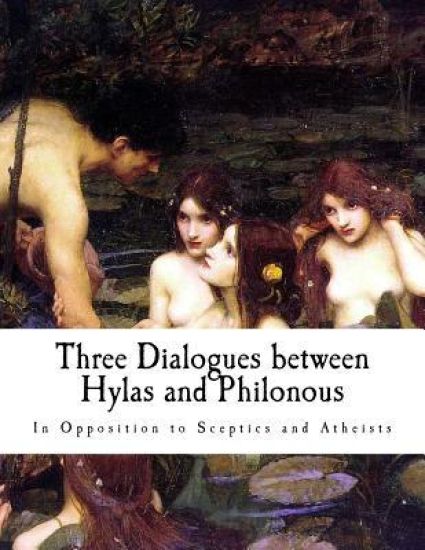
Three Dialogues between Hylas and PhilonousIn Opposition to Sceptics and AtheistsGeorge BerkeleyThree Dialogues between Hylas and Philonous is a book written by George Berkeley in 1713. Three important concepts discussed in the Three Dialogues are perceptual relativity, the conceivability/master argument ("master argument" was coined by Andr Gallois), and Berkeley's phenomenalism. Perceptual relativity argues that the same object can appear to have different characteristics (e.g. shape) depending on the observer's perspective. Since objective features of objects cannot change without an inherent change in the object itself, shape must not be an objective feature. Berkeley uses Hylas as his primary contemporary philosophical adversary. Hylas is featured in Greek mythology and is understood to represent John Locke. In the Dialogues, the name Hylas is derived from an ancient Greek word for "matter," which Hylas argues for in the dialogue. Using Philonous, Berkeley argues his own metaphysical views, which were first developed in his earlier book A Treatise Concerning the Principles of Human Knowledge. Philonous translates as "lover of mind."